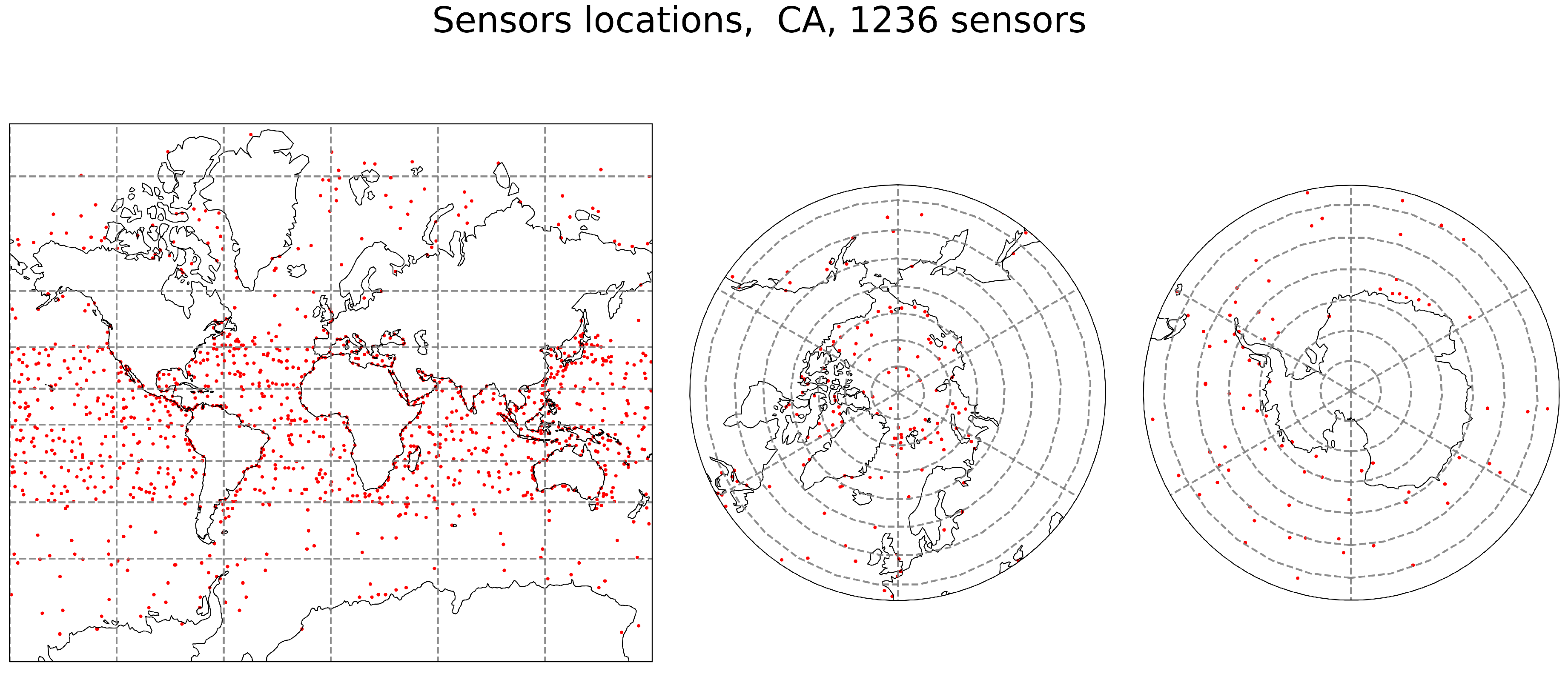
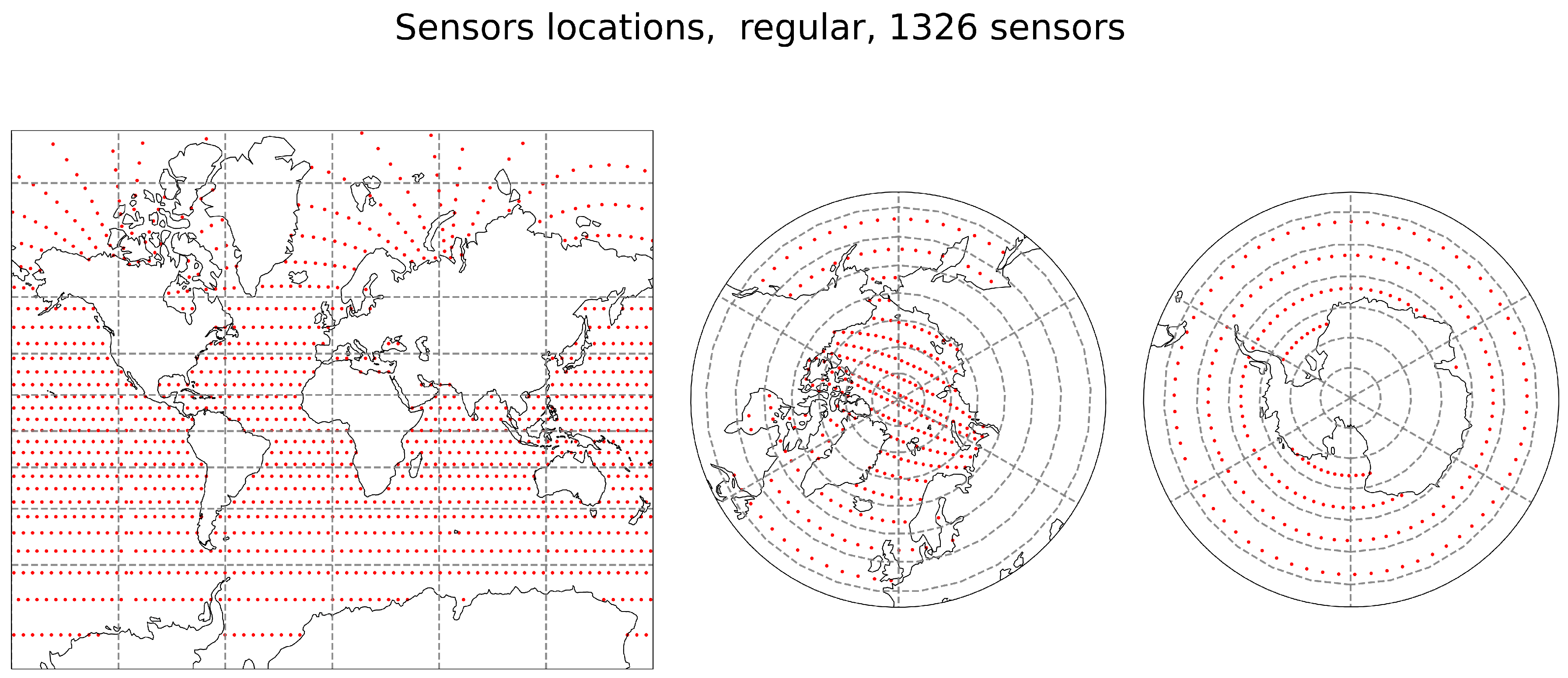
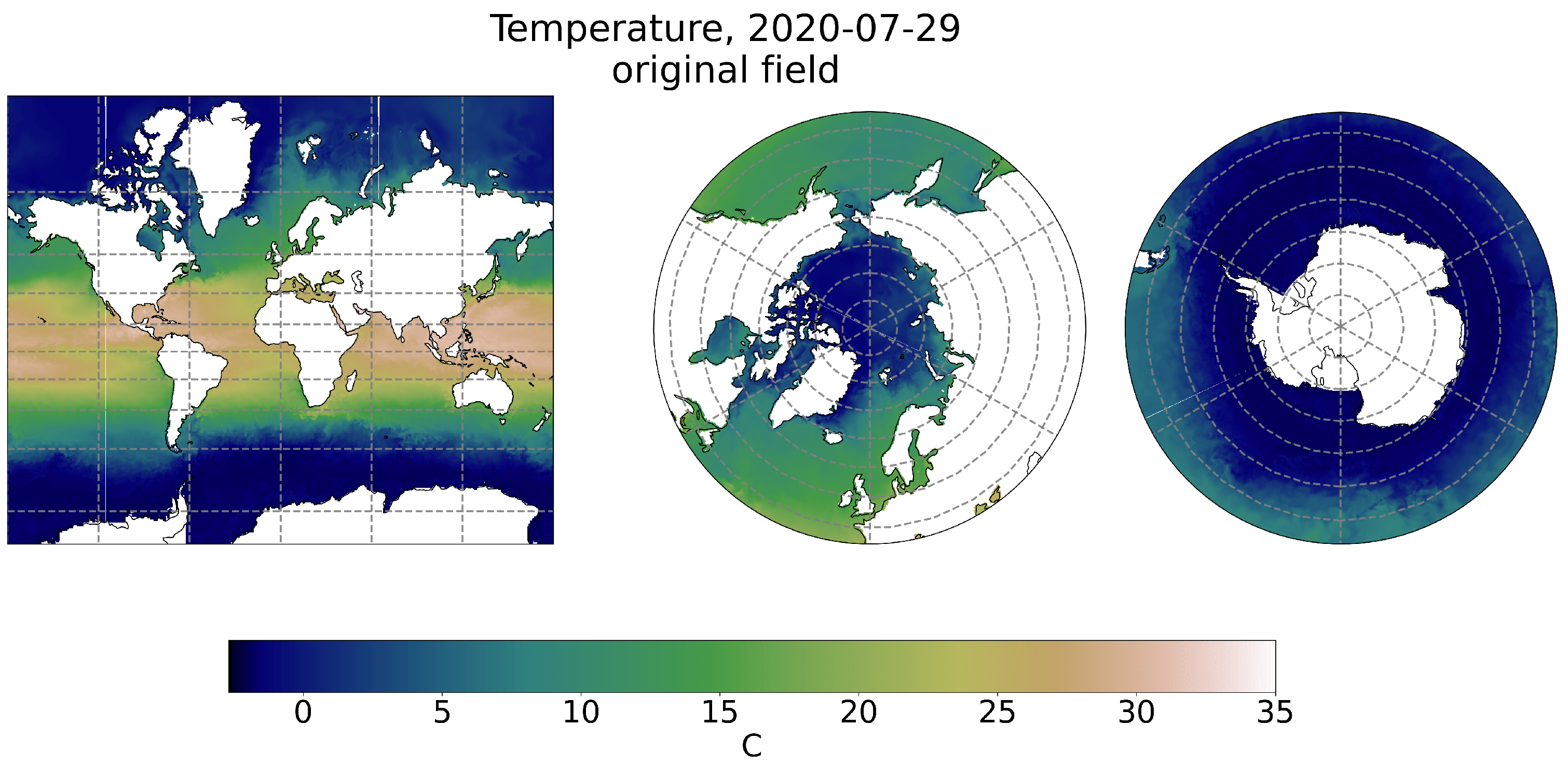
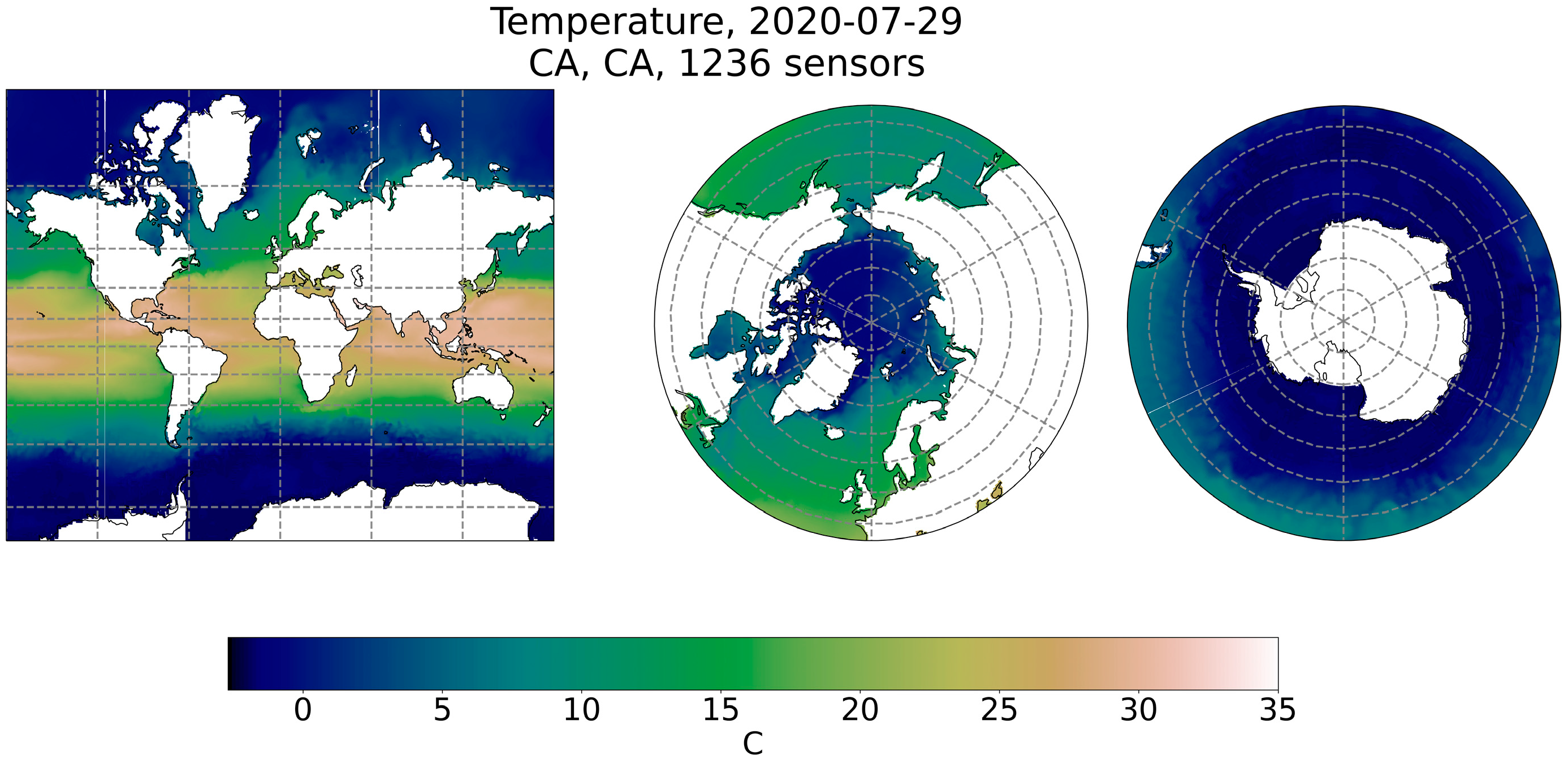
Concrete Autoencoder for the Reconstruction of Sea Temperature Field from Sparse Measurements †

 , , , and
 Abstract
Share and Cite
Lobashev, A.A.; Turko, N.A.; Ushakov, K.V.; Kaurkin, M.N.; Ibrayev, R.A. Concrete Autoencoder for the Reconstruction of Sea Temperature Field from Sparse Measurements. J. Mar. Sci. Eng. 2023, 11, 404. https://doi.org/10.3390/jmse11020404
Lobashev AA, Turko NA, Ushakov KV, Kaurkin MN, Ibrayev RA. Concrete Autoencoder for the Reconstruction of Sea Temperature Field from Sparse Measurements. Journal of Marine Science and Engineering. 2023; 11(2):404. https://doi.org/10.3390/jmse11020404
Chicago/Turabian StyleLobashev, Alexander A., Nikita A. Turko, Konstantin V. Ushakov, Maxim N. Kaurkin, and Rashit A. Ibrayev. 2023. "Concrete Autoencoder for the Reconstruction of Sea Temperature Field from Sparse Measurements" Journal of Marine Science and Engineering 11, no. 2: 404. https://doi.org/10.3390/jmse11020404
APA StyleLobashev, A. A., Turko, N. A., Ushakov, K. V., Kaurkin, M. N., & Ibrayev, R. A. (2023). Concrete Autoencoder for the Reconstruction of Sea Temperature Field from Sparse Measurements. Journal of Marine Science and Engineering, 11(2), 404. https://doi.org/10.3390/jmse11020404