Review

Phytobiotics as Dietary Natural Growth Promoters in Producing High-Quality and Safe Poultry Products—A Narrative Review


by
Laurian-Cristian Cojocariu
1,
Marius-Giorgi Usturoi
1,
Alexandru Usturoi
1,*,
Mircea Lazăr
2,
Ioana Miruna Balmuș
3,
Daniel Simeanu
1 and
Răzvan-Mihail Radu-Rusu
1
1
Faculty of Food and Animal Sciences, “Ion Ionescu de la Brad” Iasi University of Life Sciences, 3 Mihail Sadoveanu Alley, 700490 Iasi, Romania
2
Faculty of Veterinary Medicine, “Ion Ionescu de la Brad” Iasi University of Life Sciences, 3 Mihail Sadoveanu Alley, 700490 Iasi, Romania
3
Department of Exact Sciences and Natural Sciences, Institute of Interdisciplinary Research, “Alexandru Ioan Cuza” University of Iasi, Carol I Avenue, 20A, 700505 Iasi, Romania
*
Author to whom correspondence should be addressed.
Agriculture 2026, 16(4), 443; https://doi.org/10.3390/agriculture16040443
Submission received: 20 December 2025 / Revised: 31 January 2026 / Accepted: 12 February 2026 / Published: 14 February 2026
(This article belongs to the Special Issue Quality Assessment and Processing of Farm Animal Products)

Abstract

As the demand for poultry meat and eggs is increasing in the world, and the use of antibiotics is forbidden in Europe (since 2006), with countries such as the Philippines, Thailand, Bangladesh and China having imposed restriction or prohibitions, researchers and producers have sought for effective non-antibiotic alternatives. Probiotics, prebiotics, synbiotics and phytobiotics are frequently used as alternatives in the field of poultry production. Phytobiotics, plant-derived substances, also referred to as botanicals or phytogenics, are used as animal diets supplements due to their wide range of bioactive compounds (menthol, curcumin, eugenol, allicin and others) and many advantages. They are classified as herbs, spices, plant extracts and essential oils. Some of the benefits offered by the dietary phytobiotics are antimicrobial, antioxidant, digestion stimulant, anti-inflammatory, immunomodulatory, carminative, antiseptic and appetite stimulant, the modulation of gut microbiota and improvement in the intestinal histology. Some representatives of phytobiotics are turmeric, oregano, sage, thyme, black pepper, ginger, garlic, echinacea, rosemary and others. Despite the significant potential of phytobiotics, their widespread adaptation is currently inhibited by challenges regarding cost-effectiveness (high price for raw materials), scarce regulatory frameworks, and inconsistent biological efficacy. The lack of standardization reflects a dual challenge, enclosing both the inherent chemical variability of raw botanical materials and the technical inconsistencies present throughout the industrial manufacturing, and extraction processes as producers use different machinery for extracting and producing the animal feed. To address these systemic impediments, a joint effort across the entire value chain—from primary producers to regulatory authorities—is essential for the development of unified testing protocols and standardization dosage guidelines that ensure the pharmacological safety and reliability of phytobiotic products.

1. Introduction

The increasing demand of poultry meat and eggs worldwide calls for effective and sustainable production methods. In the past, since the intensification of aviculture (1950, post Second World War) till 2005, when new regulations were imposed due to worrying antibioresistant side effects in human consumers and animals, antibiotic growth promoters (AGPs) were a major component in the intensive poultry business. When administered at subtherapeutic concentrations, they used to enhance growth performance and feed conversion through a dual-action mechanism: directly, by suppressing subclinical pathogenic loads, and indirectly, by modulating the commensal microbiota to foster a metabolic environment conducive to nutrient absorption and attenuated immune-mediated stress [1,2]. Common AGPs used in poultry were Avilamycin, bacitracin, doxycycline, enrofloxacin, neomycin, virginiamycin and others. However, there are serious public health concerns about the emergence and spread of antimicrobial resistance (AMR) in bacteria that may be transmissible to humans due to the extensive and often subtherapeutic or indiscriminate application use of AGPs within the livestock industry, especially in poultry production [3]. As a result, regulatory policies underwent a paradigm change. This movement was started by the European Union, which banned the use of AGPs in animal feed entirely in 2006 [4]. The United States of America was among the numerous other nations that followed this ruling, in the Veterinary Feed Directive from 2017 [5]. Also, AGP use has been restricted or phased out entirely in Canada and a number of Asian countries such as China and Vietnam [6]. In order to preserve poultry health and production without exacerbating the AMR epidemic, the worldwide trend towards banning the use of AGPs has sparked a flurry of research toward safe, natural and efficient substitutes. Among the many options, phytobiotics have become one of the most promising and well-studied groups [7,8,9].
To improve performance, health and wellbeing, plant-derived substances called phytobiotics—also referred to as phytogenics or botanicals—are added to animal diets. As consumer preferences for “antibiotic-free” and “naturally raised” poultry products continue to grow, they represent a sustainable and natural approach in aviculture. From strengthening immune function and reducing stress to enhancing gut health and nutrient utilization, their wide variety of bioactive substances provide numerous advantages that eventually help produce safe and high-quality poultry products, but also, in some cases, some controversial effects or even unwanted side effects when dietary dosage is not well tuned [10]. Within this context, this brief narrative review emphasizes phytobiotics classification, their effects on chicken broilers performance (growth, feed conversion), on broilers’ gut microbiota and histomorphology dynamics, on fowl welfare level, livability and on certain limitations when phytobiotics are used as natural growth promoters in poultry nutrition as alternatives to the banned AGPs.

2. Materials and Methods

The methodology for this narrative review was designed to ensure a comprehensive and reproducible synthesis of the existing literature regarding the application of phytobiotics in poultry production.
The literature search was performed across five primary databases and digital repositories such as PubMed (U.S. Department of Health and Human Services, Bethesda, MD, USA), Web of Science (Clarivate PLC, JER, Philadelphia, PA, USA), Google Scholar (Google Ireland Limited, Dublin, Ireland), ScienceDirect (Elsevier Limited, London, United Kingdom) and MDPI (MDPI AG, Basel, Switzerland). The search period was primarily focused on the last fifteen years to prioritize contemporary advancements in phytobiotics research, and articles published in English and in French.
To maximize the sensitivity of the search, various combinations of keywords were utilized using Boolean operators (AND, OR, NOT). The search string was constructed by grouping terms related to the host species, the intervention (phytogenic compounds), and performance outcomes. The primary search string included the following: (poultry OR broiler) AND (phytobiotics OR plant extracts OR phytogenic additives); (essential oils OR herbs OR spices) AND (poultry OR broiler) AND (meat OR eggs); (phytobiotics AND broiler) NOT (swine OR ruminants).
Articles identified through the initial search were screened based on their titles, abstracts and conclusions. Conversely, studies were excluded if they lacked a clear phytogenic component and focused exclusively on synthetic growth promoters.
From all the digital repositories and databases, there were 152 articles identified. After reading the titles of the articles, some of them were repeated in different databases, and other research papers did not comply with the research criteria, thus resulting in 90 articles. After the abstract and conclusions sections were read, only 82 articles were selected, as they matched our initial criteria. Within the present paper’s context, all the selected articles were grouped according to our discussion categories: general description of phytobiotics, effects on growth performance, intestinal microbiota, antioxidant and anti-inflammatory effects, intestinal histology, health status and quality and safety of poultry products.
As a result, various outcomes including the use of phytobiotics in place of antibiotics as performance enhancers in boiler feed could be confirmed. By the end of the topics-oriented chapters, a challenges and limitations section as well as a follow-up one were added to better underline the possibilities and the trends to be followed in applied poultry farming.

3. Classification of Phytobiotics Used in Poultry Nutrition

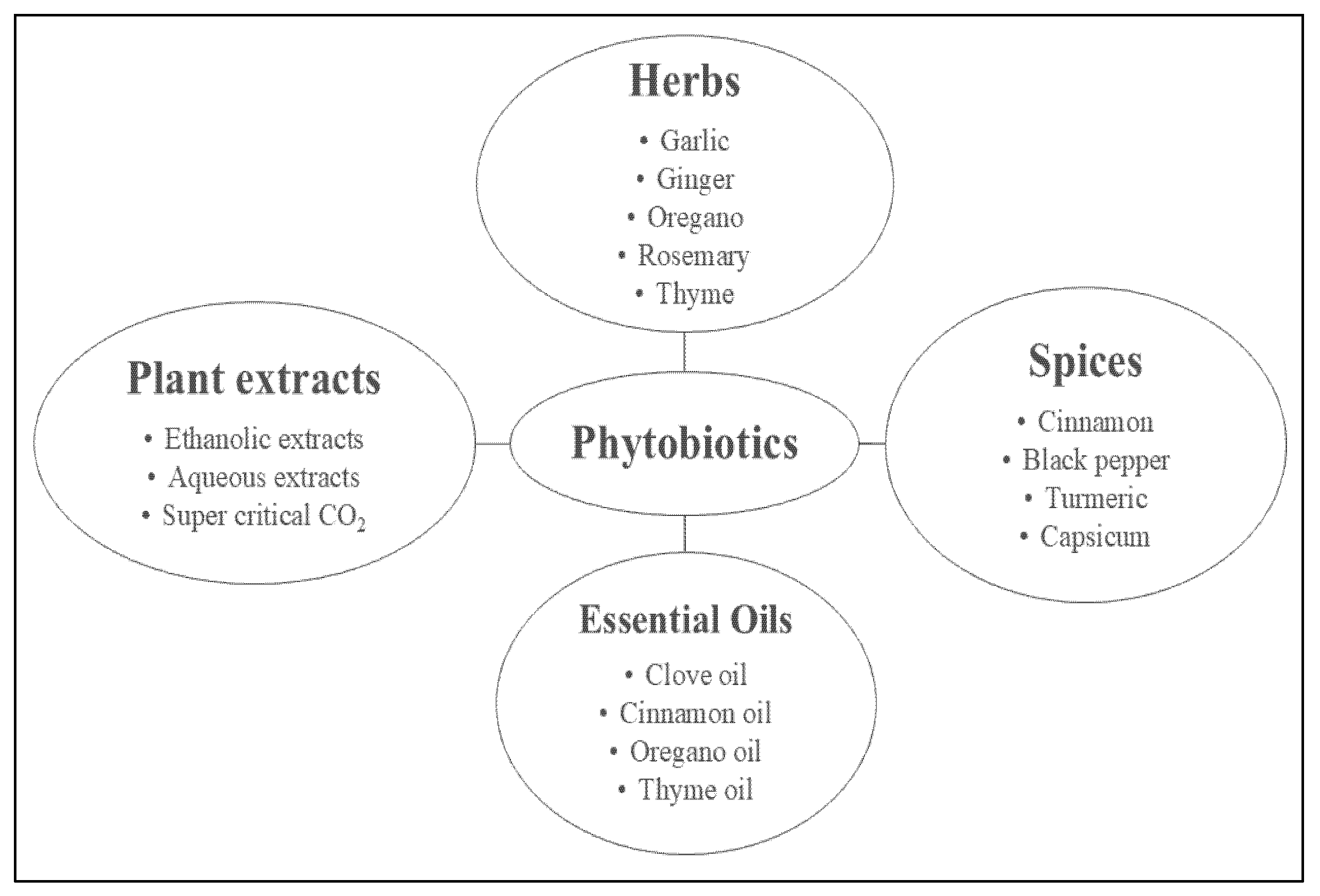
The term “phytobiotic” encloses a wide array of botanically derived substances, which can be categorized based on their botanical origin, physical state and processing methodology. To provide a structural framework for this review, Figure 1 presents the primary classification of these compounds—specifically herbs, spices, plant extracts and essential oils—alongside representative examples from each group.
Herbs: These are botanically defined as non-woody, vascular plants whose arial tissues (leaves, stems and flowers) lack persistent lignified structures. Functionally, these taxa are distinguished by their diverse profiles of secondary metabolites, including flavonoids, essential oils and bitter principles concerning the specific aromatic, gustatory or therapeutic proprieties utilized in phytogenic applications.
Examples: Garlic (Allium sativum), ginger (Zingiber officinale), oregano (Origanum vulgare), rosemary (Rosmarinus officinalis) and thyme (Thymus vulgaris).
Mechanisms: Because of their essential oils and phenolic components, they frequently have antibacterial, antioxidant and anti-inflammatory qualities, but there are differences in the effectiveness of those compounds based on the used dosage, mode of extraction and incorporation method in feed and the diet matrix. As an example, thymol and carvacrol from thyme and oregano, allicin and other organosulfur compounds in garlic have strong antibacterial or even antiparasitic properties [11].
Spices: These are dehydrated plant parts (fruits, seeds, roots and bark) with potent smells, scents and flavors that are frequently added to feed to improve its palatability or for their particular therapeutic uses.
Examples: Capsicum (Capsicum annum), cinnamon (Cinnamomum verum), black pepper (Piper nigrum) and turmeric (Curcuma longa).
Mechanisms: Some examples of spices, from the entire vast category, that are most commonly found and used are the curcuminoids, strong antioxidants and anti-inflammatory substances that are found in turmeric [12]; piperine, which is found in black pepper, can improve nutrient absorption by promoting the release of digestive enzymes [13]; and cinnamaldehyde, found in cinnamon, has antibacterial and antioxidant properties [14].
Essential oils (EOs): These are volatile, lipophilic secondary metabolites that are extracted by solvent extraction or distillation from a variety of plant components, including leaves, flowers, stems, roots and seeds. They are intricate blends of several chemical compounds that give the plant its distinctive aroma.
Chemical composition: Terpenes are the primary components of EOs. For example, pinene, limonene, sesquiterpenes belong to the monoterpenes class. Terpenoids (various esters as carvacrol, cinnamaldehyde, eugenol, thymol), oxygenated terpenes (like various alcohols; even aldehydes and ketones) and phenylpropanoids (such as eugenol and anethole) are important components as well.
Examples: Because they are lipophilic, they can readily pass through bacterial cell membranes, rupturing them, changing ion channels and preventing enzymatic activity—all of which result in cell death. Also, it is to be noted that EOs can have a selectivity or potential inhibitory effect or toxicity regarding beneficial microbes from the gut microbiota. Additionally, they have potent anti-inflammatory and antioxidant qualities [15,16].
Plant extract: These are a concentrated form of bioactive substances that were extracted from plants using a variety of techniques: supercritical CO2 extraction, ethanolic extraction and aqueous extraction. Extracts can include a wider range of components than essential oils such as non-volatile materials like flavonoids, tannins, saponins, alkaloids and glycosides.
Examples: Proanthocyanidin-rich grape seed extract, catechin-rich green tea extract, tannin-rich chestnut wood extract or saponin and polyphenol-rich Yucca schidigera extract.
Mechanisms: Flavonoids are widely recognized for their anti-inflammatory and antioxidant properties [17]. Tannins have astringent properties that may alter microbiota and decrease intestinal permeability [18]. Yucca schidigera saponins have the ability to lower ammonia emissions and maybe alter gut architecture [19].
A single phytobiotic or a combination of different phytobiotics’ synergistic effects are frequently stronger that those of the chemically synthesized compound solo effects [20].
Table 1 summarizes a representative selection of phytobiotics, detailing their primary bioactive constituents and physiological benefits in broiler nutrition; these specific candidates were curated based on their established prevalence in the industry and their widespread commercial availability.

4. Effect of Phytobiotics on Chicken Broilers’ Growth Performance and Feed Conversion

One of the main causes of the increasing interest in phytobiotics as AGP substitutes is the steady increase in broiler growth performance (body weight gain) and feed conversion rate (FCR). This improvement results from the synergistic interaction of multiple physiological and microbiological effects rather than from a single mechanism.
Enhanced nutrient digestibility and absorption: Endogenous digestive enzyme secretion and activity can be either directly or indirectly stimulated by phytobiotics. For example, it has been demonstrated on Cobb 500 broilers that essential oils, especially those high in carvacrol, thymol or cinnamaldehyde, enhance the activity of pancreatic lipase, amylase and protease [43]. As a result, the chemical constituents of feed—proteins, lipids and carbohydrates—are broken down more effectively, increasing the availability of nutrients for absorption. In the experiment, the best FCR was achieved when oregano essential oil in 350 mg/kg feed was used (FCR = 1.97 kg feed/kg gain), versus the same concentration of thyme essential oil (FCR = 1.99) and versus the control and the experimental version that used both essential oils in 350 mg/kg feed (thyme and oregano in equal proportions). Despite the improved performance, meat quality was affected by increasing the occurrence of nonconformities like white stripping (from 5% in control to 30–33.3% in single use of essential oil) and both white stripping and wooden breast (from 25% in control to 35% in oregano oil and even to 59.1% in essential oils mixture). These nonconformities were explained by the accelerated growth rate and achievement of better live weights in experimental groups. Additionally, phytobiotics maximize nutrients uptake by increasing the surface area for absorption through improved intestinal architecture (see Section 5) in chicken broilers. However, in the Arbor Acres hybrid, some undesirable effects were observed, as well, such as depth of mucosal crypts, suggesting thus an increase in the epithelial turnover and, subsequently a permanent inflammatory status of the intestine [44].
Modulation of gut microbiota: Optimal digestion and nutrition depend on healthy and balanced gut bacteria. Pathogenic bacteria (such as Clostridium perfringens, E. coli, and Salmonella spp.) that compete with the host for resources and create toxins that harm the intestinal lining are specifically inhibited from growing by phytobiotics [2]. More nutrients are available for the broilers’ growth when the burden of these dangerous microorganisms is lessened. At the same time, some phytobiotics and probiotics induced a synergistic effect, mostly in crop and less in caeca, encouraging the proliferation of good bacteria, such as Lactobacillus and Bifidobacterium, which generate short-chain fatty acids (SCFAs), while certain harmful coliform bacteria producing extended-spectrum beta-lactamase (ESBL) were depressed. These facts eventually proved to provide intestinal epithelial cells energy and helped in the maintaining of a healthy gut environment, by selective targeting inhibiting actions against harmful bacteria [45,46].
Anti-inflammatory effects: Significant energy and nutrients can be diverted from growth toward immune responses and tissue repair by subclinical inflammation in the gastrointestinal tract, which is frequently brought on by infections or dietary irritants. Numerous phytobiotics have strong immunomodulatory qualities because of their high phenolic component and flavonoid content that activate in the first stance of the cytokine synthesis, resulting in antimicrobial effects that eventually will reduce inflammation [8]. Phytobiotics lower the metabolic cost of immune activation by reducing chronic gastrointestinal inflammation, freeing up more energy for muscle accretion and general growth [2].
Antioxidant activity: Oxidative stress can be brought on by intensive broiler production for a number of reasons, including sickness, rapid growth, and environmental difficulties. Growth can be adversely affected and physiological processes compromised by oxidative stress, which can harm cells and tissues. Strong antioxidants, phytobiotics, especially those high in polyphenols (found in rosemary or grape seed extract, for example), neutralize free radicals and preserve cellular mitochondria and membrane integrity, reducing lipid peroxidation level [12,47]. Better growth rates are a result of this protection, which also increases metabolic efficiency.
Improved feed palatability: Certain phytobiotics contain aromatic molecules, particularly essential oils, which can make feed more palatable and encourage greater feed consumption, both of which boost body weight gain. However, the opposite effect can also occur from extreme concentrations [10].
These benefits are supported by a large amount of research. For instance, a meta-analysis conducted by Peng [48] found that phytogenic feed additives greatly increased broiler daily gain and feed conversion ratio, however to a lower extent than the actually banned antibiotic growth promoters used to do in the past.
Below are some specific, brief examples of phytogenics and their ways of action in broilers:
Oregano and thyme essential oils: Zaazaa, A. [43] claimed that Cobb 500 broilers treated with dietary oregano and thyme essential oils showed improved body weight gain and FCR, attributing this to improved gut health and nutritients digestibility. However, despite improved FCR and live weight upon slaughter, unwanted effects on breast muscles quality occurred due to accelerated growth; thus, conditions like white stripping and wooden breast multiplied up to five-fold in chickens receiving the tested essential oils, versus conventionally fed fowl.
Black pepper, turmeric, and fennel: Samantaray, L. [49] showed that a combination of these phytobiotics in a dietary concentration of 0.5% increased broiler body weight and feed intake. The experimental findings were explained by the combined antimicrobial effects with the digestive stimulative one, and with the intensified metabolic and immune response, translated into better blood constants (figurate elements and biochemistry). The best effect was given by the mixture, while the standalone usage of each spice generated slightly better effects than the control, except for the black pepper that induced depressed performance vs. control (lower live weight and feed intake, reduced hemoglobin levels).
Phytobiotic blends: Chodkowska, K.A. [50] stipulated that feeding broiler chicks a particular phytobiotic mixture (fruit of red pepper, seed of white mustard seed, turmeric, soapwort root, calamus rhizome), rich in phytoncides and phytoalexins, phenolic acids and essential oils included at a dose of 100 mg/kg diet, increased FCR, while the TNF-α inflammatory cytokine was reduced in muscle, myostatin-repairing protein was increased and IL-6 myogenesis regulating factor was increased in blood; these facts explain the better growth results. At lower dietary concentrations (60 mg/kg) of the phytobiotic mixture, the effects were not far from the control group; therefore, the significant threshold that impacted performance was 100 mg/kg.
Curcumin: Among others, according to Nasir Rajput [44], curcumin used as 200 mg/kg feed exerted beneficial effects on intestinal architecture (shallower crypts and higher and wider villus in duodenum and jejunum), nutrients uptake and fat metabolism, resulting in significant improvements in broiler growth performance.
Chestnut wood extract: Liu, H.S. [51] discovered that adding chestnut wood extract to the broiler chicks’ diet increased their weight gain and FCR, presumably as a result of its antibacterial and astringent qualities, which corroborated an improvement in the intestinal nutrients uptake. Metabolic rate and especially bloody serum lipids and cholesterol levels were lowered by the dietary chestnut wood extract.
Mixed phytogenic products: Gopi, M. [52] noted in their review that broiler growth and feed efficiency were consistently enhanced by a variety of essential oils, such as those derived from oregano, cinnamon, and pepper. The mechanisms behind the improvement are related to better activation of digestive enzymatic systems in the small intestine, to bile secretion stimulation and to certain hepatic enzymes inhibition that cause the lipid metabolic rate to burst. However, the beneficial effects on the digestive efficiency are not always doubled by the whole performance parameters, and final body weight could be impacted in a neutral or negative way as the concentration of essential oils increases in diet up to and beyond 200 mg/kg.
Garlic extract: Brzóska, F. [11] demonstrated enhanced FCR and growth performance in broilers fed aqueous garlic extract, accompanied by higher level of crude ash and total protein in meat, while total lipids are lowered. Although this effect could be seen as beneficial from a nutritional point of view, resulting in less caloric, healthier meat for human consumers, muscles texture, shear force and tenderness seem to be negatively affected and the sensorial value of the meat suffered.

5. Effect of Phytobiotics on Chicken Broilers Intestinal Microbiota

As a complex ecosystem, the intestinal microbiota of broilers has a significant impact on the host’s immunity, health, and nutrient utilization. In order to create a balanced gut environment that supports optimal function, phytobiotics are essential in forming this microbial community [53]. They affect the microbiota through a variety of mechanisms:
Selective antimicrobial activity against pathogens: Numerous phytobiotics have strong antibacterial qualities against common poultry diseases, especially essential oils (EOs) and certain plant extracts. It is well known that active ingredients such as carvacrol and thymol (found in oregano and thyme essential oils), cinnamon aldehyde (found in cinnamon essential oil), and allicin (found in garlic extract) can cause bacterial lysis or growth inhibition by disrupting bacterial cell membranes, increasing permeability, inhibiting enzyme systems, and interfering with genetic material [15]. This selective activity alleviates intestinal dysbiosis and lowers the risk of gut-related disorders by lowering the colonization and proliferation of harmful bacteria like Salmonella spp., Escherichia coli, and Clostridium perfringens (cause of necrotic enteritis) [2,8]. Research has demonstrated that broilers fed phytobiotics have lower levels of Clostridium spp. and coliform in their guts [7].
Promotion of beneficial bacteria: Certain phytobiotics concurrently encourage the growth and activity of advantageous commensal bacteria, like Lactobacillus and Bifidobacterium species, while suppressing pathogens. These bacteria are essential for gut health because they generate short-chain fatty acids (SCFAs), including butyrate, acetate, and propionate, which give enterocytes energy and lower the pH of the gut, which further prevents the growth of pathogens that are sensitive to pH [20]. Additionally, beneficial bacteria and pathogens compete for available nutrients and adhesion sites on the gut mucosa, a process known as competitive exclusion. In a study, Ren H. and his collaborators [45] showed that a combination of phytobiotics and probiotics decreased the survival of E. coli that produces ESBL in young broilers and increased the dominance of lactobacilli in the crop.
Modulation of microbial metabolites: The gut microbiota’s metabolic output can be influenced by phytobiotics. For instance, they can raise the levels of these advantageous compounds in the blood and gut lumen by supporting bacteria that produce SCFA. This enhances immunological responses, the function of the intestinal barrier, and host metabolism in general [2]. Improvements in intestinal integrity and decreased inflammation are frequently linked to changes in particular SCFA profiles (such as elevated butyrate) [20].
Quorum-sensing inhibition: It has been demonstrated that certain phytobiotic substances disrupt bacterial quorum sensing, a mechanism by which bacteria coordinate the expression of virulence factors and the creation of biofilms. Phytobiotics can lessen the pathogenicity of bacteria without necessarily killing them by interfering with quorum sensing, which lowers the bacterium’s capacity to cause illness [8].
Reduced ammonia production: Saponins found in some plant extracts, such as Yucca schidigera, can lower intestinal ammonia output by preventing urease activity. Both avian health (less gut discomfort) and the environment (less emissions) benefit from lowering ammonia levels in the gut [19].

6. Effect of Phytobiotics on Chicken Broilers Intestinal Histology

For effective nutritional absorption and digestion as well as for preserving a strong barrier against infections, the intestinal mucosa’s shape and structural integrity are essential. Intestinal histology has been shown to be significantly improved by phytobiotics, especially when it comes to important histometrics like villus height, crypt depth, and the villus-to-crypt ratio.
Increased villus height: The surface area accessible for nutrient absorption is significantly increased by the intestinal villi, which are projections that resemble fingers and line the small intestine. A more effective absorptive capacity is indicated by a higher villus height. Villus height is raised by phytobiotics through the following:
Reducing inflammation: Phytobiotics help enterocytes prevent damage and preserve their structure and function by reducing inflammation [8]. Reducing chronic inflammation encourages villus growth and integrity because inflammatory processes cause villus atrophy [2].
Controlling pathogen load: A lower concentration of harmful bacteria in the gut lessens their damaging effects on the intestinal epithelium, promoting the growth and health of villus [7].
Providing growth-promoting metabolites: Phytobiotics give enterocytes a vital source of energy by encouraging the growth and differentiation of beneficial bacteria that create SCFAs, particularly butyrate, which result in taller villi [20].
Enhanced antioxidant status: Protecting enterocyte cell membranes from oxidative stress helps preserve their integrity and avoid damage that could cause villus shortening [44].
Decreased crypt depth: New epithelial cells are created in the Lieberkühn crypts at the base of the villi to replace injured or aged ones on the tip of the villus. A greater rate of cell turnover, which suggests continuous injury and healing, is frequently indicated by a deeper crypt. Because of this, a shorter crypt depth indicates less cellular damage and slower cell regeneration, which signifies a better intestinal environment and less metabolic energy spent on tissue repair [54].
Improved villus-height-to-crypt-depth ratio (V/C ratio): One often-used measure of intestinal health and digestive effectiveness is the V/C ratio. A stronger absorptive capacity in relation to the rate of cell turnover is indicated by a higher V/C ratio. Better growth performance and more effective nutrient uptake result from this. By concurrently encouraging villus growth and lowering the requirement for quick crypt regeneration, phytobiotics continuously increase this ratio [12,44].
Specific examples from research are as follows:
Curcumin: Nasir Rajput and his colleagues (2013) [44] showed that supplementing broiler chicks with curcumin considerably raised the villus height and the V/C ratio in the ileum, jejunum, and duodenum.
Essential oils (oregano, thyme): According to Zaazaa et al. [43], broilers given essential oils showed improved villus height and V/C ratio, which they attributed to improved nutrient digestibility.
Phytogenic blends: Amad Abdulkarim [7] found that a phytogenic feed supplement decreased crypt depth and markedly increased villus height and V/C ratio in the ileum and jejunum.
Turmeric: Christine L. [12] emphasized in their review that intestinal shape can be improved by turmeric and its active components, which can lead to improved absorption of nutrients.
Garlic extract: Brzóska, F. and his collaborators [11] demonstrated that the broiler duodenum’s villus height and V/C ratio had improved.
Chestnut extract: In the ileum and jejunum of broilers, dietary chestnut extract increased villus height, according to Liu, H.S. et al. [51].
While most studies are positive, depending on the particular phytobiotic, dosage, diet, and broiler strain, others may reveal varying or no significant effects [54,55]. The complexity of these interactions was highlighted by Mounia M. and collaborators [54], who observed that a phytogenic substance in water had varying impacts on villi height and crypt depth throughout different intestinal segments, with certain segments exhibiting a decrease in villi height. However, the overwhelming body of scientific evidence suggests positive impacts on gut health.

7. Effect on General Health Status, Flock Livability and Welfare of Chicken Broilers

Phytobiotics have a major impact on broiler chicken welfare, flock livability, and general health condition in addition to directly promoting growth. The delivery of safe, high-quality products and sustainable chicken production depend on this comprehensive development.
Enhanced immune response: Numerous phytobiotics have strong immunomodulatory effects that boost broiler immunological responses, including innate and adaptive.
Stimulation of immune cells: Natural killer cells, lymphocytes (T and B cells), and macrophages can all be made more active by substances such as flavonoids, polyphenols, and certain components of essential oils [56,57]. For instance, it has been demonstrated that the leaves of Cannabis sativa L. boost the subpopulations of CD4+ and CD8+ lymphocytes, suggesting enhanced cellular immunity [56].
Cytokine modulation: By influencing the synthesis of pro- and anti-inflammatory cytokines, phytobiotics can guide the immune system toward a balanced state that successfully fights infections without inflicting undue tissue damage [8].
Antibody production: It has been demonstrated that certain phytobiotics increase antibody titers against common poultry vaccinations (such as infected bursal disease virus and Newcastle disease virus), suggesting enhanced humoral immunity and more robust defense against particular illnesses [12].
Gut-associated lymphoid tissue (GALT) health: Phytobiotics indirectly boost the GALT, the greatest immunological organ in poultry, by preserving intestinal integrity and a healthy gut flora. Preventing pathogen entrance and establishing efficient local and systemic immune responses depend on a strong GALT [2].
Antioxidant properties and reduced oxidative stress: Reactive oxygen species (ROS) and oxidative stress are frequently produced in greater quantities during intensive broiler production, which is typified by fast development, high metabolic rates, and a variety of environmental stressors (such as heat stress and stocking density) [47]. Natural antioxidants found in many phytobiotics, such as polyphenols, flavonoids, carotenoids, and vitamin E analogs, scavenge free radicals, lower lipid peroxidation, and increase the activity of endogenous antioxidant enzymes, such as glutathione peroxidase and superoxide dismutase [12,50]. Phytobiotics boost resilience to different stressors, preserve physiological processes, and shield cells and tissues from oxidative damage, all of which promote greater health and lifespan.
Anti-inflammatory effects: Chronic or subclinical inflammation can put birds at risk for illness and is energy-intensive, especially in the stomach. By modifying inflammatory signaling pathways (such as the NF-κB pathway), lowering the synthesis of pro-inflammatory mediators, and preserving gut barrier integrity, phytobiotics demonstrate strong anti-inflammatory effects [8]. By lowering the metabolic load of inflammation, this improves birds’ general health by freeing up more resources for growth and upkeep [2].
Improved disease resistance and reduced mortality: Phytobiotics strengthen the bird’s innate defenses against a variety of bacterial (such as Salmonella, E. coli, and Clostridium), viral, and parasitic illnesses by their direct antibacterial activities, immunomodulatory qualities, and preservation of gut health [58]. As a result, there are fewer disease outbreaks, which enhances flock livability and lowers death rates—two important economic metrics for chicken farmers. Numerous studies show that groups supplied with phytobiotics had lower mortality rates than control groups [9].
Stress alleviation and welfare enhancement: Some phytobiotics may exert adaptogenic qualities that assist birds in dealing with a variety of production-related stressors, including as handling, heat stress, transport stress, and vaccination stress. Phytobiotics can enhance overall animal wellbeing by lowering physiological stress reactions, which in turn can increase avian comfort and decrease stress-related behaviors like feather pecking and pacing [43,59].
Reduced need for therapeutic medications: The need for therapeutic antibiotic treatments and other pharmaceuticals can be greatly decreased by phytobiotics, which support gut integrity, enhance disease resistance, and promote robust health. This not only satisfies consumer demands for products devoid of antibiotics, but it also lowers the likelihood of antibiotic residues in poultry meat, resulting in safer food items.

8. Effects of Phytobiotics Usage on the Quality and Safety of Poultry Products

Phytobiotics usage in domestic fowl nutrition interfere with poultry product quality in two ways—either indirectly, via different connected metabolic pathways involved in oxidative stress [2], variation in metabolic constants [60] and of the immune functions in birds organism [38,61], or directly, by inducing variations in the products parameters themselves, i.e., in meat [62,63] or eggs [64,65] or in the hygienic status of the avicultural products [66,67].

8.1. Effects on Meat Production

It was found that a phytobiotic based on a mixture of menthol, cineole, salicylate, monoterpenoid, trans-anethole, phenylpropanoid, mostly at an inclusion rate of 1 mL/L drinking water given to broilers impacted meat color, mainly by increasing its lightness as well as its technological features by significantly affecting (p < 0.05) water holding capacity and thermal leakage of the meat. Also, better uniformity was identified in treated-group meat vs. control-group meat, both in breast and thigh muscles, which is related to the uniformity of the muscle cell sizes [68], an aspect that could impact the overall textural and sensory traits of the meat.
It was reported that phytobiotics supplementation, such as Macleaya cordata (Sanguinorine isoquinoline-type alkaloid as active principle) [63], with mint oil extracts [66] maintains lower pH values in meat during the post slaughter maturation period and shortens the rigor mortis stage length. Also, maintaining lower pH prevents the development of unwanted cross-contamination microflora (Listeria monocytogene, Aeromonas hydrophila, Yersinia enterocolitica) that prefer alkaline-oriented environments [67,69].
Other studies [70] revealed that supplementation of broilers diets with phytobiotics based on a mixture of oregano, camelina, samphire and garlic peels significantly improved meat lightness by 34.2–37.8% in breast meat and by 24.5–28.7% in thigh meat. Also, the phytobiotics decreased total lipids content in breast (−30 to −70%) and thigh (−31.5% to −33.9%) and improved the oxidative status of meat both in breast and thigh by 23 to 31%. However, these phytobiotics did not significantly affect the fatty acids profile (types of fatty acids related to their saturation degree, polyunsaturated categories, hyper/hypo cholesterolemiant effect) in broilers meat, despite the phytobiotics used in powder form generating better results in the lipids quality profile. Inhibition of lipid oxidation in meat by dietary usage of phytobiotics was also reported by other studies [50]. Other researchers [71] reported improved protein content and lowered fat content in broilers breast muscles, subsequent to phytobiotics dietary usage. These findings were also correlated to improved meat color (redness), better water holding capacity and lower shear force in the pectoral muscles of broilers fed a mixture of phytobiotics based on white mustard, turmeric, sweet flag, red pepper and soapwort. In the same experiment, instrumental analysis revealed increased levels of aromatic compounds in meat issued from broilers fed with phytobiotics, which may positively affect sensory properties and consumers’ acceptance.
Overall, the usage of phytobiotics containing flavonoids, inulin, and ecdysterone improves broiler carcass composition, has better slaughter yield and higher proportions of breast muscles [8], thighs and drumsticks [72]. Improved carcass yield and reduction in meat nonconformities (wooden breast, white stripping) occurred in the meat of broilers fed pomegranate and onion peels extracts [73], while the hypercholesterolemiant sanogenic index of meat lipids was also improved in both breast and thigh.

8.2. Effects on Egg Production

Several studies have shown that usage of phytobiotics improves egg production both quantitatively and in terms of quality. Thus, phytobiotics based on extracts of onion and garlic significantly increased laid eggs size (+2%) and laying intensity (+10%) throughout an experimental period of one month [74].
Comparable results were found in another study that focused on the same Allium mixture where the eggs yield was improved by 14%, even in Salmonella-challenged hens that have been fed the studied phytobiotic [65]. While internal egg quality varied not consistently with slight decreases and increases in albumen height and Haugh unit in experimental groups vs. control, shell quality was definitely improved in increasing thickness and strength (+1.4%) due to the dietary supplementation of laying hens with phytobiotics.
A mixture of black pepper (0.3%) and turmeric (3%) added to hemp seed as the main protein ingredient (30%) in the diet of laying hens significantly improved the fatty acids profile of yolks and, subsequently, reduced the atherogenic and thrombogenic indexes in the eggs produced by the hens fed with the tested phytobiotics [75].
Testing a phytobiotic product based on a mixture of essential oils extracted from thyme, lemon, eucalyptus and garlic on laying hens resulted in improved egg weight by 1.8% and egg mass by 3.2% in healthy hens, and by +3.2% egg weight and +4.1% egg mass in Salmonella-challenged hens [76].
Phytobiotic-derived molecules, such as flavonoids, are credited with improving effects on egg quality by increasing shell strength, egg mass and weight, amount of proteins and polyunsaturated fatty acids in yolk and by decreasing yolk palmitic and stearic fatty acids, triglycerides and cholesterol as well [77].

9. Challenges and Limitations in Using Phytobiotics as Growth Promoters in Chicken Broilers

Although the use of phytobiotics in sustainable poultry production has a bright future, there are a number of practical and scientific obstacles to their widespread and regular use. For its wider commercial adoption, these obstacles must be removed.
Variability in composition and efficacy: This is arguably the biggest challenge. Phytobiotics vary greatly in the concentration and chemical makeup of their active ingredients. This fluctuation may be impacted by the following:
Plant species and genotype: Different chemical profiles can be found in different chemotypes or variations in the same plant.
Geographical origin and environmental factors: Rainfall, elevation, climate, and soil type all have a significant impact on how secondary metabolites are biosynthesized in plants [76].
Harvesting conditions: The concentration of active chemicals is influenced by the moment of harvest, including the day, season, and maturity of the plant.
Processing and storage: Active chemicals can be degraded or have their profiles changed by drying procedures, extraction processes (such as solvent type, temperature, and pressure), and storage circumstances (such as light, temperature, and oxygen exposure) [2].
It is challenging for producers to obtain consistent results because of this inconsistency, which results in uneven product quality and, in turn, uncertain efficacy in animal-performance testing [20].
Lack of standardization: As of right now, there is no industry-wide standard for the active component composition and quality control of phytobiotic products. Many phytobiotic preparations lack a thorough compositional study and standardization of their bioactive components, in contrast to pharmaceutical goods that are subject to stringent restrictions. Because of this, comparing various commercial products, confirming label claims, and guaranteeing constant potency are difficult [77]. Dosage recommendations may be unclear in the absence of adequate standardization, which could result in less than ideal or even harmful results.
Complex interactions and synergism: Phytobiotics frequently are intricate blends of hundreds of different substances. It is quite difficult to comprehend the exact mechanisms of action and the possible additive, antagonistic, or synergistic interactions between these chemicals or with other feed elements (such as vitamins, minerals, and enzymes) [17]. While the main active compounds are frequently the focus of research, smaller constituents may also play a substantial role in the overall effect. Product development and optimization are challenging due to its complexity.
Dosage and application methods: For certain phytobiotics, figuring out the ideal dosage is very important but challenging. The target impact (growth promotion, immunological modulation, pathogen control, etc.), broiler age, health, feed composition, and ambient factors can all affect the effective dosage [10]. While underdosing might not provide the intended results, overdosing might result in decreased palatability, adverse performance effects, or even toxicity. Additionally, the application technique (feed-additive, water-soluble, etc.) needs to be optimized for stability and bioavailability [52].
Palatability and feed intake: When administered in high quantities, certain phytobiotics, especially essential oils with strong, bitter or pungent tastes, can adversely affect feed palatability, resulting in decreased feed intake and, ultimately, poor growth performance [78]. This problem can be lessened by encapsulation technology or careful formulation, but these increase the overall cost.
Cost-effectiveness: The initial cost of high-quality, standardized phytobiotic products can occasionally be more than that of conventional AGPs or other feed additives, even if the long-term advantages of phytobiotics (such as better health, lower medication expenditures, and higher product quality) can sometimes balance their cost. Adoption may be hampered by this economic factor, particularly in regions with high price sensitivity [79].
Regulatory framework: There are notable regional and national variations in the regulatory status of phytobiotics. Some fall into the gray zones, while others are categorized as functional feed ingredients or feed additives. For producers and manufacturers, this discrepancy can make international trading, product labeling, and registration more difficult [58].
Limited long-term and large-scale data: More thorough long-term trials conducted on commercial farms are required to fully assess the consistent efficacy, economic viability, and any potential cumulative effects or development of adaptation/resistance in the gut microbiota over multiple production cycles, even though many research studies show short-term benefits [80].
Mechanism elucidation: The exact molecular mechanisms by which many phytobiotic substances work—such as on gene expression, certain receptor connections, or enzyme pathways within the host or microbiota—remain unclear despite advancements. To understand these intricate relationships and facilitate more focused product development, more thorough studies utilizing cutting-edge “omics” technologies (genomics, proteomics, and metabolomics) are required [81].
To overcome these obstacles, researchers, businesses and regulatory agencies must work together to create standardized products, improve application techniques, and produce reliable, marketable data [68,82].

10. Future Directions

While the current body of evidence underscores the significant potential of phytobiotics as viable alternatives to antibiotic growth promoters (AGPs), several scientific and practical obstacles remain. To ensure the successful integration of the phytobiotics into sustainable poultry production, future research must prioritize the following four pillars: standardization and critical research needs, long-term and large-scale commercial trials, mechanistic insight through “omics” approaches, regulatory framework and safety-oriented research.
A primary impediment to the widespread adoption of phytobiotics is the built-in variability in their chemical composition and efficacy. Future research must establish rigorous standardization protocols for active principles (e.g., thymol, carvacrol, allicin) to ensure consistent biological outcomes. Systematic investigations are required to establish precise dose–response curves for different poultry strains, life stages and type of primary production (meat or eggs). There is a critical need for systematic studies on the synergistic effects of phytobiotic blends. While combinations are often more effective than single compounds, the specific interactions between different classes (e.g., essential oils mixed with spices or herbs) are not yet fully understood.
Most current evidence is derived from small-scale, controlled laboratory experiments. To bridge the gap between the “proof of concept” and “industrial reality” research, we must move toward commercial validation and multi-cycle impact. Large-scale trials conducted in commercial poultry environments are essential to evaluate the cost-effectiveness and consistency of phytobiotics under real-world stressors, such as high stocking density and varying environmental conditions. Longitudinal studies spanning multiple production cycles are not technologically realistic because at the end of each production cycle, the house is cleaned and disinfected so that the microbial chain is interrupted, to prevent the transmission of diseases from one series of birds to another. From a zootechnical point of view, the only longitudinal studies that can be carried out over a longer period of time are those on breeding flocks or laying hens that have a longer production cycle than the 38–42-day cycle of broilers.
Future studies should utilize advanced biological tools to reveal the complex molecular mechanisms behind phytobiotic efficacy. Specifically, metagenomics can profile the gut microbiome’s functional capacity, while transcriptomics elucidates host gene expression related to barrier integrity and inflammatory pathways. Additionally, metabolomics should be employed to identify specific metabolic fingerprints and biomarkers that reflect health, growth and antioxidant status. Together, these approaches provide a comprehensive understanding of how plant-derived additives influence poultry physiology at the molecular level.
The transition to a post-antibiotic era requires a transparent and robust regulatory framework to ensure food safety and consumer trust. Although phytobiotics are considered “natural”, certain plants with their components can exert adverse effects at high concentrations, such as reduced feed palatability or potential toxicity, so comprehensive safety studies are required to define upper safety limits for the use of phytobiotics. From the residue and stability analysis point of view, researchers must focus on the stability of the phytobiotics during feed processing (e.g., pelleting) and the potential for residue in meat and eggs. Establishing clear guidelines for “phytobiotic-labeled” products will facilitate global trade and meet the growing consumer demand for “antibiotic-free” and “safe” poultry products.
In conclusion, a multidisciplinary approach involving farmers, nutritionists, researchers and regulatory agencies is necessary for transforming phytobiotics from experimental subjects into a cornerstone of safe and reliable poultry production.

11. Conclusions

The transition toward antibiotic-free poultry production has pointed to phytobiotics as a significant focus of contemporary nutritional research. A comprehensive synthesis of peer-reviewed data from 2014 to 2025 suggests that these plant-derived compounds offer a multifaceted approach to enhancing poultry performance and health, though their efficacy remains subject to various biological and technical contingencies.
The evidence indicates that phytobiotics contribute to improved growth performance and feed efficiency primarily by optimizing nutrient digestibility and mitigating the metabolic costs associated with subclinical inflammation and pathogen defense. Histological assessments frequently reveal positive modification in intestinal architecture—notably increased villus height and improved villus-to-crypt ratios—which support enhanced absorptive capacity and mucosal integrity.
Furthermore, phytobiotics appear to influence the intestinal ecosystem through the selective modulation of microbiota, favoring beneficial commensal taxa while suppressing potential pathogens. These shifts, coupled with documented antioxidant and immunomodulatory properties, contribute to improved flock livability and animal welfare. The resulting enhancement in systemic resilience potentially reduces the necessity for therapeutic intervention. Regarding product quality, data suggest favorable trends in carcass composition and meat functional properties, alongside improvements in eggshell quality and the lipid profile of the yolk in laying hens.
However, the widespread commercial adoption of phytobiotics is currently moderated by significant challenges. The inherent variability in the chemical composition of raw botanical materials, the lack of universal standardization protocols, and the complexity of synergistic interactions between bioactive fractions present obstacles to achieving consistent results. Furthermore, the optimization of dosage schemes for diverse commercial environments remains an ongoing area of inquiry.
In summary, while phytobiotics represent a promising and sustainable alternative to antimicrobial growth promoters (AGPs), their integration into global poultry production requires a more rigorous, standardized approach. Future research must prioritize the development of highly standardized formulations and large-scale and long-term commercial trials. By addressing these current limitations through targeted scientific investment, the poultry industry can better harness the potential of phytobiotics to meet the rising global demand for safe, high-quality and antibiotic-free animal products.

Author Contributions

Conceptualization, L.-C.C. and R.-M.R.-R.; methodology, M.-G.U.; software, A.U.; validation, M.-G.U. and M.L.; writing—original draft preparation, L.-C.C., A.U., I.M.B. and R.-M.R.-R.; writing—review and editing, L.-C.C. and A.U.; visualization, M.-G.U., M.L. and I.M.B.; supervision, D.S. and R.-M.R.-R. All authors have read and agreed to the published version of the manuscript.

Funding

This research received no external funding.

Institutional Review Board Statement

Not applicable.

Data Availability Statement

No new data were created or analyzed in this study. Data sharing is not applicable to this article.

Acknowledgments

The authors wish to thank the Doctoral School of Engineering Sciences, “Ion Ionescu de la Brad” Iasi University of Life Sciences, Romania.

Conflicts of Interest

The authors declare no conflicts of interest.

References

  1. Castanon, J.I.R. History of the Use of Antibiotic as Growth Promoters in European Poultry Feeds. Poult. Sci. 2007, 86, 2466–2471. [Google Scholar] [CrossRef]
  2. Urban, J.; Kareem, K.Y.; Matuszewski, A.; Bień, D.; Ciborowska, P.; Lutostański, K.; Michalczuk, M. Enhancing broiler chicken health and performance: The impact of phytobiotics on growth, gut microbiota, antioxidants, and immunity. Phytochem Rev. 2025, 24, 2131–2145. [Google Scholar] [CrossRef]
  3. World Health Organization. Critically Important Antimicrobials for Human Medicine: 5th Revision. 2017. Available online: https://www.who.int/publications/i/item/9789241512220 (accessed on 30 September 2025).
  4. Regulation (EC) No 1831/2003 of the European Parliament and of the Council of 22 September 2003 on Additives for Use in Animal Nutrition. Available online: https://eur-lex.europa.eu/eli/reg/2003/1831/oj (accessed on 15 July 2025).
  5. New Animal Drugs and New Animal Drug Combination Products Administered in or on Medicated Feed or Drinking Water of Food Producing Animals: Recommendations for Drug Sponsors for Voluntarily Aligning Product Use Conditions with GFI #209. U.S. Department of Health and Human Services, Food and Drug Administration, Center for Veterinary Medicine. 2013. Available online: https://www.fda.gov/downloads/AnimalVeterinary/GuidanceComplianceEnforcement/GuidanceforIndustry/UCM299624.pdf (accessed on 30 July 2025).
  6. Centers for Disease Control and Prevention (USA). Antibiotic Resistance Threats in the United States, 2019–AR Threats Report; CDC: Atlanta, GA, USA, 2019. [Google Scholar] [CrossRef]
  7. Amad, A.A.; Karola, W.; Jürgen, Z. Effects of a phytogenic feed additive on growth performance, selected blood criteria and jejunal morphology in broiler chickens. Emir. J. Food Agric. 2013, 25, 549–554. Available online: https://www.researchgate.net/publication/271305815_Effects_of_a_phytogenic_feed_additive_on_growth_performance_selected_blood_criteria_and_jejunal_morphology_in_broiler_chickens (accessed on 10 September 2025).
  8. Selionova, M.I.; Trukhachev, V.I.; Zagarin, A.Y.; Kulikov, E.I.; Belyaeva, N.P. Effects of Dietary Supplementation Using Phytobiotics with Different Functional Properties on Expression of Immunity Genes, Intestinal Histology, Growth, and Meat Productivity of Broiler Chickens. Vet. Sci. 2025, 12, 302. [Google Scholar] [CrossRef]
  9. Zhang, L.; Wang, X.; Huang, S.; Huang, Y.; Shi, H.; Bai, X. Effects of dietary essential oil supplementation on growth performance, carcass yield, meat quality, and intestinal tight junctions of broilers with or without Eimeria challenge. Poult. Sci. 2023, 102, 102874. [Google Scholar] [CrossRef] [PubMed]
  10. Damasceno, J.L.; Rocha, C.S.; Eyng, C.; Broch, J.; Savaris, V.D.L.; Wachholz, L.; Tesser, G.L.S.; Avila, A.S.; Pacheco, W.J.; Nunes, R.V. Corn distillers’ dried grains with solubles to feed broiler chickens from 22 to 42 D of age. J. Appl. Poult. Res. 2020, 29, 573–583. [Google Scholar] [CrossRef]
  11. Brzóska, F.; Śliwiński, B.; Michalik-Rutkowska, O.; Śliwa, J. The Effect of Garlic (Allium Sativum L.) on Growth Performance, Mortality Rate, Meat and Blood Parameters in Broilers. Ann. Anim. Sci. 2015, 15, 961–975. [Google Scholar] [CrossRef][Green Version]
  12. Laganá, C.; Saldanha, E.; Sartori, J.; Turco, P.; Gonzales, E.; Luciano, R.; Zanatta, G.; Fascina, V. Turmeric on Poultry Production: A Review. Agric. Sci. 2019, 10, 1592–1601. [Google Scholar] [CrossRef]
  13. Kroliczewska, B.; Zawadzki, W.; Skiba, T.; Kopec, W.; Kroliczewski, J. The influence of baical skullcap root (Scutellaria baicalensis radix) in the diet of broiler chickens on the chemical composition of the muscles, selected performance traits of the animals and the sensory characteristics of the meat. Veterinární Medicína 2008, 53, 373–380. [Google Scholar] [CrossRef]
  14. Ali, A.; Ponnampalam, E.N.; Pushpakumara, G.; Cottrell, J.J.; Suleria, H.A.R.; Dunshea, F.R. Cinnamon: A Natural Feed Additive for Poultry Health and Production—A Review. Animals 2021, 11, 2026. [Google Scholar] [CrossRef]
  15. Burt, S. Essential oils: Their antibacterial properties and potential applications in foods—A review. Int. J. Food Microbiol. 2004, 94, 223–253. [Google Scholar] [CrossRef] [PubMed]
  16. Salinas-Chavira, J.; Barrios-García, H.B. Essential Oils, Chemical Compounds, and Their Effects on the Gut Microorganisms and Broiler Chicken Production: Review. Agriculture 2024, 14, 1864. [Google Scholar] [CrossRef]
  17. Wondimagegn, T.A. Effect of herbal extracts in animal nutrition as feed additives. Heliyon 2024, 10, e24973. [Google Scholar] [CrossRef]
  18. Xu, H.; Gong, L.; Zhang, X.; Li, Z.; Fu, J.; Lv, Z.; Guo, Y. Effects of tannic acid on growth performance, intestinal health, and tolerance in broiler chickens. Poult. Sci. 2025, 104, 104676. [Google Scholar] [CrossRef]
  19. Mao, X.; Dou, Y.; Fan, X.; Yu, B.; He, J.; Zheng, P.; Yu, J.; Luo, J.; Luo, Y.; Yan, H.; et al. The effect of dietary Yucca schidigera extract supplementation on productive performance, egg quality, and gut health in laying hens with Clostridium perfringens and coccidia challenge. Poult. Sci. 2023, 102, 102822. [Google Scholar] [CrossRef] [PubMed]
  20. Deminicis, R.G.d.S.; Meneghetti, C.; de Oliveira, E.B.; Garcia Júnior, A.A.P.; Farias Filho, R.V.; Deminicis, B.B. Systematic review of the use of phytobiotics in broiler nutrition. Rev. Ciências Agroveterinárias 2021, 20, 098–106. [Google Scholar] [CrossRef]
  21. Tiyaprasertkul, P.; Phungkeha, P.; Srikijkasemwat, K.; Philatha, A.; Rassmidatta, K.; Ruangpanit, Y.; Siwapirunthep, P.; Yan, F.; Romero-Sanchez, H.; Chaosap, C. Thymol-carvacrol supplementation in broilers: Impact on performance, blood biomarkers, and gut health. Int. J. Agric. Technol. 2025, 21, 741–752. [Google Scholar] [CrossRef]
  22. Niknia, A.; Vakili, R.; Palangi, V. Feeding a blend of thymol and carvacrol to coccidiosis challenged broilers: Effect on performance and gut health. J. Hell. Vet. Med. Soc. 2025, 75, 8335–8342. [Google Scholar] [CrossRef]
  23. Abo Ghanima, M.M.; Elsadek, M.F.; Taha, A.E.; Abd El-Hack, M.E.; Alagawany, M.; Ahmed, B.M.; Elshafie, M.M.; El-Sabrout, K. Effect of Housing System and Rosemary and Cinnamon Essential Oils on Layers Performance, Egg Quality, Haematological Traits, Blood Chemistry, Immunity, and Antioxidant. Animals 2020, 10, 245. [Google Scholar] [CrossRef]
  24. Elagib, H.A.A.; El-Amin, W.I.A.; Elamin, K.M.; Malik, H.E.E. Effect of dietary garlic (Allium sativum) supplementation as feed additive on broiler performance and blood profile. J. Anim. Sci. Adv. 2013, 3, 58–64. Available online: https://www.researchgate.net/publication/239524690_Effect_of_dietary_garlic_Allium_sativum_supplementation_on_Broiler_Performance_and_Blood_Profile (accessed on 24 August 2025). [CrossRef]
  25. Jorge-Montalvo, P.; Vílchez-Perales, C.; Visitación-Figueroa, L. Evaluation of antioxidant capacity, structure, and surface morphology of ginger (Zingiber officinale) using different extraction methods. Heliyon 2023, 9, e16516. [Google Scholar] [CrossRef]
  26. Shariatmadari, F.; Ahmadi, H. An overview of rosemary in modern poultry nutrition and production. World’s Poult. Sci. J. 2025, 81, 967–981. [Google Scholar] [CrossRef]
  27. Liu, S.J.; Wang, J.; He, T.F.; Liu, H.S.; Piao, X.S. Effects of natural capsicum extract on growth performance, nutrient utilization, antioxidant status, immune function, and meat quality in broilers. Poult. Sci. 2021, 100, 101301. [Google Scholar] [CrossRef]
  28. Dehzad, M.J.; Ghalandari, H.; Amini, M.R.; Askarpour, M. Effects of curcumin/turmeric supplementation on liver function in adults: A GRADE-assessed systematic review and dose–response meta-analysis of randomized controlled trials. Complement. Ther. Med. 2023, 74, 102952. [Google Scholar] [CrossRef] [PubMed]
  29. Al-Mufarrej, S.I.; Fazea, E.H.; Al-Baadani, H.H.; Qaid, M.M. Effects of clove powder supplementation on performance, blood biochemistry, and immune responses in broiler chickens. S. Afr. J. Anim. Sci. 2019, 49, 835–844. [Google Scholar] [CrossRef]
  30. Gatea, S.M. Effect of Supplementing Differents Levels of Water Extract Anise (Pimpinella anisum L.) on Broiler Performance and Physiological and Digestive Organ Size and Immunity Chickens. Eur. J. Theor. Appl. Sci. 2025, 3, 140–150. [Google Scholar] [CrossRef]
  31. Huang, H.; Wang, X.; Yang, L.; He, W.; Meng, T.; Zheng, K.; Xia, X.; Zhou, Y.; He, J.; Liu, C.; et al. The Effects of Fenugreek Extract on Growth Performance, Serum Biochemical Indexes, Immunity and NF-κB Signaling Pathway in Broiler. Front. Vet. Sci. 2022, 9, 882754. [Google Scholar] [CrossRef]
  32. Abbas, M.; Gururani, M.A.; Ali, A.; Bajwa, S.; Hassan, R.; Batool, S.W.; Imam, M.; Wei, D. Antimicrobial Properties and Therapeutic Potential of Bioactive Compounds in Nigella sativa: A Review. Molecules 2024, 29, 4914. [Google Scholar] [CrossRef]
  33. El-Kazaz, S.; Hafez, M.H.; Albadrani, G.M.; Al-Ghadi, M.Q.; Abdel-Daim, M.M.; El-Sayed, Y.S. The influence of Quercetin on behavior, performance and splenic immunity in broiler chickens. Vet. Anim. Sci. 2024, 26, 100398. [Google Scholar] [CrossRef]
  34. Yang, C.; Luo, P.; Chen, S.-J.; Deng, Z.-C.; Fu, X.-L.; Xu, D.-N.; Tian, Y.-B.; Huang, Y.-M.; Liu, W.-J. Resveratrol sustains intestinal barrier integrity, improves antioxidant capacity, and alleviates inflammation in the jejunum of ducks exposed to acute heat stress. Poult. Sci. 2021, 100, 101459. [Google Scholar] [CrossRef]
  35. Radeva-Ilieva, M.; Stoeva, S.; Hvarchanova, N.; Georgiev, K.D. Green Tea: Current Knowledge and Issues. Foods 2025, 14, 745. [Google Scholar] [CrossRef]
  36. Piesova, E.; Makova, Z.; Levkut, M.; Faixova, Z.; Pistl, J.; Marcin, A.; Levkut, M. The effects of sage extract feed supplementation on biochemical parameters, weight of internal organs and Salmonella counts in chickens. Res. Vet. Sci. 2012, 93, 1307–1308. [Google Scholar] [CrossRef] [PubMed]
  37. Khubeiz, M.M.; Algriany, O.A.; Elmghirbi, W.M.; Bilkhayr, G.R.; Shirif, A.M. Effect of dietary supplementation of coriander seed (Coriandrum sativum l.) on gut morphology in broiler chickens. Online J. Anim. Feed Res. 2024, 14, 204–210. [Google Scholar] [CrossRef]
  38. Oni, A.I.; Oke, O.E. Gut health modulation through phytogenics in poultry: Mechanisms, benefits, and applications. Front. Vet. Sci. 2025, 12, 1616734. [Google Scholar] [CrossRef]
  39. Abdel-Wareth, A.A.; Kehraus, S.; Südekum, K.H. Peppermint and its respective active component in diets of broiler chickens: Growth performance, viability, economics, meat physicochemical properties, and carcass characteristics. Poult. Sci. 2019, 98, 3850–3859. [Google Scholar] [CrossRef] [PubMed]
  40. Shawky, S.M.; Orabi, S.H.; Dawod, A. Effect of Marjoram Supplementation on Growth Performance and Some Immunological Indices in Broilers. Int. J. Vet. Sci. 2020, 9, 297–300. [Google Scholar] [CrossRef]
  41. Ashour, E.A.; Aldhalmi, A.K.; Ismail, I.E.; Kamal, M.; Elolimy, A.A.; Swelum, A.A.; El-Hack, M.E.A. The effect of using Echinacea extract as an immune system stimulant and antioxidant on blood indicators, growth efficiency, and carcass characteristics in broiler chickens to produce a healthy product. Poult. Sci. 2025, 104, 104392. [Google Scholar] [CrossRef] [PubMed]
  42. Luo, J.J.; Chen, W.; Qu, H.; Liu, Y.Q.; Luo, C.L.; Ji, J.; Shu, D.M.; Wang, J. Dietary Supplementation with Yucca Alleviates Heat Stress in Growing Broilers Exposed to High Ambient Temperature. Front. Vet. Sci. 2022, 9, 850715. [Google Scholar] [CrossRef]
  43. Zaazaa, A.; Mudalal, S.; Alzuheir, I.; Samara, M.; Jalboush, N.; Fayyad, A.; Petracci, M. The Impact of Thyme and Oregano Essential Oils Dietary Supplementation on Broiler Health, Growth Performance, and Prevalence of Growth-Related Breast Muscle Abnormalities. Animals 2022, 12, 3065. [Google Scholar] [CrossRef]
  44. Rajput, N.; Muhammad, N.; Yan, R.; Zhong, X.; Wang, T. Effect of Dietary Supplementation of Curcumin on Growth Performance, Intestinal Morphology and Nutrients Utilization of Broiler Chicks. J. Poult. Sci. 2013, 50, 44–52. [Google Scholar] [CrossRef]
  45. Ren, H.; Vahjen, W.; Dadi, T.; Saliu, E.-M.; Boroojeni, F.G.; Zentek, J. Synergistic Effects of Probiotics and Phytobiotics on the Intestinal Microbiota in Young Broiler Chicken. Microorganisms 2019, 7, 684. [Google Scholar] [CrossRef] [PubMed]
  46. Obianwuna, U.E.; Chang, X.; Oleforuh-Okoleh, V.U.; Onu, P.N.; Zhang, H.; Qiu, K.; Wu, S. Phytobiotics in poultry: Revolutionizing broiler chicken nutrition with plant-derived gut health enhancers. J. Anim. Sci. Biotechnol. 2024, 15, 169. [Google Scholar] [CrossRef]
  47. Surai, P.F.; Kochish, I.I.; Fisinin, V.I.; Kidd, M.T. Antioxidant Defence Systems and Oxidative Stress in Poultry Biology: An Update. Antioxidants 2019, 8, 235. [Google Scholar] [CrossRef]
  48. Polycarpo, G.d.V.; de Lima, G.A.; Ávida, T.d.S.; Rosas, F.S.; Cruz-Polycarpo, V.C.; Biller, J.D.; Barbosa, B.F.d.S.; Burbarelli, M.F.d.C. Can phytogenic additives improve the performance of broilers and replace growth-promoting antibiotics? A meta-analytic approach. Can. J. Anim. Sci. 2022, 102, 289–300. [Google Scholar] [CrossRef]
  49. Samantaray, L.; Nayak, Y. Influence of phytobiotic essential oils on growth performance and hematological parameters of broiler chickens. Adv. Anim. Vet. Sci. 2022, 10, 1289–1295. [Google Scholar] [CrossRef]
  50. Chodkowska, K.A.; Abramowicz-Pindor, P.A.; Tuśnio, A.; Gawin, K.; Taciak, M.; Barszcz, M. Effect of Phytobiotic Composition on Production Parameters, Oxidative Stress Markers and Myokine Levels in Blood and Pectoral Muscle of Broiler Chickens. Animals 2022, 12, 2625. [Google Scholar] [CrossRef]
  51. Liu, H.S.; Mahfuz, S.U.; Wu, D.; Shang, Q.H.; Piao, X.S. Effect of chestnut wood extract on performance, meat quality, antioxidant status, immune function, and cholesterol metabolism in broilers. Poult. Sci. 2020, 99, 4488–4495. [Google Scholar] [CrossRef]
  52. Gopi, M. Essential Oils as a Feed Additive in Poultry Nutrition. Adv. Anim. Vet. Sci. 2013, 2, 1–7. [Google Scholar] [CrossRef]
  53. Morais, M.V.M.; Souza, R.M.; Ferreira, A.T.; Barros, L.F.; Pereira, L.G.B.; Rodrigues, T.J.A. Effects of dietary supplementation with garlic powder (Allium sativum L.) on broiler performance, carcass traits, lymphoid organ development and intestinal biometrics. Span. J. Agric. Res. 2023, 21, e0610. [Google Scholar] [CrossRef]
  54. Mounia, M.; Nadir, A.; Omar, B. Effects of phytogenic products on gut morpho-histology of broiler chickens. Int. J. Vet. Sci. Res. 2018, 4, 9–11. [Google Scholar] [CrossRef]
  55. Adaszyńska-Skwirzyńska, M.; Szczerbińska, D. Use of essential oils in broiler chicken production—A review. Ann. Anim. Sci. 2017, 17, 317–335. [Google Scholar] [CrossRef]
  56. Abd El-Ghany, W.A. Phytobiotics in Poultry Industry as Growth Promoters, Antimicrobials and Immunomodulators–A Review. J. World Poult. Res. 2020, 10, 571–579. [Google Scholar] [CrossRef]
  57. Mohammadi Gheisar, M.; Kim, I.H. Phytobiotics in poultry and swine nutrition—A review. Ital. J. Anim. Sci. 2017, 17, 92–99. [Google Scholar] [CrossRef]
  58. Brenes, A.; Roura, E. Essential oils in poultry nutrition: Main effects and modes of action. Anim. Feed. Sci. Technol. 2010, 158, 1–14. [Google Scholar] [CrossRef]
  59. Zaikina, A.S.; Buryakov, N.P.; Buryakova, M.A.; Zagarin, A.Y.; Razhev, A.A.; Aleshin, D.E. Impact of Supplementing Phytobiotics as a Substitute for Antibiotics in Broiler Chicken Feed on Growth Performance, Nutrient Digestibility, and Biochemical Parameters. Vet. Sci. 2022, 9, 672. [Google Scholar] [CrossRef] [PubMed]
  60. Kikusato, M. Phytobiotics to improve health and production of broiler chickens: Functions beyond the antioxidant activity. Anim. Biosci. 2021, 34, 345. [Google Scholar] [CrossRef]
  61. Krauze, M.; Cendrowska-Pinkosz, M.; Matuseviĉius, P.; Stępniowska, A.; Jurczak, P.; Ognik, K. The effect of administration of a phytobiotic containing cinnamon oil and citric acid on the metabolism, immunity, and growth performance of broiler chickens. Animals 2021, 11, 399. [Google Scholar] [CrossRef]
  62. Gumowski, M.; Ceccopieri, C.; Madej, J.P.; Leicht, K.; Korzeniowska, M.; Lipińska, A.; Korczyński, M.; Sierżant, K.; Konkol, D.; Różański, H.; et al. The use of phytobiotics in the form of complexed organometallic phytoncides and micronized herbs in the nutrition of Ross 308 broiler chickens: Effects on growth performance, meat quality, and immune response. Anim. Feed. Sci. Technol. 2025, 326, 116391. [Google Scholar] [CrossRef]
  63. Khatun, A.; Das, S.C.; Ray, B.C.; Ahmed, T.; Hashem, M.A.; Khairunnesa, M.; Roy, B.C. Effects of feeding phytobiotics on growth performance, breast meat quality, blood biochemical indices, and liver enzymes of broiler chickens. Eur. Poult. Sci. 2023, 87, 1–13. [Google Scholar] [CrossRef]
  64. Ruesga-Gutiérrez, E.; Ruvalcaba-Gómez, J.M.; Gómez-Godínez, L.J.; Villagrán, Z.; Gómez-Rodríguez, V.M.; Heredia-Nava, D.; Ramírez-Vega, H.; Arteaga-Garibay, R.I. Allium-Based Phytobiotic for Laying Hens’ Supplementation: Effects on Productivity, Egg Quality, and Fecal Microbiota. Microorganisms 2022, 10, 117. [Google Scholar] [CrossRef]
  65. Sharma, M.K.; Dinh, T.; Adhikari, P.A. Production performance, egg quality, and small intestine histomorphology of the laying hens supplemented with phytogenic feed additive. J. Appl. Poult. Res. 2020, 29, 362–371. [Google Scholar] [CrossRef]
  66. Aljumaah, M.R.; Suliman, G.M.; Abdullatif, A.A.; Abudabos, A.M. Effects of phytobiotic feed additives on growth traits, blood biochemistry, and meat characteristics of broiler chickens exposed to Salmonella typhimurium. Poult. Sci. 2020, 99, 5744–5751. [Google Scholar] [CrossRef]
  67. Awad, E.I.; Abdlaal, S.F.; Bayoumi, M.A.; Halawa, S.M. Beneficial effect of probiotics supplementation on quality of edible fresh table eggs during storage. Open Vet. J. 2024, 14, 586. [Google Scholar] [CrossRef]
  68. Iwiński, H.; Chodkowska, K.A.; Drabik, K.; Batkowska, J.; Karwowska, M.; Kuropka, P.; Szumowski, A.; Szumny, A.; Różański, H. The Impact of a Phytobiotic Mixture on Broiler Chicken Health and Meat Safety. Animals 2023, 13, 2155. [Google Scholar] [CrossRef]
  69. Ndoye, B.; Dicko, M.H.; Gill, C. Exploring the spoilage microbiota of raw and processed meats under different storage environments and its related profiling methods: A review. Cogent Food Agric. 2025, 11, 2562177. [Google Scholar] [CrossRef]
  70. Dokou, S.; Vasilopoulou, K.; Bonos, E.; Grigoriadou, K.; Savvidou, S.; Stefanakis, M.K.; Skoufos, I.; Christaki, S.; Kyriakoudi, A.; Mourtzinos, I.; et al. Effects of dietary supplementation with phytobiotic encapsulated plant extracts on broilers’ performance parameters, welfare traits and meat characteristics. Ann. Anim. Sci. 2023, 23, 1105–1118. [Google Scholar] [CrossRef]
  71. Michalczuk, M.; Abramowicz-Pindor, P.; Urban, J.; Bień, D.; Ciborowska, P.; Matuszewski, A.; Wojtasik-Kalinowska, I.; Zalewska, A.; Opacka, E. The Effect of Phytogenic Additive in Broiler’s Diet on Production Results, Physicochemical Parameters, and the Composition of Volatile Organic Compounds of Broiler Meat Assessed by an Electronic Nose System. Animals 2024, 14, 2428. [Google Scholar] [CrossRef]
  72. Olayemi, W.A.; Williams, G.A.; Olatidoye, O.P.; Omofunmilola, E.O. Influence of dietary inclusion of phytobiotics on growth performance, carcass and organ weight of broiler chickens. J. Agric. Food Sci. 2020, 18, 26–38. [Google Scholar] [CrossRef]
  73. Vasilopoulos, S.; Dokou, S.; Papadopoulos, G.A.; Savvidou, S.; Christaki, S.; Kyriakoudi, A.; Dotas, V.; Tsiouris, V.; Bonos, E.; Skoufos, I.; et al. Dietary Supplementation with Pomegranate and Onion Aqueous and Cyclodextrin Encapsulated Extracts Affects Broiler Performance Parameters, Welfare and Meat Characteristics. Poultry 2022, 1, 74–93. [Google Scholar] [CrossRef]
  74. Rabelo-Ruiz, M.; Ariza-Romero, J.J.; Zurita-González, M.J.; Martín-Platero, A.M.; Baños, A.; Maqueda, M.; Valdivia, E.; Martínez-Bueno, M.; Peralta-Sánchez, J.M. Allium-Based Phytobiotic Enhances Egg Production in Laying Hens through Microbial Composition Changes in Ileum and Cecum. Animals 2021, 11, 448. [Google Scholar] [CrossRef]
  75. Rbah, Y.; Taaifi, Y.; Allay, A.; Mansouri, F.; Belhaj, K.; Houmy, N.; Elamrani, A.; Shahat, A.A.; Noman, O.M.; Merah, O.; et al. Optimization of hemp seed supplementation with phytobiotics in laying hen feed to improve egg yolk fatty acids, tocopherols and cholesterol using response surface models. Front. Sustain. Food Syst. 2025, 9, 1566447. [Google Scholar] [CrossRef]
  76. Laptev, G.Y.; Yildirim, E.A.; Ilina, L.A.; Filippova, V.A.; Kochish, I.I.; Gorfunkel, E.P.; Dubrovin, A.V.; Brazhnik, E.A.; Narushin, V.G.; Novikova, N.I.; et al. Effects of Essential Oils-Based Supplement and Salmonella Infection on Gene Expression, Blood Parameters, Cecal Microbiome, and Egg Production in Laying Hens. Animals 2021, 11, 360. [Google Scholar] [CrossRef] [PubMed]
  77. Abd El-Hack, M.E.; Aldhalmi, A.K.; Kamal, M.; Khafaga, A.F.; Moustafa, M.; Al-Shehri, M.; Świątkiewicz, S.; Khalifa, N.E.; Attia, Y.A. Flavonoids as a phytobiotic agent: Sources, classifications, biological benefits, and useful impacts on broilers and layers. Phytochem. Rev. 2025, 2, 1–27. [Google Scholar] [CrossRef]
  78. Adli, D.N.; Sholikin, M.M.; Ujilestari, T.; Ahmed, B.; Sadiqqua, A.; Harahap, M.A.; Sugiharto, S. Effect of fermentation of herbal products on growth performance, breast meat quality, and intestinal morphology of broiler chickens: A meta-analysis. Ital. J. Anim. Sci. 2024, 23, 734–750. [Google Scholar] [CrossRef]
  79. Samantaray, L.; Nayak, Y. The Effectiveness of Phytobiotic Additives in Poultry Nutrition. Strad Res. 2021, 8, 424–428. [Google Scholar] [CrossRef]
  80. Si, J.; Vázquez-Castellanos, J.F.; Gregory, A.C.; Decommer, L.; Rymenans, L.; Proost, S.; Centelles Lodeiro, J.; Weger, M.; Notdurfter, M.; Leitner, C.; et al. Long-term life history predicts current gut microbiome in a population-based cohort study. Nat. Aging 2022, 2, 885–895. [Google Scholar] [CrossRef]
  81. Pandey, S.; Kim, E.S.; Cho, J.H.; Song, M.; Doo, H.; Kim, S.; Keum, G.B.; Kwak, J.; Ryu, S.; Choi, Y.; et al. Cutting-edge knowledge on the roles of phytobiotics and their proposed modes of action in swine. Front. Vet. Sci. 2023, 10, 1265689. [Google Scholar] [CrossRef]
  82. Lorenz, A.; Raven, M.; Blind, K. The role of standardization at the interface of product and process development in biotechnology. J. Technol. Transf. 2019, 44, 1097–1133. [Google Scholar] [CrossRef]
Figure 1. Types of phytobiotics and some representatives.
Agriculture 16 00443 g001
Table 1. Phytobiotics—active substances and their activity on broilers.
No.Phytobiotic SourceActive SubstancesActivity in FeedCitations
1Thyme
(Thymus vulgaris)
Thymol, carvacrol, linaloolantimicrobial, antioxidant, digestion stimulant, anti-inflammatory, improves nutrient utilization, supports gut health[21]
2Oregano
(Origanum vulgare)
Carvacrolantimicrobial (broad spectrum), antioxidant, anti-inflammatory, stimulates digestion, improves gut morphology[22]
3Cinnamon
(Cinnamomum zeylanicum)
Cinnamaldehyde, eugenolantimicrobial, antioxidant, appetite and digestion stimulant, anti-inflammatory, hypoglycemic effects, detoxifying[23]
4Garlic
(Allium sativum)
Allicin (and other organo-sulphury compounds)antimicrobial (antibacterial, antiviral, antifungal), antioxidant, immunomodulatory, digestion stimulant, anabolic effects[24]
5Ginger
(Zingiber officinale)
Gingerols, shogaols, zingeroneantioxidant, anti-inflammatory, gastric stimulant, improves digestion, antiemetic[25]
6Rosemary
(Rosmarinus officinale)
Rosmarinic acid, carnosic acid, cineolantioxidant, antimicrobial, digestion stimulant, anti-inflammatory[26]
7Capsicum
(capsicum annuum)
Capsaicindigestion stimulant, nutrient absorption, anti-inflammatory, increases feed intake[27]
8Turmeric
(Curcuma longa)
Curcuminantioxidant, anti-inflammatory, immunomodulatory, digestive aid[28]
9Clove
(Syzygium aromaticum)
Eugenolantimicrobial, antioxidant, digestion stimulant, antiseptic, anti-inflammatory[29]
10Anise
(Pimpinella anisum)
Anetholedigestion stimulant, carminative, appetite stimulant[30]
11Fenugreek
(Trigonella foenumgraecum)
Trigonelline, saponinsappetite stimulant, improves feed conversion ratio (FCR), digestive aid, immunomodulatory[31]
12Black cumin
(Nigella sativa)
Thymoquinoneantioxidant, anti-inflammatory, antimicrobial, improves growth performance[32]
13Quercetin
(found in onions, apples, kale)
Quercetin
(flavonoid)
antioxidant, anti-inflammatory, enhances intestinal barrier integrity, upregulates tight junction protein, modulates gut microbiota[33]
14Resveratrol
(found in grapes, berries, peanuts)
Resveratrol
(polyphenol)
antioxidant, anti-inflammatory, enhances intestinal barrier integrity, attenuates NF-κB expression[34]
15Green tea
(Camellia sinensis)
Catechins (EGCG)antioxidant, anti-inflammatory, immunomodulatory, antimicrobial[35]
16Sage
(Salvia officinalis)
Cineol, thujonedigestive stimulant, carminative, antiseptic, antioxidant[36]
17Coriander
(Coriandrum sativum)
Linalooldigestive stimulant, antioxidant, carminative[37]
18Horseradish
(Armoracia rusticana)
Allyl isothiocyanateantimicrobial, appetite stimulant[38]
19Peppermint
(Mentha piperita)
Mentholdigestion stimulant, antiseptic, anti-inflammatory, reduces stress[39]
20Marjoram
(Origanum majorana)
Terpinene-4-ol, sabinene, thymol, carvacrolantimicrobial, antioxidant, digestion stimulant, improves performance and physiological parameters[40]
21Echinacea
(Echinacea purpurea)
Alkamides, caffeic acid derivativesimmunostimulant, anti-inflammatory[41]
22Yucca
(Yucca schidigera)
Saponins, polyphenolsammonia reduction, anti-inflammatory, improves gut health[42]
Disclaimer/Publisher’s Note: The statements, opinions and data contained in all publications are solely those of the individual author(s) and contributor(s) and not of MDPI and/or the editor(s). MDPI and/or the editor(s) disclaim responsibility for any injury to people or property resulting from any ideas, methods, instructions or products referred to in the content.