


Abstract
Biosecurity plays a central role in preventing disease transmission in dairy production systems and animal welfare. However, quantitative data on biosecurity implementation in smallholder and medium-scale dairy farms remains inconsistent, especially in developing countries. This study provides a structured assessment of on-farm biosecurity practices in northern Kosovo using a standardized, risk-based scoring approach. A cross-sectional survey was conducted on 55 dairy farms using the unmodified Biocheck.UGent™ dairy questionnaire. External and internal biosecurity scores were calculated through predefined, weighted algorithms and analyzed using non-parametric descriptive statistics. Farm-level results were subsequently compared with international reference values derived from the Biocheck.UGent™ global database. The median biosecurity scores for Kosovo farms were 47.8% for external biosecurity and 29.0% for internal biosecurity, indicating uneven implementation with pronounced weaknesses in measures designed to limit within-herd transmission. The lowest-scoring domains were purchase and reproduction and feed and water within external biosecurity, and working organization and equipment, calf management, and calving management within internal biosecurity. In contrast, visitors and farmworkers, control of vermin and other animals among external measures, and adult cattle management among internal measures, showed relatively higher scores, although all remained below international reference levels. When compared with the global overall biosecurity reference median of 76.7% derived from the Biocheck.UGent™ database, the biosecurity performance of the surveyed dairy farms in Kosovo was substantially lower. This gap does not indicate a complete absence of biosecurity measures but rather an uneven application, with the most pronounced deficiency observed in routine practices that govern within-herd disease transmission. The use of a risk-based scoring system allowed these weaknesses to be identified in a structured manner and placed the Kosovo results within an international benchmarking framework. In this context, the approach functions as a practical diagnostic tool, enabling farmers and veterinarians to prioritize feasible, epidemiological-relevant improvements within small- and medium-scale dairy production settings.
1. Introduction
Biosecurity is the foundation of infectious diseases in cattle production systems and a practical component of One Health approaches that link animal health, food safety, and antimicrobial stewardship [1,2]. In dairy herds, pathogens are introduced and spread through direct contact between animals, contaminated housing and equipment, and movements of people and vehicles. These pathways contribute to health problems such as calf morbidity, enteric and respiratory disease, mastitis, and measurable losses in productivity and longevity [3].
A number of endemic pathogens continue to circulate in dairy systems [4]. Agents such as Mycoplasma bovis, Cryptosporidium parvum, Salmonella spp., Brucella spp., bovine herpesvirus-1 (IBR), and bovine viral diarrhea (BVD) are repeatedly implicated in both clinical disease and subclinical infection, complicating control efforts at the herd level [5,6]. Transmissions of these pathogens are often intensified by biosecurity lapses in specific management phases, particularly during animal introduction, calving, and calf management [7,8]. In instances where separation of risk groups is insufficient and hygiene practices are inconsistently applied, within-herd pathogen transmission is substantially facilitated [6].
The stakes of biosecurity extend beyond animal health. Elevated infection pressure frequently leads to increased antimicrobial use, which in turn contributes to the development and spread of antimicrobial-resistant (AMR) bacteria in food-producing animals [2]. These pathogens reach humans through direct contact, the food chain, or environmental pathways [9]. In dairy systems, internal biosecurity gaps such as insufficient segregation of sick animals, poor calving hygiene, and suboptimal calf-rearing practices create a feedback loop in which preventable transmission leads to increased antibiotic treatment interventions [5]. Although many quantitative studies linking biosecurity to antimicrobial use have been conducted in pig production, the epidemiological mechanisms involved are comparable across livestock species; reducing pathogen introduction and within-herd circulation lowers the need for antibiotic treatment [10].
Recent field-based investigations adopting a One Health perspective further support the role of farm biosecurity in limiting the transmission of antimicrobial-resistant organisms at the animal–human interface [1], particularly within the Enterobacteriaceae group, reinforcing the relevance of biosecurity for both animal and public health protection [11]. Environmental contamination represents an additional route through which biosecurity failures may have broader consequences. Improper carcass handling and disposal can facilitate pathogen survival, attract scavengers and vectors, and contaminate soil and water, thereby extending disease risks beyond the farm boundary [12]. These pathways highlight the need to consider biosecurity not only as a herd-level management issue, but also as a component of environmental and public health protection [13].
Despite its importance, biosecurity implementation in livestock systems has often been assessed using qualitative checklists that only document whether specific measures are present. Such approaches provide limited insight into how consistently measures are applied or how effective they are for prevention of disease transmission. To address these limitations, the Biocheck.UGent™ risk-based scoring system was developed to quantify external and internal biosecurity using expert-derived weights that reflect the relative epidemiological importance of individual practices [14]. This framework allows weaknesses in high-risk practices to be identified and prioritized and enables structured comparison across farms and regions.
Studies applying risk-based scoring systems (RBSSs) in cattle production systems consistently report lower internal biosecurity compared with external biosecurity measures. This pattern is particularly evident in smallholder and transitional dairy sectors, where deficiencies are commonly observed in animal purchase and quarantine procedures, calving hygiene, colostrum and calf management, segregation of sick animals, and control of visitors and farmworkers [15]. Feed and water hygiene has also been identified repeatedly as a persistent concern, with contamination linked to increase pathogen exposure and shedding at the herd level [16].
Evidence from developing and transition economies provide relevant context for southeastern Europe, where dairy systems often operate under similar structural constraints. Studies from India and Ethiopia describe uneven adoption of biosecurity measures, with external practices more frequently implemented than routine internal management measures [15,17]. Comparable findings have been reported from Albania, where application of an RBSS revealed substantial gaps in internal biosecurity despite geographical proximity to regions with higher biosecurity standards [18]. Observations from northern Europe further demonstrate that movements of people remain an important and often underestimated pathway for pathogen introduction, even in systems with generally high level of disease control [19]. The cumulative message is consistent: in cattle systems, especially where farms are small to medium in size and markets are fragmented, internal control and animal introduction remain the principal liabilities.
Dairy production in Kosovo shares many of these characteristics. Most farms are family-operated and maintain small herds, typically averaging four to five cattle, although some semi-commercial farms keep up to 42 animals. Investments in biosecurity-specific infrastructure is limited, fragmented cattle trade networks exist, and veterinary involvement is often reactive rather than preventive. These conditions create persistent opportunities for pathogen introduction and within-herd spread, particularly where routine management practices are inconsistently applied.
In this context, a rigorous, quantitative assessment of on-farm biosecurity in Kosovo is both timely and necessary. This study applies an RBSS to dairy farms in northern Kosovo to: (i) quantify the level of external and internal biosecurity implementation; (ii) compare farm-level results with international reference data; (iii) identify actionable priorities that are relevant to farmers, veterinarians, and policymakers. By anchoring local findings in a global evidence base, this study aims to provide a scientifically robust and practical roadmap for strengthening biosecurity and One Health outcomes in Kosovo’s dairy sector. Although the empirical data originate from a single country, the structural characteristics of the studied dairy systems and the use of an internationally validated risk-based scoring tool allow the findings to inform biosecurity assessment and prioritization in comparable production contexts beyond Kosovo.
2. Materials and Methods
2.1. Study Area and Farm Selection
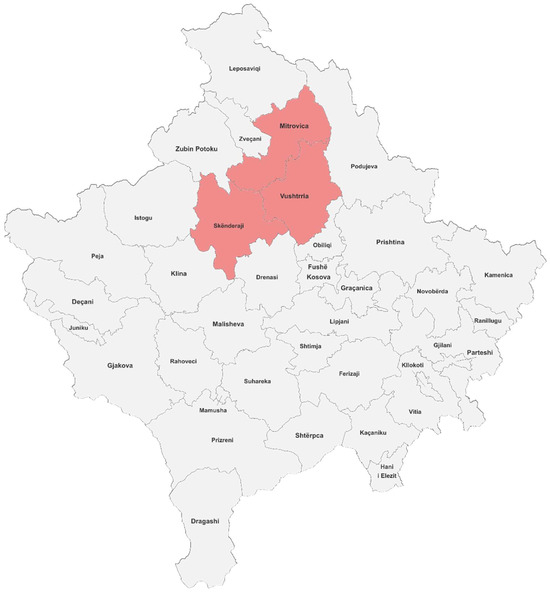
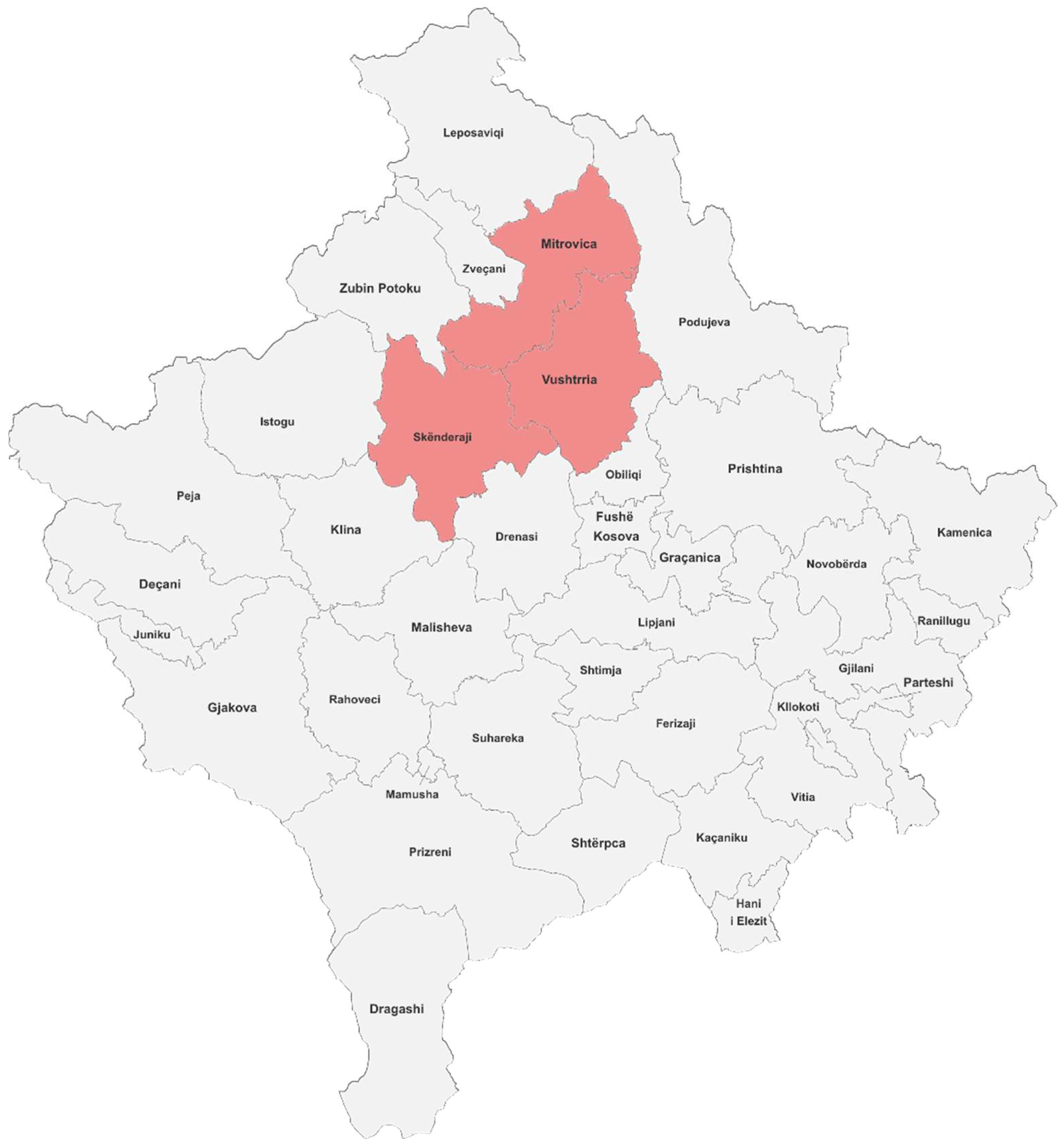
The survey was conducted in three municipalities of northern Kosovo (Mitrovica, Vushtrri, and Skenderaj) characterized by small-to medium-scale dairy farming under semi-intensive systems, defined in this study as farms with 4–42 lactating cows operating under predominantly semi-intensive management (Figure 1). These municipalities were purposefully selected due to their geographical proximity to the University of Prishtina, Faculty of Agriculture and Veterinary Medicine, which enabled logistical feasibility of repeated field visits and close collaboration with local veterinary practitioners. The stratified convenience sampling approach was chosen to capture variability in herd size and management practices within the study areas. As farmers were not randomly selected, the findings are intended to describe biosecurity patterns in the survey population rather than to provide nationally representative estimates. All participating enterprises were exclusively dairy operations. Eligible farms were required to have a minimum herd size of four lactating cows. Farms that were not engaged in commercial milk production or declined participation were not included. Farms in these municipalities are typically family-run, with cattle housed in simple barn structures with variable access to grazing. The survey was carried out on 55 dairy farms, with herd size averaging 17.6 cows (SD = 9.3; range: 4–42 lactating cows), representing a typical distribution for smallholder and semi-commercial dairy systems in the region.
Figure 1.
Map of Kosovo indicating the three surveyed municipalities (Mitrovica, Vushtrri, and Skenderaj) highlighted in color to show the geographic distribution of the participating dairy farms.
2.2. Data Collection Tool
Biosecurity was assessed using the Biocheck.UGent™ dairy cattle questionnaire, developed by Ghent University and Liege University and validated across multiple cattle production contexts accessed through the official online platform (https://biocheck.ugent.be/, accessed on 14 December 2025). The questionnaire was applied without modification; no questions were revised, removed or added for the Kosovo context, enduring full methodological consistency and direct comparability with international benchmark data. The dairy survey is divided into two principal dimensions: external biosecurity (five subcategories) and internal biosecurity (six subcategories).
External biosecurity subcategories were: (i) purchase and reproduction, (ii) transport and carcass disposal, (iii) feed and water, (iv) visitors and farmworkers, and (v) control of vermin and other animals.
Internal biosecurity subcategories were: (i) working organization and equipment, (ii) calf management, (iii) calving management, (iv) health management, (v) dairy management, and (vi) adult cattle management.
Each question was scored on a scale of 0–100%, with predefined risk-based weights applied to reflect the relative epidemiological importance of specific practices for pathogen introduction or within-herd transmission. Practices considered to pose higher epidemiological risk contribute more strongly to the final subcategory and overall biosecurity scores. Weighted subcategory scores are aggregated to yield external and internal scores, as well as a composite total biosecurity score. This weighting approach enables prioritization of critical control points but also implies that deficiencies in highly weighted practices may disproportionately reduce overall scores. These continuous measures facilitate quantitative comparisons across farms and with reference data in the global RBSS database, which is derived using the same weighted scoring methodology.
2.3. Questionnaire Administration
The questionnaire was administered through face-to-face interviews conducted on the farm, combined with direct visual assessment of facilities and management practices. Interviews were conducted by a trained student who received prior instructions and practical training on the administration of the questionnaire and on-farm biosecurity assessment procedure over a two-week period; interviews were conducted under the supervision of academic staff and veterinarian practitioners. The use of a single trained observer across all farm visits was intended to minimize inter-observer variability in scoring and interpretation. Farmers were informed in advance about the objectives of the study, and participation was voluntary. Each interview lasted approximately 40–60 min, depending on the farm size and complexity.
To minimize reporting bias, self-reported answers were cross-checked against on-farm observations, verifying measures such as the presence of quarantine pens, calf barns, visitor hygiene facilities, and disinfection practices.
2.4. Biosecurity Scoring and Benchmarking
Biosecurity scores were calculated using the online Biocheck.UGent™ platform (biocheckgent.com) which assigns weighted scores for each question based on expert-derived estimates of epidemiological importance. Scores for each subcategory are expressed as a percentage, ranging from 0% (absence of biosecurity) to 100% (optimal biosecurity). External, internal, and overall biosecurity scores were automatically generated by the platform. To enable comparative interpretation, the Biocheck.UGent™ platform benchmarks the generated farm-level biosecurity scores against global reference values, thereby enabling an objective comparison of Kosovo dairy farms with international performance standards.
The platform functions as a rule-based scoring tool and does not employ generative artificial intelligence, machine learning, or automated interpretation beyond the pre-defined algorithmic calculations. All outputs generated by the platform were reviewed and interpreted by the authors.
Global reference values provided by the platform are derived from international datasets and are presented solely for contextual benchmarking, not as expected performance thresholds for Kosovo farms.
2.5. Statistical Analysis
Analyses were performed using IBM SPSS Statistics for Windows, version 29.0 (IBM Corp., Armonk, NY, USA) [20]. Data distribution was assessed using the Shapiro–Wilk test, which indicated non-normality for most biosecurity score variables. Consequently, descriptive statics for Kosovo farm-level data are reported primarily as medians and interquartile ranges (IQRs). Means values are additionally reported solely for comparison with the global reference data (platform benchmarking database reports mean scores).
Differences between Kosovo and global reference scores were calculated as absolute differences and relative ratios. Correlation between herd size and biosecurity scores was assessed using Spearman’s rank correlation (rs). Statistical significance was set at p < 0.05. Given the descriptive and exploratory nature of the study, no multivariable modeling was undertaken.
2.6. Ethical Considerations, Consent, and Anonymity
The study protocol was reviewed and approved by the Ethics Sub-Committee of the Faculty of Agriculture and Veterinary Medicine, University of Prishtina. All participants provided verbal informed consent prior to data collection. Farm-level data were anonymized, and results are reported in aggregated form to ensure confidentiality.
3. Results
Biosecurity implementation among the 55 surveyed dairy farms in northern Kosovo was generally low and unevenly distributed between external and internal dimensions. The median external biosecurity score was 47.8%, whereas the median internal biosecurity score was markedly lower at 29.0% (Table 1). These values indicate that, on most farms, fewer than half of the risk-weighted measures aimed at preventing pathogen introduction were implemented and, furthermore that measures intended to limit within-herd transmission were implemented to an even lesser extent.
Table 1.
Distribution of external and internal biosecurity scores across dairy farms (n = 55) in northern Kosovo, stratified by subcategory. Scores are expressed as percentages (0–100) and reported as medians, means, and interquartile ranges (IQRs).
The dispersion of composite biosecurity scores across farms was limited. Interquartile ranges (IQRs) were 1.1 percentage points for external and 1.9 percentage points for internal biosecurity, reflecting a high degree of clustering around similar scores. This limited variability corresponds to the structural similarity of the surveyed farms (predominantly small to medium-sized, family-operated enterprises with comparable management routines) and to the weighted structure of the Biocheck.UGent™ scoring system, in which deficiencies in highly weighted practices contribute similarly to overall scores across farms. No association was detected between herd size and overall biosecurity score, nor between herd size and external or internal biosecurity scores (Spearman’s rank correlation, p > 0.05).
External biosecurity performance differed across subcategories, although none reached levels indicative of comprehensive implementation (Table 1A). The lowest median score was observed for purchase and reproduction (38.7%), identifying animal introduction procedures as the principal external vulnerability among the surveyed farms. This reflects limited use of quarantine, testing, or structured health assessment of incoming animals.
Low median scores were also observed for feed and water (41.2%) indicating inconsistent control of contamination risks associated with feed storage, water sources, and feeding equipment. In contrast, visitors and farmworkers achieved the highest median external biosecurity score (57.8%), suggesting partial implementation of access control and basic hygiene measures for people entering the farm.
Intermediate median scores were recorded for transport and carcass removal (50.2%) and control of vermin and other animals (51.0%), reflecting basic but incomplete implementation of measures addressing episodic and visible biosecurity risks.
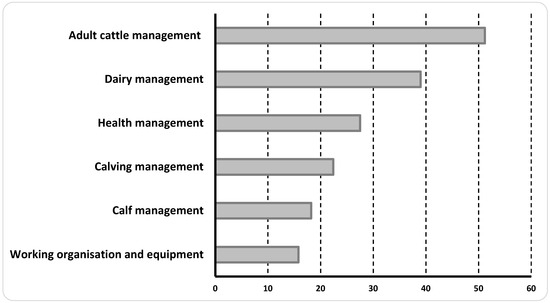
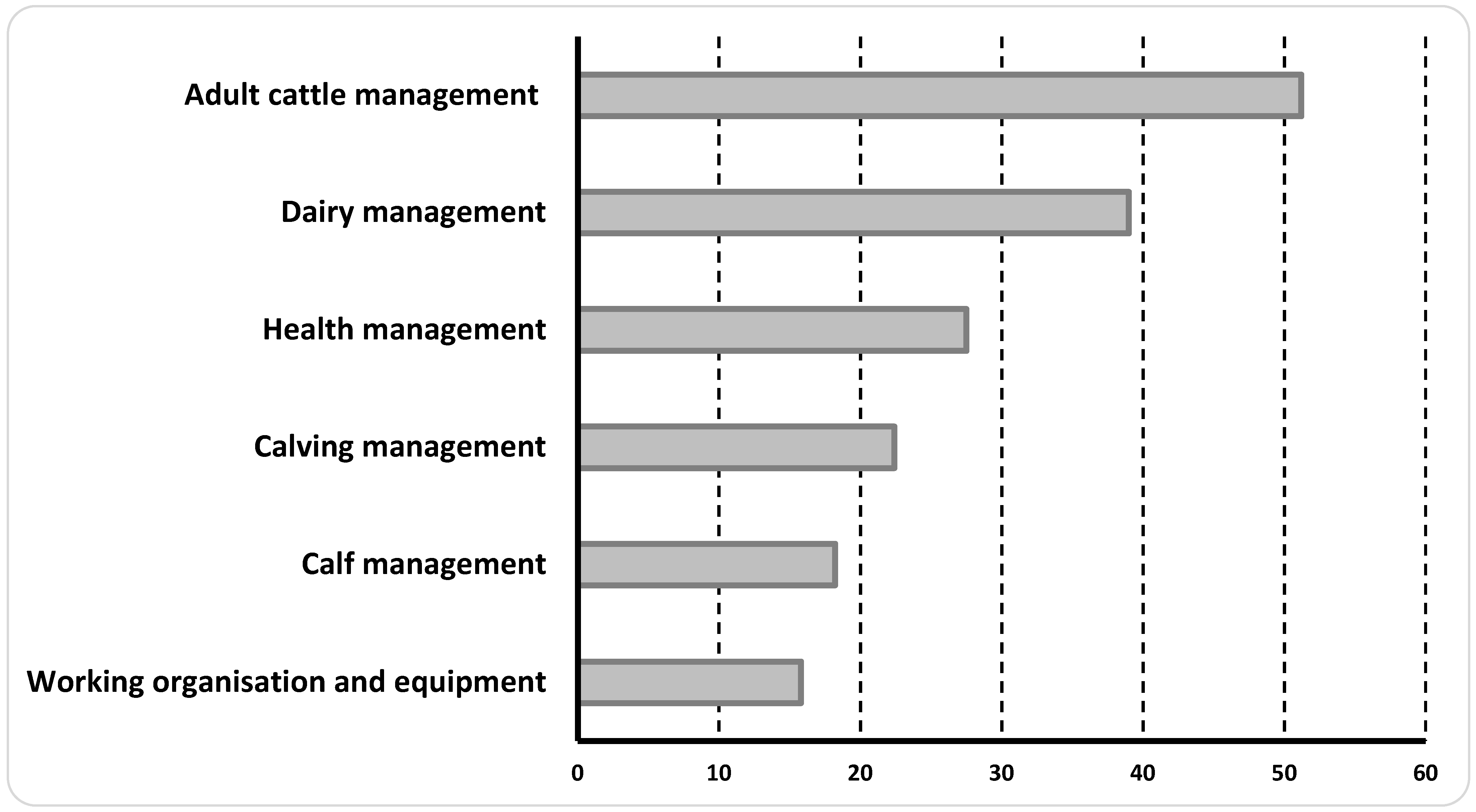
Internal biosecurity scores were consistently lower than external biosecurity scores across all subcategories (Table 1B). The lowest median score was recorded for working organization and equipment (15.8%), indicating very limited implementation of measures related to workflow organization, use of shared equipment, and routine hygiene barriers. Similarly, low median scores were observed for calf management (18.2%) and calving management (22.4%), reflecting substantial gaps in early-life disease prevention and peripartum hygiene.
Moderate deficiencies were observed in health management (27.5%) and dairy management (39.0%), while adult cattle management achieved the highest median internal biosecurity score (51.2%). Despite this relative strength, scores in this subcategory still indicate incomplete and inconsistent application of measures related to grouping, isolation, and handling of adult animals.
Figure 2 presents internal biosecurity subcategories ranked from the lowest to highest median score, highlighting routine organization, equipment use, and young-stock management as priority areas for improvement.
Figure 2.
Median internal biosecurity subcategory scores ranked from lowest to highest in dairy farms of northern Kosovo (n = 55).
To further describe the concentration of low biosecurity scores and to support interpretation of the narrow interquartile ranges, farms were classified into predefined performance categories (<25%, 25–49%, and ≥50%) for each Biocheck.UGent™ subcategory (Table 2). This analysis demonstrated a high degree of uniformity in internal biosecurity deficiencies. For example, all farms scored below 25% for working organization and equipment and calf management, and more than 90% scored below 25% for calving management.
Table 2.
Proportion of dairy farms (n = 55) within Biocheck.UGent™ predefined biosecurity performance categories.
In contrast, several external biosecurity subcategories showed a higher proportion of farms achieving scores ≥50%, particularly visitors and farmworkers and control of vermin and other animals, indicating partial but uneven implementation of selected external measures.
For contextual comparison, mean biosecurity scores of Kosovo dairy farms were compared with global reference values derived from the Biocheck.UGent™ international database (Table 3). Mean values were used exclusively for this comparison, as global benchmarks are available only as aggregated means and not as medians or farm-level distributions. Kosovo farms achieved a mean external biosecurity score corresponding to approximately 71% of the global reference level, while mean internal biosecurity score reached approximately 73% of the global benchmark. Despite this apparent proportional similarity, absolute differences remained substantial across several subcategories. The largest deficits were observed for purchase and reproduction (−37 percentage points) and calf management (−24 percentage points), highlighting critical weaknesses in animal introduction procedures and young-stock management.
Table 3.
Median internal biosecurity subcategory scores of 55 dairy farms in northern Kosovo, ranked from lowest to highest. Scores reflect the level of implementation of practices intended to limit within-herd pathogen transmission, as assessed using the Biocheck.UGent™ risk-based scoring system.
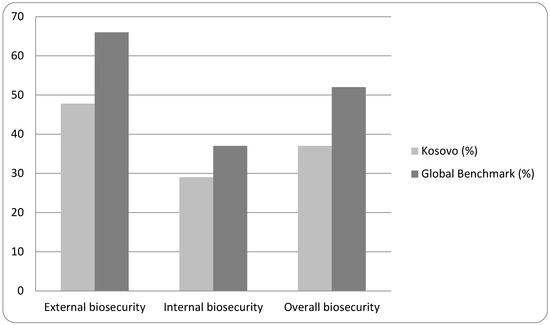
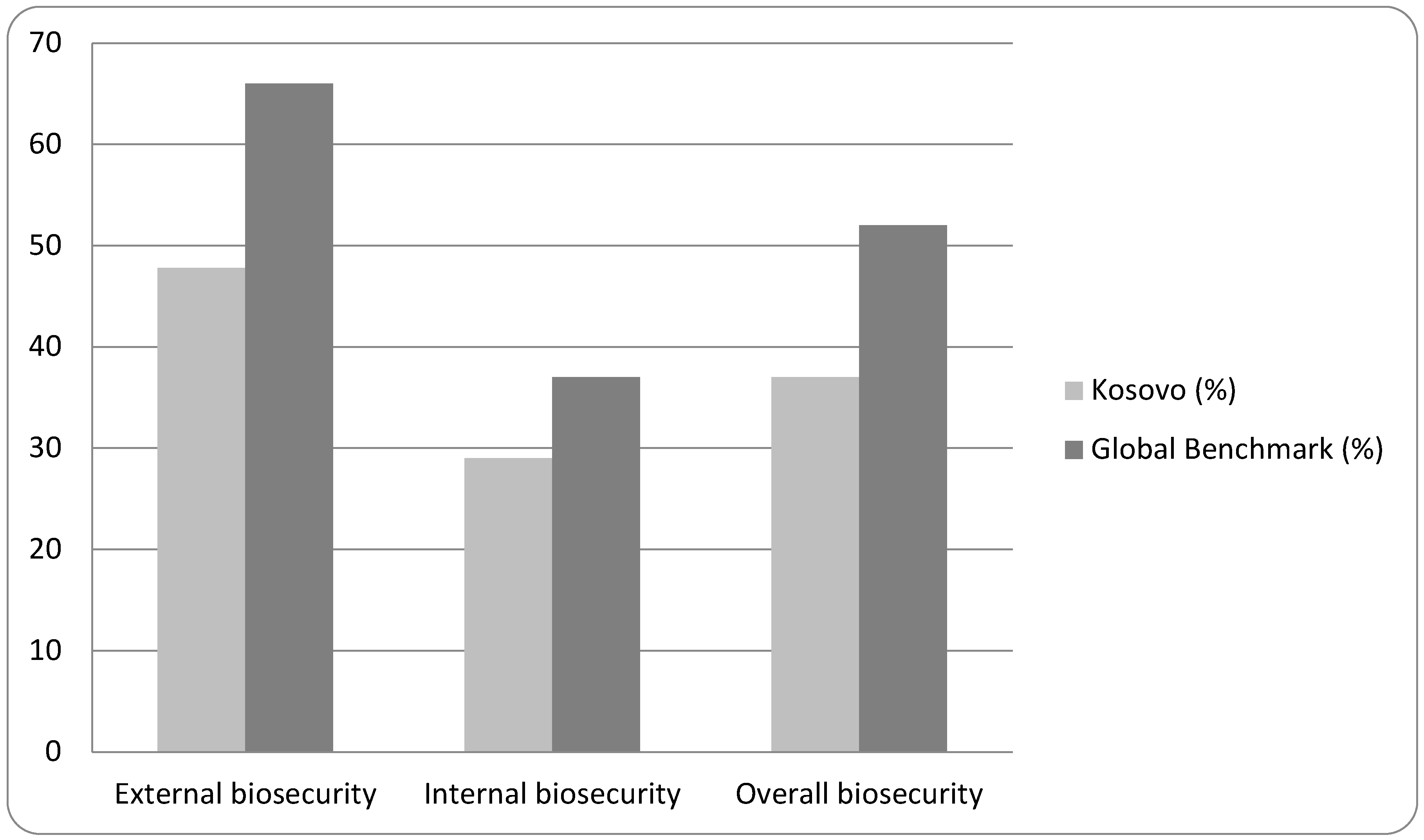
In contrast, mean scores higher than the global reference were observed for transport and carcass removal and working organization and equipment. These differences reflect variation in mean values and should be interpreted cautiously, as the weighted risk-based scoring system does not imply linear epidemiological effects. Overall, the mean total biosecurity score for Kosovo farms (37%) was 15 percentage points lower than the global average (52%), confirming that biosecurity implementation in the surveyed farms remains substantially below international reference levels.
Figure 3 illustrates the relative position of Kosovo dairy farms with respect to global benchmark values and highlights the persistent imbalance between external and internal biosecurity performance.
Figure 3.
Comparison of external, internal, and overall biosecurity scores of dairy farms (n = 55) in northern Kosovo with global reference values from the Biocheck.UGent™ international database. Kosovo values represent mean scores of the surveyed farms; reference values represent aggregated international benchmarks.
4. Discussion
This study represents the first quantitative, risk-based assessment of biosecurity implementation on dairy farms in northern Kosovo using a standardized and internationally validated scoring framework. The findings do not suggest a complete absence of biosecurity measures, but rather a systematic imbalance between practices aimed at preventing pathogen introduction and those intended to limit within-herd transmission. This distinction is critical for interpretation, as it highlights selective implementation rather than general neglect of biosecurity principles [14].
The predominance of external over internal biosecurity measures observed in Kosovo dairy farms is consistent with findings reported across diverse cattle production systems. Risk-based biosecurity assessments repeatedly show that practices related to bio-exclusion are more frequently implemented than those related to bio-containment, largely because external measures are episodic, visible and easier to enforce, whereas internal measures require sustained behavioral compliance and structured daily routines [21]. The present results align with this pattern and reinforce the interpretation that internal biosecurity represents a persistent vulnerability in dairy production rather than a context-specific failure.
Interpreted through the International Dairy Federation’s conceptualization of biosecurity as a multi-layered system, this imbalance reflects structural and organizational challenges rather than isolated technical shortcomings [13]. In the present study, the weakest internal biosecurity performance was observed in subcategory related to working organization and equipment, calf management, and calving management, all of which constitute critical control points in dairy herd health management. These practices are widely recognized as central to disease prevention, yet they are among the most difficult to implement consistently because they depend on clearly defined workflows, labor allocation, and sustained daily compliance [22]. Although clinical outcomes were not assessed directly, persistent deficiencies in these areas are likely to increase vulnerability to enteric and respiratory infections in young stock, with potential implications for herd productivity and longevity.
Comparative evidence from dairy systems Europe, south Asia, Latin America and east sub-Saharan Africa indicate that the biosecurity profile observed in Kosovo is not unusual for smallholder and semi-commercial production contexts. Studies applying risk-based or structured biosecurity assessments consistently report uneven implementation, with external measures more frequently adopted than practices targeting within-herd transmission [15,17]. This recurring pattern suggests that weaknesses in internal biosecurity are not the result of isolated local constraints but rather reflect a structural vulnerability inherent to many dairy systems operating under limited resources and transitional management models. Similar disparities between external and internal biosecurity have been documented across geographically and socioeconomically diverse settings, reinforcing the interpretation that internal biosecurity challenges transcend regional boundaries [19].
Evidence from African and Balkan dairy systems further demonstrates that these shortcomings are closely linked to farm organization and labor dynamics rather than to a lack of awareness alone. Fragmented farm layouts, limited labor specialization, and the need to balance multiple daily tasks often constrain the consistent application of routine preventive measures, particularly those related to hygiene workflows and young-stock management [18,23]. Similar patterns have been reported also in highly regulated dairy systems from smallholder and transitional contexts. Findings from Sweden indicate that strong veterinary governance and comprehensive policy frameworks alone are insufficient unless internal biosecurity is continuously reinforced through training, feedback, and shared responsibility among farmers and veterinarians [24]. These observations suggest that regulatory strength alone cannot compensate for weaknesses in routine organization and behavioral compliance.
The central role of farm-level behavior is further strengthened by recent evidence from the United States. During outbreaks of highly pathogenic avian influenza H5N1 in dairy cattle, disease transmission occurred despite advanced surveillance systems and well-established regulatory preparedness. Investigations showed that prevention remained strongly dependent on the consistency of daily hygiene routines, control of animal movements, and adherence to internal biosecurity protocols within farms [11]. These findings demonstrate that internal biosecurity vulnerabilities may persist even in technologically advanced systems when routine practices are applied inconsistently.
Comparable challenges have been reported in southeast Asia. A One Health-based prioritization of emerging zoonotic diseases in northern Vietnam showed that fragmented production systems, informal animal movements, and uneven engagement with veterinary services complicate the translation of disease preparedness frameworks into effective farm-level biosecurity implementation [25]. These findings emphasize that internal biosecurity weaknesses are not solely driven by resource constraints but are also shaped by organizational structures and behavioral compliance. Together, these findings reinforce the interpretation that internal biosecurity weaknesses are shaped not only by resource constraints, but also by organizational structures and behavioral compliance.
Patterns observed in this study also suggest that structural farm characteristics influence biosecurity implementation, but not uniformly across all practices. Larger operations tend to adopt more formalized preventive measures, likely reflecting stronger economic incentives and enhanced access to veterinary services. However, the absence of consistent improvements in routine hygiene-related practices across farm sizes indicates that capacity alone does not guarantee effective implementation. This observation aligns with findings from diverse production systems, where behavioral compliance and risk perception play a decisive role in determining the effectiveness of daily preventive practices [3,15].
In contrast, practices related to vermin control and management of other animals tends to be more consistently implemented than other biosecurity measures. This pattern aligns with recent international observations emphasizing that pest control is often perceived by farmers as an immediate and tangible biosecurity action, whereas preventive measures such as quarantine, structured hygiene routines, and controlled animal movement are less visible and, therefore, less intuitive. Evidence from transport-linked biosecurity assessments further suggests that measures addressing external and visible risks are more readily adopted than those requiring sustained internal discipline, even in systems with otherwise advanced disease preparedness. Nonetheless, variability in implementation within this domain indicates that familiarity alone does not guarantee consistency, leaving scope for targeted improvement [26,27].
Structural capacity, including herd size and access to infrastructure, appears to influence the feasibility of adopting certain biosecurity measures; larger operations are generally better positioned to establish designated facilities and formalized workflows. Studies from Nordic and Australian dairy sectors demonstrate that farmer awareness, risk perception, and routine compliance are decisive determinants of whether biosecurity protocols are applied consistently over time [28,29]. These findings reinforce the importance of targeted education and farmer training, particularly for smallholders who may underestimate the value of consistent hygiene measures.
Viewed in a broader international context, Kosovo’s biosecurity profile reflects systemic challenges rather than isolated national shortcomings. Even in countries with strong veterinary governance and surveillance systems, internal biosecurity, particularly visitor hygiene and daily animal-handling routines, remains a recognized vulnerability. From a One Health perspective, biosecurity should therefore be understood as a risk-modifying framework that reduces the probability of pathogen introduction and spread rather than as a guarantee against disease occurrence. While the present study does not assess antimicrobial resistance or zoonotic outcomes directly, the strengthening of on-farm biosecurity is consistently endorsed as a foundational strategy for improving herd health management and enhancing the resilience of dairy systems to both endemic and emerging disease threats.
5. Limitations
Several limitations should be taken into consideration when interpreting the findings from this study. First, the study included 55 farms from three municipalities in northern Kosovo. While this sample provides a structured baseline overview of biosecurity practices in the study area, the limited sample size and geographic scope restrict extrapolation of the findings to the national level. Similar constraints have been reported in other applications of risk-based biosecurity scoring systems in smallholder and transitional dairy systems, where logistical and resource limitations preclude large-scale surveys.
Second, the application of the Biocheck.UGent™ questionnaire required substantial time and on-farm engagement, combining structured interviews with direct observations. Although this approach strengthens data quality and reduces reliance on self-reporting alone, it also limits feasibility for routine or repeated large-scale assessment in smallholder settings. As noted in previous studies, comprehensive risk-based biosecurity audits are methodologically robust but resource-intensive, which may constrain their adoption outside research or targeted advisory contexts [30].
Third, although confidentiality and anonymity were assured, the study remained partly reliant on self-reported information, which introduces the potential for information bias, including social desirability bias [8]. To mitigate this, selected practices were cross-checked through direct on-farm observation; however, some degree of overestimation of compliance cannot be fully excluded.
Fourth, the cross-sectional study design captures biosecurity practices at a single point in time and does not account for temporal variability. Biosecurity implementation may fluctuate seasonally or in response to disease outbreaks, changes in labor availability, or market pressures. Practices such as carcass handling, cleaning routines, and visitor management may therefore differ at other times of the year. Longitudinal studies would be required to assess the stability of the biosecurity practices and evaluate whether improvements are sustained over time [31].
Finally, although Biocheck.UGent™ is a validated and widely used risk-based scoring system, its weighting system is derived primarily from expert consensus rooted in western European production systems. The applicability of these weights to smallholder dairy systems in southeastern Europe may, therefore, be imperfect, as local risk pathways (such as informal animal movements and limited infrastructure) may differ in relative importance.
6. Recommendations
The results of this study support a set of practical, context-appropriate recommendations aimed at strengthening dairy farm biosecurity in northern Kosovo. Given the consistently low scores observed for purchase and reproduction, priority should be placed on improving animal introduction practices. In settings where informal cattle trade is common and resources are limited, feasible entry points include temporary separation of incoming or returning animals, basic veterinary health checks prior to integration, and increased farmer awareness of introduction-related risks. These measures are low-cost, do not require structural investment, and directly target one of the most critical pathways for pathogen entry identified in this study.
Improvement of internal biosecurity should focus primarily on practices related to working organization and equipment, calving management, and calf management, which were identified as the weakest domains. Many of these practices can be strengthened through organizational changes rather than infrastructural upgrades. Clearer separation of functional areas, improved workflow planning, routine cleaning of calving spaces, and consistent application of hygiene barriers during high-risk activities represent achievable steps even in smallholder systems. Importantly, these measures depend more on behavioral consistency and task organization than on herd size or capital intensity.
Measures related to adult cattle management, including isolation and grouping practices, should also be reinforced to limit within-herd transmission once disease is present. While designated isolation facilities may not be feasible on all farms, temporary physical separation and clear handling protocols can reduce transmission risk without major investment.
The relatively better performance observed for visitors and farmworkers suggests an opportunity to build on existing awareness. The adoption of farm-specific footwear or clothing, combined with simple entry-point hygiene barriers, offers practical means of reducing external pathogen introduction. However, the variability observed across farms indicates that compliance remains inconsistent.
Overall, the recommendations emerging from this study point towards gradual and feasible improvements that can be incorporated into existing daily farm routines, rather than comprehensive biosecurity programs that exceed current capacities. In the context of dairy farming in Kosovo, where most holdings operate with limited labor and infrastructure, risk-based scoring tools such as Biocheck.UGent™, when applied in collaboration with veterinarians, can help highlight priority weaknesses, document changes in practice over time, and guide advisory efforts toward measures that are both epidemiologically relevant and realistically achievable under local conditions.
7. Conclusions
This study provides the first quantitative risk-based assessment of biosecurity implementation on small- and medium-sized dairy farms in northern Kosovo, establishing a baseline for structured baseline evaluation in this production context. The results demonstrate that biosecurity practices are unevenly applied, with consistently weaker performance in internal biosecurity domains that are critical for limiting within-herd disease transmission. These weaknesses reflect organizational and behavioral constraints rather than a complete absence of biosecurity awareness. By applying an internationally validated scoring system, the study enables structured identification of priority biosecurity gaps and facilitates cautious comparison with broader reference data. At the same time, the findings highlight the importance of interpreting benchmark scores in light of production context, particularly in smallholder systems where local risk pathways and implementation capacity may differ from those assumed in high-input settings.
Overall, the study contributes evidence that strengthening internal biosecurity through realistic, context-sensitive approaches remains a central challenge for dairy systems in transition. Addressing this challenge is likely to yield meaningful gains in herd health resilience, even in the absence of major infrastructural investment.
Author Contributions
Conceptualization, B.M. and D.V.; methodology, B.M., A.S. and B.B.; software, B.M., D.V., C.R.Y. and C.S.; validation, C.S.; formal analysis, D.V., A.S. and C.S.; investigation, B.M., D.V., S.H. and A.C.; resources, B.M.; data curation, C.S.; writing—original draft preparation, B.M., D.V., A.S. and B.B.; writing—review and editing, B.M., A.S., C.S. and C.R.Y.; visualization, B.M. and D.V.; supervision, B.M., A.S. and B.B.; project administration, B.M.; funding acquisition, B.M. All authors have read and agreed to the published version of the manuscript.
Funding
This article is based on self-funded work by the authors, who did not receive any external financial support.
Institutional Review Board Statement
Ethical approval for this study was obtained from the Committee for Research Ethics of the Faculty of Agriculture and Veterinary Medicine, University of Prishtina.
Informed Consent Statement
Verbal consent was obtained by the person responsible for each herd.
Data Availability Statement
Dataset available on request from the authors.
Acknowledgments
The authors extend their sincere gratitude to the veterinary practitioners who contributed their time and expertise to support the implementation of this study and to all participating farmers for their collaboration and trust. AI Acknowledgement: ChatGPT with DALL·E 3 (OpenAI, December 2025 version) was used solely for generating the graphical abstract. The authors have reviewed and edited the final image to ensure its accuracy and relevance. Responsibility for the final content and design remains with the authors.
Conflicts of Interest
The authors declare no conflict of interest.
References
- Saegerman, C.; Renault, V. Livestock Biosecurity from a One Health Perspective. Animals 2024, 14, 3309. [Google Scholar] [CrossRef] [Scilit] [PubMed]
- Angulo, F.J.; Baker, N.L.; Olsen, S.J.; Anderson, A.; Barrett, T.J. Antimicrobial use in agriculture: Controlling the transfer of antimicrobial resistance to humans. Semin. Pediatr. Infect. Dis. 2004, 15, 78–85. [Google Scholar] [CrossRef] [Scilit]
- Renault, V.; Damiaans, B.; Sarrazin, S.; Humblet, M.F.; Dewulf, J.; Saegerman, C. Biosecurity practices in Belgian cattle farming: Level of implementation, constraints and weaknesses. Transbound. Emerg. Dis. 2018, 65, 1246–1261. [Google Scholar] [CrossRef] [Scilit]
- Denis-Robichaud, J.; Dubuc, J.; Haine, D.; Buczinski, S. Biosecurity and herd health management practices on Canadian dairy farms. J. Dairy Sci. 2019, 102, 9536–9547. [Google Scholar] [CrossRef] [Scilit]
- Maunsell, F.P.; Donovan, G.A. Mycoplasma bovis infections in young calves. Vet. Clin. N. Am. Food Anim. Pract. 2009, 25, 139–177. [Google Scholar] [CrossRef] [Scilit]
- Maunsell, F.P.; Woolums, A.R.; Francoz, D.; Rosenbusch, R.F.; Step, D.L.; Wilson, D.J.; Janzen, E.D. Mycoplasma bovis infections in cattle. J. Vet. Intern. Med. 2011, 25, 772–783. [Google Scholar] [CrossRef] [Scilit] [PubMed]
- Svensson, C.; Lundborg, K.; Emanuelson, U.; Olsson, S.O. Morbidity in Swedish dairy calves from birth to 90 days of age and individual calf-level risk factors for infectious diseases. Prev. Vet. Med. 2003, 58, 179–197. [Google Scholar] [CrossRef] [Scilit]
- Sarrazin, S.; Cay, A.B.; Laureyns, J.; Dewulf, J.; Maes, D. A survey on biosecurity and management practices in selected Belgian cattle farms. Prev. Vet. Med. 2014, 117, 129–139. [Google Scholar] [CrossRef] [Scilit]
- Chantziaras, I.; Boyen, F.; Callens, B.; Dewulf, J. Correlation between veterinary antimicrobial use and antimicrobial resistance in food-producing animals: A report on seven countries. J. Antimicrob. Chemother. 2014, 69, 827–834. [Google Scholar] [CrossRef] [Scilit]
- Laanen, M.; Persoons, D.; Ribbens, S.; de Jong, E.; Callens, B.; Strubbe, M.; Dewulf, J. Relationship between biosecurity and production/antimicrobial treatment characteristics in pig herds. Vet. J. 2013, 198, 508–512. [Google Scholar] [CrossRef] [Scilit] [PubMed]
- Owusu, H.; Sanad, Y.M. Comprehensive Insights into Highly Pathogenic Avian Influenza H5N1 in Dairy Cattle: Transmission Dynamics, Milk-Borne Risks, Public Health Implications, Biosecurity Recommendations, and One Health Strategies for Outbreak Control. Pathogens 2025, 14, 278. [Google Scholar] [CrossRef] [Scilit]
- Gwyther, C.L.; Williams, A.P.; Golyshin, P.N.; Edwards-Jones, G.; Jones, D.L. The environmental and biosecurity characteristics of livestock carcass disposal methods: A review. Waste Manag. 2011, 31, 767–778. [Google Scholar] [CrossRef] [Scilit]
- International Dairy Federation. Preface: Message from the IDF Director General. In IDF Animal Health Report—Issue N°19; International Dairy Federation: Brussels, Belgium, 2025; pp. 2–3. [Google Scholar]
- Damiaans, B.; Renault, V.; Sarrazin, S.; Berge, A.C.; Pardon, B.; Saegerman, C.; Dewulf, J. A risk-based scoring system to quantify biosecurity in cattle production. Prev. Vet. Med. 2020, 179, 104992. [Google Scholar] [CrossRef] [Scilit] [PubMed]
- Dhaka, P.; Sharma, P.; Sindhu, N.; Singh, M.; Chantziaras, I.; Caekebeke, N.; Dewulf, J. Situation analysis and recommendations for the biosecurity status of dairy farms in Punjab, India. Animals 2023, 13, 3458. [Google Scholar] [CrossRef] [Scilit]
- Mohammed, H.O.; Wade, S.E.; Schaaf, S. Risk factors associated with Cryptosporidium parvum infection in dairy cattle in southeastern New York State. Vet. Parasitol. 1999, 83, 1–13. [Google Scholar] [CrossRef] [Scilit]
- Nyokabi, S.; Lamuka, P.; Mussa, A.; Ekiri, A.B. Adoption of Biosecurity Practices in Smallholder Dairy Farms in Ethiopia. Transbound. Emerg. Dis. 2023, 2277409. [Google Scholar] [CrossRef] [Scilit]
- Postoli, R.; Arslan Yavuz, H.H.; Or, M.E.; Zalla, P.; Ozuni, E.; Koni, A.; Bilgic, B.; Sulce, M.; Say, E.; Muca, G.; et al. The preliminary data on the biosecurity level of dairy cattle in Albania using the Biocheck.UGent scoring system. Int. J. Adv. Nat. Sci. Eng. Res. 2024, 8, 163–169. Available online: https://as-proceeding.com/index.php/ijanser/article/view/1979 (accessed on 18 December 2025).
- Nöremark, M.; Frössling, J.; Sternberg Lewerin, S. A survey of visitors on Swedish livestock farms with reference to the spread of animal diseases. BMC Vet. Res. 2013, 9, 184. [Google Scholar] [CrossRef] [Scilit]
- IBM Corp. IBM SPSS Statistics for Windows, version 29.0; IBM Corp.: Armonk, NY, USA, 2022. [Google Scholar]
- Villarroel, A.; Dargatz, D.A.; Lane, V.M.; McCluskey, B.J.; Shere, J.A.; Salman, M.D. Suggested outline of potential critical control points for biosecurity and biocontainment on large dairy farms. J. Am. Vet. Med. Assoc. 2007, 230, 808–819. [Google Scholar] [CrossRef] [Scilit] [PubMed]
- Fossler, C.P.; Wells, S.J.; Kaneene, J.B.; Ruegg, P.L.; Warnick, L.D.; Bender, J.B.; Eberly, L.; Godden, S.; Halbert, L. Herd-level factors associated with isolation of Salmonella in a multi-state study of conventional and organic dairy farms: I. Salmonella shedding in cows. Prev. Vet. Med. 2005, 70, 257–277. [Google Scholar] [CrossRef] [Scilit] [PubMed]
- Otte, M.J.; Chilonda, P. Cattle and small ruminant production systems in sub-Saharan Africa. In FAO Animal Production and Health Paper; FAO: Rome, Italy, 2002; p. 156. [Google Scholar]
- Kjellsdotter, S.; Stengarde, L.; Osterberg, J. Strengthening biosecurity on Swedish dairy farms. In IDF Animal Health Report—Issue N°19; International Dairy Federation: Brussels, Belgium, 2025; pp. 48–49. [Google Scholar]
- Nam, L.H.; Nguyen-Tien, T.; Lindahl, J.F.; Dang-Xuan, S.; Pham-Duc, P.; Unger, F.; Vuong, B.N.; Tung, D.D.; Nguyen-Viet, H.; Lee, H.S. A One Health Approach to Prioritizing Emerging Zoonotic Diseases (EZDs) in Northern Vietnam. ONE Health 2025, 21, 101177. [Google Scholar] [CrossRef] [Scilit] [PubMed]
- Brunt, M.W.; Kelton, D.F. Biosecurity isn’t considered a problem, until it’s a problem. In IDF Animal Health Report—Issue N°19; International Dairy Federation: Brussels, Belgium, 2025; p. 36. [Google Scholar]
- Budde, M.; Tvistholm, B. Behind the wheel: Insights on biosecurity from truck drivers collecting livestock. In IDF Animal Health Report—Issue N°19; International Dairy Federation: Brussels, Belgium, 2025; pp. 34–35. [Google Scholar]
- Smistad, M.; Lindheim, D.; Rattenborg, E.; Castro, H.; Stengarde, L.; Lundberg, A. Strengthening disease surveillance and preparedness: A Nordic dairy sector collaboration network (NMSM). In IDF Animal Health Report—Issue N°19; International Dairy Federation: Brussels, Belgium, 2025; pp. 6–8. [Google Scholar]
- Bullen, S. Safeguarding Australian dairy: How AUSVETPLAN prepares the country for animal disease emergencies. In IDF Animal Health Report—Issue N°19; International Dairy Federation: Brussels, Belgium, 2025; pp. 10–11. [Google Scholar]
- Siekkinen, K.M.; Heikkilä, J.; Tammiranta, N.; Rosengren, H. Measuring the costs of biosecurity on poultry farms: A case study in broiler production in Finland. Acta Vet. Scand. 2012, 54, 12. [Google Scholar] [CrossRef] [Scilit] [PubMed]
- Pardon, B.; De Bleecker, K.; Hostens, M.; Callens, J.; Dewulf, J.; Deprez, P. Longitudinal study on morbidity and mortality in white veal calves in Belgium. BMC Vet. Res. 2012, 8, 26. [Google Scholar] [CrossRef] [Scilit] [PubMed]

Disclaimer/Publisher’s Note: The statements, opinions and data contained in all publications are solely those of the individual author(s) and contributor(s) and not of MDPI and/or the editor(s). MDPI and/or the editor(s) disclaim responsibility for any injury to people or property resulting from any ideas, methods, instructions or products referred to in the content. |
© 2026 by the authors. Licensee MDPI, Basel, Switzerland. This article is an open access article distributed under the terms and conditions of the Creative Commons Attribution (CC BY) license.