Smart Farming and the SDGs: Emerging Research Patterns and Sustainability Implications

 ,
,  , ,
, ,  and
and 
Abstract
1. Introduction
2. Methods
2.1. General Approach
2.2. Data Collection
- Inclusion criteria:
- Document type: articles.
- Language: unrestricted (predominantly English).
- Time: unrestricted.
- Thematic coverage: all categories available on the Web of Science Core Collection (WoSCC).
2.3. Analytical Techniques Applied
2.3.1. Scientific Growth
2.3.2. Scientific Productivity
2.3.3. Academic Impact
2.3.4. Relationships and Scientific Networks
2.3.5. Relationship Between Academic Impact and Sustainable Development Goals
2.4. Analytical Procedure
- VOSviewer (Centre for Science and Technology Studies, Leiden, The Netherlands, v.1.6.19): for network analyses (co-authorship, keyword co-occurrence) and visualization of thematic clusters.
- Microsoft Excel 365 (Microsoft Corporation, Redmond, WA, USA): for applying Price’s, Bradford’s, and Lotka’s laws and graphically representing annual publication trends.
- SPSS (IBM, New York, NY, USA, v.23): for generating adjusted models for applying Price’s, exponential fit and S fit.
2.5. Study Limitations
3. Results
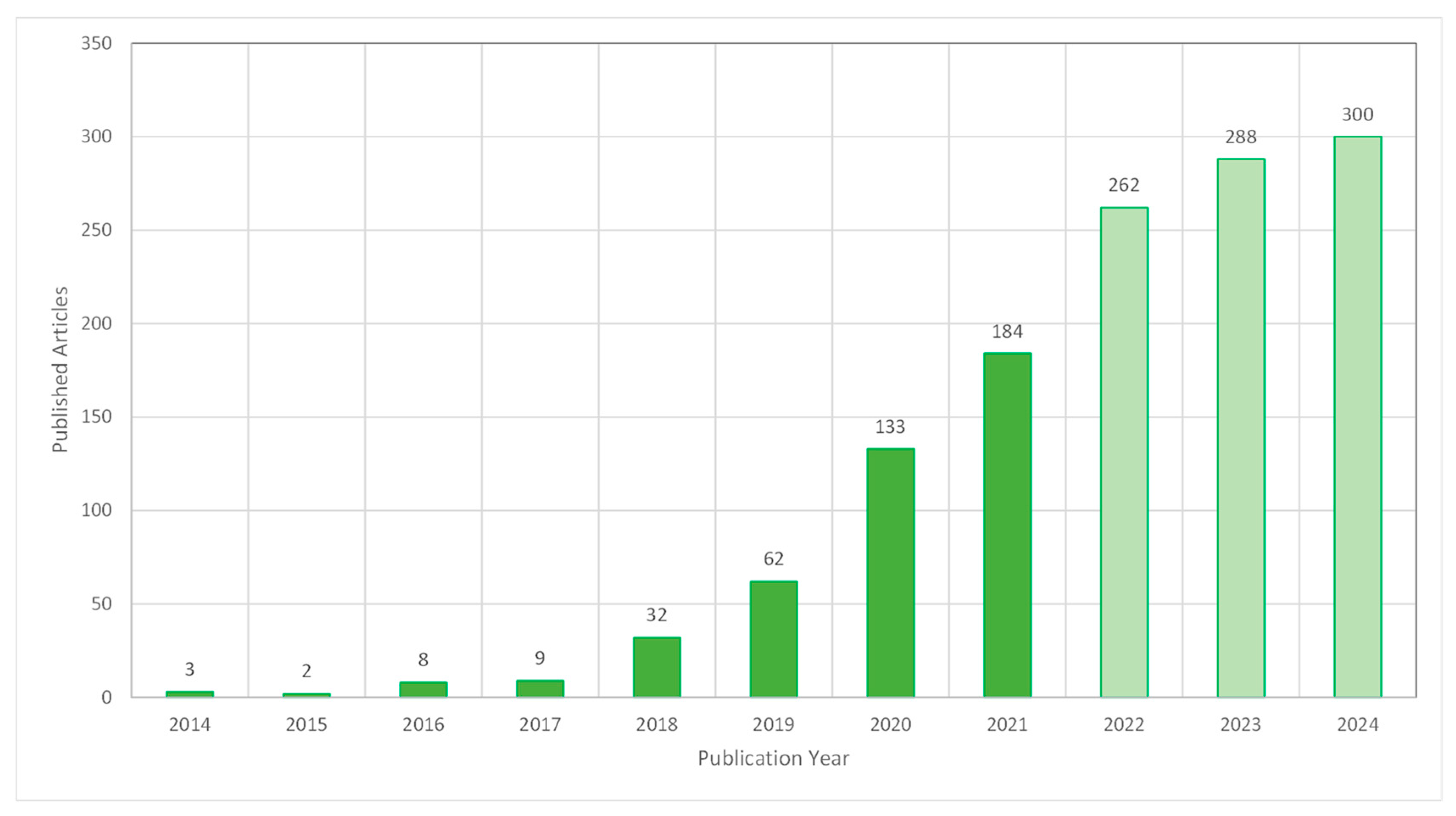
3.1. Analysis of Scientific Growth
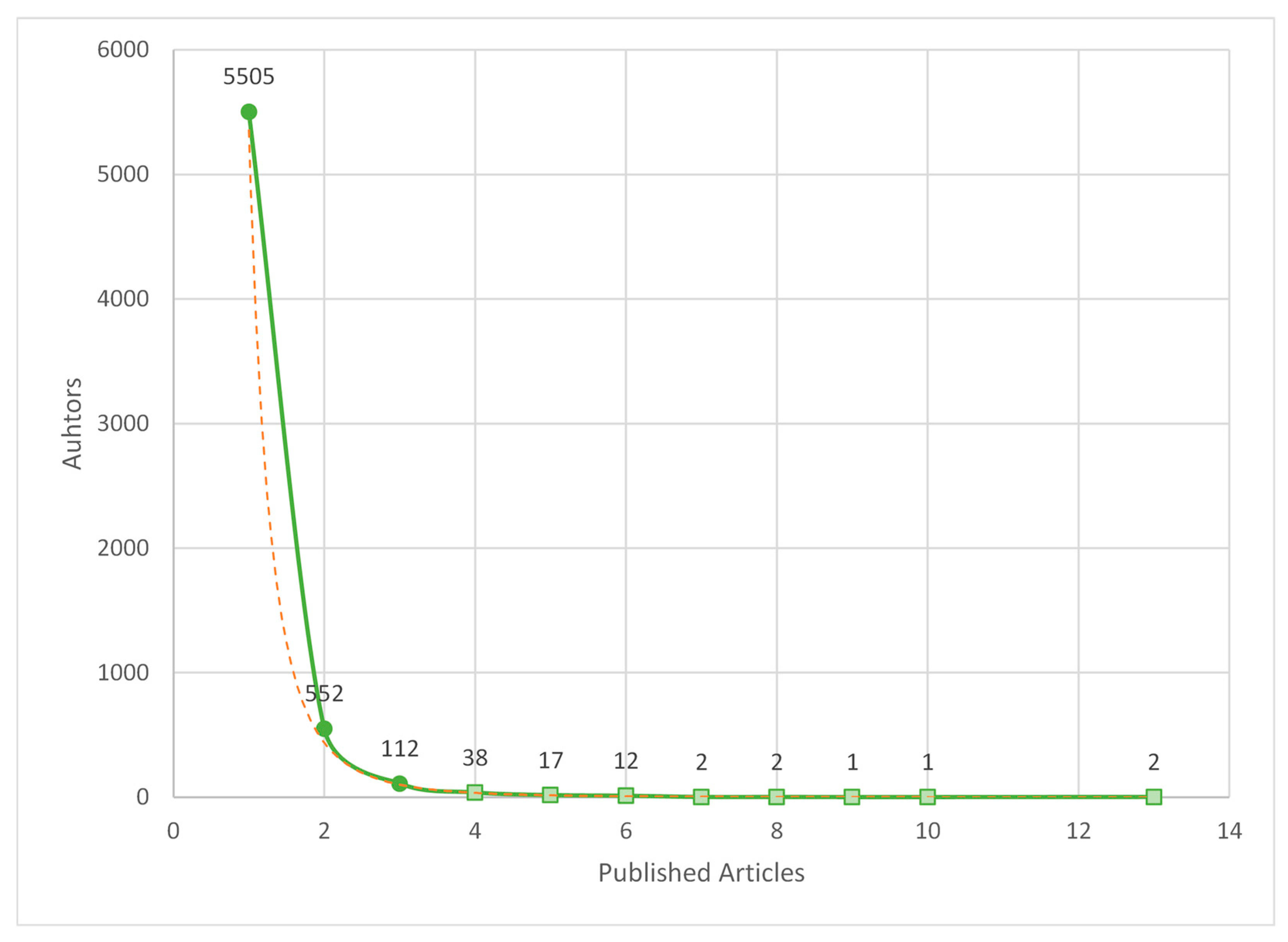
3.2. Analysis of Scientific Productivity
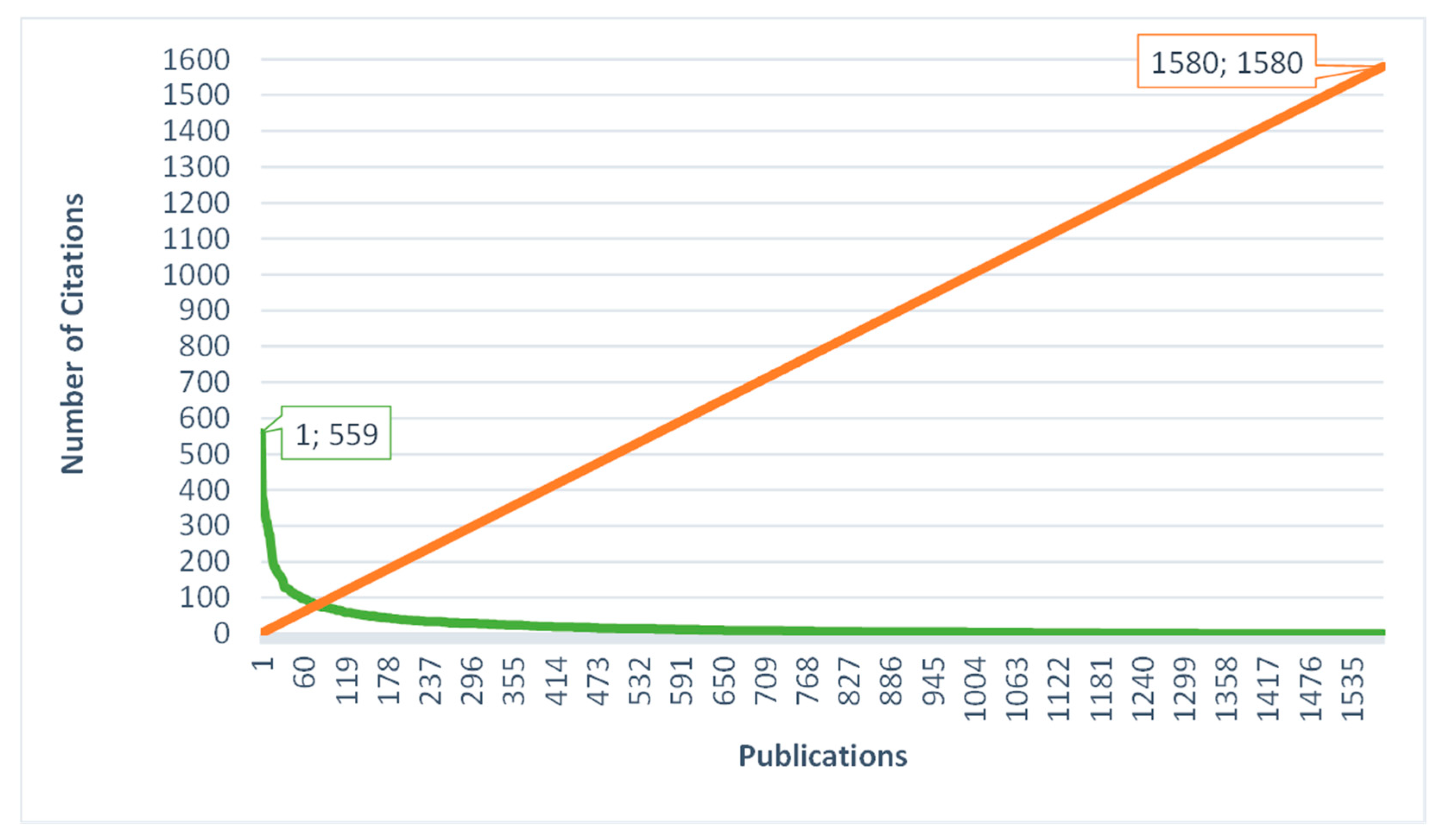
3.3. Analysis of Academic Impact
3.4. Analysis of Relationships and Scientific Networks
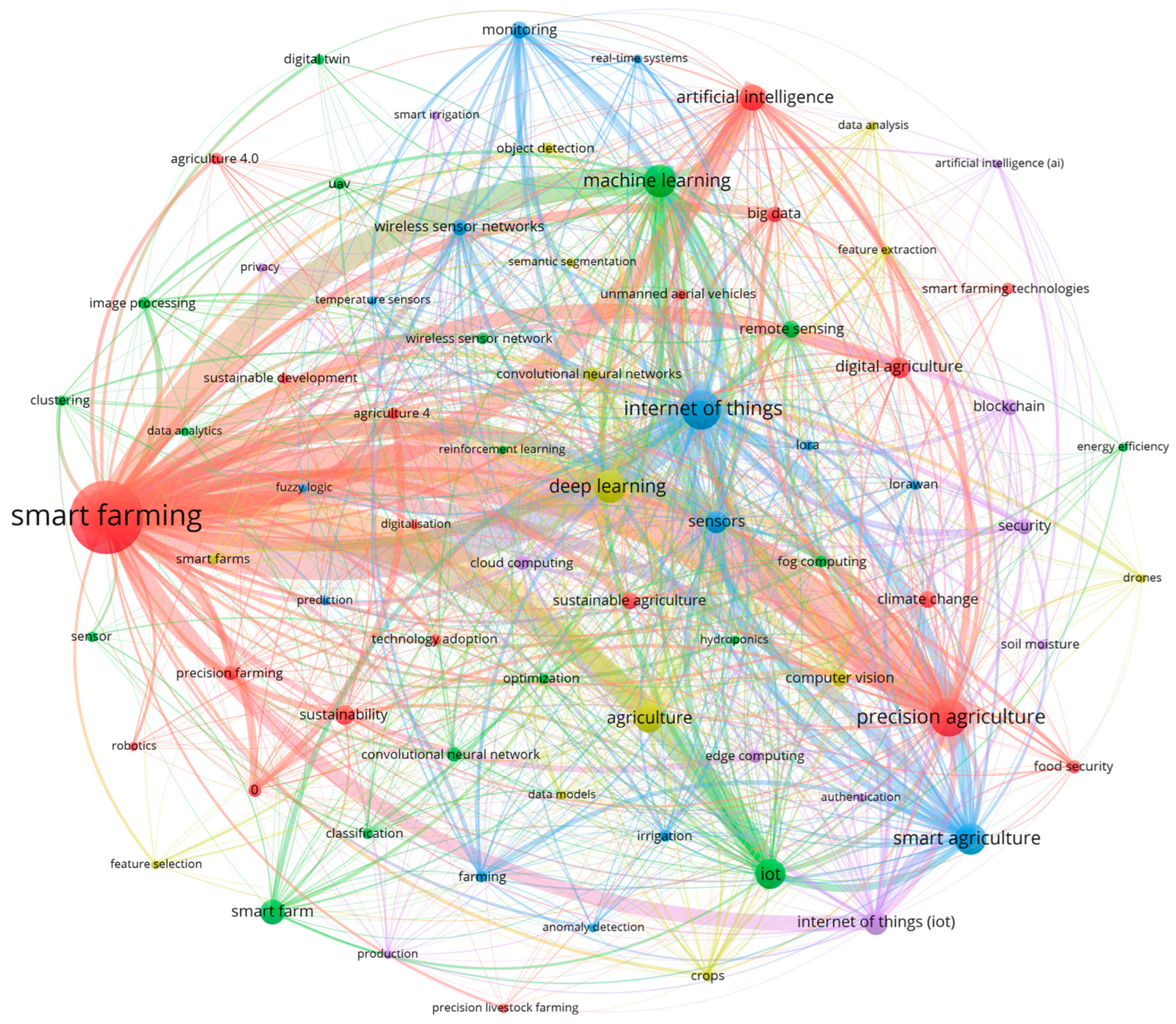
- The red cluster is clearly dominated by keywords associated with the digital transformation of farming, with “smart farming” (O:605, C:96%) and “precision agriculture” (O:165, C:88%) as central themes. The presence of concepts such as artificial intelligence, big data, digital agriculture, robotics, unmanned aerial vehicles, and digitalization shows a strong emphasis on advanced technologies applied to agricultural production. At the same time, terms related to sustainability (sustainability, sustainable agriculture, climate change, food security, sustainable development) appear, indicating that digitalization is not only analyzed as technological innovation, but also as a tool for addressing environmental and production challenges. The coexistence of precision livestock farming, technology adoption, and agriculture 4.0 reinforces the idea of a field in full transition toward intelligent, automated, and efficiency-oriented systems.
- The blue cluster is clearly structured around the technological infrastructure that enables smart farming, with a strong emphasis on the Internet of Things (O:180, C:89%) as the connecting thread. The terms smart agriculture, sensors, monitoring, and wireless sensor networks show that the cluster’s focus is on continuous data capture in the field, using distributed sensor networks and low-power communication systems. The presence of specific technologies such as LoRa and LoRaWAN reinforces the idea of solutions geared toward long-range rural connectivity, which is essential for agricultural environments. Concepts such as anomaly detection, prediction, fuzzy logic, and real-time systems indicate that it is not only about sensorization, but also about intelligent data processing, geared towards operational decision-making (irrigation, environmental monitoring, crop control). Taken together, the cluster represents the operational and technical layer that enables automation and continuous monitoring in smart agricultural systems.
- The green cluster is clearly oriented towards the use of advanced artificial intelligence and distributed computing techniques applied to smart farming systems. The dominant terms—machine learning (O:120, C:79%), IoT (O:101, C:75%), and smart farm (O:74, C:53%)—show that the cluster’s focus is on integrating machine learning models with connected infrastructures to optimize agricultural processes. The presence of remote sensing, image processing, UAV, and convolutional neural networks indicates a strong emphasis on computer vision and image analysis, especially for crop monitoring, pattern detection, and automated classification. Concepts such as fog computing, wireless sensor networks, data analytics, and digital twins suggest a more complex technological architecture, where processing is distributed between local devices and digital platforms, enabling real-time simulation, prediction, and control. In addition, terms such as optimization, clustering, reinforcement learning, and energy efficiency reveal an interest in improving operational performance, reducing costs, and increasing energy efficiency. Together, this cluster represents the algorithmic and intelligent layer of the digital agricultural ecosystem.
- The yellow cluster is clearly focused on the application of advanced deep learning and computer vision techniques to the analysis of crops and agricultural systems. The dominant term, deep learning (O:123, C:64%), together with computer vision (O:37, C:39%) and convolutional neural networks (O:24, C:31%), shows that the core theme is the use of deep neural architectures to interpret images and visual data from the agricultural environment. The presence of object detection, semantic segmentation, feature extraction, and feature selection confirms that the focus is on crop recognition, classification, and segmentation tasks, which are essential for automating processes such as pest detection, yield estimation, and phenotypic monitoring. The use of drones and data models suggests that the images come from both aerial platforms and terrestrial sensors, integrating into broader analytical models. Taking together, this cluster represents the intersection between computer vision, deep learning, and crop analysis, aimed at improving the accuracy and autonomy of intelligent agricultural systems.
- The purple cluster is organized around secure digital infrastructure for smart agriculture, with a clear emphasis on the protection, management, and reliability of data generated by IoT systems. The dominant term, Internet of Things (IoT) (O:67, C:75%), indicates that the starting point is the connectivity of agricultural devices. However, unlike the second cluster—focused on sensorization and monitoring—here concepts such as security (O:32, C:41%), blockchain (O:28, C:39%), authentication (O:12, C:17%), and privacy (O:10, C:27%) appear here, revealing an explicit concern for cybersecurity, data integrity, and trust mechanisms in digitized agricultural environments. The presence of cloud computing (O:27, C:45%) and edge computing (O:22, C:44%) shows that the cluster also addresses the hybrid computing architecture needed to process agricultural data efficiently, balancing latency, storage, and security. Terms such as soil moisture and smart irrigation connect this infrastructure with specific applications, especially in water management, where data reliability is critical for decision-making. Taken together, this cluster represents the security, data governance, and computational architecture that supports modern smart agriculture.
3.5. Analysis of Relationship Between Academic Impact and Sustainable Development Goals
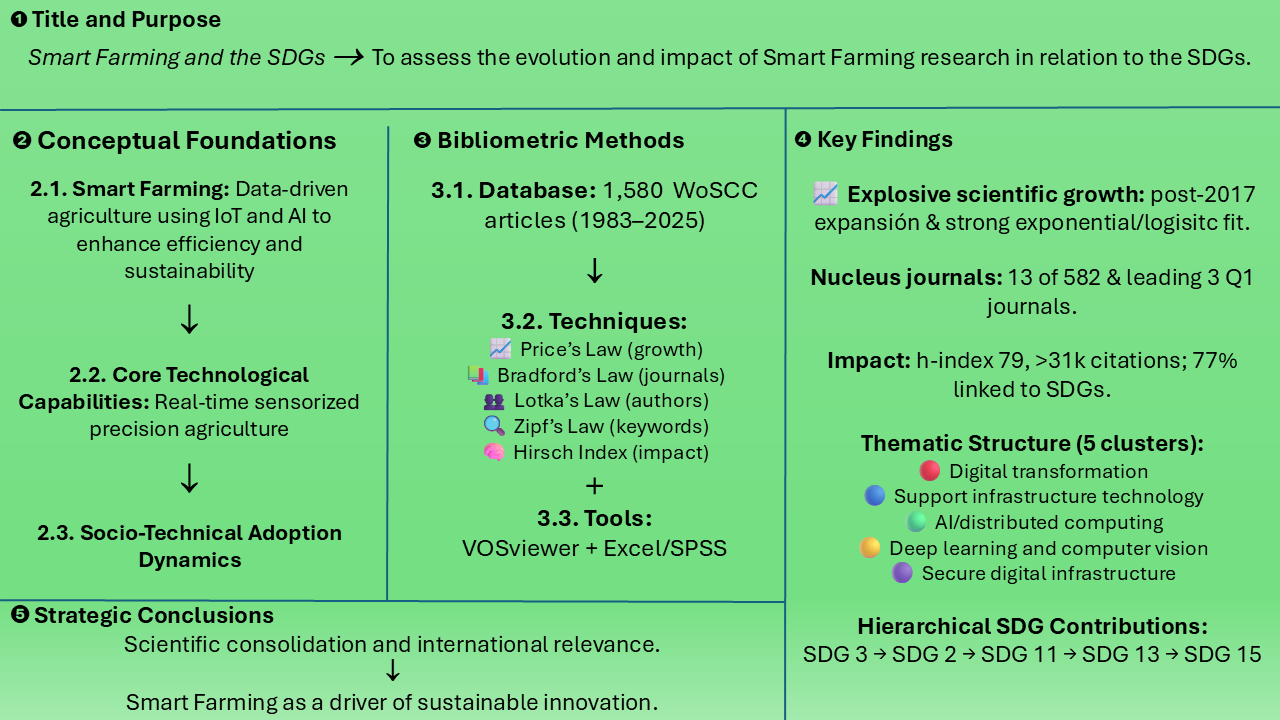
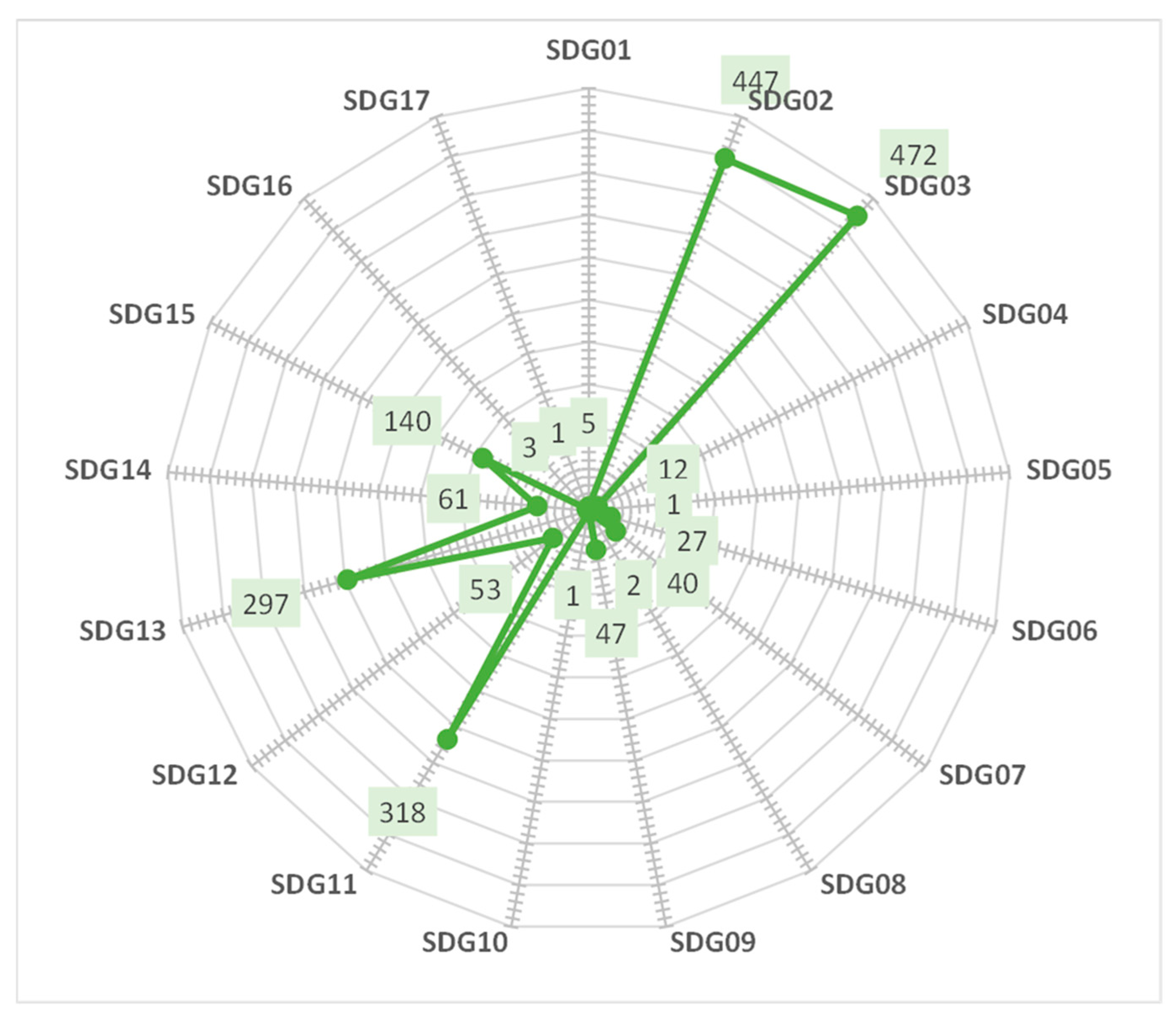
- SDG 2: Zero Hunger (447 articles), demonstrating Smart Farming’s contribution to productivity, food security, and agricultural sustainability.
- SDG 3: Good Health (472 articles) is strongly represented, driven by research reducing chemical inputs, improving food quality and traceability, and enhancing safety through automation.
- SDG 11: Sustainable cities and communities (318) where Smart Farming technologies such as vertical farming, urban agriculture systems, and controlled environment agriculture support sustainable urban development and resilient food systems.
- SDG 13: Climate Action (297 articles), reflecting the growing interest in mitigating climate change through resilient, low-emission agricultural practices.
- SDG 15: Life on Land (140 articles), highlighting the field’s strong orientation toward digitalization, automation, and technological innovation in agriculture.
4. Discussion
5. Conclusions
Supplementary Materials
Author Contributions
Funding
Institutional Review Board Statement
Data Availability Statement
Conflicts of Interest
References
- Kruize, J.W.; Wolfert, J.; Scholten, H.; Verdouw, C.N.; Kassahun, A.; Beulens, A.J.M. A reference architecture for farm software ecosystems. Comput. Electron. Agric. 2016, 125, 12–28. [Google Scholar] [CrossRef]
- Manogaran, G.; Hsu, C.-H.; Rawal, B.S.; Muthu, B.; Mavromoustakis, C.X.; Mastorakis, G. ISOF: Information scheduling and optimization framework for improving the performance of agriculture systems aided by Industry 4.0. IEEE Internet Things J. 2021, 8, 3120–3129. [Google Scholar] [CrossRef]
- Ramya, U.; Soundarya, C.; Shivadharshini, M.; Sneha, S. A methodical and best doable line of attack of smart agricultural commotion by means of IoT. Int. J. Life Sci. Pharma Res. 2022, 12, 159–167. [Google Scholar]
- Huo, D.Y.; Malik, A.W.; Ravana, S.D.; Rahman, A.U.; Ahmedy, I. Mapping smart farming: Addressing agricultural challenges in the data-driven era. Renew. Sustain. Energ. Rev. 2024, 189, 113858. [Google Scholar] [CrossRef]
- Rehman, A.U.; Razzaq, A.; Altaf, A.; Qadri, S.; Hussain, A.; Khan, A.N.; Sarfraz, Z. Indoor smart farming by inducing artificial climate for high value-added crops in optimal duration. Int. J. Agric. Biol. Eng. 2023, 16, 240–246. [Google Scholar] [CrossRef]
- Hsu, H.H.; Zhang, X.Y.; Xu, K.G.; Wang, Y.; Wang, Q.; Luo, G.X.; Xing, M.; Zhong, W. Self-powered and plant-wearable hydrogel as LED power supply and sensor for promoting and monitoring plant growth in smart farming. Chem. Eng. J. 2021, 422, 129499. [Google Scholar] [CrossRef]
- Faid, A.; Sadik, M.; Sabir, E. An agile AI and IoT-augmented smart farming: A cost-effective cognitive weather station. Agriculture 2022, 12, 35. [Google Scholar] [CrossRef]
- Wang, Y.W.; Chen, Y.F.; Wang, D.F. Convolution network enlightened transformer for regional crop disease classification. Electronics 2022, 11, 3174. [Google Scholar] [CrossRef]
- Morales-García, J.; Bueno-Crespo, A.; Martínez-España, R.; Cecilia, J.M. Data-driven evaluation of machine learning models for climate control in operational smart greenhouses. J. Ambient Intell. Smart Environ. 2023, 15, 3–17. [Google Scholar] [CrossRef]
- Ronaghi, M.H.; Forouharfar, A. A contextualized study of the usage of the Internet of Things (IoT) in smart farming within the Unified Theory of Acceptance and Use of Technology (UTAUT). Technol. Soc. 2020, 63, 101415. [Google Scholar] [CrossRef]
- Naqvi, S.M.Z.A.; Tahir, M.N.; Raghavan, V.; Awais, M.; Hu, J.D.; Said, Y.; Othman, N.A.; Ashurov, M.; Khan, M.I. AI-enhanced IoT sensors for real-time crop monitoring: An era towards self-monitored agriculture. Telecommun. Syst. 2025, 88, 100. [Google Scholar] [CrossRef]
- Yadav, S.; Kaushik, A.; Sharma, M.; Sharma, S. Disruptive technologies in smart farming: An expanded view with sentiment analysis. Agriengineering 2022, 4, 424–460. [Google Scholar] [CrossRef]
- Richter, I.; Neef, N.E.; Moghayedi, A.; Owoade, F.M.; Kapanji-Kakoma, K.; Sheena, F.; Ewon, K. Willing to be the change: Perceived drivers and barriers to participation in urban smart farming projects. J. Urban Aff. 2025, 47, 1540–1558. [Google Scholar] [CrossRef]
- Köksal, Ö.; Tekiner-dogan, B. Architecture design approach for IoT-based farm management information systems. Precis. Agric. 2019, 20, 926–958. [Google Scholar] [CrossRef]
- Manogaran, G.; Alazab, M.; Muhammad, K.; de Albuquerque, V.H.C. Smart sensing-based functional control for reducing uncertainties in agricultural farm data analysis. IEEE Sens. J. 2021, 21, 17469–17478. [Google Scholar] [CrossRef]
- Bacco, M.; Berton, A.; Gotta, A.; Caviglione, L. IEEE 802.15.4 air–ground UAV communications in smart farming scenarios. IEEE Commun. Lett. 2018, 22, 1910–1913. [Google Scholar] [CrossRef]
- Arago, N.M.; Alvarez, C.; Mabale, A.G.; Legista, C.G.; Repiso, N.E.; Amado, T.M.; Jorda, R.L., Jr.; Thio-ac, A.C.; Tolentino, L.K.S.; Velasco, J.S. Smart dairy cattle farming and in-heat detection through the Internet of Things (IoT). Int. J. Integr. Eng. 2022, 14, 157–172. [Google Scholar] [CrossRef]
- Nevavuori, P.; Narra, N.; Lipping, T. Crop yield prediction with deep convolutional neural networks. Comput. Electron. Agric. 2019, 163, 104859. [Google Scholar] [CrossRef]
- Faisal, H.M.; Aqib, M.; Mahmood, K.; Safran, M.; Alfarhood, S.; Ashraf, I. A customized convolutional neural network-based approach for weeds identification in cotton crops. Front. Plant Sci. 2025, 15, 1435301. [Google Scholar] [CrossRef] [PubMed]
- Sujadi, H.; Budiman, B.; Nurdiana, N.; Susandi, D.; Fitriasina, E.G.; Handayani, T. Chili plant monitoring system using YOLO object detection technology. J. Eng. Sci. Technol. 2025, 20, 112–118. [Google Scholar]
- Patrick, B.; Johnson, T.; Kanjo, E. Internetless low-cost sensing system for real-time livestock monitoring. IEEE Sens. Lett. 2024, 8, 7500504. [Google Scholar] [CrossRef]
- Bouchemal, N.; Chollet, N.; Ramdane-Cherif, A. Intelligent IoT platform for agroecology: Testbed. J. Sens. Actuat. Netw. 2024, 13, 83. [Google Scholar] [CrossRef]
- Harisudin, M.; Kusnandar; Riptanti, E.W.; Setyowati, N.; Khomah, I. Determinants of the Internet of Things adoption by millennial farmers. AIMS Agric. Food 2023, 8, 329–342. [Google Scholar] [CrossRef]
- Abduljabbar, Z.A.; Nyangaresi, V.O.; Jasim, H.M.; Ma, J.C.; Hussain, M.A.; Hussien, Z.A.; Aldarwish, A.J.Y. Elliptic curve cryptography-based scheme for secure signaling and data exchanges in precision agriculture. Sustainability 2023, 15, 10264. [Google Scholar] [CrossRef]
- Debnath, O.; Saha, H.N. An IoT-based intelligent farming using CNN for early disease detection in rice paddy. Microprocess. Microsyst. 2022, 94, 104631. [Google Scholar] [CrossRef]
- Li, Y.D.; Xue, J.X.; Zhang, M.Y.; Yin, J.Y.; Liu, Y.; Qiao, X.D.; Zheng, D.C.; Li, Z.Z. YOLOv5-ASFF: A multistage strawberry detection algorithm based on improved YOLOv5. Agronomy 2023, 13, 1901. [Google Scholar] [CrossRef]
- Vangala, A.; Das, A.K.; Chamola, V.; Korotaev, V.; Rodrigues, J.J.P.C. Security in IoT-enabled smart agriculture: Architecture, security solutions and challenges. Clust. Comput. 2023, 26, 879–902. [Google Scholar] [CrossRef]
- Jang, H.; Choi, J.; Son, S.; Kwon, D.; Park, Y. Provably secure and privacy-preserving authentication scheme for IoT-based smart farm monitoring environment. Electronics 2025, 14, 2783. [Google Scholar] [CrossRef]
- Venkataramanan, C.; Ramalingam, S.; Manikandan, A. LWBA: Lévy-walk bat algorithm-based data prediction for precision agriculture in wireless sensor networks. J. Intell. Fuzzy Syst. 2021, 41, 2891–2904. [Google Scholar] [CrossRef]
- Piancharoenwong, A.; Badir, Y.F. IoT smart farming adoption intention under climate change: The gain and loss perspective. Technol. Forecast. Soc. Change 2024, 200, 123192. [Google Scholar] [CrossRef]
- Zupic, I.; Cater, T. Bibliometric Methods in Management and Organization. Org. Res. Meth 2015, 18, 429–472. [Google Scholar] [CrossRef]
- Mukherjee, D.; Lim, W.M.; Kumar, S.; Donthu, N. Guidelines for advancing theory and practice through bibliometric research. J. Bus. Res. 2022, 148, 101–115. [Google Scholar] [CrossRef]
- Grant, M.J.; Booth, A. A typology of reviews: An analysis of 14 review types and associated methodologies. Health Info. Libr. J. 2009, 26, 91–108. [Google Scholar] [CrossRef] [PubMed]
- Valderrama-Zurian, J.C.; Melero-Fuentes, D.; Aleixandre-Benavent, R. Origin, characteristics, predominance and conceptual networks of eponyms in the bibliometric literature. J. Informetr. 2019, 13, 434–448. [Google Scholar] [CrossRef]
- Clarivate. Web of Science. 2025. Available online: https://www.webofknowledge.com (accessed on 17 October 2025).
- Price, D. A general theory of bibliometric and other cumulative advantage processes. J. Assoc. Inf. Sci. 1976, 27, 292–306. [Google Scholar] [CrossRef]
- Dobrov, G.; Randolph, R.; Rauch, W. New options for team research via international computer networks. Scientometrics 1979, 1, 387–404. [Google Scholar] [CrossRef]
- Nicholls, P. Price’s square root law: Empirical validity and relation to Lotka’s law. Inf. Process. Manag. 1988, 24, 469–477. [Google Scholar] [CrossRef]
- Bulik, S. Book use as a Bradford-Zipf phenomenon. Coll. Res. Libr. 1978, 39, 215–219. [Google Scholar] [CrossRef]
- Desai, N.; Veras, L.; Gosain, A. Using Bradford’s law of scattering to identify the core journals of pediatric surgery. J. Surg. Res. 2018, 229, 90–95. [Google Scholar] [CrossRef]
- Lotka, A. The frequency distribution of scientific productivity. J. Wash. Acad. Sci. 1926, 16, 317–323. [Google Scholar]
- Hirsch, J.E. An index to quantify an individual’s scientific research output. Proc. Natl. Acad. Sci. USA 2005, 102, 16569–16572. [Google Scholar] [CrossRef]
- Crespo, N.; Simoes, N. Publication performance through the lens of the h-index: How can we solve the problem of the ties? Soc. Sci. Q. 2019, 100, 2495–2506. [Google Scholar] [CrossRef]
- Tsai, H. Knowledge management vs. data mining: Research trend, forecast and citation approach. Expert Syst. Appl. 2013, 40, 3160–3173. [Google Scholar] [CrossRef]
- Alvarado, R.U. Growth of Literature on Bradford’s Law. Investig. Bibl. Arch. Bibliotecol. Inf. 2016, 30, 51–72. [Google Scholar] [CrossRef]
- Garfield, E. Citation Analysis as a Tool in Journal Evaluation. Science 1972, 178, 471–479. [Google Scholar] [CrossRef]
- Van Eck, N.J.; Waltman, L. Software survey: VOSviewer, a computer program for bibliometric mapping. Scientometrics 2010, 84, 523–538. [Google Scholar] [CrossRef] [PubMed]
- Harzing, A.W.; Alakangas, S. Google Scholar, Scopus and the Web of Science: A longitudinal and cross-disciplinary comparison. Scientometrics 2016, 106, 787–804. [Google Scholar] [CrossRef]
- Delgado-Quirós, L.; Ortega, J.L. Citation counts and inclusion of references in seven free-access scholarly databases: A comparative analysis. J. Inf. 2025, 19, 101618. [Google Scholar] [CrossRef]
- Asubiaro, T.; Onaolapo, S.; Mills, D. Regional disparities in Web of Science and Scopus journal coverage. Scientometrics 2024, 129, 1469–1491. [Google Scholar] [CrossRef]
- Hartman, K.; van der Heijden, M.G.A.; Wittwer, R.A.; Banerjee, S.; Walser, J.C.; Schlaeppi, K. Cropping practices manipulate abundance patterns of root and soil microbiome members paving the way to smart farming. Microbiome 2018, 6, 14. [Google Scholar] [CrossRef]
- Cabreira, T.M.; Brisolara, L.B.; Paulo, R.F. Survey on Coverage Path Planning with Unmanned Aerial Vehicles. Drones 2019, 3, 4. [Google Scholar] [CrossRef]
- Farooq, M.S.; Riaz, S.; Abid, A.; Abid, K.; Naeem, M.A. A Survey on the Role of IoT in Agriculture for the Implementation of Smart Farming. IEEE Access 2019, 7, 156237–156271. [Google Scholar] [CrossRef]
- Muangprathub, J.; Boonnam, N.; Kajornkasirat, S.; Lekbangpong, N.; Wanichsombat, A.; Nillaor, P. IoT and agriculture data analysis for smart farm. Comput. Electron. Agric. 2019, 156, 467–474. [Google Scholar] [CrossRef]
- Maddikunta, P.K.R.; Hakak, S.; Alazab, M.; Bhattacharya, S.; Gadekallu, T.R.; Khan, W.Z.; Pham, Q.-V. Unmanned aerial vehicles in smart agriculture: Applications, requirements, and challenges. IEEE Sens. J. 2021, 21, 17608–17619. [Google Scholar] [CrossRef]
- Rose, D.C.; Chilvers, J. Agriculture 4.0: Broadening Responsible Innovation in an Era of Smart Farming. Front. Sustain. Food Syst. 2018, 2, 87. [Google Scholar] [CrossRef]
- Wan, S.H.; Goudos, S. Faster R-CNN for multi-class fruit detection using a robotic vision system. Comput. Netw. 2020, 168, 107036. [Google Scholar] [CrossRef]
- Ahmed, N.; De, D.; Hussain, M.I. Internet of Things (IoT) for Smart Precision Agriculture and Farming in Rural Areas. IEEE Internet Things J. 2018, 5, 4890–4899. [Google Scholar] [CrossRef]
- Verdouw, C.; Tekinerdogan, B.; Beulens, A.; Wolfert, S. Digital Twins in Smart Farming. Agric. Syst. 2021, 189, 103046. [Google Scholar] [CrossRef]
- Wazid, M.; Das, A.K.; Odelu, V.; Kumar, N.; Conti, M.; Jo, M. Design of Secure User Authenticated Key Management Protocol for Generic IoT Networks. IEEE Internet Things J. 2018, 5, 269–282. [Google Scholar] [CrossRef]
- Finger, R.; Swinton, S.M.; El Benni, N.; Walter, A. Precision Farming at the Nexus of Agricultural Production and the Environment. In Annual Reviews of Resources Economics; Rausser, G.C., Zilberman, D., Eds.; Annual Reviews: Palo Alto, CA, USA, 2019; Volume 11, pp. 313–335. [Google Scholar] [CrossRef]
- Gupta, M.; Abdelsalam, M.; Khorsandroo, S.; Mittal, S. Security and privacy in smart farming: Challenges and opportunities. IEEE Access 2020, 8, 34564–34584. [Google Scholar] [CrossRef]
- Zamora-Izquierdo, M.A.; Santa, J.; Martínez, J.A.; Martínez, V.; Skarmeta, A.F. Smart farming IoT platform based on edge and cloud computing. Biosyst. Eng. 2019, 177, 4–17. [Google Scholar] [CrossRef]
- Sa, I.; Chen, Z.T.; Popovic, M.; Khanna, R.; Liebisch, F.; Nieto, J.; Siegwart, R. weedNet: Dense Semantic Weed Classification Using Multispectral Images and MAV for Smart Farming. IEEE Robot. Autom. Lett. 2018, 3, 588–595. [Google Scholar] [CrossRef]
- Jakku, E.; Taylor, B.; Fleming, A.; Mason, C.; Fielke, S.; Sounness, C.; Thorburn, P. If they don’t tell us what they do with it, why would we trust them? Trust, transparency and benefit-sharing in Smart Farming. NJAS Wagen. J. Life Sci. 2019, 90–91, 100285. [Google Scholar] [CrossRef]
- Caffaro, F.; Micheletti Cremasco, M.; Roccato, M.; Cavallo, E. Drivers of Farmers’ Intention to Adopt Technological Innovations in Italy: The Role of Information Sources, Perceived Usefulness, and Perceived Ease of Use. J. Rural Stud. 2020, 76, 264–271. [Google Scholar] [CrossRef]
- Jayaraman, P.P.; Yavari, A.; Georgakopoulos, D.; Morshed, A.; Zaslavsky, A. Internet of Things Platform for Smart Farming: Experiences and Lessons Learnt. Sensors 2016, 16, 1884. [Google Scholar] [CrossRef]
- Wiseman, L.; Sanderson, J.; Zhang, A.R.; Jakku, E. Farmers and their data: An examination of farmers’ reluctance to share their data through the lens of the laws impacting smart farming. NJAS Wagen. J. Life Sci. 2019, 90–91, 100301. [Google Scholar] [CrossRef]
- Kerkech, M.; Hafiane, A.; Canals, R. Vine Disease Detection in UAV Multispectral Images Using Optimized Image Registration and Deep Learning Segmentation Approach. Comput. Electron. Agric. 2020, 174, 105446. [Google Scholar] [CrossRef]
- Jiang, H.H.; Zhang, C.Y.; Qiao, Y.L.; Zhang, Z.; Zhang, W.J.; Song, C.Q. CNN feature based graph convolutional network for weed and crop recognition in smart farming. Comput. Electron. Agric. 2020, 174, 105450. [Google Scholar] [CrossRef]
- Saggi, M.K.; Jain, S. Reference evapotranspiration estimation and modeling of the Punjab Northern India using deep learning. Comput. Electron. Agric. 2019, 156, 387–398. [Google Scholar] [CrossRef]
- Kernecker, M.; Knierim, A.; Wurbs, A.; Kraus, T.; Borges, F. Experience versus Expectation: Farmers’ Perceptions of Smart Farming Technologies for Cropping Systems across Europe. Precis. Agric. 2020, 21, 34–50. [Google Scholar] [CrossRef]
- Alonso, R.S.; Sittón-Candanedo, I.; García, Ó.; Prieto, J.; Rodríguez-González, S. An Intelligent Edge-IoT Platform for Monitoring Livestock and Crops in a Dairy Farming Scenario. Ad Hoc Netw. 2020, 98, 102047. [Google Scholar] [CrossRef]
- Sanchez-Iborra, R.; Sanchez-Gomez, J.; Ballesta-Viñas, J.; Cano, M.D.; Skarmeta, A.F. Performance Evaluation of LoRa Considering Scenario Conditions. Sensors 2018, 18, 772. [Google Scholar] [CrossRef] [PubMed]
- Sozzi, M.; Cantalamessa, S.; Cogato, A.; Kayad, A.; Marinello, F. Automatic Bunch Detection in White Grape Varieties Using YOLOv3, YOLOv4, and YOLOv5 Deep Learning Algorithms. Agronomy 2022, 12, 319. [Google Scholar] [CrossRef]
- Bhat, S.A.; Huang, N.-F. Big data and AI revolution in precision agriculture: Survey and challenges. IEEE Access 2021, 9, 110209–110222. [Google Scholar] [CrossRef]
- Subeesh, A.; Mehta, C.R. Automation and digitization of agriculture using artificial intelligence and internet of things. Artif. Intell. Agric. 2021, 5, 278–291. [Google Scholar] [CrossRef]
- Carolan, M. Automated agrifood futures: Robotics, labor and the distributive politics of digital agriculture. J. Peasant Stud. 2020, 47, 184–207. [Google Scholar] [CrossRef]
- Eastwood, C.; Klerkx, L.; Ayre, M.; Dela Rue, B. Managing Socio-Ethical Challenges in the Development of Smart Farming: From a Fragmented to a Comprehensive Approach for Responsible Research and Innovation. J. Agric. Environ. Ethics 2019, 32, 741–768. [Google Scholar] [CrossRef]
- Armenta-Medina, D.; Ramirez-delReal, T.A.; Villanueva-Vásquez, D.; Mejia-Aguirre, C. Trends on Advanced Information and Communication Technologies for Improving Agricultural Productivities: A Bibliometric Analysis. Agronomy 2020, 10, 1989. [Google Scholar] [CrossRef]
- Sott, M.K.; Nascimento, L.d.S.; Foguesatto, C.R.; Furstenau, L.B.; Faccin, K.; Zawislak, P.A.; Mellado, B.; Kong, J.D.; Bragazzi, N.L. A Bibliometric Network Analysis of Recent Publications on Digital Agriculture to Depict Strategic Themes and Evolution Structure. Sensors 2021, 21, 7889. [Google Scholar] [CrossRef]
- Latino, M.E.; Menegoli, M.; Corallo, A. Agriculture digitalization: A global examination based on bibliometric analysis. IEEE Trans. Eng. Manag. 2024, 71, 1330–1345. [Google Scholar] [CrossRef]
- Kamran, M.; Khan, H.U.; Nisar, W.; Farooq, M.; Rehman, S.-U. Blockchain and Internet of Things: A Bibliometric Study. Comput. Electr. Eng. 2020, 81, 106525. [Google Scholar] [CrossRef]
- Bhardwaj, M.; Kumar, P.; Singh, A. Bibliometric Review of Digital Transformation in Agriculture: Innovations, Trends and Sustainable Futures. J. Agribus. Dev. Emerg. Econ. 2025; ahead-of-print. [Google Scholar] [CrossRef]
- Patil, R.R.; Kumar, S.; Rani, R.; Agrawal, P.; Pippal, S.K. A Bibliometric and Word Cloud Analysis on the Role of the Internet of Things in Agricultural Plant Disease Detection. Appl. Syst. Innov. 2023, 6, 27. [Google Scholar] [CrossRef]
- Gamage, A.; Gangahagedara, R.; Subasinghe, S.; Gamage, J.; Guruge, C.; Senaratne, S.; Randika, T.; Rathnayake, C.; Hameed, Z.; Madhujith, T.; et al. Advancing Sustainability: The Impact of Emerging Technologies in Agriculture. Curr. Plant Biol. 2024, 40, 100420. [Google Scholar] [CrossRef]
- García-Vázquez, J.P.; Torres, R.S.; Pérez-Peréz, D.B. Scientometric Analysis of the Application of Artificial Intelligence in Agriculture. J. Scientometr. Res. 2021, 10, 55–62. [Google Scholar] [CrossRef]
- Kushartadi, T.; Mulyono, A.E.; Al Hamdi, A.H.; Rizki, M.A.; Sadat Faidar, M.A.; Harsanto, W.D.; Suryanegara, M.; Asvial, M. Theme Mapping and Bibliometric Analysis of Two Decades of Smart Farming. Information 2023, 14, 396. [Google Scholar] [CrossRef]
- Apeh, O.O.; Nwulu, N.I. Improving Traceability and Sustainability in the Agri-Food Industry through Blockchain Technology: A Bibliometric Approach, Benefits and Challenges. Energy Nexus 2025, 17, 100388. [Google Scholar] [CrossRef]
- Ragazou, K.; Garefalakis, A.; Zafeiriou, E.; Passas, I. Agriculture 5.0: A New Strategic Management Mode for a Cut Cost and an Energy Efficient Agriculture Sector. Energies 2022, 15, 3113. [Google Scholar] [CrossRef]
- Corallo, A.; Latino, M.E.; Menegoli, M.; Signore, F. Digital Technologies for Sustainable Development of Agri-Food: Implementation Guidelines Toward Industry 5.0. IEEE Trans. Eng. Manag. 2024, 71, 10699–10715. [Google Scholar] [CrossRef]
- Dutta, M.; Gupta, D.; Tharewal, S.; Goyal, D.; Kaur Sandhu, J.; Kaur, M.; Ali Alzubi, A.; Mutared Alanazi, J. Internet of things-based smart precision farming in soilless agriculture: Opportunities and challenges for global food security. IEEE Access 2025, 13, 34238–34268. [Google Scholar] [CrossRef]
- Luque-Reyes, J.R.; Zidi, A.; Peña-Acevedo, A.; Gallardo-Cobos, R. Assessing Agri-Food Digitalization: Insights from Bibliometric and Survey Analysis in Andalusia. World 2025, 6, 57. [Google Scholar] [CrossRef]



| Variable | Value/Sample (n) | Unit of Analysis | Subsampling Criterion |
|---|---|---|---|
| Time period | 1983–2025 | Years | Price’s Law |
| Sources analyzed | 582 | Journals/Sources | Bradford’s Law |
| Authors identified | 6244 | Researchers | Lotka’s Law |
| Documents total | 1580 | Scientific articles | Hirsch’s index (h-index) |
| Author Keywords | 4822 | Terms | Zipf’s Law |
| Statistic | Exponential Model | Logistic (S) Model |
|---|---|---|
| R | 0.967 | 0.967 |
| R2 | 0.934 | 0.935 |
| Adjusted R2 | 0.927 | 0.928 |
| Std. Error of Estimate | 0.512 | 0.510 |
| F (ANOVA) | 128.279 | 129.186 |
| Sig. (ANOVA) | 0.000 | 0.000 |
| Predictor Coefficient | B = 0.553 (PY) | B = −2,254,803 (1/PY) |
| Constant | 0.000 | 1120.495 |
| Dependent Variable | ln(ART) * | ln(ART) * |
| Zone | Number of Articles | % | Journals (Empirical Series) | % | Bradford Multipliers | Journals (Theorical Series) |
|---|---|---|---|---|---|---|
| Nucles | 512 | 32% | 13 | 2% | 13 × () = 13 | |
| Zone 1 | 523 | 33% | 98 | 17% | 7.54 = 98/13 | 13 × () = 80 |
| Zone 2 | 545 | 34% | 471 | 81% | 4.81 = 471/98 | 13 × () = 495 |
| Total | ∑ = 1.580 | 100% | ∑ = 582 | 100% | n = 6.17 | ∑ = 588 |
| Journals | Articles | Publisher | Citations, WoS Core | JIF * 2024 (WoS) [35] | Quartile of Impact (Qx) |
|---|---|---|---|---|---|
| Sensors | 75 | MDPI | 1.836 | 3.5 | Q1 |
| Comput. Electron. Agric. | 69 | Elsevier | 2.947 | 15.1 | Q1 |
| IEEE Access | 60 | IEEE | 1968 | 3.6 | Q1 |
| Smart Agric. Technol. | 50 | Elsevier | 475 | 5.7 | Q1 |
| Sustainability | 48 | MDPI | 688 | 3.3 | Q1 |
| Agriculture-Basel | 45 | MDPI | 734 | 3.6 | Q1 |
| Agronomy-Basel | 37 | MDPI | 743 | 3.4 | Q1 |
| Applied Sciences-Basel | 34 | MDPI | 433 | 2.5 | Q1 |
| IEEE Internet Things J. | 24 | IEEE | 1312 | 8.9 | Q1 |
| Animals | 20 | MDPI | 208 | 2.7 | Q1 |
| Sci. Rep. | 18 | Nature | 84 | 3.9 | Q1 |
| Multimed. Tools Appl. | 17 | Springer | 336 | 3.7 | Q1 |
| Front. Plant Sci. | 15 | Frontiers Media | 278 | 4.8 | Q1 |
| Statistic | Power Model |
|---|---|
| R | 0.978 |
| R2 | 0.956 |
| Adjusted R2 | 0.951 |
| Std. Error of Estimate | 0.168 |
| F (ANOVA) | 197.064 |
| Sig. (ANOVA) | 0.000 |
| Predictor Coefficient | B = −0.265 (ln(AUT)) * |
| Constant | 10.438 |
| Dependent Variable | ln(ART) * |
| SDG | Published Articles * | SDG | Published Articles * |
|---|---|---|---|
| SDG 1 | 5 | SDG 10 | 1 |
| SDG 2 | 447 | SDG 11 | 318 |
| SDG 3 | 472 | SDG 12 | 53 |
| SDG 4 | 12 | SDG 13 | 297 |
| SDG 5 | 1 | SDG 14 | 61 |
| SDG 6 | 27 | SDG 15 | 140 |
| SDG 7 | 40 | SDG 16 | 3 |
| SDG 8 | 2 | SDG 17 | 1 |
| SDG 9 | 47 |
| Authors | Journals | Article Title | Times Cited | SDGs | Brief Conclusions Studies |
|---|---|---|---|---|---|
| Hartman et al., 2018 [51] | Microbiome | Cropping practices manipulate abundance patterns of root and soil microbiome members paving the way to smart farming | 559 | 2, 13, 14, 15 | Evidence suggests microbiome-targeted cropping can enhance soil health and sustainable yields; targeted practices may enable resilient, low-input production through strategic microbial management. |
| Cabreira et al., 2019 [52] | Drones-Basel | Survey on Coverage Path Planning with Unmanned Aerial Vehicles | 384 | 11 | UAV coverage-path planning improves monitoring efficiency and resource-use, enabling precise interventions that reduce inputs and environmental footprint. |
| Farooq et al., 2019 [53] | IEEE Access | A Survey on the Role of IoT in Agriculture for the Implementation of Smart Farming | 376 | 3, 11 | IoT architecture facilitates continuous farm monitoring, supporting water and input efficiency while requiring security measures to protect data integrity. |
| Muangprathub et al., 2019 [54] | Comput. Electron. Agric. | IoT and agriculture data analysis for smart farm | 366 | 3, 11 | Low-cost WSN-based irrigation control optimizes water use, reduces costs, and increases productivity, promoting sustainable vegetable production via automated decision-making. |
| Maddikunta et al., 2021 [55] | IEEE Sens. J. | Unmanned Aerial Vehicles in Smart Agriculture: Applications, Requirements, and Challenges | 348 | 11 | Affordable Bluetooth-enabled UAVs and sensors could democratize precision monitoring, lower barriers and enabling sustainable smallholder uptake. |
| Rose & Chilvers 2018 [56] | Front. Sustain. Food Syst. | Agriculture 4.0: Broadening Responsible Innovation in an Era of Smart Farming | 340 | 2 | Responsible innovation frameworks are essential to ensure smart technologies advance sustainability without marginalizing farming communities. |
| Nevavuori et al., 2019 [18] | Comput. Electron. Agric. | Crop yield prediction with deep convolutional neural networks | 318 | 13, 15 | CNN-based UAV yield prediction supports precise input allocation and improved forecasting, enhancing resource efficiency and sustainable decision-making. |
| Wan & Goudos, 2020 [57] | Comput. Netw. | Faster R-CNN for multi-class fruit detection using a robotic vision system | 313 | 3 | Deep-learning fruit detection enables autonomous harvesting and accurate yield mapping, reducing labor needs and postharvest losses for sustainable production. |
| Ahmed et al., 2018 [58] | IEEE Internet Things J. | Internet of Things (IoT) for Smart Precision Agriculture and Farming in Rural Areas | 311 | 3, 11 | Fog-empowered IoT reduces latency and improves rural connectivity, enabling reliable, energy-efficient monitoring for sustainable farm management. |
| Verdouw et al., 2021 [59] | Agric. Syst. | Digital twins in smart farming | 300 | 9, 12 | Digital Twins enable scenario testing and remote control, improving resource optimization and sustainability across diverse farming systems. |
| Wazid et al., 2018 [60] | IEEE Internet Things J. | Design of Secure User Authenticated Key Management Protocol for Generic IoT Networks | 287 | 3, 11 | Secure hierarchical IoT authentication strengthens data trustworthiness, a prerequisite for sustainable, data-driven agricultural decisions. |
| Finger et al., 2019 [61] | Annu. Rev. Resour. Econ. | Precision Farming at the Nexus of Agricultural Production and the Environment | 275 | 2 | Multi-layered cybersecurity strategies are critical to maintain resilient, trustworthy IoT ecosystems that underpin sustainable precision agriculture. |
| Gupta et al., 2020 [62] | IEEE Access | Security and Privacy in Smart Farming: Challenges and Opportunities | 275 | 3, 11 | Precision farming reduces input waste and environmental externalities, justifying policy support to democratize benefits for smallholders. |
| Zamora-Izquierdo et al., 2019 [63] | Biosyst. Eng. | Smart farming IoT platform based on edge and cloud computing | 248 | 3, 11 | Open-source, low-cost platform for soilless greenhouses enables sustainable, resilient hydroponic production using edge-cloud orchestration and adaptive control. |
| Sa et al., 2018 [64] | IEEE Robot. Autom. Lett. | weedNet: Dense Semantic Weed Classification Using Multispectral Images and MAV for Smart Farming | 241 | 3 | Dense semantic weed classification with MAVs enables selective herbicide application, greatly reducing chemical use and environmental impact. |
| Jakku et al., 2019 [65] | NJAS-Wagen. J. Life Sci. | If they don’t tell us what they do with it, why would we trust them? Trust, transparency and benefit-sharing in Smart Farming | 218 | 2 | Socio-technical analyses reveal trust and data governance as central to equitable, sustainable big-data agriculture adoption. |
| Caffaro et al., 2020 [66] | J. Rural Stud. | Drivers of farmers intention to adopt technological innovations in Italy: The role of information sources, perceived usefulness, and perceived ease of use | 206 | 2 | Farmers’ technology acceptance depends on perceived usefulness; tailored extension and credible information sources accelerate sustainable SFT uptake. |
| Jayaraman et al., 2016 [67] | Sensors | Internet of Things Platform for Smart Farming: Experiences and Lessons Learnt | 193 | 3, 11 | IoT-enabled crop performance platforms automate data collection and personalized recommendations, improving resource efficiency and adaptive management. |
| Wiseman et al., 2019 [68] | NJAS-Wagen. J. Life Sci. | Farmers and their data: An examination of farmers’ reluctance to share their data through the lens of the laws impacting smart farming | 185 | 2 | Deep-learning vineyard disease detection drastically reduces chemical usage by enabling targeted treatments, supporting sustainable viticulture. |
| Kerkech et al., 2020 [69] | Comput. Electron. Agric. | Vine disease detection in UAV multispectral images using optimized image registration and deep learning segmentation approach | 185 | 13, 15 | Lack of transparent data governance undermines farmer trust; robust policies and governance frameworks are essential for sustainable digital agriculture. |
| Jiang et al., 2020 [70] | Comput. Electron. Agric. | CNN feature based graph convolutional network for weed and crop recognition in smart farming | 184 | 3 | GCN-based weed recognition with limited labels supports affordable, accurate field automation, decreasing herbicide use and environmental harm. |
| Saggi & Jain 2019 [71] | Comput. Electron. Agric. | Reference evapotranspiration estimation and modeling of the Punjab Northern India using deep learning | 175 | 6, 13, 14 | H2O ensemble models accurately estimate evapotranspiration, enabling water—efficient irrigation scheduling and sustainable water management. |
| Kernecker et al., 2020 [72] | Precis. Agric. | Experience versus expectation: farmers’ perceptions of smart farming technologies for cropping systems across Europe | 173 | 2 | SFT adoption varies by farm context; inclusive co-design and impartial advice improve relevance and sustainability across diverse farms |
| Alonso et al., 2020 [73] | AD HOC NETW | An intelligent Edge-IoT platform for monitoring livestock and crops in a dairy farming scenario | 169 | 3, 11 | IoT, edge, and blockchain integration enhance traceability and resource optimization, improving dairy farm sustainability and food-chain transparency. |
| Sanchez-Iborra et al., 2018 [74] | Sensors | Performance Evaluation of LoRa Considering Scenario Conditions | 168 | 3, 11 | LoRa WAN performance studies guide low-power network deployment, enabling scalable, energy-efficient monitoring for sustainable rural IoT applications |
| Sozzi et al., 2022 [75] | Agronomy-Basel | Automatic Bunch Detection in White Grape Varieties Using YOLOv3, YOLOv4, and YOLOv5 Deep Learning Algorithms | 163 | 3 | YOLO object detection for grapes supports real-time yield estimation, enabling efficient resource planning and reduced waste. |
| Bhat et al., 2021 [76] | IEEE Access | Big Data and AI Revolution in Precision Agriculture: Survey and Challenges | 162 | 2 | Big Data and ML applications can improve decision-making and sustainability, but social, economic, and policy barriers must be addressed. |
| Subeesh et al., 2021 [77] | Artif. Intell. Agric. | Automation and digitization of agriculture using artificial intelligence and internet of things | 160 | 3, 11 | Integrated IoT–AI farm machinery accelerates automation, boosting productivity while demanding responsible governance to ensure sustainability and equity. |
| Carolan, 2020 [78] | J. Peasant Stud. | Automated agrifood futures: robotics, labor and the distributive politics of digital agriculture | 156 | 2 | Wind-energy–harvesting nanogenerators enable self-powered sensors, supporting autonomous, low-footprint monitoring and sustainable farm electrification. |
| Eastwood et al., 2019 [79] | J. Agric. Environ. Ethics | Managing Socio-Ethical Challenges in the Development of Smart Farming: From a Fragmented to a Comprehensive Approach for Responsible Research and Innovation | 151 | 2 | Responsible Research and Innovation (RRI) adoption in smart dairying promotes socially inclusive, ethically grounded technological development for sustainable livestock systems. |
Disclaimer/Publisher’s Note: The statements, opinions and data contained in all publications are solely those of the individual author(s) and contributor(s) and not of MDPI and/or the editor(s). MDPI and/or the editor(s) disclaim responsibility for any injury to people or property resulting from any ideas, methods, instructions or products referred to in the content. |
© 2025 by the authors. Licensee MDPI, Basel, Switzerland. This article is an open access article distributed under the terms and conditions of the Creative Commons Attribution (CC BY) license.
Share and Cite
Barroso-Barroso, C.; Vega-Muñoz, A.; Maradiaga-López, J.; Salazar-Sepúlveda, G.; Carabantes-Silva, R. Smart Farming and the SDGs: Emerging Research Patterns and Sustainability Implications. Agriculture 2026, 16, 81. https://doi.org/10.3390/agriculture16010081
Barroso-Barroso C, Vega-Muñoz A, Maradiaga-López J, Salazar-Sepúlveda G, Carabantes-Silva R. Smart Farming and the SDGs: Emerging Research Patterns and Sustainability Implications. Agriculture. 2026; 16(1):81. https://doi.org/10.3390/agriculture16010081
Chicago/Turabian StyleBarroso-Barroso, Carlos, Alejandro Vega-Muñoz, Juan Maradiaga-López, Guido Salazar-Sepúlveda, and Remik Carabantes-Silva. 2026. "Smart Farming and the SDGs: Emerging Research Patterns and Sustainability Implications" Agriculture 16, no. 1: 81. https://doi.org/10.3390/agriculture16010081
APA StyleBarroso-Barroso, C., Vega-Muñoz, A., Maradiaga-López, J., Salazar-Sepúlveda, G., & Carabantes-Silva, R. (2026). Smart Farming and the SDGs: Emerging Research Patterns and Sustainability Implications. Agriculture, 16(1), 81. https://doi.org/10.3390/agriculture16010081