Article

Territorial Disparities, Structural Imbalances and Economic Implications in the Potato Crop System in Romania


Faculty of Management and Rural Development, University of Agronomic Sciences and Veterinary Medicine of Bucharest, 59 Marasti, District 1, 11464 Bucharest, Romania
*
Author to whom correspondence should be addressed.
Agriculture 2025, 15(22), 2343; https://doi.org/10.3390/agriculture15222343
Submission received: 4 October 2025 / Revised: 5 November 2025 / Accepted: 7 November 2025 / Published: 11 November 2025

Abstract

At the European level, potato cultivation is highly polarized. In Western Europe (Germany, France, the Netherlands, Belgium, Denmark), yields are high, agricultural technology is advanced, and production systems ensure stability and competitiveness. In contrast, in Eastern and Southern Europe (including Romania, Poland, Italy, and Spain), yields are considerably lower due to the use of outdated agricultural practices, a low degree of mechanization, and increased exposure to adverse climatic factors. In Romania, potato cultivation is marked by significant territorial disparities and structural imbalances, influenced by land fragmentation, agro-pedoclimatic variability, and the lack of capital necessary for investments in modern technologies and irrigation systems. This study analyzes these regional disparities in relation to the country’s real agricultural potential and quantifies the economic impact of its failure to realize it. The methodology applied is based on descriptive statistical analysis of data at the county and regional level for the period 2003–2024, including minimum, maximum, average, and standard deviations of yields. These were integrated into a production function that correlates cultivated areas with average prices, highlighting major intra-regional differences and significant economic consequences at the national level. The results indicate a double crisis: a drastic reduction in the areas cultivated with potatoes (from 196,000 ha in 2017 to 76,000 ha in 2024) and consistently low yields (12,000–18,000 kg/ha), which led to the collapse of total production (from 3.1 million tons in 2017 to under 1 million tons in 2024). As a result, Romania registers a productivity three to four times lower than the reference Western European countries. Moreover, Romania has moved from being a net exporter to a net importer of potatoes, with the food self-sufficiency indicator decreasing from 100.3% in 2017 to 48.1% in 2023. Although domestic production could theoretically cover consumption needs, structural problems regarding yields, the sharp reduction in cultivated areas, and distribution deficiencies have seriously affected the balance of the domestic market. While per capita consumption has remained relatively constant, the decline in production has led, after 2021, to an increasing dependence on imports. These trends highlight the need for urgent structural reforms, technological modernization, and targeted agricultural policies to increase productivity and restore food security in the Romanian potato crop system.

1. Introduction

Potato is one of the most produced commodities worldwide, being an asset of global food security [1], ranking sixth (average 2013–2023) after sugarcane, corn, rice, wheat, milk, and occupying the first place among non-cereal crops [2]. The economic efficiency of potato cultivation can be visualized through the income obtained from the sale of production and the costs involved in cultivation technologies [3,4]. Potato seed is a determining factor in the yield of tubers, along with mechanical work, fertilization, and phytosanitary treatments [5,6]. At the same time, farmers’ incomes depend on the market price (very volatile depending on the season) and on climatic conditions, which determine large variations in production [7], disrupting easy availability on the free market [8]. In terms of added value, potatoes have the advantage of being marketed in various forms: fresh or processed, being a key raw material in the food industry, including the health food and novel food sectors [9]. Therefore, post-harvest losses remain a major challenge for Strategies for Resilient and Sustainable Agri-Food Systems and for farmers’ incomes [10]. Future trends in the potato industry indicate increased automation, innovation in new products, circular economy practices, and greater integration in international markets. Future increases in agricultural production will be achieved largely by increasing yields per unit area, rather than by increasing the area of cultivated land [11]. Ensuring high potato yields and superior production quality can be achieved by choosing predecessor crops that are beneficial to potatoes, avoiding those from the same family [12,13], and irrigation and crop rotation can significantly modify the diversity of soil microbial communities, which directly influence nutrient uptake and transformation [14,15]. An effective method for increasing potato yields is mechanized planting [16,17] and integrating legumes into sustainable land management [18]. Essential technological aspects in potato cultivation maintain the balance of the agroecosystem [19] and ensure more efficient use of agricultural land [20,21].
Research has shown that the yield gap represents the difference between the potential yield (YP—under ideal cultivation conditions) or the water-limited yield (YX—under rainfed conditions) and the actual yield obtained by farmers (Ya). This indicator is essential in analyzing agricultural productivity, reflecting both technological efficiency and the potential for improvement without expanding cultivated areas [22,23]. According to Lobell, Cassman, and Field (2009) [22], in their paper “Crop Yield Gaps”, the authors classify different types of yield gaps and analyze their magnitude on a global scale, finding that in irrigated systems, actual yields typically reach 70–80% of potential levels, while in rainfed systems, they are often below 50%. The study highlights limitations related to resource availability, technology, and climatic conditions.
A key contribution to modern yield gap analysis methodology was made by van Ittersum et al. (2013) [23] in their paper “Yield Gap Analysis with Local to Global Relevance”, which establishes methods for estimating potential yields and yield gaps using agrometeorological models and experimental data, proposing a stepwise approach for regional and global scaling. Cassman (1999) [24], in his paper “Ecological Intensification”, introduces the concept of ecological intensification as a strategy to reduce the yield gap, promoting efficient resource use and precision technologies to sustainably increase productivity.
Similarly, Schils et al. (2018) [25], in their paper “Cereal Yield Gaps across Europe”, assess yield gaps in wheat, barley, and maize across Europe, concluding that Eastern Europe, including Romania, has significant growth potential, with average gaps reaching 40–60%. Using climate modeling, Ma et al. (2016) [26], in their paper “Yield Gap of Winter Wheat in Europe”, show that potential yields for winter wheat in Eastern Europe are much higher than those currently achieved, with the gap largely influenced by climatic factors. van Loon et al. (2025) [27] further demonstrate that actual yields in Eastern Europe represent, on average, 41% of potential levels, compared to 68% in Western Europe—underscoring the need for technological investment and targeted agricultural policies.
Furthermore, the interactive atlas YieldGap.org [28] provides detailed data on potential and actual yields for major crops across Europe, including Romania, constituting a valuable database for cross-country comparison and regional yield potential assessment.
Romanian agriculture holds immense potential for potato cultivation; however, the analysis of recorded results reveals significant regional disparities [29,30]. The causes may vary—from unfavorable pedo-climatic conditions to the low techno-economic efficiency and small size of farms (over 90% of them have less than two hectares and operate on nearly 55% of the arable land) [31,32]. At the regional level, production could be increased through more efficient use of arable land [33], improved and sustainable management practices [34,35]; nevertheless, the gaps between actual and potential yields remain substantial, posing a major challenge to ensuring future food security [36].
The authors started the development of this study from the statistical situation, which highlighted the fact that the decrease in potato cultivated areas is directly and negatively correlated with the degree of self-sufficiency and with the food safety and security of the Romanian population. The research questions and hypotheses are as follows:
H1. 
The relationship between cultivated area and food self-sufficiency;
H2. 
The existence of regional yield disparities in Romania;
H3. 
The influence of technological and climatic factors on potato yield.
The purpose of the paper is to evaluate the relationships between area, potential yield, and food security in regions of Romania, in the potato cultivation system, a crop that has the role of providing basic food at affordable prices and generating additional income for households, some of which are dependent on potato cultivation [37].
This study makes an original contribution by integrating a detailed and updated analysis (2003–2024) of territorial disparities and structural imbalances in the Romanian potato crop system, correlated with the real agricultural potential and the economic implications of its non-realization. Unlike previous research, which separately addressed aspects related to productivity or climate impact, the present study combines descriptive statistical methods, regression analyses, and production functions to highlight the complex relationship between cultivated areas, agricultural technology, pedo-climatic conditions, and regional economic performance. At the same time, by comparing the situation in Romania with the European context, the paper clearly identifies the polarization process of the potato crop system, highlighting the major gaps between Western and Eastern Europe, especially in terms of productivity and food security.
In addition, the study captures and economically quantifies the direct impact of underutilization of agricultural potential, including the significant financial losses caused by the decline of cultivated areas and the decrease in yields, thus bringing an integrated perspective that can support the formulation of effective public policies for the revitalization of the sector.
In addition to the current situation of the potato crop system in Romania, the article sounds an alarm and proposes directions and viable solutions for the future of this crop, which is adaptable to the climatic conditions in Romania, but which, in the absence of investments in technology, mechanization and the introduction of new varieties resistant to changing climatic conditions, makes it unattractive for Romanian farmers.

2. Materials and Methods

For Europe, the statistical data used in the article were provided by Eurostat [38], determining the top ten potato-producing countries at the European level by cultivated area, production, and yields of this crop, for the time series 2015–2024.
For Romania, both statistical information regarding the cultivated areas and potato yields—available at the level of development regions and provided by the National Institute of Statistics (INS) [39] for the time series 2003–2024—and the potential levels estimated by the National Research and Development Institute for Pedology, Agrochemistry and Environmental Protection (ICPA Bucharest), based on local agro-pedoclimatic conditions, were used [40]. Specifically, the analysis considered the minimum and maximum values of agricultural potential corresponding to a sample of 2687 localities in Romania that exhibit potential for potato cultivation.
The calculation of descriptive indicators (mean, minimum, maximum, coefficient of variation, median, standard deviation), correlation and regression analysis, as well as the visualization of data through representations of standard deviation histograms and regression graphs, were performed using IBM SPSS Statistics, version 29.0, and Microsoft Excel 365 (Data Analysis ToolPak module).
In order to verify the validity of the relationships identified between variables (correlation between cultivated area and average agricultural yield), statistical significance testing was performed, using a significance threshold α = 0.05, corresponding to a confidence level of 95% and an associated probability (p-value) p < 0.05, according to econome- tric standards. The significance tests targeted both the individual regression coefficients (by the t-test) and the global significance of the regression models (by the F-test) for each region.
At the same time, a simple linear regression model was applied to assess the relationship between the cultivated area and the average agricultural yields (expressed in kg/ha). This approach enabled the estimation of both the direction and the intensity of the association between the two variables, based on regional data for the period 2003–2024. Therefore, the regression model can be expressed in its general mathematical form as follows:
Y i = β 0 + β 1 X i + ε i
where:
Yi = dependent variable (average agricultural yield for region i),
Xi = independent variable (total cultivated area for region ii),
β0, β1 = regression coefficients (intercept and slope),
εi = error term (residuals).
In practical terms, the β0 and β1 coefficients are interpreted as estimates of the average relationship between the cultivated area and the agricultural yield, without implying a direct causal link. They are calculated using the ordinary least squares (OLS) method, which minimizes the sum of squared residuals:
β 1 = Σ ( X i X ¯ ) ( Y i Y ¯ ) Σ ( X i X ¯ ) 2
β 0 = Y ¯ β 1 X ¯
where X ¯ and Y ¯ represent the mean values of the respective variables [41].
In interpretative terms, if β1 > 0, this indicates a positive association between the cultivated area and average yields (regions with larger cultivated areas tend to record slightly higher yields). Conversely, if β1 ≤ 0, the relationship is negative or statistically insignificant, suggesting the absence of a systematic effect of cultivated area size on productivity.
The evaluation and validation of the regression models for each development region were conducted through standard regression diagnostic techniques, as follows [42]:
-
normality of residual distribution (the difference between observed and estimated values) was verified using the Shapiro–Wilk test and graphical analysis (histogram of standardized residuals and Q–Q plot),
-
autocorrelation of residuals was tested using the Durbin–Watson statistic,
-
heteroscedasticity (non-constant variance of residuals) was examined using the Breusch–Pagan test and visual inspection of residual plots, which can reveal irregular patterns such as variable dispersion, trends, or non-linear relationships,
-
multicollinearity was assessed through the Variance Inflation Factor (VIF), maintaining values below the threshold of 5, in accordance with econometric recommendations,
-
the R2 and adjusted R2 coefficients were determined to evaluate the degree of variation explained by the model, respectively, the quality of adjustment of simple linear models;
-
checking the overall significance of the regression (through F-test) and the individual significance (through the p-values of the coefficients).
From a methodological standpoint, simple linear regression models have the capacity to describe general associative trends; however, they are unable to establish definitive causal relationships. Consequently, it is recommended that more sophisticated econometric models be employed in subsequent analyses to control for endogeneity and the influence of confounding factors. To avoid misinterpretation of causality, the regional regression models estimated here were used strictly for descriptive purposes, aiming to identify regional patterns and assess the strength of observed associations, without pursuing a cause-and-effect inference, but rather a statistical tendency between the analyzed variables.
To quantify the economic implications of agricultural yields, an aggregated production function was applied, mathematically expressed as:
P i = A i × Y i × P r i + ε i
where:
  • Pi = total potato production value (tons),
  • Ai = cultivated area (hectares),
  • Yi = average yield (kg/ha),
  • Pri = average price per kilogram (€/kg),
  • εi = random error term.
This formulation made it possible to estimate the unrealized potential revenues and the economic disparities arising from the gaps between the average actual production levels and the maximum potential levels for each region. The price values were expressed in euros, and the calculations used the annual average exchange rate published by the National Bank of Romania (BNR) [43] for each production year between 2003 and 2024. To ensure consistency over time, no price adjustment was applied for inflation or exchange rate; the purpose of the analysis was to highlight the real differences, by year, between regional agricultural productions.
To contextualize the income gap analysis, it would be necessary to estimate average production costs per hectare, which include direct costs of agricultural inputs (seeds, fertilizers, pesticides, energy, and water for irrigation, etc.), labor costs, indirect costs (depreciation, maintenance, and logistics of equipment, etc.). However, the income gap analysis was limited as it was based on gross incomes, without including production costs, given that such data are not fully available at the regional level and show considerable variations between development regions. The analytical model employed is a simplified macroeconomic framework, justified by the aggregated nature of the regional data and by the study’s aim to evaluate territorial imbalances, rather than the microeconomic elasticities of production.

3. Results

The intensity with which these meteorological phenomena manifest themselves leads to new challenges, which need to be addressed individually, from one country to another, by applying adaptive and innovative technologies. Strategies for Sustainable Agri-Food Systems through research and innovations in agriculture will contribute to improving the productivity and quality of potatoes, as well as to adapting crop technologies to climate change and market requirements [44]. Due to its ability to grow in different climatic and soil conditions, the potato is the main source of income for many farmers and represents a significant part of international trade in agricultural products [45].

3.1. Results for the Analysis of the Potato Crop System in Europe

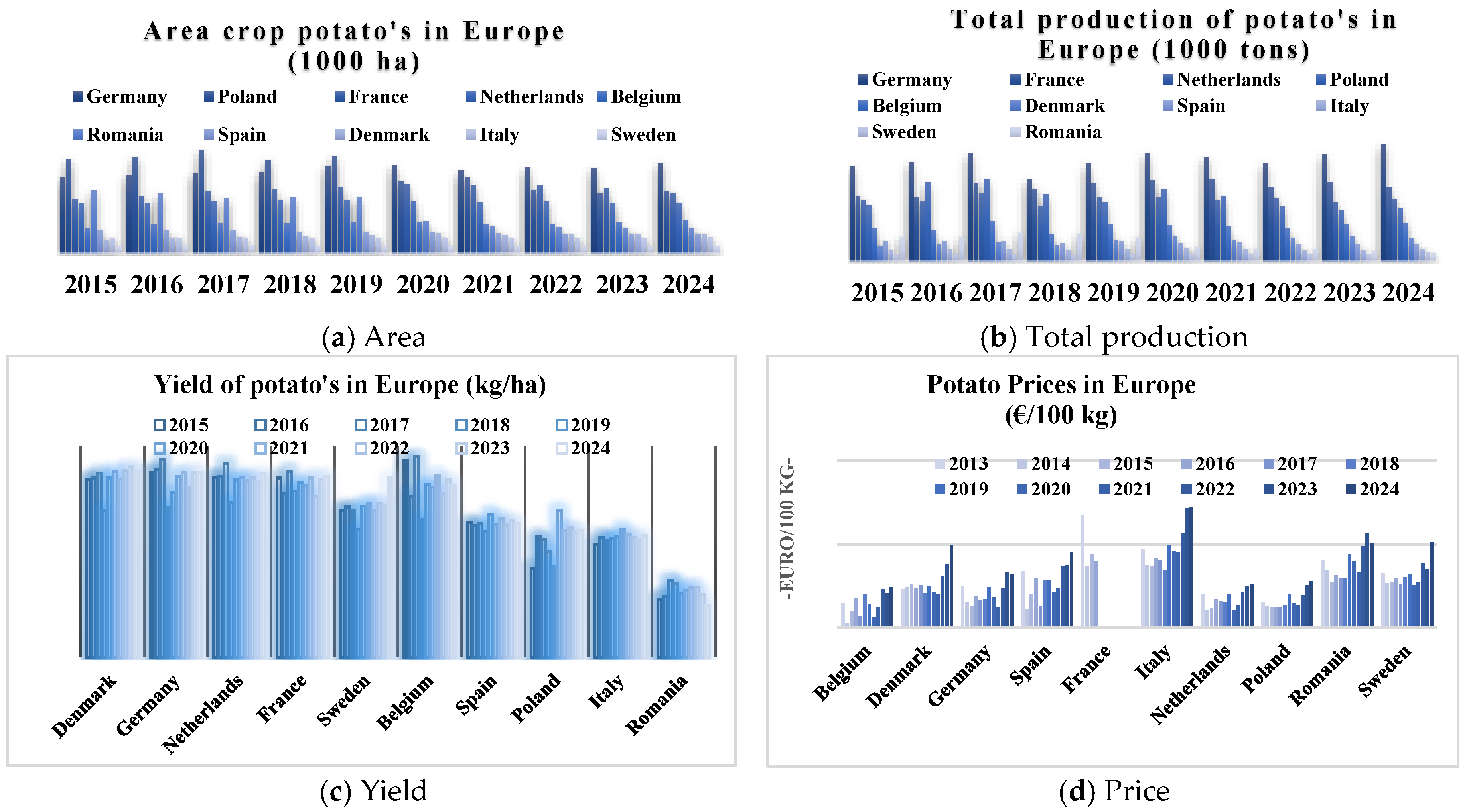
The situation of the top ten European potato producers, by cultivated area, total production, and yield, in the period 2015–2024, is presented in Figure 1.
Regarding the areas cultivated with potatoes, it was found that Europe, as a whole, went through a reduction in cultivated areas, which created pressure on potato prices on domestic and foreign markets and a dependence on imports in countries that massively reduced their area and also production (Romania, Poland). In 2015, the largest area cultivated with potatoes was recorded in Poland (292.5 thousand ha), a country that massively decreased its areas until 2024, when it reached the level of 194.52 thousand ha, a reduction of approximately 100 thousand ha in the last 10 years. Germany is the country that has maintained its area cultivated with potatoes relatively constant, and even increased it, becoming the European leader in cultivated area in 2024.
Romania lost the leading position it occupied in 2015, when it was among the first European potato producers (196.07 thousand ha), reaching the level of crop in 2024 (78.17 thousand ha), similar to the level of smaller countries, such as Spain or Belgium, a decrease correlated with per capita consumption, with increasing prices and with a lower domestic supply than ten years ago (Figure 2a).
At the European level, total potato production is stable, but redistributed between several countries, such as Germany, France, the Netherlands, and Poland. In other countries, such as Romania and Poland, the massive reduction in potato cultivated areas has implicitly led to a drastic decrease in production, which could no longer cover domestic consumption, and dependence on imports has increased, especially in Romania. In the potato crop, Germany is the undisputed leader, increasing both the cultivated area and production, which increased by 22.12%, from 10,370.20 thousand tons (2015) to 12,677 thousand tons (2024). France and the Netherlands maintain important positions, being traditional potato-growing countries in Europe, with multi-annual productions between 6751.66 thousand tons (Netherlands) and 8161.72 thousand tons (France). Poland, a country traditionally recognized as a major potato producer, significantly reduced its production by 34.70%, from 8956.04 thousand tons (2017) to 5848.16 thousand tons (2024). (Figure 2a).
In 2015–2017, Romania produced between 2699.68–3116.91 thousand tons, but after 2019, potato production collapsed abruptly. But, although the total production decreases, the yield per hectare has remained relatively constant, the reduction being due to the cultivated area that has decreased dramatically in Romania. (Figure 2b).
The European countries with the highest multiannual yields for the period 2015–2024, in potato crop, due mainly to the innovative technologies used, are: Denmark (38,320 kg/ha), Germany (37,800 kg/ha), the Netherlands (37,950 kg/ha), France (37,230 kg/ha) and Belgium (36,750 kg/ha) are in the top, with maximum yield values in the range of 36,000–38,000 kg/ha (Figure 2c).
Potato prices (€/100 kg) had an increasing trend after 2020 in most of the European countries studied, mainly influenced by inflation, increasing technological costs in potato crop and distribution costs, climate change, especially drought. The countries with the highest prices and increasing prices are Italy, Denmark, and Sweden. In Italy, a sustained upward trend is noted, above the EU average. In Poland, the price level is lower but stable, with slow growth after 2018, and the Netherlands records low and constant values, but also slightly increasing after 2020. Poland and Belgium remain, on average, among the cheapest markets at the European level. Compared to other countries, Romania has had, in recent years, among the highest potato price increases, exceeding the EU average. Thus, the general upward trend has generated very high levels in recent years (2023–2024), almost double the average for the period (Figure 2d).

3.2. Results for Romania

In Romania, the potato has a long tradition, being a staple food, due to its high nutritional values and excellent adaptability to the pedoclimatic conditions in rural areas. Viewed from the perspective of its role, not only food, but also economic and social, the potato crop contributes to the efficient use of agricultural land, to ensuring food for households, and to the development of local markets. The analysis highlighted that Romania cultivates much less potato than in the past [45], although there are more productive technologies and varieties, which have maintained the average production at a competitive level.
However, potato cultivation has significant economic importance for farmers and rural communities in Romania, contributing to the consolidation of incomes and the maintenance of jobs in the agricultural sector, but also to ensuring food security and the country’s economy. Although potatoes are one of the important crops in Romania, the production obtained shows great variability due to various factors, such as unfavorable climatic conditions (drought, excessive heat, scorching heat), low efficiency of production factors, lack of irrigation systems, etc.
The evaluation of potato production potential is essential for optimizing agricultural strategies, determining the maximum achievable yield, and identifying the limiting factors of production. The descriptive statistical analysis of potato production potential was carried out by considering two variables: the average production potential and the maximum production potential, expressed in kg/ha, which were calculated both at the national level (Table 1) and at the regional level (Table S1), based on the minimum and maximum agricultural potential values estimated by ICPA Bucharest [40] for a sample of 2687 observations (corresponding to rural localities suitable for potato cultivation). At the national level, the average production potential (mean = 11,159.6 kg/ha) indicates a relatively high typical yield, but also a significant variability, given the range of nearly 31,000 kg/ha between minimum and maximum values. The maximum production potential (mean = 15,281.9 kg/ha) is considerably higher than the average, with a maximum value of 47,980.4 kg/ha, suggesting that under optimal conditions (climate, technology, inputs), yield can be substantially improved. The discrepancy between the mean and the maximum (a difference of approximately 4122 kg/ha) indicates the presence of significant factors limiting the achievement of the maximum potential under normal production conditions. The relatively high minimum values (above 4000 kg/ha for both variables) indicate a lower production threshold that remains fairly stable even under less favorable conditions.
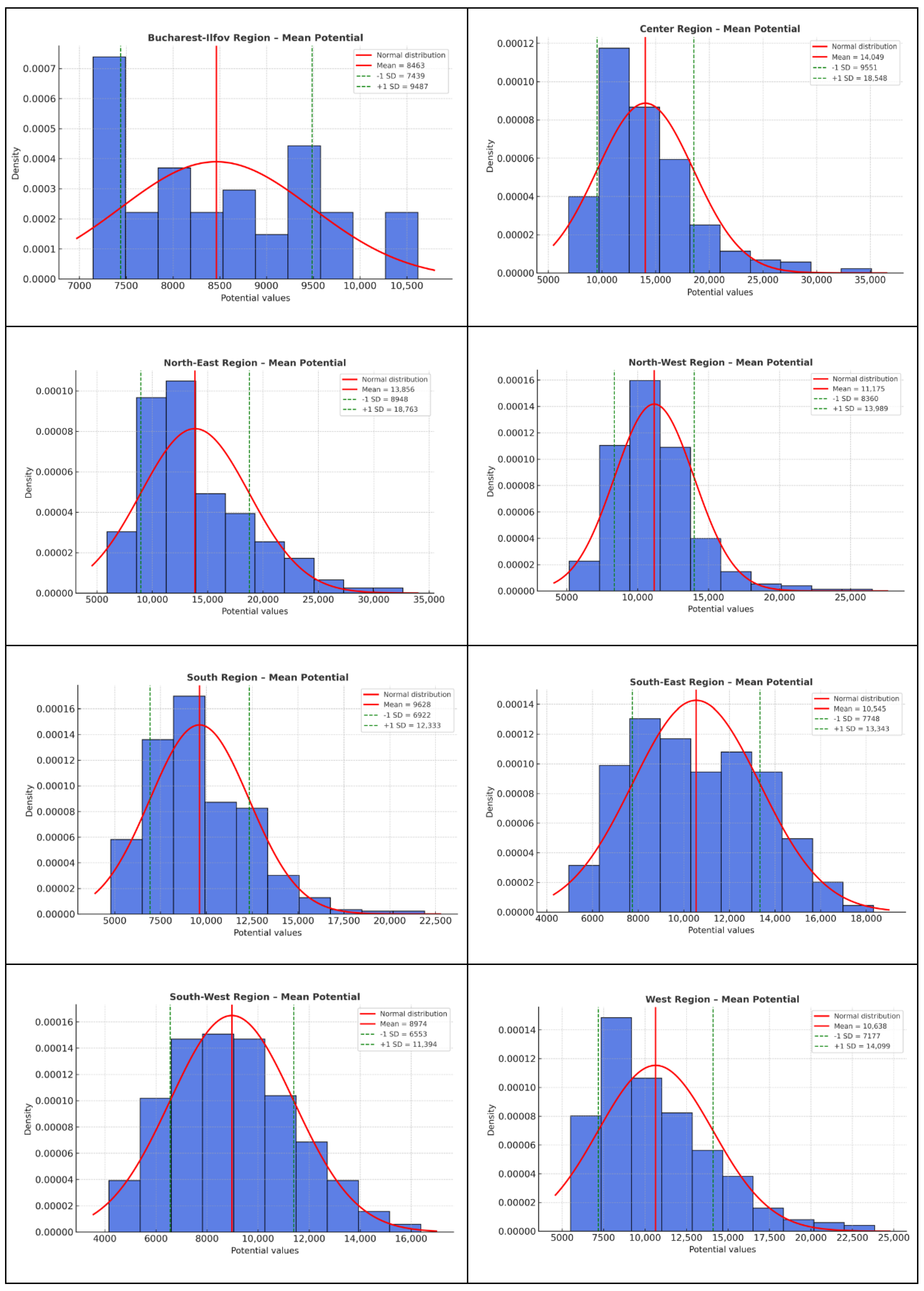
The analysis of the average potato production potential across Romania’s eight development regions (Figure 3) was conducted based on histograms, which illustrate the normal distribution (N), verify deviations from it, and highlight essential aspects of variability within the analyzed statistical series. These variations reflect both natural (pedoclimatic) characteristics and the degree of agricultural and infrastructural development. Indeed, the more complex the phenomena (dependent on numerous factors), the greater the variation, and the less representative the mean value becomes. The standard deviation and variance are indicators that provide a quantitative measure of the dispersion of values within a frequency distribution [40,41].
In summary, the regions with the highest average potential values (the Central Region and the North-East Region) also display the greatest variability, indicating a high but uneven potential dependent on local conditions and applied agricultural technologies. Regions with low average potential values (the Bucharest–Ilfov Region and the South-West Region) are characterized by relative stability but face structural limitations that constrain their agricultural competitiveness. Regions with intermediate values (the North-West, South-East, South, and West Regions) exhibit a balance between potential and stability, with development opportunities contingent upon investments in infrastructure and technological advancement.
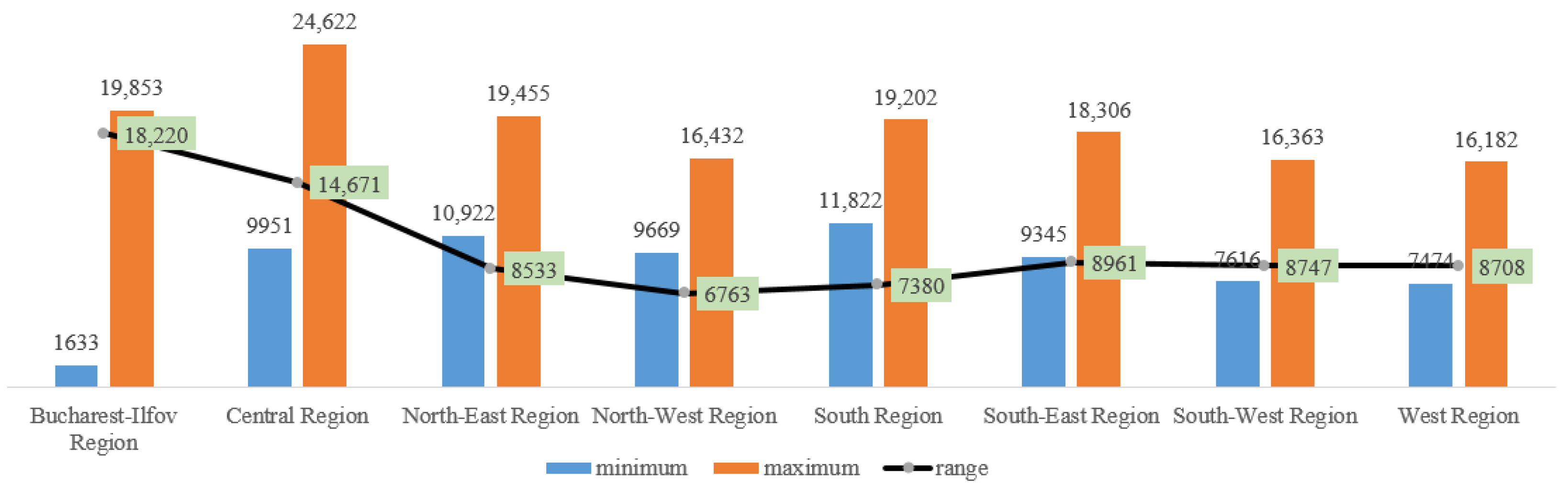
The analysis of INS data regarding average yields per hectare recorded at the regional level during 2003–2024 (Table S2) highlights a high degree of variability among Romania’s development regions. Thus, the average yield per hectare can vary considerably, primarily due to unfavorable meteorological conditions. The value range extends from 6763 kg/ha in the North-West Region to 18,220 kg/ha in the Bucharest–Ilfov Region (Figure 4).
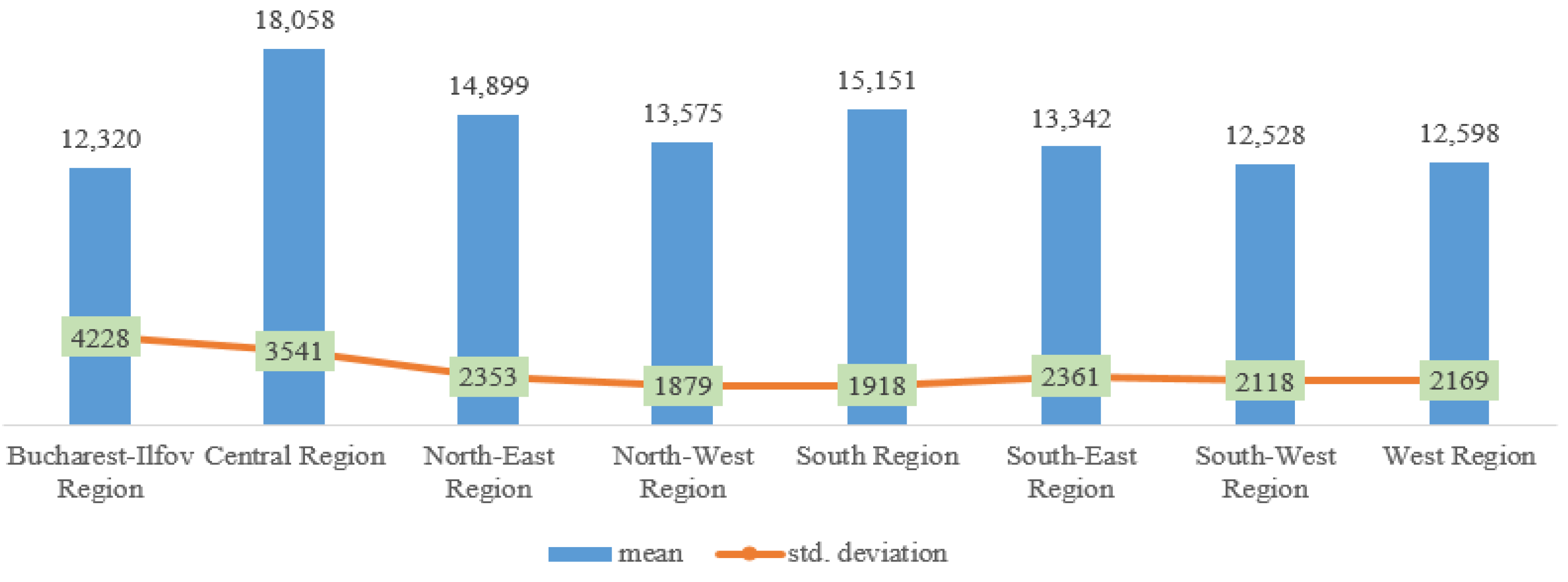
Generating the average value for the analyzed period revealed that the regions of Romania, North-East and South-West, recorded the lowest production (around 2500 kg/ha), being inefficient, and that, on average, the West Region was the most productive (Figure 5). The highest average (mean) was evident in the Central Region (18,058 kg/ha), which indicates favorable production conditions, in terms of soil, climate and technology, and the lowest averages were recorded in the South-West (12,528 kg/ha), West (12,598 kg/ha) and Bucharest-Ilfov (12,320 kg/ha) regions, being below the national average, caused by unfavorable climatic factors, technology or socio-economic nature. The standard deviation (interannual variability) showed that the Bucharest-Ilfov region (4228 kg/ha) had the highest variation, indicating a very high instability of production, most likely due to urban climatic conditions and the lack of agricultural infrastructure. The most stable regions are the North-West region (1879 kg/ha) and the South region (1918 kg/ha), which represent a benchmark for the potato crop in Romania, regardless of annual climatic conditions. The coefficient of variation had a relative stability for all regions of Romania, indicating where support for climatic and technological stabilization is needed. Also, the standard deviation values show a high variability of production in the regions of Romania, Bucharest-Ilfov, South, and South-East (Figure 5).
The values of the standard deviations (Figure 5) confirm the high volatility of production, particularly in the Bucharest–Ilfov, South, and South-East regions, where the dispersion from the multiannual mean is the most pronounced. These variations indicate a strong sensitivity to external factors, especially drought and the lack of irrigation systems, which reduce the long-term stability of yields. A comparison between the average yields obtained and the potential levels analyzed in the first part of this section reveals significant gaps. In the Bucharest–Ilfov Region, the multiannual average yield of 12,320 kg/ha exceeds the average potential (8463 kg/ha) but remains below the maximum potential (11,764 kg/ha). This situation demonstrates efficient resource use, yet with a clear limitation relative to the maximum achievable performance. In the North-East Region, the average yield of 14,899 kg/ha is above the average potential (13,856 kg/ha) but below the maximum potential (18,275 kg/ha), indicating significant opportunities for yield improvement.
The comparison between actual yields and production potentials confirms the existence of significant regional disparities. The Bucharest–Ilfov and South regions show notable performances: average yields represent more than 260% of the average potential, while maximum values exceed the potential maximum by over 160%. In contrast, the North-East and West regions reach only 80–90% of their maximum potential, indicating an underutilization of available resources. Thus, the interpretation of the data reveals two distinct typologies: areas where yields exceed the average potential (a sign of higher efficiency or well-adapted methodologies) and areas where negative gaps relative to the maximum confirm vulnerability to climatic factors and the absence of advanced agricultural technologies—Table 2.
A comparative analysis of cultivated areas (Table S3) and average yields per hectare (Table S2) in Romania’s development regions during the 2003–2024 period outlines several major trends defining the relationship between the extent of potato-cultivated land and productive efficiency per hectare. Firstly, cultivated areas show an overall declining trend, particularly after 2015, with a sharp decrease during 2020–2024. For example, in the North-East or Central Regions, tens of thousands of hectares were cultivated at the beginning of the analyzed period, while after 2020, there was a drastic reduction to only a few thousand hectares. This significant decrease in potato-cultivated land may be attributed to the combined effects of agricultural restructuring, rural labor migration, and the impact of climate change.
On the other hand, average yields per hectare do not always follow the same trend. In some periods, the decline in cultivated areas was accompanied by relative stability or even an increase in average yields. For instance, between 2016 and 2019, the reduction in cultivated areas across most regions did not prevent the achievement of relatively high average yields, suggesting an intensification of agricultural practices and possible technological modernization. However, in recent years, the analysis reveals a simultaneous decrease in both cultivated area and productivity (especially after 2020, in the South-East and South-West regions), which can be interpreted as a structural decline in agricultural capacity.
Interregional comparison shows that the Central and North-West Regions generally achieved higher average yields per hectare compared to the other regions, even though the cultivated areas did not exhibit significant variability. Conversely, the South and South-East Regions show stronger fluctuations, most likely due to yield levels being highly dependent on climatic conditions and the irrigation infrastructure in those areas. A particular case is the Bucharest–Ilfov Region, where, despite extremely small cultivated areas, the average yields were considerably higher than the national average, suggesting an intensive character of the applied agricultural technologies.
Overall, the comparative analysis suggests that the reduction in cultivated areas did not automatically lead to a proportional decrease in average yields, and the relationship between these two datasets (average yields per hectare and cultivated areas) is more complex, mediated by factors such as the technology used, investments in mechanization, and the quality of agricultural inputs. This observation provides the foundation for conducting a correlation and regression analysis aimed at determining the extent to which there is a statistical relationship between cultivated land size and the yields obtained.
However, Romania produced a quantity greater than domestic consumption, which was modest compared to other European countries, traditionally consuming potatoes (36–40 kg/year/capita), and after 2021, a drastic reduction in the surplus was observed, and in order to maintain supply, dependence on imports significantly increased [46]. According to the food balance data for potatoes in Romania made available by INS, for the period 2015–2023, it reveals the following trends: until 2017, domestic production was sufficient to cover total consumption, with a self-sufficiency ratio ranging between 87.3% and 100.3%. However, after 2019, this ratio began to decrease (90.8%), and in the period 2021–2023, self-sufficiency decreased further, reaching between 48% and 58%. As a result, Romania became dependent on imports and stocks to cover almost half of the quantities intended for human consumption, with potato imports constantly increasing. In 2015, the imported quantity was 274 thousand tons, increasing 2.3 times, to 643 thousand tons by 2023, with exports remaining low and insignificant, ranging from 30 thousand tons (2015) to 83 thousand tons (2023) [47].
During the period 2013–2019, compared to the urban area, a greater quantity of potatoes was consumed in rural areas, by approximately 2–3 kg/capita/year, but after 2020, a balance and even a slight increase in potato consumption in urban areas is observed (by 1.5–2 kg/capita/year). Considering the minimum consumption level of 34–35 kg/capita/year, for a Romanian population of approximately 19 million inhabitants, the production necessary to cover consumption is approximately 670 thousand tons, and in 2019–2020, this was twice as high as consumption. Romania has thus become a net importer of potatoes, due to losses, storage, and trade flows, even though there is potential to cover consumption [45].
With insufficient local production, Romania is increasingly relying on imports to cover its domestic needs. In 2023, needing 0.88 million tons of potatoes to ensure self-consumption, the deficit was covered by imports, which totaled 643,000 tons. Total resources decreased by 663,000 tons compared to the previous year, reaching 7.201 million tons, including stocks, production, and imports. This reached a negative record after 2015, against the backdrop of increasingly lower areas and yields. Despite the decrease in production, domestic potato consumption continues to grow. In 2023, it totaled 2.461 million tons, 57,000 tons more than in 2022. Of this quantity, 1953 million tons were intended for human consumption, representing 79.4% of total consumption. Calculating the decreasing trend of the average production per hectare achieved in potato crop, starting from the slight decreasing trend in the period 2018–2024, calculated as approximately 560 kg/ha/year, the average production forecast for the period 2025–2030 would be the following: 13,310 kg/ha (2025), 12,750 kg/ha (2026), 12,190 kg/ha (2027), 11,630 kg/ha (2028), 11,070 kg/ha (2029), 10,510 kg/ha (2030), the trend suggesting obvious regression, and the average production could be below the level of 1990, the year in which potatoes were cultivated on an area 4 times larger (289.61 thousand ha).
Some solutions can lead to increased economic efficiency in potato crops by adopting a complex of agricultural practices regarding the implementation of technology, taking into account pedoclimatic conditions, the concept referring to the crop of potatoes with a minimum of labor and money [46]. Also, the creation and use of disease and drought-resistant varieties, investments in mechanization, irrigation, and modern technologies, the formation of cooperatives and associations for local marketing and processing, as well as the development of agricultural policies to support farmers and to encourage domestic consumption of domestic potatoes. However, although the yield increased significantly after 1990 by up to +70%, in recent years, productivity has stagnated between 14 tons/ha and 17 tons/ha, with decreases in the years 2015 and 2023.
In the comparative analysis of cultivated areas (Table S3) and average production per hectare (Table S2) in the development regions of Romania, for the period 2003–2024, several major trends are outlined that mark the relationship between the size of land cultivated with potatoes and the productive efficiency per hectare, as follows:
Cultivated areas recorded a generally decreasing trend, especially accentuated after 2015, and a steep decrease in the period 2020–2024. In the North-East or Central regions, at the beginning of the analyzed period, tens of thousands of hectares were cultivated, and after 2020, a drastic reduction is observed, down to values of the order of several thousand hectares. The significant reduction in potato cultivated areas can be determined both by the effects of agricultural restructuring, namely the migration of the rural workforce, and by the influences of climate change.
Average yields do not follow the same trend; in certain periods, the decrease in areas is accompanied by relative stability or even an increase in average yields. In the period 2016–2019, the reduction in cultivated areas in most regions did not prevent the achievement of relatively high average yields, which indicates an intensification of agricultural practices and a possible technological modernization. However, in recent years, the analysis reveals a concomitant decrease in both areas and productivity (especially after 2020, in the South-East and South-West regions), which can be interpreted as a structural decline in agricultural capacity.
The interregional comparison highlights the fact that the Central and North-West Regions generally had higher average yields per hectare than the other regions, even in conditions where the cultivated areas did not register significant variability. In contrast, the South and South-East regions show more pronounced fluctuations, most likely the production values being dependent on the climatic conditions and the irrigation infrastructure in the respective areas. A particular case is the Bucharest-Ilfov Region, where, although the cultivated areas were extremely low, very high average yields were recorded in relation to the national average, a situation that suggests the intensive nature of agricultural technologies.
The Central region stands out as the most balanced and efficient in using the production potential, with both average and maximum, probably the best agroecological and technological conditions, and can be used as a model of good practices for regional extension and applied research. The South-Muntenia, South-West, and Bucharest-Ilfov regions have values exceeding 100% in several categories, which suggests an overestimation of the maximum reported productions. The North-East and West regions are regions with underutilization of the potential for the potato crop, which indicates the need for investments in agricultural infrastructure, adapted varieties, modern technologies, and optimization of inputs (balanced fertilization).
Thus, it is noted that the potato crop system in Romanian agriculture is in decline, viewed through the prism of the yields achieved in this crop, the analysis highlighting the following: the areas cultivated with potatoes in Romania have progressively registered a significant decrease in recent decades, from 198,500 ha (2014) to 170,000 ha (2019) and 98,400 ha (2020) and 75,000 ha (2022), and in 2023, the cultivated area continued to decrease, reaching approximately 16,600 ha for consumption potatoes and 10,000 ha for seed potatoes. This reduction in cultivated areas has a direct influence on potato yields, which are generally low, to which is added, in a negative sense, the lack of irrigation systems and the increase in prices of agricultural inputs, which have affected the application of technology.
The current deficiencies facing the potato crop system in Romania are of a commercial nature (large price fluctuations and competition from cheap imports), of an economic nature (high costs for inputs-seeds, fertilizers, pesticides), of a technological nature (diseases and pests that compromise the crop in the absence of specific treatments), of a logistical nature (poor infrastructure for storage and processing, which leads to post-harvest losses), but also of a political nature (insufficient regulations and undetected subsidy of the crop).
Considering that the potato crop can contribute to combating hunger, to sustainable food security of the population in rural areas, and has the potential to improve the incomes of small farmers [47], it is recommended that these aspects be taken into account by representatives of state authorities that regulate agriculture, and especially the potato crop system in Romania.

4. Discussion

Comparison of actual yields with production potentials confirms significant regional gaps.

4.1. Interpretation of Statistical Results Determined by the Area-Production Relationship

The statistical analysis conducted at the regional level in Romania had an observational, descriptive, and strictly correlative character, being based on raw data and without any intention to assert direct causal relationships between land size and agricultural output. Indeed, the correlation analysis between cultivated areas and average yields per hectare identified a weak and statistically inconsistent association, suggesting that the size of agricultural land is not a direct determinant of productivity. In many cases, data provided by the National Institute of Statistics (INS) show that regions with large cultivated areas (such as the North-East or South) did not automatically achieve high yields, while regions with smaller areas (e.g., Bucharest–Ilfov) recorded very high yields. The size of the cultivated area is statistically associated but does not causally determine productivity variations, as agricultural yields result from a complex set of interdependent external factors, some of which were not explicitly included in the model but may introduce confounding effects. Examples include climatic factors (temperature, precipitation, drought frequency), technological level (mechanization, irrigation, seed quality, fertilizer use), socio-economic context (farm size and structure, regional infrastructure, market access), as well as managerial decisions and farmers’ behavior (crop rotation, input optimization, risk management, investments), among others.
To assess the relationship between the area cultivated with potatoes and the average yields obtained during 2003–2024, a simple linear regression model was estimated for each of Romania’s eight development regions. To minimize the risk of misinterpretation and to evaluate the quality of the regional regression models, several statistical validation tests were applied, and standard diagnostic indicators were obtained for each model, allowing visual evaluation of normality, heteroscedasticity, and the influence of outliers. The results are presented in Table 3 and include, for each region: regression coefficients (β0, β1) with standard errors, R2 and adjusted R2 values, F and p statistics, the Durbin–Watson coefficient, and the variance inflation factor (VIF).
The results of the regression analysis indicate a low to moderate level of the coefficient of determination (with R2 values ranging between 0.10 and 0.31, and adjusted R2 values between 0.07 and 0.28), suggesting a weak to moderate correlation between the cultivated area (X) and the average yield (Y). Consequently, the variation in yields is only partially explained by the cultivated area. Thus, the results confirm a positive but moderate association between cultivated area and average yields, implying a limited influence of land size on productivity. It can therefore be stated that yield is predominantly conditioned by external factors not included in the model. This statistical association is highly significant in the South-East (p = 0.012), South (p = 0.024), and Central (p = 0.038) regions, confirming the existence of a positive relationship between the expansion of cultivated area and productivity growth, without demonstrating a strict causal link. In the other regions, the models are not statistically significant, as they do not reach the significance threshold (p > 0.05), which confirms the structural variability of regional agriculture.
The statistical diagnostic tests confirmed the validity of the models as follows: standardized residuals show a normal distribution (Shapiro–Wilk test, p > 0.05); homoscedasticity is confirmed (Breusch–Pagan test, p > 0.05); residual autocorrelation is absent (Durbin–Watson test values between 1.84 and 2.14); multicollinearity is not present (all VIF index values close to 1); and the p-values for coefficients and the global F-statistic confirm the significance of models in regions with a positive and stable correlation (South, South-East, and Central regions).
Graphical and diagnostic analyses (Figure S1—Supplementary Materials) were conducted separately for each development region (2003–2024), ensuring the comparability of results and the overall validity of regional models. The residual plots and Q–Q graphs revealed an approximately normal distribution and random dispersion, without systematic heteroscedasticity.
Therefore, the regression models were statistically validated, although their explanatory power remains limited. This outcome reflects the multifactorial nature of agricultural yields, where external factors—such as climatic conditions, production technologies, and the efficiency of input use—play a significant role in determining final results. From an economic analysis perspective, this finding confirms that expanding agricultural land does not guarantee a proportional increase in productivity in the absence of investments in technology, infrastructure, and sustainable agronomic practices.

4.2. Discussions About Regional Disparities and Economic Implications

The economic impact determined by the failure to achieve the production potentials, and the values obtained, expressed in €, are presented in Tables S5 and S6, taking into account the INS data [39] related to the average annual selling price (Table S7), respectively the BNR [43] values related to the average annual exchange rate of the €, recorded during the period 2003–2024.
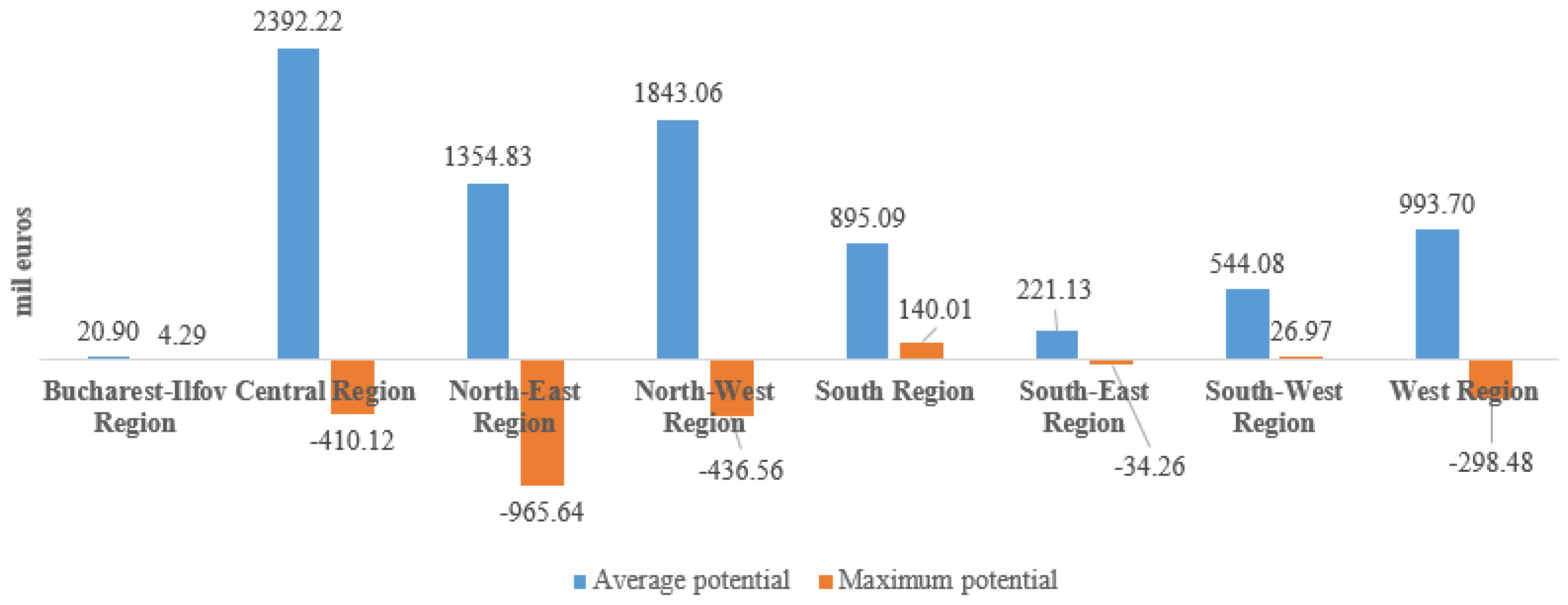
Unlike the results in Table S5, in Table S6, negative values frequently appear, especially in the southern and eastern regions, which reflects a significant income gap, generated by not reaching the maximum potential. For example, in the North-East region, there is a total gap of (−965 million €), and in the Central Region, (−410 million €). Even in the West region, where the technical potential is high, the cumulative gap is (−298 million €). The conclusion is that, although production exceeds the average potential, if we relate it to the maximum possible potential, Romania records an income gap in potato cultivation, which, in terms of value, is −800 million €.
The economic interpretation of these gaps, by applying the production function, shows notable differences between the regions of the country (Figure 6). At the national level, the results indicate a positive gap compared to the average potential (over 4 billion €), which means that the production obtained managed to exceed this threshold. However, compared to the maximum potential, a deficit appears (estimated at −833 million €), reflecting the income gap caused by the failure to fully exploit agricultural resources.
Comparing the average productions achieved with the potential ones, it is found that the maximum value of the average potential is 35,122.4 kg/ha, respectively the maximum value of the maximum potential is 47,980.4 kg/ha, which denotes the fact that, in the analyzed period, the agricultural yields for potatoes were mostly below the level of the maximum potential of average or maximum real yield, which determined major negative economic implications throughout the analyzed period. (Figure 6).
The negative values in Table S6 are not associated with the notion of accounting loss; rather, they refer to the difference between the actual income and the theoretical potential income under an ideal scenario of productivity and price. However, the differences between actual and potential income should be interpreted in the context of marginal efficiency and the rationality of farmers’ decisions. This measure implies new opportunity costs, not direct financial losses. To achieve maximum yields, farmers would need to increase the marginal costs of potato cultivation (through additional inputs, irrigation, mechanization, or intensive fertilization), measures that could exceed marginal revenues and thus reduce overall profitability. Consequently, farmers may rationally choose to operate below their maximum potential in order to limit financial or climatic risks, which are difficult to anticipate.
Data available from INS and Eurostat [38,39] indicate that, during the 2020–2024 period, the average production costs per hectare for potato cultivation in Romania ranged between €7200 and €9800 /ha, with significant regional variations. Under these conditions, the analysis of the income gap highlights theoretical differences in gross potential but does not allow for direct inferences regarding net profit or economic efficiency.

4.3. Indicative Estimation of Average Costs per Hectare and Implications for Profit Margins

To contextualize the analysis of the income gap, an indicative estimation of the average production costs per hectare for potato cultivation in Romania was conducted, using official data from INS–Tempo-Online (Agriculture module) and Eurostat–Economic Accounts for Agriculture (EAA) [38,39] for the period 2020–2023.
The analyzed costs include direct expenditures on agricultural inputs (seeds, fertilizers, pesticides, energy, and irrigation water), labor costs, as well as indirect costs (depreciation, machinery maintenance, and logistics expenses).
National average values range between €7200 and €9800/ha, with considerable variation across development regions, as follows: in the North-East Region, €7400/ha; in the South-East Region, €8900/ha; in the South Region, €9200/ha; in the South-West Region, €8100/ha; in the West Region, €9800 /ha; in the North-West Region, €8500/ha; in the Central Region, €9000/ha; and in the Bucharest–Ilfov Region, €9600/ha. These values are indicative and reflect gross average costs, without adjustments for inflation or seasonal fluctuations in input prices.
Based on these levels, gross profit margins (the difference between actual income and estimated cost per hectare) generally range between +5% and +18% in the high-performing regions (South and Central) and may be negative (−3% to −7%) in areas with lower yields (North-East, South-West).
The analysis shows that unrealized potential income cannot be interpreted as a financial loss, since the additional costs required to achieve maximum yields would often exceed the marginal revenues obtained. Therefore, farmers’ behavior in applying potato cultivation technologies is rational, as they optimize production according to costs, risks, and financial constraints—and only secondarily in relation to the absolute agronomic potential.
Consequently, the results should be interpreted as estimates of unexploited potential, not as accounting losses or financial deficits. The negative values in Table S6 do not represent actual financial losses, but rather unrealized potential revenues, interpreted as opportunity costs. Under these conditions, farmers’ decision not to achieve the maximum potential yields is justified, as the risk of marginal costs exceeding marginal revenues is real, especially in volatile market conditions.
In future research, integrating real data on variable and fixed costs into the analytical model will allow for a more precise evaluation of profit margins and marginal economic returns, thereby enabling the economic impact to more accurately reflect production efficiency.

4.4. Link to Previous Studies and Policy Recommendations

The literature highlights a significant yield gap between European agricultural regions, especially between Western Europe, characterized by advanced technologies and high productivity, and Eastern Europe, where yields are below potential, being influenced by structural and climatic factors. Previous studies on regional disparities in European agriculture have provided extensive analyses of differences in productivity and agricultural infrastructure, but have rarely addressed in an integrated manner the economic impact of unfulfilled agricultural potential in the context of potato cultivation at national and sub-national levels. This research differs by adopting a comprehensive methodology, which combines descriptive statistical analysis, correlation, and regression, with production functions applied to regional and county data for an extended period (2003–2024). Thus, the study not only identifies territorial disparities but also quantifies the economic losses generated by the underutilization of real agricultural potential, a specific gap in the specialized literature that, to date, has been insufficiently explored in the case of potato cultivation in Romania.
According to a study conducted by Wageningen University & Research, at the European level, there is a significant gap between potential and achieved yield in potato cultivation, known as the “yield gap” [23]. This difference is influenced by regional factors and manifests itself distinctly between the subregions of Europe: in Western, Northern, Southern, and Eastern Europe. The study shows that regions with high-performance agricultural infrastructure, with high levels of technological inputs and with favorable agro-climatic conditions, tend to record higher yields, unlike areas where these conditions are absent or poorly developed. Analyses of the North-West region of Europe-including Germany, France, the Netherlands, Belgium, and the United Kingdom-indicate a strong geographical concentration of potato production in a few dominant regions [48]. This uneven distribution suggests the existence of structural disparities between developed agricultural centers and peripheral regions. Furthermore, Eurostat data on average production and yields at the European Union level help to contextualize the position of Romania and other Central and Eastern European countries in this agricultural landscape [38]. In particular, Eastern Europe has a high potential for increasing potato production, derived from the existence of significant “yield gaps”, which indicates untapped opportunities for efficiency gains [23]. However, achieving the productive potential requires the implementation of specific interventions: modernizing irrigation infrastructure, increasing access to agricultural inputs (e.g., fertilizers, certified seeds), adopting high-performance technologies, as well as efficient integration into agri-food value chains. Agricultural policies at the regional level should therefore aim to reduce these disparities by supporting regions lagging technologically and productively. Moreover, in the current context of climate change, environmental factors-such as prolonged drought or episodes of extreme temperatures becoming increasingly important in determining agricultural performance. The study conducted by the Institute for European Environmental Policy (IEEP) [49] highlights the vulnerability of potato cultivation to these climate changes, highlighting situations in Germany and other European regions where productivity has been severely affected.

4.5. Recommendations for Highlighting the Economic Benefits of Potatoes

Potato crop is one of the most efficient ways of using agricultural land in rural areas, with a direct impact on food safety and security. This crop increases the resilience of households, offers additional income opportunities, and reduces dependence on imports.
It is recommended that agricultural policies consider the potato crop in areas less favorable to other cereal crops and that investments be made in the infrastructure necessary for potato storage and processing, essential elements for maximizing economic efficiency and supporting rural communities. Thus, for Romania, in the new Strategic Plan PS PAC 2023–2027 [50], the potato crop system is supported through a special intervention, DR Intervention 16—Investments in the vegetable and/or potato crop system. The allocation will be made for the modernization and restructuring of farms, investments in precision agriculture, digitalization, storage and processing, cooperation between actors involved in the food chain, encouraging the consumption of local products, and developing local markets.
The results of the study highlighted that, in the future, the European potato crop system will face numerous challenges: the intensification of production through modern technologies (irrigation, high-performance varieties, mechanization) in developed countries [51], the pressure on natural resources in countries with an extensive model [52] due to the diversification of the use of potatoes in processed products, but the effects of climate change may affect the stability of production, especially in regions dependent on seasonal rainfall.
Potato crop is vital for food security due to its high yield and high nutritional value, having a high share in the economic balance of European countries, but also of the entire world [53]. But the downward trend of potato cultivated areas in Europe, as well as in Romania, reflects the challenges faced by farmers, including unfavorable climatic conditions, the lack of irrigation infrastructure, and import competition [54]. This situation raises serious questions about the future of Romanian agriculture and potato production [55,56].
Investments in modern agricultural technologies, supporting farmers through appropriate subsidies and policies, and promoting sustainable agriculture are indispensable measures for the recovery of potato production in Romania. But the development of an integrated strategy at the national level must take into account the specificity of each region, to transform the agricultural potential of the potato into a real factor of competitiveness and food security. Studies show that support measures significantly influence the competitiveness of potato farmers [57]. At the same time, it is necessary to strengthen them, as well as climate education among farmers, to ensure the resilience of the potato crop system in Romania [58].
Regional disparities in potato production across Romania are substantial, indicating that agricultural policy interventions should aim both to enhance production stability and to capitalize on the existing yield potential. Optimizing the use of inputs—particularly water, fertilizers, and locally adapted varieties—is essential in regions with high variability to mitigate the risk of low yields. Regions with both high maximum potential and high variability (e.g., the Central Region) could particularly benefit from precision agriculture technologies to standardize production outcomes. For each region in Romania, we recommend the following measures:
  • Bucharest-Ilfov Region: Given its limited representativeness for potato cultivation, it is recommended that potatoes be excluded from the zonal crop plan. Instead, investments should target niche technologies such as urban agriculture and vertical farming, which better align with the region’s agricultural profile;
  • Central Region: This region records the highest maximum potential, warranting the establishment of pilot projects or centers of excellence for potato production. Increased support for farmers through training programs and digitalization initiatives is also recommended to reduce intra-regional variability;
  • North-East Region: Continued support programs for small and medium-sized farms are advisable, focusing on the promotion of locally adapted varieties and the expansion of storage and processing capacities to strengthen the value chain;
  • North-West Region: Efforts should concentrate on modernizing irrigation and mechanization systems, supporting the creation of agricultural cooperatives, and strengthening local and regional markets through the development of short supply chains;
  • South Region: With its stable yields and strong production performance, this region should be prioritized for the expansion of potato cultivation and for vertical integration with local processing industries;
  • South-East Region: Characterized by higher yield variability, this region requires targeted investments in anti-drought systems and agricultural infrastructure. Farmer training in risk management and the development of financial instruments to mitigate climate-related risks should also be key policy components;
  • South-West Region: As one of the most stable agricultural regions, the South-West should promote sustainable farming practices and optimize regional logistics chains to improve competitiveness;
  • The Western Region: Although stable, this region’s relatively low maximum potential suggests the need to enhance productivity through the introduction of higher-yielding potato varieties and improved cultivation techniques.
We recommend that local public authorities and decision-makers responsible for agricultural policy in Romania prioritize investments in potato crop technology, agricultural infrastructure, and the collective organization of farmers, as well as in research, innovation, and their transfer to productive activities. Only through coordinated action among these actors can potato cultivation maintain its relevance and contribute, in the long term, to food safety, food security, and sustainable rural development. Future research should focus on modeling the impact of climate change on yields, conducting cost–benefit analyses of modern cultivation technologies, and evaluating the economic efficiency of potato production within processing value chains.

4.6. Study Limitations

Although the analysis clearly highlights regional disparities in potato crop productivity in Romania and highlights the economic impact of underutilizing agricultural potential, the study presents a number of methodological and analytical limitations. First, the use of simple linear regression, without integrating other relevant explanatory variables (such as soil type, level of mechanization, investments in technology, or agricultural inputs), limits the model’s ability to reflect the complexity of the relationship between cultivated area and yields obtained.
The regionally aggregated data, provided by the National Institute of Statistics, do not allow for a detailed analysis at the local or farm level, which reduces the accuracy of interpretations regarding agricultural efficiency. The income gap analysis was limited as it was based on gross incomes, without including production costs, given that such data are not fully available at the regional level and show considerable variations between development regions.
In addition, the period 2020–2024, marked by multiple crises (climate, energy, post-pandemic), introduces exogenous variables that may distort the observed relationships, which requires caution in generalizing the conclusions.

5. Conclusions

The article offers an innovative and practical perspective that can inform more effective agricultural policies, thus significantly contributing to advancing knowledge on agricultural performance and food security in vulnerable regions. The study conducted on the potato crop system, at the European level and in Romania, has contributed not only to understanding the current state but also to outlining concrete intervention measures aimed at increasing rural resilience, reducing dependence on imports, and making more efficient use of agricultural land, especially in Romania and Eastern Europe.
The downward trend of potato cultivated areas in Romania reflects the challenges faced by farmers, including unfavorable climatic conditions, the lack of irrigation infrastructure, and import competition. This indicates a systemic crisis, in which exogenous factors (climate change, increased input costs, labor market volatility) overlap the internal limits of the agricultural sector. Thus, the results suggest that the size of the areas should not be seen as an exclusive indicator of agricultural performance.
Future strategies should focus on increasing the quality of inputs, modernizing infrastructure, and adapting to climate change to strengthen the productivity and resilience of the Romanian agricultural system through technological modernization, irrigation, and support for small and medium-sized farms, rather than simply expanding cultivated areas.
The conclusion that emerges is that Romania has a high agricultural potential in terms of potato production, but its exploitation is deeply uneven at the territorial level.
The results of this study can support future directions of research, agricultural development, and public policies in the potato crop system.
The research hypothesis (H1), regarding the relationship between cultivated area and food self-sufficiency, was not demonstrated because the potato area is not the only decisive factor in ensuring production and, implicitly, food self-sufficiency.
The second hypothesis, H2 (Existence of regional yield disparities in Romania), was verified, and major yield differences were found between all regions of Romania.
The last hypothesis, H3 (Influence of technological and climatic factors on potato yield), is real because in regions with technologies and climate conducive to potatoes, yields were higher.
The very high dispersion between the maximum and average production potential reflects both the diversity of pedoclimatic conditions and the differences in technological development levels. It also suggests a considerable gap between actual performance and the real potential of agricultural land, thus indicating substantial room for improving yields through modernization measures and investments in agricultural infrastructure.
Therefore, the analysis of the average production potential for potato cultivation confirmed that regional agricultural policies should be differentiated: some regions require measures to promote uniformity and reduce internal disparities (Central, North-East), while others need investments aimed at increasing yields (South, Bucharest–Ilfov).
Moreover, the results obtained from the correlation analysis between cultivated areas and average yields per hectare reflect apparent dependency relationships, typical of complex economic phenomena, where part of the variation in yields can be explained by changes in the cultivated area, but without implying direct causality. This trend indicates that land size is not the only determinant of productivity and that other factors-such as soil quality, degree of mechanization, use of modern inputs (seeds, fertilizers, pesticides), and climatic conditions-play a significant role.
The analysis of the productive potential of potatoes, the evolution of cultivated areas, yields, and potato consumption in Romania, provides a solid basis for the formulation of national strategies for the revitalization of the potato crop system, especially in mountainous and hilly regions, where this crop has maximum potential. At the same time, the parallel made with the situation of potato crop in European countries, with innovative practices applied in its crop technology, highlights the need to adapt these innovations and sustainable agricultural practices in Romania, to relaunch the potato crop system, essential for food safety and security.
At the same time, a promising research direction consists of assessing regional vulnerability to climate change, given the particular sensitivity of the potato crop to water and heat stress conditions. Research should also aim at analyzing the distribution of production according to economic destination-fresh consumption, industrial processing, or seed production-in order to understand whether and to what extent there is regional specialization within the value chain. Finally, public policies can be made more efficient by adapting them to regional specificities, including by supporting investments in modern equipment, irrigation systems, and professional training of farmers in regions with poor performance. Such a differentiated approach could contribute to reducing regional disparities and improving the competitiveness of the potato crop system in Central and Eastern Europe.

Supplementary Materials

The following supporting information can be downloaded at: https://www.mdpi.com/article/10.3390/agriculture15222343/s1, Table S1: Average, minimum and maximum potential at regional level; Table S2: Average potato production in the period 2003–2024 (kg/ha); Table S3: Potato cultivated areas in the period 2003–2024 (ha); Table S4: Minimum, maximum, average values, variability and standard deviation for potato production in the period 2003–2024 (kg/ha); Table S5: Value differences from the minimum potential (€); Table S6: Value differences from the maximum potential (€); Table S7 Average annual potato prices/region in the period 2003–2024 (€); Figure S1—Regression Model Diagnostics (2003–2024).

Author Contributions

Conceptualization, P.S. and E.C.; methodology, E.C.; software, E.C.; validation, P.S., E.C. and I.-A.C.; formal analysis, I.-A.C.; investigation, I.-A.C.; resources, P.S. and I.-A.C.; data curation E.C.; writing—original draft preparation P.S.; writing—review and editing, P.S. and I.-A.C.; visualization, E.C.; supervision, P.S. project administration, P.S., E.C. and I.-A.C.; funding acquisition, P.S. and I.-A.C. All authors have read and agreed to the published version of the manuscript.

Funding

The research was funded by the authors.

Institutional Review Board Statement

“Not applicable” for studies not involving humans or animals.

Data Availability Statement

The original contributions presented in this study are included in the article and Supplementary Material. Further inquiries can be directed to the corresponding author.

Conflicts of Interest

The authors declare no conflicts of interest.

References

  1. Devaux, A.; Goffart, J.P.; Kromann, P.; Andrade-Piedra, J.; Polar, V.; Hareau, G. The Potato of the Future: Opportunities and Challenges in Sustainable Agri-food Systems. Potato Res. 2021, 64, 681–720. [Google Scholar] [CrossRef] [PubMed]
  2. Food and Agriculture Organization of the United Nations, FAOSTAT. Available online: https://www.fao.org/faostat/en/#data/FBS (accessed on 23 August 2025).
  3. Naz, S.; Ahmed, M.; Abbas, G.; Fatima, Z.; Hussain, S.; Iqbal, P.; Ghani, A.; Ali, M.; Awan, T.H.; Samad, N.; et al. Assessment of Climate Change Impact on Potato-Potato Cropping System Under Semi-arid Environment and Designing of Adaptation Strategies. Potato Res. 2025, 68, 1209–1239. [Google Scholar] [CrossRef]
  4. Niu, Y.; Wang, L.; Luo, Z.; Fudjoe, S.K.; Palta, J.A.; Li, L.; Li, S. Effects of Irrigation Practices on Potato Yield and Water Productivity: A Global Meta-Analysis. Agronomy 2025, 15, 1942. [Google Scholar] [CrossRef]
  5. Haverkort, A.J.; Struik, P.C. Yield levels of potato crops: Recent achievements and future prospects. Field Crops Res. 2015, 182, 76–85. [Google Scholar] [CrossRef]
  6. Tokbergenova, Z.; Aitbayev, T.; Sharipova, D.; Jantassova, A.; Makhanova, G.; Ibraiymova, M.; Konysbayeva, H. Potato (Solanum tuberosum L.) healthy planting material development through innovative methods. SABRAO J. Breed. Genet. 2025, 57, 1168–1179. [Google Scholar] [CrossRef]
  7. Bera, B.; Jayanta, D.; Nandi, A. A Study on the Variability in Market Arrivals and Prices of Potato in Some Selected Markets of West Bengal. Int. J. Agric. Sci. 2017, 9, 4621–4625. [Google Scholar]
  8. Zaheer, K.; Akhtar, M.H. Potato Production, Usage, and Nutrition—A Review. Crit. Rev. Food Sci. Nutr. 2016, 56, 711–721. [Google Scholar] [CrossRef]
  9. Hu, X.; Jiang, H.; Liu, Z.; Gao, M.; Liu, G.; Tian, S.; Zeng, F. The Global Potato-Processing Industry: A Review of Production, Products, Quality and Sustainability. Foods 2025, 14, 1758. [Google Scholar] [CrossRef]
  10. Yogita, R.J.; Prajapati, C.S.; Roy, S.; Abrol, P.; Khan Chand, A.K.; Darbha, S. Extension strategies to promote post-harvest management and value addition: A review. Horticulture 2024, 50, 577–587. [Google Scholar] [CrossRef]
  11. Gregory, P.J.; George, T.S. Feeding nine billion: The challenge to sustainable crop production. J. Exp. Bot. 2011, 62, 5233–5239. [Google Scholar] [CrossRef]
  12. Paul, S.; Das, M.K.; Baishya, P.; Ramteke, A.; Farooq, M.; Baroowa, B.; Sunkar, R.; Gogoi, N. Effect of high temperature on yield associated parameters and vascular bundle development in five potato cultivars. Sci. Hortic. 2017, 225, 134–140. [Google Scholar] [CrossRef]
  13. Djaman, K.; Irmak, S.; Koudahe, K.; Allen, S. Irrigation Management in Potato (Solanum tuberosum L.) Production: A Review. Sustainability 2021, 13, 1504. [Google Scholar] [CrossRef]
  14. Camacho, O.I.M.; Ortiz, W.A.W.; Diaz, R.E.V.; Malagón, E.M.E. Rotation as a strategy to increase the sustainability of potato crop. Pesqui. Agropecuária Trop. 2024, 54, e77804. [Google Scholar] [CrossRef]
  15. Li, Q.M.; Zhang, D.; Zhang, J.Z.; Zhou, Z.-J.; Pan, Y.; Yang, Z.H.; Zhu, J.-H.; Liu, Y.-H.; Zhang, L.-F. Crop rotations increased soil ecosystem multifunctionality by improving keystone taxa and soil properties in potatoes. Front. Microbiol. 2023, 14, 1034761. [Google Scholar] [CrossRef]
  16. Zhang, Z.; Sun, J.; Wang, D.; Lin, T.; Yin, Y.; Wang, W.; Wang, Y.; Wang, Z.; Fan, L.; Jiao, X. Effects of rotation corn on potato yield, quality, and soil microbial communities. Front. Microbiol. 2025, 16, 1493333. [Google Scholar] [CrossRef] [PubMed] [PubMed Central]
  17. Zhou, B.; Li, Y.; Zhang, C.; Cao, L.; Li, C.; Xie, S.; Niu, Q. Potato Planter and Planting Technology: A Review of Recent Developments. Agriculture 2022, 12, 1600. [Google Scholar] [CrossRef]
  18. Nekesa, T.; Jaquet, S.; Calles, T.; Katsir, S.; Vollmann Tinoco, V. (2024) Fields of Harmony: Pulses and Sustainable Land Management. 26p. Available online: https://hdl.handle.net/10568/139357 (accessed on 23 August 2025).
  19. Sumner, D.R. Crop rotation and plant productivity. In Handbook of Agricultural Productivity. Volume I: Plant Productivity; Rechcigl, M., Ed.; CRC Press: Boca Raton, FL, USA, 2018; pp. 273–314. ISBN 9781351072878. [Google Scholar] [CrossRef]
  20. Stoicea, P.; Dușa, E.M.; Toma, E. Implementing Environmental Policies on Farms in Romania; Total Publishing: Bucharest, Romania, 2023; ISBN 978-606-9643-60-0. [Google Scholar]
  21. Stoicea, P.; Basa, A.G.; Stoian, E.; Toma, E.; Micu, M.M.; Gidea, M.; Dobre, C.; Iorga, A.; Chiurciu, I. Crop Rotation Practiced by Romanian Crop Farms before the Introduction of the “Environmentally Beneficial Practices Applicable to Arable Land” Eco-Scheme. Agronomy 2023, 13, 2086. [Google Scholar] [CrossRef]
  22. Lobell, D.B.; Cassman, K.G.; Field, C.B. Crop yield gaps: Their importance, magnitudes, and causes. Annu. Rev. Environ. Resour. 2009, 34, 179–204. [Google Scholar] [CrossRef]
  23. van Ittersum, M.K.; Cassman, K.G.; Grassini, P.; Wolf, J.; Tittonell, P.; Hochman, Z. Yield gap analysis with local to global relevance—A review. Field Crops Res. 2013, 143, 4–17. [Google Scholar] [CrossRef]
  24. Cassman, K.G. Ecological intensification of cereal production systems: Yield potential, soil quality, and precision agriculture. Proc. Natl. Acad. Sci. USA 1999, 96, 5952–5959. [Google Scholar] [CrossRef]
  25. Schils, R.; Olesen, J.E.; Kersebaum, K.C.; Rijk, B.; Oberforster, M.; Kalyada, V.; van Ittersum, M.K. Cereal yield gaps across Europe. Eur. J. Agron. 2018, 101, 109–120. [Google Scholar] [CrossRef]
  26. Ma, S.; Churkina, G.; Gessler, A.; Wieland, R.; Bellocchi, G. Yield gap of winter wheat in Europe and sensitivity of potential yield to climate factors. Clim. Res. 2016, 67, 179–190. [Google Scholar] [CrossRef][Green Version]
  27. van Loon, M.P.; Alimagham, S.; Abuley, I.K.; Boogaard, H.; Boguszewska-Mańkowska, D.; de Galarreta, J.I.R.; Geling, E.H.; Kryvobok, O.; Kryvoshein, O.; Landeras, G.; et al. Insights into the potential of potato production across Europe. Crop Environ. 2025, 4, 97–106. [Google Scholar] [CrossRef]
  28. Yield Gap Atlas–Europe. (n.d.). Global Yield Gap Atlas. Available online: https://www.yieldgap.org/europe (accessed on 23 August 2025).
  29. West, P.; Gerber, J.; Cassidy, E.S.; Stiffman, S. Only half of the calories produced on croplands are available for human consumption. Environ. Res. Food Syst. 2025, 1–56. [Google Scholar] [CrossRef]
  30. International Potato Center (CIP). 2025. Available online: https://cipotato.org/potato/potato-facts-and-figures/ (accessed on 25 August 2025).
  31. Wengle, S.A.; Musabaeva, S.; Greenwood-Sánchez, D. Second Bread: Potato Crop and Food Security in Kyrgyzstan. J. Dev. Stud. 2024, 60, 1691–1712. [Google Scholar] [CrossRef]
  32. European Union of the Potato Trade, Europatat. Available online: https://europatat.eu/activities/the-eu-potato-sector/ (accessed on 4 September 2025).
  33. Kandel, P.; Khanal, Y.R.; Poudel, N.; Magrati, B.; Dhakal, N. Comprehensive economic evaluation of potato farming in Baglung, Nepal: Productivity, profitability, and resource use efficiency. Econ. Growth Environ. Sustain. 2024, 3, 35–44. [Google Scholar] [CrossRef]
  34. Park, H.H.; Ei, E.; Kuk, Y.I. Effects of Climate Variation on Spring Potato Growth, Yield, and Quality in South Korea. Agronomy 2025, 15, 149. [Google Scholar] [CrossRef]
  35. Burja, V. Regional Disparities of Agricultural Performance in Romania. Ann. Univ. Apulensis Ser. Oeconomica 2011, 1, 115. [Google Scholar] [CrossRef]
  36. Dona, I.; Dumitru, R. Effects generated by the accession to the European Union in the field of trading cereal products. Sci. Pap. Manag. Econ. Eng. Agric. Rural. Dev. 2012, 12, 130–135. [Google Scholar]
  37. Foley, J.A.; Ramankutty, N.; Brauman, K.A.; Cassidy, E.S.; Gerber, J.S.; Johnston, M.; Mueller, N.D.; O’Connell, C.; Ray, D.K.; West, P.C.; et al. Solutions for a cultivated planet. Nature 2011, 478, 337–342. [Google Scholar] [CrossRef]
  38. Eurostat. The EU Potato Sector-Statistics on Production, Prices and Trade. Available online: https://ec.europa.eu/eurostat/statistics-explained/index.php?title=The_EU_potato_sector_-_statistics_on_production,_prices_and_trade (accessed on 3 September 2025).
  39. National Institute of Statistics. Area, Production and Average Annual Consumption. Available online: http://statistici.insse.ro:8077/tempo-online (accessed on 29 August 2025).
  40. National Research and Development Institute for Pedology, Agrochemistry and Environmental Protection, ICPA Bucharest. Available online: https://icpa.ro/info-fermieri/ (accessed on 30 August 2025).
  41. Isaic-Maniu, A.L.; Mitrut, C.; Voineagu, V. Statistics; University Publishing House: Bucharest, Romania, 2004. [Google Scholar]
  42. Voineagu, V.; Ţiţan, E.; Ghiţă, S.; Boboc, C.; Todose, D. Statistics—Theoretical Foundations and Applications; Economic Publishing House: Bucharest, Romania, 2007. [Google Scholar]
  43. National Bank of Romania. Available online: https://www.bnr.ro (accessed on 15 September 2025).
  44. Mueller, N.D.; Gerber, J.S.; Johnston, M.; Ray, D.K.; Ramankutty, N.; Foley, J.A. Closing yield gaps: Nutrient and water management to boost crop production. Nature 2012, 490, 254–257. [Google Scholar]
  45. Pushpalatha, R.; Gangadharan, B. Climate resilience, yield and geographical suitability of sweet potato under the changing climate: A review. Nat. Res. Forum 2024, 48, 106–119. [Google Scholar]
  46. Seno Nascimento, C.; Seno Nascimento, C.; de Jesus Pereira, B.; Soares Silva, P.H.; Pessôa da Cruz, M.C.; Bernardes Cecílio Filho, A. Enhancing Sustainability in Potato Crop Production: Mitigating Greenhouse Gas Emissions and Nitrate Accumulation in Potato Tubers through Optimized Nitrogen Fertilization. Nitrogen 2024, 5, 163–176. [Google Scholar] [CrossRef]
  47. Petrar, T.M.C.; Brașovean, I.; Racz, C.-P.; Mîrza, C.M.; Burduhos, P.D.; Mălinaș, C.; Moldovan, B.M.; Odagiu, A.C.M. The Impact of Agricultural Inputs and Environmental Factors on Potato Yields and Traits. Sustainability 2024, 16, 8759. [Google Scholar] [CrossRef]
  48. Janssens, S.; Lievens, J.; de Vries, A. Potato production in Northwestern Europe: Characteristics, issues, and challenges. Potato Res. 2022, 65, 357–374. [Google Scholar] [CrossRef]
  49. IEEP–Institute for European Environmental Policy. Increasing Climate Resilience: Growing Potatoes Using Regenerative Agriculture. 2024. Available online: https://ieep.eu (accessed on 25 August 2025).
  50. Ministry of Agriculture and Rural Development/MADR. PS PAC 2023–2027/CAP Strategic Plan 2023-2027 for Romania, Version 7.1 of 02.12.2024. 2025. Available online: https://www.madr.ro/docs/dezvoltare-rurala/plan-national-strategic/2024/PS-PAC-2023-2027-v7.1-aprobata.pdf (accessed on 4 September 2025).
  51. Zarzyńska, K.; Boguszewska-Mańkowska, D.; Nosalewicz, A. Differences in size and architecture of the potato cultivars root system and their tolerance to drought stress. Plant Soil Environ. 2017, 63, 159–164. [Google Scholar] [CrossRef]
  52. Kalimullin, M.; Abdrakhmanov, R.; Andreev, R.; Semenov, A.; Vasilyev, O.; Zaitsev, P.; Arkhipov, S. Improvement of potato crop technology. In Proceedings of the IOP Conference Series: Earth and Environmental Science, Macau, 21–23 July 2019; Volume 346, p. 012017. [Google Scholar] [CrossRef]
  53. Mehari, M.; Johnstone, N.; Mweu, C.; Mehari, T. Potato Production in Eritrea: Status, Challenges and Prospects. J. Emerg. Technol. Innov. Res. 2024, 11, 186–199. [Google Scholar] [CrossRef]
  54. Li, Q.; Li, H.; Zhang, L.; Zhang, S.; Chen, Y. Mulching improves yield and water-use efficiency of potato cropping in China: A meta-analysis. Field Crops Res. 2018, 221, 50–60. [Google Scholar] [CrossRef]
  55. Ştefan, F.M.; Chiru, S.C.; Iliev, P.; Ilieva, I.; Zhevora, S.V.; Oves, E.V.; Polgar, Z.; Balogh, S. Chapter 21—Potato production in Eastern Europe (Romania, Republic of Moldova, Russia and Hungary). In Potato Production Worldwide; Caliskan, M.E., Bakhsh, A., Jabran, K., Eds.; Academic Press: London, UK, 2023; pp. 381–395. ISBN 978-0-12-822925-5. [Google Scholar]
  56. Hoza, G.; Dinu, M.; Becherescu, A.D.; Neagu, M. Research regarding the influence of tuber size and protection systems on the early potato production. AgroLife Sci. J. 2017, 6, 120–126. Available online: https://agrolifejournal.usamv.ro/index.php/agrolife/article/view/193/193 (accessed on 13 August 2025).
  57. Mack, G.; Fîntîneru, G.; Kohler, A. Do rural development measures improve vitality of rural areas in Romania? AgroLife Sci. J. 2018, 7, 82–98. Available online: https://www.agrolifejournal.usamv.ro/index.php/agrolife/article/view/231 (accessed on 13 August 2025).
  58. Micu, M.M.; Dinu, T.A.; Fintineru, G.; Tudor, V.C.; Stoian, E.; Dumitru, E.A.; Stoicea, P.; Iorga, A. Climate Change—Between “Myth and Truth” in Romanian Farmers’ Perception. Sustainability 2022, 14, 8689. [Google Scholar] [CrossRef]
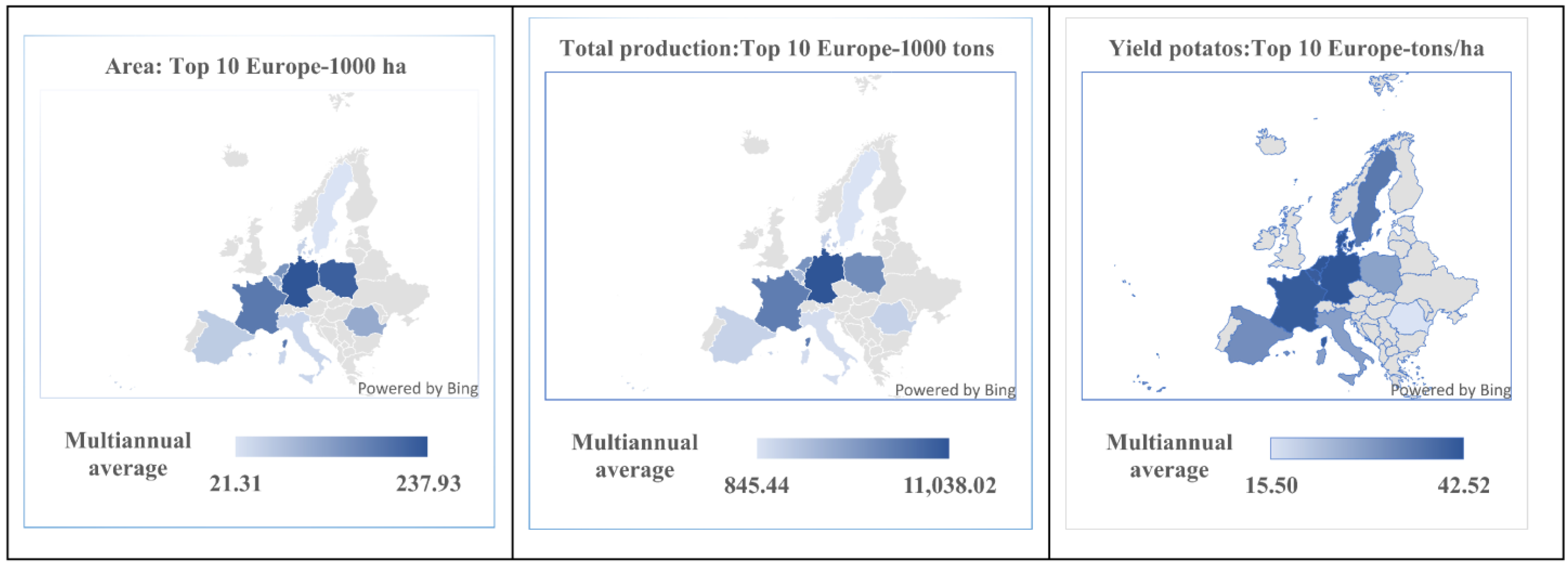
Figure 1. Top ten potato-growing countries in the EU.
Agriculture 15 02343 g001
Figure 2. Area (a), total production (b), yield (c), and price (d) of potatoes in the top 10 potato-growing countries in the EU.
Agriculture 15 02343 g002
Figure 3. Regional Average Potential Histograms.
Agriculture 15 02343 g003
Figure 4. Regional analysis of potato average production.
Agriculture 15 02343 g004
Figure 5. Average and standard deviation analysis—potato crop yield (2003–2024).
Agriculture 15 02343 g005
Figure 6. Unrealized economic potential in potato crops.
Agriculture 15 02343 g006
Table 1. Average and maximum yield potential (kg/ha)—descriptive statistics.
SpecificationNRangeMinimumMaximumMean
Average potential—potato268730,963.64158.835,122.411,159.6
Maximum potential—potato268742,556.65423.847,980.415,281.9
Table 2. Potatoes—Share of mean and maximum yields in average and maximum production potential.
RegionAverage Potential
(kg/ha)
Share of Mean Yield in Average Potential (%)Share of Maximum
Yield in Average
Potential (%)
Maximum
Potential
(kg/ha)
Share of Mean
Yield in Maximum
Potential (%)
Share of Maximum
Yield in Maximum
Potential (%)
Bucharest-Ilfov Region5162.3238.7384.611,763.6104.7168.8
Central Region9229.7195.7266.818,869.095.7130.5
North-East Region9435.7157.9206.218,275.381.5106.5
North-West Region6616.4205.2248.415,733.086.3104.4
South Region5798.6261.3331.113,456.4112.6142.7
South-East Region7010.9190.3261.114,079.494.8130.0
South-West Region5616.6223.1291.312,330.6101.6132.7
West Region5820.9216.4278.015,455.281.5104.7
Table 3. Diagnostic Indicators of the Regional Regression Models (2003–2024).
RegionRegression Equation (Y = β0 + β1X)Std. Errorp-ValueR2Adj. R2F-Statistic (p)Durbin–WatsonVIF
North-EastY = 13.485 + 0.021X0.0120.0840.140.112.671.961.03
South-EastY = 12.933 + 0.047X0.0170.0120.310.287.412.111.08
SouthY = 13.210 + 0.042X0.0160.0240.270.256.222.051.06
South-WestY = 12.867 + 0.028X0.0140.0650.180.163.891.841.02
WestY = 13.744 + 0.019X0.0130.1140.120.091.972.071.05
North-WestY = 13.602 + 0.025X0.0140.0760.150.132.931.931.02
CentralY = 13.155 + 0.036X0.0150.0490.220.25.112.141.07
Bucharest–IlfovY = 13.882 + 0.017X0.0130.0580.10.071.552.081.01
Disclaimer/Publisher’s Note: The statements, opinions and data contained in all publications are solely those of the individual author(s) and contributor(s) and not of MDPI and/or the editor(s). MDPI and/or the editor(s) disclaim responsibility for any injury to people or property resulting from any ideas, methods, instructions or products referred to in the content.