Abstract
We present a systematic framework for nationwide crop suitability assessment within the UK to improve the resilience in cropping systems and nutrition security of the UK population. An initial suitability analysis was performed using data from 1842 crops at 2862 grid locations within the UK, using climate (temperature and rainfall) and soil (pH, depth, and texture) data from the UK Met Office and British Geological Survey. In the second phase, additional qualitative and quantitative data are collected on 56 crops with the highest pedoclimatic suitability and coverage across the UK. An exercise was conducted on crops within each category using a systematic ranking methodology that shortlists crops with high value across a multitude of traits. Crops were ranked based on their nutritional value (macronutrients, vitamins, and minerals) and on adaptive (resistance to waterlogging/flood, frost, shade, pest, weed, and diseases and suitability in poor soils) and physiological traits (water-use efficiency and yield). Other characteristics such as the number of special uses, available germplasm through the number of institutions working on the crops, and production knowledge were considered in shortlisting. The shortlisted crops in each category are bulbous barley (cereal), colonial bentgrass (fodder), Russian wildrye (forage), sea buckthorn (fruit), blue lupin (legume), shoestring acacia (nut), ochrus vetch (vegetable), spear wattle (industrial), scallion (medicinal), and velvet bentgrass (ornamental/landscape). These crops were identified as suitable crops that can be adopted in the UK. We further discuss steps in mainstreaming these and other potential crops based on a systematic framework that takes into account local farming system issues, land suitability, and crop performance modelling at the field scale across the UK.
1. Introduction
Diversification of production systems using currently neglected and underutilised crops is seen as a way to improve the productivity and resilience of cropping systems and ecosystem services [1,2,3,4,5]. Underutilised crops are crops that are locally adapted and consumed but are not currently part of mainstream agriculture. Diversified crop portfolios can improve climate resilience [6] and increase dietary diversity and human health by alleviating micronutrient deficiencies (lack of vitamins and minerals), which are associated with the quality of food that causes `hidden hunger’ in otherwise well-fed individuals [7,8,9].
Employing cropping systems that are focussed on a limited range of staple crops in benign climates may not be an effective strategy in a warming world, and there is a need to investigate the opportunities arising from a wider range of crops and production systems [10,11]. Khoshbakht and Hammer (2008) [12] estimated that about 35,000 cultivated plant species exist based on an initial list of 7000 cultivated species published by Rudolf Mansfeld in 1959. While the number of documented crops in agricultural databases is certainly less than this, mainstreaming the current list of underutilised crops into crop diversification projects remains a challenge. Underutilised crops have unrealised potential to improve local incomes, food and nutritional security, and resilience to climate change [11,13]. There is consensus that preserving the genetic resources of these species and their wild relatives is highly desirable. Nonetheless, there is much less emphasis on their inclusion into current and future farming portfolios and the development of supportive policies for their adoption at the local, regional, national, and global levels. A major challenge to utilising such crops is determining their suitability in local conditions, which usually requires many years of empirical research and data collection and large sums in investments [14].
Poor diets in Great Britain contribute to one in seven deaths, and the general burden of obesity has extended beyond 60% for both the male and female population since 2019 [15]. The dietary recommendation to eat a diverse diet containing plants links directly to the limited number of plants that are currently being cropped and consumed in a typical UK household diet [16].
The Agricultural Land Classification of England and Wales (ALC), which was first developed in the 1970s and 1980s and is still in use today, is based on a grading system that classifies land according to soil limitations to crop growth. A recent review of ALC in 2019 showed that these limitations and thresholds can be further refined in light of advances that are made in environmental data collection and analysis [17]. As a result, it is possible to develop highly relevant land capability analyses across the UK for major crops. For example, Bell et al. (2021) [18] developed land capability for 118 commercial crops in Wales based on current and future climate scenarios. The crop thresholds used in that study adopted rules that were further validated by experts who have extensive experience in working with specific crops. Such expert-based rules have proven to be beneficial for determining the suitability of crops that have a history in the country. However, the applicability of this methodology to crops that have not previously been grown in a country remains a challenge. Knight (2023) [19] has recently developed a list of 33 crops from six categories that were deemed important in the scientific literature and in collaboration with a panel of experts. This method is particularly useful to identify the current focus of research on local underutilised crops but can neglect novel crops with potential that were not the subject of research and investigation by the UK research community.
Several recent studies on underutilised crops have developed priority crop lists for different environments. Mabhaudhi et al. (2017) [20] established a priority list of crops based on scientific literature analysis and categorisation based on popularity and research themes to produce a list of species that responded to common issues in South Africa. Wimalasiri et al. (2022) [21] similarly developed priority lists for Italy, using a species niche classification method that was first proposed by Hijmans et al. (2001) [22] and utilised for suitability determination of agricultural species by Ramirez-Villegas et al. (2013) [23]. This was further refined to include soil information by Piikki et al. (2017) [24] and Jahanshiri et al. (2020) [25]. A suitability analysis of a large set of crops can be followed by a detailed analysis and ranking of crops based on available literature and documented evidence for highly suitable crops by recognised experts in the field.
Recent advances in data management and analytics have provided opportunities to store and organise data and identify research gaps for underutilised crops [26,27,28]. Stored data can be used to fill local and global gaps in knowledge on the suitability and performance of crops before committing resources to testing them [29,30]. Existing computational resources allow for rapid estimation of adaptability for a large number of crops [25], as well as detailed analyses of crop performance using minimum environmental information [31,32]. These analyses can potentially be used to derive estimates of returns on investments and economics for underutilised crops [33,34].
Here, we present an approach to developing a land-evaluation evidence base for a wide range of crops for the UK. Following a suitability analysis for many potential crops, priority lists were developed based on a shortlisting method that ranks crops based on germplasm availability and nutritional, physiological, and climate tolerance properties. We further discuss the limitations of this approach and present a framework within which local crop diversification options can be evaluated locally.
2. Materials and Methods
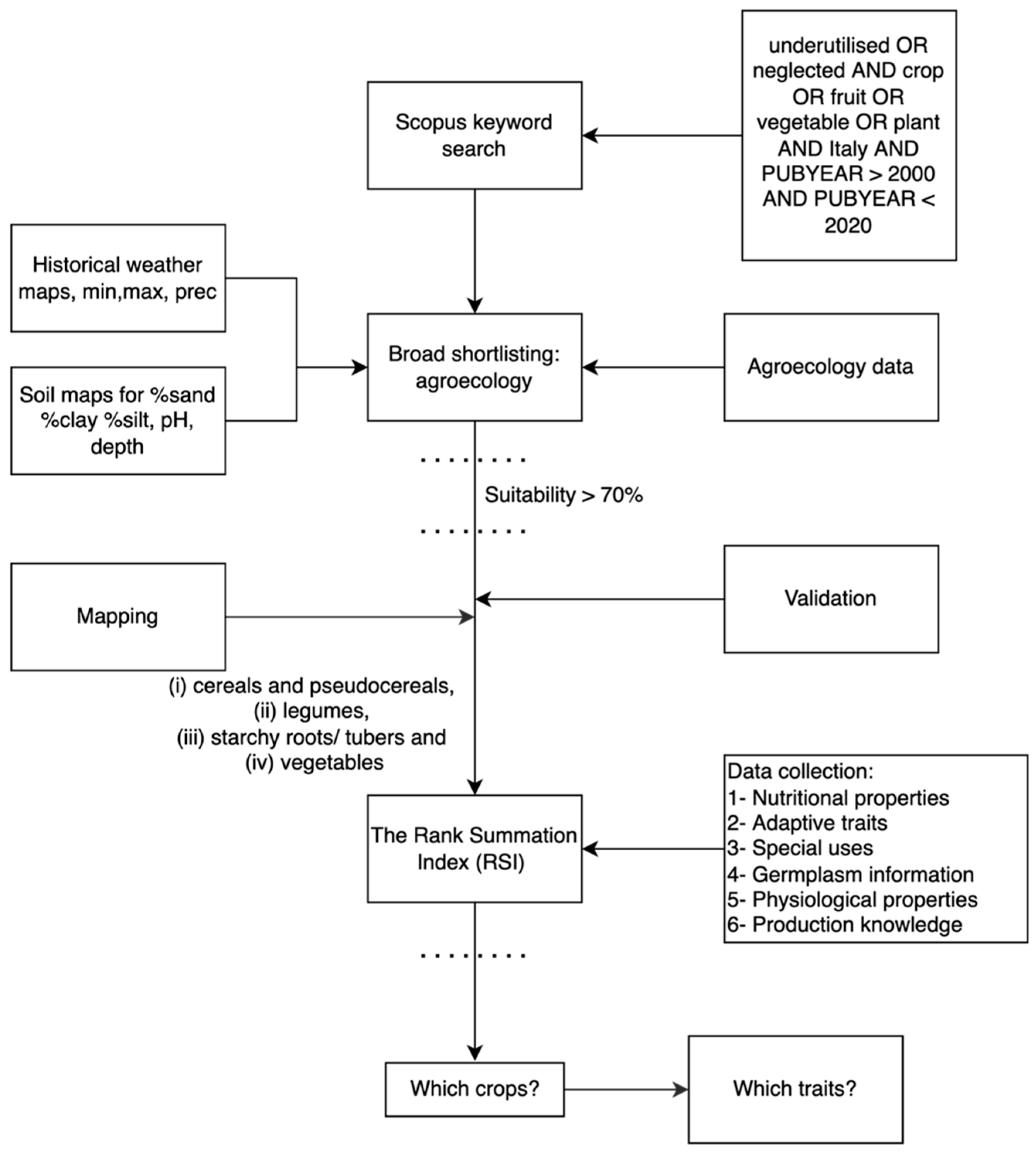
An evidence base for underutilised crops was developed based on the suitability analysis for a large number of crops over a set of grid locations covering the whole of the UK. From this, crops with high suitability were chosen for further data collection and ranking using a rank summation index [21]. Figure 1 shows the flowchart of the analytical approach.
Figure 1.
Flowchart of methodology and data.
2.1. Pedoclimatic Suitability Analysis
Crop shortlisting was carried out using data from a gridded long-term climate average dataset obtained from the UK Meteorological Office [35]. This dataset covers monthly averages for 30 years (1990–2020) at a resolution of 12 km. The 30-year period ensures it is the minimum period that is defined by the World Meteorological Organisation (WMO) to define ‘climate’ and to avoid natural climate cycles. Soil information in this analysis was obtained from the British Geological Survey (BGS) Soil Parent Material 1 km and soil chemistry datasets..
Ecological data for 1842 crops were extracted from the global knowledge base for underutilised crops [27]. This data contains optimal and marginal environmental requirements, including temperature, rainfall, soil acidity, fertility, texture, and depth. A grid of 2862 locations was created using geospatial functionalities in the R statistical language that allow vector geospatial analysis [36,37,38]. Soil and climate information were extracted for each grid point using raster analysis within the R language [39].
To adapt the algorithm that was originally developed by Jahanshiri et al. (2020) [25] to the UK data, some modifications were carried out. For example, because the BGS dataset contained pH data for only the topsoil, the algorithm was adjusted to derive pH suitability based on this layer alone. In addition, since the local rainfall data were available, the analysis of rainfall suitability was also performed in addition to the temperature suitability. The analysis was carried out for all grid points and the final maps were created using geo-visualisation capabilities within the R language [37,40]. Crop suitability at each grid point was determined by calculating the pedoclimate suitability for all 1842 crops on the scale of 0–100 (Highly unsuitable to highly suitable). As a result, a ranked array of suitability values for 1842 crops was created. To further refine the list at each grid point, only crops whose species niche suitability exceeded 70% and cover more that 1% of the country were selected. These crops were then plotted on a map to facilitate further refinement and validation.
The data used in this analysis were obtained from a variety of sources with different formats (Table 1). This makes quality control a necessary part of the analysis. Data representing the boundary of the UK from Global Administrative Areas (2012) [41] were examined to validate that they corresponded to the true boundaries. The ecology data from the Global Knowledge Base on underutilised crops [27] were checked and validated against the literature. A dataset of 25 randomly selected points was used, and the climate data from the Meteorological Office were extracted for those locations to check for any discrepancy with weather resources such as https://www.worldweatheronline.com/ (accessed on 23 November 2022). No checking for soil data was possible since there are no other comprehensive and freely available baseline geospatial data available for soil in the UK.
Table 1.
List of data, formats, and sources.
To aid the evaluation of outputs, a suitability map for wheat (Triticum aestivum) was produced using the same methodology. Wheat is a well-established and extensively grown crop in the UK. This suitability map was compared against known areas of wheat cultivation and production in the UK. To further validate these results, occurrence data from the Global Biodiversity Information Facility (GBIF) [42] were obtained and superimposed on the wheat suitability map to show the extent to which the suitability analysis performed in this study reflects the true distribution of this crop.
2.2. Rank Summation Index
Following a detailed literature analysis, indicator data related to selected underutilised crops were collected to carry out a quantitative analysis of the Rank Summation Index [21]. A multi-criteria rank index was developed based on the following information:
- Nutritional traits: proximate data for carbohydrate (g 100 g−1 dry matter), protein (g 100 g−1 dry matter), lipid (g 100g−1 dry matter), vitamin A (IU), vitamin B1 (Thiamine) (mg 100 g−1 dry matter), vitamin B2 (riboflavin) (mg 100 g−1 dry matter), vitamin B3 (niacin) (mg 100 g−1 dry matter), vitamin C (mg 100 g−1 dry matter), calcium (mg 100 g−1 dry matter), iron (mg 100 g−1 dry matter), and phosphorus (mg 100 g−1 dry matter).
- Adaptivity: the adaptive capacity of the crops for drought, waterlogging, frost, and shade tolerance. In addition, soil-related traits such as salinity and acid/alkaline tolerance were included. Other traits such as weed, pest, and disease tolerance were also collected (if they were available) to compare the resilience of the crops.
- Physiological traits: although physiological parameters pertaining to crop growth are extensive, efficiency in resource uptake and output yield are deemed most important in relation to crop adaptability to marginal environments. Water-use efficiency (WUE; g kg−1) represents the dry matter that is produced per unit of water evaporated. WUE is particularly useful in comparing crops in limiting conditions [43].For this analysis, only data on WUE and potential yield were used for ranking. Crops with better mechanisms to adjust WUE to produce higher yield are deemed to have higher ability to physiologically adapt in marginal environments, increasing their utility.
- Other uses: most domesticated crops are multi-purpose, and ranking based on the number of uses is an option. Here the crops are ranked based on the number of uses other than their main purpose. Data from the literature were analysed to derive as many uses as possible for the selected crops including feed, medicinal, and industrial (additives, cosmetic, paper/textile/basketry, construction/plaiting, fuel, and biofuel).
- Germplasm: availability of crop genetic resources is vital for the wider adoption of any crop, and any diversification project involving new crops should start with identifying available accessions. In this regard, the number of global institutions working to preserve specimens or conduct research on a particular species, together with the number of accessions, are important.
- Production knowledge: collecting information about the production knowledge of crops, particularly those that are considered underutilised, is a difficult task and one that is usually neglected by academic disciplines. For this reason, information on the production knowledge was confined to only the approximate harvest time based on research that was already conducted on these crops. The production knowledge or approximate harvest time expressed as a shorter duration will be beneficial economically and in areas that are affected by climate change. This will render some crops suitable where growing seasons shrink.
Each of the above categories was then broken down into specific variables for data collection. For all data points, information related to source were also recorded as metadata. The ranking was applied for crops within each category. Information from the closest relatives of crops were used to fill the gaps in the available data on crops.
3. Results
Results are presented for two types of analysis related to underutilised crops in the UK, pedoclimatic suitability assessment results and a rank summation index for selected underutilised crops.
3.1. Pedoclimatic Shortlisting
From a list of 1842 crops at each grid point, five crops with >70% pedoclimatic suitability were chosen at the first round of selection. The list was further refined to include crops that are suitable for more than 1% of the UK area.
Table 2 shows a list of crops with average pedoclimatic suitability above 70% and area suitability > 1%. Since the suitability is highly variable across the country for all the crops, the data presented in Table 2 show the average suitability across the whole of the UK. Some crops are highly suitable for most of the country, while others are only suitable for a few locations. In total, there were 57 crops that met the criteria: forage (19), fodder (13), ornamental/landscape (8), environmental—soil improvement (11), medicinal (8), industrial (6), legumes (3), energy (3), fruits (3), fibre (3), cereals (2), vegetables—leafy/stem (2), starchy—roots/tubers (1), beverage (2), essential oil (1), oilseed (1), grain (1), and others (15). However, many crops are also used for purposes other than their main purpose.
Table 2.
Highly suitable crops for the UK (suitability > 70% and coverage > 1%).
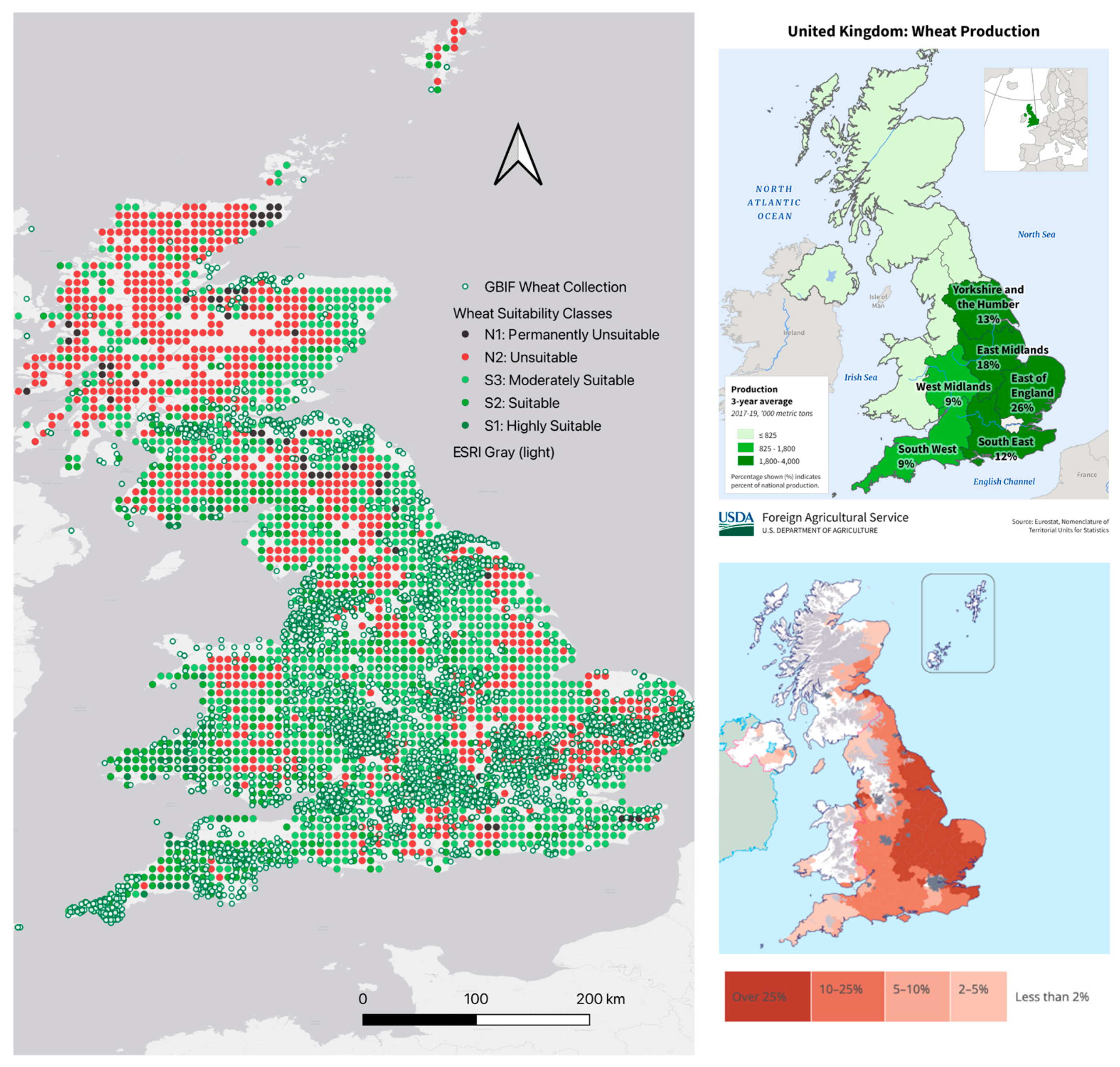
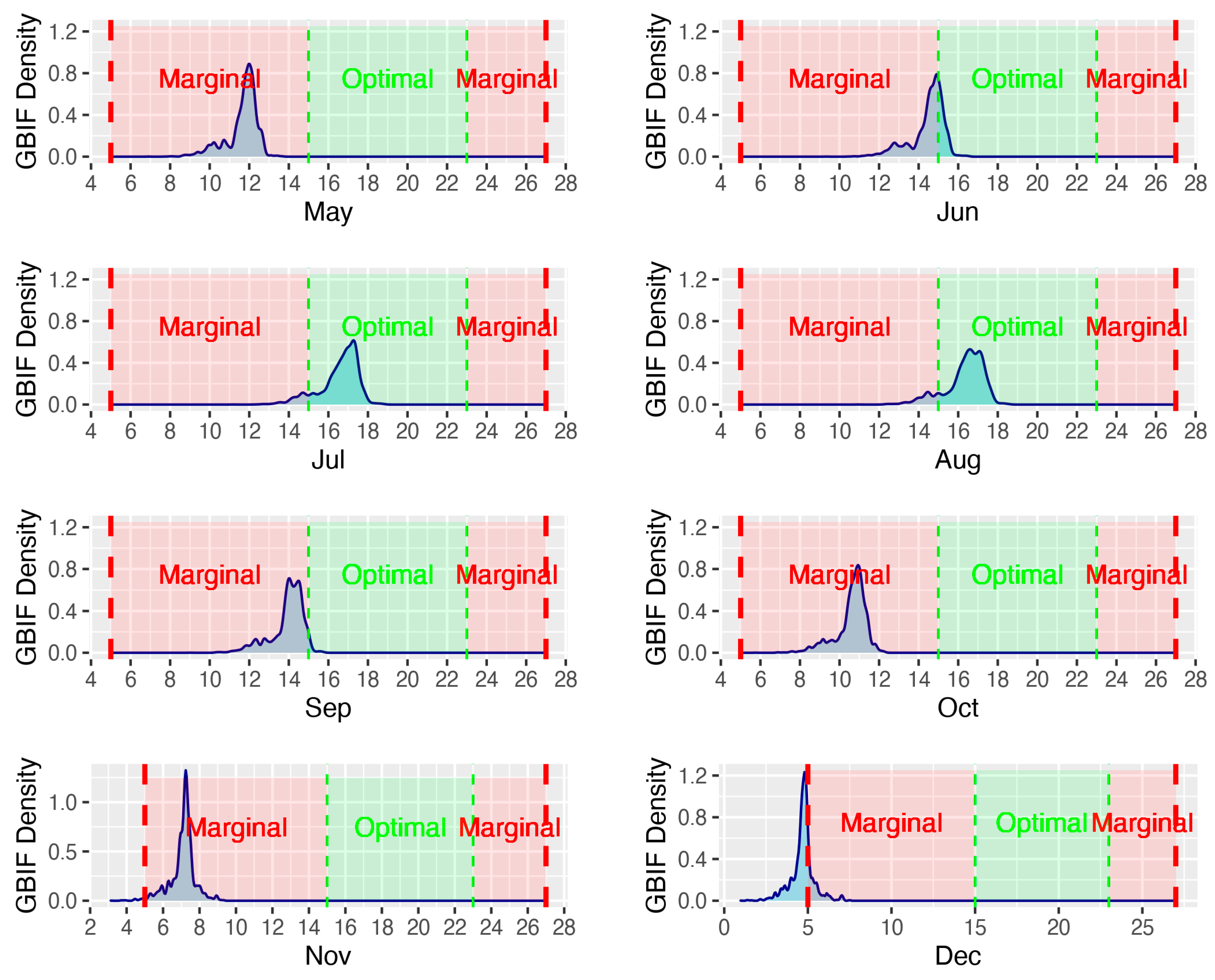
To assess the validity of the outputs, a suitability map for wheatwas compared with known wheat-growing areas [44] and production (area x yield) across the UK [45]. Due to lack of detail soil data, the area of Northern Ireland was not included in the analysis. Ground location of 66,188 species occurrence for wheat from the GBIF database [42] was also superimposed on the suitability map (Figure 2). Although the methodology classify most of the grid locations as moderately suitable (45%) and suitable (16%), some misclassification is present on the map. This is particularly apparent for Wales, where the suitability should be low (see Appendix A, Figure A2).
Figure 2.
Suitability map of wheat within the UK based on the present methodology (left) against a map of areas under cultivation (bottom right) and a yield map of wheat (top right) for the UK.
3.2. Multi-Criteria Ranking
Of the 57 crops shown by pedoclimatic analysis to be potentially suited to the UK, only those that had complete data present in the dataset were selected for further ranking. For each category of crop (cereals, legumes, forage, etc.), the crop with the highest desirable characteristics was scored with the lowest number. For example, the lowest score was given to the crop with the highest nutritional quality. A final ranking was produced by summing all scores (unweighted) for all criteria for all crops. Crops with the lowest scores (highest rank and adaptability) were identified as the crops with the greatest potential across the UK.
3.2.1. Nutritional Traits
Since the rank summation index methodology does not accept missing information, only 22 crops were selected for further analysis of ranking (Table 3 and Appendix A, Table A1 for nutrition data). Bulbous barley (Hordeum bulbosum), dune wattle (Acacia ligulata), Russian wildrye (Psathyrostachys juncea), sea buckthorn (Hippophae rhamnoides), blue lupin (Lupinus angustifolius), shoestring acacia (Acacia stenophylla), ochrus vetch (Lathyrus ochrus), scallion (Allii fistulosi), spear wattle (Acacia jensenii), and velvet bentgrass (Agrostis canina) were chosen as candidate crops.
Table 3.
Ranks of nutritional traits for crops that are suitable for the UK.
3.2.2. Adaptive Traits
Table 4 shows the adaptability analysis for the shortlisted crops. Crops that show high resilience in this category are triticale, colonial bentgrass, Russian wildrye, sea buckthorn, bramble wattle, shoestring acacia, ochrus vetch, spear wattle, and velvet bentgrass, and they were chosen as candidate crops.
Table 4.
Ranking of adaptive traits of crops suitable for the UK.
3.2.3. Physiological Traits
Table 5 shows the rank summation indices for select physiological traits. Triticale and bulbous barley, colonial bentgrass, Russian wildrye, sea buckthorn, quandong, white pea, onion, velvet bentgrass, scallion, spear wattle, and ochrus vetch ranked high based on the select physiological characteristics.
Table 5.
Ranking based on physiological characteristics of crops suitable for the UK.
3.2.4. Other Uses
Table 6 shows the data and the rank summation methodology for other uses. Bulbous barley, dune wattle, reed mace, both sea buckthorn and quandong, both bramble wattle and blue lupin, both sandplain plain wattle and shoestring acacia, velvet bentgrass, scallion and spear wattle, and ochrus vetch were chosen as candidate crops.
Table 6.
Ranking based on number of uses of crops suitable for the UK.
3.2.5. Germplasm
After ranking crops based on the number of institutions working on them, bulbous barley, colonial bentgrass, brown bentgrass, reed mace, tall wheatgrass, sea buckthorn, white pea, and ochrus vetch ranked high based on their physiological characteristics (Table 7). No global institution is working on the nuts group, and therefore, all the crops in this category are given the same rank, while velvet bentgrass, scallion, spear wattle, and ochrus vetch are automatically chosen as candidate crops.
Table 7.
Ranking based on the number of global institutions working on preserving accessions of specific crops.
3.2.6. Production Knowledge
Table 8 shows the ranking within categories based on harvest time. Triticale, colonial bentgrass, tall wheatgrass, quandong, blue lupin, coonavittra wattle, ochrus vetch, velvet bentgrass, scallion, and spear wattle were chosen as candidate crops with the shortest time to harvest.
Table 8.
Ranking based on the number of institutions working on specific crops.
3.2.7. Final Rank
The final multicriterial rank was assigned based on the sum of all rank summation indices for each category (Table 9). The lower the score, the better its rank will be in terms of all chosen factors. Bulbous barley, colonial bentgrass, Russian wildrye, sea buckthorn, blue lupin, shoestring acacia, ochrus vetch, spear wattle, scallion, and velvet bentgrass are crops with highest ranks (i.e., most suitable) for each category.
Table 9.
Final rank of ranks of suitable crops for the UK.
4. Discussion
4.1. Crop Pedoclimate Matching
Traditional land evaluation frameworks are not suited to evaluate options for a large number of crops either grown as monocultures or in mixed systems. Inclusion of crops that are currently neglected and underutilised will improve the resiliency of such land evaluation frameworks by expanding the cropping options. However, local land evaluation studies are often limited by the availability of (1) local climate and soil data, (2) local experimental data, and (3) crop physiological data. The availability of datasets therefore determines the type of analysis that can be done to evaluate crop portfolios at any location, and the poor availability of data for crops that are neglected and underutilised hinders their wider use in developing crop portfolios. Methodologies that can use limited crop and environmental parameters may perform better in such circumstances. Current advances in development and storage of data allow for a more locally relevant analysis to be conducted at any location [46]. However, data such as socio-economic information remain scarce [47].
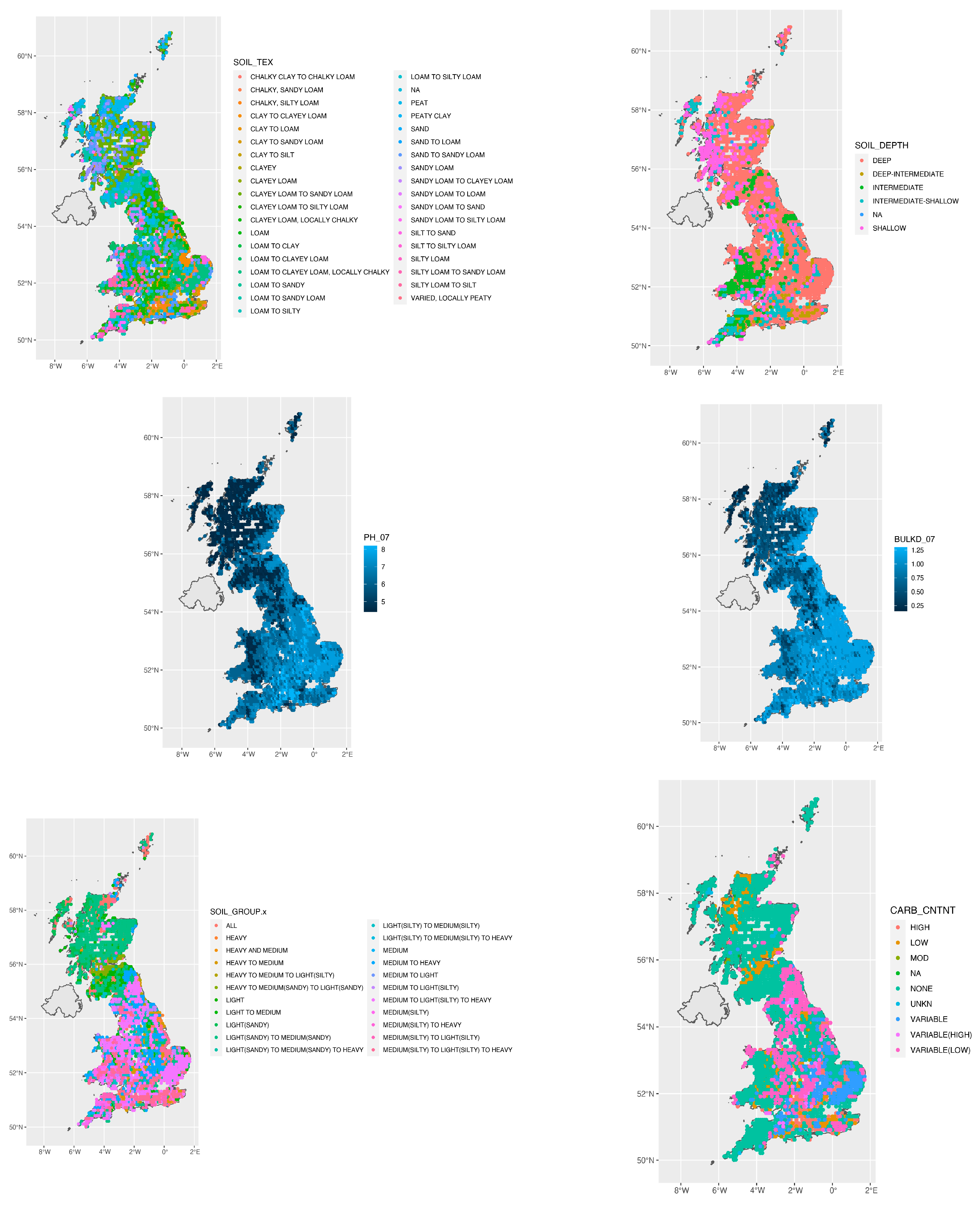
The methodology that was developed by Hijmans et al. (2001) [22] and further refined by Piikki et.al. (2017) [24] and Jahanshiri et al. (2020) [25] can be utilised to develop numerical suitability for a large number of crops. This paradigm shift allows for inclusion of more crops in the local analysis of land suitability [25,48]. A major drawback of this method, however, is to choose a priority list of crops from a longer list (1842 crops in this case). The arbitrary selection rules of average suitability > 70% and coverage area > 1% could therefore be expanded or refined to include other criteria or boundaries (e.g., greater suitability or coverage area) that can be selected by the end user or policy maker. The result of pedoclimatic analysis (Section 3.2) shows that there is ample potential for crops to be adapted to the UK’s humid temperate, oceanic climate with tundra and subarctic conditions, particularly in northern areas [49]. Therefore, crops that are resilient to marginal environments may become increasingly suitable to UK conditions both now and in future climates. However, irrespective of changes in climate, limitations in soil, including acidity and texture, will limit the number of suitable crops (see Appendix A, Figure A2).
There is ample evidence of the positive impacts of crop diversification. For example, using portfolio risk management, Paut et al. (2019) [50] showed that an appropriate combination of suitable crops can reduce the financial risk in production systems up to 77%. Crop diversification can also improve the biodiversity in a win–win situation against yield, where improving diversity in the farming system (inter-cropping and use of cover crops) is combined with sustainable practices such as reducing agrochemical use, particularly in temperate climates [2]. Therefore, any recommendation for crop diversification would not be complete without analysing the most suitable combination of crops and cropping systems. A successful crop diversification strategy should be able to recommend intercropping or mixed-cropping systems as well [51]. A consequence of producing a broad list of adaptable crops is the ability to recommend systems for different categories of crops such as perennial/annual (for optimal production), legume/cereal (for soil fertility), and ornamental/industrial (landscape projects) and at different scales to enable farmers to influence the trade-offs between resilience and economic benefits [4]. Further investigation of productivity in diversified systems is possible through crop performance modelling [31].
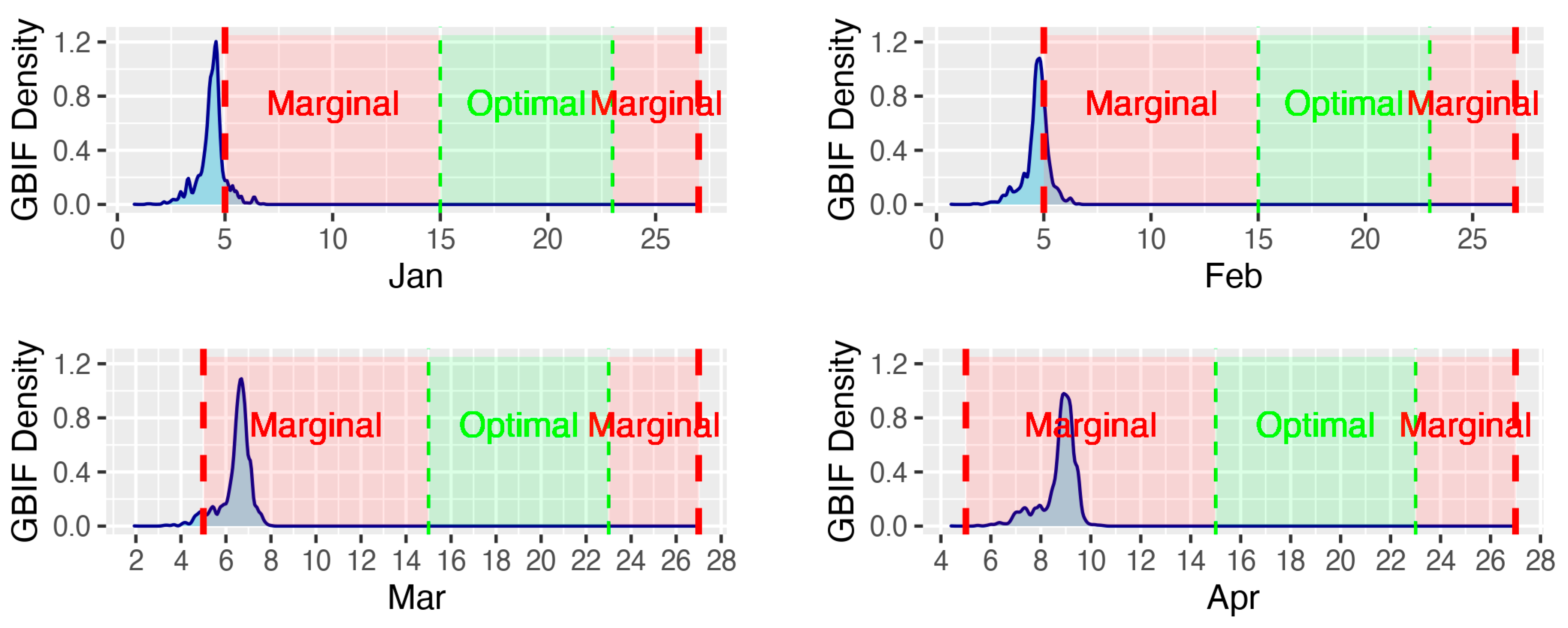
The validation case for wheat as a major crop in the UK shows that the methodology can correctly identify areas with potential for wheat. However, there were two major issues: (1) the classification system identifies most areas as ‘moderate to highly suitable’ and (2) the best season for crop cultivation is considered as summer to autumn (see Appendix A, Figure A1). Both abovementioned issues combined with the current limitation of climate data from the Meteorological Office [35] and soil data from BGS [52] could lead to misclassification of suitable land. On one hand, the south-eastern part of the country should clearly be defined as highly suitable (Figure 2), and on the other hand, it is clear that most of the modern wheat varieties that are cultivated in the country are sown in the autumn rather than the spring [53]. Appendix A, Figure A1 shows the improvements that have been made on wheatto become highly adapted to the UK climate. Therefore, it is important to consider that because of the simplicity of the parameters and methods, this methodology is limited in detail. However, it is still useful in shortlisting crops a priori with potential from a much wider list of crops.
4.2. Trait Ranking
A systematic ranking based on common crop traits that are important for developing a priority list of crops can be used to further refine the crop list. A limitation of this method is that data needs to be available for all crops across all traits to allow for quantitative comparisons. This will lead to exclusion of many crops from the list (Table 2, Table 3, Table 4, Table 5, Table 6, Table 7, Table 8 and Table 9 and Appendix A, Table A2). To fill the gaps in data as much as possible, our literature search was extended to the relatives of each species. Since the focus of this study is mainly on improving food and nutritional security, the crop list was amended to include crops that have complete nutrition datasets. However, this criterion does not apply to industrial, medicinal, and ornamental crops. Other traits such as area under cultivation and trade statistics were omitted in this study because of the lack of data for most crops. The data that were collected from the literature were also checked randomly to ensure quality. A limitation of systematic data collection is uncertainty in categorisation. A good example is the ochrus or Cyprus vetch crop [54,55]. Not only is there confusion about the scientific name of this crop, but there is also ambiguity as to which category the crop belongs to. However, using categories will improve the usability of crops in the main diversification plans.
The shortlisted crops are only a sample of species that have the potential to future-proof the UK’s agriculture. Bulbous barley is a perennial hardy crop that is being domesticated for the subarctic climates [56]. Perennial cereal crops can reduce the environmental impact of agriculture whilst improving the resiliency of crops against climate change. The introduction of resilient fodder, forage, or ornamental crops such as colonial bentgrass, Russian wildrye, and velvet bentgrass with proven performance in low-input systems [57,58,59] could revive the marginal areas within the UK. Both crops ranked high in key traits that lead to their selection as final crops.
Sea buckthorn is a hardy tree with many benefits that can be grown in milder climates within the UK and create financial opportunities for growers [60]. Blue lupin contains low amounts of starch (gluten free) and high fibre content that can provide many health benefits [61]. It particularly ranked high in terms of nutrition and number of other uses, indicating its potential to be used as a multi-purpose crop. The acacia family of tree crops can be grown as drought- and salt-tolerant crops [62] that can also find applications as food and feed [63].
Ochrus vetch is a high-potential crop, particularly in the Mediterranean region, that is used as nutrition food. This crop can particularly help diversify and reduce the dependence of vegetable imports in the temperate regions of the UK [64]. Although wattles are considered invasive in some areas (for example, Australia), they are cultivated for wood because of their fast-growing properties. They are also highly regarded for their role in providing ecosystem services [65]. Although scallion (or spring onion) is not considered a medicinal crop in the UK, there is ample evidence for it to be considered for its anti-fungal/bacterial [66] and anti-cancer properties, as well [67].
4.3. A Pathway to Transformation
The increased attention in the UK research community to underutilised crops has resulted in the recognition of crop diversification as a viable option to tackle threatening issues facing UK farming systems [68,69]. However, results also show that any interest remains at the level of recommendation and advice rather than at developing specific pathways and road maps to diversify UK agriculture or routes to market for underutilised cops. This has an important consequence for the future of crop diversification in the UK, as the adoption of crops is still considered to be risky and remains at the level of trial and error, as the recent example of quinoa shows [70].
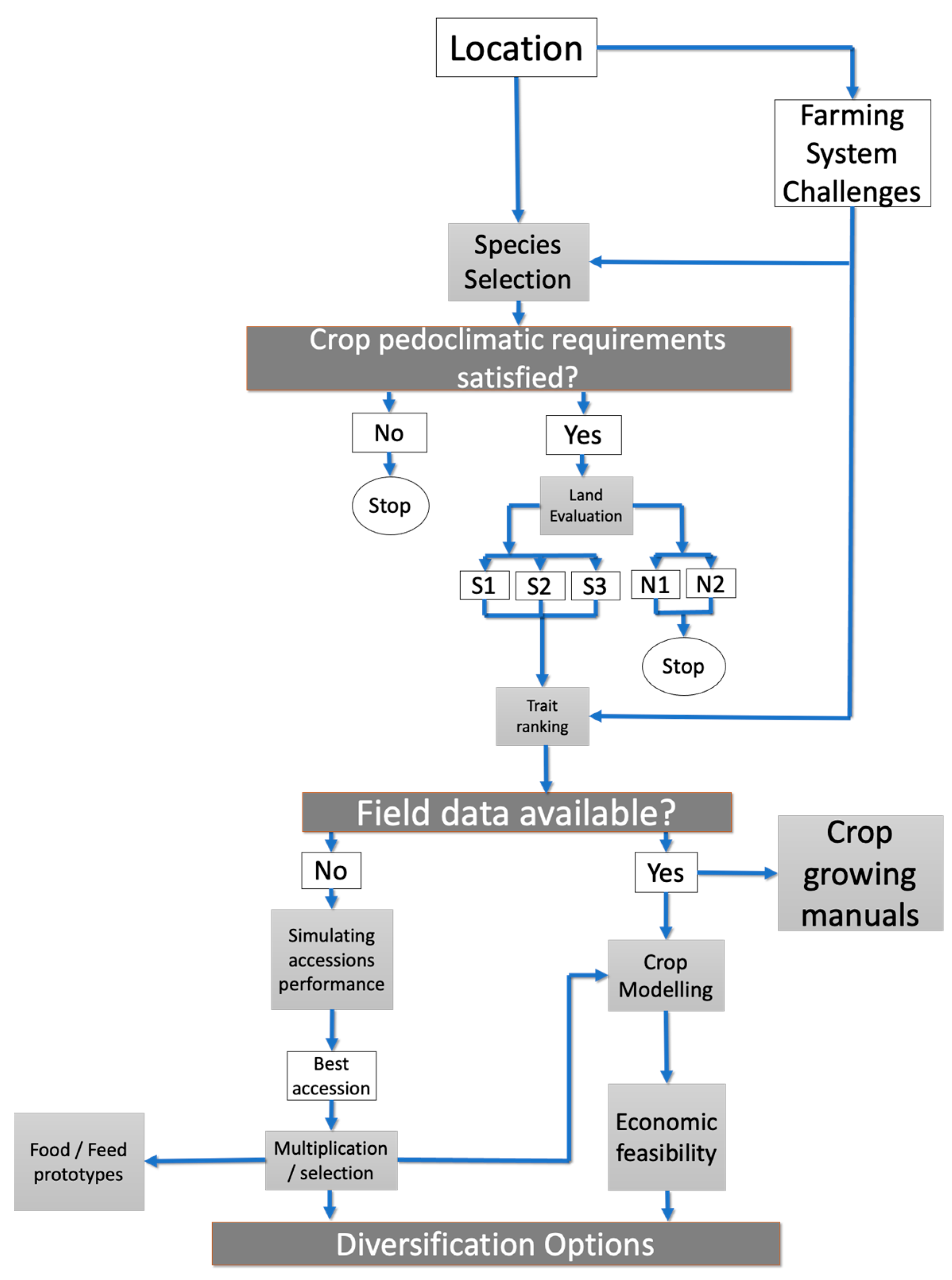
The proposed framework for crop diversification introduced in this paper can be expanded to include estimations of likely yield and economic impact after broad selection and trait ranking. Figure 3 shows the decision tree that can be used to further refine the list of crops based on pedoclimatic suitability and trait ranking. A farming system survey can be used to refine the list of locally relevant traits. After this stage, if minimum field data at cultivar and species level are available, simple crop models such as the one described by Zhao et al. (2019) [32], or modified ones [31] can be developed with data from the literature analysis to determine the likely yield for crop that pass the initial suitability analysis. On the other hand, if minimum field data are not available, an analysis can be performed for a wide range of varieties and accessions with known origins to shortlist possible germplasm that might perform well at any location. Such cases can be upscaled across regions and countries for a large number of potential underutilised crops such as in the study that was presented for hemp in Malaysia [34]. The UK’s robust crop innovation, seed system, and variety development capacities can facilitate mainstreaming locally neglected crops, while other crops can face regulatory issues before they can be utilised within the country.
Figure 3.
A decision tree for crop analytical diversification (adapted with permission from Jahanshiri et al. (2020); Wimalasiri et al. (2021)) [25,34].
The advent of new technologies to collate and analyse big data and develop automated tools for local-scale insight generation has provided an immense opportunity for knowledge exchange between all stakeholders in agriculture [71]. Except for the literature analysis step that should be quality controlled (by experts), the rest of the analysis presented in this article can be built as tools (apps) for aiding decisions at the finest scales [11,72,73]. These tools can benefit from a degree of automation that is provided by the method presented in this article in combination with expert-based techniques presented for detailed land capability analysis for current future conditions presented by Bell et al. (2021) [18] and [17] expert-based shortlisting for crops that are tested within the UK by Knight (2023) [19] to make the decisions on the wider adoption of underutilised crops even more applicable, robust, and risk free.
5. Conclusions
Land evaluation for crop diversification requires systematic approaches to crop selection that enable suitability evaluation for a broad list of locally neglected and novel crops and ranking based on important traits and a sound evidence base. This will improve the utility of lands and can, in principle, lead to improvements in diets and resiliency of production systems. The present study attempts to help fill the gap by analysing the suitability of a large pool of crops using a well-known ecological niche assessment methodology. To further provide an evidence base for the priority list of crops, data on major traits including nutrition (macronutrients vitamins and minerals), resistance/tolerance (drought, frost, shade, saline and infertile soils, and pathogen/pest/weed resistance), physiological traits (water-use efficiency and potential yield), number of other uses, germplasm availability, and production knowledge were collected and utilised to rank the crops in each category (cereals, legumes, forage, fodder, vegetables, ornamental/landscaping, and industrial). Following the priority listing, crops with the highest potential were chosen, and a pathway for their adoption in UK production systems was proposed. The data that were collected for crop ranking are a valuable source of information for future studies involving crop diversification and will be inserted into a global knowledge base for underutilised crops and utilised in automated tools for land support.
Author Contributions
Conceptualisation, P.J.G., S.A.-A. and E.J.; methodology, E.J.; software, E.J. and E.M.W.; validation, E.J., P.J.G. and E.M.W.; formal analysis, E.J.; investigation, E.J.; resources, P.J.G. and S.A.-A.; data curation, E.M.W.; writing—original draft preparation, E.J.; writing—review and editing, P.J.G. and S.A.-A.; visualisation, E.J. and E.M.W.; supervision, P.J.G.; project administration, S.A.-A. and E.J.; funding acquisition, P.J.G. and S.A.-A. All authors have read and agreed to the published version of the manuscript.
Funding
This research received no external funding.
Institutional Review Board Statement
Not applicable.
Data Availability Statement
All data are available at https://doi.org/10.5281/zenodo.7670659 (accessed on 5 March 2023).
Acknowledgments
Authors would like to thank Anusha Wijesekara for her contribution to the data collection.
Conflicts of Interest
The authors declare no conflict of interest.
Appendix A
Table A1.
The broad list of crops that are potentially suitable for the UK.
Table A1.
The broad list of crops that are potentially suitable for the UK.
| Highly_Suitable | Carrot | French Clover | Mountain Bromegrass | Sea Buckthorn (Hippophae Rhamnoides) | Wase |
|---|---|---|---|---|---|
| Acacia (Acacia anticeps) | Cashew | Frost Grass | Mountain Gum | Sea Buckthorn (Hippophae salicifolia) | Water Foxtail |
| Acacia (Acacia pachyacra) | Catnip | Galleta Grass | Mountain Rye | Sea Kale | Wattle |
| Acacia (Acacia pachycarpa) | Caucasian Clover | Gama Grass | Mulga | Sea Orach | Waxy Saltbush |
| Adzuki Bean | Cauliflower | Gama Medick | Murray Pine | Serradella | Weeping Lovegrass |
| African Bermudagrass | Chamborote | Garden Angelica | Mutton Grass | Sesame | Weeping Myall |
| African Fleabane | Chamomile | Garden Burnet | Myall-gidgee | Sewan Grass | Western Australian Swamp She-oak |
| African Foxtail | Chebulic Myrobalan | Garden Orach | ked Oat | Seymour Grass | Western Wheatgrass |
| Alder | Chee Grass | Garden Pea | rbon Vetch | Shadscale | White Clover |
| Aleppo Pine | Chervil | Garden Thyme | rrow-leaved Peppermint ‘subsp. radiata’ | Shafshoof Ain Seela | White Fir |
| Algarrobo Blanco | Chestnut | Gardner Saltbush | rrow-leaved Peppermint ‘subsp. robusta’ | Sharp-crapped Mallee | White Ironbark |
| Algerian Oat | Chewing’s Fescue ‘var. commutata’ | Gean | rrowleaf Trefoil | Sheep Fescue | White Lupin |
| Alkali Sacaton | Chickling Vetch | Ghilghoza Pine | Necklace-Pod Alyce Clover | Shining Gum | White Mustard |
| Almond | Chickpea | Giant Crowfoot | Needle Grass (Aristida penta) | Shoestring Acacia | White Pea |
| Alsike Clover | Chilean Strawberry | Giant Hopbush ‘subsp. angustifolia’ | Needle Grass (Stipa barbata) | Showy Milkweed | White Peppermint |
| American Beachgrass | Chi Jute | Giant Wildrye | Needle Grass (Stipa breviflora) | Shrubby She-oak | White-tip Clover |
| American Beech | Chinese Pear | Gidgee | Needle Grass (Stipa caucasica) | Siberian Wheatgrass | Whitewood |
| American Licorice | Chinese Pine | Gimlet | Needle Grass (Stipa grandis) | Side-oats Grama | Wild Celery |
| American Sloughgrass | Chinese Tamarisk | Globe Artichoke | Needle Grass (Stipa krylovii) | Silver Wattle | Wild Crab |
| Amethyst’ Purple Raspberry | Chives | Gobi Needle Grass | Nepalese Alder | Silvery Birdsfoot Trefoil | Wild Oat |
| Andean Lupin | Cicer Milkvetch | Golden Wreath Wattle | Nissi | Simon Poplar | Wild Strawberry |
| Annual Bluegrass | Cleistogenes chinensis | Goose Foot | Northern She-oak | Sii Meadow Grass | Wild Thyme |
| Annual Bristle Grass | Club Wheat | Gooseberry | Nussi | Slender Wheatgrass | Wimmera Ryegrass |
| Annual Ryegrass | Coast Green Wattle | Goosefoot | Oat | Slough Grass | Wolf Needle Grass |
| Argan | Cocksfoot | Grecian Foxglove | Oca. | Small Buffalo Grass | Wool Grass |
| Arizo Cypress | Cogwheel Medick | Green Arrow Arum | Ochrus Vetch | Small Reed Mace | Woolly Clover |
| Arundinella Grass (Arundinella hirta) | Colonial Bentgrass | Green Cabbage | Oldman Saltbush | Small-flowered Feather Grass | Yacon |
| As Tree | Common Club-rush | Green Spich | Onions ‘var. cepa’ | Smilograss | Yapunyah |
| Asparagus | Common Elder | Hairy-stem Gooseberry | Onobrychis scrobiculata | Smooth Brome | Yellow Alfalfa |
| Athel Tree | Common Foxglove | Hard Fescue | Painted Daisy | Smooth Pigweed | Yellow Bluegrass |
| Australian Beech | Common Kidney Vetch | Harding Grass | Pangola Grass | Ske Wood | Yellow Box |
| Ayacahuite Pine ‘var. brachyptera’ | Common Myrtle | Hardy Kiwi | Papaw | Soliane | Yellow Lupin |
| Balsam Fir | Common Plum | Hare’s-foot Clover | Parsnip | Sorghum | Yellow Marsh Marigold |
| Bano | Common Red Ribes | Hartweg’s Pine | Pecan | Sour Cherry | Yellow Sweet Clover |
| Bard Vetch | Common Reed | Hazel Nut | Pepper Tree | Southernwood | York Gum |
| Bardi Bush | Common Sunflower | Hemp/Marijua | Peppermint | Spanish Broom | Zig-zag Clover |
| Barley | Common Vetch | Hemp/Marijua ‘var. indica’ | Perennial Ryegrass | Spear Wattle | |
| Barnyard Grass | Common Wheat | Himalayan Cypress | Perennial Veldtgrass | Spelt Wheat | |
| Barrel Medick | Common Yellow Melilot | Himalayan White Pine | Persian Clover | Spotted Bur Clover | |
| Basin Wildrye | Coobah/Swamp Wattle | Holly Oak | Persian Poppy | Standard Crested Wheatgrass | |
| Bay Leaves | Coolibah | Hoop Pine | Ponderosa Pine | Sterile Oat | |
| Big Bluestem | Coovittra Wattle | Hop | Poppy | Stiff Hair Wheatgrass | |
| Bigleaf Mint | Coriander | Hop Clover | Pot Marigold | Strand Medick | |
| Bilsted | Couch Grass | Hordeum brevisubulatum | Potato | Strawberry | |
| Bird’s-foot Trefoil | Cranberry | Horehound | Powderbark Wandoo | Strawberry Clover | |
| Bitter Potato | Creeping Bentgrass | Horseradish | Prairie Junegrass | Streambank Wheatgrass | |
| Bitter Vetch | Creeping Foxtail | Hungarian Vetch | Pretty Birdsfoot Trefoil | Subterranean Clover | |
| Black Bentgrass | Crested Wheatgrass | Hyacinth Bean | Puccinellia tenuiflora | Sugar Beet | |
| Black Box | Cucumber Tree | Hyssop | Pumpkin | Sugar Maple | |
| Black Gidgee | Cupped Clover | Idaho Fescue | Purple Vetch | Sulla | |
| Black Gram | Curly Dock | Intermediate Wheatgrass | Quackgrass | Sulla Annuel | |
| Black Medick | Cut-tail Gum | Irrara | Quail Bush | Sulla Epineux | |
| Black Mustard | Cutleaf Clover | Jammi (Prosopis cineraria) | Quandong | Sulla Pale | |
| Black Oak | Dandelion | Jammi (Prosopis spicigera) | Quince | Sulla Rose | |
| Black Oak ‘subsp. pauper’ | Desert Gum | Japanese Apricot | Quinoa | Sumol Grass | |
| Black Raspberry | Desert She-oak | Japanese Clover | Rapeseed | Sunn Hemp | |
| Black Saxaul | Desert Wattle | Japanese Mint ‘var. piperascens’ | Raspberry Jam Wattle | Swamp Gum | |
| Black Walnut | Deyeuxia angustifolia | Jerusalem Artichoke | Red Alder | Swamp She-oak | |
| Bladder Saltbush | Dhok | Joint Vetch | Red Clover | Swede | |
| Bladder-pod | Dill | Jungle Rice | Red Current | Sweet Acacia | |
| Blessed Thistle | Dundas Mahogany | Kaliptis | Red Fescue ‘var. Rubra’ | Sweet Belladon | |
| Blue Grama | Dune Wattle | Kangaroo Grass | Red Ironbark | Sweet Clover | |
| Blue Grass | Durango Pine | Karira Tree | Red Mallee | Sweet Pumpkin | |
| Blue Lupin | Durum Wheat | Kentucky Bluegrass | Red River Gum | Sweet Wormwood | |
| Blue Lupine | Dwarf Feather Grass | Kenya White Clover | Red Wattle | Sweet-pitted Grass | |
| Blue Panic | Dyer’s-greenweed | Kharsu Oak | Redwood | Sydney Blue Gum | |
| Blue Wildrye | Eelgrass | Korshinsk Pea Shrub | Reed Cary-grass | Tagasaste | |
| Bluebunch Wheatgrass | Egyptian Clover | Kosso | Reed Mace | Tall Fescue | |
| Bluejack Oak | Egyptian Thorn | Lamb’s-quarters | Rhodes Grass | Tall Wheatgrass | |
| Bodalla Wattle | Eilig | Latzs Wattle | Rhubarb | Tamarugo | |
| Boer Lovegrass | Emmer | Least Hop Clover | Ricegrass | Tarragon | |
| Borage | English Walnut | Leatherwood | Rock She-oak | Tauri Wheatgrass | |
| Bramble Wattle | Eragrostis pilosa | Lecheguilla | Rocket | Teff | |
| Brigalow | Esculent Birdsfoot Trefoil | Lehmann’s Love Grass | Rocoto Pepper | Thickspike Wheatgrass | |
| Brown Bentgrass | Esparto | Lentil | Rooikrans | Thousand Head Kale | |
| Brussels Sprouts | Europaen Beachgrass | Liquorice | Rose Clover | Tifton Medick | |
| Buffalo Gourd | European Beech ‘subsp. sylvatica’ | Littleleaf Caraga | Rosemary | Tiger Nut | |
| Buffalo Grass (Buchloe dactyloides) | European Larch | Lovage | Rottnest Island Pine | Timothy | |
| Bulbous Barley | European Oregano | Low-bush Blueberry | Rough Bluegrass | Tobacco | |
| Bulbous Bluegrass | European Pennyroyal | Luzerne Escargot | Rough Grass | Tobosa Grass | |
| Bullamon Lucerne | European Raspberry ‘subsp. idaeus’ | Maca Root | Russian Brome Grass | Tomato | |
| Bur Clover | Exotheca | Maharukh | Russian Olive | Tree-of-heaven | |
| Burrows Wattle | False Acacia | Mallee | Russian Wildrye | Trifolium pilulare | |
| Bushgrass | Fava Bean | Mallee Pine | Rye | Triple awned grass | |
| Bushman’s Tea | Feather Grass | Marsh Bird’s-foot Trefoil | Safflower | Triticale | |
| Bushveld Sigl Grass | Fennel-flower | Mashua | Saffron | Turnip Rape | |
| Butter Bur | Fenugreek | Meadow Fescue | Sage | Ulluco | |
| Caley Pea | Field Clover | Meadow Foxtail | Sainfoin | Umbrella Mulga | |
| California Bur Clover | Fig Plant | Meadow Oat Grass | Salix gordejevii | Umbrella Thorn (Acacia tortilis) | |
| Calvary Clover | Filbert | Meadow Saffron | Salmon Gum Tree | Vanilla Grass | |
| Cada Bluegrass | Fine Stem Stylo ‘var. intermedia’ | Meadowfoam | Salsify | Variegated Alfalfa | |
| Cada Wildrye | Finger Millet | Mediterranean Orchard Grass ‘subsp. hispanica’ | Salt River Mallet | Vasey Grass | |
| Cary Grass | Fish Hook Wattle | Mexican Tea | Salt Wattle | Velvet Bentgrass | |
| Canihua | Flat-topped Yate | Minni Ritchi | Sand Bluestem | Velvet Hill Wattle | |
| Canyon Live Oak | Flax | Mohru Tree | Sand Love Grass | Victoria Spring Mallee | |
| Caper (Capparis spinosa) | Forest Red Gum | Mongolian Pines ‘var. mongholica’ | Sandplain Wattle | Virginia Strawberry | |
| Caraway | Fourwing Saltbush | Mongolian Wheatgrass | Scallion | Vuda Blue Grass | |
| Cardoon | Foxtail Millet | Mooh | Schilf | Wandoo | |
| Cardyne Vetch | French Bean | Mountain Brome | Scotch Pine | Wanza |

Figure A1.
Seasonal suitability of wheat in the UK.
Table A2.
Nutrition data and detail ranking.
Table A2.
Nutrition data and detail ranking.
| Crop | Carbohydrate | Rank | Protein | Rank | Fat | Rank | RS_Nut | Rank_Nut | Vitamin A | Rank | Vita B1 | Rank | Vita B2 | Rank | Vita B3 | Rank | Vita C | Rank | RS_Vit | Rank_Vit | Calcium | Rank | Iron | Rank | Phosphorus | Rank | RS_Min | Rank_Min | RS_Nutrition | Rank_Nutrition |
|---|---|---|---|---|---|---|---|---|---|---|---|---|---|---|---|---|---|---|---|---|---|---|---|---|---|---|---|---|---|---|
| Triticale | 72.13 | 2 | 10.4 | 2 | 0 | 0 | 4 | 2 | 0 | 0 | 0.42 | 2 | 0.133 | 2 | 1.43 | 2 | 0 | 0 | 6 | 2 | 37 | 1 | 332 | 1 | 0 | 0 | 2 | 1 | 5 | 2 |
| Bulbous Barley | 73.48 | 1 | 12.5 | 1 | 0 | 0 | 2 | 1 | 6.6 | 1 | 0.65 | 1 | 0.29 | 1 | 4.6 | 1 | 0 | 0 | 4 | 1 | 33 | 2 | 3.36 | 2 | 264 | 1 | 5 | 2 | 4 | 1 |
| Colonial Bentgrass | 69.67 | 1 | 14.76 | 2 | 2.5 | 2 | 5 | 1 | 0 | 0 | 0 | 2 | 0 | 0 | 0 | 0 | 0 | 0 | 2 | 2 | 33 | 2 | 2.67 | 2 | 332 | 1 | 5 | 1 | 4 | 2 |
| Brown Bentgrass | 69.67 | 1 | 14.76 | 2 | 2.5 | 2 | 5 | 1 | 0 | 0 | 0 | 2 | 0 | 0 | 0 | 0 | 0 | 0 | 2 | 2 | 33 | 2 | 2.67 | 2 | 332 | 1 | 5 | 1 | 4 | 2 |
| Dune Wattle | 63.7 | 3 | 20.3 | 1 | 5.2 | 1 | 5 | 1 | 0 | 0 | 0.04 | 1 | 0 | 0 | BDL | 0 | 0 | 0 | 1 | 1 | 141 | 1 | 4.8 | 1 | 227 | 3 | 5 | 1 | 3 | 1 |
| Tall Wheatgras | 0.0001 | 4 | 24.5 | 1 | 0.06 | 4 | 9 | 4 | 16.42 | 2 | 0.08 | 4 | 0.13 | 4 | 0.0011 | 4 | 0.22 | 3 | 17 | 4 | 428 | 1 | 24.8 | 1 | 400 | 1 | 3 | 1 | 9 | 4 |
| Reed Mace | 51 | 1 | 6.7 | 4 | 2.3 | 3 | 8 | 3 | 24 | 1 | 0.321 | 2 | 0.448 | 2 | 0.001 | 3 | 21 | 2 | 10 | 2 | 252 | 2 | 14 | 3 | 110 | 2 | 7 | 2 | 7 | 2 |
| Sulla Rose | 8.3 | 3 | 14.3 | 2 | 3.2 | 2 | 7 | 2 | 0 | 0 | 580.5 | 1 | 445.5 | 1 | 0.41 | 2 | 310 | 1 | 5 | 1 | 1.63 | 4 | 20 | 2 | 0.26 | 3 | 9 | 4 | 7 | 2 |
| Russian Wildrye | 48.3 | 2 | 8.5 | 3 | 3.3 | 1 | 6 | 1 | 0 | 0 | 0.32 | 3 | 0.25 | 3 | 4.27 | 1 | 0 | 4 | 11 | 3 | 73 | 3 | 2.83 | 4 | 0 | 0 | 7 | 2 | 6 | 1 |
| Sea Buckthorn | 324.8 | 1 | 4.55 | 1 | 4.43 | 1 | 3 | 1 | 296 | 1 | 0.14 | 1 | 30.9 | 1 | 0.7 | 1 | 7280 | 1 | 5 | 1 | 192.5 | 1 | 39.9 | 1 | 0 | 0 | 2 | 1 | 3 | 1 |
| Quandong | 29.95 | 2 | 2.25 | 2 | 0 | 2 | 6 | 2 | 0 | 0 | 0.04 | 2 | 0 | 0 | 0 | 2 | 20 | 2 | 6 | 2 | 28 | 2 | 3.48 | 2 | 20.35 | 1 | 5 | 2 | 6 | 2 |
| Spear Wattle | 63.7 | 1 | 20.3 | 1 | 5.2 | 1 | 3 | 2 | 0 | 0 | 0.04 | 1 | 0 | 0 | 0 | 0 | 0 | 0 | 1 | 1 | 141 | 1 | 4.8 | 1 | 227 | 1 | 3 | 1 | 4 | 1 |
| Bramble Wattle | 78.4 | 1 | 18.56 | 3 | 4 | 2 | 6 | 2 | 0 | 0 | 0.04 | 3 | 0 | 0 | 0 | 3 | 0 | 3 | 9 | 3 | 0 | 0 | 2.2 | 3 | 0 | 0 | 3 | 1 | 6 | 2 |
| Blue Lupine | 26.6 | 3 | 41.4 | 1 | 5.4 | 1 | 5 | 1 | 0 | 0 | 0.53 | 1 | 0.28 | 1 | 3.24 | 2 | 0.04 | 2 | 6 | 2 | 150 | 1 | 6.15 | 1 | 740 | 1 | 3 | 1 | 4 | 1 |
| White Pea | 55.15 | 2 | 26.5 | 2 | 0.2 | 3 | 7 | 3 | 30 | 1 | 0.48 | 2 | 0 | 0 | 3.4 | 1 | 1 | 1 | 5 | 1 | 60 | 2 | 5.4 | 2 | 0.49 | 2 | 6 | 3 | 7 | 3 |
| Scallion | 9.34 | 1 | 1.1 | 1 | 0.1 | 1 | 3 | 1 | 0.001 | 1 | 0.046 | 1 | 0.027 | 1 | 0.116 | 1 | 31.2 | 1 | 5 | 1 | 23 | 1 | 0.21 | 1 | 0 | 0 | 2 | 1 | 3 | 1 |
| Sandplain Wattle | 63.7 | 3 | 20.3 | 1 | 5.2 | 1 | 5 | 1 | 0 | 0 | 0.04 | 1 | 0 | 0 | 0 | 0 | 0 | 3 | 4 | 2 | 141 | 3 | 4.8 | 3 | 227 | 1 | 7 | 3 | 6 | 3 |
| Shoestring Acacia | 87.05 | 1 | 0.5 | 2 | 0.13 | 2 | 5 | 1 | 0 | 0 | 0 | 2 | 0 | 0 | 0 | 0 | 13.18 | 1 | 3 | 1 | 366.37 | 1 | 25.41 | 1 | 2.96 | 2 | 4 | 1 | 3 | 1 |
| Coonavittra Wattle | 87.05 | 1 | 0.5 | 2 | 0.13 | 2 | 5 | 1 | 0 | 0 | 0 | 2 | 0 | 0 | 0 | 0 | 13.18 | 1 | 3 | 1 | 366.37 | 1 | 25.41 | 1 | 2.96 | 2 | 4 | 1 | 3 | 1 |
| Velvet Bentgrass | 69.68 | 1 | 14.76 | 1 | 2.5 | 1 | 3 | 1 | 0 | 0 | 0 | 0 | 0 | 0 | 0 | 0 | 0 | 0 | 0 | 0 | 33 | 1 | 2.67 | 1 | 332 | 1 | 3 | 1 | 2 | 1 |
| Onions ‘var. cepa’ | 0.34 | 2 | 1.1 | 2 | 0 | 0 | 4 | 2 | 2 | 2 | 0.046 | 2 | 0.027 | 2 | 0.116 | 2 | 7.4 | 2 | 10 | 2 | 23 | 1 | 0.21 | 2 | 29 | 1 | 4 | 1 | 5 | 2 |
| Ochrus Vetch | 52.3 | 1 | 34.6 | 1 | 0 | 0 | 2 | 1 | 3.49 | 1 | 0.46 | 1 | 0.23 | 1 | 1.64 | 1 | 13.5 | 1 | 5 | 1 | 0.0095 | 2 | 0.782 | 1 | 0.043 | 2 | 5 | 2 | 4 | 1 |
Figure A2.
Soil texture map of UK (data from [52]).
References
- Beillouin, D.; Ben-Ari, T.; Malézieux, E.; Seufert, V.; Makowski, D. Positive but Variable Effects of Crop Diversification on Biodiversity and Ecosystem Services. Glob. Chang. Biol. 2021, 27, 4697–4710. [Google Scholar] [CrossRef] [PubMed]
- Jones, S.K.; Sánchez, A.C.; Beillouin, D.; Juventia, S.D.; Mosnier, A.; Remans, R.; Estrada Carmona, N. Achieving Win-Win Outcomes for Biodiversity and Yield through Diversified Farming. Basic Appl. Ecol. 2023, 67, 14–31. [Google Scholar] [CrossRef]
- Lichtenberg, E.M.; Kennedy, C.M.; Kremen, C.; Batáry, P.; Berendse, F.; Bommarco, R.; Bosque-Pérez, N.A.; Carvalheiro, L.G.; Snyder, W.E.; Williams, N.M.; et al. A Global Synthesis of the Effects of Diversified Farming Systems on Arthropod Diversity within Fields and across Agricultural Landscapes. Glob. Chang. Biol. 2017, 23, 4946–4957. [Google Scholar] [CrossRef] [PubMed]
- Lin, B.B. Resilience in Agriculture through Crop Diversification: Adaptive Management for Environmental Change. BioScience 2011, 61, 183–193. [Google Scholar] [CrossRef]
- Qadir, M.; Tubeileh, A.; Akhtar, J.; Larbi, A.; Minhas, P.S.; Khan, M.A. Productivity Enhancement of Salt-Affected Environ-ments through Crop Diversification. Land Degrad. Dev. 2008, 19, 429–453. [Google Scholar] [CrossRef]
- Massawe, F.J.; Mayes, S.; Cheng, A.; Chai, H.H.; Cleasby, P.; Symonds, R.; Ho, W.K.; Siise, A.; Wong, Q.N.; Kendabie, P.; et al. The Potential for Underutilised Crops to Improve Food Security in the Face of Climate Change. Procedia Environ. Sci. 2015, 29, 140–141. [Google Scholar] [CrossRef]
- Kumar, M.; Kumar, R.; Rangnamei, K.; Das, A.; Meena, L.K.; Rajkhowa, D.J. Crop Diversification for Enhancing the Productivity for Food and Nutritional Security under the Eastern Himalayas. Indian J. Agric. Sci. 2019, 89, 1157–1161. [Google Scholar] [CrossRef]
- Mengistu, D.D.; Degaga, D.T.; Tsehay, A.S. Analyzing the Contribution of Crop Diversification in Improving Household Food Security among Wheat Dominated Rural Households in Sinana District, Bale Zone, Ethiopia. Agric. Food Secur. 2021, 10, 7. [Google Scholar] [CrossRef]
- Scott, P. Global Panel on Agriculture and Food Systems for Nutrition: Food Systems and Diets: Facing the Challenges of the 21st Century. Food Secur. 2017, 9, 653–654. [Google Scholar] [CrossRef]
- Padulosi, S.; Heywood, V.; Hunter, D.; Jarvis, A. Underutilized Species and Climate Change: Current Status and Outlook. Crop Adapt. Clim. Chang. 2011, 507–521. [Google Scholar]
- Azam-Ali, S.N. The Ninth Revolution: Transforming Food Systems for Good; World Scientific Publishing Company: Hackensack, NJ, USA, 2021; ISBN 9789811236440. [Google Scholar]
- Khoshbakht, K.; Hammer, K. How Many Plant Species Are Cultivated? Genet. Resour. Crop. Evol. 2008, 55, 925–928. [Google Scholar] [CrossRef]
- Padulosi, S.; Cawthorn, D.-M.; Meldrum, G.; Flore, R.; Halloran, A.; Mattei, F. Leveraging Neglected and Underutilized Plant, Fungi, and Animal Species for More Nutrition Sensitive and Sustainable Food Systems. In Encyclopedia of Food Security and Sustainability; Ferranti, P., Berry, E.M., Anderson, J.R., Eds.; Elsevier: Oxford, UK, 2019; pp. 361–370. ISBN 978-0-12-812688-2. [Google Scholar]
- Lockeretz, W. Agricultural Diversification by Crop Introduction. Food Policy 1988, 13, 154–166. [Google Scholar] [CrossRef]
- Statistics on Obesity, Physical Activity and Diet, England. Available online: https://digital.nhs.uk/data-and-information/publications/statistical/statistics-on-obesity-physical-activity-and-diet/statistics-on-obesity-physical-activity-and-diet-england-2019 (accessed on 29 November 2022).
- The EAT-Lancet Commission on Food, Planet, Health—EAT Knowledge. Available online: https://eatforum.org/eat-lancet-commission/ (accessed on 3 March 2021).
- Rollett, A.; Williams, J. 2021-22 Soil Policy Evidence Programme—ALC Technical Review Scoping Study; Report Code: SPEP2021-22/02; ADAS: Helsby, UK, 2022. [Google Scholar]
- Bell, G.; Naumann, E.-K. Capability, Suitability and Climate Programme: Application of ALC and UKCP18 Data for Modelling Crop Suitability; Report: CSCP09; Environment Systems Ltd.: Aberystwyth, UK, 2021. [Google Scholar]
- Knight, S. Review of Opportunities for Diversifying UK Agriculture through Investment in Underutilised Crops: Defra Project; NIAB: Cambridge, UK, 2023. [Google Scholar]
- Mabhaudhi, T.; Chimonyo, V.G.P.; Chibarabada, T.P.; Modi, A.T. Developing a Roadmap for Improving Neglected and Un-derutilized Crops: A Case Study of South Africa. Front. Plant Sci. 2017, 8, 2143. [Google Scholar] [CrossRef] [PubMed]
- Wimalasiri, E.M.; Jahanshiri, E.; Perego, A.; Azam-Ali, S.N. A Novel Crop Shortlisting Method for Sustainable Agricultural Diversification across Italy. Agronomy 2022, 12, 1636. [Google Scholar] [CrossRef]
- Hijmans, R.J.; Guarino, L.; Cruz, M.; Rojas, E. Computer Tools for Spatial Analysis of Plant Genetic Resources Data: 1. DI-VA-GIS. Plant Genet. Resour. Newsl. 2001, 127, 15–19. [Google Scholar]
- Ramirez-Villegas, J.; Jarvis, A.; Läderach, P. Empirical Approaches for Assessing Impacts of Climate Change on Agriculture: The EcoCrop Model and a Case Study with Grain Sorghum. Agric. For. Meteorol. 2013, 170, 67–78. [Google Scholar] [CrossRef]
- Piikki, K.; Winowiecki, L.; Vågen, T.-G.; Ramirez-Villegas, J.; Söderström, M. Improvement of Spatial Modelling of Crop Suitability Using a New Digital Soil Map of Tanzania. S. Afr. J. Plant Soil 2017, 34, 243–254. [Google Scholar] [CrossRef]
- Jahanshiri, E.; Mohd Nizar, N.M.; Suhairi, T.A.S.T.M.; Gregory, P.J.; Mohamed, A.S.; Wimalasiri, E.M.; Azam-Ali, S.N. A Land Evaluation Framework for Agricultural Diversification. Sustainability 2020, 12, 3110. [Google Scholar] [CrossRef]
- Costanzo, A. Searchable Database on Performance Results of Underutilised Genetic Resources—DIVERSIFOOD Project. Available online: https://orgprints.org/id/eprint/39684/ (accessed on 4 January 2023).
- Mohd Nizar, N.M.; Jahanshiri, E.; Tharmandram, A.S.; Salama, A.; Mohd Sinin, S.S.; Abdullah, N.J.; Zolkepli, H.; Wimalasiri, E.M.; Suhairi, T.A.S.T.M.; Hussin, H.; et al. Underutilised Crops Database for Supporting Agricultural Diversification. Comput. Electron. Agric. 2021, 180, 105920. [Google Scholar] [CrossRef]
- Nizar, N.M.M.; Jahanshiri, E.; Sinin, S.S.M.; Wimalasiri, E.M.; Suhairi, T.A.S.T.M.; Gregory, P.J.; Azam-Ali, S.N. Open Data to Support Agricultural Diversification (Version October 2020). Data Brief 2021, 35, 106781. [Google Scholar] [CrossRef] [PubMed]
- Azam-Ali, S.N.; Sesay, A.; Karikari, S.K.; Massawe, F.J.; Aguilar-Manjarrez, J.; Bannayan, M.; Hampson, K.J. Assessing the Potential of an Underutilized Crop-a Case Study Using Bambara Groundnut. Exp. Agric. 2001, 37, 433. [Google Scholar] [CrossRef]
- Mugiyo, H.; Chimonyo, V.G.P.; Kunz, R.; Sibanda, M.; Nhamo, L.; Ramakgahlele Masemola, C.; Modi, A.T.; Mabhaudhi, T. Mapping the Spatial Distribution of Underutilised Crop Species under Climate Change Using the MaxEnt Model: A Case of KwaZulu-Natal, South Africa. Clim. Serv. 2022, 28, 100330. [Google Scholar] [CrossRef]
- Wimalasiri, E.M.; Jahanshiri, E.; Chimonyo, V.; Azam-Ali, S.N.; Gregory, P.J. Crop Model Ideotyping for Agricultural Diver-sification. MethodsX 2021, 8, 101420. [Google Scholar] [CrossRef] [PubMed]
- Zhao, C.; Liu, B.; Xiao, L.; Hoogenboom, G.; Boote, K.J.; Kassie, B.T.; Pavan, W.; Shelia, V.; Kim, K.S.; Hernandez-Ochoa, I.M.; et al. A SIMPLE Crop Model. Eur. J. Agron. 2019, 104, 97–106. [Google Scholar] [CrossRef]
- Jahanshiri, E.; Goh, E.V.; Wimalasiri, E.M.; Azam-Ali, S.; Mayes, S.; Suhairi, T.A.S.T.M.; Mohd Nizar, N.M.; Mohd Sinin, S.S. The Potential of Bambara Groundnut: An Analysis for the People’s Republic of China. Food Energy Secur. 2022, 11, e358. [Google Scholar] [CrossRef]
- Wimalasiri, E.M.; Jahanshiri, E.; Chimonyo, V.G.P.; Kuruppuarachchi, N.; Suhairi, T.A.S.T.M.; Azam-Ali, S.N.; Gregory, P.J. A Framework for the Development of Hemp (Cannabis sativa L.) as a Crop for the Future in Tropical Environments. Ind. Crops Prod. 2021, 172, 113999. [Google Scholar] [CrossRef]
- Hollis, D.; McCarthy, M.; Kendon, M.; Legg, T.; Simpson, I. HadUK-Grid—A New UK Dataset of Gridded Climate Observations. Geosci. Data J. 2019, 6, 151–159. [Google Scholar] [CrossRef]
- Bivand, R.S.; Pebesma, E.; Gómez-Rubio, V. Applied Spatial Data Analysis with R.; Use R! 2nd ed.; Springer: New York, NY, USA, 2013; ISBN 978-1-4614-7617-7. [Google Scholar]
- Pebesma, E. Simple Features for R: Standardized Support for Spatial Vector Data. R J. 2018, 10, 439–446. [Google Scholar] [CrossRef]
- R Core Team. A Language and Environment for Statistical Computing; R Foundation for Statistical Computing: Vienna, Austria, 2018. [Google Scholar]
- Hijmans, R.J.; Bivand, R.; Forner, K.; Ooms, J.; Pebesma, E. Terra: Spatial Data Analysis; CRAN: Vienna, Austria, 2021. [Google Scholar]
- Wickham, H. Ggplot2: Elegant Graphics for Data Analysis; Springer: New York, NY, USA, 2016; ISBN 978-3-319-24277-4. [Google Scholar]
- GADM. GADM Maps and Data. Available online: www.gadm.org (accessed on 5 October 2022).
- GBIF.org. GBIF Occurrence Download 2022. Available online: https://doi.org/10.15468/dl.ep6dhx (accessed on 27 October 2022).
- Doorenbos, J.; Kassam, A.H. Yield Response to Water; FAO Irrigation and Drainage Paper 33; FAO: Rome, Italy, 1979. [Google Scholar]
- AHDB Where Are Cereals Grown and Processed in the UK? Available online: https://ahdb.org.uk/knowledge-library/where-are-cereals-grown-and-processed-in-the-uk (accessed on 15 October 2022).
- USDA United Kingdom Wheat Area, Yield and Production 2017–2019. Available online: https://ipad.fas.usda.gov/countrysummary/Default.aspx?id=UK&crop=Wheat (accessed on 22 January 2023).
- Wimalasiri, E.M.; Jahanshiri, E.; Suhairi, T.A.S.T.M.; Udayangani, H.; Mapa, R.B.; Karunaratne, A.S.; Vidhanarachchi, L.P.; Azam-Ali, S.N. Basic Soil Data Requirements for Process-Based Crop Models as a Basis for Crop Diversification. Sustainability 2020, 12, 7781. [Google Scholar] [CrossRef]
- Malone, B.P.; Kidd, D.B.; Minasny, B.; McBratney, A.B. Taking Account of Uncertainties in Digital Land Suitability Assessment. PeerJ 2015, 3, e1366. [Google Scholar] [CrossRef]
- Mugiyo, H.; Chimonyo, V.G.P.; Sibanda, M.; Kunz, R.; Masemola, C.R.; Modi, A.T.; Mabhaudhi, T. Evaluation of Land Suit-ability Methods with Reference to Neglected and Underutilised Crop Species: A Scoping Review. Land 2021, 10, 125. [Google Scholar] [CrossRef]
- Chen, D.; Chen, H.W. Using the Köppen Classification to Quantify Climate Variation and Change: An Example for 1901–2010. Environ. Dev. 2013, 6, 69–79. [Google Scholar] [CrossRef]
- Paut, R.; Sabatier, R.; Tchamitchian, M. Reducing Risk through Crop Diversification: An Application of Portfolio Theory to Diversified Horticultural Systems. Agric. Syst. 2019, 168, 123–130. [Google Scholar] [CrossRef]
- Alcon, F.; Marín-Miñano, C.; Zabala, J.A.; de-Miguel, M.-D.; Martínez-Paz, J.M. Valuing Diversification Benefits through Intercropping in Mediterranean Agroecosystems: A Choice Experiment Approach. Ecol. Econ. 2020, 171, 106593. [Google Scholar] [CrossRef]
- Lawley, R. The Soil-Parent Material Database: A User Guide; British Geological Survey Internal Report OR/08/034; Natural Environment Research Council: Swindon, UK, 2009. [Google Scholar]
- Cho, K.; Falloon, P.; Gornall, J.; Betts, R.; Clark, R. Winter Wheat Yields in the UK: Uncertainties in Climate and Management Impacts. Clim. Res. 2012, 54, 49–68. [Google Scholar] [CrossRef]
- Hackney & Co Design. Cyprus Vetch (Louvana) Salad with a Sweet Vinaigrette. Available online: https://www.pinterest.ca/pin/a-cyprus-food-blog-cyprus-vetch-louvana-salad-with-a-sweet-vinaigrette--58898707604141259/ (accessed on 29 December 2022).
- Cyprus Highlights. Forgotten Tastes of Cyprus. Available online: https://www.cyprushighlights.com/en/forgotten-tastes-cyprus/axik/ (accessed on 29 December 2022).
- Andersson, L. Anna Westerbergh Researches Perennial Wheat and Barley: “I Want to Revolutionize the Way We Grow Our Food.”; Axfoundation: Stockholm, Sweden, 2022. [Google Scholar]
- Braun, R.C.; Bremer, D.J.; Ebdon, J.S.; Fry, J.D.; Patton, A.J. Review of Cool-Season Turfgrass Water Use and Requirements: II. Responses to Drought Stress. Crop Sci. 2022, 62, 1685–1701. [Google Scholar] [CrossRef]
- Colonial and Highland Bentgrass. Available online: https://agsci.oregonstate.edu/beaverturf/colonial-and-highland-bentgrass (accessed on 13 March 2023).
- Wang, Z.; Lehmann, D.; Bell, J.; Hopkins, A. Development of an Efficient Plant Regeneration System for Russian Wildrye (Psathyrostachys juncea). Plant Cell Rep. 2002, 20, 797–801. [Google Scholar] [CrossRef]
- Kumar, A.; Kumar, P.; Sharma, A.; Sharma, D.P.; Thakur, M. Scientific Insights to Existing Know-How, Breeding, Genetics, and Biotechnological Interventions Pave the Way for the Adoption of High-Value Underutilized Super Fruit Sea Buckthorn (Hippophae rhamnoides L.). S. Afr. J. Bot. 2022, 145, 348–359. [Google Scholar] [CrossRef]
- Lo, B.; Kasapis, S.; Farahnaky, A. Lupin Protein: Isolation and Techno-Functional Properties, a Review. Food Hydrocoll. 2021, 112, 106318. [Google Scholar] [CrossRef]
- Qureshi, A.S. Sustainable Use of Marginal Lands to Improve Food Security in the United Arab Emirates. J. Exp. Biol. Agric. Sci. 2017, 5, 41–49. [Google Scholar] [CrossRef]
- Ward, F.M. Uses of Gum Arabic (Acacia sp.) in the Food and Pharmaceutical Industries. In Cell and Developmental Biology of Arabinogalactan-Proteins; Nothnagel, E.A., Bacic, A., Clarke, A.E., Eds.; Springer US: Boston, MA, USA, 2000; pp. 231–239. ISBN 978-1-4615-4207-0. [Google Scholar]
- Nguyen, V.; Riley, S.; Nagel, S.; Fisk, I.; Searle, I.R. Common Vetch: A Drought Tolerant, High Protein Neglected Leguminous Crop With Potential as a Sustainable Food Source. Front. Plant Sci. 2020, 11, 818. [Google Scholar] [CrossRef] [PubMed]
- Yapi, T.S.; Shackleton, C.M.; Le Maitre, D.C.; Dziba, L.E. Local Peoples’ Knowledge and Perceptions of Australian Wattle (Acacia) Species Invasion, Ecosystem Services and Disservices in Grassland Landscapes, South Africa. Ecosyst. People 2023, 19, 2177495. [Google Scholar] [CrossRef]
- Medicinal Properties and Health Benefits of Green Onion (Scallion). Available online: https://www.pyroenergen.com/articles09/green-onions-scallion.htm (accessed on 13 March 2023).
- Arulselvan, P.; Wen, C.-C.; Lan, C.-W.; Chen, Y.-H.; Wei, W.-C.; Yang, N.-S. Dietary Administration of Scallion Extract Effectively Inhibits Colorectal Tumor Growth: Cellular and Molecular Mechanisms in Mice. PLoS ONE 2012, 7, e44658. [Google Scholar] [CrossRef] [PubMed]
- Allison, R. The New Crops That Could Soon Profit UK Farmers. Available online: https://www.fwi.co.uk/arable/crop-selection/market-opportunities/the-new-crops-that-could-soon-profit-uk-farmers (accessed on 4 January 2023).
- Cutress, D. Unlocking the Potential of Alternative Crops: New Income and Environmental Sustainability. Available online: https://businesswales.gov.wales/farmingconnect/news-and-events/technical-articles/unlocking-potential-alternative-crops-new-income-and-environmental-sustainability (accessed on 4 January 2023).
- UKRI. Crop Diversification Can Help the Agricultural Sector Become More Productive and Sustainable. Available online: https://ktn-uk.org/news/crop-diversification-can-help-the-agricultural-sector-become-more-productive-and-sustainable/ (accessed on 4 January 2023).
- Jahanshiri, E.; Walker, S. Agricultural Knowledge-Based Systems at the Age of Semantic Technologies. IJKE 2015, 1, 64–67. [Google Scholar] [CrossRef]
- Fanzo, J.; Haddad, L.; McLaren, R.; Marshall, Q.; Davis, C.; Herforth, A.; Jones, A.; Beal, T.; Tschirley, D.; Bellows, A.; et al. The Food Systems Dashboard Is a New Tool to Inform Better Food Policy. Nat. Food 2020, 1, 243–246. [Google Scholar] [CrossRef]
- Manna, P.; Bonfante, A.; Perego, A.; Acutis, M.; Jahanshiri, E.; Ali, S.A.; Basile, A.; Terribile, F. LANDSUPPORT DSS Approach for Crop Adaptation Evaluation to the Combined Effect of Climate Change and Soil Spatial Variability. In EGU General Assembly Conference Abstracts; European Geosciences Union: Munich, Germany, 2019; Volume 21, p. 15457. [Google Scholar]
Disclaimer/Publisher’s Note: The statements, opinions and data contained in all publications are solely those of the individual author(s) and contributor(s) and not of MDPI and/or the editor(s). MDPI and/or the editor(s) disclaim responsibility for any injury to people or property resulting from any ideas, methods, instructions or products referred to in the content. |
© 2023 by the authors. Licensee MDPI, Basel, Switzerland. This article is an open access article distributed under the terms and conditions of the Creative Commons Attribution (CC BY) license (https://creativecommons.org/licenses/by/4.0/).