Central Sensitization in Cancer Survivors and Its Clinical Implications: State of the Art


Abstract
1. Introduction
2. Objectives
3. Methodology
4. Pain Related to Central Sensitization in Cancer Survivors
5. Pain Related to Central Sensitivity Syndrome in Cancer Survivors
6. Inflammation and Central Sensitization in Cancer Survivors
7. Sleep/Insomnia and Stress Related to Central Sensitization in Cancer Survivors
8. Nociplastic Pain Related to Central Sensitization in Cancer Survivor
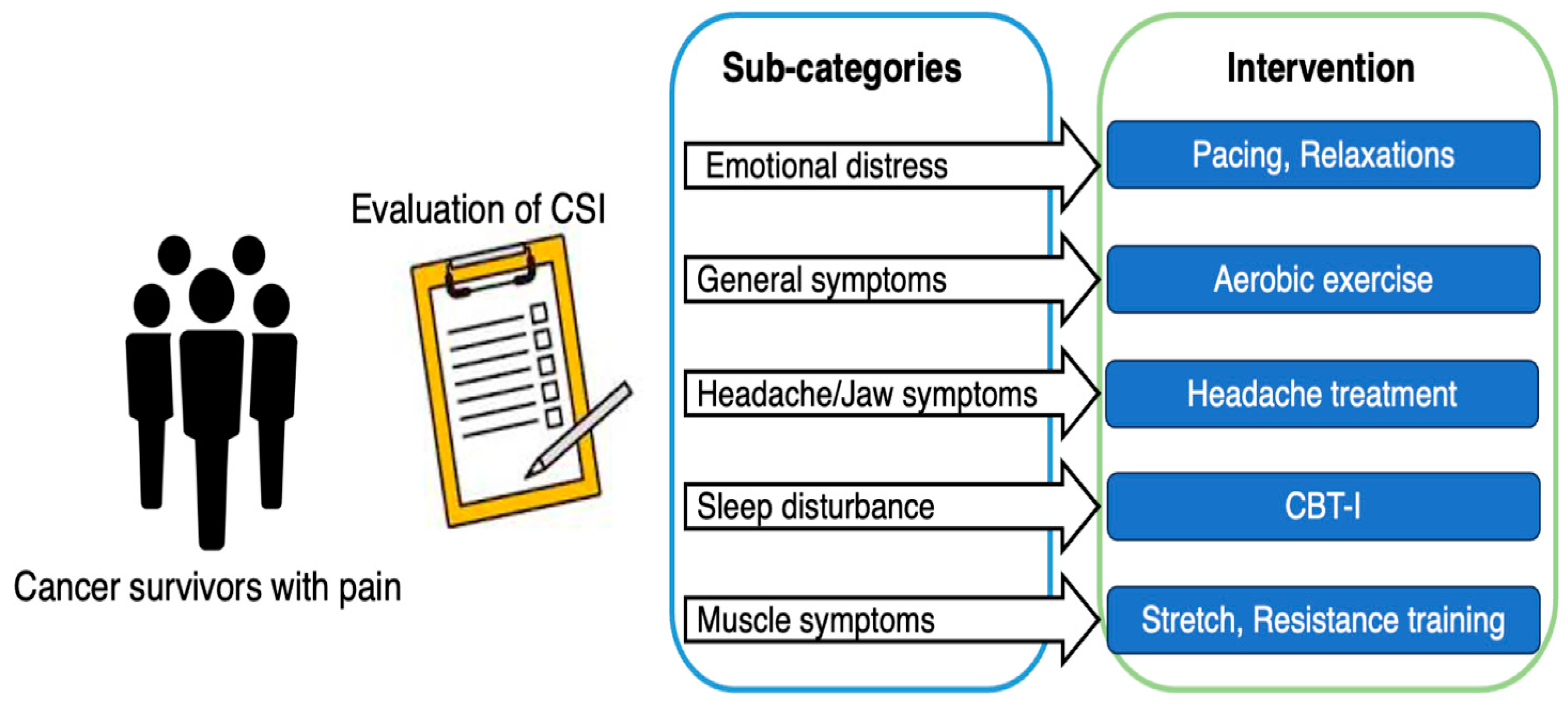
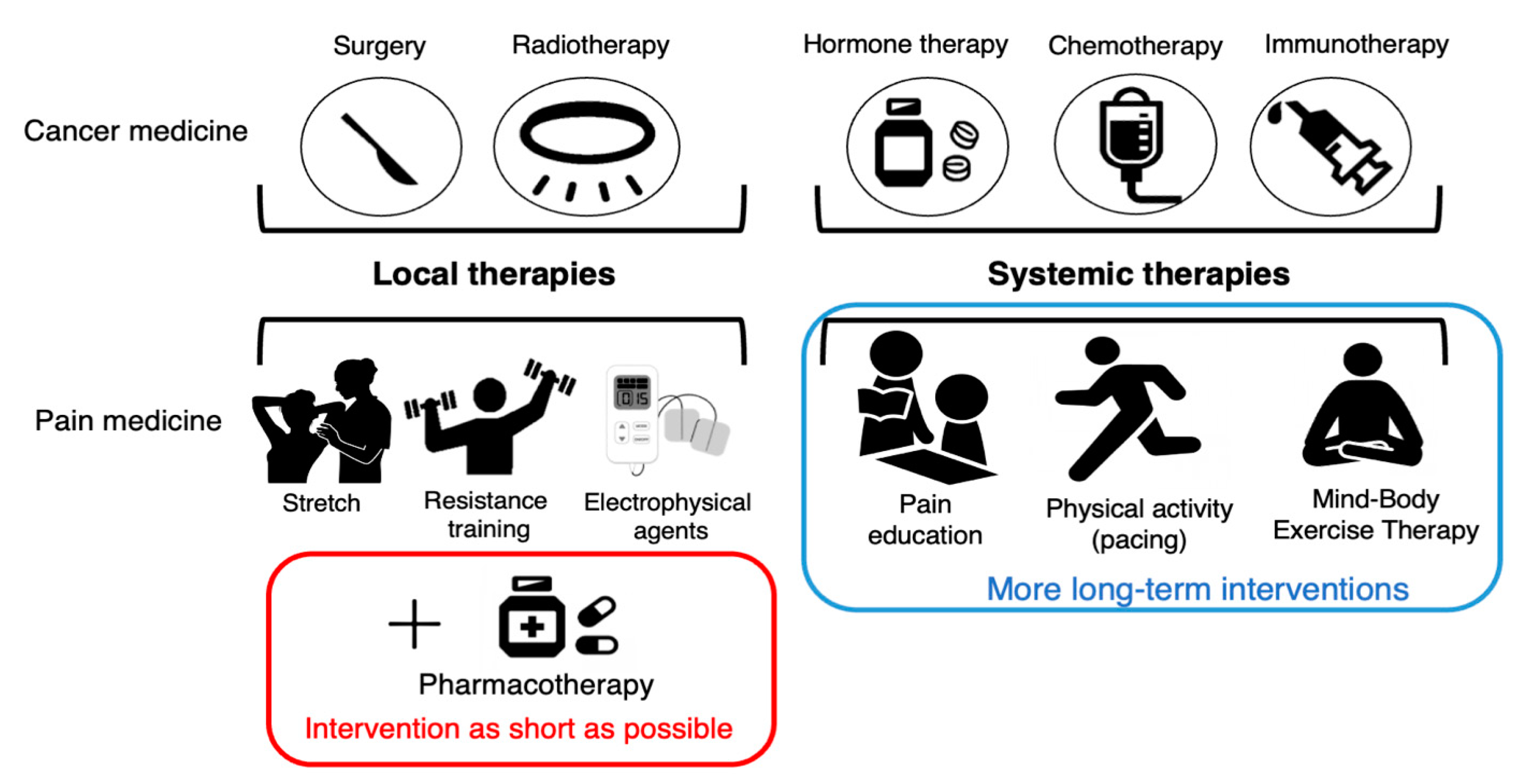
9. Challenges of Treating Pain in Cancer Survivors—Targeting Central Sensitization
10. Future Directions for Research and Clinical Practice
11. Conclusions
Author Contributions
Funding
Institutional Review Board Statement
Informed Consent Statement
Data Availability Statement
Conflicts of Interest
References
- Mahase, E. Cancer ovet alertakes CVD to become leading cause of death in high income countries. BMJ 2019, 366, l5368. [Google Scholar] [CrossRef] [PubMed]
- Sung, H.; Ferlay, J.; Siegel, R.L.; Laversanne, M.; Soerjomataram, I.; Jemal, A.; Bray, F. Global Cancer Statistics 2020: GLOBOCAN Estimates of Incidence and Mortality Worldwide for 36 Cancers in 185 Countries. CA Cancer J. Clin. 2021, 71, 209–249. [Google Scholar] [CrossRef] [PubMed]
- Haenen, V.; Evenepoel, M.; De Baerdemaecker, T.; Meeus, M.; Devoogdt, N.; Morlion, B.; Dams, L.; Van Dijck, S.; Van der Gucht, E.; De Vrieze, T.; et al. Pain prevalence and characteristics in survivors of solid cancers: A systematic review and meta-analysis. Support Care Cancer 2022, 31, 85. [Google Scholar] [CrossRef]
- Roberto, A.; Greco, M.T.; Uggeri, S.; Cavuto, S.; Deandrea, S.; Corli, O.; Apolone, G. Living systematic review to assess the analgesic undertreatment in cancer patients. Pain Pract. 2022, 22, 487–496. [Google Scholar] [CrossRef] [PubMed]
- Greco, M.T.; Roberto, A.; Corli, O.; Deandrea, S.; Bandieri, E.; Cavuto, S.; Apolone, G. Quality of cancer pain management: An update of a systematic review of undertreatment of patients with cancer. J. Clin. Oncol. 2014, 32, 4149–4154. [Google Scholar] [CrossRef] [PubMed]
- Breivik, H.; Cherny, N.; Collett, B.; De Conno, F.; Filbet, M.; Foubert, A.J.; Cohen, R.; Dow, L. Cancerrelated pain: A pan-European survey of prevalence, treatment, and patient attitudes. Ann. Oncol. 2009, 20, 1420–1433. [Google Scholar] [CrossRef]
- Deandrea, S.; Montanari, M.; Moja, L.; Apolone, G. Prevalence of undertreatment in cancer pain. A review of published literature. Ann. Oncol. 2008, 19, 1985–1991. [Google Scholar] [CrossRef]
- WHO. WHO Guidelines for the Pharmacological and Radiotherapeutic Management of Cancer Pain in Adults and Adolescents. 2018. Available online: https://apps.who.int/iris/bitstream/handle/10665/279700/9789241550390-eng.pdf (accessed on 15 April 2023).
- Fallon, M.; Giusti, R.; Aielli, F.; Hoskin, P.; Rolke, R.; Sharma, M.; Ripamonti, C.I.; ESMO Guidelines Committee. Management of cancer pain in adult patients: ESMO Clinical Practice Guidelines. Ann. Oncol. 2018, 29, iv166–iv191. [Google Scholar] [CrossRef]
- Swarm, R.A.; Paice, J.A.; Anghelescu, D.L.; Are, M.; Bruce, J.Y.; Buga, S.; Chwistek, M.; Cleeland, C.; Craig, D.; Gafford, E.; et al. Adult Cancer Pain, Version 3.2019, NCCN Clinical Practice Guidelines in Oncology. J. Natl. Compr. Cancer Netw. 2019, 17, 977–1007. [Google Scholar] [CrossRef]
- Bennett, M.I.; Kaasa, S.; Barke, A.; Korwisi, B.; Rief, W.; Treede, R.D.; IASP Taskforce for the Classification of Chronic Pain. The IASP classification of chronic pain for ICD-11: Chronic cancer-related pain. Pain 2019, 160, 38–44. [Google Scholar] [CrossRef]
- Kosek, E.; Cohen, M.; Baron, R.; Gebhart, G.F.; Mico, J.A.; Rice, A.S.C.; Rief, W.; Sluka, A.K. Do we need a third mechanistic descriptor for chronic pain states? Pain 2016, 157, 1382–1386. [Google Scholar] [CrossRef] [PubMed]
- International Association for the Study of Pain (IASP). IASP Terminology 2022. Available online: https://www.iasp-pain.org/resources/terminology/?navItemNumber=576#Centralsensitization (accessed on 15 April 2023).
- Nijs, J.; Lahousse, A.; Fernández-de-Las-Peñas, C.; Madeleine, P.; Fontaine, C.; Nishigami, T.; Desmedt, C.; Vanhoeij, M.; Mostaqim, K.; Cuesta-Vargas, A.I.; et al. Towards precision pain medicine for pain after cancer: The Cancer Pain Phenotyping Network multidisciplinary international guidelines for pain phenotyping using nociplastic pain criteria. Br. J. Anaesth. 2023, 130, 611–621. [Google Scholar] [CrossRef] [PubMed]
- Nijs, J.; George, S.Z.; Clauw, D.J.; Fernández-de-las-Peñas, C.; Kosek, E.; Ickmans, K.; Fernández-Carnero, J.; Polli, A.; Kapreli, E.; Huysmans, E.; et al. Central sensitisation in chronic pain conditions: Latest discoveries and their potential for precision medicine. Lancet Rheumatol. 2021, 3, e383–e392. [Google Scholar] [CrossRef]
- Chimenti, R.L.; Frey-Law, L.A.; Sluka, K.A. A Mechanism-Based Approach to Physical Therapist Management of Pain. Phys. Ther. 2018, 98, 302–314. [Google Scholar] [CrossRef] [PubMed]
- Glare, P.; Aubrey, K.R.; Myles, P.S. Transition from acute to chronic pain after surgery. Lancet 2019, 393, 1537–1546. [Google Scholar] [CrossRef]
- Den Boer, C.; Dries, L.; Terluin, B.; Van der Wouden, J.C.; Blankenstein, A.H.; Van Wilgen, C.P.; Lucassen, P.; Van der Horst, H.E. Central sensitization in chronic pain and medically unexplained symptom research: A systematic review of definitions, operationalizations and measurement instruments. J. Psychosom. Res. 2019, 117, 32–40. [Google Scholar] [CrossRef]
- Den Bandt, H.L.; Paulis, W.D.; Beckwée, D.; Ickmans, K.; Nijs, J.; Voogt, L. Pain Mechanisms in Low Back Pain: A Systematic Review With Meta-analysis of Mechanical Quantitative Sensory Testing Outcomes in People With Nonspecific Low Back Pain. J. Orthop. Sports Phys. Ther. 2019, 49, 698–715. [Google Scholar] [CrossRef]
- Fingleton, C.; Smart, K.; Moloney, N.; Fullen, B.M.; Doody, C. Pain sensitization in people with knee osteoarthritis: A systematic review and meta-analysis. Osteoarthr. Cartil. 2015, 23, 1043–1056. [Google Scholar] [CrossRef]
- Touche, R.L.; Paris-Alemany, A.; Hidalgo-Pérez, A.; López-de-Uralde-Villanueva, I.; Angulo-Diaz-Parreño, S.; Muñoz-García, D. Evidence for Central Sensitization in Patients with Temporomandibular Disorders: A Systematic Review and Meta-analysis of Observational Studies. Pain Pract. 2018, 18, 388–409. [Google Scholar] [CrossRef]
- Bartholomew, C.; Lack, S.; Neal, B. Altered pain processing and sensitisation is evident in adults with patellofemoral pain: A systematic review including meta-analysis and meta-regression. Scand. J. Pain 2019, 20, 11–27. [Google Scholar] [CrossRef]
- De Groef, A.; Meeus, M.; De Vrieze, T.; Vos, L.; Van Kampen, M.; Geraerts, I.; Devoogdt, N. Unraveling Self-Reported Signs of Central Sensitization in Breast Cancer Survivors with Upper Limb Pain: Prevalence Rate and Contributing Factors. Pain Physician 2018, 21, E247–E256. [Google Scholar] [CrossRef] [PubMed]
- Leysen, L.; Adriaenssens, N.; Nijs, J.; Pas, R.; Bilterys, T.; Vermeir, S.; Lahousse, A.; Beckwée, D. Chronic pain in breast cancer survivors: Nociceptive, neuropathic, or central sensitization pain? Pain Pract. 2019, 19, 183–195. [Google Scholar] [CrossRef] [PubMed]
- Manfuku, M.; Nishigami, T.; Mibu, A.; Yamashita, H.; Imai, R.; Kanamori, H.; Sumiyoshi, K. Predictors of persistent post-surgical pain intensity and interference at 1 year after breast cancer surgery: Assessing central sensitization, central sensitivity symptoms, and psychological factors. Breast Cancer 2023, 30, 271–281. [Google Scholar] [CrossRef] [PubMed]
- Dams, L.; Van der Gucht, E.; Haenen, V.; Lauwers, M.; De Pauw, S.; Steurs, T.; Devoogdt, N.; Smeets, A.; Bernar, K.; De Vrieze, T.; et al. Biopsychosocial risk factors for pain and painrelated disability 1 year after surgery for breast cancer. Support Care Cancer 2022, 30, 4465–4475. [Google Scholar] [CrossRef]
- Uddin, Z.; MacDermid, J.C. Quantitative Sensory Testing in Chronic Musculoskeletal Pain. Pain Med. 2016, 17, 1694–1703. [Google Scholar] [CrossRef]
- Edwards, R.R.; Dworkin, R.H.; Turk, D.C.; Angst, M.S.; Dionne, R.; Freeman, R.; Hansson, P.; Haroutounian, S.; Lars Arendt-Nielsen, L.; Attal, N.; et al. Patient phenotyping in clinical trials of chronic pain treatments: IMMPACT recommendations. Pain 2016, 157, 1851–1871. [Google Scholar] [CrossRef]
- Edwards, R.R.; Schreiber, K.L.; Dworkin, R.H.; Turk, D.C.; Baron, R.; Freeman, R.; Jensen, T.S.; Latremoliere, A.; Markman, J.D.; Rice, A.S.C.; et al. Optimizing and Accelerating the Development of Precision Pain Treatments for Chronic Pain: IMMPACT Review and Recommendations. J. Pain 2023, 24, 204–225. [Google Scholar] [CrossRef]
- Izumi, M.; Hayashi, Y.; Saito, R.; Oda, S.; Petersen, K.K.; Arendt-Nielsen, L.; Ikeuchi, M. Detection of altered pain facilitatory and inhibitory mechanisms in patients with knee osteoarthritis by using a simple bedside tool kit (QuantiPain). Pain Rep. 2022, 7, e998. [Google Scholar] [CrossRef]
- Reimer, M.; Forstenpointner, J.; Hartmann, A.; Otto, J.C.; Vollert, J.; Gierthmühlen, J.; Klein, T.; Hüllemann, P.; Baron, R. Sensory bedside testing: A simple stratification approach for sensory phenotyping. Pain Rep. 2020, 5, e820. [Google Scholar] [CrossRef]
- Sachau, J.; Otto, J.C.; Kirchhofer, V.; Larsen, J.B.; Kennes, L.N.; Hüllemann, P.; Arendt-Nielsen, L.; Baron, R. Development of a bedside tool-kit for assessing sensitization in patients with chronic osteoarthritis knee pain or chronic knee pain after total knee replacement. Pain 2022, 163, 308–318. [Google Scholar] [CrossRef]
- Fillingim, R.B.; Loeser, J.D.; Baron, R.; Edwards, R.R. Assessment of Chronic Pain: Domains, Methods, and Mechanisms. J. Pain 2016, 17, T10–T20. [Google Scholar] [CrossRef]
- Mustonen, L.; Aho, T.; Harno, H.; Sipilä, R.; Meretoja, T.; Kalso, E. What makes surgical nerve injury painful? A 4-year to 9-year follow-up of patients with intercostobrachial nerve resection in women treated for breast cancer. Pain 2019, 160, 246–256. [Google Scholar] [CrossRef] [PubMed]
- Manfuku, M.; Nishigami, T.; Mibu, A.; Tanaka, K.; Kitagaki, K.; Sumiyoshi, K. Comparison of central sensitization-related symptoms and health-related quality of life between breast cancer survivors with and without chronic pain and healthy controls. Breast Cancer 2019, 26, 758–765. [Google Scholar] [CrossRef] [PubMed]
- Zhu, Y.; Loggia, M.L.; Edwards, R.R.; Flowers, K.M.; Muñoz-Vergara, D.W.; Partridge, A.H.; Schreiber, K.L. Increased Clinical Pain Locations and Pain Sensitivity in Women After Breast Cancer Surgery: Influence of Aromatase Inhibitor Therapy. Clin. J. Pain 2022, 38, 721–729. [Google Scholar] [CrossRef] [PubMed]
- Caro-Morán, E.; Fernández-Lao, C.; Díaz-Rodríguez, L.; Cantarero-Villanueva, I.; Madeleine, P.; Arroyo-Morales, M. Pressure Pain Sensitivity Maps of the Neck-Shoulder Region in Breast Cancer Survivors. Pain Med. 2016, 17, 1942–1952. [Google Scholar] [CrossRef]
- Ortiz-Comino, L.; Fernández-Lao, C.; Castro-Martín, E.; Cantarero-Villanueva, I.; Madeleine, P.; Arroyo-Morales, M. Myofascial pain, widespread pressure hypersensitivity, and hyperalgesia in the face, neck, and shoulder regions, in survivors of head and neck cancer. Support Care Cancer 2020, 28, 2891–2898. [Google Scholar] [CrossRef]
- Sánchez-Jiménez, A.; Cantarero-Villanueva, I.; Molina-Barea, R.; Fernández-Lao, C.; Galiano-Castillo, N.; Arroyo-Morales, M. Widespread pressure pain hypersensitivity and ultrasound imaging evaluation of abdominal area after colon cancer treatment. Pain Med. 2014, 15, 233–240. [Google Scholar] [CrossRef]
- Fernández-Lao, C.; Cantarero-Villanueva, I.; Fernández-delasPeñas, C.; Del-Moral-Ávila, R.; Menjón-Beltrán, S.; Arroyo-Morales, M. Widespread mechanical pain hypersensitivity as a sign of central sensitization after breast cancer surgery: Comparison between mastectomy and lumpectomy. Pain Med. 2011, 12, 72–78. [Google Scholar] [CrossRef]
- Fernández-Lao, C.; Cantarero-Villanueva, I.; Fernández-de-LasPeñas, C.; Del-Moral-Ávila, R.; Arendt-Nielsen, L.; Arroyo-Morales, M. Myofascial trigger points in neck and shoulder muscles and widespread pressure pain hypersensitivity in patients with postmastectomy pain: Evidence of peripheral and central sensitization. Clin. J. Pain 2010, 26, 798–806. [Google Scholar] [CrossRef]
- Schreiber, K.L.; Martel, M.O.; Shnol, H.; Shaffer, J.R.; Greco, C.; Viray, N.; Taylor, L.N.; McLaughlin, M.; Brufsky, A.; Ahrendt, G.; et al. Persistent pain in postmastectomy patients: Comparison of psychophysical, medical, surgical, and psychosocial characteristics between patients with and without pain. Pain 2013, 154, 660–668. [Google Scholar] [CrossRef]
- Edwards, R.R.; Mensing, G.; Cahalan, C.; Greenbaum, S.; Narang, S.; Belfer, I.; Schreiber, K.L.; Campbell, C.; Wasan, A.D.; Jamison, R.N. Alteration in pain modulation in women with persistent pain after lumpectomy: Influence of catastrophizing. J. Pain Symptom Manag. 2013, 46, 30–42. [Google Scholar] [CrossRef] [PubMed]
- Scott, A.C.; McConnell, S.; Laird, B.; Colvin, L.; Fallon, M. Quantitative Sensory Testing to assess the sensory characteristics of cancer-induced bone pain after radiotherapy and potential clinical biomarkers of response. Eur. J. Pain 2012, 16, 123–133. [Google Scholar] [CrossRef] [PubMed]
- Yunus, M.B. Central sensitivity syndromes: A unified concept for fibromyalgia and other similar maladies. J. Indian Rheum. Assoc. 2000, 8, 27–33. [Google Scholar]
- Scerbo, T.; Colasurdo, J.; Dunn, S.; Unger, J.; Nijs, J.; Cook, C. Measurement Properties of the Central Sensitization Inventory: A Systematic Review. Pain Pract. 2018, 18, 544–554. [Google Scholar] [CrossRef] [PubMed]
- Hurth, A.; Steege, J.N.; Scheepbouwer, P.; Roose, E.; Lahousse, A.; Leysen, L.; Stas, L.; Kregel, J.; Salvat, E.; Nijs, J. Assessment of Central Sensitization in Breast Cancer Survivors: Convergent Validity and Use of the Central Sensitization Inventory (CSI) and Its Short-Form as a Clustering Tool. Clin. Pract. 2021, 11, 607–618. [Google Scholar] [CrossRef]
- Cuesta-Vargas, A.I.; Neblett, R.; Nijs, J.; Chiarotto, A.; Kregel, J.; Van Wilgen, C.P.; Pitance, L.; Knezevic, A.; Gatchel, R.J.; Mayer, T.G.; et al. Establishing central sensitization-related symptom severity subgroups: A multicountry study using the central sensitization inventory. Pain Med. 2020, 21, 2430–2440. [Google Scholar] [CrossRef]
- De Groef, A.; Meeus, M.; De Vrieze, T.; Vos, L.; Van Kampen, M.; Christiaens, M.R.; Neven, P.; Geraerts, I.; Devoogdt, N. Pain characteristics as important contributing factors to upper limb dysfunctions in breast cancer survivors at long term. Musculoskelet. Sci. Pract. 2017, 29, 52–59. [Google Scholar] [CrossRef]
- Roldán-Jiménez, C.; Martín-Martín, J.; Pajares, B.; Ribelles, N.; Alba, E.; Cuesta-Vargas, A.I. Factors associated with upper limb function in breast cancer survivors. Phys. Med. Rehabil. 2023, 15, 151–156. [Google Scholar] [CrossRef]
- De la Rosa-Díaz, I.; Barrero-Santiago, L.; Acosta-Ramírez, P.; Martín-Peces-Barba, M.; Iglesias-Hernández, E.; Plisset, B.; Lutinier, N.; Belzanne, M.; Touche, R.L.; Grande-Alonso, M. Cross-Sectional Comparative Study on Central Sensitization-Psychosocial Associated Comorbidities and Psychological Characteristics in Breast Cancer Survivors with Nociceptive Pain and Pain with Neuropathic Features and without Pain. Life 2022, 12, 1328. [Google Scholar] [CrossRef]
- Leysen, L.; Cools, W.; Nijs, J.; Adriaenssens, N.; Pas, R.; Van Wilgen, C.P.; Bults, R.; Roose, E.; Lahousse, A.; Beckwée, D. The mediating effect of pain catastrophizing and perceived injustice in the relationship of pain on health-related quality of life in breast cancer survivors. Support Care Cancer 2021, 29, 5653–5661. [Google Scholar] [CrossRef]
- Lahousse, A.; Ivakhnov, S.; Nijs, J.; Beckwée, D.; De Las Peñas, C.F.; Roose, E.; Leysen, L. The mediating effect of perceived injustice and pain catastrophizing in the relationship of pain on fatigue and sleep in breast cancer survivors: A cross-sectional study. Pain Med. 2022, 23, 1299–1310. [Google Scholar] [CrossRef] [PubMed]
- Gutiérrez-Sánchez, D.; Pajares-Hachero, B.I.; Trinidad-Fernández, M.; Escriche-Escuder, A.; Iglesias-Campos, M.; Bermejo-Pérez, M.J.; Alba-Conejo, E.; Roldán-Jiménez, C.; Cuesta-Vargas, A. The Benefits of a Therapeutic Exercise and Educational Intervention Program on Central Sensitization Symptoms and Pain-Related Fear Avoidance in Breast Cancer Survivors. Pain Manag. Nurs. 2022, 23, 467–472. [Google Scholar] [CrossRef] [PubMed]
- Henson, L.A.; Maddocks, M.; Evans, C.; Davidson, M.; Hicks, S.; Higginson, I.J. Palliative Care and the Management of Common Distressing Symptoms in Advanced Cancer: Pain, Breathlessness, Nausea and Vomiting, and Fatigue. J. Clin. Oncol. 2020, 38, 905–914. [Google Scholar] [CrossRef] [PubMed]
- Nzwalo, I.; Aboim, M.A.; Joaquim, N.; Marreiros, A.; Nzwalo, H. Systematic Review of the Prevalence, Predictors, and Treatment of Insomnia in Palliative Care. Am. J. Hosp. Palliat. Care 2020, 37, 957–969. [Google Scholar] [CrossRef] [PubMed]
- Fabi, A.; Bhargava, R.; Fatigoni, S.; Guglielmo, M.; Horneber, M.; Roila, F.; Weis, J.; Jordan, K.; Ripamonti, C.I. Cancer-related fatigue: ESMO Clinical Practice Guidelines for diagnosis and treatment. Ann. Oncol. 2020, 31, 713–723. [Google Scholar] [CrossRef]
- Wang, X.S.; Zhao, F.; Fisch, M.J.; O’Mara, A.M.; Cella, D.; Mendoza, T.R.; Cleeland, C.S. Prevalence and characteristics of moderate to severe fatigue: A multicenter study in cancer patients and survivors. Cancer 2014, 120, 425–432. [Google Scholar] [CrossRef]
- Ji, R.R.; Nackley, A.; Huh, Y.; Terrando, N.; Maixner, W. Neuroinflammation and Central Sensitization in Chronic and Widespread Pain. Anesthesiology 2018, 129, 343–366. [Google Scholar] [CrossRef]
- Milligan, E.D.; Watkins, L.R. Pathological and protective roles of glia in chronic pain. Nat. Rev. Neurosci. 2009, 10, 23–36. [Google Scholar] [CrossRef]
- Coull, J.A.M.; Beggs, S.; Boudreau, D.; Boivin, D.; Tsuda, M.; Inoue, K.; Gravel, C.; Salter, M.W.; Koninck, Y.D. BDNF from microglia causes the shift in neuronal anion gradient underlying neuropathic pain. Nature 2005, 438, 1017–1021. [Google Scholar] [CrossRef]
- Yang, Y.; Li, H.; Li, T.T.; Luo, H.; Gu, X.Y.; Lü, N.; Ji, R.R.; Zhang, Y.O. Delayed activation of spinal microglia contributes to the maintenance of bone cancer pain in female Wistar rats via P2X7 receptor and IL-18. J. Neurosci. 2015, 35, 7950–7963. [Google Scholar] [CrossRef]
- Savard, J.; Simard, S.; Blanchet, J.; Ivers, H.; Morin, C.M. Prevalence, clinical characteristics, and risk factors for insomnia in the context of breast cancer. Sleep 2001, 24, 583–590. [Google Scholar] [CrossRef] [PubMed]
- Leysen, L.; Lahousse, A.; Nijs, J.; Adriaenssens, N.; Mairesse, O.; Ivakhnov, S.; Bilterys, T.; Van Looveren, E.; Pas, R.; Beckwée, D. Prevalence and risk factors of sleep disturbances in breast cancersurvivors: Systematic review and meta-analyses. Support Care Cancer 2019, 27, 4401–4433. [Google Scholar] [CrossRef] [PubMed]
- Syrowatka, A.; Motulsky, A.; Kurteva, S.; Hanley, J.A.; Dixon, W.G.; Meguerditchian, A.N.; Tamblyn, R. Predictors of distress in female breast cancer survivors: A systematic review. Breast Cancer Res. Treat. 2017, 165, 229–245. [Google Scholar] [CrossRef]
- Looveren, E.V.; Bilterys, T.; Munneke, W.; Cagnie, B.; Ickmans, K.; Mairesse, O.; Malfliet, A.; De Baets, L.; Nijs, J.; Goubert, D.; et al. The Association between Sleep and Chronic Spinal Pain: A Systematic Review from the Last Decade. J. Clin. Med. 2021, 10, 3836. [Google Scholar] [CrossRef] [PubMed]
- Abdallah, C.G.; Geha, P. Chronic Pain and Chronic Stress: Two Sides of the Same Coin? Chronic Stress 2017, 1, 2470547017704763. [Google Scholar] [CrossRef]
- Adams, G.R.; Gandhi, W.; Harrison, R.; Van Reekum, C.M.; Wood-Anderson, D.; Gilron, I.; Salomons, T.V. Do “central sensitization” questionnaires reflect measures of nociceptive sensitization or psychological constructs? A systematic review and meta-analyses. Pain 2023, 164, 1222–1239. [Google Scholar] [CrossRef]
- Haruyama, Y.; Sairenchi, T.; Uchiyama, K.; Suzuki, K.; Hirata, K.; Kobashi, G. A large-scale population-based epidemiological study on the prevalence of central sensitization syndromes in Japan. Sci. Rep. 2021, 11, 23299. [Google Scholar] [CrossRef] [PubMed]
- Rosen, I.M.; Aurora, R.N.; Kirsch, D.B.; Carden, K.A.; Malhotra, R.K.; Ramar, K.; Abbasi-Feinberg, F.; Kristo, D.A.; Martin, J.L.; Olson, E.J.; et al. Chronic Opioid Therapy and Sleep: An American Academy of Sleep Medicine Position Statement. J. Clin. Sleep Med. 2019, 15, 1671–1673. [Google Scholar] [CrossRef]
- Chang, J.R.; Fu, S.N.; Li, X.; Li, S.X.; Wang, X.; Zhou, Z.; Pinto, S.M.; Samartzis, D.; Karppinen, J.; Wong, A.Y. The differential effects of sleep deprivation on pain perception in individuals with or without chronic pain: A systematic review and meta-analysis. Sleep Med. Rev. 2022, 66, 101695. [Google Scholar] [CrossRef]
- Pacho-Hernández, J.C.; Fernández-de-Las-Peñas, C.; Fuensalida-Novo, S.; Jiménez-Antona, C.; Ortega-Santiago, R.; Cigarán-Mendez, M. Sleep Quality Mediates the Effect of Sensitization-Associated Symptoms, Anxiety, and Depression on Quality of Life in Individuals with Post-COVID-19 Pain. Brain Sci. 2022, 12, 1363. [Google Scholar] [CrossRef]
- Dennis, N.L.; Larkin, M.; Derbyshire, S.W.G. ‘A giant mess’—Making sense of complexity in the accounts of people with fibromyalgia. Br. J. Health Psychol. 2013, 18, 763–781. [Google Scholar] [CrossRef] [PubMed]
- Alok, R.; Das, S.K.; Agarwal, G.G.; Salwahan, L.; Srivastava, R. Relationship of severity of depression, anxiety and stress with severity of fibromyalgia. Clin. Exp. Rheumatol. 2011, 29, 70–72. [Google Scholar]
- Nijs, J.; Roose, E.; Lahousse, A.; Mostaqim, K.; Reynebeau, I.; De Couck, M.; Beckwee, D.; Huysmans, E.; Bults, R.; Van Wilgen, P.; et al. Pain and Opioid Use in Cancer Survivors: A Practical Guide to Account for Perceived Injustice. Pain Physician 2021, 24, 309–317. [Google Scholar]
- Fitzcharles, M.A.; Cohen, S.P.; Clauw, D.J.; Littlejohn, G.; Usui, C.; Häuser, W. Nociplastic pain: Towards an understanding of prevalent pain conditions. Lancet 2021, 397, 2098–2110. [Google Scholar] [CrossRef]
- Tompkin, D.A.; Campbell, C.M. Opioid-induced hyperalgesia: Clinically relevant or extraneous research phenomenon? Curr. Pain Headache Rep. 2011, 15, 129–136. [Google Scholar] [CrossRef] [PubMed]
- Rudd, R.A.; Seth, P.; David, F.; Scholl, L. Increases in Drug and Opioid-Involved Overdose Deaths United States, 2010–2015. Morb. Mortal. Wkly. Rep. 2016, 65, 1445–1452. [Google Scholar] [CrossRef]
- Nijs, J.; Leysen, L.; Vanlauwe, J.; Logghe, T.; Ickmans, K.; Polli, A.; Malfliet, A.; Coppieters, I.; Huysmans, E. Treatment of central sensitization in patients with chronic pain: Time for change? Expert Opin. Pharmacother. 2019, 20, 1961–1970. [Google Scholar] [CrossRef] [PubMed]
- Arribas-Romano, A.; Fernández-Carnero, J.; Molina-Rueda, F.; Angulo-Diaz-Parreño, S.; Navarro-Santana, M.J. Efficacy of Physical Therapy on Nociceptive Pain Processing Alterations in Patients with Chronic Musculoskeletal Pain: A Systematic Review and Meta-analysis. Pain Med. 2020, 21, 2502–2517. [Google Scholar] [CrossRef]
- Stout, N.L.; Mina, D.S.; Lyons, K.D.; Robb, K.; Silver, J.K. A systematic review of rehabilitation and exercise recommendations in oncology guidelines. CA Cancer J. Clin. 2021, 71, 149–175. [Google Scholar] [CrossRef]
- Campbell, K.L.; Winters-Stone, K.M.; Wiskemann, J.; May, A.M.; Schwartz, A.L.; Courneya, K.S.; Zucker, D.S.; Matthews, C.E.; Ligibel, J.A.; Gerber, L.H.; et al. Exercise Guidelines for Cancer Survivors: Consensus Statement from International Multidisciplinary Roundtable. Med. Sci. Sports Exerc. 2019, 51, 2375–2390. [Google Scholar] [CrossRef]
- Tanriverdi, A.; Kahraman, B.O.; Ergin, G.; Karadibak, D.; Savci, S. Effect of exercise interventions in adults with cancer receiving palliative care: A systematic review and meta-analysis. Support Care Cancer 2023, 31, 205. [Google Scholar] [CrossRef]
- Guo, S.; Han, W.; Wang, P.; Wang, X.; Fang, X. Effects of exercise on chemotherapy-induced peripheral neuropathy in cancer patients: A systematic review and meta-analysis. J. Cancer Surviv. 2023, 17, 318–331. [Google Scholar] [CrossRef] [PubMed]
- Roberts, R.E.; Rickett, K.; Feng, S.; Vagenas, D.; Woodward, N.E. Exercise therapies for preventing or treating aromatase inhibitor-induced musculoskeletal symptoms in early breast cancer. Cochrane Database Syst. Rev. 2020, 1, CD012988. [Google Scholar] [CrossRef] [PubMed]
- Cuthbert, C.; Twomey, R.; Bansal, M.; Rana, B.; Dhruva, T.; Livingston, V.; Daun, J.T.; Culos-Reed, S.N. The role of exercise for pain management in adults living with and beyond cancer: A systematic review and meta-analysis. Support Care Cancer 2023, 31, 254. [Google Scholar] [CrossRef] [PubMed]
- Nijs, J.; Wijma, A.J.; Leysen, L.; Pas, R.; Willaert, W.; Hoelen, W.; Ickmans, K.; Van Wilgen, C.P. Explaining pain following cancer: A practical guide for clinicians. Braz. J. Phys. Ther. 2019, 23, 367–377. [Google Scholar] [CrossRef]
- Manfuku, M.; Nishigami, T.; Mibu, A.; Yamashita, H.; Imai, R.; Tanaka, K.; Kitagaki, K.; Hiroe, K.; Sumiyoshi, K. Effect of perioperative pain neuroscience education in patients with post-mastectomy persistent pain: A retrospective, propensity score-matched study. Support Care Cancer 2021, 29, 5351–5359. [Google Scholar] [CrossRef] [PubMed]
- De Groef, A.; Evenepoel, M.; Van Dijck, S.; Dams, L.; Haenen, V.; Wiles, L.; Catley, M.; Vogelzang, A.; Olver, I.; Hibbert, P.; et al. Feasibility and pilot testing of a personalized eHealth intervention for pain science education and self-management for breast cancer survivors with persistent pain: A mixed-method study. Support Care Cancer 2023, 31, 119. [Google Scholar] [CrossRef]
- Dams, L.; Van der Gucht, E.; Devoogdt, N.; Smeets, A.; Bernar, K.; Morlion, B.; Godderis, L.; Haenen, V.; De Vrieze, T.; Fieuws, S.; et al. Effect of pain neuroscience education after breast cancer surgery on pain-, physical-, and emotional functioning: A double-blinded randomized controlled trial (EduCan trial). Pain 2022, 164, 1489–1501. [Google Scholar] [CrossRef]
- Siddall, B.; Ram, A.; Jones, M.D.; Booth, J.; Perriman, D.; Summers, S.J. Short-term impact of combining pain neuroscience education with exercise for chronic musculoskeletal pain: A systematic review and meta-analysis. Pain 2022, 163, e20–e30. [Google Scholar] [CrossRef]
- Oldenmenger, W.H.; Geerling, J.I.; Mostovaya, I.; Vissers, K.C.P.; De Graeff, A.; Reyners, A.K.L.; Van der Linden, Y.M. A systematic review of the effectiveness of patient-based educational interventions to improve cancer-related pain. Cancer Treat. Rev. 2018, 63, 96–103. [Google Scholar] [CrossRef]
- Qaseem, A.; Kansagara, D.; Forciea, M.A.; Cooke, M.; Denberg, T.D. Management of Chronic Insomnia Disorder in Adults: A Clinical Practice Guideline From the American College of Physicians. Ann. Intern. Med. 2016, 165, 125–133. [Google Scholar] [CrossRef] [PubMed]
- Johnson, J.A.; Rash, J.A.; Campbell, T.S.; Savard, J.; Gehrman, P.R.; Perlis, M.; Carlson, L.E.; Garland, S.N. A systematic review and meta-analysis of randomized controlled trials of cognitive behavior therapy for insomnia (CBT-I) in cancer survivors. Sleep Med. Rev. 2016, 27, 20–28. [Google Scholar] [CrossRef] [PubMed]
- Tang, M.; Liu, X.; Wu, Q.; Shi, Y. The Effects of Cognitive-Behavioral Stress Management for Breast Cancer Patients: A Systematic Review and Meta-analysis of Randomized Controlled Trials. Cancer Nurs. 2020, 43, 222–237. [Google Scholar] [CrossRef] [PubMed]
- Danhauer, S.C.; Addington, E.L.; Cohen, L.; Sohl, S.J.; Van Puymbroeck, M.; Albinati, N.K.; Culos-Reed, S.N. Yoga for symptom management in oncology: A review of the evidence base and future directions for research. Cancer 2019, 125, 1979–1989. [Google Scholar] [CrossRef]
- Matchim, Y.; Armer, J.M.; Stewart, B.R. Mindfulness-based stress reduction among breast cancer survivors: A literature review and discussion. Oncol. Nurs. Forum. 2011, 38, E61–E71. [Google Scholar] [CrossRef]
- Chang, Y.C.; Yeh, T.L.; Chang, Y.M.; Hu, W.Y. Short-term Effects of Randomized Mindfulness-Based Intervention in Female Breast Cancer Survivors: A Systematic Review and Meta-analysis. Cancer Nurs. 2021, 44, E703–E714. [Google Scholar] [CrossRef]
- Tsimberidou, A.M.; Fountzilas, E.; Nikanjam, M.; Kurzrock, R. Review of precision cancer medicine: Evolution of the treatment paradigm. Cancer Treat. Rev. 2020, 86, 102019. [Google Scholar] [CrossRef]
- Malfliet, A.; Kregel, J.; Meeus, M.; Danneels, L.; Cagnie, B.; Roussel, N.; Nijs, J. Patients With Chronic Spinal Pain Benefit From Pain Neuroscience Education Regardless the Self-Reported Signs of Central Sensitization: Secondary Analysis of a Randomized Controlled Multicenter Trial. Phys. Med. Rehabil. 2018, 10, 1330–1343. [Google Scholar] [CrossRef]



| Sessions | Musculoskeletal Pain | Cancer Pain |
|---|---|---|
| Pathoanatomic models | No reference to pathoanatomic models | Explanation of general side effects of treatment modalities (surgery, radiotherapy, chemotherapy and hormone therapy) |
| Acute pain vs. chronic pain | Transition from acute to chronic pain | |
| Nerve function | The neuron (receptor, axon, terminal) and the synapse (action potential, neurotransmitters, postsynaptic membrane potential, chemically driven ion channel) | |
| Peripheral and central sensitization | Peripheral sensitization (e.g., peripheral nerve injury, inflammation) Central sensitization (e.g., brain and spinal cord function, the pain matrix in the brain) | |
| Descending nociceptive inhibition and facilitation | Emotions, stress, sleep, physical activity, pain cognitions, and pain behavior | |
| Reconceptualization of pain as a normal brain response to perceived threat | Vicious cycle due to kinesiophobia and fear–avoidance models. Information about sensations that are a threat to the body is recognized as ‘pain’ as a normal response of the brain. | Vicious cycle due to kinesiophobia and fear–avoidance models. Threatening perception of pain as cancer recurrence or metastasis, leading to heightened anxiety and avoidance behavior. |
| Transfer knowledge about pain to an adaptive behavioral change | Advice on managing factors that contribute to persistent pain, such as correcting misperceptions and activity management (pacing strategies), taking into account biopsychosocial factors | |
Disclaimer/Publisher’s Note: The statements, opinions and data contained in all publications are solely those of the individual author(s) and contributor(s) and not of MDPI and/or the editor(s). MDPI and/or the editor(s) disclaim responsibility for any injury to people or property resulting from any ideas, methods, instructions or products referred to in the content. |
© 2023 by the authors. Licensee MDPI, Basel, Switzerland. This article is an open access article distributed under the terms and conditions of the Creative Commons Attribution (CC BY) license (https://creativecommons.org/licenses/by/4.0/).
Share and Cite
Nishigami, T.; Manfuku, M.; Lahousse, A. Central Sensitization in Cancer Survivors and Its Clinical Implications: State of the Art. J. Clin. Med. 2023, 12, 4606. https://doi.org/10.3390/jcm12144606
Nishigami T, Manfuku M, Lahousse A. Central Sensitization in Cancer Survivors and Its Clinical Implications: State of the Art. Journal of Clinical Medicine. 2023; 12(14):4606. https://doi.org/10.3390/jcm12144606
Chicago/Turabian StyleNishigami, Tomohiko, Masahiro Manfuku, and Astrid Lahousse. 2023. "Central Sensitization in Cancer Survivors and Its Clinical Implications: State of the Art" Journal of Clinical Medicine 12, no. 14: 4606. https://doi.org/10.3390/jcm12144606
APA StyleNishigami, T., Manfuku, M., & Lahousse, A. (2023). Central Sensitization in Cancer Survivors and Its Clinical Implications: State of the Art. Journal of Clinical Medicine, 12(14), 4606. https://doi.org/10.3390/jcm12144606