Prevalence of Comorbidity between Dry Eye and Allergic Conjunctivitis: A Systematic Review and Meta-Analysis
 , , , , , , ,
Abstract
1. Introduction
2. Materials and Methods
2.1. Outcomes
2.2. Search Strategy
2.3. Data Extraction
2.4. Statistical Analysis
3. Results
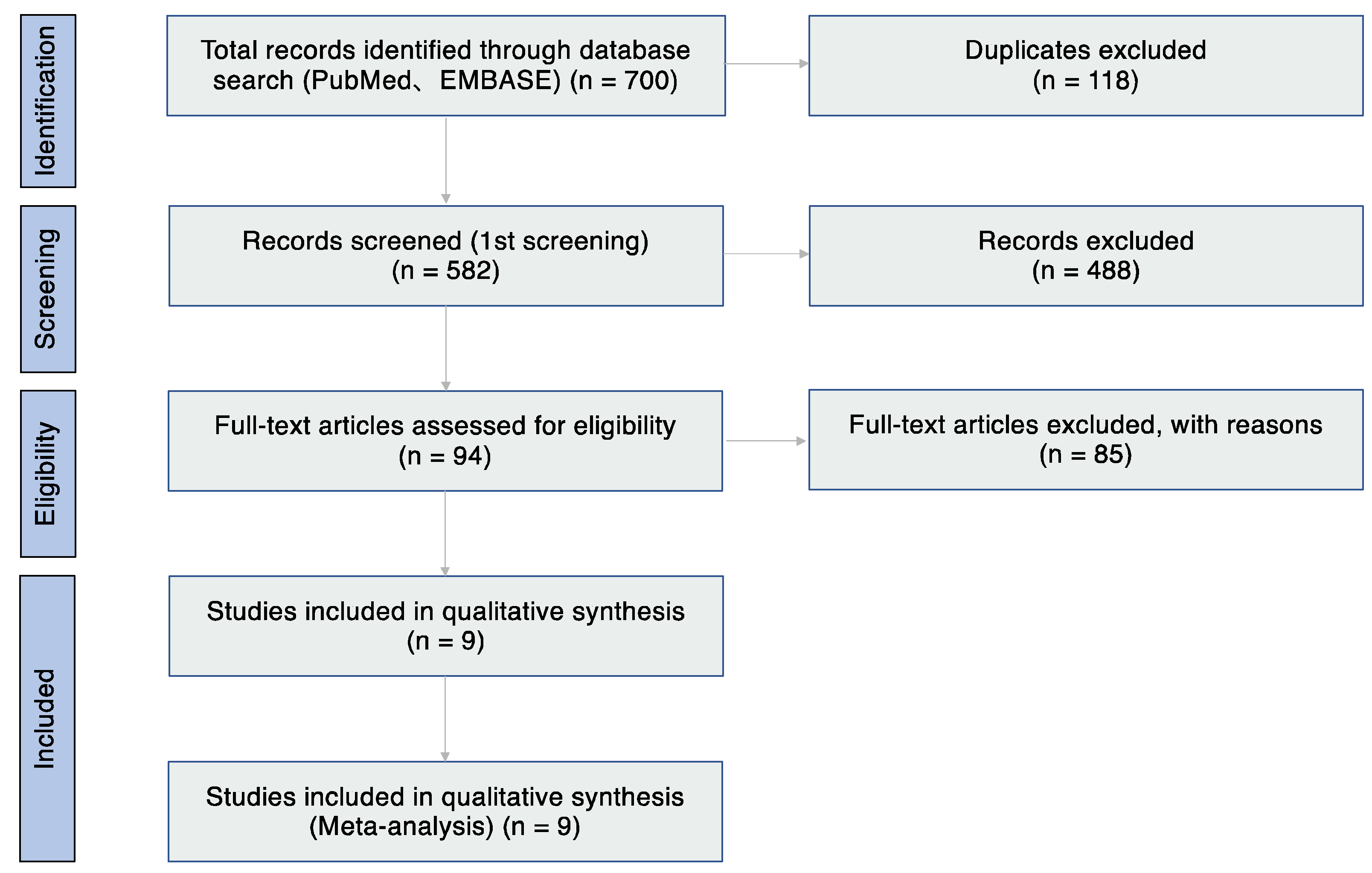
3.1. Study Characteristics and Demographic Features
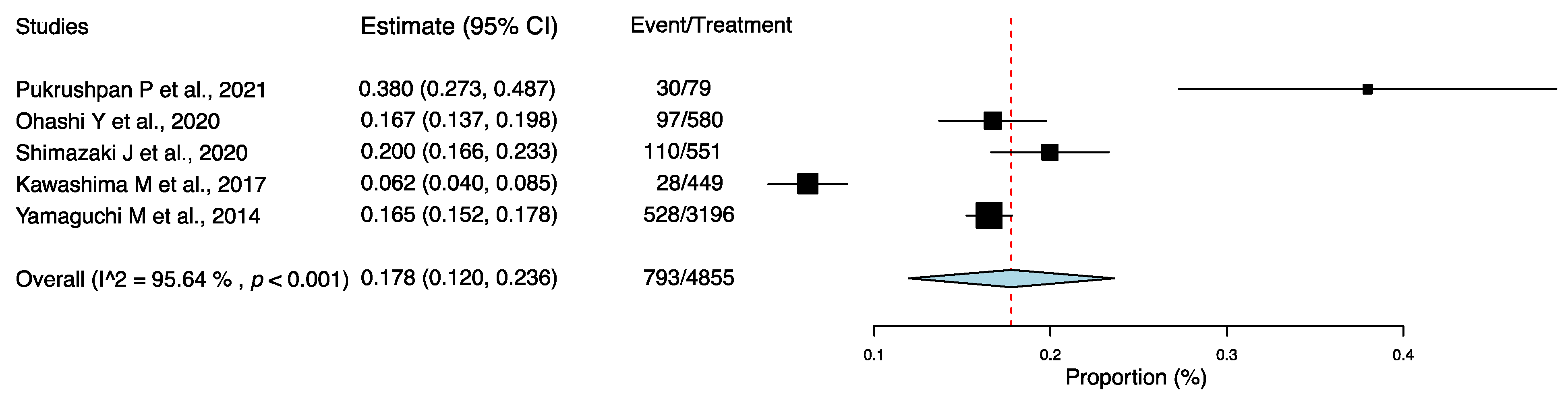
3.2. Incidence DE among Individuals with AC
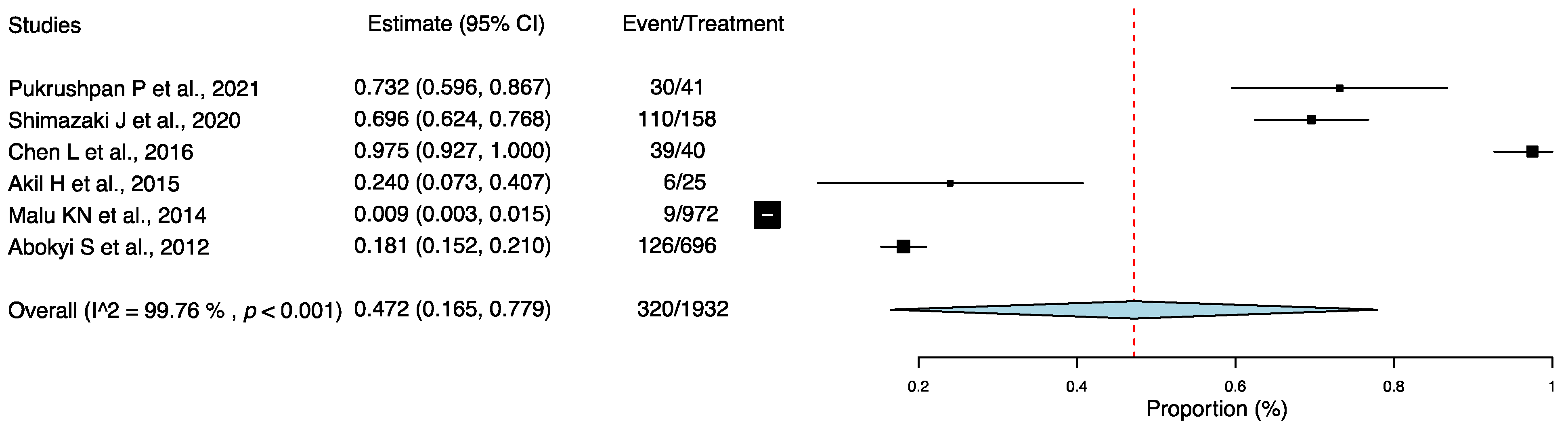
3.3. Incidence of AC among Individuals with DE
4. Discussion
Author Contributions
Funding
Institutional Review Board Statement
Informed Consent Statement
Data Availability Statement
Acknowledgments
Conflicts of Interest
Abbreviations
References
- Stapleton, F.; Alves, M.; Bunya, V.Y.; Jalbert, I.; Lekhanont, K.; Malet, F.; Na, K.-S.; Schaumberg, D.; Uchino, M.; Vehof, J.; et al. TFOS DEWS II Epidemiology Report. Ocul. Surf. 2017, 15, 334–365. [Google Scholar] [CrossRef] [Scilit] [PubMed]
- Rouen, P.A.; White, M.L. Dry Eye Disease: Prevalence, Assessment, and Management. Home Healthc. Now 2018, 36, 74–83. [Google Scholar] [CrossRef] [Scilit] [PubMed]
- Leonardi, A.; Castegnaro, A.; Valerio, A.L.G.; Lazzarini, D. Epidemiology of allergic conjunctivitis: Clinical appearance and treatment patterns in a population-based study. Curr. Opin. Allergy Clin. Immunol. 2015, 15, 482–488. [Google Scholar] [CrossRef] [Scilit] [PubMed]
- Dupuis, P.; Prokopich, C.L.; Hynes, A.; Kim, H. A contemporary look at allergic conjunctivitis. Allergy Asthma Clin. Immunol. 2020, 16, 5. [Google Scholar] [CrossRef] [Scilit] [PubMed]
- Inomata, T.; Sung, J.; Nakamura, M.; Fujisawa, K.; Muto, K.; Ebihara, N.; Iwagami, M.; Nakamura, M.; Fujio, K.; Okumura, Y.; et al. New medical big data for P4 medicine on allergic conjunctivitis. Allergol. Int. 2020, 69, 510–518. [Google Scholar] [CrossRef] [Scilit]
- Hom, M.M.; Nguyen, A.L.; Bielory, L. Allergic conjunctivitis and dry eye syndrome. Ann. Allergy Asthma Immunol. 2012, 108, 163–166. [Google Scholar] [CrossRef] [Scilit]
- Inomata, T.; Sung, J.; Nakamura, M.; Iwagami, M.; Okumura, Y.; Iwata, N.; Midorikawa-Inomata, A.; Fujimoto, K.; Eguchi, A.; Nagino, K.; et al. Using Medical Big Data to Develop Personalized Medicine for Dry Eye Disease. Cornea 2020, 39, S39–S46. [Google Scholar] [CrossRef] [Scilit]
- Inomata, T.; Nakamura, M.; Iwagami, M.; Shiang, T.; Yoshimura, Y.; Fujimoto, K.; Okumura, Y.; Eguchi, A.; Iwata, N.; Miura, M.; et al. Risk Factors for Severe Dry Eye Disease: Crowdsourced Research Using DryEyeRhythm. Ophthalmology 2019, 126, 766–768. [Google Scholar] [CrossRef] [Scilit]
- Kosrirukvongs, P.; Visitsunthorn, N.; Vichyanond, P.; Bunnag, C. Allergic conjunctivitis. Asian Pac. J. Allergy Immunol. 2001, 19, 237–244. [Google Scholar] [PubMed]
- Ayaki, M.; Kawashima, M.; Uchino, M.; Tsubota, K.; Negishi, K. Possible association between subtypes of dry eye disease and seasonal variation. Clin. Ophthalmol. 2017, 11, 1769–1775. [Google Scholar] [CrossRef] [Scilit]
- Leonardi, A.; Modugno, R.L.; Salami, E. Allergy and Dry Eye Disease. Ocul. Immunol. Inflamm. 2021, 29, 1168–1176. [Google Scholar] [CrossRef] [Scilit] [PubMed]
- Yamaguchi, T. Inflammatory Response in Dry Eye. Investig. Opthalmol. Vis. Sci. 2018, 59, Des192–Des199. [Google Scholar] [CrossRef] [Scilit] [PubMed]
- Uchida, H.; Imanaga, Y. Effect of mild conjunctivitis complication on tear balance in dry eye. Contact Lens Anterior Eye 2012, 35, 240–242. [Google Scholar] [CrossRef] [Scilit] [PubMed]
- Suzuki, S.; Goto, E.; Dogru, M.; Asano-Kato, N.; Matsumoto, Y.; Hara, Y.; Fujishima, H.; Tsubota, K. Tear film lipid layer alterations in allergic conjunctivitis. Cornea 2006, 25, 277–280. [Google Scholar] [CrossRef] [Scilit]
- Moher, D.; Liberati, A.; Tetzlaff, J.; Altman, D.G.; Group, P. Preferred reporting items for systematic reviews and meta-analyses: The PRISMA statement. PLoS Med. 2009, 6, e1000097. [Google Scholar] [CrossRef] [Scilit]
- Stroup, D.F.; Berlin, J.A.; Morton, S.C.; Olkin, I.; Williamson, G.D.; Rennie, D.; Moher, D.; Becker, B.J.; Sipe, T.A.; Thacker, S.B. Meta-analysis of observational studies in epidemiology: A proposal for reporting. Meta-analysis of Observational Studies in Epidemiology (MOOSE) group. JAMA 2000, 283, 2008–2012. [Google Scholar] [CrossRef] [Scilit]
- Kuno, T.; Takagi, H.; Ando, T.; Sugiyama, T.; Miyashita, S.; Valentin, N.; Shimada, Y.J.; Kodaira, M.; Numasawa, Y.; Briasoulis, A.; et al. Oral Anticoagulation for Patients with Atrial Fibrillation on Long-Term Hemodialysis. J. Am. Coll. Cardiol. 2020, 75, 273–285. [Google Scholar] [CrossRef] [Scilit]
- Takagi, H.; Hari, Y.; Kawai, N.; Ando, T. Meta-Analysis and Meta-Regression of Transcatheter Aortic Valve Implantation for Pure Native Aortic Regurgitation. Heart Lung Circ. 2020, 29, 729–741. [Google Scholar] [CrossRef] [Scilit]
- Pukrushpan, P.; Kummaraphat, V.; Praneeprachachon, P.; Reinprayoon, U.; Pityaratstian, N.; Honglertnapakul, W. Excessive blinking in children and its association with dry eyes and visual display terminal: A 200 case-control study. J. Med. Assoc. Thail. 2021, 104, 1671–1677. [Google Scholar] [CrossRef] [Scilit]
- Ohashi, Y.; Munesue, M.; Shimazaki, J.; Takamura, E.; Yokoi, N.; Watanabe, H.; Nomura, A.; Shimada, F. Long-Term Safety and Effectiveness of Diquafosol for the Treatment of Dry Eye in a Real-World Setting: A Prospective Observational Study. Adv. Ther. 2020, 37, 707–717. [Google Scholar] [CrossRef] [Scilit]
- Shimazaki, J.; Nomura, Y.; Numa, S.; Murase, Y.; Kakinoki, K.; Abe, F.; Kato, Y.; Okabe, H.; Kishimoto, H.; Yamada, Y. Prospective, Multicenter, Cross-Sectional Survey on Dry Eye Disease in Japan. Adv. Ther. 2020, 37, 316–328. [Google Scholar] [CrossRef] [Scilit] [PubMed]
- Kawashima, M.; Yamada, M.; Suwaki, K.; Shigeyasu, C.; Uchino, M.; Hiratsuka, Y.; Yokoi, N.; Tsubota, K. A Clinic-based Survey of Clinical Characteristics and Practice Pattern of Dry Eye in Japan. Adv. Ther. 2017, 34, 732–743. [Google Scholar] [CrossRef] [Scilit] [PubMed]
- Chen, L.; Pi, L.; Fang, J.; Chen, X.; Ke, N.; Liu, Q. High incidence of dry eye in young children with allergic conjunctivitis in Southwest China. Acta Ophthalmol. 2016, 94, e727–e730. [Google Scholar] [CrossRef] [Scilit] [PubMed]
- Akil, H.; Celik, F.; Ulas, F.; Kara, I.S. Dry Eye Syndrome and Allergic Conjunctivitis in the Pediatric Population. Middle East Afr. J. Ophthalmol. 2015, 22, 467–471. [Google Scholar] [CrossRef] [Scilit] [PubMed]
- Malu, K.N. Allergic conjunctivitis in Jos-Nigeria. Niger. Med. J. 2014, 55, 166–170. [Google Scholar] [CrossRef] [Scilit]
- Yamaguchi, M.; Nishijima, T.; Shimazaki, J.; Takamura, E.; Yokoi, N.; Watanabe, H.; Ohashi, Y. Clinical usefulness of diquafosol for real-world dry eye patients: A prospective, open-label, non-interventional, observational study. Adv. Ther. 2014, 31, 1169–1181. [Google Scholar] [CrossRef] [Scilit]
- Abokyi, S.; Koffuor, G.A.; Abu, E.K.; Kyei, S.; Abraham, C.H. Dry eyes: An adverse effect of systemic antihis-tamine use in allergic conjunctivitis management. Res. J. Pharmacol. 2012, 6, 71–77. [Google Scholar]
- Inomata, T.; Shiang, T.; Iwagami, M.; Sakemi, F.; Fujimoto, K.; Okumura, Y.; Ohno, M.; Murakami, A. Changes in Distribution of Dry Eye Disease by the New 2016 Diagnostic Criteria from the Asia Dry Eye Society. Sci. Rep. 2018, 8, 1918. [Google Scholar] [CrossRef] [Scilit]
- Li, K.; Liu, X.; Chen, Z.; Huang, Q.; Wu, K. Quantification of tear proteins and sPLA2-IIa alteration in patients with allergic conjunctivitis. Mol. Vis. 2010, 16, 2084–2091. [Google Scholar]
- Leonardi, A.; Curnow, S.J.; Zhan, H.; Calder, V.L. Multiple cytokines in human tear specimens in seasonal and chronic allergic eye disease and in conjunctival fibroblast cultures. Clin. Exp. Allergy 2006, 36, 777–784. [Google Scholar] [CrossRef] [Scilit]
- Dogru, M.; Gunay, M.; Celik, G.; Aktas, A. Evaluation of the tear film instability in children with allergic diseases. Cutan. Ocul. Toxicol. 2016, 35, 49–52. [Google Scholar] [CrossRef] [Scilit] [PubMed]
- Lobefalo, L.; D’Antonio, E.; Colangelo, L.; Della Loggia, G.; Di Gioacchino, M.; Angelucci, D.; Di Iorio, A.; Gallenga, P.E. Dry eye in allergic conjunctivitis: Role of inflammatory infiltrate. Int. J. Immunopathol. Pharmacol. 1999, 12, 133–137. [Google Scholar] [CrossRef] [Scilit]
- Borazan, M.; Karalezli, A.; Akova, Y.A.; Akman, A.; Kiyici, H.; Erbek, S.S. Efficacy of olopatadine HCI 0.1%, ketotifen fumarate 0.025%, epinastine HCI 0.05%, emedastine 0.05% and fluorometholone acetate 0.1% ophthalmic solutions for seasonal allergic conjunctivitis: A placebo-controlled environmental trial. Acta Ophthalmol. 2009, 87, 549–554. [Google Scholar] [CrossRef] [Scilit] [PubMed]
- Kunert, K.S.; Keane-Myers, A.M.; Spurr-Michaud, S.; Tisdale, A.S.; Gipson, I.K. Alteration in goblet cell numbers and mucin gene expression in a mouse model of allergic conjunctivitis. Investig. Ophthalmol. Vis. Sci. 2001, 42, 2483–2489. [Google Scholar]
- Shirai, K.; Saika, S. Ocular surface mucins and local inflammation—Studies in genetically modified mouse lines. BMC Ophthalmol. 2015, 15 (Suppl. 1), 154. [Google Scholar] [CrossRef] [Scilit] [PubMed]
- Toda, I.; Shimazaki, J.; Tsubota, K. Dry eye with only decreased tear break-up time is sometimes associated with allergic conjunctivitis. Ophthalmology 1995, 102, 302–309. [Google Scholar] [CrossRef] [Scilit]
- La Rosa, M.; Lionetti, E.; Reibaldi, M.; Russo, A.; Longo, A.; Leonardi, S.; Tomarchio, S.; Avitabile, T.; Reibaldi, A. Allergic conjunctivitis: A comprehensive review of the literature. Ital. J. Pediatr. 2013, 39, 18. [Google Scholar] [CrossRef] [Scilit]
- Wong, A.H.; Barg, S.S.; Leung, A.K. Seasonal and perennial allergic conjunctivitis. Recent Patents Inflamm. Allergy Drug Discov. 2014, 8, 139–153. [Google Scholar] [CrossRef] [Scilit]
- Yokoi, N.; Georgiev, G.A.; Kato, H.; Komuro, A.; Sonomura, Y.; Sotozono, C.; Tsubota, K.; Kinoshita, S. Classification of Fluorescein Breakup Patterns: A Novel Method of Differential Diagnosis for Dry Eye. Am. J. Ophthalmol. 2017, 180, 72–85. [Google Scholar] [CrossRef] [Scilit]
- Inomata, T.; Nakamura, M.; Iwagami, M.; Sung, J.; Nakamura, M.; Ebihara, N.; Fujisawa, K.; Muto, K.; Nojiri, S.; Ide, T.; et al. Individual characteristics and associated factors of hay fever: A large-scale mHealth study using AllerSearch. Allergol. Int. 2022. [Google Scholar] [CrossRef] [Scilit]
- Inomata, T.; Nakamura, M.; Iwagami, M.; Sung, J.; Nakamura, M.; Ebihara, N.; Fujisawa, K.; Muto, K.; Nojiri, S.; Ide, T.; et al. Symptom-based stratification for hay fever: A crowdsourced study using the smartphone application AllerSearch. Allergy 2021, 76, 3820–3824. [Google Scholar] [CrossRef] [Scilit] [PubMed]
- Uchino, M.; Yokoi, N.; Uchino, Y.; Dogru, M.; Kawashima, M.; Komuro, A.; Sonomura, Y.; Kato, H.; Kinoshita, S.; Schaumberg, D.A.; et al. Prevalence of dry eye disease and its risk factors in visual display terminal users: The Osaka study. Am. J. Ophthalmol. 2013, 156, 759–766. [Google Scholar] [CrossRef] [Scilit] [PubMed]
- Inomata, T.; Iwagami, M.; Nakamura, M.; Shiang, T.; Yoshimura, Y.; Fujimoto, K.; Okumura, Y.; Eguchi, A.; Iwata, N.; Miura, M.; et al. Characteristics and Risk Factors Associated with Diagnosed and Undiagnosed Symptomatic Dry Eye Using a Smartphone Application. JAMA Ophthalmol. 2019, 138, 58–68. [Google Scholar] [CrossRef] [Scilit] [PubMed]
- Inomata, T.; Nakamura, M.; Sung, J.; Midorikawa-Inomata, A.; Iwagami, M.; Fujio, K.; Akasaki, Y.; Okumura, Y.; Fujimoto, K.; Eguchi, A.; et al. Smartphone-based digital phenotyping for dry eye toward P4 medicine: A crowdsourced cross-sectional study. NPJ Digit. Med. 2021, 4, 171. [Google Scholar] [CrossRef] [Scilit] [PubMed]
- Inomata, T.; Nakamura, M.; Iwagami, M.; Midorikawa-Inomata, A.; Sung, J.; Fujimoto, K.; Okumura, Y.; Eguchi, A.; Iwata, N.; Miura, M.; et al. Stratification of Individual Symptoms of Contact Lens-Associated Dry Eye Using the iPhone App DryEyeRhythm: Crowdsourced Cross-Sectional Study. J. Med. Internet Res. 2020, 22, e18996. [Google Scholar] [CrossRef] [Scilit]
- Inomata, T.; Iwagami, M.; Nakamura, M.; Shiang, T.; Fujimoto, K.; Okumura, Y.; Iwata, N.; Fujio, K.; Hiratsuka, Y.; Hori, S.; et al. Association between dry eye and depressive symptoms: Large-scale crowdsourced research using the DryEyeRhythm iPhone application. Ocul. Surf. 2020, 18, 312–319. [Google Scholar] [CrossRef] [Scilit]
- Eguchi, A.; Inomata, T.; Nakamura, M.; Nagino, K.; Iwagami, M.; Sung, J.; Midorikawa-Inomata, A.; Okumura, Y.; Fujio, K.; Fujimoto, K.; et al. Heterogeneity of eye drop use among symptomatic dry eye individuals in Japan: Large-scale crowdsourced research using DryEyeRhythm application. Jpn. J. Ophthalmol. 2021, 65, 271–281. [Google Scholar] [CrossRef] [Scilit]
- Okumura, Y.; Inomata, T.; Midorikawa-Inomata, A.; Sung, J.; Fujio, K.; Akasaki, Y.; Nakamura, M.; Iwagami, M.; Fujimoto, K.; Eguchi, A.; et al. DryEyeRhythm: A reliable and valid smartphone application for the diagnosis assistance of dry eye. Ocul. Surf. 2022, 25, 19–25. [Google Scholar] [CrossRef] [Scilit]
- Inomata, T.; Sung, J. Changing Medical Paradigm on Inflammatory Eye Disease: Technology and Its Implications for P4 Medicine. J. Clin. Med. 2022, 11, 2964. [Google Scholar] [CrossRef] [Scilit]
- Villareal, A.L.; Farley, W.; Pflugfelder, S.C. Effect of topical ophthalmic epinastine and olopatadine on tear volume in mice. Eye Contact Lens 2006, 32, 272–276. [Google Scholar] [CrossRef] [Scilit]
- Nye, M.; Rudner, S.; Bielory, L. Emerging therapies in allergic conjunctivitis and dry eye syndrome. Expert Opin. Pharmacother. 2013, 14, 1449–1465. [Google Scholar] [CrossRef] [Scilit] [PubMed]
- Wong, A.H.; Barg, S.S.; Leung, A.K. Seasonal and perennial allergic conjunctivitis. Recent Patents Inflamm. Allergy Drug Discov. 2009, 3, 118–127. [Google Scholar] [CrossRef] [Scilit] [PubMed]


| Inclusion Criteria | |
| 1 | Population: patients with dry eye and seasonal allergic conjunctivitis or perennial allergic conjunctivitis |
| 2 | Study design: retrospective (cross-sectional studies, case-control studies, case series, and case reports) and prospective studies |
| 3 | Outcome: evaluation of incidence of DE among individuals with AC or incidence of AC among individuals with DE |
| Exclusion Criteria | |
| 1 | Clinical guidelines, consensus documents, reviews, and conference proceedings |
| 2 | Studies regarding other subtypes of allergic conjunctivitis (i.e., atopic keratoconjunctivitis, vernal keratoconjunctivitis, giant papillary conjunctivitis, and atopic blepharitis) |
| 3 | Animal-based studies |
| 4 | Unrelated topics |
| 5 | Articles not published in English |
| 6 | Drug allergy |
| Author (Year) | Country | Study Type | Study Population | DE | AC | AC/DE | DE/AC | Findings | ||||||
|---|---|---|---|---|---|---|---|---|---|---|---|---|---|---|
| Number | Age (SD) | Sex: M/F | Number | Age (SD) | Sex: M/F | Number | Age (SD) | Sex: M/F | ||||||
| Pukrushpan P et al. [19] (2021) | Thailand | PS | * Study: 100 (patients) Control: 100 (patients) | * Study: 7.9 (2.0) Control: 9.5 (2.3) | * Study: 77/23 Control: 44/56 | * Study: 73 (patients) Control: 6 (patients) | NA | NA | * Study: 41 (patients) Control: 0 (patients) | NA | NA | 38.0% (30/79) | 73.2% (30/41) | DE, AC, and tic disorder were the commonly associated disorders with excessive blinking in children. |
| Ohashi Y et al. [20] (2020) | Japan | PS | 580 (patients) | NA (NA) | 99/481 | 580 (patients) | NA | 99/481 | 97 (patients) | NA | NA | 16.7% (97/580) | NA | Diquafosol 3.0% ophthalmic solution was effective for the treatment of DE. |
| Shimazaki J et al. [21] (2020) | Japan | PS | 990 (patients) | 69.1 (13.4) | 384/606 | 551 (patients) | NA | NA | DE: 110 (patients) Non-DE: 48 (patients) | NA | NA | 20.0% (110/551) | 69.9% (110/158) | More than half of the outpatients had DE, and patients with AC had a high prevalence of DE. |
| Kawashima M et al. [22] (2017) | Japan | PS | 449 (patients) | 62.6 (15.7) | 63/386 | 449 (patients) | 62.6 (15.7) | 63/386 | 28 (patients) | NA | NA | 6.2% (28/449) | NA | Aqueous-deficient and short-TFBUT-type dry eye were the two most common DE subtypes. |
| Chen L et al. [23] (2016) | China | PS | AC: 40 (patients) control: 40 (patients) | AC: 4.75 (0.83) Control: 4.76 (0.86) | AC: 23/17 Control: 21/19 | AC: 78 (eyes) Control: 22 (eyes) | NA | NA | 40 (patients) | 4.75 (0.83) | 23/17 | NA | 97.5% (78/80) | The incidence rate of DE was higher among young children with SAC and PAC than among controls. |
| Akil H et al. [24] (2015) | Turkey | PS | AC: 25 (patients) Control: 24 (patients) | AC: 11.18 (2.5) Control: 10.94 (4.3) | 23/26 | AC: 6 (patients) Control: NA | NA | NA | 25 (patients) | 11.18 (2.5) | NA | NA | 24.0% (6/25) | Children with AC had lower Schirmer test, TFBUT, and TMH-R values. |
| Malu KN et al. [25] (2014) | Nigeria | RS | 972 (patients) | NA | NA | 9 (patients) | NA | NA | 972 (patients) | 22 (NA) | 474/498 | NA | 0.9% (9/972) | AC was the most common eye condition observed in an outpatient clinic in Jos, the capital of Plateau state in North Central Nigeria. |
| Yamaguchi M et al. [26] (2014) | Japan | PS | 3196 (patients) | 62.4 (NA) | 456/2740 | 3196 (patients) | 62.4 (NA) | 156/2740 | 528 (patients) | NA | NA | 16.5% (528/3196) | NA | Diquafosol was effective for various patients with DE without concerns regarding safety. |
| Abokyi S et al. [27] (2012) | Ghana | RS | 738 (patients) | 30.6 (16.9) | 228/510 | 129 (patients) | NA (NA) | NA | 696 (patients) | NA | NA | NA | 18.1% (126/696) | Patients with allergic conjunctivitis disease (SAC + PAC + atopic keratoconjunctivitis + vernal keratoconjunctivitis) treated with systemic antihistamines had a high risk of DE. |
| Author (Year) | Diagnostic Examination for DE |
|---|---|
| Pukrushpan P et al. [19] (2021) | TFBUT |
| Ohashi Y et al. [20] (2020) | DEQS, TFBUT |
| Shimazaki J et al. [21] (2020) | DEQ-5, TFBUT, DE history in the past 2 years |
| Kawashima M et al. [22] (2017) | TFBUT, Schirmer I test, kerato-conjunctival staining score, and dry eye symptom questionnaire score |
| Chen L et al. [23] (2016) | TFBUT |
| Akil H et al. [24] (2015) | Ocular Surface Disease Index, TFBUT, TMH-R, SchirmerⅠtest |
| Malu KN et al. [25] (2014) | NA |
| Yamaguchi M et al. [26] (2014) | NA |
| Abokyi S et al. [27] (2012) | Patients’ symptoms, TFBUT |
Publisher’s Note: MDPI stays neutral with regard to jurisdictional claims in published maps and institutional affiliations. |
© 2022 by the authors. Licensee MDPI, Basel, Switzerland. This article is an open access article distributed under the terms and conditions of the Creative Commons Attribution (CC BY) license (https://creativecommons.org/licenses/by/4.0/).
Share and Cite
Akasaki, Y.; Inomata, T.; Sung, J.; Nakamura, M.; Kitazawa, K.; Shih, K.C.; Adachi, T.; Okumura, Y.; Fujio, K.; Nagino, K.; et al. Prevalence of Comorbidity between Dry Eye and Allergic Conjunctivitis: A Systematic Review and Meta-Analysis. J. Clin. Med. 2022, 11, 3643. https://doi.org/10.3390/jcm11133643
Akasaki Y, Inomata T, Sung J, Nakamura M, Kitazawa K, Shih KC, Adachi T, Okumura Y, Fujio K, Nagino K, et al. Prevalence of Comorbidity between Dry Eye and Allergic Conjunctivitis: A Systematic Review and Meta-Analysis. Journal of Clinical Medicine. 2022; 11(13):3643. https://doi.org/10.3390/jcm11133643
Chicago/Turabian StyleAkasaki, Yasutsugu, Takenori Inomata, Jaemyoung Sung, Masahiro Nakamura, Koji Kitazawa, Kendrick Co Shih, Takeya Adachi, Yuichi Okumura, Kenta Fujio, Ken Nagino, and et al. 2022. "Prevalence of Comorbidity between Dry Eye and Allergic Conjunctivitis: A Systematic Review and Meta-Analysis" Journal of Clinical Medicine 11, no. 13: 3643. https://doi.org/10.3390/jcm11133643
APA StyleAkasaki, Y., Inomata, T., Sung, J., Nakamura, M., Kitazawa, K., Shih, K. C., Adachi, T., Okumura, Y., Fujio, K., Nagino, K., Midorikawa-Inomata, A., Kuwahara, M., Hirosawa, K., Huang, T., Morooka, Y., Shokirova, H., Eguchi, A., & Murakami, A. (2022). Prevalence of Comorbidity between Dry Eye and Allergic Conjunctivitis: A Systematic Review and Meta-Analysis. Journal of Clinical Medicine, 11(13), 3643. https://doi.org/10.3390/jcm11133643