


Effects of Oral Health Interventions in People with Oropharyngeal Dysphagia: A Systematic Review
 , , and
Abstract
:1. Introduction
2. Materials and Methods
2.1. Eligibility Criteria
2.2. Information Sources and Search Strategies
2.3. (Data) Selection Process
2.4. Methodological Quality
2.5. Data, Items, Risk of Bias, and Synthesis of Results
2.6. Synthesis Methods: Meta-Analyses
3. Results
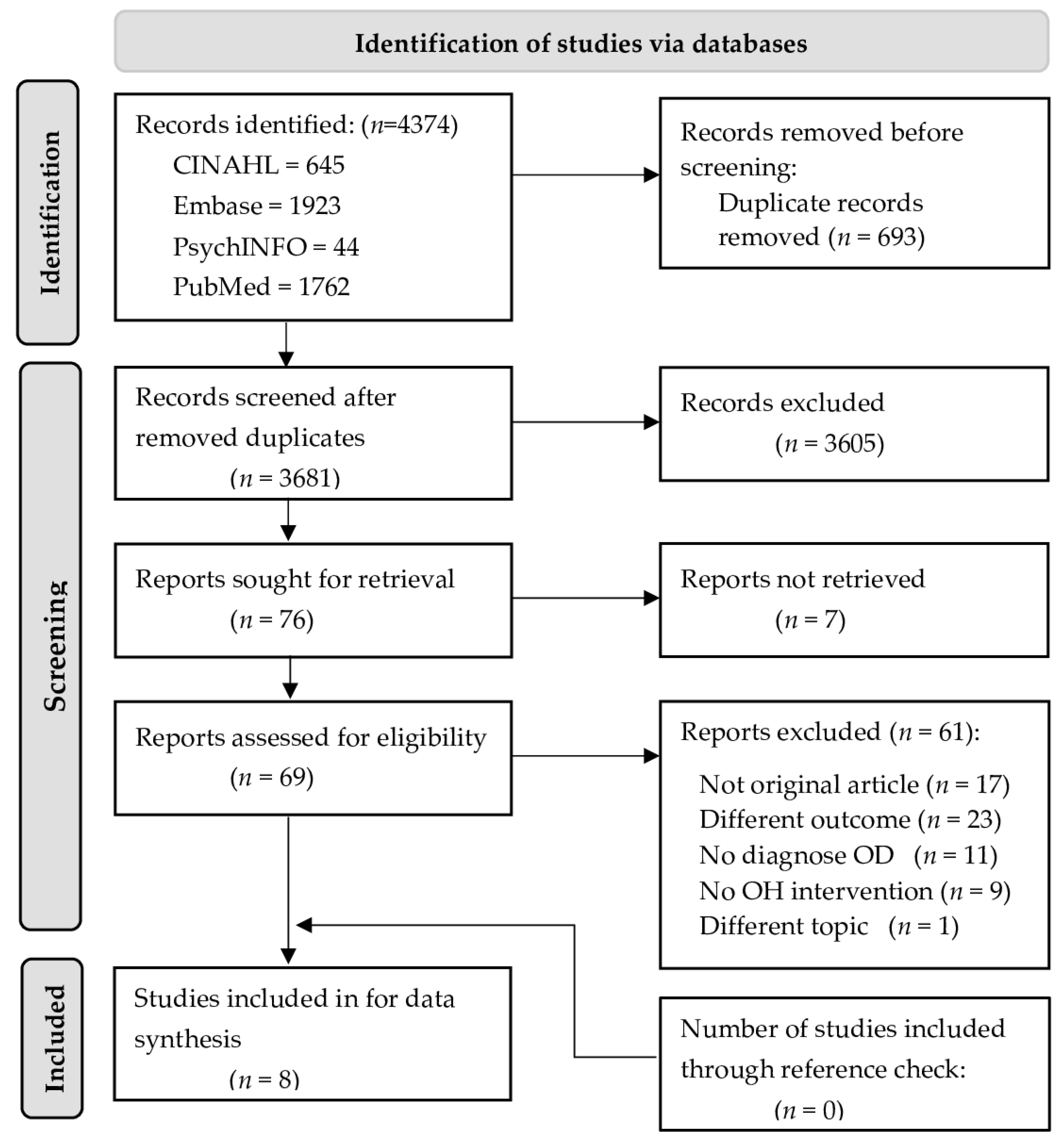
3.1. Study Selection
3.2. Methodological Quality Assessment
3.3. Study Characteristics and Results
3.4. Participants and Settings
3.5. Research Designs
3.6. Outcome Measures
3.7. Interventions
3.8. Effects on Swallowing-Related Outcomes
3.9. Effects on Aspiration Pneumonia
3.10. Effect on Oral Health Status
4. Discussion
4.1. Swallowing-Related Outcomes
4.2. Aspiration Pneumonia
4.3. Oral Health Status
4.4. Additional Factors in Oral Health Interventions
4.5. Limitations of Research and Recommendations for Future Research
5. Conclusions
Author Contributions
Funding
Institutional Review Board Statement
Conflicts of Interest
References
- Cichero, J.A.; Lam, P.; Steele, C.M.; Hanson, B.; Chen, J.; Dantas, R.O.; Duivestein, J.; Kayashita, J.; Lecko, C.; Murray, J.; et al. Development of international terminology and definitions for texture-modified foods and thickened fluids used in dysphagia management: The IDDSI framework. Dysphagia 2017, 32, 293–314. [Google Scholar] [CrossRef] [PubMed] [Green Version]
- Turley, R.; Cohen, S. Impact of voice and swallowing problems in the elderly. Otolaryngol. Head Neck Surg. 2009, 140, 33–36. [Google Scholar] [CrossRef] [PubMed]
- Benfer, K.A.; Weir, K.A.; Bell, K.L.; Ware, R.S.; Davies, P.S.; Boyd, R.N. Oropharyngeal dysphagia and gross motor skills in children with cerebral palsy. Pediatrics 2013, 131, e1553–e1562. [Google Scholar] [CrossRef] [PubMed]
- Sullivan, P.B.; Lambert, B.; Rose, M.; Ford-Adams, M.; Johnson, A.; Griffiths, P. Prevalence and severity of feeding and nutritional problems in children with neurological impairment: Oxford feeding study. Dev. Med. Child Neurol. 2000, 42, 674–680. [Google Scholar] [CrossRef]
- Calis, E.A.; Veugelers, R.; Sheppard, J.J.; Tibboel, D.; Evenhuis, H.M.; Penning, C. Dysphagia in children with severe generalized cerebral palsy and intellectual disability. Dev. Med. Child Neurol. 2008, 50, 625–630. [Google Scholar] [CrossRef]
- Wirth, R.; Dziewas, R.; Beck, A.M.; Clavé, P.; Hamdy, S.; Heppner, H.J.; Langmore, S.; Leischker, A.H.; Martino, R.; Pluschinski, P.; et al. Oropharyngeal dysphagia in older persons–from pathophysiology to adequate intervention: A review and summary of an international expert meeting. Clin. Interv. Aging 2016, 11, 189–208. [Google Scholar] [CrossRef] [Green Version]
- Attrill, S.; White, S.; Murray, J.; Hammond, S.; Doeltgen, S. Impact of oropharyngeal dysphagia on healthcare cost and length of stay in hospital: A systematic review. BMC Health Serv. Res. 2018, 18, 594. [Google Scholar] [CrossRef] [Green Version]
- Inoue, M. Dysphagia rehabilitation in Japan. J. Nutr. Sci. Vitaminol. 2015, 61 (Suppl. S72–S73). [Google Scholar] [CrossRef] [Green Version]
- Marik, P.E.; Kaplan, D. Aspiration pneumonia and dysphagia in the elderly. Chest 2003, 124, 328–336. [Google Scholar] [CrossRef] [Green Version]
- Scannapieco, F.A. Poor oral health in the etiology and prevention of aspiration pneumonia. Dent. Clin. N. Am. 2021, 65, 307–321. [Google Scholar] [CrossRef] [PubMed]
- Pace, C.C.; McCullough, G.H. The association between oral microorgansims and aspiration pneumonia in the institutionalized elderly: Review and recommendations. Dysphagia 2010, 25, 307–322. [Google Scholar] [CrossRef] [PubMed] [Green Version]
- Almirall, J.; Boixeda, R.; de la Torre, M.C.; Torres, A. Aspiration pneumonia: A renewed perspective and practical approach. Respir. Med. 2021, 185, 106485. [Google Scholar] [CrossRef] [PubMed]
- Reed, R.; Broder, H.L.; Jenkins, G.; Spivack, E.; Janal, M.N. Oral health promotion among older persons and their care providers in a nursing home facility. Gerodontology 2006, 23, 73–78. [Google Scholar] [CrossRef] [PubMed]
- Pathak, J.L.; Yan, Y.; Zhang, Q.; Wang, L.; Ge, L. The role of oral microbiome in respiratory health and diseases. Respir. Med. 2021, 185, 106475. [Google Scholar] [CrossRef] [PubMed]
- Petroianni, A.; Ceccarelli, D.; Conti, V.; Terzano, C. Aspiration pneumonia. Pathophysiological aspects; prevention and management. A review. Panminerva Med. 2006, 48, 231–239. [Google Scholar]
- Jain, S.; Williams, D.J.; Arnold, S.R.; Ampofo, K.; Bramley, A.M.; Reed, C.; Stockmann, C.; Anderson, E.J.; Grijalva, C.G.; Self, W.H.; et al. Community-acquired pneumonia requiring hospitalization among U.S. children. N. Engl. J. Med. 2015, 372, 835–845. [Google Scholar] [CrossRef] [Green Version]
- World Health Organisation. Oral Health. 2018. Available online: http://www.who.int/topics/oral_health/en/ (accessed on 29 July 2021).
- Watando, A.; Ebihara, S.; Ebihara, T.; Okazaki, T.; Takahashi, H.; Asada, M.; Sasaki, H. Daily oral care and cough reflex sensitivity in elderly nursing home patients. Chest 2004, 126, 1066–1070. [Google Scholar] [CrossRef] [Green Version]
- Soldani, F.A.; Lamont, T.; Jones, K.; Young, L.; Walsh, T.; Lala, R.; Clarkson, J.E. One-to-one oral hygiene advice provided in a dental setting for oral health. Cochrane Database Syst. Rev. 2018, 10, Cd007447. [Google Scholar] [CrossRef] [Green Version]
- Liu, C.; Cao, Y.; Lin, J.; Ng, L.; Needleman, I.; Walsh, T.; Li, C. Oral care measures for preventing nursing home-acquired pneumonia. Cochrane Database Syst. Rev. 2018, 9, Cd012416. [Google Scholar] [CrossRef]
- Roden, D.F.; Altman, K.W. Causes of dysphagia among different age groups: A systematic review of the literature. Otolaryngol. Clin. N. Am. 2013, 46, 965–987. [Google Scholar] [CrossRef]
- Hallberg, U.; Klingberg, G. Giving low priority to oral health care. Voices from people with disabilities in a grounded theory study. Acta Odontol. Scand. 2007, 65, 265–270. [Google Scholar] [CrossRef] [PubMed]
- Salamone, K.; Yacoub, E.; Mahoney, A.M.; Edward, K.L. Oral care of hospitalised older patients in the acute medical setting. Nurs. Res. Pract. 2013, 2013, 827670. [Google Scholar] [CrossRef] [PubMed] [Green Version]
- Wårdh, I.; Hallberg, L.R.; Berggren, U.; Andersson, L.; Sörensen, S. Oral health care--a low priority in nursing. In-depth interviews with nursing staff. Scand. J. Caring Sci. 2000, 14, 137–142. [Google Scholar] [CrossRef] [PubMed]
- van der Maarel-Wierink, C.D.; Vanobbergen, J.N.; Bronkhorst, E.M.; Schols, J.M.; de Baat, C. Oral health care and aspiration pneumonia in frail older people: A systematic literature review. Gerodontology 2013, 30, 3–9. [Google Scholar] [CrossRef] [PubMed]
- Hägglund, P.; Koistinen, S.; Olai, L.; Ståhlnacke, K.; Wester, P.; Levring Jäghagen, E. Older people with swallowing dysfunction and poor oral health are at greater risk of early death. Community Dent. Oral Epidemiol. 2019, 47, 494–501. [Google Scholar] [CrossRef] [Green Version]
- Ortega, O.; Parra, C.; Zarcero, S.; Nart, J.; Sakwinska, O.; Clavé, P. Oral health in older patients with oropharyngeal dysphagia. Age Ageing 2014, 43, 132–137. [Google Scholar] [CrossRef] [Green Version]
- Kadambari Sriram, J.P.; Santhosh Kumar, M. Oral Health Evaluation in Children with Special needs- A Retrospective Study. J. Contemp. Issues Bus. Gov. 2021, 26, 19–27. [Google Scholar] [CrossRef]
- Sjögren, P.; Wårdh, I.; Zimmerman, M.; Almståhl, A.; Wikström, M. Oral care and mortality in older adults with pneumonia in hospitals or nursing homes: Systematic review and meta-analysis. J. Am. Geriatr. Soc. 2016, 64, 2109–2115. [Google Scholar] [CrossRef]
- Ajwani, S.; Jayanti, S.; Burkolter, N.; Anderson, C.; Bhole, S.; Itaoui, R.; George, A. Integrated oral health care for stroke patients—A scoping review. J. Clin. Nurs. 2017, 26, 891–901. [Google Scholar] [CrossRef]
- Azarpazhooh, A.; Leake, J.L. Systematic review of the association between respiratory diseases and oral health. J. Periodontol. 2006, 77, 1465–1482. [Google Scholar] [CrossRef] [Green Version]
- Page, M.J.; McKenzie, J.E.; Bossuyt, P.M.; Boutron, I.; Hoffmann, T.C.; Mulrow, C.D.; Shamseer, L.; Tetzlaff, J.M.; Akl, E.A.; Brennan, S.E.; et al. The PRISMA 2020 statement: An updated guideline for reporting systematic reviews. J. Clin. Epidemiol. 2021, 134, 178–189. [Google Scholar] [CrossRef] [PubMed]
- Kmet, L.M.; Cook, L.S.; Lee, R.C. Standard Quality Assessment Criteria for Evaluating Primary Research Papers from a Variety of Fields; Alberta Heritage Foundation for Medical Research (AHFMR): Edmonton, AB, Canada, 2004. [Google Scholar] [CrossRef]
- National Health and Medical Research Council. Guidelines for the Development and Implementation of Clinical Guidelines, 1st ed.; Australian Government Publishing Service: Canberra, Australia, 1995.
- Chen, H.J.; Chen, J.L.; Chen, C.Y.; Lee, M.; Chang, W.H.; Huang, T.T. Effect of an oral health programme on oral health; oral intake; and nutrition in patients with stroke and dysphagia in Taiwan: A randomised controlled trial. Int. J. Environ. Res. Public Health 2019, 16, 2228. [Google Scholar] [CrossRef] [PubMed] [Green Version]
- Hollaar, V.R.Y.; van der Putten, G.J.; van der Maarel-Wierink, C.D.; Bronkhorst, E.M.; de Swart, B.J.M.; Creugers, N.H.J. The effect of a daily application of a 0.05% chlorhexidine oral rinse solution on the incidence of aspiration pneumonia in nursing home residents: A multicenter study. BMC Geriatr. 2017, 17, 128. [Google Scholar] [CrossRef]
- Lam, O.L.; McMillan, A.S.; Samaranayake, L.P.; Li, L.S.; McGrath, C. Effect of oral hygiene interventions on opportunistic pathogens in patients after stroke. Am. J. Infect. Control 2013, 41, 149–154. [Google Scholar] [CrossRef] [PubMed]
- Martín, A.; Ortega, O.; Roca, M.; Arús, M.; Clavé, P. Effect of a minimal-massive intervention in hospitalized older patients with oropharyngeal dysphagia: A proof of concept study. J. Nutr. Health Aging 2018, 22, 739–747. [Google Scholar] [CrossRef]
- Murray, J.; Scholten, I. An oral hygiene protocol improves oral health for patients in inpatient stroke rehabilitation. Gerodontology 2018, 35, 18–24. [Google Scholar] [CrossRef]
- Quagliarello, V.; Juthani-Mehta, M.; Ginter, S.; Towle, V.; Allore, H.; Tinetti, M. Pilot testing of intervention protocols to prevent pneumonia in nursing home residents. J. Am. Geriatr. Soc. 2009, 57, 1226–1231. [Google Scholar] [CrossRef] [Green Version]
- Brown, L.M.; Casamassimo, P.S.; Griffen, A.; Tatakis, D. Supragingival calculus in children with gastrostomy feeding: Significant reduction with a caregiver-applied tartar-control dentifrice. Pediatr. Dent. 2006, 28, 410–414. [Google Scholar]
- Seedat, J.; Penn, C. Implementing oral care to reduce aspiration pneumonia amongst patients with dysphagia in a South African setting. South Afr. J. Commun. Disord. 2016, 63, 1–11. [Google Scholar] [CrossRef]
- Clark, G.F.; Avery-Smith, W.; Wold, L.S.; Anthony, P.; Holm, S.E. Specialized knowledge and skills in feeding; eating and swallowing for occupational therapy practice. Am. J. Occup. Ther. 2007, 61, 686–700. [Google Scholar] [CrossRef]
- Higgins, J.; Green, S. Cochrane Handbook for Systematic Reviews of Interventions; John Wiley & Sons: Hoboken, NJ, USA, 2008; Available online: http://ebookcentral.proquest.com/lib/curtin/detail.action?docID=366838 (accessed on 15 May 2022).
- Eglseer, D.; Halfens, R.J.G.; Schols, J.M.G.A.; Lohrmann, C. Dysphagia in Hospitalized Older Patients: Associated Factors and Nutritional Interventions. J. Nutr. Health Aging 2018, 22, 103–110. [Google Scholar] [CrossRef] [PubMed]
- Gillman, A.; Winkler, R.; Taylor, N.F. Implementing the Free Water Protocol does not result in aspiration pneumonia in carefully selected patients with dysphagia: A systematic review. Dysphagia 2017, 32, 345–361. [Google Scholar] [CrossRef] [PubMed]
- Dharamsi, S.; Jivani, K.; Dean, C.; Wyatt, C. Oral care for frail elders: Knowledge, attitudes, and practices of long-term care staff. J. Dent. Educ. 2009, 73, 581–588. [Google Scholar] [CrossRef] [PubMed]
- Cook, D.J.; Meade, M.O.; Hand, L.E.; McMullin, J.P. Toward understanding evidence uptake: Semirecumbency for pneumonia prevention. Crit. Care Med. 2002, 30, 1472–1477. [Google Scholar] [CrossRef]
- Jones, E.; Speyer, R.; Kertscher, B.; Denman, D.; Swan, K.; Cordier, R. Health-related quality of life and oropharyngeal dysphagia: A systematic review. Dysphagia 2018, 33, 141–172. [Google Scholar] [CrossRef] [Green Version]
- Heijnen, B.J.; Böhringer, S.; Speyer, R. Prediction of aspiration in dysphagia using logistic regression: Oral intake and self-evaluation. Eur. Arch. Otorhinolaryngol. 2020, 277, 197–205. [Google Scholar] [CrossRef] [Green Version]
- Speyer, R.; Cordier, R.; Farneti, D.; Nascimento, W.; Pilz, W.; Verin, E.; Walshe, M.; Woisard, V. White paper by the European Society for Swallowing Disorders: Screening and non-instrumental assessment for dysphagia in adults. Dysphagia 2021, 37, 333–349. [Google Scholar] [CrossRef]
- Campanaro, M.; Huebner, C.E.; Davis, B.E. Facilitators and barriers to twice daily tooth brushing among children with special health care needs. Spec. Care Dent. 2014, 34, 185–192. [Google Scholar] [CrossRef] [Green Version]

| Database and Search Terms | Number of Records |
|---|---|
| Cinahl: ((MH “Oral Health”) OR (MH “Oral Health (Iowa NOC)”) OR (MH “Oral Health (Omaha)”) OR (MH “Oral Health Maintenance (Iowa NIC)”) OR (MH “Oral Health Promotion (Iowa NIC)”) OR (MH “Oral Health Restoration (Iowa NIC)”) OR (MH “Oral Hygiene”) OR (MH “Self-Care: Oral Hygiene (Iowa NOC)”) OR (MH “Mouth Care”) OR (MH “Mouth Care (Saba CCC)”) OR (MH “Dental Care”) OR (MH “Dental Care for Aged”) OR (MH “Dental Care for Children”) OR (MH “Dental Care for Chronically Ill”) OR (MH “Dental Care for Disabled”)) AND ((MH “Deglutition”) OR (MH “Deglutition Disorders”) OR (MH “Feeding of Disabled”) OR (MH “Feeding and Eating Disorders of Childhood”) OR (MH “Infant Feeding”) OR (MH “Infant Feeding, Supplemental”) OR (MH “Parenteral Feeding (Saba CCC)”) OR (MH “Infant Feeding Pattern Impairment (Saba CCC)”) OR (MH “Ineffective Infant Feeding Pattern (NANDA)”) OR (MH “Feeding Self Care Deficit (NANDA)”) OR (MH “Feeding Methods”) OR (MH “Eating Behavior”) OR (MH “Eating Disorders Management (Iowa NIC)”) OR (MH “Eating Disorders”) OR (MH “Eating”)) | 645 |
| Embase: (mouth hygiene/OR dental health/OR preventive dentistry/OR dental procedure/) AND (swallowing/OR dysphagia/OR feeding/OR feeding disorder/OR feeding difficulty/OR feeding behavior/OR eating/OR eating disorder/) | 1923 |
| PsycINFO: (Oral Health/OR Dental Health/) AND (swallowing/OR dysphagia/OR eating behavior/OR eating disorders/) | 44 |
| PubMed: (“Oral Health”[Mesh] OR “Oral Hygiene”[Mesh] OR “Dental Care”[Mesh] OR “Dental Care for Children”[Mesh] OR “Dental Care for Chronically Ill”[Mesh] OR “Dental Care for Aged”[Mesh] OR “Dental Care for Disabled”[Mesh] OR “Comprehensive Dental Care”[Mesh]) AND (“Deglutition”[Mesh] OR “Deglutition Disorders”[Mesh] OR “Feeding and Eating Disorders”[Mesh] OR “Feeding Behavior”[Mesh] OR “Feeding and Eating disorders of Childhood”[Mesh]) | 1762 |
| Study | Intervention(s) Study Duration | Study Design a QualSyst Score b | Group/Participants’ Descriptives (Age, Gender (Mean ± SD)) | Oropharyngeal Dysphagia and Oral Health Definition(s) Inclusion/Exclusion Criteria | Outcome Measure(s) | Main Findings |
|---|---|---|---|---|---|---|
| Brown et al. (USA, 2006) [41] | To assess the anti-calculus benefit of Crest Dual Action Whitening Toothpaste compared to a control fluoride toothpaste, in children with gastrostomy. Instructed caregivers brushed subjects’ teeth twice-daily (for at least 45 s). Study duration: 2 × 8 wks. | NHMRC Level II QualSyst 75% (21/28) | Children with gastrostomy (GT) at home Total group N = 24; lost to follow-up: n = 3 M = 15; F = 7 Mean age: 7.2 ± 2.6 yrs. Cross-over 2 × 12 participants Intervention 1: Crest Dual Action Whitening Toothpaste; Intervention 2: Fluoride toothpaste. | OD as per gastrostomy -Dysphagia definition: problems of oral feeding and swallowing. -Oral health definition: effective oral hygiene. Professional calculus removal. -Inclusion: GT for ≥1 yr.; age 3–12 yrs.; enough erupted teeth for scoring purposes; daily oral hygiene by a caregiver; no professional dental prophylaxis within 3 mths. -Exclusion: allergy to components of study dentifrices; untreated oral conditions (e.g., caries). | -Oral health: Supragingival calculus using Volpe-Manhold Index (VMI) score -Incidence of aspiration pneumonia | Crest Dual Action Whitening Toothpaste reduced significantly supragingival calculus deposits by 58% compared to control fluoride toothpaste (p < 0.001). Calculus levels of the total group decreased by 68% over the study duration irrespective of dentifrice (p< 0.05). Calculus was significantly related to history of aspiration pneumonia (p ≤ 0.03). Lower baseline calculus scores were correlated with a greater number of tooth brushings per day (R2 = 0.47; p = 0.001). |
| Chen et al. (Taiwan, 2019) [35] | To evaluate the effect of oral health training (Bass method for tooth brushing, dental floss, interdental brushing, fluoride toothpaste) three times a wk. before swallowing therapy, additional to usual oral care. The control group received usual oral care (e.g., tooth brushing or sponge stick cleaning) twice-daily and an instructional manual to promote oral intake. Both groups received swallowing therapy. Study duration: 3 wks. | NHMRC Level II QualSyst 83% (20/24) | Patients with dysphagia after first-time stroke with a nasogastric tube in a rehabilitation centre. Total group N = 66 M = 43; F = 23 Mean age: N.R. G1 Intervention: Oral health training + swallowing training (n = 33) Age: ≥65 yrs. (n = 18) <65 yrs. (n = 15) G2 Controls: Usual oral care + instructional manual to promote oral intake (n = 33) Age: ≥65 yrs. (n = 18) <65 yrs. (n = 15) | OD as per not specified -Dysphagia definition: chewing and swallowing disorders. -Oral health definition: oral hygiene and a good oral state. -Inclusion: dysphagia following a first-time stroke; swallowing treatment; able to communicate in Chinese (Mandarin or Taiwanese); comply with instructions. -Exclusion: history of dysphagia due to oral cancer/head and neck cancer and/or ≥ 6 mths swallowing treatment. | -Oral health: OHAT -Oral intake: FOIS -Nutritional status: MNA-SF -Rate of nasogastric tube removal | Oral health training showed significant oral health improvements (OHAT) compared to usual care (p < 0.001). The intervention group had a higher, but non-significant FOIS score, for group difference (3.94 vs. 3.52; (p > 0.05), and for pre-posttreatment 3.15 vs. 3.94 There was no significant group and pre-post difference in nutritional status. Nasogastric tube removal was 21.2 % in the intervention group versus 6.1 % in the control group (not significant). The oral health program may improve oral health and maintain oral intake. |
| Hollaar et al. (Netherlands, 2017) [36] | To assess whether daily application of a 0.05% chlorhexidine (CHX) oral rinse solution, twice-daily in addition to usual oral hygiene, is effective in reducing the incidence of aspiration pneumonia. The control group received usual oral hygiene without the addition of an oral rinse. Patients were assisted by nurses if needed. Study duration: 1 yr. | NHMRC Level II QualSyst 88% (21/24) | Patients with dysphagia and physical disability in an in-patient nursing home. Total group N = 103 G1 Intervention: Usual oral hygiene + 0.05% CHX oral rinse (n = 52; lost to follow-up: n = 37) M = 25; F = 27 Mean age = 79.4 ± 8.9 yrs. G2 Controls: Usual oral hygiene (n = 51; lost to follow-up: n = 17) M = 26; F = 25 Mean age = 81.7 ± 9.03 yrs. | OD as per FOIS (level 1–6). -Dysphagia definition: difficulty with any stage of swallowing and dysfunction in any stage of oral intake; includes any difficulty in the passage of food, liquid, or medicine during any stage of swallowing that impairs the client’s ability to swallow independently or safely [43]. -Oral health definition: oral hygiene care, such as brushing teeth after each meal, cleansing dentures once daily, and professional oral healthcare once weekly. -Inclusion: age ≥65 yrs; physically disabled; diagnosed with dysphagia. -Exclusion: cognitively impaired; coma or vegetative state; terminally ill; dependent on mechanical ventilation; in daycare or short-term care; already using an oral hygiene care solution. | -Incidence of aspiration pneumonia -Survival rate Oral intake: FOIS | Daily use of 0.05% CHX oral rinse did not significantly reduce the incidence of aspiration pneumonia (p = 0.571), although a positive trend was found. High rate of dropouts in the intervention group (44% ) FOIS-level showed a significant risk of the incidence of aspiration pneumonia (p = 0.036). |
| Lam et al. (Hong Kong, 2013) [37] | To evaluate the effect of three oral hygiene interventions on opportunistic pathogens in patients after stroke. Patients were divided into three groups: (G1) oral hygiene instruction (OHI) and electric toothbrush only; (G2) OHI and 0.2% CHX mouth rinse twice-daily; (G3) OHI, 0.2% CHX mouth rinse twice-daily and nurse-assisted tooth brushing twice weekly. Study duration: 3 wks. | NHMRC Level II QualSyst 88% (23/26) | Patients with dysphagia after moderate to severe stroke (Barthel Index < 70) in a stroke rehabilitation centre. Total group N = 81; Age: >50 yrs. Gender: N.R. Mean age: N.R. G1: OHI (n = 25); G2: OHI + 0.2% CHX oral rinse (n = 26); G3: OHI + 0.2% CHX oral rinse + assisted tooth brushing (n = 30) | OD as per Royal Brisbane Hospital Outcome Measure for Swallowing. -Dysphagia definition: swallowing disability. -Oral health definition: good oral hygiene and professional oral health intervention. -Inclusion: moderate to severe stroke (Barthel Index <70); age >50 yrs.; admission to stroke rehabilitation ward ≤7 days earlier. -Exclusion: mild stroke; edentulism; communication difficulties; indwelling nasogastric tube. | -Oral health: prevalence of oral opportunistic pathogens by oral microbiological samples -Incidence of pneumonia | No significant intergroup differences were found in oral pathogens. Total counts of all opportunistic pathogens were significantly decreased in the OHI group (p= 0.032). No incidence of pneumonia was found. 0.2% CHX and assisted tooth brushing were found to have little effect on oral opportunistic pathogens during the in-hospital rehabilitation period. |
| Martín et al. (Spain, 2018) [38] | To assess the effect of a minimal massive intervention (MMI) in reducing nutritional and respiratory complications in elderly hospitalized patients with OD. MMI consisted of: a) fluid thickening and texture-modified foods; b) caloric and protein supplementation; and c) oral health and hygiene recommendations. The control group followed standard clinical practice without MMI. Study duration: 6 mths. | NHMRC Level III-3 QualSyst 91% (20/22) | Elderly with OD Total group N = 186 G1 Intervention: MMI (n = 62) M = 53%; F = 47% Mean age = 84.87 ± 6.02 yrs. G2 Controls (retrospective): Standard clinical practice (n = 124) M = 53%; F = 47% Mean age = 84.42 ± 5.31 yrs. | OD as per V-VST. -Dysphagia definition: swallowing dysfunction that can include tracheobronchial aspirations. OD is related to impaired safety of swallow, or the incapability to protect the respiratory airway effectively. Geriatric syndrome -Oral health definition: oral hygiene, tooth brushing frequency, use of mouthwashes, use of dentures, and dentist visit. -Inclusion: age ≥70 yrs. -Exclusion: severe dementia (Global Deterioration Scale ≥6); discharged from intensive care unit; severe functional dependence (Barthel Index ≤40); low survival probability (Walter score ≥6). | -Hospital readmissions -Respiratory infections -Mortality -Nutritional status: MNA-SF -Oral Health: OHI-S -Functionality: Barthel index | Significant group differences in favor of the intervention group: -decreased hospital readmission (p = 0.001); -higher survival rate (84.13% vs. 70.96%). No significant group differences for readmissions for pneumonia. Within the intervention group: -Improved functional capacity (p = 0.007); -Improved nutritional status (p = 0.0038); -No improved oral health (p = 0.095). |
| Murray & Scholten. (Australia, 2018) [39] | To determine whether a simple oral hygiene protocol improves the oral health. A nurse-led oral hygiene regime included twice-daily tooth brushing and mouth rinsing after lunch. OD G1 had additionally no water restriction OD G2 received only thick fluids. The control group without OD received regular fluids. Study duration: 1 wk. | NHMRC Level III-3 QualSyst 91% (20/22) | Patients with OD after stroke in rehabilitation setting. Total sample N = 12 M = 9; F = 3 Mean age = 79 ±6.9 yrs. Interventions G1 Oral hygiene regime + free water protocol n = 7. G2 Oral hygiene regime + thickened liquids only n = 5. Gender and age: N.R. Controls (no OD) Oral hygiene regime n = 77 M = 48; F = 29; Mean age: 69 ±11.3 yrs. | OD as per VFSS of fluid, 150 mL water test, mealtime observation. -Dysphagia definition: facial paresis, tongue weakness, and poor oral sensation resulting in poor control of dentures, altered chewing, and reduced clearance of food from the oral cavity. -Oral health definition: oral hygiene and health of lips, tongue, and oral mucosa. -Inclusion total group: stroke; medical stability; full oral diet. For OD group: aspiration of thin liquid, but safe consumption of at least pureed food and one consistency of thickened liquids. -Exclusion total group: progressive neurological disease; acute illness; requiring fluid supplementation or fluid restriction. For OD group Chronic Obstructive Pulmonary Disease (COPD); immunosuppression. | -Oral Health: OHAT -Incidence of aspiration pneumonia | Oral health improved significantly (59%) in the intervention group compared to the control group. No patients developed aspiration pneumonia. Patients with OD had worse oral health compared to controls (no OD) pre- and post-intervention p = 0.027 vs. p = 0.023. Patients with OD improved on oral health (p = 0.024) compared to the controls (p = 0.282). Independence for oral care was associated with better oral health scores (p = 0.027). |
| Quagliarello et al. (USA, 2009) [40] | To test intervention protocols for feasibility, staff adherence, and effectiveness in reducing pneumonia risk factors (impaired oral hygiene and swallowing difficulty) in nursing home residents. Intervention group OH: (G1) manual oral brushing morning + 0.12% CHX rinse evening; (G2) manual oral brushing morning + 0.12% CHX rinse morning/evening; (G3) manual oral brushing morning/evening + 0.12% CHX rinse every morning/evening. Intervention group OD: (G4); feeding position > 90° with each meal; (G5) Instruction in swallowing techniques with each meal; (G6) Manual oral brushing every morning. Study duration: 3 mths. | NHMRC Level III-2 QualSyst 83% (20/24) | People with swallowing difficulties and impaired oral hygiene in nursing home residents. Total sample N = 52 (M = 10%; F = 90%) Mean age = 86.0 ± 7.8 yrs. Group OH (n = 30) Inclusion: impaired oral hygiene Age and gender: N.R. G1: manual oral brushing morning + 0.12% CHX rinse evening (n = 10); G2: manual oral brushing morning + 0.12% CHX rinse morning/evening (n = 10); G3: manual oral brushing morning/evening + 0.12% CHX rinse every morning/evening (n = 10). Group OD (n = 22) Inclusion: OD Age and Gender: N.R. G4: Upright feeding positioning: n = 7. G5: Manual oral brushing: n = 8 G6: Instruction in swallowing techniques: n = 7 | OD as per FEES: retention of a 5-mL bolus in the vallecula or piriform sinus (mild impairment), laryngeal penetration of the bolus in the laryngeal vestibule but above the vocal folds (moderate impairment), or aspiration of the bolus below the level of the vocal folds (severe impairment). -Dysphagia definition: swallowing difficulty according to the FEES criteria. -Oral health definition: oral hygiene; low plaque score -Inclusion: age >65 yrs., plaque score >1.0, cough during swallowing during at least one meal in a week. -Exclusion: residents <4 wks.; short-term rehabilitation; estimated survival ≤6 mths (by nursing staff); tube-fed; tracheostomy. | -Feasibility: time to complete the protocol -Staff Adherence: high, moderate, or low -Cough frequency during swallowing during at least one meal within the previous week -Oral health: plaque control on a 4 point ordinal scale of six teeth | High feasibility for all interventions, except for instruction in swallowing techniques (47.6%). High staff adherence was achieved in all interventions, except Instruction in swallowing techniques (73.1%). All OH interventions demonstrated high feasibility, high staff adherence, Group OH; Pre-post improvement of plaque score (p = 0.001); the combined brushing plus 0.12% CHX rinse twice-daily showed the highest plaque score reduction of 1.69. Group OD: Reduced episodes of cough were observed during swallowing in all groups: G1 (43%); G2 (75%); and G3 (43%). No intervention was significantly more effective than any of the other two interventions (p = 0.31). Daily manual oral brushing and upright feeding positioning demonstrated high feasibility, high staff adherence, and effectiveness in improving swallowing. |
| Seedat & Penn (South Africa, 2016) [42] | To investigate whether it was possible to reduce the occurrence of aspiration pneumonia for patients presenting with OD by implementing a regular routine of oral care. The intervention group received regular oral care and was not restricted from drinking water for half an hour after oral intake, but restricted for all other liquids. The control group received inconsistent oral care and were restricted to thickened liquids or liquid restricted diets. Both groups received dysphagia intervention. Study duration: 40 days. | NHMRC Level III-3 QualSyst 73% (16/22) | Patients after stroke or traumatic brain injury in government hospitals. Total sample N = 46 (Stroke n = 32 Brain injury n = 14) M = 50%; F= 50% Age: N.R. G1 Intervention: Regular oral care + free water protocol (n = 23). G2: Controls (retrospective): Inconsistent oral care + restricted thickened liquids/liquid restricted diets (n = 23). Groups were matched for medical diagnoses No differences in gender between groups. | OD as per not specified. Dysphagia definition: difficulty swallowing food or drinking liquids. -Oral health definition: oral care and hygiene to reduce complications from both a dental and respiratory perspective. -Inclusion: stroke or traumatic brain injury (primary diagnosis). -Exclusion: aspiration pneumonia at start of the study. | -Aspiration pneumonia -Nasogastric tube | Regular oral care and free water provision combined with dysphagia intervention prevent aspiration pneumonia in patients with OD. A moderate association was established between aspiration pneumonia and group: (p = 0.0092) 30% of the controls presented aspiration pneumonia whereas none in the intervention group. Four persons in the control group got a nasogastric tube and none in the intervention group. |
Publisher’s Note: MDPI stays neutral with regard to jurisdictional claims in published maps and institutional affiliations. |
© 2022 by the authors. Licensee MDPI, Basel, Switzerland. This article is an open access article distributed under the terms and conditions of the Creative Commons Attribution (CC BY) license (https://creativecommons.org/licenses/by/4.0/).
Share and Cite
Remijn, L.; Sanchez, F.; Heijnen, B.J.; Windsor, C.; Speyer, R. Effects of Oral Health Interventions in People with Oropharyngeal Dysphagia: A Systematic Review. J. Clin. Med. 2022, 11, 3521. https://doi.org/10.3390/jcm11123521
Remijn L, Sanchez F, Heijnen BJ, Windsor C, Speyer R. Effects of Oral Health Interventions in People with Oropharyngeal Dysphagia: A Systematic Review. Journal of Clinical Medicine. 2022; 11(12):3521. https://doi.org/10.3390/jcm11123521
Chicago/Turabian StyleRemijn, Lianne, Fabiola Sanchez, Bas J. Heijnen, Catriona Windsor, and Renée Speyer. 2022. "Effects of Oral Health Interventions in People with Oropharyngeal Dysphagia: A Systematic Review" Journal of Clinical Medicine 11, no. 12: 3521. https://doi.org/10.3390/jcm11123521
APA StyleRemijn, L., Sanchez, F., Heijnen, B. J., Windsor, C., & Speyer, R. (2022). Effects of Oral Health Interventions in People with Oropharyngeal Dysphagia: A Systematic Review. Journal of Clinical Medicine, 11(12), 3521. https://doi.org/10.3390/jcm11123521

