
Neuropsychological Diagnosis and Assessment of Alexia: A Mixed-Methods Study



Abstract
1. Introduction
2. Purpose of the Present Study
3. Methods
3.1. Sampling
3.2. Design
3.3. Measures
3.4. Procedure
- Conducting a comprehensive search on Web of Science and Scopus databases using the specified search terms to collate data relevant to the neuropsychological diagnosis and assessment of alexia.
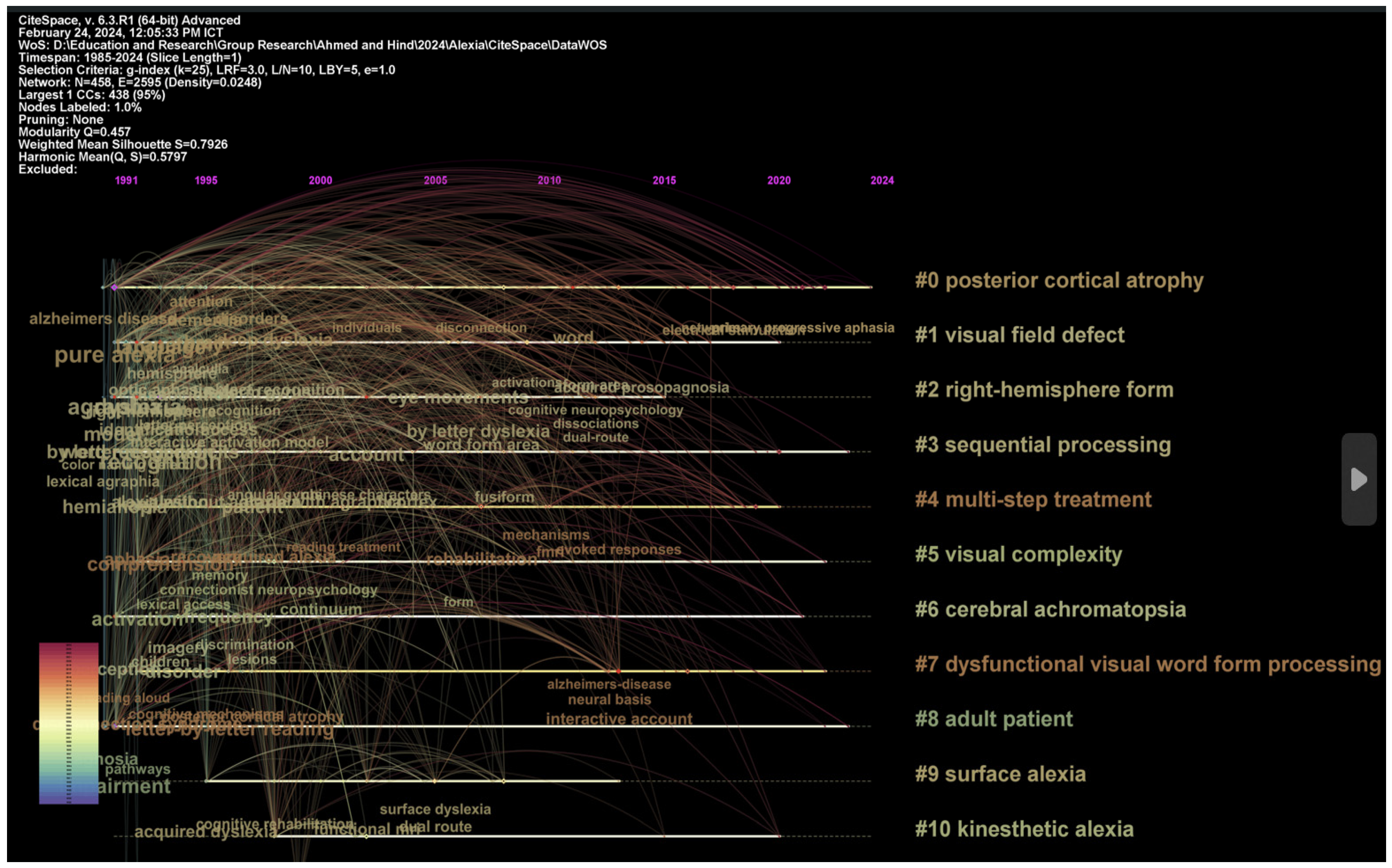
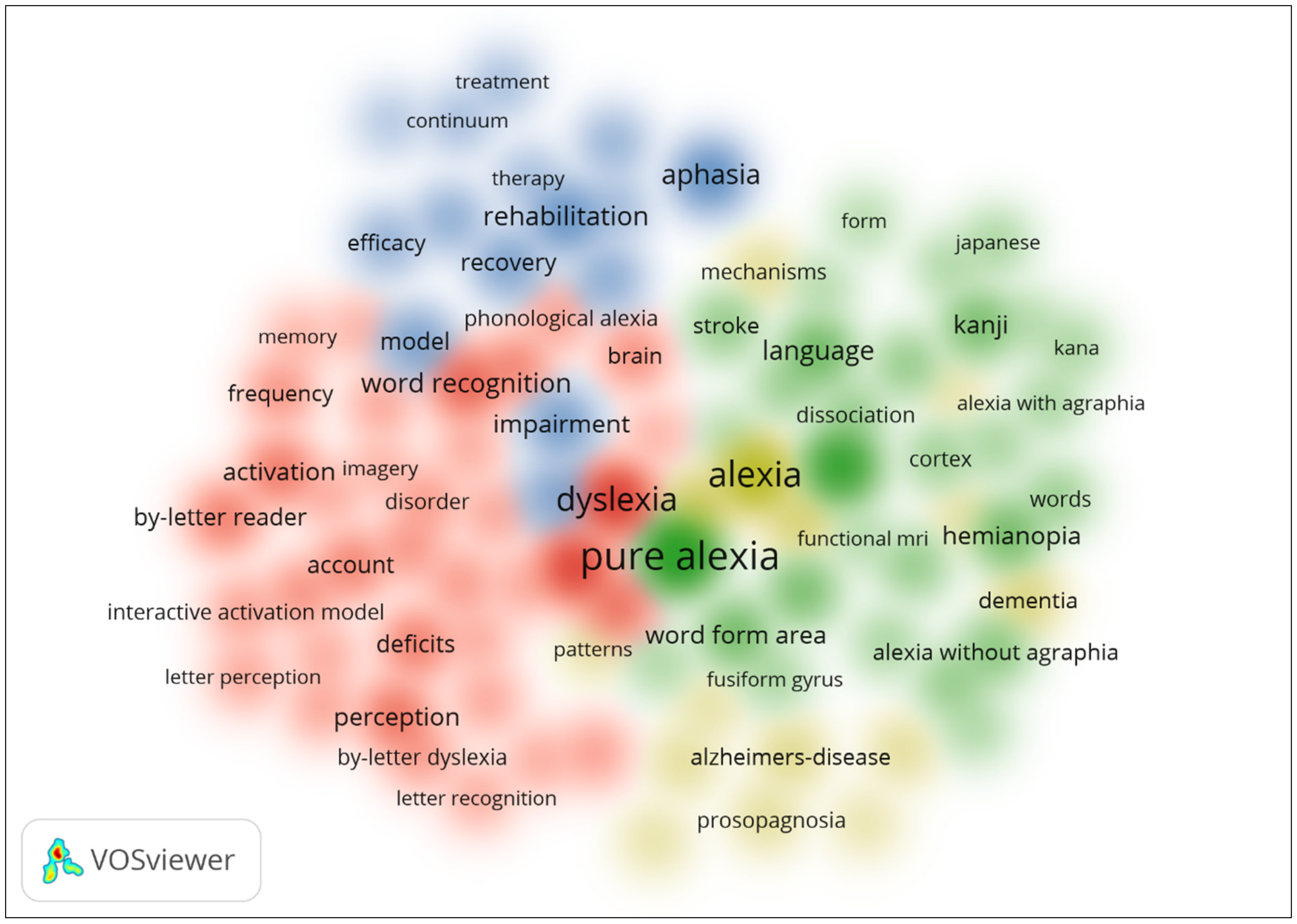
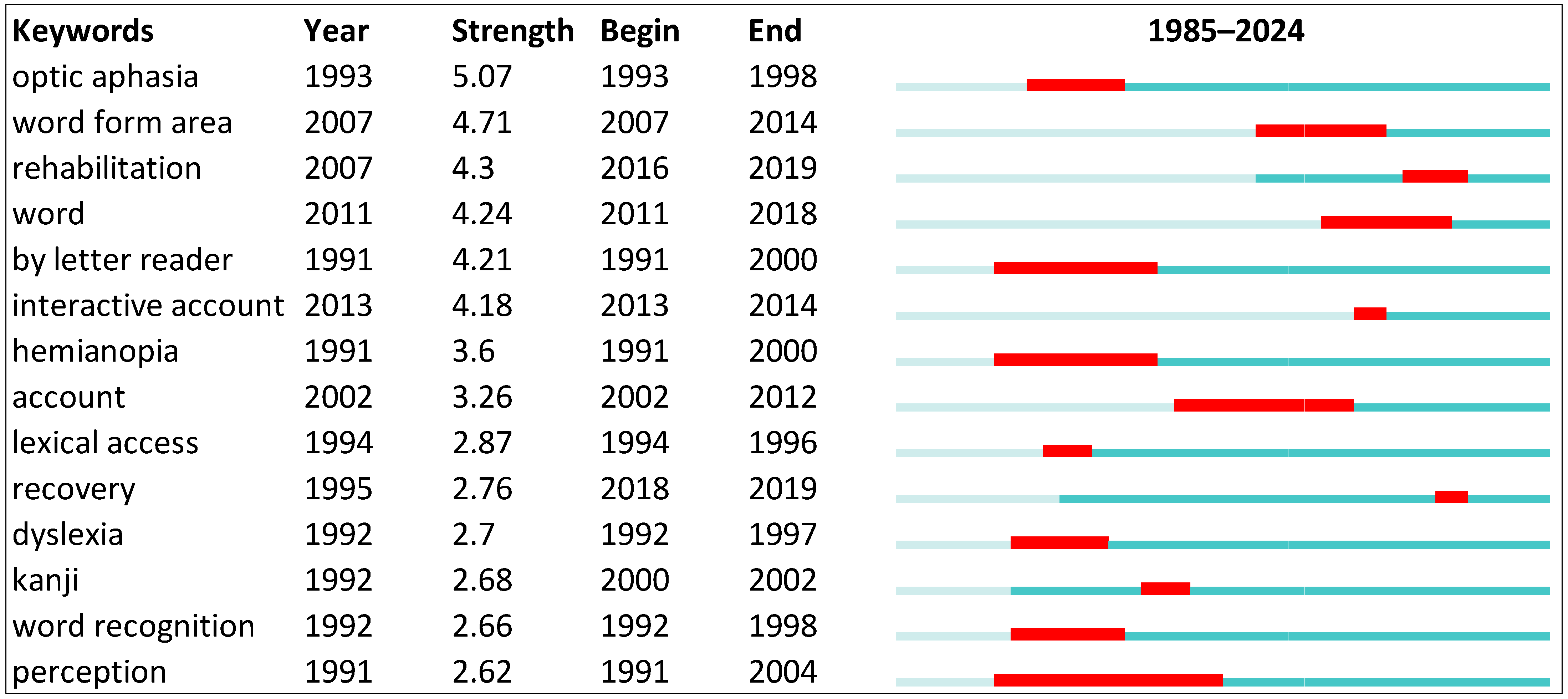
- Utilising CiteSpace and VOSviewer software to perform cluster analysis on the retrieved data.
- Selecting and retrieving the top 25 cited studies for thematic analysis to gain insights from seminal works in the field. To mitigate citation bias, we also included the 10 most-recent studies on the topic.
- Reviewing an additional 29 studies, selected based on their relevance to the topic, for inclusion in the introduction and discussion sections.
- Initiating thematic analysis by identifying themes derived from the cluster analysis results.
- Extracting data from the 35 studies and reviewing them with the research team for topic relevance.
- Presenting the extracted data in tables within the findings section.
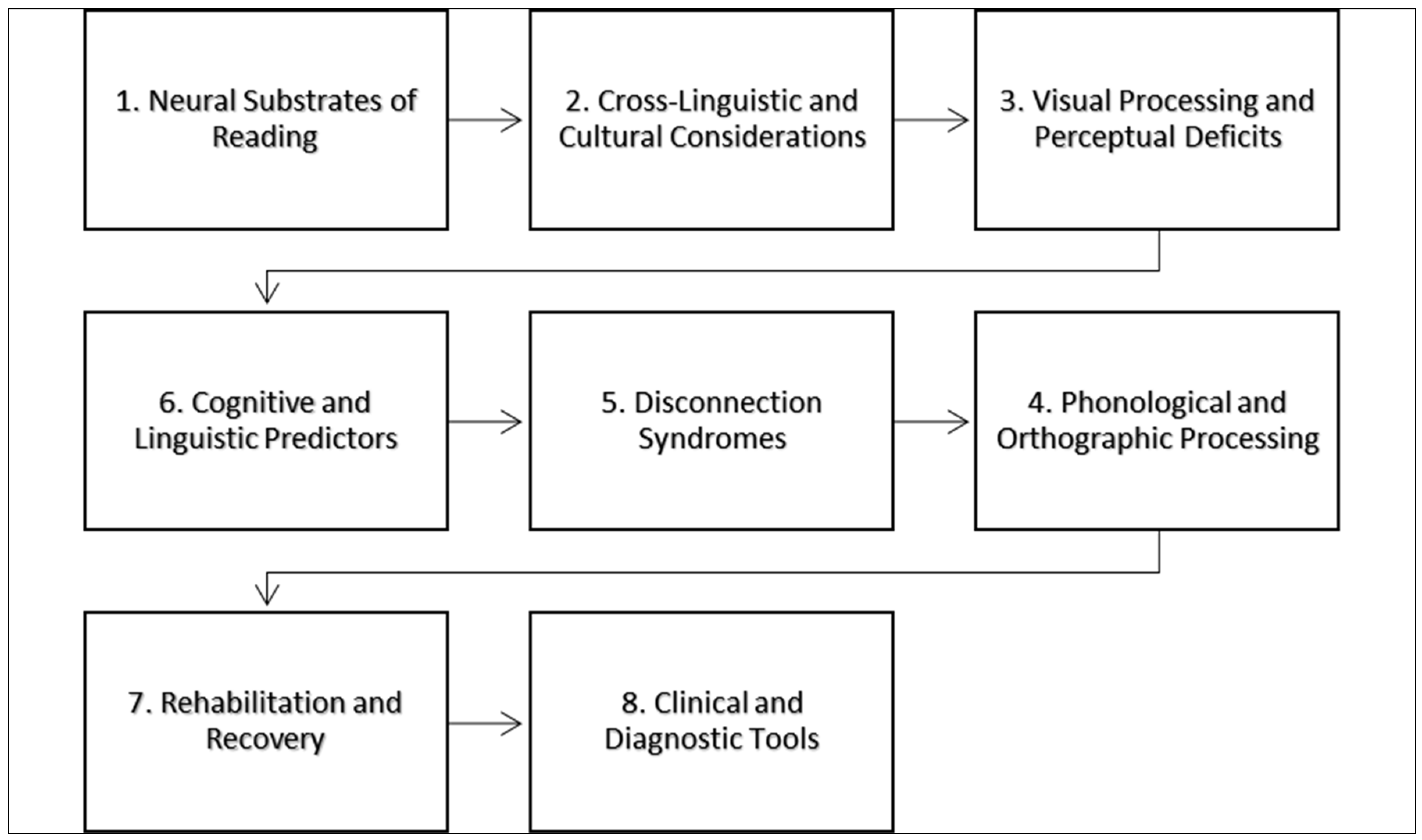
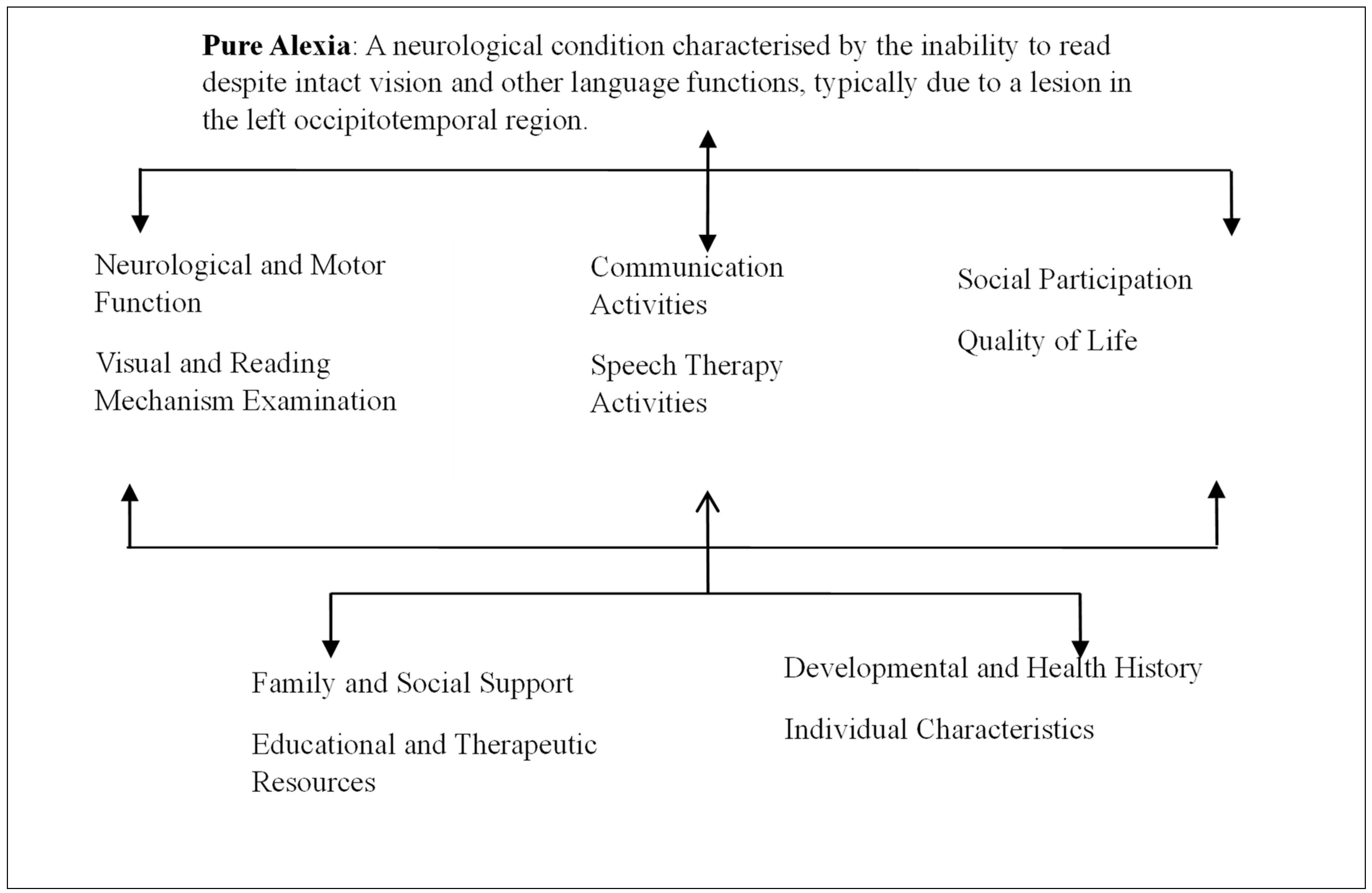
- Developing a conceptual model for the neuropsychological diagnosis and assessment of alexia, utilizing key insights from both the cluster analysis and thematic analysis.
4. Findings
4.1. Cluster Analysis
4.2. Thematic Analysis
4.3. Categories of Neuropsychological Diagnosis and Assessment of Alexia
4.4. A Conceptual Model for the Neuropsychological Diagnosis and Assessment of Alexia
5. Discussion
6. Limitations
7. Implications
8. Conclusions
Author Contributions
Funding
Institutional Review Board Statement
Informed Consent Statement
Data Availability Statement
Acknowledgments
Conflicts of Interest
References
- Frank, Y. Alexia without Agraphia in a Child with Acute Disseminated Encephalomyelitis. Neurology 2007, 68, 965–966. [Google Scholar] [CrossRef] [PubMed]
- Reiff Cherney, L. Aphasia, Alexia, and Oral Reading. Top. Stroke Rehabil. 2004, 11, 22–36. [Google Scholar] [CrossRef] [PubMed]
- Beauvois, M.F.; Derouesne, J. Phonological Alexia: Three Dissociations. J. Neurol. Neurosurg. Psychiatry 1979, 42, 1115–1124. [Google Scholar] [CrossRef] [PubMed]
- Pflugshaupt, T.; Gutbrod, K.; Wurtz, P.; von Wartburg, R.; Nyffeler, T.; de Haan, B.; Karnath, H.-O.; Mueri, R.M. About the Role of Visual Field Defects in Pure Alexia. Brain 2009, 132, 1907–1917. [Google Scholar] [CrossRef] [PubMed]
- Cohen, L.; Dehaene, S.; McCormick, S.; Durant, S.; Zanker, J.M. Brain Mechanisms of Recovery from Pure Alexia: A Single Case Study with Multiple Longitudinal Scans. Neuropsychologia 2016, 91, 36–49. [Google Scholar] [CrossRef] [PubMed]
- Rodríguez-López, C.; Guerrero Molina, M.P.; Martínez Salio, A. Pure Alexia: Two Cases and a New Neuroanatomical Classification. J. Neurol. 2018, 265, 436–438. [Google Scholar] [CrossRef]
- Starrfelt, R.; Habekost, T.; Leff, A.P. Too Little, Too Late: Reduced Visual Span and Speed Characterize Pure Alexia. Cerebral Cortex 2009, 19, 2880–2890. [Google Scholar] [CrossRef] [PubMed]
- Starrfelt, R.; Nielsen, S.; Habekost, T.; Andersen, T.S. How Low Can You Go: Spatial Frequency Sensitivity in a Patient with Pure Alexia. Brain Lang. 2013, 126, 188–192. [Google Scholar] [CrossRef] [PubMed][Green Version]
- Kutluay, E.; Pakoz, B.; Yuksel, A.; Beydoun, A. Nonconvulsive Status Epilepticus Manifesting as Pure Alexia (Alexia without Agraphia). Epilepsy Behav. 2007, 10, 626–628. [Google Scholar] [CrossRef]
- Damasio, A.R.; Damasio, H. The Anatomic Basis of Pure Alexia. Neurology 1983, 33, 1573. [Google Scholar] [CrossRef]
- Starrfelt, R.; Shallice, T. What’s in a Name? The Characterization of Pure Alexia. Cogn. Neuropsychol. 2014, 31, 367–377. [Google Scholar] [CrossRef] [PubMed][Green Version]
- Potagas, C.; Kasselimis, D.; Peppas, C.; Alexandri, N.-M.; Dellatolas, G. Pure Alexia in a Patient with Multiple Sclerosis. Neurol. Sci. 2017, 38, 511–513. [Google Scholar] [CrossRef] [PubMed]
- Keulen, S. Alexia: Diagnosis, Treatment and Theory by Leff, A., & Starrfelt, R. Aphasiology 2014, 28, 766–769. [Google Scholar]
- Arguin, M.; Bub, D.N. Single-Character Processing in a Case of Pure Alexia. Neuropsychologia 1993, 31, 435–458. [Google Scholar] [CrossRef]
- Behrmann, M.; Nelson, J.; Sekuler, E.B. Visual Complexity in Letter-by-Letter Reading: Pure Alexia Is Not Pure. Neuropsychologia 1998, 36, 1115–1132. [Google Scholar] [CrossRef]
- Behrmann, M.; Plaut, D.C. Bilateral Hemispheric Processing of Words and Faces: Evidence from Word Impairments in Prosopagnosia and Face Impairments in Pure Alexia. Cerebral Cortex 2014, 24, 1102–1118. [Google Scholar] [CrossRef] [PubMed]
- Behrmann, M.; Shallice, T. Pure Alexia: A Nonspatial Visual Disorder Affecting Letter Activation. Cogn. Neuropsychol. 1995, 12, 409–454. [Google Scholar] [CrossRef]
- Cohen, L. Number Processing in Pure Alexia: The Effect of Hemispheric Asymmetries and Task Demands. Neurocase 1995, 1, 121–138. [Google Scholar] [CrossRef]
- Cohen, L.; Dehaene, S. Calculating without Reading: Unsuspected Residual Abilities in Pure Alexia. Cogn. Neuropsychol. 2000, 17, 563–583. [Google Scholar] [CrossRef]
- Coslett, H.B.; Saffran, E.M. Evidence for Preserved Reading in ‘Pure Alexia’. Brain 1989, 112, 327–359. [Google Scholar] [CrossRef]
- Coslett, H.B.; Saffran, E.M.; Greenbaum, S.; Schwartz, H. Reading in Pure Alexia. Brain 1993, 116, 21–37. [Google Scholar] [CrossRef] [PubMed]
- De Renzi, E.; di Pellegrino, G. Prosopagnosia and Alexia Without Object Agnosia. Cortex 1998, 34, 403–415. [Google Scholar] [CrossRef] [PubMed]
- Epelbaum, S.; Pinel, P.; Gaillard, R.; Delmaire, C.; Perrin, M.; Dupont, S.; Dehaene, S.; Cohen, L. Pure Alexia as a Disconnection Syndrome: New Diffusion Imaging Evidence for an Old Concept. Cortex 2008, 44, 962–974. [Google Scholar] [CrossRef] [PubMed]
- Farah, M.J.; Wallace, M.A. Pure Alexia as a Visual Impairment: A Reconsideration. Cogn. Neuropsychol. 1991, 8, 313–334. [Google Scholar] [CrossRef]
- Feinberg, T.E.; Schindler, R.J.; Ochoa, E.; Kwan, P.C.; Farah, M.J. Associative Visual Agnosia and Alexia without Prosopagnosia. Cortex 1994, 30, 395–411. [Google Scholar] [CrossRef] [PubMed]
- Freedman, L.; Selchen, D.H.; Black, S.E.; Kaplan, R.; Garnett, E.S.; Nahmias, C. Posterior Cortical Dementia with Alexia: Neurobehavioural, MRI, and PET Findings. J. Neurol. Neurosurg. Psychiatry 1991, 54, 443–448. [Google Scholar] [CrossRef] [PubMed]
- Friedman, R.B. Recovery from Deep Alexia to Phonological Alexia: Points on a Continuum. Brain Lang. 1996, 52, 114–128. [Google Scholar] [CrossRef] [PubMed]
- Glosser, G.; Friedman, R.B. The Continuum of Deep/Phonological Alexia. Cortex 1990, 26, 343–359. [Google Scholar] [CrossRef] [PubMed]
- Hamilton, R.; Keenan, J.P.; Catala, M.; Pascual-Leone, A. Alexia for Braille Following Bilateral Occipital Stroke in an Early Blind Woman. Neuroreport 2000, 11, 237–240. [Google Scholar] [CrossRef]
- Leff, A.P. Structural Anatomy of Pure and Hemianopic Alexia. J. Neurol. Neurosurg. Psychiatry 2006, 77, 1004–1007. [Google Scholar] [CrossRef]
- Leff, A.P.; Crewes, H.; Plant, G.T.; Scott, S.K.; Kennard, C.; Wise, R.J.S. The Functional Anatomy of Single-Word Reading in Patients with Hemianopic and Pure Alexia. Brain 2001, 124, 510–521. [Google Scholar] [CrossRef] [PubMed]
- Mani, J.; Diehl, B.; Piao, Z.; Schuele, S.S.; LaPresto, E.; Liu, P.; Nair, D.R.; Dinner, D.S.; Lüders, H.O. Evidence for a Basal Temporal Visual Language Center. Neurology 2008, 71, 1621–1627. [Google Scholar] [CrossRef] [PubMed]
- Miozzo, M.; Caramazza, A. Varieties of Pure Alexia: The Case of Failure to Access Graphemic Representations. Cogn. Neuropsychol. 1998, 15, 203–238. [Google Scholar] [CrossRef] [PubMed]
- Patterson, K.; Suzuki, T.; Wydell, T.; Sasanuma, S. Progressive Aphasia and Surface Alexia in Japanese. Neurocase 1995, 1, 155–165. [Google Scholar] [CrossRef]
- Signoret, J.L.; Van Eeckhout, P.; Poncet, M.; Castaigne, P. Aphasie sans Amusie Chez un Organiste Aveugle. Alexie-Agraphie Verbale sans Alexie-Agraphie Musicale en Braille. Rev Neurol. 1987, 143, 172–181. [Google Scholar] [PubMed]
- Spitzyna, G.A.; Wise, R.J.S.; McDonald, S.A.; Plant, G.T.; Kidd, D.; Crewes, H.; Leff, A.P. Optokinetic Therapy Improves Text Reading in Patients with Hemianopic Alexia. Neurology 2007, 68, 1922–1930. [Google Scholar] [CrossRef] [PubMed]
- Barton, J.J.S.; Rubino, C.; Albonico, A.; Jackson, M.; Davies-Thompson, J. Right Hemi-Alexia. Cortex 2022, 157, 288–303. [Google Scholar] [CrossRef] [PubMed]
- Beeson, P.M.; Rising, K.; Sachs, A.; Rapcsak, S.Z. Common Predictors of Spoken and Written Language Performance in Aphasia, Alexia, and Agraphia. Front. Hum. Neurosci. 2022, 16, 1025468. [Google Scholar] [CrossRef] [PubMed]
- Gonzalez, R.; Rojas, M.; Ardila, A. Alexia and Agraphia in Spanish. Int. J. Lang. Commun. Disord. 2020, 55, 875–883. [Google Scholar] [CrossRef]
- Jaecks, P.; Jonas, K. Digital Assessment of Acquired Alexia and Agraphia: On the Relevance of Written Discourse. Front. Commun. 2022, 7, 798143. [Google Scholar] [CrossRef]
- Jüttner, M.; Strasburger, H.; Treutwein, B.; Landis, T.; Rentschler, I. Complementary Deficits in Perceptual Classification in Pure Alexia and Acquired Prosopagnosia—New Insights from Two Classic Cases. Neuropsychologia 2021, 155, 107820. [Google Scholar] [CrossRef] [PubMed]
- Levy, D.F.; Silva, A.B.; Scott, T.L.; Liu, J.R.; Harper, S.; Zhao, L.; Hullett, P.W.; Kurteff, G.; Wilson, S.M.; Leonard, M.K.; et al. Apraxia of Speech with Phonological Alexia and Agraphia following Resection of the Left Middle Precentral Gyrus: Illustrative Case. J. Neurosurg. Case Lessons 2023, 5, CASE22504. [Google Scholar] [CrossRef] [PubMed]
- Ng, S.; Moritz-Gasser, S.; Lemaitre, A.-L.; Duffau, H.; Herbet, G. White Matter Disconnectivity Fingerprints Causally Linked to Dissociated Forms of Alexia. Commun. Biol. 2021, 4, 1413. [Google Scholar] [CrossRef] [PubMed]
- Romano, J.; Silva, S.; Oliveira, N.; Carvalheira, F.; Sousa, J.P. Beyond Words: A Case of Pure Alexia Following Posterior Cerebral Artery Occlusion. Cureus J. Med. Sci. 2024, 16, e52734. [Google Scholar] [CrossRef] [PubMed]
- Suzuki, K. Alexia and Agraphia in Japanese. Neurol. Clin. Neurosci. 2022, 10, 191–197. [Google Scholar] [CrossRef]
- Tsunoda, S.; Inoue, T.; Takeuchi, N.; Shinkai, T.; Segawa, M.; Akabane, A. Two Adult Patients with Moyamoya Disease Presenting with Alexia with Agraphia Limited to Kanji: Can Revascularization Improve Characteristic Symptoms? Acta Neurochir. 2023, 165, 625–630. [Google Scholar] [CrossRef]
- Montant, M.; Behrmann, M. Phonological Activation in Pure Alexia. Cogn. Neuropsychol. 2001, 18, 697–727. [Google Scholar] [CrossRef]


| Cluster ID | Size | Silhouette | Label (LSI) | Label (LLR) | Label (MI) | Average Year |
|---|---|---|---|---|---|---|
| 0 | 70 | 0.762 | pure alexia | posterior cortical atrophy (193.89) | alexia (1.73) | 2009 |
| 1 | 64 | 0.778 | pure alexia | visual field defect (64.28) | visual memories (1.41) | 2005 |
| 2 | 52 | 0.665 | pure alexia | right-hemisphere form (69.53) | alexia (1.01) | 2001 |
| 3 | 47 | 0.833 | pure alexia | sequential processing (74.86) | cortical network (0.44) | 2006 |
| 4 | 40 | 0.775 | multi-step treatment | multi-step treatment (123.64) | successful treatment (0.28) | 2009 |
| 5 | 39 | 0.752 | pure alexia | visual complexity (65.3) | by-radical reading strategy (0.23) | 2002 |
| 6 | 33 | 0.878 | pure alexia | cerebral achromatopsia (54.72) | pure alexia (0.14) | 2002 |
| 7 | 26 | 0.754 | pure alexia | dysfunctional visual word form processing (58.37) | posterior reversible encephalopathy syndrome (0.16) | 2007 |
| 8 | 24 | 0.891 | adult patient | adult patient (52.36) | pure alexia (0.16) | 2004 |
| 9 | 21 | 0.913 | following semantic mediation treatment | surface alexia (46.52) | pure alexia (0.17) | 2004 |
| No. | Citation | Aim | Findings | Takeaway from the Study about the Diagnosis and Assessment of Alexia |
|---|---|---|---|---|
| 1 | [14] | To investigate the identification processes of single characters in a pure alexic patient and the impairment causing the reading disorder. | It was found that the patient had a selective impairment in the identification of alphanumeric stimuli, attributed to deficits in selective processing mechanisms. | The study used a detailed analysis of single-character processing to assess alexia, implying a need for tasks that isolate character identification processes in diagnosis. |
| 2 | [15] | To challenge the notion that pure alexia is solely an orthographic processing disorder, by examining its relation to visual complexity in object identification. | Results indicated that pure alexic patients displayed impairments in visual object identification, suggesting a more general visual processing deficit rather than a purely orthographic one. | Alexia was assessed through object identification tasks, suggesting that diagnosis should consider broader visual processing abilities beyond just reading. |
| 3 | [16] | To examine whether word and face recognition deficits could co-occur, suggesting overlapping neural mechanisms. | The study found that prosopagnosic patients had word recognition deficits and pure alexic patients had face recognition deficits, indicating intertwined neural processes. | Assessment of alexia may benefit from including face recognition tasks, as deficits in word and face recognition may be related. |
| 4 | [17] | To explore the causes of the word length effect in pure alexia and determine whether it results from a spatial impairment or a letter activation deficit. | Findings suggested that pure alexia is a nonspatial disorder that impairs the rapid processing of single letters, challenging spatial impairment theories. | Diagnosis of alexia should consider the possibility of nonspatial visual disorders affecting letter activation, not just spatial impairments. |
| 5 | [18] | To investigate the dissociation between naming and comprehension abilities in the number processing domain of pure alexia patients. | The patient showed a preservation of some calculation abilities despite severe reading errors, highlighting task-dependent processing capabilities. | Assessment of alexia can involve numerical processing tasks to reveal preserved cognitive abilities that reading tasks might not uncover. |
| 6 | [19] | To explore the differential impact of task demands on number identification performance in patients with pure alexia. | Findings indicated variability in number identification performance based on task context, with preserved abilities in certain conditions despite severe reading impairments. | Task-dependent evaluation is crucial in alexia assessment, as patients may demonstrate residual abilities in numeracy that are not evident in reading tasks. |
| 7 | [20] | To investigate implicit reading abilities in patients who show explicit impairment in word recognition. | Patients performed above chance on lexical decision and semantic categorization tasks, despite inability to explicitly identify words, suggesting some preserved reading capabilities. | Implicit reading abilities in alexia can be assessed through lexical decision and semantic categorization tasks, revealing preserved cognitive functions. |
| 8 | [21] | To test the hypothesis that patients with pure alexia have access to distinct reading procedures based on task demands. | When tasked with naming words, the patient used a letter-by-letter strategy, whereas in lexical decision or semantic judgments, a whole-word strategy was employed, supporting the distinct procedures theory. | Different reading strategies may be employed by alexic patients, indicating the need for diverse task demands in diagnostic reading assessments. |
| 9 | [22] | To assess the co-occurrence of alexia and prosopagnosia and their potential association with object agnosia. | The patient displayed typical letter-by-letter reading and impaired face recognition but intact object recognition, challenging predictions that alexia and prosopagnosia necessarily co-occur with object agnosia. | Assessments of alexia should not presume associated object agnosia; instead, a nuanced approach considering different visual recognition abilities is required. |
| 10 | [23] | To understand the connectivity of the VWFA and its role in reading through the study of a pure alexic patient’s brain connectivity before and after surgery. | Progressive selective degeneration of the inferior longitudinal fasciculus (ILF) was observed, while the VWFA remained intact, highlighting the ILF’s critical role in normal reading and its disruption in pure alexia. | Diagnosis of pure alexia should include imaging methods like diffusion imaging to detect disconnection syndromes affecting reading capabilities. |
| 11 | [24] | To evaluate if the reading difficulty in pure alexia is due to a general visual impairment or a deficit specific to reading mechanisms. | The study supported the visual impairment hypothesis, showing that a pure alexic patient was impaired in specific visual tasks related to the hypothesized underlying deficiency. | Diagnosis of pure alexia should include a broader range of visual perceptual tasks to determine if a general visual impairment underlies the reading difficulty. |
| 12 | [25] | To delineate the neuroanatomical substrate of associative visual agnosia and its relationship with alexia and prosopagnosia. | The examination revealed that associative agnosia and alexia can occur without prosopagnosia and are associated with unilateral lesions in specific brain regions. | Alexia assessments should consider the possibility of associative visual agnosia and investigate the integrity of specific cortical regions and white matter tracts. |
| 13 | [26] | To describe a case of posterior cortical dementia presenting with alexia and to document corresponding neuroimaging findings. | MRI and PET scans revealed asymmetric bioccipitoparietal atrophy and hypometabolism, particularly on the left side, which correlated with the reading and other cognitive difficulties. | Neuroimaging should be integrated into the alexia assessment to identify potential atrophy and metabolic deficits in the posterior cortical regions. |
| 14 | [27] | To investigate the progression from deep alexia to phonological alexia and to conceptualize these conditions as points on a continuum. | Case studies showed a predictable pattern of symptom succession, suggesting a continuum of severity from deep alexia to phonological alexia. | Assessment of alexia should account for the continuum of severity and consider potential recovery patterns when diagnosing and planning treatment. |
| 15 | [28] | To provide evidence that deep alexia and phonological alexia share common deficits and neurological systems. | Two patients exhibited a transition from deep alexia to phonological alexia, supporting the notion of a shared continuum of deficits. | The continuum of alexic disorders should inform assessment strategies, recognizing that different types of alexia may transition over time. |
| 16 | [29] | To examine the role of the occipital cortex in Braille reading through the case of an early blind woman with bilateral occipital stroke. | The patient, a proficient Braille reader, lost this ability after the stroke, suggesting the involvement of the occipital cortex in Braille reading for the blind. | Diagnostic procedures for alexia in blind individuals should consider the potential impact of occipital cortex damage on Braille reading abilities. |
| 17 | [30] | To explore the structural anatomy of pure and hemianopic alexia via single-word reading in patients and controls using PET. | The study located the most posterior lateralized response involved in reading at the left occipitotemporal junction, with damage here linked to pure alexia. | Alexia assessments should distinguish between pure and hemianopic alexia, which may require different rehabilitative strategies. |
| 18 | [31] | To investigate differences in lesion sites between patients with hemianopic alexia and pure alexia to aid in diagnosis and rehabilitation. | Patients with pure alexia had additional lateral damage to the posterior fusiform gyrus, differentiating them from those with hemianopic alexia. | The examination of lesion sites can help differentiate types of alexia, which is crucial for directing appropriate rehabilitative techniques. |
| 19 | [32] | To identify the specific brain regions involved in reading and determine their role in alexia. | Stimulation of the dominant posterior fusiform and inferior temporal gyri induced alexia, suggesting their crucial role in reading. | Diagnostic procedures should consider the basal temporal region’s involvement in reading, potentially using brain stimulation techniques for assessment. |
| 20 | [33] | To investigate the case of a patient with a selective deficit in reading and naming visual objects, suggesting a failure to access graphemic representations. | The patient could not determine if letter pairs had the same name despite intact visual processing, indicating a disconnection between visual processing and graphemic representation. | Assessment of alexia should consider the integrity of the pathway from visual processing to graphemic representation access, going beyond surface-level reading difficulties. |
| 21 | [34] | To evaluate the reading performance of a Japanese patient with progressive aphasia and surface alexia, particularly with kanji and kana scripts. | The patient exhibited a pattern of alexia that was consistent with the interaction between word frequency and neighborhood-based consistency, differentially affecting kanji and kana reading. | Diagnosis of alexia in different writing systems should take into account language-specific factors, such as character frequency and consistency, to understand the nature of the reading deficit. |
| 22 | [4] | To determine the contribution of right-sided visual field defects to reading difficulties in pure alexia. | Eye movement patterns during reading differed between pure alexic and hemianopic dyslexic patients, suggesting that visuo-motor impairments in pure alexia are not solely due to visual field defects. | Diagnostic assessment of pure alexia should include detailed analysis of eye movement patterns during reading, not just visual field testing. |
| 23 | [35] | To investigate a case of verbal alexia and agraphia without musical alexia and agraphia in a blind organist, examining the independence of linguistic and musical competencies. | Despite profound verbal aphasia and alexia in braille, the patient retained musical abilities, suggesting distinct cognitive processing for language and music. | Diagnostic assessment of alexia should consider the potential dissociation between verbal and non-verbal (musical) symbolic systems, which may remain intact. |
| 24 | [36] | To test if optokinetic therapy can improve reading speeds in patients with hemianopic alexia by affecting reading saccades into the blind field. | The therapy improved reading speed and specifically affected rightward reading saccades, providing evidence for its effectiveness in hemianopic alexia. | Alexia therapy can include optokinetic therapy to specifically target and improve reading saccades, aiding in the rehabilitation of hemianopic alexia. |
| 25 | [7] | To determine if pure alexia is characterized by deficits in visual processing that are selective to words or letters, or if it reflects a broader visual impairment. | Pure alexia was associated with a general reduction in visual speed and span, not restricted to letters or words, affecting reading disproportionately. | Diagnosis of pure alexia should not only focus on word and letter recognition but also on broader aspects of visual processing, such as visual speed and span. |
| No. | Citation | Aim | Findings | Takeaway from the Study about the Diagnosis and Assessment of Alexia |
|---|---|---|---|---|
| 1 | [37] | To document and explain a case of right hemi-alexia, potentially caused by intra-hemispheric disconnection affecting the VWFA. | The patient demonstrated a severe reading deficit in the right visual field, unrelated to object recognition, which resolved after tumor resection. | Right hemi-alexia can be diagnosed with careful perimetry and should consider the possibility of intra-hemispheric disconnection, highlighting the importance of lesion location and functional recovery post-intervention. |
| 2 | [38] | To examine common cognitive processes that support both spoken and written language, and modality-specific skills in individuals with language impairments. | Semantics and phonological skill were common predictors of language performance across modalities, with phonology showing the greatest deficit. | Assessment of alexia should not only focus on reading and writing but also consider underlying cognitive processes, such as phonological skills, that support language performance. |
| 3 | [39] | To analyze the clinical manifestations of alexias and agraphias in Spanish and the effect of demographic variables. | Reading and writing difficulties paralleled the severity of the oral language disturbances, with age and schooling impacting performance. | Diagnosis of alexia in Spanish-speaking patients should consider the parallel nature of oral and written language difficulties and be informed by demographic variables. |
| 4 | [40] | To argue for the importance of assessing written discourse in people with alexia and agraphia, especially in the context of digitalization. | No specific results described; the paper advocates for the assessment and treatment of written discourse abilities in PwAA. | Digital tools should be developed and utilized for the assessment and rehabilitation of written discourse abilities in patients with alexia and agraphia, to improve social and digital participation. |
| 5 | [41] | To explore perceptual classification deficits in pure alexia and prosopagnosia, challenging the notion of category-specific agnosias. | The study found complementary deficits in perceptual classification tasks, with a double dissociation between two classic cases in visual agnosia. | Diagnostic assessments of alexia should consider broader perceptual classification abilities and the potential cross-links with other visual agnosias, like prosopagnosia. |
| 6 | [42] | To describe a case of apraxia of speech, phonological alexia, and agraphia after resection of a brain tumor and explore their interrelations. | The patient showed isolated deficits in speech-motor planning and nonword reading and spelling, suggesting a shared process of motorphonological sequencing. | Diagnosis of alexia should consider the possible role of speech-motor planning regions and the interplay with reading and writing nonwords. |
| 7 | [43] | To identify fiber pathways related to different visual and linguistic processes needed for reading by examining neurosurgical patients with alexia. | Disconnectivity patterns of specific white matter tracts were associated with different subtypes of alexia, providing anatomical insights into cognitive models of reading. | Alexia assessments should include advanced imaging techniques to identify white matter disconnectivity patterns that may underlie different forms of alexia. |
| 8 | [44] | To present a case of pure alexia following posterior cerebral artery occlusion and emphasize the role of ophthalmological evaluation. | The patient’s reading difficulties and right superior homonymous quadrantanopia were associated with left posterior cerebral artery occlusion. | Diagnosis of pure alexia should be multidisciplinary, involving both neurological and ophthalmological evaluations to identify underlying vascular causes. |
| 9 | [45] | To analyze dissociated reading/writing performance in kanji and kana scripts in Japanese alexia and agraphia, and to understand the underlying mechanisms. | Lesion locations affected kanji and kana processing differently, with the left occipitotemporal area being important for both, but specific regions being associated with distinct symptoms. | Diagnostic assessments for alexia in Japanese should consider the script-specific pathways and the possibility of dissociated impairments in kanji and kana. |
| 10 | [46] | To investigate if revascularization can improve the reading and writing difficulties in kanji in patients with moyamoya disease. | Following surgical revascularization, patients with moyamoya disease showed dramatic improvement in their language dysfunction, specifically alexia with agraphia for kanji. | In cases of moyamoya disease, assessment of alexia should include monitoring of cerebral perfusion, and revascularization surgery should be considered as a potential treatment for language dysfunction. |
| No. | Category | Elaboration | How Studies Accounted for the Category | Sample Studies |
|---|---|---|---|---|
| 1 | Neural Substrates of Reading | Exploring the specific brain regions and networks involved in reading processes, including localization of functions within the brain. | Studies investigate the neural correlates of alexia, often using neuroimaging to identify damage or disconnectivity in language-processing areas. | [37,43] |
| 2 | Cross-Linguistic and Cultural Considerations | Addressing how alexia manifests in different languages and cultural contexts, considering the impact of writing systems on reading disorders. | Research reflects on the influence of language-specific factors, such as script complexity and orthography, on the neuropsychological assessment and diagnosis of alexia. | [39,45] |
| 3 | Visual Processing and Perceptual Deficits | Focusing on the visual aspects of reading and the perceptual deficits that may underlie alexic disorders, such as crowding or hemianopic disturbances. | Studies delve into the visual processing impairments in alexia, often highlighting the importance of assessing visual fields and perceptual abilities. | [41,44] |
| 4 | Phonological and Orthographic Processing | Investigating the deficits in phonological and orthographic processing that contribute to reading disorders. | Research emphasizes the role of phonological and orthographic processing skills in reading, influencing diagnosis and treatment approaches. | [38,42] |
| 5 | Disconnection Syndromes | Examining cases where alexia arises from the disconnection between critical brain regions, rather than focal damage to one area. | Studies reveal different forms of disconnectivity that lead to alexia, which is significant for understanding the underlying neuropathology. | [23,46] |
| 6 | Cognitive and Linguistic Predictors | Analysing cognitive and linguistic abilities that predict reading performance and their relevance to alexia. | Research identifies cognitive and linguistic predictors that are crucial for neuropsychological assessment, influencing diagnosis and prognosis. | [38,39] |
| 7 | Rehabilitation and Recovery | Discussing the potential for recovery and the effectiveness of various rehabilitation strategies in alexia. | Studies provide insights into the recovery process and the impact of different rehabilitation methods on the improvement of reading abilities. | [36,46] |
| 8 | Clinical and Diagnostic Tools | Addressing the tools and methods used for the clinical diagnosis and assessment of alexia, including digital tools and traditional neuropsychological tests. | Studies describe the use of various assessment tools, from digital platforms to established neuropsychological tests, to diagnose and quantify alexia. | [40,44] |
Disclaimer/Publisher’s Note: The statements, opinions and data contained in all publications are solely those of the individual author(s) and contributor(s) and not of MDPI and/or the editor(s). MDPI and/or the editor(s) disclaim responsibility for any injury to people or property resulting from any ideas, methods, instructions or products referred to in the content. |
© 2024 by the authors. Licensee MDPI, Basel, Switzerland. This article is an open access article distributed under the terms and conditions of the Creative Commons Attribution (CC BY) license (https://creativecommons.org/licenses/by/4.0/).
Share and Cite
Alduais, A.; Alarifi, H.S.; Alfadda, H. Neuropsychological Diagnosis and Assessment of Alexia: A Mixed-Methods Study. Brain Sci. 2024, 14, 636. https://doi.org/10.3390/brainsci14070636
Alduais A, Alarifi HS, Alfadda H. Neuropsychological Diagnosis and Assessment of Alexia: A Mixed-Methods Study. Brain Sciences. 2024; 14(7):636. https://doi.org/10.3390/brainsci14070636
Chicago/Turabian StyleAlduais, Ahmed, Hessah Saad Alarifi, and Hind Alfadda. 2024. "Neuropsychological Diagnosis and Assessment of Alexia: A Mixed-Methods Study" Brain Sciences 14, no. 7: 636. https://doi.org/10.3390/brainsci14070636
APA StyleAlduais, A., Alarifi, H. S., & Alfadda, H. (2024). Neuropsychological Diagnosis and Assessment of Alexia: A Mixed-Methods Study. Brain Sciences, 14(7), 636. https://doi.org/10.3390/brainsci14070636