1. Introduction
Nanofluids are composed of base fluid such as water, ethylene glycol or mineral oil and added solid nano-sized particles. They have been extensively used in different thermal engineering applications [
1,
2,
3,
4,
5,
6,
7,
8,
9,
10,
11,
12,
13,
14]. The nano-sized particle could be metallic or non-metallic such as Cu, Ag, CuO, Al
O
, TiO
, SiO
with average particle size less than 100 nm. Higher thermal conductivity of the nanoparticles increase the thermal conductivity of the heat transfer fluid and enhances the thermal performance. Size, shape and type of the particles are effective for the thermal conductivity enhancement of nanofluids. Thermophysical properties are derived from theoretical or experimental studies for nanofluids containing various particle types, shapes and sizes for different temperatures. Generally, a small amount of particle addition of the base fluid results in higher heat transfer enhancements. Application of the nanofluids for the thermal engineering systems are diverse such as in refrigeration, microelectromechanical systems (MEMs), cooling of nuclear reactors, thermal management of fuel cells, cooling of hydrogen storage, heat exchangers and many others. In the refrigeration application, nano additives are added to compressor oil to increase the coefficient of performance. In some applications, solid nano particles are added to the refrigerants. In heat exchanger design, more compact and lightweight structures can be designed when heat transfer fluid has a higher thermal conductivity with the addition of nanoparticles.
Application of nanotechnology in the field of renewable energy is growing. There are many studies related to the nanofluids application in solar power. A review for the application of the nanofluid in solar energy was presented in the study by Mahian et al. [
15]. Using nanofluids in solar collectors and solar water heaters and their impacts on the efficiency and environmental effects were also discussed. Mahian et al. [
16] performed analytical study for the performance of a solar collector with various types of nanofluids such as Cu/water, Al
O
/water, TiO
/water, and SiO
/water nanofluids with particle size of 25 nm. System with Cu/water nanofluid has lowest entropy generation rate whereas Al
O
/water nanofluid has the highest heat transfer coefficient as compared to other nanofluids. In the study by Meibodi et al. [
17], an experimental investigation was performed for a flat plate solar collector with SiO
/ethylene glycol (EG-water nanofluid. Various mass flow rates and particle volume fraction up to 1% were tested. It was observed that, despite the low conductivity of SiO
nanoparticles, solar collector efficiency was found to be enhanced with nanofluid. Chen et al. [
18] studied the effects of inclusion of Au nanoparticles for the photo-thermal conversion performance numerically and experimentally for various solar intensities and particle volume fractions. The absorption efficiency was found to increase with higher nanoparticle volume fractions. Effects of SiO
nanoparticles in solar collector tubes were numerically and experimentally studied by Yan et al. [
19]. Heat transfer rate was found to be higher for nanofluid and, due to nanofluid agglomeration, the heat transfer rate deteriorates for longer operation times.
In the Photovoltaic/Thermal modules (PV/T), heat and electricity are produced by using photovoltaic and heat extraction units. A review study for the application of nanofluids in PV/T systems and discussions about effective parameters and effectiveness of nanofluids were presented in [
20]. Al-Waeli et al. [
21] performed an experimental study for the determination of effective thermophyscial properties of water containing SiC nanoparticles that was used as a cooler for PV/T system. It was observed that thermal conductivity enhancements are about 8.2% for the temperature range of 25–60
C. The electrical efficiency with 3 wt % of SiC nanofluid results in electrical efficiency enhancements of 24.1% and it was observed that the nanofluids were stable for long use. In the study by Hassani et al. [
22], a new cascade PV/T module was proposed with separate channels. Two nanofluids were used to enhance the electrical and thermal performance of the PV/T module. Jing et al. [
23] investigated the effects of silica/water nanofluids on the efficiency of PV/T module. Various sizes of nanoparticles, concentrations and flow velocity were considered. Optimum operational parameters for the economical considerations were also obtained.
In the present study, efficiency of a PV/T module with SiO-water nanofluid was numerically investigated for nanoparticle properties (shape, volume fraction) and for different operating conditions. Despite the low conductivity of SiO nanoparticles as compared to other particles, its low cost, favorable physical and chemical properties makes it attractive for usage with water. Artificial neural networks with radial basis functions are used to obtain the correlations for efficiencies of PV-thermal module.
2. Mathematical Modeling
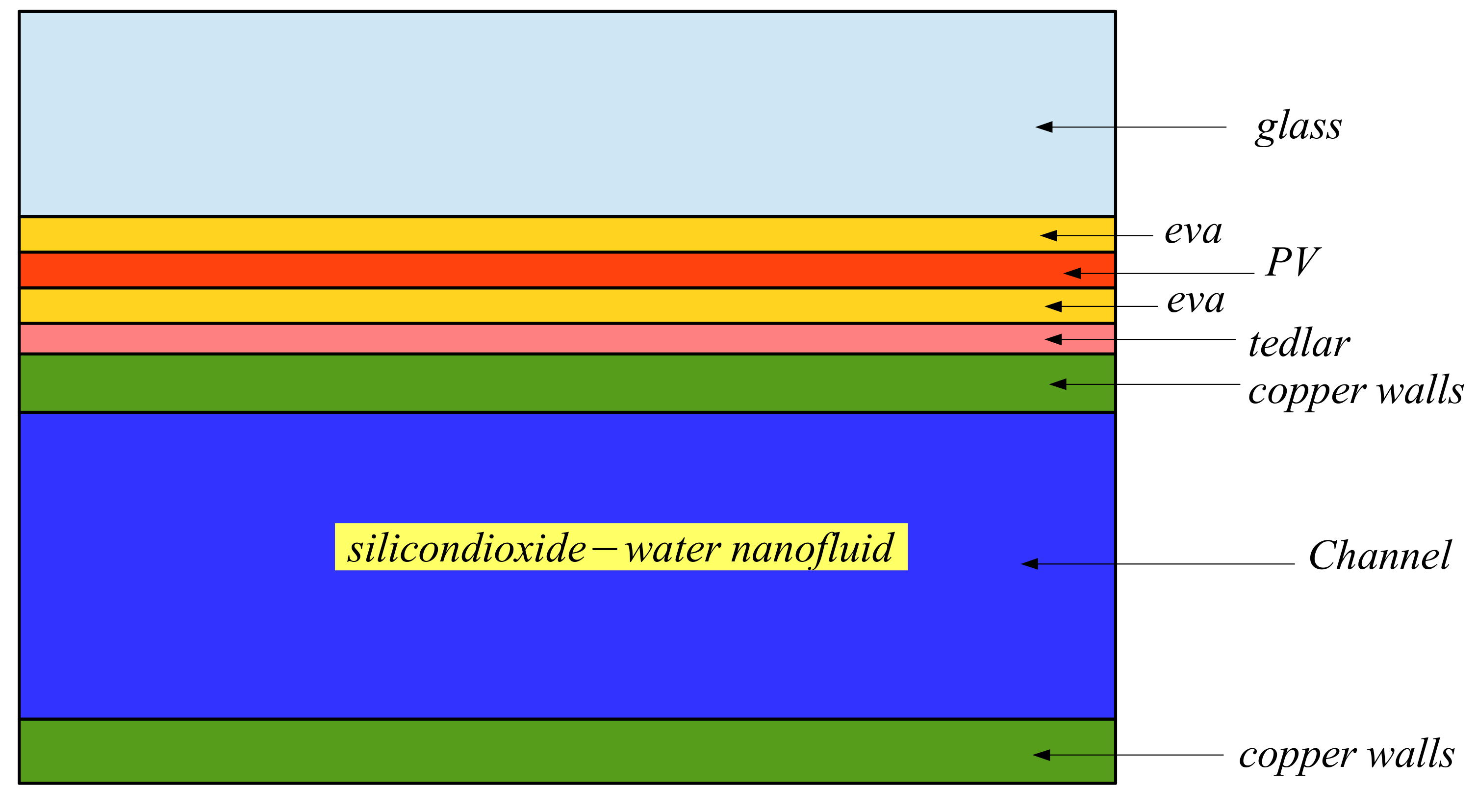
Figure 1 shows a schematic representation of a PV-thermal module which is composed of several layers and a channel in which SiO
-water nanofluid is flowing throughout. Thermophysical properties of the layers in the PV-thermal module is given in
Table 1.
An energy balance between the solar irradiance and heat transfer to the heat transfer fluid with nanoparticles is considered. Within the layers of the PV-module, the heat conduction equation is used.
Within the layers of the PV-thermal module steady state, the heat conduction equation is valid and is given by the following equation:
Navier–Stokes and energy equations for the fluid flow and heat transfer in the channel are given by the following equations:
The PV cell electrical efficiency is given by the following equation:
Thermal efficiency is defined as the ratio of the energy gained by the collector divided by the total incident energy
For the upper surface, the heat flux boundary condition with incident radiation and convective heat loss due to wind (heat transfer coefficient h and wind speed are related) is considered:
Among the layers of of the PV-module, heat flux continuity is utilized,
At the inlet of the channel, temperature and velocity are uniform, .
At the exit of the channel, gradients in the x-direction are set to zero,
2.1. Nanofluid Thermophysical Properties
SiO
-water nanofluid was used in this study and the thermo-physical properties are given in
Table 2 [
24]. The effective density, specific heat, thermal expansion coefficient of the nanofluid are given by the following formulas:
where the subscripts
f,
and
p denote the base fluid, nanofluid and solid particle, respectively.
The effective thermal conductivity of the nanofluid includes the effect of Brownian motion. In this model, the effects of particle size, particle volume fraction and temperature dependence are taken into account and it is given by the following formula [
25]:
where
is the static thermal conductivity as given by [
26]
The interaction between the nanoparticles and the effect of temperature are included in the models as
where the function
is given in [
25].
The effective viscosity model of the nanofluid was given in [
27]
where the average particle size of the fluid is given as [
27]:
with
M and
N denoting the molecular weight and Avogadro number.
2.2. Nanoparticle Shape Effect
The above given correlations in Equations (10)–(14) are used for the description of effective thermal conductivity for spherical particles. The effective thermal conductivity and viscosity of the nanofluid using non-spherical nanoparticle shape are defined using the following formulas:
where the constant coefficients for different nanoparticle shapes are defined as in
Table 3 [
28,
29].
2.3. Solution Method
The finite volume method was used to solve the governing equations along with the boundary conditions. A general convection-diffusion equation for a scalar transport variable
has the following form:
for velocity
, source term
b and diffusion coefficient
. Integration of the PDE over a control volume and using Gauss divergence theorem yields:
After using suitable discretization schemes for convective and diffusion terms, the resulting algebraic equation at the node point
p surrounded by neighboring relevant nodes (subscript
n) is written as:
A QUICK scheme is used to discretize the convective terms in the momentum and energy equations while a SIMPLE algorithm is used for velocity–pressure coupling. The resulting system of algebraic equations was solved using the Gauss–Siedel point-by-point iterative method and algebraic multigrid method. The normalized residual is calculated as:
When the residuals for all dependent variables become less than 10, an iterative solution is stopped. Under-relaxation factors are used to enhance the converge speed of the solution and the under-relaxation parameters for u, v, and T are all set to 0.6, whereas the under-relaxation parameter for pressure correction is set to 0.32.
2.4. Grid Independence and Code Validation
The grid independent test for various numbers of elements was performed. High gradients in the boundary layers are resolved by using finer meshes near the walls.Thermal efficiency and PV efficiency for different number of elements are demonstrated in
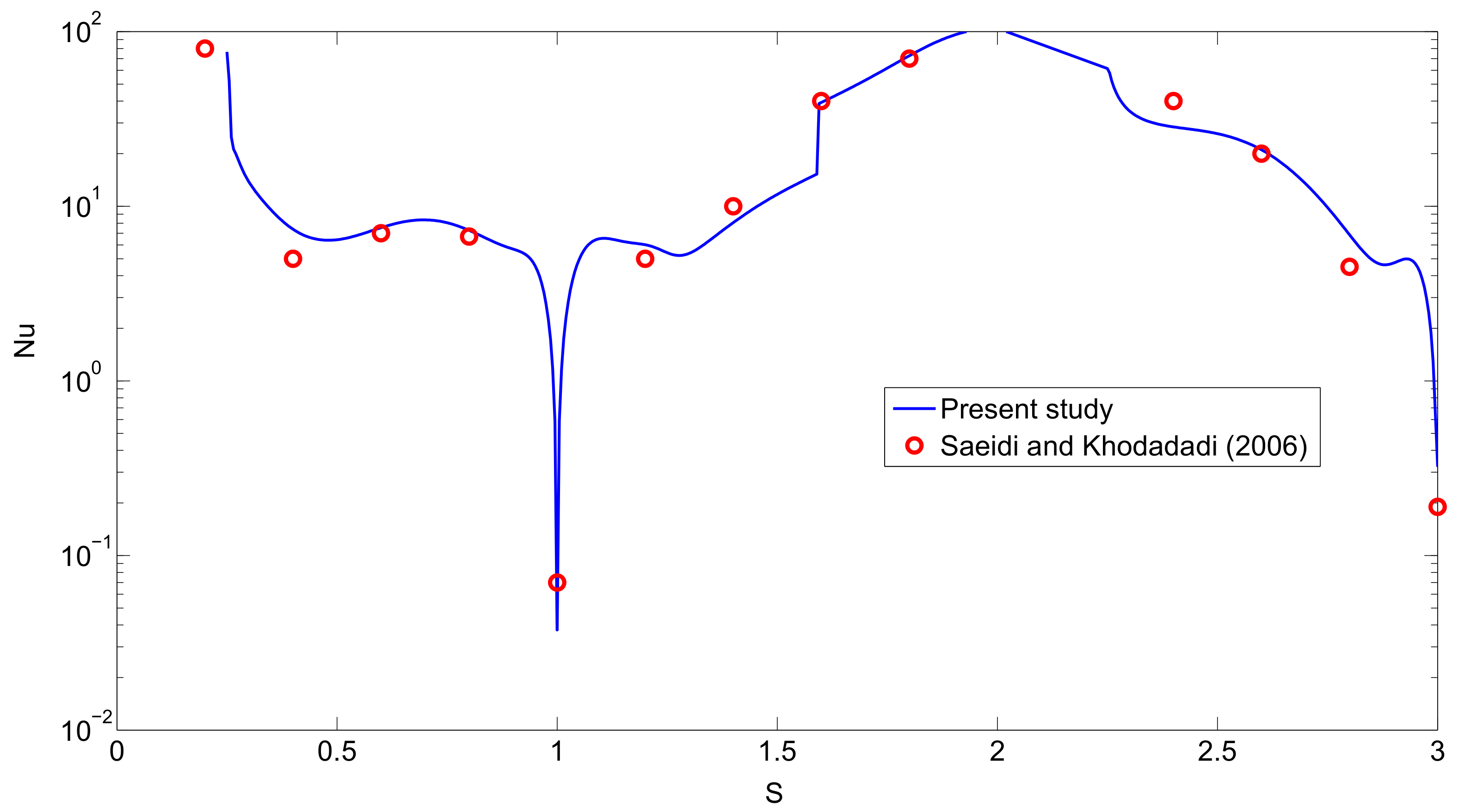
Table 4. G3 with 66,056 triangular elements are used in the subsequent computations. Validation of the present code is performed by using the numerical results of [
30]. Forced convection in a cavity was considered at Reynolds number of 500. The comparison results for the local Nusselt number distribution along the walls of the cavity are shown in
Figure 2.
3. Results and Discussion
Effects of nanoparticle addition to the water in the channel of a PV-thermal module on the thermal and PV-efficiency was numerically investigated. SiO
nanoparticles different shapes and solid particle volume fractions were used.
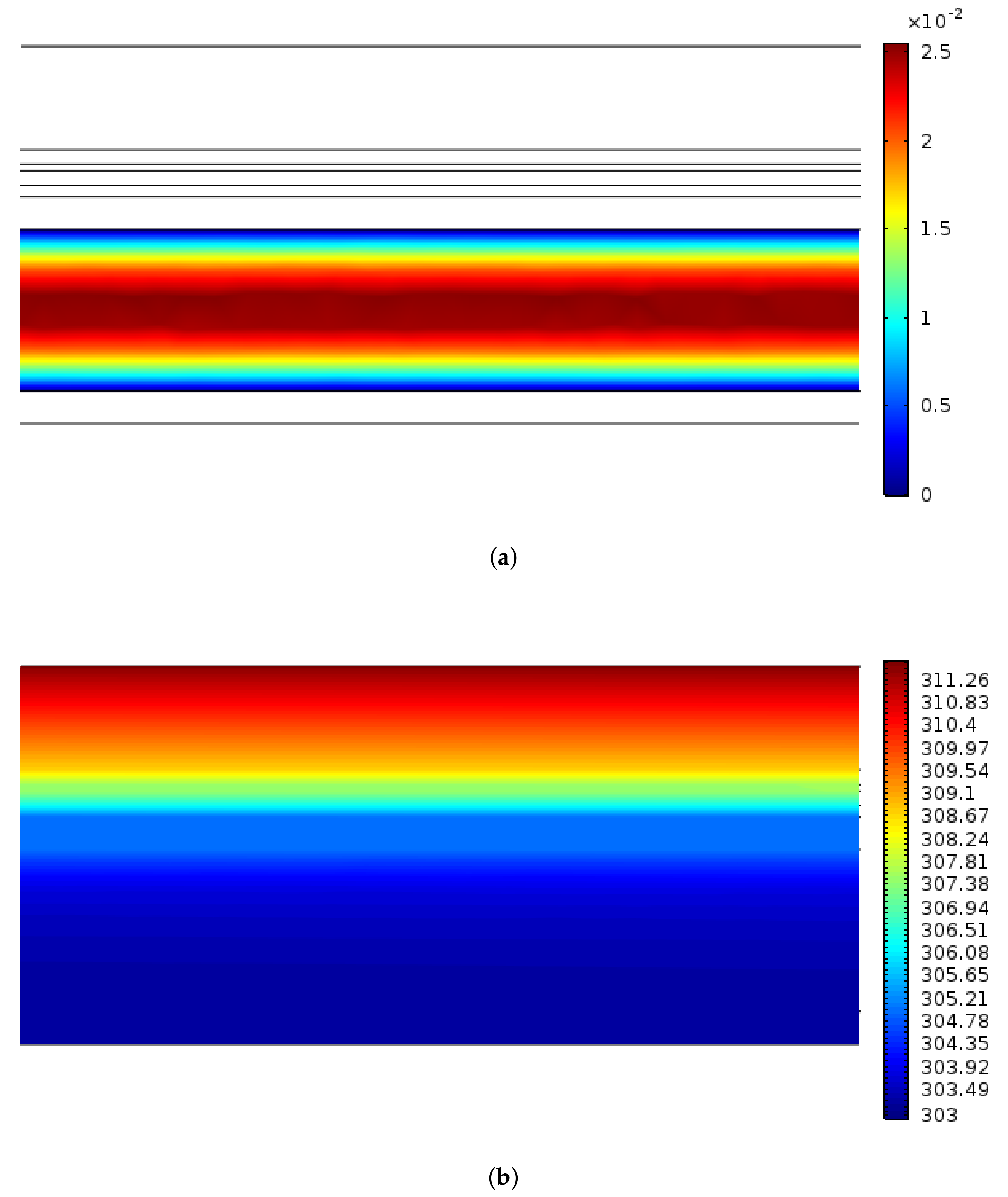
Figure 3 shows the velocity and temperature distribution in the PV-module. In the channel, a laminar velocity profile is developed and its maximum value is seen in the mid of the channel which has a value of 0.025 m/s for the fixed value of (q = 1000 W /m
, h = 5 W /m
K,
with cylindrical shape particles). For this flow velocity, Reynolds number remains less than 2100 in the channel. Thermal gradients are seen in the layers of the PV module, which is due to the different thicknesses and thermal conductivities of these layers.
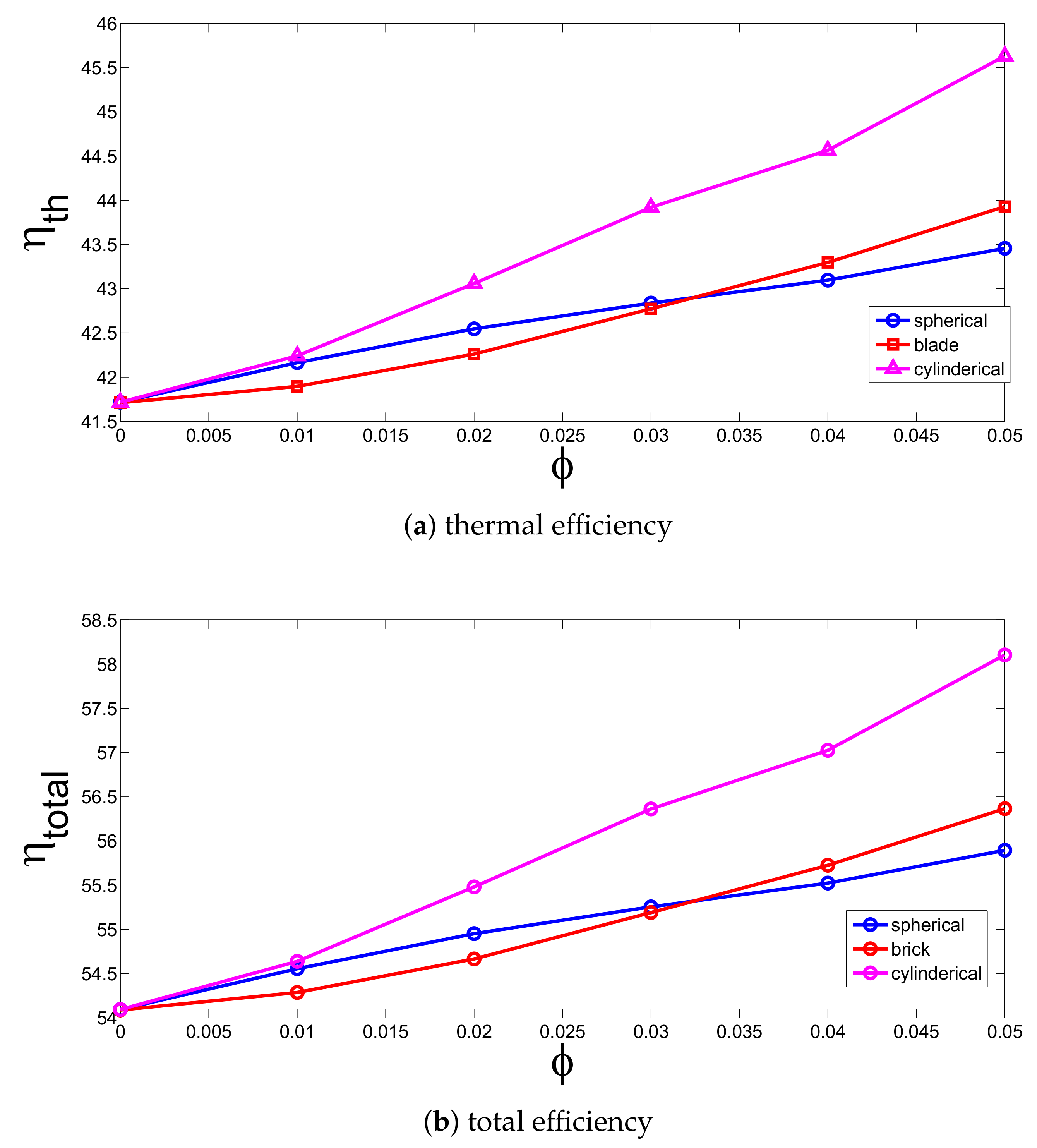
Figure 4 shows the effects of nanoparticle volume fraction (
) and particle type on the variation of thermal and total efficiency of the PV-thermal module. Both efficiencies enhance with higher
values. Among different particle shapes, cylindrical ones perform best. Discrepancy between cylindrical shape and other shapes increases for higher particle volume fractions. Total efficiency increases by about 7.39% at the highest volume fraction (
) with cylindrical shape particles. As compared to spherical shape particle, cylindrical ones gives 3.95% more enhancement in the total efficiency for the highest particle volume fraction.
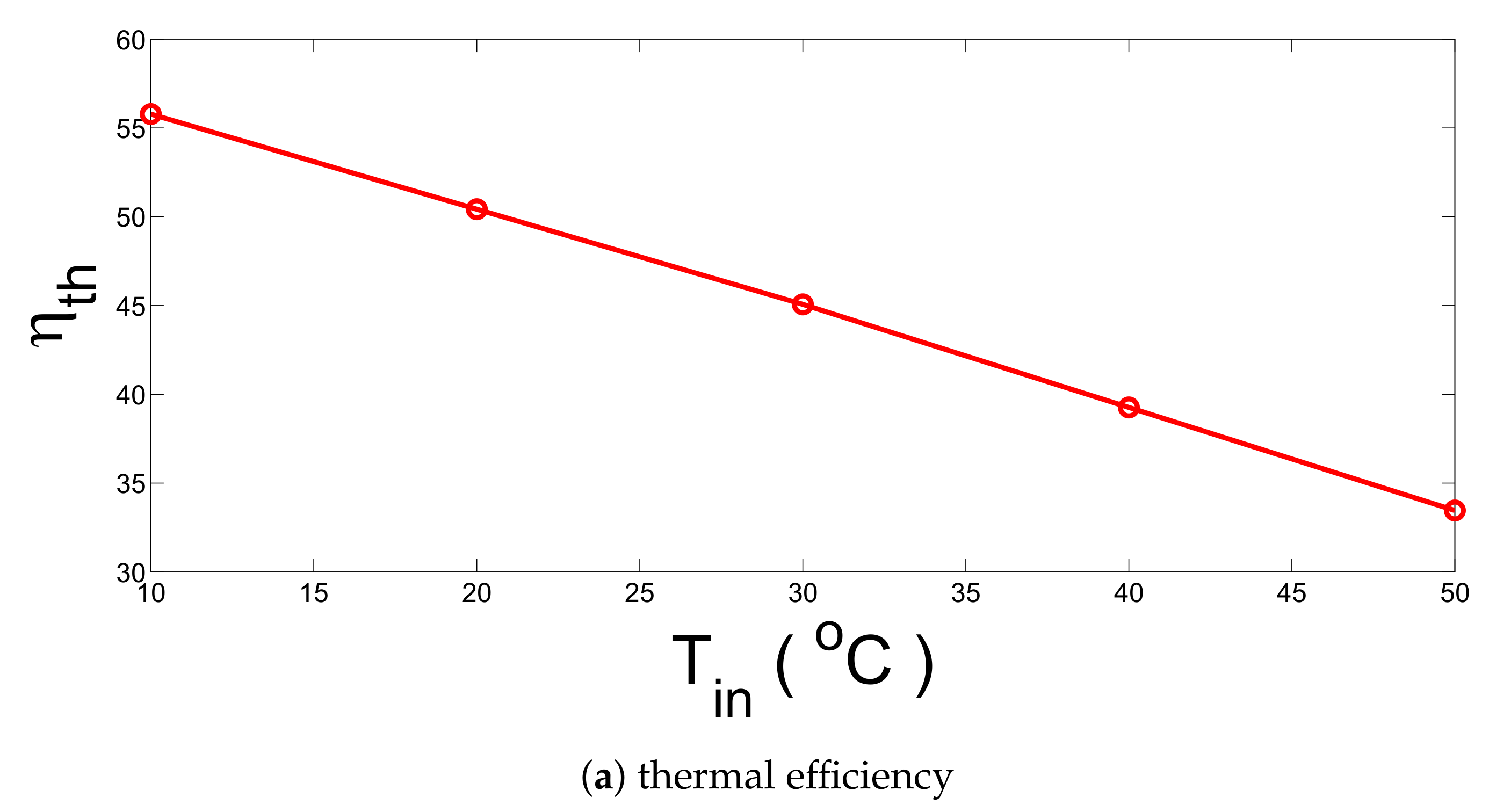
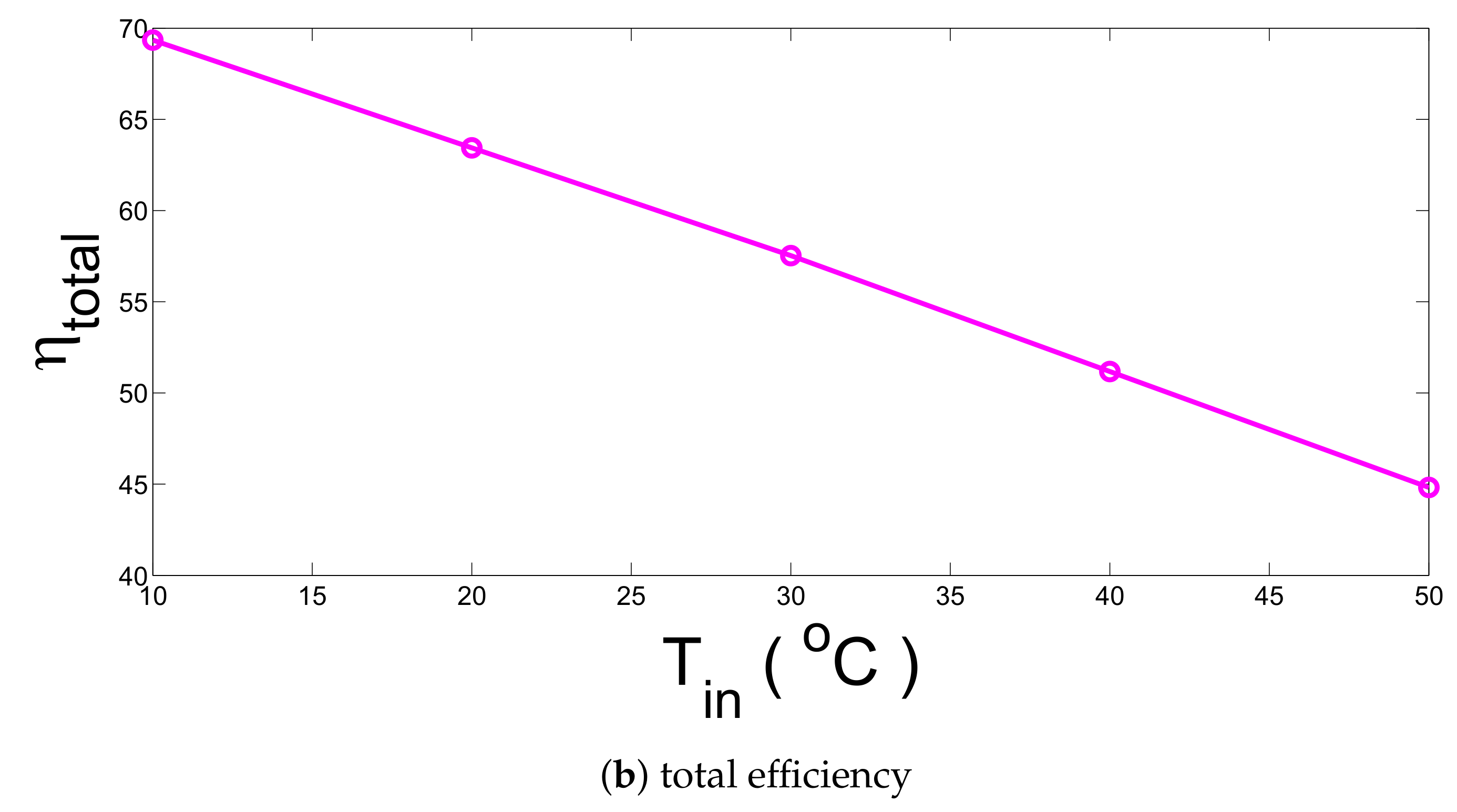
As the inlet temperature of water-SiO
nanofluid increases, thermal and total efficiency deteriorate as shown in
Figure 5. The rate of deterioration is higher for the thermal efficiency and up to 40% in the reduction of the efficiency is seen when nanofluid temperature is increased from 10
C to 50
C.
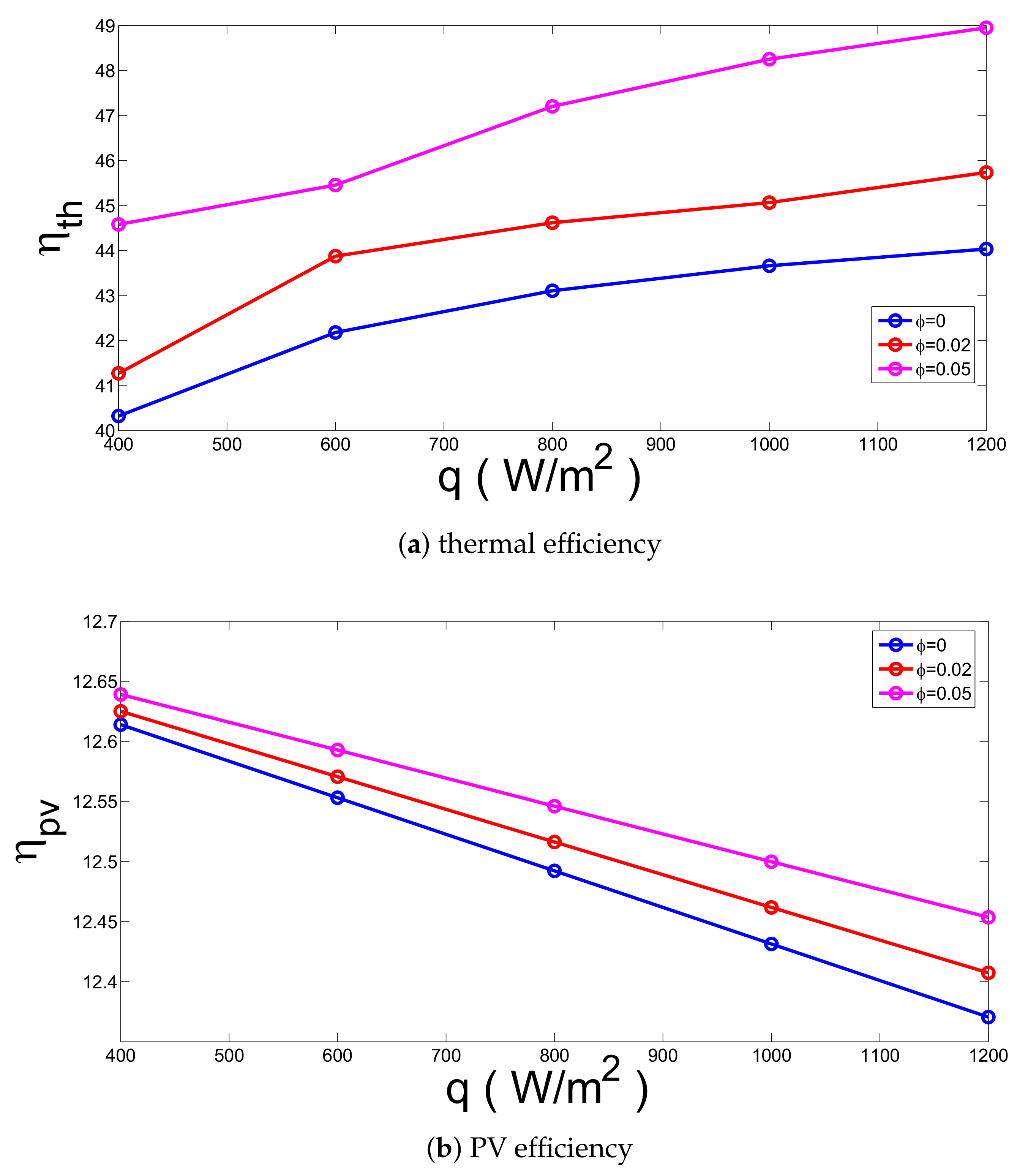
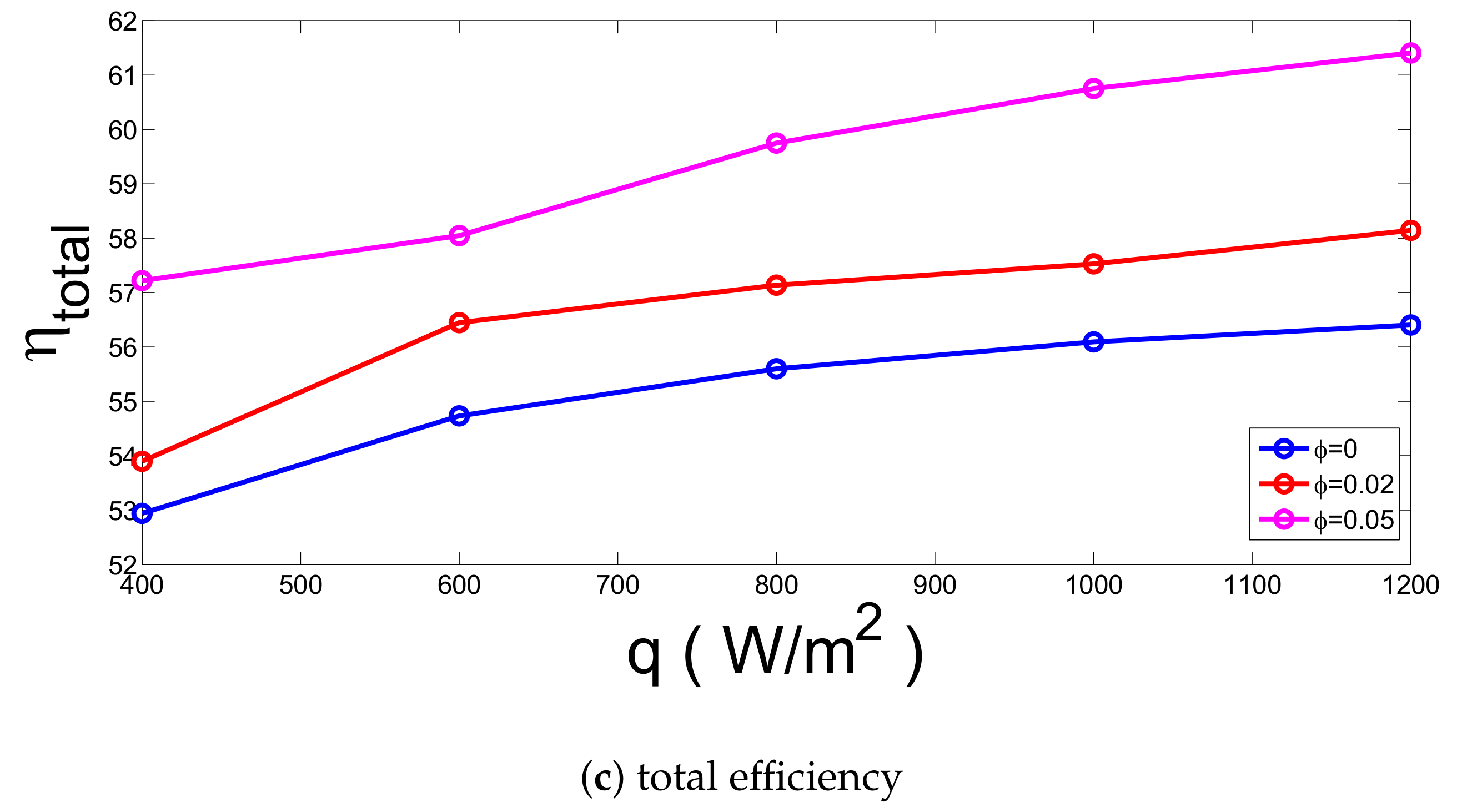
Figure 6 demonstrates the effects of solar irradiation and solid nanoparticles volume faction on the variation of efficiencies (h = 5 W /m
K, T
= 30
C with cylindrical shape particles). Thermal efficiency increases with higher values of solar irradiation while the PV-efficiency decreases and higher efficiency values are achieved for higher
values. Higher surface temperature is obtained for higher values of solar irradiation and PV-efficiency decreases, which are defined in Equation (
5). Thermal efficiency increases by about 9.17% and 9.82% for water and for nanofluid with highest volume fraction. There is a negligible effect of the particle addition on the PV-efficiency enhancements.
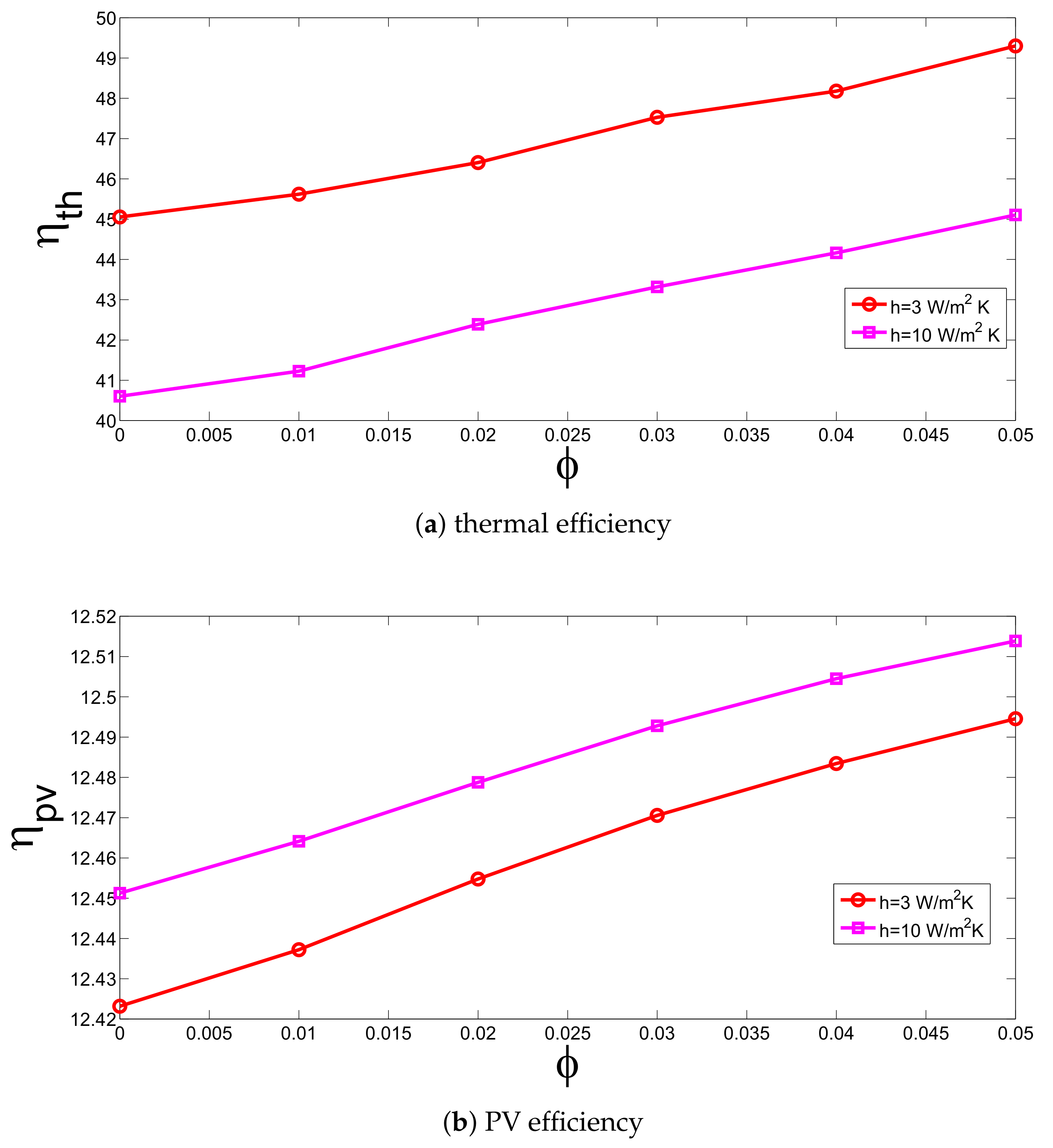
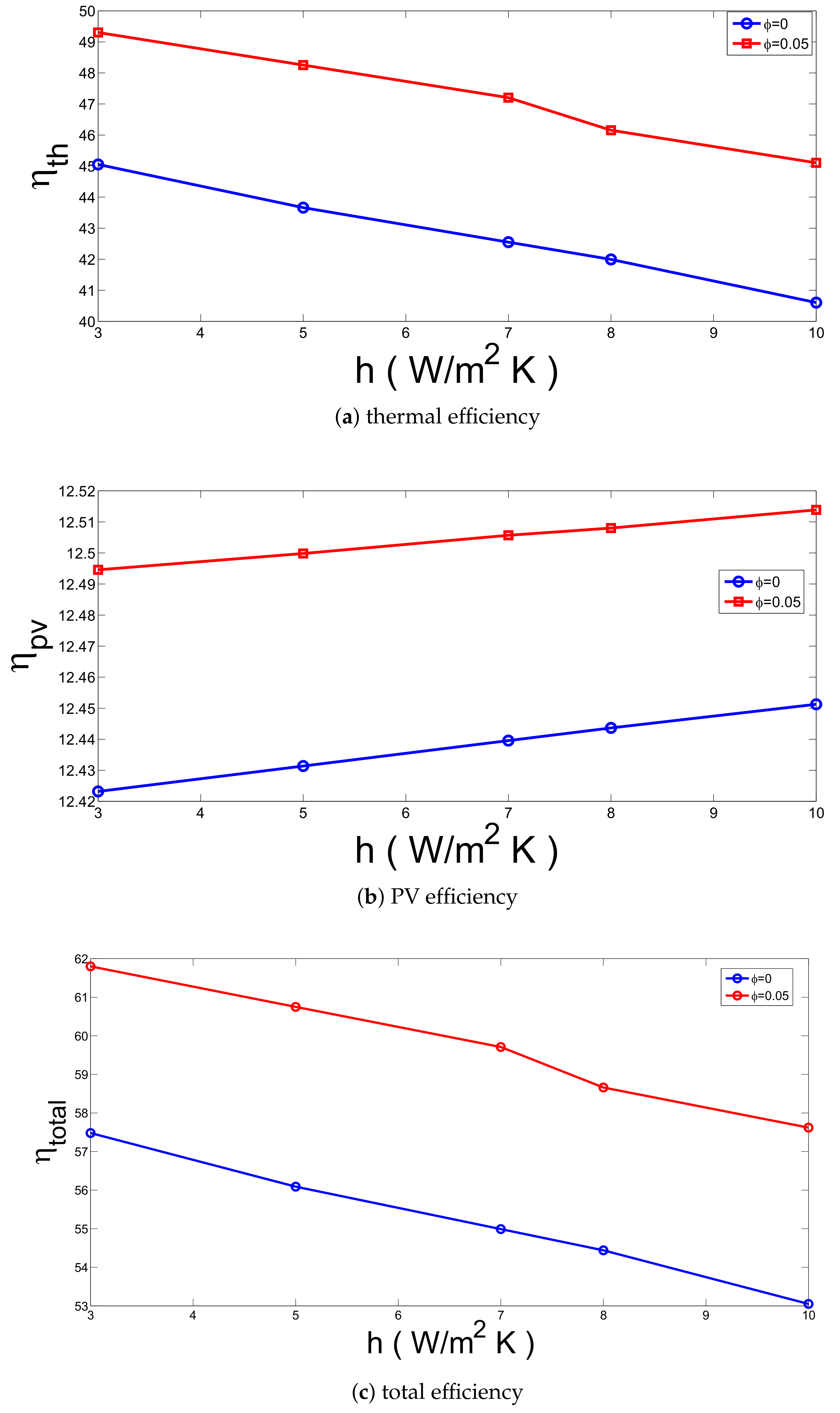
Convective loss is characterized by the convective heat transfer coefficient dependent upon the wind speed
v. As the value of heat transfer coefficient enhances, thermal efficiency decreases as it is shown in
Figure 7 and
Figure 8. However, PV-efficiency enhances with higher
h values since the PV-layer surface temperature decreases, but the rate of enhancement is not significant.The discrepancy between thermal efficiency for heat transfer coefficient of h = 5 W /m
K and h = 10 W /m
K is 12.5% and 9.28% for water and for nanofluid with
. Adding nanoparticle results in higher thermal efficiency enhancement for the highest value of heat transfer coefficient, which is 11.11% with the highest volume fraction of cylindrical particles.
3.1. Efficiency Correlation with Artificial Neural Networks
Artificial neural networks (ANN) or other practical prediction methods can be used to obtain the correlations for efficiencies of PV-thermal module or thermal engineering systems [
31,
32,
33,
34,
35,
36,
37,
38,
39,
40,
41]. Radial basis function networks consist of three-layer network structures that include input, hidden and output layers. The hidden layer nodes are radial basis functions. The outputs are calculated by a weighted average sum of the radial basis functions, which can be given as [
37]:
Radial basis function response decreases monotonically from a center point with distance. Gaussian function is a radial basis function which has central point c and smoothness parameter
which controls the shape of the function. It is given in the following form:
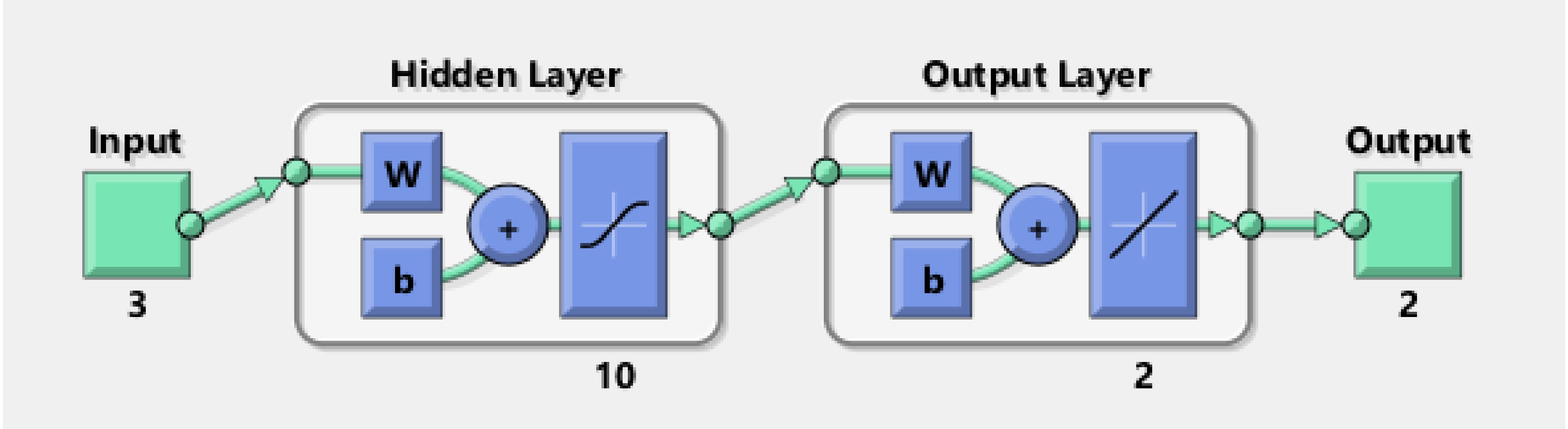
A schematic representation of network topology is given in
Figure 9 with three inputs: (solid particle volume fraction (
), convective heat transfer coefficient (h) and solar irradiation (q)) and two outputs (thermal and PV-efficiency).
In order to evaluate the performance of trained networks, different error measures can be used. Mean square error (MSE) and coefficient of determination (
) performance parameters can be given as:
where
,
,
N and
represent the predicted value form ANN, CFD value, sample number and the mean value of CFD values, respectively.
The MATLAB Neural Network Toolbox (Version 2010, The Mathworks, Natick, USA) was used to select the number of hidden layers, number of neurons in each layer, training algorithm [
42]. Feed-forward network structure with one hidden layer and a linear output layer was selected. The number of the neurons of ANN model was taken as 10. The feed-forward network structure with hidden layers and the linear output layer was selected and Levenberg–Marquardt back-propagation was used as the training algorithm. The random data division property of MATLAB is used and
of the data was used for estimation while
was used for validation and
of the data was used for testing purposes.
Table 5 shows the number of samples for training, validation and testing, mean squared error (MSE) values and regression
R values. A higher
R value denotes a higher correlation between the outputs and target values.
Table 6 represents the comparison results of CFD data between the predicted data by artificial neural networks for various values of pertinent parameters. The difference between the actual CFD data and established artificial neural network model is very small. This modeling strategy with ANN is useful for this system in order to obtain the performance predictions of a PV-thermal module in a fast and cheap way as compared to a high fidelity CFD computation, but it still requires some of the data from CFD computations for training.