Article

A Case Study on the Rehabilitation of a Fire-Damaged Structure
1
Daewoo Institute of Construction Technology, 123, Sooil-ro, Jangan-gu, Suwon-si, Gyeonggi-do 440-800, Korea
2
Daewoo Engineering and Construction, Co., Ltd., 75, Saemunan-ro, Jongno-gu, Seoul 03182, Korea
3
Department of Architecture and Plant Engineering, Youngsan University, 288 Junam-ro, Yangsan, Gyungsangnam-do 626-790, Korea
4
Department of Architectural Engineering, Kyung Hee University, 1732, Deogyeong-daero, Giheung-gu, Yongin-si, Gyeonggi-do 446-701, Korea
*
Author to whom correspondence should be addressed.
Appl. Sci. 2016, 6(5), 126; https://doi.org/10.3390/app6050126
Submission received: 16 January 2016 / Revised: 26 February 2016 / Accepted: 29 February 2016 / Published: 2 May 2016

Abstract

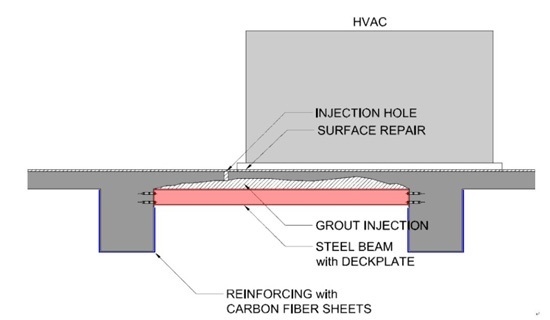
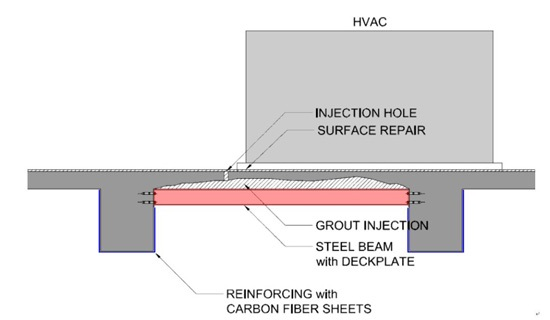
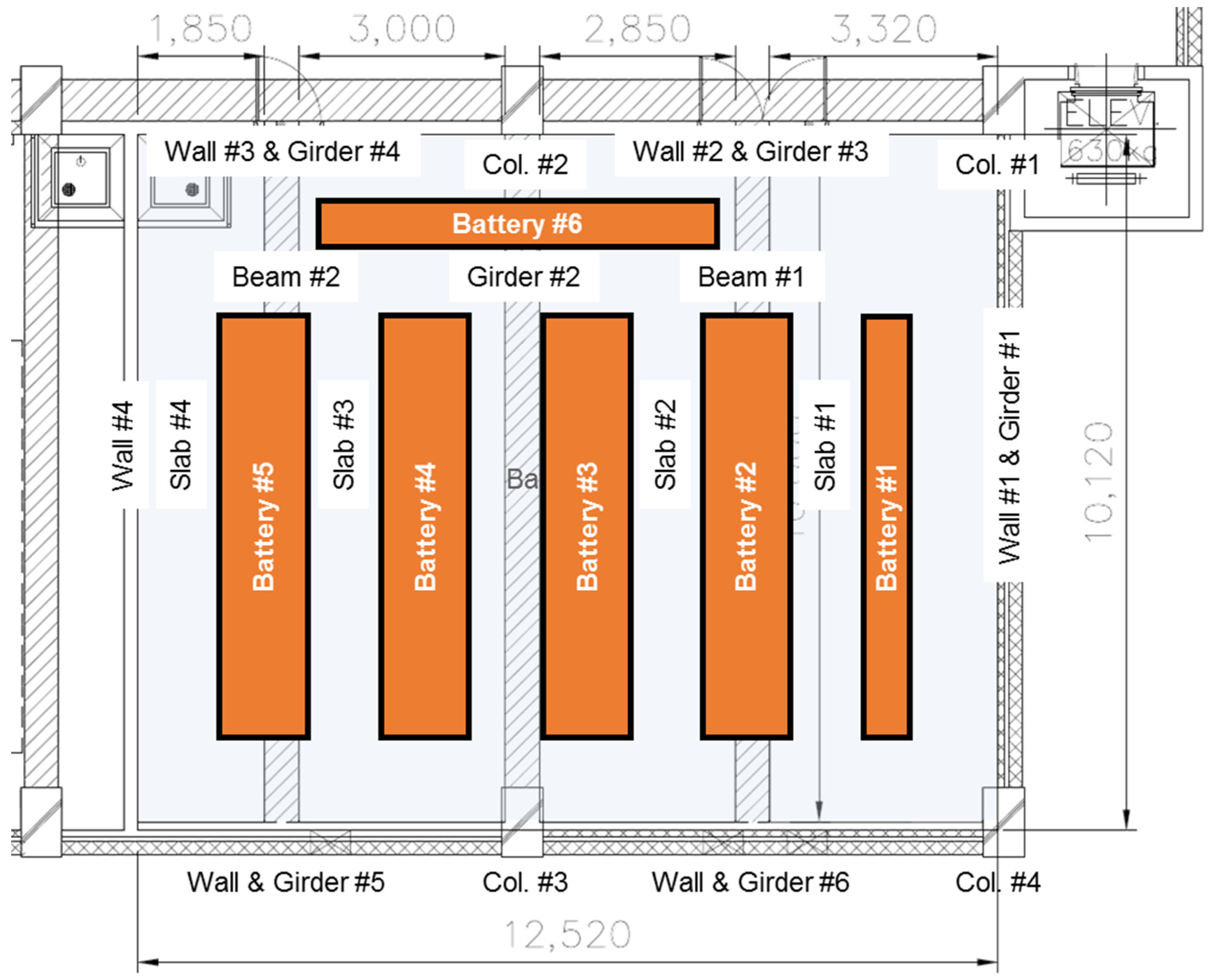
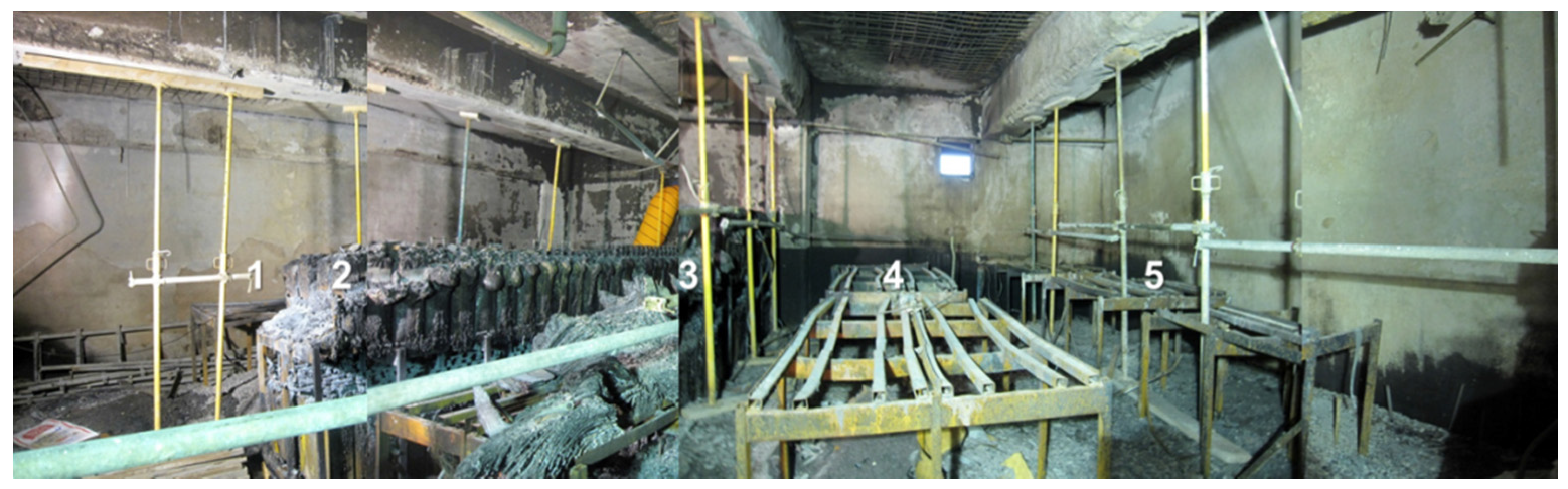
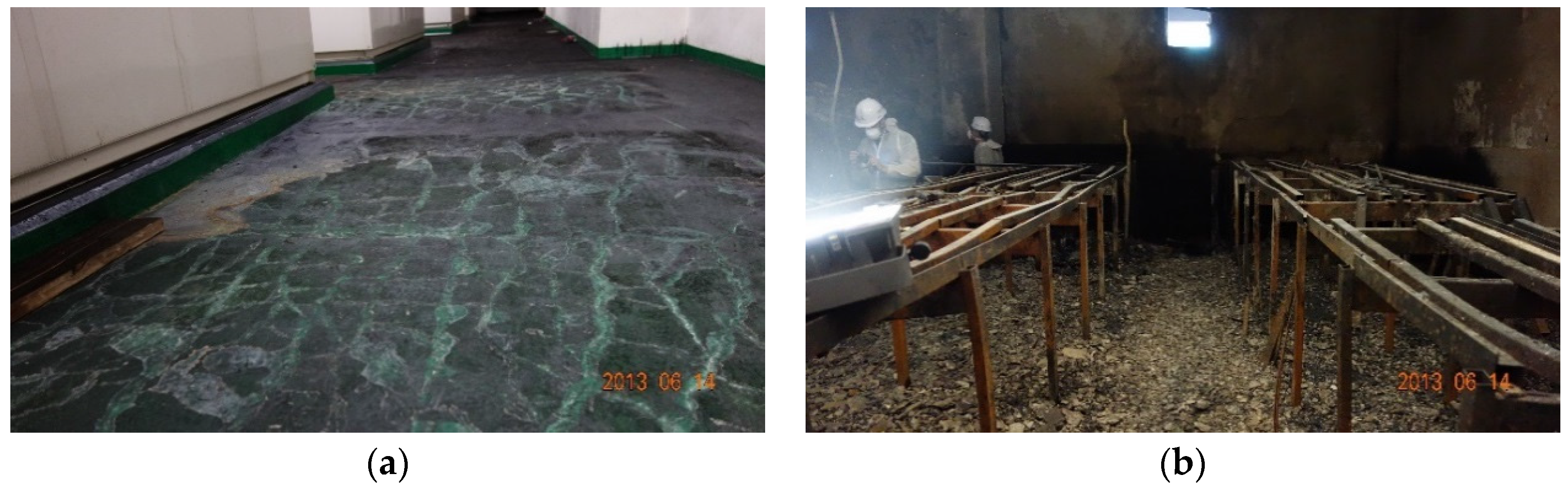
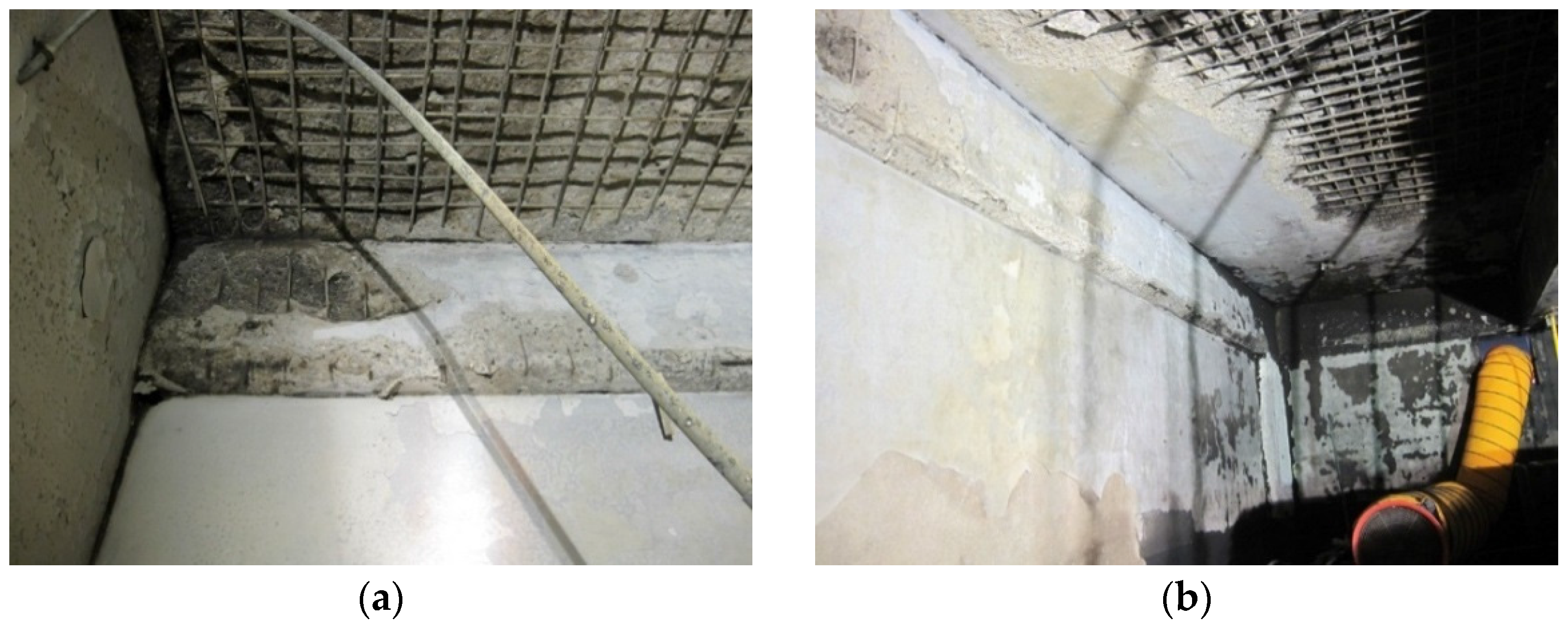
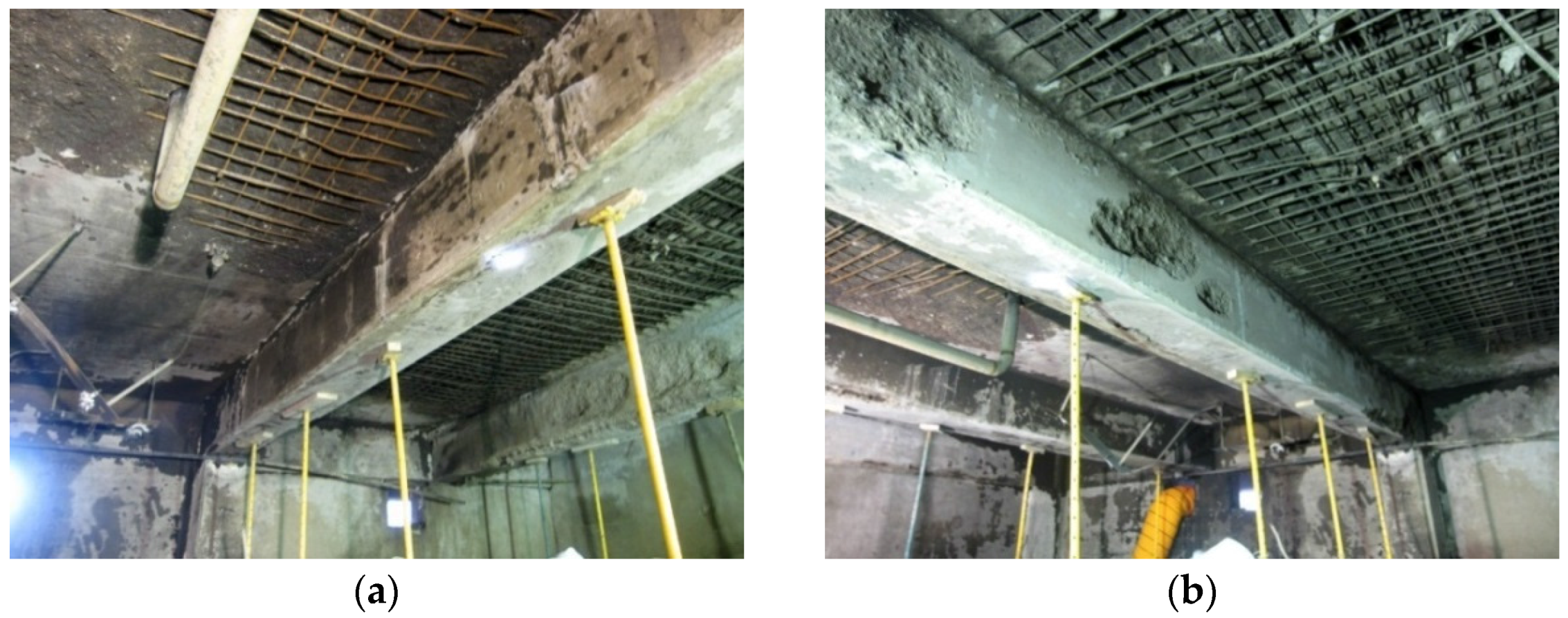
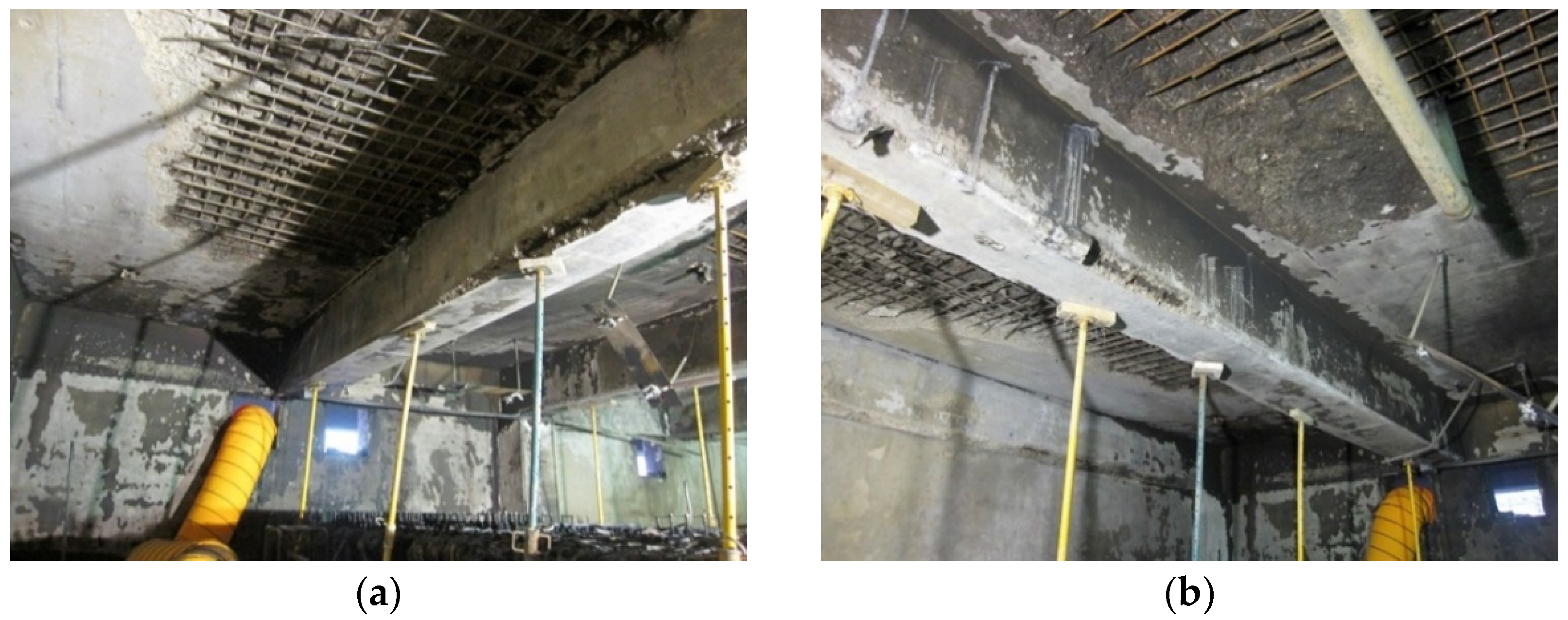
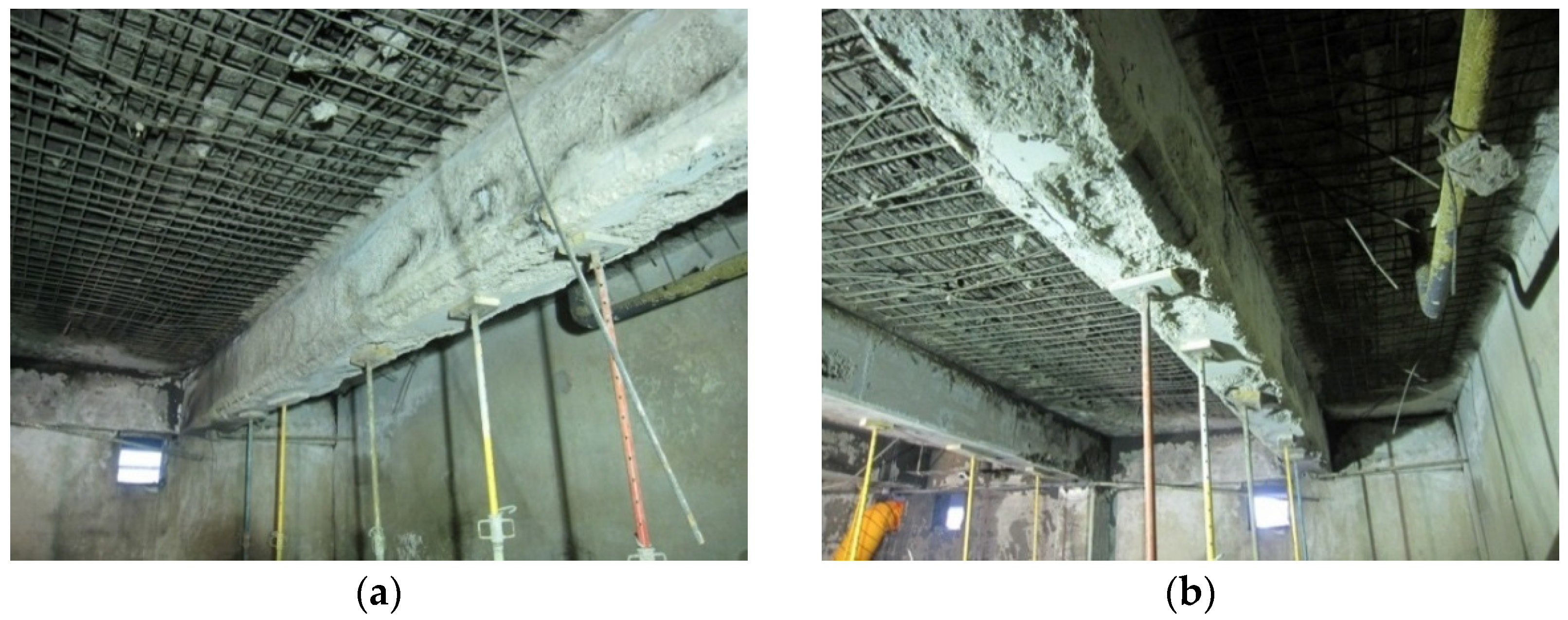
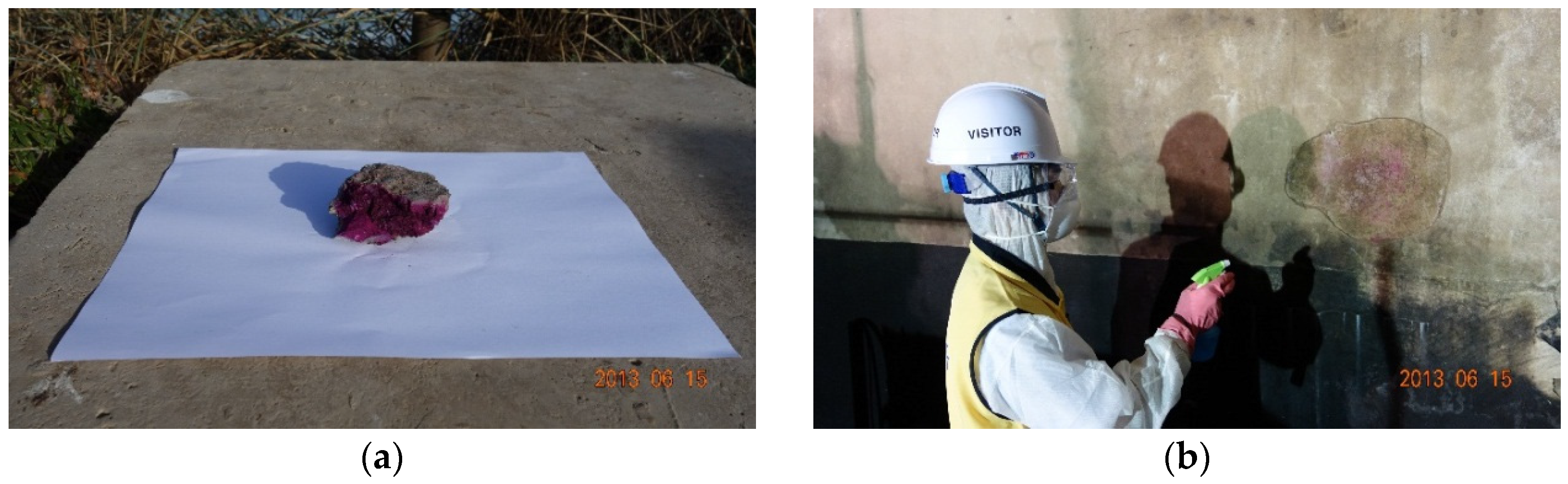
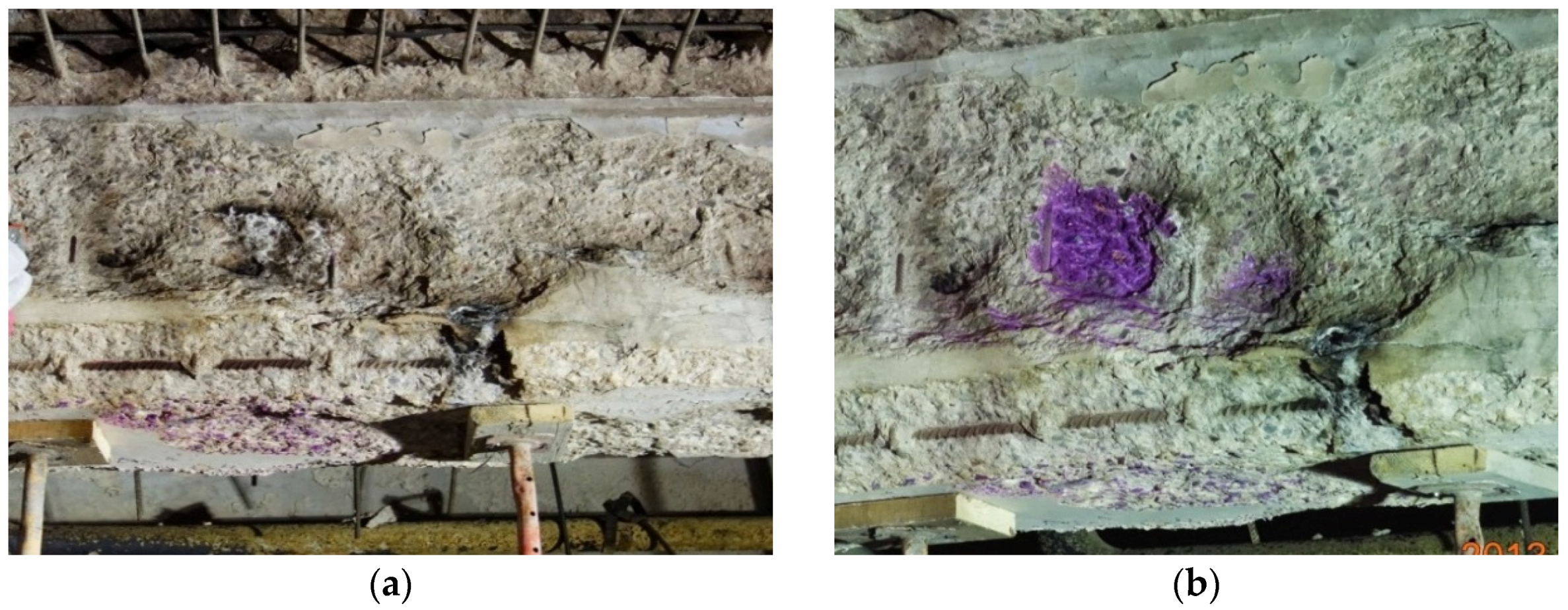
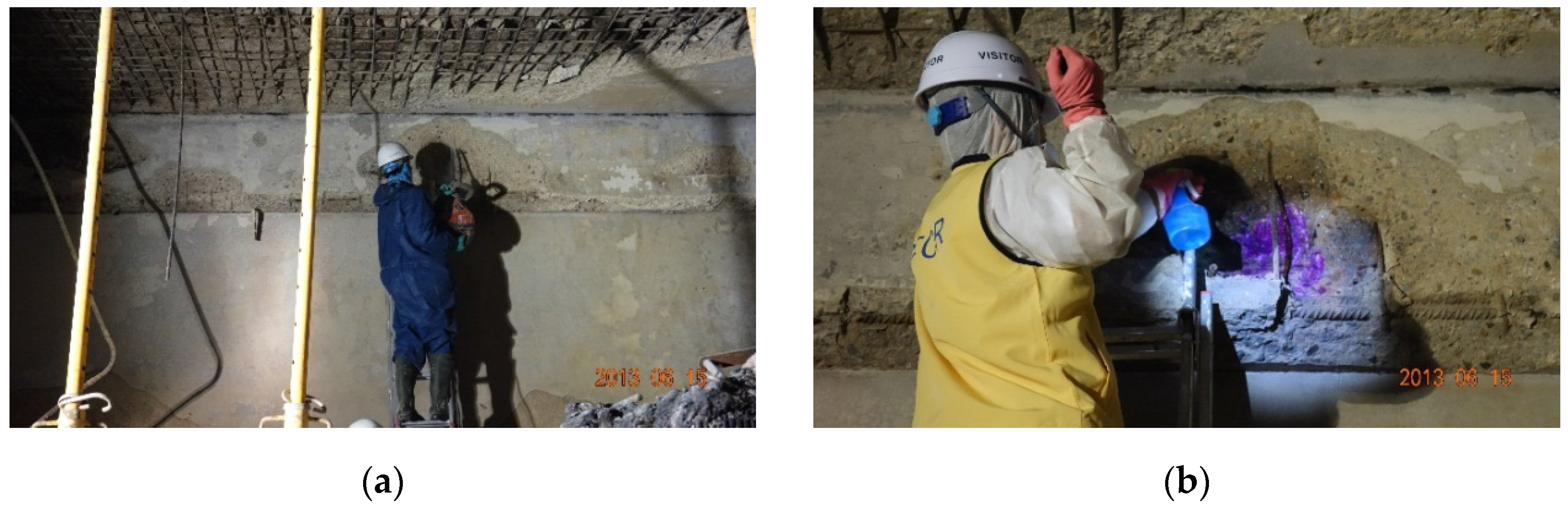
This paper presents a case study on the rehabilitation of a fire-damaged structure and describes the results of a site investigation and tests, leading to a plan for the rehabilitation of the structure. The fire took place in the main control room of a thermal power plant and lasted about three hours until it was finally extinguished. To set up a rehabilitation plan for the damaged structure, a visual inspection of the damaged condition was first carried out, which was followed by analysis and on-site material tests indicating the degree of neutralization progress in the remaining structure. Specimens of damaged concrete and reinforcing bars were sampled and tested for their residual strengths. As a conclusion, two methods of rehabilitation were suggested considering the current condition of the structure and the sequence of construction.
Keywords: rehabilitation; fire-damaged structure; site investigation; power plant; on-site material test rehabilitation; fire-damaged structure; site investigation; power plant; on-site material test
Graphical Abstract