The Influence of Supercritical CO2 Displacement at Different Temperatures on Porosity and Permeability Evolution in Marine Unconsolidated Strata

 ,
,
Abstract
1. Introduction
2. Experiments
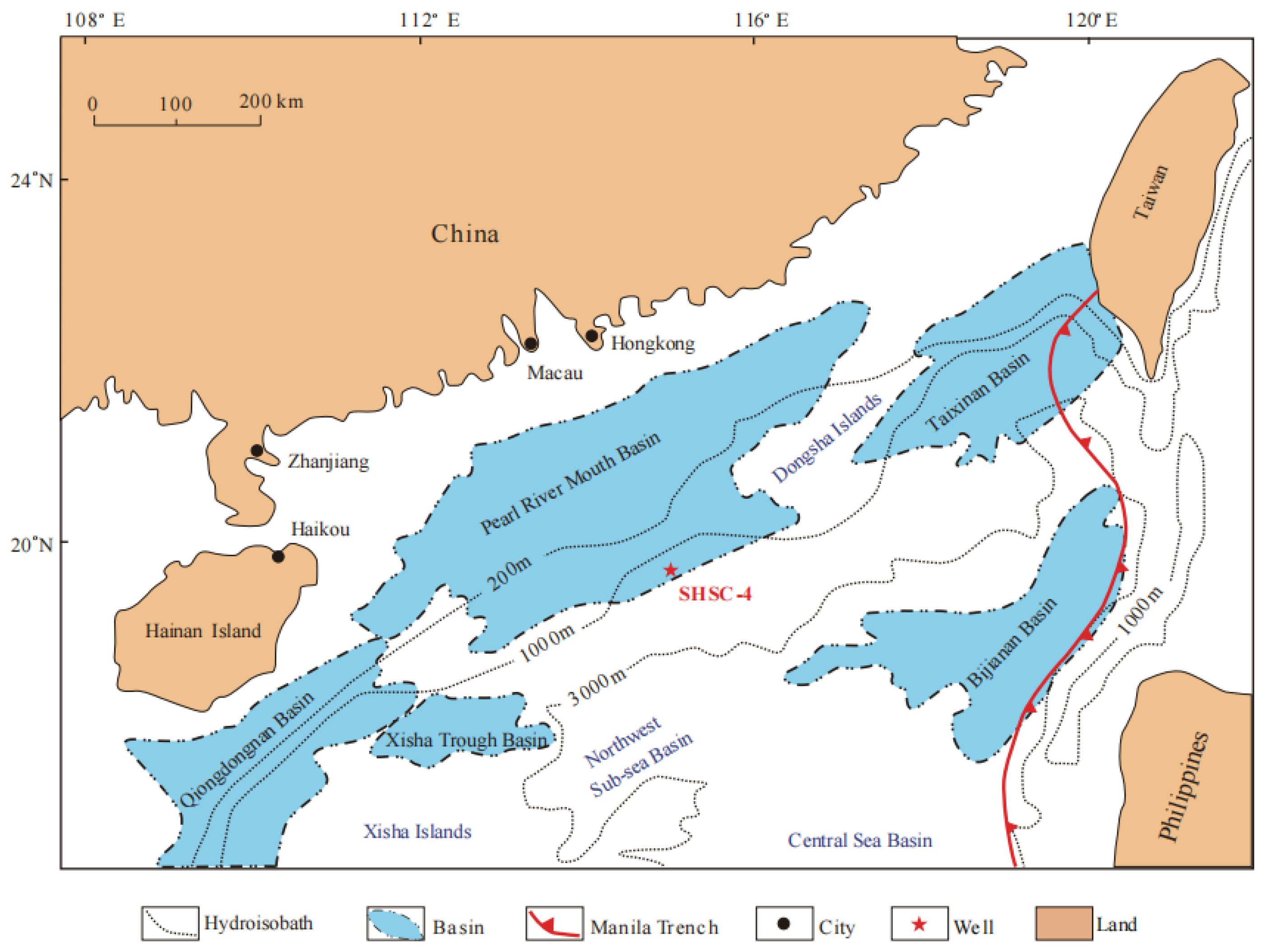
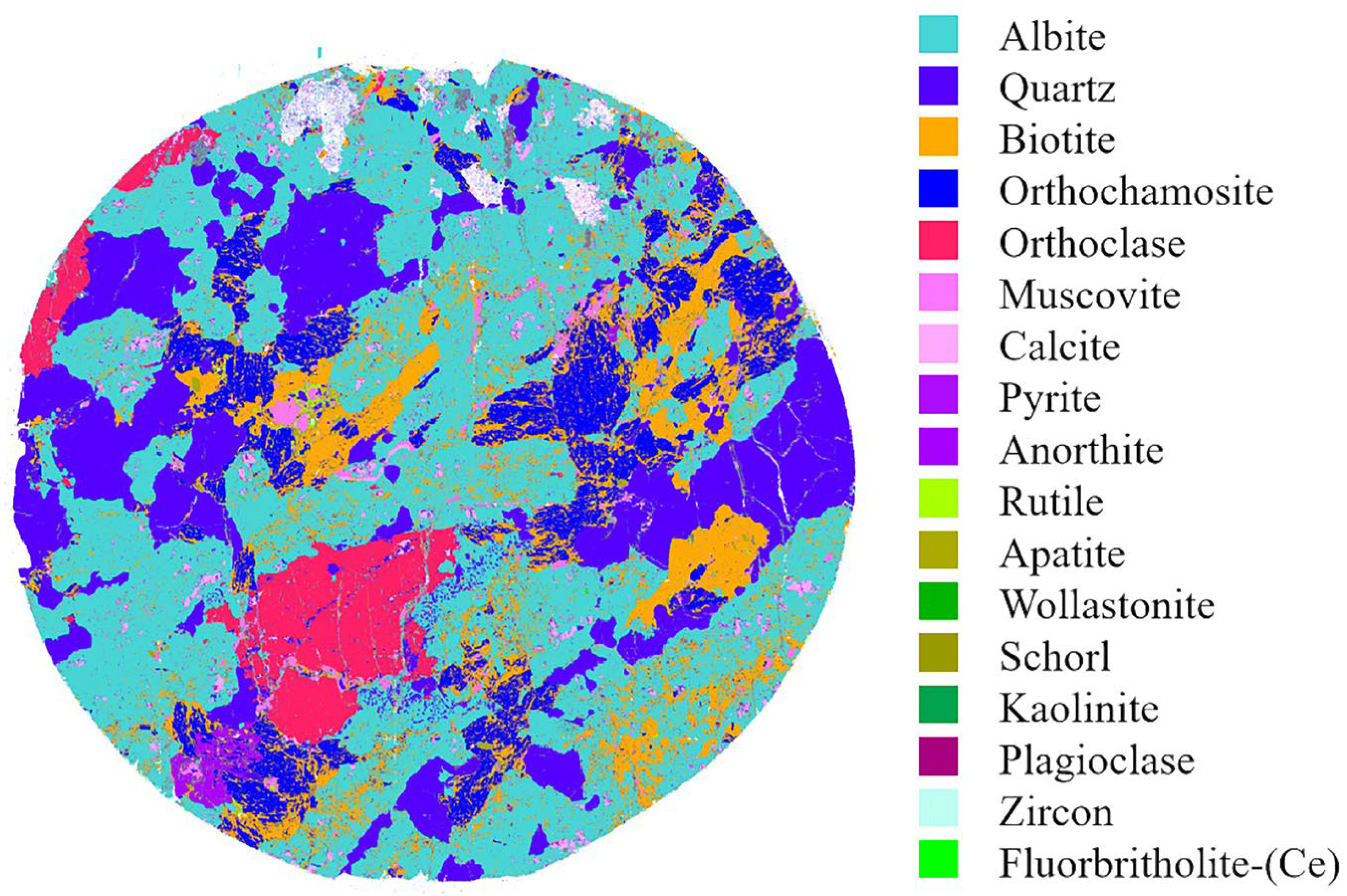
2.1. Experimental Materials
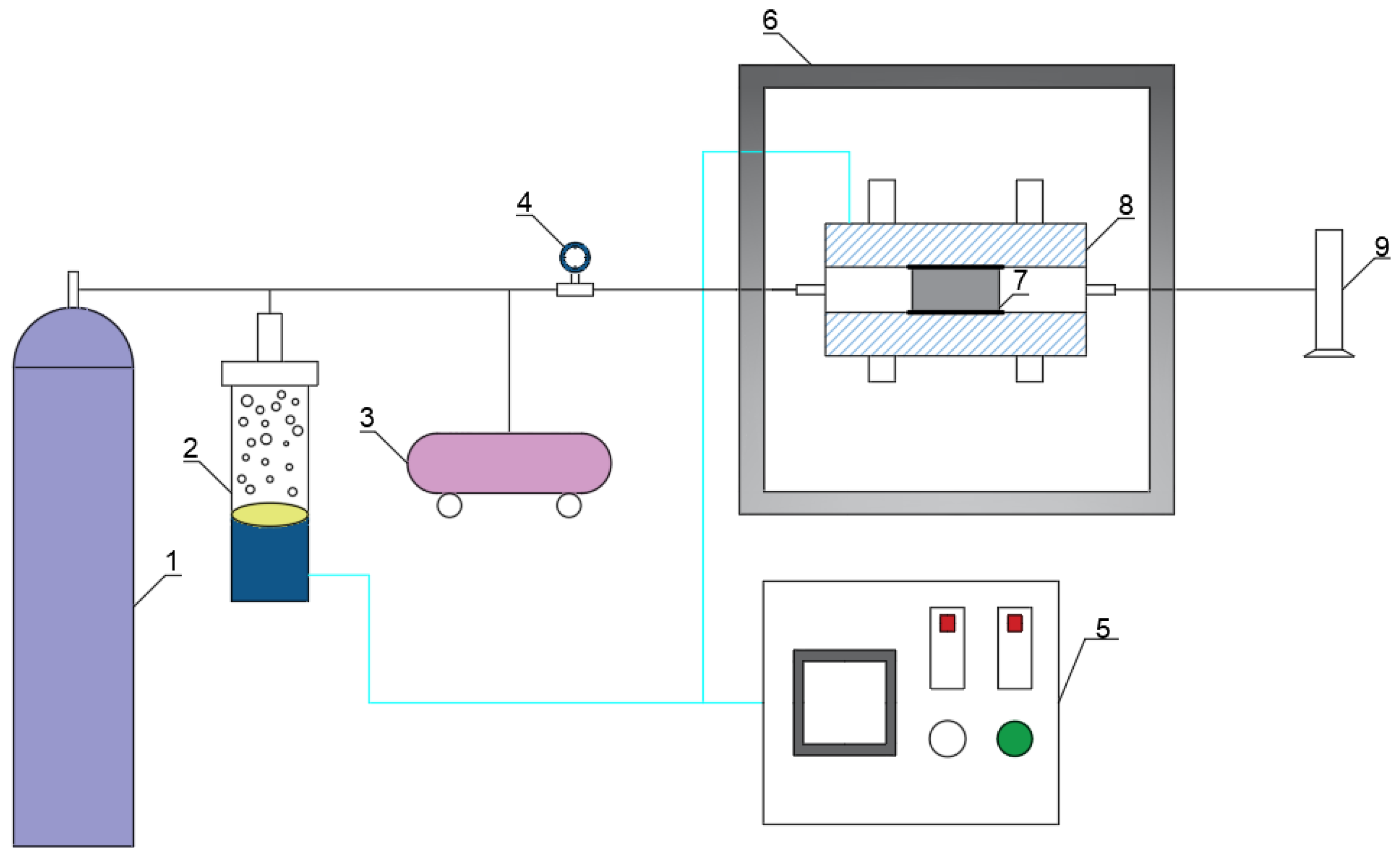
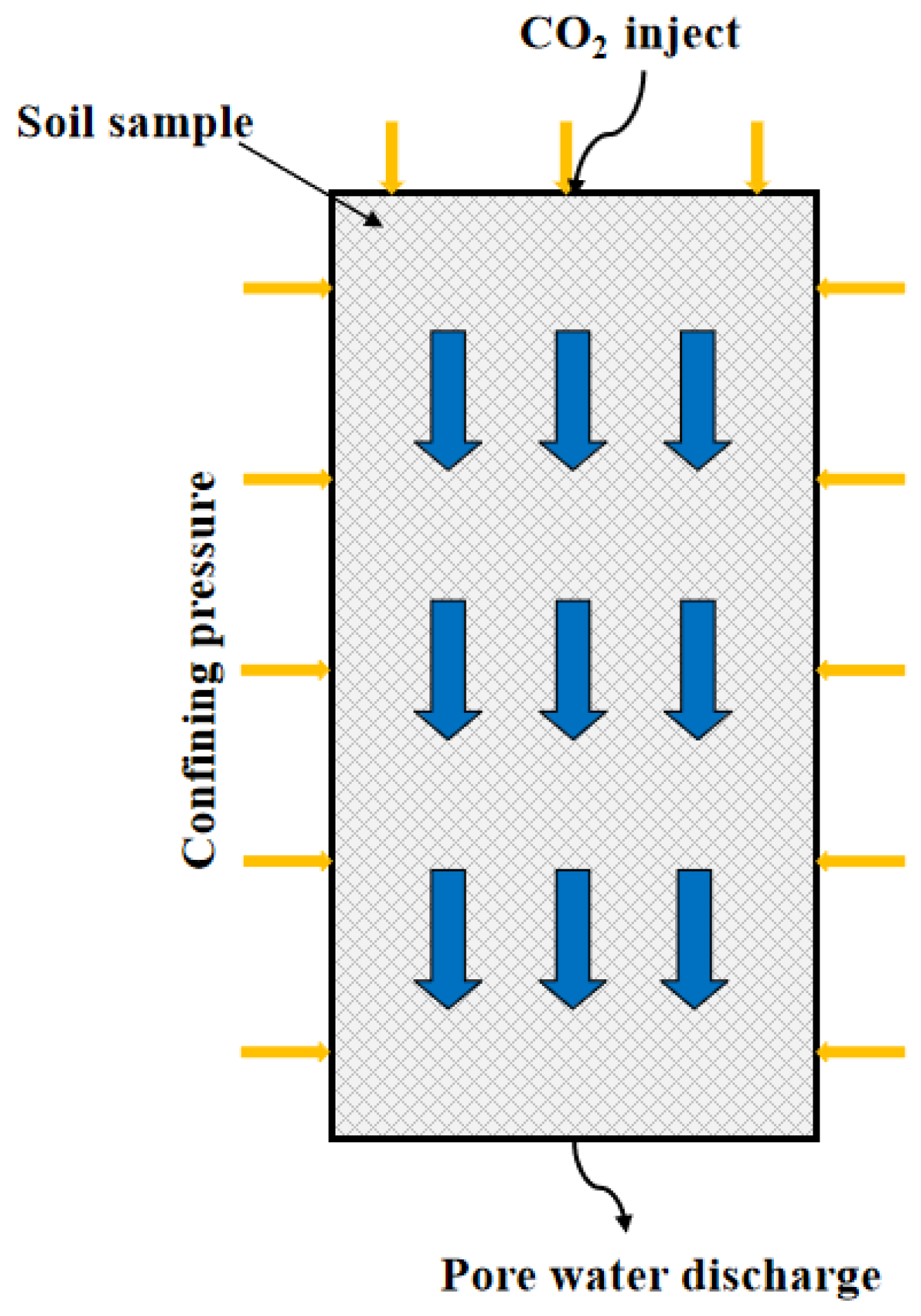
2.2. Experimental Setup
2.3. Experimental Processes
3. Results and Discussion
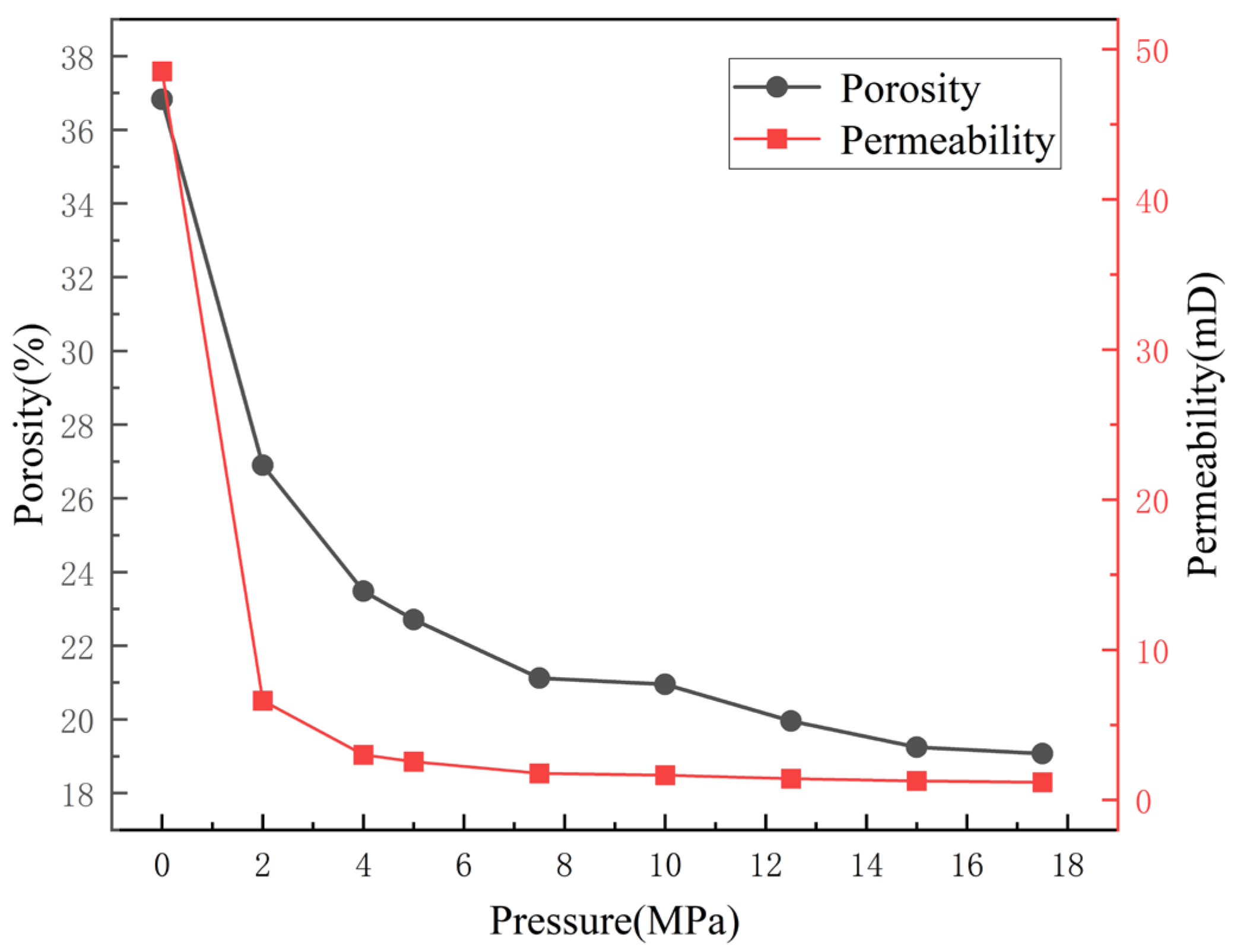
3.1. Overpressure Permeability Tests
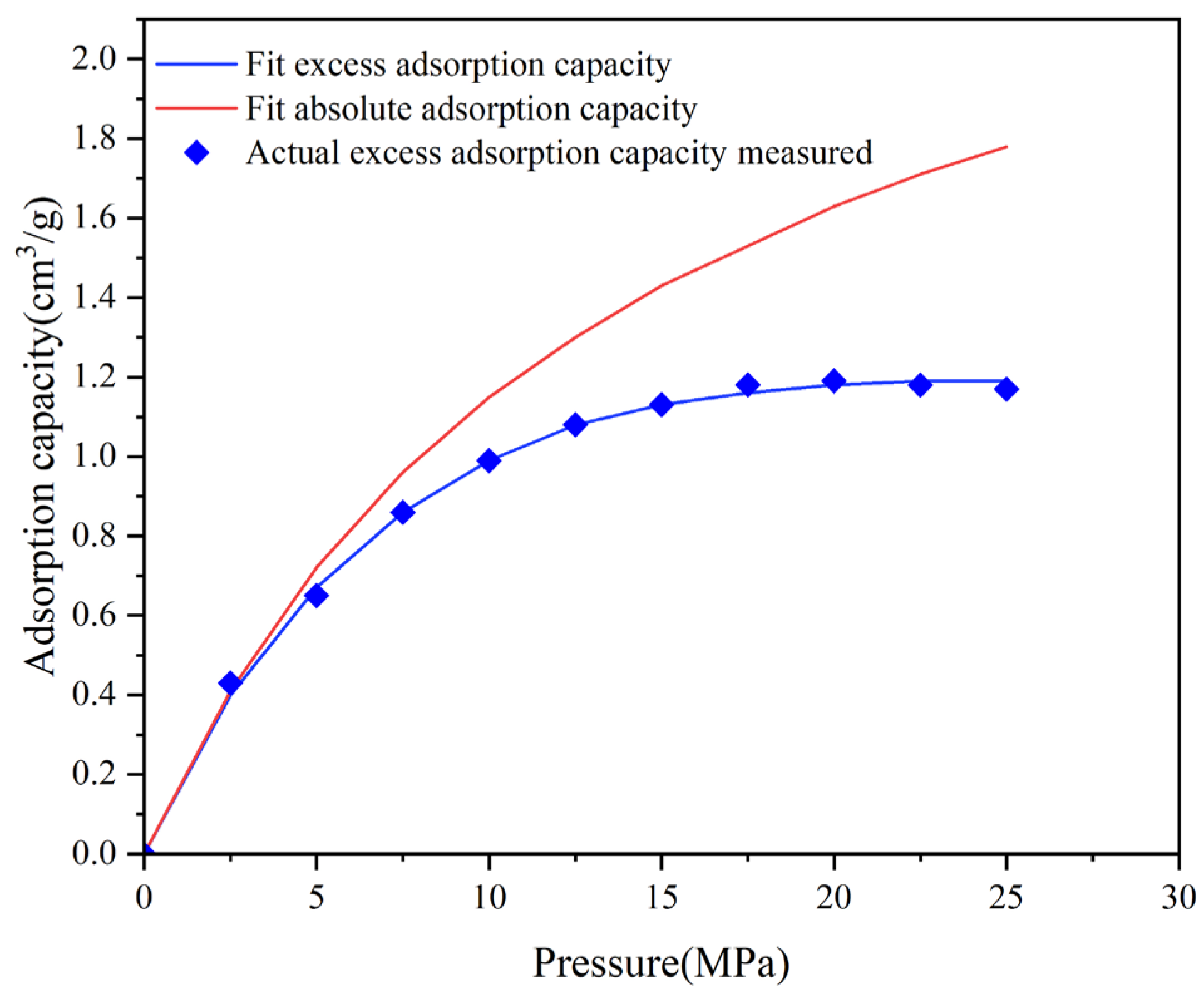
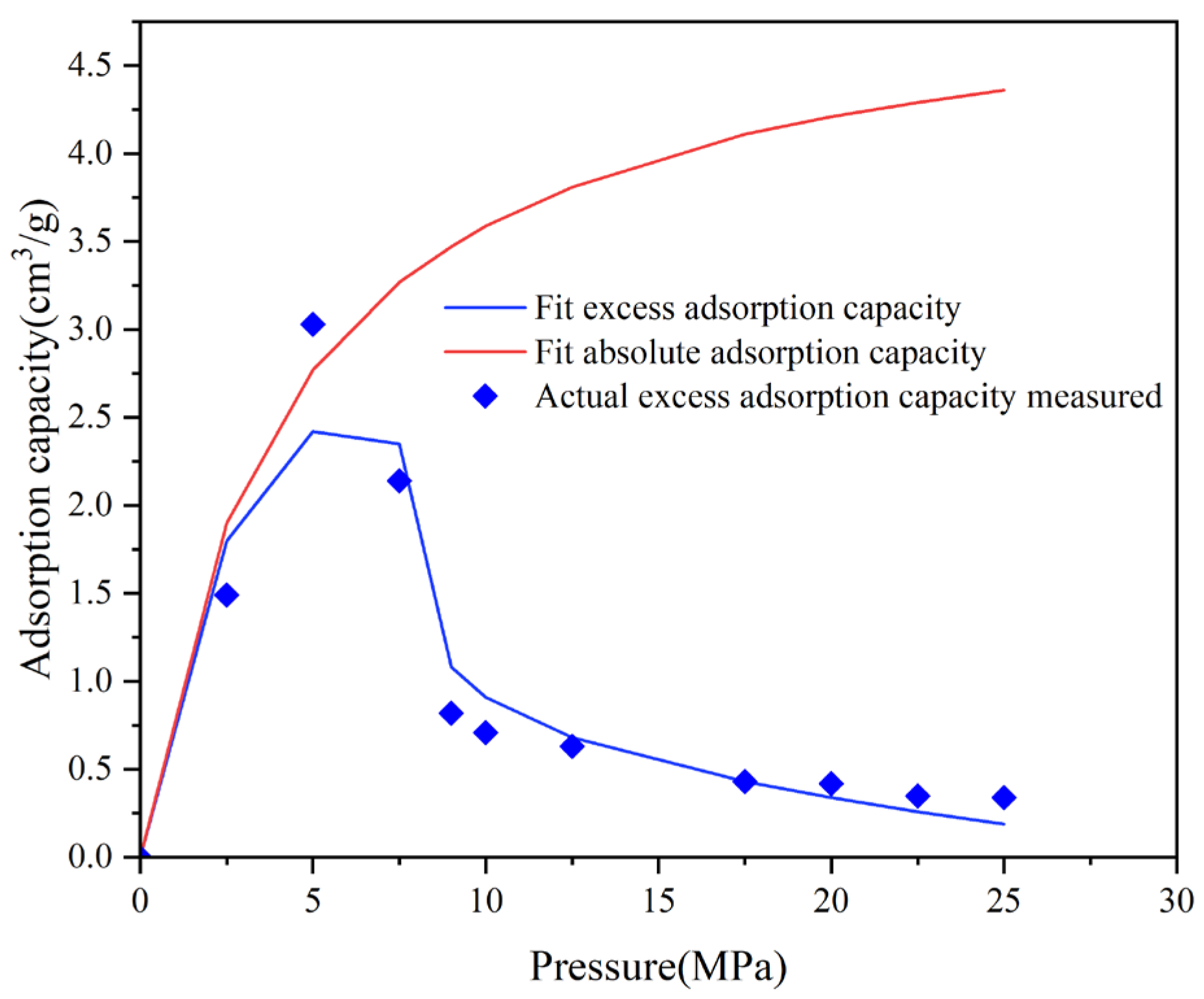
3.2. Isothermal Adsorption Experiments
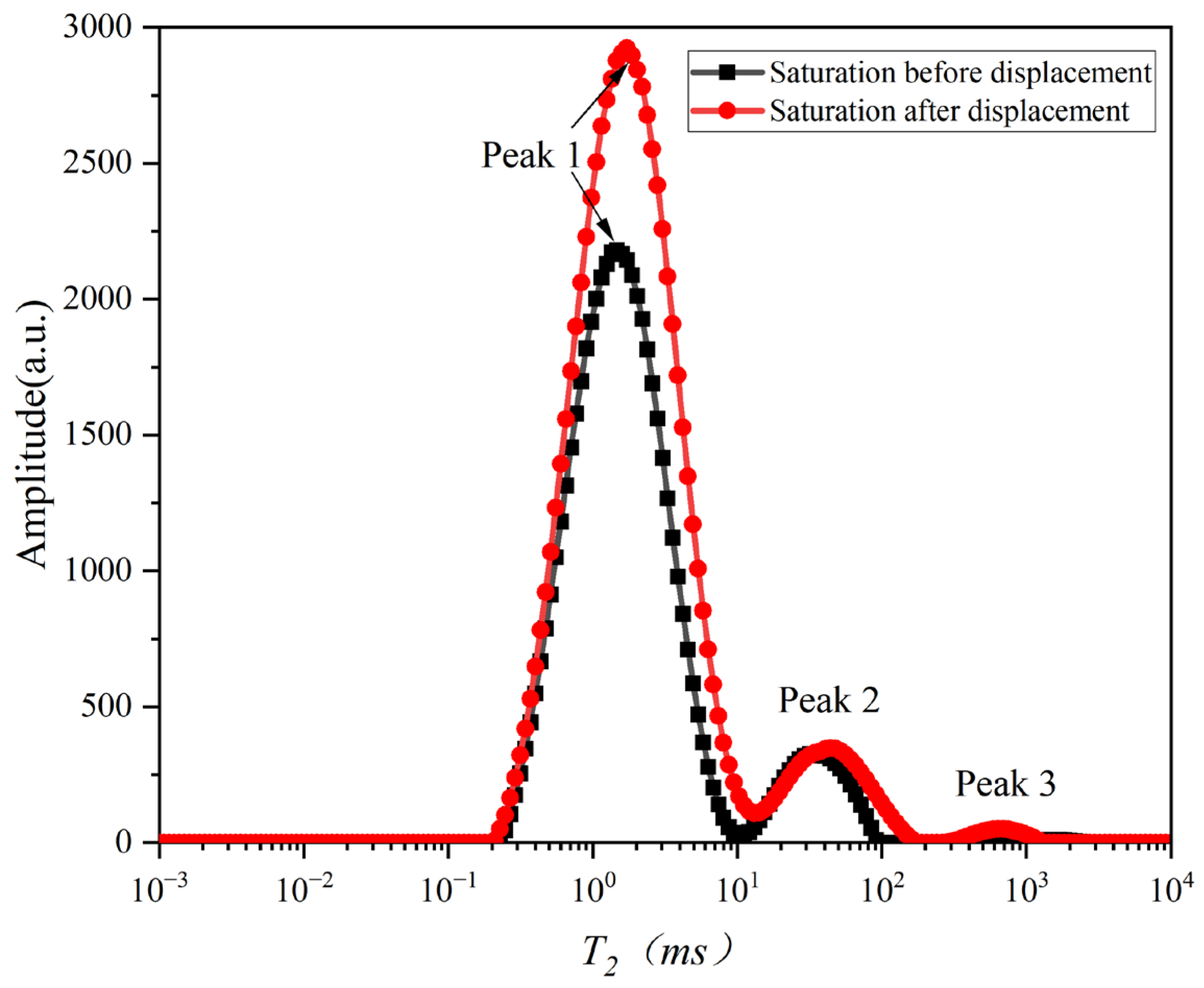
3.3. Effect of SCO2 Displacement on Soil Sample Porosity at Different Temperatures
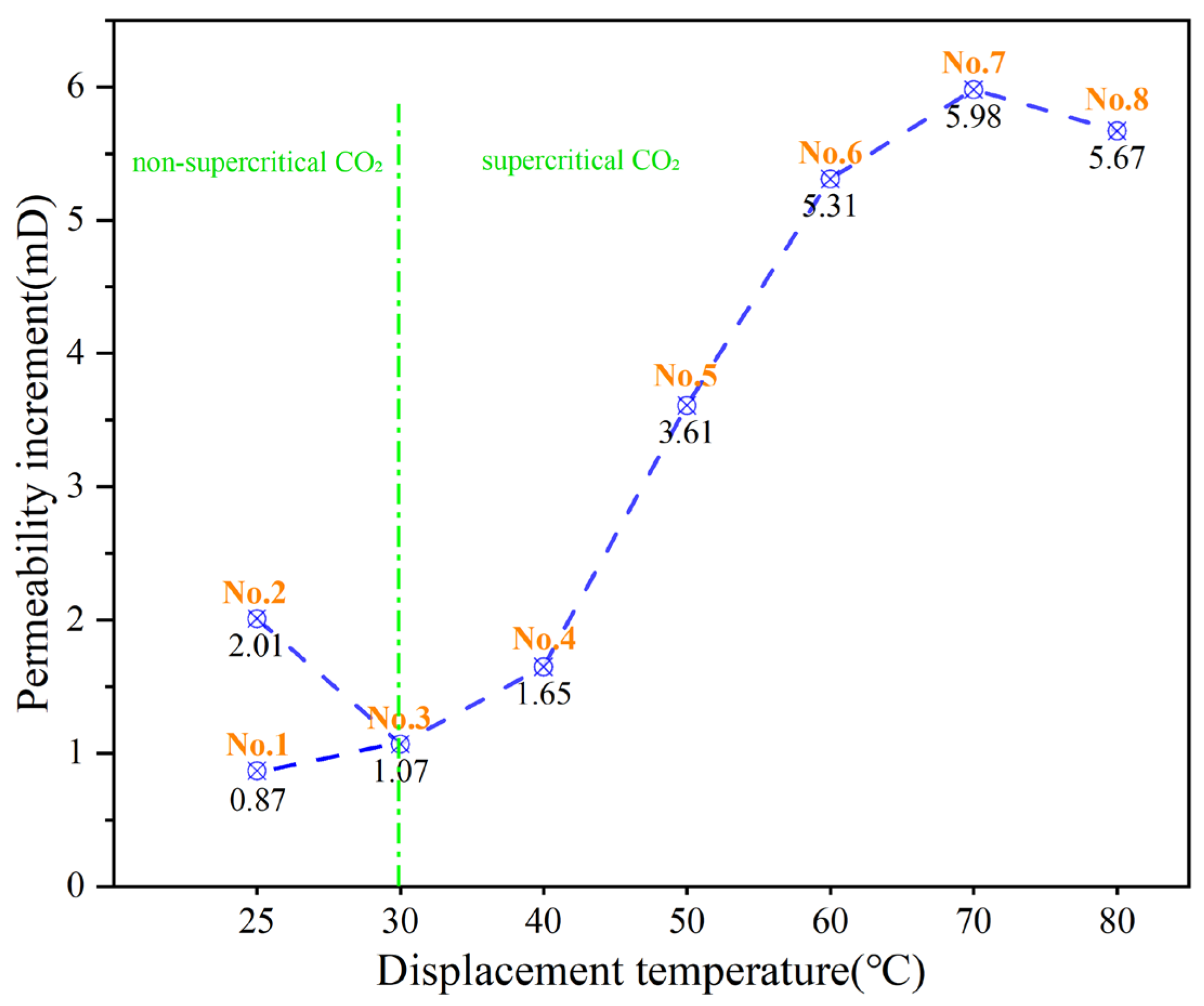
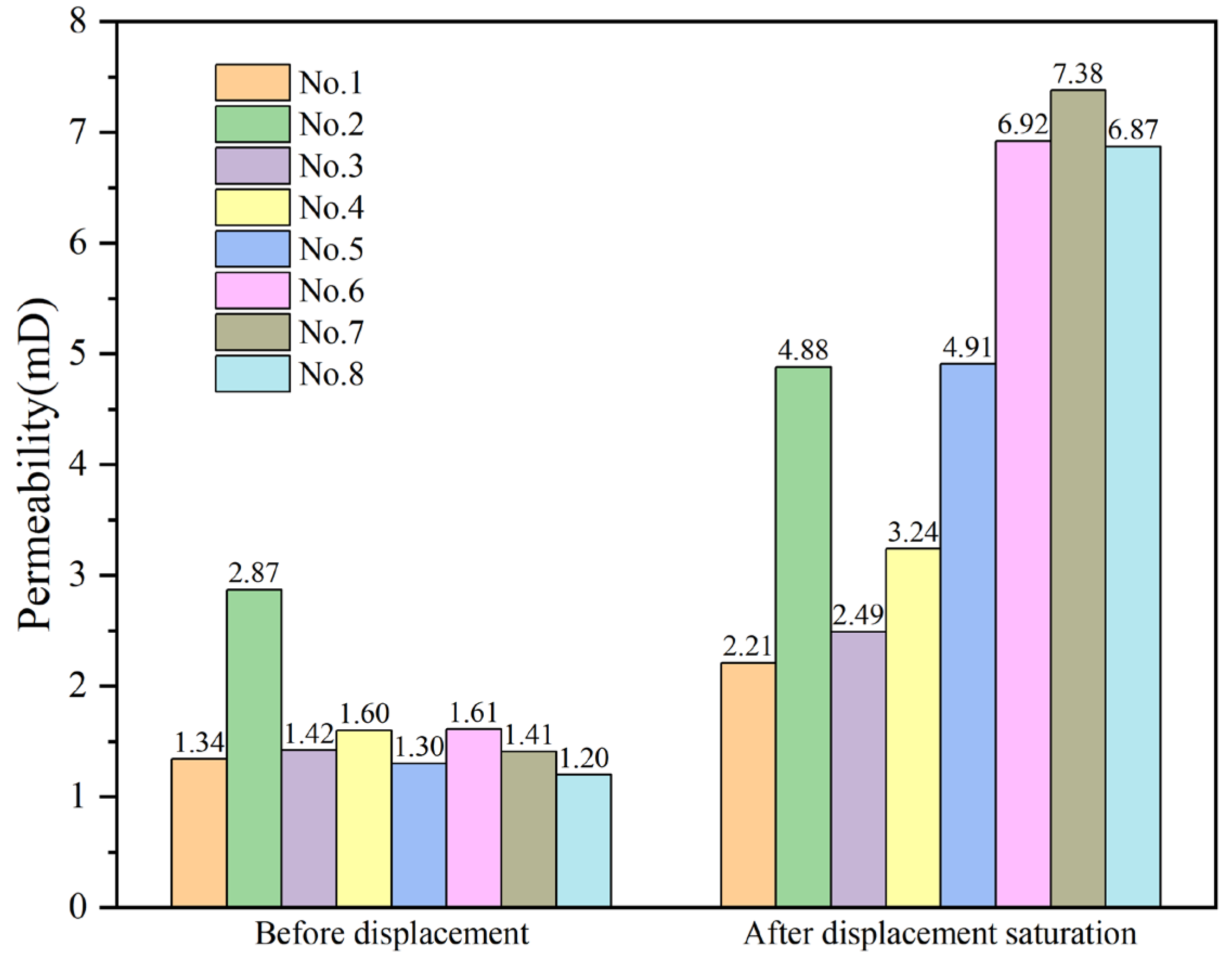
3.4. Effect of SCO2 Displacement on Soil Sample Permeability at Different Temperatures
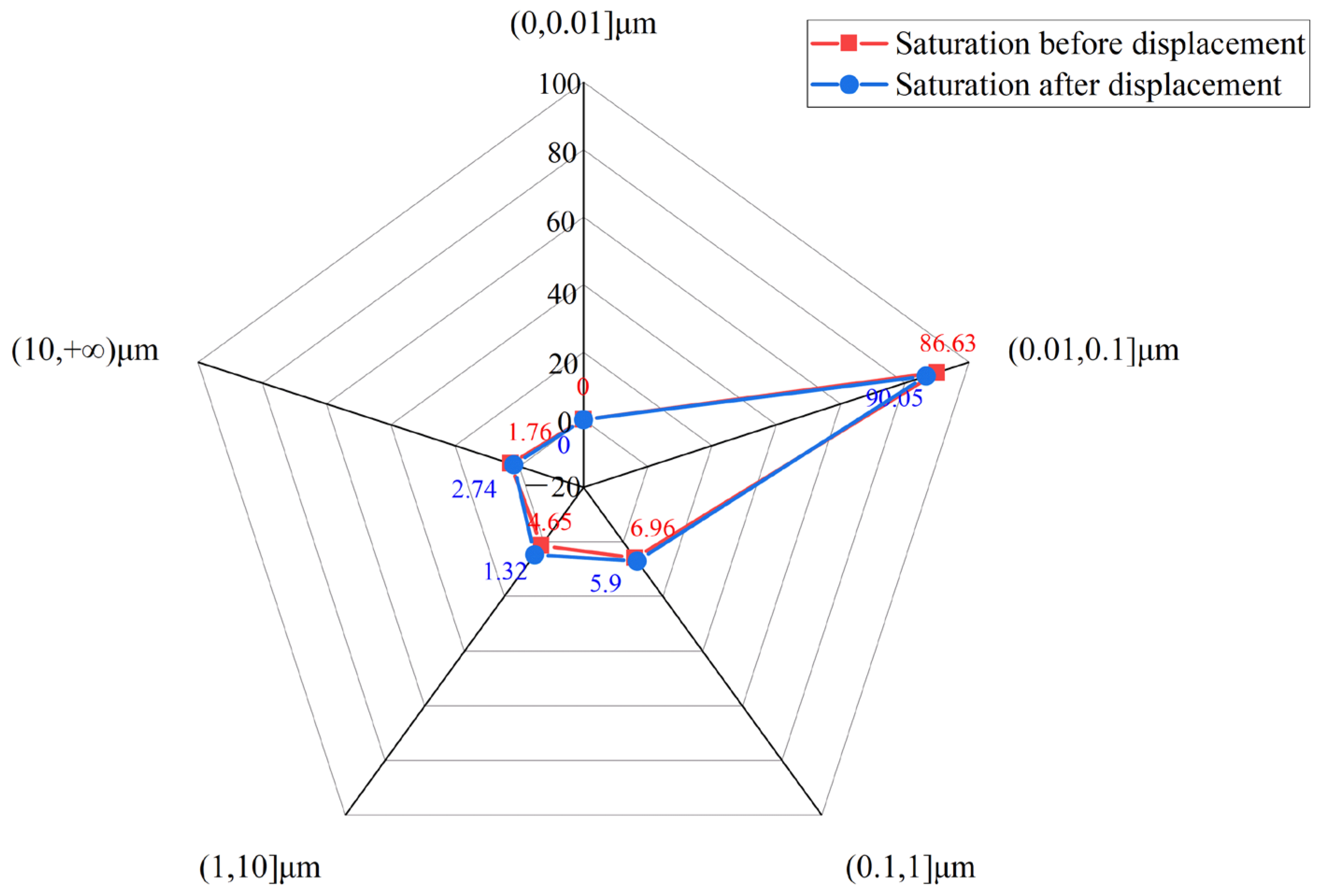
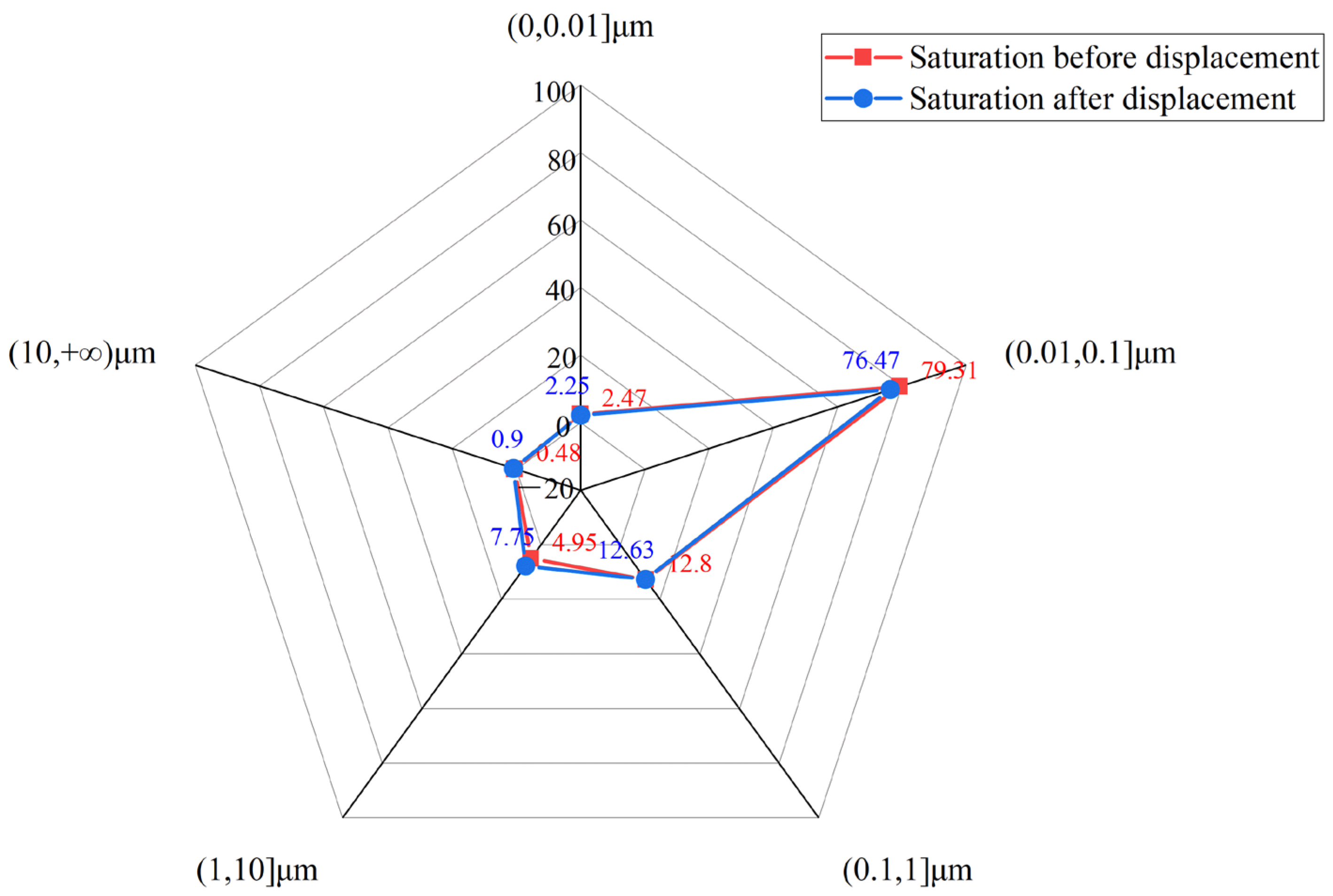
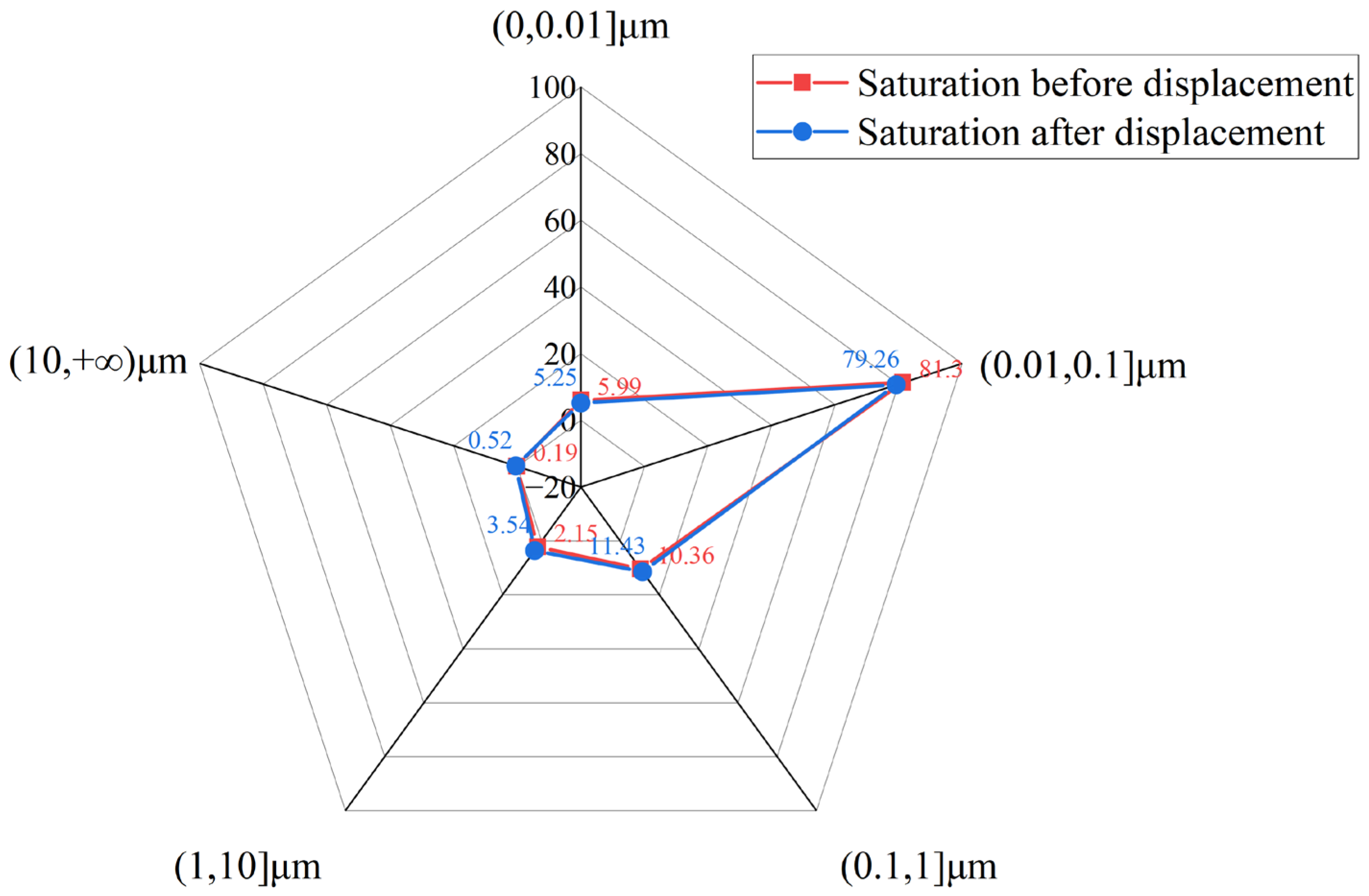
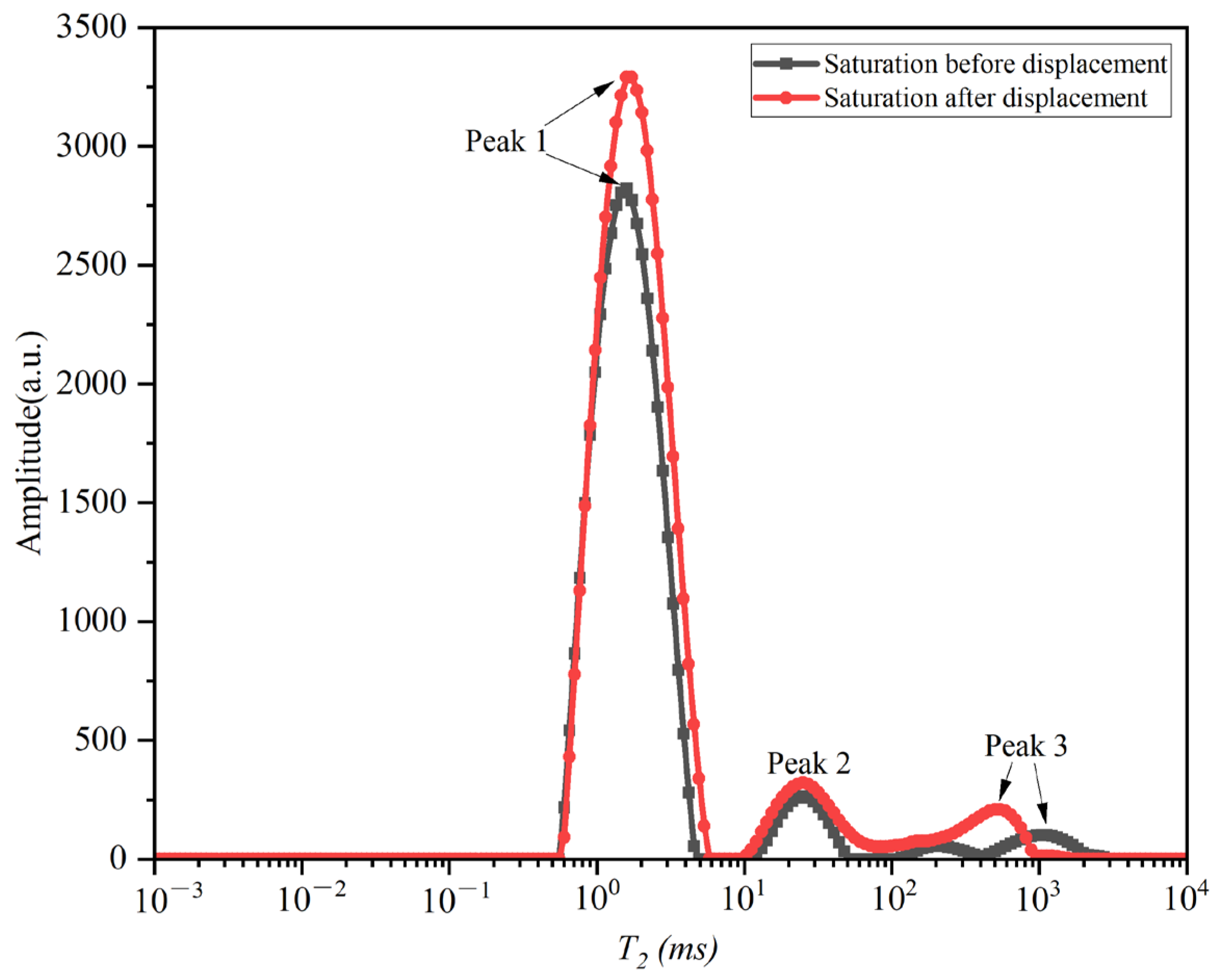
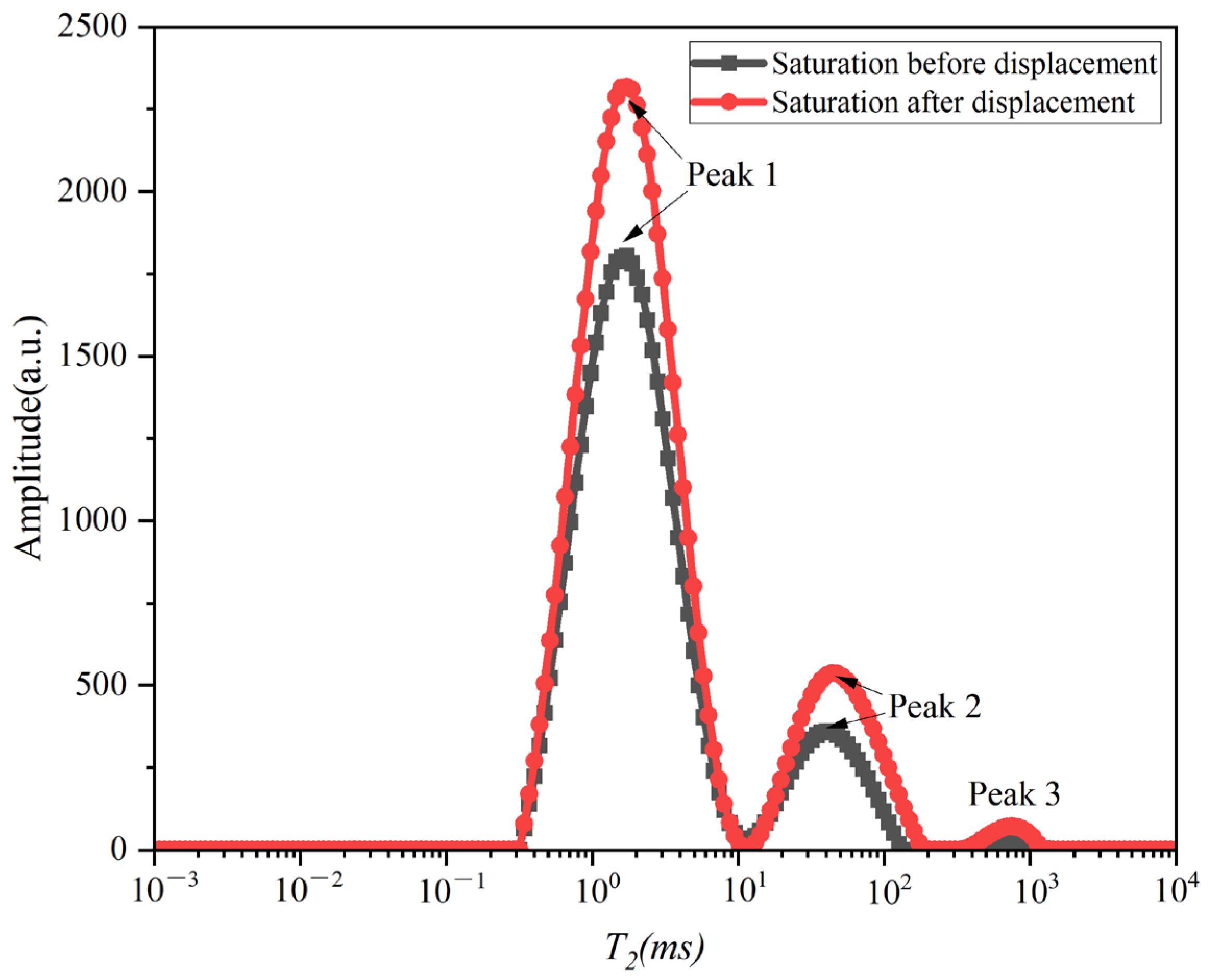
3.5. Characteristics of Pore Structure Changes in Soil Samples Before/After SCO2 Displacement
4. Conclusions and Prospects
Author Contributions
Funding
Institutional Review Board Statement
Informed Consent Statement
Data Availability Statement
Conflicts of Interest
Abbreviations
| NMR | Nuclear magnetic resonance |
| SCO2 | Supercritical CO2 |
References
- Tian, Y.; Ren, X.; Li, K.; Li, X. Carbon Dioxide Emission Forecast: A Review of Existing Models and Future Challenges. Sustainability 2025, 17, 1471. [Google Scholar] [CrossRef] [Scilit]
- Benjamin, B.; Rödenbeck, C.; Dohner, J.L.; Keeling, R.F.; Schwartzman, A. Surprising stability of recent global carbon cycling enables improved fossil fuel emission verification. Nat. Clim. Change 2023, 13, 961–966. [Google Scholar] [CrossRef] [Scilit]
- Cai, Q.; Zeng, N.; Zhao, F.; Han, P.; Liu, D.; Lin, X.; Chen, J. The impact of human and livestock respiration on CO2 emissions from 14 global cities. Carbon Balance Manag. 2022, 17, 17. [Google Scholar] [CrossRef] [Scilit]
- delaVega, E.; Chalk, T.B.; Wilson, P.A.; Bysani, R.P.; Foster, G.L. Atmospheric CO2 during the Mid-Piacenzian Warm Period and the M2 glaciation. Sci. Rep. 2020, 10, 11002. [Google Scholar] [CrossRef] [Scilit]
- Peters, G.P.; Andrew, R.M.; Canadell, J.G.; Friedlingstein, P.; Jackson, R.B.; Korsbakken, J.I.; Le Quere, C.; Peregon, A. Carbon dioxide emissions continue to grow amidst slowly emerging climate policies. Nat. Clim. Change 2020, 10, 3–6. [Google Scholar] [CrossRef] [Scilit]
- Gooya, R.; Silvestri, A.; Moaddel, A.; Andersson, M.P.; Stipp, S.; Sorensen, O. Unstable, super critical CO2-water displacement in fine grained porous media under geologic carbon sequestration conditions. Sci. Rep. 2019, 9, 11272. [Google Scholar] [CrossRef] [Scilit]
- Ringrose, P.S.; Furre, A.K.; Gilfillan, S.M.V.; Krevor, S.; Landro, M.; Leslie, R.; Meckel, T.; Nazarian, B.; Zahid, A. Storage of Carbon Dioxide in Saline Aquifers: Physicochemical Processes, Key Constraints, and Scale-Up Potential. Annu. Rev. Chem. Biomol. Eng. 2021, 12, 12471–12494. [Google Scholar] [CrossRef] [Scilit]
- Worden, R.H. Carbon Dioxide Capture and Storage (CCS) in Saline Aquifers versus Depleted Gas Fields. Geosciences 2024, 14, 146. [Google Scholar] [CrossRef] [Scilit]
- Ndlovu, P.; Babaee, S.; Naidoo, P. Review on CH4-CO2 replacement for CO2 sequestration and CH4/CO2 hydrate formation in porous media. Fuel 2022, 320, 123795. [Google Scholar] [CrossRef] [Scilit]
- Ali, M.; Jha, N.K.; Pal, N.; Keshavarz, A.; Hoteit, H.; Sarmadivaleh, M. Recent advances in carbon dioxide geological storage, experimental procedures, influencing parameter, and future outlook. Earth-Sci. Rev. 2022, 225, 103895. [Google Scholar] [CrossRef] [Scilit]
- Aminu, M.D.; Nabavi, S.A.; Rochelle, C.A.; Manovic, V. A review of developments in carbon dioxide storage. Appl. Energy 2017, 208, 1389–1419. [Google Scholar] [CrossRef] [Scilit]
- Kali, R.F.S.; Fan, D.; Hazel, N.; Striolo, A. Techno-socio-economic analysis of geological carbon sequestration opportunities. Environ. Sci. Adv. 2022, 1, 138–155. [Google Scholar] [CrossRef] [Scilit]
- Eiken, O.; Ringrose, P.; Hermanrud, C.; Nazarian, B.; Torp, T.A.; Hoier, L. Lessons learned from 14 years of CCS operations: Sleipner, In Salah and Snohvit. Energy Procedia 2011, 4, 5541–5548. [Google Scholar] [CrossRef] [Scilit]
- Cavanagh, A.J.; Haszeldine, R.S. The Sleipner storage site: Capillary flow modeling of a layered CO2 plume requires fractured shale barriers within the Utsira Formation. Int. J. Greenh. Gas Control 2014, 21, 101–112. [Google Scholar] [CrossRef] [Scilit]
- Pradhan, S.; Bhattacherjee, R.; Aichele, C.; Bikkina, P. Determination of CO2 solubility in brines and produced waters of various salinities for CO2 EOR and storage applications. Chem. Eng. 2025, 507, 16040. [Google Scholar] [CrossRef] [Scilit]
- Ye, Y.; Chen, Y.; Yao, X.; Dong, P.; Chen, Y.; Niu, Y.; Duan, J.; Wu, Z.; Li, Y.; Jiang, Y.; et al. How injecting CO2 enhances marine natural gas hydrate exploitation: Review and prospect. Renewable and Sustainable Energy Rev. 2025, 222, 116011. [Google Scholar] [CrossRef] [Scilit]
- Takao, E. Method for Dumping and Disposing of Carbon Dioxide Gas and Apparatus Therefor. Google Patents. U.S. Patent 5,261,490, 16 November 1993. [Google Scholar]
- Ohgaki, K.; Takano, K.; Sangawa, H.; Matsubara, T.; Nakano, S. Methane exploitation by carbon dioxide from gas hydrates—Phase equilibria for CO2-CH4 mixed hydrate systemtl. J. Chem. Eng. Jpn. 1996, 29, 478–483. [Google Scholar] [CrossRef] [Scilit]
- Pandey, J.S.; von Solms, N. Hydrate stability and methane recovery from gas hydrate through CH4–CO2 replacement in different mass transfer scenarios. Energies 2019, 12, 2309. [Google Scholar] [CrossRef] [Scilit]
- Ota, M.; Abe, Y.; Watanabe, M.; Smith, R.L., Jr.; Inomata, H. Methane recovery from methane hydrate using pressurized CO2. Fluid Phase Equilibria 2005, 228, 553–559. [Google Scholar] [CrossRef] [Scilit]
- Zhang, X.; Yang, L.; Wang, Q.; Zhao, F.; Dong, S.; Yang, J.; Liu, Y.; Song, C. Enhanced CH4 recovery and CO2 storage via thermal stimulation in the CH4/CO2 replacement of methane hydrate. Chem. Eng. J. 2017, 308, 40–49. [Google Scholar] [CrossRef] [Scilit]
- Tupsakhare, S.; Castaldi, J. Efficiency enhancements in methane recovery from natural gas hydrates using injection of CO2/N2 gas mixture simulating in-situ combustion. Appl. Energy 2019, 236, 825–836. [Google Scholar] [CrossRef] [Scilit]
- Liu, T.; Wu, P.; Chen, R.; Li, H. Review on carbon dioxide replacement of natural gas hydrate: Research progress and perspectives. Energy Fuels 2022, 36, 7321–7336. [Google Scholar] [CrossRef] [Scilit]
- Li, J.; Ye, J.; Qin, X.; Qiu, H.; Wu, N.; Lu, H.; Xie, W.; Lu, J.; Peng, F.; Xu, Z.; et al. The first offshore natural gas hydrate production test in South China Sea. China Geol. 2018, 1, 5–16. [Google Scholar] [CrossRef] [Scilit]
- Li, Z.; Su, Y.; Li, L.; Hao, Y.; Wang, W.; Meng, Y.; Zhao, A. Evaluation of CO2 storage of water alternating gas flooding using experimental and numerical simulation methods. Fuel 2022, 311, 122489. [Google Scholar] [CrossRef] [Scilit]
- Li, X.; Tian, Y.; Zhang, X.; Song, G.; Zhao, M.; Liang, J.; Huang, W.; Meng, F. Numerical Simulation Study on the Effect of Horizontal Well Reservoir Stimulation for Gas Hydrate Production. Acta Geol. Sin. (Engl. Ed.) 2022, 96, 701–712. [Google Scholar] [CrossRef] [Scilit]
- Jing, E.; Zhao, X.; Luo, H.; Liu, G.; Chen, K.; Wang, M.; Deng, M.; Wu, L.F. Marine controlled-source electromagnetic imaging of natural gas hydrates and gas source conditions in the Shenhu area of the South China Sea. Acta Geol. Sin. 2024, 98, 2024185. [Google Scholar] [CrossRef]
- Ye, L.; Qin, W.; Qiu, J.; Xie, W.; Lu, F.; Lu, C.; Zhou, H.; Liu, Y.; Yang, B.; Cao, J.; et al. Data report: Molecular and isotopic compositions of the extracted gas from China’s first offshore natural gas hydrate production test in South China Sea. Energies 2018, 11, 2793. [Google Scholar] [CrossRef] [Scilit]
- Nikolai, P.; Rabiyat, B.; Aslan, A.; Llmutdin, A. Supercritical CO2: Properties and Technological Applications—A Review. J. Therm. Sci. 2019, 28, 394–430. [Google Scholar] [CrossRef] [Scilit]
- Yu, L.; Ma, X.; Gan, Y.; Zhang, H.; Wen, Z.; Du, X. Response characteristics of shale permeability to cyclic loading under different gas pressures. Sci. Rep. 2025, 15, 27839. [Google Scholar] [CrossRef] [Scilit]
- Tao, L.; Wen, M.; Yue, D.; Zhao, Z.; Liu, B.; Zhang, J.; Chen, S.; Zhao, X. Unloading-induced permeability recovery in rock fractures. J. Rock Mech. Geotech. Eng. 2023, 15, 3148–3162. [Google Scholar] [CrossRef] [Scilit]
- Wen, M.; Harpers, N.; Inskip, N.F.; Buckman, J.; Singh, K.; Miller, P.; Busch, A. Mechanical Responses and Permeability Evolution in Porous Sandstones Under Cyclic Loading Conditions: Implications for Subsurface Hydrogen Storage. Rock Mech. Rock Eng. 2025, 58, 10643–10673. [Google Scholar] [CrossRef] [Scilit]
- Tang, X.; Wang, Z.; Ripepi, N.; Kang, B.; Yue, G. Adsorption affinity of different types of coal: Mean isosteric heat of adsorption. Energy Fuels 2015, 29, 3609–3615. [Google Scholar] [CrossRef] [Scilit]
- Zaheer, H.; Dzeti, F. Carbon dioxide adsorption on shale: A comparative study of isotherm models across diverse samples and temperatures. In E3S Web of Conferences; EDP Sciences: Les Ulis, France, 2024; Volume 488, p. 03009. [Google Scholar]
- Long, F.; Shi, M. A Novel experimental system for accurate gas sorption and its application to various shale rocks. Chem. Eng. Res. Des. 2021, 165, 180–191. [Google Scholar] [CrossRef] [Scilit]
- Zhao, Y.; Luo, M.; Zhang, T.; Hu, H.; Yang, C.; Luo, Q.; Guan, B. Competitive adsorption of CH4/CO2 in shale nanopores during static and displacement process. Nat. Gas Ind. B 2024, 11, 239–251. [Google Scholar] [CrossRef] [Scilit]
- Rafikova, G.R.; Khasanov, M.K. Replacement of Methane as Part of the Gas Hydrate by Carbon Dioxide in the Stratum with Negative Temperature. J. Eng. Phys. Thermophys. 2023, 96, 312–321. [Google Scholar] [CrossRef] [Scilit]
- Zhao, Y.; Zhang, Y.; Lei, X.; Zhang, Y.; Song, Y. CO2 flooding enhanced oil recovery evaluated using magnetic resonance imaging technique. Energy 2020, 203, 117878. [Google Scholar] [CrossRef] [Scilit]
- Yao, Y.; Liu, D. Comparison of low-field NMR and mercury intrusion porosimetry in characterizing pore size distributions of coals. Fuel 2012, 95, 152–158. [Google Scholar] [CrossRef] [Scilit]
- Wang, C.; Zhao, Y.; Ning, L.; Bi, J. Permeability evolution of coal subjected to triaxial compression based on in-situ nuclear magnetic resonance. Int. J. Rock Mech. Min. Sci. 2022, 159, 105213. [Google Scholar] [CrossRef] [Scilit]
- Yan, M.; Lu, Z.; Yang, X.; Zheng, J.; Wang, L.; Hong, Y. Influence of thermodynamic and stress conditions in saline aquifers on CO2 drainage: Optimization of CO2 storage and energy recovery. Adv. Geo-Energy Res. 2025, 18, 207–217. [Google Scholar] [CrossRef] [Scilit]








| Density (ρ) | 1.61 g/cm3 |
| Water content (w) | 28.56% |
| Porosity (n) | 44.27% |
| Permeability (mD) | 17.19 |
| Component | SiO2 | Al2O3 | CaO | Fe2O3 | MgO | K2O | Na2O |
|---|---|---|---|---|---|---|---|
| Content (wt.%) | 52.65 | 17.10 | 11.74 | 7.02 | 3.37 | 3.64 | 1.85 |
| Components | O2 | Si | Al | Fe | Na | Mg | K | Ca | S | Ti |
|---|---|---|---|---|---|---|---|---|---|---|
| Content (wt.%) | 47.17 | 29.02 | 7.55 | 4.75 | 3.46 | 2.80 | 2.45 | 1.20 | 0.63 | 0.32 |
| Number | Confining Pressure | CO2 Injection Pressure | Injection Temperature | CO2 Phase State |
|---|---|---|---|---|
| No. 1 | 10 MPa | 6 MPa | 25 °C | non-supercritical phase |
| No. 2 | 10 MPa | 8 MPa | 25 °C | non-supercritical phase |
| No. 3 | 10 MPa | 8 MPa | 30 °C | supercritical phase |
| No. 4 | 10 MPa | 8 MPa | 40 °C | supercritical phase |
| No. 5 | 10 MPa | 8 MPa | 50 °C | supercritical phase |
| No. 6 | 10 MPa | 8 MPa | 60 °C | supercritical phase |
| No. 7 | 10 MPa | 8 MPa | 70 °C | supercritical phase |
| No. 8 | 10 MPa | 8 MPa | 80 °C | supercritical phase |
| Number | NMR Porosity Before Displacement | NMR Porosity After Displacement | Increment of NMR Porosity | Weight Porosity Before Displacement | Weight Porosity After Displacement | Increment of Weight Porosity |
|---|---|---|---|---|---|---|
| No. 1 | 25.24% | 26.76% | 1.52% | 25.08% | 26.47% | 1.39% |
| No. 2 | 26.08% | 27.55% | 1.47% | 25.27% | 27.28% | 2.01% |
| No. 3 | 22.97% | 24.97% | 2.00% | 22.54% | 24.64% | 1.90% |
| No. 4 | 22.26% | 24.51% | 2.25% | 22.62% | 24.19% | 1.57% |
| No. 5 | 21.96% | 27.82% | 5.86% | 21.79% | 27.37% | 5.58% |
| No. 6 | 21.91% | 29.14% | 7.23% | 21.65% | 28.94% | 7.29% |
| No. 7 | 24.51% | 34.64% | 10.13% | 24.35% | 33.99% | 9.64% |
| No. 8 | 23.05% | 30.47% | 7.42% | 22.91% | 29.91% | 7.00% |
| Soil Sample Number | Pore Percentage Before Displacement (≤0.1 μm) | Pore Percentage After Displacement (≤0.1 μm) | Increment | Pore Percentage Before Displacement (>0.1 μm) | Pore Percentage After Displacement (>0.1 μm) | Increment |
|---|---|---|---|---|---|---|
| No. 5 | 90.05% | 86.63% | −3.80% | 9.95% | 13.37% | 34.37% |
| No. 6 | 81.78% | 78.72% | −3.85% | 18.22% | 21.28% | 16.79% |
| No. 7 | 87.29% | 84.51% | −3.18% | 12.71% | 15.49% | 21.87% |
Disclaimer/Publisher’s Note: The statements, opinions and data contained in all publications are solely those of the individual author(s) and contributor(s) and not of MDPI and/or the editor(s). MDPI and/or the editor(s) disclaim responsibility for any injury to people or property resulting from any ideas, methods, instructions or products referred to in the content. |
© 2026 by the authors. Licensee MDPI, Basel, Switzerland. This article is an open access article distributed under the terms and conditions of the Creative Commons Attribution (CC BY) license.
Share and Cite
Li, X.; Wang, Y.; Chen, J.; Zhang, S.; Hu, Y.; He, Q.; Wang, H. The Influence of Supercritical CO2 Displacement at Different Temperatures on Porosity and Permeability Evolution in Marine Unconsolidated Strata. Appl. Sci. 2026, 16, 1507. https://doi.org/10.3390/app16031507
Li X, Wang Y, Chen J, Zhang S, Hu Y, He Q, Wang H. The Influence of Supercritical CO2 Displacement at Different Temperatures on Porosity and Permeability Evolution in Marine Unconsolidated Strata. Applied Sciences. 2026; 16(3):1507. https://doi.org/10.3390/app16031507
Chicago/Turabian StyleLi, Xiaoyang, Yingli Wang, Junda Chen, Shiyu Zhang, Yule Hu, Qingcheng He, and Hanzhe Wang. 2026. "The Influence of Supercritical CO2 Displacement at Different Temperatures on Porosity and Permeability Evolution in Marine Unconsolidated Strata" Applied Sciences 16, no. 3: 1507. https://doi.org/10.3390/app16031507
APA StyleLi, X., Wang, Y., Chen, J., Zhang, S., Hu, Y., He, Q., & Wang, H. (2026). The Influence of Supercritical CO2 Displacement at Different Temperatures on Porosity and Permeability Evolution in Marine Unconsolidated Strata. Applied Sciences, 16(3), 1507. https://doi.org/10.3390/app16031507