Numerical Investigation of Statistical Relationships Between Random Fiber Distributions and Mechanical Properties of Concrete Composites


Abstract
1. Introduction
- 1.
- To quantify the influence of random fiber parameters on the elastic modulus, compressive strength, and tensile strength of the composite material.
- 2.
- To establish a quantitative relationship between microstructural input variability and macroscopic mechanical properties through statistical analysis of simulation results.

| Study | Numerical Model and Loading Conditions | Treatment of Fiber Distribution and Stochasticity | Interfacial Modeling | Main Focus and Limitations Relative to the Present Work |
|---|---|---|---|---|
| Li et al. (2021) [15] | 3D FE, CT-based SFRC members | Real CT field, no parametric study | Perfect bond (no cohesive) | Real fiber fields, without randomness and interface mechanisms |
| Naderi and Zhang (2022) [32] | 3D meso FE, tension or compression | Some randomness, focus on fiber shape | Meso interface/damage, no fiber-wise cohesive | Fiber-shape and fracture, not RVE stochastic morphology |
| Li et al. (2020) [33] | 3D meso SFRC analysis | Random with given volume fraction | Bond simplified/perfect | Global behavior, no separated random-parameter effects |
| Khalel and Khan (2023) [17] | Phenomenological regression model | Fiber inputs only, no explicit geometry | No explicit interface | Practical formulas, no microstructure–property mechanism |
| Kozák and Vala (2024) [20] | FEM with cohesive zones | Stochastic SFRC RVE not targeted | Cohesive cracks at structural scale | Cohesive concept, not CDP-based SFRC RVE |
| Present study | 3D RVE FE, CDP and elastoplastic fibers | Controlled number/size/orientation/distribution | Explicit cohesive with damage, pull-out | Random morphology and interface damage lead to macroscopic strength |
2. Model Description
2.1. Spatial Modeling and Overlap Detection
2.2. Material Properties and Interaction Behaviors
2.3. Modelling Scale and Homogenization Assumptions
3. Constitutive Modeling
3.1. Fiber Constitutive Model
3.1.1. Elastic Stage
3.1.2. Plastic Stage
3.2. Constitutive Model Based on the CDP Model
3.2.1. Elastic Stage
3.2.2. Plastic Stage
3.3. Cohesive Interface Model
4. Mechanical Simulation of Random FRC Models
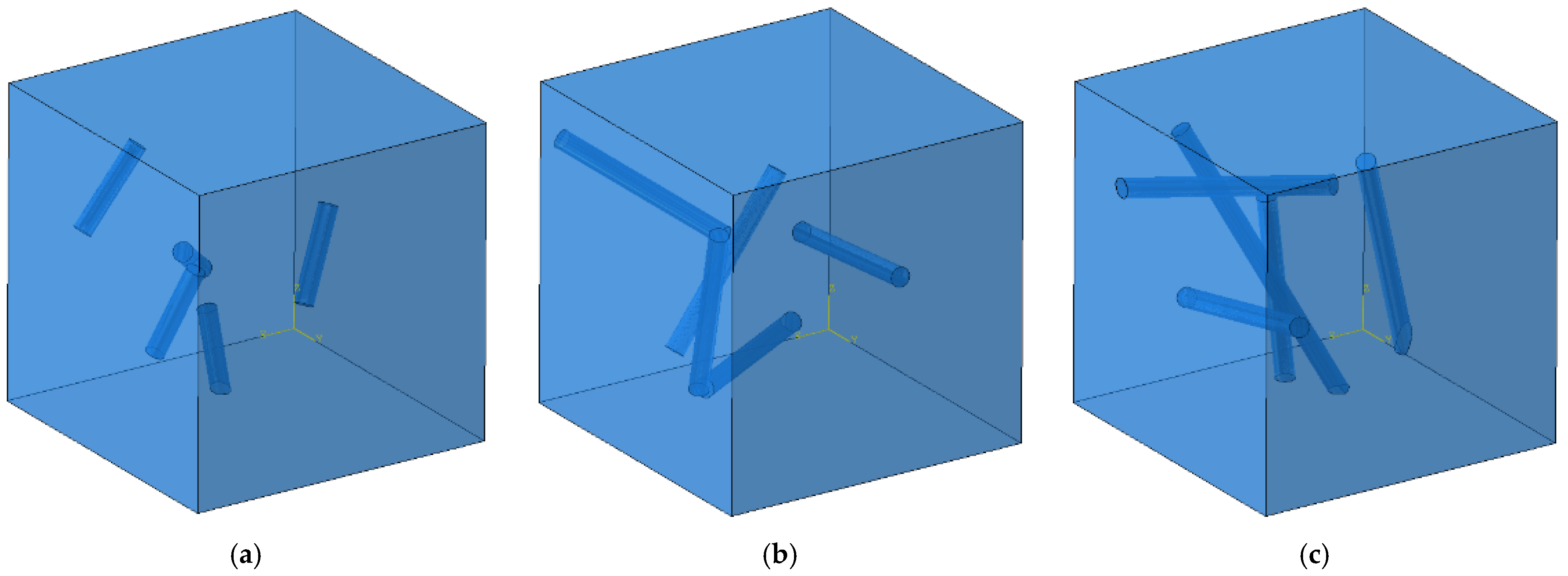
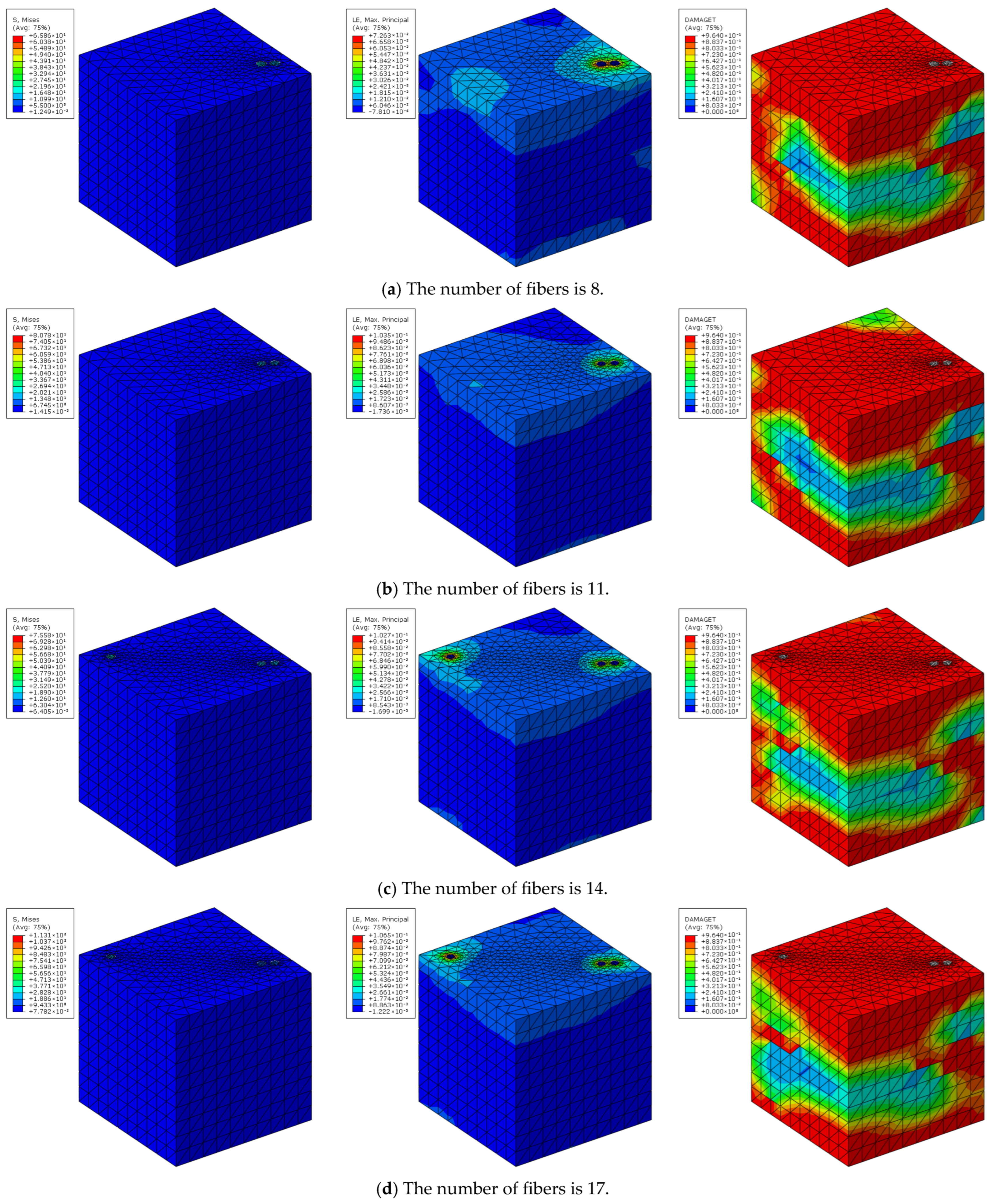
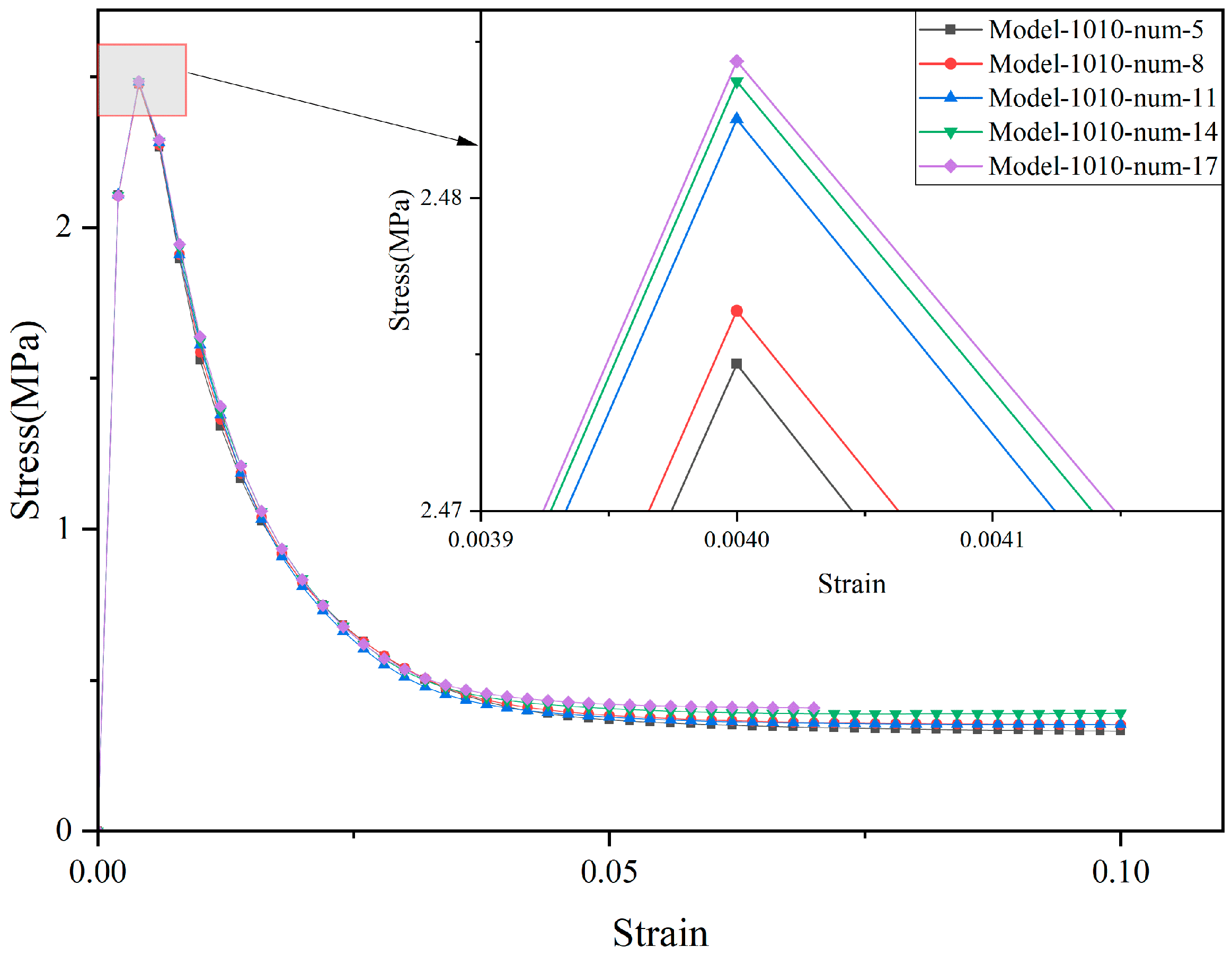
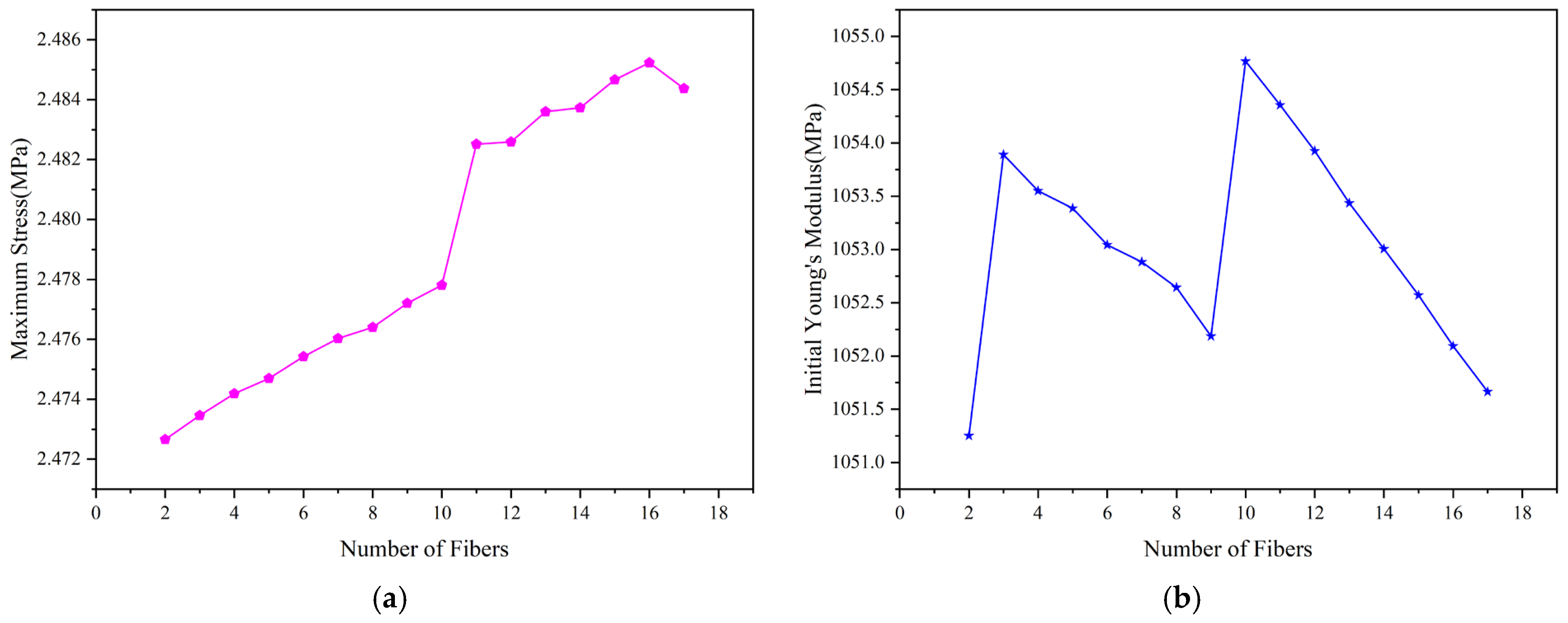
4.1. Different Numbers of Fibers
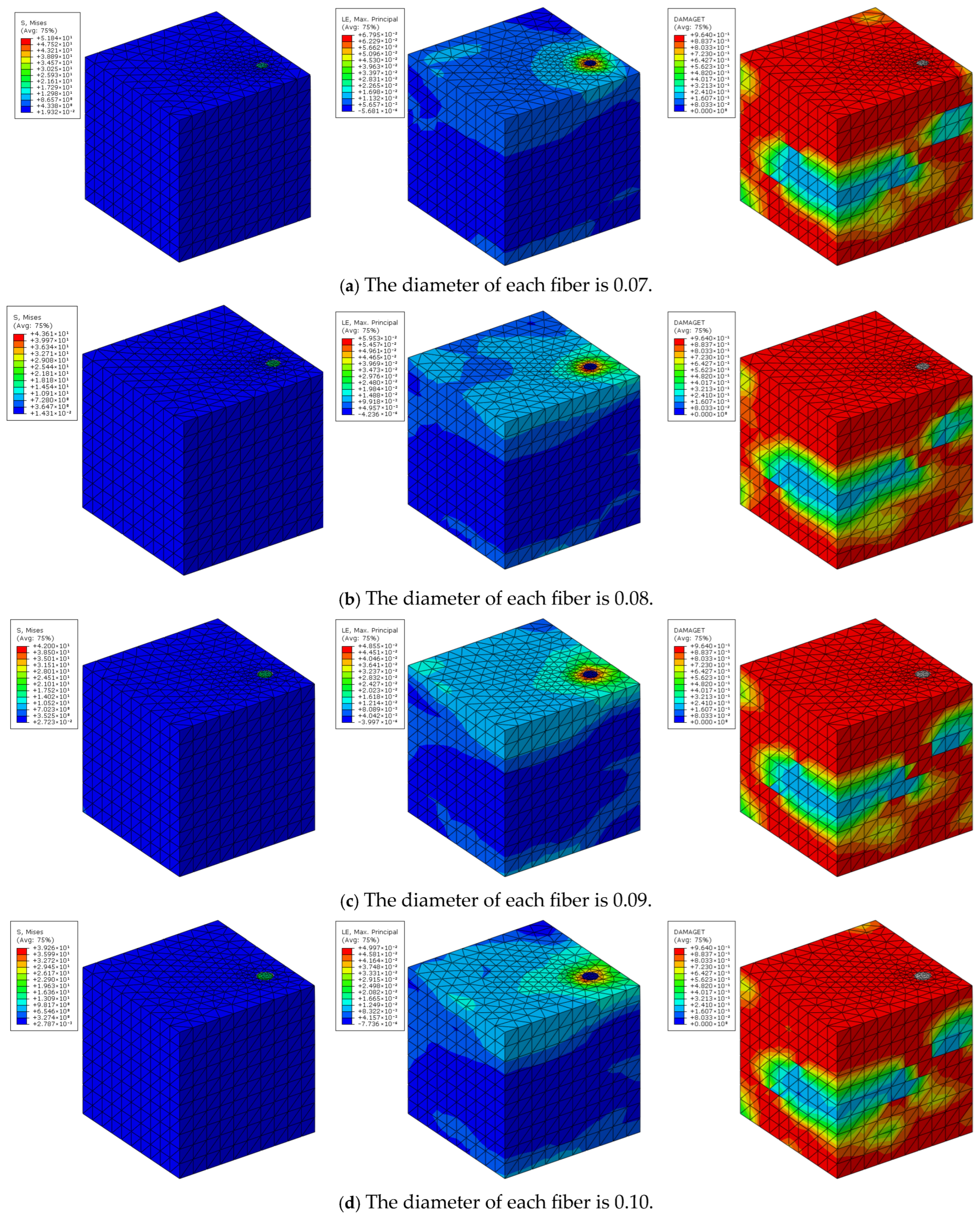
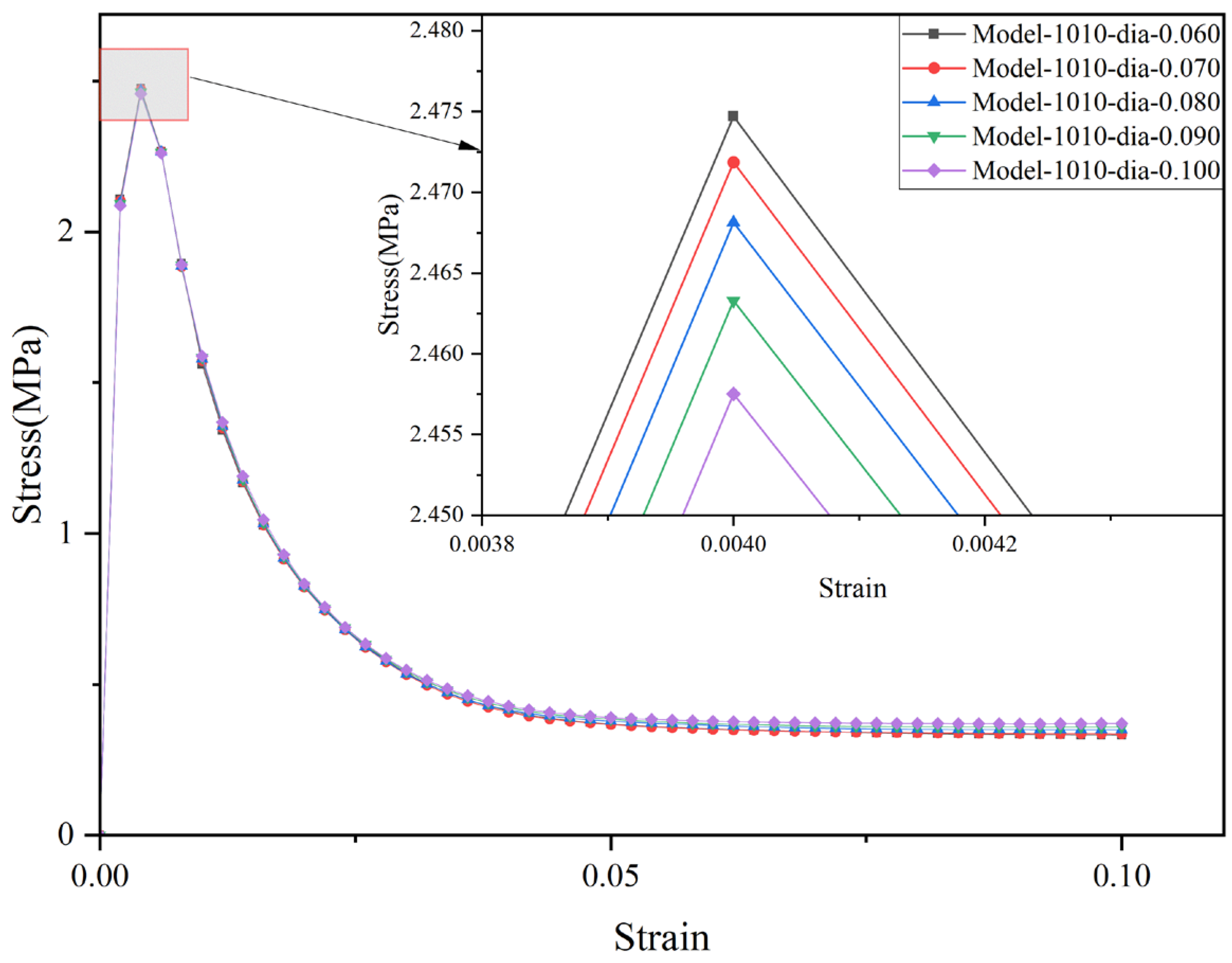
4.2. Different Fiber Diameters
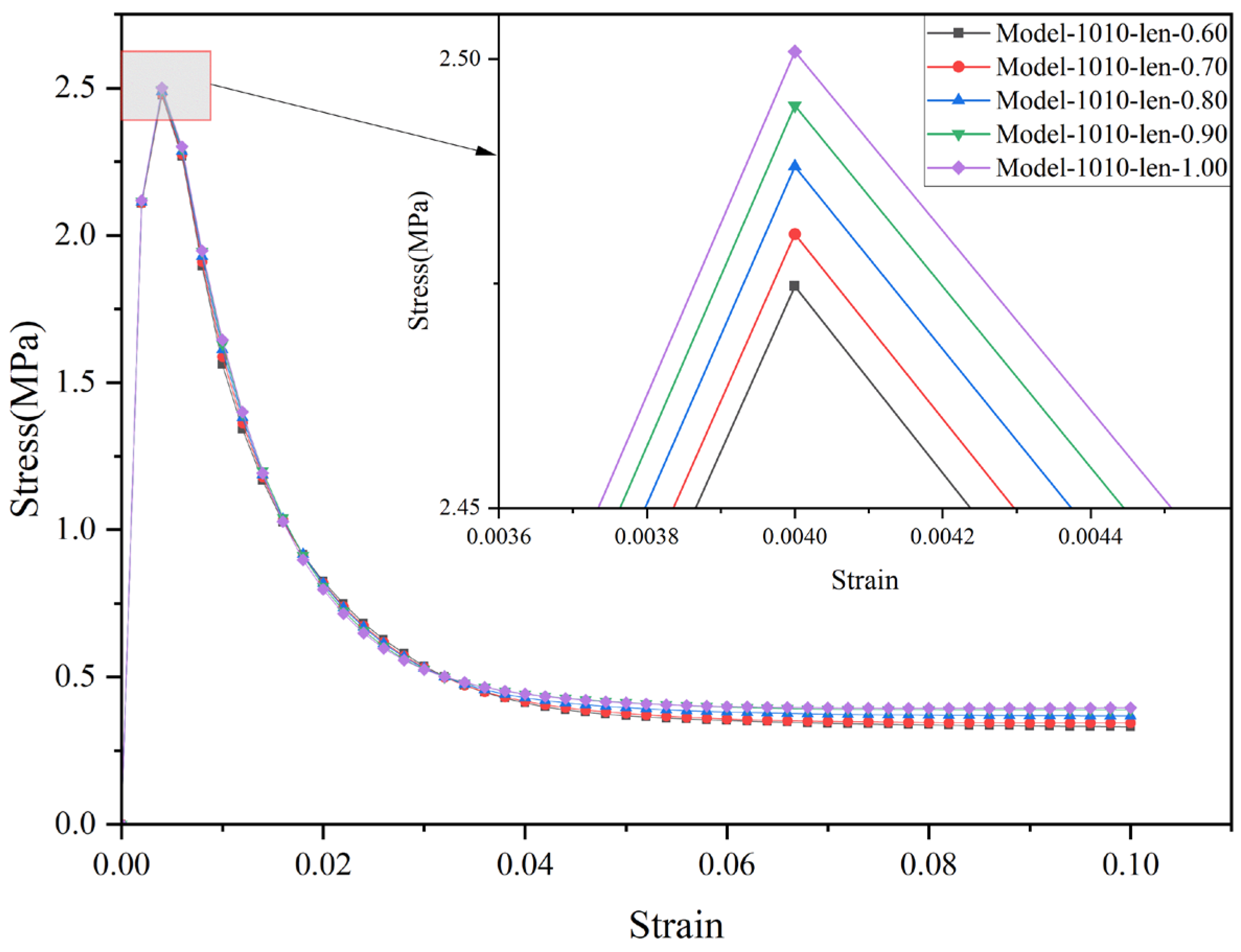
4.3. Different Fiber Lengths
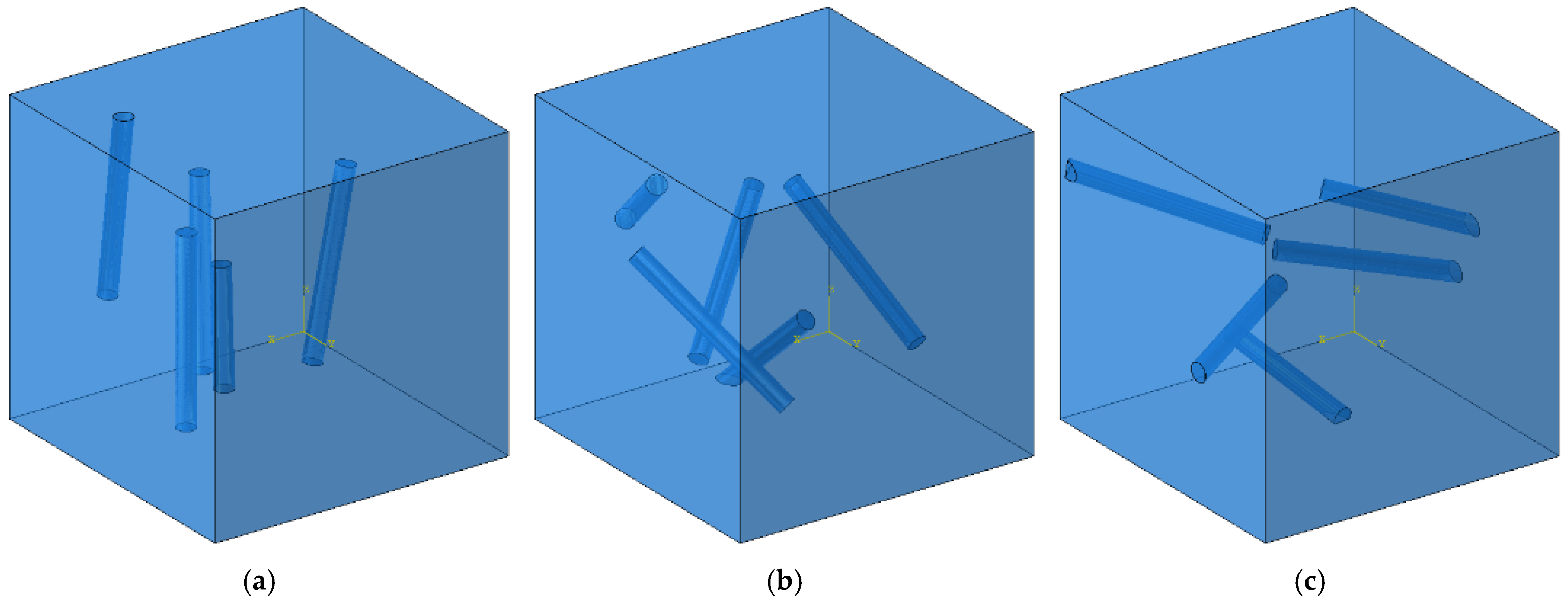
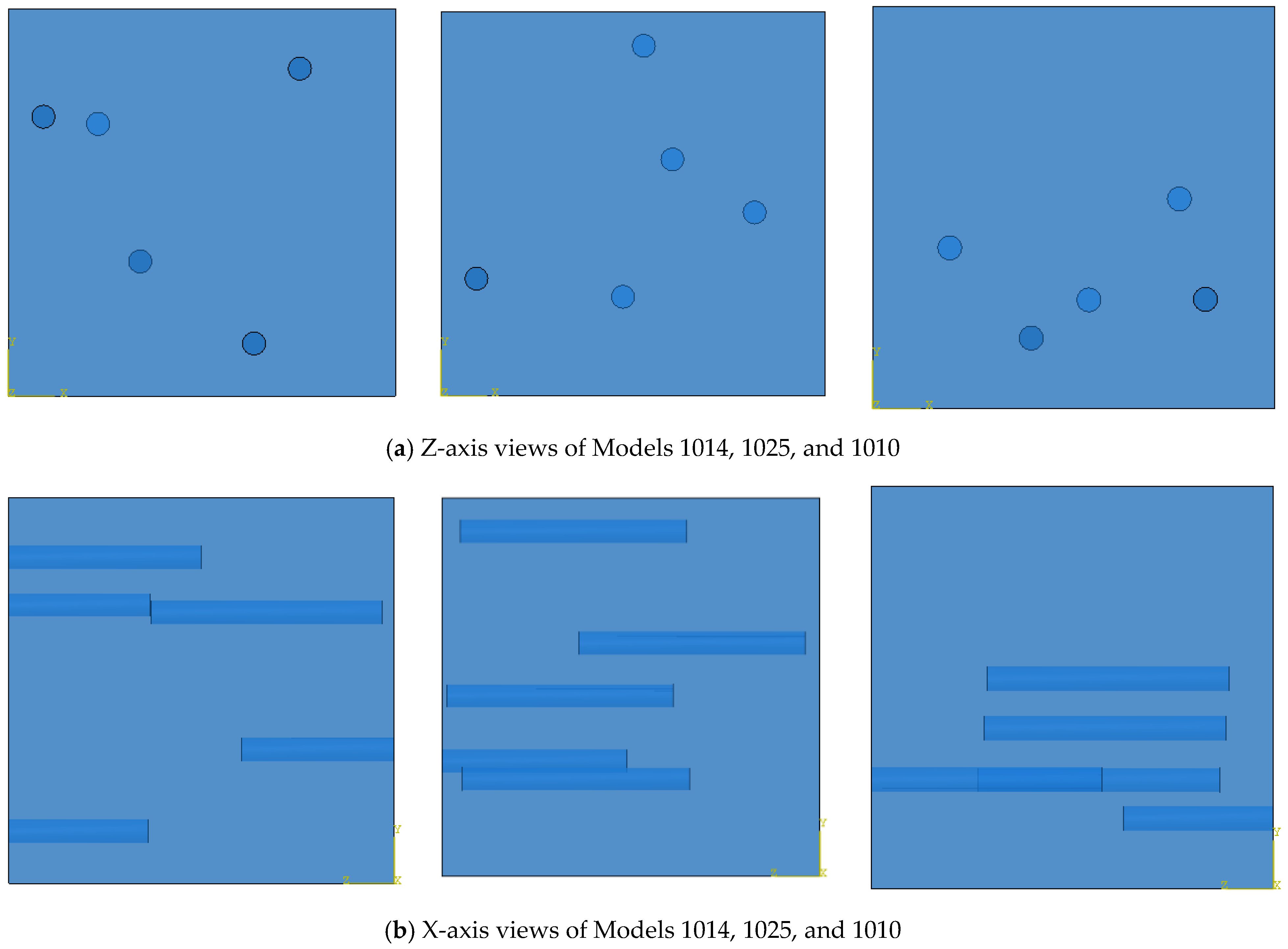
4.4. Different Fiber Orientations
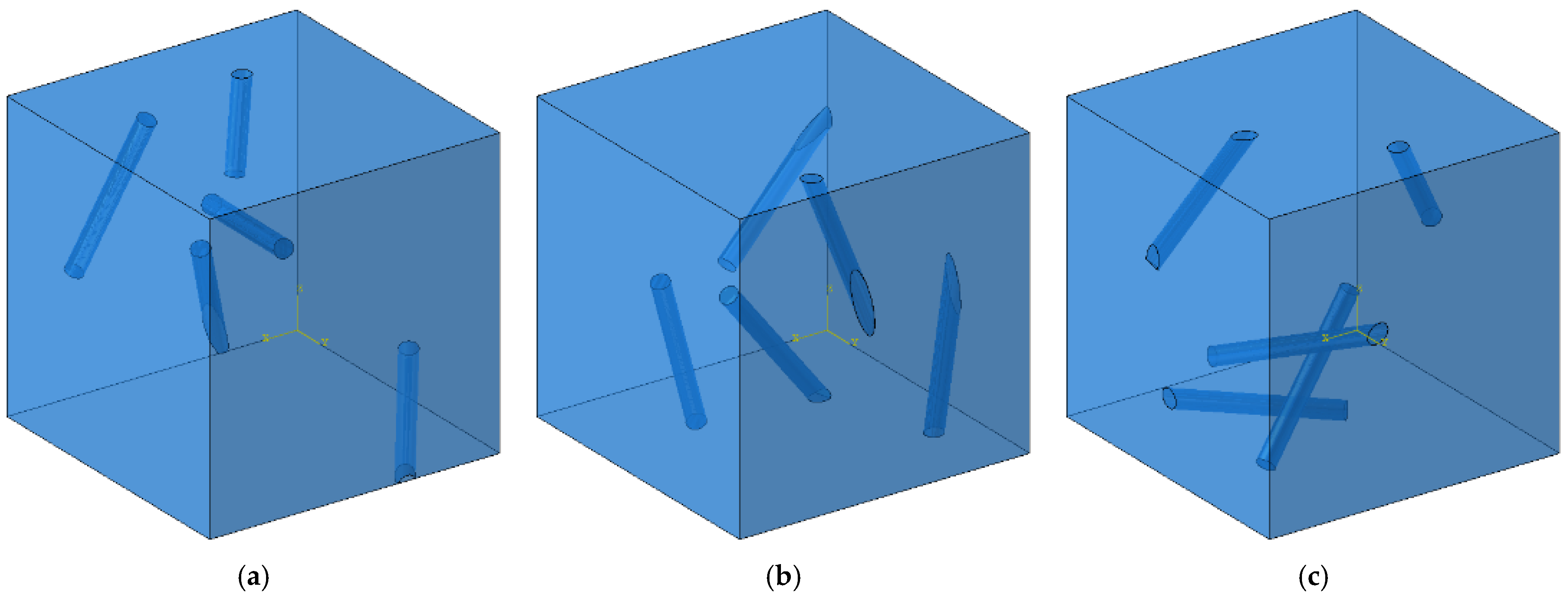
4.5. Different Spatial Distributions of Fibers
4.6. Definition of the Ultimate Limit State Under Uniaxial Tension
5. Results and Discussion
5.1. Effect of Fiber Quantity on the Mechanical Behavior
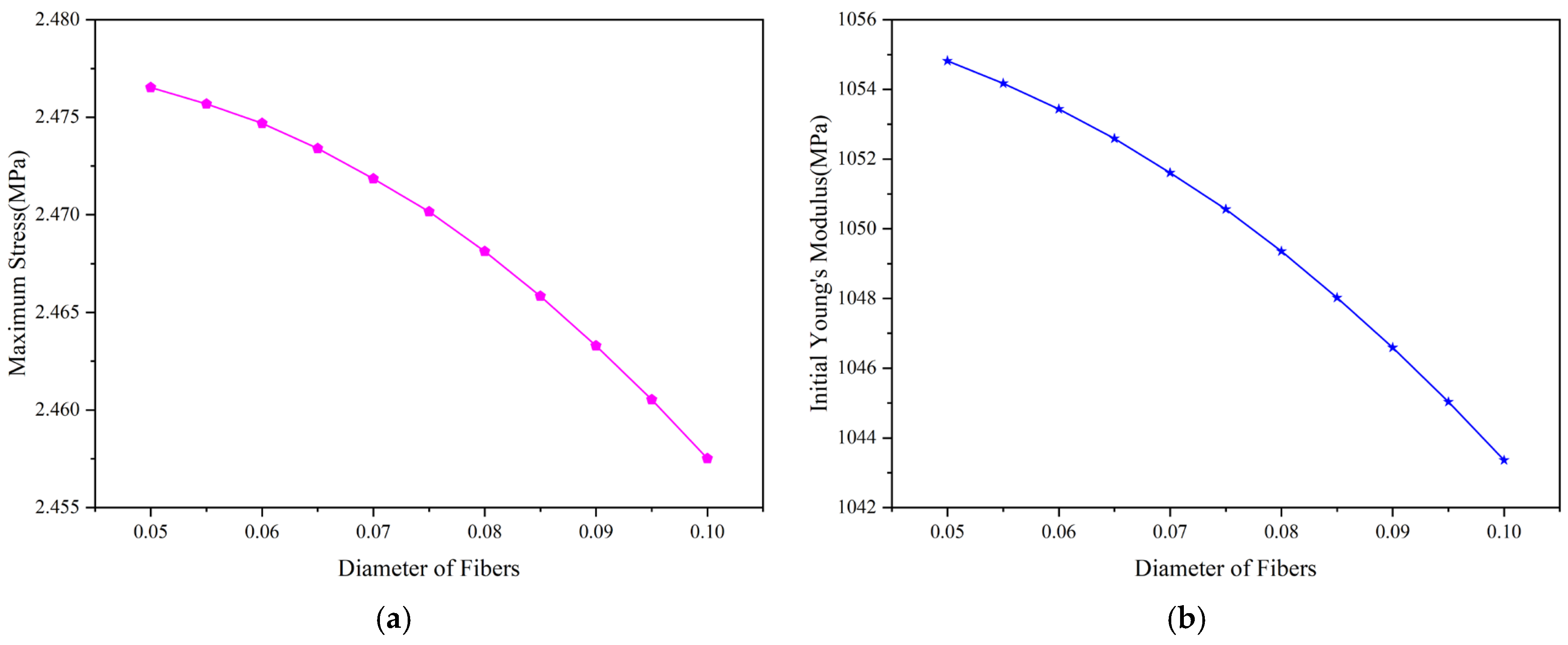
5.2. Effect of Fiber Diameter on the Macroscopic Mechanical Behavior
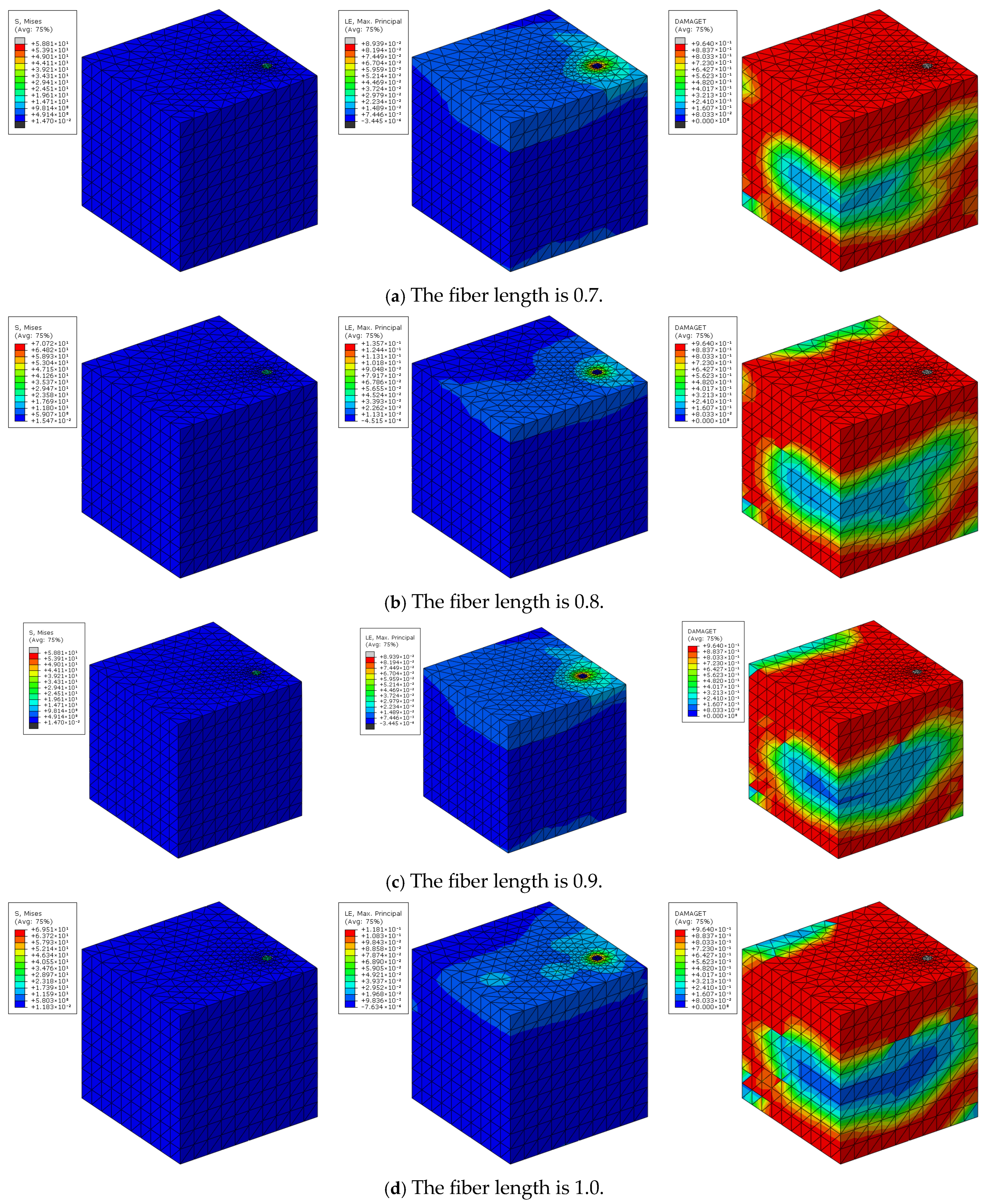
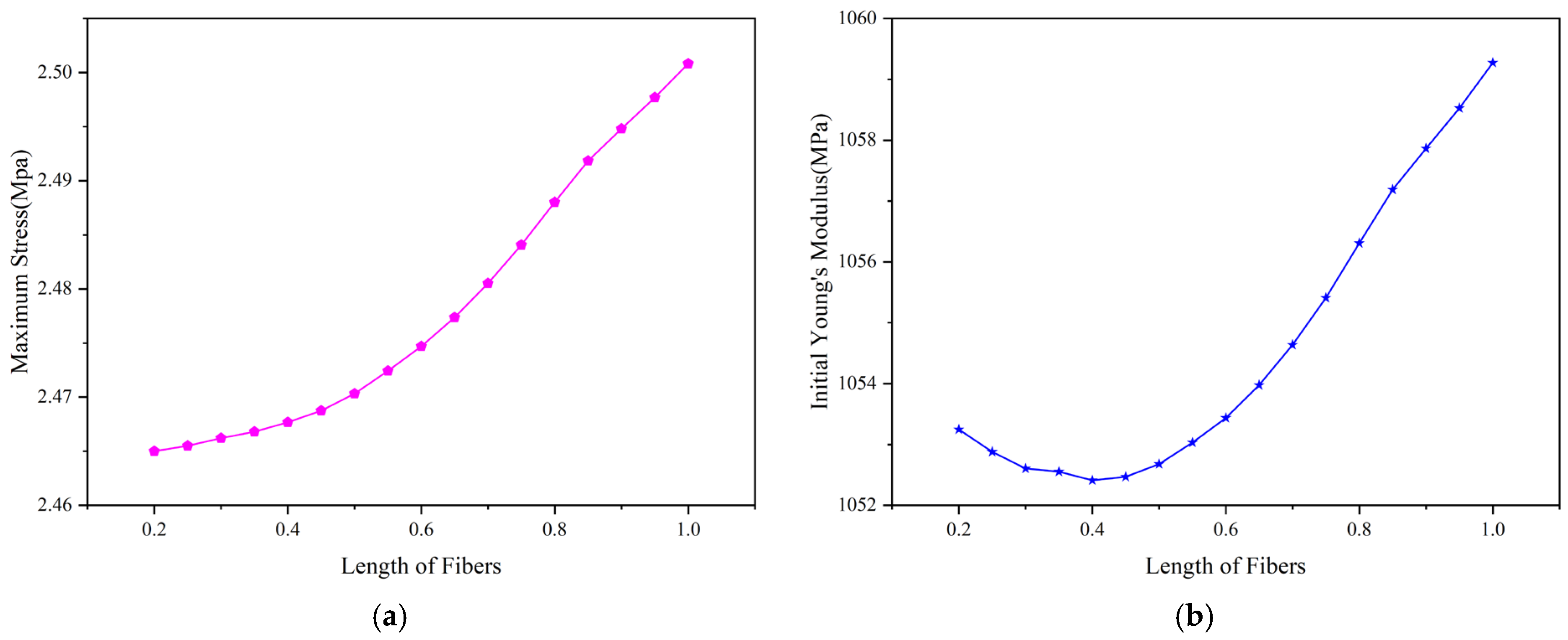
5.3. Effect of Fiber Length on the Macroscopic Mechanical Behavior
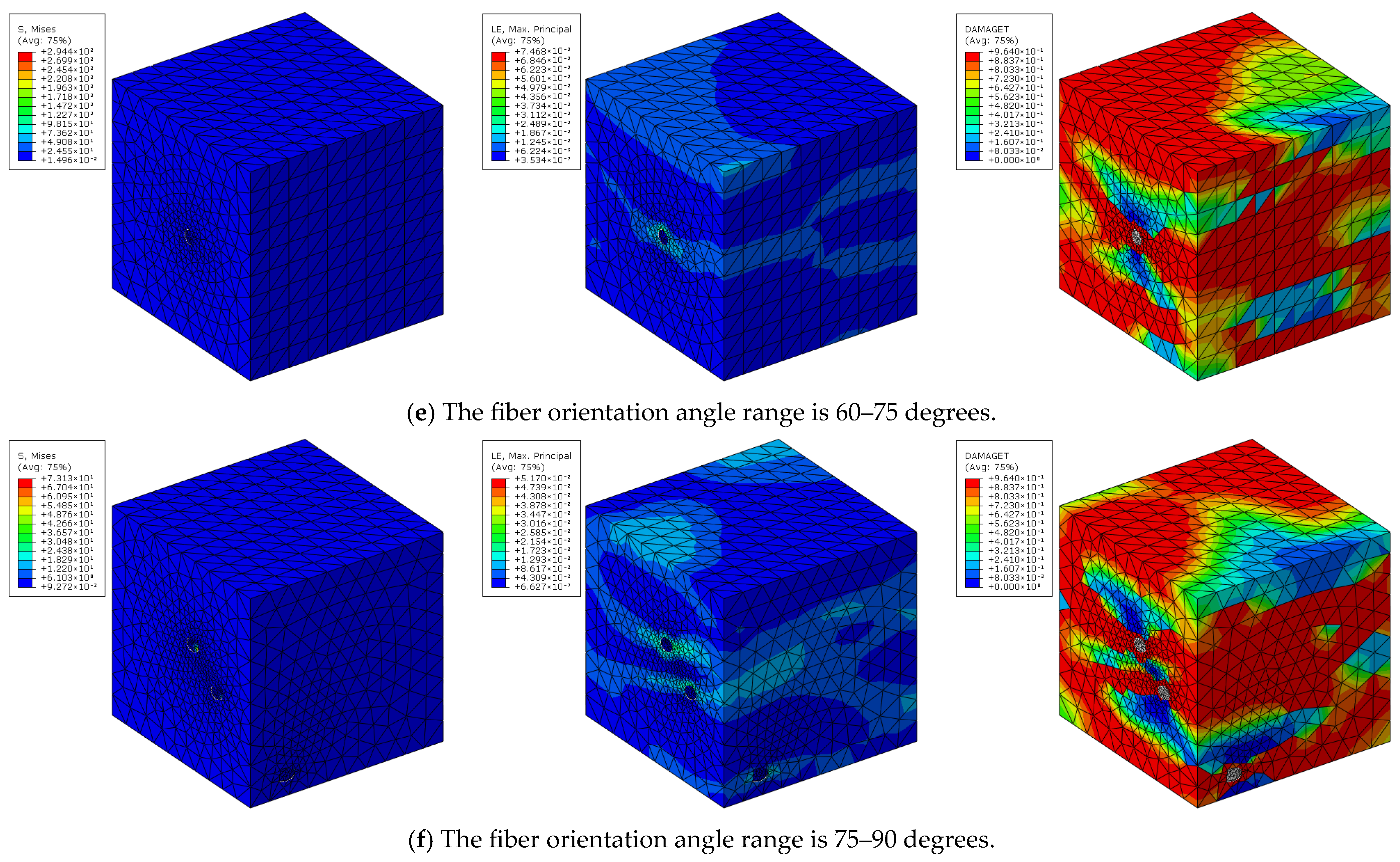
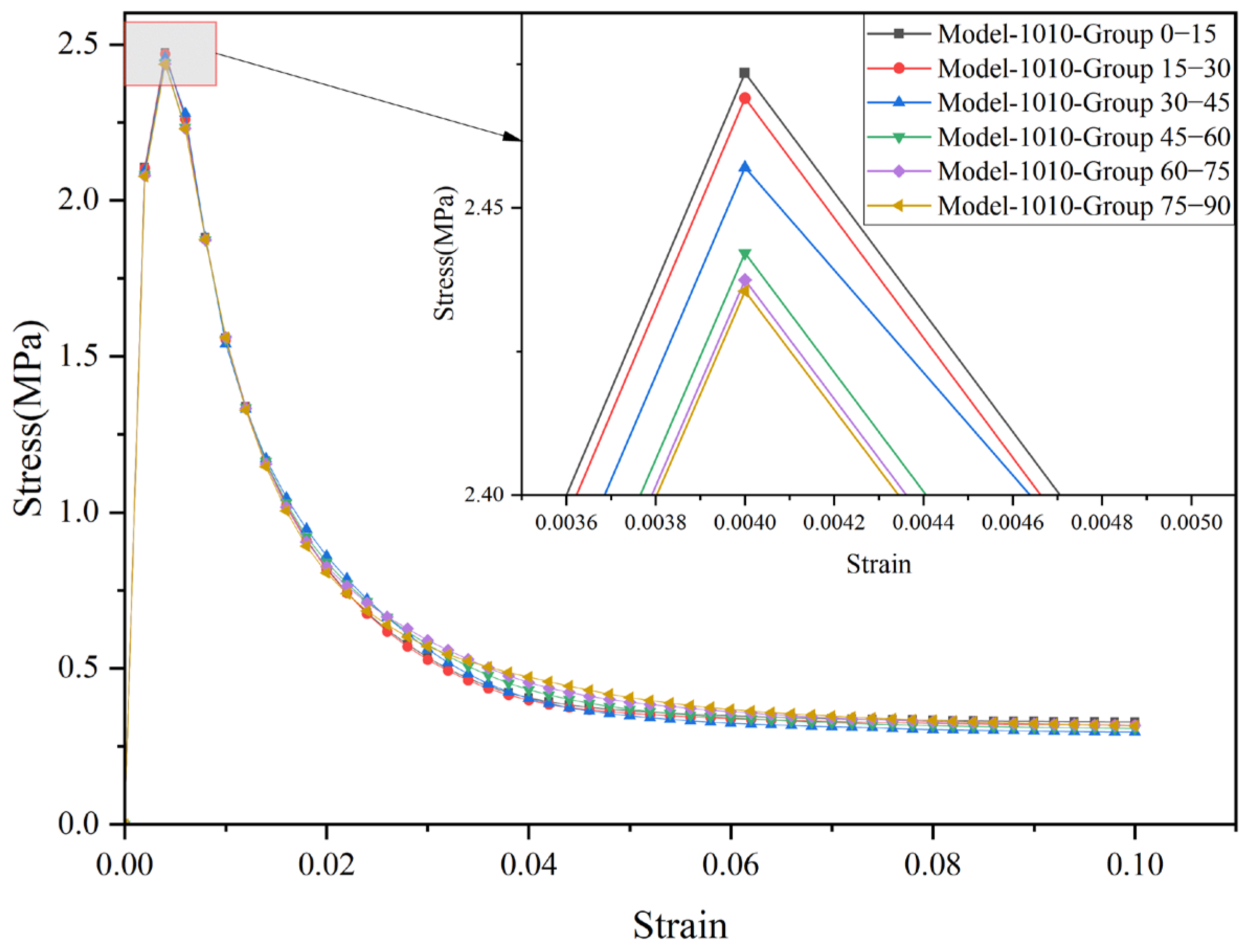
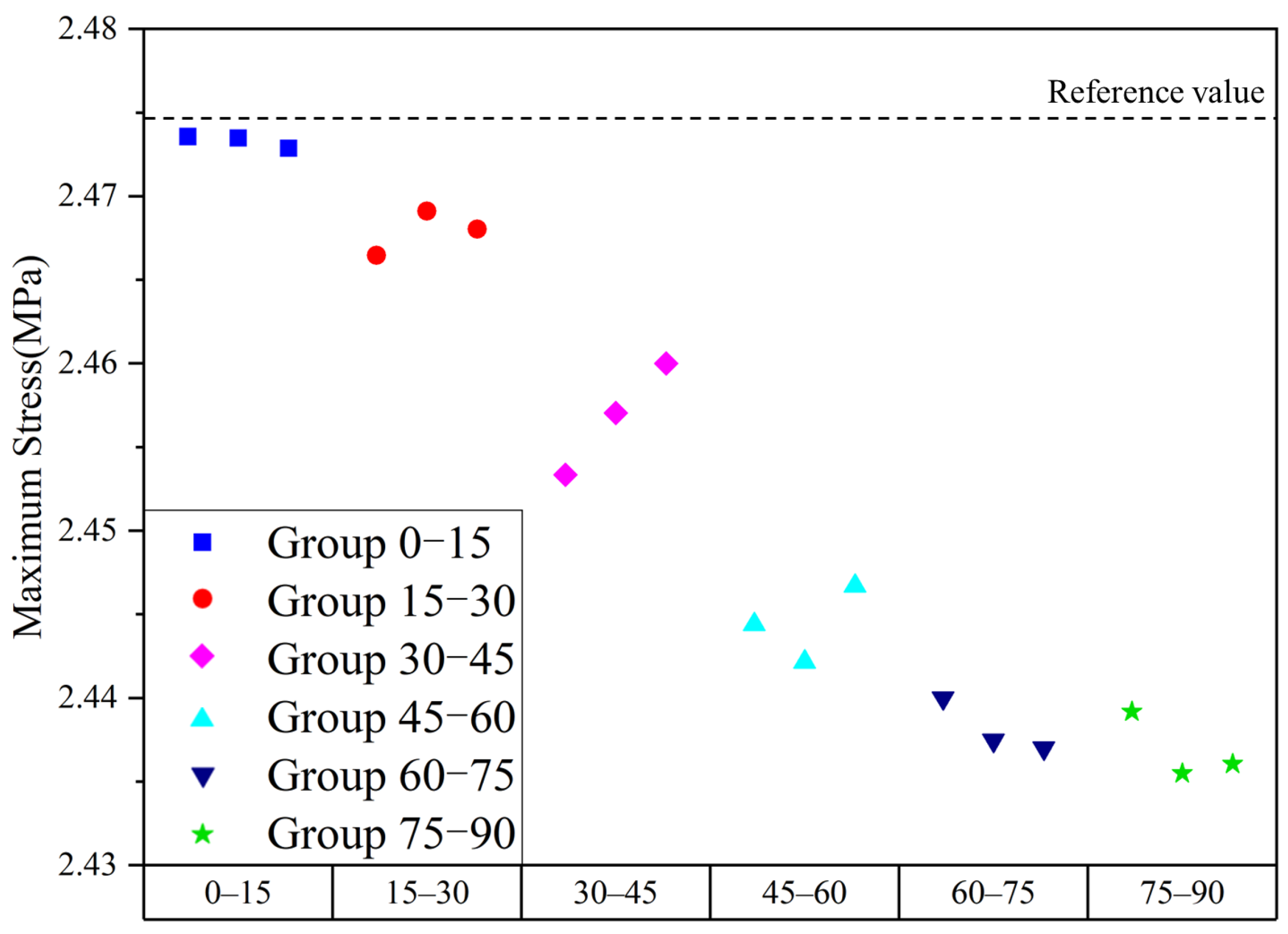
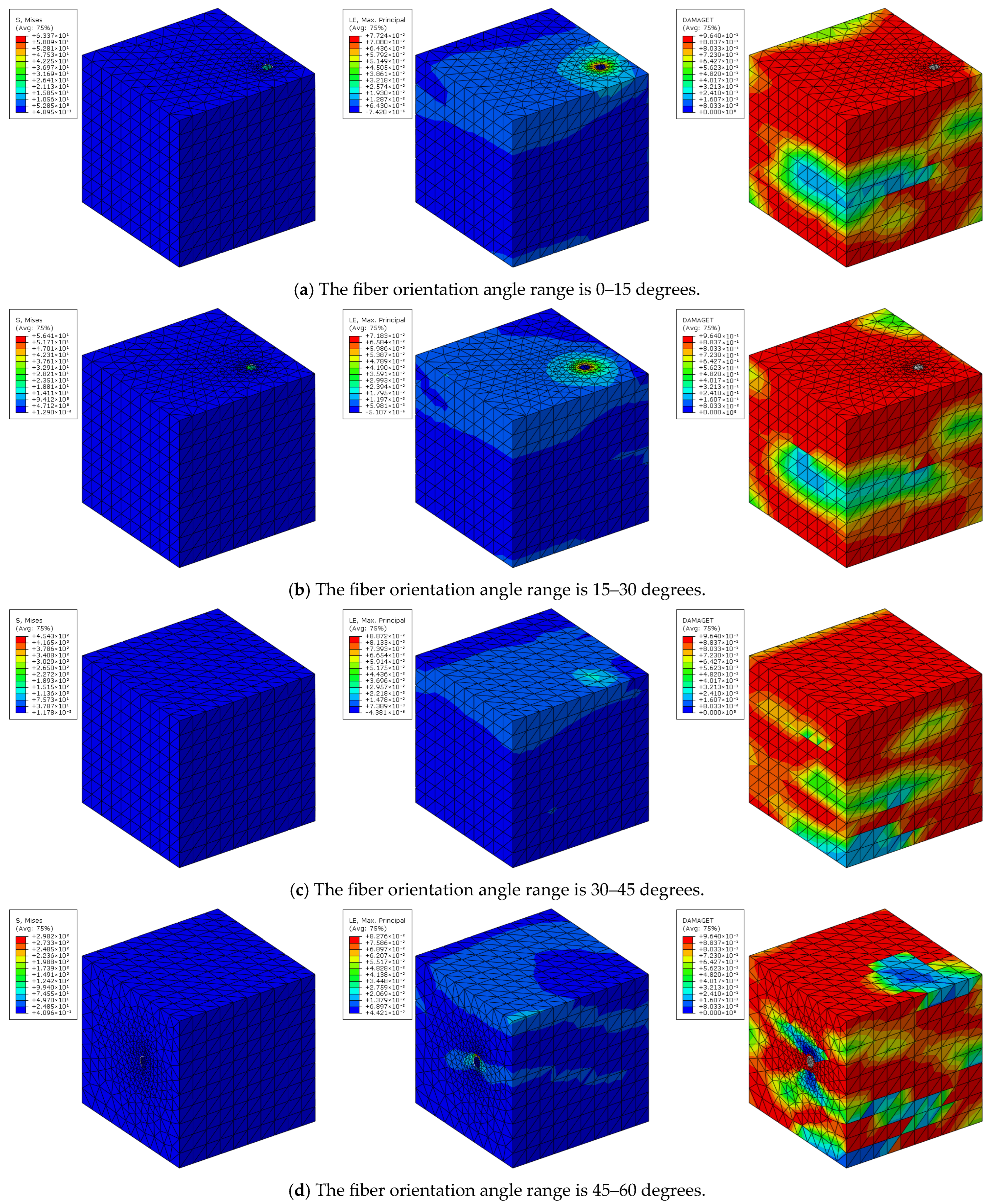
5.4. Effect of Fiber Orientation on the Macroscopic Mechanical Behavior
5.5. Effect of Spatial Fiber Distribution on the Macroscopic Mechanical Behavior
6. Conclusions
- (1)
- The fiber reinforcement effect exhibits an optimal range governed by the fiber quantity, size, and distribution. Moderate increases in fiber number or diameter/length enhance tensile strength, whereas an excessive fiber content or oversized fibers reduce the minimum matrix ligament, trigger premature interfacial debonding, and diminish strengthening efficiency, even leading to a decrease in the initial Young’s modulus. A critical fiber length () also exists: fibers shorter than contribute weakly, while those exceeding provide pronounced strengthening.
- (2)
- The macroscopic stiffness is dictated by the effective load-bearing contribution of fibers, while interfacial damage, fiber clustering, and end-induced shear stresses dominate the interfacial stress transfer mechanism. The initial Young’s modulus shows a non-monotonic dependence on the fiber number or diameter, reflecting whether fibers can cooperate with the matrix during early deformation. Orientation deviations from the tensile axis reduce shear-carrying efficiency and axial reinforcement, and an uneven spatial distribution or premature debonding interrupts stress transfer continuity, causing stiffness reduction or fluctuations.
- (3)
- The fiber orientation and spatial distribution both affect the ultimate load-bearing capacity, with orientation-induced randomness exerting a more pronounced influence and spatial distribution playing a comparatively minor role. Larger deviations from the tensile direction markedly reduce axial load-bearing efficiency, while variations in spatial distribution at identical steel volume fractions cause only limited strength fluctuations, confirming that the steel-phase volume fraction is the primary factor governing the macroscopic load capacity.
7. Future Prospects
Author Contributions
Funding
Institutional Review Board Statement
Informed Consent Statement
Data Availability Statement
Conflicts of Interest
Correction Statement
References
- Ravikumar, C.S.; Ramasamy, V.; Thandavamoorthy, T.S. Effect of fibers in concrete composites. Int. J. Appl. Eng. Res. 2015, 10, 419–430. [Google Scholar]
- Paul, S.C.; van Zijl, G.P.A.G.; Šavija, B. Effect of fibers on durability of concrete: A practical review. Materials 2020, 13, 4562. [Google Scholar] [CrossRef]
- Afroughsabet, V.; Biolzi, L.; Ozbakkaloglu, T. High-performance fiber-reinforced concrete: A review. J. Mater. Sci. 2016, 51, 6517–6551. [Google Scholar] [CrossRef]
- Behbahani, H.; Nematollahi, B.; Farasatpour, M. Steel fiber reinforced concrete: A review. In Proceedings of the International Conference on Structural Engineering Construction and Management (ICSECM2011), Kandy, Sri Lanka, 15–17 December 2011; pp. 1–12. [Google Scholar]
- Azandariani, M.G.; Vajdian, M.; Asghari, K.; Mehrabi, S. Mechanical properties of polyolefin and polypropylene fibers-reinforced concrete—An experimental study. Compos. Part C Open Access 2023, 12, 100410. [Google Scholar] [CrossRef]
- Chen, Y.; Waheed, M.S.; Iqbal, S.; Rizwan, M.; Room, S. Durability properties of macro-polypropylene fiber reinforced self-compacting concrete. Materials 2024, 17, 284. [Google Scholar] [CrossRef]
- Abousnina, R.; Premasiri, S.; Anise, V.; Lokuge, W.; Vimonsatit, V.; Ferdous, W.; Alajarmeh, O. Mechanical properties of macro polypropylene fibre-reinforced concrete. Polymers 2021, 13, 4112. [Google Scholar] [CrossRef]
- Abdulkareem, O.M.; Guneyisi, E.; Boubekra, N. Durability of polypropylene fiber reinforced concrete—A review. Electron. J. Struct. Eng. 2022, 22, 1–20. [Google Scholar] [CrossRef]
- Li, Y.; Gu, Z.; Zhao, B.; Zhang, J.; Zou, X. Experimental study on mechanical and durability properties of basalt fiber reinforced concrete under freeze–thaw cycles. Materials 2022, 15, 1052. [Google Scholar]
- Yang, W.; Liu, H.; Wang, H. Experimental study on mechanical properties of basalt fiber reinforced nano-SiO2 concrete after high temperature. Front. Mater. 2024, 11, 1415144. [Google Scholar] [CrossRef]
- Yang, X.; Wang, Z.; Wang, X. Study on mechanical properties of nano-TiC- and nano-SiO2-modified basalt fiber concrete. Buildings 2024, 14, 2120. [Google Scholar] [CrossRef]
- Zhao, L.; Chen, G.; Zhang, Y.; Zhu, H.; Zhao, H.; Tang, J.; Yuan, J. Mechanical properties of hybrid fibers and nano-silica reinforced concrete. Structures 2024, 55, 106843. [Google Scholar]
- Fode, T.A.; Jande, Y.A.C.; Kivevele, T. Physical, mechanical, and durability properties of concrete incorporating waste synthetic fibers for green environment—A critical review. Heliyon 2024, 10, e25936. [Google Scholar] [CrossRef] [PubMed]
- Anish, V.; Logeshwari, J. A review on ultra high-performance fibre-reinforced concrete: Properties and applications. J. Eng. Appl. Sci. 2024, 71, 357. [Google Scholar] [CrossRef]
- Li, Y.; Ruan, X.; Akiyama, M.; Zhang, M.; Xin, J.; Lim, S. Modelling method of fibre distribution in steel fibre reinforced concrete based on X-ray image recognition. Compos. Part B Eng. 2021, 223, 109124. [Google Scholar] [CrossRef]
- Naderi, S.; Rahmani, A.; Simms, K. A novel framework for modelling the 3D mesostructure of steel fibre reinforced concrete. Constr. Build. Mater. 2020, 261, 120013. [Google Scholar] [CrossRef]
- Khalel, H.H.Z.; Khan, M. Modelling fibre-reinforced concrete for predicting optimal mechanical properties. Materials 2023, 16, 3700. [Google Scholar] [CrossRef]
- Sun, W.; Zhang, W.; Yuan, J.; Gao, X.; Wu, Y.; Ni, W.; Feng, J. Multi-scale study on penetration performance of steel fiber reinforced ultra-high performance concrete. Constr. Build. Mater. 2024, 417, 135930. [Google Scholar] [CrossRef]
- Shams, M.A.; El-Hafidi, A.; Benjeddou, O. Fracture analysis of steel fibre-reinforced concrete using finite element method modeling. Front. Mater. 2024, 11, 1355351. [Google Scholar] [CrossRef]
- Kozák, V.; Vala, J. Use of cohesive approaches for modelling critical states in fibre-reinforced structural materials. Materials 2024, 17, 3177. [Google Scholar] [CrossRef] [PubMed]
- Bordelon, A.C.; Roesler, J.R. Spatial distribution of synthetic fibers in concrete with X-ray computed tomography. Cem. Concr. Compos. 2014, 53, 35–43. [Google Scholar] [CrossRef]
- Han, J.; Zhao, M.; Chen, J.; Lan, X. Effects of steel fiber length and coarse aggregate maximum size on mechanical properties of steel fiber reinforced concrete. Constr. Build. Mater. 2019, 209, 577–591. [Google Scholar] [CrossRef]
- Li, B.; Xu, L.; Shi, Y.; Chi, Y.; Liu, Q.; Li, C. Effects of fiber type, volume fraction and aspect ratio on the flexural and acoustic emission behaviors of steel fiber reinforced concrete. Constr. Build. Mater. 2018, 181, 474–486. [Google Scholar] [CrossRef]
- Soroushian, P.; Lee, C.D. Distribution and orientation of fibers in steel fiber reinforced concrete. Mater. J. 1990, 87, 433–439. [Google Scholar]
- D’Antino, T.; Colombi, P.; Carloni, C.; Sneed, L.H. Estimation of a matrix-fiber interface cohesive material law in FRCM-concrete joints. Compos. Struct. 2018, 193, 103–112. [Google Scholar] [CrossRef]
- Amin, A.; Foster, S.J. Numerical modelling of large-scale steel fibre reinforced concrete beams failing in shear. Eng. Struct. 2014, 79, 54–67. [Google Scholar]
- Blagojević, P.; Blagojević, N.; Kukaras, D. Flexural behavior of steel fiber reinforced concrete beams: Probabilistic numerical modeling and sensitivity analysis. Appl. Sci. 2021, 11, 9792. [Google Scholar] [CrossRef]
- Shakor, P.; Nejadi, S. Finite element modelling of steel fibre reinforced concrete using the concrete damage plasticity model. Comput. Concr. 2017, 19, 643–654. [Google Scholar]
- Farsi, A.; Bedi, A.; Latham, J.P.; Bowers, K. Simulation of fracture propagation in fibre-reinforced concrete using FDEM: An application to tunnel linings. Comput. Mech. 2020, 65, 1357–1373. [Google Scholar] [CrossRef]
- Landović, A.; Čeh, A.; Starčev-Ćurčin, A.; Šešlija, M. Small-Scale and Large-Scale Modeling of Fiber-Reinforced Concrete Girders. Buildings 2024, 14, 3812. [Google Scholar] [CrossRef]
- Michał, S.; Andrzej, W. Calibration of the CDP model parameters in Abaqus. In Proceedings of the 2015 World Congress on Advances in Structural Engineering and Mechanics (ASEM 15), Incheon, Republic of Korea, 25–29 August 2015. [Google Scholar]
- Naderi, S.; Zhang, M. 3D meso-scale modelling of tensile and compressive fracture behaviour of steel fibre reinforced concrete. Compos. Struct. 2022, 291, 115690. [Google Scholar] [CrossRef]
- Li, Z.; Wu, M.; Wu, J.; Cui, Y.; Xue, X. Steel Fibre Reinforced Concrete Meso-Scale Numerical Analysis. Adv. Civ. Eng. 2020, 2020, 2084646. [Google Scholar] [CrossRef]
- Soe, K.T.; Zhang, Y.X.; Zhang, L.C. Impact resistance of hybrid-fiber engineered cementitious composite panels. Compos Struct 2013, 104, 320. [Google Scholar] [CrossRef]
- Musmar, M. Tensile strength of steel fibre reinforced concrete. Contemporary Eng. Sci. 2013, 6, 225–237. [Google Scholar] [CrossRef]
- Ling, S.; Chengbin, D.; Yafeng, Y.; Yongheng, L. Analysis and prediction of compressive and split-tensile strength of secondary steel fiber reinforced concrete based on RBF fuzzy neural network model. PLoS ONE 2024, 19, e0299149. [Google Scholar] [CrossRef]
- Freire Rodrigues, T.L.; Durand, R. Numerical modeling of steel fiber reinforced concrete using cohesive elements. J. Build. Pathol. Rehabil. 2023, 8, 69. [Google Scholar] [CrossRef]
- George, J.; Rama, J.K.; Kumar, M.S.; Vasan, A. Behavior of plain concrete beam subjected to three point bending using concrete damaged plasticity (CDP) model. Mater. Today Proc. 2017, 4, 9742–9746. [Google Scholar] [CrossRef]
- Stukhlyak, P.D.; Buketov, A.V.; Panin, S.V.; Maruschak, P.O.; Moroz, K.M.; Poltaranin, M.A.; Vukherer, T.; Kornienko, L.A.; Lyukshin, B.A. Structural fracture scales in shock-loaded epoxy composites. Phys. Mesomech. 2015, 18, 58–74. [Google Scholar] [CrossRef]
- Chen, M.; De Corte, W.; Zhang, F.; Taerwe, L. Parametric Analysis of CDP Modeling of High-Strength Concrete in Abaqus to Study the Direct-Shear Behavior of Joints in Precast Concrete Segmental Bridges. In Proceedings of the International Conference on Engineering Structures, Guangzhou, China, 8–11 November 2024; Springer: Singapore, 2024; pp. 318–328. [Google Scholar]
- Hu, A.; Du, X.; Wang, F.; Li, J.; Zhang, T.; Li, Y. Study on Damage Mechanism of Fiber Concrete with Initial Pores. Materials 2025, 18, 916. [Google Scholar] [CrossRef]
- Van der Aa, P.J. Biaxial Stresses in Steel Fibre Reinforced Concrete Modelling the Pull Out-Behaviour of a Single Steel Fibre Using FEM; Einhoven University of Technology: Eindhoven, The Netherlands, 2014. [Google Scholar]
- Abbas, Y.M. Microscale cohesive-friction-based finite element model for the crack opening mechanism of hooked-end steel fiber-reinforced concrete. Materials 2021, 14, 669. [Google Scholar] [CrossRef]
- Rilem Tc 162-Tdf. Test and design methods for steel fibre reinforced concrete: Uni-axial tension test for steel fibre reinforced concrete. Mater. Struct. 2001, 34, 3–6. [Google Scholar] [CrossRef]
- Luo, Z.; Li, X.; Zhao, F. Complete splitting process of steel fiber reinforced concrete at intermediate strain rate. J. Cent. South Univ. Technol. 2008, 15, 569–573. [Google Scholar] [CrossRef]






| Elastic | Plastic | ||
|---|---|---|---|
| Young’s Modulus | Poisson’s Ratio | Yield Stress | Plastic Strain |
| 206,000 | 0.3 | 235 | 0 |
| 345 | 0.005 | ||
| 400 | 0.015 | ||
| 450 | 0.05 | ||
| 480 | 0.1 | ||
| Elastic | Concrete Damage Plasticity | |||||||||||
|---|---|---|---|---|---|---|---|---|---|---|---|---|
| Young’s Modulus | Poisson’s Ratio | Plasticity | Compressive Behavior | Tensile Behavior | ||||||||
| Dilation Angle | Eccentricity | fb0/fc0 | k | Viscosity Parameter | Yield Stress | Inelastic Strain (×10−3) | Damage Parameter | Yield Stress | Cracking Strain (×10−3) | Damage Parameter | ||
| 300 | 0.2 | 15 | 0.1 | 1.16 | 0.667 | 0.001 | 15.45 | 0 | 0.000 | 2.01 | 0 | 0.000 |
| 18.48 | 0.151 | 0.065 | 0.66 | 0.35 | 0.359 | |||||||
| 19.93 | 0.376 | 0.137 | 0.419 | 0.647 | 0.620 | |||||||
| 20.1 | 0.515 | 0.178 | 0.319 | 0.937 | 0.756 | |||||||
| 19.61 | 0.833 | 0.264 | 0.226 | 1.513 | 0.876 | |||||||
| 15.88 | 1.893 | 0.501 | 0.18 | 2.087 | 0.924 | |||||||
| 12.49 | 2.937 | 0.665 | 0.152 | 2.66 | 0.949 | |||||||
| 10.07 | 3.934 | 0.767 | 0.13 | 3.327 | 0.964 | |||||||
| 7.5 | 5.528 | 0.861 | ||||||||||
| 4.89 | 8.995 | 0.939 | ||||||||||
| Cohesive Behavior | Damage | |||||||
|---|---|---|---|---|---|---|---|---|
| Knn | Kss | Ktt | Initiation | Evolution | ||||
| Normal Only | Shear-1 Only | Shear-2 Only | Normal Fracture Energy | 1st Shear Fracture Energy | 2nd Shear Fracture Energy | |||
| 10,000 | 10,000 | 10,000 | 60 | 80 | 80 | 0.6 | 2.1 | 2.1 |
| θ | φ | Model ID | Group (θ) |
|---|---|---|---|
| 7.77 | 236.74 | 1 | 0–15 |
| 7.99 | 252.52 | 2 | |
| 9.84 | 187.79 | 3 | |
| 23.59 | 223.30 | 4 | 15–30 |
| 18.74 | 169.23 | 5 | |
| 20.84 | 157.28 | 6 | |
| 39.91 | 128.49 | 7 | 30–45 |
| 36.21 | 224.04 | 8 | |
| 35.79 | 103.56 | 9 | |
| 51.86 | 204.51 | 10 | 45–60 |
| 53.99 | 188.83 | 11 | |
| 49.23 | 265.25 | 12 | |
| 68.14 | 293.42 | 13 | 60–75 |
| 69.44 | 168.19 | 14 | |
| 66.48 | 185.38 | 15 | |
| 84.02 | 191.72 | 16 | 75–90 |
| 84.02 | 219.27 | 17 | |
| 80.06 | 159.55 | 18 |
Disclaimer/Publisher’s Note: The statements, opinions and data contained in all publications are solely those of the individual author(s) and contributor(s) and not of MDPI and/or the editor(s). MDPI and/or the editor(s) disclaim responsibility for any injury to people or property resulting from any ideas, methods, instructions or products referred to in the content. |
© 2025 by the authors. Licensee MDPI, Basel, Switzerland. This article is an open access article distributed under the terms and conditions of the Creative Commons Attribution (CC BY) license (https://creativecommons.org/licenses/by/4.0/).
Share and Cite
Xiong, S.; Zhou, Z.; Yan, J.; Su, Y. Numerical Investigation of Statistical Relationships Between Random Fiber Distributions and Mechanical Properties of Concrete Composites. Appl. Sci. 2025, 15, 13186. https://doi.org/10.3390/app152413186
Xiong S, Zhou Z, Yan J, Su Y. Numerical Investigation of Statistical Relationships Between Random Fiber Distributions and Mechanical Properties of Concrete Composites. Applied Sciences. 2025; 15(24):13186. https://doi.org/10.3390/app152413186
Chicago/Turabian StyleXiong, Shihe, Zhenrui Zhou, Jiongyi Yan, and Yutai Su. 2025. "Numerical Investigation of Statistical Relationships Between Random Fiber Distributions and Mechanical Properties of Concrete Composites" Applied Sciences 15, no. 24: 13186. https://doi.org/10.3390/app152413186
APA StyleXiong, S., Zhou, Z., Yan, J., & Su, Y. (2025). Numerical Investigation of Statistical Relationships Between Random Fiber Distributions and Mechanical Properties of Concrete Composites. Applied Sciences, 15(24), 13186. https://doi.org/10.3390/app152413186