Article

Electromagnetic and Thermal Analysis of Inductive Power Transfer Coils for the Wireless Charging System of Electric Vehicles

1
School of Energy and Electrical Engineering, Chang’an University, Xi’an 710018, China
2
Powerchina Northwest Engineering Corporation Limited, Xi’an 710100, China
*
Author to whom correspondence should be addressed.
Appl. Sci. 2025, 15(24), 13184; https://doi.org/10.3390/app152413184
Submission received: 17 November 2025 / Revised: 10 December 2025 / Accepted: 11 December 2025 / Published: 16 December 2025
(This article belongs to the Section Electrical, Electronics and Communications Engineering)

Abstract

Electric vehicles (EVs) have gained significant popularity globally during the past decade. This is mostly due to their reduced emissions of hydrocarbons and greenhouse gases. Electric vehicles acquire their electricity via wireless energy transmission, thereby circumventing the challenges associated with conventional techniques. The coils that transmit and receive signals deteriorate in performance and age as temperatures increase. Under extreme conditions, this may result in fire hazards and further safety issues. This article examined the electromagnetic and thermal dispersion of a magnetically coupled coil model for electric vehicles. This paper studied the electromagnetic and temperature distribution of the magnetically coupled coil model for electric vehicles. The coils were designed utilizing ANSYS software, with boundary conditions and pertinent parameters configured accordingly. The transmitter and receiver coils were identical in dimensions, with an inner diameter of 100 mm, an outer diameter of 295 mm, and an air gap of 60 mm between them. The magnetic coil was simulated and analyzed using copper as a material. In the aligned positions, the coupling coefficient between the transmitter and receiver coil was 0.168, its maximum temperature was 16.92 °C, and it was lower for the safety of the human body. An actual prototype was built to confirm the simulation results and to establish that the methodology employed in this research is applicable to the design of magnetic coils for a wireless charging system for electric vehicle models.

1. Introduction

Nowadays, the globe is going through an energy crisis due to the increasing demand for energy and the rise in energy-consuming technologies. As these energy sources continue to be used, the constant carbon dioxide emissions are steadily increasing global warming. Electric vehicles have been accepted over the years by consumers as compared to Internal Combustion Engines (ICEs) due to their lower emissions to the environment [1]. A major part of global environmental pollution is due to the use of conventional vehicles powered by fossil fuels, natural compressed gas, and liquefied petroleum gas. In addition, the transportation sector is regarded as a major global energy consumer in the transportation sector [2]. In recent years, electric vehicles (EVs) have gained global popularity, contributing to the reduction in environmental pollutants and CO2 emissions while achieving excellent energy efficiency [3,4]. Furthermore, advancements in critical technologies related to batteries, charging infrastructure, electric motors, and control systems enhance the appeal of electric vehicles (EVs) [5,6,7]. The adoption of electric vehicles (EVs) as a sustainable and efficient alternative to traditional diesel- and petrol-powered vehicles promotes the decarbonization of transportation [8]. Nonetheless, numerous issues impede the advancement of electric vehicles, including their limited range and protracted charge durations. Electric car charging can be performed through either wired or wireless techniques. Wired charging, also known as conductive charging, enables power transfer between the supply equipment and electric vehicles through an electrical connection. To alleviate range concern, the charging velocity of conductive chargers has been markedly improved. Electric-coupled systems are simple, compact, and easily manageable; yet, progress is primarily seen in low-power and small-gap wireless power transfer applications due to constraints on the generated voltage. At present, magnetic-coupled systems are regarded as more practicable for Wireless Electric Vehicle Charging (WEVC) owing to their favorable equilibrium of power loss, efficiency, and transfer distance [9].
Wireless power transfer (WPT) technology is an emerging concept that has garnered increasing attention. It addresses the issues of prolonged charging durations and limited operational range by enabling batteries to charge during movement [10]. Moreover, wireless power transfer technology is less susceptible to external factors compared to conventional charging methods for electric vehicles, and it offers enhanced safety and convenience. An electrified autonomous charging method, characterized by complete autonomy, weatherproofing, and wireless quick recharging, would significantly assist people by fulfilling critical services and demands without requiring human interaction [11,12,13].
Inductive power transmission (IPT), a form of wireless power transfer (WPT) technology, is a technique for transmitting energy across an air gap without physical connections, first articulated over a century ago [14]. The functioning of an IPT system depends on magnetic coupling between a primary coil and a secondary coil, similar to a transformer. The absence of physical contact diminishes the impact of moisture, chemicals, dirt, and abrasion on an IPT system relative to conductive alternatives. The secondary component of an IPT system attains improved mobility, free from the limitations of wired connections [15]. The receiver is frequently entirely disconnected from the primary and only approaches it to obtain electricity.
The coil is a crucial component of wireless charging functionality. Excessive heating of the coil during device operation may reduce its lifespan and may lead to fires and other significant safety hazards. Certain researchers have developed wireless charging solutions for electric vehicles, addressing numerous issues associated with cable charging [16,17]. The temperature variation in the magnetic coupler during operation is frequently overlooked in the pertinent research [18]. Each coil in the WPT system incurs losses [19,20]. Copper is employed in various industrial electrical applications at medium to high frequencies, ranging from several kHz to MHz, to reduce substantial AC losses caused by skin and proximity effects. The operational temperature of uninsulated copper tubes is higher than that of insulated magnet wires, and hollow tubes can be cooled by circulating a coolant medium. Additionally, various authors have reported that at a particular frequency, the stranded conductor performs worse than a hollow conductor. Copper is more cost-effective compared to alternative wires, especially litz wires characterized by a high degree of stranding. Conversely, copper tubes exhibit specific disadvantages. Standard copper tubes are generally manufactured from non-electrolytic copper, leading to a resistivity that can be as much as double that of copper used for electrical applications [21]. In the low-frequency range, copper tubes demonstrate greater losses compared to similar single- or multistranded conductors. The proximity effect is significantly affected by resistivity, indicating that copper tubes may be competitive based on frequency. A further issue is that copper tubes are generally uninsulated, requiring insulation based on the specific configuration [22]. Because of electromagnetic effects, including the skin effect and proximity effect, adaptive meshing is sometimes necessary to consistently obtain high-accuracy results as the frequency changes [23]. Also, this meshing needs to be reapplied every time the shape changes. Another drawback is that the finite element method usually needs expensive high-performance computing systems to obtain results quickly [24].
Significant total losses are attributed to the failure of the magnetic coupler, resulting in elevated temperatures [25]. The temperature increase in the magnetic coupler will not affect the power flow, voltage gain, or power gain of the WPT system. Nonetheless, it may render the WPT system less stable [26]. Similarly to other electrical systems, magnetic couplers may malfunction when subjected to significant thermal stress. This is typically irreversible and highly detrimental. In certain applications, the maximum temperature is sufficiently elevated to induce core failure.
In [27], it was noted that the temperature within the permanent magnet coupling increases during operation due to the generation of eddy currents, affecting the coupling’s performance. The temperature field modeling experiment conducted with Workbench software demonstrated a peak internal temperature of 59.1 °C, laying the groundwork for the ensuing thermomagnetic coupling analysis of the permanent magnet coupling. Simulations for power electronics applications in [2,28] demonstrate that losses in magnetic components can significantly alter their characteristics due to substantial temperature increases. Thus, a model was suggested that consolidates a nonlinear representation of hysteresis, electromagnetic winding, and thermal behavior into a unified framework.
In summary, existing research has primarily focused on addressing magnetic or thermal field unevenness separately. It is evident that the problem of uneven magneto-thermal distribution becomes more prominent with the increasing power level of WPT systems. In this paper, the main objective is to analyze magnetic coupling to obtain different values like coupling coefficient, mutual inductance, and power loss for a circular coil model under an air gap of 60 mm, and the coils are well aligned. Moreover, the circular coil configurations are analyzed by the finite element method (FEM). Additionally, thermal analysis is performed to obtain the temperature based on the EM-Losses issues from electromagnetic simulation. This paper is structured as follows. Section 2 conducts electromagnetic analysis to evaluate transmission efficiency and coupling coefficient. Section 3 conducts a thermal simulation to evaluate the temperature of the IPT system. Section 4 presents a full-scale prototype working at 739.8 W, constructed to evaluate and verify the results derived from the electro-thermal simulations. Finally, Section 5 concludes this article.

2. Electromagnetic Analysis of IPT Coils

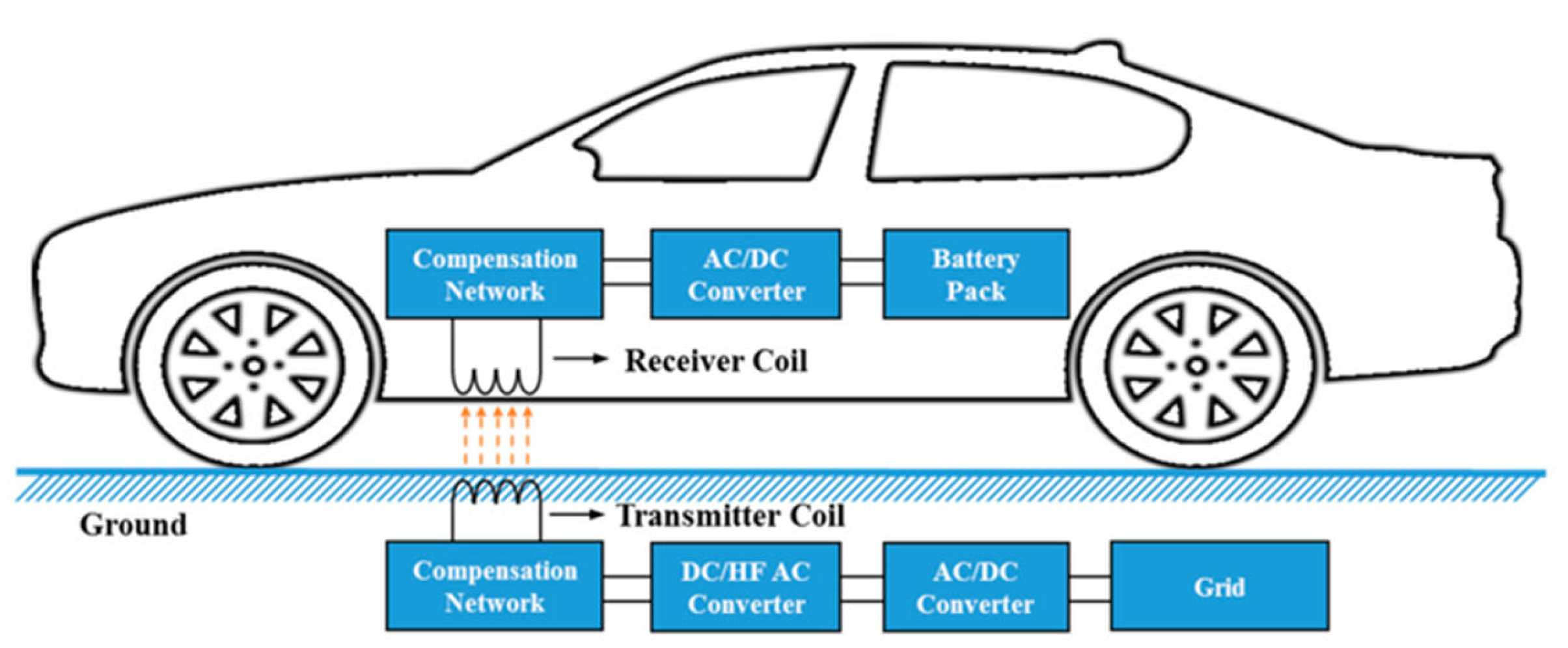
Figure 1 illustrates various steps of IPT for electric vehicle charging. Adjacent to the charging station, the following items are present: (i) an AC/DC converter that transforms alternating current power into direct current power via a rectifier with power factor correction; (ii) a DC/high-frequency inverter that converts DC power into high-frequency AC power to energize the transmitter coil through a compensation network; and (iii) a transmitter coil that produces an alternating magnetic field. The EV component comprises (1) a receiver coil linked to an alternating magnetic field generated by the transmitter coil; (2) an AC/DC converter that rectifies commercial AC power to commercial DC power; and (3) a battery pack charged by the electric energy from the transmitted power. This approach significantly enhances transferred power and efficiency through resonance with a compensating network.
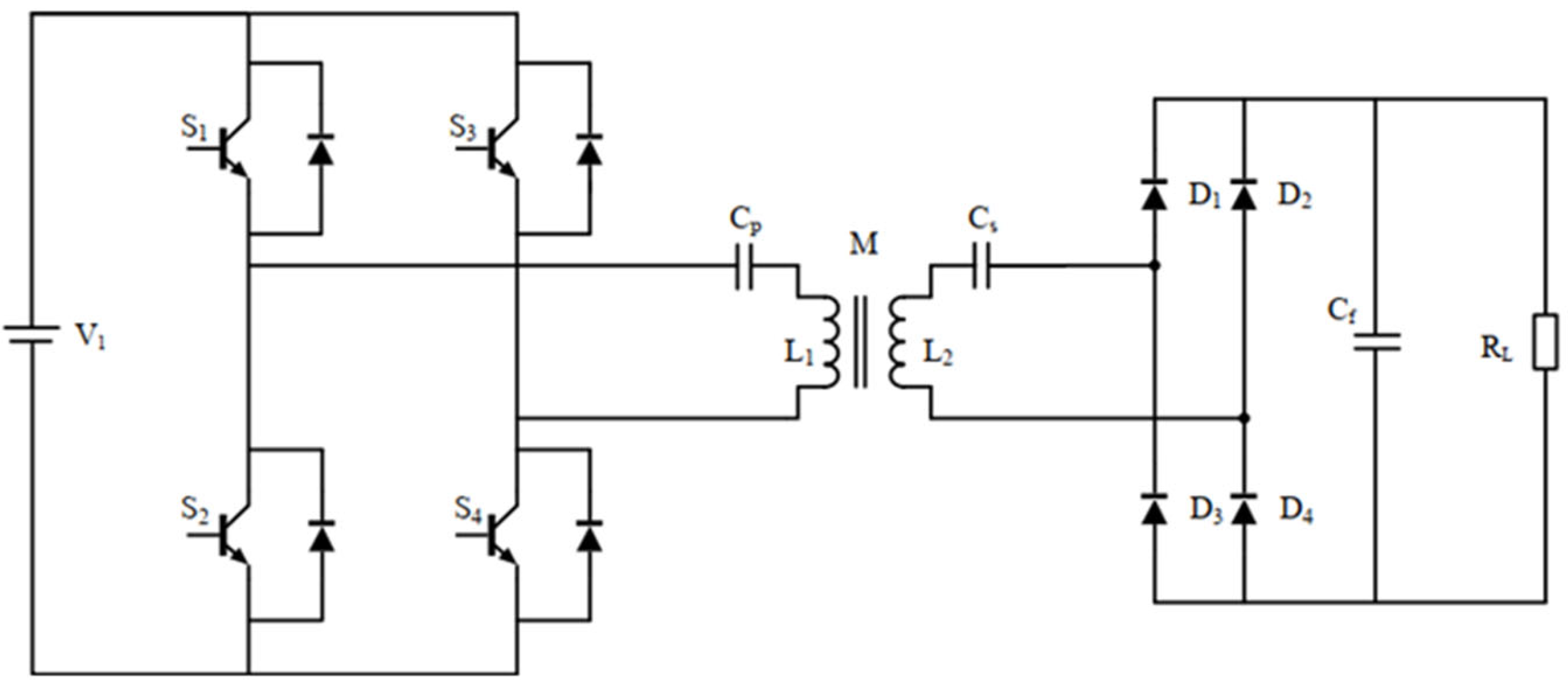
The leakage inductance, induced by changes in the air gap and misalignment, can be mitigated by incorporating a compensation network into the circuit. The S-S, S-P, P-P, and P-S topologies are the four most fundamental types of network architecture. In this research, the coupled coils’ electromagnetic and thermal behavior are studied using the S-S topology circuit model. In a WPT system, the inductance of the main coil and secondary coil are shown in Figure 2, which corresponds to the series compensation topology in each coil. The primary and secondary coils mutual inductance is denoted by M. This circuit shows the compensation capacitor linked in series with the main and secondary coils.
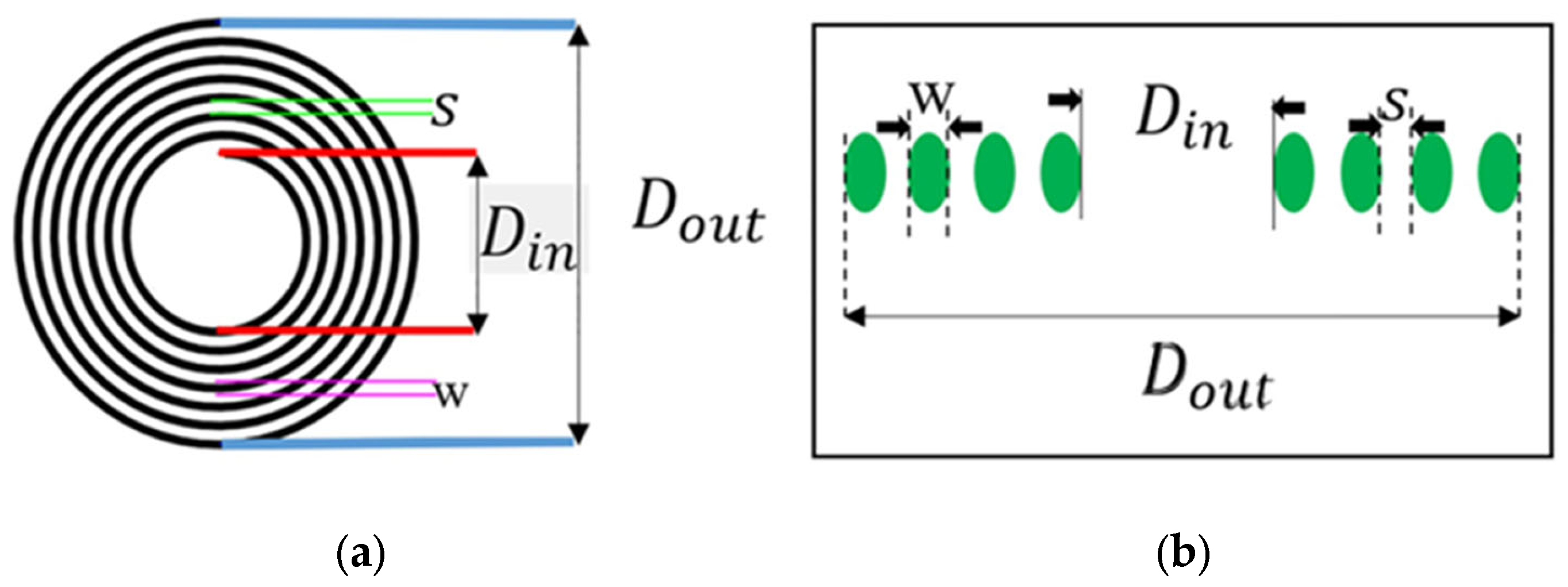
A model of a circular coil, both for transmitter and receiver, is used for analysis in this paper. Figure 3 can be utilized to examine the specific properties of a circular spiral coil. Figure 3a illustrates the circular spiral coil utilized in this investigation; Figure 3b presents definitions for four essential characteristics associated with a coil [30,31]:
  • Dout: Represents the external diameter of the coil.
  • Din: Represents the internal diameter of the coil.
  • W: Refers to the diameter of the wire utilized in the coil.
  • S: The spacing between the coil’s wires.
To ascertain the coil’s external diameter and the requisite length, we can employ the subsequent equations:
D o u t = D i n + 2 N W + S
W L e n g t h = π N D i n + D o u t 2
Materials often employed in WPT applications should exhibit low DC resistance, minimal AC losses, and the capacity to manage high variable currents and voltages. Litz wires are the material of choice for high-frequency conductors. Litz wires are individually insulated and intertwined to create a singular conductor. They are designed to alleviate skin impacts and proximity effects that are prominent at elevated frequencies. The DC resistance of Litz wires is minimal, making them an optimal choice for conductor manufacturing. The reduced electrical conductivity restricts eddy current loss.
In Table 1, we have the material parameters of the coils that we used for simulation.
In our research, two circular coils (transmitter and receiver) are engineered utilizing Finite Element Analysis (FEA) simulation software, ANSYS Electronics Suite 2021 R1 (Maxwell 3D), based on a user-specified variable. It is assumed that transmitter and receiver coils possess the same geometry, size, and number of turns.
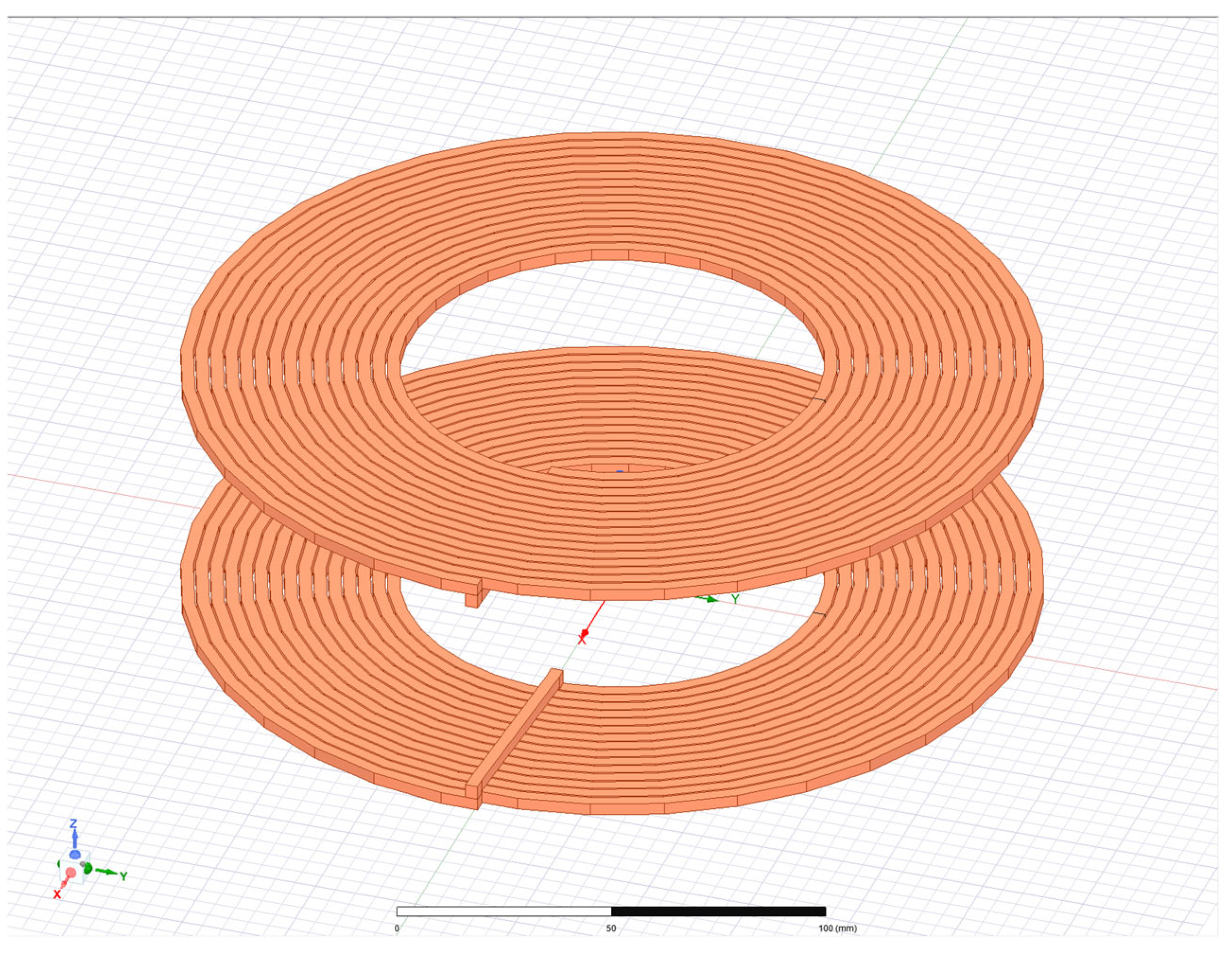
The transmitter coil is drawn using the function ‘Draw-User Defined Primitive’, and hence, a circular-shaped coil is drawn. In Table 2, we have the coil design parameters of the transmitter coil, and since the receiver coil has the same dimensions, the result is shown in Figure 4.
The copper material is chosen based on the real cost of the coil material. The modeling is conducted using Ansys Electronics Suite 2021 R1 (Maxwell 3D), and the material is assigned. For analytical accessibility and in accordance with a real application scenario, the distance between the two coils is designated as d = 60 mm. Within Ansys Maxwell 3D software:
  • The excitation source is established within a static magnetic field at a current of 11 A. The inductance matrix is computed, yielding self-inductances L1, L2, and the mutual inductance M of the transmitter and receiver coils.
  • The resistances R1 and R2 of the two coils are determined within the eddy current field, and the parameters of the designed coil are resolved.
  • The coupling coefficient k is determined, together with the power loss in the coils resulting from the temperature increase in the IPT system.
The outcomes are presented in Table 3 below:
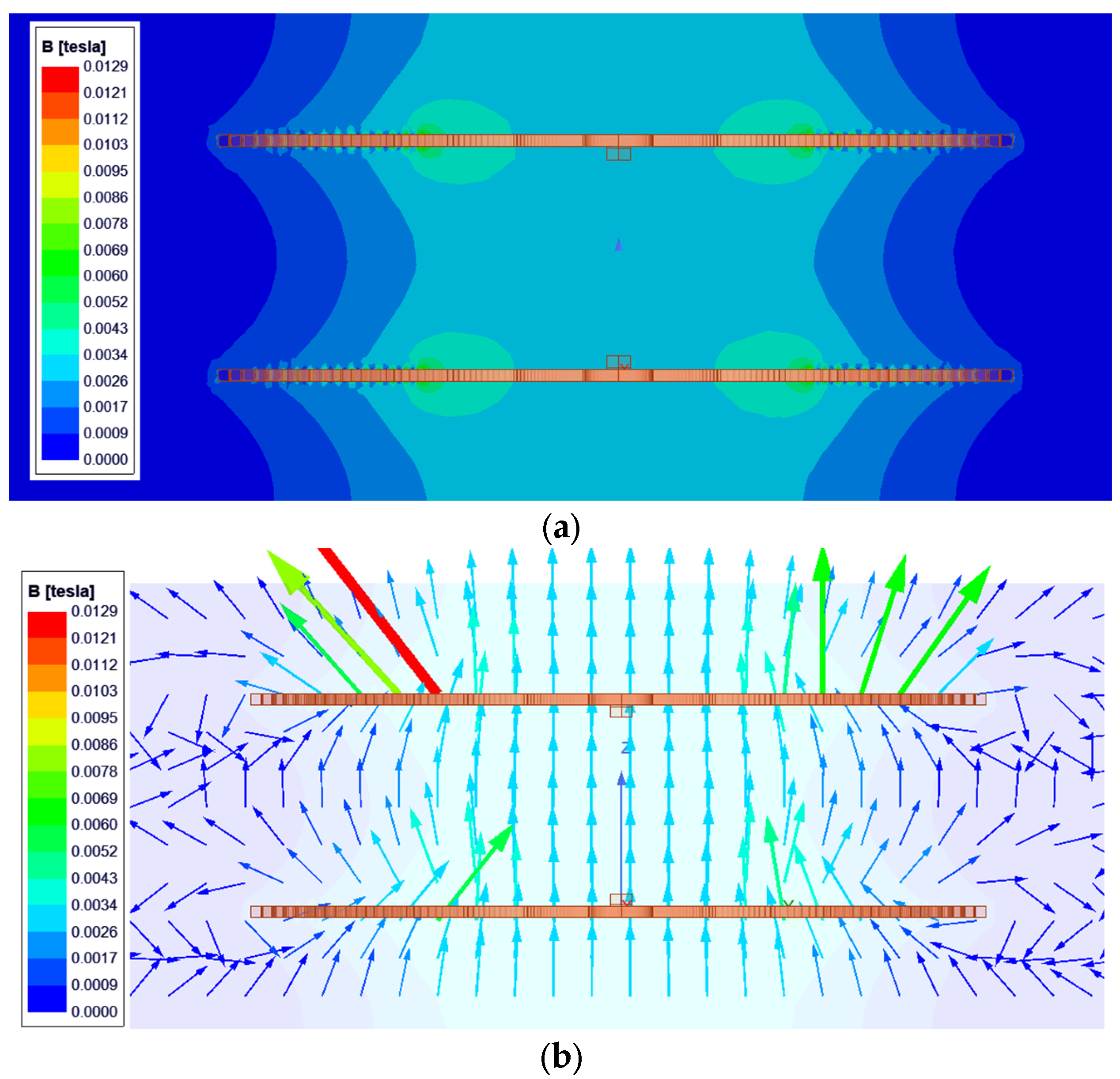
These simulation results enable us to compute the system’s efficiency. The receiving coil dissipates 6.240 W of electricity, while the transmitter coil dissipates 6.825 W. Figure 5 illustrates the distribution of magnetic flux B within the transmitter and reception coils in the presence of a 60 mm air gap. Figure 5a demonstrates that the transmitter coil and receiver coil exhibit high coupling. The magnetic field distribution exhibits symmetrical features due to the very symmetrical configuration of the coil construction, as illustrated in Figure 5b. Consequently, magnetic flux density adjacent to the Litz wire is elevated in this depiction, whereas it is diminished near the core field.

3. Thermal Analysis of IPT Coils

Loss Analysis of Magnetic Coils

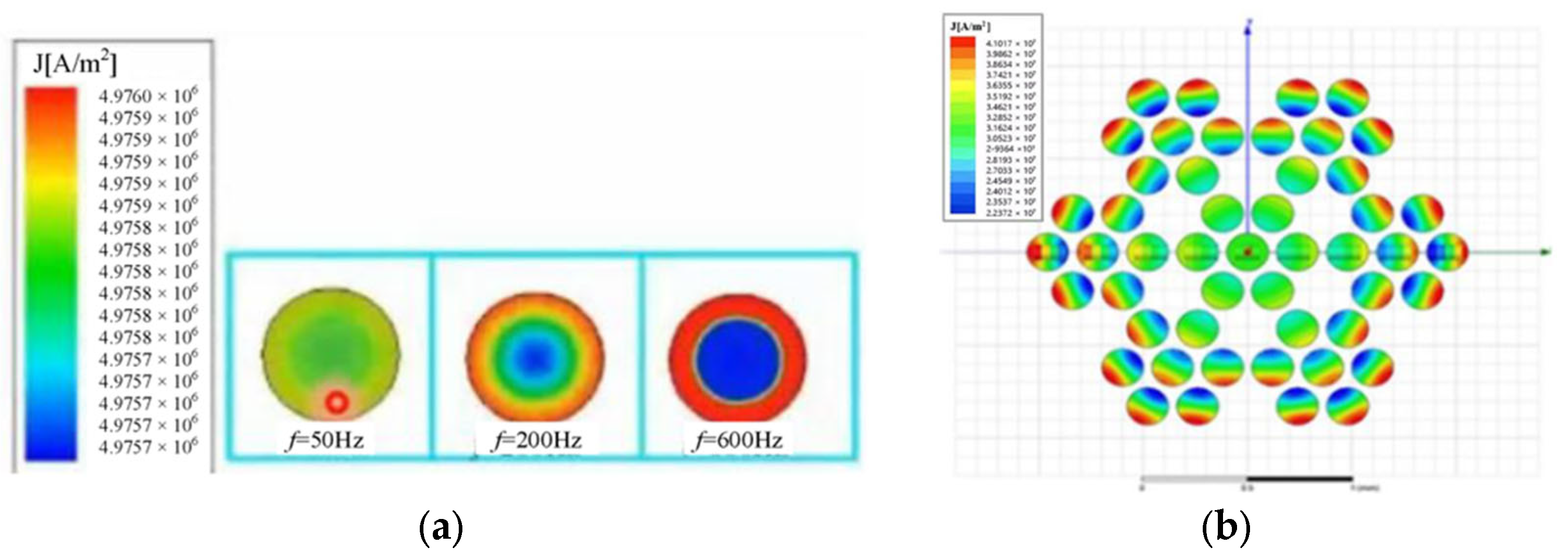
The operational frequency of the wireless charging system for electric vehicles is 85 kHz. At this frequency, the effective internal resistance of the copper coil, constructed with standard copper wire, escalates due to the proximity effect and skin effect, leading to heightened losses. Figure 6 illustrates the diagram of the skin effect and the proximity effect in solid copper wire [33].
The increase in temperature of the coil mostly results from Litz wire coil losses, encompassing ohmic loss and losses related to skin and proximity effects. The ohmic loss in coil conductors can be calculated as follows:
P o h m i c = V w j 2 ρ d V w = I w 2 R w
Pohmic represents ohmic loss of coil, ρ denotes resistivity, Vw signifies volume of coil, Iw indicates current of coil, and Rw refers to resistance of entire wire.
The coil losses resulting from skin and proximity effects can be estimated as follows:
P s k i n & p r o x = G s k i n + G p r o x i r m s 2 R D C
where Pskin&prox denotes coil losses attributable to skin and proximity effects, Gskin represents loss factors that represent skin effect, Gprox signifies loss factors related to the proximity effect, and irms refers to the RMS current of the coil. RDC denotes the DC resistance of the coil.
In summary, from Equations (3) and (4), the losses of the coil can be determined as follows:
P w = P o h m i c + P s k i n & p r o x
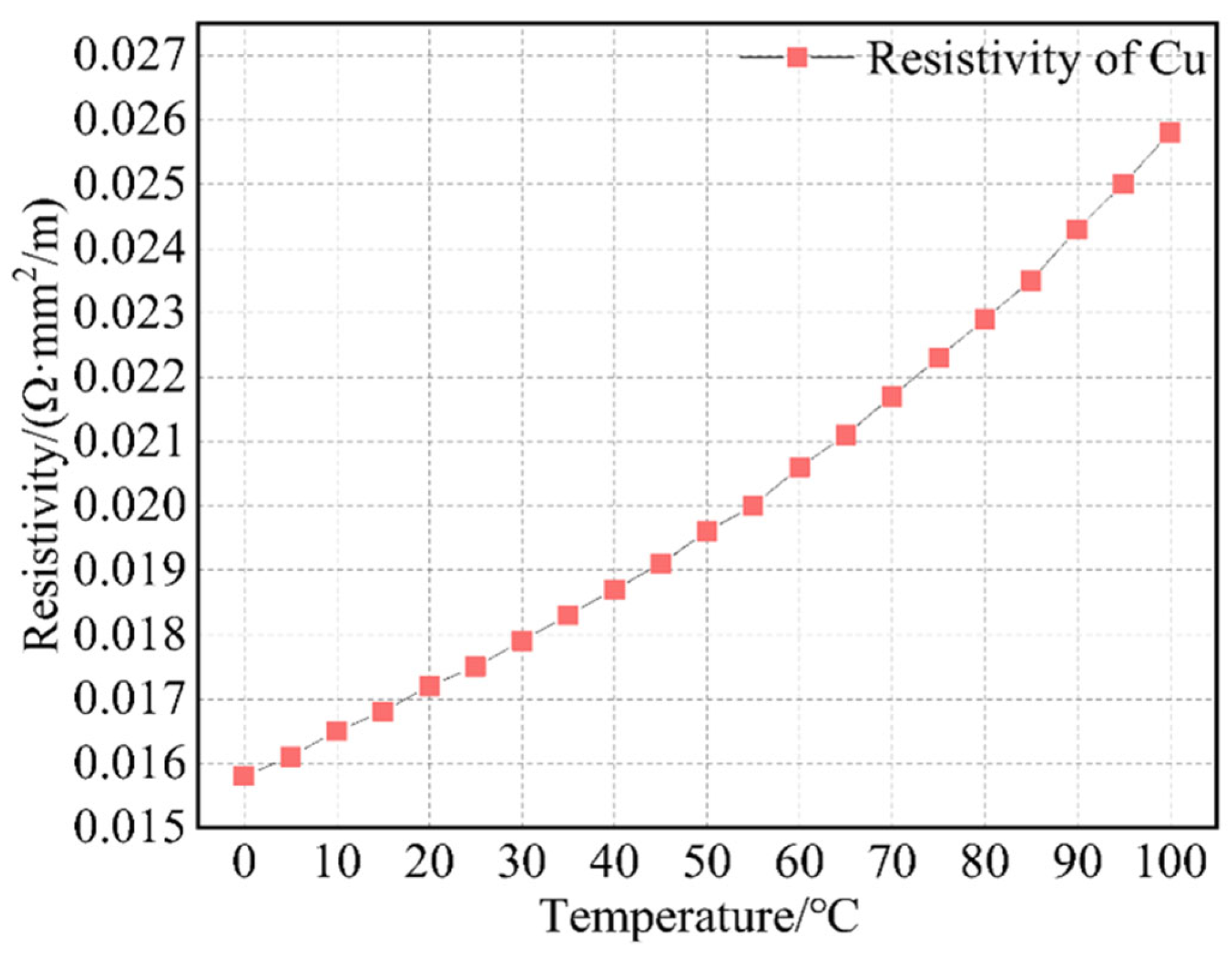
The system’s temperature will increase throughout operation, leading to alterations in the material properties. The interior of the Litz coil is primarily constructed of copper. Figure 7 illustrates the variation in copper resistivity as temperature rises.
The geometries designated for the electromagnetic analysis are the same for utilization in the thermal analysis. To improve the simulation quality, three-dimensional geometry is used, and various boundary conditions and geometric surfaces are considered. The coil material used in the model is copper (Litz wire), the same as used in the electromagnetic simulation, and the thermal properties of that material are shown in Table 4. It should be mentioned that the temperature of the coils should not exceed 150 °C.
We employed Ansys Electronics Suite 2021 R1 (Icepack) to conduct the thermal analysis of the constructed coupler. This tool precisely models heat transfer and thermal performance across several engineering applications. This investigation modeled, simulated, and assessed the thermal characteristics of the coupler assembly under diverse operational conditions. It provided crucial insights into the propagation of heat, methods for dissipating heat, and strategies for heat management. These findings are crucial for optimizing the coupling coils to augment the efficiency of inductive power transfer systems in electric vehicles.
A numerical analysis was conducted in an electromagnetic simulation to assess the thermal performance of the magnetic coils. The losses originated from the electromagnetic simulation. Subsequently, to ascertain the distribution of temperature within the model, these losses were employed as the input heat source for the thermal simulation. The computation employing temperature-dependent characteristics utilizes the equation provided below:
K = K c o p p e r 1 + 0.00393 T T c o p p e r
where K c o p p e r is the Cooper standard electrical conductivity, 5.8 × 10⁷ S/m, and T c o p p e r denotes a standard ambient temperature, which is 10 °C.
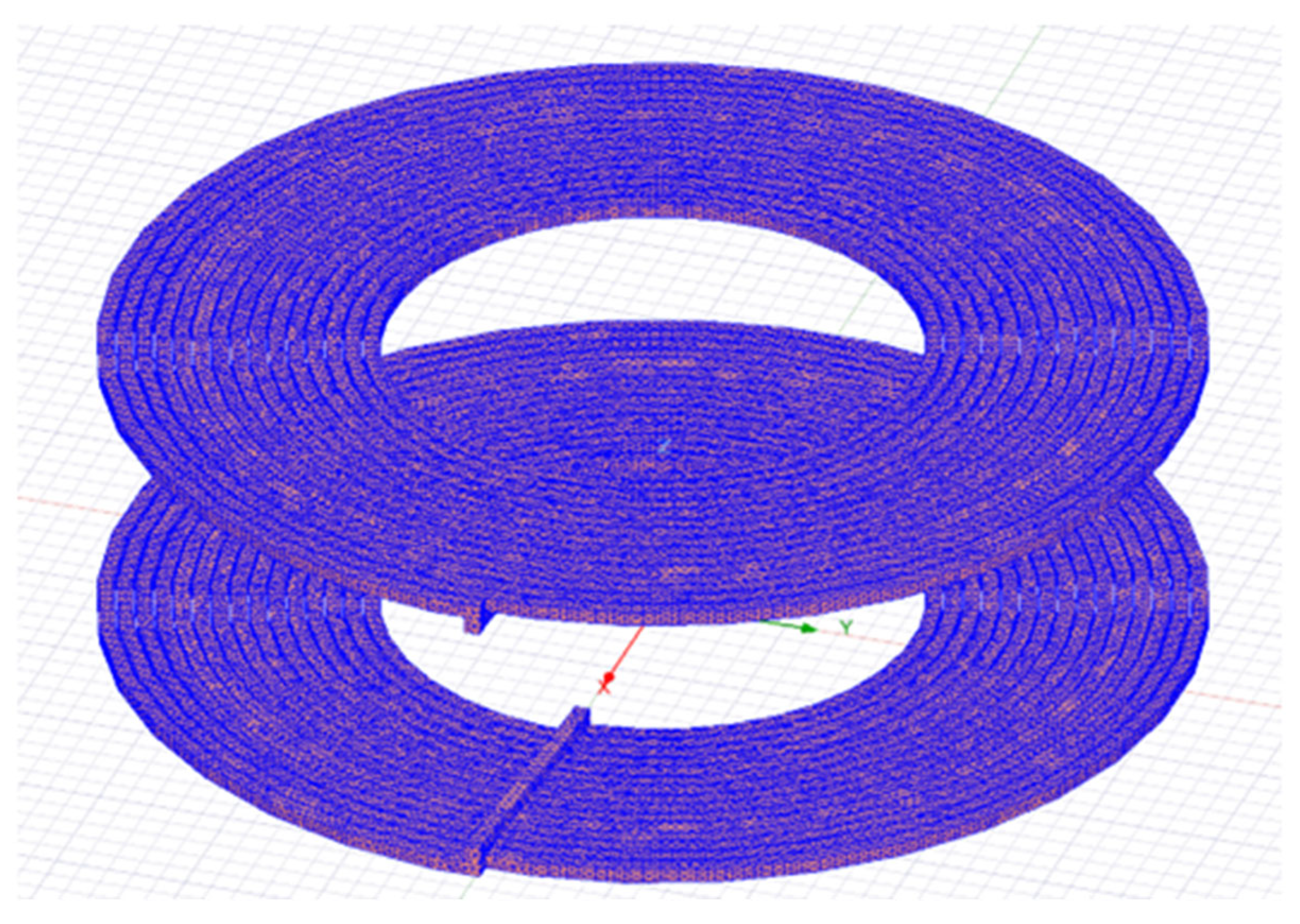
Upon establishing the fundamental parameters and boundary conditions, the thermal model must be subdivided into smaller components. The mesh division is a critical component in numerical computation and simulation, as the quality of the mesh directly influences the accuracy and speed of the solution calculation. We used a 1 mm length of meshing, and the result can be seen in Figure 8. The meshing is very good, and there are no imperfections, which means that the simulation will give a good result.
In the thermal simulation, the ambient temperature was established at 10 °C, with the radiation temperature also set at 10 °C, as illustrated in Table 5 below.
The airflow velocity parameters between transmitter and receiver are defined, and the condition and velocity distribution of external fluid flow are depicted in Table 6. The data reveals that the highest velocity, recorded at 0.1 m/s, occurs between transmitting and receiving coils.
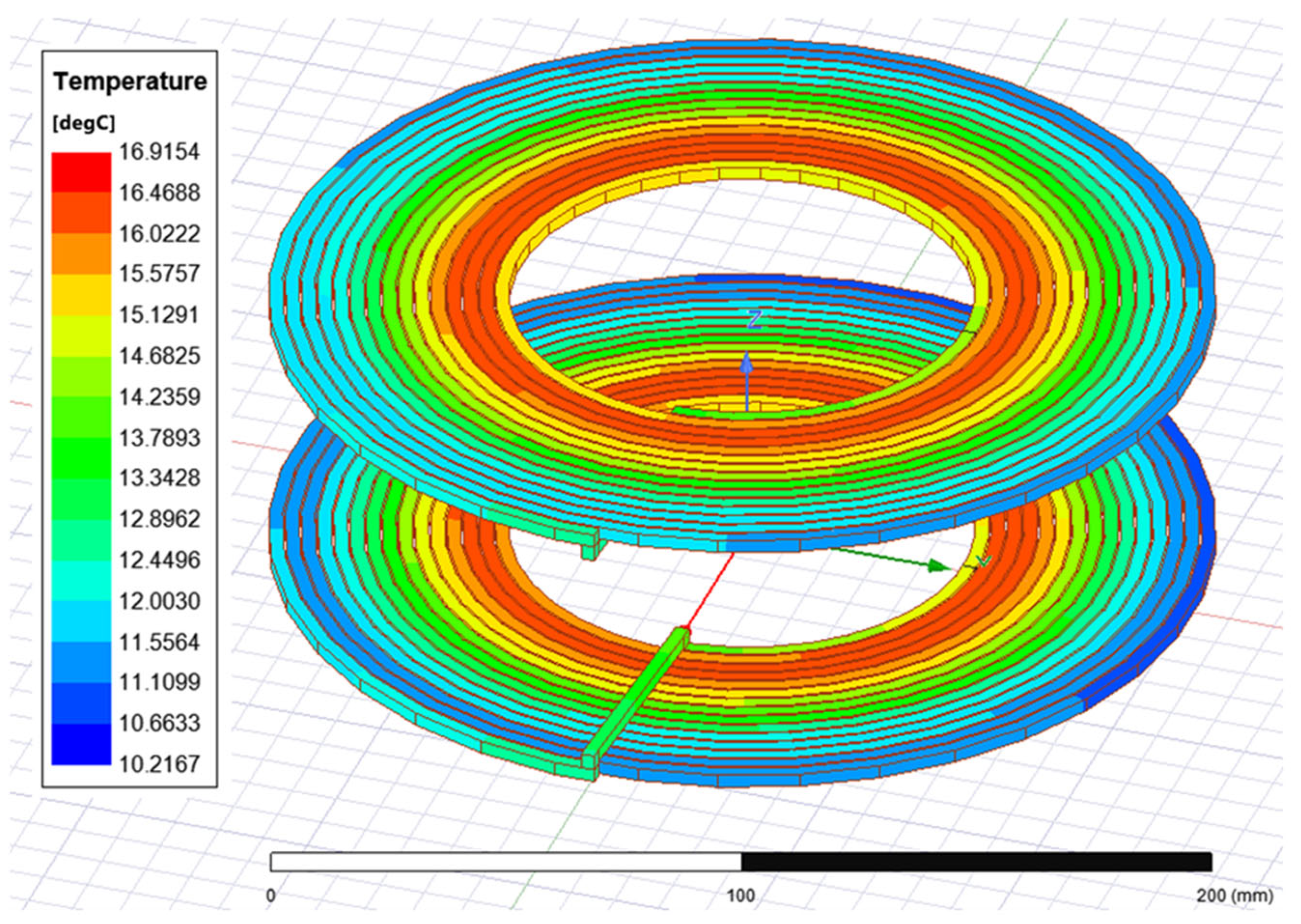
The simulation computes models of natural convection heat dissipation at an ambient temperature of 10 °C. The temperature distribution of the magnetic coil is obtained using the software Ansys Icepack, as depicted in Figure 9.
The annotation on the left side of Figure 9 specifies that the maximum temperature is 16.92 °C and the minimum temperature is 10.22 °C. The transmitter coil’s temperature exceeds that of the receiving coil due to the magnetic field affecting the receiving coil, impeding its capacity to fully absorb the magnetic flux from the transmitter coil, hence reducing the receiving coil’s temperature. Figure 9 illustrates the temperature variations throughout the coil’s cross-section. The majority of the energy is concentrated on the coil’s surface. The absence of magnetic coupling results in greater fluctuations in coil temperature. The heat dissipation from the coil by natural convection is not effectively released, leading to a negligible overall effect on system temperature.

4. Setup Experimental and Validation

Experiments are performed in the laboratory to verify and validate the results obtained in the simulation by the Ansys Electronics Suite 2021 R1 software and use those results in the real world. Thermal simulations must be sufficiently detailed to accurately ascertain the thermal behavior of an electronic system in order to validate the accurate thermal model of the WPT system. If Ansys Icepack simulation software is used for thermal analysis, experimental validation is needed to verify how reliable the simulation results are.
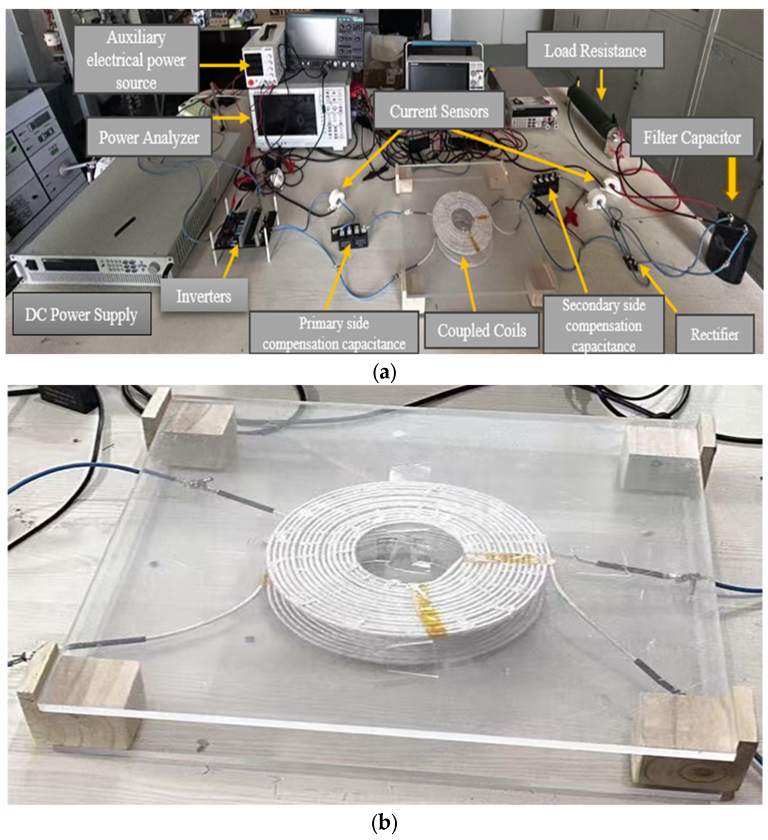
Figure 10a illustrates that the experimental prototype was constructed according to the specifications given in Table 7 below to corroborate the thermal simulation results. The components of this prototype, with their utility, are enumerated below:
The circular coil is employed for both the primary and secondary sides, as illustrated in Figure 10b. The current density is around 11 A/mm2. All coils consist of fifteen turns to achieve the necessary inductances specified in Table 6. The coils are constructed from AWG-100 Litz to achieve a system resonant frequency of 85 kHz, hence reducing the skin effect. The FLIR E8 Pro thermal camera is employed to assess the surface temperatures of the coils. An LCR (inductance, capacitance, resistance) meter was employed in the laboratory to ascertain the resistance of the Litz wire coil. The parameters of that experimental prototype can be seen in Table 8.

4.1. Experiment Results and Discussion

4.1.1. Loss Measurement of the Magnetic Coils and Efficiency

The Litz coil utilized in the experiment has 100 Litz wires, each with a diameter of 0.05 mm, arranged in a double winding configuration. Within the operational parameters of the 739.8 W system, it is unnecessary to account for the impact of magnetic saturation on the system’s efficiency. The RMS values of I 1 and I 2 are 12.22 A each.
The experiment assessed the efficacy of the IPT system from primary coil to secondary coil without considering the losses from the inverter, converter, and the whole IPT system, yielding a result of 99.58%. Table 9 juxtaposes the loss incurred from simulating an electromagnetic field against the empirical facts. The values closely resemble those of the experiment, exhibiting a 2% margin of error.

4.1.2. Temperature Experimental Verification

The precision of the simulation outcomes can be assessed by acquiring the temperature distribution of the magnetic coils. The FLIR E8 Pro thermal camera (FLIR Systems, Wilsonville, OR, USA) is utilized for temperature measurement. First, we start to obtain the initial temperature value of magnetic coils in the system. Second, we turn on the system by inputting the current into the system through the DC supply. The ambient temperature was set to 10 °C.
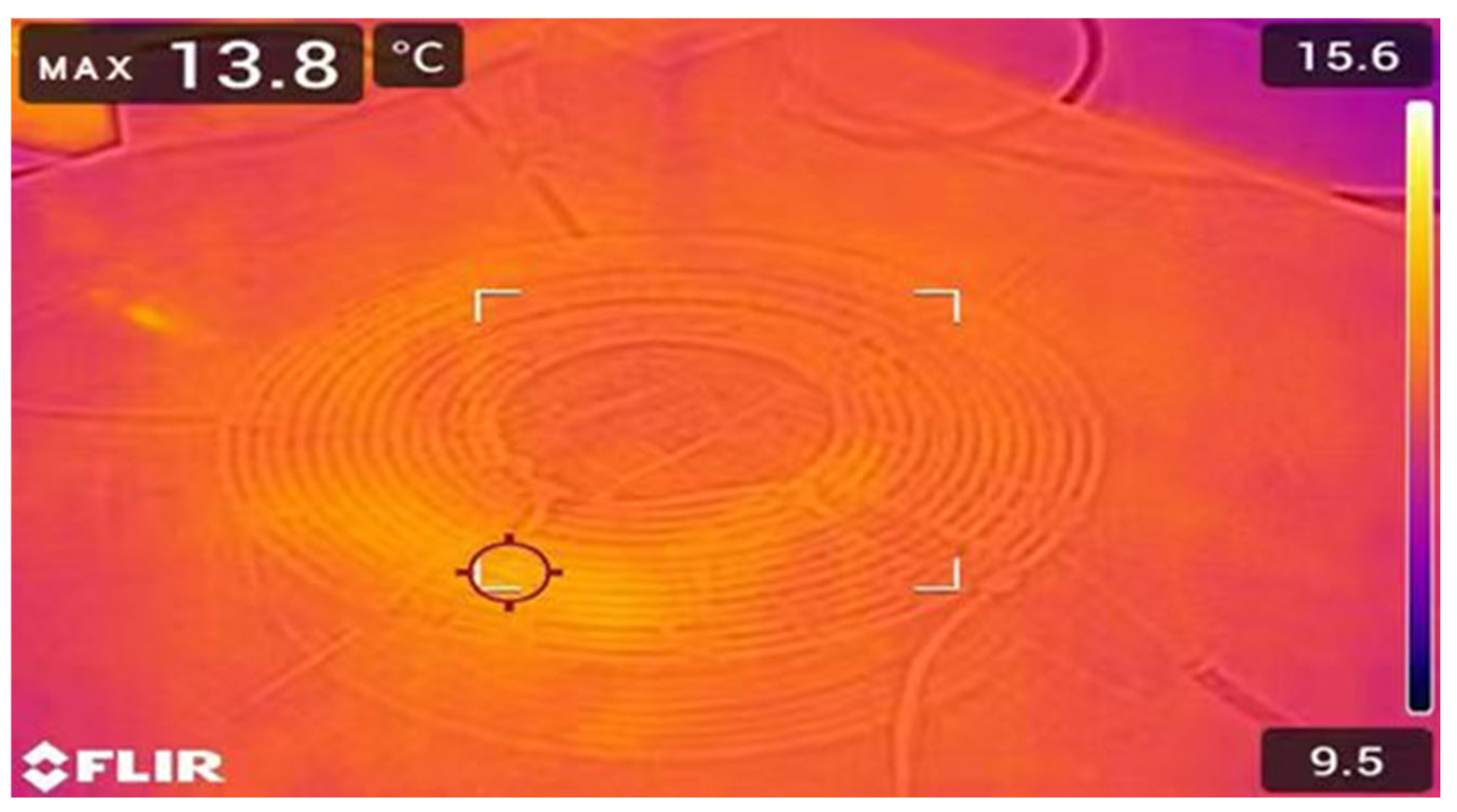
After 15 min, we deactivate the system and utilize a thermal camera to capture the temperature of the coils, illustrated in Figure 11.
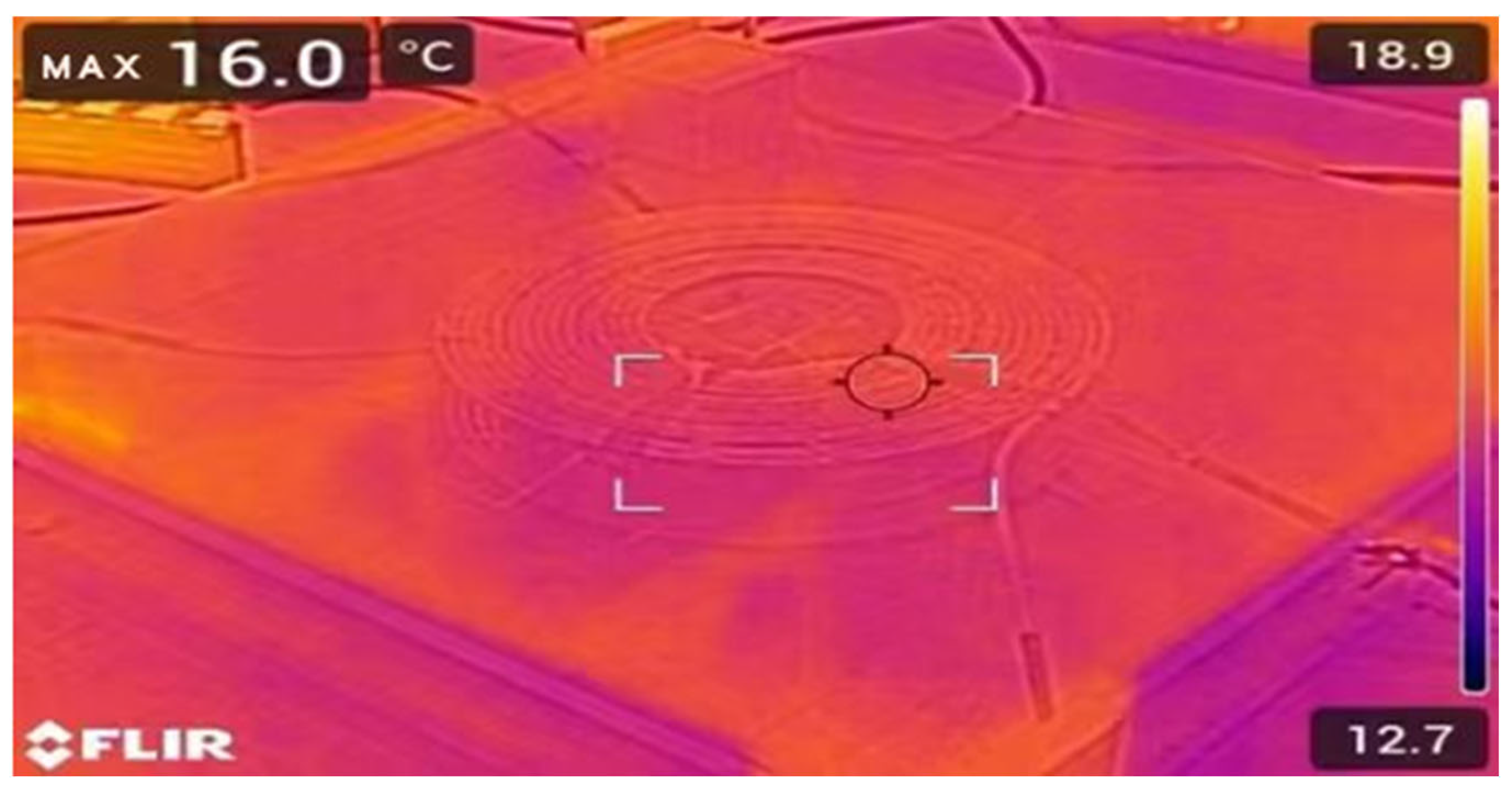
After 30 min, we used FLIR again to record the temperature distribution, and it is illustrated in Figure 12.
After 1 h, the temperature distribution of the magnetic coils remained constant, with a maximum temperature of 18.9 °C and a minimum temperature of 12.7 °C. The primary factors contributing to the disparity between the temperature values derived from simulation and experimental results are as follows:
  • The simulation process involves partitioning the finite element mesh into smaller segments. The model’s convergence criterion is defined by an error that takes into account both the precision and duration of the simulation. This will result in discrepancies between simulation outcomes and experimental results.
  • The experiment occurred during winter, and the ambient temperature of the laboratory was 10 °C , resulting in a discrepancy between the experimental results and the simulation results.

5. Conclusions

This research work focused on the magnetic design and thermal analysis of an IPT coil for electric vehicle charging, tackling critical problems in improving power transfer efficiency, thermal management, and overall system performance. The study provides valuable insights into the design and operation of IPT systems and contributes to the development of more robust, efficient, and scalable EV charging technologies. Using Ansys Electronics Suite 2021 R1 software, the IPT coils were modeled and analyzed with copper as the conductor material. Post-simulation evaluations provided critical parameters for the thermal study, including coil resistances, inductances, coupling coefficient, and power dissipation. Thermal analysis proved essential in assessing the charging system’s performance, as temperature variations significantly affect electromagnetic characteristics. The thermal simulation showed that due to copper’s resistive heating, coil temperatures ranged from a minimum of 10.21 °C to a maximum of 16.92 °C.
To validate the simulation, an experimental prototype was constructed. The measured coil temperature was 18.9 °C, and the observed system efficiency reached 99.58%. Differences between simulation and experimental results were attributed to factors such as variations in operating current, environmental conditions, particularly the winter test period, and naturally lower ambient temperatures. Despite these discrepancies, the proposed method effectively predicted coupled thermal behavior. Overall, this work advances the understanding of electro-thermal interactions in wireless charging systems and supports the development of safer, more efficient inductive charging solutions for electric vehicles.


Author Contributions

Conceptualization, Y.Y.; methodology, Y.Y. and M.T.M.K.; software, Y.Y. and M.T.M.K.; validation, J.L., Y.Y., and M.T.M.K.; investigation, Y.Y. and G.L.; writing—original draft preparation, Y.Y. and M.T.M.K.; writing—review and editing, Y.Y. and M.T.M.K.; visualization, M.T.M.K. and J.L.; supervision, Y.Y. and G.L.; funding acquisition, Y.Y. and J.L. All authors have read and agreed to the published version of the manuscript.

Funding

This research was funded by the Key Research and Development Projects of Shaanxi Province (2024SF-YBXM-599), the Scientific Research Program Funded by the Education Department of Shaanxi Provincial Government (24JE009), the Xi’an Municipal Scientific and Technological Projects (2025GXKJRC00002), and the Shaanxi Transportation Science and Technology Development Funds (23–37K).

Institutional Review Board Statement

Not applicable.

Informed Consent Statement

Not applicable.

Data Availability Statement

The data presented in this study are available on request from the corresponding author. The data is not publicly available due to privacy.

Conflicts of Interest

Author Jiaojiao Lv was employed by the company Powerchina Northwest Engineering Corporation Limited. The remaining authors declare that the research was conducted in the absence of any commercial or financial relationships that could be construed as a potential conflict of interest.

References

  1. Pehrman, D. Design Aspects of Inductive Power Transfer Systems for Electric Vehicle Charging. Bachelor’s Thesis, Chalmers Tekniska Hogskola Göteborg, Sweden, 2019. [Google Scholar]
  2. Zhang, X.; Liu, Z.; Hou, Y.; Zong, S. Analysis of charging power demand of electric vehicles considering the influence of travel temperature. J. Electr. Power Sci. Technol. 2021, 36, 124–131. [Google Scholar] [CrossRef]
  3. Chowdhury, M.S.A. Design and Performance Evaluation of Different Power Pad Topologies for Electric Vehicles Wireless Charging Systems. Doctoral Dissertation, Memorial University of Newfoundland, St John’s, NL, Canada, 2019. [Google Scholar]
  4. Mohammad, M. Optimization of Inductive Wireless Charging Systems for Electric Vehicles: Minimizing Magnetic Losses and Limiting Electromagnetic Field Emissions. Doctoral Dissertation, The University of Akron, Akron, OH, USA, 2019. [Google Scholar]
  5. Lee, S.-H.; Lorenz, R.D. Development and validation of model for 95%-efficiency 220-W wireless power transfer over a 30-cm air gap. IEEE Trans. Ind. Appl. 2011, 47, 2495–2504. [Google Scholar] [CrossRef]
  6. Wang, C.-S.; Stielau, O.H.; Covic, G.A. Design considerations for a contactless electric vehicle battery charger. IEEE Trans. Ind. Electron. 2005, 52, 1308–1314. [Google Scholar] [CrossRef]
  7. Yang, Y.; Cui, J.; Cui, X. Design and analysis of magnetic coils for optimizing the coupling coefficient in an electric vehicle wireless power transfer system. Energies 2020, 13, 4143. [Google Scholar] [CrossRef]
  8. Kurs, A.; Karalis, A.; Moffatt, R.; Joannopoulos, J.D.; Fisher, P.; Soljacic, M. Wireless power transfer via strongly coupled magnetic resonances. Science 2007, 317, 83–86. [Google Scholar] [CrossRef]
  9. Niu, S.; Yu, H.; Niu, S.; Jian, L. Power loss analysis and thermal assessment on wireless electric vehicle charging technology: The over-temperature risk of ground assembly needs attention. Appl. Energy 2020, 275, 115344. [Google Scholar] [CrossRef]
  10. Razu, M.R.R.; Mahmud, S.; Uddin, M.J.; Islam, S.S.; Bais, B.; Misran, N.; Islam, M.T. Wireless charging of electric vehicle while driving. IEEE Access 2021, 9, 157973–157983. [Google Scholar] [CrossRef]
  11. Yang, Y.; El Baghdadi, M.; Lan, Y.; Benomar, Y.; Van Mierlo, J.; Hegazy, O. Design methodology, modeling, and comparative study of wireless power transfer systems for electric vehicles. Energies 2018, 11, 1716. [Google Scholar] [CrossRef]
  12. Benalia, N.; Benlaloui, I.; Laroussi, K.; Elkhateb, A.; Wapet, D.E.M.; Hassan, A.M.; Mahmoud, M.M. Correction: Enhancing electric vehicle charging performance through series-series topology resonance-coupled wireless power transfer. PLoS ONE 2024, 19, e0309545. [Google Scholar] [CrossRef]
  13. Aydin, E.; Aydemir, M.T.; Aksoz, A.; El Baghdadi, M.; Hegazy, O. Inductive power transfer for electric vehicle charging applications: A comprehensive review. Energies 2022, 15, 4962. [Google Scholar] [CrossRef]
  14. Huang, Z.; Wong, S.C.; Tse, C.K.M. An Inductive-Power-Transfer Converter With High Efficiency Throughout Battery-Charging Process. IEEE Trans. Power Electron. 2019, 34, 10245–10255. [Google Scholar] [CrossRef]
  15. Kim, S.; Amirpour, M.; Dharmakeerthi, T.; Barsari, V.Z.; Covic, G.; Bickerton, S.; Thrimawithana, D. Thermal evaluation of an inductive power transfer pad for charging electric vehicles. IEEE Trans. Ind. Electron. 2021, 69, 314–322. [Google Scholar] [CrossRef]
  16. Mohamed, N.; Aymen, F.; Alharbi, T.E.; El-Bayeh, C.Z.; Lassaad, S.; Ghoneim, S.S.; Eicker, U. A comprehensive analysis of wireless charging systems for electric vehicles. IEEE Access 2022, 10, 43865–43881. [Google Scholar] [CrossRef]
  17. Ma, J.; Li, Z.; Liu, Y.; Ban, M.; Song, W. Thermal analysis and optimization of the magnetic coupler for wireless charging system. IEEE Trans. Power Electron. 2023, 38, 16269–16280. [Google Scholar] [CrossRef]
  18. Yao, Y.; Gao, S.; Wang, Y.; Liu, X.; Zhang, X.; Xu, D. Design and optimization of an electric vehicle wireless charging system using interleaved boost converter and flat solenoid coupler. IEEE Trans. Power Electron. 2020, 36, 3894–3908. [Google Scholar] [CrossRef]
  19. Amirpour, M.; Kim, S.; Battley, M.P.; Kelly, P.A.; Bickerton, S.; Covic, G.A. Coupled electromagnetic-thermal analysis of roadway inductive power transfer pads within a model pavement. Appl. Therm. Eng. 2021, 189, 116710. [Google Scholar] [CrossRef]
  20. Tománek, R. Wireless Power Transfer 20 kW; Academia: San Francisco, CA, USA, 2019. [Google Scholar]
  21. Ferreira, J. Analytical computation of ac resistance of round and rectangular litz wire windings. IEE Proc. B (Electr. Power Appl.) 1992, 139, 21–25. [Google Scholar] [CrossRef]
  22. Acero, J.; Serrano, J.; Carretero, C.; Lope, I.; Burdío, J.M. Analysis and design of tubular coils for wireless inductive power transfer systems. In Proceedings of the 2017 IEEE Applied Power Electronics Conference and Exposition (APEC), Tampa, FL, USA, 26–30 March 2017; pp. 848–854. [Google Scholar]
  23. Cirino, A.W.; de Paula, H.; Mesquita, R.C.; Saraiva, E. Cable parameter variation due to skin and proximity effects: Determination by means of Finite Element Analysis. In Proceedings of the 2009 35th Annual Conference of IEEE Industrial Electronics, Porto, Portugal, 3–5 November 2009; pp. 4073–4079. [Google Scholar]
  24. Kubiczek, K.; Kampik, M. Fast and numerically stable analytical computations for the power induced in cylindrical multilayered conductors under external magnetic fields. IEEE Trans. Electromagn. Compat. 2022, 65, 292–299. [Google Scholar] [CrossRef]
  25. Yang, Y.; Benomar, Y.; El Baghdadi, M.; Hegazy, O.; Van Mierlo, J. Design, modeling and control of a bidirectional wireless power transfer for light-duty vehicles: G2V and V2G systems. In Proceedings of the 2017 19th European Conference on Power Electronics and Applications (EPE’17 ECCE Europe), Warsaw, Poland, 11–14 September 2017. [Google Scholar]
  26. Bentalhik, I.; Lassioui, A.; El Fadil, H.; Bouanou, T.; AZIZ, R.; El Idrissi, Z.; Hamed, A.M. Analysis, Design and Realization of a Wireless Power Transfer Charger for Electric Vehicles: Theoretical Approach and Experimental Results. World Electr. Veh. J. 2022, 13, 121. [Google Scholar] [CrossRef]
  27. Cao, Y.; Li, X.; Liu, W. The Analysis of Thermal Magnetic Coupling of Tubular Permanent Magnetic Coupler. J. Phys. Conf. Ser. 2020, 42044. [Google Scholar] [CrossRef]
  28. Kalra, G.R.; Pearce, M.G.; Kim, S.; Thrimawithana, D.J.; Covic, G.A. A power loss measurement technique for inductive power transfer magnetic couplers. IEEE J. Emerg. Sel. Top. Ind. Electron. 2020, 1, 113–122. [Google Scholar] [CrossRef]
  29. Mohamed, N.; Aymen, F.; Issam, Z.; Bajaj, M.; Ghoneim, S.S.; Ahmed, M. The impact of coil position and number on wireless system performance for electric vehicle recharging. Sensors 2021, 21, 4343. [Google Scholar] [CrossRef]
  30. Tiemann, M.; Saifo, M.; Clemens, M.; Schmuelling, B. Magnetic and thermal coupled field analysis of wireless charging systems for electric vehicles. IEEE Trans. Magn. 2019, 55, 1–4. [Google Scholar] [CrossRef]

  31. Zimmer, S.; Helwig, M.; Lucas, P.; Winkler, A.; Modler, N. Investigation of Thermal Effects in Different Lightweight Constructions for Vehicular Wireless Power Transfer Modules. World Electr. Veh. J. 2020, 11, 67. [Google Scholar] [CrossRef]
  32. Wen, C.; Xu, Q.; Chen, M.; Xiao, Z.; Wen, J.; Luo, Y.; Zhao, X.; Liang, Y.; Liang, K. Thermal analysis of coupled resonant coils for an electric vehicle wireless charging system. World Electr. Veh. J. 2022, 13, 133. [Google Scholar] [CrossRef]
  33. Wojda, R.; Galigekere, V.P.; Pries, J.; Onar, O. Thermal analysis of wireless power transfer coils for dynamic wireless electric vehicle charging. In Proceedings of the 2020 IEEE Transportation Electrification Conference & Expo (ITEC), Chicago, IL, USA, 23–26 June 2020; pp. 835–838. [Google Scholar]
  34. Jiang, J.; Lan, Y.; Zhang, Z.; Zhou, X.; Song, K. Thermal estimation and thermal design for coupling coils of 6.6 kW wireless electric vehicle charging system. Energies 2022, 15, 6797. [Google Scholar] [CrossRef]
Figure 1. Structure of the IPT system for EV charging [29].
Applsci 15 13184 g001
Figure 2. Block diagram of an inductive power transfer (IPT) system.
Applsci 15 13184 g002
Figure 3. Characteristics of the circular coil [32]: (a). Planar coil; (b) Planar coil’s characteristics.
Applsci 15 13184 g003
Figure 4. Design of the circular coils.
Applsci 15 13184 g004
Figure 5. (a) Magnetic field distribution, (b) magnetic vector distribution.
Applsci 15 13184 g005
Figure 6. Diagram of solid copper wire [33]: (a) skin effect; (b) proximity effect.
Applsci 15 13184 g006
Figure 7. Copper resistivity vs. temperature [34].
Applsci 15 13184 g007
Figure 8. Mesh division at 1 mm of length.
Applsci 15 13184 g008
Figure 9. Temperature distribution of magnetic coils.
Applsci 15 13184 g009
Figure 10. (a) Experimental setup of IPT system, (b) circular coils with plates.
Applsci 15 13184 g010
Figure 11. Temperature distribution of the plate after 15 min.
Applsci 15 13184 g011
Figure 12. Temperature distribution of the plate after 30 min.
Applsci 15 13184 g012
Table 1. Electromagnetic field material parameters of the coupled coil.
ParametersValue
Conductivity (S/m)58 × 106
Relative permeability0.99
Relative dielectric constant1.00
Mass density (kg/m3)8933
Table 2. Design parameters for coils.
ParametersValue
RectHeight 3 mm
RectWidth 3 mm
Start helix radius 50 mm
Radius change 3.5 mm
Pitch0
Number of turns15
Segment per turn36
Table 3. Simulation results for circular coils.
ParametersValue
Inner diameter Din100 mm
Outer diameter Dout295 mm
Airgap g 60 mm
Length of the coil Wl 9310 mm
Current Imax11 A
Number of turns N1 = N2 = N15
Frequency f85 kHz
Self-inductance transmitter L1 29.601 µH
Self-inductance receiver L229.603 µH
Mutual inductance M 4.985 µH
Coupling coefficient k0.168
Resistance transmitter R1 55.162 mΩ
Resistance receiver R2 55.021 mΩ
Transmitter loss6.825 W
Receiver loss6.240 W
Table 4. Thermal properties of the copper material.
ParametersValue
Density8933 kg/m3
Specific heat, C385 J/kg·°C
Thermal conductivity, K400 W/m·°C
Table 5. Ambient and radiation temperature.
Icepack Design Settings
SectionSettingValueUnit
Ambient ConditionsTemperature10°C
Gauge Pressure0Pa
Radiation Temp10°C
Table 6. Velocity conditions at Ansys Icepack solver conditions setup.
Ansys Icepack Solver Conditions Settings
ConditionValueUnit
X Velocity0m/s
Y Velocity0m/s
Z Velocity0.1m/s
Table 7. Components and their specifications for the IPT system.
Circuit ConfigurationUtility
Power SupplyConvert electric current from a source to the correct voltage, current, and frequency to power the load
Full Bridge Inverter Convert the DC voltage into AC
Rectifier Convert alternating current (AC) into direct current (DC) by allowing a current to flow through the device in one direction only
Primary Compensation Capacitors Ensure stability and safety when operating at high frequency
Secondary Compensation
Capacitors
Ensure stability and safety when operating at high frequency
Current SensorDetects and measures the electric current passing through a conductor
ThermometerMeasure or capture the temperature
Oscilloscope or Power AnalyzerAnalyze the quality of power
Table 8. Parameters and specifications of the proposed IPT system.
Specifications and ParametersValues
Air gap60 mm
Resonant frequency85 kHz
Coupling coefficient0.17
Rated power739.8 W
Coils resistances (R1 and R2)50.21 mΩ
Series resonant capacitor (C1 and C2)1880 nF
Coil inductances (L1 and L2)29.6 µH
Load resistance RL10 Ω
Filter capacitor CP10000 µF
Input DC voltage60~100 V
Output voltage60~100 V
Input current Irms12.22 A
Number of turns15
Outer diameter100 mm
Inner diameter295 mm
Length of coils9310 mm
Table 9. Comparison of loss in magnetic coils.
Categories Experimental Loss (W)Simulation Loss (W)
Primary coil6.976.82
Secondary coil 6.36.24
Total loss13.1713.06
Disclaimer/Publisher’s Note: The statements, opinions and data contained in all publications are solely those of the individual author(s) and contributor(s) and not of MDPI and/or the editor(s). MDPI and/or the editor(s) disclaim responsibility for any injury to people or property resulting from any ideas, methods, instructions or products referred to in the content.