1. Introduction
Asphalt mixtures are commonly used in road construction, and their internal moisture migration and distribution have a critical impact on their durability, mechanical properties, and service life [
1,
2,
3,
4,
5]. While water damage can be caused by many types and sources of water, damage associated with water vapor has attracted growing attention, as its diffusion coefficient is at least two orders of magnitude larger than liquid water’s seepage coefficient [
1]. As such, water vapor enters asphalt mixtures faster. Furthermore, water vapor’s intermolecular forces are weaker than those of liquid water, which makes it easier for water vapor to enter asphalt mixtures.
Moisture is widely recognized as a driving factor in the deterioration of asphalt pavements, and it has a significant impact on both newly constructed and in-service asphalt pavements [
6]. It degrades the adhesion between asphalt binders and aggregates [
7], alters the chemical and rheological properties of asphalt, such as softening or accelerated aging [
8], and ultimately induces typical defects, including stripping, fatigue cracking, and rutting. To elucidate the mechanisms of water vapor movement, existing studies have adopted a combination of experimental and numerical approaches. Some have focused on measuring core diffusion parameters, including the diffusion coefficient and the moisture retention capacity via laboratory tests [
9,
10,
11], while others have analyzed the influence of material components, including fine aggregates [
12,
13] and asphalt binders [
14,
15], on moisture behavior. Some studies have investigated the impacts of mixtures’ void distribution and moisture diffusion on mixture performance, using void size probability distribution functions obtained via X-ray scanning [
16]. Finite element models have also been developed to simulate moisture concentration distribution in asphalt mixtures [
9,
17], confirming that water vapor significantly impairs the mechanical properties of pavements.
Field observations further validate the critical role of water vapor in pavement damage. For example, pavements in Arizona’s deserts and Utah’s arid/semi-arid regions exhibit severe early-stage water damage [
18], despite minimal liquid water infiltration, suggesting that water vapor is the primary cause. Similarly, coring analysis of water-damaged pavements at Osaka Airport [
19] revealed that liquid water barely penetrates under pressure, while water vapor diffuses freely, even with an annual average relative humidity (RH) of 58%. These cases highlight the urgency of understanding water vapor diffusion mechanisms to improve pavement durability.
Water vapor diffusion in asphalt mixtures occurs in two distinct modes, which dominate different stages of the pavement lifecycle:
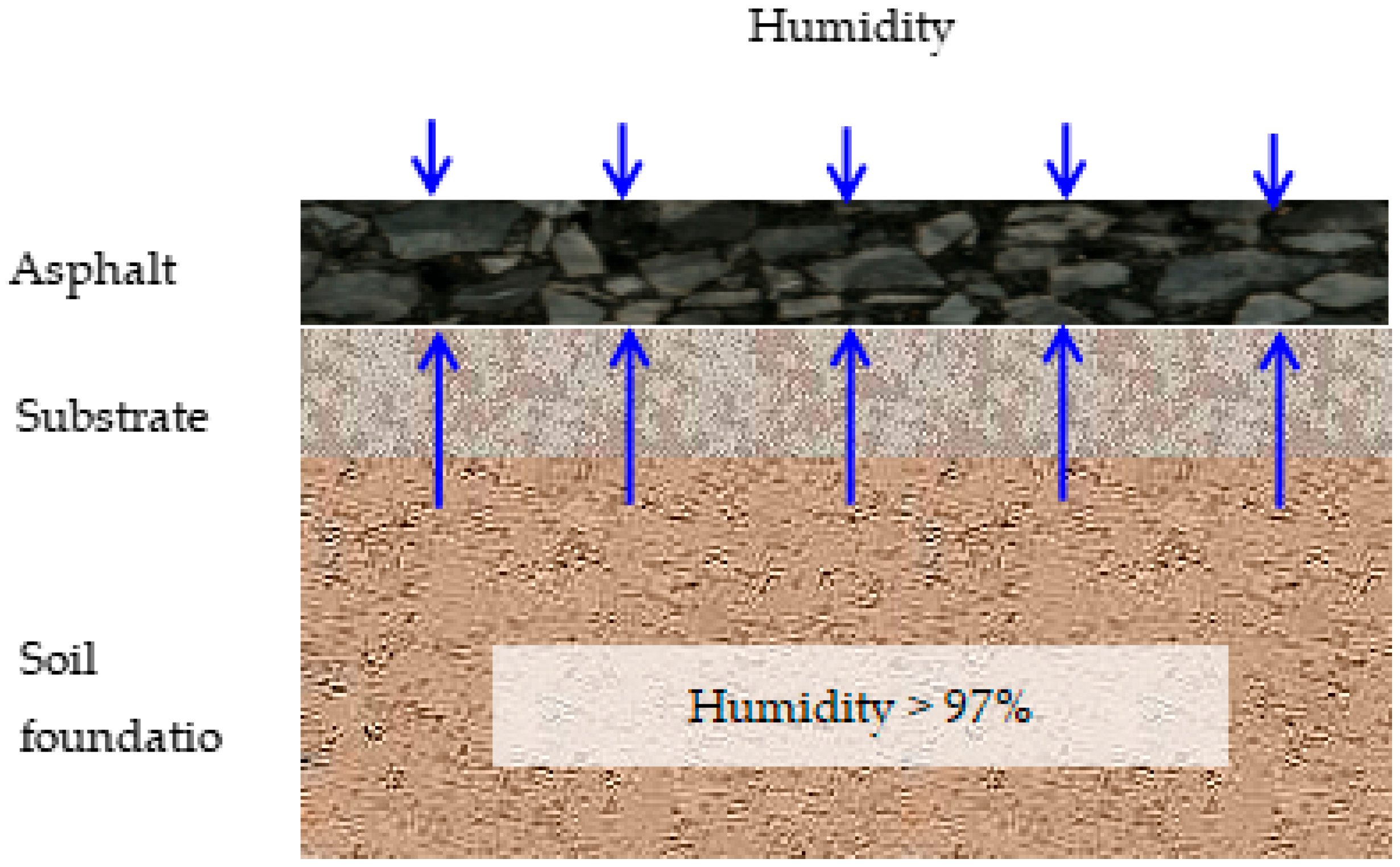
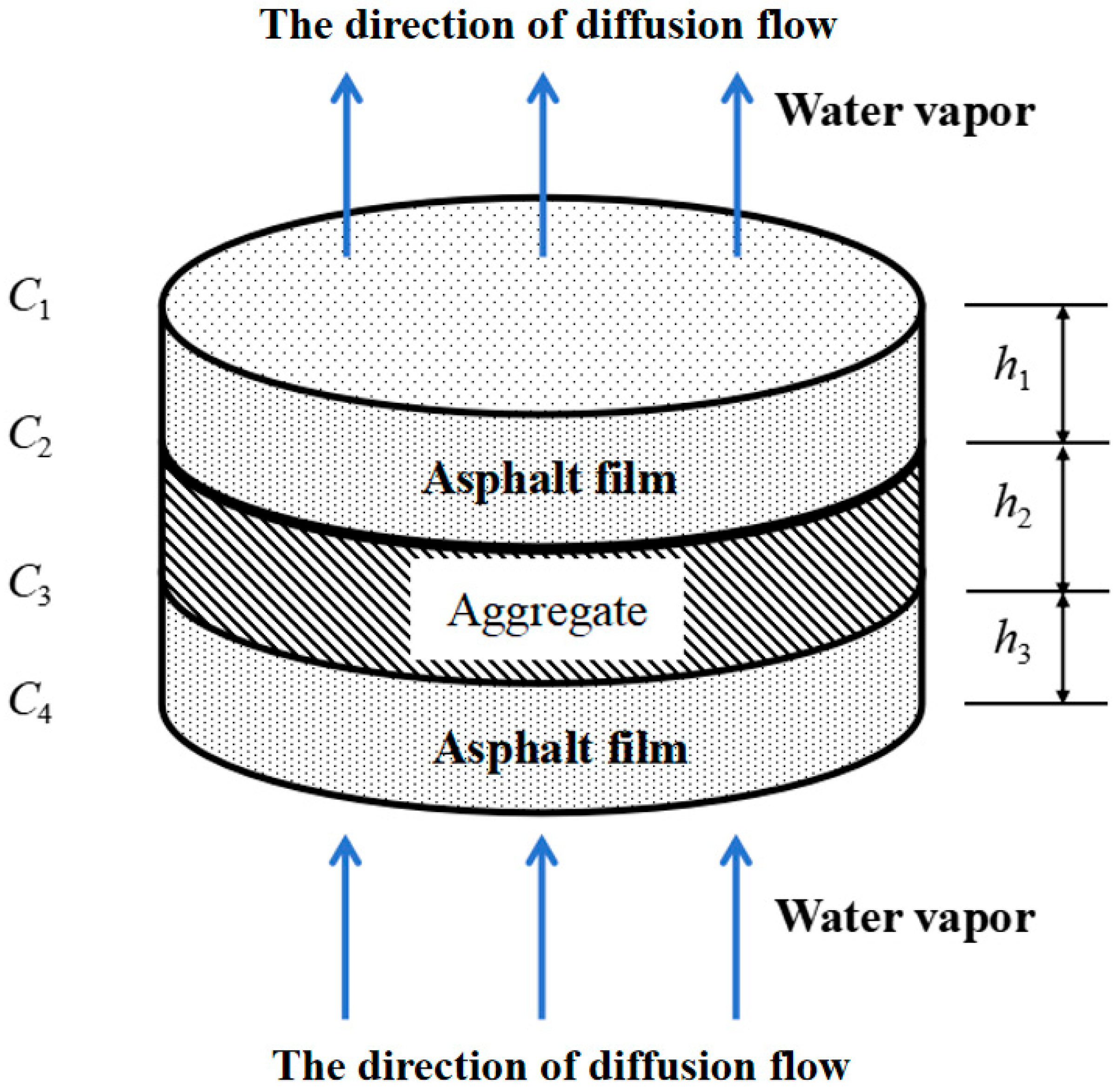
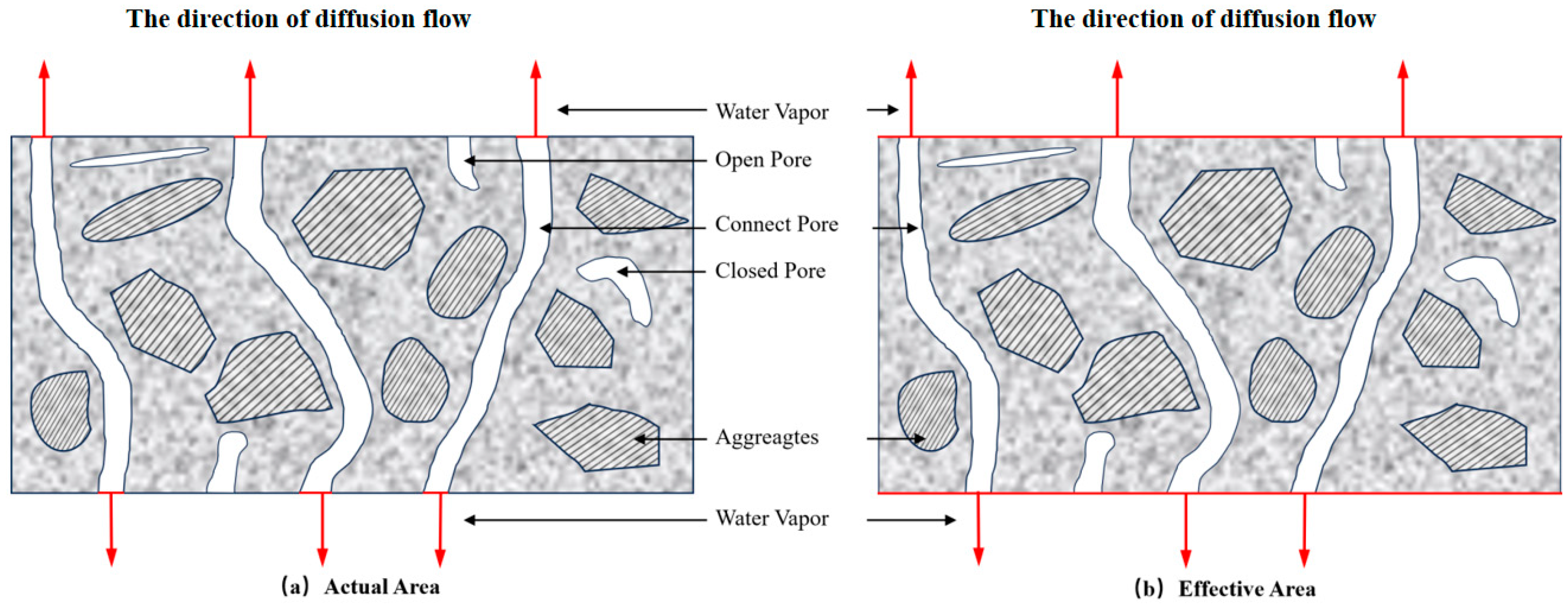
(1) Accumulation-type water vapor transport (AT-WVT): Newly paved asphalt pavements are nearly free of water molecules, as asphalt and aggregates are heated to 150~170 °C during construction. However, the overlying air contains water vapor with time- and location-dependent relative humidity, and the underlying subgrade soil maintains a relative humidity of 97~100%. This humidity level corresponds to a total suction capacitance of 2~4.5 PF [
20]. Driven by this humidity gradient, water vapor continuously infiltrates and accumulates in the asphalt mixture, making AT-WVT the dominant mode for newly paved pavements [
21,
22], as shown in
Figure 1. Two test methods are used to study AT-WVT: the mass weighing method [
13,
21,
23], which features simple operations and intuitive data and enables direct parameter derivation via diffusion models, contributing to its wide adoption, and the thermocouple hygrometer suction measurement method [
24,
25], which requires drilling and may not fully reflect actual moisture behavior, limiting its applicability.
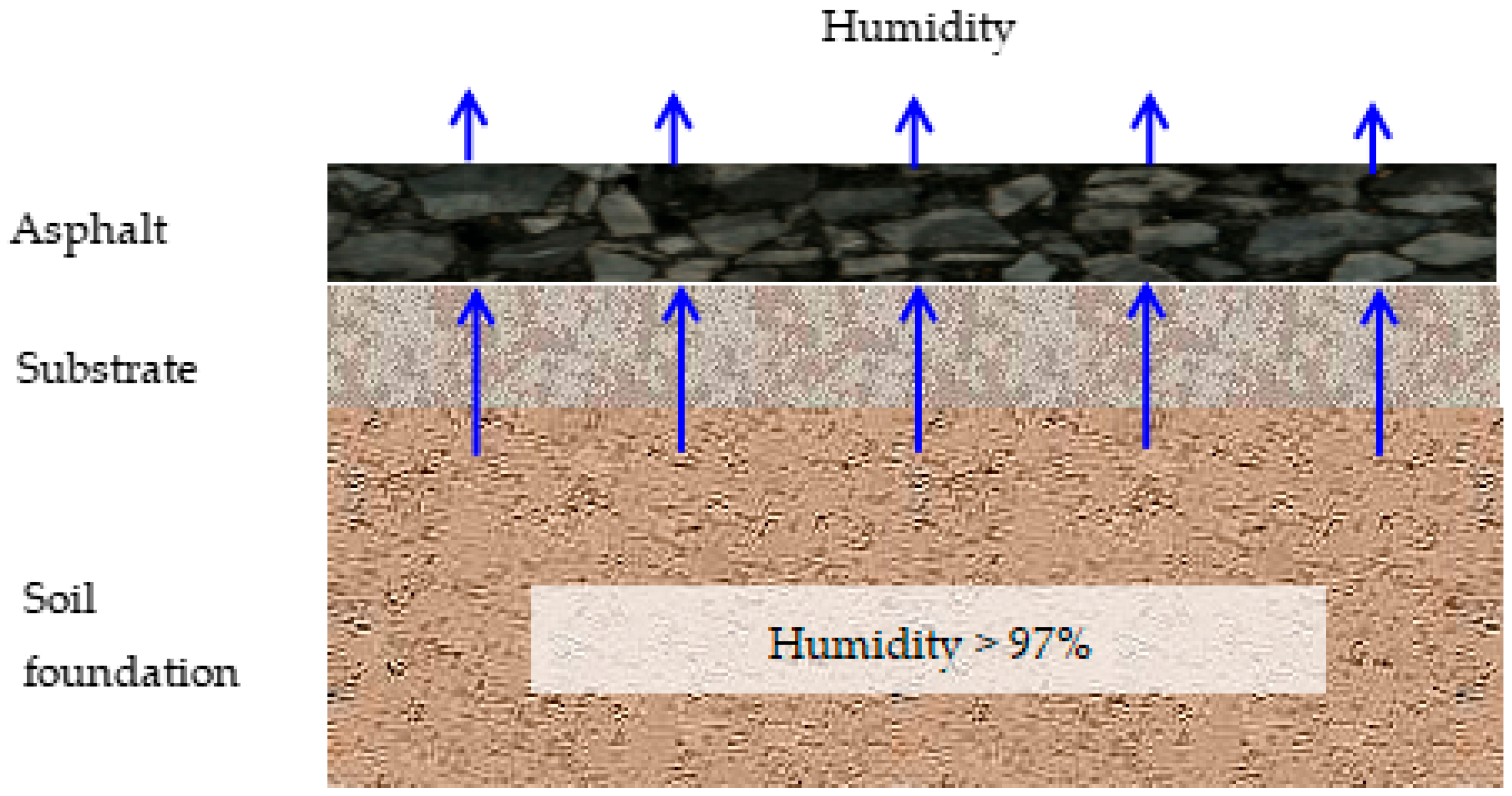
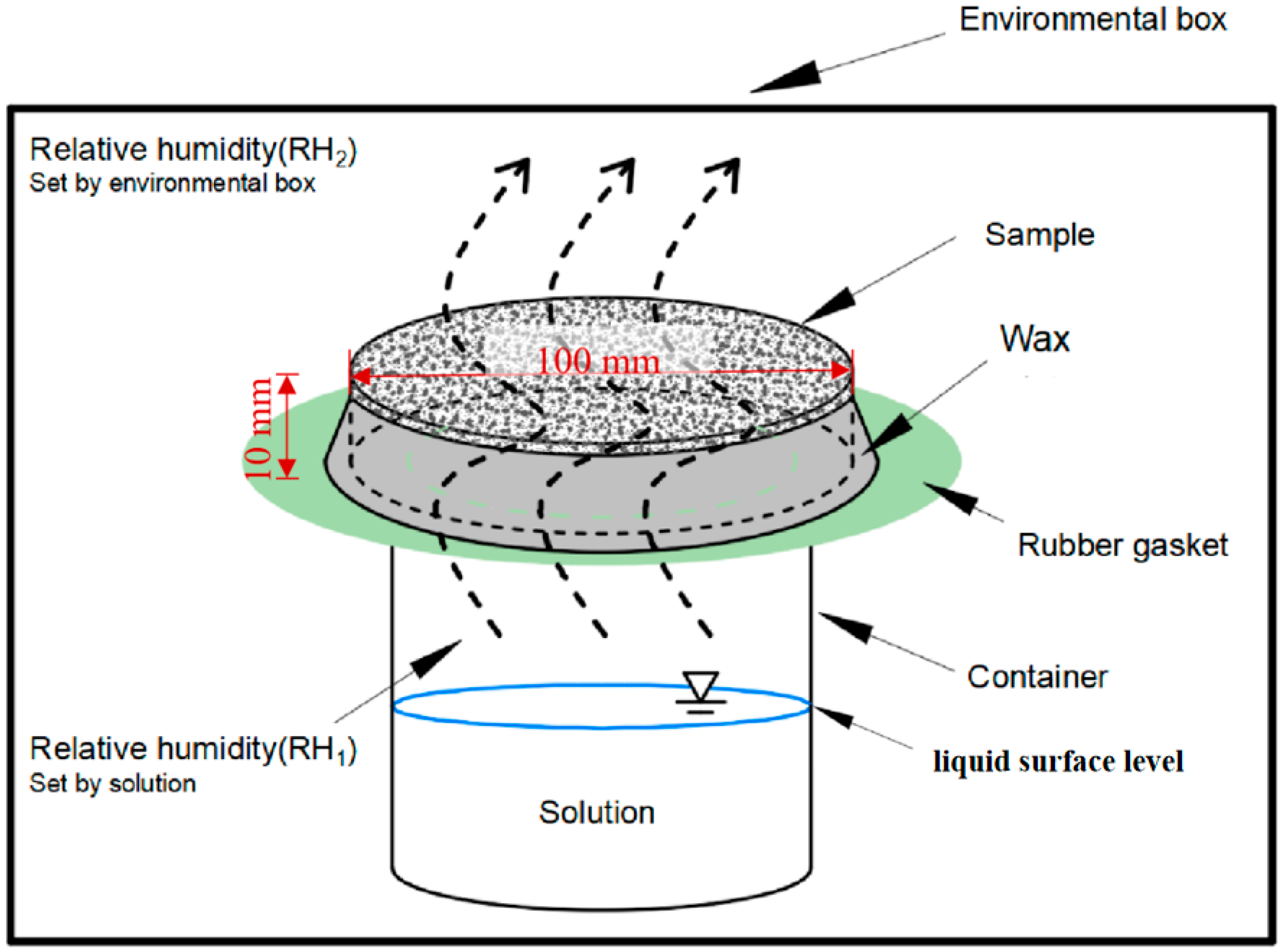
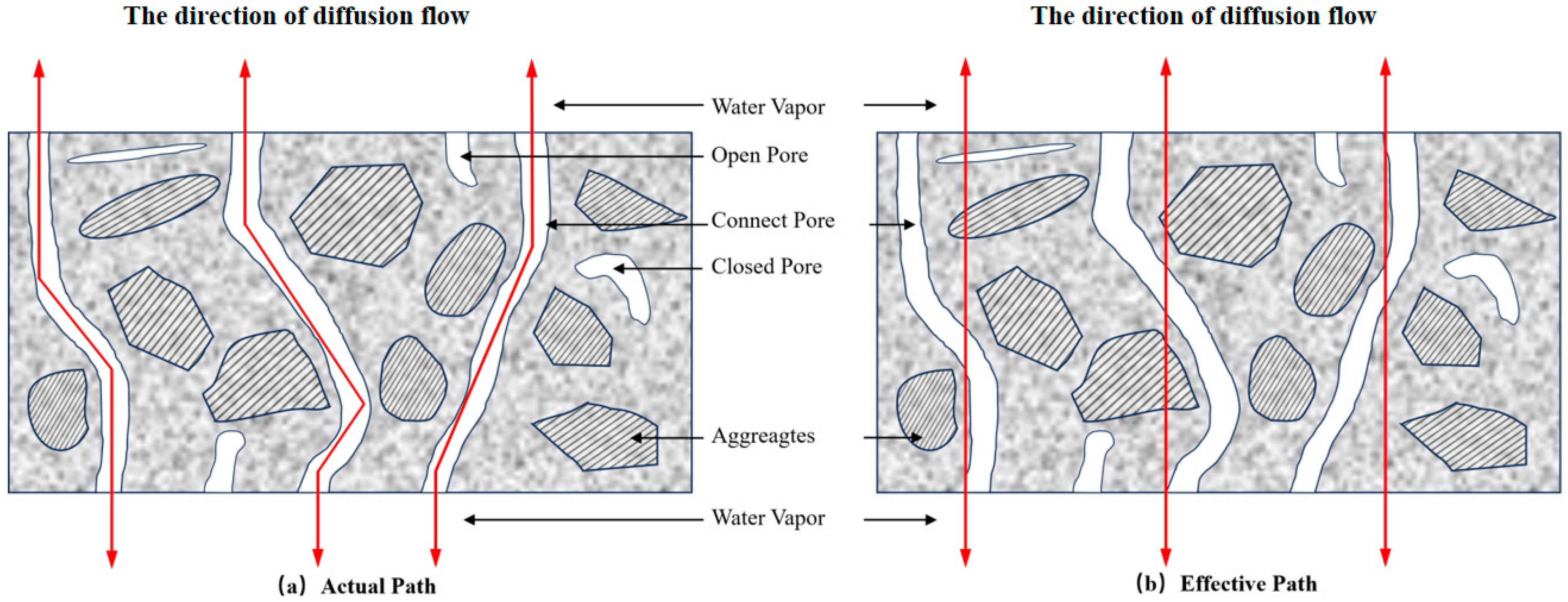
(2) Permeation-type water vapor transport (PT-WVT): With prolonged service, asphalt mixtures gradually absorb and retain moisture due to their porous and semi-permeable nature. Once moisture reaches dynamic equilibrium, PT-WVT becomes the dominant mode; the subgrade (relative humidity > 97%) serves as a continuous moisture source, and water vapor migrates upward through capillary action and interconnected pores between the subgrade and the asphalt layer, as shown in
Figure 2. PT-WVT is typically evaluated using the ASTM E96/E96M standard [
26], which simulates steady-state moisture permeation.
Despite advances in research, two critical limitations hinder a comprehensive understanding of water vapor diffusion and its engineering applications:
- (1)
Isolated analysis of single diffusion modes: Most studies focus on either AT-WVT or PT-WVT in isolation. Some studies have investigated PT-WVT by focusing on moisture permeation after dynamic equilibrium in mid-to-late service stages [
9,
10], while others have examined moisture accumulation in newly paved pavements in AT-WVT [
21,
22]. This isolated approach neglects pavements’ lifecycle continuity, failing to reveal the temporal evolution relationship (AT-WVT dominance in early stages → PT-WVT dominance in late stages) and intrinsic interaction (e.g., accumulated moisture induces capillary channels to accelerate PT-WVT) between the two modes.
- (2)
Oversimplified microstructure models: Existing diffusion models idealize asphalt mixtures as homogeneous media [
9] or assume uniform spherical pores [
25], ignoring actual microstructure characteristics (e.g., staggered distribution of open/closed pores, micro-gaps at asphalt–aggregate interfaces). This simplification leads to deviations between model predictions and real-world diffusion behavior, reducing the accuracy of engineering guidance.
To address these gaps, this study systematically investigates AT-WVT and PT-WVT in asphalt mixtures, with three key innovations compared to previous work:
- (1)
Unlike isolated studies on a single diffusion mode, this study focuses on the dynamic transition process of two diffusion modes across the entire lifecycle of asphalt pavement and finds that the capillary channels gradually formed during the AT-WVT process can shorten the diffusion path of PT-WVT by about 200 times.
- (2)
Instead of simplifying pore structures, this study calculates actual pore radii based on asphalt film thickness and links pore connectivity to diffusion efficiency, making diffusion coefficients and tortuosity factors more consistent with real asphalt mixture microstructures.
This study elucidates the fundamental differences and interaction mechanisms between AT-WVT and PT-WVT, providing a scientific basis for optimizing asphalt mixture design and mitigating moisture-induced damage. The findings are expected to improve the long-term service performance of asphalt pavements in diverse climatic conditions.
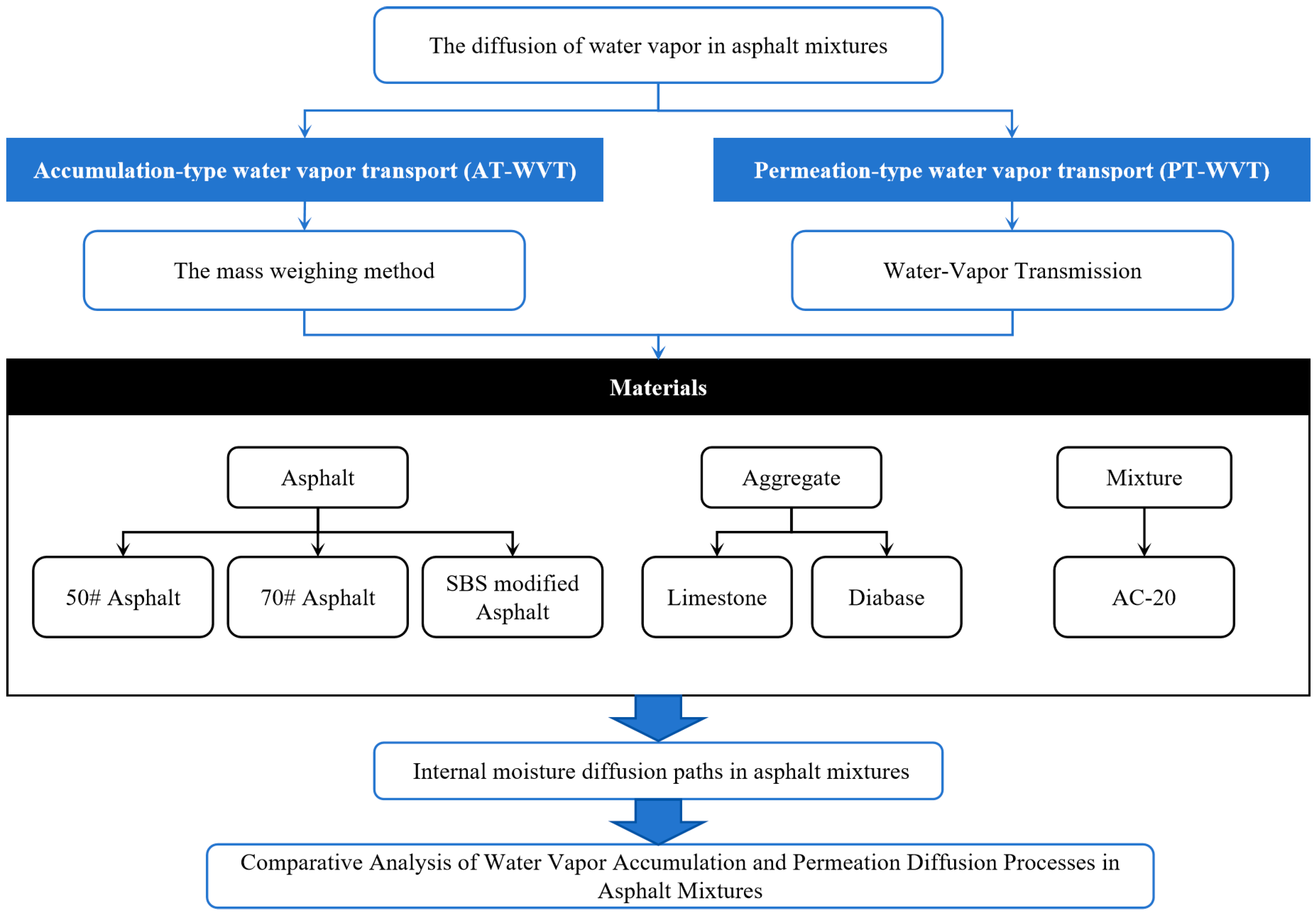
AT-WVT and PT-WVT in asphalt, aggregates, and voids are first quantified through a combination of laboratory tests and theoretical calculations. Subsequently, the internal diffusion paths of these two water vapor transport modes within asphalt mixtures are analyzed with a focus on how microstructural features regulate path tortuosity and migration resistance. Finally, the intrinsic relationship between AT-WVT and PT-WVT is explored, including their dynamic transition across the pavement lifecycle and the influence of AT-WVT-induced capillary channels on PT-WVT efficiency. The paper’s technical roadmap is depicted in
Figure 3.
4. Discussion
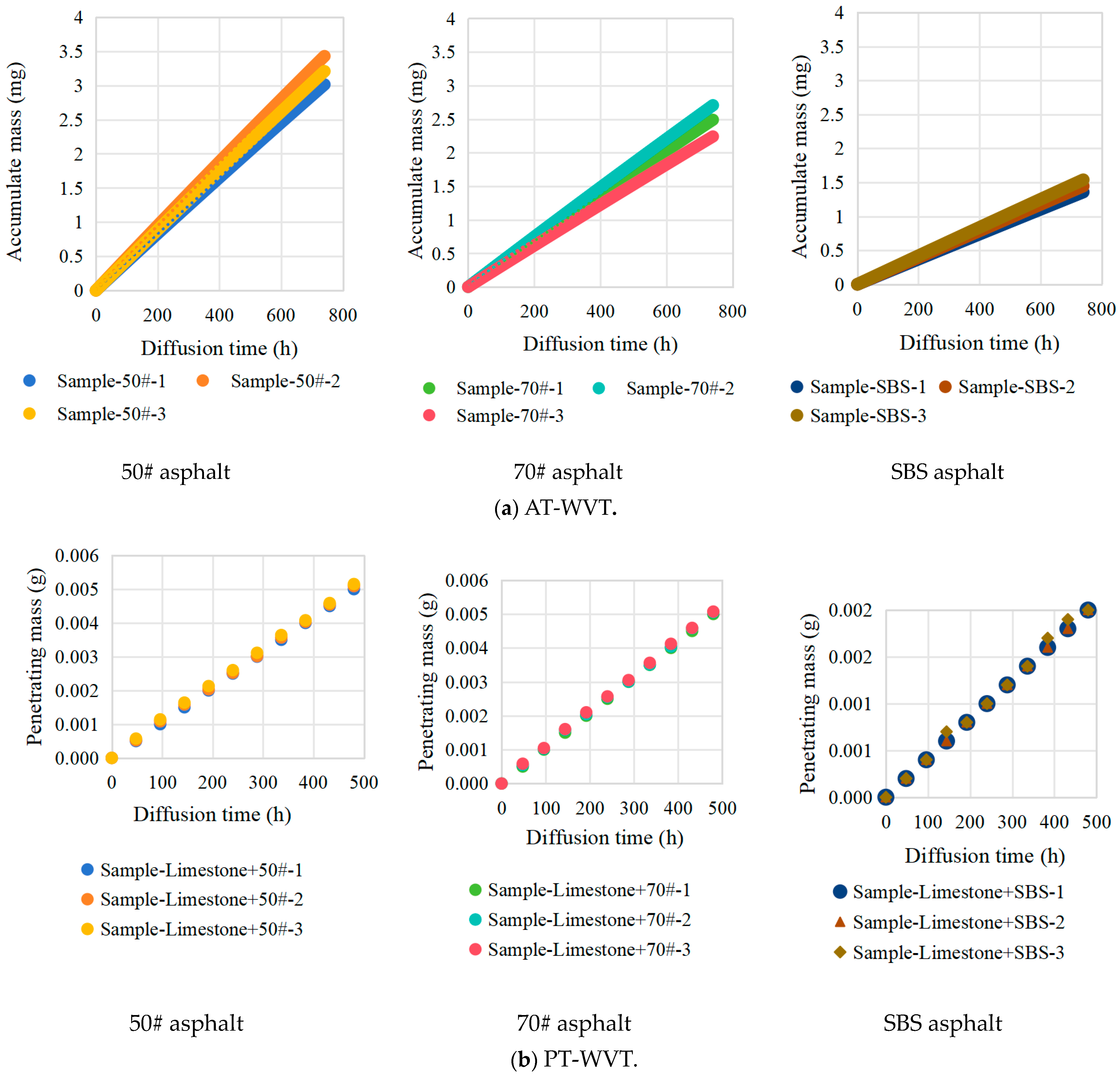
The experimental results demonstrate that porosity is the dominant factor regulating the diffusion coefficient of permeation-type water vapor transport (PT-WVT) in asphalt mixtures. PT-WVT is the primary driver of water damage in pavements during their mid-to-late service stages. When air void content increased from 4.71% (binder content = 5.0%) to 6.42% (binder content = 4.3%), the effective PT-WVT diffusion coefficient rose from 2.07 × 102 mm2/h to 2.60 × 102 mm2/h (a 25.6% increase), while the tortuosity factor only slightly increased from 15.96 to 18.02, an increment offset by the significant expansion of interconnected pore volume.
This correlation stems from the microstructural changes in asphalt mixtures. Greater air void content not only increases total pore volume but also enhances the connectivity of macropores (pore diameter > 7 × 10
−3 mm,
Table 6). For instance, when air void content increased from 4.71% to 6.00%, the average pore radius increased from 6.295 × 10
−3 mm to 6.953 × 10
−3 mm (
Table 6), facilitating the formation of more interconnected capillary channels. These channels shorten water vapor’s actual diffusion path and reduce migration resistance, resulting in a substantial increase in diffusion efficiency.
The orders of magnitude of moisture diffusion coefficients for different types of asphalt mixture materials are summarized in
Table 11. The same material exhibits different diffusion coefficients for different diffusion types, and the order of magnitude of the PT-WVT diffusion coefficient is always greater than that of AT-WVT. For the effective moisture diffusion coefficients of asphalt, aggregate, and asphalt mixture, the PT-WVT diffusion coefficient is always 10
4 times greater than that of AT-WVT. The moisture diffusion coefficient in the voids is related to the pore radius, temperature, humidity, and pressure; as such, when the environmental conditions are identical, the moisture diffusion coefficient in the voids of the same asphalt mixture should be the same.
For asphalt pavements, AT-WVT and PT-WVT water vapor diffusion coexist. However, for newly paved asphalt mixtures, their internal relative humidity is almost 0, and water vapor molecules continue to diffuse from the air and subgrade soil into the asphalt mixtures. Thus, at this time, AT-WVT is the primary form of diffusion.
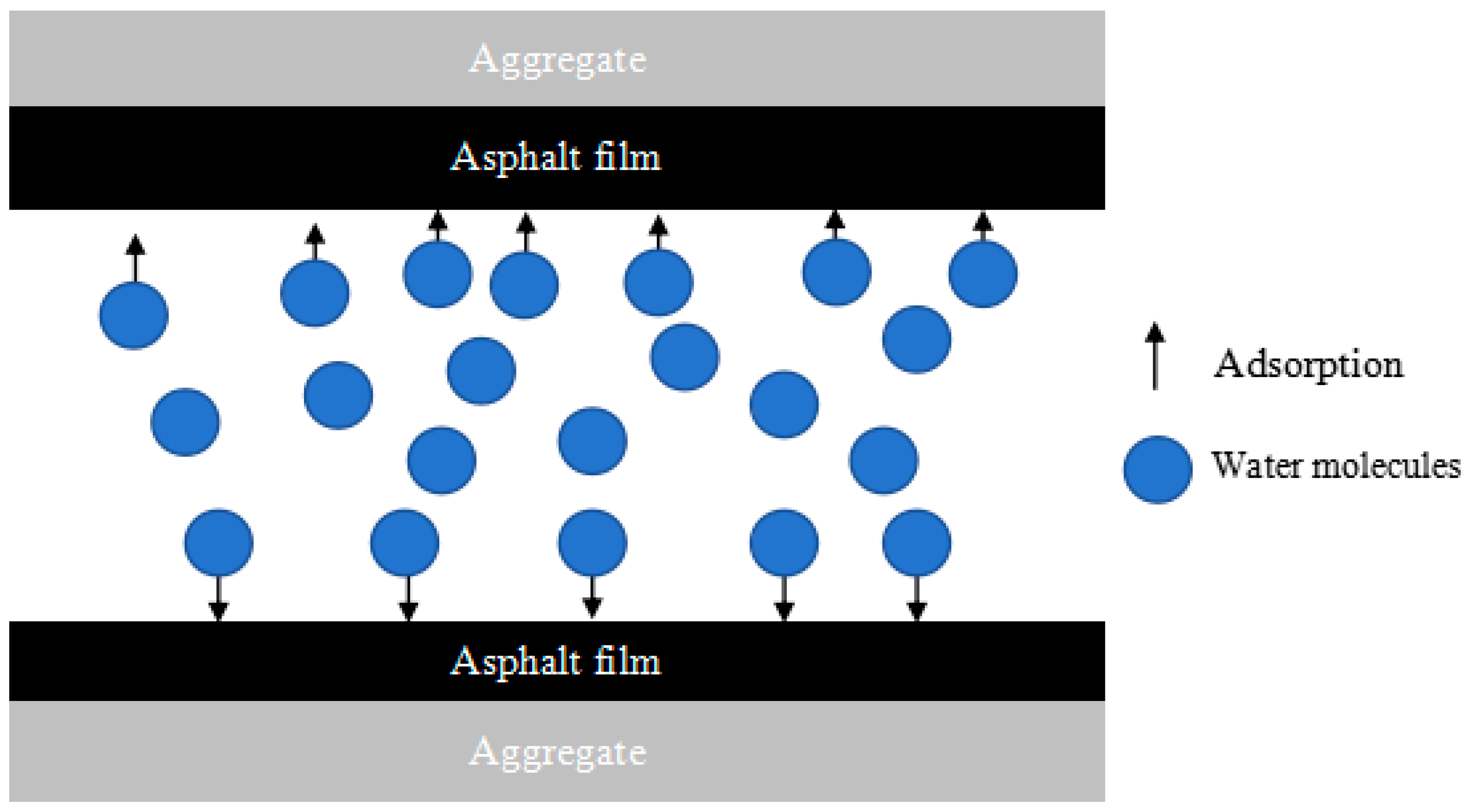
Because the diffusion coefficient of water vapor in the voids is the greatest, water vapor molecules tend to diffuse inside of the voids. Some water molecules move in the gaps, and some water vapor molecules are adsorbed into asphalt molecules under the action of polar components, as shown in
Figure 12.
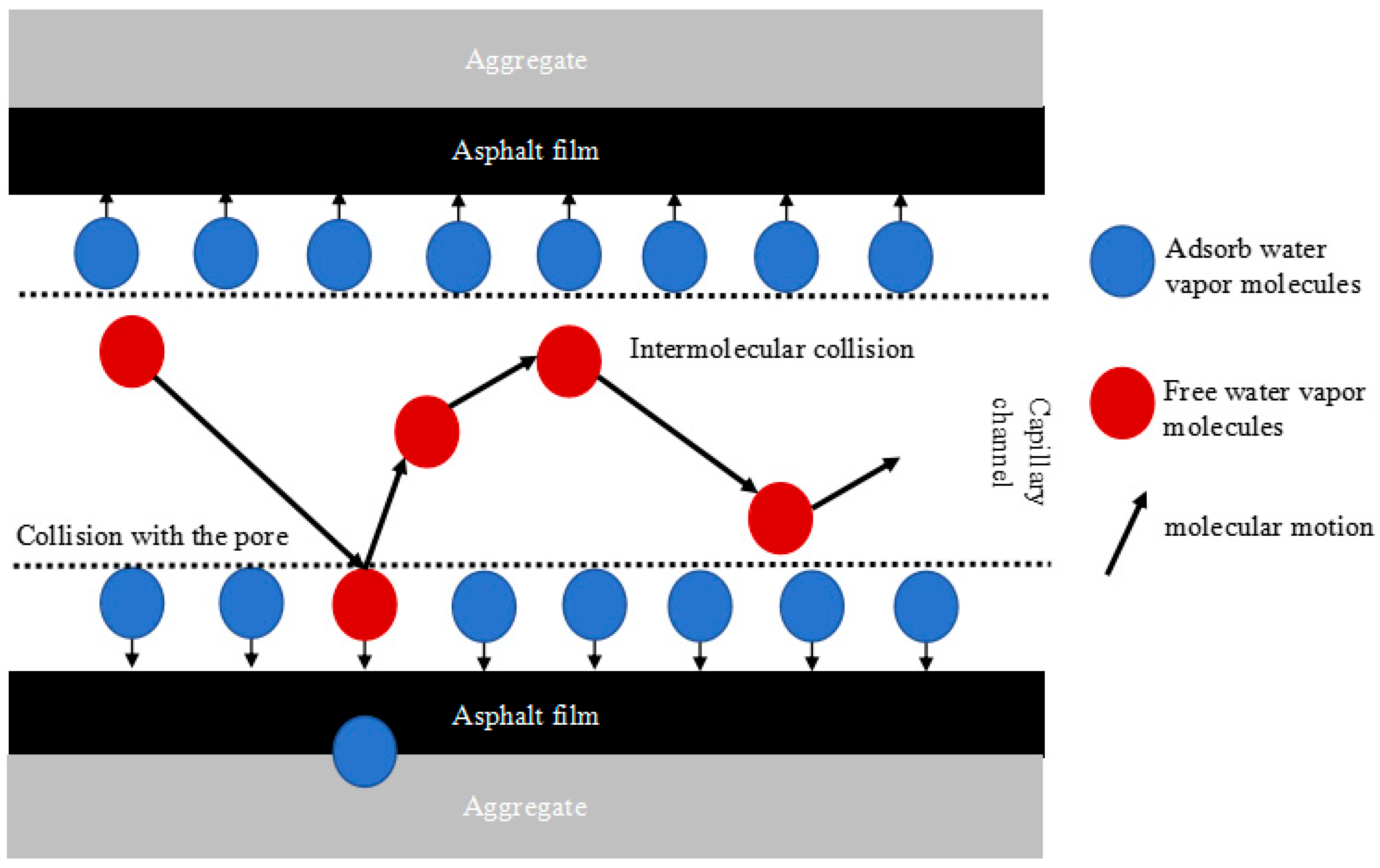
When the moisture molecules inside of the asphalt mixture are saturated, they penetrate the asphalt’s film and continue to diffuse towards the interface between asphalt and the aggregate, resulting in the peeling off of asphalt from the aggregate surface. At the same time, the water vapor molecules adsorbed on the surface of the asphalt membrane form capillary tubes, and the water supply gas passes quickly, as shown in
Figure 13.
After the capillary tubes are formed, free water and gas molecules in the pore channels continue to diffuse under the effects of the relative humidity difference, molecular collisions, and collisions between molecules and pore walls. Finally, they penetrate the asphalt mixture and diffuse into the air. At this time, PT-WVT is the main form of water vapor diffusion.
There are two types of water vapor molecules in asphalt mixtures: the water vapor molecules adsorbed on the surface of the asphalt membrane (adsorbed water vapor molecules) and the water vapor molecules that diffuse into the pores (free water vapor molecules). The mass of free water vapor molecules passing through the asphalt mixture is measured using a PT-WVT diffusion test, while the mass of adsorbed water vapor molecules and free water vapor molecules that persist in the mixture are measured using an AT-WVT diffusion test.
The water vapor molecules adsorbed on the asphalt membrane gradually diffuse to the interface between the asphalt membrane and the aggregate, while the free water vapor molecules continuously provide water vapor molecules to the internal space of the asphalt mixture. Some of these molecules pass through the asphalt mixture, while others fill the spaces of the water vapor molecules that are adsorbed onto the asphalt membrane. Due to the formation of capillary pipes, the diffusion speed of water vapor in the asphalt mixture accelerates, and, finally, the PT-WVT diffusion coefficient is much greater than the AT-WVT diffusion coefficient.
Due to the formation of capillary pipes, water vapor tends to diffuse into the capillaries, which greatly shortens the length of the water vapor diffusion path. The results show that for a densely graded asphalt mixture, the length of the AT-WVT diffusion path is about 2000 times greater than the specimen’s thickness, while the length of the PT-WVT diffusion path is about 15 times greater than the specimen’s thickness. This shows that the length of the water vapor diffusion path is shortened by a factor of approximately 150 after the formation of capillary tubes.
Advances in research on water vapor diffusion in asphalt mixtures are limited by simplified theoretical assumptions and one-dimensional paradigms, making it difficult to fully adapt to the complex multiphase media environment in engineering practice. For example, when constructing diffusion models, refs. [
9,
24] idealized the pore structure of porous materials to reduce computational complexity, either assuming a uniform spherical distribution of pores, ignoring the connectivity differences between pores, or directly treating asphalt mixtures as homogeneous continuous media without considering the heterogeneity of the interface between aggregate particles and asphalt membranes. Although this simplification can achieve basic theoretical derivation, it significantly deviates from the actual structure of “open connected closed staggered distribution of pores, and micro gaps at the interface between aggregate and asphalt film” in asphalt mixtures, and the capacity to guide engineering practice is limited. In contrast, this study quantifies the influence of pore radius on diffusion by calculating the pore size inside of asphalt mixtures. As such, the calculated results are more accurate.
Previous studies are also marked by one-dimensional, isolated analyses of a single diffusion type. For example, refs. [
9,
10] only focused on PT-WVT and the gradual accumulation of water vapor in the asphalt layer during the initial stage of newly paved asphalt pavement. Although [
21] examined AT-WVT, the authors only focused on the law of continuous penetration of water vapor after reaching dynamic equilibrium in the middle and later stages of road service. This model neglects the entire lifecycle of asphalt pavement from construction to aging, ignoring the evolution of two types of diffusion at different stages. As such, AT-WVT’s dynamic transformation mechanisms are not fully explored. In response to this gap, two types of diffusion coefficients were investigated in this study through a differentiated experimental design. On this basis, the core differences between the two types of diffusion were clarified through quantitative comparison. AT-WVT must overcome diffusion channel construction resistance within the asphalt membrane, with a diffusion coefficient only 1/10
4 of that of PT-WVT (
Table 2), and the diffusion path is greatly affected by closed pores and aggregate barriers, resulting in extremely high tortuosity (tortuosity factor > 2000, as shown in
Table 8). PT-WVT relies on formed connected pores and capillary channels, significantly improving diffusion efficiency, with a tortuosity factor of only 12–18 (as shown in
Table 7). By establishing diffusion type correlations, this study provides a basis for engineering design.
6. Limitations and Future Work
Current diffusion models for asphalt mixtures assume an isotropic pore structure. However, asphalt mixtures exhibit significant anisotropy. Pore characteristics, including elongated voids formed during compaction, orientation aligned with pavement rolling directions, and connectivity, vary with construction processes and service conditions. This oversimplification can lead to deviations between model predictions and real-world diffusion behaviors, especially for pavements with directional compaction or recycled asphalt mixtures.
All AT-WVT&PT-WVT tests in this study were conducted at 20 °C with fixed relative humidity (RH) gradients (AT-WVT: 100% external RH vs. 0% internal RH; PT-WVT: 100% internal RH vs. 60% external RH). While this setup ensures reproducibility, it oversimplifies the environmental variability encountered in field scenarios.
To address these gaps, future research will encompass temperature gradient tests (10–50 °C) and dynamic RH experiments to simulate real environmental fluctuations. Additionally, building on the water vapor diffusion mechanisms elucidated in this study, we will focus on the high porosity and interconnected macropore features of OGFC. We will (1) employ GSA and ASTM E96/E96M tests to quantify AT-WVT/PT-WVT diffusion coefficients and OGFC pore tortuosity factors at different service stages; (2) optimize OGFC gradation and SBS-modified asphalt content and incorporate fiber reinforcement to enhance skeleton stability, thus balancing drainage performance with connected pore control to reduce PT-WVT diffusion efficiency; and (3) establish an OGFC-specific water vapor diffusion model based on laboratory data and conduct tests across different climates to monitor the evolution of moisture-induced damage, providing technical support for OGFC’s anti-moisture damage design.