1. Introduction
Nonabsorbable surgical meshes are medical implants designed for long-term or permanent soft tissue reinforcement. They are made of synthetic or biological materials that remain in the body indefinitely without being absorbed or degraded [
1]. These meshes serve critical purposes in a variety of surgical procedures, particularly in the repair of hernias, prolapses, and other structural soft tissue defects. The primary purpose of nonabsorbable surgical meshes is to provide permanent mechanical support, ensuring stability while the body heals and adapts. Unlike absorbable meshes, which dissolve over time, these materials maintain their integrity and tensile strength for the life of the patient [
2]. Their durability makes them particularly suitable for cases where permanent reinforcement is necessary, such as large or recurrent hernias. Nonabsorbable surgical meshes are most commonly used in abdominal wall repair, but their applications also include urology, gynecology, and reconstructive surgery [
3]. Advances in imaging and materials science have improved preoperative planning and mesh performance, allowing surgeons to achieve better outcomes. The global market for these devices continues to grow, reflecting the increasing incidence of hernias and other soft tissue defects. Nonabsorbable meshes originated in the mid-20th century with the development of polymers such as polypropylene and expanded polytetrafluoroethylene. These materials were chosen for their biocompatibility, strength, and resistance to infection or degradation. Over time, innovations in mesh design have led to lighter, more flexible products with improved pore sizes that promote tissue in growth while minimizing complications. Modern nonabsorbable meshes use advanced manufacturing technologies, including 3D knitting and laser cutting, to create customizable structures tailored to specific clinical needs [
4]. Some meshes are coated with antimicrobials or hydrophilic layers to reduce the risk of infection and improve biocompatibility. Others incorporate composite designs that combine different materials to optimize strength and integration with the surrounding tissue [
5,
6]. Despite their advantages, nonabsorbable meshes are not without their challenges, including the risk of infection, chronic pain, and mesh erosion. Addressing these complications has led to ongoing research to improve mesh properties and surgical techniques. The use of robotic and laparoscopic technologies has also increased the precision of mesh placement, reducing recovery time and complications. With increasing regulatory scrutiny, manufacturers are now focusing on rigorous testing and clinical evaluation of new mesh designs [
5,
6]. This has led to the development of meshes that balance strength with patient comfort, including ergonomic designs that conform to anatomical structures [
7,
8]. Nonabsorbable surgical meshes play a critical role in modern medicine, providing long-term solutions for difficult surgical repairs.
The mechanical properties of these meshes, such as tensile strength, elasticity, and porosity, are essential for their long-term performance and integration with host tissue [
9,
10]. Towards Industry 4.0/5.0, the emphasis is on integrating intelligent technologies, such as real-time data acquisition and advanced computational modeling, to improve the design and production of surgical meshes [
11]. Computational models simulate the mechanical behavior of meshes under physiological conditions, enabling precise optimization of their material properties and structural designs [
12]. Advanced simulations to date use finite element analysis to predict stress distribution, strain, and failure mechanisms in the mesh under dynamic loading conditions. In this article, we propose the use of data-driven approaches such as artificial intelligence and machine learning to analyze large datasets from computational and experimental studies to identify optimal mesh configurations. Industry 4.0 emphasizes connectivity and automation, facilitating the integration of sensor technologies into the manufacturing process to monitor material quality and performance in real time. Additive manufacturing (3D printing) combined with computational models enables the production of custom-designed meshes with patient-specific properties, allowing for improved clinical outcomes [
5,
13]. Moving toward Industry 5.0, a human-centric approach focuses on incorporating human expertise with computational advances to develop more sustainable, efficient, and user-centric surgical meshes [
14]. Computational modeling in the context of Industry 4.0/5.0 revolutionizes the design and evaluation of nonresorbable surgical meshes, supporting innovation and improving patient care through precision and intelligent manufacturing [
6].
Nonabsorbable surgical meshes are evaluated for mechanical properties such as tensile strength, elasticity, pore size, and fatigue resistance to ensure long-term biocompatibility and structural integrity. In the context of Industry 4.0, advanced manufacturing and sensor integration enable real-time monitoring and quality control of these mechanical attributes. New AI-based models contribute to predictive analysis and optimization of mesh performance based on massive clinical and material testing datasets. Industry 5.0 introduces a human-centric paradigm, where ergonomic feedback and clinician-in-the-loop mechanisms drive iterative improvements in mesh design. These systems aim to improve user interaction, comfort, and implant outcomes through continuous feedback loops involving surgeons and patients. However, the incorporation of such human-centric innovations into current AI-based models remains largely conceptual and underdeveloped in practice. While these ideas suggest a promising future for co-adaptive medical devices, current methodologies often lack the depth to justify true adaptation to Industry 5.0. Clinician feedback is sometimes used to refine models, but the integration remains minimal and is not systematically validated. Ergonomics assessments are rarely standardized or quantitatively linked to mesh performance metrics in AI systems. Thus, despite references to Industry 5.0, this link has not yet materially influenced the empirical framework or results.
The mechanical properties of nonabsorbable surgical meshes, such as tensile strength, pore size, and fatigue resistance, are also fundamental to their long-term clinical performance. Traditionally, challenges in this area include manufacturing variability, lack of standardized testing, and limited in vivo predictability. These fundamental concerns must be clearly defined before moving to the opportunities offered by digital and AI-assisted approaches. Advanced computational tools within established materials science frameworks are needed, as well as a combination of classical mechanical testing with AI-based modeling to help explain how data from physical experiments can most effectively be fed into predictive systems. The leap into Industry 4.0/5.0 paradigms requires grounding in traditional engineering workflows to fully convey its significance. In the AI-based model, Industry 4.0 is reflected in data acquisition, simulation, and pattern recognition. In the case of Industry 5.0, concepts such as personalization, ergonomic design, and feedback loops for physicians remain largely conceptual and currently under-implemented. So, while the study suggests innovation, its structural flow and depth of integration limit its effectiveness in fully capturing the Industry 4.0/5.0 transition.
This manuscript introduces a novel study of the mechanical properties of nonabsorbable surgical meshes, uniquely integrating their characterization with Industry 4.0/5.0 paradigms. The study innovatively uses AI-based modeling to predict and optimize mesh performance, combining material science and smart manufacturing. Unlike previous work, it contextualizes surgical mesh evaluation within cyber-physical systems, enabling real-time feedback and intelligent decision-making in the future. The manuscript approach uses ML to discriminate between complex, nonlinear relationships between mesh structure, composition, and biomechanical behavior. It pioneers the incorporation of digital twins into the medical textile field, enhancing predictive maintenance and customization capabilities. By aligning mesh production and evaluation with digital transformation goals, it offers scalable, data-driven solutions for quality assurance and personalized medicine. This fusion of traditional biomedical engineering with cutting-edge AI and Industry 4.0/5.0 technologies represents a significant and original contribution to both the medical and manufacturing research communities.
This study addresses Industry 4.0/5.0 by demonstrating how data from physical and mechanical tests of non-absorbable surgical meshes can be transformed into predictive AI-based digital models. It aligns with smart manufacturing principles by combining laboratory measurements of material behavior with computational tools that can support automated quality assessment and design optimization. By integrating the physical and digital domains, this work contributes to establishing biomedical materials DTs as a key element of cyber-physical Industry 4.0 systems. The study also reflects Industry 5.0 values, enabling more human-centric, customizable, and precise medical device development, supported by AI-assisted design rather than simple automation. The study positions biomedical materials testing within a broader smart manufacturing ecosystem, where data, models, and expertise work together to enhance product reliability and innovation.
The aim of this study is to experimentally investigate the influence of tensile loading direction and suture integration on the mechanical behavior and fatigue resistance of nonabsorbable polypropylene surgical meshes.
2. Materials and Methods
2.1. Material
The study used the Optomesh Macropore surgical mesh (TRICOMED SA, Łódź, Poland) (
Figure 1) [
15]. The study uses Optomesh Macropore as a representative mesh, clearly describing its structural and mechanical properties. The macroporous architecture of this mesh and the polypropylene composition make it suitable for assessing both biomechanical performance and long-term durability. The rationale for selecting Optomesh Macropore is its availability, popularity, and representativeness of parameters. In the context of Industry 4.0, Optomesh’s AI-based modeling enables detailed simulations and predictions based on mechanical test data. These models help refine design parameters and identify potential failure modes under physiological loads. The well-documented properties of the mesh allow for more accurate data input into the computational framework, combining material science with digital innovation. The company’s extensive offer includes primarily medical implants, specialist dressings and compression products for scar rehabilitation. Optomesh is a non-resorbable surgical mesh recommended for reconstructive procedures to fill soft tissue defects. It is made using a knitting technique from transparent, monofilament polypropylene yarn with high biocompatibility with the body. It is fully synthetic, does not contain any allogenic or animal additives. These meshes are characterized by:
High mechanical strength ensuring a permanent connection of the mesh to the tissue;
Multidirectional shape memory;
Low surface mass;
Edge fraying and resistance to thread pulling during sewing close to the edge;
High resistance to seam tearing;
Minimal risk of bacterial infection, thanks to the use of a monofilament structure.
Figure 1.
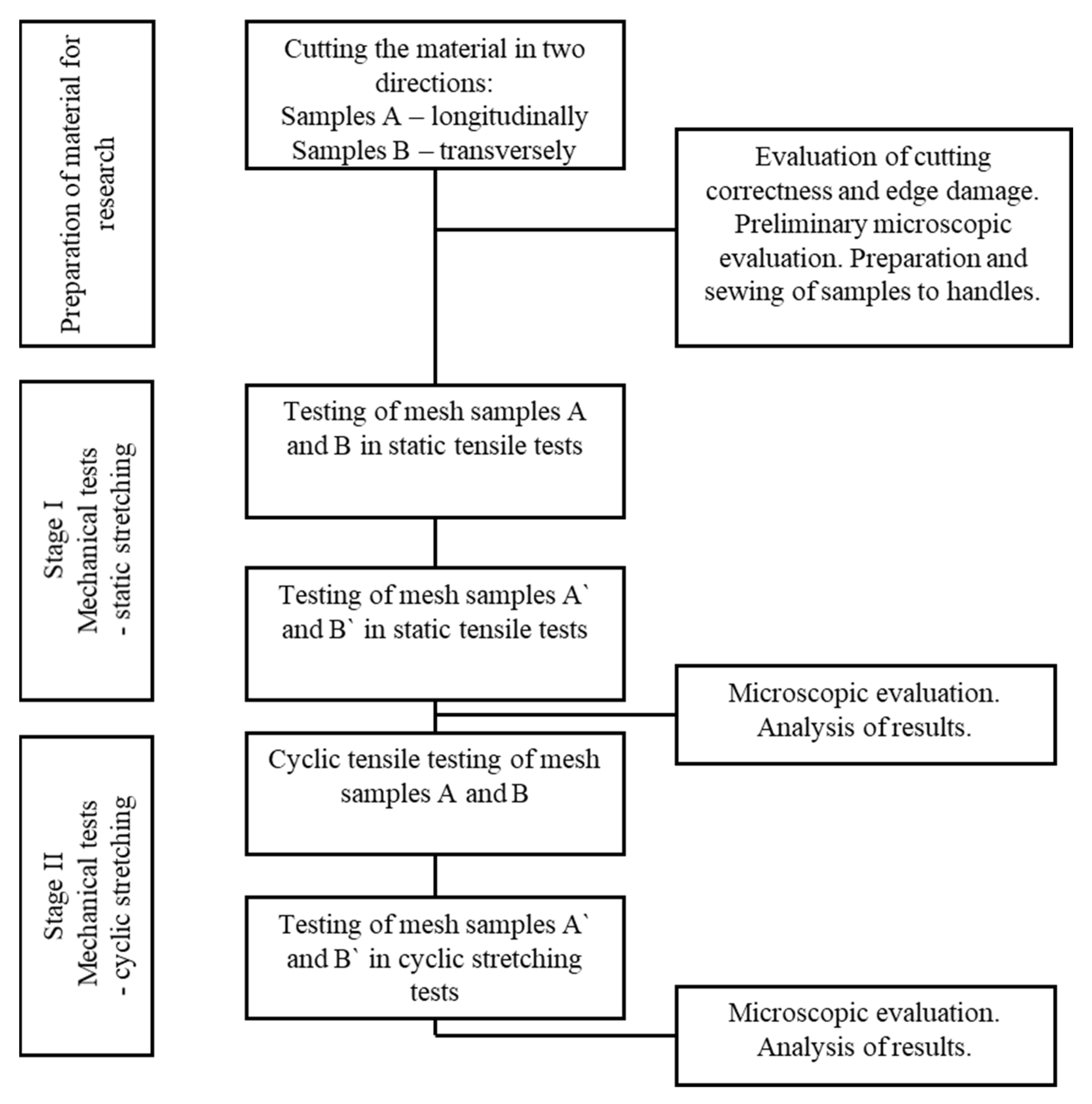
Protocol of the study.
Figure 1.
Protocol of the study.
Optomesh surgical meshes are used in cases such as abdominal hernias, postoperative hernias, inguinal hernias, femoral hernias, periumbilical hernias, and hernias in the postoperative scar. Main physical parameters:
Surface mass of the meshes–varies depending on the mesh variant from 60 to 85 g/m2, ensuring comfort of use for the patient;
Mesh thickness–similarly to the above parameter, this value varies depending on the mesh variant and ranges from about 0.4 mm to about 0.8 mm, ensuring high mechanical strength;
Thread thickness–the meshes are made of monofilament yarn suitable for large-pore meshes, therefore ensuring high resistance to tearing out of the sutures with which the meshes are attached to the tissues.
Nonabsorbable surgical meshes must demonstrate high tensile strength, elasticity, and dimensional stability to withstand the long-term mechanical stresses of the human body without degradation. These meshes are typically tested for uniaxial tensile loading, cyclic fatigue, and fracture toughness to simulate physiological conditions and ensure reliable performance. Key mechanical properties such as ultimate tensile strength (UTS), Young’s modulus, elongation at break, and suture retention strength are critical benchmarks for biocompatibility and mechanical integrity. Industry 4.0/5.0 enables advanced AI-based modeling to analyze these test results, identify patterns, and optimize mesh design for specific clinical scenarios. The AI-based model reflects feedback from high-throughput mechanical testing, using machine learning algorithms to predict material behavior under a variety of anatomical and surgical conditions. These models confirm that the meshes meet fundamental criteria for medical materials, including mechanical compatibility, minimal strain under stress, and fatigue resistance. As a result, the integration of AI into mesh testing and analysis confirms their suitability for long-term implantation and supports precise design for patient-specific surgical applications.
Representative values for key mechanical properties of nonresorbable surgical meshes, typically used in hernia repair and other soft tissue reinforcement applications can vary depending on the material (e.g., polypropylene, polyester, ePTFE), weave pattern, and manufacturing method, but they serve as critical benchmarks:
These mechanical properties are aligned with ISO 13934-1 [
16] and ASTM D5035 [
17] testing standards and are considered critical indicators of mechanical integrity, biocompatibility, and long-term performance. AI-based models using these values can accurately predict in vivo behavior and suitability, verifying that the meshes meet the stringent requirements for permanent implantation in medical applications.
2.2. Methods
The study was conducted on Optomesh Macropore surgical meshes made of monofilament polypropylene. The aim was to determine their mechanical properties in different stretching directions and in conditions simulating real clinical application (suturing with tissue). The study was conducted according to the protocol presented in
Figure 1.
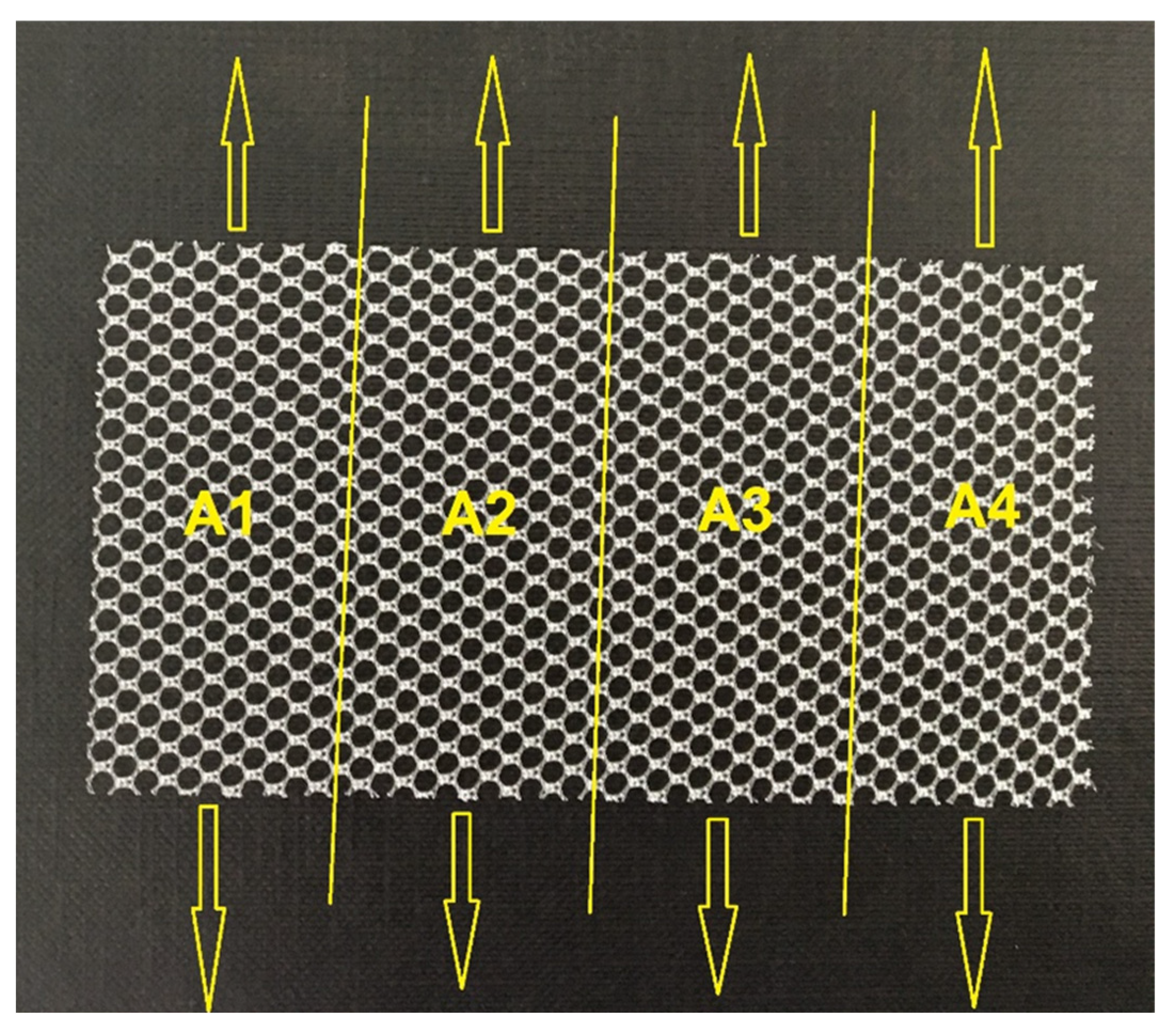
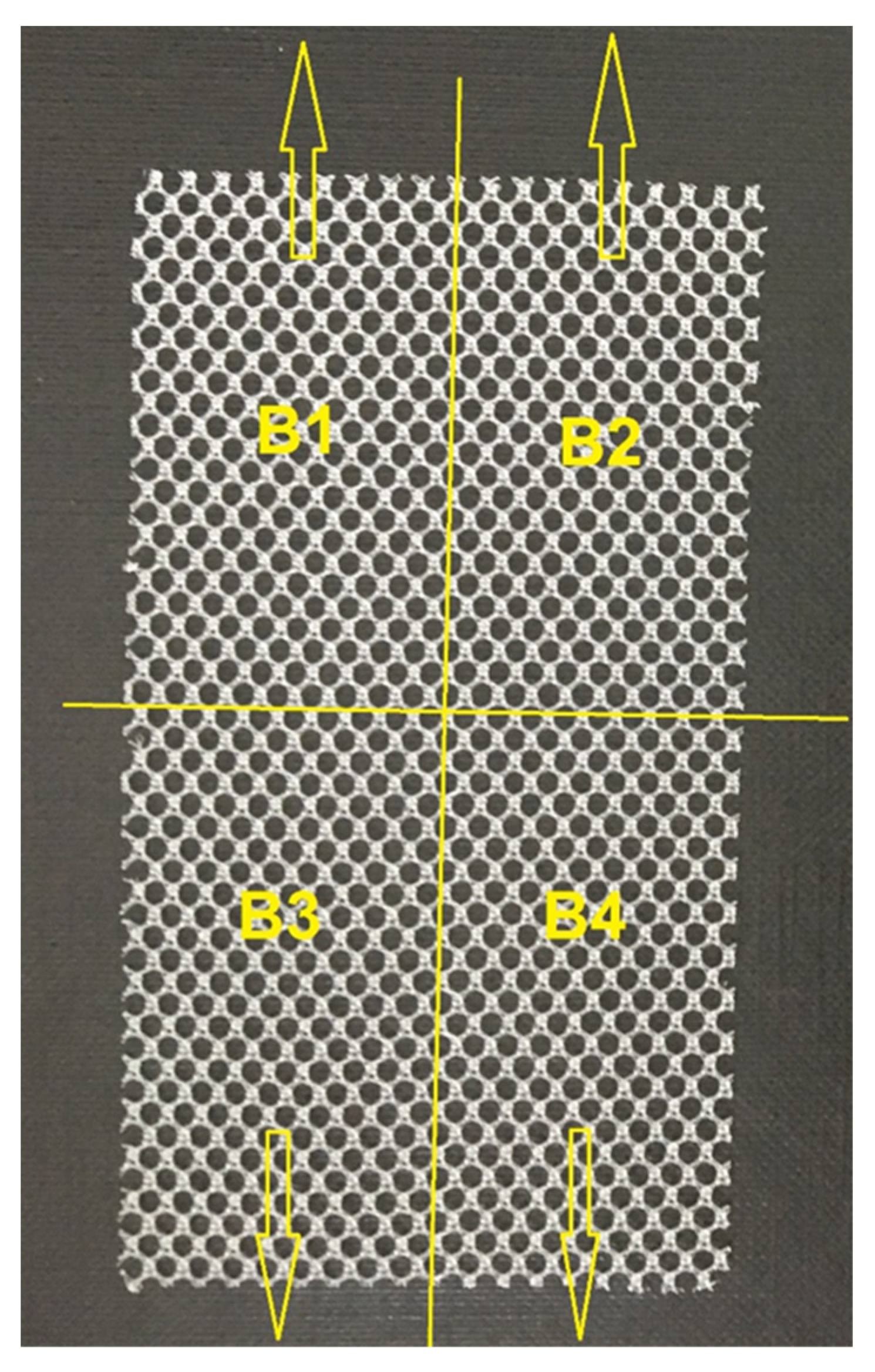
Preparation of the material for testing included cutting the each mesh into four smaller fragments in two perpendicular directions:
Samples A—cut longitudinally (
Figure 2),
156 samples were used in the study. The mesh samples were statically and cyclically tested in two directions (
Figure 2 and
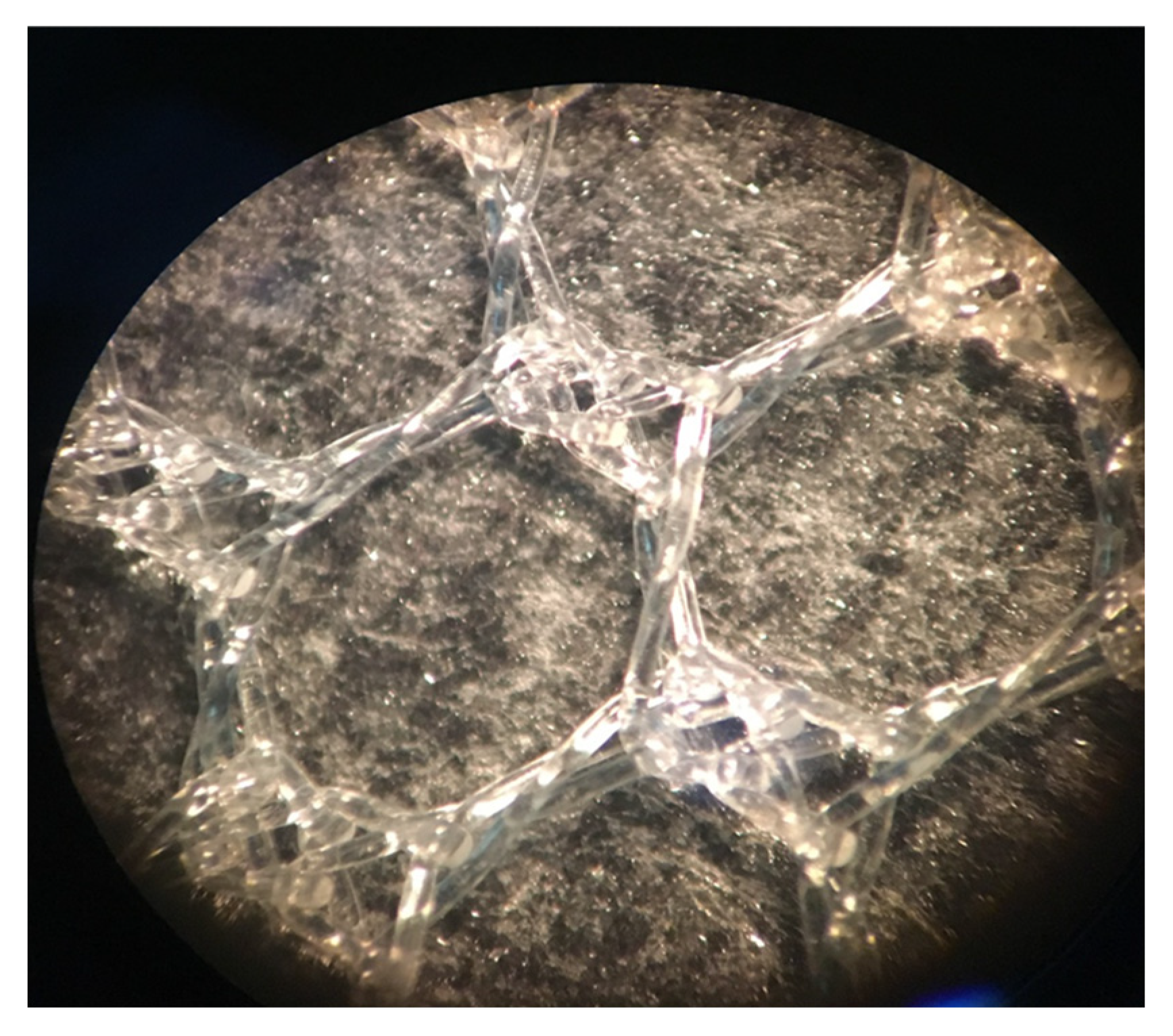
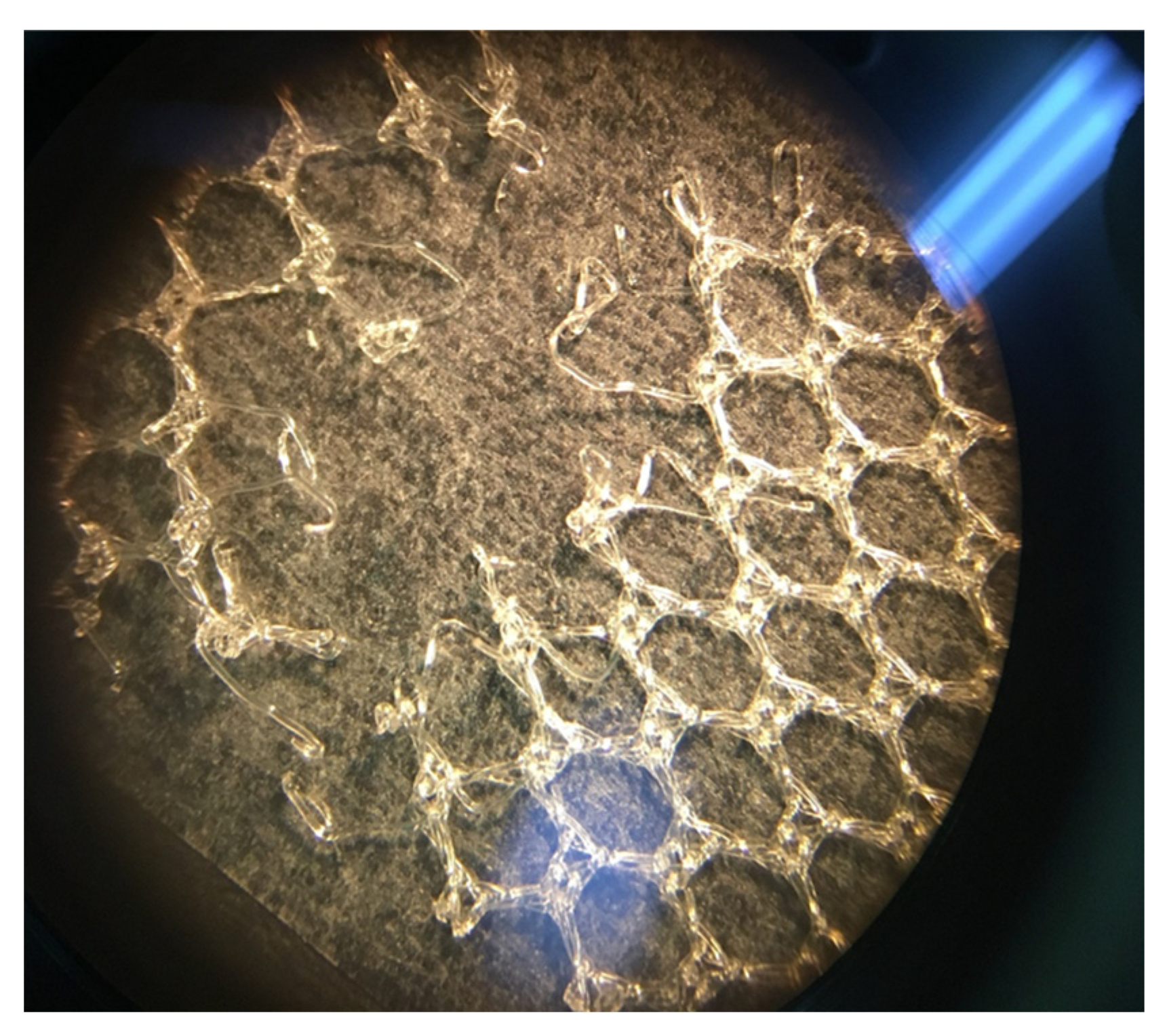
Figure 3) to check for differences in the weave and thus in the mesh production and consequently in the tensile strength. The samples were rectangular in shape, 50 mm long and 25 mm wide. At this stage, the quality of the cut and any damage to the edges were assessed, and a preliminary microscopic analysis of the mesh structure was performed (
Figure 4) (sample data set in the
Supplementary Materials).
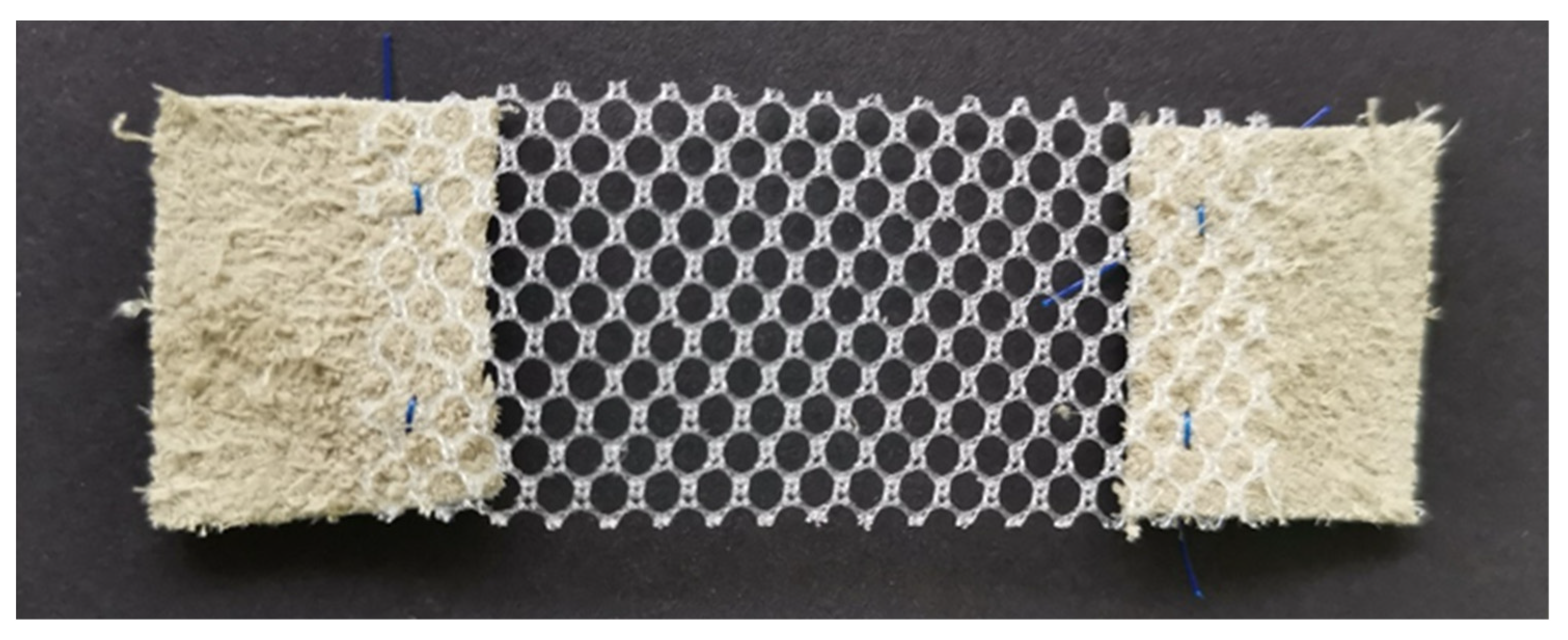
The samples were sewn together with prepared fragments of bovine skin (2 mm thick), which were intended to simulate anatomical conditions. This type of sample allows for an approximate determination of how the meshes together with surgical threads will behave in the human body. The difference between the mesh samples placed directly in the forceps of the testing machine and the samples shown in
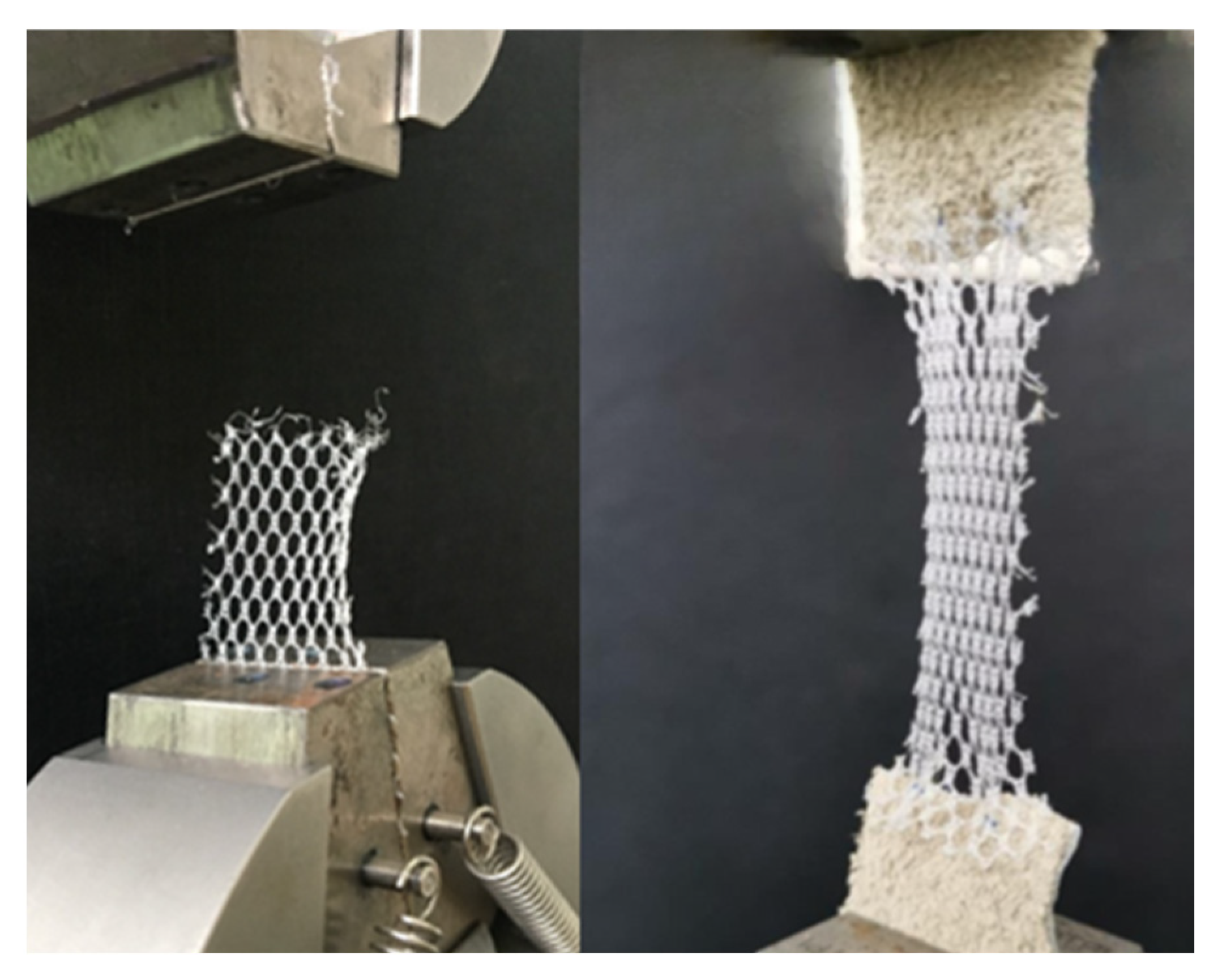
Figure 5 is that in the case of the former, the force is distributed over the entire width of the sample. The situation is different in the case of meshes sewn between the skin, because they are placed in the forceps only with the skin part, and the tensile force acts only in the places where the seams occur (two points on each side).
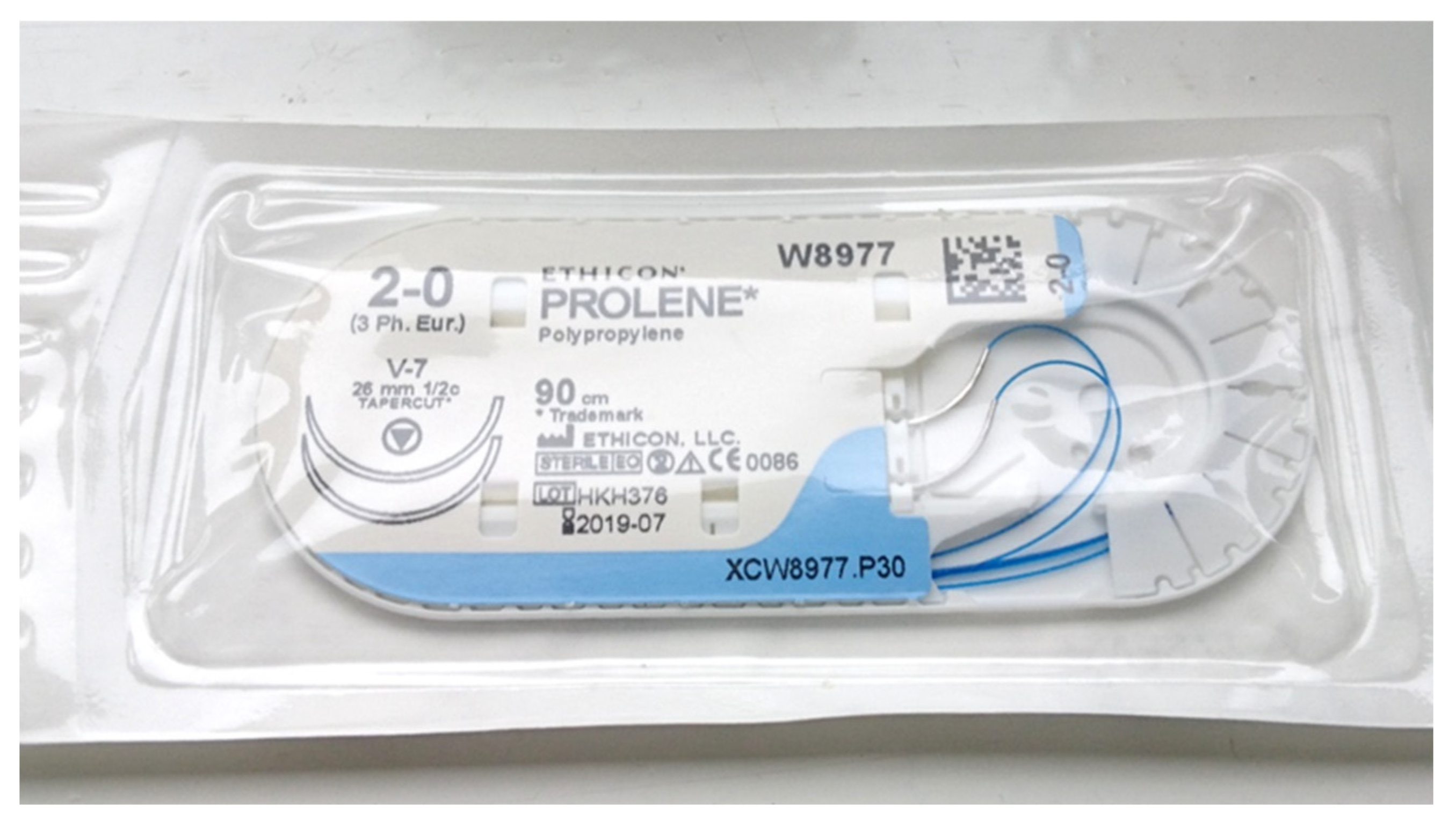
The suture used in the study was Prolene [
8] (
Figure 6). This is a synthetic, nonabsorbable suture made of polypropylene, dyed blue to increase its visibility in the surgical field. It is indicated for soft tissue approximation and ligation, and is used in cardiology, ophthalmology, and neurology. Prolene suture strengths:
Used in over 100 million people worldwide, including 8 out of 10 coronary artery bypass grafting procedures;
High tensile strength;
Unique manufacturing process that ensures a uniform suture diameter, eliminating weak points in the suture.
Figure 6.
Single pack of Prolene suture.
Figure 6.
Single pack of Prolene suture.
Prolene is a nonabsorbable suture that causes minimal inflammatory reactions in the tissue. It is a monofilament thread, which makes it resistant to infections, so it can be used in contaminated areas and infected wounds, in order to minimize the subsequent displacement of the thread above the skin surface. Threads with metric numbering 2-0 were used for the study [
18].
In the first phase of the study, static mechanical tests were performed using an Instron E3000 (Instron, Norwood, MA, USA) testing machine. The tensile speed was 5 mm/min, in accordance with the ASTM D638 [
19] standard:
For unstitched mesh: Samples A and B were tested separately, according to the tensile direction–half samples each were used in the test;
For meshes sewn to the skin (imitating a connection with tissues): Samples marked as A` and B` were tested in an analogous manner–half samples were used in the study.
All samples were stretched to failure and data were recorded in terms of failure force and strain.
In the second phase of the study, cyclic tests (reproducing dynamic loads) were carried out, which were to simulate repeated body movements. The tests were also carried out on the Instron E3000 machine. The amplitude of the material stretching was 2 mm (10% of the sample length), and the cycle frequency was 0.5 Hz. The tests were repeated in the same arrangement for unstitched meshes (A and B) and stitched to the skin (A` and B`). The aim was to determine the effect of dynamic loading on the mechanical durability of the meshes and their behavior in different stretching directions. The study used 3 samples for each of the tests.
After the tests were completed, a microscopic analysis of the mesh structure and damage (destruction) locations was performed. A Delta Optical ZS-430 (Delta Optical, Gdańsk, Poland) optical microscope with an 8 Mpa digital camera was used for microscopic examinations. The microscopic evaluation was performed at 10× magnification. The collected data were subjected to statistical analysis: average values of destructive force and deformation were calculated, standard deviations and coefficients of variation were taken into account, and comparison charts were prepared.
2.3. Statistical and Computational Analysis
The collected data were subjected to basic statistical analysis. For each group of samples (A, B, A`, B`) the following were calculated: arithmetic mean, standard deviation, coefficient of variation and quartiles (minimum value, Q1, median, Q3, maximum value). These indices allowed for the comparison of mechanical properties of the meshes depending on the direction of stretching and the use of stitching with the skin. The Student t test was used for statistical comparison of results, and significant differences between the results were considered when the p-value was <0.05. Calculations and visualizations were performed in Microsoft Excel (Microsoft, Redmond, WA, USA) and Statistica 13 (StatSoft Inc., Tulsa, OK, USA).
Statistical comparisons based on t-tests were performed with the awareness that some groups had relatively small sample sizes, which may challenge the assumptions underlying parametric tests. Therefore, normality of distribution was checked both using the Shapiro–Wilk test and by visual inspection of Q-Q plots to ensure that the data did not deviate significantly from a Gaussian distribution. Homogeneity of variance was assessed using Levene’s test to verify that group variances were sufficiently comparable for t-tests of the pooled variance. In cases where these assumptions were not met or when sample sizes were too small to reliably test, nonparametric alternatives, such as the Mann–Whitney U test, were used. This approach ensured that statistical inferences were based on methods appropriate to the data structure and sample size limitations.
Computational models were performed in ML.NET, Visual Studio 2022 (Microsoft, Redmond, WA, USA). The choice of ML.NET in Visual Studio 2022 for modeling the strength of surgical sutures can be justified by several technical and practical arguments. ML.NET is a machine learning library developed by Microsoft, designed to work in the.NET environment. This allows you to seamlessly integrate ML models with medical applications written in C#, e.g., image analysis systems or electronic medical records. Visual Studio 2022 offers ML.NET Model Builder tools, which allow users with less experience in ML to quickly train models without writing code from scratch. In addition, modeling the strength of surgical sutures is usually a classic case of regression, where we predict a numerical value (e.g., the force of thread breakage). ML.NET supports many regression algorithms, such as FastTree (Gradient Boosting), SDCA (Stochastic Dual Coordinate Ascent) or LightGBM. This allows you to automatically compare multiple algorithms, choose the best one, and assess accuracy using metrics such as R2 or Root Mean Squared Error (RMSE). Strength inputs can come from a variety of sources, including biomechanical experiments, thread characteristics (thickness, material, structure), and operating conditions (temperature, humidity), and ML.NET allows you to easily import data from CSV files, SQL databases, or directly from applications, making it easy to transform research lab data into predictive models. In clinical applications, understanding the model is key, and ML.NET allows you to closely track the training, feature engineering, and evaluation processes of the model. Open source and the absence of a “black box” (like AutoML without controls) increase transparency and trust in the results—important for medical certification. ML.NET allows you to export the model as a C# or API file, load the model into a desktop, web, or mobile application, and run the model offline, locally in the lab or within the hospital network, without the need for the cloud, which increases the security of medical data.
The input data was audited for completeness, repeatability, and lack of outliers, and processed into a csv file. Data normalization was performed within the MS Visual Studio 2022 environment. The result was computational models ranked from best, with the main selection criteria being model accuracy and the smallest error.
The model was developed by pre-splitting the full dataset into separate training and test subsets, ensuring that all measurements from the same physical sample were placed in only one subset to prevent overlap. A typical 70%/30% split was used, allowing the model to learn underlying patterns from a larger portion while retaining a portion for independent performance evaluation. To increase robustness, k-fold cross-validation was performed on the training set, allowing the algorithm to be repeatedly trained and validated on different internal partitions without exposing the test set during tuning. Hyperparameters were optimized exclusively within these cross-validation loops to ensure that no information from the test set influenced the model configuration. Data leakage was further prevented by standardizing or normalizing the input data after the training and test splits, fitting preprocessing parameters only to the training data, and applying them to the test data. methodological safeguards reinforce the belief that reported predictive accuracy reflects true generalization and not random reuse of information.
3. Results
The tested samples were subjected to a static and cyclic stretching test. This was to reflect the behavior of the meshes after their implementation in the abdominal cavity. The movements and behaviors that people perform every day affect the forces acting on surgical meshes connecting the edges of damaged tissues. The study aimed to check whether the direction of the mesh during its sewing into the damaged tissue site is important. All samples cracked, both when stretched longitudinally (samples referred to hereinafter as A) and transversely (samples referred to hereinafter as B), and in none of them did the mesh come undone. In the case of meshes sewn between two pieces of cowhide, a difference in the way the meshes stretched could be seen. In the case of tests on the meshes themselves, the action of the tensile force was visible along the entire length of the mesh attachment in the forceps of the testing machine, whereas in the case of sewn meshes, the force acted only at the seams (
Figure 7). Strength parameters were analyzed in terms of values such as mean parameter value, standard deviation, coefficient of variation and quartiles (minimum value, Q1, median, Q3, maximum value).
Microscopic images allowed us to take a closer look at the structure and weave of the meshes, and also to see how the meshes were destroyed (
Figure 8).
3.1. Results from the Monotonic Tensile Test
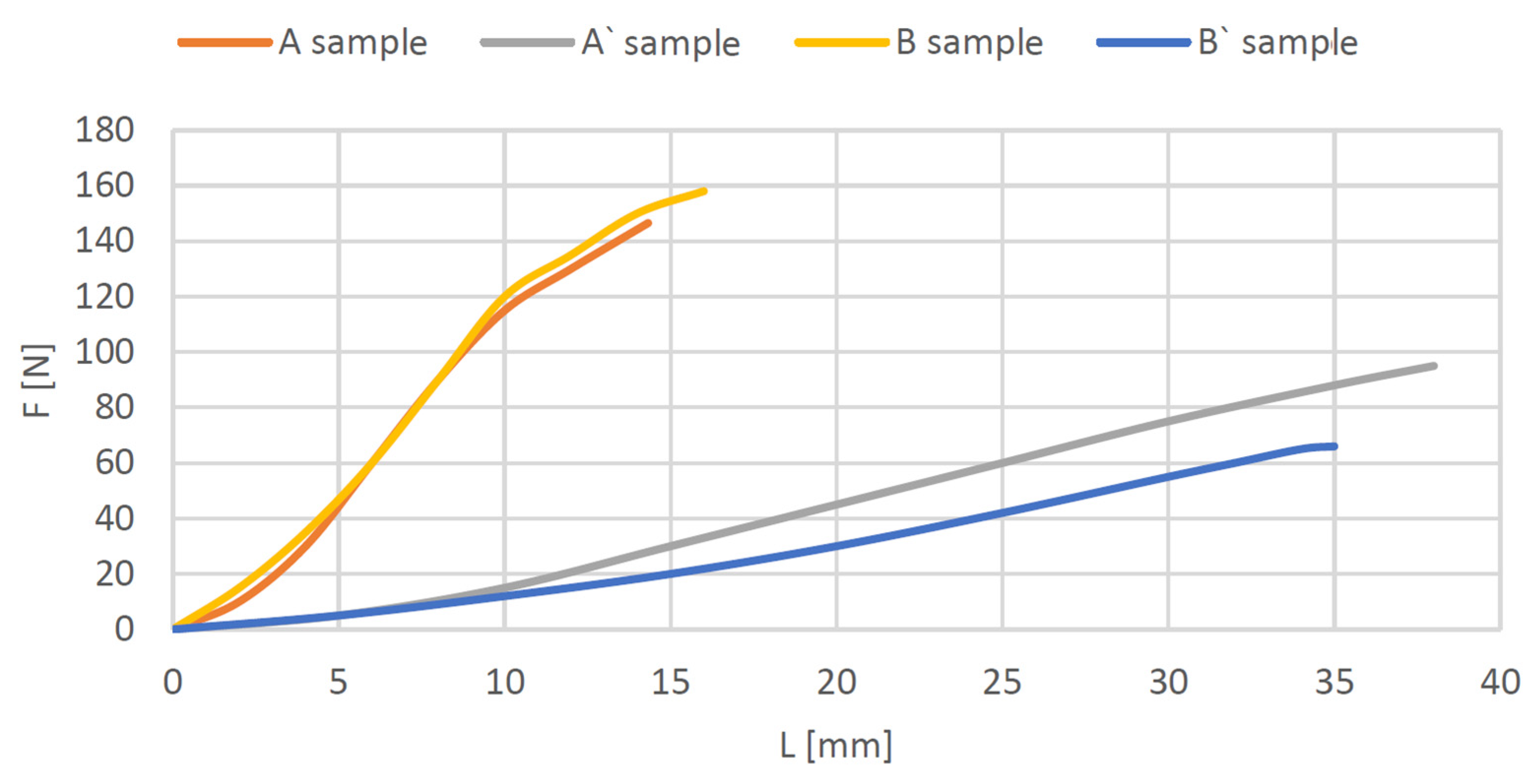
The following four graphs (
Figure 9) show the results of static tensile tests. The individual graphs were compared, taking into account the type of samples and their direction of stretching. The samples with the best individual graphs were selected, i.e., those that did not show any signs of artifacts during the strength test. Artifacts are disturbances created during the test as a result of the machine operation and abrupt changes in force and mesh displacement.
3.1.1. Force
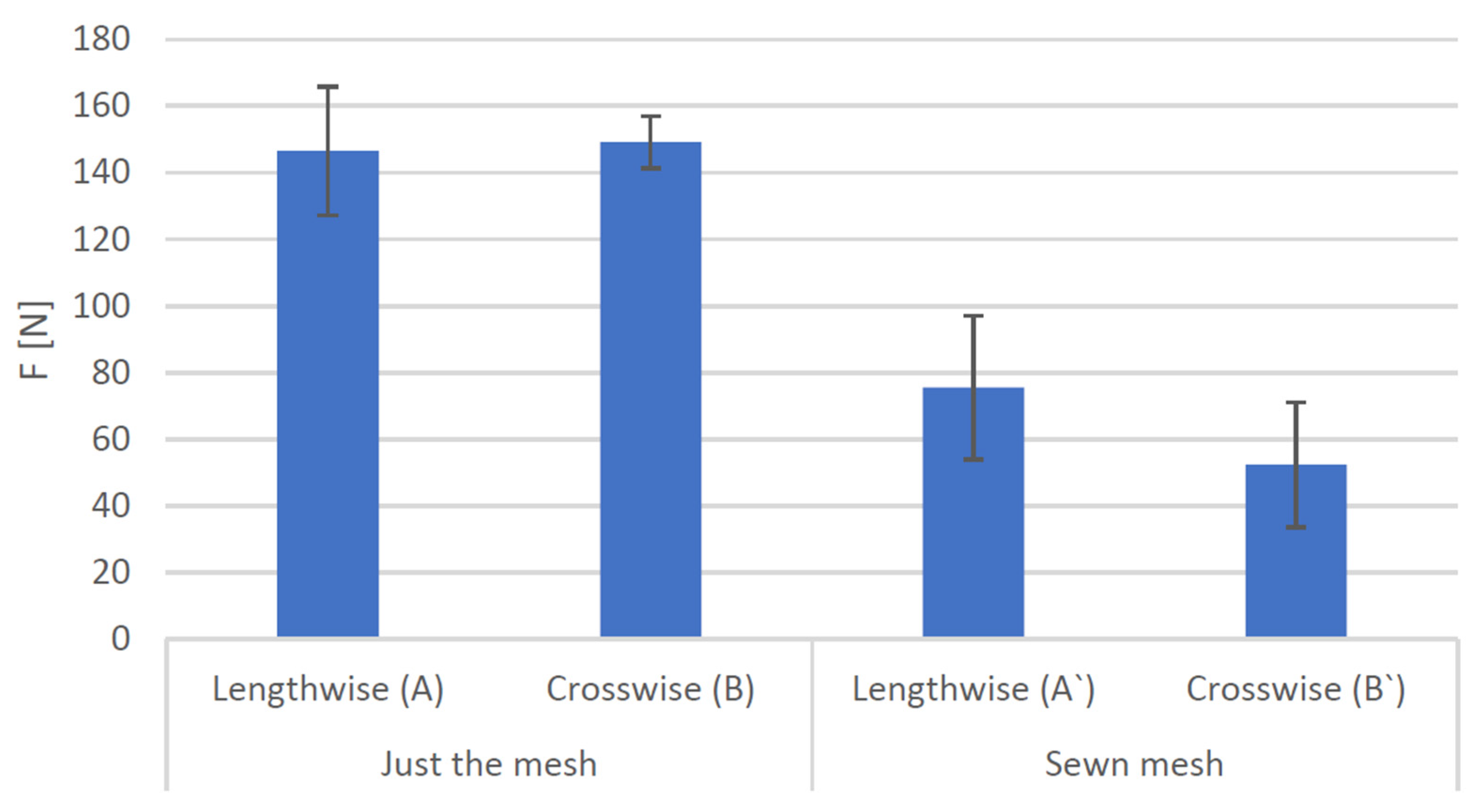
The average breaking force for unsewn surgical mesh samples was significantly higher than for samples sewn to the skin. For meshes tested longitudinally (samples A), the average value was 146.49 N, while for samples sewn in the same direction (A`) it was only 75.52 N, which is a decrease of almost 48%.
For meshes stretched transversely, the breaking force for unsewn samples (B) was 149.14 N, and for sewn samples (B`) it was 52.33 N, which is a decrease of as much as 65%. This means that sewing the mesh significantly reduces its mechanical strength, regardless of the direction of stretching.
The dispersion of results in each group was assessed using the standard deviation and the coefficient of variation. The standard deviation was the lowest for B samples (7.87 N) and the highest for A` (21.48 N), which may be related to differences in seam quality and local stress. The coefficient of variation for sutured samples was clearly higher (A`: 28.4%, B`: 36.0%) than for unsutured samples (A: 13.2%, B: 5.3%), indicating greater instability of the results in the sutured groups. To verify the significance of these differences, statistical analysis was performed using the Student (Welch) t-test. The test results are as follows:
A vs. A`: statistically significant difference (p < 0.001); stitching significantly reduces the strength of longitudinally stretched meshes.
B vs. B`: statistically very significant difference (p < 0.001); suturing significantly weakens transversely stretched meshes.
A vs. B and A` vs. B`: the difference was not statistically significant.
The above data confirm that the greatest influence on reducing the destructive force is the very fact of sewing the mesh, regardless of the direction of its arrangement. The differences between the directions (A vs. B, A` vs. B`) did not reach the level of statistical significance (
Table 1).
The results of the force required to break the meshes are presented in the following graph with the division into the direction of sample stretching marked (
Figure 10).
3.1.2. Deformation
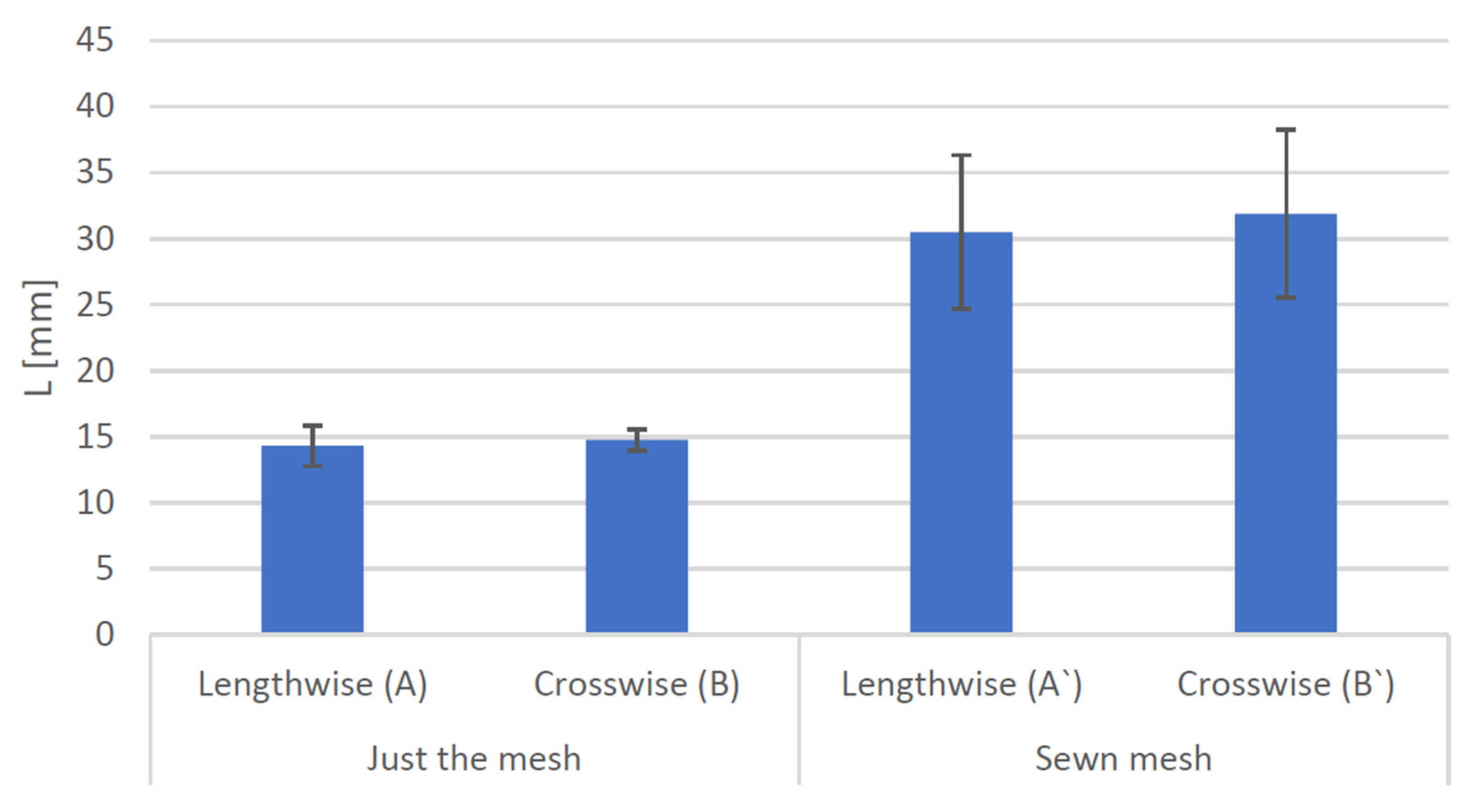
The results presented in
Table 2 show the values of the maximum deformation of surgical meshes at the moment of failure, taking into account the direction of stretching and the configuration of the sample (sutured or not). The average deformation values for unsutured samples were 14.32 ± 1.53 mm (A—longitudinally) and 14.77 ± 0.80 mm (B—transversely), which indicates very similar mechanical compliance of the material in both directions. Statistical analysis did not show significant differences between these two groups (
p = 0.894). In turn, the deformation of samples sutured with a fragment of bovine leather was significantly greater, reaching an average of 30.51 ± 5.80 mm for A` and 31.90 ± 6.35 mm for B`. The difference between these values did not reach the level of statistical significance (
p = 0.532), which suggests that the direction of loading does not affect the maximum deformation in the sutured configuration. Significant differences were revealed when comparing the sutured and unsutured samples. Both in the case of longitudinal (A vs. A`,
p < 0.001) and transverse (B vs. B`,
p < 0.001) stretching, highly statistically significant increases in strain were noted after sewing the mesh. These results confirm that the connection of the mesh with a fragment of biological tissue significantly affects the change in its mechanical properties, increasing its susceptibility to deformation. This may result from a decrease in the local stiffness of the system or the effect of redistribution of stresses resulting from sewing.
The results of mesh deformation are presented in the graph below with the division into the direction of sample stretching indicated (mesh itself and sewn mesh—
Figure 11).
3.2. Results from the Cyclic Stretching Test
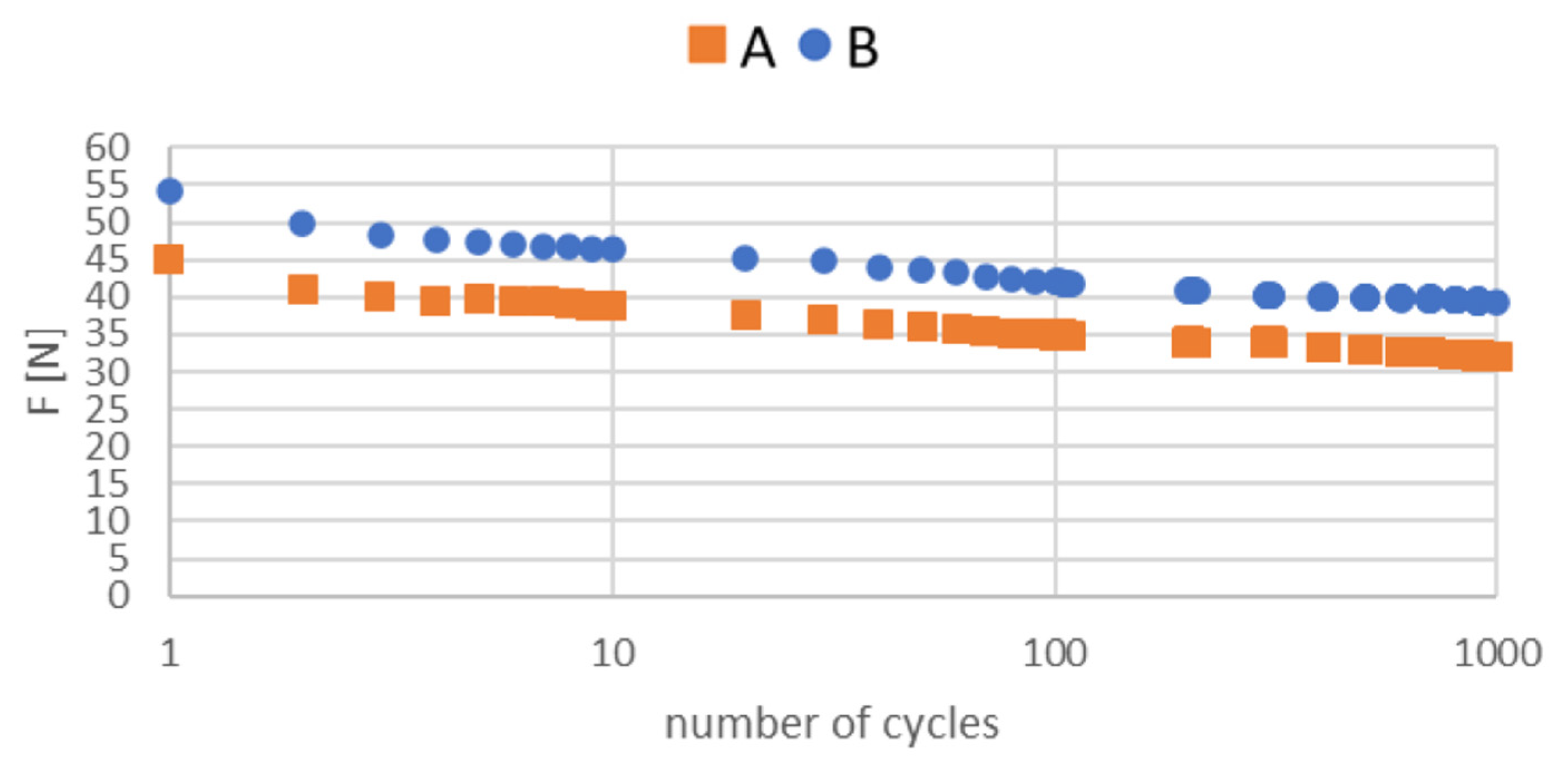
The next four graphs (
Figure 12 and
Figure 13) show the results from the cyclic tensile tests. As in the case of the static tensile test, the samples with the best individual graphs were selected, i.e., no signs of failure during the strength test.
The tests were carried out at a constant stretching amplitude of 2 mm and a frequency of 0.25 Hz, which was intended to reproduce fatigue conditions similar to those occurring in vivo, e.g., during the patient’s daily activity.
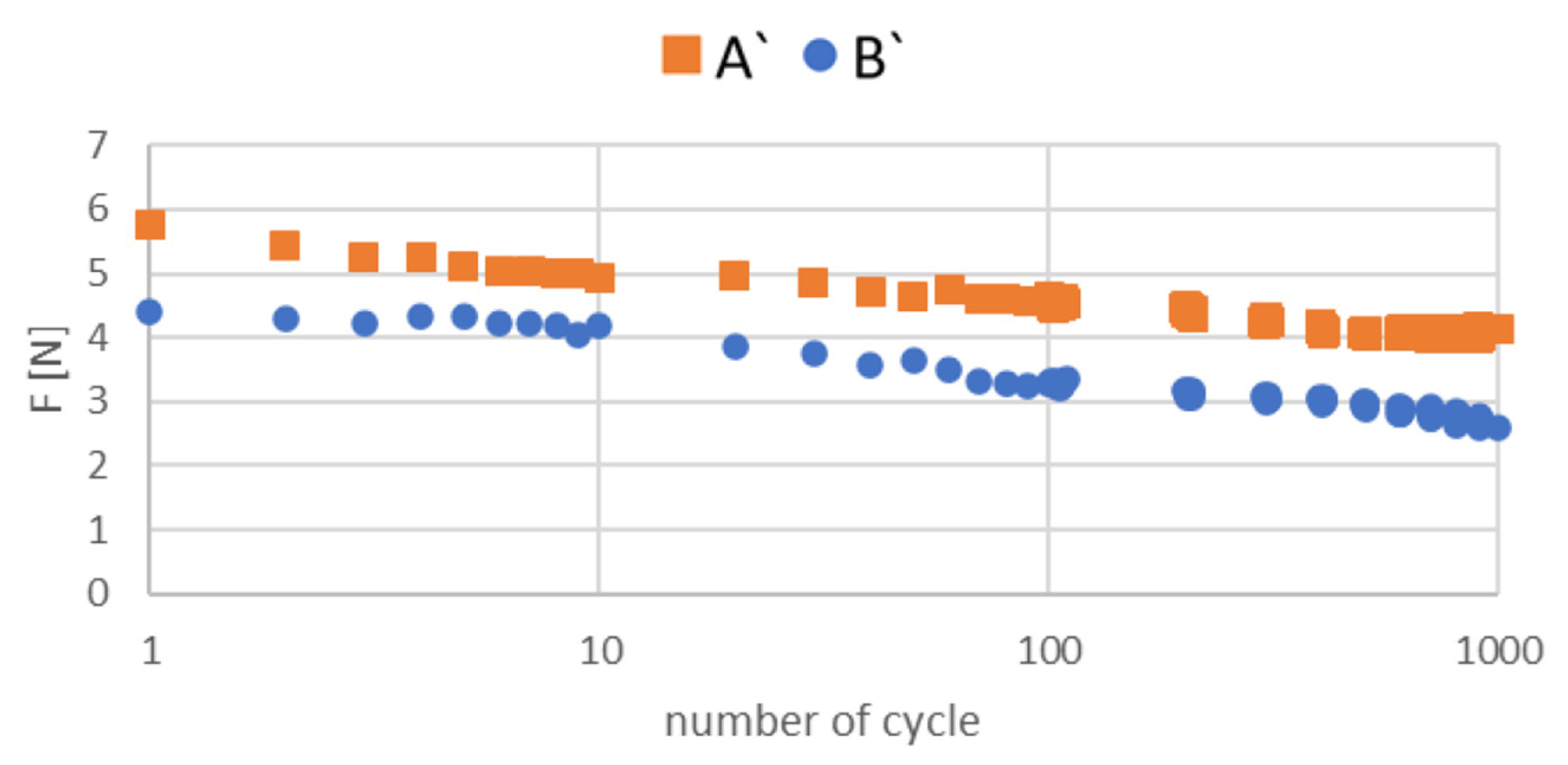
Each point on the graph represents the value of the force recorded in a single cycle for one sample—corresponding to the mechanical resistance of the mesh at a deformation of 2 mm. The range of cycles is from 1 to 1000, and the horizontal axis is presented on a logarithmic scale, which allows for a detailed analysis of changes occurring both at the beginning and in the final phase of loading.
The mesh samples stretched in the longitudinal direction (A) showed an initial value of the force required for deformation at the level of 45 N. With the increase in the number of cycles, a gradual, almost linear decrease in force was observed towards a value of 31 N after 1000 cycles. This means a loss of about 31% of the initial stiffness of the material during the test, which may indicate slight damage to the micropore structure or displacement of the mesh fibers. For samples stretched transversely (B), the initial force values were higher and amounted to about 55 N, and the final force values after 1000 cycles dropped to about 41 N. Despite the drop, the B meshes maintained higher force values throughout the test, which suggests that the material in the transverse direction is characterized by greater resistance to mechanical fatigue.
The results presented in
Figure 11 for the sewn samples indicate a significantly lower level of force required for deformation. For sample A` the initial values of the force required for deformation were 5.8 N and during the test they decreased gradually, reaching a level of about 4.1 N after 1000 cycles. The decrease in force was visible. Despite the fatigue effect, the mesh sewn to the skin retained some of its stiffness. The values of the initial force required for deformation in group B` samples were clearly lower, amounting to 4.5 N at the beginning of the test, and decreased faster than in group A`, reaching a level of 2.9 N after 1000 cycles.
In the unstitched samples (A and B), the initial force values were higher than in the stitched samples (A` and B`), confirming the negative effect of stitching on the integrity and stiffness of the system. In group A, the initial force was 45 N and decreased to 31 N after 1000 cycles, while in group B the values ranged from 55 N to 41 N. Sample B showed better fatigue resistance than A, suggesting that the transverse direction of stretching provides greater mechanical stability of the mesh. In the stitched samples, the forces were significantly lower. In group A`, the force decreased from about 5.8 N to 4.1 N, while in B`–from 4.5 N to 2.9 N. Stitching the material increased susceptibility to fatigue degradation, which may result from local weakening of the structure due to the presence of stitches and uneven stress distribution. In conclusion, both the direction of stretching and the presence of suture have a significant influence on the fatigue behavior of surgical meshes. A decrease in stiffness during the test was observed in all groups, but the rate and extent of the force decrease were different and dependent on the mechanical arrangement of the sample.
3.3. Results of Computational Modeling
The comprehensive experimental dataset provided here offers valuable insights and foundational data, which could be used in future artificial intelligence and machine learning analyses for predictive modeling of surgical mesh behavior. In the study, two models were created to answer the following research questions:
After the analyses, the number of model parameters was reduced to the following (for 156 samples):
Input parameters:
Skin connection,
Stretching direction,
Fixing,
Thread Strength,
Output parameter:
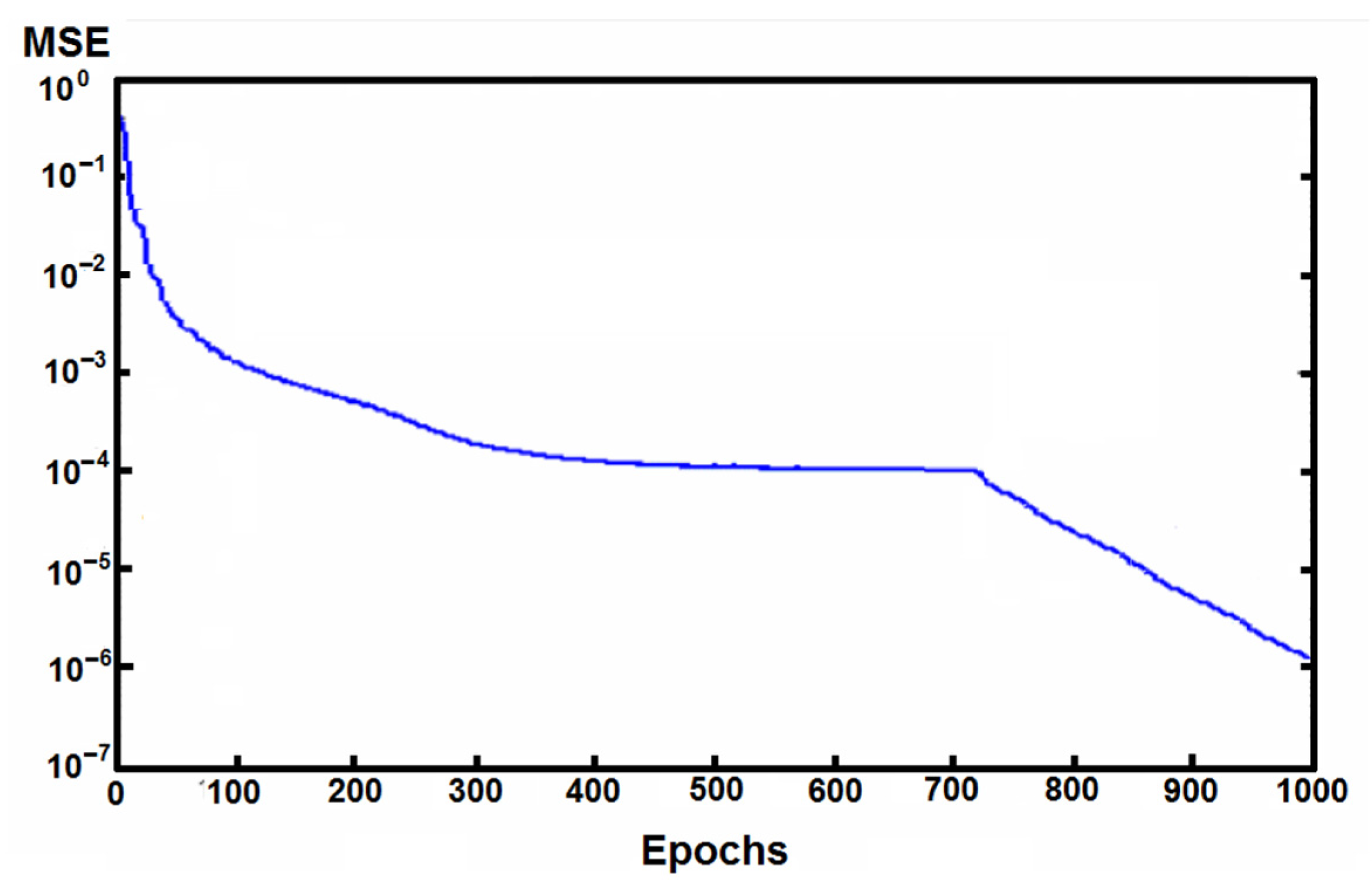
The results for entire strength connection prediction are presented in
Table 3 and
Figure 14—a good prediction accuracy of 84.12% was achieved, giving a chance for clinical application of the model after tuning it and expanding the database.
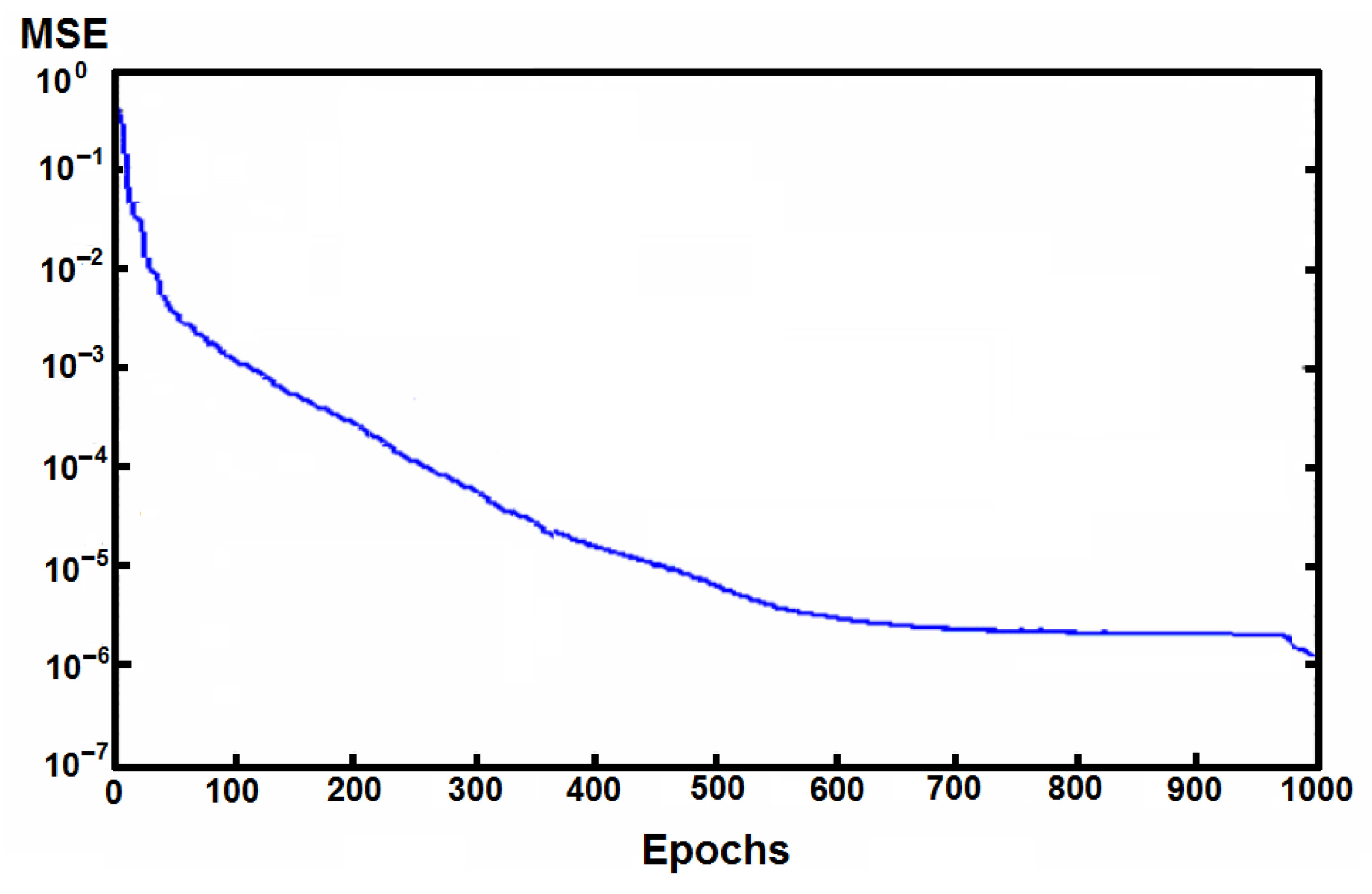
The results for thread selection to obtain a given connection strength are presented in
Table 4 and
Figure 15—a good prediction accuracy of 82.47% was achieved, also giving the prospects for clinical use of the model after tuning it and expanding the database.
In
Table 3 and
Table 4 we presented only the top five models/algorithms out of 42 and 47 tested ML models, respectively. SdcaRegression and FastForest Regression are the names of the ML models.
The TRIPOD model compliance report showed that the model was developed using a multivariate regression approach with predictors selected based on both prior literature and exploratory correlation analysis. Internal validation was performed with cross-validation to assess model stability. Missing data were noted as less than 5% missing and were treated using mean or median imputation, depending on the variable type. Calibration showed a calibration slope close to 1.0, indicating good agreement between predicted and observed results.
The study effectively investigates the mechanical properties of nonabsorbable surgical meshes by comparing sutured and unsutured specimens in a standardized test framework. Sutured specimens exhibit reduced elasticity and increased local stress concentrations, leading to earlier mechanical failure compared to unsutured counterparts. This difference is clearly described and reflects the mechanical effects of needle penetration and suture tension on mesh integrity. Suturing introduces discontinuities and stress increases in the mesh structure, which weakens its ability to evenly distribute loads. From a mechanical perspective, these changes disrupt the native strain behavior of the mesh, increasing stiffness and reducing fatigue resistance. An AI-based model captures these changes, using empirical data to simulate performance outcomes under various clinical fixation scenarios. In the context of Industry 4.0, this integration supports predictive modeling and virtual prototyping of mesh placement techniques. While Industry 5.0 promotes clinician feedback in the loop, the current model only implicitly addresses user interaction in surgical decision-making. Nevertheless, recognizing the mechanical impact of sutures provides valuable insights for both design optimization and surgical guidance. The study’s clear presentation of sutured and unsutured performance enhances the validity of its findings within a digitally assisted, patient-specific mesh planning framework.
Suturing nonabsorbable surgical meshes introduces local stress concentrations at the needle entry points, which can act as initiation points for mechanical failure. These stress spikes disrupt the uniform load distribution across the mesh, reducing its overall flexibility and fatigue resistance. An AI-based model captures these effects by analyzing strain patterns and identifying zones of mechanical compromise due to suturing. As part of Industry 4.0, such modeling supports virtual testing and optimization of surgical fixation techniques. Industry 5.0 adds a human-centric layer where surgeon feedback can guide improvements in mesh design and application strategies. Therefore, understanding how suturing compromises performance is critical to developing smarter, more resilient meshes that are based on both data and clinical insights.
4. Discussion
The mechanical properties of nonabsorbable surgical meshes, including tensile strength, stiffness, and fatigue resistance, provide the foundation for AI-based modeling to optimize mesh design and performance. These Industry 4.0-ready models enable predictive simulations and virtual prototyping to predict clinical outcomes. However, several practical barriers hinder seamless implementation of AI integration into clinical workflows. Regulatory requirements pose significant challenges, as AI tools used in healthcare must meet stringent standards for safety, transparency, and repeatability. Clinical validation is another critical hurdle, requiring extensive in vivo and multi-center studies to ensure AI predictions translate into real-world performance. Additionally, integration with existing hospital IT systems is often complex due to concerns about compliance, data security, and interoperability. While Industry 5.0 emphasizes human-centered innovation, its implementation remains limited unless these systemic barriers are addressed. Overcoming these challenges is essential to fully realize the potential of AI-assisted mesh technology in routine surgical practice.
The mechanical behavior and fatigue resistance of nonabsorbable polypropylene surgical meshes are fundamental to their clinical efficacy, especially in procedures such as hernia repair and pelvic organ prolapse (POP) surgery [
20,
21,
22,
23]. Recent experimental studies have highlighted the importance of factors such as fiber orientation, suture integration, and load direction, which directly affect the mechanical integrity, degradation profile, and long-term functionality of mesh implants [
24,
25,
26,
27].
Historically, polypropylene has been the material of choice for surgical meshes due to its favorable mechanical properties, such as high tensile strength, flexibility, and structural stability under loading conditions [
28,
29].
The mechanical properties of nonabsorbable surgical meshes—such as tensile strength, pore stability, and fatigue resistance—are critical to ensuring long-term implant success. AI-based models within Industry 4.0 offer powerful tools to simulate and predict these properties in a variety of clinical settings. However, for clinical implementation, these models must undergo extensive validation and robustness testing to ensure reliability across a variety of patient populations and surgical scenarios. Validation must include in vitro, in vivo, and potentially multicenter clinical studies to confirm that the AI predictions are consistent with real-world outcomes. Robustness testing is also necessary to assess the model’s sensitivity to changes in mesh type, surgical technique, and patient-specific factors. While Industry 5.0 envisions a human-centric, personalized approach to healthcare, it is highly dependent on the reliability of such AI systems. Without comprehensive validation, integrating AI into clinical decision-making remains speculative and potentially risky. Therefore, before widespread adoption, AI tools for evaluating surgical meshes must meet rigorous clinical and regulatory standards.
In this study, the maximum tensile forces observed for seamless polypropylene meshes were 146.49 N (longitudinal direction, group A) and 149.14 N (transverse direction, group B), while for the stitched samples the maximum tensile forces decreased significantly to 75.52 N (A`) and 52.33 N (B`), respectively. These values are consistent with reports from the literature, where similar polypropylene meshes tested under monotonic tensile loading showed maximum failure forces in the range of about 120–180 N.
In particular, meshes made of isotactic polypropylene (i-PP) exhibit improved fatigue resistance, maintaining structural integrity under cyclic loading conditions [
28,
30]. However, the inherent anisotropy of the mesh design often leads to direction-dependent mechanical responses. This was evident in our findings, where the transverse samples (B) consistently outperformed the longitudinal samples (A) in terms of both tensile strength and fatigue life. This is consistent with the literature that attributes such behavior to fiber orientation and the resulting stress distribution on the mesh surface [
31].
Seam integration further complicates the mechanical behavior of the meshes. Our study confirmed that the stitched samples (A` and B`) exhibited lower mechanical performance than their unstitched counterparts, with a more pronounced loss of strength over time. The observed reduction in tensile strength after suturing was approximately 48–65%, confirming previous studies indicating that suturing significantly reduces mechanical integrity by introducing stress concentrations.
The sutured meshes showed significantly greater strain (approximately 30.51 mm (A`) and 31.90 mm (B`)), highlighting the significant increase in mesh compliance after biointegration, consistent with the results of [
31] who noted increased elongation and decreased stiffness due to material–tissue interactions.
While nonabsorbable sutures provide mechanical stability, they may also increase the risk of postoperative pain due to local stiffness and stress concentrations [
32]. Furthermore, while absorbable sutures may reduce postoperative discomfort, they may also compromise long-term fixation and the ability of the mesh to share loads. Therefore, the choice of suture material remains a balance between mechanical performance and clinical outcome.
Cyclic tensile testing demonstrated progressive loss of stiffness in all mesh types, with sutured samples degrading more rapidly. Our samples showed a measurable decrease in force from initial values (45 N in A samples to 34 N after 1000 cycles; 55 N in B samples to approximately 41 N). This progressive mechanical degradation confirms previous cyclic fatigue studies that report force reductions of approximately 15–30% under similar testing conditions [
28]. The higher residual strength of transverse (B) meshes compared to longitudinal (A) meshes is inconsistent (larger) with previous observations that anisotropic fiber orientations significantly affect fatigue resistance [
31].
This phenomenon is compounded by the potential of polypropylene to undergo oxidative degradation and surface cracking over time, which may further contribute to structural weakening and inflammatory reactions [
33]. These effects have prompted the development of modified meshes, including bioactive coatings and composite structures that incorporate resorbable components to reduce adverse tissue reactions [
33]. Our study further supports recent trends in mesh design facilitated by modern manufacturing techniques such as 3D printing and material functionalization. Studies investigating innovative composite geometries and designs have demonstrated improved mechanical resistance and tailored compliance to specific surgical needs [
34,
35]. This approach may contribute to personalized surgical solutions and potentially lower complication rates associated with conventional polypropylene meshes [
36].
Overall, our results reinforce the concept that polypropylene surgical meshes have directional dependence and are significantly affected by sutures, which are essential factors to consider when planning surgery and selecting a mesh. This is quantitatively consistent with recent literature [
37,
38,
39,
40,
41,
42,
43].
While our study has demonstrated significant differences in mesh behavior related to loading direction and suture integration, a potential direction for future research involves the use of artificial intelligence (AI)-based methods [
44,
45]. AI techniques, such as ML and deep neural networks, can leverage extensive experimental datasets like those presented here to develop predictive models. These models could significantly enhance mesh design by optimizing material composition, geometry, and structural properties, potentially improving surgical outcomes and reducing postoperative complications. Furthermore, advanced AI simulations could enable personalized mesh selection tailored to patient-specific anatomical and physiological conditions, thus aligning surgical mesh development with principles of precision medicine.
The improved fatigue resistance of cross-link meshes has important clinical implications, suggesting that their microstructure is inherently better suited to the multidirectional cyclic loading encountered in vivo. This orientation likely distributes stress more evenly across the fibers, reducing the concentration of local strains that typically initiate fatigue or fiber breakage. A tighter or more connected cross-link arrangement may also limit progressive strain, helping the mesh maintain its structural integrity during prolonged physiological loading, such as breathing, coughing, or abdominal wall movement. Clinically, this means that cross-link meshes may maintain mechanical stability longer, potentially reducing the risk of mesh stretching, pore collapse, or recurrent hernias. Increased durability may also translate into more stable support for surrounding tissues, improving postoperative comfort and long-term outcomes. mechanistic interpretation indicates that the transverse fiber orientation provides an intrinsic fatigue advantage, making these meshes more suitable for stressed anatomical sites where cyclic stresses cannot be avoided.
Industry 4.0 emphasizes connectivity and automation, facilitating the integration of sensor technologies into the manufacturing process to monitor material quality and performance in real time. Additive manufacturing (3D printing) combined with computational models enables the production of custom-designed meshes with patient-specific properties, allowing for improved clinical outcomes. Moving toward Industry 5.0, a human-centric approach focuses on incorporating human expertise with computational advances to develop more sustainable, efficient, and user-centric surgical meshes. Computational modeling in the context of Industry 4.0/5.0 revolutionizes the design and evaluation of nonresorbable surgical meshes, supporting innovation and improving patient care through precision and intelligent manufacturing.
4.1. Limitations of Current Studies
Current research on nonabsorbable surgical meshes faces several limitations that impact their development and clinical application. Many studies lack long-term follow-up data, making it difficult to assess the durability and safety of meshes over decades [
46,
47,
48]. Variability in clinical practice and study designs, including differences in patient populations, surgical techniques, and evaluation criteria, often leads to inconsistent results that make generalizability difficult [
49,
50,
51]. Another limitation is the underrepresentation of certain patient groups, such as those with comorbidities or unusual anatomical changes/challenges, limiting the applicability of findings to diverse populations [
20,
21]. Preclinical studies are often based on animal models that may not accurately represent human tissue responses, making it difficult to translate findings into clinical practice [
52,
53]. Furthermore, the mechanisms underlying mesh-related complications, such as chronic pain and fibrosis, remain poorly understood, limiting the ability to effectively predict and mitigate risks [
21,
22].
There is also a lack of standardized protocols for evaluating and comparing new mesh materials, which complicates comparisons of outcomes between products or their successive generations [
54,
55]. The cost-effectiveness of advanced mesh designs, particularly in low-resource settings (developing countries), has not been adequately addressed and compared [
56]. Despite the emphasis on a holistic biopsychosocial approach and patient comfort, most studies focus on initial surgical outcomes, ignoring the psychological and quality-of-life impact that potential mesh-related changes and complications may have on patients over time (e.g., limitations in some activities such as demanding sports or even vigorous and prolonged dancing) [
57,
58]. These limitations underscore the need for more robust, multidisciplinary research to improve the safety and efficacy of nonresorbable surgical meshes.
The mechanical properties of nonresorbable surgical meshes, such as stiffness, tensile strength, and fatigue resistance, are critical to their clinical performance and durability. In the context of Industry 4.0/5.0, AI-based models can help analyze and predict these properties using data-driven insights and intelligent manufacturing techniques. However, the current study’s reliance on a single commercial polypropylene mesh limits the generalizability of its conclusions. Drawing broad conclusions about all nonresorbable meshes without comparative analysis reduces the external validity of the findings. Industry 4.0 promotes comprehensive comparative testing and data integration, which were clearly lacking in this approach. Comparative testing with multiple commercial meshes would provide critical benchmarks for assessing mechanical and fatigue behavior. In addition, Industry 5.0 principles emphasize personalization and collaboration, which require diverse inputs to support clinician-in-the-loop decision-making. The lack of mesh diversity also makes it difficult for the AI model to adapt or learn to different material profiles. As a result, although the model reflects some conceptual aspects of Industry 4.0/5.0, it lacks the methodological rigor needed to fully comply with their standards, which we will address in subsequent studies, considering the present research as preliminary.
The use of ML algorithms such as FastForest regression may seem disproportionate when the dataset is small, as these models are designed to capture complex, nonlinear patterns that typically require large amounts of data for reliable generalization. With a limited number of observations, the algorithm can overfit, exploiting learning noise or group-level patterns rather than underlying material-property relationships. In such cases, the model’s “predictions” may reflect little more than statistical correlations between group means or predefined categories, rather than actual learned behavior. In this study, we minimized the aforementioned risk of the model appearing to perform well in the sample while lacking significant predictive power for new or unfamiliar grid configurations. Consequently, the sophistication of the ML technique does not exceed the capabilities of the dataset, leading to results closer to descriptive statistics than robust predictive modeling.
Fatigue testing provides valuable data because it captures the response of surgical meshes to repeated loading cycles that mimic physiological conditions. Raw fatigue life measurements offer only a snapshot of performance, not describing the progression of degradation over time, so we consider this a preliminary study. We plan to incorporate a degradation rate constant in a future study, which would determine the rate of deterioration of mechanical properties, enabling more accurate modeling of long-term behavior. Similarly, S–N curve fitting would enable prediction of fatigue life across a range of stress amplitudes, not just under the tested conditions. Together, these additional elements would transform fatigue test results derived from isolated observations into a framework for extrapolating the long-term durability of the mesh.
The ML component relies entirely on off-the-shelf ML.NET algorithms, as the study focuses on demonstrating feasibility within the Industry 4.0/5.0 pipeline rather than developing new model architectures or interpretability frameworks. Using AutoML-derived models streamlines the process but inherently limits insight into how individual features influence predictions. This is important because regression results in this context can influence material or suture selection, and decisions without clear rationale can be difficult to justify in biomedical applications. Recognizing this limitation helps explain the current work’s emphasis on proof-of-concept modeling rather than fully interpretable decision support systems. Future work could integrate model-agnostic interpretability tools (permutation-based feature significance, partial dependency analysis, or SHAP explanations) to reveal how mechanical parameters contribute to predictions. Implementing such methods would strengthen clinical and engineering trust by making the AI component more transparent, auditable, and aligned with responsible Industry 5.0 principles.
4.2. Directions for Further Research
Future research on nonabsorbable surgical meshes should focus on developing advanced biomaterials that minimize immune response and chronic inflammation. Personalized and patient-specific meshes, potentially using 3D printing technologies, can be tailored to individual anatomical and clinical needs to improve integration and outcomes [
23]. Exploring the use of nanotechnology and bioactive coatings to deliver antimicrobial agents or promote tissue regeneration is another promising direction [
24]. Long-term studies evaluating the durability, safety, and efficacy of new mesh designs (including changes in mechanical parameters) are crucial to understanding their performance over the lifespan of the patient. Research into the underlying mechanisms of complications, such as chronic pain, fibrosis, and adhesion formation, could lead to innovations in mesh structure and surface properties [
25]. Standardization of evaluation protocols and clinical trial designs would provide better comparability across mesh products and streamline regulatory processes. Further research into robotic and minimally invasive surgical techniques may optimize mesh placement and reduce postoperative complications [
26]. Integration of computational modeling and imaging technologies could improve preoperative planning and help predict the most appropriate type of mesh for individual cases [
27]. Research into the cost-effectiveness of advanced mesh technologies across healthcare settings is also essential to ensure accessibility and equitable distribution [
59,
60]. Research into the psychological and qualitative effects of mesh complications and procedures can help improve patient care and provide holistic solutions [
61,
62]. Together, these directions aim to create safer, more effective, and patient-centered approaches to the use of nonresorbable surgical mesh [
63,
64,
65,
66].