A Comparison of Preschool-Aged Children’s PA on Schooldays vs. Weekend Days Using Technological Devices: A Systematic Review

 ,
,  , and
, and
Abstract
1. Introduction
2. Materials and Methods
2.1. Experimental Approach to the Problem
2.2. Information Sources
2.3. Search Strategy
2.4. Selection Process
2.5. Data Extraction
2.6. Quality of Studies
3. Results
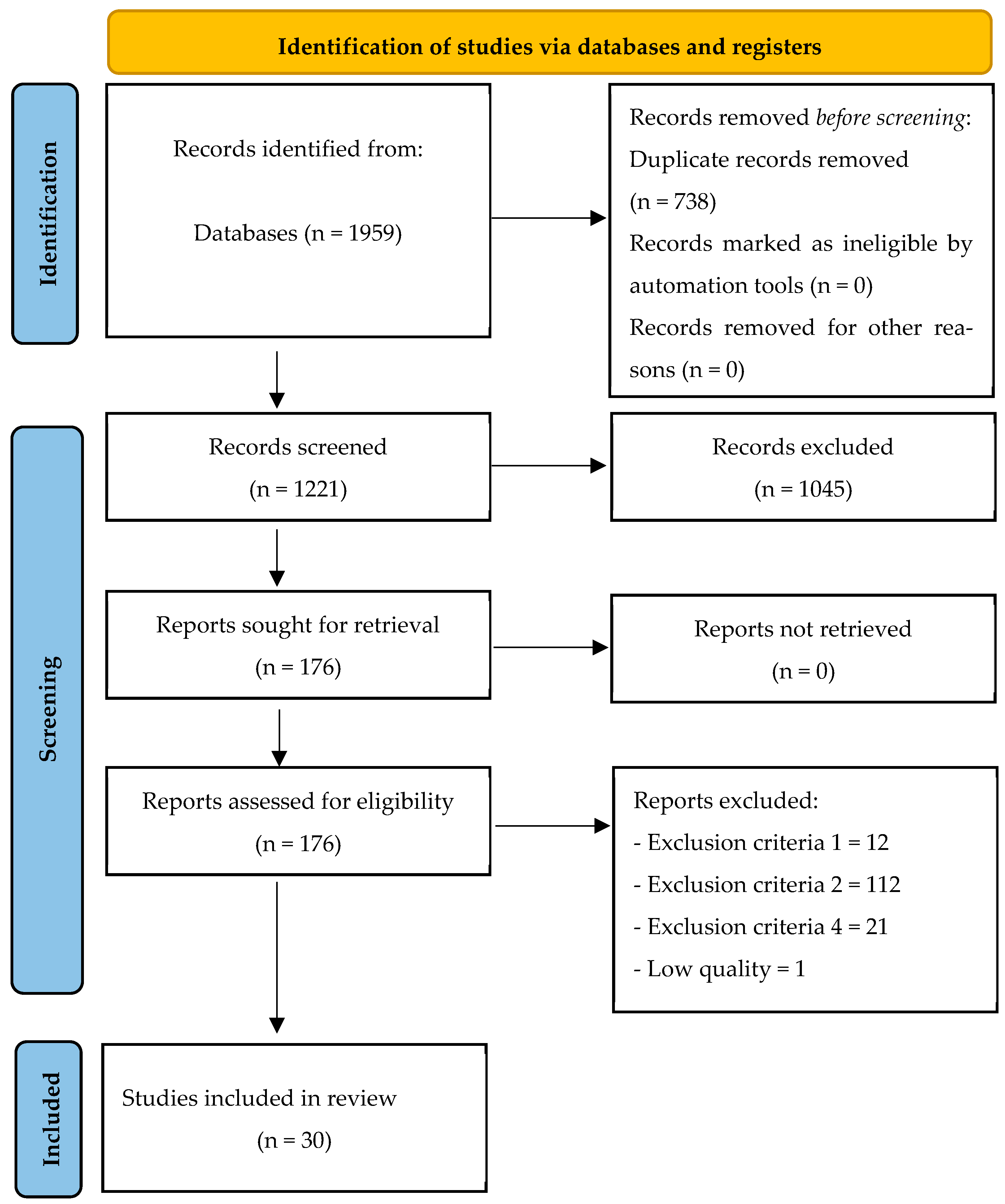
3.1. Identification and Selection of Studies
3.2. Quality Assessment
3.3. Study Characteristics
3.3.1. PA on Weekdays and Weekends
3.3.2. Parental/Maternal Behavior and PA During Weekdays and Weekends
3.3.3. Gender as a Correlate for PA During Weekdays and Weekends
3.3.4. Other Correlates of PA on Both Weekdays and Weekends
4. Discussion
4.1. PA on Weekdays and Weekends
4.2. Parental/Maternal Behavior and PA During Weekdays and Weekends
4.3. Gender as a Correlate for PA During Weekdays and Weekends
4.4. Other Correlates of PA on Both Weekdays and Weekends
4.5. Limitations Related to Measurement Methods
5. Conclusions
- -
- Parental/maternal influence: parental/maternal influence has been highlighted as crucial due to the established relationship between parental/maternal sedentary behavior, shared activities during weekend days (walking or cycling), parents’ educational level, and parental/maternal screen time.
- -
- Gender influence: although several studies reflect a different trend in PA amount and type between girls and boys, some others highlight that it does not influence, suggesting that other factors, rather than gender, could influence the adherence to PA level.
- -
- Other influences: other factors suggest that morphology, motor competence level, the type of activity (indoor vs. outdoor), age, meeting of PA guidelines, and the community transportation environment [53] could influence PA levels. However, since there are few studies that establish such correlations, these results should be considered with caution, awaiting future studies that corroborate them.
6. Practical Applications for the Teachers in Early Years
Author Contributions
Funding
Conflicts of Interest
References
- Krishnamurti, J. Sobre Educación; Editorial Kairós: Barcelona, Spain, 2019. [Google Scholar]
- Rushton, S. Neuroscience, Early Childhood Education and Play: We Are Doing It Right! Early Child. Educ. J. 2011, 39, 89–94. [Google Scholar] [CrossRef]
- Brault Foisy, L.-M.; Duval, S. Early Childhood Education and Cognitive Neuroscience. Neuroeducation 2020, 6, 4–5. [Google Scholar] [CrossRef]
- McEvilly, N.; Verheul, M.; Atencio, M. Physical Education at Preschools: The Meaning of ‘Physical Education’ to Practitioners at Three Preschool Settings in Scotland. Phys. Educ. Sport Pedagog. 2015, 20, 117–130. [Google Scholar] [CrossRef]
- Rodriguez-Ayllon, M.; Cadenas-Sánchez, C.; Estévez-López, F.; Muñoz, N.E.; Mora-Gonzalez, J.; Migueles, J.H.; Molina-García, P.; Henriksson, H.; Mena-Molina, A.; Martínez-Vizcaíno, V.; et al. Role of Physical Activity and Sedentary Behavior in the Mental Health of Preschoolers, Children and Adolescents: A Systematic Review and Meta-Analysis. Sports Med. 2019, 49, 1383–1410. [Google Scholar] [CrossRef]
- Janssen, X.; Martin, A.; Hughes, A.R.; Hill, C.M.; Kotronoulas, G.; Hesketh, K.R. Associations of Screen Time, Sedentary Time and Physical Activity with Sleep in under 5s: A Systematic Review and Meta-Analysis. Sleep Med. Rev. 2020, 49, 101226. [Google Scholar] [CrossRef]
- Wright, K.; Giger, J.N.; Norris, K.; Suro, Z. Impact of a Nurse-Directed, Coordinated School Health Program to Enhance Physical Activity Behaviors and Reduce Body Mass Index among Minority Children: A Parallel-Group, Randomized Control Trial. Int. J. Nurs. Stud. 2013, 50, 727–737. [Google Scholar] [CrossRef]
- Xu, F.; Ware, R.S.; Tse, L.A.; Wang, Z.; Hong, X.; Song, A.; Li, J.; Wang, Y. A School-Based Comprehensive Lifestyle Intervention among Chinese Kids against Obesity (CLICK-Obesity): Rationale, Design and Methodology of a Randomized Controlled Trial in Nanjing City, China. BMC Public Health 2012, 12, 316. [Google Scholar] [CrossRef]
- Sahota, P.; Rudolf, M.C.J.; Dixey, R.; Hill, A.J.; Barth, J.H.; Cade, J. Randomised Controlled Trial of Primary School Based Intervention to Reduce Risk Factors for Obesity. BMJ 2001, 323, 1029. [Google Scholar] [CrossRef]
- Rico-González, M. The Effect of Primary School-Based Physical Education Programs: A Systematic Review of Randomized Controlled Trials. J. Phys. Act. Health 2023, 20, 317–347. [Google Scholar] [CrossRef]
- Meyer, U.; Romann, M.; Zahner, L.; Schindler, C.; Puder, J.J.; Kraenzlin, M.; Rizzoli, R.; Kriemler, S. Effect of a General School-Based Physical Activity Intervention on Bone Mineral Content and Density: A Cluster-Randomized Controlled Trial. Bone 2011, 48, 792–797. [Google Scholar] [CrossRef]
- Daly, R.M.; Ducher, G.; Hill, B.; Telford, R.M.; Eser, P.; Naughton, G.; Seibel, M.J.; Telford, R.D. Effects of a Specialist-Led, School Physical Education Program on Bone Mass, Structure, and Strength in Primary School Children: A 4-Year Cluster Randomized Controlled Trial: Effects of School Pe on Bone Mass, Structure and Strength in Children. J. Bone Miner. Res. 2016, 31, 289–298. [Google Scholar] [CrossRef] [PubMed]
- Rico-González, M.; Martín-Moya, R.; Moreno-Villanueva, A. Effects of Early-Childhood-Based Interventions Influencing Bones: A Systematic Review. J. Funct. Morphol. Kinesiol. 2023, 9, 2. [Google Scholar] [CrossRef] [PubMed]
- Rico-González, M. Developing Emotional Intelligence through Physical Education: A Systematic Review. Percept. Mot. Skills 2023, 130, 1286–1323. [Google Scholar] [CrossRef] [PubMed]
- Gil-Moreno, J.; Rico-González, M. The Effects of Physical Education on Preschoolers’ Emotional Intelligence: A Systematic Review. Sustainability 2023, 15, 10632. [Google Scholar] [CrossRef]
- Martinez-Merino, N.; Rico-González, M. Effects of Physical Education on Preschool Children’s Physical Activity Levels and Motor, Cognitive, and Social Competences: A Systematic Review. J. Teach. Phys. Educ. 2024, 43, 696–706. [Google Scholar] [CrossRef]
- Vale, S.; Silva, P.; Santos, R.; Soares-Miranda, L.; Mota, J. Compliance with Physical Activity Guidelines in Preschool Children. J. Sports Sci. 2010, 28, 603–608. [Google Scholar] [CrossRef]
- Obeid, J.; Nguyen, T.; Gabel, L.; Timmons, B.W. Physical Activity in Ontario Preschoolers: Prevalence and Measurement Issues. Appl. Physiol. Nutr. Metab. 2011, 36, 291–297. [Google Scholar] [CrossRef]
- World Health Organization. Guidelines on Physical Activity, Sedentary Behaviour and Sleep for Children Under 5 Years of Age; World Health Organization: Geneva, Switzerland, 2019. [Google Scholar]
- Díaz-Quesada, G.; Gálvez-Calabria, M.D.L.Á.; Connor, J.D.; Torres-Luque, G. When Are Children Most Physically Active? An Analysis of Preschool Age Children’s Physical Activity Levels. Children 2022, 9, 1015. [Google Scholar] [CrossRef]
- Kambas, A.; Venetsanou, F.; Avloniti, A.; Giannakidou, D.M.; Gourgoulis, V.; Draganidis, D.; Chatzinikolaou, A.; Fatouros, I.; Michalopoulou, M. Pedometer Determined Physical Activity and Obesity Prevalence of Greek Children Aged 4–6 Years. Ann. Hum. Biol. 2015, 42, 233–238. [Google Scholar] [CrossRef]
- Fernandes, M.M.; Sturm, R. The Role of School Physical Activity Programs in Child Body Mass Trajectory. J. Phys. Act. Health 2011, 8, 174–181. [Google Scholar] [CrossRef]
- Takehara, K.; Togoobaatar, G.; Kikuchi, A.; Lkhagvasuren, G.; Lkhagvasuren, A.; Aoki, A.; Fukuie, T.; Shagdar, B.-E.; Suwabe, K.; Mikami, M.; et al. Exercise Intervention for Academic Achievement Among Children: A Randomized Controlled Trial. Pediatrics 2021, 148, e2021052808. [Google Scholar] [CrossRef] [PubMed]
- Roscoe, C.M.P.; James, R.S.; Duncan, M.J. Accelerometer-Based Physical Activity Levels Differ between Week and Weekend Days in British Preschool Children. J. Funct. Morphol. Kinesiol. 2019, 4, 65. [Google Scholar] [CrossRef] [PubMed]
- Phillips, S.M.; Summerbell, C.; Hobbs, M.; Hesketh, K.R.; Saxena, S.; Muir, C.; Hillier-Brown, F.C. A Systematic Review of the Validity, Reliability, and Feasibility of Measurement Tools Used to Assess the Physical Activity and Sedentary Behaviour of Pre-School Aged Children. Int. J. Behav. Nutr. Phys. Act. 2021, 18, 141. [Google Scholar] [CrossRef] [PubMed]
- Page, M.J.; McKenzie, J.E.; Bossuyt, P.M.; Boutron, I.; Hoffmann, T.C.; Mulrow, C.D.; Shamseer, L.; Tetzlaff, J.M.; Akl, E.A.; Brennan, S.E.; et al. The PRISMA 2020 Statement: An Updated Guideline for Reporting Systematic Reviews. BMJ 2021, 372, n71. [Google Scholar] [CrossRef] [PubMed]
- Rico-González, M.; Pino-Ortega, J.; Clemente, F.M.; Los Arcos, A. Guidelines for Performing Systematic Reviews in Sports Science. Biol. Sport 2022, 39, 463–471. [Google Scholar] [CrossRef]
- Slim, K.; Nini, E.; Forestier, D.; Kwiatkowski, F.; Panis, Y.; Chipponi, J. Original Article Methodological Index for Non-Randomized Studies (Minors). ANZ J Surg 2003, 73, 712–716. [Google Scholar] [CrossRef]
- Van Ekris, E.; Solomon-Moore, E.; Chinapaw, M.; Jago, R.; Altenburg, T. Child- and Parent-Related Correlates of Total and Prolonged Sedentary Time in 5- to 6-Year-Old Children. Int. J. Environ. Res. Public Health 2018, 15, 1817. [Google Scholar] [CrossRef]
- Van Stappen, V.; Van Dyck, D.; Latomme, J.; De Bourdeaudhuij, I.; Moreno, L.; Socha, P.; Iotova, V.; Koletzko, B.; Manios, Y.; Androutsos, O.; et al. Daily Patterns of Preschoolers’ Objectively Measured Step Counts in Six European Countries: Cross-Sectional Results from the ToyBox-Study. Int. J. Environ. Res. Public Health 2018, 15, 291. [Google Scholar] [CrossRef]
- Määttä, S.; Konttinen, H.; Haukkala, A.; Erkkola, M.; Roos, E. Preschool Children’s Context-Specific Sedentary Behaviours and Parental Socioeconomic Status in Finland: A Cross-Sectional Study. BMJ Open 2017, 7, e016690. [Google Scholar] [CrossRef]
- Eichinger, M.; Schneider, S.; De Bock, F. Subjectively and Objectively Assessed Social and Physical Environmental Correlates of Preschoolers’ Accelerometer-Based Physical Activity. Int. J. Behav. Nutr. Phys. Act. 2017, 14, 153. [Google Scholar] [CrossRef]
- Foweather, L.; Knowles, Z.; Ridgers, N.D.; O’Dwyer, M.V.; Foulkes, J.D.; Stratton, G. Fundamental Movement Skills in Relation to Weekday and Weekend Physical Activity in Preschool Children. J. Sci. Med. Sport 2015, 18, 691–696. [Google Scholar] [CrossRef] [PubMed]
- Quan, M.; Zhang, H.; Zhang, J.; Zhou, T.; Zhang, J.; Zhao, G.; Fang, H.; Sun, S.; Wang, R.; Chen, P. Are Preschool Children Active Enough in Shanghai: An Accelerometer-Based Cross-Sectional Study. BMJ Open 2019, 9, e024090. [Google Scholar] [CrossRef] [PubMed]
- Berglind, D.; Tynelius, P. Objectively Measured Physical Activity Patterns, Sedentary Time and Parent-Reported Screen-Time across the Day in Four-Year-Old Swedish Children. BMC Public Health 2018, 18, 69. [Google Scholar] [CrossRef] [PubMed]
- Chen, B.; Waters, C.N.; Compier, T.; Uijtdewilligen, L.; Petrunoff, N.A.; Lim, Y.W.; Van Dam, R.; Müller-Riemenschneider, F. Understanding Physical Activity and Sedentary Behaviour among Preschool-Aged Children in Singapore: A Mixed-Methods Approach. BMJ Open 2020, 10, e030606. [Google Scholar] [CrossRef]
- Carson, V.; Salmon, J.; Crawford, D.; Hinkley, T.; Hesketh, K.D. Longitudinal Levels and Bouts of Objectively Measured Sedentary Time among Young Australian Children in the HAPPY Study. J. Sci. Med. Sport 2016, 19, 232–236. [Google Scholar] [CrossRef]
- Benham-Deal, T. Preschool Children’s Accumulated and Sustained Physical Activity. Percept. Mot. Skills 2005, 100, 443–450. [Google Scholar] [CrossRef]
- Olesen, L.G.; Kristensen, P.L.; Ried-Larsen, M.; Grøntved, A.; Froberg, K. Physical Activity and Motor Skills in Children Attending 43 Preschools: A Cross-Sectional Study. BMC Pediatr. 2014, 14, 229. [Google Scholar] [CrossRef]
- Mckee, D.P.; Murtagh, E.M.; Boreham, C.A.G.; Nevill, A.M.; Murphy, M.H. Seasonal and Annual Variation in Young Children’s Physical Activity. Med. Sci. Sports Exerc. 2012, 44, 1318–1324. [Google Scholar] [CrossRef]
- Blaes, A.; Baquet, G.; Van Praagh, E.; Berthoin, S. Physical Activity Patterns in French Youth—From Childhood to Adolescence-Monitored with High-Frequency Accelerometry. Am. J. Hum. Biol. 2011, 23, 353–358. [Google Scholar] [CrossRef]
- Aguilar-Farías, N. Patrones de Actividad Física y Conducta Sedentaria Medidos. Nutr. Hosp. 2015, 32, 2606–2612. [Google Scholar] [CrossRef]
- Bergqvist-Norén, L.; Johansson, E.; Xiu, L.; Hagman, E.; Marcus, C.; Hagströmer, M. Patterns and Correlates of Objectively Measured Physical Activity in 3-Year-Old Children. BMC Pediatr. 2020, 20, 209. [Google Scholar] [CrossRef]
- Roscoe, C.M.P.; James, R.S.; Duncan, M.J. Accelerometer-Based Physical Activity Levels, Fundamental Movement Skills and Weight Status in British Preschool Children from a Deprived Area. Eur. J. Pediatr. 2019, 178, 1043–1052. [Google Scholar] [CrossRef] [PubMed]
- Berglind, D.; Hansson, L.; Tynelius, P.; Rasmussen, F. Levels and Patterns of Objectively Measured Physical Activity and Sedentary Time in 4-Year-Old Swedish Children. J. Phys. Act. Health 2017, 14, 117–122. [Google Scholar] [CrossRef] [PubMed]
- Díaz-Quesada, G.; Bahamonde-Pérez, C.; Giménez-Egido, J.M.; Torres-Luque, G. Use of Wearable Devices to Study Physical Activity in Early Childhood Education. Sustainability 2021, 13, 13998. [Google Scholar] [CrossRef]
- Raustorp, A.; Pagels, P.; Boldemann, C.; Cosco, N.; Söderström, M.; Mårtensson, F. Accelerometer Measured Level of Physical Activity Indoors and Outdoors During Preschool Time in Sweden and the United States. J. Phys. Act. Health 2012, 9, 801–808. [Google Scholar] [CrossRef]
- Taylor, R.W.; Murdoch, L.; Carter, P.; Gerrard, D.F.; Williams, S.M.; Taylor, B.J. Longitudinal Study of Physical Activity and Inactivity in Preschoolers: The FLAME Study. Med. Sci. Sports Exerc. 2009, 41, 96–102. [Google Scholar] [CrossRef]
- Jago, R.; Solomon-Moore, E.; Macdonald-Wallis, C.; Sebire, S.J.; Thompson, J.L.; Lawlor, D.A. Change in Children’s Physical Activity and Sedentary Time between Year 1 and Year 4 of Primary School in the B-PROACT1V Cohort. Int. J. Behav. Nutr. Phys. Act. 2017, 14, 33. [Google Scholar] [CrossRef]
- Jago, R.; Sebire, S.J.; Wood, L.; Pool, L.; Zahra, J.; Thompson, J.L.; Lawlor, D.A. Associations between Objectively Assessed Child and Parental Physical Activity: A Cross-Sectional Study of Families with 5–6 Year Old Children. BMC Public Health 2014, 14, 655. [Google Scholar] [CrossRef]
- Tanaka, C.; Tanaka, S. Objectively-Measured Physical Activity and Body Weight in Japanese Pre-Schoolers. Ann. Hum. Biol. 2013, 40, 541–546. [Google Scholar] [CrossRef]
- Gidlow, C.J.; Cochrane, T.; Davey, R.; Smith, H. In-School and out-of-School Physical Activity in Primary and Secondary School Children. J. Sports Sci. 2008, 26, 1411–1419. [Google Scholar] [CrossRef]
- Wang, Y.; He, G.; Ma, K.; Li, D.; Wang, C. Preschool Children’s Physical Activity and Community Environment: A Cross-Sectional Study of Two Cities in China. Int. J. Environ. Res. Public Health 2022, 19, 14797. [Google Scholar] [CrossRef]
- Hnatiuk, J.A.; DeDecker, E.; Hesketh, K.D.; Cardon, G. Maternal-Child Co-Participation in Physical Activity-Related Behaviours: Prevalence and Cross-Sectional Associations with Mothers and Children’s Objectively Assessed Physical Activity Levels. BMC Public Health 2017, 17, 506. [Google Scholar] [CrossRef] [PubMed]
- Xu, C.; Quan, M.; Zhang, H.; Zhou, C.; Chen, P. Impact of Parents’ Physical Activity on Preschool Children’s Physical Activity: A Cross-Sectional Study. PeerJ 2018, 6, e4405. [Google Scholar] [CrossRef] [PubMed]
- Pate, R.R.; O’Neill, J.R.; Byun, W.; McIver, K.L.; Dowda, M.; Brown, W.H. Physical Activity in Preschool Children: Comparison Between Montessori and Traditional Preschools. J. Sch. Health 2014, 84, 716–721. [Google Scholar] [CrossRef] [PubMed]
- Bellows, L.L.; Davies, P.L.; Anderson, J.; Kennedy, C. Effectiveness of a Physical Activity Intervention for Head Start Preschoolers: A Randomized Intervention Study. Am. J. Occup. Ther. 2013, 67, 28–36. [Google Scholar] [CrossRef]
- Carson, V.; Langlois, K.; Colley, R. Associations between Parent and Child Sedentary Behaviour and Physical Activity in Early Childhood. Health Rep. 2020, 31, 3–10. [Google Scholar] [CrossRef]
- Jago, R.; Thompson, J.L.; Sebire, S.J.; Wood, L.; Pool, L.; Zahra, J.; Lawlor, D.A. Cross-Sectional Associations between the Screen-Time of Parents and Young Children: Differences by Parent and Child Gender and Day of the Week. Int. J. Behav. Nutr. Phys. Act. 2014, 11, 54. [Google Scholar] [CrossRef]
- Al-Hazzaa, H.M.; Al-Rasheedi, A.A. Adiposity and Physical Activity Levels among Preschool Children in Jeddah, Saudi Arabia. Saudi Med. J. 2006, 28, 766–773. [Google Scholar]
- Bourke, M.; Haddara, A.; Loh, A.; Carson, V.; Breau, B.; Tucker, P. Adherence to the World Health Organization’s Physical Activity Recommendation in Preschool-Aged Children: A Systematic Review and Meta-Analysis of Accelerometer Studies. Int. J. Behav. Nutr. Phys. Act. 2023, 20, 52. [Google Scholar] [CrossRef]
- Wiersma, R.; Haverkamp, B.F.; Van Beek, J.H.; Riemersma, A.M.J.; Boezen, H.M.; Smidt, N.; Corpeleijn, E.; Hartman, E. Unravelling the Association between Accelerometer-derived Physical Activity and Adiposity among Preschool Children: A Systematic Review and Meta-analyses. Obes. Rev. 2020, 21, e12936. [Google Scholar] [CrossRef]
- Gómez-Carmona, C.D.; Rojas-Valverde, D.; Rico-González, M.; Ibáñez, S.J.; Pino-Ortega, J. What Is the Most Suitable Sampling Frequency to Register Accelerometry-Based Workload? A Case Study in Soccer. Proc. Inst. Mech. Eng. Part P J. Sports Eng. Technol. 2020, 235, 114–121. [Google Scholar] [CrossRef]
- Rico-González, M.; Arcos, A.L.; Rojas-Valverde, D.; Clemente, F.M.; Pino-Ortega, J. A Survey to Assess the Quality of the Data Obtained by Radio-Frequency Technologies and Microelectromechanical Systems to Measure External Workload and Collective Behavior Variables in Team Sports. Sensors 2020, 20, 2271. [Google Scholar] [CrossRef] [PubMed]


| Item | Inclusion | Exclusion | Search Coherence |
|---|---|---|---|
| Population | Preschool children | Children beyond preschool age (e.g., primary or secondary education). | Preschool OR kindergarten OR “early childhood” |
| Intervention or Exposure | Measuring PA through big data technologies. | Measuring PA with questionnaires. | “microelectromechanical system *”, MEMS, gyroscope, magnetometer, accelerometer *, wearable *, pedometer, “heart rate” |
| Comparison | Comparing PA in weekdays vs. weekend days. | No comparison was made between weekdays and weekend days. | |
| Outcome[s] | PA-related outcomes. | Non-PA variables or studies lacking outcome data (e.g., protocols). | “PA”, sedentary |
| Study design | No restriction | - | - |
| Other criteria | Original, peer-reviewed full-text articles published in English or Spanish. | Articles in languages other than English or Spanish, or not peer-reviewed full-text originals. | - |
| References | 1 | 2 | 3 | 4 | 5 | 6 | 7 | 8 | 9 | 10 | 11 | 12 | Score |
|---|---|---|---|---|---|---|---|---|---|---|---|---|---|
| van Ekris et al. [29] | 2 | 2 | 2 | 2 | 2 | 1 | 2 | NA | NA | NA | 1 | 2 | 16/18 |
| Van Stappen et al. [30] | 2 | 2 | 2 | 2 | 2 | 2 | 2 | NA | NA | NA | 2 | 2 | 18/18 |
| Määttä et al. [31] | 2 | 2 | 2 | 2 | 2 | 1 | 2 | NA | NA | NA | 2 | 2 | 17/18 |
| Eichinger et al. [32] | 2 | 2 | 2 | 2 | 2 | 2 | 1 | NA | NA | NA | 2 | 2 | 17/18 |
| Foweather et al. [33] | 1 | 2 | 2 | 2 | 2 | 2 | 2 | NA | NA | NA | 1 | 2 | 16/18 |
| Quan et al. [34] | 2 | 2 | 1 | 2 | 2 | 2 | 2 | NA | NA | NA | 1 | 2 | 16/18 |
| Berglind and Tynelius [35] | 2 | 2 | 2 | 2 | 1 | 2 | 2 | NA | NA | NA | 2 | 2 | 17/18 |
| Chen et al. [36] | 2 | 2 | 2 | 1 | 2 | 2 | 1 | NA | NA | NA | 2 | 2 | 16/17 |
| Carson et al. [37] | 2 | 2 | 2 | 2 | 2 | 2 | 2 | NA | NA | NA | 2 | 2 | 18/18 |
| Díaz-Quesada et al. [20] | 2 | 2 | 2 | 2 | 2 | 2 | 2 | NA | NA | NA | 2 | 2 | 18/18 |
| Benham-Deal [38] | 2 | 2 | 2 | 1 | 2 | 2 | 1 | NA | NA | NA | 2 | 2 | 16/17 |
| Olesen et al. [39] | 2 | 2 | 2 | 2 | 2 | 2 | 1 | NA | NA | NA | 1 | 2 | 16/18 |
| McKee et al. [40] | 2 | 2 | 2 | 1 | 2 | 2 | 1 | NA | NA | NA | 2 | 2 | 16/18 |
| Blaes et al. [41] | 2 | 2 | 2 | 2 | 2 | 2 | 2 | NA | NA | NA | 2 | 2 | 18/18 |
| Roscoe et al. [24] | 2 | 2 | 2 | 2 | 2 | 2 | 2 | NA | NA | NA | 1 | 2 | 17/18 |
| Aguilar-Farías et al. [42] | 2 | 2 | 2 | 2 | 1 | 2 | 2 | NA | NA | NA | 2 | 2 | 17/18 |
| Bergqvist-Norén et al. [43] | 2 | 2 | 2 | 2 | 2 | 2 | 2 | NA | NA | NA | 1 | 2 | 17/18 |
| Roscoe et al. [44] | 2 | 2 | 2 | 2 | 2 | 2 | 1 | NA | NA | NA | 2 | 2 | 17/18 |
| Berglind et al. [45] | 2 | 2 | 2 | 1 | 2 | 2 | 2 | NA | NA | NA | 2 | 2 | 17/18 |
| Díaz-Quesada et al. [46] | 2 | 2 | 2 | 2 | 2 | 2 | 2 | NA | NA | NA | 1 | 2 | 17/18 |
| Raustorp et al. [47] | 2 | 2 | 2 | 2 | 2 | 0 | 2 | NA | NA | NA | 1 | 2 | 16/18 |
| Taylor et al. [48] | 2 | 2 | 2 | 2 | 2 | 2 | 2 | NA | NA | NA | 2 | 2 | 17/18 |
| Jago et al. [49] | 2 | 2 | 2 | 2 | 2 | 2 | 1 | NA | NA | NA | 1 | 2 | 16/18 |
| Jago et al. [50] | 2 | 2 | 2 | 2 | 2 | 1 | 2 | NA | NA | NA | 2 | 1 | 16/18 |
| Tanaka & Tanaka [51] | 2 | 2 | 2 | 2 | 2 | 2 | 2 | NA | NA | NA | 1 | 2 | 17/18 |
| Gidlow et al. [52] | 2 | 1 | 1 | 2 | 2 | 2 | 1 | NA | NA | NA | 1 | 2 | 14/18 |
| Wang et al. [53] | 2 | 2 | 2 | 2 | 2 | 2 | 1 | NA | NA | NA | 2 | 2 | 17/18 |
| Hnatiuk et al. [54] | 2 | 2 | 2 | 2 | 2 | 2 | 2 | NA | NA | NA | 2 | 2 | 18/18 |
| Xu et al. [55] | 2 | 2 | 2 | 2 | 2 | 2 | 1 | NA | NA | NA | 2 | 2 | 17/18 |
| Pate et al. [56] | 2 | 1 | 2 | 1 | 2 | 2 | 2 | NA | NA | NA | 2 | 2 | 16/18 |
| Ref. | Sample | Weekdays and Weekend Days | Technology | Results | Conclusions and Practical Applications | ||
|---|---|---|---|---|---|---|---|
| Activity | Time Recording Data | Correlates | |||||
| Parental/Maternal Behavior-Related Correlates | |||||||
| Van Stappen et al. [30] | 3578 preschoolers (mean age: 4.8 ± 0.4). | Free daily PA. | Six consecutive days, including both weekend days, and were instructed to remove it during sleep and water-based activities. | Pedometers (Omron Walking Style Pro HJ-720IT-E2, Omron Healthcare Co., Ltd. (Kyoto, Japan) were used in Bulgaria, Germany, Greece, Poland, and Spain, while accelerometers (ActiGraph GT1M, GT3X, GT3X+; Pensacola, FL, USA) were employed in Belgium. | ↑ Higher PA on weekdays, with step count patterns reflecting structured kindergarten routines, including peaks during recess and drops during nap times. | Greater parental sedentary time was associated with increased child sedentary behavior, particularly on weekends. | Differences in step count patterns across countries may be explained by variations in educational policies, cultural norms, and lifestyles; therefore, interventions should focus on reducing inactivity during specific daily periods. |
| Määttä et al. [31] | 821 children, aged 3–6 years. | Free daily PA and screen time. | Continuous monitoring over 7 full days using ActiGraph devices. | Actigraph W-GT3X accelerometer (ActiGraph, Pensacola, FL, USA). | ↓ Lower sedentary time on weekends among children whose fathers had intermediate education levels, suggesting higher PA; no other significant associations were found. | Girls accumulated less prolonged sedentary time than boys after school hours. | Preschool children from families with lower parental education levels show higher daily screen time at home, emphasizing the need for targeted strategies to reduce screen exposure in this group. |
| Bergqvist-Norén et al. [43] | A sample of 61 children (51% female) aged 3 years. | Free daily PA. | Data were collected over seven consecutive days, with a valid day defined as having a minimum of 10 h of PA recording. | Tri-axial accelerometer (ActiGraph GT3X+). | ↑ Higher PA levels on weekdays compared to weekends (p < 0.01), with activity peaks mid-morning and mid-afternoon; children with less-educated parents were more active (p = 0.01). | Children of parents with lower educational attainment were more active (p = 0.01) than those whose parents had higher education levels. | PA levels were similar between sexes and unaffected by weight status; higher activity was seen in children of less-educated parents, with weekday-weekend differences indicating modifiable behavior in 3-year-olds. |
| Xu et al. [55] | 346 preschool children and parents. | Free daily PA | Participants were monitored from 6 a.m. to 11 p.m. daily over seven consecutive days, spanning from Saturday through the following Sunday, including five weekdays and one weekend day. | ActiGraph GT3X+ accelerometer (ActiGraph, Pensacola, FL, USA). | ↔ Girls’ TPA positively correlated with parental PA; maternal activity influenced weekday PA, while paternal activity was more impactful on weekends—no clear difference in overall PA levels between periods. | Total PA levels of both mothers and fathers were positively correlated with those of their daughters, but not sons. Parental sedentary behavior during weekends showed significant associations with girls’ sedentary levels, but not boys’. Children’s weekend PA appeared to be more influenced by paternal activity, whereas maternal activity had a stronger impact during weekdays. | Parental PA and sedentary patterns strongly influence preschoolers, with maternal effects stronger on weekdays and paternal on weekends; the impact is greater on girls than boys. |
| Hnatiuk et al. [54] | One hundred twenty-three 4–6-year-old children and their mothers. | Free daily PA. | Participants wore the device continuously for seven consecutive days, removing it only during sleep and water-based activities, with a minimum daily wear time of six hours on at least three weekdays and one weekend day. | ActiGraph GT1M accelerometers. | ↓ Weekend walking or cycling with parents increased children’s MVPA and LMVPA, while frequent or occasional visits to indoor play centers were negatively associated with weekend MVPA. | “Frequent visits (once or more per week) to indoor play centers were inversely associated with mothers’ LMVPA. Conversely, weekend walking or cycling with their child during leisure time was positively correlated with both children’s and mothers’ MVPA, as well as children’s LMVPA. Occasional visits (1–3 times per month) to indoor play centers were negatively associated with children’s weekend MVPA. | Maternal-child PA relationships depend on the type of shared activities and may differ by day type; promoting joint walking and cycling during leisure may boost MVPA in both. |
| Jago et al. [50] | A sample of 1267 Year 1 pupils aged five to six years. | Free daily PA. | Data collection spanned five days, including a weekend day. Inclusion criteria required at least three valid days, with a valid day defined as recording a minimum of 500 min of data. | ActiGraph GT3X accelerometer. | ↔ 29% of boys and 47% of girls (aged 5–6) did not meet PA guidelines; each 10 min of parental MVPA associated with a 1 min increase in child MVPA. | While 80% of parents met PA guidelines, 29% of boys and 47% of girls aged five to six years did not. Each additional 10 min of parental MVPA was linked to a one-minute increase in child MVPA. No significant differences were found in these associations between boys and girls or between maternal and paternal influences. | Weak MVPA correlations between 5–6-year-olds and their parents suggest shared activity time isn’t the main driver of child PA; parents should be encouraged to provide more activity opportunities. |
| Taylor et al. [48] | Two hundred and forty-four children (44% female) | Daily free play and screen time. | Continuous 24-h monitoring over five consecutive days. | Mini-Mitter (Bend, OR, USA) omnidirectional Actical accelerometers. | ↔ Decline in PA with age observed, and paternal activity predicted child PA; no specific comparison between weekdays and weekends reported. | Paternal activity remained a significant predictor of child PA. | PA declined in both boys and girls from age 3 to 4–5, according to objective measures and parental reports. |
| Gender-Related Correlates | |||||||
| van Ekris et al. [29] | 1456 children from a potential 2600. | Free daily PA. | 5 consecutive days, incorporating both weekend days. Data from a given day were considered valid if the accelerometer was worn for a minimum of 8 h. | ActiGraph wGT3X (Pensacola, FL, USA) accelerometers. | ↓ Higher sedentary time observed on weekends in children, linked to greater parental sedentary behavior; MVPA inversely relates to sedentary behavior. | Boys showed significantly higher MVPA levels and lower sedentary time than girls across both weekdays and weekends. | Higher MVPA in children was consistently associated with lower total and prolonged sedentary time, indicating a substitution effect whereby increased PA replaces sedentary behavior. |
| Van Stappen et al. [30] | 3578 preschoolers (mean age: 4.8 ± 0.4). | Free daily PA. | Six consecutive days, including both weekend days, and were instructed to remove it during sleep and water-based activities. | Pedometers (Omron Walking Style Pro HJ-720IT-E2) were used in Bulgaria, Germany, Greece, Poland, and Spain, while accelerometers (ActiGraph GT1M, GT3X, GT3X+; Pensacola, FL, USA) were employed in Belgium. | ↑ Higher PA on weekdays, with step count patterns reflecting structured kindergarten routines, including peaks during recess and drops during nap times. | Boys were more active and less sedentary than girls across both weekdays and weekends. | Differences in step count patterns across countries may be explained by variations in educational policies, cultural norms, and lifestyles; therefore, interventions should focus on reducing inactivity during specific daily periods. |
| Määttä et al. [31] | 821 children, aged 3–6 years | Free daily PA and screen time. | Continuous monitoring over 7 full days using ActiGraph devices. | Actigraph W-GT3X accelerometer (ActiGraph, Pensacola, FL, USA). | ↓ Lower sedentary time on weekends among children whose fathers had intermediate education levels, suggesting higher PA; no other significant associations were found. | Girls accumulated less prolonged sedentary time than boys after school hours. | Preschool children from families with lower parental education levels show higher daily screen time at home, emphasizing the need for targeted strategies to reduce screen exposure in this group. |
| Foweather et al. [33] | A cohort of 99 children (53% male) aged 3 to 5 years (mean age 4.6 ± 0.5 years). | A 6-week educational programme called “The Children’s Activity and Movement in Preschool Study Motor Skills Protocol. PA”. | Seven consecutive days, with children instructed to wear the devices during all waking hours except during water-based activities. | Hip-mounted uni-axial accelerometers (GT1M ActiGraph, Pensacola, FL, USA). | ↔ Motor competence positively associated with MVPA on weekdays and weekends, with no clear predominance of PA in either period. | Boys showed significantly higher PA levels and better object-control skills than girls; locomotor skills were associated with MVPA on weekdays and LPA on weekends. | Improving locomotor and object-control skills may be crucial for promoting an active lifestyle in young children across both weekdays and weekends. |
| Quan et al. [34] | A sample of 303 preschool children, comprising 174 boys and 129 girls. | Free daily PA. | Seven consecutive days, with inclusion criteria requiring accelerometer wear between 7:00 a.m. and 11:00 p.m. each day, including at least two weekdays and one weekend day, and a minimum daily wear time of 480 min. | ActiGraph GT3X+ accelerometers. | ↔ PA levels reported without specific comparison between weekdays and weekend days; no directional trend identified. | Boys recorded higher MVPA and TPA levels than girls (72.8 vs. 68.3 min/day MVPA; 171.9 vs. 162.9 min/day TPA), with 72.9% meeting MVPA guidelines and 35.3% meeting TPA recommendations. | There is significant potential to improve PA behaviors among preschool children in Shanghai, highlighting the need for targeted public health interventions and policies to boost activity levels. |
| Berglind and Tynelius [35] | A cohort of 899 four-year-old children from Sweden. | Free play and screen time. | PA was monitored over four days, including one weekend day, with data collected continuously except for the period between 9 p.m. and 7 a.m., which was excluded as sleep time. | GT3X+ Actigraph accelerometer. | ↑ Higher PA and lower sedentary time on weekdays compared to weekends; screen time significantly increased on weekends. | Accelerometer data indicated that boys were more physically active and less sedentary than girls on both weekdays and weekends, with higher activity levels observed on weekdays for both sexes. | Interventions should reduce weekend screen time and promote activity during key hours on both weekends and weekdays to decrease sedentary behavior in preschoolers. |
| Chen et al. [36] | 72 preschool children. | Free daily PA. | Continuous monitoring over seven consecutive days and nights to capture 24-h activity patterns throughout the week. | Triaxial accelerometer (ActiGraph wGT3X-BT). | ↓ Median sedentary behavior was 7.8 h/day and MVPA 0.5 h/day; MVPA remained stable across the week, but sedentary time was slightly higher on non-school days. | Children engaged in a median of 7.8 h/day of sedentary behavior and 0.5 h/day of MVPA, with MVPA levels stable across the week; boys showed higher activity levels than girls. | Preschoolers in urban Asia showed low MVPA and high sedentary behavior, highlighting the need for targeted interventions addressing school and home environments. |
| Carson et al. [37] | 177 children between 3 and 5 years of age. | Free daily PA | Seven consecutive days. | ActiGraph Model GT1M accelerometers. | ↔ Increases in daily sedentary time (34–54 min/day) and sedentary bouts (18–29 min/day) observed across all days and during school hours; no specific weekday vs. weekend comparison. | Both boys and girls showed increases in sedentary time from baseline to follow-up (+34 to +54 min/day); however, boys consistently exhibited higher PA levels than girls. | Reducing overall sedentary time through changes in educational practices and environments may be more effective than focusing only on prolonged bouts. |
| Berglind et al. [45] | A cohort of 540 four-year-old children. | Unstructured daily PA. | Wearing the device for over ten hours daily on at least three days, including one weekend day. | ActiGraph GT3X+ accelerometer | ↔ No significant differences in PA between weekdays and weekends; boys were more active and less sedentary than girls across all intensity levels. | No significant differences were observed in the number of valid days or average wear time based on children’s sex, body size, or between weekdays and weekends. However, boys exhibited significantly higher PA levels across all intensities and spent less time sedentary compared to girls. | Four-year-olds spent nearly 50% of their day sedentary, and only one-third met PA guidelines—raising concerns due to links with obesity risk and long-term health. |
| Benham-Deal [38] | 39 children (20 girls, 19 boys) with a mean age of 4.3 ± 0.7 years. | An eight-week university-led developmental movement intervention incorporating unstructured play. | Over one month, including two weekdays (Thursday and Friday) and one weekend day (Saturday). Sleep period was defined from 9 p.m. to 8 a.m. | Heart rate data were recorded using the Polar Vantage XL watch (Polar USA, Inc., Woodbury, NY, USA). | ↔ No significant differences in children’s heart rates between weekdays and weekends, indicating similar PA levels. | Boys demonstrated higher MVPA levels compared to girls during school days; information for weekend MVPA by gender was not specified. | Educators should design interventions based on children’s activity patterns, prioritizing vigorous outdoor motor activities to counter physical inactivity risks. |
| Olesen et al. [39] | A cohort of 627 children aged 5 to 6 years. | Free daily PA. | Five weekdays and two weekend days. | PA was monitored using ActiGraph devices (GT1M version 4 and GT3X; Pensacola, FL, USA). | ↔ No specific differences in PA levels between weekdays and weekends; focus was on motor skill differences by gender. | Boys and girls displayed similar levels of PA, with no significant sex differences across weekdays and weekends. | PA levels varied widely across preschools, with girls showing particular sensitivity to environmental influences on their activity. |
| McKee et al. [40] | A sample of 85 preschool children aged 3 and 4 years. | Free daily PA. | Data were collected over a one-year follow-up period, encompassing four weekdays and two weekend days. Inclusion criteria required at least 9 h of daily monitoring, with a minimum of three weekdays and one weekend day per participant. | PA was assessed using Digiwalker™ DW-200 pedometers (Yamax, Tokyo, Japan). | ↔ Weekday/weekend comparison not reported; children took ≈2000 fewer steps day−1 in winter than in spring (−20%) and ≈2300 more steps day−1 at age 5 vs. age 4 (+20%). | Boys exhibited significantly higher PA levels and lower sedentary time than girls across both weekdays and weekends. | The study captured the preschool-to-primary transition, a phase linked to rising sedentary behavior, with minimal age-related bias due to the narrow baseline age range. |
| Blaes et al. [41] | Preschoolers (Ps, n = 94) | Free daily PA. | A seven-day monitoring period, including four school days and three non-school days. | Uniaxial accelerometer (The ActiGraph, Manufacturing Technologies, Inc. (Sterling Heights, MI, USA), model GT1M). | ↑ Boys showed significantly higher MVPA during weekdays; no data reported for weekend comparison. | Boys accumulated significantly more MVPA and were less sedentary than girls across both weekdays and weekends. | MVPA decreased and light activity increased from childhood to adolescence, with greater changes on free days than on school days. |
| Roscoe et al. [44] | A cohort of 185 preschool children (99 boys and 86 girls) aged 3 to 4 years. | Free daily PA. | PA was monitored over four consecutive days, including two weekdays and two weekend days. | GENEActiv waveform triaxial accelerometer (ActivInsights Ltd., Cambridge, UK). | ↔ No significant associations between fundamental motor skills and MVPA on weekdays or weekends; none of the children met the 180 min/day PA recommendation. | Boys recorded higher MVPA and lower sedentary behavior than girls on both weekdays and weekends, with a sharper decline in both sexes during weekend days. | Wrist-worn accelerometers pose practical challenges in preschoolers; no differences in PA or weight were found across motor skill levels. |
| Díaz-Quesada et al. [46] | A sample of 63 children (33 boys, 30 girls) with a mean age of 2.15 ± 0.35 years. | Free daily PA. | Participants wore the device continuously for seven consecutive days, capturing a full week of the school routine with 24-h monitoring. | PA was measured using the Garmin Vivofit® Jr. device (Garmin Ltd., Schaffhausen, Switzerland). | ↓ Trend toward higher PA and step counts on weekends and during out-of-school periods, indicating greater PA outside structured school settings. | No significant gender differences were observed. | The study suggests school-based strategies and the use of activity trackers to promote early PA and support active urban mobility like walking. |
| Jago et al. [49] | 1299 children and their parents in year 1, with 1223 children reassessed in year 4. | Free daily PA. | Monitoring was conducted over five full days, comprising three weekdays and two weekend days. | ActiGraph wGT3X accelerometer | ↔ Boys’ MVPA decreased from 72 to 69 min/day and girls’ from 62 to 56 min/day; boys’ CPM dropped from 747 to 673 and girls’ from 686 to 587; sedentary time increased in both sexes—no weekday vs. weekend comparison provided. | Boys’ CPM decreased from 747 to 673, and girls’ CPM declined from 686 to 587. Correspondingly, boys’ daily MVPA decreased from 72 to 69 min, while girls’ MVPA reduced from 62 to 56 min. Sedentary time increased for both genders during this period. | From ages 5–6 to 8–9, sedentary behavior increased in both sexes, with greater MVPA declines in girls, underscoring the need for early interventions to prevent age-related PA reductions. |
| Other Correlates | |||||||
| Eichinger et al. [32] | A sample of 735 children aged 3 to 6 years enrolled in 52 preschools across southern Germany. | Free daily PA. | A six-day monitoring period encompassing both weekend days. | Accelerometry data were collected using Actiheart monitors (software version 13.1.4; CamNtech, Cambridge, UK). | ↑ Higher MVPA and TPA on weekends associated with positive parental perceptions of traffic safety and children’s participation in organized sports. | Step count patterns closely mirrored kindergarten routines, with notable increases during recess and drops during nap times, highlighting the influence of structured daily schedules. | Shaping parental perceptions of environmental conditions and increasing their support for PA during preschool years may be effective strategies for public health promotion. |
| Díaz-Quesada et al. [20] | Seventy-three children (36 boys, 37 girls) with a mean age of 2.12 ± 0.46 years. | Unstructured daily PA. | Seven continuous days of a routine school week. | ActiGraph GT3X accelerometer. | ↑ Greater step counts and PA levels observed from Monday to Friday, with higher values during school hours compared to out-of-school periods. | Children exhibited higher step counts and PA levels during school hours compared to out-of-school periods, with a trend toward greater activity on weekdays. | School hours are key for promoting PA in preschoolers, underscoring the need for further research and targeted interventions in educational settings. |
| Olesen et al. [39] | A cohort of 627 children aged 5 to 6 years. | Free daily PA. | Five weekdays and two weekend days. | PA was monitored using ActiGraph devices (GT1M version 4 and GT3X; Pensacola, FL, USA). | ↔ No specific differences in PA levels between weekdays and weekends; focus was on motor skill differences by gender. | Variation in activity levels was observed across preschool settings, indicating that environmental context (school-level differences) significantly influenced MVPA. | PA levels varied widely across preschools, with girls showing particular sensitivity to environmental influences on their activity. |
| Blaes et al. [41] | Preschoolers (Ps, n = 94) | Free daily PA. | A seven-day monitoring period, including four school days and three non-school days. | Uniaxial accelerometer (ActiGraph, Manufacturing Technologies, Inc. (Sterling Heights, MI, USA), model GT1M), | ↑ Boys showed significantly higher MVPA during weekdays; no data reported for weekend comparison. | Superior object-control skills in boys were associated with higher MVPA, particularly during school hours. | MVPA decreased and light activity increased from childhood to adolescence, with greater changes on free days than on school days. |
| Pate et al. [56] | 301 4-year-old children | Free daily PA. | For 5 consecutive weekdays (Monday–Friday). | PA was measured using ActiGraph accelerometers (models GT1M and GT3X; Pensacola, FL, USA). | ↔ Children in Montessori settings showed higher MVPA, especially in private institutions; no comparison between weekdays and weekends reported. | Within Montessori programs, in-school PA was greater among children enrolled in private institutions versus public ones. | Children in Montessori preschools had higher PA levels than those in traditional settings, suggesting the Montessori approach may help promote PA in young children. |
| Wang et al. [53] | A cohort of 304 preschool children (mean age 5.07 ± 0.94 years; 50.66% male). | Free daily PA. | Participants wore the device on the right hip for seven consecutive days (five weekdays and two weekend days), removing it only during bathing, swimming, and sleep. | ActigraphGT3X+ accelerometer (ActiGraph, LLC, Pensacola, FL, USA). | ↔ Weekend LPA positively associated with transportation environment in girls; weekday VPA in boys linked to perceived community safety—bidirectional effects reported without clear predominance of one period over the other. | Proximity to public activity facilities was positively correlated with the frequency of active trips among all children. The community transportation environment was associated with overall average daily light physical activity, weekend light PA, moderate PA, total PA, and frequency of active trips in girls. Additionally, perceptions of community personal safety were linked to boys’ vigorous PA during weekdays. | Parental views on walking distances, PA facilities, safety, and transport environment are key factors in preventing declines in preschoolers’ PA. |
| Gidlow et al. [52] | 57 preschool children (4.5 + 0.64 year) | Free daily PA. | Devices were worn during all waking hours for seven consecutive days, covering both weekdays and weekends, excluding water-based activities. | ActiGraph GT1M accelerometers. | ↔ All participants met the 60 min/day MVPA guideline; no specific comparison between weekdays and weekends reported. | The sample demonstrated adherence to the recommended 60 min of daily moderate-to-vigorous physical activity, with 100% of preschool participants meeting this guideline. | PA was lower during school hours than outside, as most children did not compensate after school. Increasing PA opportunities at school is essential. |
| Roscoe et al. [24] | A cohort of 185 preschool children (99 boys, 86 girls) aged 4 to 5 years. | Free daily PA. | PA was monitored over four consecutive days, comprising two weekdays in the setting and two weekend days, with a minimum of six hours of wear time per day. | GENEActiv waveform triaxial accelerometer (ActivInsights Ltd., Kimbolton, UK). | ↑ MVPA accounted for 6.3% of the day on weekdays vs. 2.0% on weekends; sedentary time was 91.9% on weekdays and 96.9% on weekends—indicating higher PA during weekdays. | None of the children in the sample met the UK guideline of at least 180 min of PA daily. A significant difference was found in sedentary behavior, with children spending 91.9% of time sedentary on week-days compared to 96.9% on weekends. Time spent in moderate-to-vigorous physical activity accounted for 6.3% and 2.0% of the day on weekdays and weekends, respectively. | British preschoolers show high sedentary behavior and lower MVPA on weekends, highlighting weekdays as more consistent opportunities for PA. |
| Tanaka & Tanaka [51] | A cohort of 425 Japanese children, both girls and boys, aged 4 to 6 years. | Free daily PA. | PA was continuously monitored over six days, typically including four weekdays and two weekend days. | Triaxial accelerometer (ActivTracer, GMS, Tokyo, Japan). | ↔ Underweight children engaged in significantly less light and MVPA and more low-intensity activity than peers; no comparison between weekdays and weekends reported. | After adjusting for age and gender, PA levels in overweight children were similar to those in normal-weight peers. However, underweight children spent significantly more time in low-intensity activities and less time in both light-intensity and moderate-to-vigorous PA compared to normal-weight and overweight groups. | The findings indicate that, in Japanese preschool children, low body weight rather than overweight status is linked to reduced engagement in light, moderate, and vigorous PA. |
| Taylor et al. [48] | Two hundred and forty-four children (44% female). | Daily free play and Screen time | Continuous 24-h monitoring over five consecutive days. | Mini-Mitter (Bend, OR) omnidirectional Actical accelerometers. | ↔ Decline in PA with age observed, and paternal activity predicted child PA; no specific comparison between weekdays and weekends reported. | PA levels significantly declined at ages 4 and 5 compared to age 3 in both boys and girls. | PA declined in both boys and girls from age 3 to 4–5, according to objective measures and parental reports. |
| Aguilar-Farías et al. [42] | Twenty-five children (4.8 ± 0.50 years. | Walking, standing, sitting/lying, and daily steps were analyzed by weekday/weekend and time of day to assess activity patterns. | Continuous 24-h monitoring for a minimum of four days, including two weekend days. | ActivPALTM micro (AP, PAL Technologies Ltd., Glasgow, UK) and inclinometer. | ↔ No explicit comparison between weekdays and weekends; step accumulation and sedentary behavior patterns described without temporal differentiation. | Half of the total steps were accumulated at rates below 100 steps per minute, while 50% of sedentary behavior time occurred in bouts lasting 35 s or less. | Longer sedentary periods on weekdays suggest classroom time as a key opportunity to reduce inactivity in preschoolers. |
| Raustorp et al. [47] | A sample of 50 children with a mean age of 52 months. | Daily free play and screen time. | Participants wore an accelerometer secured by an elastic belt continuously throughout five weekdays. | ActiGraph GT1M accelerometer (Pensacola, FL, USA) | ↔ Differences observed between locations (Raleigh vs. Malmö) and indoor vs. outdoor settings, but no specific comparison between weekdays and weekends reported. | Preschool children in Raleigh spent significantly more time indoors compared to their counterparts in Malmö. In both locations, higher levels of MVPA were observed outdoors. Conversely, Malmö children exhibited significantly greater activity counts per minute while indoors. | PA counts per minute were significantly greater outdoors than indoors in both Malmö and Raleigh. Time engaged in MVPA at preschool was minimal and primarily occurred outdoors. |
Disclaimer/Publisher’s Note: The statements, opinions and data contained in all publications are solely those of the individual author(s) and contributor(s) and not of MDPI and/or the editor(s). MDPI and/or the editor(s) disclaim responsibility for any injury to people or property resulting from any ideas, methods, instructions or products referred to in the content. |
© 2025 by the authors. Licensee MDPI, Basel, Switzerland. This article is an open access article distributed under the terms and conditions of the Creative Commons Attribution (CC BY) license (https://creativecommons.org/licenses/by/4.0/).
Share and Cite
Rico-González, M.; Moreno-Villanueva, A.; Martínez-Bello, V.; Martín-Moya, R. A Comparison of Preschool-Aged Children’s PA on Schooldays vs. Weekend Days Using Technological Devices: A Systematic Review. Appl. Sci. 2025, 15, 8302. https://doi.org/10.3390/app15158302
Rico-González M, Moreno-Villanueva A, Martínez-Bello V, Martín-Moya R. A Comparison of Preschool-Aged Children’s PA on Schooldays vs. Weekend Days Using Technological Devices: A Systematic Review. Applied Sciences. 2025; 15(15):8302. https://doi.org/10.3390/app15158302
Chicago/Turabian StyleRico-González, Markel, Adrián Moreno-Villanueva, Vladimir Martínez-Bello, and Ricardo Martín-Moya. 2025. "A Comparison of Preschool-Aged Children’s PA on Schooldays vs. Weekend Days Using Technological Devices: A Systematic Review" Applied Sciences 15, no. 15: 8302. https://doi.org/10.3390/app15158302
APA StyleRico-González, M., Moreno-Villanueva, A., Martínez-Bello, V., & Martín-Moya, R. (2025). A Comparison of Preschool-Aged Children’s PA on Schooldays vs. Weekend Days Using Technological Devices: A Systematic Review. Applied Sciences, 15(15), 8302. https://doi.org/10.3390/app15158302