You are currently viewing a new version of our website. To view the old version click .
Applied Sciences
  • Article
  • Open Access

25 January 2024

Research on a Web System Data-Filling Method Based on Optical Character Recognition and Multi-Text Similarity

,
and
School of Automation and Electrical Engineering, University of Science and Technology Beijing, Beijing 100083, China
*
Author to whom correspondence should be addressed.

Abstract

In the development of web systems, data uploading is a relatively important function. The traditional method of uploading data is to manually fill out forms, but when the data to be uploaded mostly exist in the form of form images, and the form content contains a lot of similar field information and irrelevant edge information, using traditional methods is not only time-consuming and labor-intensive, but also prone to errors. This requires a technology that can automatically fill in complex form images. OCR is an optical character recognition technology that can convert images into digitized text data using computer vision methods. However, using this technology alone cannot complete the tasks of extracting relevant data and filling corresponding fields. To address this issue, this article proposes a method that combines OCR technology and Levenshtein multi-text similarity. This method can effectively solve the problem of data filling after parsing complex form images, and the application results of this method in web systems show that the filling accuracy for complex form images can reach over 90%.

1. Introduction

The development of web systems refers to the use of various technologies and tools to create and build web-based applications or systems. These applications typically run in web browsers and communicate with servers through the HTTP protocol [1]. Nowadays, with the emergence of various new technologies and tools, as well as the iterative updates of various frameworks and libraries, the development of web systems has become more flexible and efficient.
The function of data uploading is a task requirement that is involved in web system development. In web systems, there are many ways to upload data, including form uploading, the remote file transfer protocol (FTP), remote interface upload (API upload), and so on [2]. Among them, uploading through forms is a common web upload method that uses form controls to collect corresponding data and send them to the server in the form of key value pairs to complete the upload operation [3]. There are also various ways to fill in data when collecting corresponding data in the control of the form. The most basic filling method is for users to manually fill in each field in the form sequentially, which is relatively inefficient and accurate [4]. In addition, another common filling method is to complete data filling through data communication between different systems. By accessing and reading data from the database, the corresponding fields are automatically filled in. This filling method significantly improves efficiency, but manual filling cannot be avoided when creating database tables in the previous system [5]. In recent years, deep learning technology has been widely applied in the field of OCR. Among them, convolutional neural networks (CNNs) have achieved great results in handwritten document retrieval. Through the word recognition method of Monte Carlo dropout CNNs, the recognition accuracy in the scenarios of querying by example and querying by string has reached a level superior to existing methods [6]. In addition, an end-to-end trainable hybrid CNN-RNN architecture has been proposed to solve the problem of building powerful text recognition systems for Urdu and other cursive languages [7]. At the same time, combining CRNN, LSTM, and CTC to construct a set of methods has shown good results in searching and deciphering handwritten text, and can be used on relatively simple machines [8]. These achievements provide new ideas and methods for the development of OCR technology, making it more widely applied. In addition, handwritten form recognition technology has also been relatively complete, and there are many achievements in automatic data filling. Common application scenarios include handwritten case forms in the health and medical field [9], medical insurance reimbursement application forms [10], etc. Users can use handwritten form recognition technology to automatically fill the patient’s handwritten content into the corresponding form fields, accelerating the medical service process; there are also exam answer sheets and student evaluation forms in the field of education and training [11]. Users can also use handwriting recognition technology to convert student handwritten content into machine-readable text and automatically fill in the corresponding form fields to improve the efficiency and accuracy of data entry. However, in the examples in the above-mentioned fields, the framework for data collection forms is often fixed, and the fields are also known in advance, which cannot be well filled in for multi-source data. In response to the reality that data content in certain industries often exists in the form of images and the data form frameworks are not consistent, this paper proposes a new data filling method. By combining advanced OCR technology and multiple text similarity algorithms, it can achieve automatic parsing and filling of complex form images from different frameworks in web systems, and the final data filling accuracy can reach over 90%.

3. Filling Method Based on OCR and Text Similarity

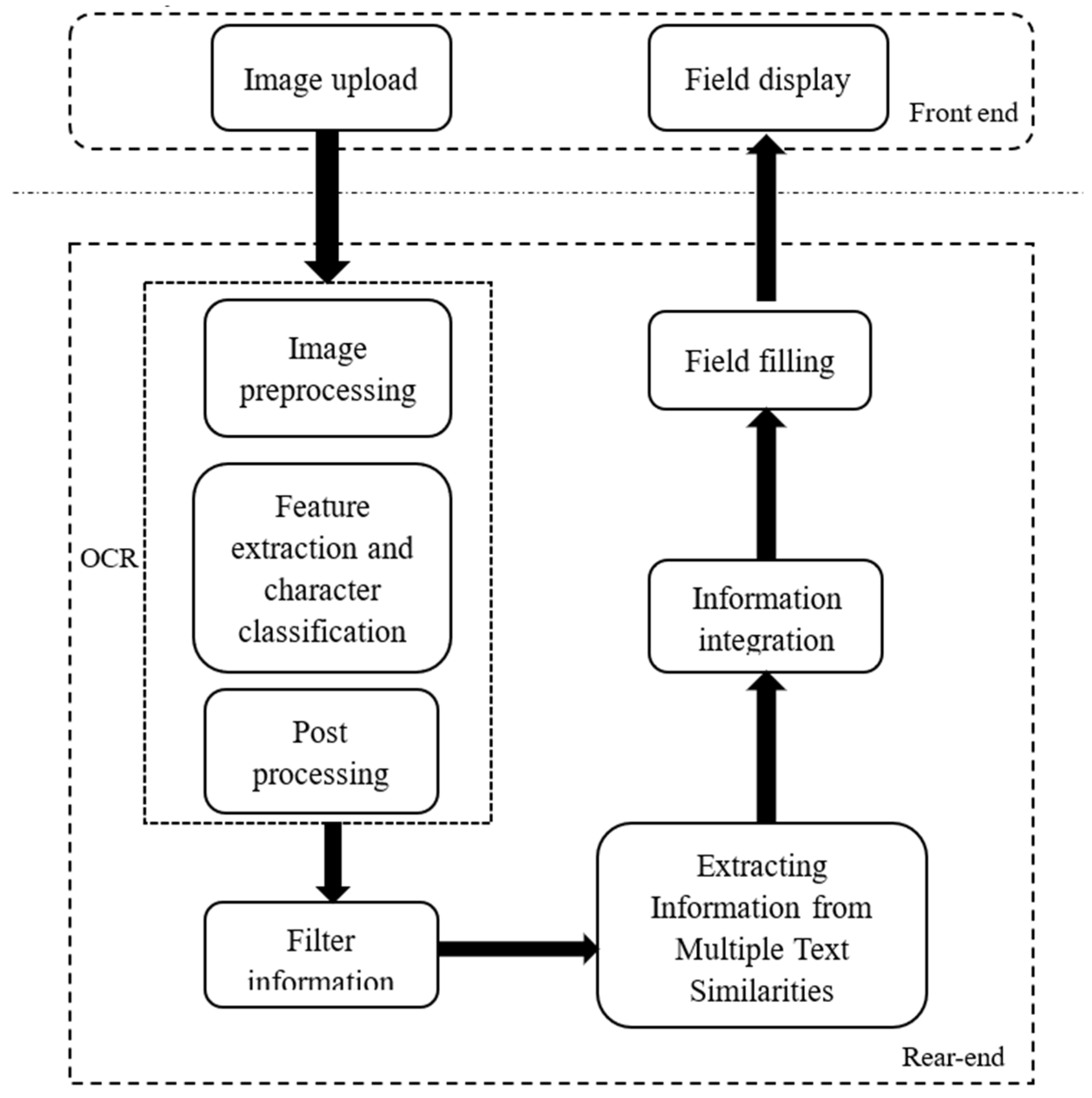
On the basis of the existing web system development framework, by integrating OCR technology and text similarity algorithms, as well as improving the relevant field similarity comparison process according to the actual functional needs of the system, we can achieve our proposed goal of automatically filling images containing data content into corresponding web pages for different data form frameworks. As shown in the Figure 4 below, it is the overall structure of the system’s functions.
Figure 4. Functional structure diagram.
In the front-end construction of the system, the most commonly used method is to use the combination of Vue and Element to build the page [35]. Therefore, we choose the el-upload component in the Element component to implement the function of uploading image files. It can convert images into binary data and send it to the backend through the Axios plugin. The most commonly used construction method in the backend is to use the springboot framework [36]. When an image is sent to the backend springboot server through a post request, the backend will parse the binary data in the request body and convert the binary data into usable byte arrays according to the HTTP protocol. At this point, the image is successfully uploaded to the backend server for subsequent recognition processing.
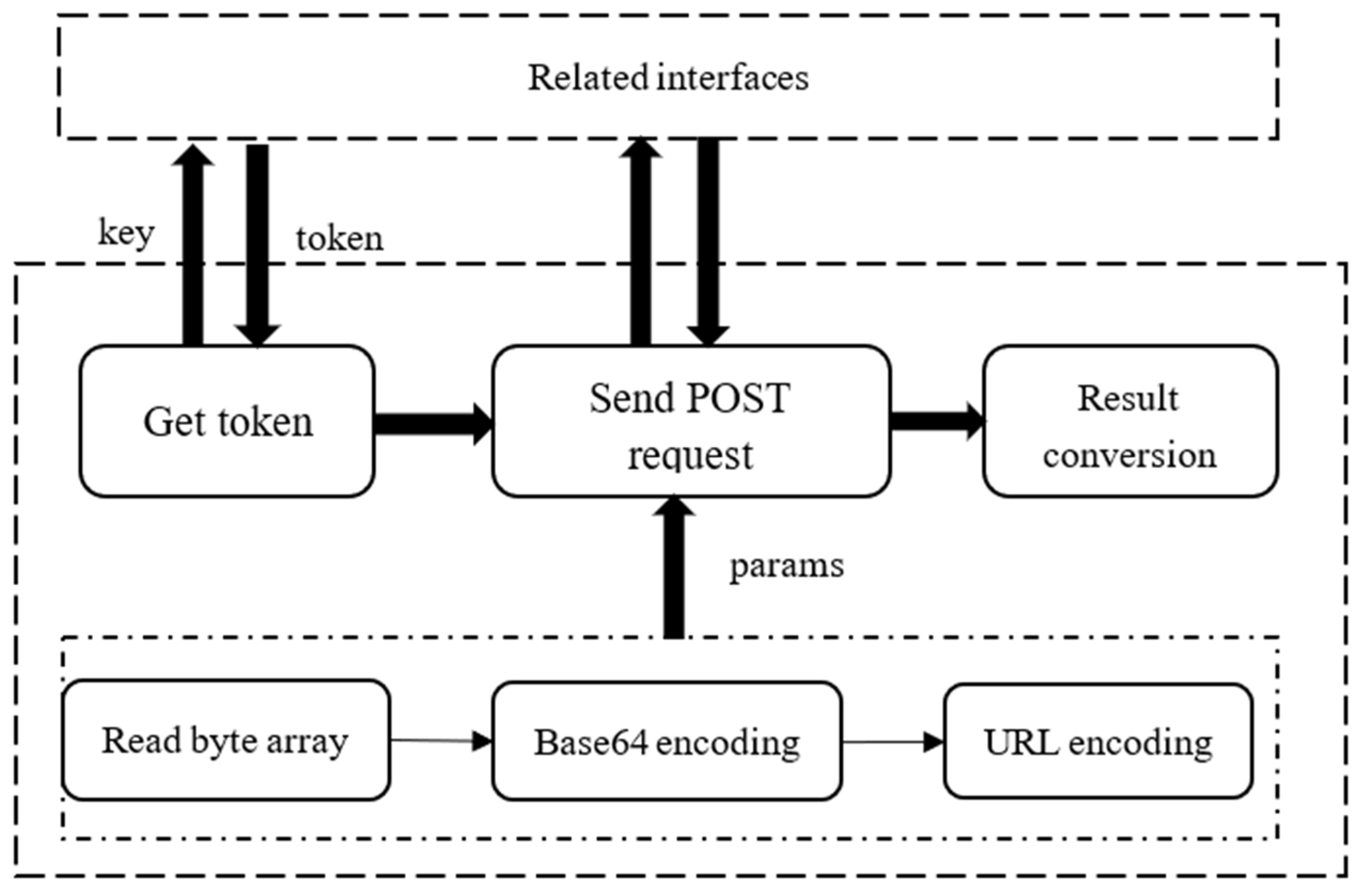
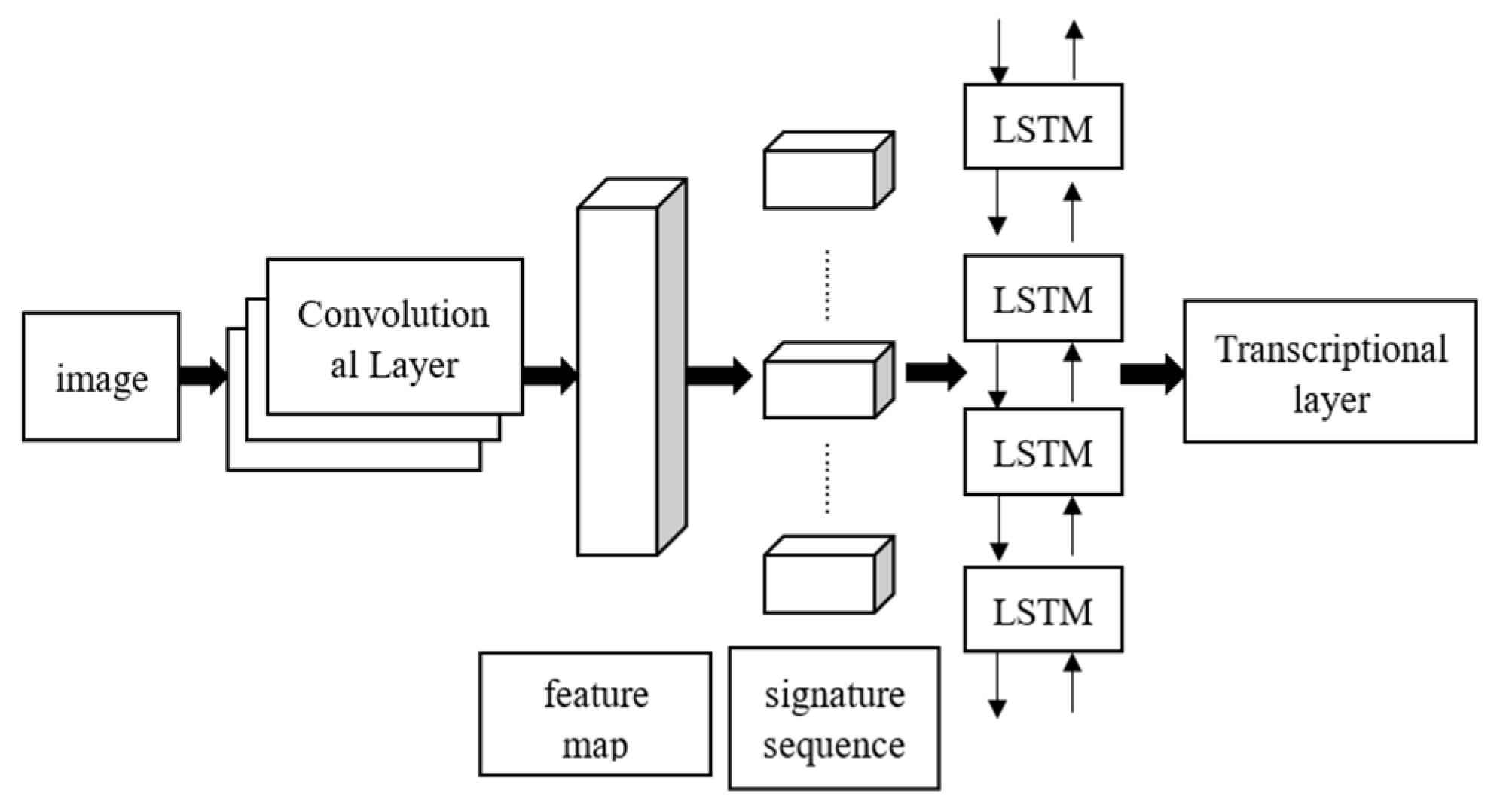
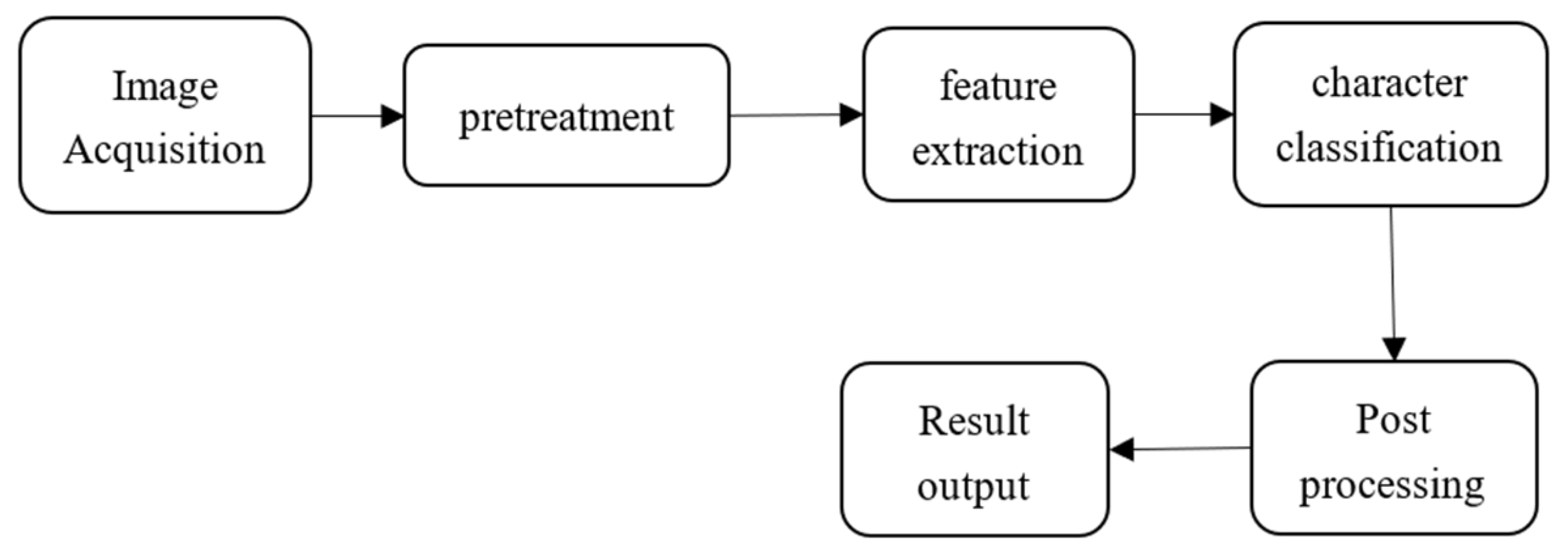
After the image is converted into a byte array in the backend, the next OCR recognition operation can be performed. In the OCR recognition process of this system, the relevant interfaces of Baidu Zhiyun are used [37]. The following Figure 5 shows the recognition process.
Figure 5. Identification process diagram.
After obtaining the byte array of the image, the first step is to convert it to a Base64 encoded string, as each character encoded with Base64 is an ASCII character, which can be easily transmitted in various communication protocols. Afterwards, the encoding method in Java.net was used to encode the string into a URL and concatenate it into a POST request parameter, completing the configuration of the params parameter. In order to ensure the security and timeliness of use, we also need to obtain a valid token from the cloud platform before we can use the OCR function [38]. This requires us to first pass the API to the cloud_Key and Secret_Key. After both the token and params have been obtained, we can request the cloud again and return the desired recognition result. The intelligent cloud also undergoes pre-processing, feature extraction, character classification, post-processing, and other operations in this process [39], and it also utilizes the network structure of CRNN in the intermediate feature extraction and character recognition stages.
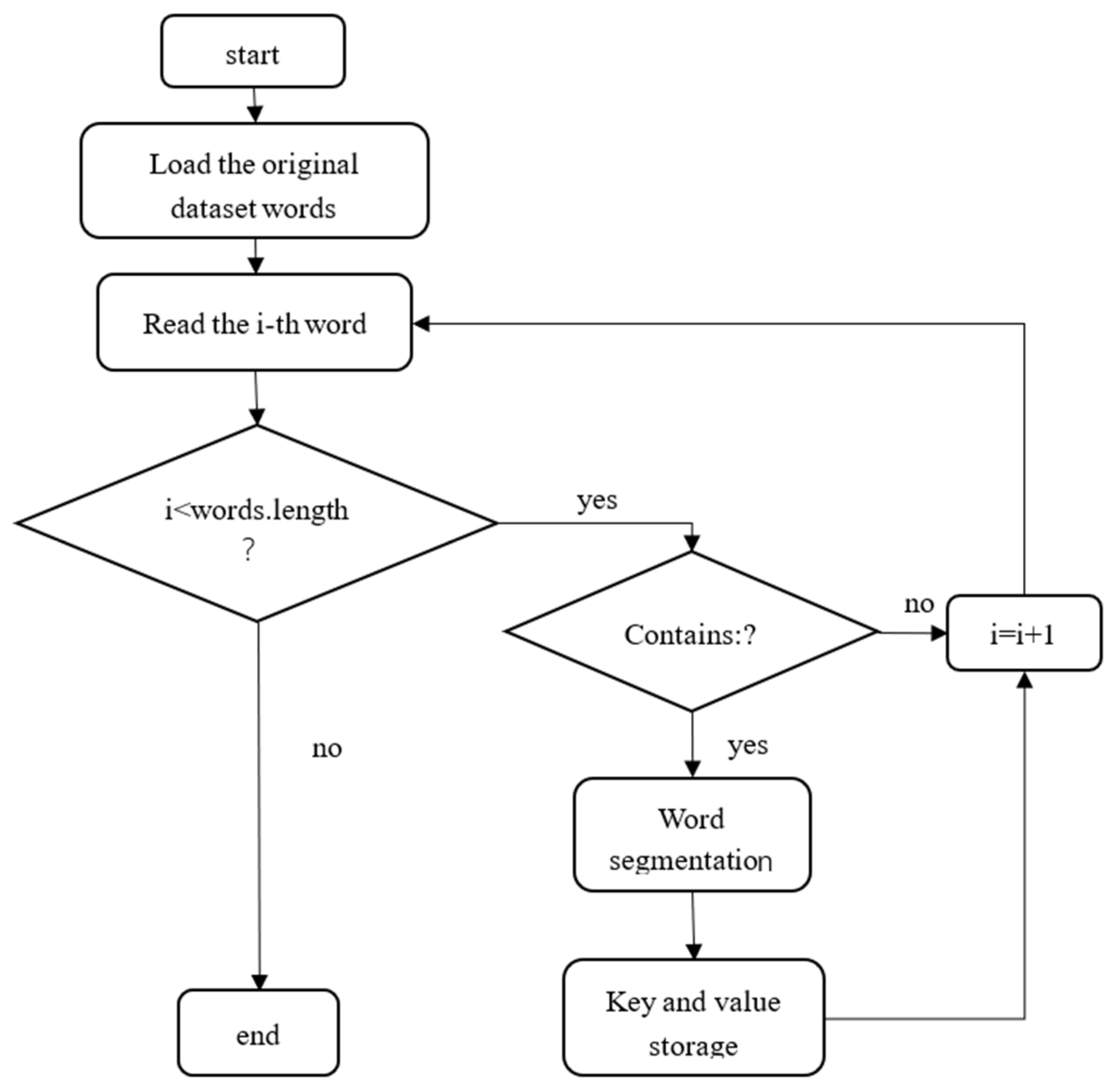
After obtaining the information in the image, it is necessary to filter it because not all the information is what we need. For this system, as it is filling in web forms, we only need the data related to form filling in the image. These types of data are observed to exist in the form of “name: content”, so we can use them for segmentation. The following Figure 6 is a flowchart of a segmentation method.
Figure 6. Segmentation process diagram.
We use a HashMap to store the “key” and “value” values for the filtered data. However, before conducting formal text similarity comparison, it is necessary to establish the data information of form fields. We also use a HashMap to store it, and store the key value as the field name. “Value” stores the corresponding field’s data table number, which corresponds to the standard answer of previous fields. At this point, the image filtering data OCR will be obtained before entering the similarity comparison_Map and field data f_Map.
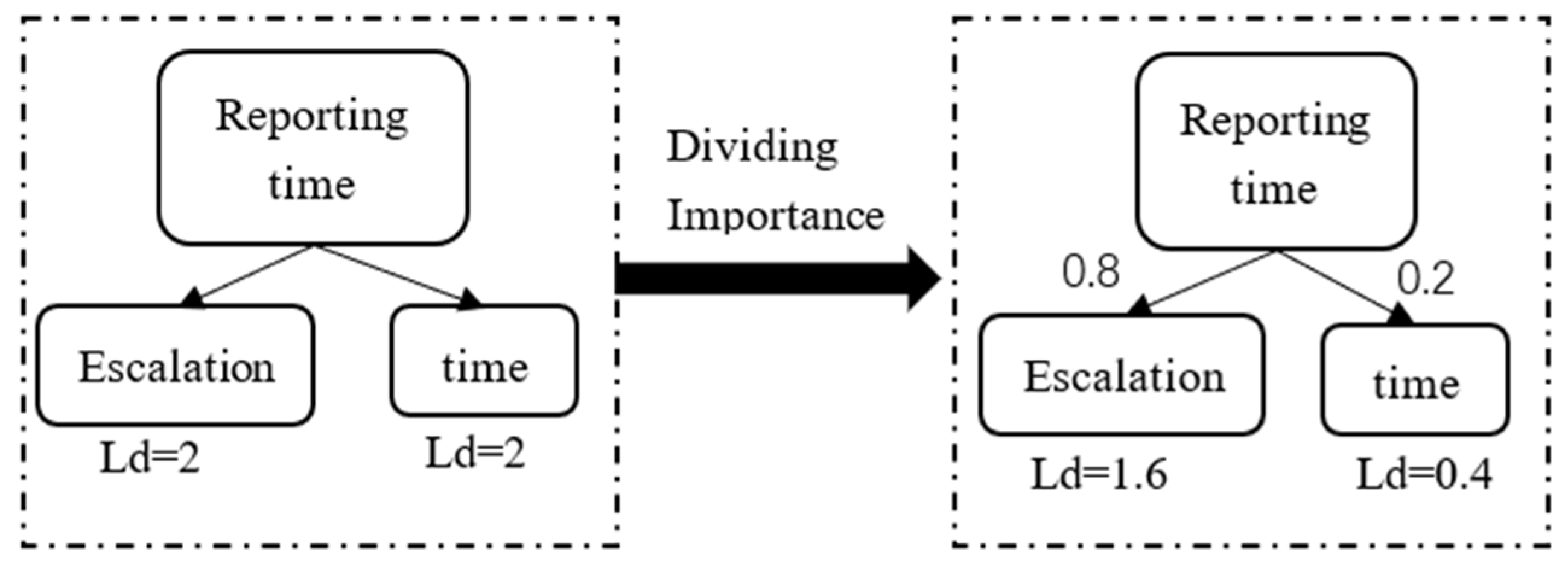
For the determination of similarity in Chinese short texts, methods have always been improved, from SOW/BOW statistical frequency [40] to n-gram sliding windows [41], from topic models [42] to deep learning [43]. The evolution of methods is to meet the similarity situation in different situations. However, for the field matching problem in this system, due to its own problems such as a short text word count, concise semantics, and small training data, it is not suitable to use deep learning for similarity judgment. Therefore, we have returned to the most naive way of judging similarity based on editing distance and common strings. In response to this task, we proposed the concept of importance, which divides fields into importance levels to ensure the accuracy of calculations, as shown in the following Figure 7.
Figure 7. Importance division diagram.
In the above figure, it can be seen that if the demonstration field “reporting time” is calculated according to the usual editing distance formula, the distance between the “reporting” and “time” fields is equal, which does not meet the expected results. When we assign an importance of 0.8 to “time” and 0.2 to “reporting”, recalculating the distance will make a difference. The result obtained is that “time” is more important, which means that when removing or adding variables with higher importance, the editing distance will also be larger. For the storage of importance, we also use a nested structure of HashMap, where the key stores the corresponding field and the value stores the importance-related content of the field.
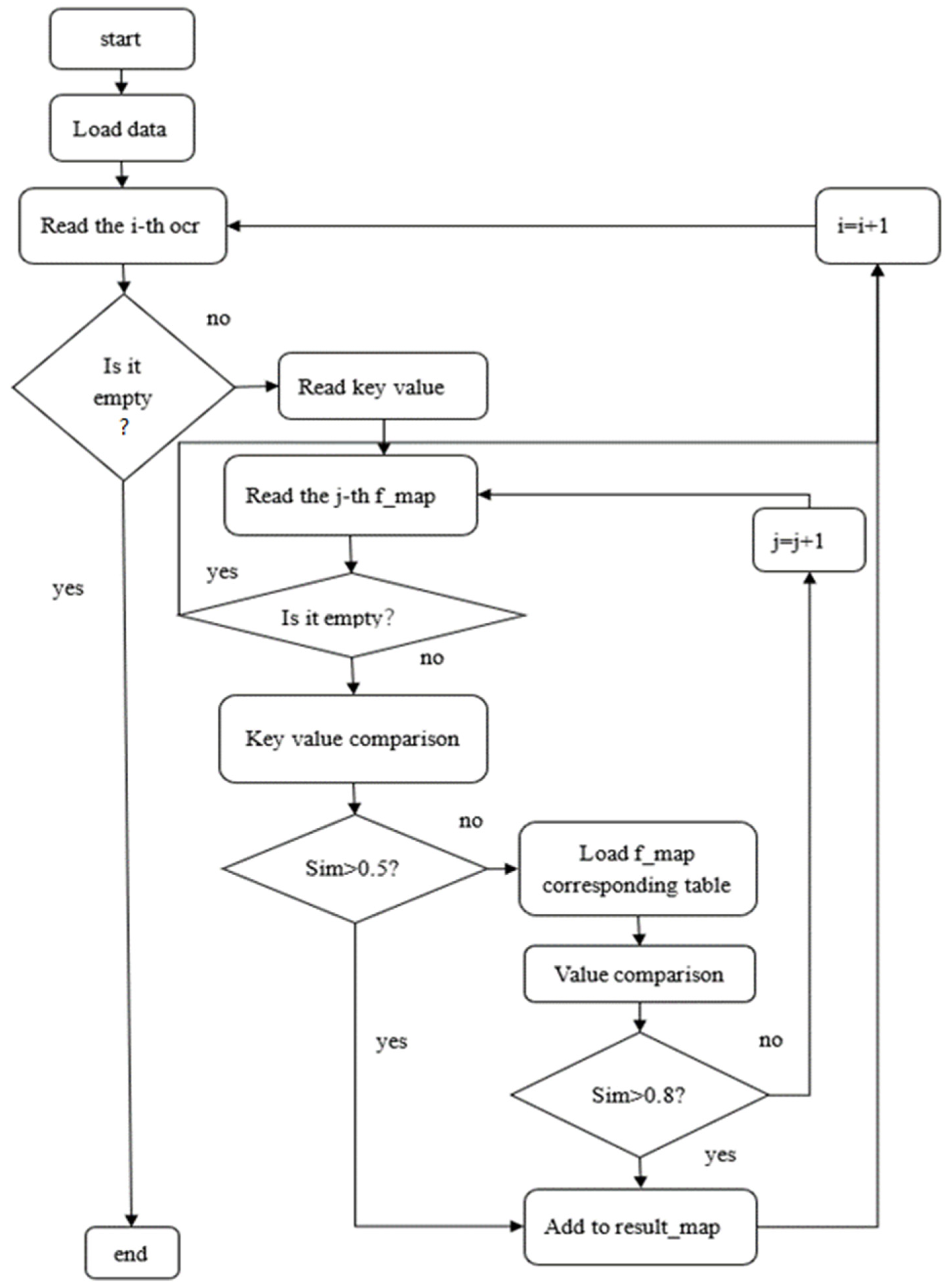
After obtaining the relevant data above, you can enter the similarity comparison stage to extract the required information content from the front-end form. The specific process is shown in the following Figure 8.
Figure 8. Similarity comparison chart.
In the figure, we obtained the result by double comparing the “key” and “value” values. The map is the final desired result, and after some packaging and integration operations, the data can be sent to the front-end for filling. The evaluation criteria for the two sims in the figure are also determined through multiple experiments. At this point, all image filling methods based on OCR and text similarity have been introduced clearly.

4. Experimental Results and Analysis

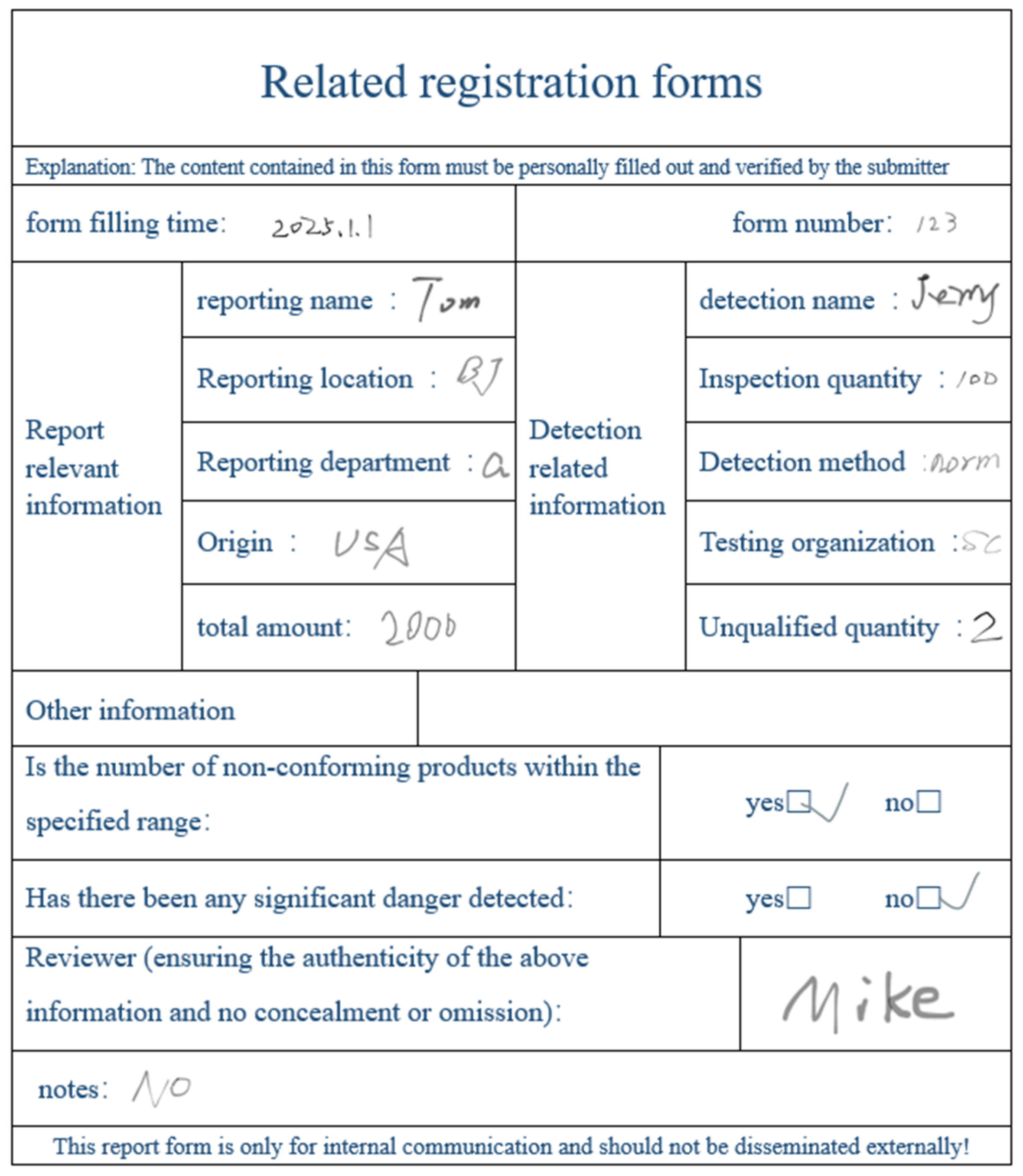
To verify the effectiveness of the method proposed in this article, we conducted tests on 80 self-made images that roughly meet the upload requirements. Forty of the images were used to train the two required sim values for comparison in the system. The remaining forty images were used to test and determine the final adjusted system filling accuracy. Each image contains multiple similar fields and irrelevant edge information, which is more in line with the actual complex situation. The approximate content of the image is shown in Figure 9 below:
Figure 9. Example figure.
As shown in the above figure, the form contains multiple sets of similar information, such as “reporting location”, “reporting department”, “reporting name”, “detection name”, “detection method”, etc. In addition, it also contains multiple sets of unrelated information, such as the form name, description, and warning signs. Due to the fact that the submitted form is designed by different departments in different regions, there may be some additions or deletions in the content of the submitted form. Some may have the same requirements, but their names may also be different. This requires our similarity algorithm to distinguish them.
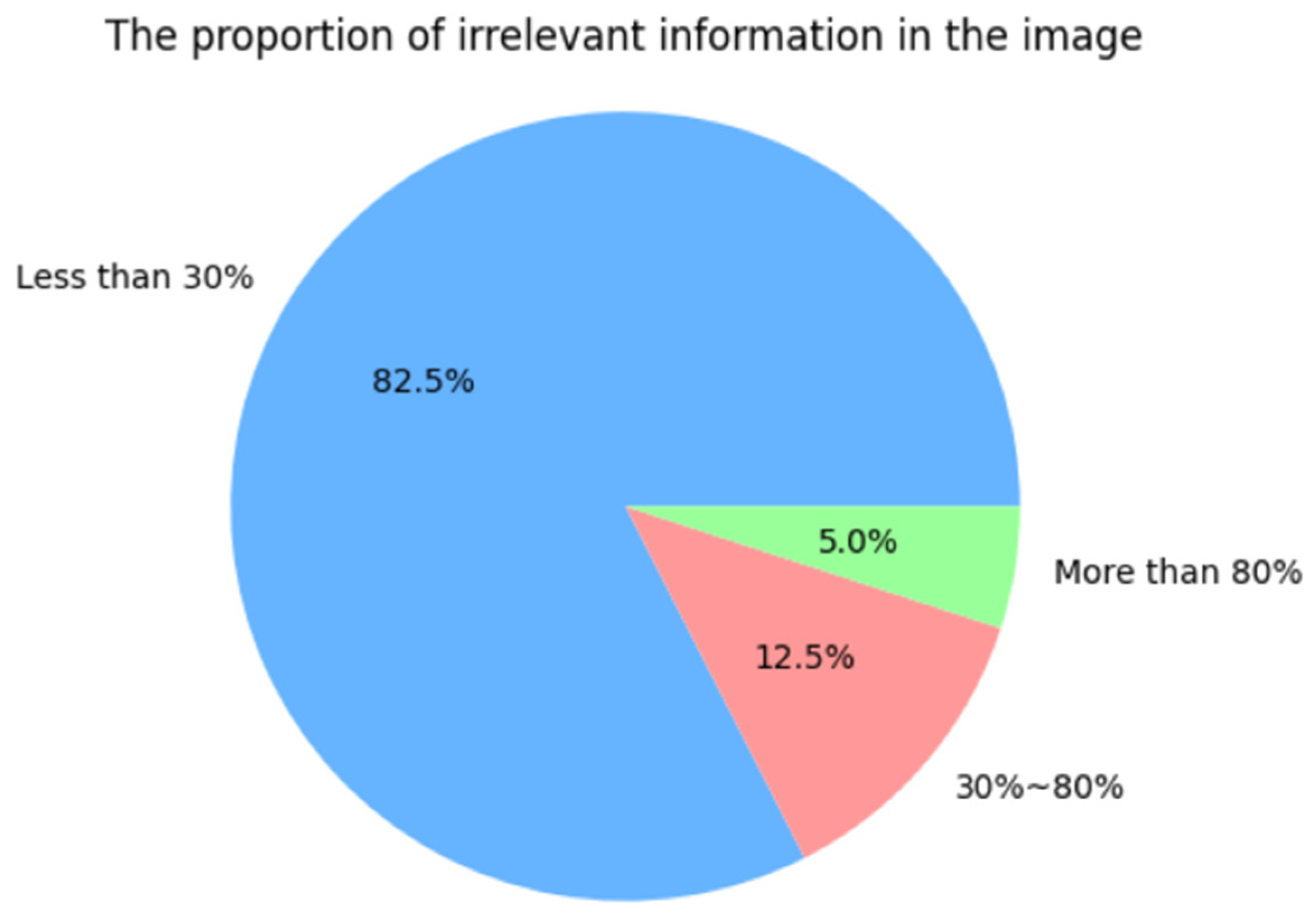
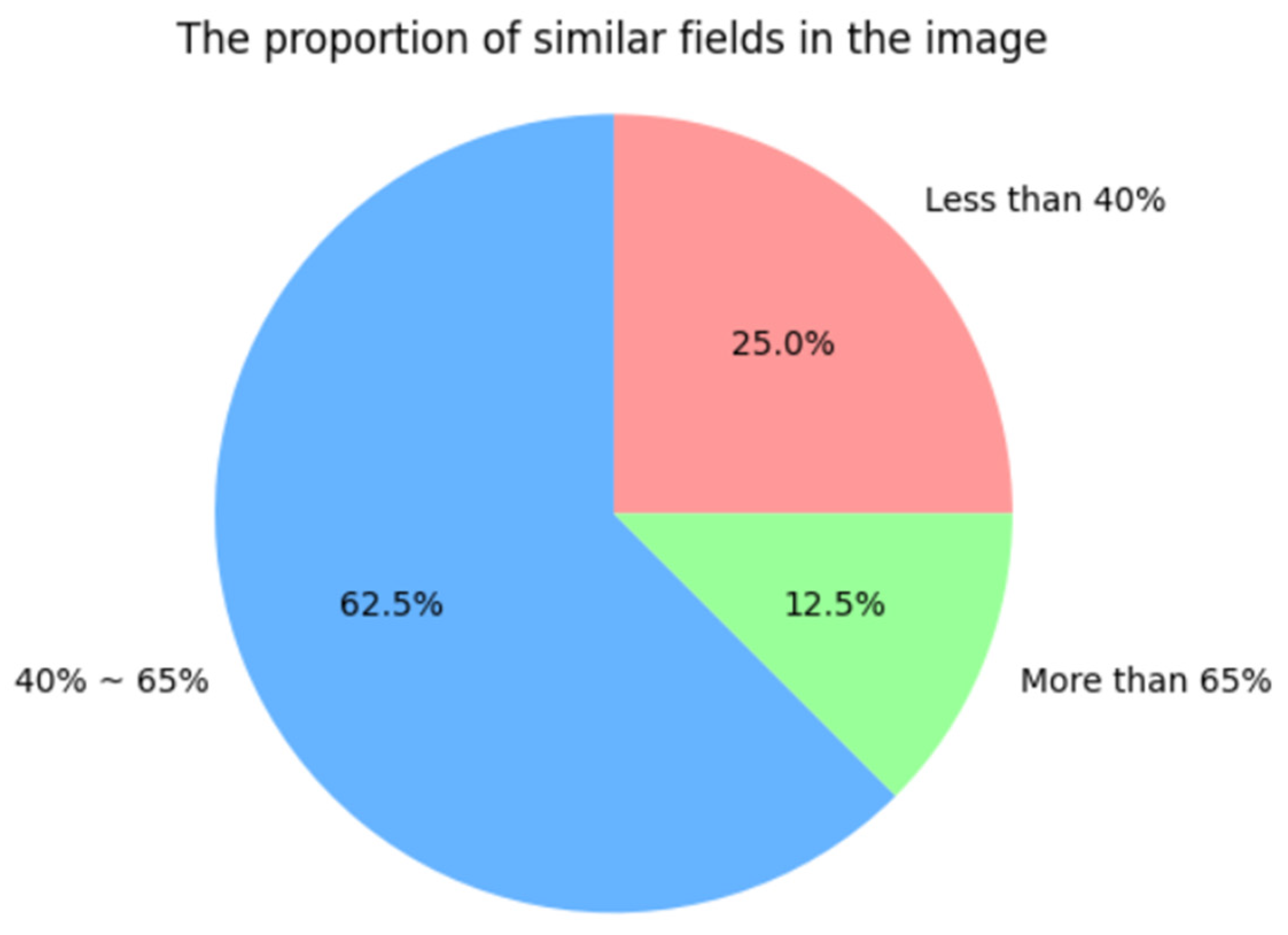
The information content in self-made images includes useful information and irrelevant information. The useful information is further divided into similar field information and dissimilar field information. The following Figure 10 and Figure 11 shows the distribution of the ratio of similar field information to useful information and the ratio of irrelevant information to overall information in the image.
Figure 10. The proportion of irrelevant information in the image.
Figure 11. The proportion of similar fields in the image.
The evaluation criteria for sim mentioned above are the final results obtained through multiple experiments. For the evaluation indicators of results, we use the following accuracy formula [44]:
P = T P T P + F P
For the accuracy of the final filling of an image, we divide the number of correctly filled fields (TP) by the number of fields it fills (TP + FP) [45]. The accuracy corresponding to a set sim standard is the average of all, imagesPavg, as shown in the following formula:
P a v g = P n + + P 1 n
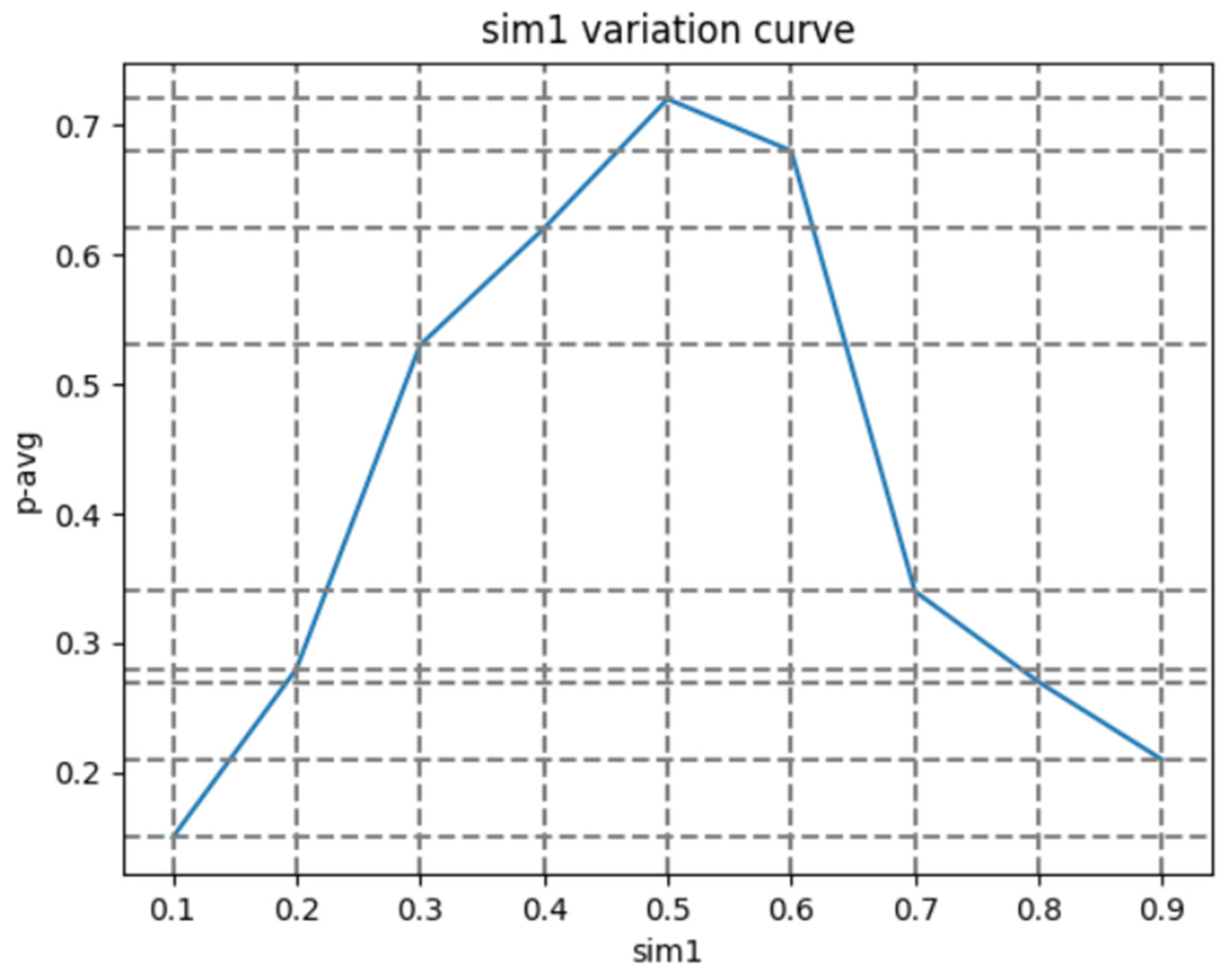
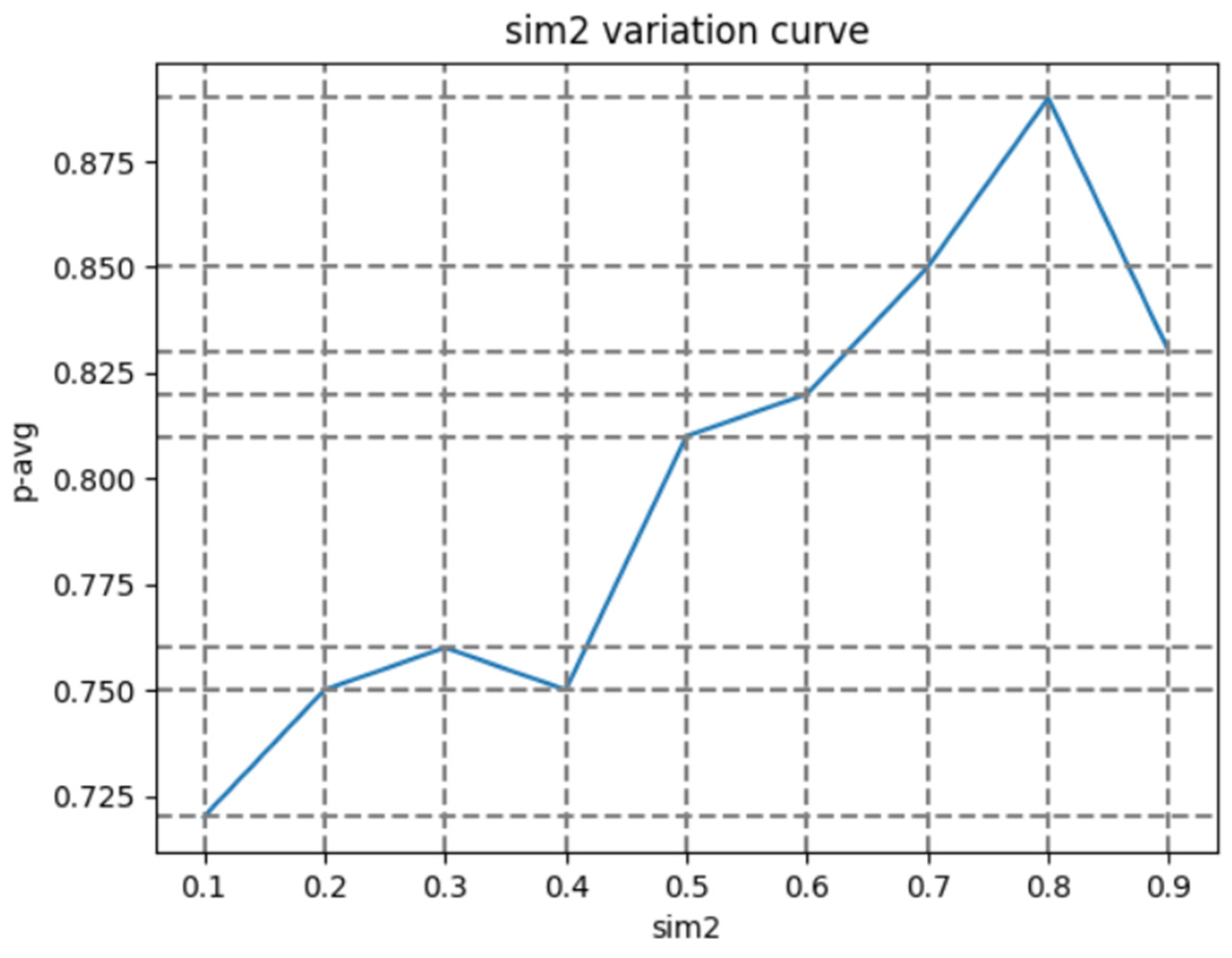
We use the method of controlling variables to sequentially determine the two sims mentioned above. The results are shown in the following figure.
As shown in Figure 12, we can see that setting the first similarity judgment condition (sim1) to around 0.5 will result in the highest accuracy. When we fix the value of sim1 and change the value of sim2, it can be determined from Figure 13 that when the value of sim2 is around 0.8, the accuracy will reach its highest. Finally, we fixed the values of sim1 and sim2 and tested 40 images, resulting in the following figure:
Figure 12. Sim1 variation curve.
Figure 13. Sim2 variation curve.
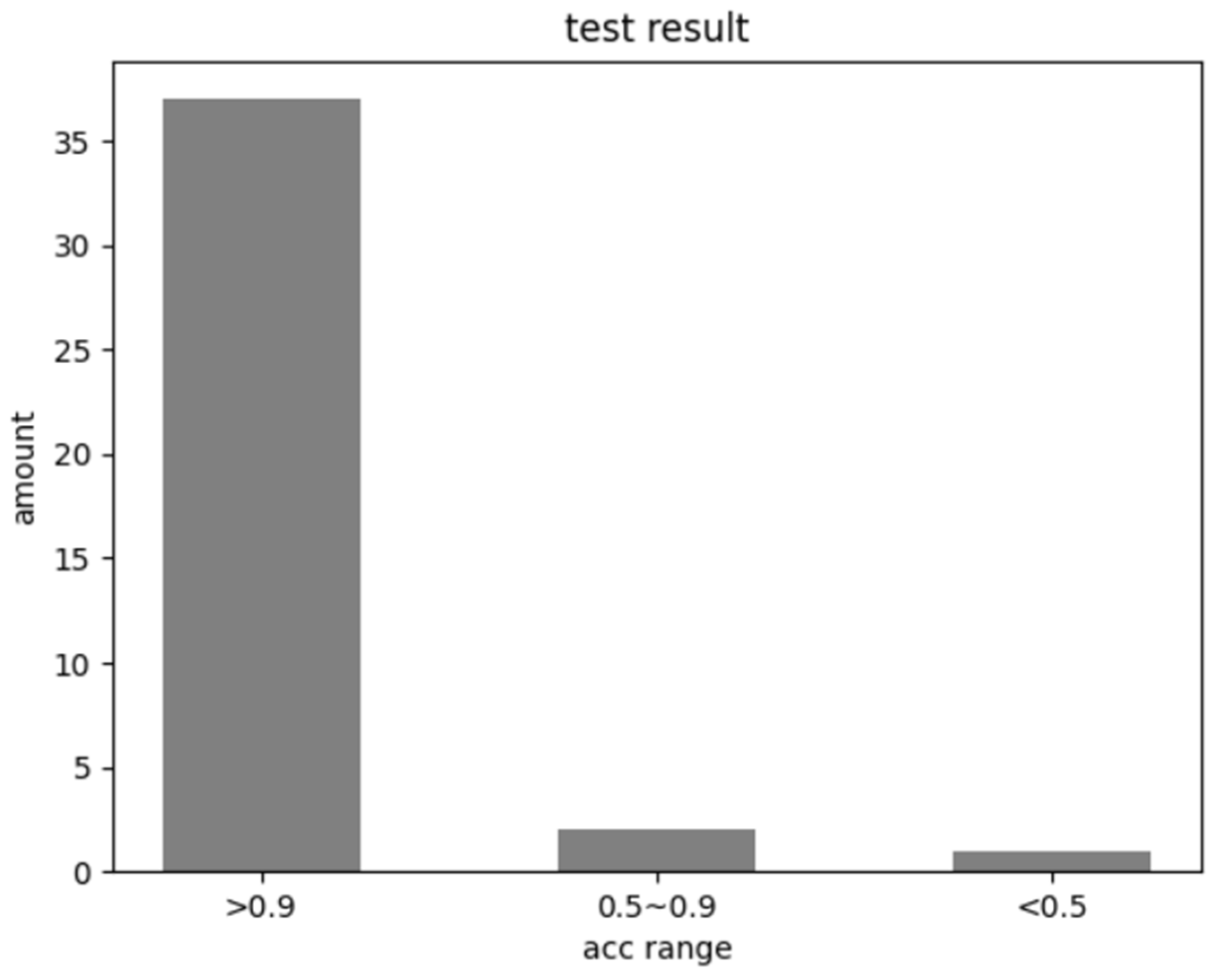
As shown in the Figure 14, the filling accuracy of the vast majority of the 40 images tested reached over 90%. In actual work, staff can first upload relevant images for automatic field filling, and then manually check for content supplementation. This can greatly improve work efficiency and reduce the probability of manual errors. The low filling accuracy of individual images is due to the fact that most of the fields in the form of individual images are not filled in, which rarely happens in practical work. Even if it happens, it will be quickly screened out during manual inspection within the allowable error range. This result meets our expected content and also proves the usability of the method proposed in this paper.
Figure 14. Test result.

5. Conclusions

This article focuses on the problem of data uploading and filling in web systems. Based on the existing advanced OCR technology and text similarity algorithms, combined and improved, the goal of filling fields in complex form images was effectively achieved. According to the test results, it was found that the accuracy of image recognition and filling in practical applications can reach over 90%. However, this method also has some limitations, as its proposal is based on practical engineering problems, so the field information considered is also related to this project. If fields need to be changed, they may need to be readjusted. In the future, further optimization can be based on this method, such as considering real-time updates of database tables corresponding to fields, in order to better adapt to different image forms.

Author Contributions

H.S., R.K. and Y.F. conceived and designed the system; H.S. implemented the entire system; H.S. and Y.F. debugged relevant parameters and drew data graphs; H.S. reviewed and edited the paper; R.K. revised the paper; Y.F. helped in writing the related works. All authors have read and agreed to the published version of the manuscript.

Funding

This research received no external funding.

Data Availability Statement

The data provided in this study can be provided at the request of the corresponding author. Due to the fact that this article is based on an actual engineering project, and the data involved in the project needs to be kept confidential, the data has not been made public.

Conflicts of Interest

The authors declare no conflicts of interest.

References

  1. Molina-Ríos, J.; Pedreira-Souto, N. Comparison of development methodologies in web applications. Inf. Softw. Technol. 2020, 119, 106238. [Google Scholar] [CrossRef]
  2. Xu, Y.; Cao, S. The Implementation of Large Video File Upload System Based on the HTML5 API and Ajax. In Proceedings of the 2015 Joint International Mechanical, Electronic and Information Technology Conference (JIMET-15), Chongqing, China, 18–20 December 2015; pp. 15–19. [Google Scholar]
  3. Lestari, N.S.; Ramadi, G.D.; Mahardika, A.G. Web-Based Online Study Plan Card Application Design. J. Phys. Conf. Ser. 2021, 1783, 012046. [Google Scholar] [CrossRef]
  4. Diaz, O.; Otaduy, I.; Puente, G. User-driven automation of web form filling. In Proceedings of the Web Engineering: 13th International Conference, ICWE 2013, Aalborg, Denmark, 8–12 July 2013; pp. 171–185. [Google Scholar]
  5. Suryadi, A.; Balakrishnan, T.A. Website Based Patient Clinical Data Information Filling and Registration System. Proc. Int. Conf. Nurs. Health Sci. 2023, 4, 197–206. [Google Scholar] [CrossRef]
  6. Daraee, F.; Mozaffari, S.; Razavi, S.M. Handwritten keyword spotting using deep neural networks and certainty prediction. Comput. Electr. Eng. 2021, 92, 107111. [Google Scholar] [CrossRef]
  7. Jain, M.; Mathew, M.; Jawahar, C.V. Unconstrained OCR for Urdu Using Deep CNN-RNN Hybrid Networks. In Proceedings of the 2017 4th IAPR Asian Conference on Pattern Recognition (ACPR), Nanjing, China, 26–29 November 2017; pp. 747–752. [Google Scholar]
  8. Semkovych, V.; Shymanskyi, V. Combining OCR Methods to Improve Handwritten Text Recognition with Low System Technical Requirements. In Proceedings of the The International Symposium on Computer Science, Digital Economy and Intelligent Systems, Wuhan, China, 11–13 November 2022; pp. 693–702. [Google Scholar]
  9. Shaw, U.; Mamgai, R.; Malhotra, I. Medical Handwritten Prescription Recognition and Information Retrieval Using Neural Network. In Proceedings of the 2021 6th International Conference on Signal Processing, Computing and Control (ISPCC), Solan, India, 7–9 October 2021; pp. 46–50. [Google Scholar]
  10. Aluga, D.; Nnyanzi, L.A.; King, N.; Okolie, E.A.; Raby, P. Effect of electronic prescribing compared to paper-based (handwritten) prescribing on primary medication adherence in an outpatient setting: A systematic review. Appl. Clin. Inform. 2021, 12, 845–855. [Google Scholar] [CrossRef]
  11. Sanuvala, G.; Fatima, S.S. A Study of Automated Evaluation of Student’s Examination Paper Using Machine Learning Techniques. In Proceedings of the 2021 International Conference on Computing, Communication, and Intelligent Systems (ICCCIS), Greater Noida, India, 19–20 February 2021; pp. 1049–1054. [Google Scholar]
  12. Thorat, C.; Bhat, A.; Sawant, P.; Bartakke, I.; Shirsath, S. A detailed review on text extraction using optical character recognition. ICT Anal. Appl. 2022, 314, 719–728. [Google Scholar]
  13. Karthick, K.; Ravindrakumar, K.; Francis, R.; Ilankannan, S. Steps involved in text recognition and recent research in OCR; a study. Int. J. Recent Technol. Eng. 2019, 8, 2277–3878. [Google Scholar]
  14. Kshetry, R.L. Image preprocessing and modified adaptive thresholding for improving OCR. arXiv 2021, arXiv:2111.14075. [Google Scholar] [CrossRef]
  15. Mursari, L.R.; Wibowo, A. The effectiveness of image preprocessing on digital handwritten scripts recognition with the implementation of OCR Tesseract. Comput. Eng. Appl. J. 2021, 10, 177–186. [Google Scholar] [CrossRef]
  16. Ma, T.; Yue, M.; Yuan, C.; Yuan, H. File text recognition and management system based on tesseract-OCR. In Proceedings of the 2021 3rd International Conference on Applied Machine Learning (ICAML), Changsha, China, 23–25 July 2021; pp. 236–239. [Google Scholar]
  17. Kamisetty, V.N.S.R.; Chidvilas, B.S.; Revathy, S.; Jeyanthi, P.; Anu, V.M.; Gladence, L.M. Digitization of Data from Invoice Using OCR. In Proceedings of the 2022 6th International Conference on Computing Methodologies and Communication (ICCMC), Erode, India, 29–31 March 2022; pp. 1–10. [Google Scholar]
  18. Maliński, K.; Okarma, K. Analysis of Image Preprocessing and Binarization Methods for OCR-Based Detection and Classification of Electronic Integrated Circuit Labeling. Electronics 2023, 12, 2449. [Google Scholar] [CrossRef]
  19. Nahar, K.M.; Alsmadi, I.; Al Mamlook, R.E.; Nasayreh, A.; Gharaibeh, H.; Almuflih, A.S.; Alasim, F. Recognition of Arabic Air-Written Letters: Machine Learning, Convolutional Neural Networks, and Optical Character Recognition (OCR) Techniques. Sensors 2023, 23, 9475. [Google Scholar] [CrossRef]
  20. Yu, W.; Lu, N.; Qi, X.; Gong, P.; Xiao, R. PICK: Processing key information extraction from documents using improved graph learning-convolutional networks. In Proceedings of the 2020 25th International Conference on Pattern Recognition (ICPR), Milan, Italy, 10–15 January 2021; pp. 4363–4370. [Google Scholar]
  21. Biró, A.; Cuesta-Vargas, A.I.; Martín-Martín, J.; Szilágyi, L.; Szilágyi, S.M. Synthetized Multilanguage OCR Using CRNN and SVTR Models for Realtime Collaborative Tools. Appl. Sci. 2023, 13, 4419. [Google Scholar] [CrossRef]
  22. He, Y. Research on Text Detection and Recognition Based on OCR Recognition Technology. In Proceedings of the 2020 IEEE 3rd International Conference on Information Systems and Computer Aided Education (ICISCAE), Dalian, China, 27–29 September 2020; pp. 132–140. [Google Scholar]
  23. Verma, P.; Foomani, G. Improvement in OCR Technologies in Postal Industry Using CNN-RNN Architecture: Literature Review. Int. J. Mach. Learn. Comput. 2022, 12, 154–163. [Google Scholar]
  24. Idris, A.A.; Taha, D.B. Handwritten Text Recognition Using CRNN. In Proceedings of the 2022 8th International Conference on Contemporary Information Technology and Mathematics (ICCITM), Mosul, Iraq, 31 August–1 September 2022; pp. 329–334. [Google Scholar]
  25. Fu, X.; Ch’ng, E.; Aickelin, U.; See, S. CRNN: A joint neural network for redundancy detection. In Proceedings of the 2017 IEEE International Conference on Smart Computing (SMARTCOMP), Hong Kong, China, 29–31 May 2017; pp. 1–8. [Google Scholar]
  26. Nguyen, T.T.H.; Jatowt, A.; Coustaty, M.; Doucet, A. Survey of post-OCR processing approaches. ACM Comput. Surv. (CSUR) 2021, 54, 1–37. [Google Scholar] [CrossRef]
  27. Kumar, P.; Revathy, S. An Automated Invoice Handling Method Using OCR. In Proceedings of the Data Intelligence and Cognitive Informatics: Proceedings of ICDICI 2020, Tirunelveli, India, 8–9 July 2020; pp. 243–254. [Google Scholar]
  28. Jiju, A.; Tuscano, S.; Badgujar, C. OCR text extraction. Int. J. Eng. Manag. Res. 2021, 11, 83–86. [Google Scholar] [CrossRef]
  29. Reid, M.; Zhong, V. LEWIS: Levenshtein editing for unsupervised text style transfer. arXiv 2021, arXiv:2105.08206. [Google Scholar]
  30. Da, C.; Wang, P.; Yao, C. Levenshtein OCR. In Proceedings of the European Conference on Computer Vision, Tel Aviv, Israel, 23 October 2022; pp. 322–338. [Google Scholar]
  31. Rustamovna, A.U. Understanding the levenshtein distance equation for beginners. Am. J. Eng. Technol. 2021, 3, 134–139. [Google Scholar]
  32. Wang, J.; Xu, W.; Yan, W.; Li, C. Text Similarity Calculation Method Based on Hybrid Model of LDA and TF-IDF. In Proceedings of the 2019 3rd International Conference on Computer Science and Artificial Intelligence, Normal, IL, USA, 6–8 December 2019; pp. 1–8. [Google Scholar]
  33. Zang, R.; Sun, H.; Yang, F.; Feng, G.; Yin, L. Text similarity calculation method based on Levenshtein and TFRSF. Comput. Mod. 2018, 4, 84–89. [Google Scholar]
  34. Amir, A.; Charalampopoulos, P.; Pissis, S.P.; Radoszewski, J. Dynamic and internal longest common substring. Algorithmica 2020, 82, 3707–3743. [Google Scholar] [CrossRef]
  35. Irhansyah, T.; Nasution, M.I.P. Development Of Thesis Repository Application In The Faculty Of Science And Technology Use Implementation Of Vue. Js Framework. J. Inf. Syst. Technol. Res. 2023, 2, 66–77. [Google Scholar]
  36. Zhang, F.; Sun, G.; Zheng, B.; Dong, L. Design and implementation of energy management system based on spring boot framework. Information 2021, 12, 457. [Google Scholar] [CrossRef]
  37. Jiang, Y.; Dong, H.; El Saddik, A. Baidu Meizu deep learning competition: Arithmetic operation recognition using end-to-end learning OCR technologies. IEEE Access 2018, 6, 60128–60136. [Google Scholar] [CrossRef]
  38. Fang, H.; Bao, M. Raw material form recognition based on Tesseract-OCR. In Proceedings of the 2021 IEEE Conference on Telecommunications, Optics and Computer Science (TOCS), Shenyang, China, 10–11 December 2021; pp. 942–945. [Google Scholar]
  39. Xu, Y.; Dai, P.; Li, Z.; Wang, H.; Cao, X. The Best Protection is Attack: Fooling Scene Text Recognition With Minimal Pixels. IEEE Trans. Inf. Forensics Secur. 2023, 18, 1580–1595. [Google Scholar] [CrossRef]
  40. Terra, E.L.; Clarke, C.L. Frequency Estimates for Statistical Word Similarity Measures. In Proceedings of the 2003 Human Language Technology Conference of the North American Chapter of the Association for Computational Linguistics, Edmonton, Canada, 27 May–1 June 2003; pp. 244–251. [Google Scholar]
  41. Khreisat, L. A machine learning approach for Arabic text classification using N-gram frequency statistics. J. Informetr. 2009, 3, 72–77. [Google Scholar] [CrossRef]
  42. Shao, M.; Qin, L. Text Similarity Computing Based on LDA Topic Model and Word Co-Occurrence. In Proceedings of the 2014 2nd International Conference on Software Engineering, Knowledge Engineering and Information Engineering (SEKEIE 2014), Singapore, 5–6 August 2014; pp. 199–203. [Google Scholar]
  43. Li, Z.; Chen, H.; Chen, H. Biomedical text similarity evaluation using attention mechanism and Siamese neural network. IEEE Access 2021, 9, 105002–105011. [Google Scholar] [CrossRef]
  44. Wen, X.; Jaxa-Rozen, M.; Trutnevyte, E. Accuracy indicators for evaluating retrospective performance of energy system models. Appl. Energy 2022, 325, 119906. [Google Scholar] [CrossRef]
  45. Ji, M.; Zhang, X. A short text similarity calculation method combining semantic and headword attention mechanism. Sci. Program. 2022, 2022, 8252492. [Google Scholar] [CrossRef]
Disclaimer/Publisher’s Note: The statements, opinions and data contained in all publications are solely those of the individual author(s) and contributor(s) and not of MDPI and/or the editor(s). MDPI and/or the editor(s) disclaim responsibility for any injury to people or property resulting from any ideas, methods, instructions or products referred to in the content.

Article Metrics

Citations

Article Access Statistics

Multiple requests from the same IP address are counted as one view.