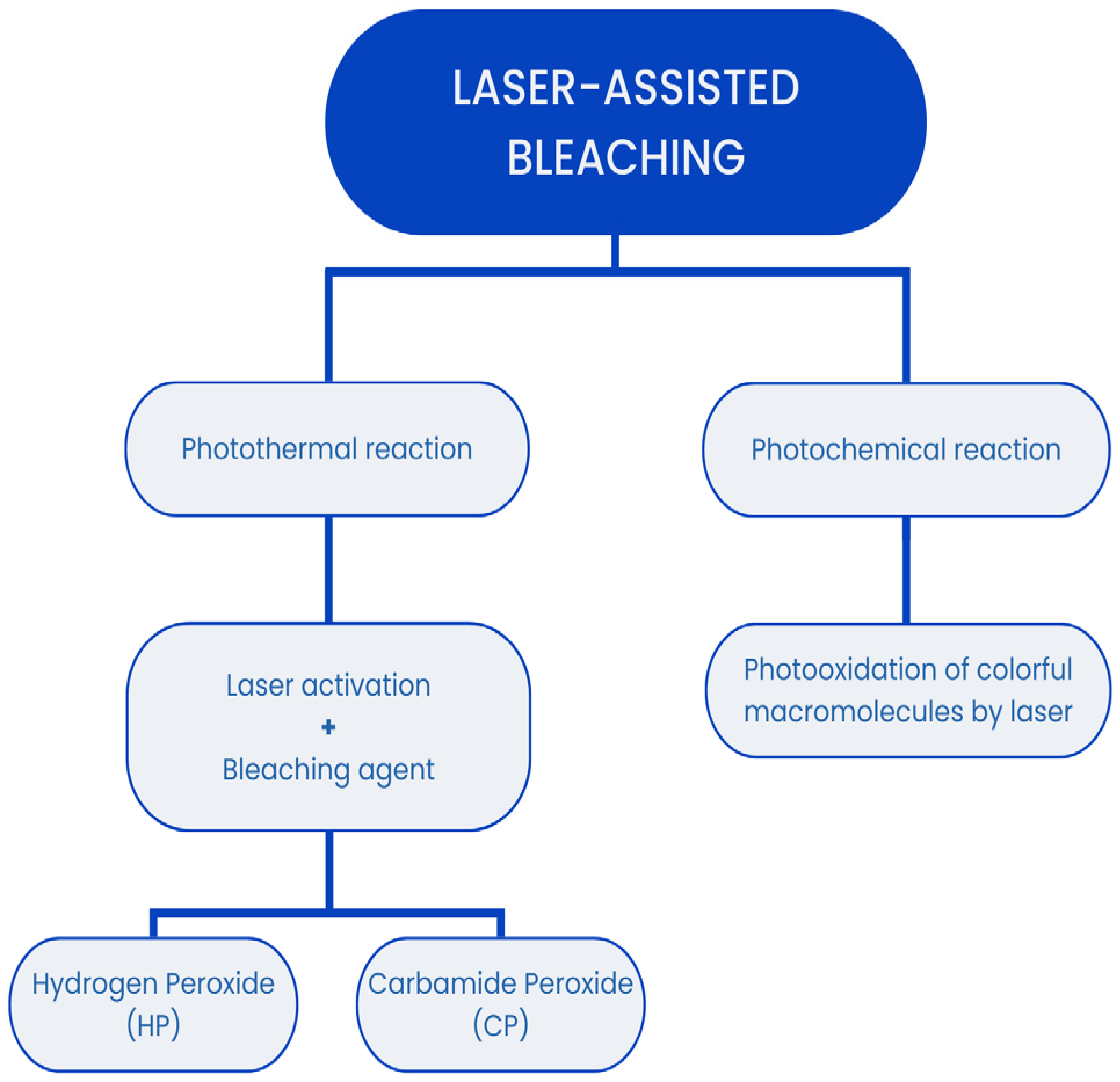
Effectiveness of Laser-Assisted Teeth Bleaching: A Systematic Review

 , , , , ,
  and
and 
Abstract
1. Introduction
2. Materials and Methods
2.1. Focused Question
2.2. Protocol
2.3. Eligibility Criteria
- Laser conditioning studies;
- Studies conducted on natural teeth or restorative materials;
- Color evaluation studies;
- In vitro studies;
- In vivo studies;
- Studies with a control group;
- Studies in English;
- Full-text articles.
- No laser treatment;
- No color evaluation;
- Studies without a control group;
- Non-English papers
- Systematic review articles;
- Review articles;
- No full-text accessible;
- Duplicated publications.
2.4. Information Sources, Search Strategy, and Study Selection
2.5. Data Collection Process and Data Items
2.6. Risk of Bias and Quality Assessment
2.7. Quality Assessment
3. Results
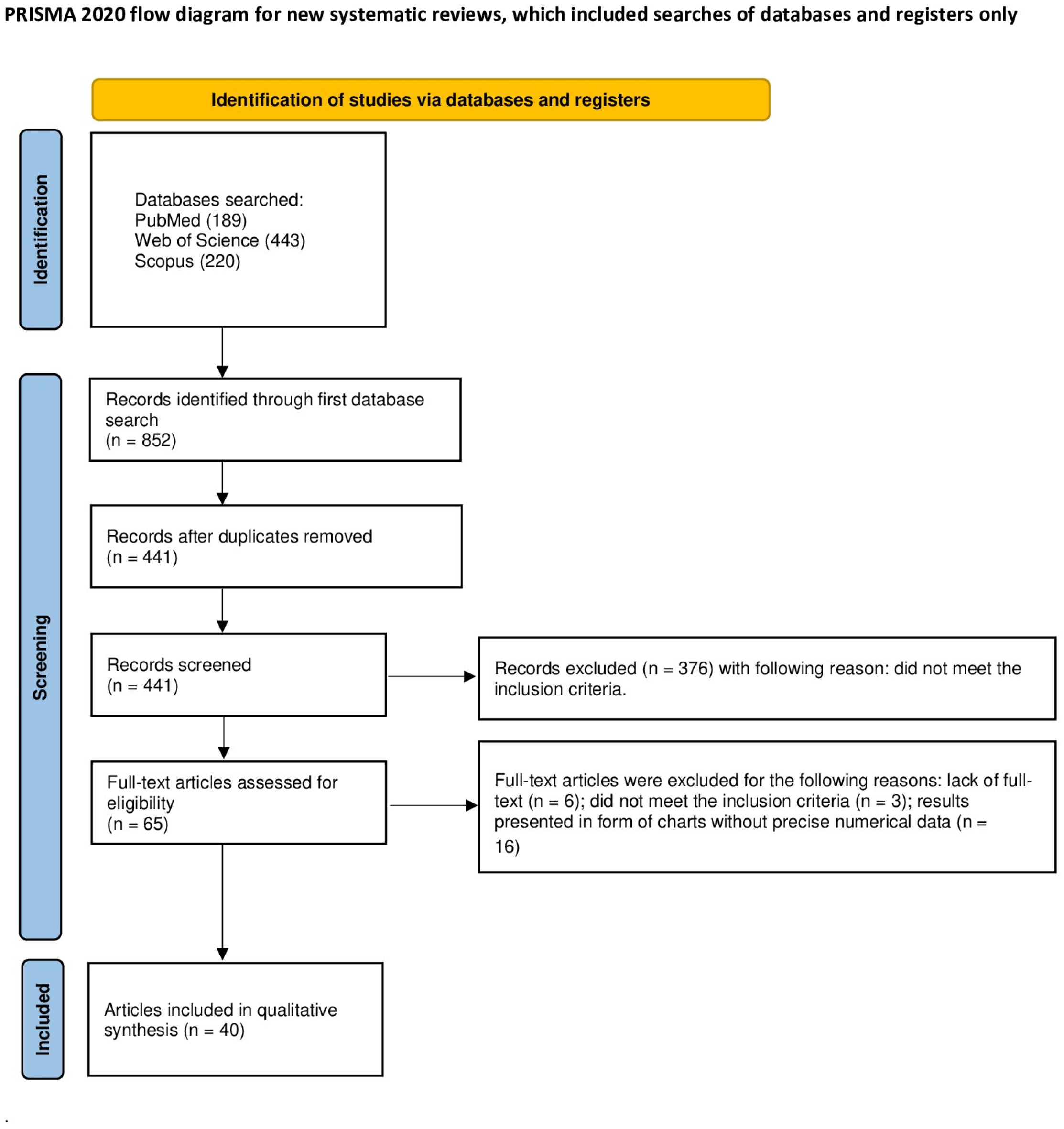
3.1. Study Selection
3.2. General Characteristics of the Included Studies
3.2.1. Diode Laser-Assisted Bleaching
3.2.2. Gallium Aluminum Arsenate (AsGaAl) Laser-Assisted Bleaching
3.2.3. Neodymium/Yttrium–Aluminum–Garnet (Nd:YAG) Laser-Assisted Bleaching
3.2.4. Argon Laser-Assisted Bleaching
3.2.5. Potassium Titanyl Phosphate (KTP) Laser-Assisted Bleaching
3.2.6. Erbium/Yttrium–Aluminum–Garnet (Er:YAG) and Erbium, Chromium, Yttrium, Scandium, Gallium Garnet (Er,Cr:YSGG) Laser-Assisted Bleaching
3.3. Main Study Outcomes
3.4. Quality Assessment
4. Discussion
5. Conclusions
- The diode laser demonstrated the most consistent positive effects on bleaching outcomes.
- The Er:YAG laser has a more beneficial effect on endodontically treated teeth, thanks to the possibility of using a lower HP concentration compared to the walking bleaching method.
- When assisting whitening with a diode laser, it is more beneficial to use a shorter wavelength.
- Laser-activated bleaching reduces post-treatment hypersensitivity.
- Laser bleaching may have an adverse effect on the physical parameters of restorative materials. This requires further in-depth study.
Author Contributions
Funding
Institutional Review Board Statement
Informed Consent Statement
Data Availability Statement
Conflicts of Interest
References
- Vochikovski, L.; Favoreto, M.W.; Rezende, M.; Terra, R.M.O.; Gumy, F.N.; Loguercio, A.D.; Reis, A. Use of Infrared Photobiomodulation with Low-Level Laser Therapy for Reduction of Bleaching-Induced Tooth Sensitivity after in-Office Bleaching: A Double-Blind, Randomized Controlled Trial. Lasers Med. Sci. 2023, 38, 18. [Google Scholar] [CrossRef]
- Tekce, A.U.; Yazici, A.R. Clinical Comparison of Diode Laser- and LED-Activated Tooth Bleaching: 9-Month Follow-Up. Lasers Med. Sci. 2022, 37, 3237–3247. [Google Scholar] [CrossRef] [PubMed]
- Guedes, R.d.A.; Carlos, N.R.; Turssi, C.P.; França, F.M.G.; Vieira-Junior, W.F.; Kantovitz, K.R.; Bronze-Uhle, E.S.; Lisboa-Filho, P.N.; Basting, R.T. Hybrid Light Applied with 37% Carbamide Peroxide Bleaching Agent with or without Titanium Dioxide Potentializes Color Change Effectiveness. Photodiagnosis Photodyn. Ther. 2023, 44, 103762. [Google Scholar] [CrossRef] [PubMed]
- Mawlood, A.A.; Hamasaeed, N.H. The Impact of the Diode Laser 940 Nm Photoactivated Bleaching on Color Change of Different Composite Resin Restorations. J. Adv. Pharm. Technol. Res. 2023, 14, 155–160. [Google Scholar] [CrossRef]
- Al-Maliky, M.A. Clinical Investigation of 940 Nm Diode Laser Power Bleaching: An in Vivo Study. J. Lasers Med. Sci. 2019, 10, 33–36. [Google Scholar] [CrossRef]
- Shahabi, S.; Assadian, H.; Nahavandi, A.M.; Nokhbatolfoghahaei, H. Comparison of Tooth Color Change after Bleaching with Conventional and Different Light-Activated Methods. J. Lasers Med. Sci. 2018, 9, 27–31. [Google Scholar] [CrossRef]
- Mena-Serrano, A.P.; Garcia, E.; Luque-Martinez, I.; Grande, R.H.M.; Loguercio, A.D.; Reis, A. A Single-Blind Randomized Trial about the Effect of Hydrogen Peroxide Concentration on Light-Activated Bleaching. Oper. Dent. 2016, 41, 455–464. [Google Scholar] [CrossRef]
- Karanasiou, C.; Dionysopoulos, D.; Naka, O.; Strakas, D.; Tolidis, K. Effects of Tooth Bleaching Protocols Assisted by Er,Cr:YSGG and Diode (980 Nm) Lasers on Color Change of Resin-Based Restoratives. J. Esthet. Restor. Dent. 2021, 33, 1210–1220. [Google Scholar] [CrossRef]
- Costa, J.L.d.S.G.; Besegato, J.F.; Kuga, M.C. Bleaching and Microstructural Effects of Low Concentration Hydrogen Peroxide Photoactivated with LED/Laser System on Bovine Enamel. Photodiagnosis Photodyn. Ther. 2021, 35, 102352. [Google Scholar] [CrossRef]
- Papadopoulos, A.; Dionysopoulos, D.; Strakas, D.; Koumpia, E.; Tolidis, K. Spectrophotometric Evaluation of the Effectiveness of Er,Cr:YSGG Laser-Assisted Intracoronal Tooth Bleaching Treatment Using Different Power Settings. Photodiagnosis Photodyn. Ther. 2021, 34, 102272. [Google Scholar] [CrossRef]
- De Moor, R.J.G.; Verheyen, J.; Diachuk, A.; Verheyen, P.; Meire, M.A.; De Coster, P.J.; Keulemans, F.; De Bruyne, M.; Walsh, L.J. Insight in the Chemistry of Laser-Activated Dental Bleaching. Sci. World J. 2015, 2015, 650492. [Google Scholar] [CrossRef]
- Matys, J.; Dominiak, M.; Flieger, R. Energy and Power Density: A Key Factor in Lasers Studies. J. Clin. Diagn. Res. 2015, 9, ZL01. [Google Scholar] [CrossRef]
- Parker, S.; Grzech-Leśniak, K.; Cronshaw, M.; Matys, J.; Brugnera, A.; Nammour, S. Full Operating Parameter Recording as an Essential Component of the Reproducibility of Laser-Tissue Interaction and Treatments. Adv. Clin. Exp. Med. 2024, 33, 653–656. [Google Scholar] [CrossRef]
- Deeb, J.G.; Grzech-Leśniak, K.; Weaver, C.; Matys, J.; Bencharit, S. Retrieval of Glass Fiber Post Using Er:YAG Laser and Conventional Endodontic Ultrasonic Method: An In Vitro Study. J. Prosthodont. 2019, 28, 1024–1028. [Google Scholar] [CrossRef]
- Domínguez, A.; García, J.A.; Costela, Á.; Gómez, C. Influence of the Light Source and Bleaching Gel on the Efficacy of the Tooth Whitening Process. Photomed. Laser Surg. 2011, 29, 53–59. [Google Scholar] [CrossRef] [PubMed]
- Matys, J.; Hadzik, J.; Dominiak, M. Schneiderian Membrane Perforation Rate and Increase in Bone Temperature during Maxillary Sinus Floor Elevation by Means of Er:YAG Laser—An Animal Study in Pigs. Implant. Dent. 2017, 26, 238–244. [Google Scholar] [CrossRef] [PubMed]
- Grzech-Leśniak, K.; Bencharit, S.; Skrjanc, L.; Kanduti, D.; Matys, J.; Deeb, J.G. Utilization of Er:YAG Laser in Retrieving and Reusing of Lithium Disilicate and Zirconia Monolithic Crowns in Natural Teeth: An In Vitro Study. Appl. Sci. 2020, 10, 4357. [Google Scholar] [CrossRef]
- Huang, X.; Lin, J.; Demner-Fushman, D. Evaluation of PICO as a Knowledge Representation for Clinical Questions. AMIA Annu. Symp. Proc. 2006, 2006, 359–363. [Google Scholar]
- Page, M.J.; Moher, D.; Bossuyt, P.M.; Boutron, I.; Hoffmann, T.C.; Mulrow, C.D.; Shamseer, L.; Tetzlaff, J.M.; Akl, E.A.; Brennan, S.E.; et al. PRISMA 2020 Explanation and Elaboration: Updated Guidance and Exemplars for Reporting Systematic Reviews. BMJ 2021, 372, n160. [Google Scholar] [CrossRef]
- Homa, K.; Zakrzewski, W.; Dobrzyński, W.; Piszko, P.J.; Piszko, A.; Matys, J.; Wiglusz, R.J.; Dobrzyński, M. Surface Functionalization of Titanium-Based Implants with a Nanohydroxyapatite Layer and Its Impact on Osteoblasts: A Systematic Review. J. Funct. Biomater. 2024, 15, 45. [Google Scholar] [CrossRef]
- Rygas, J.; Matys, J.; Wawrzyńska, M.; Szymonowicz, M.; Dobrzyński, M. The Use of Graphene Oxide in Orthodontics—A Systematic Review. J. Funct. Biomater. 2023, 14, 500. [Google Scholar] [CrossRef] [PubMed]
- Rajewska, J.; Kowalski, J.; Matys, J.; Dobrzyński, M.; Wiglusz, R.J. The Use of Lactide Polymers in Bone Tissue Regeneration in Dentistry—A Systematic Review. J. Funct. Biomater. 2023, 14, 83. [Google Scholar] [CrossRef] [PubMed]
- Kensy, J.; Dobrzyński, M.; Wiench, R.; Grzech-Leśniak, K.; Matys, J. Fibroblasts Adhesion to Laser-Modified Titanium Surfaces—A Systematic Review. Materials 2021, 14, 7305. [Google Scholar] [CrossRef] [PubMed]
- Matys, J.; Kensy, J.; Gedrange, T.; Zawiślak, I.; Grzech-Leśniak, K.; Dobrzyński, M. A Molecular Approach for Detecting Bacteria and Fungi in Healthcare Environment Aerosols: A Systematic Review. Int. J. Mol. Sci. 2024, 25, 4154. [Google Scholar] [CrossRef]
- Struzik, N.; Wiśniewska, K.; Piszko, P.J.; Piszko, A.; Kiryk, J.; Matys, J.; Dobrzyński, M. SEM Studies Assessing the Efficacy of Laser Treatment for Primary Teeth: A Systematic Review. Appl. Sci. 2024, 14, 1107. [Google Scholar] [CrossRef]
- Kowalski, J.; Rygas, J.; Homa, K.; Dobrzyński, W.; Wiglusz, R.J.; Matys, J.; Dobrzyński, M. Antibacterial Activity of Endodontic Gutta-Percha—A Systematic Review. Appl. Sci. 2024, 14, 388. [Google Scholar] [CrossRef]
- Piszko, P.J.; Piszko, A.; Kiryk, J.; Lubojański, A.; Dobrzyński, W.; Wiglusz, R.J.; Matys, J.; Dobrzyński, M. The Influence of Fluoride Gels on the Physicochemical Properties of Tooth Tissues and Dental Materials—A Systematic Review. Gels 2024, 10, 98. [Google Scholar] [CrossRef]
- Murias, I.; Grzech-Leśniak, K.; Murias, A.; Walicka-Cupryś, K.; Dominiak, M.; Deeb, J.G.; Matys, J. Efficacy of Various Laser Wavelengths in the Surgical Treatment of Ankyloglossia: A Systematic Review. Life 2022, 12, 558. [Google Scholar] [CrossRef]
- Watson, P.F.; Petrie, A. Method Agreement Analysis: A Review of Correct Methodology. Theriogenology 2010, 73, 1167–1179. [Google Scholar] [CrossRef]
- Sproull, R.C. Color Matching in Dentistry. Part I. The Three-Dimensional Nature of Color. J. Prosthet. Dent. 1973, 29, 416–424. [Google Scholar] [CrossRef]
- Cal, E.; Sonugelen, M.; Guneri, P.; Kesercioglu, A.; Kose, T. Application of a Digital Technique in Evaluating the Reliability of Shade Guides. J. Oral Rehabil. 2004, 31, 483–491. [Google Scholar] [CrossRef] [PubMed]
- Chu, S.J.; Trushkowsky, R.D.; Paravina, R.D. Dental Color Matching Instruments and Systems. Review of Clinical and Research Aspects. Proc. J. Dent. 2010, 38, e2–e16. [Google Scholar] [CrossRef]
- Shokouhinejad, N.; Khoshkhounejad, M.; Hamidzadeh, F. Evaluation of the Effectiveness of Laser-Assisted Bleaching of the Teeth Discolored Due to Regenerative Endodontic Treatment. Int. J. Dent. 2022, 2022, 3589609. [Google Scholar] [CrossRef] [PubMed]
- Naik, P.; Valli, K. Comparative Study of Effects of Home Bleach and Laser Bleach Using Digital Spectrophotometer: An In Vitro Study. J. Conserv. Dent. 2022, 25, 161–165. [Google Scholar] [CrossRef] [PubMed]
- Saluja, I.; Shetty, N.; Shenoy, R.; Pangal, S. Evaluation of the Efficacy of Diode Laser in Bleaching of the Tooth at Different Time Intervals Using Spectrophotometer: An In Vitro Study. J. Conserv. Dent. 2022, 25, 166–172. [Google Scholar] [CrossRef] [PubMed]
- Chitsaz, F.; Ghodsi, S.; Harehdasht, S.A.; Goodarzi, B.; Zeighami, S. Evaluation of the Colour and Translucency Parameter of Conventional and Computer-Aided Design and Computer-Aided Manufacturing (CAD-CAM) Feldspathic Porcelains after Staining and Laser-Assisted Bleaching. J. Conserv. Dent. 2021, 24, 628–633. [Google Scholar] [CrossRef]
- Saeedi, R.; Omrani, L.R.; Abbasi, M.; Chiniforush, N.; Kargar, M. Effect of Three Wavelengths of Diode Laser on the Efficacy of Bleaching of Stained Teeth. Front. Dent. 2019, 16, 458–464. [Google Scholar] [CrossRef]
- Ahrari, F.; Akbari, M.; Mohammadpour, S.; Forghani, M. The Efficacy of Laser-Assisted in-Office Bleaching and Home Bleaching on Sound and Demineralized Enamel. Laser Ther. 2015, 24, 257–264. [Google Scholar] [CrossRef]
- Bersezio, C.; Martín, J.; Angel, P.; Bottner, J.; Godoy, I.; Avalos, F.; Fernández, E. Teeth Whitening with 6% Hydrogen Peroxide and Its Impact on Quality of Life: 2 Years of Follow-Up. Odontology 2019, 107, 118–125. [Google Scholar] [CrossRef]
- Fekrazad, R.; Alimazandarani, S.; Kalhori, K.A.M.; Assadian, H.; Mirmohammadi, S.M. Comparison of Laser and Power Bleaching Techniques in Tooth Color Change. J. Clin. Exp. Dent. 2017, 9, e511–e515. [Google Scholar] [CrossRef]
- Vildosola, P.; Vera, F.; Ramirez, J.; Rencoret, J.; Pretel, H.; Oliveira, O.B.; Tonetto, M.; Martin, J.; Fernandez, E. Comparison of Effectiveness and Sensitivity Using Two In-Office Bleaching Protocols for a 6% Hydrogen Peroxide Gel in a Randomized Clinical Trial. Oper. Dent. 2017, 42, 244–252. [Google Scholar] [CrossRef] [PubMed]
- Bhutani, N.; Venigalla, B.S.; Patil, J.P.; Singh, T.V.; Jyotsna, S.V.; Jain, A. Evaluation of Bleaching Efficacy of 37.5% Hydrogen Peroxide on Human Teeth Using Different Modes of Activations: An In Vitro Study. J. Conserv. Dent. 2016, 19, 259–263. [Google Scholar] [CrossRef]
- Al-Karadaghi, T.S.; Al-Saedi, A.A.; Al-Maliky, M.A.; Mahmood, A.S. The Effect of Bleaching Gel and (940 Nm and 980 Nm) Diode Lasers Photoactivation on Intrapulpal Temperature and Teeth Whitening Efficiency. Aust. Endod. J. 2016, 42, 112–118. [Google Scholar] [CrossRef] [PubMed]
- Ahrari, F.; Akbari, M.; Mohammadipour, H.S.; Fallahrastegar, A.; Sekandari, S. The Efficacy and Complications of Several Bleaching Techniques in Patients after Fixed Orthodontic Therapy. A Randomized Clinical Trial. Swiss Dent. J. 2020, 130, 493–501. [Google Scholar] [CrossRef]
- Kameda, A.; Masuda, Y.M.; Toko, T.; Yamada, Y.; Kimura, Y.; Tamaki, Y.; Miyazaki, T. Effects of Tooth Coating Material and Finishing Agent on Bleached Enamel Surfaces by KTP Laser. Laser Ther. 2013, 22, 125–130. [Google Scholar] [CrossRef]
- Nam, S.H.; Lee, H.W.; Cho, S.H.; Lee, J.K.; Jeon, Y.C.; Kim, G.C. High-Efficiency Tooth Bleaching Using Nonthermal Atmospheric Pressure Plasma with Low Concentration of Hydrogen Peroxide. J. Appl. Oral. Sci. 2013, 21, 265–270. [Google Scholar] [CrossRef]
- Hahn, P.; Schondelmaier, N.; Wolkewitz, M.; Altenburger, M.J.; Polydorou, O. Efficacy of Tooth Bleaching with and without Light Activation and Its Effect on the Pulp Temperature: An In Vitro Study. Odontology 2013, 101, 67–74. [Google Scholar] [CrossRef]
- Fornaini, C.; Lagori, G.; Merigo, E.; Meleti, M.; Manfredi, M.; Guidotti, R.; Serraj, A.; Vescovi, P. Analysis of Shade, Temperature and Hydrogen Peroxide Concentration during Dental Bleaching: In Vitro Study with the KTP and Diode Lasers. Lasers Med. Sci. 2013, 28, 1–6. [Google Scholar] [CrossRef]
- Gurgan, S.; Cakir, F.Y.; Yazici, E. Different Light-Activated in-Office Bleaching Systems: A Clinical Evaluation. Lasers Med. Sci. 2010, 25, 817–822. [Google Scholar] [CrossRef]
- Lima, D.A.N.L.; Aguiar, F.H.B.; Liporoni, P.C.S.; Munin, E.; Ambrosano, G.M.B.; Lovadino, J.R. Influence of Chemical or Physical Catalysts on High Concentration Bleaching Agents. Eur. J. Esthet. Dent. 2011, 6, 454–466. [Google Scholar]
- Gontijo, I.T.; Navarro, R.S.; Ciamponi, A.L.; Miyakawa, W.; Zezell, D.M. Color and Surface Temperature Variation during Bleaching in Human Devitalized Primary Teeth: An In Vitro Study. J. Dent. Child. 2008, 75, 229–234. [Google Scholar]
- Zhang, C.; Wang, X.; Kinoshita, J.I.; Zhao, B.; Toko, T.; Kimura, Y.; Matsumoto, K. Effects of KTP Laser Irradiation, Diode Laser, and LED on Tooth Bleaching: A Comparative Study. Photomed. Laser Surg. 2007, 25, 91–95. [Google Scholar] [CrossRef] [PubMed]
- Lagori, G.; Vescovi, P.; Merigo, E.; Meleti, M.; Fornaini, C. The Bleaching Efficiency of KTP and Diode 810 Nm Lasers on Teeth Stained with Different Substances: An In Vitro Study. Laser Ther. 2014, 23, 21–30. [Google Scholar] [CrossRef]
- Mondelli, R.F.L.; de Azevedo, J.F.D.e.G.; Francisconi, A.C.; de Almeida, C.M.; Ishikiriama, S.K. Comparative Clinical Study of the Effectiveness of Different Dental Bleaching Methods—Two Year Follow-Up. J. Appl. Oral Sci. 2012, 20, 435–443. [Google Scholar] [CrossRef]
- Ergin, E.; Ruya Yazici, A.; Kalender, B.; Usumez, A.; Ertan, A.; Gorucu, J.; Sari, T. In Vitro Comparison of an Er:YAG Laser-Activated Bleaching System with Different Light-Activated Bleaching Systems for Color Change, Surface Roughness, and Enamel Bond Strength. Lasers Med. Sci. 2018, 33, 1913–1918. [Google Scholar] [CrossRef]
- Gonçalves, R.S.; Costa, C.A.S.; Soares, D.G.S.; Dos Santos, P.H.; Cintra, L.T.A.; Briso, A.L.F. Effect of Different Light Sources and Enamel Preconditioning on Color Change, H2O2 Penetration, and Cytotoxicity in Bleached Teeth. Oper. Dent. 2016, 41, 83–92. [Google Scholar] [CrossRef]
- Polydorou, O.; Wirsching, M.; Wokewitz, M.; Hahn, P. Three-Month Evaluation of Vital Tooth Bleaching Using Light Units—A Randomized Clinical Study. Oper. Dent. 2013, 38, 21–32. [Google Scholar] [CrossRef]
- Al Quran, F.A.M.; Mansour, Y.; Al-Hyari, S.; Al Wahadni, A.; Mair, L. Efficacy and Persistence of Tooth Bleaching Using a Diode Laser with Three Different Treatment Regimens. Eur. J. Esthet. Dent. 2011, 6, 436–445. [Google Scholar]
- Strobl, A.; Gutknecht, N.; Franzen, R.; Hilgers, R.D.; Lampert, F.; Meister, J. Laser-Assisted in-Office Bleaching Using a Neodymium: Yttrium-Aluminum-Garnet Laser: An In Vivo Study. Lasers Med. Sci. 2010, 25, 503–509. [Google Scholar] [CrossRef]
- Marcondes, M.; Paranhos, M.P.G.; Spohr, A.M.; Mota, E.G.; Da Silva, I.N.L.; Souto, A.A.; Burnett, L.H. The Influence of the Nd:YAG Laser Bleaching on Physical and Mechanical Properties of the Dental Enamel. J. Biomed. Mater. Res. B Appl. Biomater. 2009, 90B, 388–395. [Google Scholar] [CrossRef]
- Borse, V.S.; Sanjay Pandit, V.; Gaikwad, A.; Bajirao Jadhav, A.; Handa, A.; Bhamare, R. Effect of Neodymium-Doped Yttrium Aluminum Garnet (Nd:YAG) Laser Enamel Pre-Treatment on the Whitening Efficacy of a Bleaching Agent. Cureus 2022, 14, e31325. [Google Scholar] [CrossRef] [PubMed]
- Lima, D.A.N.L.; Aguiar, F.H.B.; Liporoni, P.C.S.; Munin, E.; Ambrosano, G.M.B.; Lovadino, J.R. In Vitro Evaluation of the Effectiveness of Bleaching Agents Activated by Different Light Sources. J. Prosthodont. 2009, 18, 249–254. [Google Scholar] [CrossRef] [PubMed]
- Jones, A.H.; Diaz-Arnold, A.M.; Vargas, M.A.; Cobb, D.S. Colorimetric Assessment of Laser and Home Bleaching Techniques. J. Esthet. Restor. Dent. 1999, 11, 87–94. [Google Scholar] [CrossRef] [PubMed]
- Özer, S.Y.; Kaplslz, E. Comparison of Walking-Bleaching and Photon-Initiated Photoacoustic Streaming Techniques in Tooth Color Change of Artificially Colored Teeth. Photobiomodul Photomed. Laser Surg. 2021, 39, 355–361. [Google Scholar] [CrossRef]
- Dionysopoulos, D.; Strakas, D.; Tolidis, K.; Tsitrou, E.; Koumpia, E.; Koliniotou-Koumpia, E. Spectrophotometric Analysis of the Effectiveness of a Novel In-Office Laser-Assisted Tooth Bleaching Method Using Er,Cr:YSGG Laser. Lasers Med. Sci. 2017, 32, 1811–1818. [Google Scholar] [CrossRef]
- D’Arce, M.B.; Lima, D.A.; Aguiar, F.H.; Ambrosano, G.M.; Munin, E.; Lovadino, J.R. Evaluation of Ultrasound and Light Sources as Bleaching Catalysts—An In Vitro Study. Eur. J. Esthet. Dent. 2012, 7, 176–184. [Google Scholar]
- Kiryk, J.; Matys, J.; Nikodem, A.; Burzyńska, K.; Grzech-Leśniak, K.; Dominiak, M.; Dobrzyński, M. The Effect of Er:Yag Laser on a Shear Bond Strength Value of Orthodontic Brackets to Enamel—A Preliminary Study. Materials 2021, 14, 2093. [Google Scholar] [CrossRef]
- Bahuguna, N. Cervical Root Resorption and Non Vital Bleaching. Endodontology 2013, 25, 106. [Google Scholar] [CrossRef]
- Loiola, A.B.A.; Souza-Gabriel, A.E.; Scatolin, R.S.; Corona, S.A.M. Impact of Hydrogen Peroxide Activated by Lighting-Emitting Diode/Laser System on Enamel Color and Microhardness: An In Situ Design. Contemp Clin Dent 2016, 7, 312–316. [Google Scholar] [CrossRef]
- Browning, W.D. Use of Shade Guides for Color Measurement in Tooth-Bleaching Studies. J. Esthet. Restor. Dent. 2003, 15, S13–S20. [Google Scholar] [CrossRef]
- da Silva Casado, B.G.; Pellizzer, E.P.; Maior, J.R.S.; Lemos, C.A.A.; do Egito Vasconcelos, B.C.; de Moraes, S.L.D. Laser Influence on Dental Sensitivity Compared to Other Light Sources Used during In-Office Dental Bleaching: Systematic Review and Meta-Analysis. Oper. Dent. 2020, 45, 589–597. [Google Scholar] [CrossRef]
- Kikly, A.; Jaâfoura, S.; Sahtout, S. Vital Laser-Activated Teeth Bleaching and Postoperative Sensitivity: A Systematic Review. J. Esthet. Restor. Dent. 2019, 31, 441–450. [Google Scholar] [CrossRef] [PubMed]


| Study | Aim of the Study | Material and Methods | Results | Conclusions |
|---|---|---|---|---|
| Guedes RA [3] | Bleaching treatment using 37% carbamide peroxide combined with hybrid light and TiO2 increases the effectiveness of the change in color of the dental surface. | Fifty bovine incisors were divided into 5 groups and exposed to 35% hydrogen peroxide, 37% urea peroxide, urea peroxide + hybrid light, urea peroxide 1% TiO2, and urea peroxide + 1% TiO2 + hybrid light. | The greatest color changes for ΔEab were observed after bleaching with urea peroxide + hybrid light, as well as urea peroxide + 1% TiO2 + hybrid light. ΔE00 and ΔWID were higher with bleaching with urea peroxide + 1% TiO2 + hybrid light. | A whitening gel containing carbamide peroxide combined with TiO2 and hybrid light increases whitening effectiveness. |
| Mawlood AA [4] | The effect of 940 nm diode laser-activated bleaching on the color of dental composite filling materials. | Thirty samples were made from Filtek Bulk Fill, FiltekTM Z550 XT Universal Restorative, and FiltekTM Z350xt Flowable Composite. Each was then divided into 3 smaller groups: the control group, Laser White20, and Laser White20 with diode laser activation. | The greatest color change was observed in restorations made with FiltekTM Z350xt Flowable RBCs, regardless of whether laser activation was used or not. | Bleaching caused a slight change in the color of the composite materials and their roughness. Bleaching can cause a loss of bonding between the composite molecules and lead to the increased release of toxic monomers. |
| Vochikovski L [1] | Evaluation of photobiomodulation in reducing tooth sensitivity after in-office bleaching. | Patients were divided into a control group that received only 1 whitening session and an experimental group. Color was assessed using the VITA shade guide and a spectrophotometer. | There was no difference in the intensity of hypersensitivity. A significant change in the color of the whitened teeth was observed in both groups. | Photobiomodulation does not increase the risk of hypersensitivity after a whitening treatment. |
| Borse VS [61] | The aim of the study was to check if treating enamel with a Nd:YAG laser before the bleaching procedure influences the bleaching results. | Thirty incisors were stained with tea solution and divided into control and experimental groups, which were exposed to Nd:YAG laser. Then, all samples were bleached using 35% hydrogen peroxide. | The teeth became lighter in both groups, with no significant differences observed between them. | The use of a Nd:YAG laser before whitening does not affect the effectiveness of whitening with 35% hydrogen peroxide. |
| Shokouhinejad N [33] | Comparison of 3 laser assisted bleaching protocols with conventional walking bleach in terms of efficiency. | Seventy-two endodontically treated incisors were divided into 4 groups—the first was bleached only with 35% hydrogen peroxide gel, the second with 35% HP and a Nd:YAG laser, the third with 35% HP + 980 nm diode laser, and the last with 35% HP + 810 nm diode laser. | The whitening effects in each group were comparable and no significant difference was found between samples treated with 35% HP only and 35% HP + any laser. | In endodontically treated teeth, conventional whitening with 35% hydrogen peroxide is as effective as laser-assisted protocols. |
| Tekce AU [2] | Evaluation of diode laser- and LED-activated tooth bleaching treatments. | The dental arches of 32 patients were divided into two parts—one was bleached with 35% hydrogen peroxide and activated by an LED, and the other with 35% HP and activated by a diode laser (940 nm). | There was no significant difference in color change between the 2 protocols. The temperature change was greater with diode laser whitening. No significant difference in tooth and gum sensitivity was found. | There were no significant differences between bleaching protocols that were assisted by a diode laser or LED-activated, regarding color change. |
| Naik PL [34] | Comparison of home bleaching and laser-assisted bleaching using a spectrophotometer. | Forty teeth were divided into two groups. One underwent laser whitening, the other home whitening. Within each group, subgroups were distinguished based on the substance used to create the discoloration. | No significant difference in color change in tea-stained samples. The laser whitening results were better than the home whitening ones. | Laser-assisted bleaching was more effective than home bleaching in paan-stained teeth, while there was no significant difference between home and laser-assisted bleaching in tea-stained teeth. |
| Saluja I [35] | Comparison of effectiveness of tooth bleaching depending on the concentration of bleaching agent (carbamide peroxide) used, using or not-using a 980 nm laser, and a time of 2.5 or 5 min. | One hundred teeth were discolored with tea solution and divided into 4 groups: 1—control, 2—bleached with 15, 20, and 35% CP, 3—the same CP concentrations as group 2, but with activation by a 980 nm laser for 2.5 min, 4—as group 3, but with an activation time of 5 min. | The color after bleaching using 35% CP with a laser for 5 min was comparable to the effect of 15% CP activated for 2.5 min. | It was found that 35% CP works faster than its lower concentrations, but the final whitening effect is comparable to 15% CP. The laser allows for a faster whitening process, but the final results with and without the laser are similar. |
| Chitsaz F [36] | Spectrophotometer color and translucency evaluation of conventional and CAD-CAM porcelain materials after staining and bleaching assisted by a laser. | Seventy-two CAD-CAM and conventional feldspathic porcelain samples were divided into 3 groups—coffee-stained, orange juice-stained, and control groups. Then, a diode laser-assisted bleaching procedure was performed. | Coffee and orange juice cause a change in the color of the porcelain, which was less pronounced in the CAD/CAM-produced samples. Bleaching is effective for both types, but the maximum color that can be achieved is the pre-staining one. | Laser-assisted bleaching can be used to get rid of stains on the porcelain, but it does not cause a difference in baseline translucency or the shade of the material. |
| Karanasiou C [8] | Assessing the color alteration of three resin-based restorative materials following two in-office tooth bleaching procedures facilitated by Er,Cr:YSGG and diode (980 nm) lasers. | Nanohybrid composite resin (EP), Bis-GMA-free composite resin (EPBio), and CAD-CAM ceramic with resin matrix (HC) were divided into 3 groups. Group 1 was treated with 40% H2O2 only, while Groups 2 and 3 were activated with an Er,Cr:YSGG laser and diode laser (980 nm), respectively. | The color and whiteness changes were below the acceptability thresholds. EP showed the highest color change after bleaching, followed by EPBio and HC. | The bleaching treatments tested with the assistance of Er,Cr:YSGG and diode (980 nm) lasers did not cause undesirable color and whiteness changes in the resin-based restorative materials. |
| de Sousa Gomes Costa JL [9] | Bleaching and microstructural impacts of low-concentration hydrogen peroxide, photoactivated with an LED/laser system, on bovine enamel. | Twenty bovine incisors were divided into 2 groups: 6% HP + LED/laser and 35% HP. The teeth were stained with tea and then three whitening sessions were performed according to the manufacturer’s instructions. | Color changes were observed in both groups, with the greatest seen in the 35% HP alone group. Significant differences were observed for ∆a*, ∆b*, ∆WID, and ∆E00, but not for ∆L*. | The 6% HP with an LED/laser produced noticeable color changes, but less than the 35% HP. There were no noticeable differences in enamel microhardness after the treatment; however, the 35% HP showed reduced hardness after 7 days compared to the baseline. |
| Papadodoulos A [10] | Spectrophotometric assessment of the efficacy of an Er,Cr:YSGG laser-assisted intracoronal tooth bleaching treatment employing various power settings. | Twenty-four endodontically treated canines were divided into three groups. Group 1 underwent intracoronal bleaching with 35% hydrogen peroxide (HP) gel for 40 min. Group 2 was treated as 1, but with Er,Cr:YSGG activation. Group 3 was treated as Group 2, but with modified laser parameters. | No significant difference in color change was seen between the three groups. The 2.5 W laser group showed a significantly higher ΔE than the control group after the first whitening session. | The final ΔE was not different compared to the control group, regardless of laser’s power settings. |
| Ozer SY [64] | Comparison of whitening efficacy using carbamide peroxide (CP) or sodium perborate with 20% hydrogen peroxide (HP) with and without photon-induced photoacoustic streaming (PIPS) activation. | Eighty-five incisors were endodontically treated with sheep blood and divided into five groups: Group 1 (walking bleaching with CP), Group 2 (walking bleaching with sodium perborate–20% HP), Group 3 (PIPS + CP), Group 4 (PIPS + sodium perborate–20% HP), and Group 5 (control). | The PIPS + sodium perborate–20% HP group showed noticeably better whitening efficacy compared to the other groups. | The activation of sodium perborate–20% H2O2 with PIPS resulted in a better bleaching effect than that achieved with walking bleaching techniques or PIPS using carbamide peroxide. |
| Saeedi R [37] | Evaluation of the effectiveness of conventional bleaching in comparison to laser-assisted bleaching utilizing three distinct wavelengths of diode lasers. | Forty incisors were immersed in a solution of tea, coffee, and cola for 21 days and then divided into four groups: Group 1 (diode laser 810 nm + Biolase Laser White 20), Group 2 (diode laser 940 nm + Biolase Laser White 20), Group 3 (diode laser 980 nm + Biolase Laser White 20), and Group 4 (Opalescence Boost without laser activation). | The 940 nm laser group exhibited the highest bleaching efficacy, while the 810 nm laser group demonstrated the lowest efficacy. Nevertheless, there was no significant difference in bleaching efficacy between the two groups. | Laser bleaching utilizing diode lasers with wavelengths of 810 nm, 940 nm, and 980 nm demonstrates an efficacy comparable to conventional bleaching but achieves results in a shorter timeframe. No discernible difference was observed between various laser wavelengths regarding bleaching efficacy. |
| Ahrari F [44] | Evaluation of the efficacy and complications of several bleaching techniques in patients after orthodontic treatment. | Sixty people with teeth discoloration after orthodontic treatment were divided into 4 groups. Group 1 underwent home whitening and groups 2–4 received in-office whitening using a diode laser, plasma arc, and without a light source. | The color change was most significant in the home whitening group, followed by the in-office laser whitening group, and least significant in those treated with plasma arc whitening. | All methods have proven effective. Laser-assisted whitening emerges as the preferred option, providing effective results with minimal tooth sensitivity and in a shorter amount of time. |
| Al-Maliky MA [5] | Observation of the effectiveness of a 940 nm diode laser in conjunction with bleaching gel by assessing tooth sensitivity and color change. | Fourteen patients underwent laser-assisted bleaching using a 940 nm diode laser and a bleaching gel containing 38% hydrogen peroxide. | The scores ranged from 5 (A2) to 16 (C4) before treatment and from 6 (C1) to 1 (B1) after whitening. This change was statistically significant. | The change in tooth brightness after treatment was significant. |
| Bersezio C [39] | Evaluation of color stability after 2 years of whitening with a blue LED or laser-activated whitening gel, comparing 6% hydrogen peroxide (HP) with 35% HP. | A total of 131 participants with incisor color A2 or darker without fillings or enamel damage underwent whitening. | All values showed a color difference between the groups after 1 week and one month and at a 2-year follow-up. | Despite significant differences in effectiveness, the clinical impact was not evident to patients due to the perceptibility threshold of human vision when comparing two similar colors. |
| Ergin E [55] | Comparison of an Er:YAG laser-activated whitening system with various light-activated whitening systems. | Fifty-one bovine incisors were divided into 3 groups: a diode laser group, Er:YAG group, and LED group. | All whitening methods proved effective, with no statistically significant differences between them. | All mentioned bleaching systems are effective when used with 35% H2O2, with an E value above 3.3. |
| Dionysopoulos D [65] | Evaluation of the Er,Cr:YSGG laser-assisted tooth whitening method and its comparison with the traditional method. | Spectrophotometric analysis of color change of 24 bovine incisors, with crowns separated from the roots. | Both the length of time of the bleach application and activation with Er,Cr:YSGG laser influenced the effectiveness of the treatment. Laser-treated groups showed greater color change. | The Er,Cr:YSGG laser-assisted tooth whitening treatment is more effective than a conventional whitening treatment in terms of the color change of teeth. |
| Fekrazad R [40] | Comparison of teeth whitening effectiveness using Opalescence Xtra Boost and LaserSmile gel activated by a diode laser. | Twenty fresh incisors were divided into 2 groups. In group 1, bleaching was performed using a diode laser activated 35% HP gel. In group 2, Opalescence Xtra Boost Gel containing 38% HP was used. | Laser whitening produced significantly better results than without activation, both increasing whiteness and reducing the degree of the yellowing of the teeth. | Laser bleaching can be used to reduce operation time and increase patient comfort and mobility during bleaching procedures. Also, it is a safer remedy compared to power bleaching with 38% hydrogen peroxide gel. |
| Vildosola P [41] | Comparison of two different in-office bleaching protocols using 6% peroxide. | Thirty patients were treated, half of the arch of their teeth with traditional application protocols and other with abbreviated protocols, both activated with blue light. | Both treatments were effective, with no significant differences. | Both approaches were equally effective. |
| Mena-Serrano AP [7] | Comparison of bleaching efficacy and tooth sensitivity of two hydrogen peroxide protocols used for IOB, associated, or not, with a light-emitting diode LED/laser light activation. | Seventy-seven patients with a right canine from maxilla darker than A3 were selected. Patients were distributed in four groups. Their tooth color was evaluated each week and 30 days afterwards using the VITA Classical Shade Guide. | Significant whitening was observed in both study groups with best results for 35%+ Light. | A higher degree of whitening was shown when 20% HP gel when supplementary light was used and when evaluated using VITA shades; however, with a spectrophotometer there was no significant difference. |
| Bhutani N [42] | Evaluation of the role of light and laser sources in the bleaching ability of 37.5% HP on extracted human tooth. | Thirty incisors were divided into three groups: 37.5%HP, 37.5%HP + laser activation, and 37.5%HP + light activation. | All groups shown significant differences in their mean shade value. | The laser showed the biggest ability to increase bleaching due to its activation of the bleaching molecules. |
| Al-Karadaghi TS [43] | Evaluation of the effectiveness of tooth whitening with activation by a diode laser with a wavelength of 940 nm or 980 nm. | The root canals of 30 premolars were prepared and a 38% HP bleaching agent was applied. Then, photoactivation was performed using a 940 nm or 980 nm diode laser. | The mean increment in Vita shade in all groups followed the sequence of L940 > L980 > control group. | The largest color change was achieved when using the bleaching agent activated with the 940 nm diode laser. |
| Ahrari F [38] | Comparison of the effectiveness of laser-activated whitening and home whitening of healthy and demineralized enamel. | One hundred and twenty fresh bovine incisors without visible caries or structural defects on their enamel surface were stained and bleached. | There were significant differences in the color change between the study groups. | This study shows the effectiveness of whitening healthy and demineralized cattle teeth. |
| Kameda A [45] | To evaluate the effect of the acid etching of enamel and the subsequent combination of different light sources and a whitening product on color change and HP penetration. | Ninety six enamel/dentin discs were divided into eight groups and their color was assessed using a spectrophotometer before the first whitening treatment, 6 days after each whitening treatment, and 14 days after the end of the treatment period. | All groups showed a progressive and continuous change in color, the use or lack of use of light did not influence the color change obtained in different periods. | This study shows that the bleaching treatment with a high concentration of H2O2 was effective regardless of the use of light. |
| Nam SH [46] | Assessment of the tooth whitening effect using non-thermal plasma at atmospheric pressure (NAPP). | Forty teeth were divided into 4 groups: Group I (CP + NAPP), Group II (CP + plasma arc lamp; PAC), Group III (CP + diode laser), and Group IV (CPE). | In the CP + NAPP group, the whitening effect was the best and the tooth surface temperature was approximately 37 °C, while in the other groups it increased to 43 °C. | NAPP has a greater ability to effectively whiten teeth than conventional low-HP light sources without causing thermal damage. In the future, this may be the most frequently used method in office whitening. |
| Polydorou O [57] | Assessment of color stability after whitening using a halogen lamp, laser, or no activation. | Sixty patients were divided into 3 groups and their teeth were whitened with 38% HP using 3 methods: halogen lamp activation, laser activation, or no activation. | Immediately after whitening, activation with a halogen lamp gave the best effect. After 1 and 3 months, no significant difference was found. | The use of light to accelerate the process of bleaching is not important for esthetic results with regard to long-term whitening effects. |
| Hahn P [47] | Assessment of color stability after whitening activated with a halogen light, laser, LED unit, or chemical up to 3 months after the procedure. | Eighty teeth were divided into 4 groups and whitened with Opalescent Xtra Boost using four different activation methods: halogen lamp, LED, laser, or without additional activation. | Activation with a halogen lamp caused the greatest change in color. Regardless of the type of activation, teeth were whiter after 1 and 3 months. | The use of light activation showed no advantages compared to chemical bleaching. |
| Al Quaran F [58] | Assessment of the effectiveness of laser whitening using various schemes and color stability over a period of 6 months. | Sixty patients were divided into 3 groups and underwent diode laser whitening with the addition of 34% HP. Group 1: one whitening session. Group 2: 2 sessions. Group 3: 2 sessions + home whitening. | All teeth changed color significantly after 6 months, but there was a regression in color immediately after whitening. In group 3, much less color regression was observed. | The combination of in-office and home whitening techniques gives better results in the long run. |
| Fornaini C [48] | Comparison of whitening with a 532 nm KTP laser and an 808 nm diode laser to investigate the relationship between changes in gel temperature, tooth shade, and HP concentration. | One hundred and sixteen bovine teeth were whitened using 30% HP gel, some with the gel itself and others with gel activated by a KTP or diode laser of two different powers (2 and 4 W). | A significant effect and minimal temperature increase were obtained using the KTP laser. The diode laser caused a larger temperature increase and the color change was statistically significant only at 4 W. | No statistically significant relationship was found between temperature, HP concentration, and tooth shade change. The KTP laser provides better results with a safe increase in temperature. |
| Gurgan S [49] | Assessment of the effectiveness of in-office whitening systems using various light sources in terms of the color change and possible side effects seen, such as tooth hypersensitivity and gum irritation. | Forty people with A3 teeth were divided into 4 groups. Group 1 underwent whitening without light activation; group 2 with diode laser activation; group 3 with a plasma arc lamp; and group 4 with a diode (LED) lamp. | All whitening techniques proved effective, with the color change being greatest after diode laser activation. | In-office whitening systems are effective both with and without light. Diode laser whitening causes less sensitivity of the teeth and gums, which is why it may be preferred among the in-office whitening systems available. |
| Strobl A [59] | Assessment of the teeth whitening effect of a Nd:YAG laser. | In-office laser whitening was performed on 20 patients using a neodymium/yttrium–aluminum–garnet (Nd:YAG) laser. Each patient underwent two treatments 1 week apart. | A change in tooth shade was observed in both the laser-activated and control quadrants. There was no statistically significant difference in hue between quadrants. | These study results give us a reason to consider the practicality of using the Nd:YAG laser in teeth whitening. |
| Lima D [50] | Assessment of tooth whitening effectiveness and color stability. | Enamel blocks were divided into 15 groups. The whitening agents used were 35% HP and 37% CP and they were activated by a halogen lamp and plasma arc lamp, LED/diode laser, and argon laser, or not activated. | A better effect was obtained using HP; however, the samples became discolored after a month, whereas the color obtained after bleaching with CP was stable. | The halogen lamp had the same or higher effectiveness than whitening without activation. When hydrogen peroxide was used, discoloration was observed 30 days after the end of bleaching. |
| Marcondes M [60] | Assessment of tooth color change during whitening with hydrogen peroxide activated by Nd:YAG lasers of various wavelengths or halogen light. | The 150 tooth samples were divided into 5 groups: WL (H2O2 and Nd:YAG), WH (H2O2 and halogen light), QL (HP carbopol Q-switch and Nd:YAG), QH (HP carbopol Q-switch and halogen light), and C (control, without bleaching agent). | The shade changed by seven levels for the Nd:YAG laser groups and eight levels for halogen light. | The Nd:YAG laser in combination with hydrogen peroxide bleached the enamel; the shade was similar to that obtained with the traditional method performed using halogen light. |
| Gontijo IT [51] | In vitro evaluation of 2 primary teeth whitening techniques in terms of changes in color and surface temperature during tooth whitening using various catalytic sources. | Twenty-one primary incisors were stained with human blood and divided into 2 groups: (1) diode laser (DL) activation and (2) halogen lamp (HL) activation. | The same level of whitening was obtained with the use of the laser and halogen lamp. However, the temperature was higher with the halogen lamp. | There was no significant difference between groups in color change, but there was a significant difference in temperature change. The diode laser showed a smaller increase in temperature compared to the halogen lamp. |
| Zhang C [52] | Evaluation of the effectiveness of whitening with a light-emitting diode (LED), a diode laser, and a KTP laser, taking into account the change in color, temperature in the pulp chamber, and enamel microhardness. | Sixty-four incisors were bleached with HP activated with an LED, a 980 nm diode laser, or a 532 nm KTP laser. | Whitening induced by the KTP laser had a significantly better effect. The average maximum increase in pulp temperature was 2.95 °C for the LED laser, 3.76 °C for the KTP laser, and 7.72 °C for the diode laser, respectively. | The KTP laser effectively whitens teeth. Under the conditions used in this study, the LED laser and KTP resulted in a safer increase in pulp temperature when assisted with Hi-Lite whitening gel. |
| Jones A [63] | Assessing color change of three tooth bleaching techniques, including laser-activated hydrogen peroxide and two concentrations of carbamide peroxide. | Forty human central incisors underwent argon laser-activated whitening with 35% H2O2 or 10% or 20% carbamide peroxide. The control group did not undergo any bleaching. | The laser-activated group was not statistically different from the control group. The color difference in the 10% and 20% CP groups was statistically different from the control group. | Exposure to 20% carbamide peroxide produced the greatest bleaching effect. The recommended one-time application of laser-activated hydrogen peroxide did not demonstrate any color change. |
| Lagori G [53] | Evaluation of the whitening effectiveness of two different lasers (KTP and diode 810 nm). | One hundred and thirty-five bovine teeth were discolored in a tea, coffee, or red fruit solution and divided into 3 groups. One was bleached with a 30% HP gel, the second was additionally irradiated with an 810 nm diode laser, and the last with a KTP laser. | The diode laser was effective only at bleaching teeth stained with coffee, while the KTP laser was efficient at bleaching teeth with coffee, tea, and red fruit stains. | There is a relationship between the laser wavelength, the type of discoloration on the tooth enamel, and the effectiveness of the whitening treatment. |
| Mondelli RFL [54] | Assessment of color change, its stability, and post-treatment sensitivity after teeth whitening using various methods. | Patients were divided into groups: G1: 35% HP + hybrid light (HL) (LED/diode laser); G2: 35% HP; G3: 38% HP + HL; G4: 38% HP; and G5: 15% CP. Groups 1–4 had 3 in-office bleaching treatments, while Group 5 received home bleaching. | There was no statistically significant difference between office whitening with or without HL activation, but in the HL-irradiated groups the procedure time was shorter. In-office whitening increased tooth sensitivity. | All compared methods were equally effective. |
| Authors | Bleaching Material and Bleaching Surface | Laser Type | Laser Parameters | Color before Bleaching | Color after Bleaching | Color Difference |
|---|---|---|---|---|---|---|
| Guedes RA [3] | 37% carbamide peroxide (CP) Bovine enamel in vitro | Diode laser 808 nm + blue LED 450 nm + violet LED 405 nm | Time: 1 min Distance: 2 cm Power: 100 mW + 390 mW + 375 mW Continuous Wave (CW) | VITA Classical = 11.20(0.92) L = 86.55 (4.47) a = 1.95 (0.20) b = 34.08 (2.78) | VITA Classical = 3.50 (2.92) L = 93.11 (2.74) a = 0.45 (−0.90; 1.90) b = 21.57 (3.06) | ΔE = 14.55 (2.02) ΔWID = 19.88 (3.03) |
| Mawlood AA [4] | 40% hydrogen peroxide (HP) FiltekTM Bulk Fill composite resin (B) FiltekTM Z550 XT universal restorative (U) FiltekTM Z350 XT flowable composite (F) | Diode laser 940 nm | Time: 30 s Distance: 1 mm Power: 1.5 W CW | No data | No data | ΔE(B) = 5.827 (1.232766) ΔE(U) = 8.901 (1.189402) ΔE(F) = 9.611 (0.949087) |
| Vochikovski L [1] | 35% HP Enamel in vivo | AsGaAl 808 nm | Time: 30 s Power: 100 mW Surface area: 3–6 mm2 Fluence: 100 J/cm2 | SGU VITA Classical = 10.1 ± 3.1 | No data | ΔSGU VITA Classical = 3.4 ± 2.3 ΔE = 8.7 ± 4.1 ΔWID = 12.0 ± 8.7 |
| Borse VS [61] | 35% HP Enamel in vitro | Nd:YAG | Time: 60 s Distance: 1 cm Power: 1 W Frequency: 15 Hz | L = 46.615 a = 2.709 b = 13.368 | L = 59.013 a = 1.845 b = 10.615 | ΔL = 12.397 Δa = −0.865 Δb = −2.753 ΔE = 12.739 |
| Shokouhinejad N [33] | 35% HP Teeth treated endodontically in vitro | Nd:YAG Diode laser 810 nm Diode laser 980 nm | Time: 30 s Distance: - Power: 2.5 W, 2 W(diode) Frequency: 25 Hz, CW(diode) | Lack of precise data | Lack of precise data | Nd:YAG ΔE = 21.17 ± 10.71 Diode laser 980 ΔE = 18.94 ± 5.33 Diode laser 810 ΔE4 = 20.66 ± 8.12 |
| Tekce A [2] | 35% HP Enamel in vivo | Diode laser 940 nm | Time: 30 s Distance: 1 mm Power: 7 W Surface area: 4.86 cm2 Power Density: 1.44 W/cm2 CW | VITA Classical A2 or darker | No data | ΔSGU = 5.6 ± 2.2 ΔE = 4.2 ± 3.1 |
| Naik PL [34] | 37% HP Enamel in vitro | Diode laser 980 nm | Time: 30 s CW | No data | No data | ΔE = 28.376 |
| Saluja I [35] | 35% CP 15% CP 20% CP Enamel in vitro | Diode laser 980 nm | Time: 2.5 or 5 min Power: 5 W CW | 15% CP + 2.5 min 29.14 (4.24) 20% CP + 2.5 min 27.69 (0.53) 35% CP + 2.5 min 30.20 (2.80) 15% CP + 5 min 29.06 (4.05) 20% CP + 5 min 27.64 (3.30) 35% CP + 5 min 30.27 (2.91) | 15% CP + 2.5 min 24.38 (3.03) 20% CP + 2.5 min 26.08 (4.89) 35% CP + 2.5 min 23.65 (3.30) 15% CP + 5 min 25.55 (4.54) 20% CP + 5 min 24.92 (4.14) 35% CP + 5 min 20.57 (2.45) | 15% CP + 2.5 min ΔE = 4.66 (5.13) 20% CP + 2.5 min ΔE = 3.52 (5.76) 35% CP + 2.5 min ΔE = 5.59 (5.85) 15% CP + 5 min ΔE = 7.32 (1.90) 20% CP + 5 min 7.71 (4.01) 35% CP + 5 min 10.61 (2.74) |
| Chitsaz S [36] | 40% HP Vitablocs Mark II (Mark II) Vita VMK Master (VMK Master) | Diode laser 940 nm | Time: 30 s Power: 7 W CW | No data | No data | ΔE for VMK master immersed in orange juice = 1.67 (0.98) ΔE for Mark II immersed in orange juice = 0.42 (0.27) ΔE for VMK master immersed in coffee 3.18 (1.12) ΔE for Mark II immersed in coffee 0.73 (0.25) |
| Karanasiou C [8] | 40% HP Enamel plus HRi (EP) Enamel plus HRi Bio Function (EPBio) Shofu Block HC (HC) | Er,Cr:YSGG 2780 nm Diode laser 980 nm | Time: 15 s Distance: 2.5 cm Power: 1.25 W Beam diameter: 800 μm Frequency: 10 Hz Time: 30 s Distance: 2 cm Power: 3.5 W Surface area: 1 cm2 CW | EP L = 66.48 (2.09) a = 1 (0.06) b = 4.21 (0.41) EPBio L = 66.66 (2.79) a = 0.29 (0.41) b = 7.02(1.28) HC L = 67.58 (0.4) a = 1.5 (0.12) b = 8.43 (0.07) | EP + Er.Cr:YSGG L = 67.75 (2.15) a = 1.08 (0.32) b = 3.42 (0.98) EPBio + Er.Cr:YSGG L = 68.17 (2.72) a = 0.29 (0.42) b = 7.23 (1.14) HC + Er.Cr:YSGG L = 68.73 (0.43) a = 1.57 (0.11) b = 8.76 (0.12) EP + diode L = 68.09 (1.99) a = 1.21 (0.27) b = 3.67 (1.01) EPBio + diode L = 67.97 (3.03) a = 0.34 (0.34) b = 6.99 (1.37) HC + diode L = 68.3 (0.23) a = 1.48 (0.05) b = 7.84 (0.44) | EP + Er.Cr:YSGG ΔE = 2.11 (0.97) EPBio + Er.Cr:YSGG ΔE = 1.40 (0.63) HC + Er.Cr:YSGG ΔE = 0.81 (0.43) EP + diode ΔE = 2.09 (1.30) EPBio + diode ΔE = 1.14 (0.63) HC + diode ΔE = 0.81 (0.48) |
| Costa J [9] | 6% HP Bovine enamel in vitro | Diode laser 810 nm + violet LED 405 nm | Time: 1 m Power: 300 mW + 2400 mW CW | No data | No data | ΔL = 10.34 ± 3.65 Δa = −3.73 ± 1.41 Δb = −12.1 ± 1.69 ΔE = 9.92± 2.08 |
| Papadopoulos A [10] | 35% HP Enamel in vitro | Er,Cr:YSGG 2780 nm | Time: 30 s Distance: 2.5 cm Power: 1.25; 2.5 W Beam diameter: 800 μm Frequency: 10 Hz Fluence: 0.45 J/cm2; 0.9 J/cm2 | No data | No data | For 1.25 W ΔE = 23.90 ± 7.42 ΔL = 21.52 ± 7.47 Δa = − 7.71 ± 2.47 Δb = − 6.23 ± 2.17 For 2.5 W ΔE = 30.97 ± 6.47 ΔL = 29.23 ± 6.43 Δa = − 8.20 ± 2.57 Δb = − 5.45 ± 1.93 |
| Ozer SY [64] | 20% HP, 37% CP Endodontically treated teeth | Er:YAG 2940 nm | Time: 1 min Power: 0.9 W Beam diameter: 300 μm Frequency: 30 Hz Fluence: 30 mJ/pulse | No data | No data | For CP ΔE = 6.796(0.675) For HP ΔE = 9.598(1.148) |
| Saeedi R [37] | 35% HP Enamel in vitro | Diode laser 810 nm Diode laser 940 nm Diode laser 980 nm | Time: 30 s Distance: 1 mm Power: 1.5 W Surface area: 1 cm2 CW | Diode laser 810 nm L = 65.76 ± 10.68 a = 0.78 ± 2.19 b = 17.18 ± 8.28 Diode laser 940 nm L = 59.04 ± 11.32 a = 3.36 ± 4.53 b = 21.93 ± 10.24 Diode laser 980 nm L = 61.15 ± 8.43 a = 3.21 ± 3.73 b = 17.41 ± 9.05 | Diode laser 810 nm L = 74.86 ± 8.12 a = 1.44 ± 1.48 b = 13.22 ± 7.93 Diode laser 940 nm L = 66.60 ± 3.83 a = 0.640 ± 1.86 b = 8.89 ± 8.19 Diode laser 980 nm L = 65.62 ± 4.31 a = 0.73 ± 2.02 b = 11.42 ± 6.42 | Diode laser 810 nm ΔE = 21.23 ± 5.39 Diode laser 940 nm ΔE = 28.58 ± 6.72 Diode laser 980 nm ΔE = 23.76 ± 8.33 |
| Ahrari F [44] | 46% HP Enamel in vivo | Diode laser 810 nm | Time: 30 s Power: 3 W Power density: 4.2 W/cm2 CW | VITA Classical = D2 or darker | No data | ΔE = 7.52 ± 6.45 |
| Al-Maliky MA [5] | 38% HP Enamel in vivo | Diode laser 940 nm | Time: 30 s Distance: 1 mm Power: 7 W Surface area: 2.8 cm2 Power density: 2.5 W/cm2 Fluence: 75 J/cm2 CW | VITA Classical = 8.29 | VITA Classical = 2 | No data |
| Bersezio C [39] | 6% HP Enamel in vivo | Diode laser + blue LED | Time: 12 min Power: 300 mW CW | SGU VITA Classical = 5 (5.11) L = 84.08 ± 4.64 a = −0.34 ± 1.61 b = 24.19 ± 4.37 | No data | ΔSGU VITA Classical = 4 (3/10) ΔE = 6.15 ± 4.77 |
| Ergin E [55] | 35% HP Enamel in vitro | Diode laser 940 nm Er:YAG 2940 nm | Time: 30 s Distance: 1 mm Power: 7 W CW Time: 60 s Distance: 2 cm Power: 7 W Frequency: 10 Hz | No data | No data | Diode ΔE = 8.43 ± 3.04 Er:YAG ΔE = 9.04 ± 7.57 |
| Dionysopoulos D [65] | 35% HP Enamel in vitro | Er,Cr:YSGG 2780 nm | Time: 15 s Distance: 2.5 cm Power: 1.25 W Beam diameter: 800 um Fluence: 0.45 J/cm2 Frequency: 10 Hz | No data | No data | ΔE = 16.02 ± 2.85 ΔE with double irradiation time = 17.03 ± 2.32 |
| Fekrazad R [40] | 35% HP Enamel in vitro | Diode laser 810 nm | CW | No data | No data | ΔE = 3.05 ± 1.459 ΔL = 2.32 ± 1.9362 |
| Vildósola P [41] | 6% HP Enamel in vivo | Diode laser 810 nm | Time: 12 min Power: 600 mW Surface area: 8.5 cm2 Power density: 300 mW/cm2 CW | VITA Classical = 9 (A3) L= 81.94 (4.47) a = 0.96 (1.07) b = 24.66 (3.40) | No data | ΔSGU = 6 ΔE = 5.06 (3.26) ΔL = 2.04 (4.09) Δa = 0.38 (0.83) Δb = 1.75 (3.57) |
| Mena-Serrano AP [7] | 20% HP 35% HP Enamel in vivo | Diode laser 830 nm | Time: 1 min Power density: 200 mW/cm2 CW | 20% SGU = 12 35% SGU = 11 | No data | 20% ΔE = 11.8(4) ΔSGU = 7.9(1.8) 35% ΔE = 14.5(3.5) ΔSGU = 8.2(1.2) |
| Bhutani N [42] | 37.5% HP Enamel in vitro | Diode laser 810 nm | Time: 9.9 s Power: 7 W CW | SGU = 13.20(3.26) | No data | ΔSGU = 7.60(4.93) |
| Al-Karadaghi TS [43] | 38% HP Teeth treated endodontically | Diode laser 940 nm Diode laser 980 nm | Time: 120 s Distance: 1 mm Power: 7 W Surface area: 4.86 cm2 Power density: 1.44 W/cm2 Fluence: 43.20 J/cm2 CW Time: 120 s Distance: 1 mm Power: 7 W Surface area: 2.9 cm2 Power density: 2.41 W/cm2 Fluence: 72.30 J/cm2 CW | No data | No data | 940 ΔSGU = 8.4 (1.71) 980 ΔSGU = 6.4 (2.41) |
| Ahrari F [38] | 40% HP Bovine enamel in vitro | Diode laser 810 nm | Time: 60 s Distance: 1 mm Power: 2 W CW | L = 86.08 (8.14) a = 0.75 (2.41) b = 27.86 (7.01) | L = 95.05 (4.30) a = −0.74 (1.60) b = 17.89 (4.04) | ΔE = 13.97 (7.11) |
| Kameda A [45] | 35% HP Enamel in vitro | Diode laser 808 nm | Time: 3 min Power: 0.2 W CW | No data | No data | Without etching ΔE = 6.07(1.03) With etching ΔE = 7.79 (2.22) |
| Nam S [46] | 15% CP Enamel in vitro | Diode laser 980 nm | Time: 10 or 20 min Power: 0.5 W Beam diameter: 350 μm CW | No data | No data | 10 min ΔE = 4.24 ± 0.81 20 min ΔE = 5.52 ± 0.87 |
| Polydorou O [57] | 38% HP Enamel in vivo | Diode laser 980 nm | Time: 30 s Power: 6 W CW | No data | No data | ΔSGU = 2.15 (6 2.4) |
| Hahn P [47] | 38% HP Enamel in vitro | Diode laser 980 nm | Time: 30 s Power: 6 W CW | No data | No data | ΔSGU = 1.8 ± 2.6 |
| Al Quran F [58] | 34% HP Enamel in vivo | Diode laser 815 nm | No data | 3D-Master VITA shade guide = 9.35 (1.87) | 3D-Master VITA shade guide = 3.65 (1.50) | No data |
| Fornaini C [48] | 30% HP Bovine enamel in vitro | KTP laser 532 nm Diode laser 808 nm | Time: 30 s Power: 2, 4 W | No data | No data | KTP 4 W ΔE = 3.43 ± 1.24 KTP 2 W ΔE = 3.68 ± 1.63 Diode ΔE = 3.43 ± 1.24 |
| Gurgan S [49] | 37% HP Enamel in vivo | Diode laser 810 nm | Time: 8 min Power: 10 W CW | No data | No data | ΔE = 5.69 ± 0.172 ΔL = 5.5 ± 0.131 Δa = −1.3 ± 0.007 Δb = −1.9 ± 0.157 |
| Strobl A [59] | 35% HP Enamel in vivo | Nd:YAG 1064 nm | Time: 30 s Power: 4 W Beam diameter: 6 mm Fluence: 1.4 J/cm2 Frequency: 10 Hz | ShadeEye NCC Color Scale = 6.6 SGU = 6.9 | ShadeEye NCC Color Scale = 3.9 SGU = 2.5 | No data |
| Lima D [50] | 35% HP 37% CP Enamel in vitro | Diode laser 830 nm Argon laser 488 nm | Time: 3 min Power: 200 mW CW Time: 30 s Power: 200 mW | Diode Laser Reflectance for HP group = 14.1 (0.6) Reflectance for CP group = 14.7 (0.8) Argon Laser Reflectance for HP group = 15.1 (0.5) Reflectance for CP group = 14.6 (1.0) | Diode laser Reflectance for HP group = 18.2 (0.4) Reflectance for CP group = 16.8 (0.7) Argon laser Reflectance for HP group = 18.2 (0.4) Reflectance for CP group = 16.5 (0.7) | No data |
| Marcondes M [60] | 35% HP Enamel in vitro | Nd:YAG | Time: 2 min Power: 2.5 W Fluence: 79.62 J/cm2 Frequency: 25 Hz | SGU = 11.43 (B3) | SGU = 14.23 (D2) | No data |
| Gontijo IT [51] | 35% HP Enamel of deciduous teeth in vitro | Diode laser 808 nm | Time: 30 s Distance: 1 mm Power: 1 W Beam diameter: 400 μm Power density: 0.85 W/cm2 CW | L= 95.77 ± 2.17 C = 1.466 ± 0.577 VITA 3D color scale = 17.55 ± 5.61 | L = 97.77 ± 1.52 C = 1.593 ± 1.274 VITA 3D color scale = 5.09 ± 3.24 | ΔL = 2.00 ± 2.01 ΔC = 0.127 ± 1.300 ΔVITA 3D color scale = 12.45 ± 4.57 |
| Zhang C [52] | 35% HP | Diode laser 980 nm KTP laser 532 nm | Time: 30 s Distance: 1 cm Power: 1 W Fluence: 13.33 J/cm2 CW | No data | No data | Diode laser ΔE = 5.74 (2.04) ΔL = 4.96 (1.98) Δa = 1.37 (0.56) Δb = –2.38 (1.12) KTP ΔE = 8.79 (3.05) ΔL = 8.35 (2.72) Δa = 0.87 (0.34) Δb = –3.10 (1.46) |
| Jones A [63] | 35% HP Enamel in vitro | Argon laser | Time: 30 s Distance: 1–2 cm | No data | No data | ΔE = 2.23 (0.25) |
| Lagori G [53] | 30% HP Enamel of bovine teeth | KTP laser 532 nm Diode laser 810 nm | Time: 30 s Distance: 10 cm Power: 1.5 W Beam diameter: 8 mm | No data | No data | KTP ΔE = 7.740 (3.381) Diode laser ΔE = 5.873 (4.111) |
| Mondelli R [54] | 35% HP 38% HP 15% CP Enamel in vivo | Diode laser 810 nm | Time: 3 min Power density: 200 mW/cm2 CW | No data | No data | 35% HP ΔE = 7.80 + 1.42 38% HP ΔE = 7.83 + 1.39 15% CP ΔE = 9.80 + 1.75 |
| Authors | Group Size of at Least 10 Subjects | Sample Size Calculation | Control Group | Detailed Description of the Bleaching Method | Exposure Time Characteristics | Evaluation of the Bleaching Effect (Spectrophotometry/Visual Assessment Using VITA Coloring) | Description of the Effect of Bleaching on Tooth or Materials | The Number of Bleaching Methods Used | Total | Risk of Bias |
|---|---|---|---|---|---|---|---|---|---|---|
| Guedes RA [3] | 1 | 0 | 1 | 1 | 1 | 1 | 2 | 2 | 9 | low |
| Mawlood AA [4] | 1 | 0 | 1 | 1 | 0 | 1 | 0 | 1 | 5 | moderate |
| Vochikovski L [1] | 1 | 1 | 1 | 1 | 1 | 1 | 1 | 1 | 8 | low |
| Borse VS [61] | 1 | 0 | 1 | 1 | 1 | 1 | 2 | 1 | 8 | low |
| Shokouhinejad N [33] | 1 | 0 | 0 | 1 | 1 | 1 | 0 | 2 | 6 | moderate |
| Tekce A [2] | 1 | 1 | 0 | 1 | 1 | 1 | 1 | 1 | 7 | moderate |
| Naik PL [34] | 1 | 0 | 0 | 0 | 1 | 1 | 0 | 1 | 4 | high |
| Saluja I [35] | 1 | 0 | 1 | 1 | 1 | 1 | 2 | 1 | 8 | low |
| Chitsaz S [36] | 1 | 1 | 1 | 1 | 1 | 1 | 0 | 1 | 7 | moderate |
| Karanasiou C [8] | 1 | 1 | 1 | 1 | 1 | 1 | 2 | 2 | 10 | low |
| Costa J [9] | 1 | 1 | 1 | 1 | 1 | 1 | 0 | 2 | 8 | low |
| Papadopoulos A [10] | 0 | 1 | 1 | 1 | 1 | 1 | 0 | 1 | 6 | moderate |
| Ozer SY [64] | 1 | 0 | 1 | 1 | 1 | 1 | 0 | 2 | 7 | moderate |
| Saeedi R [37] | 1 | 1 | 1 | 1 | 1 | 1 | 2 | 2 | 10 | low |
| Ahrari F [44] | 1 | 0 | 0 | 1 | 1 | 1 | 1 | 1 | 6 | moderate |
| Al-Maliky MA [5] | 1 | 1 | 0 | 1 | 1 | 1 | 2 | 1 | 8 | low |
| Bersezio C [39] | 1 | 1 | 1 | 1 | 1 | 1 | 1 | 1 | 8 | low |
| Ergin E [55] | 1 | 1 | 0 | 1 | 1 | 1 | 0 | 2 | 7 | moderate |
| Dionysopoulos D [65] | 1 | 1 | 0 | 1 | 1 | 1 | 0 | 1 | 6 | moderate |
| Fekrazad R [40] | 1 | 0 | 0 | 1 | 1 | 1 | 0 | 1 | 5 | moderate |
| Vildósola P [41] | 1 | 1 | 1 | 1 | 1 | 1 | 1 | 1 | 8 | low |
| Mena-Serrano AP [7] | 1 | 1 | 0 | 1 | 1 | 1 | 1 | 1 | 7 | moderate |
| Bhutani N [42] | 1 | 0 | 0 | 1 | 1 | 1 | 1 | 1 | 6 | moderate |
| Al-Karadaghi TS [43] | 1 | 0 | 1 | 1 | 1 | 1 | 0 | 2 | 7 | moderate |
| Ahrari F [38] | 0 | 0 | 1 | 1 | 1 | 1 | 0 | 1 | 5 | moderate |
| Kameda A [45] | 1 | 0 | 0 | 1 | 1 | 1 | 1 | 1 | 6 | moderate |
| Nam S [46] | 1 | 0 | 1 | 1 | 1 | 0 | 0 | 1 | 5 | moderate |
| Polydorou O [57] | 1 | 0 | 0 | 1 | 1 | 1 | 0 | 1 | 5 | moderate |
| Hahn P [47] | 1 | 0 | 0 | 1 | 1 | 0 | 0 | 2 | 5 | moderate |
| Al Quran F [58] | 1 | 0 | 0 | 0 | 0 | 1 | 2 | 1 | 5 | moderate |
| Fornaini C [48] | 1 | 0 | 0 | 1 | 1 | 1 | 0 | 2 | 6 | moderate |
| Gurgan S [49] | 1 | 0 | 0 | 1 | 1 | 1 | 0 | 1 | 5 | moderate |
| Strobl A [59] | 1 | 0 | 0 | 1 | 1 | 1 | 2 | 1 | 7 | moderate |
| Lima D [50] | 1 | 0 | 1 | 1 | 1 | 1 | 2 | 2 | 9 | low |
| Marcondes M [60] | 1 | 0 | 1 | 1 | 1 | 1 | 2 | 1 | 8 | low |
| Gontijo IT [51] | 1 | 0 | 0 | 1 | 1 | 1 | 1 | 2 | 7 | moderate |
| Zhang C [52] | 1 | 0 | 1 | 1 | 1 | 0 | 0 | 2 | 6 | moderate |
| Jones A [63] | 1 | 0 | 1 | 1 | 1 | 0 | 0 | 2 | 6 | moderate |
| Lagori G [53] | 1 | 0 | 1 | 1 | 1 | 1 | 0 | 2 | 7 | moderate |
| Mondelli R [54] | 1 | 0 | 1 | 1 | 1 | 1 | 0 | 2 | 7 | moderate |
Disclaimer/Publisher’s Note: The statements, opinions and data contained in all publications are solely those of the individual author(s) and contributor(s) and not of MDPI and/or the editor(s). MDPI and/or the editor(s) disclaim responsibility for any injury to people or property resulting from any ideas, methods, instructions or products referred to in the content. |
© 2024 by the authors. Licensee MDPI, Basel, Switzerland. This article is an open access article distributed under the terms and conditions of the Creative Commons Attribution (CC BY) license (https://creativecommons.org/licenses/by/4.0/).
Share and Cite
Kiryk, J.; Kiryk, S.; Kensy, J.; Świenc, W.; Palka, B.; Zimoląg-Dydak, M.; Dobrzyński, W.; Matys, J.; Dobrzyński, M. Effectiveness of Laser-Assisted Teeth Bleaching: A Systematic Review. Appl. Sci. 2024, 14, 9219. https://doi.org/10.3390/app14209219
Kiryk J, Kiryk S, Kensy J, Świenc W, Palka B, Zimoląg-Dydak M, Dobrzyński W, Matys J, Dobrzyński M. Effectiveness of Laser-Assisted Teeth Bleaching: A Systematic Review. Applied Sciences. 2024; 14(20):9219. https://doi.org/10.3390/app14209219
Chicago/Turabian StyleKiryk, Jan, Sylwia Kiryk, Julia Kensy, Witold Świenc, Barbara Palka, Małgorzata Zimoląg-Dydak, Wojciech Dobrzyński, Jacek Matys, and Maciej Dobrzyński. 2024. "Effectiveness of Laser-Assisted Teeth Bleaching: A Systematic Review" Applied Sciences 14, no. 20: 9219. https://doi.org/10.3390/app14209219
APA StyleKiryk, J., Kiryk, S., Kensy, J., Świenc, W., Palka, B., Zimoląg-Dydak, M., Dobrzyński, W., Matys, J., & Dobrzyński, M. (2024). Effectiveness of Laser-Assisted Teeth Bleaching: A Systematic Review. Applied Sciences, 14(20), 9219. https://doi.org/10.3390/app14209219