


Abstract
Metallum Fire-Resistant paint, denoted as MFR henceforth, represents a cutting-edge insulating material with dual functionality as a fireproof solution, presenting substantial advantages in the realm of construction applications. This exposition derives its primary insights from the scholarly contributions documented in publications. The focal point of these investigations includes the assessment of fire hazards associated with polyethylene materials in building structures and the enhancement of mortars in high-temperature environments in tunnels. The purpose of this study is to evaluate the effectiveness of a modified cork-based coating (MFR) compared to traditional coatings in terms of corrosion protection, fire resistance, and thermal insulation properties in construction applications. This evaluation focuses on quantifying the efficacy of MFR by examining key properties, such as adhesion, the reduced thickness required for fire protection, thermal conductivity reduction, and corrosion resistance under extreme environmental conditions. MFR is highly effective in fire prevention for buildings and tunnels, withstanding temperatures over 1000 °C while maintaining structural integrity. A unique aspect of MFR is its use of cork shavings, a typically underutilized byproduct from wine-bottle-stopper production. This innovative not only amplifies MFR’s fire-resistant attributes, but also introduces sustainability and judicious resource utilization into its manufacturing processes.
1. Introduction
1.1. Advancement in Sustainable Construction with Metallum Fire-Resistant (MFR) Paint
The integration of sustainable natural materials in construction represents a pivotal strategy for significantly mitigating the carbon footprint. Metallum Fire-Resistant (MFR) products, a groundbreaking innovation, exemplifies this approach by utilizing waste from the high-quality cork-stopper manufacturing industry, a resource traditionally characterized by a low reuse value.
This exposition derives its primary insights from the scholarly contributions documented in publications [1,2].
MFR’s composition involves vaporized natural-cork particles and highly elastic, waterproof acrylic emulsions, endowing the coating with remarkable properties. In direct fire exposure, MFR demonstrates exceptional resilience, providing effective protection for over three hours. Beyond its fireproof attributes, MFR serves as a strategic application, bestowing buildings with a thermal envelope layer that prevents energy leakage (cold or heat). This is achieved through its low emissivity, which homogenizes interior temperatures, reduces temperature gradients, and stabilizes relative humidity, resulting in substantial savings in air conditioning consumption for both heating and cooling purposes.
To address emissions and align with the scientific targets, MFR products actively collaborate to create a coating system that avoids solvent usage, thereby reducing CO2 production. MFR plays a crucial role in the fight against climate change, enhancing the availability of clean coating systems and contributing to the successful pursuit of net-zero emissions. Notably, the annual reduction in the carbon footprint is augmented by the utilization of cork trees in MFR’s production, which follow a sustainable life cycle.
1.2. Mitigating Fire Hazards in Tunnels and Buildings
The escalating construction of tunnels, driven by the need to enhance transport capacity, introduces heightened risks associated with fires [3,4,5]. Enclosed spaces, such as tunnels and buildings, are susceptible to the rapid surface combustion of combustible materials, with potential temperatures exceeding 1000 degrees Celsius. This poses severe threats to structures and individuals, necessitating effective fireproofing solutions.
Various materials, including natural, synthetic, and organic/inorganic hybrids [5,6], are employed for achieving high-quality construction finishes. Despite their aesthetic and durable qualities, many of these materials contain combustible substances [7], making them susceptible to ignition through small sparks or radiant heat, leading to widespread fires by combustion [8].
In response to these challenges, MFR emerges as a robust solution, surpassing traditional organic coatings by eliminating toxic gas emissions during fires. Its application not only addresses fire resistance, but also contributes to thermal envelope layers in buildings, curtailing energy loss and stabilizing indoor temperatures and humidity. MFR’s approach is congruent with the scientific goals aimed at emissions reduction, providing an environmentally friendly coating system that propels the journey toward achieving net-zero emissions. The innovative coating not only diminishes the carbon footprint annually, but also leverages the sustainable life cycle of cork trees integral to its production [9,10].
2. Materials and Methods
2.1. Materials
MFR’s principal component is based on cork, a natural insulator obtained from the bark of the cork oak, one of the few materials that have a negative CO2 footprint because the raw material in nature fixes the CO2 existing in the air and does not require cutting down the tree that generates it, repeating the process cyclically.
A study has proven that a cork stopper of a wine bottle retains 234 g of CO2 [9] MFR coating characteristics include CO2 absorption (over 9–12 kg/year of CO2 per square meter/mm [9]. of applied thickness, contributing to an impressive circular economy result), anti-condensation effect; resistance to marine environments, impact, and stretching; thermal insulation; fire resistance; and anti-icing effect.
The production of MFR involves a micronization technique for natural-cork particles to a size in the range of 10–20 microns. This process enhances the material’s distribution within the resin and facilitates the application to the desired final thicknesses. Cork-loaded resin contains more than 85% natural cork by volume, which, once cured, ensures that the resulting film imparts all the inherent properties of cork.
Study hypothesis: It is hypothesized that the MFR coating will outperform traditional fire protection systems, for example, intumescent coatings, due to its higher proportion of natural materials, such as cork. This is expected to result in superior corrosion resistance, thereby reducing the required thickness to achieve equivalent fire protection levels and minimizing degradation in corrosive environments. Additionally, natural cork’s ability to absorb CO2 and the acrylic water-based, solvent-free formulation of the product further enhances its environmental benefits.
2.2. Metallic Applications
One of the significant advantages of MFR is its ease of application on metal structures, where it achieves substantial adhesion strength exceeding 5 MPa, as verified by ISO 4624:2023 [11] (Paints and Varnishes—Pull-Off Test for Adhesion). The pull-off test can be seen in Figure 1.
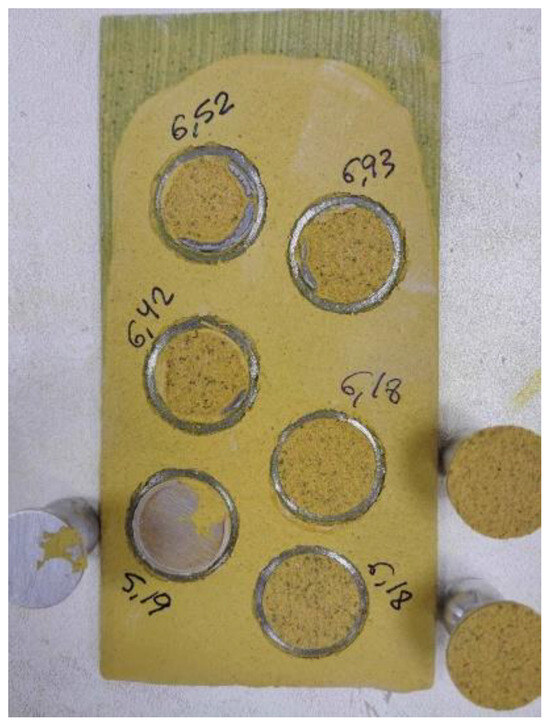
Figure 1.
Pull-off test.
Additionally, it is important to highlight the specific benefits that Metallum provides to steel components, including corrosion protection, fire resistance at extreme temperatures, and a reduction in thermal conductivity, which is crucial for steel structures with a high fire risk. Proper surface preparation should follow standard practices for metallic surfaces, with an Sa 2 ½ grade according to ISO 8501 2007 [12] and a recommended roughness of >40 microns. Depending on the substrate, the application of a primer from the same manufacturer may be required as an initial coating layer.
The coating solution was evaluated at Tecnalia’s facilities in Spain, focusing on improving corrosion protection and the circular economy.
2.3. Comparison with Other Systems
2.3.1. Intumescent Paints
This section presents a comparison between cork paint (MFR) and intumescent paints [13] in terms of adhesion, required thickness, thermal conductivity, and corrosion protection—key aspects for the protection of metallic structures.
- Adhesion:
- Cork paint (MFR): According to ISO 4624 (Paints and Varnishes—Pull-Off Test for Adhesion) [11] MFR demonstrated adhesion greater than 5 MPa on metallic surfaces. This level of adhesion ensures coating durability, even in adverse conditions.
- Intumescent paints: Intumescent paints typically exhibit adhesion in the range of 2–4 MPa, depending on the type of paint and surface preparation. Although this value is adequate for many applications, it may not be sufficient in environments where maximum coating durability is required.
- Required Thickness:
- Cork paint (MFR): The typical application thickness of MFR ranges between 3000 and 5000 microns (3–5 mm). This thickness allows for effective protection with a minimal impact on the weight added to the structure.
- Intumescent paints: To achieve an equivalent level of fire protection, intumescent paints require greater thicknesses, generally between 4 mm and 10 mm or more. This significantly increases the weight and can affect structural integrity over the long term.
- Thermal Conductivity:
- Cork paint (MFR): Cork is known for its low thermal conductivity, with values between 0.037 and 0.040 W/m·K. This not only contributes to fire resistance, but also provides effective thermal insulation, crucial for the protection of metallic structures.
- Intumescent paints: While intumescent paints offer thermal insulation during a fire, their thermal conductivity in normal conditions is generally higher (0.1–0.3 W/m·K), making them less effective in preventing heat transfer in normal conditions.
- Corrosion Protection:
- Cork paint (MFR): Studies have shown that cork-based coatings can reduce corrosion rates on steel surfaces by up to 60% compared to untreated surfaces, according to salt spray tests (Progress in Organic Coatings, 2020) [14].
- Intumescent paints: Intumescent paints do not provide corrosion protection on their own, requiring the application of additional anti-corrosive coatings to ensure the steel is protected, thus increasing the complexity and cost of the coating system.
This comparison highlights the advantages of cork paint (MFR) over intumescent paints in applications that require not only fire protection but also superior adhesion, minimal thickness, effective thermal insulation, and comprehensive corrosion protection.
2.3.2. Refractory Mortars
Refractory mortars [15] are mixtures of cements, aggregates, and other materials designed to withstand high temperatures and corrosive environments.
Advantages: Refractory mortars are known for their high resistance to abrasion, thermal shock, and corrosion. They can withstand extremely high temperatures and provide structural support in industrial settings.
Disadvantages: These materials are heavy, which can add a significant load to structures. The application process is labor-intensive and requires careful curing to achieve the optimal performance. Their bulkiness and weight can also be a disadvantage in certain applications.
MFR offers a lightweight alternative to refractory mortars, making it easier to apply and is less burdensome on structures. Additionally, MFR provides multifunctional benefits, including thermal and acoustic insulation, which refractory mortars do not typically offer. Its ease of application and environmental benefits make it a more versatile solution.
2.4. Laboratory Tests
The laboratory tests detail the fire-resistance testing conducted on the product under analysis. The primary objective of these tests was to evaluate the product’s behavior and performance under fire conditions according to the established standards. Two specific tests were performed to assess both the integrity and insulation capabilities of the material.
2.4.1. Test Methods
The first test was conducted according to the standards UNE EN 1364-1:2019/EN [16], 1363-1:2012/BS [17], 476-20:1987/BS [18], and 476-22:1987 [19].
The temperature curve is defined in the standard EN 1363-1:2020 [20]:
T = 345 log10(8t + 1) + 20
The applicable evaluation criteria are as follows:
Laboratory tests were conducted on different material samples to evaluate their behavior under fire conditions. The key observations and results are presented below following the laboratory criteria:
Integrity Criteria:
- Ignition of the cotton pad.
- Penetration of 25 mm and 6 mm diameter gauges.
- Appearance of sustained flames on the unexposed face.
- Insulation Criteria:
- Increase in the average temperature of the unexposed face of the sample limited to 140 °C.
- Increase in temperature at any point of the sample limited to 180 °C.

Table 1.
Details of the test.
Table 2.
Observations during the test.
Table 3.
Summary of results.
2.4.2. Analysis of Results
The laboratory tests show that the samples exhibit integrity and temperature failures at various intervals. Sample MV78236_4 demonstrated the best performance in terms of integrity, while MV78236_6 had the earliest maximum temperature failure. These results are crucial for evaluating the effectiveness of materials under real fire conditions and should be considered in the development of fire protection strategies.
Second test: the product demonstrated fire resistance, protecting metal specimens for over an hour at nearly 1000 °C. Tests on a carbon steel sample with a 5000 micron coating showed no thermal penetration, effectively insulating against both direct flame contact and radiative heat transfer. A new formulation, with reduced thickness (3000 microns) and no smoke emissions, was tested at 1000 °C for four hours. It maintained the integrity of the protected side, with temperatures not exceeding 130 °C on the unexposed side. This new formula, patent pending, suggests significant potential for fire protection in extreme conditions, highlighting its suitability for installations and escape routes due to its effective insulation and ease of application.
ANOVA test performed on the data from Table 3.
- Since the data are categorized by different measures (integrity, insulation, avg. temp, and max temp), we would perform a separate ANOVA for each measure across all samples.
- Calculate the mean for each measure: Find the mean values for integrity, insulation, avg. temp, and max temp across all samples.
- Sum of squares: Calculate the sum of squares between groups (SSB) and within groups (SSW).
- Calculate mean squares: For each measure, calculate the mean squares for between groups (MSB) and within groups (MSW)
F = MSB/MSW
F-statistic: 0.55
p-value: 0.655
F-statistic: 0.55
p-value: 0.655
Based on the results, we cannot conclude that there are significant differences between the means of the different measures (integrity, insulation, average temperature, and maximum temperature). This suggests that, within the context of this dataset, the different aspects of fire resistance performance measured (integrity, insulation, average temperature, and maximum temperature) do not vary significantly from one another.
3. Results and Discussion
3.1. Fire Resistance
Performance during Direct Fire Exposure
The product has shown remarkable fire resistance, maintaining the protection of metal specimens for over an hour (first tests) at temperatures close to 1000 °C.
Direct fire tests on the coating were conducted on a carbon steel test specimen measuring 150 × 90 × 6 mm, to which a layer of about 5000 microns average thickness was applied on one side [11]. Figure 2 and Figure 3 show the test.
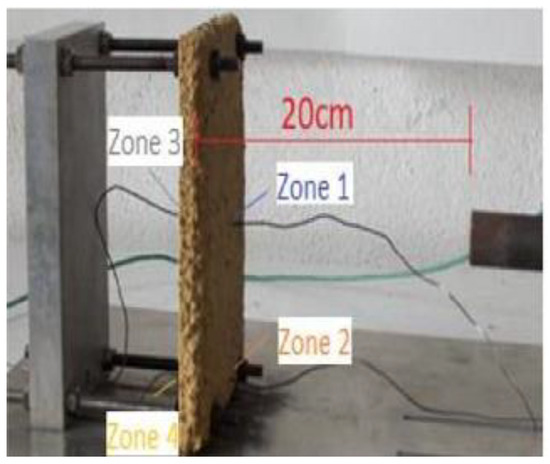
Figure 2.
Assembly of equipment for a laboratory test with precision.
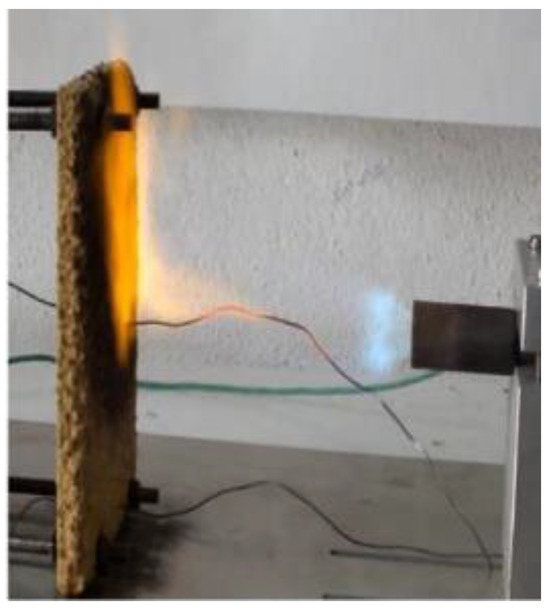
Figure 3.
Laboratory assay involving precise procedures with a flame.
As shown in Figure 4 and Figure 5, the transmission of thermal energy is completely reduced, offering protection from the effect of the flame both in the direct linear transmission of penetration and in the transmission perpendicular to the incidence of the flame. This dual-mode protection underscores the product’s efficacy in safeguarding against both direct flame contact and radiative heat transfer.
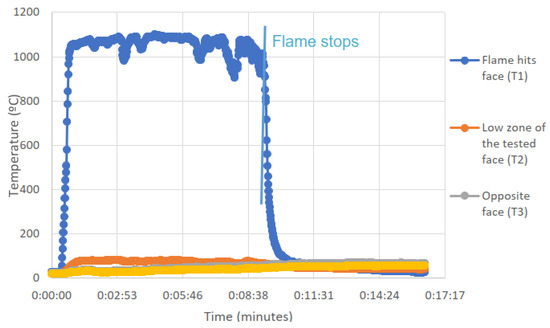
Figure 4.
Fire directly on the coated side for 10 min.
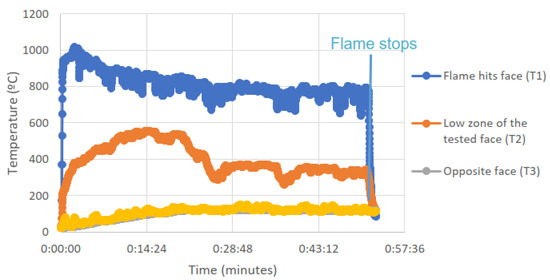
Figure 5.
Fire directly on the coated side for 55 min.
This high level of protection is maintained under direct fire exposure. Furthermore, the product’s coating significantly diminishes the transmission of thermal energy.
Direct fire on the coupon on its protected side did not affect its integrity, with no temperature effect being observed on the surface opposite to the incidence of the flame.
3.2. New Formulation
A new, improved formulation that limits smoke emissions and minimizes the thickness to be used was tested again with highly promising results.
A new test was carried out at 1000 °C with a lower coating thickness (3000 microns), increasing the test time to four hours.
The new formulation of the fire-resistant product was rigorously tested at elevated temperatures. The test involved applying the coating, with a reduced thickness of 3000 microns, to a carbon steel specimen measuring 150 × 90 × 6 mm and subjecting it to direct fire at 1000 °C. This test, lasting over four hours, demonstrated that the exposed side of the specimen reached 1000 °C, while the reverse side’s temperature peaked at only 130 °C. Significantly, this new formula did not produce smoke or emit gases during the experiment, indicating enhanced safety and environmental friendliness. This performance suggests the formulation’s potential for effective fire protection in extreme conditions.
Figure 6 shows the fire sequence.
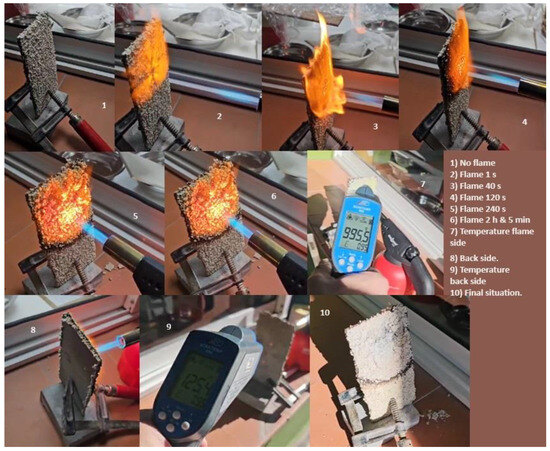
Figure 6.
Fire sequence: (1) no flame, (2) flame at 1 s, (3) flame at 40 sg (4) flame at 120 s, (5) flame at 240 s, (6) flame after 2 h and 5 min, (7) temperature at 2 h and 5 min, (8) back side after 4 h, (9) temperature on back side after 4 h, and (10) final result of the side in contact with the flame.
No changes are seen from 2 min to 2 h; the maximum temperature on the reverse side during the 4 h test is <130 °C. This offers great potential for ease of application and safety for installations and escape routes.
The test results for the new formulation of the fire-resistant coating reveal its significant potential for practical application in enhancing safety in buildings, especially in critical areas like installations and escape routes. In scenarios where the coating thickness was set at 5 mm, the maximum temperature recorded on the opposite side of the application was only 80 °C. Even with a thinner layer of 3 mm, the temperature on the unexposed side remained within the relatively low range from 125 to 130 °C. These findings highlight the coating’s effectiveness in maintaining lower temperatures on surfaces opposite to the fire source, underlining its suitability for use in environments where fire safety and heat insulation are paramount.
3.3. Additional Properties
The indicated values of the properties are supported by tests carried out by independent laboratories, such as the Tecnalia Technology Center and the University of the Basque Country/Euskal Herriko Universitatea.
During the tests carried out to determine the capabilities of the product, it was possible to discover other interesting properties, such as its low thermal conductivity that allows its use in other applications.
3.3.1. Thermal Insulation Based on Expanded Natural Cork
Insulation capacity presents the possibility of controlling room insulation, where it reduces the power requirements of HVAC equipment.
Thermal conductivity (λ) of natural cork: 0.036 W/m K.
Thermal conductivity (λ) of paint: 0.061 W/m K [10].
3.3.2. Pending New Tests with the New Formulation
Low thermal conductivity, with results that allow the paint’s use for the insulation of pipes with heat transmission and thermal bridges, also provides the characteristics of anti-corrosion resistance. The product was tested as the first choice for pipe insulation repair with positive results. It is observed that it reduces/eliminates thermal bridges and humidity due to condensation.
The ice on top of the MFR coating does not suffer a reduction because of the flame that affects the other side. Figure 7 shows the process of the test.
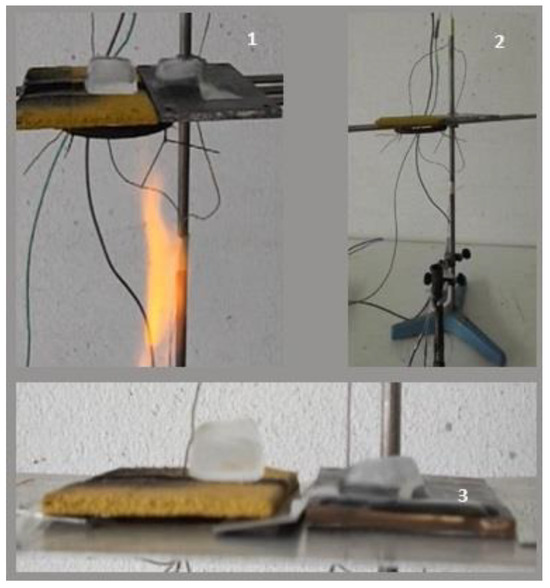
Figure 7.
1. Decrease in the ice on top of the MFR coating. Photograph of the test in progress. 2. Layout of the test. 3. Result of the reduction difference in ice protected by the different compounds.
3.3.3. Antifreeze Properties
Adhesion of ice on the coating of 0.87 kg/cm2 (0.08 MPa).
The low adhesion of ice allows the creation of safe passageways and escape routes. These properties make it interesting to test also as an antifreeze product for use on access ladders.
3.3.4. Acoustic Tests
The product offers acoustic [21] correction for vibrations, echo, reverberation, airborne noise, and impact; this is show in Figure 8.
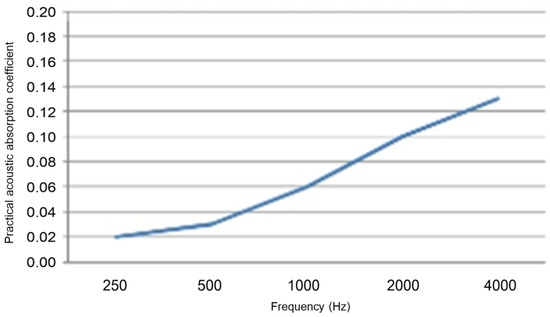
Figure 8.
Practical acoustic absorption coefficient in relation to frequency.
The practical acoustic absorption coefficient, αw 0.1, is detailed in Table 4.
Table 4.
Practical acoustic absorption coefficient in relation to frequency.
3.3.5. Compression and Tensile Tests
The product also underwent compression, Figure 9 and Figure 10, and elongation tests, Figure 11, indicating its suitability for high-pressure areas and blows. These tests suggest the potential for diverse applications, particularly in environments where both insulation and structural resilience are required.
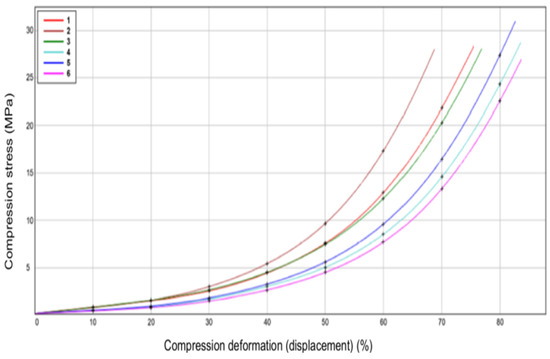
Figure 9.
Diagram of the relation of compression stress (Mpa) and compression deformation in percent displacement.
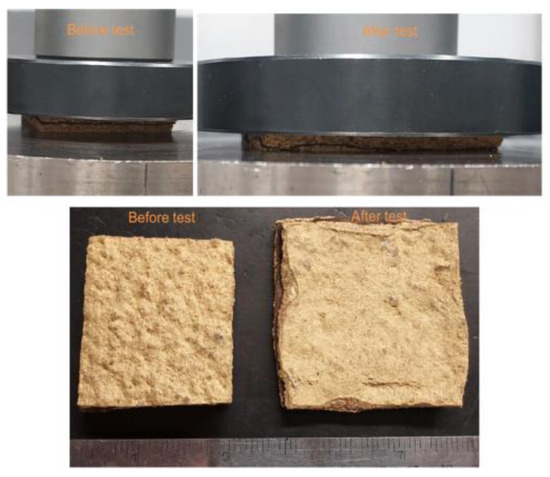
Figure 10.
Before and after images of the MFR test.
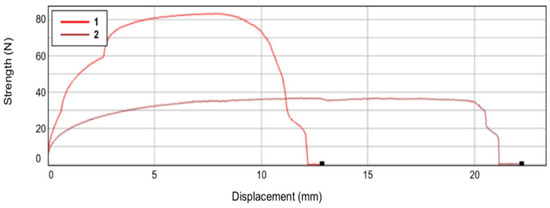
Figure 11.
Elongation test results.
The product has great elasticity (higher than 300%), and this characteristic lets it support the dilatations and contractions that we found in the various construction materials: metallic or cementitious.
3.3.6. Smoke Production
Fire reaction classification: CLASS B-s1, d0 [22].
3.3.7. Abrasion Resistance TABER Test
Taber abrasion test: an original tube test with 1130 microns of total weight loss (0.189 g), with a 1000 g load, and after 2500 cycles with CS17 grinding wheels [23].
3.3.8. Easy Repair and Application
Another characteristic that has been observed is the ease of application, making it possible to apply the product on surfaces with non-demanding Sa2 [24] preparation. It enables the simple repair of even the most severe fire damage through light sanding, priming, and reapplication, restoring the original characteristics and performance.
3.3.9. Fire Resistance Test
We determined the fire resistance of the representative sample with the following elements.
We used six steel plates with a thickness of 3 mm, dimensions of 600 mm × 600 mm, coated with ReveCork Metalum M500 fire protection RTS 001, RF-4, applied at various thicknesses, and referenced by the client as PR23_0859 MOD.01. Figure 12, Figure 13 and Figure 14 show the details of the sample placement for the test. Blisters are visible on plates 4 and 5. The left image (Figure 14) shows the positioning of the pressure and oven control sensors, while the right image provides a view of the sensor placement temperature curve.
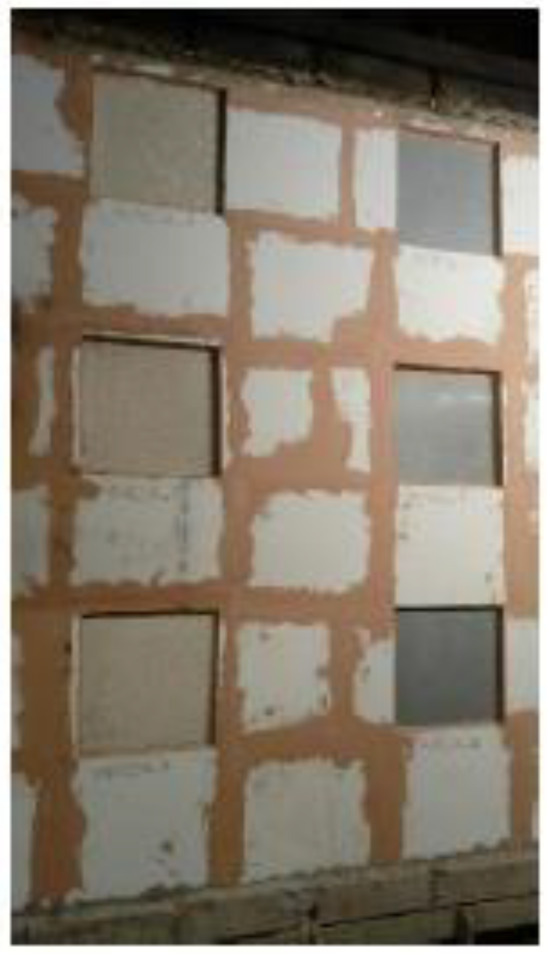
Figure 12.
Detail of the placement of the samples for the execution of the tests.
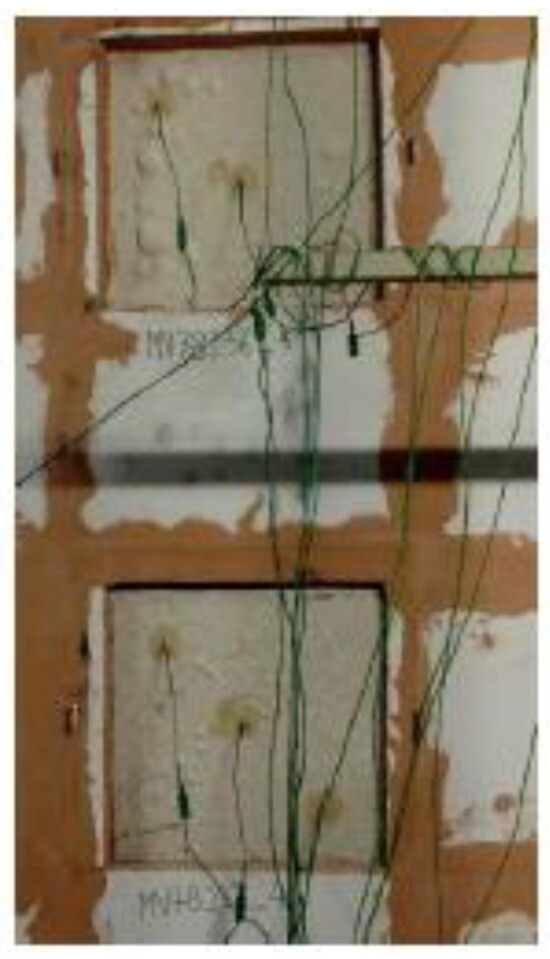
Figure 13.
Appearance of blisters on plates 4 and 5.
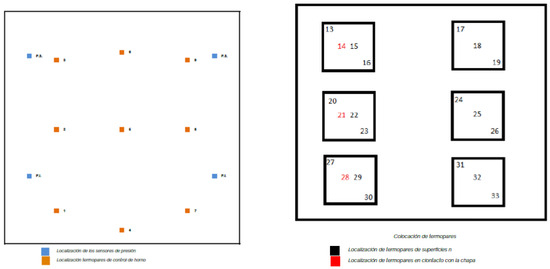
Figure 14.
Location of pressure and oven control sensors in the left image and location of pressure and oven control sensors in the right image.
The temperature curve is defined by the standard EN 1363-1:2020 following T = 345 log10(8t + 1) + 20. In Figure 15, Figure 16 and Figure 17, it is possible to see the details of the temperature evolution through graphs that correlate the maximum temperatures with the time taken to reach them, as well as the temporal progression of the test.
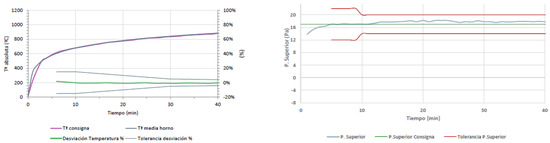
Figure 15.
Evolution of temperature over time according to the normalized curve (left). Temperature evolution at the top of the oven (right).
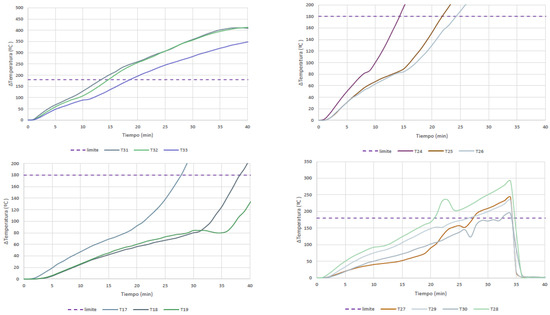
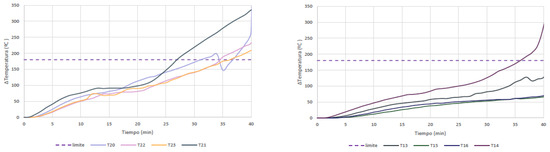
Figure 16.
Maximum temperature in plates 1 to 6.
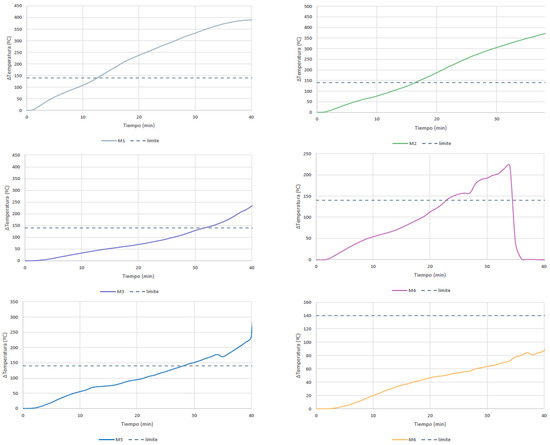
Figure 17.
Increase in temperature on plates 1 to 6.
3.3.10. Evaluation Criteria
Integrity Criteria:
3.3.11. Insulation Criteria
- -
- Increase in the average temperature of the unexposed face of the sample limited to 140 °C.
- -
- Increase in temperature at any point on the sample limited to 180 °C.
3.4. Plate Temperature Graphics
In the course of our experimental study, it is critical to monitor the performance and integrity of the materials under test. The Figure 18 and Figure 19 below provides a detailed visual account of the test conditions at a crucial 30-min mark. This time point offers valuable insights into the behavior of the materials under sustained stress and the necessary interventions to maintain the integrity of the experiment.
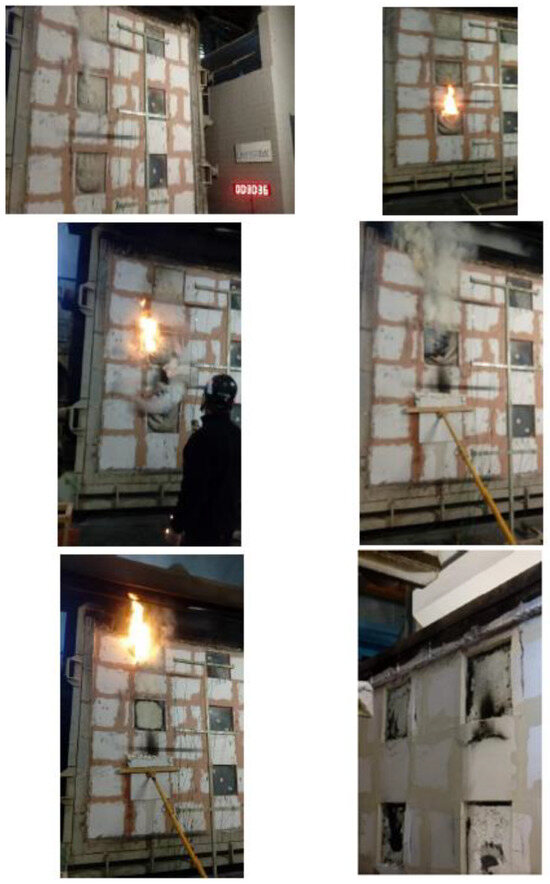
Figure 18.
Situation of the plates at 30 min into the test, and failures of plates 4 and 5. And control of the burning plates to be able to continue testing the rest of the plates.
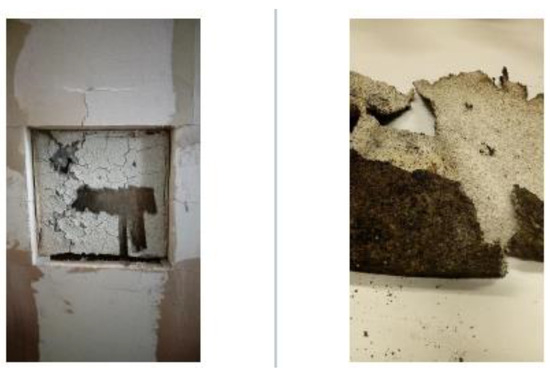
Figure 19.
Results of the tests and status of the paint samples at the end of the test.
3.5. Graphics Summary
The tables and graphs (Figure 1, Figure 2, Figure 3, Figure 4, Figure 5, Figure 6, Figure 7, Figure 8, Figure 9, Figure 10, Figure 11, Figure 12, Figure 13, Figure 14, Figure 15, Figure 16 and Figure 17) in this study illustrate the temperature performance of the cork-based coating (MFR) applied to the metal samples under direct fire exposure.
The results demonstrate that the temperature on the protected side of the samples remains stable and does not rise excessively until a specific point in the experiment.
Upon further investigation, it was discovered that the temperature spike observed at that moment was not due to the failure of the material’s fire resistance. Instead, it was caused by a mechanical disruption during the plates’ installation process, which led to the cork layer being damaged or becoming detached from the sample’s surface. This disruption compromised the integrity of the coating, allowing the temperature to rise in those specific areas.
The sections of the samples where the cork layer remained intact continued to provide effective thermal insulation, preventing significant heat transfer and maintaining low temperatures, even under extreme fire conditions. This highlights the importance of the proper application and installation of cork-based coatings to ensure the maximum effectiveness for fire protection. From the observed results, sample MV78236_6 could be classified as EI 30 according to EN 13501-2:2023 [25]. This result can be greatly improved with the new formulation.
4. Conclusions
MFR, derived from natural materials like tree bark and using water-based binders, represents an eco-friendly, multifunctional solution for buildings and tunnels. Its significant CO2 absorption ability emphasizes its role in sustainable and environmentally responsible construction practices.
We cannot overlook the carbon savings associated with using cork in this paint, which makes this product a key factor for reducing the carbon footprint. Cork has a unique ability to store carbon. Its distinctive cellular structure acts as a natural carbon reservoir, helping to mitigate CO2 levels in the atmosphere. This carbon storage capability is retained even after the cork has been processed into final products.
Beyond fire resistance, MFR provides substantial benefits for sustainability and the circular economy through its excellent insulation properties, maintaining stable temperatures and humidity levels, thus reducing energy consumption and improving indoor comfort. It also offers acoustic protection.
There is a significant scope for further research, particularly in conducting full-scale fire tests in tunnels, and exploring other potential applications, such as acoustic improvement, temperature regulation, and corrosion protection.
The paint’s elasticity supports various construction materials’ dilation and contraction, making it suitable for diverse applications. Its easy application and the potential for reducing air conditioning needs by over 30% highlight its practical benefits in various settings.
Using MFR as a coating on the walls and ceilings of tunnels and underground structures can significantly enhance fire resistance, providing an additional barrier against fire spread and protecting structural integrity.
Implementing MFR in passive fire protection systems, such as coatings for electrical cables and ventilation ducts, can help prevent ignition and fire spread, ensuring greater safety in underground environments.
Applying MFR on metal surfaces in tunnels and underground structures can protect them against corrosion, extending the lifespan of metal components and enhancing overall structural safety.
Using MFR to coat critical infrastructure, such as pipes and metal supports, can prevent corrosion caused by the exposure to humid and aggressive environments typical in underground settings, ensuring greater durability and reliability of the system. An example of where this could have been used is in tunnels lined with shotcrete, a solution that has been recommended for other additives or coatings [26] and that can be solved with the use of MFR. This would allow for its simple application in tunnels, and even in already completed tunnels, to improve their fire resistance. It could also be used to protect electrical systems, panels, cables, or transformers, significantly increasing their fire-resistant properties.
Author Contributions
Conceptualization, A.A.-J., P.M.A. and E.H.-P.; methodology, A.A.-J., P.M.A. and E.H.-P.; formal analysis, A.A.-J., P.M.A. and E.H.-P.; investigation A.A.-J., P.M.A. and E.H.-P.; data curation A.A.-J., P.M.A. and E.H.-P.; writing—original draft preparation, A.A.-J., P.M.A. and E.H.-P.; writing—review and editing, A.A.-J., P.M.A. and E.H.-P.; visualization, A.A.-J., P.M.A. and E.H.-P. All authors have read and agreed to the published version of the manuscript.
Funding
This research received no external funding.
Institutional Review Board Statement
Not applicable.
Informed Consent Statement
Not applicable.
Data Availability Statement
Data The original contributions presented in the study are included in the article; further inquiries can be directed to the corresponding author.
Acknowledgments
The authors of the article have used ChatGPT-4 for grammar review and ensuring proper English in the scientific paper.
Conflicts of Interest
Mr. Exabier Hormaza-Polo is employed by Sustainable Technical Coatings S.L., and remaining authors declare that no conflicts of interest.
References
- Chen, H.; Zhu, P.; Yan, X.; Xu, X.; Wang, X. Exploring the Application Potential and Performance of SiO2 Aerogel Mortar in Various Tunnel High-Temperature Environments. Fire 2023, 6, 407. [Google Scholar] [CrossRef]
- Jeon, Y.; Park, J.; Park, J.; Kang, C. Fire Risk of Polyethylene (PE)-Based Foam Blocks Used as Interior Building Materials and Fire Suppression through a Simple Surface Coating: Analysis of Vulnerability, Propagation, and Flame Retardancy. Fire 2023, 6, 350. [Google Scholar] [CrossRef]
- Santos-Reyes, J.; Beard, A. An analysis of the emergency response system of the 1996 Channel tunnel fire. Tunn. Undergr. Space Technol. 2017, 65, 121–139. [Google Scholar] [CrossRef]
- Guo, C.; Zhang, T.; Guo, Q.; Yu, T.; Fang, Z.; Yan, Z. Full-scale experimental study on fire characteristics induced by double fire sources in a two-lane road tunnel. Tunn. Undergr. Space Technol. 2023, 131, 104768. [Google Scholar] [CrossRef]
- Liu, C.; Deng, T.; Zhou, S.; Yan, R.; Huang, L. Experimental investigation on fire assessment for typical interior wallpapers. Fire Technol. 2022, 58, 991–1009. [Google Scholar] [CrossRef]
- Mitton, M. Interior Design Visual Presentation: A Guide to Graphics, Models and Presentation Techniques; John Wiley & Sons: Hoboken, NJ, USA, 2012. [Google Scholar]
- Yang, H.-S.; Kim, D.-J.; Kim, H.-J. Combustion and Mechanical Properties of Fire Retardant Treated Waste Paper Board for Interior Finishing Material. J. Fire Sci. 2022, 20, 505–517. [Google Scholar] [CrossRef]
- Konecki, M.; Galaj, J. Flame transfer through the external walls insulation of the building during a fire. Procedia Eng. 2017, 172, 529–535. [Google Scholar] [CrossRef]
- MEST EN ISO 14040:2011; Environmental Management—Life Cycle Assessment—Principles and Framework. Instituto Catalán del Corcho ICSURO: Girona, Spain, 2011.
- ISO 13787:2003; Thermal Insulation Products for Building Equipment and Industrial Installations—Determination of Declared Thermal Conductivity. International Organization for Standardization, ISO Norm: Geneva, Switzerland, 2003.
- ISO 4624:2023; Paints and Varnishes—Pull-Off Test for Adhesion. International Organization for Standardization, ISO Norm: Geneva, Switzerland, 2023.
- ISO 8501-1:2007; Preparation Steel Surface before Application of Paints and Related Products. International Organization for Standardization, ISO Norm: Geneva, Switzerland, 2007.
- Morgan, A.B.; Wilkie, C.A. Flame Retardant Polymer Nanocomposites; John Wiley & Sons: Hoboken, NJ, USA, 2007. [Google Scholar]
- ASTM B117; Progress in Organic Coatings Salt Spray Test. ASTM American Society for Testing and Materials: West Conshohocken, PA, USA, 2020.
- Sarkar, R. Refractory Technology: Fundamentals and Applications, 1st ed.; CRC Press: Boca Raton, FL, USA, 2016. [Google Scholar] [CrossRef]
- UNE EN 1364-1:2019; Fire Resistance Tests for Non-Loadbearing Elements—Part 1: Walls. AENOR: Madrid, Spain, 2019.
- UNE-EN 1363-1:2012; Fire Resistance Tests—Part 1: General Requirements. AENOR Norma Española: Madrid, Spain, 2012.
- 476-20:1987/BS; Fire Tests on Building Materials and Structures—Method for Determination of the Fire Resistance of Elements of Construction (General Principles). The British Standards Institution: London, UK, 2014.
- 476-22:1987/BS; Fire Tests on Building Materials and Structures—Method for Determination of the Fire Resistance of Non-Loadbearing Elements of Construction. The British Standards Institution: London, UK, 2014.
- UNE-EN 1363-1:2021; Fire Resistance Tests—Part 1: General Requirements. AENOR Norma Española: Madrid, Spain, 2021.
- ISO 354:2003; Measurement of Sound Absorption in a Reverberation Room. AENOR: Madrid, Spain, 2003.
- UNE EN 13823: 2012; Reaction to Fire according to Standard. AENOR: Madrid, Spain, 2011.
- UNE 48250:1992; Paints and Varnishes. Abrasion Resistance. Taber Method. AENOR: Madrid, Spain, 1992.
- ISO 8501-3:2006; Preparation of Steel Substrates before Application of Paints and Related Products Visual Assessment of Surface Cleanliness. International Organization for Standardization, ISO Norm: Geneva, Switzerland, 2006.
- UNE EN 13501-2:2023; Fire Classification of Construction Products and Building Elements. Classification Using Data from Fire Resistance and/or Smoke Control Tests, Excluding Ventilation Services. AENOR: Madrid, Spain, 2023.
- Alonso-Jiménez, A.; Suárez-Fino, J.; Regueiro y González-Barros, M.; López-Jimeno, C. Study of the Behavior of Excavations and Support Systems for an Alternative Construction Model of the Tunnels in Mexico City. Appl. Sci. 2023, 13, 3601. [Google Scholar] [CrossRef]
Disclaimer/Publisher’s Note: The statements, opinions and data contained in all publications are solely those of the individual author(s) and contributor(s) and not of MDPI and/or the editor(s). MDPI and/or the editor(s) disclaim responsibility for any injury to people or property resulting from any ideas, methods, instructions or products referred to in the content. |
© 2024 by the authors. Licensee MDPI, Basel, Switzerland. This article is an open access article distributed under the terms and conditions of the Creative Commons Attribution (CC BY) license (https://creativecommons.org/licenses/by/4.0/).