
Featured Application
The research results of this paper have been applied to the evaluation of ship curved plate forming in the field of shipbuilding. The evaluation method proposed in this article can save manufacturing hours and construction costs. Designers can predict the forming difficulty before actual processing. Green manufacturing and energy saving can be achieved through optimized design schemes. It can also provide ideas for research about plate forming difficulty evaluation in the fields of aerospace manufacturing, chemical pressure vessel and precision manufacturing.
Abstract
To solve the problem that the lack of reference for hull plate division leads to the difficulty and low efficiency of curved plate forming, the forming difficulty evaluation of complex curved hull plates is researched. Considering the characteristics in curved plate forming process, the forming difficulty evaluation model of complex curved hull plates based on grey relational analysis is established. The evaluation process of forming difficulty for curved plates is designed. The influence law of parameters and forming parameters on the forming difficulty of curved plates are revealed. The weight coefficients of different influencing factors on the forming difficulty of curved plates are quantified. Taking the real hull plate of a container ship as an example, the evaluation results for the forming difficulty of curved plates are calculated based on the evaluation model. The rationality of the evaluation model is verified by comparing the evaluation results of curved plate forming and the process time data. The research can provide a reference for the reasonable division of hull plates and reduce the forming difficulty of curved plates.
1. Introduction
In recent years, China’s shipbuilding industry has been developing rapidly. The forming and manufacturing of outer hull plates is an important part in shipbuilding. Part of the outer hull plate is composed of complex undevelopable curved surfaces, so complex curved plates forming is a key process in ship manufacturing. The forming methods of curved hull plates mainly include mechanical cold bending technology and line heating forming technology. The technology of cold bending technology is very mature in the field of shipbuilding. Zhou, W. et al. reviewed the advances and trends in forming techniques of curved extrusion profiles of metal alloys [1]. They proposed a novel method for forming controlled curved profiles/sections, differential velocity sideways extrusion (DVSE), and verified this through physical experiment and numerical modelling [2]. The curvature in the direction of large curvature for the complex curved hull plate by mechanical cold bending technology, and the curvature in other directions, is formed by the hydrothermal bending method. The line heating technology is generally based on the shape of the steel plate to be formed by experienced workers holding the flame heating source and tracking the water cooling [3]. This forming process is named line heating, which is highly dependent on experience. There are problems such as low production efficiency and unstable forming quality. The process of curved plate forming is widely neglected, and the relationship between the forming difficulty of curved plates and plate division is also neglected, which leads to a decrease in the rationality for part of the curved plate division. Therefore, it is very important to realize the integration of the whole process of shipbuilding design and production, shorten the overall manufacturing cycle of ships and improve the competitiveness of shipbuilding enterprises.
Most of the current research by scholars on the manufacturing of outer hull plates are focused on the development of the automatic system of line heating [4,5,6], prediction of process parameters [7], prediction of reforming parameters and inspection of formed surfaces, etc. [8]. Assessment of the difficulty in forming complex curved plates is not taken seriously. The main considerations in the division of plates are segment integrity, continuity of plate joints and lifting feasibility, etc. The lack of quantitative evaluation means of forming difficulty of curved plates makes it difficult to make reasonable divisions of curved hull plates with reference to forming difficulty, resulting in some curved plates being extremely difficult to form.
In the process of line heating for plate forming, workers make judgments based on experience whether the outer hull plate is difficult to form. There is a certain bias in this process. If a piece of curved plate is extremely difficult to form and process or even impossible to process, it will cause the waste of man-hours, time and materials, and is not conducive to the research of automatic forming of line heating for curved hull plates.
In order to solve the above problems, it is necessary to study the evaluation of forming difficulty of curved hull plates and provide reference for the division of hull plates when considering the forming difficulty of complex curved plates. In addition, other industrial fields such as metal shells of large equipment in aerospace and double curvature plates in offshore platforms [9,10] also have the problem of the difficult forming of complex curved plates. The research on the evaluation of the forming difficulty of complex curved hull plates can also provide reference for other fields of curved plate forming and manufacturing [11]. Therefore, this paper conducts a series of studies on the difficulty evaluation of ship complex curved plate forming based on grey relational analysis (GRA). GRA transforms the discrete behavior observations of system factors into piecewise continuous broken lines by the linear interpolation method, and then constructs a model to measure the degree of correlation according to the geometric characteristics of the broken lines. The unknown relationship between the process parameters and forming difficulty of complex curved plates was evaluated by GRA [12]. Through GRA, multiple influencing factors are transformed into the weight of the single factor of the correlation degree between each influencing factor and the difficulty of curved plate forming. Angshuman, B. et al. analyzed the influence of important parameters affecting the manufacturing process of aluminum sheet on the forming effect of aluminum sheets by using grey relational analysis [13]. This analysis verified the feasibility of grey relational analysis in the analysis of curved plate forming.
In this paper, the geometric data and forming parameter data related to the forming of complex curved hull plates are calculated based on the offset data, plate data, plate seam data files and the outer hull plate forming parameter forecasting system provided by shipyards. The influencing factors of forming difficulty of curved hull plates are analyzed. The correlation between the influencing factors and the forming difficulty of curved hull plates is studied based on grey relational analysis. The weight of each influence factor is calculated. According to the correlation between the influencing factors and the forming difficulty, the difficulty coefficient of each influencing factor on the forming difficulty is quantified. Considering the weight and difficulty coefficient, the mathematical model for the difficulty evaluation of forming complex curved hull plates is established. The evaluation results of the forming difficulty of curved plates are thus calculated and the rationality of the evaluation results is analyzed.
The forming difficulty evaluation for curved hull plate based on grey relational analysis can reasonably quantify the forming difficulty of different types of curved hull plates. This method can avoid the work of subjective evaluation such as expert scoring. The calculations are relatively accurate. Ship designers can calculate the difficulty of forming curved plates during plate division. The evaluation results provide a reference for the plate division, which can reduce unreasonable plate division, save manufacturing time and construction costs. This study is very important for improving the efficiency and quality of ship construction, reducing labor and energy consumption, and enhancing the competitiveness of shipyards. It can also provide ideas for research about the evaluation of plate forming difficulty in the fields of aerospace manufacturing, chemical pressure vessels and precision manufacturing.
2. Analyze the Influence Law of Forming Difficulty of Complex Curved Hull Plates
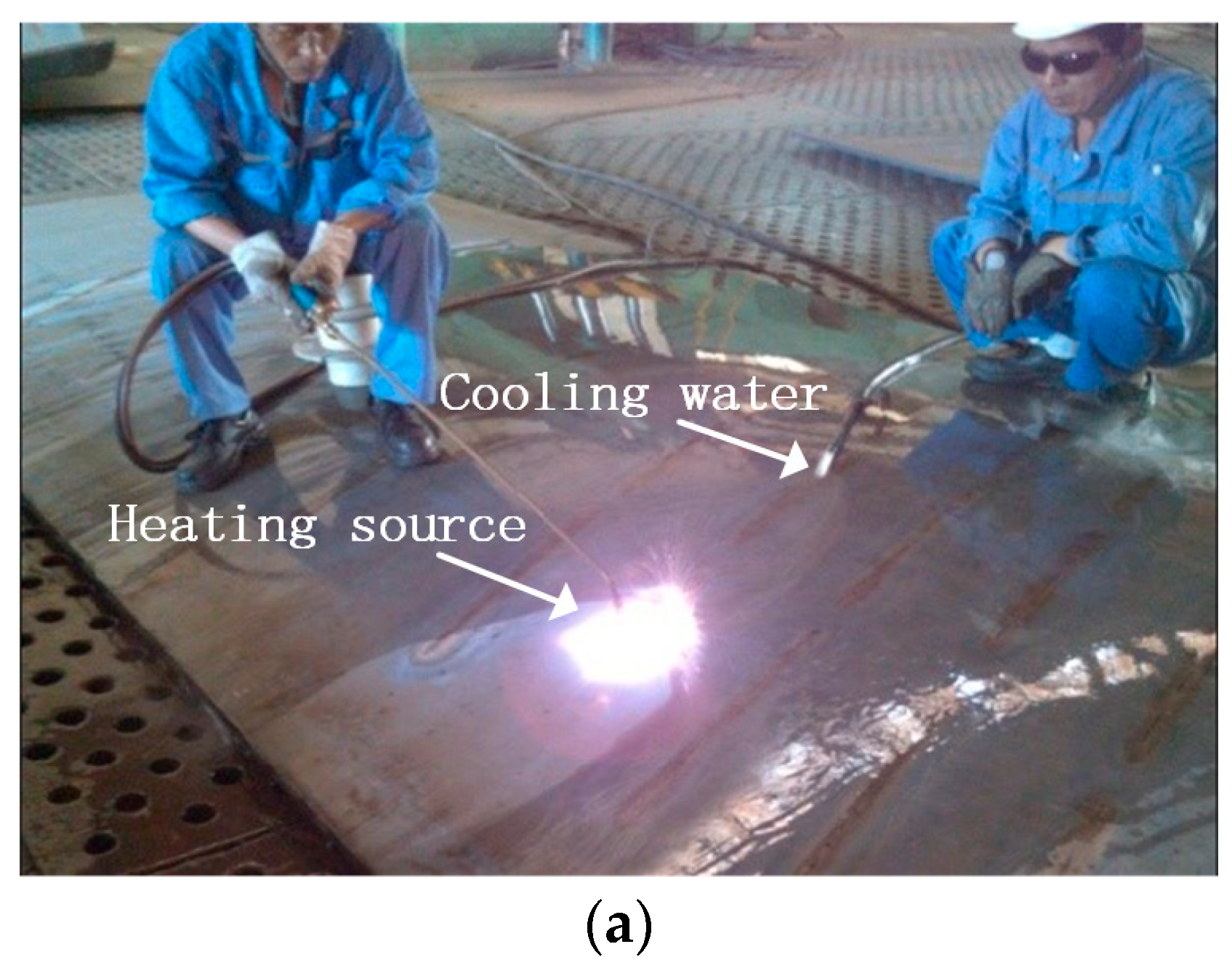
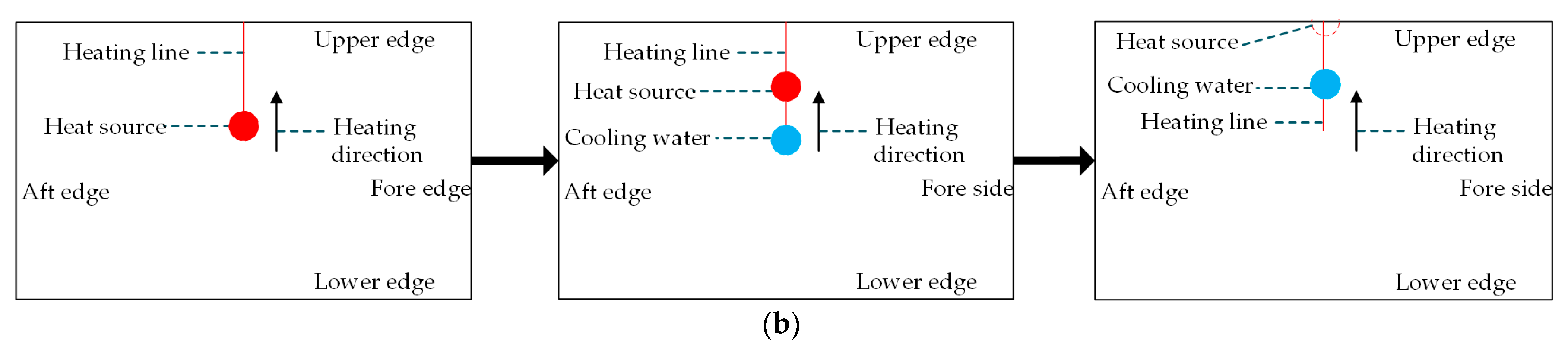
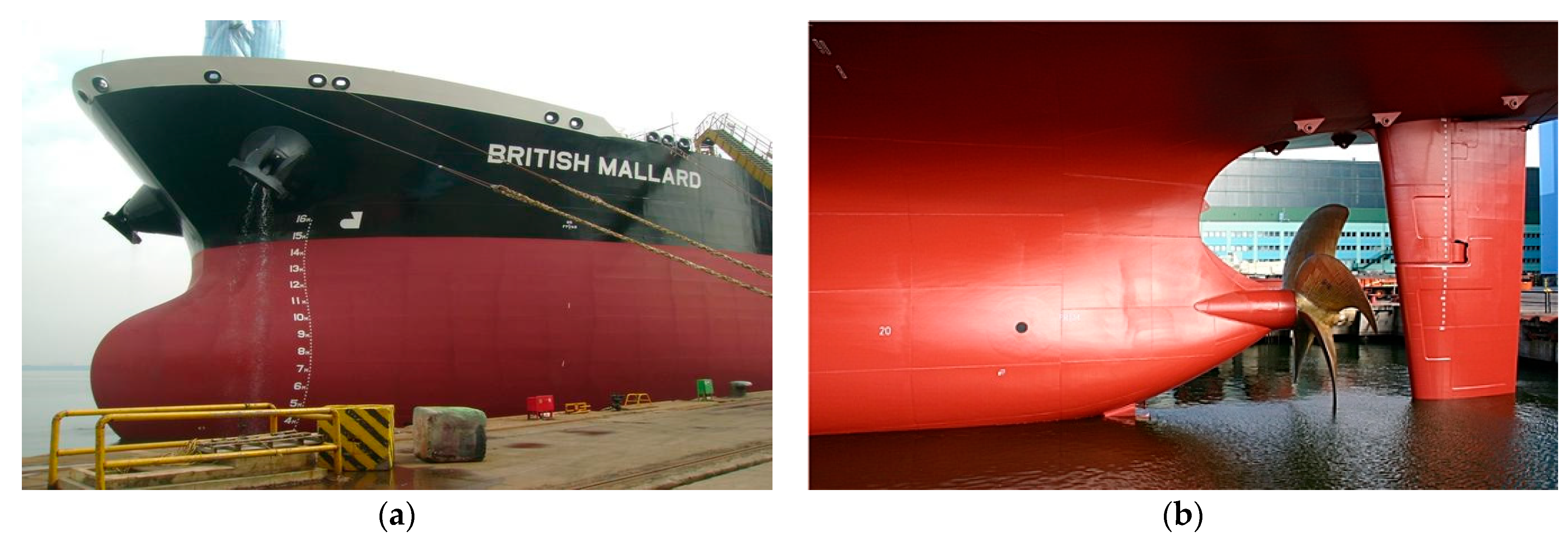
Double curved plates at the bow and stern of the real ship are shown in Figure 1. Figure 2a shows the line heating forming process in the shipyard, which is divided into a heating stage and a cooling stage. As shown in Figure 2b, the heat source is preheated for 5 s at the initial position of the heating line. The heat source moves along the heating direction at a certain velocity, and the cooling water moves with the heat source at the same velocity. The distance between the heat source and cooling water is 0.15 m. When the heat source moves to the end of the heating line, water cooling is applied to the whole plate surface.
Figure 1.
Double curved plates at the bow and stern of real ships: (a) bulbous bow; (b)stern.

Figure 2.
Line heating forming process: (a) actual forming process; (b) heating and cooling stage.
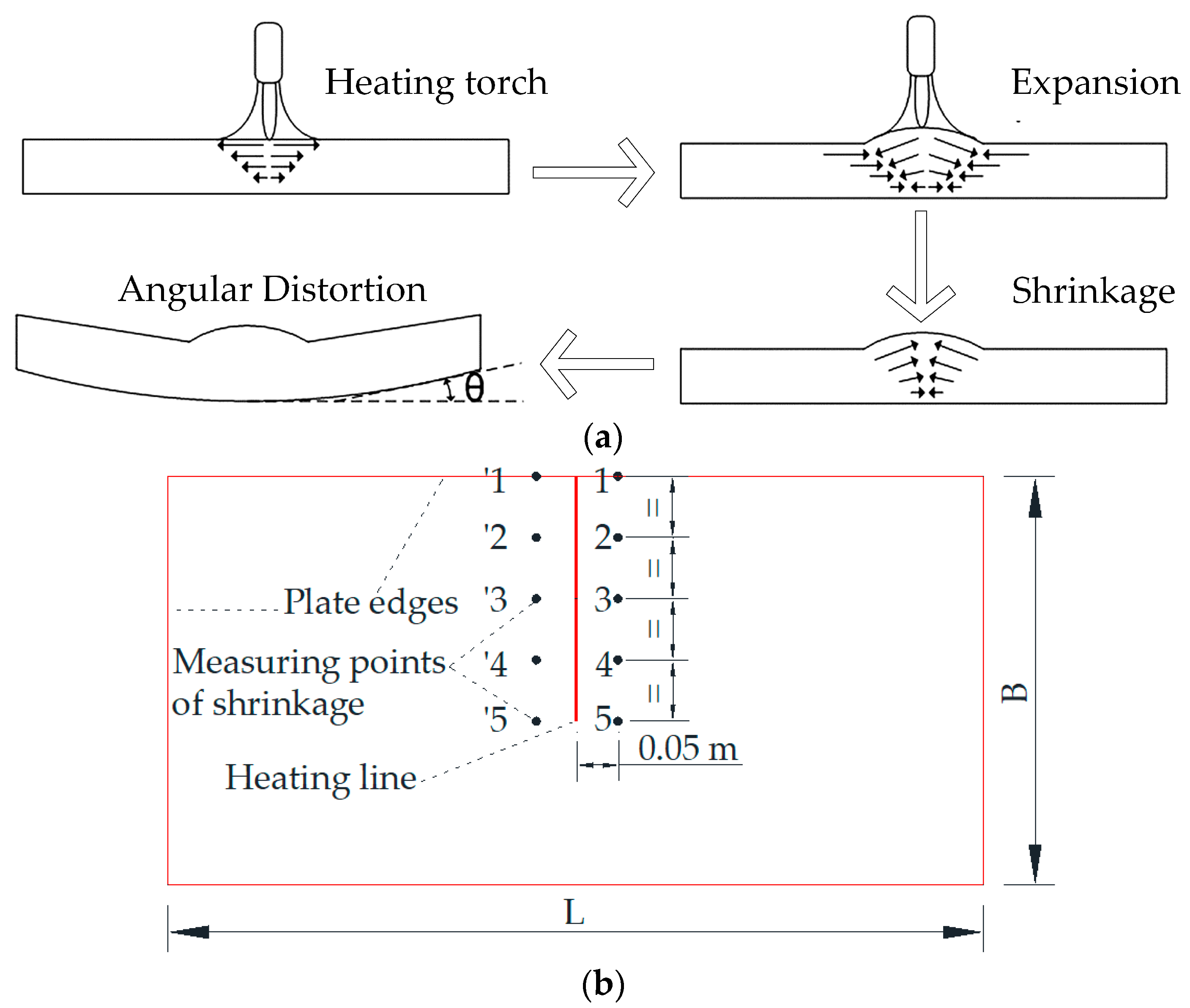
During the heating stage, the surface of the steel plate is heated by a heat source, which causes the plate to expand. Uneven thermal stress is generated due to the temperature gradient in the thickness direction of the plate. The surface temperature of the steel plate rapidly decreases under the action of cooling water, which leads to the shrinkage of the plate.
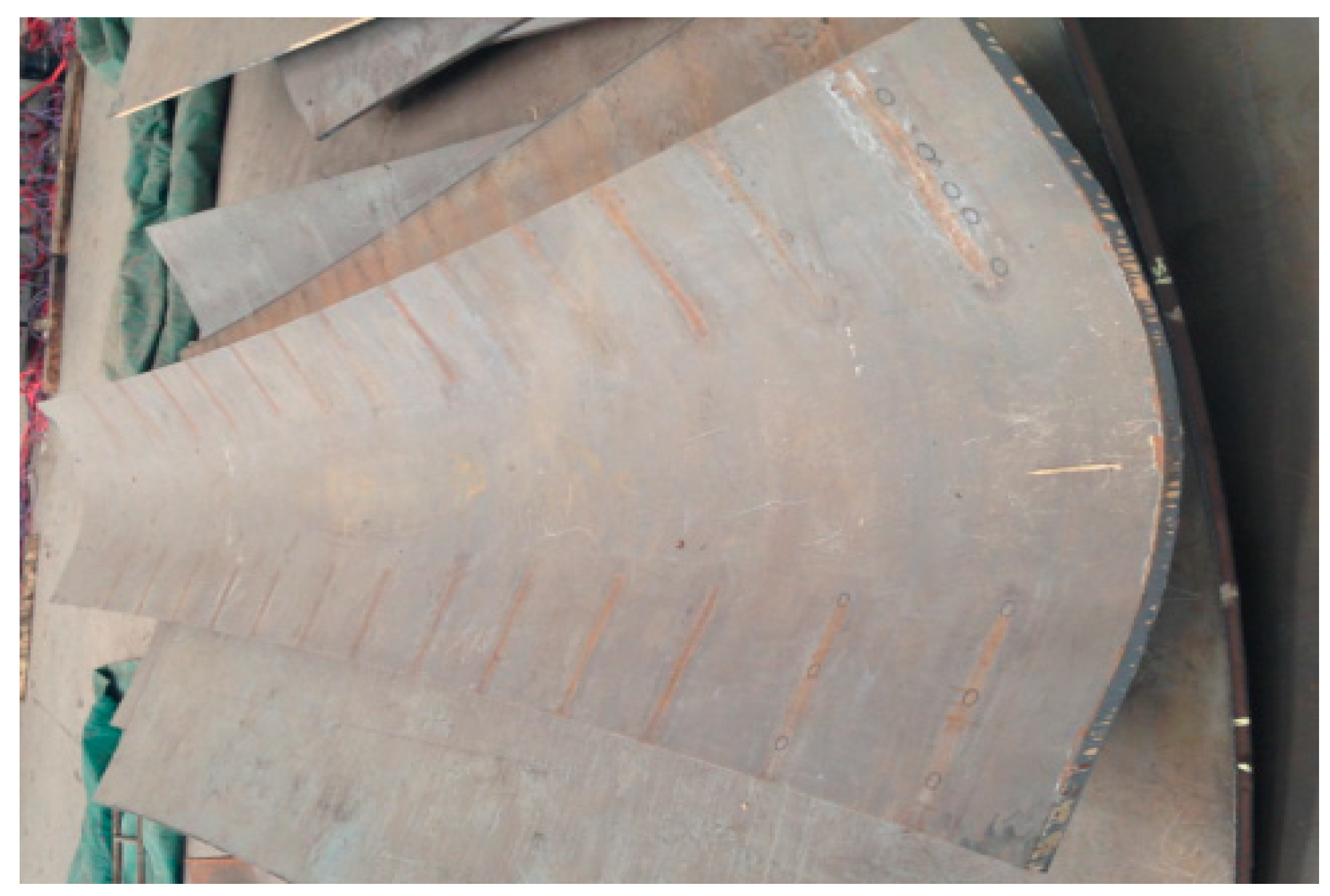
The mechanism analysis of the expansion and shrinkage is shown in Figure 3a,b. The shrinkage is generated near the heating line during the line heating process. According to the actual forming experience, five pairs of measuring points are set at the position of 0.05 m away from the heating line on both sides of the heating line as shown in Figure 3b. The measuring points are marked by marking tools. The distance between the points of each group is measured by a digital caliper before and after line heating. The difference between the measured data before and after forming is the shrinkage. The shrinkage in the cooling stage is greater than the expansion in heating stage. Figure 4 shows the formed double curved plate.
Figure 3.
Schematic diagram of deformation in line heating: (a) deformation of plate cross-section; (b) measurement points for shrinkage.
Figure 4.
Formed double curved plate.
There are many factors affecting the forming difficulty of complex curved hull plates [14], which can be divided into plate geometry parameters, forming parameters, etc. In order to evaluate the difficulty of line heating of complex outer hull plates, the factors that influence the deformation during the forming of water fire bending plates are studied, including plate length, plate width, plate thickness, radius of curvature, heating speed, heating line length, heating line spacing and the difference in the heating line number on both sides of the curved plate. The correlation between the influencing factors and the forming difficulty of curved hull plates is studied.
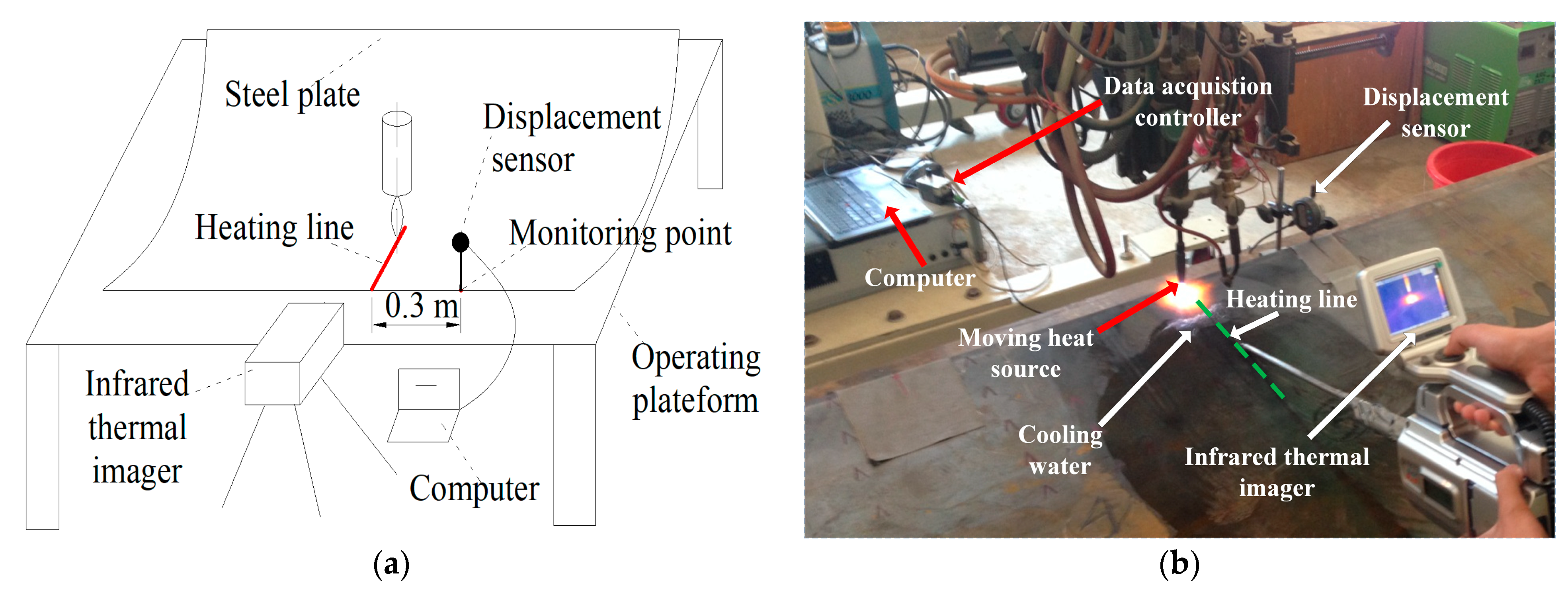
The difficulty of forming complex curved hull plates is mainly reflected in the deflection deformation. Deflection refers to the overall deflection, which is the distance from the point of maximum curvature of the curved plate to the line connecting the end points on both sides of the curved plate. The sketch map and forming experiment of line heating are shown in Figure 5. The deflection is measured by displacement sensor. The displacement sensor is connected with the computer to measure the deflection of the monitoring point in real time. Under the same forming conditions, the greater the deflection deformation of the curved plate, the lower the forming difficulty of the curved plate. In the previous research [15], a numerical model for deflection calculation is established, whose calculation results is verified by experimental comparison. Based on the existing data model, the influence law of different influencing factors on deflection deformation is studied. Then the influence laws of different influencing factors on the forming difficulty of complex curved hull plate are obtained.
Figure 5.
Data measurement of line heating: (a) sketch map; (b) forming experiment.
2.1. The Influence of Plate Length on the Forming Difficulty of Complex Curved Hull Plates
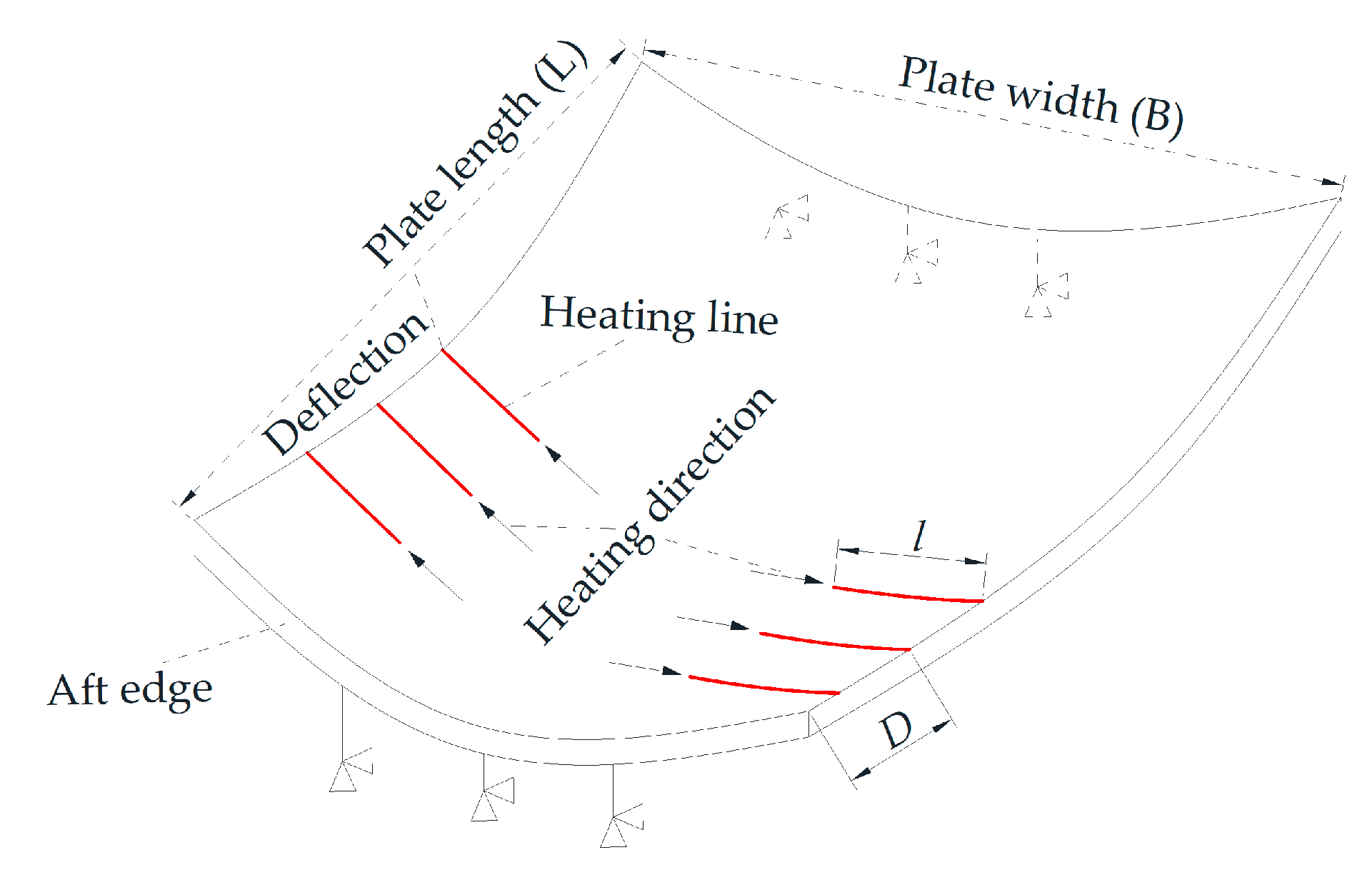
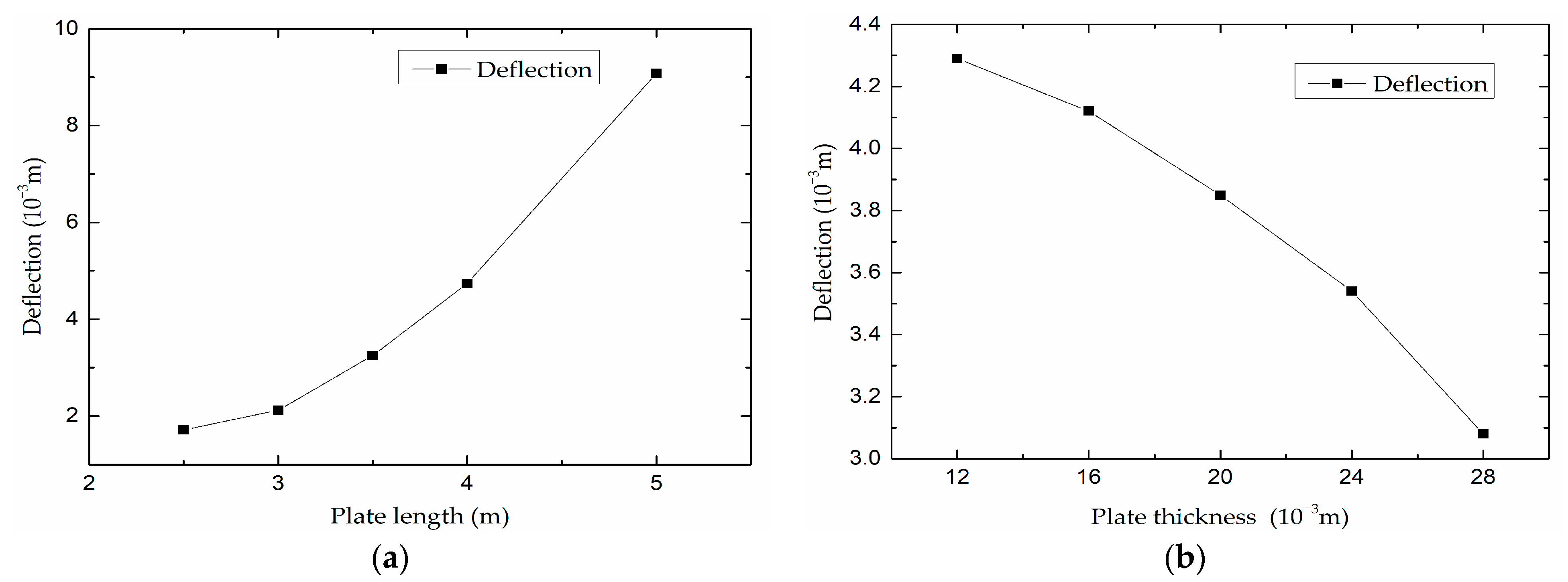
Except for the plate length, other influencing factors keep constant. The plate thickness is 0.014 m, the plate width is 2 m, the radius of curvature is 3 m, the heating line length is 0.3 m, the heating line position is 0.5, (As shown in Figure 6, is the ratio of the distance between the measuring point and the edge of the ship aft (D) and plate length (L), which is between 0 and 1, such as 0.3 represents that the measuring point is located at 0.3 L from the aft edge). Set 5 groups of different plate length (L), which are 2.5 m, 3 m, 3.5 m, 4 m, 5 m separately, get the plate length on the deflection of the law as shown in Figure 7a. The longer the plate, the greater the change in deflection. Therefore, with other condition kept constant, the smaller the curved plate length, the greater the energy required to deform the curved plate, the smaller the resulting deflection deformation, the greater the forming difficulty. The plate length shows a negative correlation with the forming difficulty. The plate length is negatively correlated with the forming difficulty.
Figure 6.
Line heating parameters of curved hull plate.
Figure 7.
Influence of different plate geometry parameters on deflection: (a) plate length; (b) plate thickness.
2.2. The Influence of Plate Thickness on the Forming Difficulty of Complex Curved Hull Plates
Except for the thickness of the curved plate, other influencing factors keep constant. The plate length is 3 m, the plate width is 2 m, the radius of curvature is 3 m, the heating line length is 0.3 m, the heating line position is 0.5. Set 4 groups of different plate thickness, which are 0.012 m, 0.016 m, 0.02 m, 0.024 m separately, get the plate thickness on the deflection of the law as shown in Figure 7b. The thicker the plate, the smaller the change in deflection. Therefore, with other conditions keeping constant, the thicker the plate, the greater the energy required to deform the curved plate, the smaller the resulting deflection deformation, the greater the forming difficulty. The plate thickness is positively correlated with the forming difficulty.
2.3. The Influence of Heating Speed on the Forming Difficulty of Complex Curved Hull Plates
The heating speed v in this paper is obtained by calculating the ratio of heating line length l to heating time t. The heating line length l can be obtained according to the plate forming scheme. The heating time is obtained by a timer during the processing.
Temperature is a very important factor in the process of forming complex curved hull plates. When the heating speed is too fast, the surface temperature of the curved plates will be too low, resulting in the deformation value of the curved plates being too small or even zero. When the heating speed is too slow, the surface temperature of the curved board will be too high, resulting in the material performance of the curved plate not meeting the use requirements.
In order to obtain the influence law of heating speed on the forming difficulty of complex curved hull plates, it is necessary to control the plate surface temperature and set the heating speed within a reasonable interval.
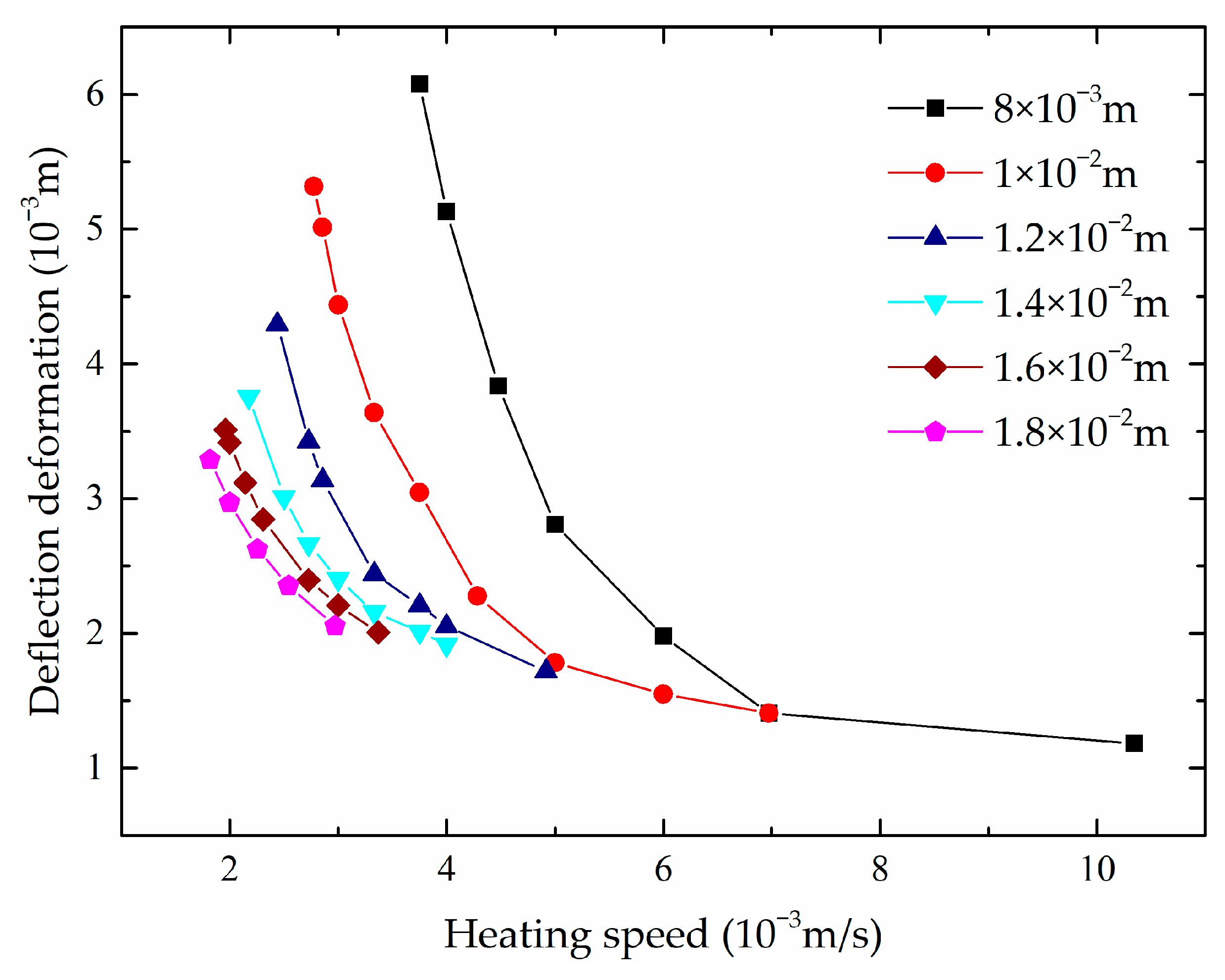
In the limited and reasonable temperature range, except for the heating speed, other influencing factors keep constant. The plate length is 3 m. The radius of curvature is 3 m. The heating line length is 0.3 m. The heating line position is 0.5. As shown in Figure 8, the influence law of heating speed on deflection deformation at different plate thicknesses are obtained. The faster the heating speed, the smaller the deflection of the curved plate. The sensitivity of the deflection deformation to the heating speed decreases with the increase of the heating speed. Therefore, when other influencing factors keep constant, and the temperature is controlled within a reasonable interval, the faster the heating speed, the smaller the deflection deformation produced, the greater the forming difficulty. The heating speed is positively correlated with the forming difficulty.
Figure 8.
Influence law curve of heating speed on deflection.
2.4. The Influence of the Remaining Factors on the Forming Difficulty of Complex Curved Hull Plates
Based on the results of numerical calculations and experimental measurements, the correlation between the forming difficulty of complex curved hull plates and the influencing factors is analyzed.
With the other influencing factors kept constant, the wider the curved plate, the greater the energy required for deformation, the smaller the resulting deflection deformation, and the greater the difficulty of forming; the smaller the radius of curvature, the greater the energy required to deform the plate, the smaller the resulting deflection deformation, and the more difficult it is to form; the greater the deflection of the curved plate to be formed, the greater the energy required to deform the plate and the more difficult it is to form; the more the number of heated lines, the longer the forming time, the more difficult it is to form; the greater the difference of heating lines on both sides of the curved plate, the more difficult it is to form; the smaller the heating line spacing, the more the number of heating lines required, the more difficult it is to form.
In general, the correlation between the forming difficulty of complex curved hull plates and influencing factors can be divided into two categories, the first category is the influencing factor that shows a negative trend with the difficulty of forming curved plates including plate length, radius of curvature, heating line spacing; the second category is the influencing factor that shows a positive trend with the difficulty of forming curved plates including plate thickness, plate width, deflection, heating line number, number of heating line difference on both sides of the curved plate, heating speed.
3. Model for Evaluating the Forming Difficulty of Complex Curved Hull Plate
There are many factors influencing the forming difficulty of complex curved hull plates. The values of these factors vary greatly and have different magnitudes. Existing studies cannot quantify the influence of various influencing factors on forming difficulty. In order to quantify the influence of different influencing factors on the forming difficulty of complex curved hull plates. This article establishes a model for evaluating the forming difficulty of complex curved hull plate based on the characteristics of the actual process of forming curved plate, the characteristics of sample data and grey relational analysis. The process of evaluating the forming difficulty of complex curved hull plates are designed [16].
3.1. The Model of Evaluating the Forming Difficulty of Complex Curved Hull Plate Based on Grey Relational Analysis
Grey relational analysis is a statistical analysis method to study the correlation between random variables. It mainly determines the degree of influence of each dominant factor on the forming difficulty of curved plates, namely weight, based on the closeness of the connection between the comparison sequence and the reference sequence [17]. This method has a low calculation work; it applies to the problem whose evaluation metrics are difficult to quantify and count. The number of sample size is not required [18], which can minimize the human interference. Therefore, consistency between quantitative and qualitative analyses is ensured.
Therefore, this paper establishes an evaluation model of the forming difficulty of complex curved hull plates based on grey relational analysis [19]. Based on the grey relational analysis method, the correlation degree between the forming time of outer hull plates and the influencing factors of forming difficulty is calculated, and then the weight of each influencing factor is obtained according to the correlation degree. Because the longer the forming time of the curved plate, the greater the forming difficulty of the curved plate, the forming time is selected to judge the forming difficulty of curved hull plate. The following variables are defined according to the grey relational analysis steps: taking the total forming time as the reference sequence; taking the plate length , plate width , plate thickness , radius of curvature , deflection , total number of heating lines , heating line variability , heating line spacing , and average heating speed as the comparison sequence where and is the number of data series to be analyzed.
Due to the dimension and magnitude of these nine influencing factors being different, some of the feature indicators with larger orders of magnitude have a greater impact on the results during the operation, as a result, the influence of the feature indicator with small order of magnitude is reduced [20]. Therefore, the normalization method is used to standardize the data as Formula (1), so that each index value is determined within the common numerical characteristic range.
where i = 1, 2, , 9 and i is the number of comparison sequence, which is also the number of factors affecting the forming difficulty of curved plate.
The correlation coefficient between the reference sequence and the comparison sequence can be calculated as follows:
where is the correlation coefficient, is the resolution coefficient, , which is normally valued at 0.5. represents the double maximum, represents the double minimum.
It can be seen from the previous article that the influencing factors can be divided into two categories according to the correlation between the influencing factors and the forming difficulty of the outer hull plate, namely the influencing factors that are positively correlated with the forming difficulty of curved plate, and the influencing factors that are negatively correlated with the forming difficulty of curved plate. The difficulty coefficient of the former is calculated by Formula (1), and the difficulty coefficient of the latter is calculated by Formula (2). The difficulty coefficient matrix of curved plate can be obtained by this method.
where , i is the number of factors affecting the forming difficulty of curved hull plate, k is the number of selected outer hull plate.
Correlation between the reference sequence and the comparison sequence can be calculated as follows:
where is the correlation coefficient, i is the number of factors affecting the forming difficulty of curved hull plate, k is the number of selected outer hull plate.
Convert the correlations into weights as follows:
The final influence factor weighting coefficient matrix can be calculated as follows:
The evaluation result of the difficulty of forming complex curved plates for ships is defined as follows:
3.2. Evaluation Process Design of Forming Difficulty for Complex Curved Hull Plates
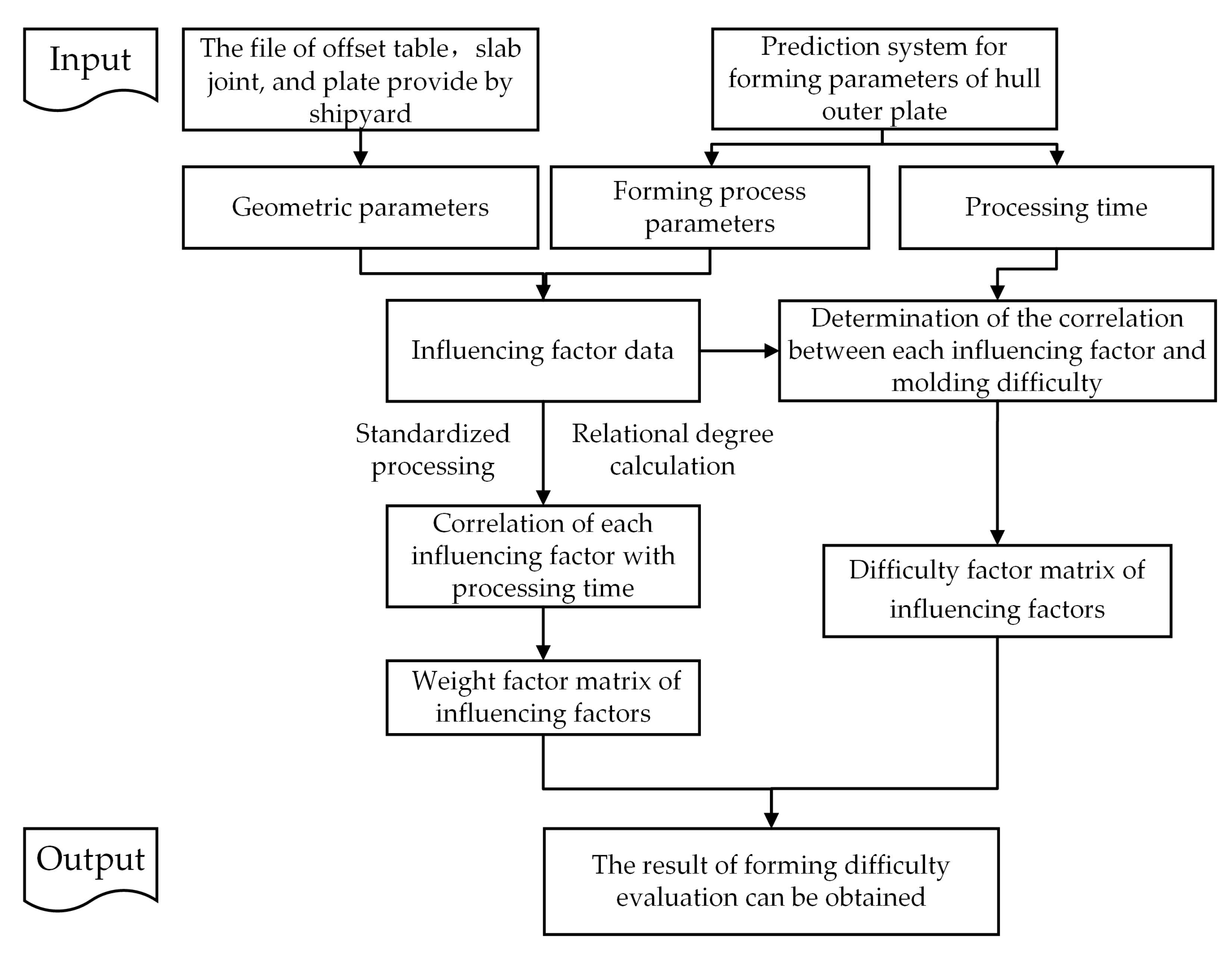
This paper conducts an evaluation method research based on the relationship between each influencing factor and the forming difficulty of complex curved hull plates. The relevant geometric parameter data can be obtained from the offset data. The data of process parameters and forming time are calculated based on the developed process parameter forecasting software [15]. This software has accumulated more numerical simulation and experimental data. It can calculate the forming process parameters according to the name of the plate, and some of the results have been applied in shipyards, which also shows the reliability of the data related to the forming process parameters obtained by the forecasting system. The process of evaluating the forming difficulty of complex curved hull plates is shown in Figure 9, and the steps are as follows:
Figure 9.
Forming difficulty evaluation process of ship complex curved plate.
- (1)
- Extract the offset table file, plate file and plate seam file from the ship production design software TRIBON. Extract the plate thickness according to the plate part name and plate seam name. Determine the area enclosed by the plate edge. Combine the offset table file to calculate the discrete points within the polygon, and then calculate the date of the plate length and width. Calculate the radius of curvature at different locations along the length of the plate according to the three-point fitting method, and then calculate the distribution of deflection along the length of the plate according to the point-to-space curve distance formula.
- (2)
- According to the prediction system of outer hull plate forming parameters, the number of heating lines on both sides of the curved plate, the length of the heating line and the processing time corresponding to each heating line are calculated. Then the total number of heating lines, the difference of heating lines on both sides of the curved plate, heating lines pacing, the average heating speed and the total forming time as a reference sequence are calculated.
- (3)
- According to the data on the factors influencing the forming of curved plate obtained in steps (1) and (2), the correlation of each influencing factor with the difficulty of forming the curved plate are determined. The influencing factors are divided into two groups according to their correlation, which are those positively correlated with the forming difficulty of curved hull plates and those negatively correlated with the forming difficulty of curved hull plates.
- (4)
- According to the normalization method, the data of influencing factors are standardized. The correlation degree between each influencing factor and forming time is calculated according to the calculation formula of correlation coefficient and correlation degree.
- (5)
- According to the correlation between each influencing factor and the forming time, the weight coefficient of each influencing factor is calculated by the weight calculation formula. The coefficient matrix of the influencing factor weight is obtained.
- (6)
- According to the correlation between each influencing factor and the forming difficulty of the curved plate in step (3), the difficulty coefficient of each influencing factor can be calculated by means of the difficulty coefficient calculation formula. The matrix of difficulty coefficients of influencing factors is obtained.
- (7)
- Multiply the weight coefficient matrix of each influencing factor obtained from step (5) and step (6) with the difficulty coefficient matrix to obtain the evaluation result of the forming difficulty of curved hull plate.
4. Calculation and Verification of Difficulty Evaluation for Real Hull Plates
By summarizing the common outer hull plate sizes in the current shipbuilding field, the plate specification of the research object is determined. In this paper, some complex curved plates of 3900 TEU container ship are selected for difficulty evaluation calculation and verification. Ten types of curved plate data are obtained, including total forming time, plate length, plate width, plate thickness, radius of curvature, deflection, heating speed, heating line number, curved plate difference and heating line spacing. The data of nine selected curved plates are summarized in Table 1. Curved plate difference is a qualitative variable, which is converted into a quantitative variable. The curved plate difference is expressed by the difference in the heating line number on both sides of the curved plate.
Table 1.
Hull plate data of 3900 TEU container ship.
4.1. Evaluation and Calculation of Forming Difficulty for Complex Curved Hull Plate
The data of these nine selected curved plates are processed according to the analysis results of the factors influencing the difficulty of forming complex curved hull plate. Standardization by using normalization to enhance comparability between different variables. As shown in Table 2, the correlation coefficients between the comparison sequence ~ and the reference sequence are calculated by MATLAB software.
Table 2.
Correlation coefficients between forming difficulty and influencing factors for complex curved plates of ships.
The corresponding correlation degree between reference sequence and comparison sequence are: , , , , , , , , . The larger the value of the correlation, the greater the influence of the corresponding influencing factors on the forming difficulty.
The correlation degree is converted into weight , which respectively are , , , , , , , , .
The forming difficulty coefficients of the factors affecting the forming difficulty of the complex curved hull plate are , which is obtained by processing the date in Table 1 according to Formulas (1) and (5), and the results are shown in Table 3.
Table 3.
Difficulty factor of forming complex curved plates for ships.
The difficulty of forming the curved hull plate is evaluated as . The result of curved plate 1010-CAP2-17P forming difficulty evaluation can be obtained as follows:
where are difficulty factor of hull plate corresponding to different curved plate forming difficulty influencing factors; are the weight coefficients of different influencing factors of the ship’s complex curved plates.
Through calculation, the forming difficulty value of curved hull plate are .
4.2. Improvement of the Method of Evaluating the Difficulty of Forming Complex Curved Hull Plate
The influencing factors of the difficulty of forming complex curved hull plate can be divided into geometric parameters and forming process parameters. The above evaluation method does not consider the difference between these two types of parameters. The nine influencing factors contained in these two types of parameters are directly calculated together, ignoring the influence of the overall geometric parameters and the overall forming parameters on the difficulty evaluation of forming complex curved plates. Considering the differences between the two types of parameters, the above method is improved. Geometric parameter weight and forming parameter weight are assigned to the geometric parameter data and process parameter data respectively. The calculation steps of the improved method of the forming difficulty evaluation method of ship complex curved plate are as follows:
- (1)
- According to Formula (10), the evaluation result of bending plate forming difficulty of 5 geometric factors can be calculated.
- (2)
- According to Formula (11), the evaluation result of bending plate forming difficulty of 4 forming factors can be calculated.
- (3)
- According to the weights of geometric parameters and forming parameters, the final evaluation results can be calculated by Formula (12).
The weight of geometric parameters and forming parameters can be determined by the exhaustive method according to Formula (13). Set the geometric parameter weight to 0.1, 0.2, …, 0.9 respectively, while the corresponding machining parameter weight to 0.9, 0.8, …, 0.1 respectively. Calculate the evaluation result of forming difficulty for each curved plate separately. When and are respectively 0.5, the results obtained by the improved method of evaluating the difficulty of ship complex curved plate are , , , , , , , , .
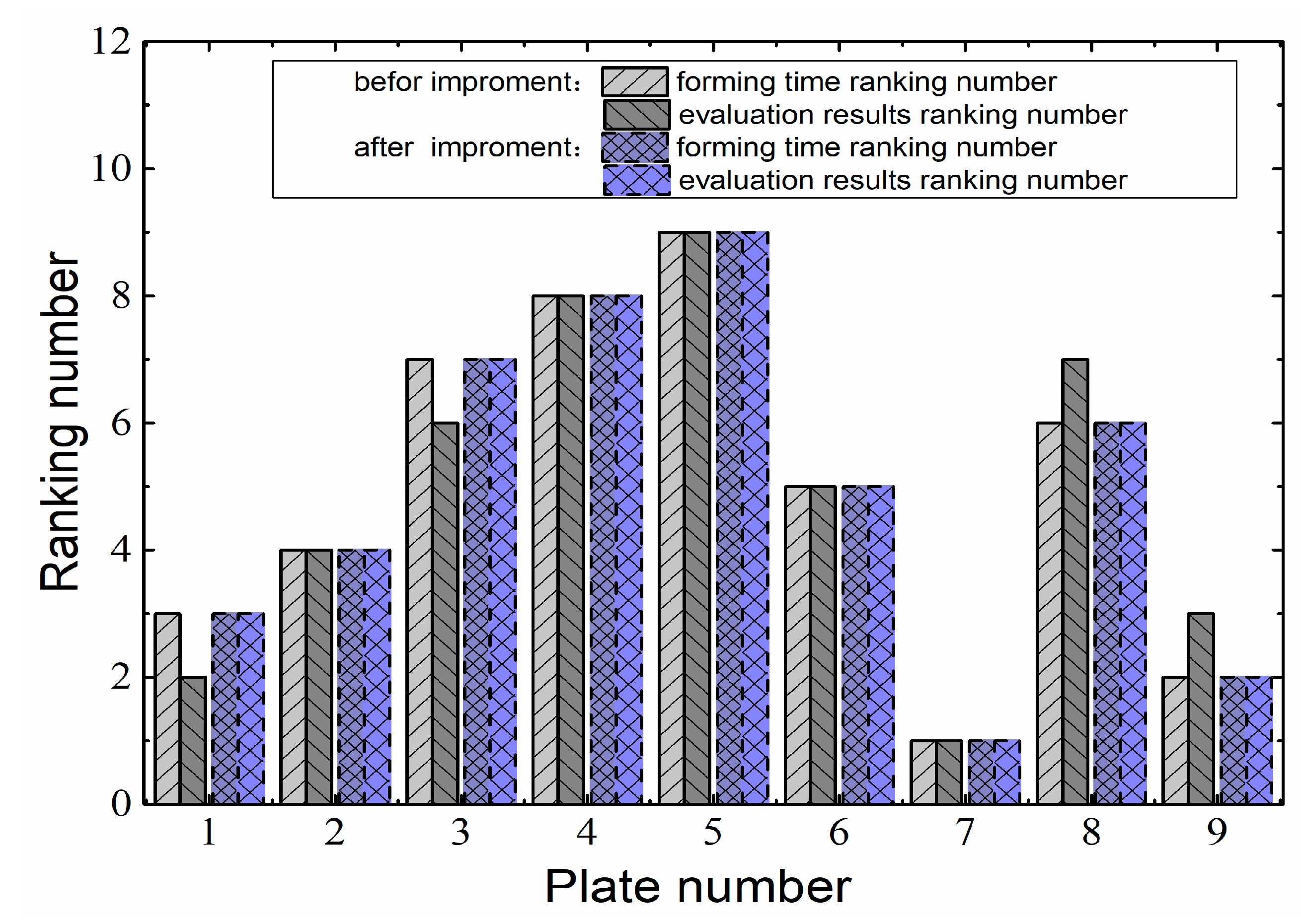
The evaluation results and before and after the improvement of the evaluation method are sorted to get the ranking number which respectively compared with the forming time ranking results, the result of the comparison is shown in Figure 10. After improvement, the ranking numbers of evaluation results match exactly with the ranking numbers of the forming time, which proved that the evaluation results are reasonable when and are respectively 0.5. Since the longer the forming time, the more difficult the curved plate is to form, so the sorting result of the forming time also reflects the forming difficulty of the curved plate. It also indicates that when the weight of geometric parameters and forming parameters are respectively 0.5, the forming difficulty of curved plate can be correctly expressed by the evaluation results.
Figure 10.
Comparison of evaluation results of forming difficulty and forming time before and after improvement.
4.3. Rationality Analysis of Difficulty Evaluation Results of Forming Complex Curved Hull Plate
Based on the above method, the forming difficulty of the real plate of a 3900 TEU container ship is calculated. The more difficult the curved plate forming is, the more forming time is required, the forming difficulty . When the forming difficulty is close to 0, it means that the plate is extremely easy to form. When the shaping difficulty is close to 1, it means that the plate is extremely difficult to form.
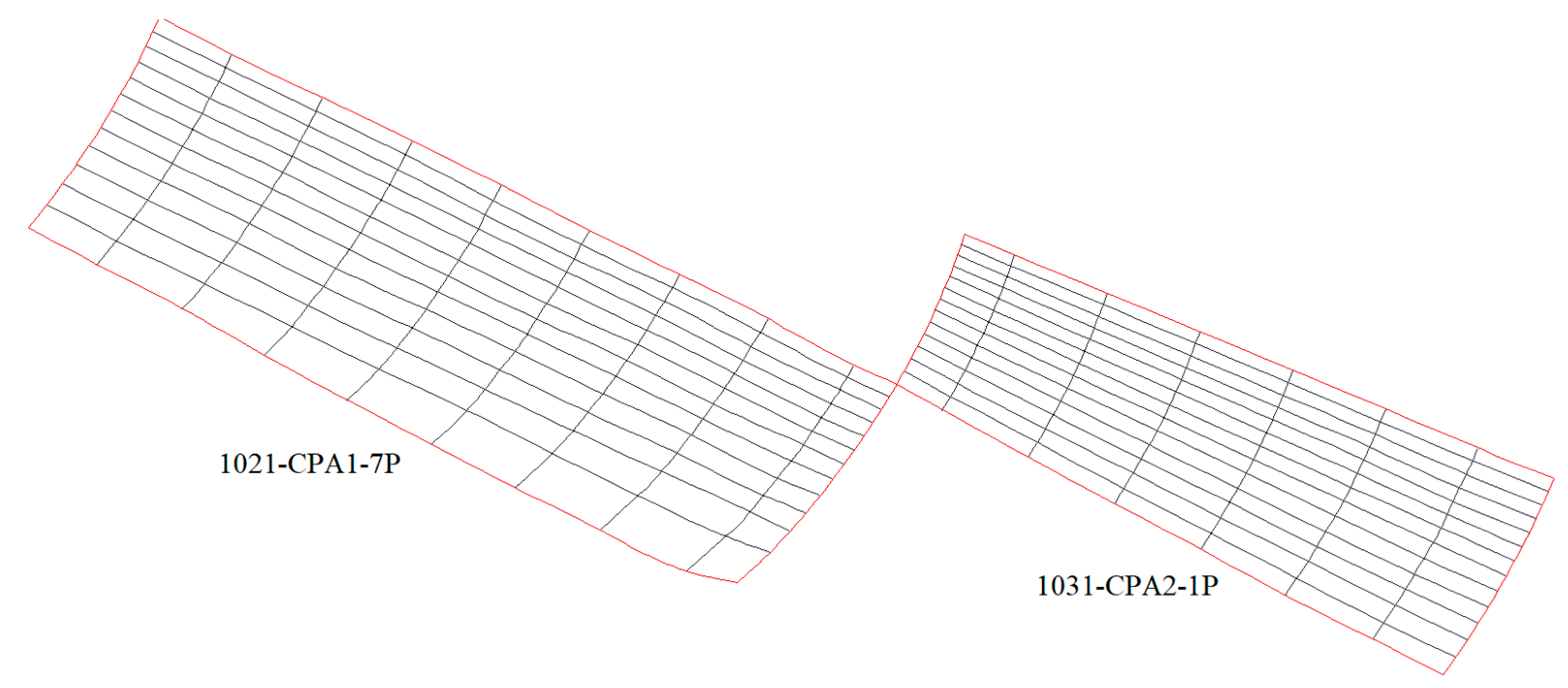
According to the geometric data and forming parameter data of different curved plates, the evaluation results are analyzed. According to the results, two groups of data with large difference in forming difficulty are selected for comparison. Among the nine real curved hull plates, the forming difficulty value of plate 1031-CPA2-1P is 0.240, which is the smallest. Therefore, the forming difficulty of plate 1031-CPA2-1P is the smallest. The forming difficulty value of plate 1021-CPA1-7P is 0.693, which is the largest. Therefore, the forming difficulty of plate 1021-CPA1-7P is the smallest. The geometric data, forming parameter data and forming difficulty results of the two curved plates are shown in Table 4. The shape and spatial position of the curved plate are shown in Figure 11. Compared with plate 1031-CPA2-1P, plate 1021-CPA1-7P is more difficult to be formed because it has longer plate length, wider plate width, larger deflection to be formed, more heating lines, and longer forming time required.
Table 4.
Comparison of geometric parameters, forming parameters and forming difficulty of curved plates with large differences in forming difficulty.
Figure 11.
Two curved plates with a large difference in forming difficulty.
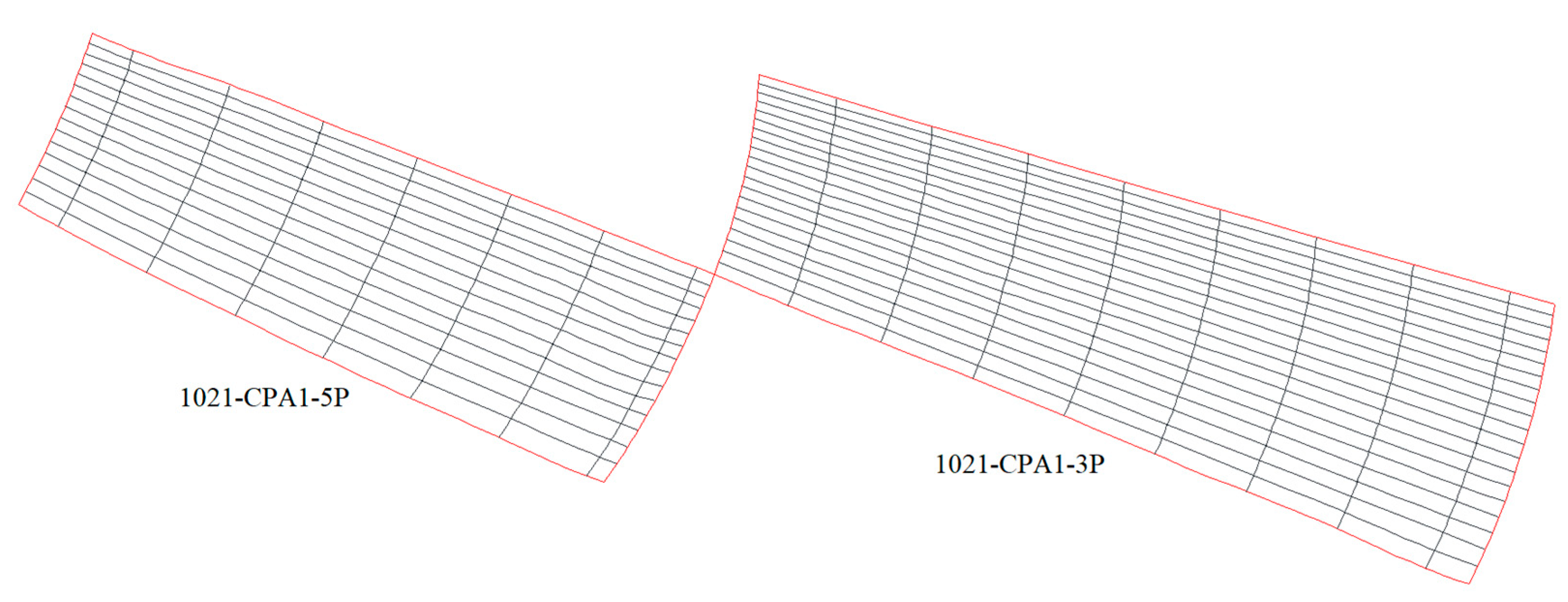
In order to further analyze the difficulty evaluation results of forming, two curved plates with similar forming difficulty are selected for data comparison. The result of forming difficulty of plate 1021-CPA1-5P is 0.609, and the total forming time is 1719s. The result of forming difficulty of plate 1021-CPA1-3P is 0.483, and the total forming time is 1348s. The geometric data, forming parameter data and forming difficulty results of the two curved plates are shown in Table 5. The shape and spatial position of the curved plates are shown in Figure 12. The length, width and thickness of the two plates are similar. The deflection of plate 1021-CPA1-5P to be formed is about twice that of plate 1021-CPA1-3P. Therefore, the number of heating lines of plate 1021-CPA1-5P is more than plate 1021-CPA1-3P and the forming difficulty of plate 1021-CPA1-5P is bigger than plate 1021-CPA1-3P.
Table 5.
Comparison of geometric factors, forming parameters and forming difficulty of curved plates with close forming difficulty.
Figure 12.
Two curved plates with similar forming difficulty.
The grey relational analysis method is based on the data of curved plates to be evaluated. The relationship between influencing factors and the processing difficulty is evaluated by calculating the correlation degree between the influencing factors. The maximum and minimum values of each influencing factor need to be determined in this method. If the plate changes, the data of the evaluation model may change. Therefore, the forming difficulty evaluation program for curved plate is developed. To ensure the accuracy of the calculation results for the forming difficulty of curved plates, the program can update the data of the curved plate to be evaluated.
5. Conclusions
Based on the actual forming characteristics of complex curved hull plates forming, this paper proposes a method to evaluate the forming difficulty of complex curved hull plates based on grey relational analysis. The conclusions are as follows.
- (1)
- Based on the grey relational analysis method, a difficulty evaluation model of complex outer hull plate forming is established. The grey relational analysis method is suitable for small sample data analysis. The weight of each influencing factor affecting the forming of complex outer hull plates is obtained by using the grey relational analysis method.
- (2)
- The forming difficulty of curved plates is negatively correlated with the length, curvature radius, heating line spacing and heating speed of curved plate. It is positively correlated with the thickness, width, overall deflection, number of heating lines and the difference of heating lines on both sides of the curved plate. The number of heating lines has the greatest influence on the forming difficulty. The heating speed has the least influence on the forming difficulty.
- (3)
- The evaluation model can calculate the forming difficulty of the outer hull plate according to the geometric data and forming parameter data. The comparative analysis of the difficulty evaluation results of the curved plate forming and the forming time verifies the rationality of the evaluation model. When the outer hull plate is divided into plates, the longer the plate length and the shorter the width, the smaller the forming difficulty. The deflection difference on both sides of the curved plate should not be too large. The smaller the deflection, the smaller the difficulty of forming the curved plate.
This research can quantify the difficulty of forming complex outer hull plates and provide reference for the division of outer hull plate.
Author Contributions
Conceptualization, S.W., Z.X., J.W., R.L. and Y.W.; methodology, S.W., Z.X., J.W., R.L. and Y.W.; writing—original draft preparation, S.W., Z.X. and Y.W., writing—review and editing, S.W., Z.X. and J.W., visualization, Z.X. and Y.W., validation, J.W. and R.L.; funding acquisition, S.W., J.W. and R.L. All authors have read and agreed to the published version of the manuscript.
Funding
This study was supported by the Fundamental Research Funds for the Central Universities (Grant No. 3132022119), the National Natural Science Foundation of China (Grant No. 51009025), the High Technology Ship Scientific Research Project of Ministry of Industry and Information Technology of China (Grant No. [2018]473) and the Major Project of Science and Technology of Liaoning Province (Grant No. 2019JH1/10100025).
Institutional Review Board Statement
Not applicable.
Informed Consent Statement
Not applicable.
Data Availability Statement
All data that support the findings of this study are available from the corresponding author upon reasonable request.
Conflicts of Interest
The authors declare no conflict of interest.
References
- Zhou, W.; Shao, Z.; Yu, J.; Lin, J. Advances and Trends in Forming Curved Extrusion Profiles. Materials 2021, 14, 1603. [Google Scholar] [CrossRef] [PubMed]
- Zhou, W.; Lin, J.; Trevor, A.; Wang, L. Feasibility studies of a novel extrusion process for curved profiles: Experimentation and modelling. Int. J. Mach. Tools Manuf. 2018, 126. [Google Scholar] [CrossRef]
- Wang, J.; Zhang, C.; Yi, B.; Zhou, H.; Ren, Q.; Wu, T. An investigation of the induction heating forming process of hull curved plate. Chin. J. Ship. Res. 2021, 16, 141–150. [Google Scholar]
- Noh, J.; Shin, J.; Ko, K.; Chung, J. An embedded prototype for a distributed and automated line heating system. J. Ship Prod. 2009, 25, 182–190. [Google Scholar] [CrossRef]
- Das, B.; Biswas, P. A review of plate forming by line heating. J. Ship Prod. Des. 2017, 34, 155–167. [Google Scholar] [CrossRef]
- Masakazu, S.; Kazuki, I.; Manami, M.; Ryo, A.; Takuya, K.; Akira, N. Approach to automation of line heating by combination of reinforcement learning and finite element method simulation. ASME Open J. Eng. 2022, 1, 21–30. [Google Scholar]
- Zhou, B.; Han, X.; Tan, S.; Liu, Y.; Wei, Z. Numerical and experimental study on plate forming using the technique of line heating. Int. J. Marit. Eng. 2014, 156, 265–275. [Google Scholar] [CrossRef]
- Ki, B.; Son, S.; Ryu, C.; Shin, J. Curved Hull Plate Classification for Determining Forming Method using Deep Learning. J. Ship Prod. Des. 2019, 35, 328–337. [Google Scholar]
- Zhang, S.; Liu, C.; Wang, X.; Yang, Z. Nondimensional prediction of thermal forming behaviour for the ship hull plate fabricated by induction heating. Ships Offshore Struct. 2019, 14, 510–522. [Google Scholar] [CrossRef]
- Dong, H.; Zhang, Y.; Yuan, H.; Hu, X.; Yang, Z. A Simplified Calculation Method of Heat Source Model for Induction Heating. Materials 2019, 12, 2938. [Google Scholar] [CrossRef] [PubMed]
- Zhou, B.; Han, X.; Tan, S.; Liu, Z. Study on plate forming using the line heating process of multiple-torch. J. Ship Prod. Des. 2014, 30, 142–151. [Google Scholar] [CrossRef]
- Pandivelan, C.; Jeevanantham, A. Multi-Objective Optimization of Single Point Incremental Sheet Forming of AA5052 using Taguchi based Grey Relational Analysis Coupled with Principal Component Analysis. Int. J. Precis. Eng. Manuf. 2014, 15, 2309–2316. [Google Scholar]
- Angshuman, B.; Pandivelan, C.; Jeevanantham, A. Optimization of AA5052 in incremental sheet forming using grey relational analysis. Measurement 2017, 106, 95–100. [Google Scholar]
- Wang, S.; Li, C.; Wang, J.; Liang, X.; Hou, L. Numerical Calculation of Line Heating Forming of Marine High Strength Steel Bending Plate Considering Deflection. Shipbuild. China 2021, 62, 230–243. [Google Scholar]
- Wang, S. Research on Technical Parameters Prediction for Line Heating Based on the Deflection Deformation of Hull Plates. Dalian Univ. Technol. 2018. [Google Scholar]
- Yang, L.; Yang, C.; Li, X. Optimal Design of Propeller Based on Multi-objective Evolutionary Algorithm and Decision Technology. Shipbuild. China 2019, 60, 55–66. [Google Scholar]
- Wang, R.; Yang, F.; Qu, G. Prediction model of agricultural non-point source water pollution based on grey correlation method. Nat. Env. Poll. Tech. 2021, 20, 633–641. [Google Scholar] [CrossRef]
- Chen, C.; Sun, F. Flood damage assessments based on entropy weight- grey relational analyses. J. Tsinghua Univ. (Sci. Technol.) 2022, 62, 1067–1073. [Google Scholar]
- Chen, Y.; Ruan, J.; Wang, Y. Method for determining labor hour in mass customization based on complexity of product structure. Appl. Res. Comput. 2015, 32, 1703–1706. [Google Scholar]
- Xi, L.; Zhou, H.; Liu, J.; Wang, Y.; Liu, H.; Jiang, Z. Classification Method and Application of Hull Section Type Based on Fuzzy Clustering Analysis. Ship. Eng. 2020, 42, 110–114. [Google Scholar]
Disclaimer/Publisher’s Note: The statements, opinions and data contained in all publications are solely those of the individual author(s) and contributor(s) and not of MDPI and/or the editor(s). MDPI and/or the editor(s) disclaim responsibility for any injury to people or property resulting from any ideas, methods, instructions or products referred to in the content. |
© 2023 by the authors. Licensee MDPI, Basel, Switzerland. This article is an open access article distributed under the terms and conditions of the Creative Commons Attribution (CC BY) license (https://creativecommons.org/licenses/by/4.0/).