


Abstract
This study analyzes the scientific literature on Life Cycle Assessment-based (LCA-based) industrialization and commercialization of geosynthetics for infrastructures in the field of Industry 4.0, by applying a scientometric study. A set of articles published in Scopus was analyzed through both a quantitative and a qualitative approach. The results are reported in a framework where the main keywords, themes, and topics are identified and discussed. Such results include the analysis of emerging trends and convergence among different themes and topics. In fact, results from the current literature in this area are still evolving and reveal increasingly new trends and themes, opening up new and challenging research perspectives in terms of innovative applications. Moreover, this study identifies the main affiliations and countries contributing to this area, as well as the main collaboration networks among the most prominent authors and geographical areas, thus providing scholars, namely, early career ones, with an indication of the most relevant authors to connect with for their future studies.
1. Introduction
1.1. Context
Nowadays, many geosynthetics or similar products are utilized for buildings and infrastructures at large. However, in this work we will refer to geosynthetics stricto sensu as defined according to the EN ISO 10318-1 standard (available at: https://www.iso.org/obp/ui/#iso:std:iso:10318:-1:ed-1:v1:en, accessed on 31 January 2023): geosynthetics is a “generic term describing a product, at least one of whose components is made from a synthetic or natural polymer, in the form of a sheet, a strip, or a three-dimensional structure, used in contact with soil and/or other materials in geotechnical and civil engineering applications”. This broad adoption is geared to achieve both a higher level of safety and security for users and a higher level for the services that are enabled by such buildings and infrastructures [1]. The research on such products has been largely integrated by recent analysis techniques and approaches based on data mining, deep learning, machine learning, artificial intelligence, etc. For instance, data mining has been utilized in order to investigate the capability of shear strength prediction for fiber-reinforced soils [2]. Moreover, extreme learning machine models have been used for predicting the ultimate bearing capacity of geosynthetics through a cost-effective approach [3]. Other studies have proposed different intelligent models for the assessment of the California bearing ratio and the dynamic response of geogrid reinforced foundation beds, such as artificial neural network, least median of squares regression, Gaussian processes regression, elastic net regularization regression, lazy K-star, M-5 model tress, alternating model trees, random forest [4,5]. Geosynthetic reinforced bridge abutments and repair techniques for highways slopes were assessed in recent studies as well [6,7]–e.g., in terms of deformation behavior, live willow poles, fiber reinforced soil, elektrokinetic geosynthetics in order to tackle the overall environmental impacts related to habitat and visual aspects [6,7]. Moreover, the traffic delays and the cost of traffic management were considered [6]. In fact, the previous literature did not take into account the long-term perspective, for instance, in terms of cradle-to-grave perspectives, thus, suggesting a literature gap [6]. In fact, the integration of long-term sustainable approaches into engineering research at large is urged as they became more and more key for better life and future [8]. For this purpose, comparative life cycle assessment studies were conducted on geosynthetic mechanically stabilized or retaining earth walls, geosynthetics based filter layers, and high bermless geogrid walls in seismic regions and geogrid reinforced roads, amongst others, thus, going beyond the sole-technology focus of some studies [8,9,10,11,12,13,14,15,16,17,18,19,20,21,22,23,24,25,26,27,28,29,30,31]. However, the current literature is still evolving and reveal increasingly new trends and theme, opening up new and challenging research perspectives in terms of innovative applications, thus, deserving further research efforts [1,6,8,9,10,11,12,13,14,16,18,19,20,21,22,23,24,25,26,27,28,29,30,31], also considering an increasing relevance recognized by the industry side, as manufacturers and their suppliers aim at reducing environmental impacts of their civil engineering works and materials [16].
1.2. Motivations
Such evidences from the field literature highlight the need for a scientometric study focusing on the intersection of geosynthetics research, on the one side, and managerial aspects related to Life Cycle Assessment (LCA) and Industry 4.0 approaches, on the other side. In fact, extant research [1,3,6] show how many technical, engineering, societal, environmental, safety, and economic implications are linked to the development of geosynthetics research and especially on the implications of their pervasive applications in the real world through infrastructures, building, roads, etc. [1,3,6]. Moreover, we identified the journal Applied Sciences as the best outlet for this research in order to make it clear to the readers how the ongoing discourse on geosynthetics is currently evolving and that it has multi-faceted implications on societal, economic and environmental fields, as the journal itself deals with material sciences, environmental sciences, sustainability, (civil and transportation) engineering. Based on such motivations, the purpose of our study is, firstly, to analyze the ongoing scientific discourse and integration of sustainable approaches to geosynthetics research, and, secondly, to provide a more systematized state-of-the-art in the field through a de facto standardized methodological approach for conducting data-driven scientometric study [32], as described in Section 2. However, we want to specify that the main purpose of this work is not conducting a technical analysis of engineering/material science research on geosynthetics, but to focus on managerial aspects and implications of the current contributions in the literature that take into account the societal, environmental and economic consequences of geosynthetics applications in the real world. Finally, this narrow scope of our study poses also some limitations, as we only considered the part of the literature on geosynthetics that is linked to managerial, commercial and societal implications and applications of geosynthetics, discarding the part that has only a technical relevance that is out of the scope of our study.
1.3. Methods
In detail, the methodological steps conducted in this study are as follows: the most cited papers have been identified by means of a search query in Scopus database, then, such papers have been analyzed manually, in order to check their belonging to the scope of the research and to avoid any misleading attribution to it.
This work relies on extant methodological approaches adopted in other studies [33,34,35,36,37,38,39,40,41] and has been conducted by using the Bibliometrix and Biblioshiny libraries in RStudio [32].
Relevant papers/authors are identified based not only on total/cumulated citation, but also on the normalized results that consider the recency of some works/authors that have cumulated a relevant amount of citations in a shorter time.
This work is structured as follows: Section 2 deepens the methodological aspects of the scientometric study; Section 3 reports the results of the quantitative approach; Section 4 delves into the qualitative discussion of the results and summarizes the main conclusions, including limitations and theoretical implications, paving new research avenues in the field.
2. Methods
This work proposes a scientometric study on geosynthetic products for both buildings and infrastructures at large, realized through a Life-Cycle-Assessment approach, in the field of Industry 4.0 and machine/deep learning production. As a first step, all the co-authors identified and read the most relevant works in the literature in order to choose the best search strategy overall. Then, they selected and combined the terms to be utilized and combined for the extraction of relevant documents from the Scopus database with an iterative process. In particular, the following search terms have been utilized in the search strategy: geosynthetic*, life cycle assessment, LCA, cradle-to-grave, industry 4.0, machine learning, deep learning, The search terms were restricted to the Scopus subject areas “Business, Management and Accounting”, “Social Sciences”, “Decision Sciences” and “Economics, Econometrics and Finance”, and to documents published in English as articles or reviews.
The selection of the Scopus database is motivated by the fact that other data sources like ISI Web of Science (WoS) or Google Scholar (GS) are not suitable for the proposed scientometric study. In fact, WoS is too smaller and its content is too unexhaustive and restricted to leading journals which may lead to a mis-/under-representation of the overall ongoing discourse on an increasing field like corporate-startup collaboration [33,34,35]. On the other side, GS provides a much wider base of analysis, with a larger number of documents indexed, which constitutes a starting point for the literature discovery, but includes also no- or low-quality and non-peer-reviewed documents–e.g., working papers, student assignments [34,36,37,38,39,40,41].
The final search identified 198 documents: the most relevant ones were selected by performing a qualitative, manual analysis of their contents in order to check their actual belonging to the relevant subject of this paper, and avoid any misattribution due to the utilization of overlapping keywords. The final step of the screening process was conducted through RStudio and the Bibliometrix package through the Biblioshiny app [32]. Descriptive data on the final dataset are provided in Table 1 and Table 2 and Figure 1.

Table 1.
Dataset descriptive data.
Table 2.
Annual production data.
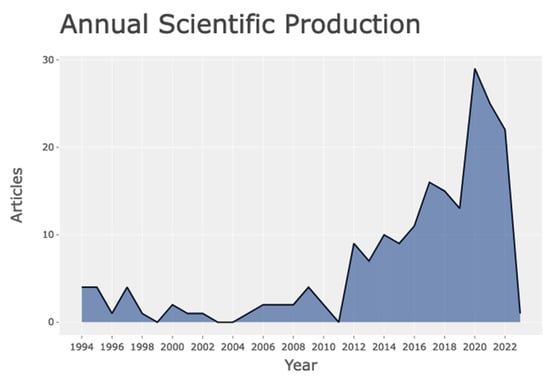
Figure 1.
Annual scientific production.
3. Results and Discussion
This section is divided into paragraphs, whereas different facets of the bibliometric analysis are reported, and the corresponding contributions to the scientometric study are discussed.
3.1. Country of Publication Analysis
The scope we refer to when mentioning “the most productive/collaborative country”, “the scientific impact and relevance of countries’ scientific contribution” et similia, is about geosyinthetics research entrenched with managerial implications, as papers considered in this study and explained in both the Introduction and Methods sections. The most productive countries in the world are reported in Figure 2, where the darker is the blue, the higher is the country’s scientific production. The results show that China, U.S.A., India, Australia and Brazil are the top five scientific contributors in terms of publication (see also Table 3 for a complete list of countries’ contribution worldwide).
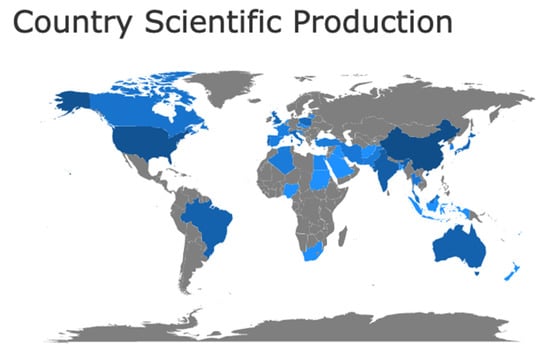
Figure 2.
Countries’ scientific production on geosyinthetics research entrenched with managerial implications, as considered in this study. The most productive countries have the darkest blue, the least productive have the lightest blue, while grey is for non-productive countries.
Table 3.
Countries’ scientific production on geosyinthetics research entrenched with managerial implications, as considered in this study.
However, the number of publications is not the sole indicator to be analyzed, as the scientific impact and relevance of countries’ scientific contribution should be evaluated by considering also the citations. Hence, Table 4 and Figure 3 report the results of citations of countries’ publications worldwide. USA, Portugal, Australia, Japan and China are the top five countries in this list, showing that the most productive countries and the most cited countries show partly different results.
Table 4.
Citations of countries’ scientific production on geosyinthetics research entrenched with managerial implications, as considered in this study.
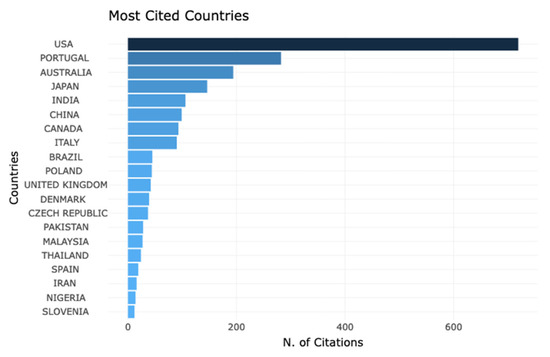
Figure 3.
Citations of countries’ scientific production on geosyinthetics research entrenched with managerial implications, as considered in this study.
Finally, as for global scientific collaborations, the main cross-country relationships and knowledge exchange flows involve the following couples: China–USA, China–Australia, France-United Kingdom, India–USA, Portugal–Australia ad USA Australia (see Table 5 and Table 6). However, Figure 4 and Figure 5 show that the global collaboration map is highly fragmented.
Table 5.
Countries’ scientific collaboration on geosyinthetics research entrenched with managerial implications, as considered in this study.
Table 6.
Distribution of authors’ production.
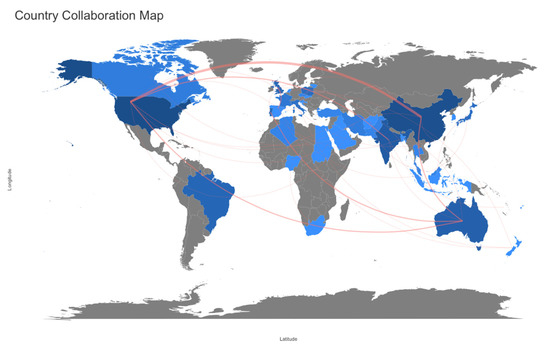
Figure 4.
Countries’ scientific collaboration on geosyinthetics research entrenched with managerial implications, as considered in this study. The most collaborative countries have the darkest blue, the least collaborative have the lightest blue, while grey is for non-collaborative countries.
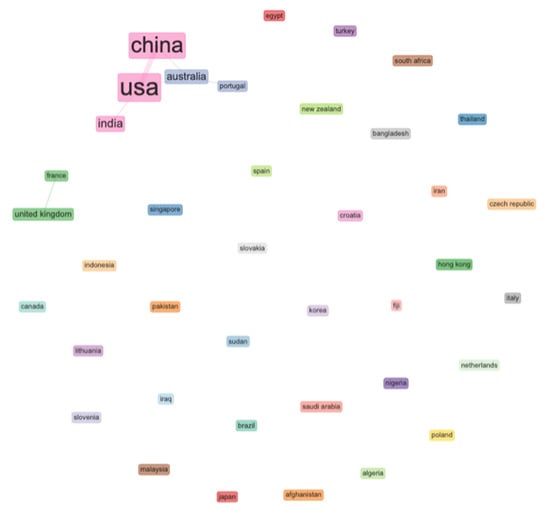
Figure 5.
Countries’ scientific collaboration map on geosyinthetics research entrenched with managerial implications, as considered in this study.
3.2. Affiliations and Authors Analysis
Figure 6 proves that the most relevant author affiliations in terms of scientific production and impact are those related to the most productive and cited countries shown in Section 3.1., such as Portugal, China, Australia and USA.
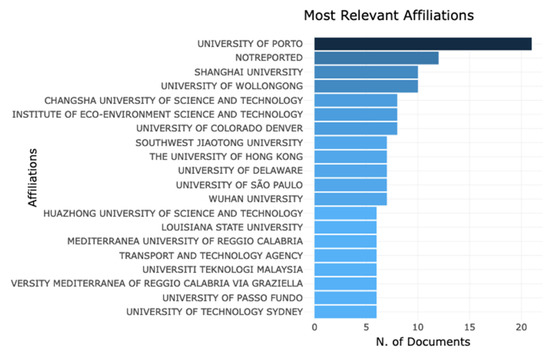
Figure 6.
Most relevant affiliations.
This result is coherent with the distribution of authors’ production according to Lotka’s Law [32] reported in Table 6 and Figure 7, whereas it is shown that most authors, namely 483, have written only one document, while 41 authors have written two articles and 13 authors have written three papers. Finally, only one or two authors have written four to seven papers, thus, showing that the scientific leadership globally is very fragmented, as the analysis of most relevant affiliations in Figure 6 has already shown.
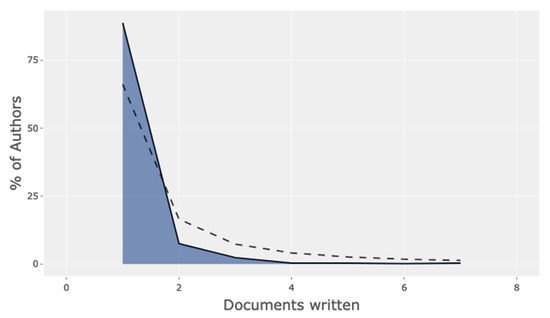
Figure 7.
Frequency distribution of authors’ production.
Moreover, a clear trend denoting an intensification of research efforts in the current academic community worldwide can be detected starting from 2014 on, as demonstrated by Figure 8. Likewise, citations trends have evolved in parallel, as most references in the historical direct citation network start from 2014 on (see Figure 9). Overall, the citations trends are shown in Table 7 and Figure 10.
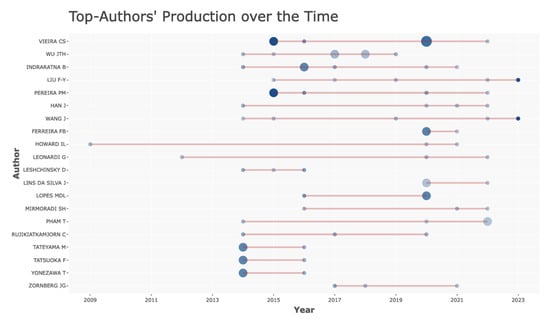
Figure 8.
Scientific production overtime.
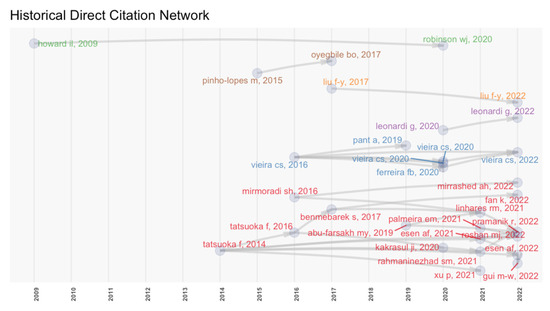
Figure 9.
Historical Direct Citation Network.
Table 7.
Citations trends, total and per year.
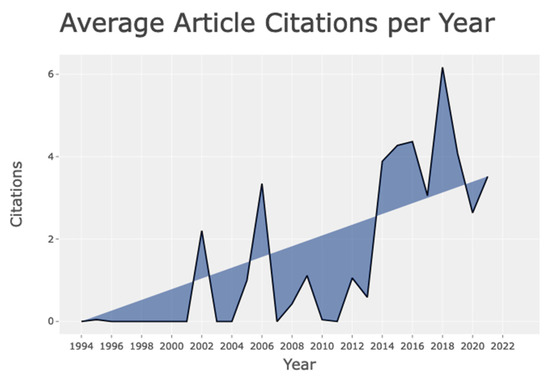
Figure 10.
Citations trends, total and per year.
Finally, despite the collaboration network (Figure 11) is highly clustered and siloised, such a fragmented collaborative scenario is still not reflected in the co-citation network (Figure 12).
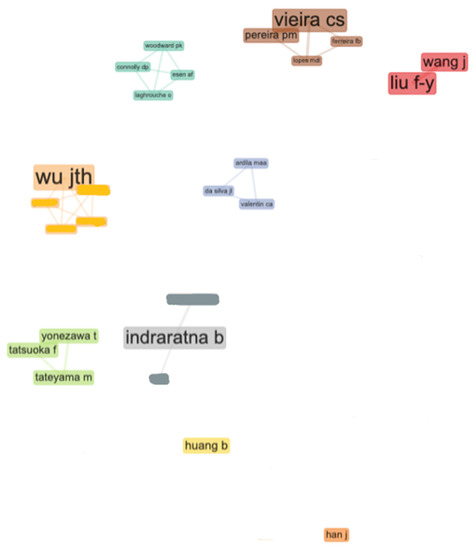
Figure 11.
Main authors’ collaboration network.
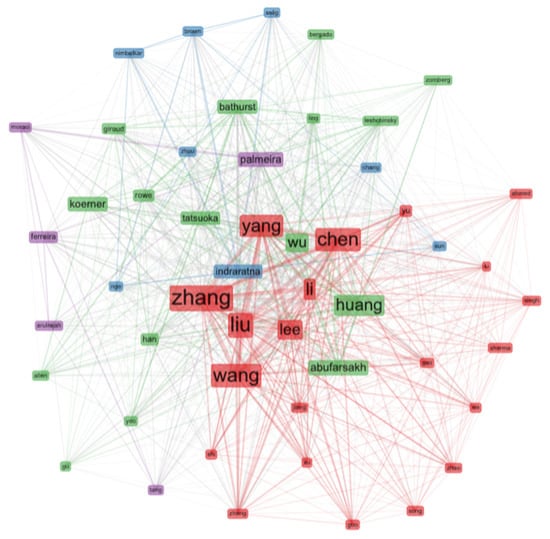
Figure 12.
Authors’ co-citation network.
3.3. Source of Publication Analysis
As for the sources of publication, the review sample shows that most locally cited sources are different from the most relevant sources in the field, thus, suggesting how the ongoing literature on the subject of this study is being mainly developed on a sub-cluster of journals (see Figure 13, and Table 8). Such heterogeneity in terms of source ranking in Figure 13 is further supported by Bradford’s Law that ranks the publication sources and articles according to the source log (rank) [32], whereas, only the two most relevant journals represent the core sources of the overall publication field (see Figure 14 and Table 9). Finally, Figure 15 and Figure 16 show how the different sources have evolved over time with reference to the subject of this scientometric study, highlighting how the most relevant sources are the ones that have published more studies on the field, coherently with Figure 13.
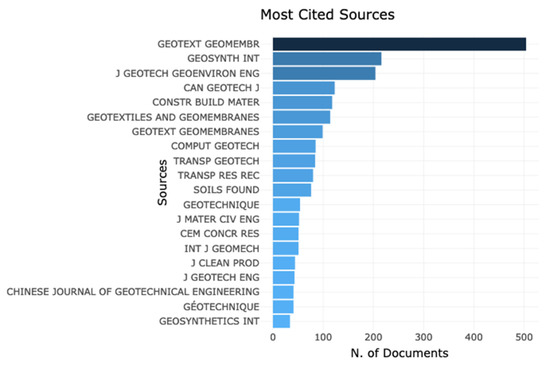
Figure 13.
Most locally cited sources.
Table 8.
Sources’ local impact.
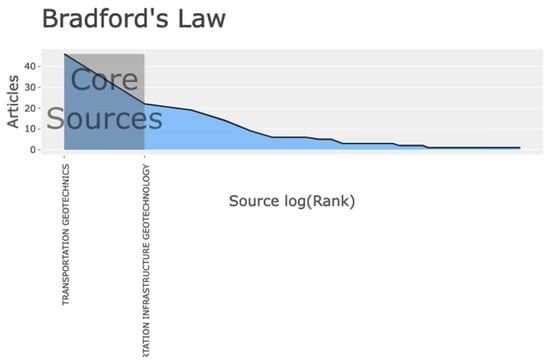
Figure 14.
Core (ranked) publication sources.
Table 9.
Source clustering through Bradford’s Law.
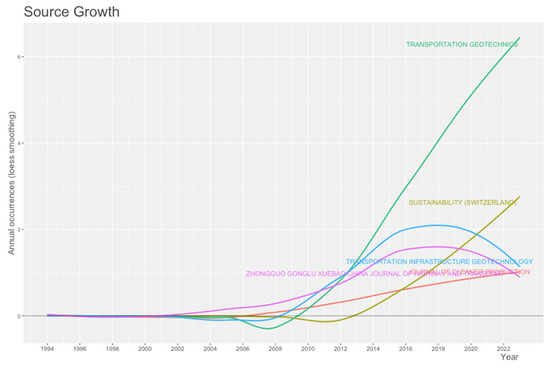
Figure 15.
Source dynamics per year.
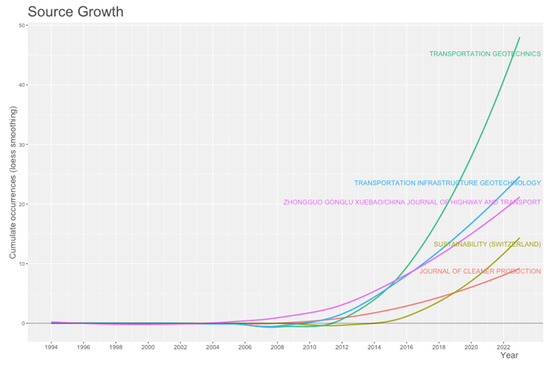
Figure 16.
Cumulated source dynamics.
3.4. Keywords, Themes and Topics Analysis
As for the semantic analysis of the contents of the research field, we have deepened the keywords utilized as the very first step. Then, we moved to the analysis of themes and topics of the research field.
When looking at Figure 17, Figure 18 and Figure 19, we notice that the topic dendrogram identifies two clusters of keywords, that are related to bridge abutments, shake table test, seismic loading, and geosynthetic reinforced soil, on the one side, while they are related to all other topics and themes in the field, on the other side (Figure 17). Such a division among keywords clusters is further supported by the reference-keyword-keyword plus 3-field plot (Figure 18), which identifies geosynthetics, geogrids, and road engineering as the main keyword fields, while they can, however, be divided as keywords contributing mainly to the generic geosynthetics research stream, but also to the geosynthetics materials and reinforcement topic clusters. Finally, when analyzing the co-occurrence network, we find that the two main centers of aggregation of co-occurring keywords are those related to geosynthetics and road engineering (Figure 19).
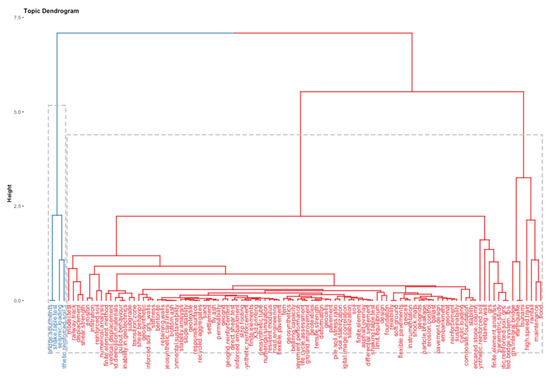
Figure 17.
Topic dendrogram.
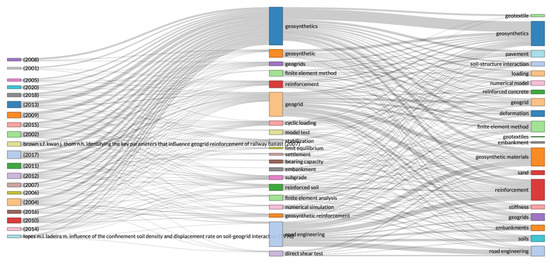
Figure 18.
3-field plot.
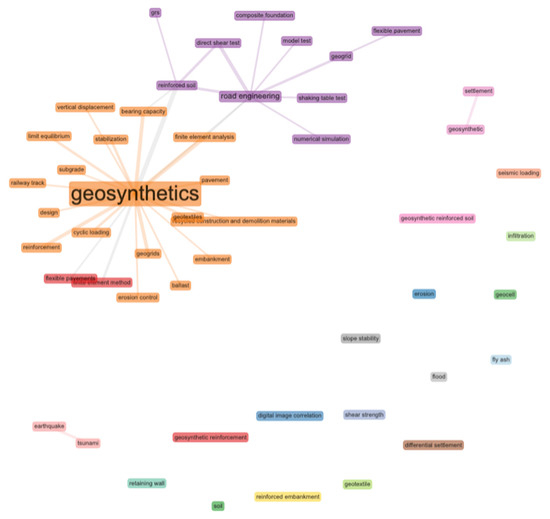
Figure 19.
Co-occurrence network.
Moreover, the Factorial analysis using a multi-correspondence analysis report that the topic dendrogram correctly identified the underlying conceptual structure at hand, already discussed in Figure 17. In fact, the simple analysis of word occurrences in Figure 20, as well as Figure 21 and Figure 22, with word dynamics analysis and word clouds, corroborate the same results.
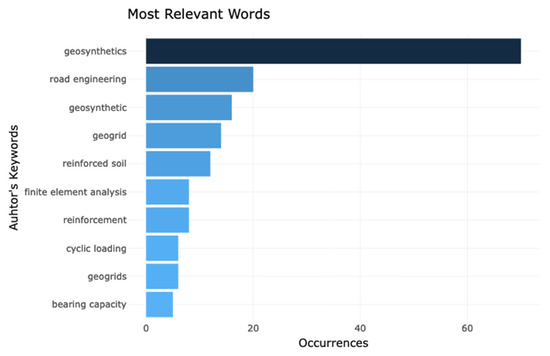
Figure 20.
Word occurrences.
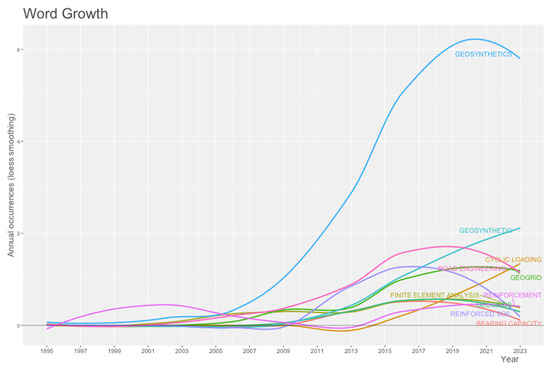
Figure 21.
Word dynamics.

Figure 22.
Word clouds.
Then, in the second step, the emerging trends of the themes and topics have been identified. In fact, Figure 23, Figure 24, Figure 25 and Figure 26 identify thematic evolutions over five time periods automatically selected by the software algorithms [32]. While in the very first time period, a few and mostly generic themes and topics were dealt with, such as geogrids, pavements and airports applications, then, there was a kind of increase in the interest of the scientific community towards road engineering and reinforcement that was maintained over the second and third steps (Figure 23). More recently, a variety of themes and topics have been developed, starting from 2019 on, that relate to cyclic loading, image correlation, retaining walls, fly ash, specific hemes related to some methodological aspects (e.g., finite elements, equivalent-linear analysis, field tests, falling weight deflectometer, base-layer coefficients, first-order reliability), fiber coating, geotextiles, equilibrium and stabilization, column, supported embankment, stiffness, etc. (Figure 23). The thematic map in Figure 24 shows how the snow-balling of the generic geosynthetic theme is the most relevant and central, while road engineering, geogrids and reinforcement are very relevant, too, but not so central in the ongoing literature discourse. The thematic map network in Figure 24 reports how a plethora of clusters grew up over the time all around the geosynthetics literature, thus, highlighting the existence of a variety of themes and topics related to: methodology developments, railway, economic aspects, polymer and geotextiles, sustainability, geogrids, erosion, bridges, 3D printing, soil reinforcement, pavements, stiffness, etc. In any case, the most relevant trends in the literature remain those related to overall geosynthetics research, roads, geogrids, and reinforced soils (Figure 26). Finally, the fastest increase in the themes and topics in terms of log (frequency) [32] is found to be related to geosynthetics, geogrids, road engineering, and reinforcement soil (Figure 26).
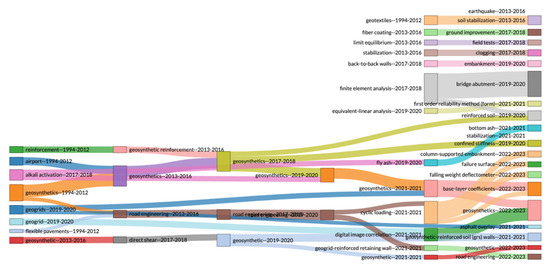
Figure 23.
Thematic evolution over five periods.
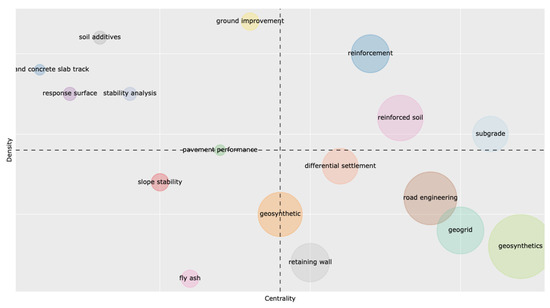
Figure 24.
Thematic map.
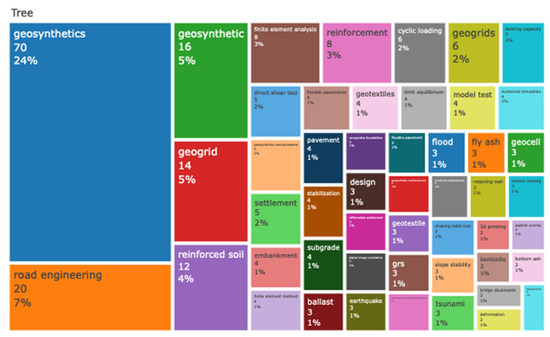
Figure 25.
Tree map.
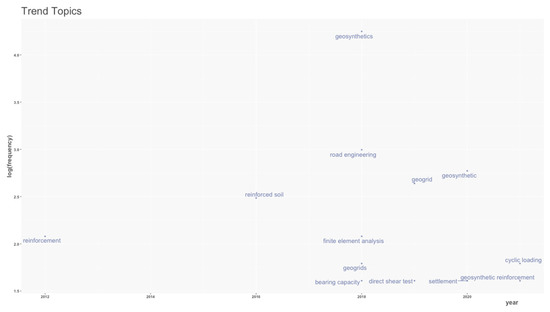
Figure 26.
Trend topics.
Then, as the last step, the correct identification of the themes and topics has been further checked with two external expert researchers that have been involved in an elicitation study in order to consolidate the research results and confirm the methodological correctness of the research [42,43,44,45].
4. Conclusions
This research provides a descriptive scenario of the ongoing discourse in the scientific literature as well as the identification of trends and topics on Life Cycle Assessment-based (LCA-based) industrialization and commercialization of geosynthetics in the field of Industry 4.0, by applying a scientometric study. The key articles published in this field were analyzed through both a quantitative and a qualitative approach, and the main keywords, themes, and topics are identified and discussed. This way, we cover a gap in the literature related to providing a hitherto missing analysis of the fragmented and the unsystematized literature in the field. We also aim at contributing to the systematization of the research field by means of applying a standardized approach that is already consolidated in the existing literature [32].
In fact, we find that the literature at hand is highly fragmented and also characterized by ambiguity and lack of universally accepted understanding of some themes and topics, in particular those related to environmental and commercial aspects related to geosynthetics [1,6,8,9,10,11,12,13,14,16,18,19,20,21,22,23,24,25,26,27,28,29,30,31].
Moreover, this work aims at identifying emerging or increasingly relevant topics and trends in geosynthetics-related research. In fact, Figure 21, Figure 22 and Figure 23 clearly show how the most relevant hot topics and research trends—excluding the “general purpose” keywords related to geogrids, geosynthetics et similia—are currently focusing on “road engineering”, “cyclic loading”, “reinforcement” or “reinforced soil”, “bridge abutments”, “base-layer coefficients”.
From the theoretical and conceptual point of view, the main limitations are due to the fact that existing themes and topics in the literature have been identified by means of a pre-extraction through an automated keyword extraction tool—i.e., a software algorithm [32]—that might neglect or overrate some keywords in comparison with others. Therefore, this preliminary step could lead to a potential bias, due to the fact that the pre-selection of papers analyzed in this study is only based on quantitative algorithms focusing on citations, and not on qualitative analyses in the initial step. Such a possible bias would create a lack of theoretical and conceptual perspectives included in the papers not selected initially.
A limitation highlighted by this study and also a practical implication is that, in parallel with this scientometric study, a complementary review effort should be conducted with an in-depth qualitative and manual approach, thus, not relying on preliminary automated software, with the aim of identifying additional key themes and topics that are equally relevant to the ongoing discourse in the literature.
Such an issue could eventually lead to a partly misleading identification of emerging trends that need to be further explored in the near future.
Clear proof of such a limitation is linked to the fact that some relevant contributions in the literature have been identified as [46,47,48,49,50,51,52,53,54,55,56,57,58,59,60,61,62,63,64,65,66,67,68,69,70,71,72,73,74,75,76]. However, such a limitation indicates also that future research efforts could be conducted with complimentary qualitative approaches.
Moreover, this research shows also the most relevant contributions and authors in the field based not only on total/cumulated citation, but also on the normalized results that consider the recency of some works/authors that have cumulated a relevant amount of citations in a shorter time, so that early career researchers and all other scholars could more easily identify their major colleagues to connect with in order to develop future research efforts.
Author Contributions
Conceptualization, C.G.; methodology C.G. and G.S.V.; software G.S.V. and R.P.; validation G.S.V. and R.P.; formal analysis C.G., G.S.V. and R.P.; investigation C.G. and G.S.V.; resources G.S.V.; data curation R.P.; writing—original draft preparation C.G., G.S.V. and R.P.; writing—review and editing C.G., G.S.V. and R.P.; visualization G.S.V.; supervision C.G.; project administration, C.G.; funding acquisition C.G. All authors have read and agreed to the published version of the manuscript.
Funding
This research was funded by the Italian Ministry of University and Research, Italian National Operational Programme on Research and Innovation Attraction and International Mobility, grant number AIM1805501-1, CUP C36C19000000005. The APC was funded by Italian Ministry of University and Research, Italian National Operational Programme on Research and Innovation Attraction and International Mobility, grant number AIM1805501-1, CUP C36C19000000005.
Institutional Review Board Statement
Not applicable.
Informed Consent Statement
Not applicable.
Data Availability Statement
Not applicable.
Conflicts of Interest
The authors declare no conflict of interest. The funders had no role in the design of the study; in the collection, analyses, or interpretation of data; in the writing of the manuscript; or in the decision to publish the results.
References
- Leal, D.; Winterb, M.G.; Seddond, R.; Nettletone, I.M. A comparative life cycle assessment of innovative highway slope repair techniques. Transp. Geotech. 2020, 22, 100322. [Google Scholar] [CrossRef]
- Chou, J.-S.; Yang, K.-H.; Lin, J.-Y. Shear Strength Prediction for Fiber-Reinforced Soils by Data Mining Techniques and Their Ensembles. J. Chin. Inst. Civ. Hydraul. Eng. 2016, 28, 205–218. [Google Scholar] [CrossRef]
- Raja, M.N.A.; Shukla, S.K. An extreme learning machine model for geosynthetic-reinforced sandy soil foundations. Geotech. Eng. 2022, 175, 383–403. [Google Scholar] [CrossRef]
- Raja, M.N.A.; Shukla, S.K.; Khan, M.U.A. An intelligent approach for predicting the strength of geosynthetic-reinforced subgrade soil. Int. J. Pavement Eng. 2022, 23, 3505–3521. [Google Scholar] [CrossRef]
- Sharma, S.; Venkateswarlu, H.; Hegde, A. Application of Machine Learning Techniques for Predicting the Dynamic Response of Geogrid Reinforced Foundation Beds. Geotech. Geol. Eng. 2019, 37, 4845–4864. [Google Scholar] [CrossRef]
- Winter, M.G.; Nettleton, I.M.; Seddon, R.; Leal, D.; Marsden, J.; Codd, J. Assessment of Innovative Slope Repair Techniques. In Advances in Transportation Geotechnics IV; Tutumluer, E., Nazarian, S., Al-Qadi, I., Qamhia, I.I., Eds.; Lecture Notes in Civil Engineering; Springer: Cham, Switzerland, 2022; Volume 166. [Google Scholar] [CrossRef]
- Vollmert, L.; Klompmaker, J.; Pauls, W. Geosynthetic reinforced bridge abutments—Development of construction methods in Europe. Ber. Rep. 2017, 94, 630–638. [Google Scholar] [CrossRef]
- Thakeb, H.; Morsy, K.M. Comparative evaluation of the environmental impacts of geosynthetic Mechanically Stabilized Earth walls. J. Clean. Prod. 2022, 374, 133912. [Google Scholar] [CrossRef]
- Frischknecht, R.; Büsser-Knöpfel, S.; Itten, R.; Stucki, M.; Wallbaum, H. Comparative life cycle assessment of geosynthetics versus concrete retaining wall. In Proceedings of the 18th International Conference on Soil Mechanics and Geotechnical Engineering (ICSMGE), Paris, France, 2–6 September 2013; Volume 3, pp. 1979–1982. [Google Scholar]
- Frischknecht, R.; Büsser-Knöpfel, S.; Itten, R.; Stucki, M.; Wallbaum, H. Comparative life cycle assessment of geosynthetics versus conventional filter layer. In Proceedings of the 18th International Conference on Soil Mechanics and Geotechnical Engineering (ICSMGE), Paris, France, 2–6 September 2013; Volume 3, pp. 3203–3206. [Google Scholar]
- Chao, Z.; Fowmes, G.; Dassanayake, S.M. Comparative Study of Hybrid Artificial Intelligence Approaches for Predicting Peak Shear Strength Along Soil-Geocomposite Drainage Layer Interfaces. Int. J. Geosynth. Ground Eng. 2021, 7, 60. [Google Scholar] [CrossRef]
- Alexiew, D.; Hangen, H. Design and construction of high bermless geogrid walls in a problematic mountainous seismic region in Bulgaria. In Proceedings of the 18th International Conference on Soil Mechanics and Geotechnical Engineering (ICSMGE), Paris, France, 2–6 September 2013; Volume 3, pp. 1927–1930. [Google Scholar]
- Damians, I.P.; Bathurst, R.J.; Adroguer, E.; Josa, A.; Lloret, A. Environmental assessment of earth retaining wall structures. Environ. Geotech. 2016, 4, 415–431. [Google Scholar] [CrossRef]
- Wallbaum, H.; Büsser, S.; Itten, R.; Frischknecht, R. Environmental benefits by using construction methods with geosynthetics. In Proceedings of the 10th International Conference on Geosynthetics (ICG), Berlin, Germany, 21–25 September 2014. [Google Scholar]
- Leonardi, G.; Palamara, R.; Suraci, F. Environmental Impact of Maintenance Operations: The Comparison Between Traditional and Geogrid-Reinforced Roads. In New Metropolitan Perspectives: NMP 2020—Smart Innovation, Systems and Technologies; Bevilacqua, C., Calabrò, F., Della Spina, L., Eds.; Springer: Cham, Switzerland, 2021; Volume 178. [Google Scholar] [CrossRef]
- Frischknecht, R.; Itten, R.; Ehrenberg, H.; Von Maubeuge, K.P. Environmental product declarations in civil engineering works. In Proceedings of the 10th International Conference on Geosynthetics (ICG), Berlin, Germany, 21–25 September 2014. [Google Scholar]
- Chou, J.-S.; Yang, K.-H.; Pampang, J.P.; Pham, A.-D. Evolutionary metaheuristic intelligence to simulate tensile loads in reinforcement for geosynthetic-reinforced soil structures. Comput. Geotech. 2015, 66, 1–15. [Google Scholar] [CrossRef]
- Basu, D.; Puppala, A.J.; Chittoori, B. General report of TC 307: Sustainability in geotechnical engineering. In Proceedings of the 18th International Conference on Soil Mechanics and Geotechnical Engineering (ICSMGE), Paris, France, 2–6 September 2013; Volume 3, pp. 3155–3162. [Google Scholar]
- Yang, X.; Liu, R.; Li, L.; Yang, M.; Yang, Y. Landslide susceptibility mapping using machine learning for Wenchuan County, Sichuan province, China. In Proceedings of the 10th Chinese Geosynthetics Conference & International Symposium on Civil Engineering and Geosynthetics (ISCEG), Chengdu, China, 23–27 September 2020; E3S Web of Conferences. Volume 198, p. 03023. [Google Scholar] [CrossRef]
- Fifer Bizjak, K.; Lenart, S. Life cycle assessment of a geosynthetic-reinforced soil bridge system—A case study. Geotext. Geomembr. 2018, 46, 543–558. [Google Scholar] [CrossRef]
- Tariq, Z.; Volk, T.A.; Therasme, O. Life cycle assessment of a shrub willow evapotranspiration cover compared with conventional clay and geosynthetic covers in Upstate New York. Environ. Sci. Pollut. Res. 2021, 28, 45029–45040. [Google Scholar] [CrossRef]
- Fifer Bizjak, K.; Lenart, S.; Slanc, K. Life-cycle assessment and repair of the railway transition zones of an existing bridge using geocomposite materials. Maint. Manag. Life-Cycle Des. Perform. 2017, 13, 331–344. [Google Scholar] [CrossRef]
- Kaewunruen, S.; Martin, V. Life Cycle Assessment of Railway Ground-Borne Noise and Vibration Mitigation Methods Using Geosynthetics, Metamaterials and Ground Improvement. Sustainability 2018, 10, 3753. [Google Scholar] [CrossRef]
- Peterson, L.A.; Gallagher, P.M.; Spatari, S. Life Cycle Environmental Impact of Underground Plastic Recharge Chambers in Stormwater Management. Buildings 2022, 12, 867. [Google Scholar] [CrossRef]
- Raja, M.N.A.; Shukla, S.K. Multivariate adaptive regression splines modelfor reinforced soil foundations. Geosynth. Int. 2021, 28, 368–390. [Google Scholar] [CrossRef]
- Pant, A.; Ramana, G.V. Novel application of machine learning for estimation of pullout coefficient of geogrid. Geosynth. Int. 2022, 29, 342–355. [Google Scholar] [CrossRef]
- Chou, J.-S.; Yang, K.-H.; Lin, J.-Y. Peak Shear Strength of Discrete Fiber-Reinforced Soils Computed by Machine Learning and Metaensemble Methods. J. Comput. Civ. Eng. 2016, 30, 04016036. [Google Scholar] [CrossRef]
- Tan, Y.; Chen, J.; Benson, C.H. Predicting hydraulic conductivity geosynthetic clay liners using a neural network algorithm. In Proceedings of the Geo Congress, Charlotte, NC, USA, 20–23 March 2022. [Google Scholar] [CrossRef]
- Capron, M.E.; Stewart, J.R.; Rowe, R.K. Secure seafloor container CO2 storage. In Proceedings of the MTS/IEEE San Diego Conference: An Ocean in Common, San Diego, CA, USA, 23–26 September 2013; p. 6741182. [Google Scholar]
- Umer, A.; Hewage, K.; Haider, H.; Sadiq, R. Sustainability evaluation framework for pavement technologies: An integrated life cycle economic and environmental trade-off analysis. Transp. Res. Part D 2017, 53, 88–101. [Google Scholar] [CrossRef]
- Tsai, W.C.; Cheng, H.C.; Wu, S.; Chen, E. The life cycle greenhouse gas emissions assessment of a reinforced embankment structure. In Proceedings of the 10th International Conference on Geosynthetics (ICG), Berlin, Germany, 21–25 September 2014. [Google Scholar]
- Aria, M.; Cuccurullo, C. bibliometrix: An R-tool for comprehensive science mapping analysis. J. Informetr. 2017, 11, 959–975. [Google Scholar] [CrossRef]
- Hausberg, J.P.; Korreck, S. Business incubators and accelerators: A co-citation analysis-based, systematic literature review. J. Technol. Transf. 2020, 45, 151–176. [Google Scholar] [CrossRef]
- Franceschini, S.; Faria, L.G.D.; Jurowetzki, R. Unveiling scientific communities about sustainability and innovation. A bibliometric journey around sustainable terms. J. Clean. Prod. 2016, 127, 72–83. [Google Scholar] [CrossRef]
- van Leeuwen, T. The application of bibliometric analyses in the evaluation of social science research. Who benefits from it, and why it is still feasible. Scientometrics 2016, 66, 133–154. [Google Scholar] [CrossRef]
- Bornmann, L.; Mutz, R.; Neuhaus, C.; Daniel, H. Citation counts for research evaluation: Standards of good practice for analyzing bibliometric data and presenting and interpreting results. Ethics Sci. Environ. Polit. 2008, 8, 93–102. [Google Scholar] [CrossRef]
- Delgado López-Cózar, E.; Robinson-García, N.; Torres-Salinas, D. The Google scholar experiment: How to index false papers and manipulate bibliometric indicators. J. Assoc. Inf. Sci. Technol. 2014, 65, 446–454. [Google Scholar] [CrossRef]
- Giustini, D.; Kamel Boulos, M.N. Google Scholar is not enough to be used alone for systematic reviews. Online J. Public Health Inf. 2013, 5, 214. [Google Scholar] [CrossRef]
- Kousha, K.; Thelwall, M. Sources of Google Scholar citations outside the science citation index: A comparison between four science disciplines. Scientometrics 2007, 74, 273–294. [Google Scholar] [CrossRef]
- Lasda Bergman, E.M. Finding citations to social work literature: The relative benefits of using web of science, Scopus, or Google scholar. J. Acad. Librariansh. 2012, 38, 370–379. [Google Scholar] [CrossRef]
- Schiederig, T.; Tietze, F.; Herstatt, C. Green innovation in technology and innovation management: An exploratory literature review. R&D Manag. 2012, 42, 180–192. [Google Scholar] [CrossRef]
- Perri, C.; Giglio, C.; Corvello, V. Smart users for smart technologies: Investigating the intention to adopt smart energy consumption behaviors. Technol. Forecast. Soc. Change 2020, 155, 119991. [Google Scholar] [CrossRef]
- Miguel, C.; Pechurina, A.; Kirkulak-Uludag, B.; Drotarova, M.H.; Dumančić, K.; Braje, I.N.; Giglio, C. Short-term rental market crisis management during the COVID-19 pandemic: Stakeholders’ perspectives. Int. J. Hosp. Manag. 2022, 102, 103147. [Google Scholar] [CrossRef] [PubMed]
- Braje, I.N.; Pechurina, A.; Bıçakcıoğlu-Peynirci, N.; Miguel, C.; Alonso-Almeida, M.M.; Giglio, C. The changing determinants of tourists’ repurchase intention: The case of short-term rentals during the COVID-19 pandemic. Int. J. Contemp. Hosp. Manag. 2022, 34, 159–183. [Google Scholar] [CrossRef]
- Giglio, C.; De Maio, A. A structural equation model for analysing the determinants of crowdshipping adoption in the last-mile delivery within university cities. Int. J. Appl. Decis. Sci. 2022, 15, 117–142. [Google Scholar] [CrossRef]
- AFNORa EN ISO 10318; Geosynthetics—Terms and Definitions. AFNOR: Paris, France, 2005.
- Beauregard, M.S.; Krunanithi, A.T.; Clevenger, C.M. Comparative Life Cycle Assessment of Two Design Alternatives for a Geosynthetic Reinforced Bridge abutment. In Proceedings of the 3rd Pan American Conference on Geosynthetics, Geoamericas 2016, Miami, FL, USA, 10–13 April 2016; pp. 1786–1797. [Google Scholar]
- Bouazza, A.; Heerten, G. Geosynthetic applications—Sustainability aspects. In Handbook of Geosynthetic Engineering, 2nd ed.; Shukla, S.K., Ed.; ICE Publishing: London, UK, 2012; Chapter 18; pp. 387–396. [Google Scholar]
- Christopher, B. Cost Savings by Using Geosynthetics in the Construction of Civil Work Projects. In Proceedings of the 10th International Conference on Geosynthetics, Berlin, Germany, 21–25 September 2014; 19p. [Google Scholar]
- Damians, I.P.; Miyata, Y.; Rimoldi, P.; Touze, N.; Kraus, J. Sustainability of geosynthetics-based landslide stabilization solutions. In Progress in Landslide Research and Technology; Springer Nature: Cham, Switzerland, 2022; Volume 1, pp. 2–11. [Google Scholar]
- Damians, I.P.; Bathurst, R.J.; Adroguer, E.; Josa, A.; Lloret, A. Sustainability assessment of earth retaining wall structures. Environ. Geotech. 2016, 5, 187–203. [Google Scholar] [CrossRef]
- Dixon, N.; Fowmes, G.; Frost, M. Global challenges, geosynthetic solutions and counting carbon. Geosynth. Int. 2017, 24, 451–464. [Google Scholar] [CrossRef]
- Dixon, N.; Raja, J.; Fowmes, G.; Frost, M. Sustainability aspects of using geotextiles. In Geotexiles from Design to Applications; Koerner, R.M., Ed.; Elsevier: Amsterdam, The Netherlands, 2016; Chapter 26; pp. 577–596. [Google Scholar]
- Ehrenberg, H.; Mermet, J.P.; Stucki, M.; Büsser, S.; Itten, R.; Frischknecht, R.; Wallbaum, H. Comparative life cycle assessment of geosynthetics versus conventional construction materials, a study on behalf of the E.A.G.M. General. In Proceedings of the 5th European Geosynthetics Congress, Valencia, Spain, 16–19 September 2012; Volume 4, pp. 87–91. [Google Scholar]
- Elsing, A.; Fraser, I.; Stucki, M.; Büsser, S.; Itten, R.; Frischknecht, R.; Wallbaum, H. Comparative life cycle assessment of geosynthetics versus conventional construction materials, a study on behalf of the E.A.G.M., Case 2, Foundation stabilization. In Proceedings of the 5th European Geosynthetics Congress, Valencia, Spain, 16–19 September 2012; Volume 1, pp. 60–64. [Google Scholar]
- Fraser, I.; Elsing, A.; Stucki, M.; Büsser, S.; Itten, R.; Frischknecht, R.; Wallbaum, H. Comparative life cycle assessment of geosynthetics versus conventional construction materials, a study on behalf of the E.A.G.M., Case 4, Soil retaining wall. In Proceedings of the 5th European Geosynthetics Congress, Valencia, Spain, 16–19 September 2012; Volume 5, pp. 218–222. [Google Scholar]
- Heerten, G. Reduction of Climate-damaging gases in geotechnical engineering by use of geosynthetics. Geotext. Geomembr. 2012, 30, 43–49. [Google Scholar] [CrossRef]
- Heibaum, M. Natural disasters mitigation by using construction methods with geosynthetics (flooding). In Proceedings of the 10th International Conference on Geosynthetics (ICG), Berlin, Germany, 21–25 September 2014; 16p. [Google Scholar]
- IGS. Sustainability, Austin, Texas. 2021. Available online: https://www.geosyntheticssociety.org/sustainability (accessed on 27 June 2022).
- IGS. Did you Know…Geosynthetics Make Significant Contribution to the UN Sustainable Development Goals? 2021. Available online: https://igs2.wpengine.com/wp-content/uploads/2021/05/IGS_DYK_UNDEVGOALS_Social.pdf (accessed on 27 June 2022).
- IGS. Did You Know… Choosing Geosynthetics Offers the Best of Both Worlds in Cost-Effectiveness and Sustainability. 2021. Available online: https://www.geosyntheticssociety.org/wp-content/uploads/2021/10/IGS_DidYouKnow4_CostSustainability_web.pdf (accessed on 29 June 2022).
- IGS. Did You Know?… The Enduring Durability of Geosynthetics Saves Resources, Time and Costs. 2021. Available online: https://www.geosyntheticssociety.org/did-you-know-the-enduring-durability-of-geosynthetic (accessed on 19 August 2022).
- IGS. Spotlight On Sustainable Initiatives in Geosynthetics. 2021. Available online: https://www.geosyntheticssociety.org/spotlight-on-sustainable-initiatives-in-geosynthetics/ (accessed on 29 July 2022).
- IGS. Saving Energy and Resources with Geosynthetics. 2021. Available online: https://www.geosyntheticssociety.org/saving-energy-and-resources-with-geosynthetics/ (accessed on 29 July 2022).
- IGS. Did You Know…? Life Cycle Assessment Tools Consistently Show Geosynthetics Are the Greener Choice When It Comes to Construction. 2022. Available online: https://www.geosyntheticssociety.org/wp-content/uploads/2022/06/DYK_IGS_LCA_June2022.pdf (accessed on 17 August 2022).
- Jones, C.J.F.P.; Lamont-Black, J.; Glendinning, S. The environmental sustainability of electrokinetic geosynthetic strengthened slopes. Eng. Sustain. 2014, 167, 95–107. [Google Scholar] [CrossRef]
- Jones, C.; Lamont-Black, J.; Glendinning, S.; Bergado, D.; Eng, T.; Fourie, A.; Liming, H.; Pugh, C.; Romantshuk, M.; Simpanen, S.; et al. Recent research and applications in the use of electro kinetics geosynthetics. In Proceedings of the Eurogeo 4, 4th European Geosynthetics Conference, Edinburgh, UK, 7–10 September 2008; pp. 1–30. [Google Scholar]
- Jones, D.R.V. Using Geosynthetics for Sustainable development. In Proceedings of the 2nd International GSI-Asia Geosynthetics Conference (GSI-Asia 2015), Seoul, Korea, 24–26 June 2015; 4p. [Google Scholar]
- Laidié, N.; Shercliff, D.; Stucki, M.; Büsser, S.; Itten, R.; Frischknecht, R.; Wallbaum, H. Comparative life cycle assessment of geosynthetics versus conventional construction materials, a study on behalf of the E.A.G.M., case 1, filter function. In Proceedings of the 5th European Geosynthetics Congress, Valencia, Spain, 16–19 September 2012; Volume 2, pp. 153–157. [Google Scholar]
- Palmeira, E.M.; Araujo, L.S.; Santos, E.C.G. Sustainable Solutions with Geosynthetics and Alternative Construction Materials—A Review. Sustainability 2021, 13, 12756. [Google Scholar] [CrossRef]
- Palmeira, E. Sustainability and innovation in Geotechnics: Contribution from Geosynthetics. Manuel Rocha Lecture. Soils Rocks 2016, 39, 113–135. [Google Scholar] [CrossRef]
- Raja, J.; Dixon, N.; Fowmes, G.; Frost, M.; Assinder, P. Obtaining reliable embodied carbon values for geosynthetics. Geosynth. Int. 2015, 22, 393–401. [Google Scholar] [CrossRef]
- Raja, J.; Dixon, N.; Fowmes, G.; Frost, M.; Assinder, P. Comparison of carbon dioxide emissions for two landfill capping layers. Eng. Sustain. 2014, 167, 197–207. [Google Scholar] [CrossRef]
- Touze, N. Healing the World: A Geosynthetics Solution. Geosynth. Int. 2021, 28, 1–31. [Google Scholar] [CrossRef]
- Werth, K.; Höhny, S.; Stucki, M.; Büsser, S.; Itten, R.; Frischknecht, R.; Wallbaum, H. Comparative life cycle assessment of geosynthetics versus conventional construction materials, a study on behalf of the E.A.G.M., Case 3, landfill construction drainage layer. In Proceedings of the 5th European Geosynthetics Congress, Valencia, Spain, 16–19 September 2012; Volume 5, pp. 300–303. [Google Scholar]
- Waste and Resources Action Programme (WRAP). Sustainable Geosystems in Civil Engineering Applications, Project MRF116; Waste and Resources Action Programme: Banbury, UK, 2010. [Google Scholar]
Disclaimer/Publisher’s Note: The statements, opinions and data contained in all publications are solely those of the individual author(s) and contributor(s) and not of MDPI and/or the editor(s). MDPI and/or the editor(s) disclaim responsibility for any injury to people or property resulting from any ideas, methods, instructions or products referred to in the content. |
© 2023 by the authors. Licensee MDPI, Basel, Switzerland. This article is an open access article distributed under the terms and conditions of the Creative Commons Attribution (CC BY) license (https://creativecommons.org/licenses/by/4.0/).