


Abstract
Monocrystalline silicon has shown great potential in constructing advanced devices in semiconductor, photoelectric, and photochemistry fields. The fabrication of micro-grooves with large depth-to-width ratio (DTWR) and low taper is in urgent demand as this type of groove can significantly promote the device performance. The grooves with such characterizations can hardly be achieved by conventional machining techniques owing to the high hardness and brittleness of silicon. Laser waterjet (LWJ) machining is a promising solution, which is capable of ablating materials with less or no heat defects, well machining precision, and consistency. Therefore, this paper firstly established a theoretical model describing the interaction between silicon and LWJ. Through the numerical simulation, the evolution of temperature and stress distribution at the machining region was analyzed. Variation experiments were carried out correspondingly. On these bases, scribing experiments were put forward aimed at discovering the influence of machining parameters on groove morphology. Optimized scribing strategy which is capable of realizing the construction of a micro-groove with DTWR of 19.03 and taper of 0.013 was obtained. The results contributed to the understanding of LWJ processing of silicon on a small scale as well as broadening the application prospects of LWJ for treating other semiconductor devices.
1. Introduction
Monocrystalline silicon is the most widely used first-generation semiconductor that has been applied in electronics, biology, energy, and photochemistry fields [1]. The fabrication of micro-grooves on a silicon surface with large depth-to-diameter ratios, well quality, and efficiency is key to improve the performance of silicon-based devices in these applications. To date, a variety of micro-fabrication techniques have been established, including mechanical scribing [2], direct laser scribing [3], and laser-induced thermal crack propagation scribing [4,5]. However, none of these techniques are qualified owing to the inevitable edge crack and limited machining capacity. Ultrafast lasers, including the femtosecond laser and picosecond laser, have been shown to be promising tools for constructing micro-grooves with high-resolution and well quality. However, the requirements of high machining efficiency and large DTWR are still challenging. Hence, it is essential to discover a reliable and no-additional-damage machine tool for scribing silicon.
Laser waterjet machining is an emerging technique, in which a focused laser beam is delivered into a high-speed waterjet, forming a “fiber” unto the substrate surface. It should be pointed out that the wavelength and pulse duration of the laser source are mostly limited within 515–532 nm and 100–300 ns, respectively. The reasons can be analyzed from two aspects. First of all, the linear absorption coefficient of pure water is relatively low at 515–532 nm compared with its infrared wavelength [6]. Moreover, the laser-induced water breakdown can be effectively avoided at a longer pulse duration [7]. Degassed filtered water is pumped in to the water chamber at 10–50 MPa considering the nozzle diameter. Specifically, higher water pressure is capable of being admitted for a smaller nozzle diameter and the widely adopted nozzle diameter ranges from 30 μm to 200 μm [8]. The ejected LWJ ablates the substrate and constructs the micro-structures.
To verify the machining capacity of LWJ, several attempts have been made by researchers. Li et al. firstly established a numerical model describing the interaction between LWJ and silicon [9]. The simulation results revealed the relationship between the feed speed of LWJ and groove depth. However, there still existed non-negligible deviation during the prediction of steady-state groove depth. Kray et al. [10] discovered the unique superiority of LWJ over short pulse and ultrafast laser when dealing with a homogeneous substrate. The fabricated structure was characterized by low taper and a limited heat-affected zone. The experimental research of Qiao et al. [11] revealed that the laser power and cutting velocity were crucial parameters for the cutting quality of LWJ. Micro-grooves with DTWR of 12.7 were realized by optimizing the machining parameters. Sun et al. employed a multi-pass scanning strategy without parallel passes to scribe carbon-fiber-reinforced plastics [12]. The micro-groove with sawtooth morphology was found on the side wall, which could be attributed to the asymmetric propagation of LWJ within the groove. The adoption of parallel passes could eliminate this phenomenon effectively. Our research group also previously conducted relative investigations. Under the guidance of numerical and experimental studies, Cheng et al. fabricated micro-grooves with DTWR of up to 13.6 on SiC/SiC ceramic matrix composites using single-row scribing with the assistance of an argon atmosphere [13]. The heat-affected zone, recast layer, and fiber damage were absent on the cross-section of micro-grooves. The experimental results of Li et al. [14] suggested that the water pressure should be controlled in a limited range to avoid extra damage. Moreover, laser pulse energy occupied a dominant role in promoting scribing efficiency.
In view of the literature review, the feasibility of LWJ in scribing materials has been supported. The influence of machining parameters on structure morphology has been clearly revealed as well. However, most of the studies hold the view that the default ablation mechanism is the laser-induced thermal effect. Few attempts were made to investigate the influence of LWJ-induced stress on material ablation. Moreover, a micro-groove with large DTWR on hard and brittle materials, such as the monocrystalline silicon, can hardly be realized with both high quality and efficiency. In this study, the theoretical model describing the interaction between LWJ and silicon was firstly established. The temporal evolution of temperature and stress fields were analyzed through numerical simulations, from which the silicon ablation mechanism was interpreted. On these bases, the evolution of ablation morphology under different incident laser pulses was obtained from the aspect of simulations and experiments. Further experiments were carried out to identify the influence of machining parameters on groove morphology as well as to discover the most appropriate scribing strategy for fabricating micro-grooves with large DTWR. The achievements of this study helped pave the way for future applications of LWJ in the potential industrial fields.
2. Numerical Simulation and Experimental Setup
2.1. Theoretical Background
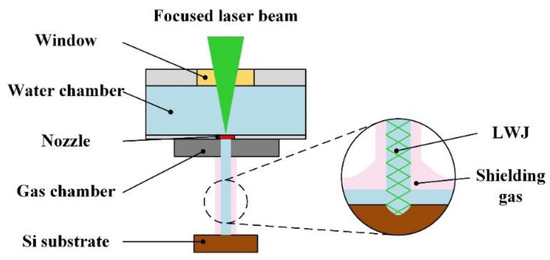
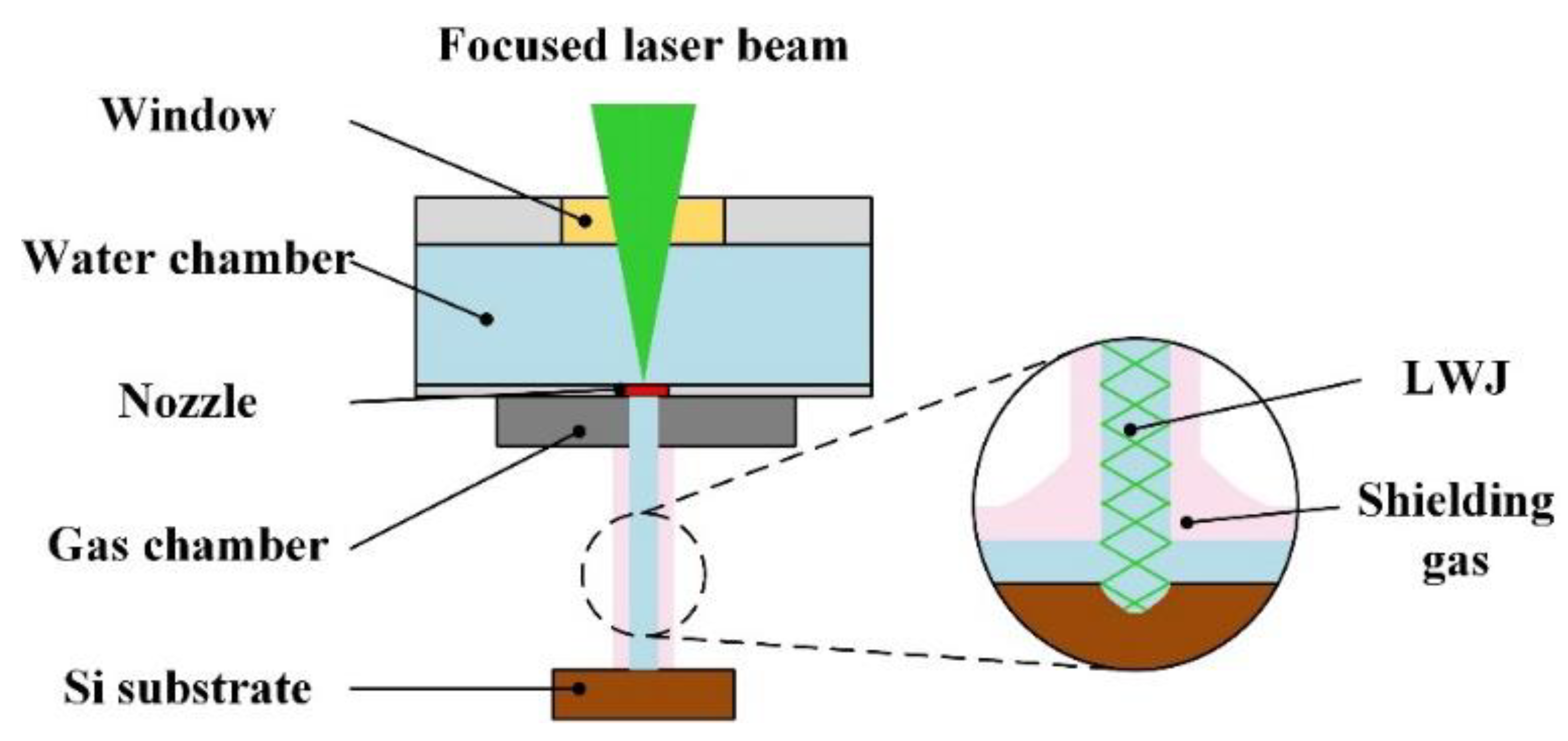
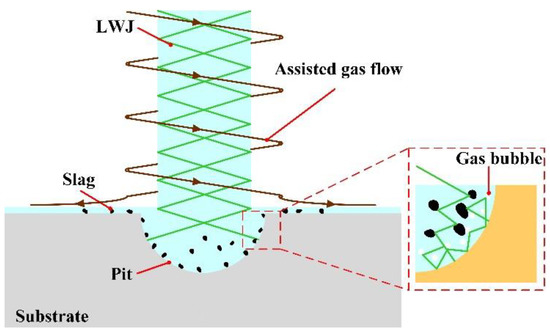
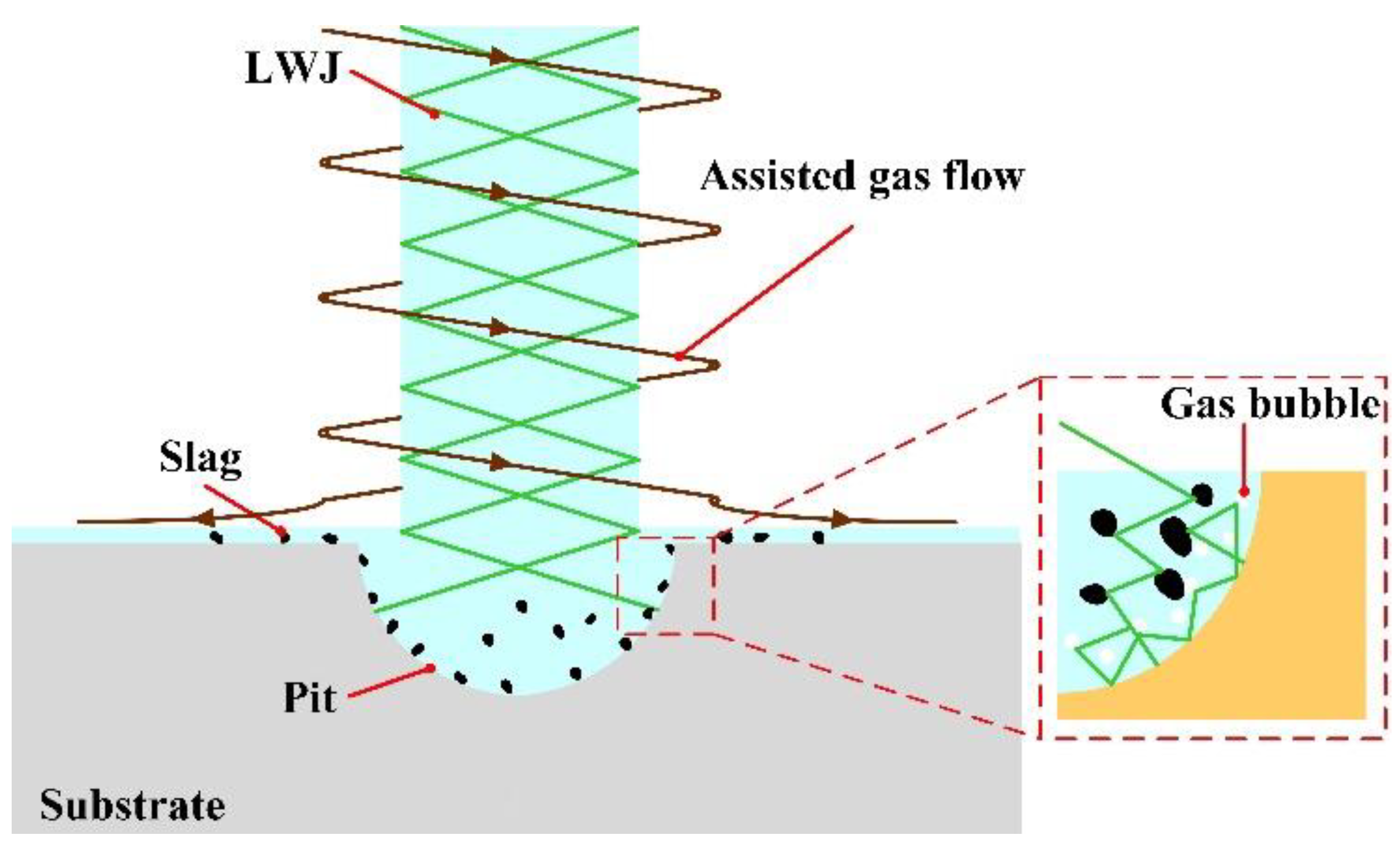
The schematic of LWJ machining is demonstrated in Figure 1. During the impingement of LWJ, the laser beam within the waterjet interacts with the substrate. Meanwhile, the waterjet scours the machining region continuously. It was obvious that thermal conduction and convection were the main regimes accounting for the substrate ablation and groove construction.
Figure 1.
Schematic of LWJ machining.
Based on the first law of thermodynamics, the governing equation describing the thermal conduction in the interaction between the silicon substrate and LWJ was written in cylindrical coordinates, as shown in Equation (1) [15,16]:
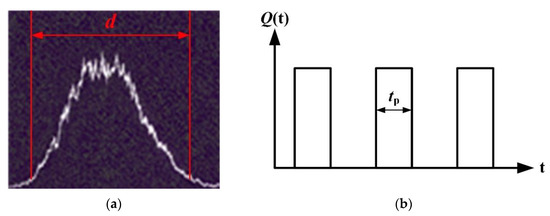
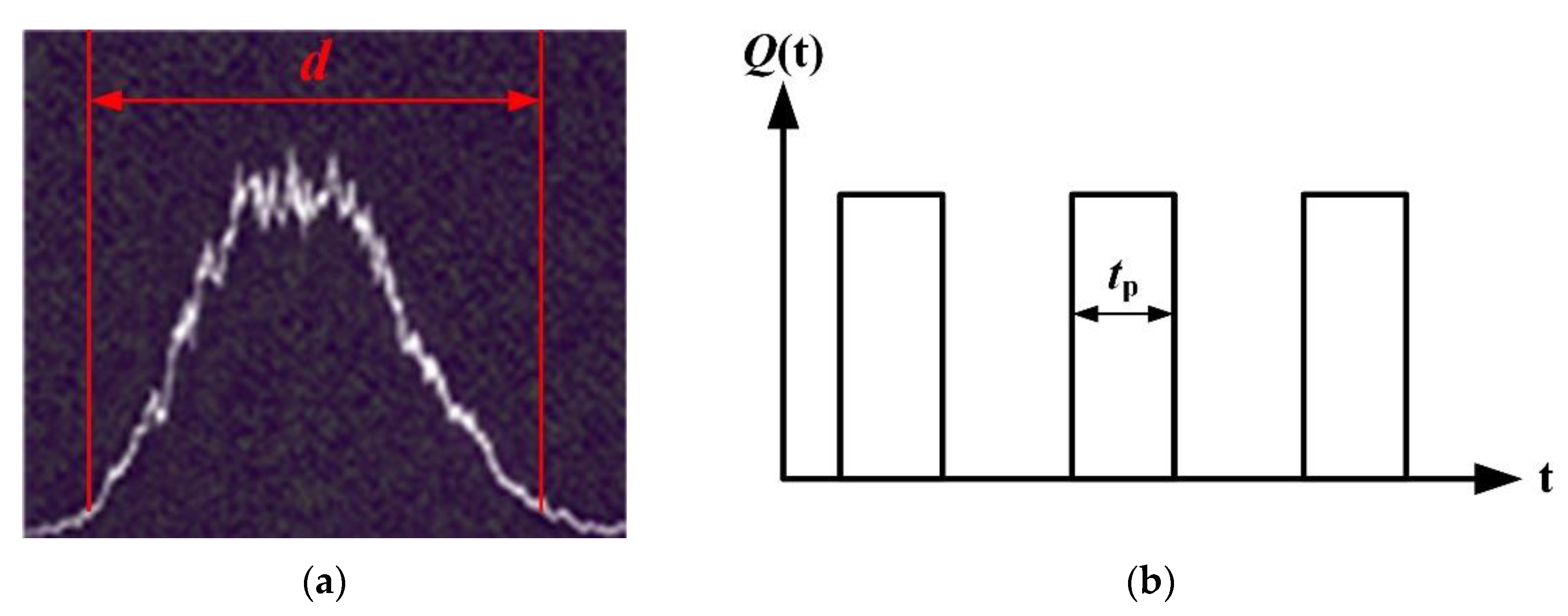
where is the silicon density; cps the specific heat of silicon; ks is the thermal conductivity of silicon; is temperature; is time; is velocity vector; and is time-dependent heat source, , where Q(t) is the effective laser power at the machining region. The schematic of Q is shown in Figure 2. In specific, the laser transmits along the waterjet to achieve total reflection. The laser energy distribution on the cross-section of waterjet was assumed to be nearly top-hatted, as demonstrated in Figure 2a, which was experimentally measured in our previous work [7].
Figure 2.
Schematic description of Q. (a) Definition of d according to experimental test; and (b) definition of Q(t).
The scouring effect of the waterjet brings about the continuous force of thermal convection throughout the LWJ machining process, which could be described as shown by Equation (2) [17]:
where lfs is the feature size of the analyzed region. kwat is the thermal conductivity of water and N is the Nusselt number. The empirical description of N is expressed as [17]:
where is the Rayleigh number, , is the water density, is the velocity of the water jet, and is the dynamic viscosity of water. is the Prandtl number , and is the specific heat of water.
Furthermore, the temperature field at the machining region was not uniformly distributed considering the scouring effect of the waterjet. Thermal stress generated correspondingly. Three equation sets were introduced to characterize the thermal stress and the induced thermal strain within the substrate:
- (1)
- Generalized Hooke equations describing the thermal stress [18]:where , , and are the normal stresses along X, Y, and Z axes, respectively. G is the shear modulus, , where E is the elasticity modulus, and μ is the Poisson’s ratio. , , and are the normal strain along X, Y, and Z axes, respectively. e is the volumetric strain, . is the Lame constant, . is the thermal stress coefficient, , where is the linear expansion coefficient. , , and are the theoretical elastic shear strain. , , and are the shear stress.
- (2)
- Dynamic displacement equations describing the thermoelastic force [18]:where is Laplace operator, . , , and are the displacement along X, Y, and Z axes, respectively.
- (3)
- Deformation compatibility equation describing the thermoelastic force [18]:where is the volumetric stress, .
By solving Equations (1)–(6), the LWJ-induced temperature and strain distribution at the machining region could be characterized.
2.2. Numerical Setup
Before setting up the numerical model, the following assumptions were made to reasonably simplify the simulation process:
- The density of the substrate remained constant, neglecting the absorption of laser energy. The surrounding temperature was 300 K throughout the whole calculation process.
- When the temperature of one element reached the melting point, it was assumed to be ablated from the substrate.
- The fluid dynamics of the melting material was neglected considering the scouring effect of the waterjet.
- The influence of the assisted gas atmosphere on the substrate ablation was neglected.
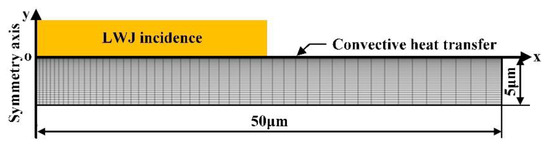
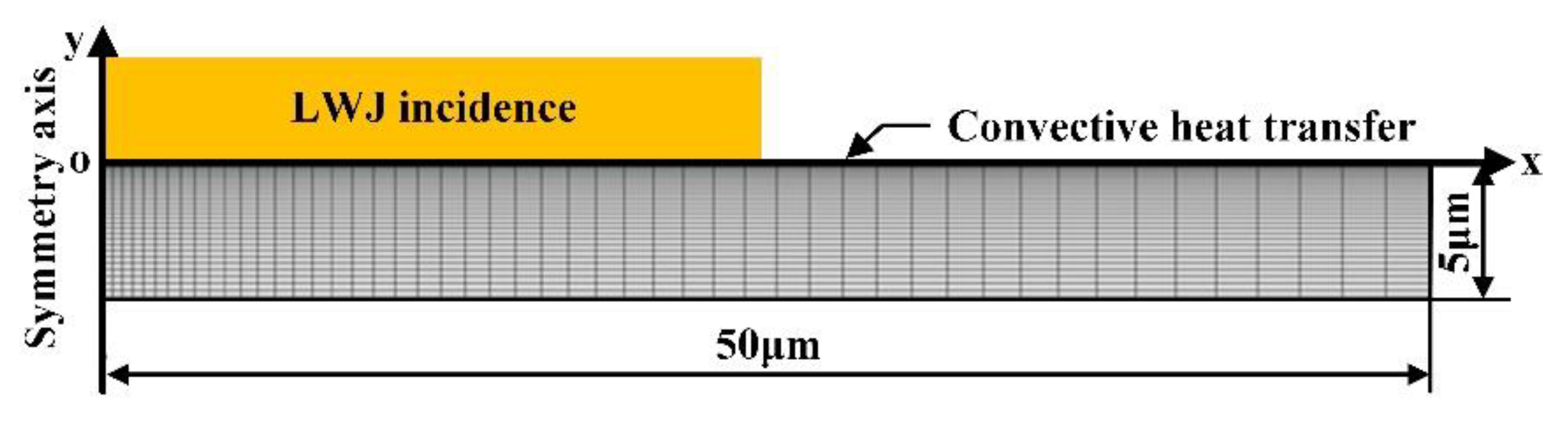
The numerical simulation was carried out under the circumstance of COMSOL Multiphysics. The CFD (computational fluid dynamics) module and heat transfer module were used for model setup. A two-dimension symmetrical calculation domain and the corresponding mesh generation is illustrated in Figure 3. The size of the calculation domain was 50 μm × 5 μm. It should be noted that the LWJ impinged on the upper surface of the domain and the radius of LWJ was 25 μm. In order to improve the computational accuracy, the upper boundary of the domain was refined. The minimum mesh size was 100 nm (length) × 50 nm (width).
Figure 3.
Illustration of calculation domain and mesh generation.
The LWJ machining parameters included but were not limited to laser pulse duration, waterjet pressure, and diameter, in accordance with the experimental setup in Section 3.
3. Experimental Setup
A Nd:YAG solid laser system (Pulse-532-50P, Inngu Laser) was utilized as the laser source for LWJ machining. The main output parameters are listed in Table 1. The laser beam was focused onto the nozzle with diameter of 60 μm through a 10× objective lens. It is worth noting that the diameter of the generated waterjet was around 50 μm considering the “necking effect”.
Table 1.
Main output parameters of laser source.
The theoretical laser spot radius was calculated as 25 μm based on Equation (7):
where is the focal length of objective lens; is diameter of laser beam before focusing; and M2 is horizontal beam quality factor. The laser spot radius was far smaller than the nozzle diameter. Hence, the requirement for generating a well-distributed LWJ could be realized.
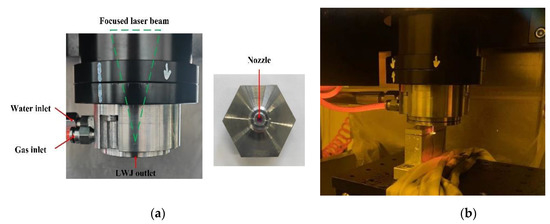
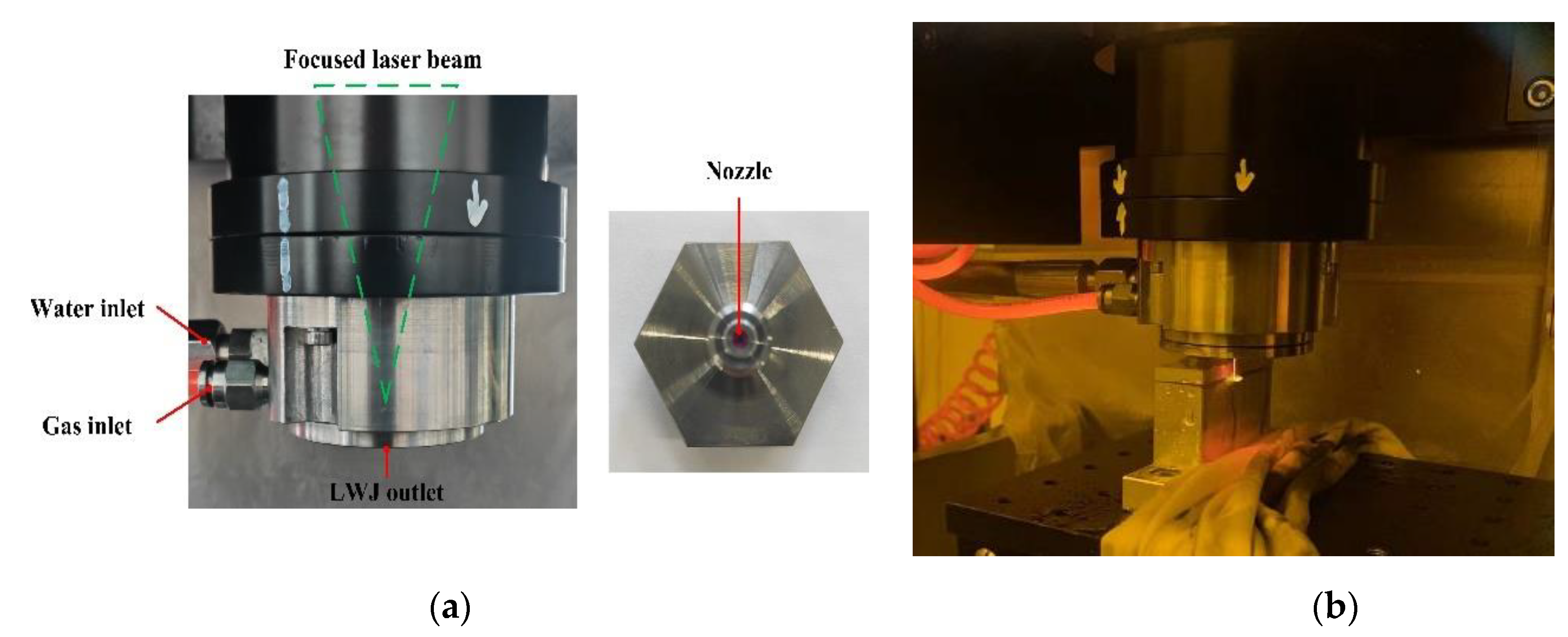
The coupling device and the capture of machining process are shown in Figure 4. Argon was selected for the assisted gas atmosphere and its pressure was fixed as 0.7 MPa. The water pressure was fixed as 25 MPa. Moreover, the monocrystalline silicon substrate with crystal planes of (111) was adopted in this study with a thickness of 8 mm. Its thermodynamic parameters are listed in Table 2. A digital microscope (VHX-7000, Keyence) and a scanning electron microscope (Merlin, Zeiss) were used to measure the structure morphology.
Figure 4.
Demonstration of LWJ machining. (a) Laser waterjet coupling device; and (b) capture of machining process.
Table 2.
Thermodynamic parameters of silicon [19].
4. Results and Discussion
4.1. Ablation Mechanism of Silicon
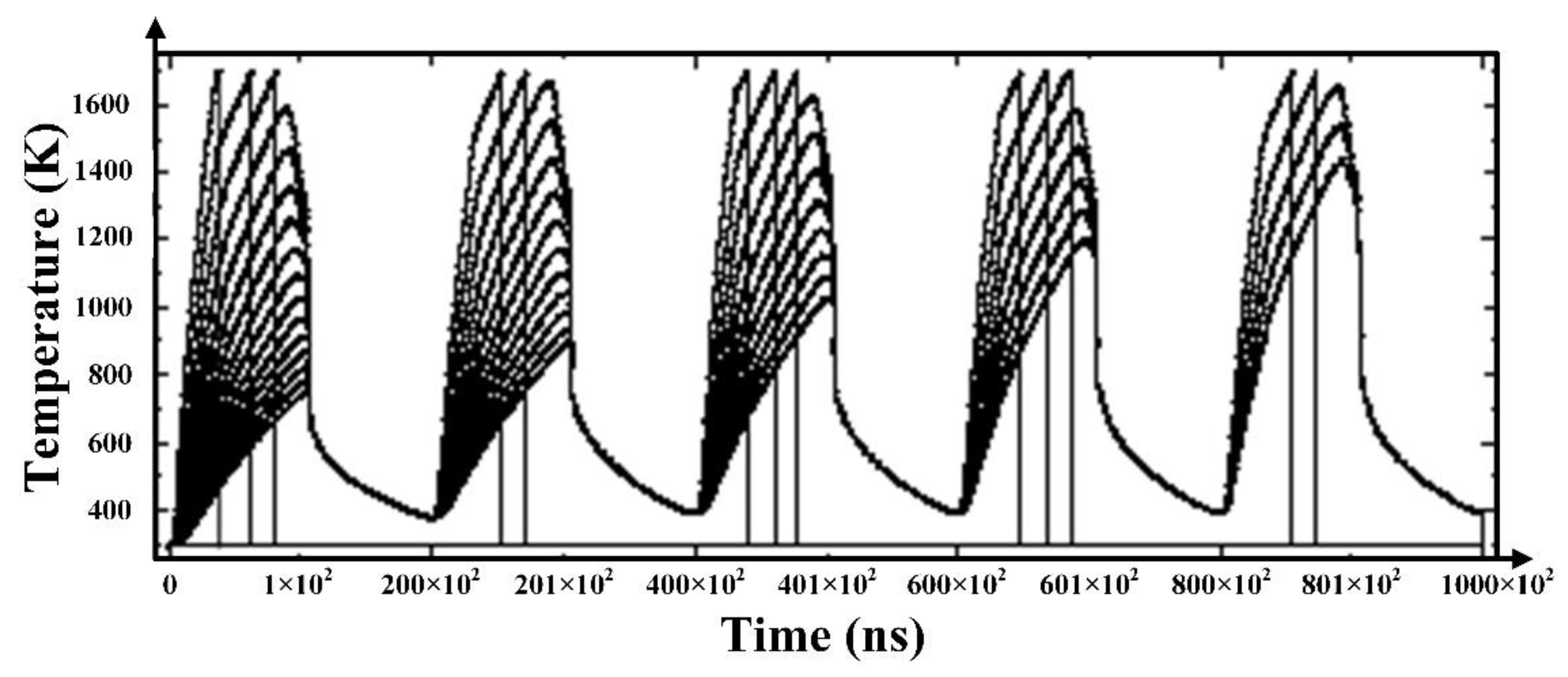
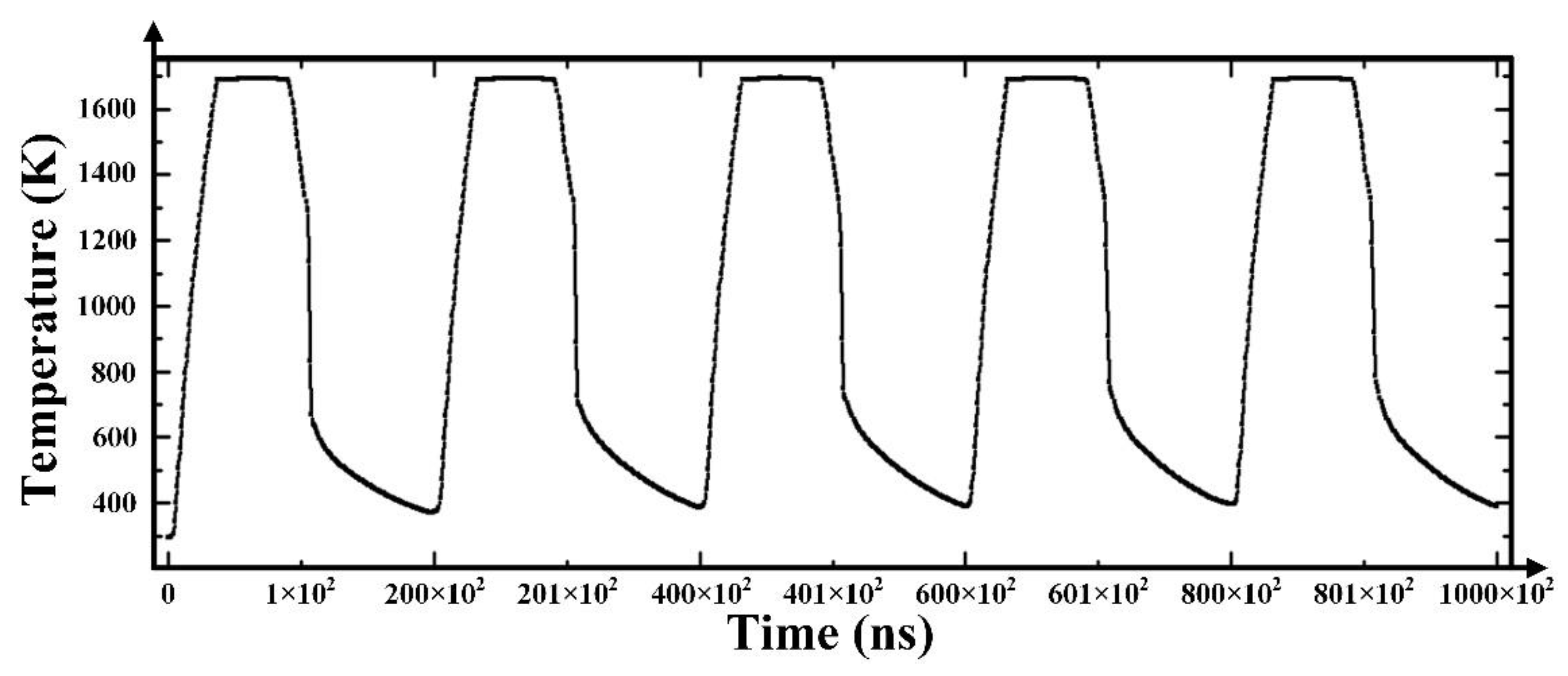
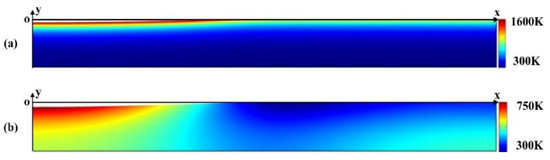
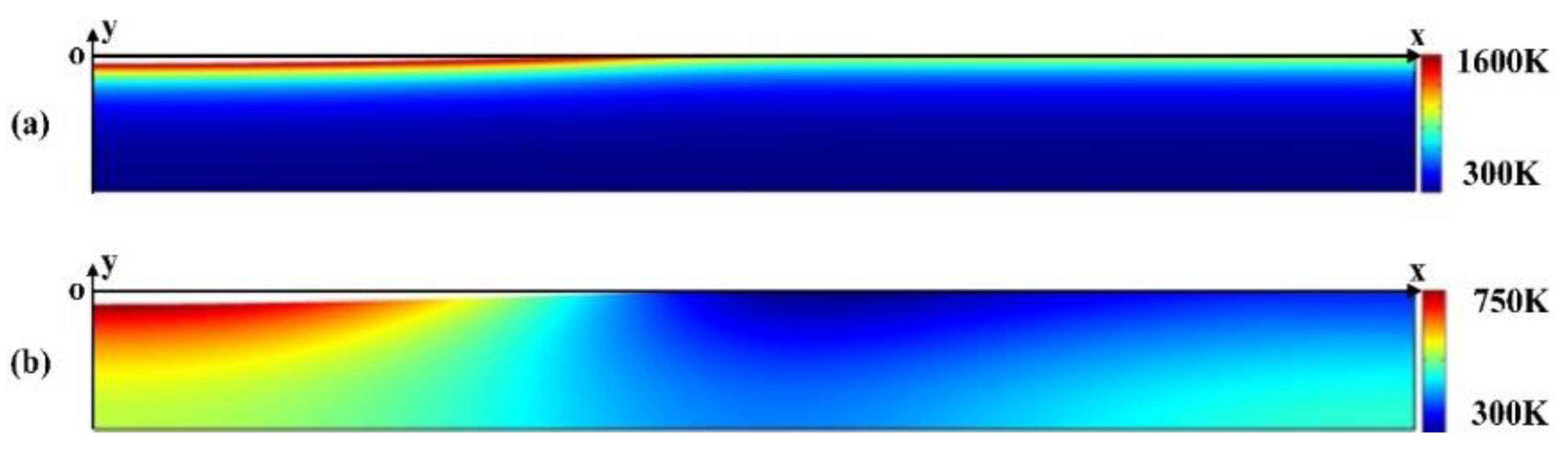
On the basis of Section 2, numerical simulations were carried out to investigate the temperature and stress distribution at the machining region. The laser power and repetition rate were set as 5 W and 50 kHz, respectively. Fifteen points along the central axis with a depth interval of 100 nm were selected as the sampling points. The temporal evolution of temperature on these sampling points and the highest temperature in the calculation domain are demonstrated in Figure 5 and Figure 6. The comparison of temperature distribution at t = 50 ns and t = 200 ns is shown in Figure 7.
Figure 5.
Temporal evolution of temperature at sampling points.
Figure 6.
Temporal evolution of the highest temperature in the calculation domain.
Figure 7.
Temperature distribution at (a) t = 50 ns and (b) t = 200 ns.
During the first laser pulse, the temperature of sampling points in the surface layer reached the melting point and the highest temperature was obtained at t = 38 ns. When t = 50 ns, a shallow pit formed and the high temperature area was localized surrounding the pit. At the end of laser pulse, the temperature of the remaining sampling points started to drop. When t = 200 ns, the size of pit was fixed and the surrounding temperature remained at a low level. Once the second laser pulse was applied, the temperature of sampling points rose again and the highest temperature was obtained at t = 33 ns. This tendency was repeated in the following three laser pulses.
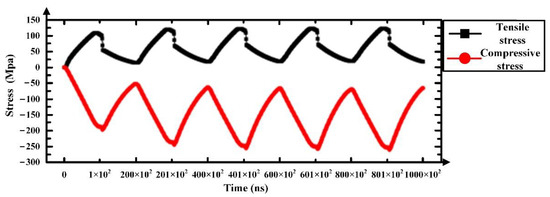
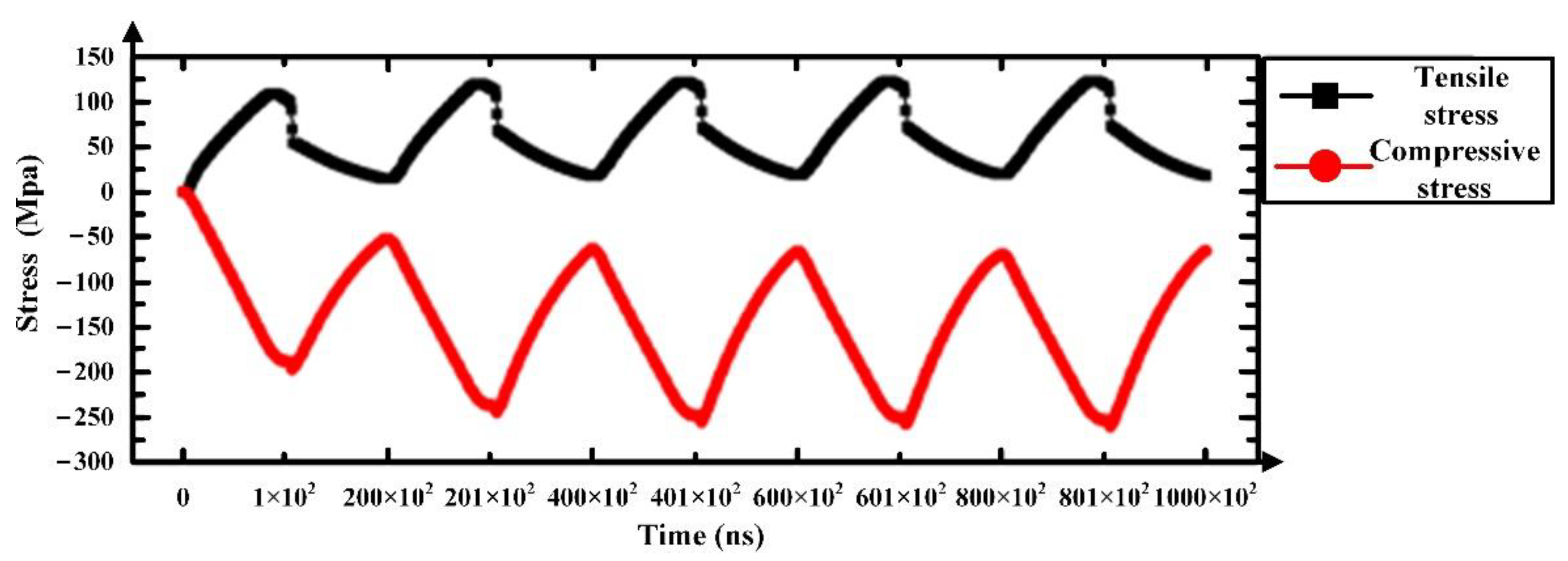
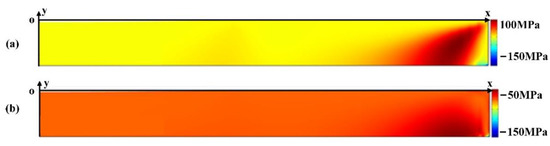
To further clarify the ablation mechanism of the silicon substrate, the temporal evolution of major principal stress in the calculation domain is demonstrated in Figure 8. The generation of maximum compressive stress was always delayed after the tensile stress. Both of these two stresses increased during the laser pulse, then gradually dropped during the pulse interval. The compressive stress dropped much faster than tensile stress. The spatial distributions of maximum compressive and tensile stress in the calculation domain at t = 100 ns are illustrated in Figure 9. Both tensile and compressive stresses concentrated on the right side of the domain and restricted within a relatively small area. Most importantly, the maximum compressive stress and tensile stress were far lower than the compressive strength and tensile strength, respectively.
Figure 8.
Temporal evolution of tensile stress and compressive stress.
Figure 9.
The spatial distribution of (a) maximum tensile stress and (b) maximum compressive stress.
4.2. Morphological Evolution of Silicon
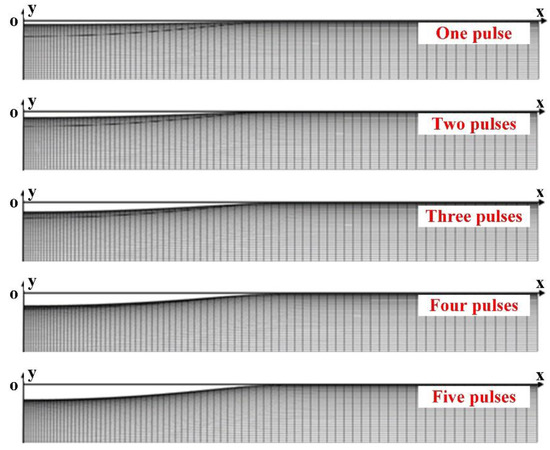
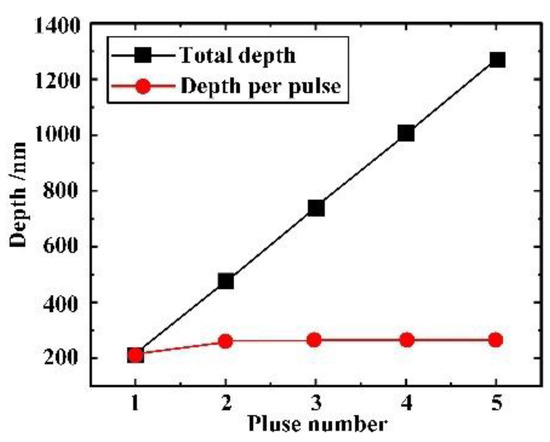
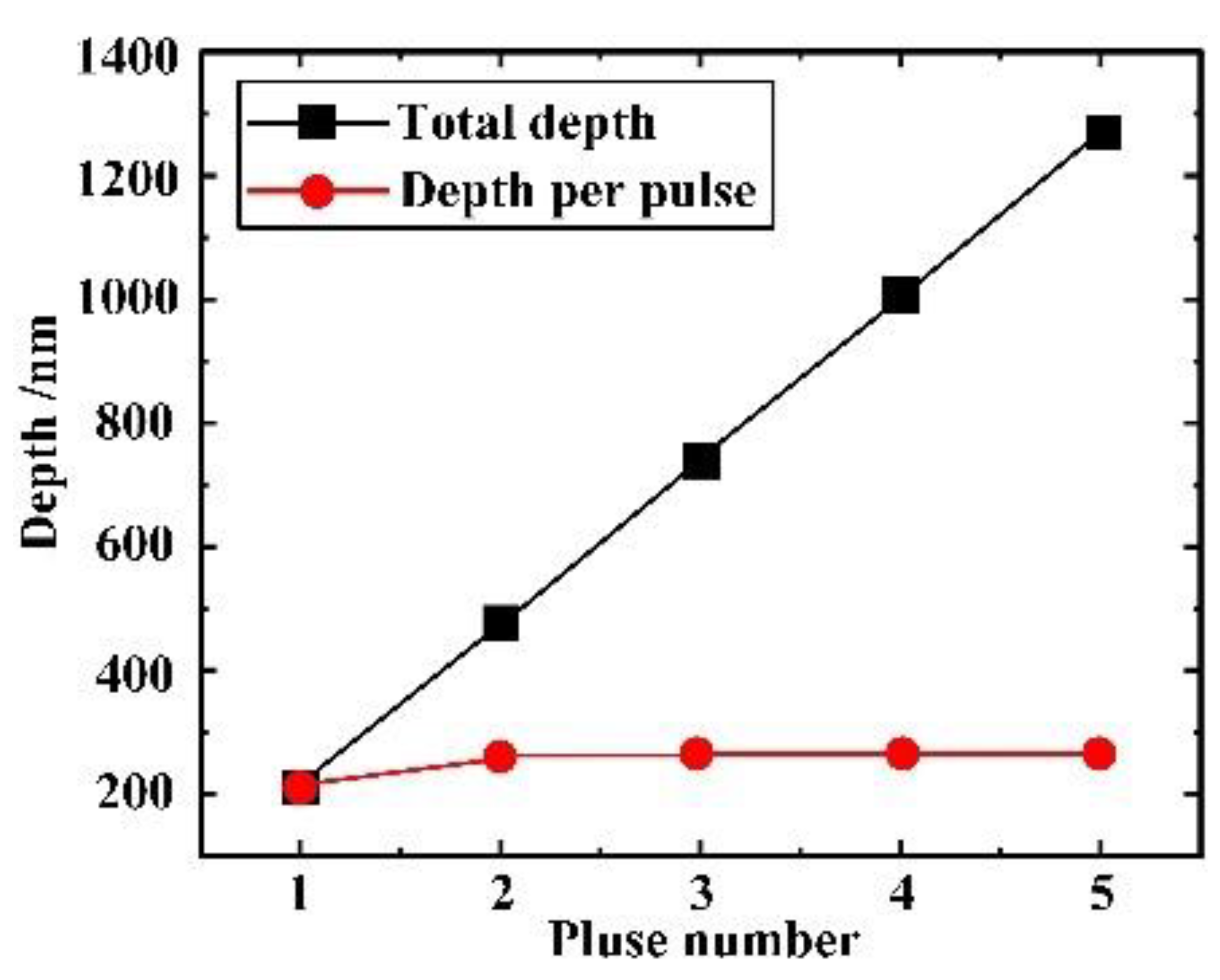
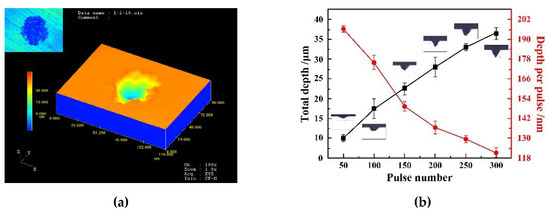
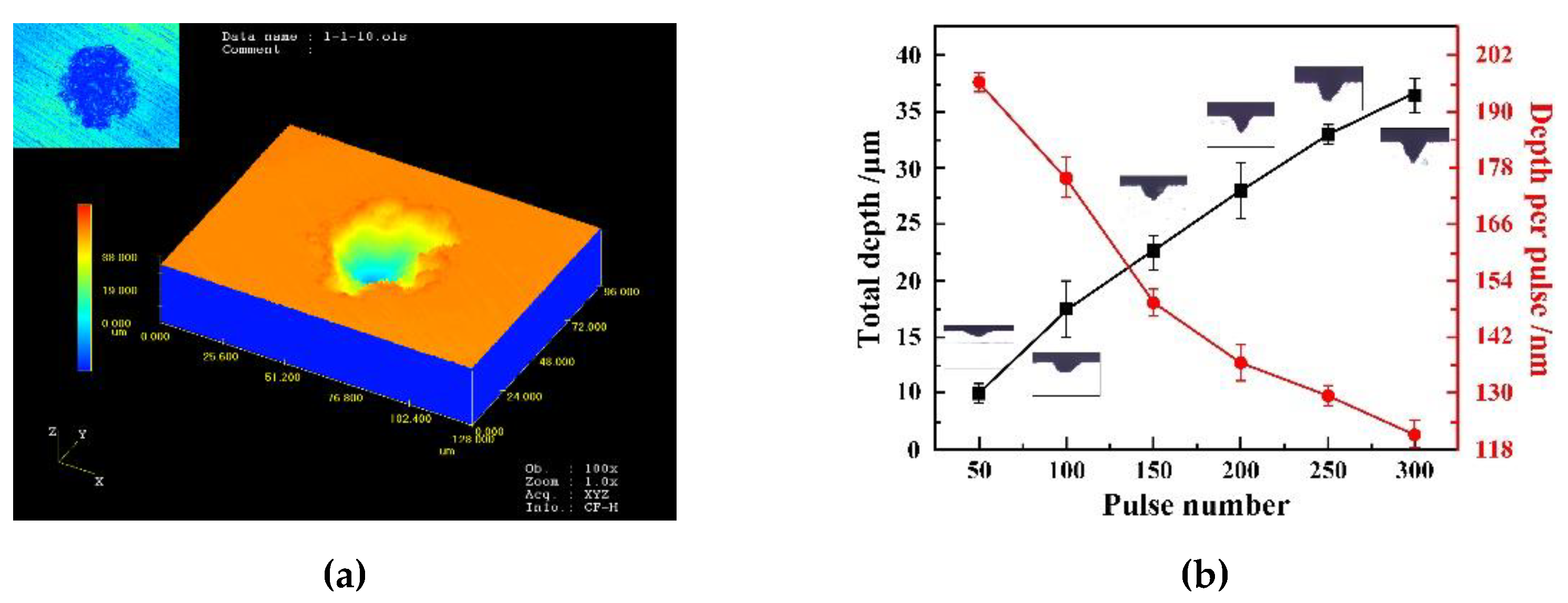
To investigate the morphological evolution of silicon under LWJ machining, numerical simulations using geometry deformation module were also carried out based on Section 4.1. The results are shown in Figure 10. Moreover, single-spot ablation experiments were put forward using the same machining parameters with numerical simulations except for the applied laser pulses. The pit depths were measured, as listed in Figure 11.
Figure 10.
Morphological evolution of substrate under different laser pulses.
Figure 11.
Analyses of ablation depth based on numerical simulation.
As can be observed from Figure 10, Figure 11, and Figure 12, the ablation depth increased with applied pulse number. However, an obvious difference could be discovered between the simulation and experimental results. According to the simulations, the first laser pulse resulted in the smallest ablation depth(215 nm). The ablation depth induced by the second laser pulse increased to approximately 260 nm. The following three pulses led to the same ablation depth (265 nm). However, the ablation depth per pulse decreased significantly with increasing applied pulses in the experiments. The main reasons could be analyzed as follows:
Figure 12.
(a) Typical pit morphology at pulse number of 300 and (b) evolution of ablation depth under different pulses.
In the simulations, it was assumed that the material was peeled off clearly from the substrate once its temperature exceeded the melting point. The laser beam was capable of interacting with the substrate continuously, and this process was accompanied by the scouring of waterjet. The next ablation step was not disturbed. Meanwhile, in the experiments, the formation of the micro-pit, slag, and gas bubble induced by the initial several laser pulses altered the transmission behavior of the laser beam in the following ablation process, as demonstrated in Figure 13. In specific, the pit enabled the deposition of water, during which the impingement of high-speed LWJ resulted in significant turbulence. The gas bubble was strained within the deposited water and the slag was stirred, forming a “suspension”. The incident laser was reflected, refracted, and absorbed by the “suspension”, causing the serious energy dissipation. The subsequent ablation was weakened correspondingly. The scouring of waterjet could suppress this phenomenon to some extent, but still could not eliminate it completely.
Figure 13.
Schematic of single-spot LWJ machining.
Taking Figure 5, Figure 6, Figure 7, Figure 8, Figure 9, Figure 10, Figure 11, Figure 12 and Figure 13 into consideration, the ablation of silicon substrate during LWJ machining could be classified into four steps:
- (1)
- In the initial stage of laser pulse incidence, the laser photons interacted with the silicon lattice. The vibration of the silicon lattice led to the rapid heating up of the surface layer. Thermal-induced tensile and compressive stresses started to generate in the machining region.
- (2)
- During the laser pulse incidence, thermal conduction occupied a principal position compared with thermal convection induced by the scouring effect of the waterjet. The temperature of the surface layer increased in a nonlinear way. Tensile and compressive stress gradually concentrated on the edge of the substrate. Part of the surface layer was ablated.
- (3)
- At the end of laser pulse, the tensile and compressive stresses reached the peak value, which resulted from the compound action of the laser-induced thermal effect and the waterjet-induced scouring effect. However, these two stresses could hardly modulate the substrate ablation process. The micro-pit was formed temporarily.
- (4)
- During the interval of laser pulse, the waterjet scoured the machining region, which cooled down the local temperature surrounding the pit significantly. The tensile and compressive stresses gradually released to the initial state.
The above numerical experimental result revealed that there exists a limit for pit depth by single-spot ablation. To construct micro-grooves with large DTWR, the influence of machining parameters on the groove morphology as well as the most appropriate scanning strategy needs to be investigated in detail.
4.3. Fabrication of Micro-Grooves with Large DTWR
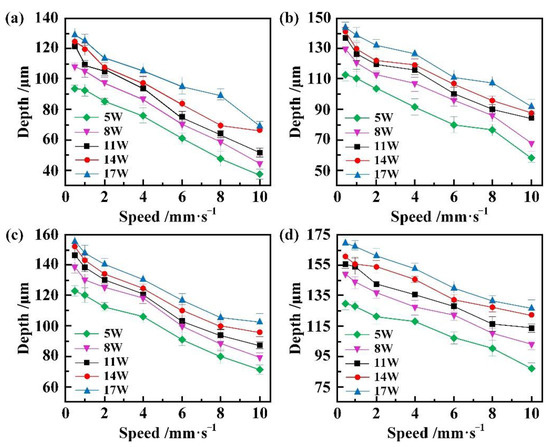
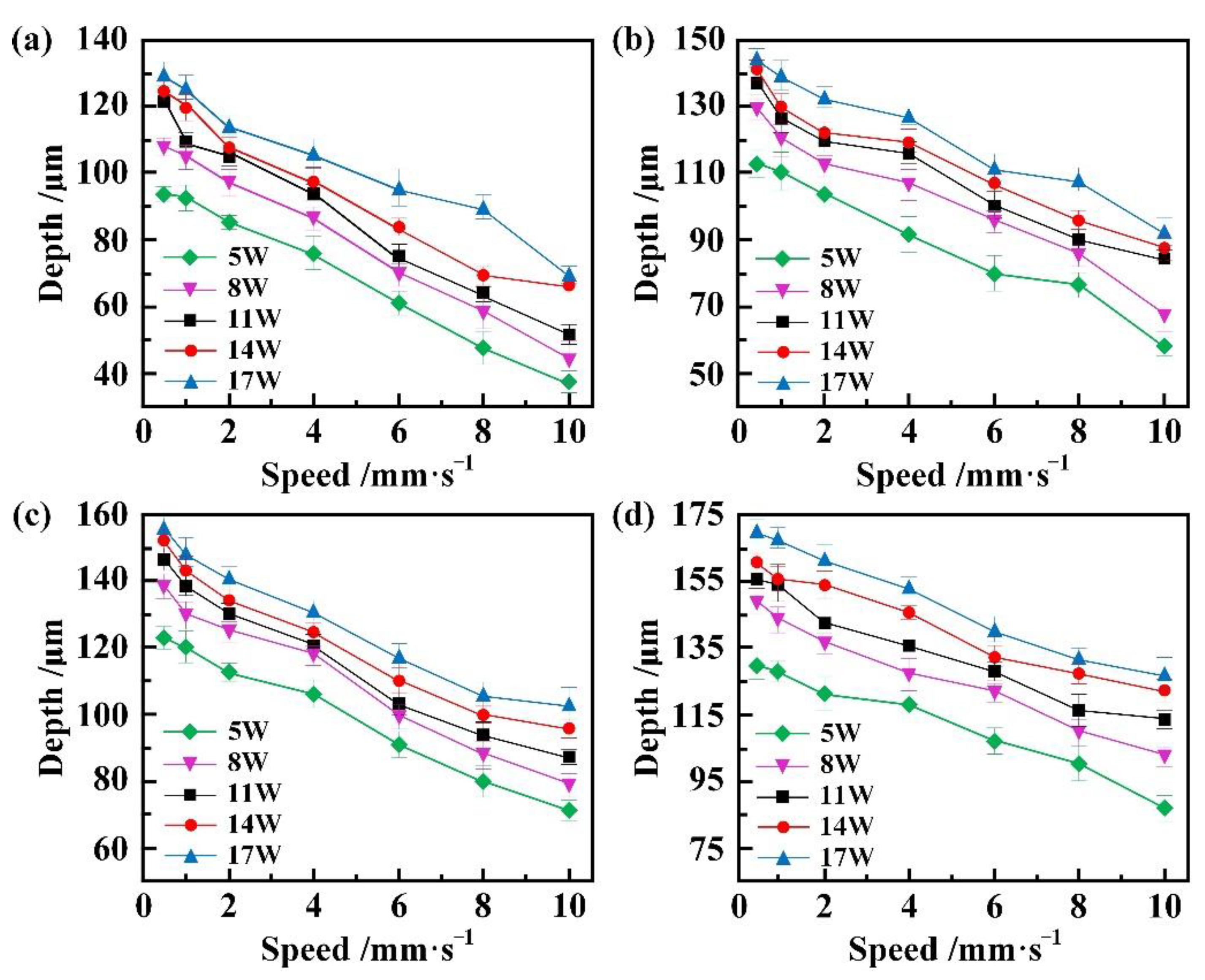
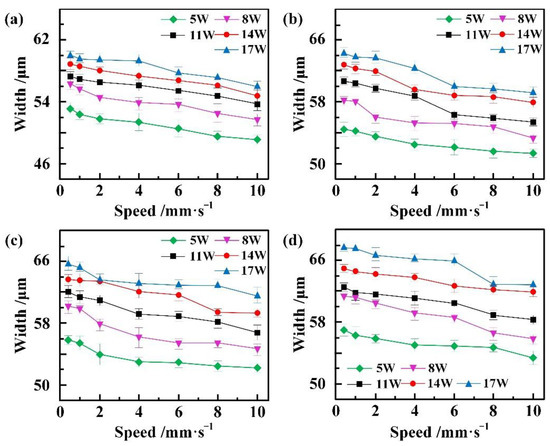
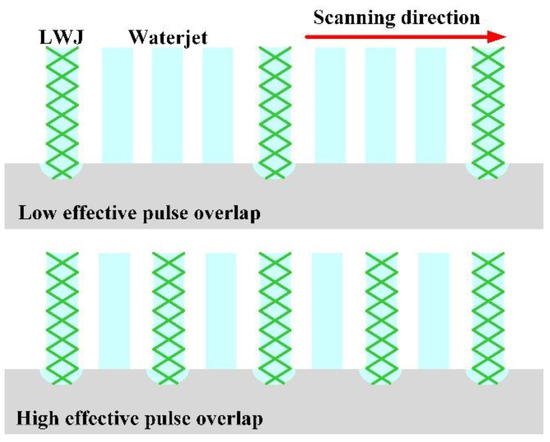
Based on the analysis in Section 4.1 and Section 4.2, single-row scribing experiments were put forward to clarify the influence of laser power, pulse energy, and scanning speed on the groove depth and width. Every parameter group was repeated five times and each groove was scanned once. The morphological results were measured and are listed in Figure 14 and Figure 15. With fixed pulse energy and scanning speed, the increasing laser power indicated deeper groove depth. Similarly, with fixed laser power and scanning speed, the increasing laser pulse energy also resulted in deeper groove depth. When the laser power and pulse energy were fixed, the decreasing scanning speed led to deeper groove depth as well. To explain these rules, quantitative analyses concerning the effective pulse overlap were carried out and are listed in Table 3. The decreasing distance between neighboring laser spots equaled to more effective pulse overlap, as illustrated in Figure 16. Furthermore, the higher laser pulse energy and more effective pulse overlap contributed to the higher incident laser fluence in the unit area. Taking the analyses in Section 4.1 and Section 4.2 into consideration, the higher incident laser fluence led to a stronger thermal effect in the machining region, which was capable of promoting ablation volume [20,21]. Therefore, the groove depth increased correspondingly.
Figure 14.
The variation of groove depth under pulse energy of (a) 0.45 mJ, (b) 0.65 mJ, (c) 0.85 mJ, and (d) 1.05 mJ.
Figure 15.
The variation of groove width under pulse energy of (a) 0.45 mJ, (b) 0.65 mJ, (c) 0.85 mJ, and (d) 1.05 mJ.
Table 3.
Quantitative analyses of effective pulse overlap.
Figure 16.
Comparison of high and low effective pulse overlap in the unit area.
Nevertheless, the groove width was not sensitive to these parameters. The reason is that during single-row LWJ scribing, the laser power was trapped within the waterjet. The increase in laser pulse energy and power may not alter the working state of LWJ. Referring to Figure 13, the limited refraction and reflection of the laser beam within the deposited water in the machining region led to the slightly broadening of groove width. The increase in scanning speed could suppress the water deposition to some extent as it provided a better drainage channel under the assisted argon atmosphere, but it still hardly influenced groove width [22].
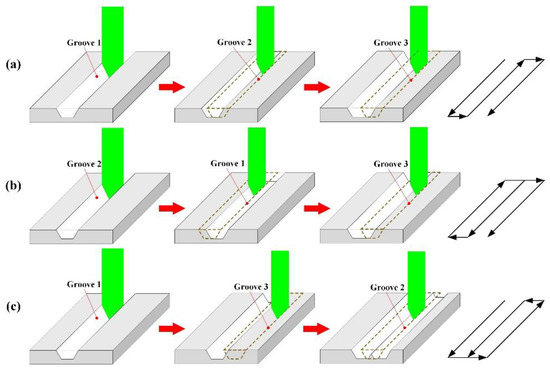
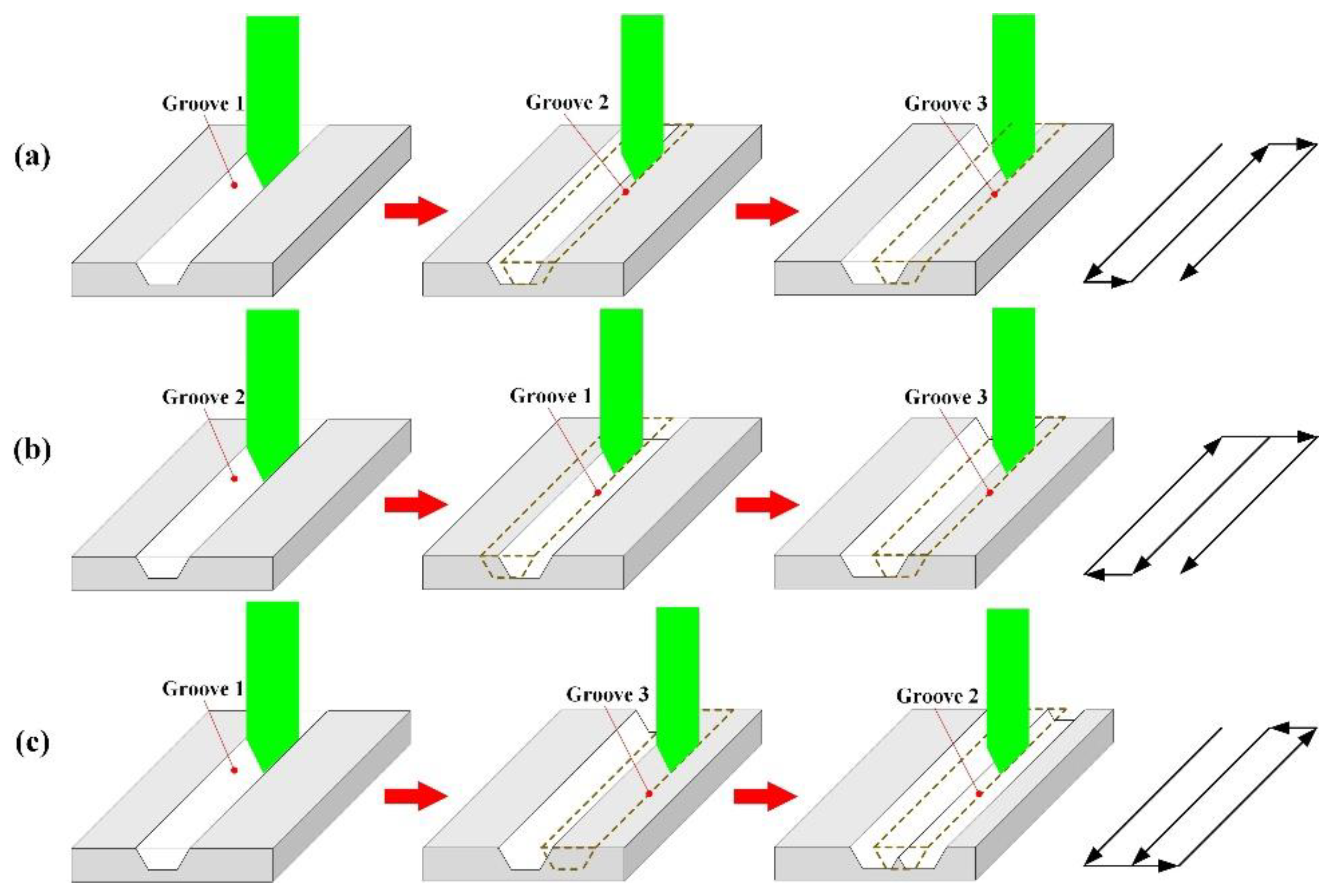
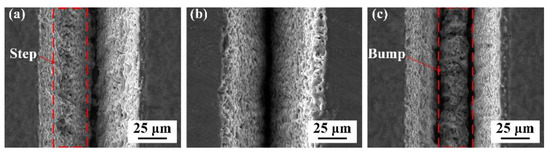
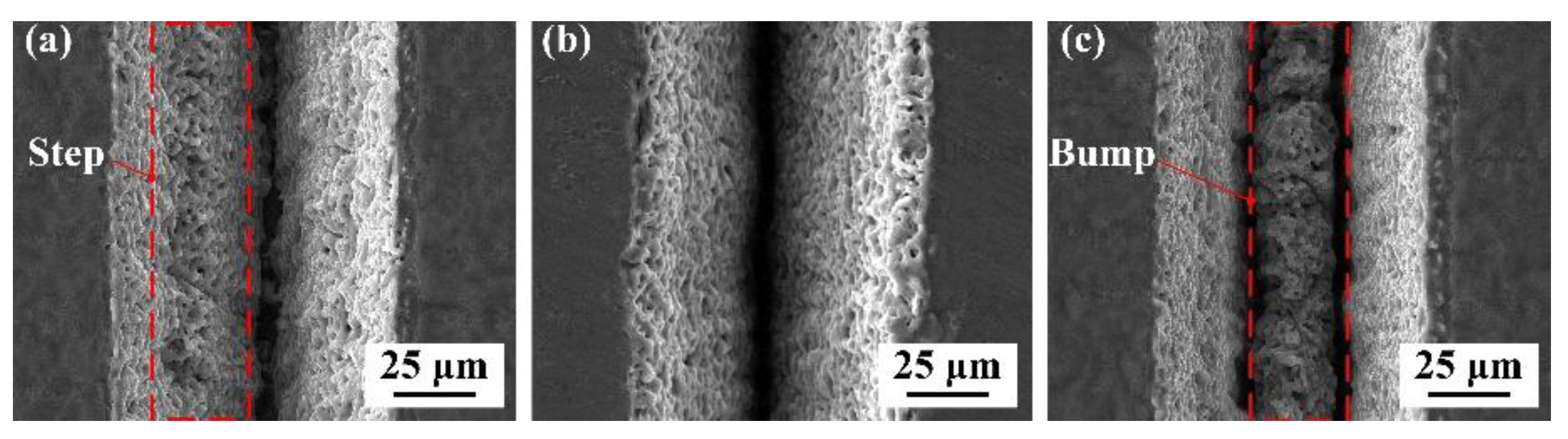
According to the single-row experimental results, higher laser pulse energy and relatively small scanning speed were fundamental factors for fabricating deeper grooves. On this basis, multi-row scanning strategies were investigated from two progressive aspects. First of all, three scanning strategies on the same layer were put forward, the schematic of which are illustrated in Figure 17. The groove morphologies are shown in Figure 18, and the corresponding machining parameters are listed in Table 4. An obvious step structure could be discovered on the groove wall fabricated by 123 sequence, which could be attributed to the asymmetric scanning trace. Specifically, the construction of groove one provided a unilateral channel for water ejection. During the construction of groove two, The refracted and reflected laser beam in the deposited water enhanced the unilateral ablation, which resulted in the remodulation of the groove wall and the formation of the step structure. For 132 sequence, the construction of groove one and three generated the bumpy structures in the central area. This structure could “split” the incident LWJ, forming a symmetric distributed pool for water deposition. The refracted and reflected laser beam in this channel suppressed the construction of groove three, as the laser energy was dissipated to enhance the ablation of groove one and groove two where the effective LWJ was absent. In contrast, a clearly V-shaped micro-groove with no step and bump structures was obtained through 213 sequence. The well morphology should be given credit for the formation of the central water channel after the construction of groove two. In specific, the LWJ could interact with the side wall of groove one and groove three directly without the disturbance from deposited water. The slag could be ejected from the groove fluently as well. Therefore, 213 sequence was the most appropriate scanning strategy on the same layer.
Figure 17.
Scanning strategies on the same layer, (a) 123 sequence, (b) 213 sequence, and (c) 132 sequence.
Figure 18.
Groove morphologies fabricated by (a) 123 sequence, (b) 213 sequence, and (c) 132 sequence.
Table 4.
Machining parameters for multi-row scribing experiments on the same layer.
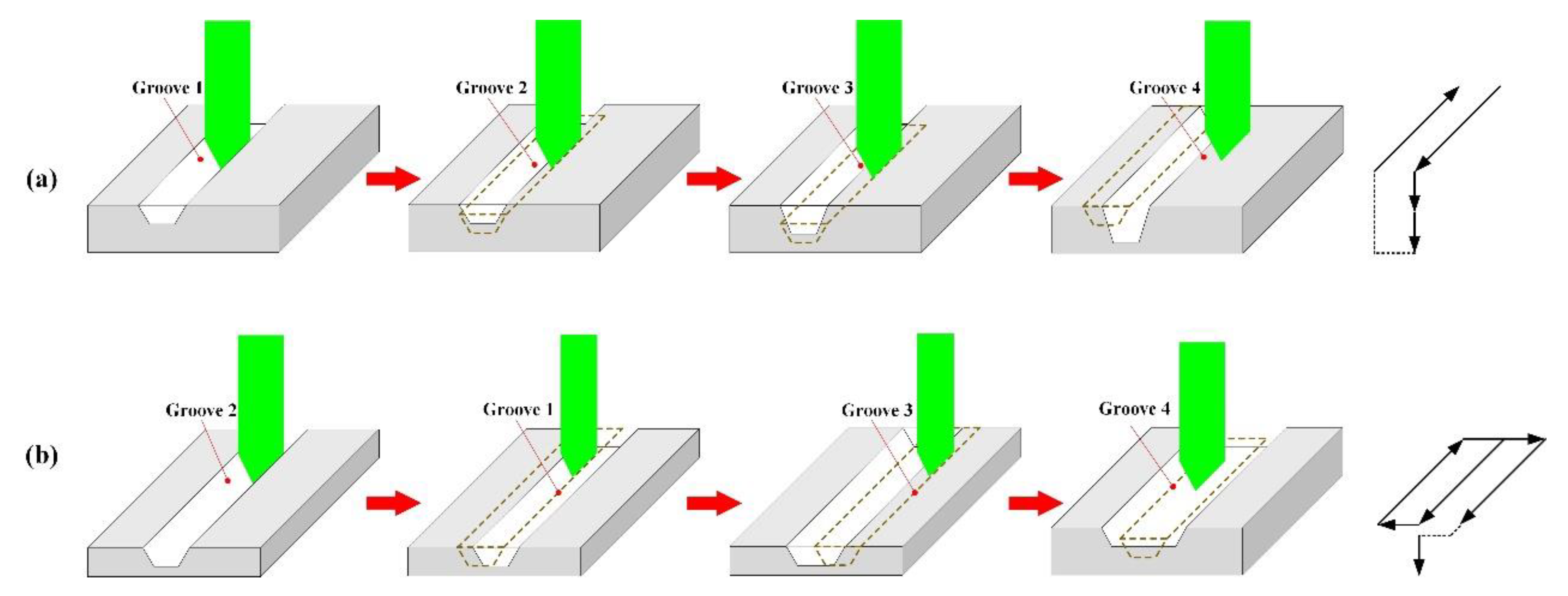
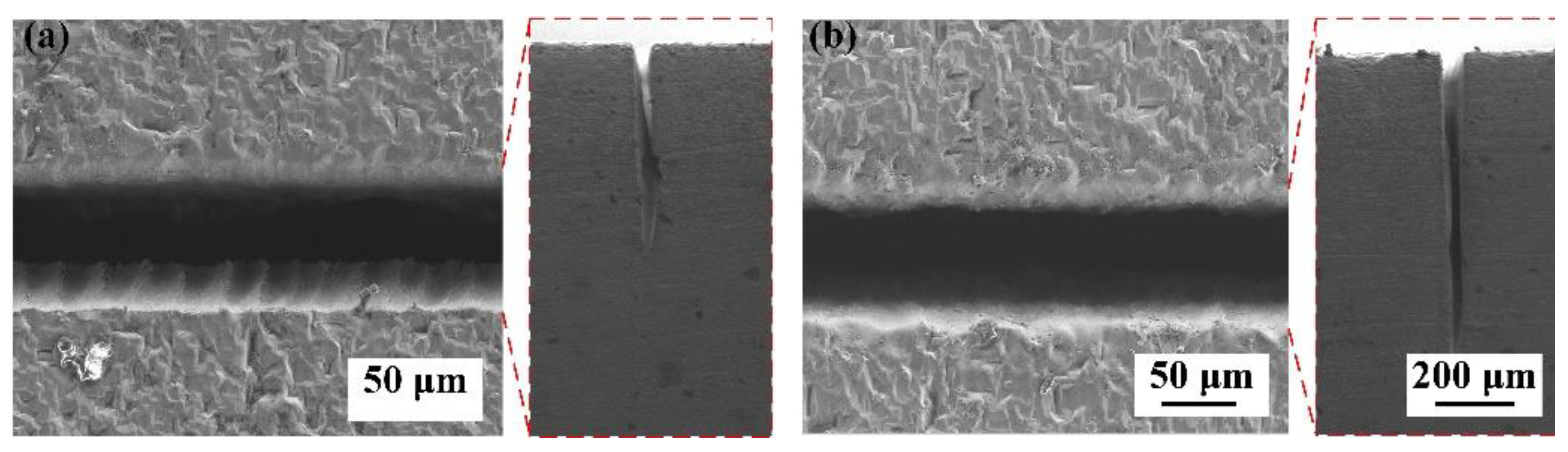
Based on the above analyses, two scanning strategies along the depth direction was raised, and the schematic is shown in Figure 19. The corresponding groove morphologies are shown in Figure 20, and the machining parameters are listed in Table 5. The surface-to-depth sequence offered larger DTWR and lower taper. Analyses showed that under the assistance of the argon atmosphere, the larger ablation region enabled the deposited water and slag to eject fluently. The LWJ could be delivered to the deeper position of the micro-groove instead of being dissipated. However, the application of depth-to-surface sequence weakened the water and slag ejection seriously along depth direction. The reflection and refraction of the laser beam within the deposited water induced extra damage to the groove wall, and the enlargement of DTWR was prohibited.
Figure 19.
Scanning strategies along depth direction, (a) depth-to-surface sequence, and (b) surface-to-depth sequence.
Figure 20.
Surface and end face morphologies of micro-grooves fabricated by (a) depth-to-surface sequence and (b) surface-to-depth sequence.
Table 5.
Machining parameters of micro-grooves in Figure 20.
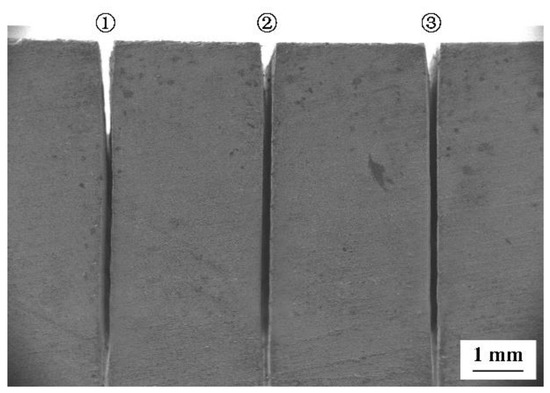
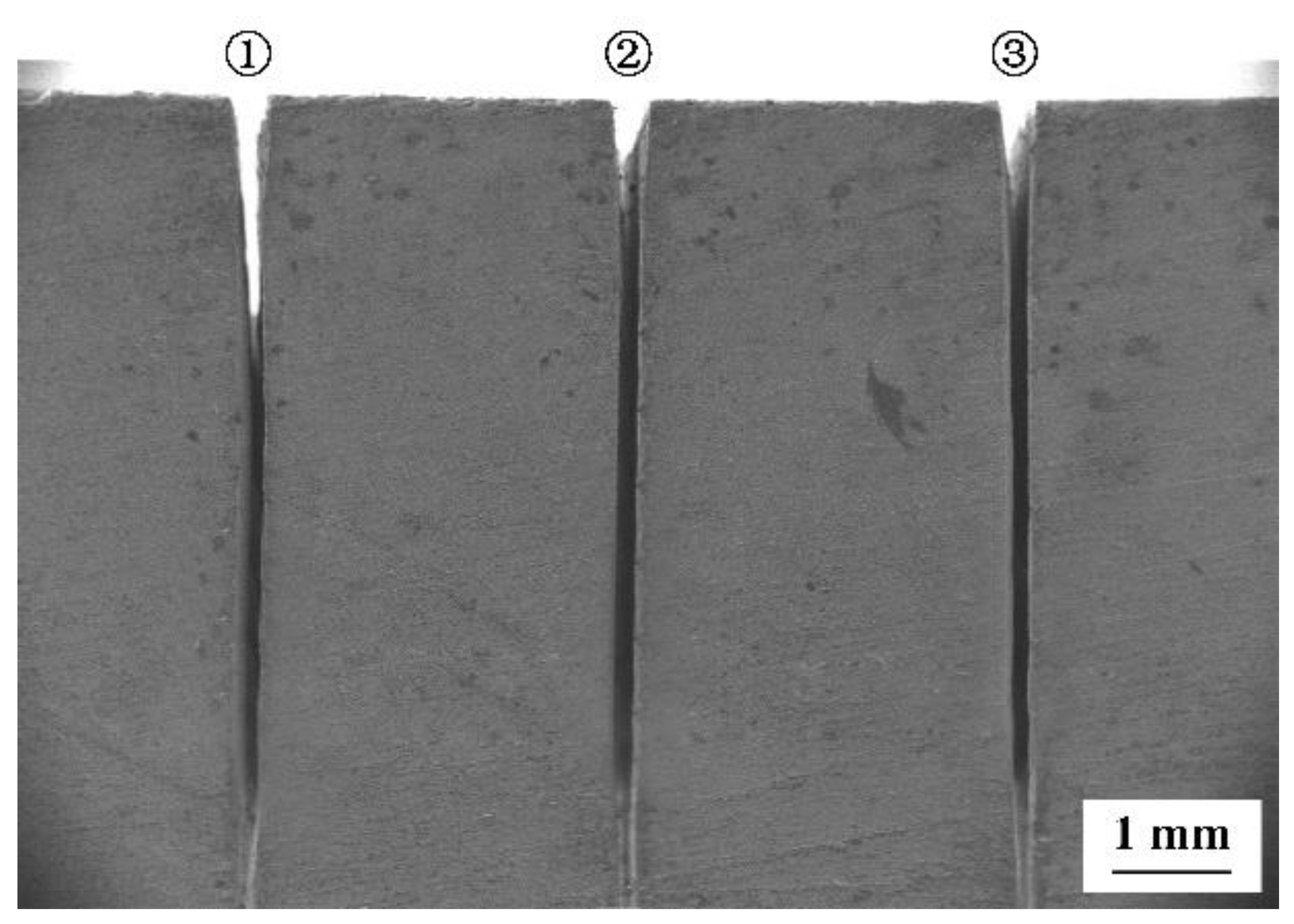
In summary, the excellent ejection channel of the deposited water was of great significant for the fabrication of micro-grooves. The 213 sequence on the same layer and the surface-to-depth sequence on different layers were the most suitable scanning strategies. Using the parameters in Table 6 the micro-grooves with DTWR and taper up to 19 and 0.013 were constructed, as shown in Figure 21. The morphological parameters were measured and are listed in Table 7 The wall of the groove was nearly vertical. Machining defects, such as attached debris, edge crack, and heat-affected zones were absent, which solidly supports the feasibility of LWJ.
Table 6.
Machining parameters of micro-grooves in Figure 21.
Figure 21.
End face morphologies of micro-grooves with large DTWR and low taper. The numbers in this figure refer to the groove number in Table 7.
Table 7.
Morphological parameters of micro-grooves in Figure 21.
5. Conclusions
This study put forward theoretical and experimental investigations on the LWJ scribing of monocrystalline silicon. The discoveries can be summarized as follows:
- (1)
- During LWJ machining, the maximum values of generated tensile and compressive stresses were approximately 122 MPa and 253 MPa, respectively, which were far lower than the tensile strength and compressive strength. The maximum temperature exceeded 1730 K, which was higher than melting point of the substrate. Therefore, the dominated substrate ablation mechanism was the laser-induced thermal effect.
- (2)
- The ablation volume per pulse decreased with increasing laser pulses for single-spot ablation, which could be attributed to the reflection, refraction, and absorption of laser energy by the water deposited in the ablated structure.
- (3)
- Laser pulse energy and effective pulse overlap were the main factors affecting the groove depth for single-row scribing as they decided the incident laser fluence in the unit area. The groove width was not sensitive to the parameter variation as it was mainly dominated by the applied LWJ diameter. The 213 sequence on the same layer and the surface-to-depth sequence on different layers were the most suitable scanning strategies for fabrication of micro-grooves with large DTWR and low taper considering that these strategies provided effective channels for water and slag ejection.
However, there still exists limitations for this paper. For example, the prediction accuracy of the established model can be improved by introducing ray optics and hydrodynamics theories. The processing crafts for fabricating specific silicon-based micro-electro-mechanical systems needs to be further explored through detailed experiments and performance tests.
Author Contributions
Conceptualization, Y.L.; methodology, Y.L. and Y.D.; software, Y.L. and B.C.; validation, Y.L. and L.Y.; formal analysis, Y.D.; investigation, Y.L. and J.C.; resources, Y.L. and Y.D.; data curation, Y.L. and J.C.; writing—original draft preparation, Y.L.; writing—review and editing, Y.L. and Y.D.; visualization, Y.L. and L.Y.; supervision, Y.L. and Y.D.; project administration, Y.L. and Y.D. funding acquisition, L.Y. and Y.D. All authors have read and agreed to the published version of the manuscript.
Funding
This research was supported by National Key R&D Program of China (No.2018YFB1107600), National Science and Technology Major Project (No. 2019-VII-0009-0149).
Institutional Review Board Statement
Not applicable.
Informed Consent Statement
Not applicable.
Data Availability Statement
Not applicable.
Acknowledgments
The authors would like to thank Yanchao Guan for the SEM images.
Conflicts of Interest
The authors declare no conflict of interest.
References
- Akinwande, D.; Huyghebaert, C.; Wang, C.-H.; Serna, M.I.; Goossens, S.; Li, L.-J.; Wong, H.-S.P.; Koppens, F.H.L. Graphene and two-dimensional materials for silicon technology. Nature 2019, 573, 507–518. [Google Scholar] [CrossRef] [Scilit] [PubMed]
- Fan, Y.; Arevalo, A.; Li, H.; Foulds, I.G. Low-cost silicon wafer dicing using a craft cutter. Microsyst. Technol. 2014, 21, 1411–1414. [Google Scholar] [CrossRef] [Scilit]
- Lee, H.H.; Zhao, E.; Chen, D.; Zhang, N.; Chen, S.-C. Dual-beam stealth laser dicing based on electrically tunable lens. Precis. Eng. 2020, 66, 374–381. [Google Scholar] [CrossRef] [Scilit]
- Cai, Y.; Wang, M.; Zhang, H.; Yang, L.; Fu, X.; Wang, Y. Laser cutting sandwich structure glass–silicon–glass wafer with laser induced thermal–crack propagation. Opt. Laser Technol. 2017, 93, 49–59. [Google Scholar] [CrossRef] [Scilit]
- Zhao, C.; Cai, Y.; Ding, Y.; Yang, L.; Wang, Z.; Wang, Y. Investigation on the crack fracture mode and edge quality in laser dicing of glass-anisotropic silicon double-layer wafer. J. Mater. Process. Technol. 2019, 275, 116356. [Google Scholar] [CrossRef] [Scilit]
- Richerzhagen, B.; Housh, R.; Wagner, F.; Manley, J. Waterjet guided laser cutting: A powerful hybrid technology for fine cutting and grooving. In Proceedings of the Advanced Laser Applications Conference & Exposition, AnnArbor, MI, USA, 1 January 2004; pp. 1–4. [Google Scholar]
- Li, J.Y.; Li, Y.; Ding, Y.; Wang, Y.; Yang, L.J. Research on the selection of light source and material removal in water jet guided laser processing. Trans. Beijing. Inst. Technol. 2022, 42, 36–45. [Google Scholar] [CrossRef]
- Liu, Y.; Wei, M.; Zhang, T.; Qiao, H.; Li, H. Overview on the development and critical issues of water jet guided laser machining technology. Opt. Laser Technol. 2020, 137, 106820. [Google Scholar] [CrossRef] [Scilit]
- Li, C.-F.; Johnson, D.; Kovacevic, R. Modeling of waterjet guided laser grooving of silicon. Int. J. Mach. Tools Manuf. 2003, 43, 925–936. [Google Scholar] [CrossRef] [Scilit]
- Kray, D.; Hopman, S.; Spiegel, A.; Richerzhagen, B.; Willeke, G.P. Study on the edge isolation of industrial silicon solar cells with waterjet-guided laser. Sol. Energy Mater. Sol. Cells 2007, 91, 1638–1644. [Google Scholar] [CrossRef] [Scilit]
- Qiao, H.; Zhihe, C.; Jianfeng, C.; Zhao, J. Experimental study on water jet guided laser micro-machining of mono-crystalline silicon. Opt. Laser Technol. 2021, 140, 107057. [Google Scholar] [CrossRef] [Scilit]
- Sun, D.; Han, F.; Ying, W. The experimental investigation of water jet–guided laser cutting of CFRP. Int. J. Adv. Manuf. Technol. 2019, 102, 719–729. [Google Scholar] [CrossRef] [Scilit]
- Cheng, B.; Ding, Y.; Li, Y.; Li, J.; Xu, J.; Li, Q.; Yang, L. Coaxial helical gas assisted laser water jet machining of SiC/SiC ceramic matrix composites. J. Mater. Process. Technol. 2021, 293, 117067. [Google Scholar] [CrossRef] [Scilit]
- Li, C.Q.; Yang, L.J.; Wang, Y. Experimental Study on Water-Jet Guided Laser Machining Magnesium Alloy. Mater. Sci. Forum 2012, 723, 476–480. [Google Scholar] [CrossRef] [Scilit]
- Cheng, B.; Ding, Y.; Li, Y.; Yang, L. Theoretical and Experimental Investigation on SiC/SiC Ceramic Matrix Composites Machining with Laser Water Jet. Appl. Sci. 2022, 12, 1214. [Google Scholar] [CrossRef] [Scilit]
- Ding, Y.; Yang, L.; Hong, M. Enhancement of pulsed laser ablation assisted with continuous wave laser irradiation. Sci. China Ser. G Physics Mech. Astron. 2018, 62, 34211. [Google Scholar] [CrossRef] [Scilit]
- Webb, B.; Ma, C.-F. Single-Phase Liquid Jet Impingement Heat Transfer. Adv. Heat Transf. 1995, 26, 105–217. [Google Scholar] [CrossRef] [Scilit]
- Muskhelishvili, N.I. Some Basic Problems of the Mathematical Theory of Elasticity; Springer Science & Business Media: Cham, Switzerland, 2013; pp. 5–84. [Google Scholar]
- Desai, P.D. Thermodynamic Properties of Iron and Silicon. J. Phys. Chem. Ref. Data 1986, 15, 967–983. [Google Scholar] [CrossRef] [Scilit]
- Marimuthu, S.; Dunleavey, J.; Liu, Y.; Smith, B.; Kiely, A.; Antar, M. Water-jet guided laser drilling of SiC reinforced aluminium metal matrix composites. J. Compos. Mater. 2019, 53, 3787–3796. [Google Scholar] [CrossRef] [Scilit]
- Marimuthu, S.; Smith, B. Water-jet guided laser drilling of thermal barrier coated aerospace alloy. Int. J. Adv. Manuf. Technol. 2021, 113, 177–191. [Google Scholar] [CrossRef] [Scilit]
- Adelmann, B.; Ngo, C.; Hellmann, R. High aspect ratio cutting of metals using water jet guided laser. Int. J. Adv. Manuf. Technol. 2015, 80, 2053–2060. [Google Scholar] [CrossRef] [Scilit]

Publisher’s Note: MDPI stays neutral with regard to jurisdictional claims in published maps and institutional affiliations. |
© 2022 by the authors. Licensee MDPI, Basel, Switzerland. This article is an open access article distributed under the terms and conditions of the Creative Commons Attribution (CC BY) license (https://creativecommons.org/licenses/by/4.0/).