1. Introduction and Motivations
In the last few decades, the number of people who live in cities has increased dramatically. In 2018, 55% of the world’s population lived in cities, and that percentage is expected to reach 68% by 2050 [
1]. Rapid urban growth poses tangible challenges for the implementation of government development plans to deliver safe, resilient, and sustainable services to an increasing number of citizens [
2]. In response, many governments have launched smart city projects to address urbanization issues and challenges [
3]. According to the Cities In Motion Index, globally, more than 180 cities in more than 80 countries have been evaluated as smart cities [
4]. These numbers increase each year as the number of people who live in urban areas increases. Keeping pace with this development, governments’ interest and investments in smart city projects also increases.
Smart cities are considered one of the most important applications of the vision of the Internet of Things (IoT) [
5] The IoT connects physical items with embedded sensors and/or software to send or receive information over the Internet. Access to the Internet enables “smart” things, i.e., IoT objects, to make decisions and determine actions based on real-time information. The IoT vision may sound aspirational in view of the fact that connecting everything directly to the Internet is not technically feasible due to problems related to current Internet protocols and inadequate infrastructure. However, this is not the complete story, because other existing technologies, such as Wireless Sensor Networks (WSN) could play a major role in achieving the vision.
WSNs are considered suitable technology to enable the IoT [
6,
7]. Ubiquitous sensing enabled by WSNs could help achieve the “everything connected to the Internet” vision [
8] in smart cities. WSNs are preferable and play an important role in many smart city applications [
9], because they are relatively inexpensive, scalable, and easy to implement [
10]. Important smart city applications that utilize WSNs include disaster monitoring and management, surveillance applications, smart transportation systems, traffic management, and smart healthcare systems, as well as atmospheric monitoring, pollution reduction, and energy-saving applications [
11,
12].
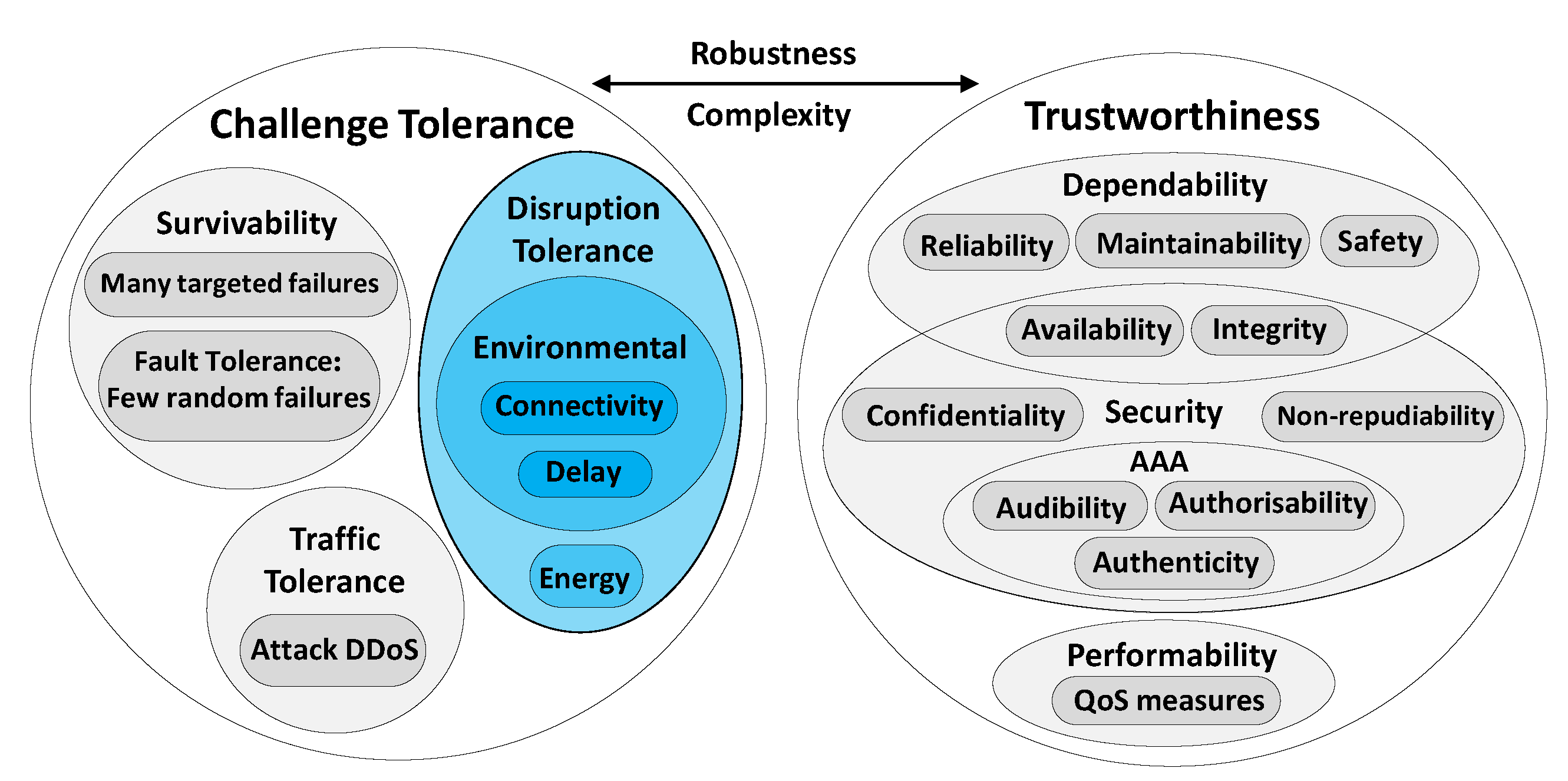
WSNs function effectively in ordinary stable environmental conditions; however, they have difficulty handling challenging environments [
13]. In fact, WSNs are vulnerable to various challenges when implemented in real time in smart city environments. Here, a challenge is defined as any event that impacts the normal operation of the network [
14]. Challenges trigger faults that may permanently or temporarily block the transmission of sensor information. Therefore, failure management is a significant aspect to be considered when developing any smart city project [
5].
Challenges in a smart city environment include various natural disasters, such as severe storms, fires, floods, tornadoes, earthquakes, and volcanic eruptions. Such challenges can affect network connectivity due to fluctuations of wireless channel attenuation [
15]. Some challenges, e.g., fires, can disrupt network services completely. However, some smart city services are critical and should remain available, particularly during disasters, to obtain the sensory information required to control them, limit their impact, and provide critical information for decision-making during rescue operations. Thus, improving the resilience of these underlying networks in smart cities is crucial [
16].
Resilience refers to the ability of the network to adapt and retain basic functionality when errors, failures, and environmental changes occur [
17]. Challenges to WSNs can cause link or node failures [
18]. Under challenging conditions, the ability to respond quickly to changes in network topology can significantly improve data delivery. WSNs use a multi-hop routing mechanism; thus, alternative routes may be available. However, the nature of the distributed routing implemented in WSNs makes it difficult to update routing tables quickly and effectively. This problem can be solved by utilizing Software-defined Networking (SDN). Integrating SDN into WSNs in smart cities contributes to the programmability and central management requirements that must be satisfied to provide efficient routing in case of failures.
This paper introduces an SDN-based multipath routing scheme, which we refer to as MPResiSDN, that aims to improve the resilience of WSNs in smart cities. The proposed scheme implements a multipath-aided strategy to achieve better routing in case of natural challenges. Implementing this scheme would help rescue efforts, save people’s lives, and limit property damage in case of natural disasters, because it enhances the availability of current and correct sensory information that is used by survivability applications in smart cities to make decisions.
The primary contributions of this paper are as follows. We introduce the MPResiSDN scheme and its components, implement the scheme using an RYU controller, emulate a sensor network, and apply different challenges to the emulated network under operational conditions. In addition, we evaluate network performance under each challenge in terms of network throughput, actual data delivery, end-to-end delay, and overhead. We compare and analyze the results obtained with and without the proposed scheme.
The remainder of this paper is organized as follows. Background information is provided in
Section 2. Related work is discussed in
Section 3. The proposed system model is described in
Section 4. The evaluation method is explained in
Section 5, and evaluations of the results are discussed in
Section 6. Conclusions and suggestions for future work are presented in
Section 7.
3. Related Work
SDN is a revolutionary technology that provides advanced features to infrastructure networks. Opportunities to exploit SDN to improve smart city networks are endless. Researchers have investigated exploiting SDN to improve different aspects of smart city networks, such as network security, network performance, big data processing, load balancing, traffic management, and surveillance applications.
For example, various studies [
31,
32,
33,
34] have discussed how SDN can be utilized to improve network security in smart cities, in particular, to improve resilience to DDoS attacks. Bawany et al. [
31] introduced an SDN-based attack defense framework to detect and mitigate application level DDoS attacks on smart city application servers. Then, to achieve the same goal more effectively, they improved their work and introduced a secure and agile adaptive framework [
32]. This framework protects smart city applications against DDoS attacks by leveraging the advantages of SDN, such as central management and global visuality. In addition, Chen et al. [
33] presented a lightweight approach to trace back DDoS attacks on SDN-based smart cities, based on an anomaly tree. This approach benefits from SDN’s hierarchical control structure. Xu et al. [
34] proposed a defense strategy against DDoS attacks based on SDN and Network Function Virtualization (NFV).
SDN has been also utilized to achieve different targets in smart city networks, such as to improve performance. In this regard, Han et al. [
35] studied integrating SDN into smart city networks to improve 5G performance. They introduced a cell-less communications model and architecture to improve 5G network convergence. In addition, Usman et al. [
36], introduced a software-defined device-to-device communication architecture for public safety applications in 5G networks in smart cities.
Furthermore, SDN has been utilized to develop mechanisms to transfer and process big data in smart cities. Bi et al. [
37] proposed a strategy to overcome time-constrained big data transfer scheduling (TBTS) problems based on SDN. The strategy uses an SDN controller to achieve dynamic flow control and implements fast multipath transfer scheduling to overcome the TBTS problem. The results show that the strategy reduces big data transfer delay and improves bandwidth utilization. SDN has also been used to investigate new ways to improve big data processing in smart cities. Khan et al. [
38] introduced three-tier architecture to implement IoT in smart cities. The architecture comprises data collection, data management, and application levels with two intermediate levels that work on SDN principles. The architecture was evaluated, and the evaluation results demonstrated that efficient transfer of big data for real-time applications had been achieved.
Other studies also attempted to integrate SDN in WSNs in smart cities. Those studies exploited SDN capabilities to balance the load on the sensors. Cui et al. [
39] introduced a load balancing algorithm that was specifically designed to improve average bandwidth utilization and reduce network link load jitter; thus, the performance of the entire network was improved.
Utilizing SDN has also been proposed for surveillance applications in smart cities. Rametta et al. [
40] presented a smart video surveillance platform for smart cities based on SDN and NFV. Kunst et al. [
41] attempted to improve network resource allocation in a heterogeneous video surveillance network in smart cities by exploiting the advantages of SDN.
SDN has also been exploited to improve traffic management in smart cities. Raja et al. [
42] introduced an SDN-enabled traffic alert system for the Internet of Vehicles (IoV) in smart cities. The system uses SDN controllers to update vehicles about non-line-of-sight information by broadcasting alarms that are produced automatically, either by another vehicle or by roadside units. The system also detects accidents, based on vehicle information, and broadcasts necessary alarms to all vehicles.
SDN technology has also been utilized to improve routing in IoV environments. Abbas et al. [
43] introduced road-aware routing based on SDN for IoV networks in smart cities. The introduced routing mechanism improved network performance in terms of end-to-end delay, packet delivery ratio, and routing overhead. Bhatia et al. [
44] introduced an innovative approach to real-time traffic analysis in Vehicular Ad-Hoc Network (VANET) environments based on SDN. The proposed approach relies on the programmability of SDN to implement a combination of different machine learning algorithms to model traffic flow in SDN-enabled smart cities.
SDN has been proposed to manage traffic in smart cities in emergency situations, such as natural disasters, traffic accidents, and terrorist attacks. Rego et al. [
45] proposed an SDN-based architecture for smart cities that aims to manage traffic efficiency under disaster conditions. In that study, SDN controllers were utilized by the proposed architecture to collect information from different sensory networks in smart cities, such as traffic lights and surveillance cameras. The information collected is combined to obtain the best and fastest evacuation routes and access roads for emergency services units. The authors further tested their proposed architecture in a follow-up study [
46]. The results showed that the architecture reduced network delay by 33%. In addition, energy consumption by the nodes in the sensory networks was modeled and evaluated. The results proved the scalability of the architecture, as they demonstrate that energy consumption increases linearly with the number of nodes.
Other techniques have been proposed to handle emergency situations in smart cites. García et al. [
47] proposed a system based on citizens’ smartphones to detect emergency situations in smart city environments. The proposed system utilizes data from accelerometers in smartphones to detect changes in user behavior. Different tests were performed using real devices to show the possibility of identifying different behaviors, including walking, running, falling, and remaining on the floor. Also, Fragkos, G., et al. [
48] proposed a multi-agency disaster management framework for unmanned aerial vehicles (UAV)-assisted public safety systems that can be used for smart cities. The framework they introduce exploits the principles of game theory and reinforcement learning to support connectivity during disasters and under challenging communication situations. Furthermore, Huang et al. [
49] investigated the use of a machine learning approach to improve network connectivity. The approach addresses the connectivity holes that may exist within a network to achieve undisturbed connectivity.
Applications that deal with emergency situations and surveillance applications are critical in smart cities. The availability of these applications relies fundamentally on network resilience. Note that our research targets improving network resilience in the face of natural challenges in order to maintain the availability of these important applications. To that end, related studies that address improving network resilience are reviewed.
SDN is also utilized to achieve network resilience in smart cities. Ahmed and Adel A. [
50] presented a lightweight SDN architecture for resilient real-time IoT that can be used in smart cities. The architecture achieves resilience by optimizing the regular control plane and data plane to introduce lightweight versions. The control plane was optimized by stopping the two least important control functions based on an application-specific requirement and by reducing the duty cycle of the control plane based on the demand of the data plane. The data plane is optimized by implementing real-time routing protocols, load disruption, and adaptive traffic shaping. The lightweight SDN architecture was evaluated using Mininet-IoT. The results showed that the lightweight SDN architecture outperformed traditional architecture in terms of delivery ratio, latency, and packet overhead. Here, the researchers attempted to improve resilience by improving network performance, which leads to improved availability of network services. However, they only considered normal network operation when no external challenges were presented.
Our work differs in that it aims to improve the resilience of smart city networks against external challenges, such as natural disasters. We utilize SDN’s programmability feature to implement multipath routing to increase the availability of network services in smart cities, even under difficult circumstances, such as natural disasters. Multipath mechanisms, such as path diversification, are considered effective solutions to obtain high communication reliability between disconnected pairs [
51]. The multipath concept has been used by researchers to improve various aspects of smart city networks at different network layers.
Singh et al. [
52] introduced the potential of integrating Multipath TCP (MPTCP) with SDN in smart cities to improve Vehicle-to-Infrastructure (V2I) communication. They evaluated the performance of MPTCP for V2I connectivity in SDN-controlled small cells of DSRC and Wi-Fi. The results showed that MPTCP improved network resilience to internal failures caused by delays in flow setup or handovers.
Other researchers studied utilizing SDN along with multipath mechanisms to achieve resilience outside of the context of smart cities. Ai et al. [
53] attempted to improve the resilience of SDNs against security attacks by implementing an algorithm that utilized a network-coding technique together with multipath routing. The results showed that the proposed algorithm improved network resilience to passive security attacks by approximately 20%.
In addition, Cheng et al. [
54] introduced a cross-layer resilient routing protocol stack for survivable network communication during regional challenges. The protocol, which they call GoeDivRP, operates based on SDN, collects network statistics, and calculates multipath communications. The protocol was implemented in the NS-3 network simulator and compared to Multipath TCP. The results showed that the protocol stack provided higher throughput and resilience against regional challenges compared to Multipath TCP.
Multipath routing has also been used with SDN to enhance QoS. Rezende et al. [
55] proposed a general SDN-based framework to route multi-stream transport traffic over multipath networks. The system provides an interface for applications to specify multi-stream rules. Then, it utilizes SDN to ensure that the multiple streams follow the multiple paths based on the specified rules. The framework improved QoS in terms of delay and throughput.
To summarize, SDN technology has been used as a foundation to improve different aspects of smart city networks. It has been used to improve smart city network security [
31,
32,
33,
34], 5G network performance [
35,
36], transferring and processing of big data [
37,
38], and to balance sensor loads [
39]. In addition, SDN technology has been used to improve surveillance systems in smart cities [
40,
41,
56]. It has also been utilized to manage traffic effectively [
42,
43,
44,
45,
46].
However, none of these studies addressed utilizing SDN to improve network resilience under challenging external conditions. We note that Ahmed and Adel A. [
50] addressed using SDN to improve network resilience; however, they only considered internal challenges, and they only evaluated their system under normal operating conditions with no external challenges present. Moreover, they investigated using a lightweight SDN architecture to achieve network resilience, whereas our study uses multipath routing.
Multipath routing has been used to improve resilience with SDN by Singh et al. [
52]; however, they did not consider evaluating network performance under external natural challenges. Similarly, Ai et al. [
53] used multipath routing to improve resilience against security attacks.
Cheng et al. [
54] considered regional challenges and implemented their work on a different type of network, Sprint. Rezende et al. [
55] implemented a system that works in a somewhat similar way to ours; however, they did not test it under external challenges.
To the best of our knowledge, our proposed MPResiSDN system is the first to address utilizing SDN and multipath routing to improve network resilience against external challenges. We implemented our scheme on a modeled smart city environment and applied external challenges dynamically while the SDN controller was running. Then, we compared the scheme performance under the applied challenges in terms of throughput, goodput, overhead, and delay to its performance under normal operating conditions.
4. MPResiSDN System
In this section, the proposed MPResiSDN routing scheme is described. First, the system architecture and system components are described. Then, the proposed algorithm is presented.
4.1. System Components
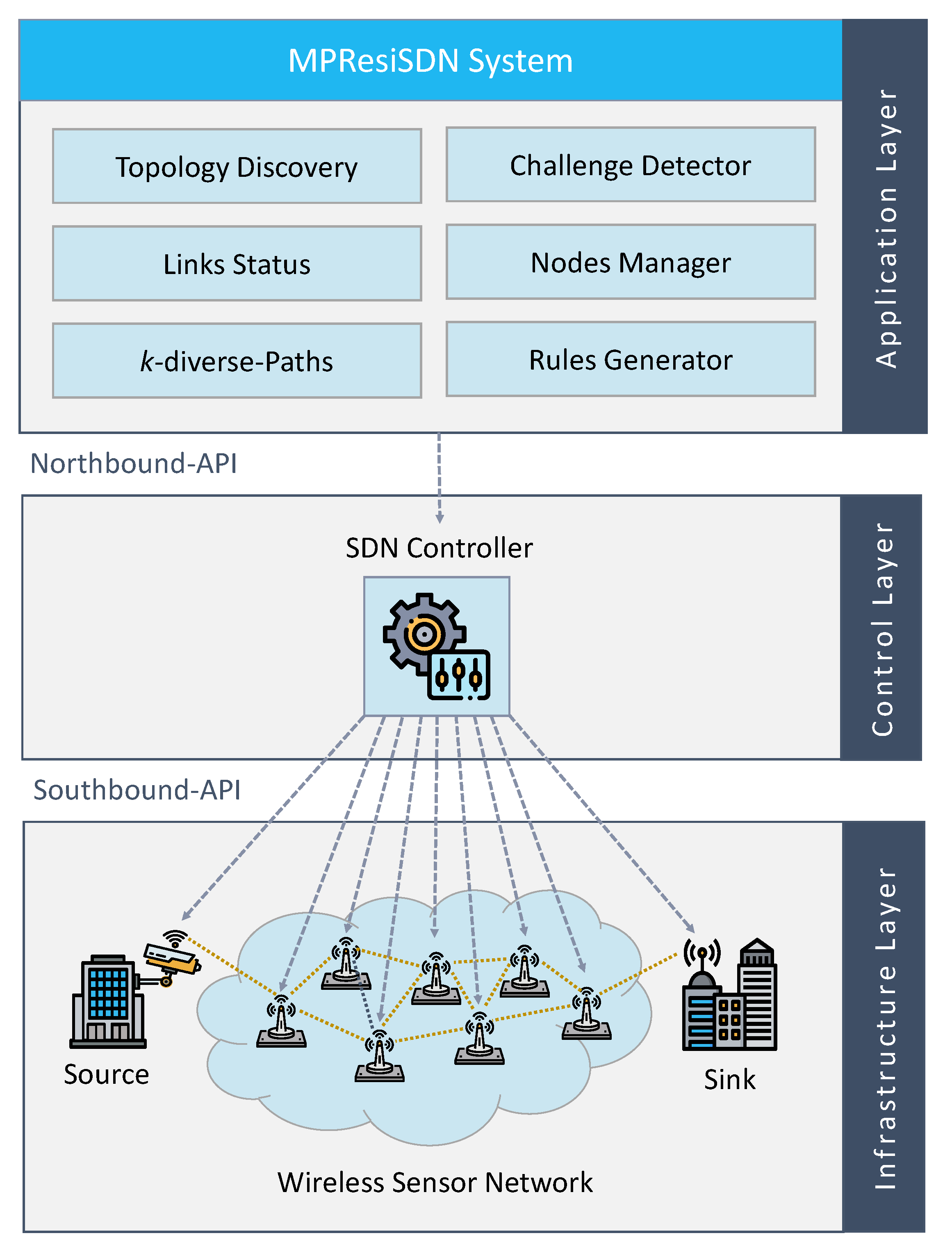
In this section, the MPResiSDN system components are described. As shown in
Figure 5, the proposed system comprises six main components: Topology Discovery, Challenge Detector, Link Status, Nodes Manager,
k-diverse Paths, and Rules Generator. The description of each component is outlined as follows:
Topology Discovery: This component is responsible for identifying the network topology and providing information about the available sensor nodes and links. It initiates as soon as the network connects to the SDN controller. It provides an ID list of all connected nodes and links. In addition, it determines the interfaces to which each link and node are connected. The component achieves these tasks by exploiting the built-in topology discovery algorithm provided in the RYU controller.
Challenge Detector: This component detects challenges inside the sensing area. It also specifies the type of challenge. It uses sensors, such as temperature sensors, to detect the possibility of fire challenges. It also uses weather sensors, such as lightning and humidity sensors, to detect storms. Furthermore, this component is responsible for setting the k parameter, which represents the number of paths to be used by the system. The k parameter value depends on the results of the challenge detecting process. The k value increases relative to the severity of the challenge. The severity level is proposed to be determined based on the obtained sensory information. The implementation of this component is outside the scope of this research.
Link Status: This component stores link parameters, such as link bandwidth and bit error ratio. It tracks link availability and reports disconnected links.
Nodes Manager: The Nodes Manager stores node attributes and configurations. It maintains node types, such as a sensor or sink. It also gathers information about its power source, i.e., whether it is battery- or solar-powered. In addition, it keeps track of the status of nodes and reports node failures.
-diverse-Paths: This is the key component of the system. It takes the output parameter
k from the Challenge Detector component and then applies the Floyd-Warshall algorithm [
57] to compute
k diverse paths between nodes and available sinks. The computed paths are then used by the Rules Generator component to set the SDN rules for the system. Note, this component receives the reports about link and node failures sent by the Link Status and Nodes Manager components. It acts on the failure reports by eliminating any failed node or link, and then updates the network topology to avoid utilizing failed nodes and links when computing
k diverse paths.
Rules Generator: This component takes the list of computed
k paths and generates the SDN rules associated with each path. Then, it uses the rules to fill the routing tables of all nodes in the used paths. Note, any SDN protocol can be used here. In our MPResiSDN system, we utilized the OpenFlow protocol. The rule is defined as an OpenFlow flow entry. Its abstract format is shown in
Figure 6.
4.2. System Algorithm
In this section, the MPResiSDN algorithm is described. the algorithm has seven functions: TopologyDiscovery(), ChallengeDetector(), DiversePaths(k, , , G), FindSwitches(), DetermineInOutPorts(, ), ReversePath(), and GenerateRule(, , ). The pseudocode of the MPResiSDN algorithm is illustrated in Algorithm 1.
Initially, TopologyDiscovery() determines the network topology. The function results in a set of nodes N, links L, and a graph . The ChallengeDetector() function reads the sensory information from the lightning, humidity, and temperature sensors. It analyses the results to detect the existence of natural challenges and specifies the type of challenge. Most importantly, this function specifies a suitable value for the number of alternative paths to be used, (k).
The DiversePaths(k, , , G) function takes the specified value k and the determined topology graph G to compute k diverse paths between a source node and a destination sink . The FindSwitches() function takes a path as input and determines all connected switches. The DetermineInOutPorts(, ) function takes a switch ID and the path it belongs to as inputs. Then, it determines the connected input and output ports for each switch in the path.
The ReversePath() function takes a as input and determines the reverse path associated with it. Finally, the GenerateRule(, , ) function generates the SDN rules to be pushed to the OpenFlow switches. It takes a switch ID along with its associated input and output ports as inputs. Then it produces an SDN rule to be used later to fill the switch’s routing table.
The code flow for the MPResiSDN algorithm is described here. At the initialization level, the network topology G is obtained by the TopologyDiscovery() function and passed to the DiversePaths(k, , , G) function. The parameter k is determined by the ChallengeDetector() function and passed to the DiversePaths(k, , , G) function. Then, the DiversePaths(k, , , G) function immediately generates the k diverse paths to be used. Subsequently, the SDN rules list is initialized, and the process begins of generating the SDN rules to enable the system to utilize the determined k paths. At first, the algorithm takes each path in turn and applies several processing steps. For each path, the algorithm determines all switches on the path using the FindSwitches() function. Then, for each found switch, the input and output ports are determined using the DetermineInOutPorts(, ) function and the associated SDN rule is generated using the GenerateRule(, , ) function. Eventually, the SDN rule is appended to the SDN rules list.
SDN rules are created to handle the acknowledgment packets. The ReversePath(
) function is used to generate the reversed path of the original forward path. Then, the same processing steps that were applied to the forward path are applied to the reversed path. The generated rules list is utilized to fill the routing tables of all switches belonging to the path. Note that all switches use the resulting routing tables until an event happens, e.g., a new challenge is detected, or a link or a node is damaged. When any of these events happens, the SDN controller reruns the algorithm and updates the routing tables of all switches. To consider the algorithmic complexity of our algorithm, we focus on expensive functions and loops. Hence, to compute
k shortest paths, our algorithm uses the Floyd-Warshall algorithm to find diverse paths, which incur
with a network of size
n nodes [
57]. In addition, the algorithm uses two nested four loops to construct rules, which incur a total algorithmic complexity of
, where
p represents the number of paths and
s represents the number of switches inside a path. Therefore, our algorithm’s complexity is
, which can be simplified to
since
p and
s cannot be larger than
v.
| Algorithm 1: MPResiSDN algorithm. |
 |
6. Results and Discussion
In this section, the results of applying the evaluation methodology described in
Section 5 to our proposed MPResiSDN scheme are presented and discussed. The MPResiSDN scheme was evaluated using different
k values; (
), (
), and (
). We refer to the results as MPResiSDN(
), MPResiSDN(
), and MPResiSDN(
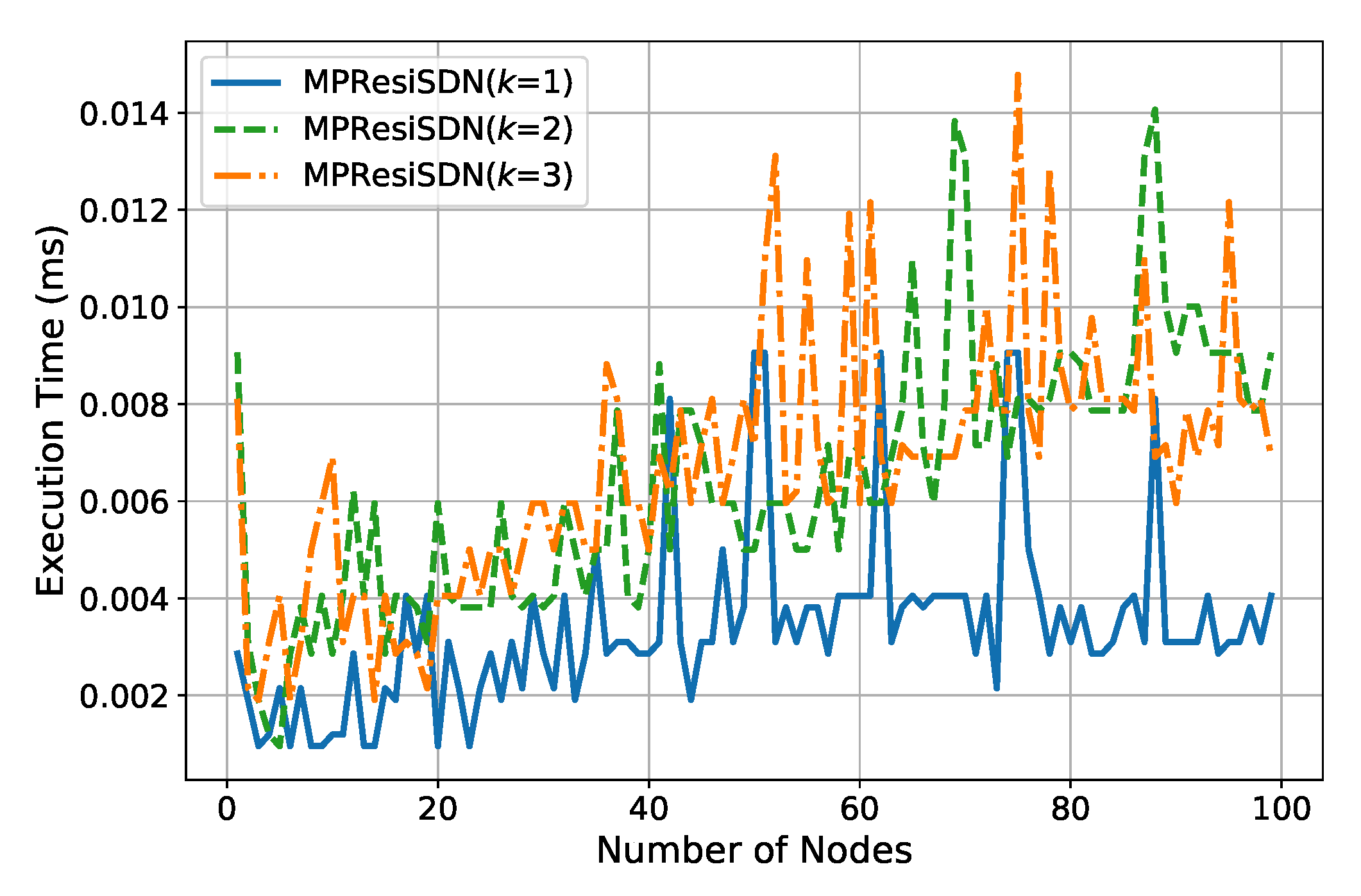
). For execution time, the algorithm performance is evaluated with different network sizes and numbers of paths. Our execution time evaluation is shown in
Figure 11 and the results show that execution time is not significantly high, which is approximately 0.003 ms for a network with 100 nodes with MPResiSDN(
) and 0.008 ms for a network with 100 nodes with MPResiSDN(
) and MPResiSDN(
). For comparison, the same evaluation methodology was applied to the same evaluation network topology, using the traditional Spanning Tree scheme that is integrated in the RYU controller. For all four schemes, the evaluation was made under three cases: normal operation, fire challenges, and storm challenges. The results for each case are presented and discussed individually in the following subsections.
6.1. Normal Operation
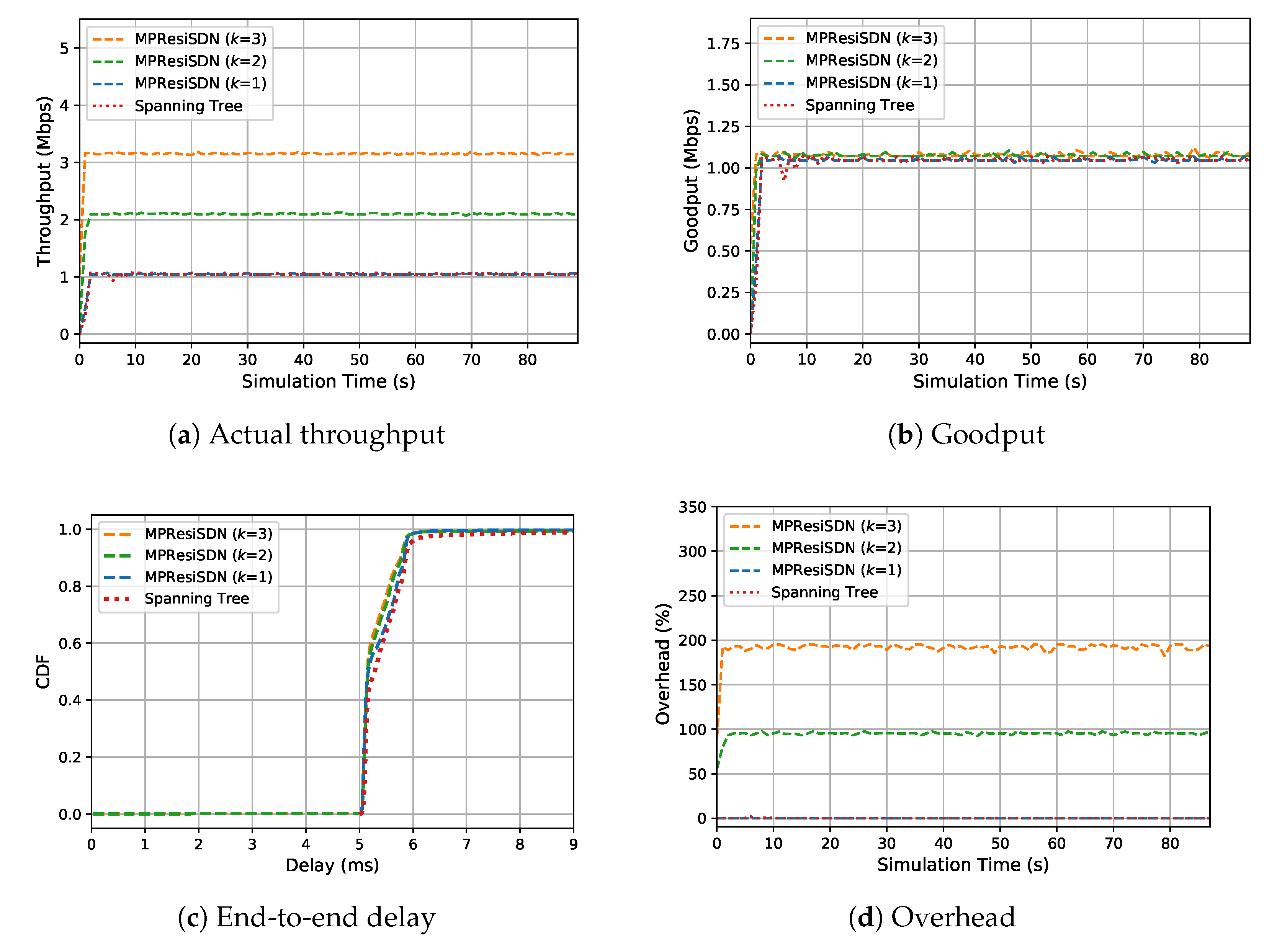
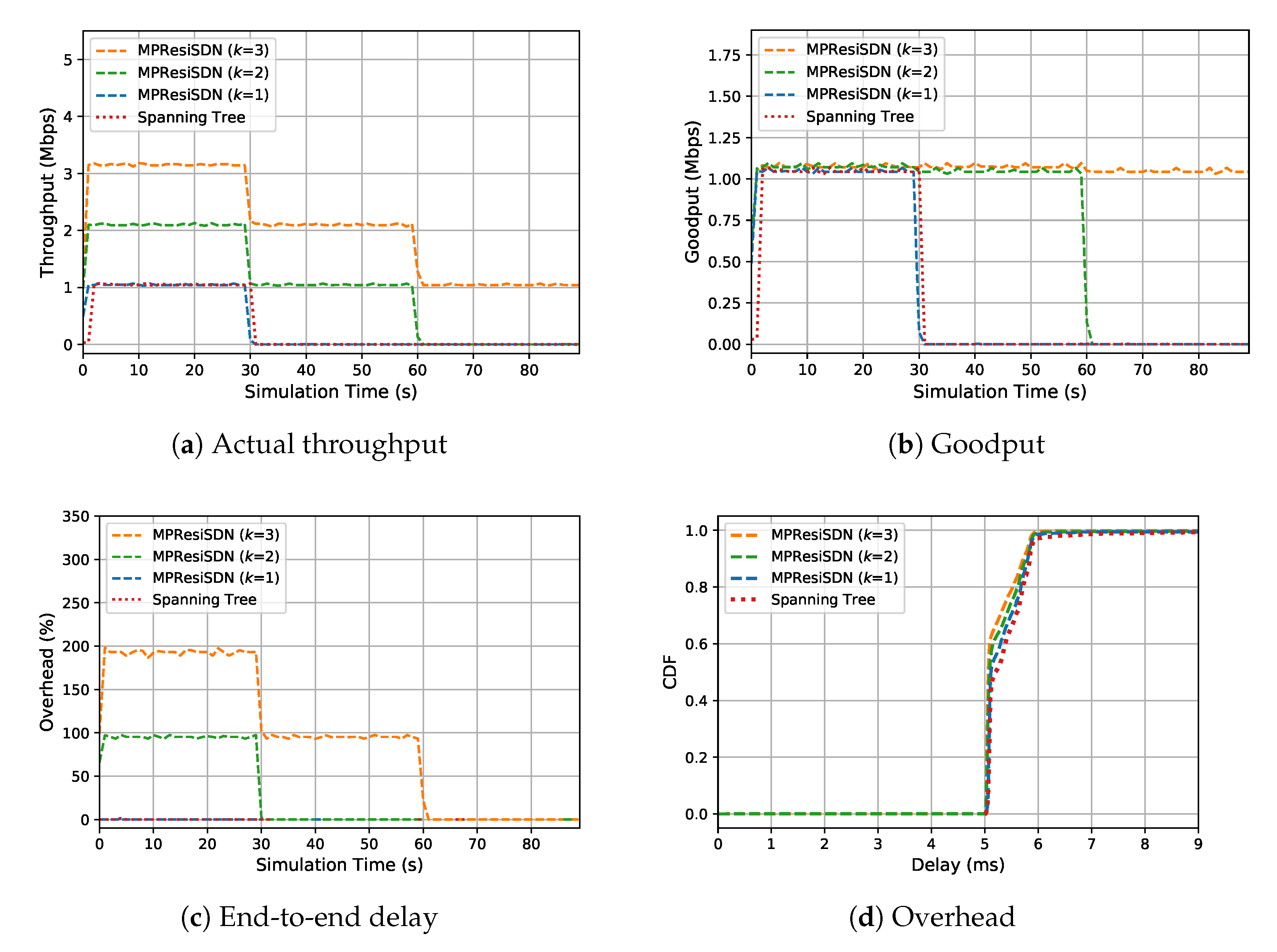
First, we look at the result of measuring the actual throughput produced by each of the four schemes when tested under normal operation, where no challenge is presented. The results are shown in
Figure 12a. As can be seen, MPResiSDN(
) produces triple the throughput produced by MPResiSDN(
), while MPResiSDN(
) produces twice the throughput. This is because MPResiSDN(
) and MPResiSDN(
) use additional paths to deliver data to the sink, which obviously increases the actual throughput.MPResiSDN(
) and Spanning Tree produce the same amount of data; however, Spanning Tree takes a much longer time to discover the topology before it starts to produce throughput.
Now, we look at the results of measuring the goodput produced by the four schemes evaluated in the case of no challenge (
Figure 12b). Differing from the actual throughput, the goodput of all schemes is approximately the same. These results are expected given that the goodput filters out all redundant data and only keeps one copy of all required packets.
Figure 12c shows the cumulative distribution functions (CDF) of the delay of each scheme under normal operation. For the most part, the delay values range between 5 and 6 ms, regardless of the schemes used. It is evident that increasing the number of alternative paths used in MPResiSDN does not affect the delivery time of the information when the environment does not contain a challenge.
The difference in the actual throughput and goodput results when tested under normal operation leads us to look at the actual overhead caused by the four schemes (
Figure 12d). The overhead is calculated as a percentage of the actual throughput divided by the goodput, which represents the redundancy in the data. MPResiSDN(
) results in an increase in overhead of up to 200%, while using MPResiSDN(
) results in an increase of nearly 100%.
As can be seen, using additional paths to deliver data under normal operational conditions when no challenge is presented creates massive overhead without providing any benefits. Thus, it is crucial to consistently use only one path to deliver data under normal operation. This result reinforces the importance of the Challenge Detector component. When the detector reports no challenge, the MPResiSDN should use to avoid unnecessary overhead on the sensor network.
6.2. Fire Challenges
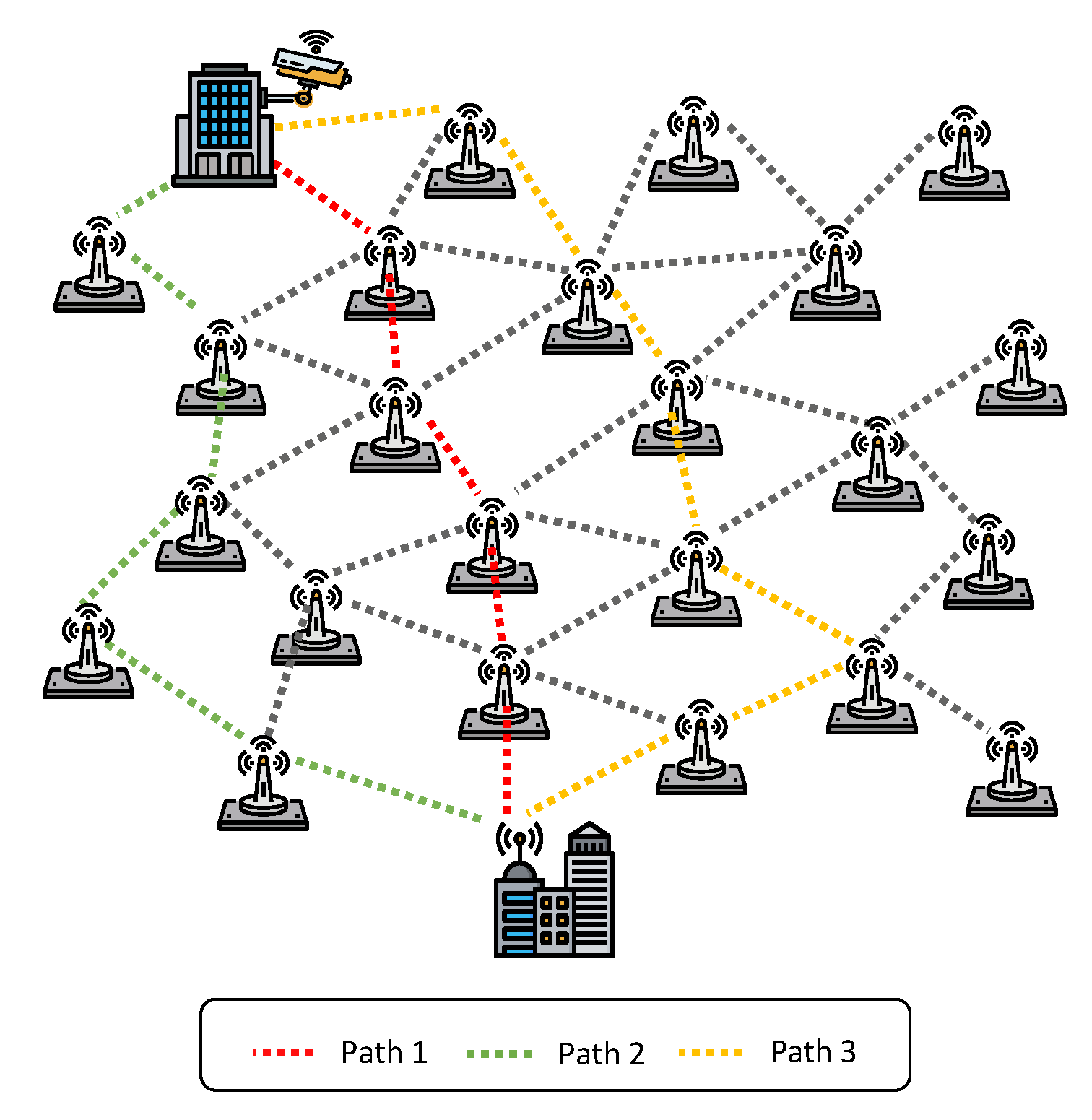
The results of evaluating the MPResiSDN scheme under the modeled fire challenge illustrated in
Figure 9, using the actual throughput performance metric, are shown in
Figure 13a. According to the fire challenge scenario, in the time interval between
and
the fire was too small to affect any sensor node. Consequently, the actual throughput in these time intervals was the same as the actual throughput under normal operating conditions.
However, at , the fire expanded and began to affect the sensor nodes. In particular, some of the sensor nodes on path 1 were damaged by the fire. Note that Path 1 is the only path used in the MPResiSDN() scheme, whereas it is one of the selected paths in MPResiSDN()) and MPResiSDN() schemes. Accordingly, the actual throughput produced by MPResiSDN() is zero at , while the throughput produced by the MPResiSDN() and MPResiSDN() schemes is reduced.
At , the fire had expanded and affected both paths 1 and 2. Consequently, the throughput produced by the MPResiSDN() scheme under normal conditions was completely obstructed, because all paths used by that scheme were blocked. The MPResiSDN() scheme continued to function because it had more alternative paths, including path 3, which was not affected by the fire challenge at this time. In this case, the importance of implementing an algorithm with more alternative paths, such as MPResiSDN() is evident.
While the actual throughput shows how each scheme behaves in the face of a certain challenge, the goodput shows whether that behavior ultimately succeeded in delivering the required data.
Figure 13b shows the detailed results of measuring the goodput over time under the modeled fire challenge. As expected, all schemes worked well at the beginning because none of the paths were affected by the fire challenge. However, when the fire challenge started to hit path 1, which is the only path used in the MPResiSDN(
) and Spanning Tree schemes, both algorithms failed to deliver data. MPResiSDN(
) and MPResiSDN(
) performed well until the fire started to hit path 2 at
. At this time, MPResiSDN(
) failed because both of the paths it uses failed. MPResiSDN(
) continued to work well as it had an additional alternative path to use. The Spanning Tree algorithm struggled after the fire started to impact any path because it takes a very long time to figure out a new path to use.
Figure 13c shows the details of the overhead generated by the four schemes under the fire challenge over time. Given that MPResiSDN(
k = 3) uses two additional alternative paths to deliver data, it takes approximately twice the amount of throughput compared to MPResiSDN(
) when no challenge is presented at the beginning. In other words, MPResiSDN(
), under no challenge, results in an overhead of 200% of the actual amount of data produced by MPResiSDN(
). Similarly, MPResiSDN(
) generates double the actual throughput produced by MPResiSDN(
). MPResiSDN(
) and Spanning Tree deliver the data without any additional overhead. These results confirm the finding mentioned previously when discussing the normal operation case, i.e., alternative paths are only worthwhile under challenges.
However, when the fire starts to affect the path used by MPResiSDN() and Spanning Tree schemes at , they fail completely. Consequently, no traffic is generated; thus, there is no overhead. At this point, MPResiSDN() works the same as MPResiSDN() under normal operation, while MPResiSDN() works the same as MPResiSDN() under normal operation.
At , when the fire starts to affect path 2, the only scheme that could handle this challenge was MPResiSDN() because it has a third path to use to deliver data. No overhead is generated by MPResiSDN() at this point because it works with only one path. MPResiSDN() and MPResiSDN() fail completely, and Spanning Tree continues to fail because it takes an exceptionally long time to find the new shortest path. Finding a new path becomes increasingly difficult for Spanning Tree due to rapid changes in network topology. In this case, obviously no overhead is generated as no data is being delivered.
Figure 13d shows the CDFs of the delays incurred by each of the four schemes when evaluated under the fire challenge. As can be seen, the delay results here are like the delay results of the normal operation case. The delay values that are produced by all schemes during the entire time interval are almost constant. They primarily vary between 5 and 6 ms. As has been noted, regardless of the type of scheme or the challenge status, the delay values are not affected.
In conclusion, using alternative paths definitely helped handle the fire challenge. Moreover, it is evident that increasing the number of alternative paths played a major role in increasing the resilience of routing schemes against the fire challenge. Differing from the case under no challenge, the generated overhead is not worthless.
6.3. Storm Challenges
Here, we look at the results of evaluating the four schemes under the storm challenge model, using the four performance metrics.
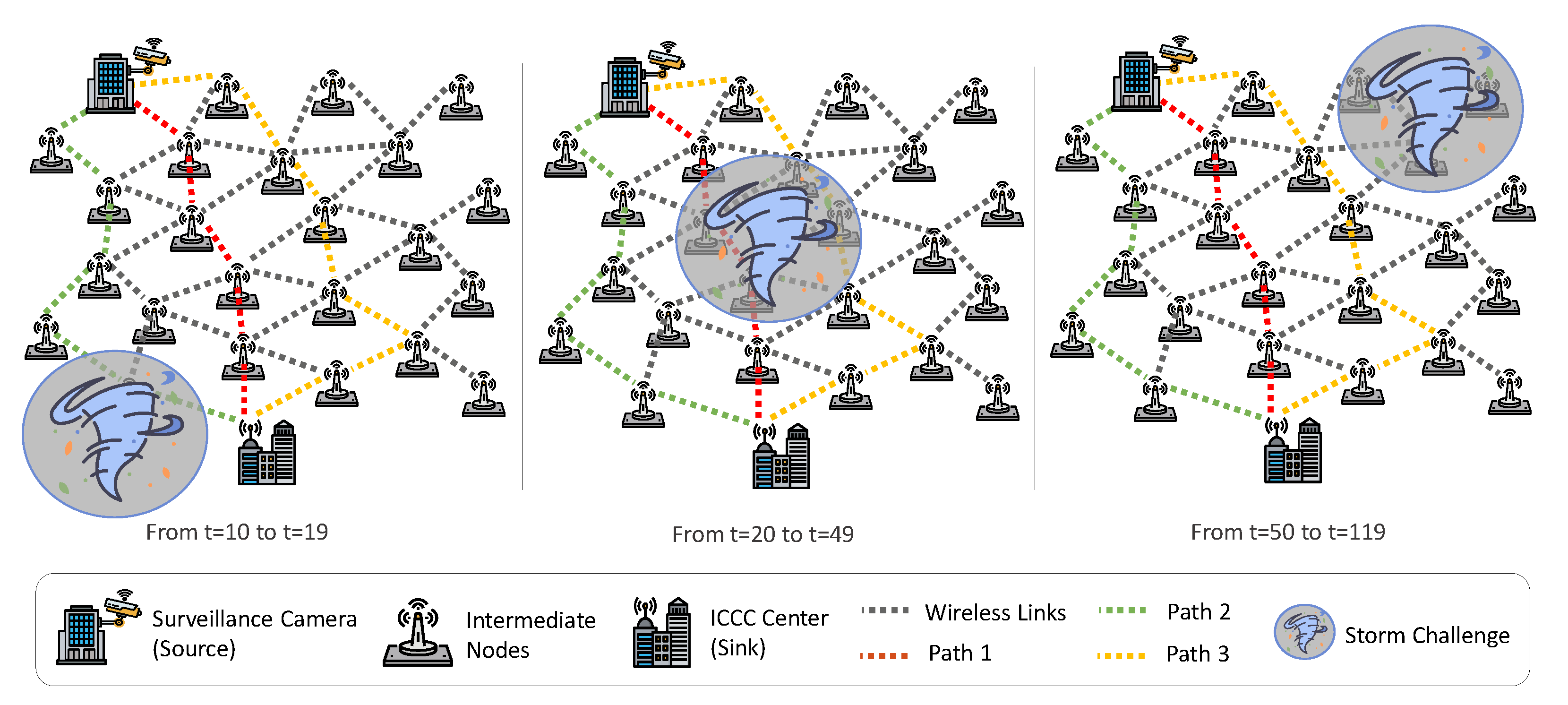
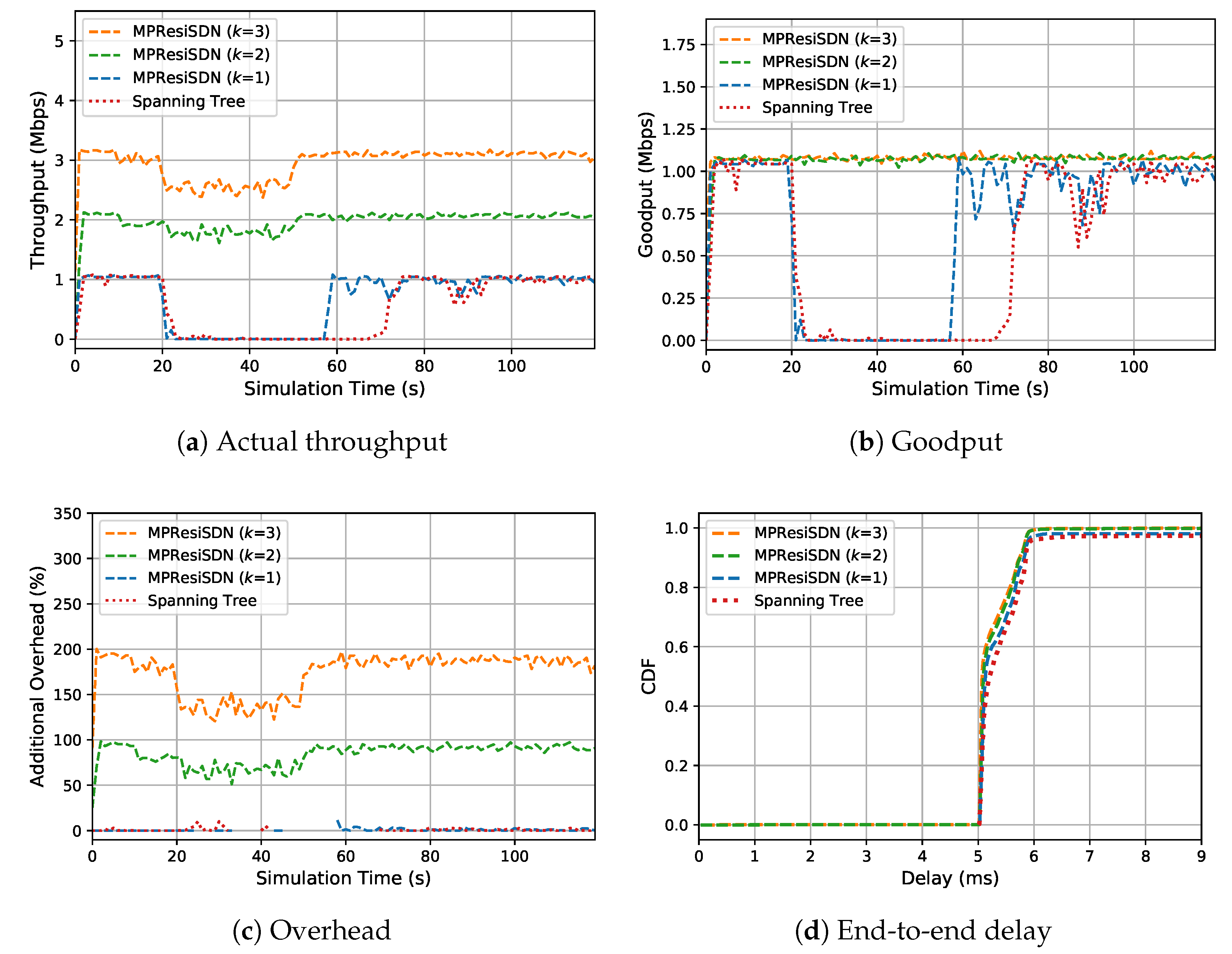
Figure 14a shows the actual throughput produced by the schemes under the storm challenge, which is modeled in
Figure 10. The throughputs for all four schemes are at their highest values in the first 10 s because the storm has not yet started.
From to , the storm began to affect path 2, which is used by MPResiSDN() and MPResiSDN(). The storm challenge increases noise, which affects the sensor nodes impacted by the storm. This is reflected in a slight effect on the throughput of both MPResiSDN() and MPResiSDN(). At this time, the Spanning Tree and MPResiSDN() are not affected because they use path 1, which is not yet covered by the storm challenge.
The worst damage caused by the storm challenge occurs from
to
. Although path 2 is freed as the storm moves away, it begins to affect both paths 1 and 3. As path 1 is the only path used by MPResiSDN(
) and Spanning Tree, the throughput dramatically decreases at that time. However, MPResiSDN(
) and MPResiSDN(
) can successfully handle the challenge because they can use an alternative path. As shown in
Figure 14a, the throughput produced by the MPResiSDN(
) and MPResiSDN(
) schemes is reduced; however, they still maintain an acceptable level of performance.
At , the storm begins to leave the affected area. As the storm leaves, no paths are affected. This is immediately reflected by an increase in the actual throughput of the MPResiSDN() and MPResiSDN() schemes. MPResiSDN() takes longer to recover and the Spanning Tree scheme takes even more time.
The evaluation results for the four schemes under the storm challenge using the goodput performance metric are shown in
Figure 14b. Initially, goodput is not affected by the storm challenge as the challenge has not affected a wide area. When the challenge affects a larger area and covers more paths, the goodput of the MPResiSDN(
) and Spanning Tree schemes drops dramatically because these schemes do not use alternative paths. MPResiSDN(
) and MPResiSDN(
) schemes can handle the challenge and maintain approximately the same level of goodput. They are not affected by the storm challenge because they always have alternative paths to use. When the storm starts to leave the area, the single path used by MPResiSDN(
) and Spanning Tree becomes available. Thus, these schemes start to work again. Note that the Spanning Tree scheme requires more time to recover from the challenge.
The results of evaluating the four schemes under the storm challenge using the overhead metric are shown in
Figure 14c. In the first 10 s, the overhead results under the storm challenge are similar to those under normal operation because the storm has not started yet. From
to
, the storm starts to cover path 2, resulting in noise that affects communication from and to the sensor nodes on the path. The noise slightly reduces the overhead of MPResiSDN(
) and MPResiSDN(
) schemes because it causes dropped packets on path 2. However, packets on path 2 are all duplicates; therefore, dropping some of them reduces overhead rather than goodput. The goodput is not affected for paths 1 and 3 because they are both completely out of the challenge. Spanning Tree and MPResiSDN(
) schemes are not affected at this time because path 1 is free.
From to , the storm challenge moves away. Path 2 is no longer affected by the storm. However, path 1 and path 3 are affected. This is reflected in a decrease in the overhead of MPResiSDN() and MPResiSDN() in the same manner that has been described previously. At the same time, the Spanning Tree and MPResiSDN() schemes only use path 1, which is currently under the storm challenge. The sensor nodes on path 1 are affected by random noise caused by the storm challenge. The noise flips some of the bits in the packets, causing them to be dropped by the link layer. This causes a severe problem for the Spanning Tree and MPResiSDN() schemes because they do not have alternative paths to use. As a result, the overhead sometimes goes to zero because no throughput or goodput are generated. At other times, overhead increases because duplicates are generated due to re-transmissions.
The results of the delay under the storm challenge are similar to the previous results for delays under the fire challenge and normal operation.
Figure 14d shows the CDFs of the delays for each of the four schemes under the storm challenge. The delay varies between 5 and 6 ms. This indicates that there is no relationship between using alternative paths and the delay in delivering the data. In other words, using alternative paths does not affect the delay.
6.4. Evaluation Summary
In this section, we summarize our findings after studying the performance results under normal operating conditions and under the challenges. We found that, under the challenges, the proposed MPResiSDN scheme improved data delivery in terms of the obtained goodput by up to 100% compared to Spanning Tree when a suitable value for k diverse paths was selected. However, to maintain this enhancement, the value of k should be increased as the severity of the challenge increases in terms of the number of nodes it affects and whether the affected nodes belong to the used paths. However, selecting a value larger than the required value of k results in massive unnecessary overhead, i.e., overhead can increase by up to 200% or more. Thus, under normal operation without any challenge, selecting a value that is greater than 1 for k diverse paths is completely inefficient because overhead increases without providing any observable benefit.
Considering the effect of the proposed MPResiSDN scheme on end-to-end delay, it is evident that the end-to-end delay in the running phase is not affected. However, the proposed system outperformed Spanning Tree in terms of response time initially when the topology was identified; topology identification is faster with the proposed scheme. Moreover, the proposed system outperforms Spanning Tree when it comes to response time to changes in network topology.