Article

Generation and Characterization of Novel Bioactive Peptides from Fish and Beef Hydrolysates

by
Mohamed Abdelfattah Maky
1,2 and
Takeshi Zendo
2,*
1
Department of Food Hygiene and Control, Faculty of Veterinary Medicine, South Valley University, Qena 83522, Egypt
2
Laboratory of Microbial Technology, Division of Systems Bioengineering, Department of Bioscience and Biotechnology, Faculty of Agriculture, Graduate School, Kyushu University, Fukuoka 819-0395, Japan
*
Author to whom correspondence should be addressed.
Appl. Sci. 2021, 11(21), 10452; https://doi.org/10.3390/app112110452
Submission received: 13 October 2021 / Revised: 3 November 2021 / Accepted: 4 November 2021 / Published: 7 November 2021
(This article belongs to the Special Issue Bioactive Molecules in Food)

Abstract

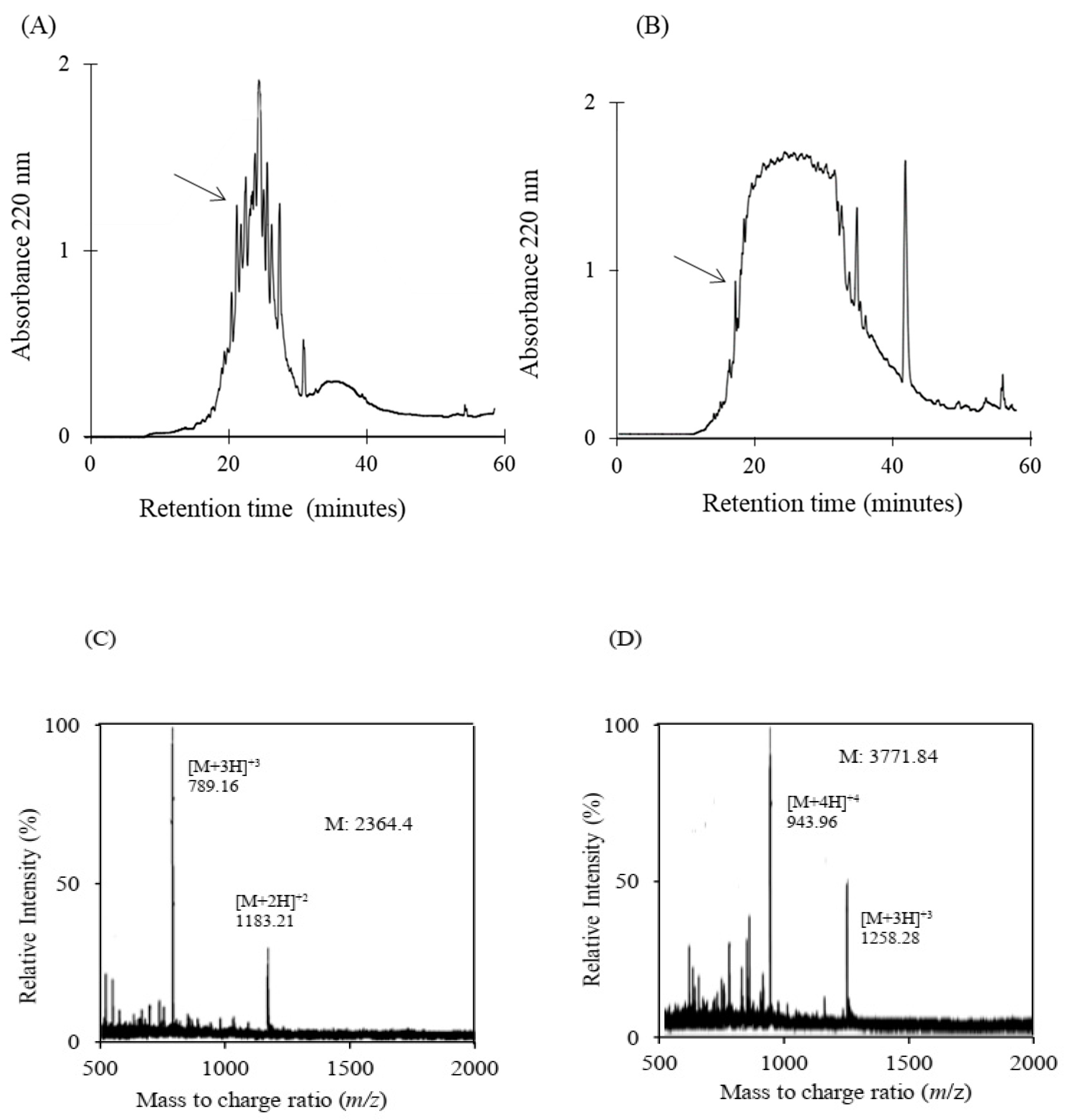
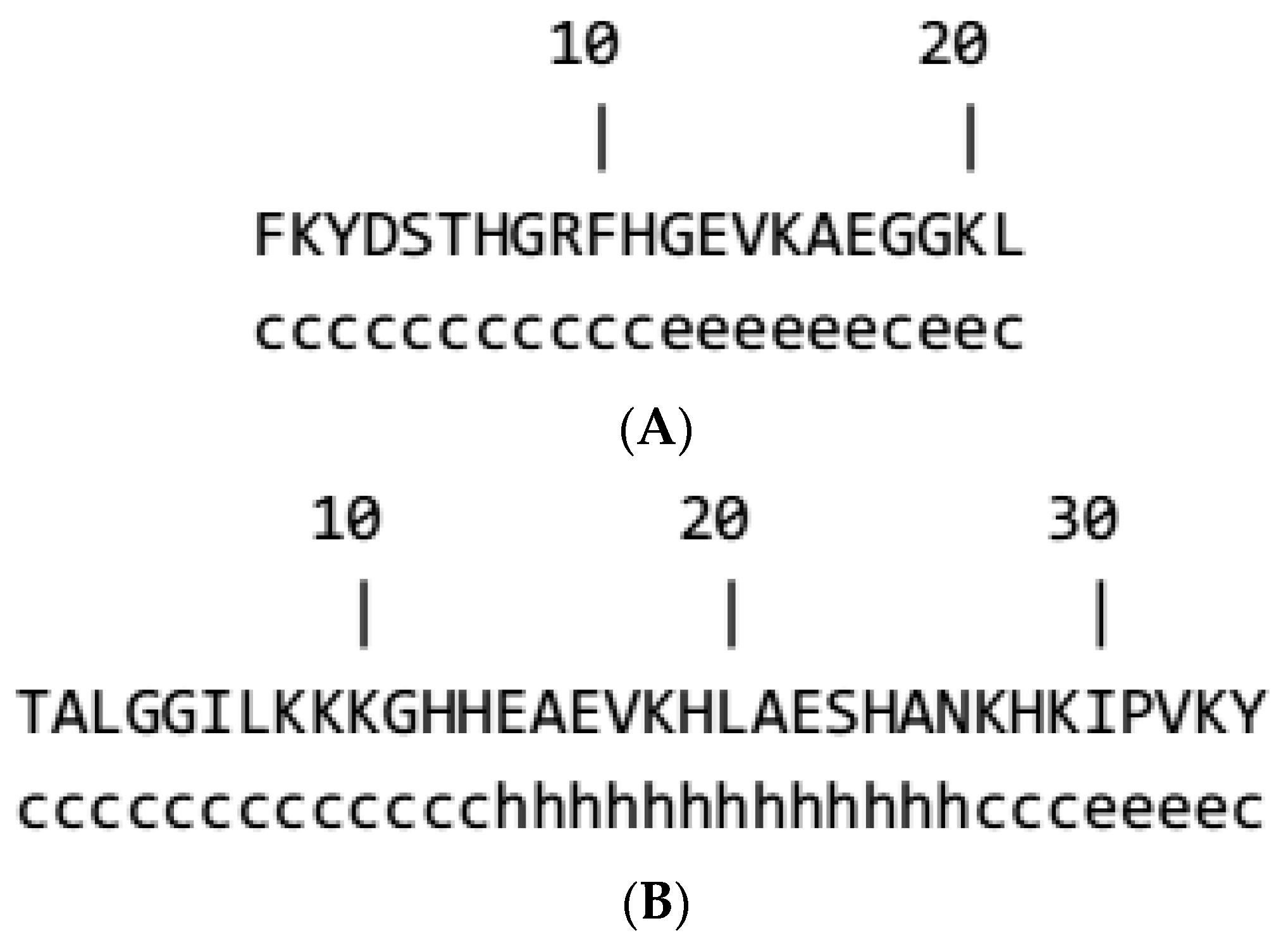
Bioactive peptides were successfully produced from fish (Gadidae) and beef skeletal muscles after being hydrolyzed for 8 h with pepsin. Subsequently, they were purified using a Sep-Pak C18 cartridge and reversed-phase high-performance liquid chromatography (RP-HPLC). The molecular weights of pure fish and beef peptides were determined to be 2364.4 and 3771.8, respectively. According to Edman degradation, the fish peptide was composed of 21 amino acid residues (F21), while the beef peptide was composed of 34 amino acid residues (B34). F21 and B34 displayed angiotensin-converting enzyme inhibitory activity with a half maximal inhibitory concentration (IC50) values of 7.3 µg/mL and 5.8 µg/mL, respectively. F21 exhibited antioxidant activity with an IC50 value of 389.9 µg/mL, whereas B34 exhibited no antioxidant activity. Moreover, F21 and B34 displayed antimicrobial effects against a wide spectrum of food-borne pathogens and spoilage bacteria. Bioactive peptides derived from muscle proteins are a promising strategy for the production of functional food materials and safe food preservatives.
Keywords: bioactive peptides; muscle sources; pepsin; angiotensin-converting enzyme; antioxidant; antimicrobial peptides bioactive peptides; muscle sources; pepsin; angiotensin-converting enzyme; antioxidant; antimicrobial peptides