


Impact of Agricultural Practices on Metal Accumulation and Their Associated Health Risks to the Environment and Consumers: A One Health Perspective

Abstract
1. Introduction
- To what extent do conventional treatments with herbicides and pesticides applied in citrus orchards influence the presence of potentially toxic elements (PTEs) in both soils and harvested orange fruits?
- In relation to the presence of these PTEs in soils, what implications would arise if citrus orchards were managed according to agroecological transition principles, or if the soils were uncultivated, as in the natural park of Sierra Calderona?
- How would the location of beehives, in conjunction with different types of fields and agricultural practices, affect the level of PTEs in honey and bee pollen products?
- To what degree does human soil management influence environmental and human health risks?
2. Materials and Methods
2.1. Sample Collection
2.2. Chemical Analysis
2.3. Statistical Analysis
2.4. Risk Characterisation
3. Results and Discussion
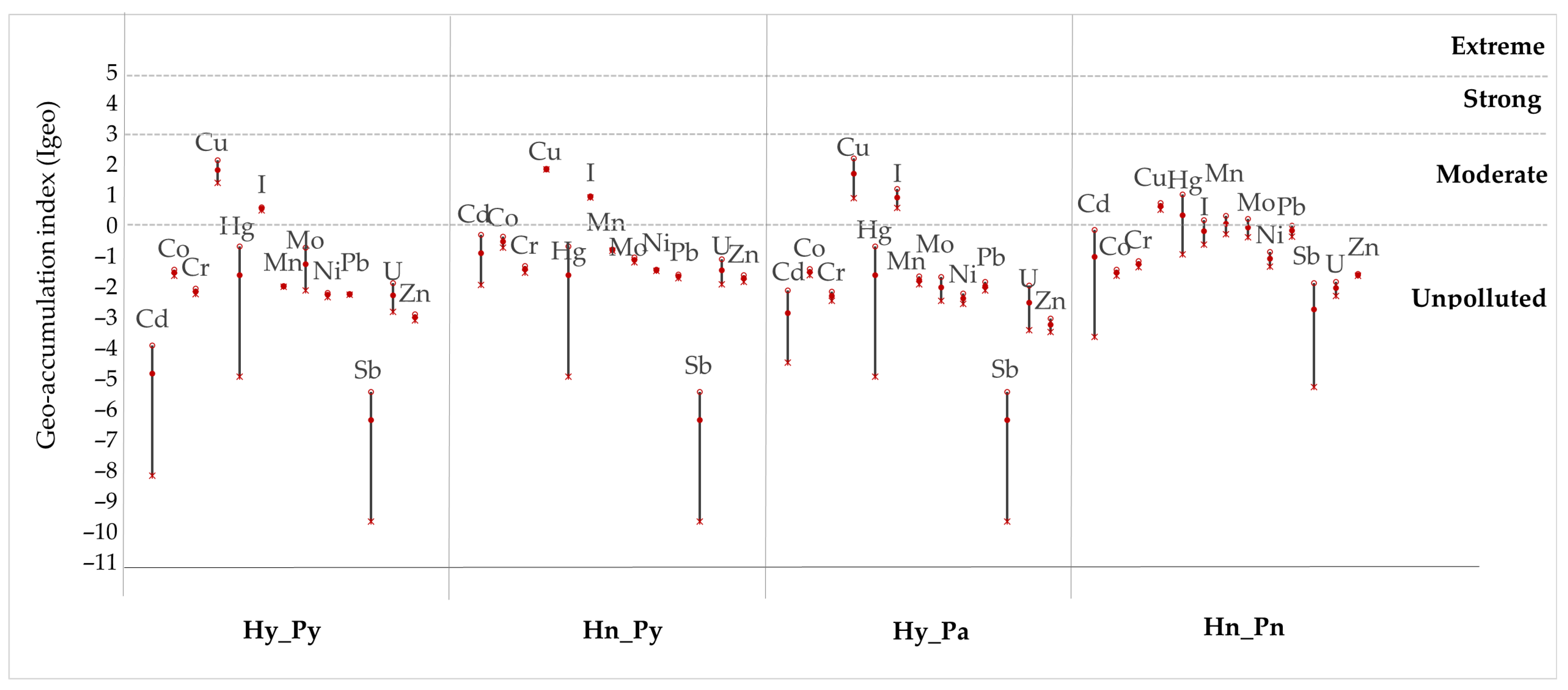
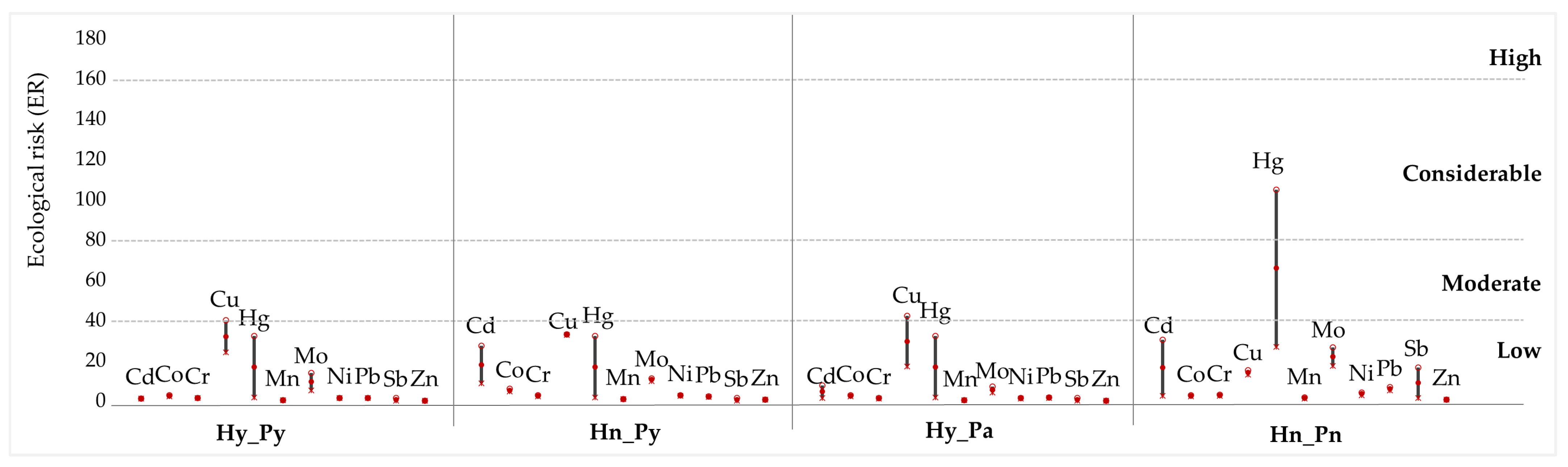
3.1. Metals and Risk in Soil
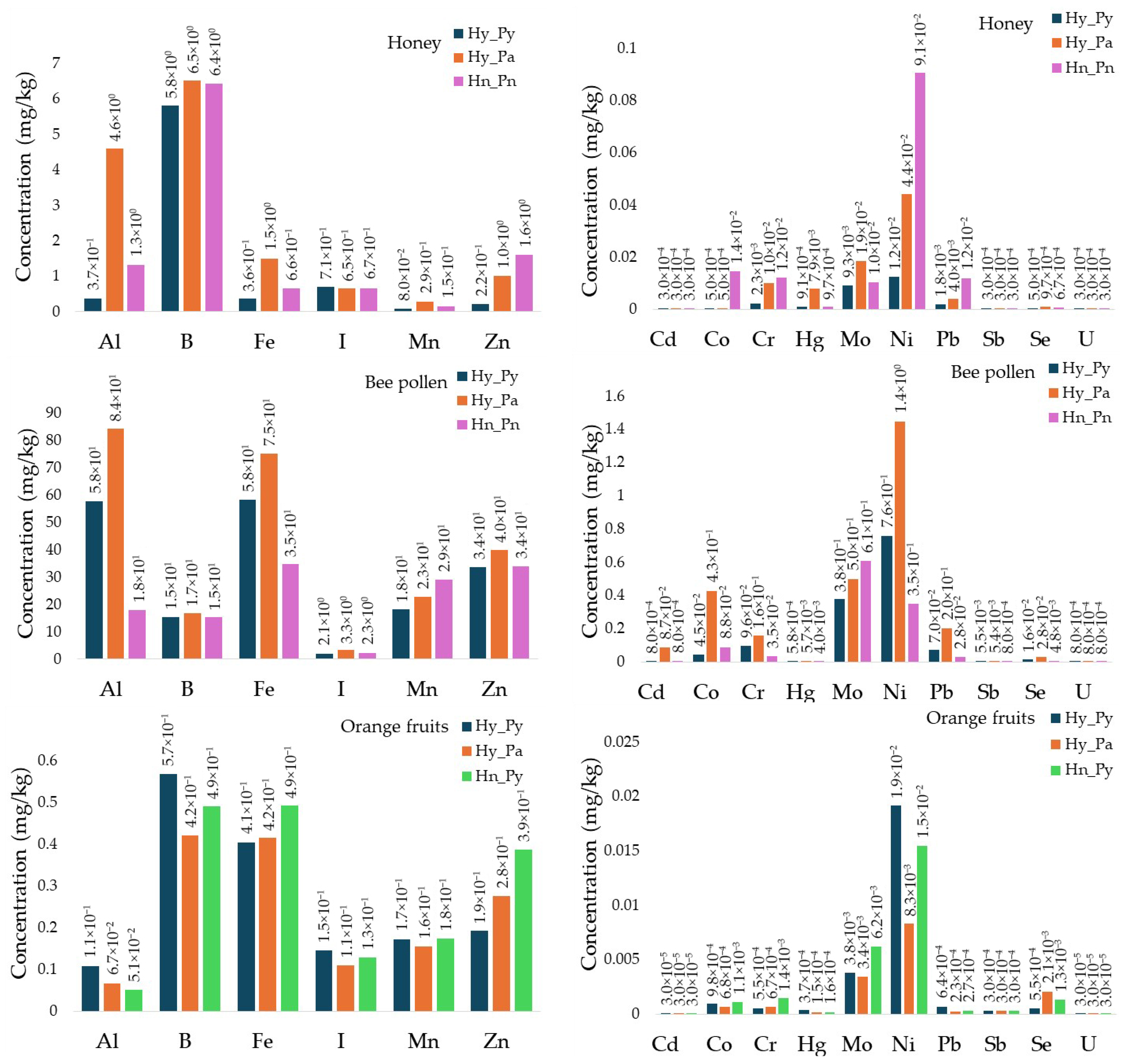
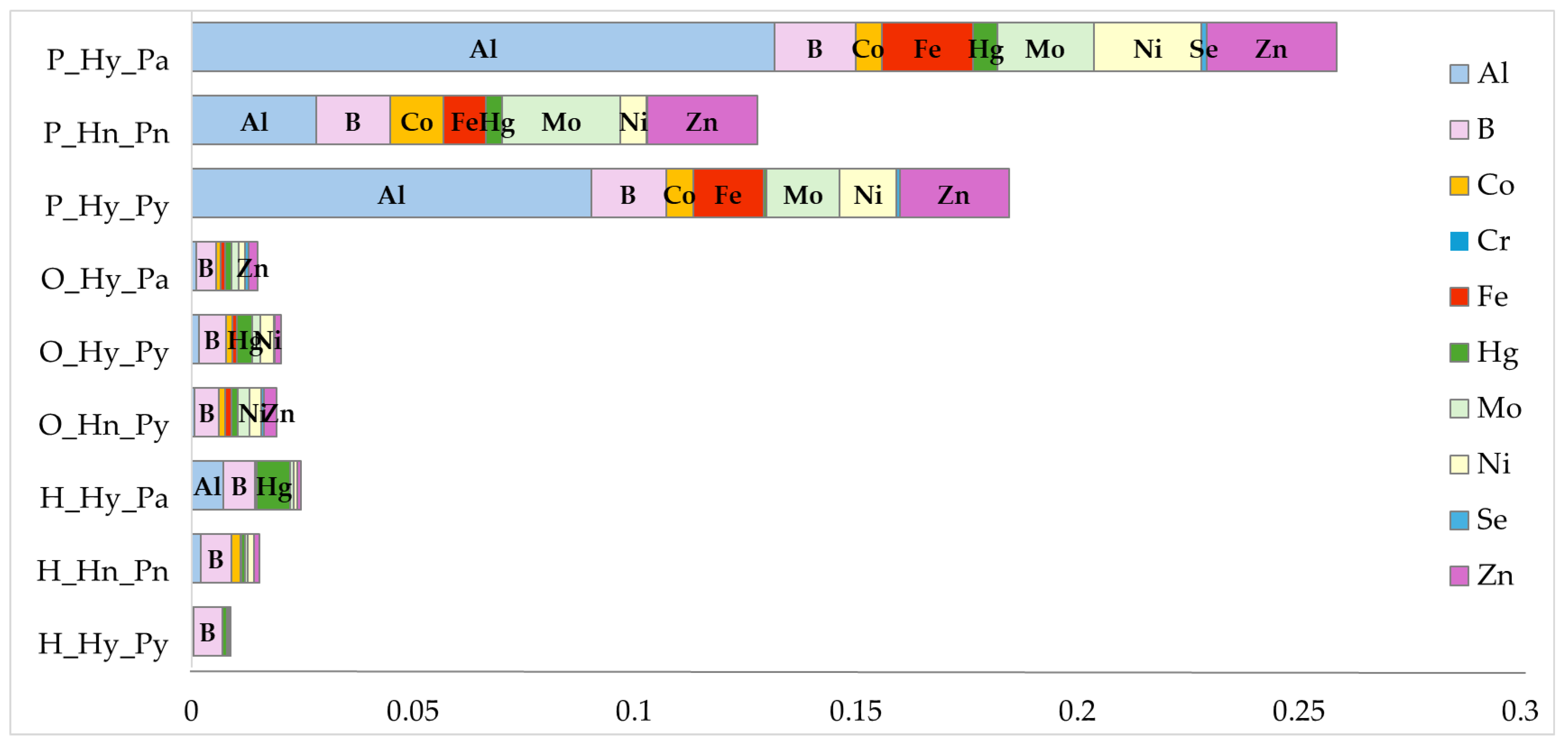
3.2. Metals and Risk in Foodstuffs
4. Conclusions
Supplementary Materials
Author Contributions
Funding
Data Availability Statement
Acknowledgments
Conflicts of Interest
References
- Lehel, J.; Pleva, D.; Nagy, A.L.; Süth, M.; Kocsner, T. Potential Metal Contamination in Foods of Animal Origin—Food Safety Aspects. Appl. Sci. 2025, 15, 8468. [Google Scholar] [CrossRef] [Scilit]
- Aga, M.B.; Sharma, V.; Dar, A.H.; Dash, K.K.; Singh, A.; Shams, R.; Khan, S.A. Comprehensive review on functional and nutraceutical properties of honey. eFood 2023, 4, e71. [Google Scholar] [CrossRef] [Scilit]
- IARC (International Agency for Research on Cancer). List of Classifications. Agents Classified by the IARC Monographs, Volumes 1–135. 2024. Available online: https://monographs.iarc.who.int/list-of-classifications (accessed on 12 April 2026).
- Saad, S.; Fatthalla, M.; Abd-Ellah, H.; Taha, S.M.; Mahrous, A.; Shahba, M.A. Antibiotics, pesticides, and heavy metals contaminants of honey as affected by antibiotics usage and agricultural practices in different Egyptian environments. Egypt. Pharm. J. 2024, 23, 555–564. [Google Scholar] [CrossRef] [Scilit]
- Mamabolo, E.; Gaigher, R.; Pryke, J.S. Conventional agricultural management negatively affects soil fauna abundance, soil physicochemical quality and multifunctionality. Pedobiologia 2024, 104, 150961. [Google Scholar] [CrossRef] [Scilit]
- Rai, P.K.; Lee, S.S.; Zhang, M.; Tsang, Y.F.; Kim, K.H. Heavy metals in food crops: Health risks, fate, mechanisms, and management. Environ. Int. 2019, 125, 365–385. [Google Scholar] [CrossRef] [Scilit] [PubMed]
- Tasleem, S.; Masud, S.; Habib, S.S.; Naz, S.; Fazio, F.; Aslam, M.; Ullah, M.; Attaullah, S. Investigation of the incidence of heavy metals contamination in commonly used fertilizers applied to vegetables, fishponds, and human health risk assessments. Environ. Sci. Pollut. Res. 2023, 30, 100646–100659. [Google Scholar] [CrossRef] [Scilit] [PubMed]
- Alengebawy, A.; Abdelkhalek, S.T.; Qureshi, S.R.; Wang, M.Q. Heavy metals and pesticides toxicity in agricultural soil and plants: Ecological risks and human health implications. Toxics 2021, 9, 42. [Google Scholar] [CrossRef] [Scilit]
- Yeganeh, M.; Afyuni, M.; Khoshgoftarmanesh, A.H.; Rezaeinejad, Y.; Schulin, R. Transport of zinc, copper, and lead in a sewage sludge amended calcareous soil. Soil. Use Manag. 2010, 26, 176–182. [Google Scholar] [CrossRef] [Scilit]
- Tamoutsidis, E.; Papadopoulos, I.; Tokatlidis, I.; Zotis, S.; Mavropoulos, T. Wet sewage sludge application effect on soil properties and element content of leaf and root vegetables. J. Plant Nutr. 2002, 25, 1941–1955. [Google Scholar] [CrossRef] [Scilit]
- Guadalupe, G.A.; García, L.; Chavez, S.G.; Doménech, E. Ecological and Health Risk Assessment of Metals in Organic and Conventional Peruvian Coffee from a Probabilistic Approach. Agronomy 2024, 14, 2817. [Google Scholar] [CrossRef] [Scilit]
- Mehri, F.; Heshmati, A.; Ghane, E.T.; Mahmudiono, T.; Fakhri, Y. Concentration of Heavy Metals in Traditional and Industrial Fruit Juices from Iran: Probabilistic Risk Assessment Study. Biol. Trace Elem. Res. 2024, 202, 5296–5305. [Google Scholar] [CrossRef] [Scilit]
- Khazaei, S.; Talebi Ghane, E.; Bashirian, S.; Mehri, F. The concentration of potentially toxic elements (PTEs) in fruit juices: A global systematic review, meta-analysis and probabilistic health risk assessment. Int. J. Environ. Anal. Chem. 2023, 103, 1259–1271. [Google Scholar] [CrossRef] [Scilit]
- El Youssfi, M.; Benabbou, A.; Flayou, M.; El Hazzat, M.; Belekbir, S.; Mahnine, N.; Zinedine, A.; Laghzizil, A.; Fegrouche, R.; El Hamidi, A.; et al. Lead and Cadmium in Orange Juices Marketed in Morocco: A Comprehensive Survey and Human Health Risk Assessment. Biol. Trace Elem. Res. 2026, 204, 1936–1945. [Google Scholar] [CrossRef] [Scilit]
- Flamminii, F.; Consalvo, A.; Cichelli, A.; Chiaudani, A. Assessing Mineral Content and Heavy Metal Exposure in Abruzzo Honey and Bee Pollen from Different Anthropic Areas. Foods 2024, 13, 1930. [Google Scholar] [CrossRef] [Scilit] [PubMed]
- Cianciosi, D.; Forbes-Hernández, T.Y.; Afrin, S.; Gasparrini, M.; Reboredo-Rodriguez, P.; Manna, P.P.; Zhang, J.; Bravo Lamas, L.; Martínez Flórez, S.; Agudo Toyos, P.; et al. Phenolic compounds in honey and their associated health benefits: A review. Molecules 2018, 23, 2322. [Google Scholar] [CrossRef] [Scilit]
- Zoroddu, M.A.; Aaseth, J.; Crisponi, G.; Medici, S.; Peana, M.; Nurchi, V.M. The essential metals for humans: A brief overview. J. Inorg. Biochem. 2019, 195, 120–129. [Google Scholar] [CrossRef] [Scilit] [PubMed]
- Khalifa, S.A.; Elashal, M.H.; Yosri, N.; Du, M.; Musharraf, S.G.; Nahar, L.; Sarker, S.D.; Guo, Z.; Cao, W.; Zou, X.; et al. Bee pollen: Current status and therapeutic potential. Nutrients 2021, 13, 1876. [Google Scholar] [CrossRef] [Scilit]
- Adaškevičiūtė, V.; Kaškonienė, V.; Kaškonas, P.; Barčauskaitė, K.; Maruška, A. Comparison of physicochemical properties of bee pollen with other bee products. Biomolecules 2019, 9, 819. [Google Scholar] [CrossRef] [Scilit]
- El Ghouizi, A.; Bakour, M.; Laaroussi, H.; Ousaaid, D.; El Menyiy, N.; Hano, C.; Lyoussi, B. Bee Pollen as Functional Food: Insights into Its Composition and Therapeutic Properties. Antioxidants 2023, 12, 557. [Google Scholar] [CrossRef] [Scilit]
- Wang, H.; Li, L.; Lin, X.; Bai, W.; Xiao, G.; Liu, G. Composition, functional properties and safety of honey: A review. J. Sci. Food Agric. 2023, 103, 6767–6779. [Google Scholar] [CrossRef] [Scilit] [PubMed]
- Anjum, S.I.; Ullah, A.; Gohar, F.; Raza, G.; Khan, M.I.; Hameed, M.; Ali, A.; Chen, C.C.; Tlak Gajger, I. Bee pollen as a food and feed supplement and a therapeutic remedy: Recent trends in nanotechnology. Front. Nutr. 2024, 11, 1371672. [Google Scholar] [CrossRef] [Scilit]
- Bava, R.; Castagna, F.; Lupia, C.; Poerio, G.; Liguori, G.; Lombardi, R.; Naturale, M.D.; Bulotta, R.M.; Biondi, V.; Passantino, A.; et al. Hive Products: Composition, Pharmacological Properties, and Therapeutic Applications. Pharmaceuticals 2024, 17, 646. [Google Scholar] [CrossRef] [Scilit]
- Kohl, P.L.; Rutschmann, B. Honeybees communicate distance via non-linear waggle duration functions. PeerJ 2021, 9, e11187. [Google Scholar] [CrossRef] [Scilit]
- Herrero-Latorre, C.; Barciela-García, J.; García-Martín, S.; Peña-Crecente, R.M. The use of honeybees and honey as environ-mental bioindicators for metals and radionuclides: A review. Environ. Rev. 2017, 25, 463–480. [Google Scholar] [CrossRef] [Scilit]
- Girotti, S.; Ghini, S.; Ferri, E.; Bolelli, L.; Colombo, R.; Serra, G.; Porrini, C.; Sangiorgi, S. Bioindicators and biomonitoring: Honeybees and hive products as pollution impact assessment tools for the Mediterranean area. Euro-Mediterr. J. Environ. Integr. 2020, 5, 62. [Google Scholar] [CrossRef] [Scilit]
- Mair, K.S.; Irrgeher, J.; Haluza, D. Elucidating the Role of Honeybees as Biomonitors in Environmental Health Research. Insects 2023, 14, 874. [Google Scholar] [CrossRef] [Scilit] [PubMed]
- Aguirre, A.A.; Beasley, V.R.; Augspurger, T.; Benson, W.H.; Whaley, J.; Basu, N. One health—Transdisciplinary opportunities for SETAC leadership in integrating and improving the health of people, animals, and the environment. Environ. Toxicol. Chem. 2016, 35, 2383–2391. [Google Scholar] [CrossRef] [Scilit]
- World Health Organization. A Health Perspective on the Role of the Environment in One Health (No. WHO/EURO: 2022-5290-45054-64214). World Health Organization. Regional Office for Europe. Available online: https://www.who.int/europe/publications/i/item/WHO-EURO-2022-5290-45054-64214 (accessed on 12 April 2026).
- FAO, One Health Joint Plan of Action, 2022–2026. FAO; UNEP; WHO; World Organisation for Animal Health (WOAH) (founded as OIE). 2022. Available online: https://openknowledge.fao.org/handle/20.500.14283/cc2289en (accessed on 12 April 2026). [CrossRef] [Scilit]
- Doménech, E.; Martorell, S. Review of the terminology, approaches, and formulations used in the guidelines on quantitative risk assessment of chemical hazards in food. Foods 2024, 13, 714. [Google Scholar] [CrossRef] [Scilit] [PubMed]
- European Commission. Proposal for a Regulation of the European Parliament and of the Council on Nature Restoration. Communication for the Commission to the European Parliament. 2022. Available online: https://eur-lex.europa.eu/legal-content/EN/TXT/?uri=celex:52022PC0304 (accessed on 12 April 2026).
- Calleja-Gomez, M.; Marti-Quijal, F.J.; Roig, P.; Castagnini, J.M.; Barba, F.J. Pulsed electric field extracts obtained from edible mushrooms: A detailed ICP-MS analysis of their mineral and heavy metal contents and their cytotoxic effect on CACO-2 cells. Food Bioprocess Technol. 2025, 18, 4551–4565. [Google Scholar] [CrossRef] [Scilit]
- Wenzl, T.; Haedrich, J.; Schaechtele, A.; Piotr, R.; Stroka, J.; Eppe, G.; Scholl, G. Guidance Document on the Estimation of LOD and LOQ for Measurements in the Field of Contaminants in Food and Feed. 2016, pp. 1–52. Available online: https://hdl.handle.net/2268/199914 (accessed on 12 April 2026).
- Ramos, L.C.; Rodríguez-García, A.; Castagnini, J.M.; Salgado-Ramos, M.; Martínez-Culebras, P.V.; Barba, F.J.; Pallarés, N. HPLC-MS/MS and ICP-MS for evaluation of mycotoxins and heavy metals in edible insects and their defatted cakes resulting from supercritical fluid extraction. Foods 2024, 13, 3233. [Google Scholar] [CrossRef] [Scilit]
- Gu, Q.; Yu, T.; Yang, Z.; Ji, J.; Hou, Q.; Wang, L.; Wei, X.; Zhang, Q. Prediction and risk assessment of five heavy metals in maize and peanut: A case study of Guangxi, China. Environ. Toxicol. Pharmacol. 2019, 70, 103199. [Google Scholar] [CrossRef] [Scilit]
- Doménech, E.; Simó-Alfonso, E.A.; Barragán-Huerta, B.E.; Escriche, I. A probabilistic approach to compare the risk associated with heavy metals and bromine in honey from Dominican Republic, Mexico, Mozambique and Spain. Food Chem. Toxicol. 2024, 183, 114306. [Google Scholar] [CrossRef] [Scilit]
- Crespo-Toledo, T.; Avelar-González, F.; Guerrero-Barrera, A.; Mitchell, K.; Yamamoto-Flores, L.; Flores-Amaro, O. Integrative assessment of heavy metal risks in mining polluted sediments and soils of Aguascalientes, Mexico. Case Stud. Chem. Environ. Eng. 2025, 11, 101130. [Google Scholar] [CrossRef] [Scilit]
- Ferreira, S.L.C.; da Silva, J.B.; dos Santos, I.F.; de Oliveira, O.M.C.; Cerda, V.; Queiroz, A.F.S. Use of pollution indices and ecological risk in the assessment of contamination from chemical elements in soils and sediments—Practical aspects. Trends Environ. Anal. Chem. 2022, 35, e00169. [Google Scholar] [CrossRef] [Scilit]
- Agyeman, P.C.; Kingsley, J.O.; Kebonye, N.M.; Ofori, S.; Borůvka, L.; Vašát, R.; Kočárek, M. Ecological risk source distribution, uncertainty analysis, and application of geographically weighted regression cokriging for prediction of potentially toxic elements in agricultural soils. Process Saf. Environ. Prot. 2022, 164, 729–746. [Google Scholar] [CrossRef] [Scilit]
- Biswas, A.; Choudhary, A.; Darbha, G.K. From ground to gut: Evaluating the human health risk of potentially toxic elements in soil, groundwater, and their uptake by Cocos nucifera in arsenic-contaminated environments. Environ. Pollut. 2024, 344, 123342. [Google Scholar] [CrossRef] [Scilit] [PubMed]
- EFSA OpenFoodTox: EFSA’s Chemical Hazards Database. 2023. Available online: https://www.efsa.europa.eu/en/microstrategy/openfoodtox (accessed on 12 April 2026).
- EPA IRIS Assessments. United States Environmental Protection Agency. 2025. Available online: https://iris.epa.gov/AtoZ/?list_type=alpha (accessed on 12 April 2026).
- Foodex2. Food Consumption Statistics for FoodEx2: Level 3 (Honey). 2025. Available online: https://www.efsa.europa.eu/en/microstrategy/foodex2-level-7 (accessed on 12 April 2026).
- EFSA Scientific Committee. Guidance on selected default values to be used by the EFSA Scientific Committee, Scientific Panels and Units in the absence of actual measured data. EFSA J. 2012, 10, 2579. [Google Scholar] [CrossRef] [Scilit]
- Ejaz, U.; Khan, S.M.; Shah, S.F.A.; Khalid, N.; Jehangir, S.; Rizvi, Z.F.; Svenning, J.C. Integrative data-driven analytics for assessing ecological and human health risks of soil heavy metal contamination. J. Hazard. Mater. Adv. 2025, 17, 100596. [Google Scholar] [CrossRef] [Scilit]
- Gelaye, G.; Ezez, D.; Tefera, M. Distribution, pollution status of metals and human health risk evaluation in honey: Chemo-metric approach. Environ. Chall. 2024, 16, 100958. [Google Scholar] [CrossRef] [Scilit]
- He, Z.; Shentu Yang, X.; Baligar, V.C.; Zhang, T.; Stoffella, P.J. Heavy Metal Contamination of Soils: Sources, Indicators and Assessment. J. Environ. Indic. 2015, 9, 17–18. [Google Scholar]
- Gupta, S.; Kaur, N.; Kant, K.; Jindal, P.; Ali, A.; Naeem, M. Calcium: A master regulator of stress tolerance in plants. S. Afr. J. Bot. 2023, 163, 580–594. [Google Scholar] [CrossRef] [Scilit]
- El Rasafi, T.; Oukarroum, A.; Haddioui, A.; Song, H.; Kwon, E.E.; Bolan, N.; Tack, F.M.; Sebastian, A.; Prasad, M.N.; Rinklebe, J. Cadmium stress in plants: A critical review of the effects, mechanisms, and tolerance strategies. Crit. Rev. Environ. Sci. Technol. 2022, 52, 675–726. [Google Scholar] [CrossRef] [Scilit]
- Reddy, S.H.; Al-kalbani, H.; Al-Qalhati, S.; Al-Kahtani, A.A.; Al Hoqani, U.; Azmi, S.N.; Kumar, A.; Kumar, S.; Settaluri, V.S. Proline and other physiological changes as an indicator of abiotic stress caused by heavy metal contamination. J. King Saud Univ. Sci. 2024, 36, 103313. [Google Scholar] [CrossRef] [Scilit]
- Efroymson, R.A.; Will, M.E.; Suter, G.W.; Wooten, I.A.C. Toxicological Benchmarks for Screening Contaminants of Potential Concern for Effects on Terrestrial Plants: Revision. 1997. Available online: https://rais.ornl.gov/documents/tm126r21.pdf (accessed on 12 April 2026).
- Kapustka, L.A. Issue Paper on the Ecological Effects of Metals. US Environmental Protection Agency. 2004. Available online: https://www.epa.gov/caddis/metals (accessed on 12 April 2026).
- Sur, I.M.; Prodan, V.C.; Micle, V.; Nasui, M.; Hegyi, A.; Pop, V.S.; Scurtu, L.I. Washing Procedure with Several Reagents for Ecological Rehabilitation of Soil Polluted with Heavy Metals. Soil. Syst. 2025, 9, 130. [Google Scholar] [CrossRef] [Scilit]
- Sur, I.M.; Micle, V.; Polyak, E.T.; Gabor, T. Assessment of soil quality status and the ecological risk in the Baia Mare, Romania area. Sustainability 2022, 14, 3739. [Google Scholar] [CrossRef] [Scilit]
- Hall, S.J.; Liptzin, D.; Buss, H.L.; DeAngelis, K.; Silver, W.L. Drivers and patterns of iron redox cycling from surface to bedrock in a deep tropical forest soil: A new conceptual model. Biogeochemistry 2016, 130, 177–190. [Google Scholar] [CrossRef] [Scilit]
- Han, R.; Liu, W.; Xu, Z. The constraint of soil Zn isotope compositions by diverse land utilizations: Evidence from geochemical fingerprint in a typical karst area. Catena 2024, 240, 108005. [Google Scholar] [CrossRef] [Scilit]
- Shiwakoti, S.; Zheljazkov, V.D.; Gollany, H.T.; Kleber, M.; Xing, B. Micronutrients decline under long-term tillage and nitrogen fertilization. Sci. Rep. 2019, 9, 12020. [Google Scholar] [CrossRef] [Scilit] [PubMed]
- Wiryawan, A.; Eginarta, W.S.; Hermanto, F.E.; Ustiatik, R.; Dinira, L.; Mustafa, I. Changes in Essential Soil Nutrients and Soil Disturbance Directly Affected Soil Microbial Community Structure: A Metagenomic Approach. J. Ecol. Eng. 2022, 23, 238–245. [Google Scholar] [CrossRef]
- Jović, M.; Šljivić-Ivanović, M.; Dimović, S.; Marković, J.; Smičiklas, I. Sorption and mobility of Co (II) in relation to soil properties. Geoderma 2017, 297, 38–47. [Google Scholar] [CrossRef] [Scilit]
- Agbenin, J.O. The impact of long-term cultivation and management history on the status and dynamics of cobalt in a savanna Alfisol in Nigeria. Eur. J. Soil Sci. 2002, 53, 169–174. [Google Scholar] [CrossRef] [Scilit]
- Michopoulos, P.; Kostakis, M.; Kaoukis, K.; Bourletsikas, A.; Solomou, A.; Pasias, I.; Thomaidis, N. Cycling and status of cobalt in some forest types. Folia Oecologica 2023, 50, 72–79. [Google Scholar] [CrossRef] [Scilit]
- Banks, M.K.; Schwab, A.P.; Henderson, C. Leaching and reduction of chromium in soil as affected by soil organic content and plants. Chemosphere 2006, 62, 255–264. [Google Scholar] [CrossRef] [Scilit]
- Ettler, V.; Vaněk, A.; Mihaljevič, M.; Bezdička, P. Contrasting lead speciation in forest and tilled soils heavily polluted by lead metallurgy. Chemosphere 2005, 58, 1449–1459. [Google Scholar] [CrossRef] [Scilit] [PubMed]
- Elberling, B.; Breuning-Madsen, H.; Hinge, H.; Asmund, G. Heavy metals in 3300-year-old agricultural soils used to assess present soil contamination. Eur. J. Soil Sci. 2010, 61, 74–83. [Google Scholar] [CrossRef] [Scilit]
- Zhou, J.; Du, B.; Wang, Z.; Zhang, W.; Xu, L.; Fan, X.; Liu, X.; Zhou, J. Distributions and pools of lead (Pb) in a terrestrial forest ecosystem with highly elevated atmospheric Pb deposition and ecological risks to insects. Sci. Total Environ. 2019, 647, 932–941. [Google Scholar] [CrossRef] [Scilit]
- Wieczorek, J.; Baran, A.; Urbański, K.; Mazurek, R.; Klimowicz-Pawlas, A. Assessment of the pollution and ecological risk of lead and cadmium in soils. Environ. Geochem. Health 2018, 40, 2325–2342. [Google Scholar] [CrossRef] [Scilit]
- Atafar, Z.; Mesdaghinia, A.; Nouri, J.; Homaee, M.; Yunesian, M.; Ahmadimoghaddam, M.; Mahvi, A.H. Effect of fertilizer application on soil heavy metal concentration. Environ. Monit. Assess. 2010, 160, 83–89. [Google Scholar] [CrossRef] [Scilit]
- Adams, M.L.; Davis, M.R.; Powell, K.J. Effects of grassland afforestation on exchangeable soil and soil solution aluminium. Aust. J. Soil Res. 2001, 39, 1003–1014. [Google Scholar] [CrossRef] [Scilit]
- Palleiro, L.; Patinha, C.; Rodríguez-Blanco, M.L.; Taboada-Castro, M.M.; Taboada-Castro, M.T. Aluminum Forms in Solid Phase of Soils Developed over Schists as a Function of Land Use. Commun. Soil Sci. Plant Anal. 2016, 47, 90–96. [Google Scholar] [CrossRef] [Scilit]
- Wurzburger, N.; Bellenger, J.P.; Kraepiel, A.M.L.; Hedin, L.O. Molybdenum and phosphorus interact to constrain asymbiotic nitrogen fixation in tropical forests. PLoS ONE 2012, 7, e33710. [Google Scholar] [CrossRef] [Scilit]
- Nakamaru, Y.M.; Altansuvd, J. Speciation and bioavailability of selenium and antimony in non-flooded and wetland soils: A review. Chemosphere 2014, 111, 366–371. [Google Scholar] [CrossRef] [Scilit]
- Lombardo, M.F.; Panebianco, S.; Azzaro, A.; Catara, V.; Cirvilleri, G. Assessing Copper-Alternative Products for the Control of Pre- and Postharvest Citrus Anthracnose. Plants 2023, 12, 904. [Google Scholar] [CrossRef] [Scilit]
- Mo, X.; Chen, C.; Riaz, M.; Moussa, M.G.; Chen, X.; Wu, S.; Tan, Q.; Sun, X.; Zhao, X.; Shi, L.; et al. Fruit Characteristics of Citrus Trees Grown under Different Soil Cu Levels. Plants 2022, 11, 2943. [Google Scholar] [CrossRef] [Scilit]
- Zhou, X.; He, Z.; Liang, Z.; Stoffella, P.J.; Fan, J.; Yang, Y.; Powell, C.A. Long-Term Use of Copper-Containing Fungicide Affects Microbial Properties of Citrus Grove Soils. Soil Sci. Soc. Am. J. 2011, 75, 898–906. [Google Scholar] [CrossRef] [Scilit]
- Bakshi, S.; He, Z.L.; Harris, W.G. Particulate copper in soils and surface runoff from contaminated sandy soils under citrus production. Environ. Sci. Pollut. Res. 2013, 20, 8801–8812. [Google Scholar] [CrossRef] [Scilit] [PubMed]
- Gamby, R.L.; Hammerschmidt, C.R.; Costello, D.M.; Lamborg, C.H.; Runkle, J.R. Deforestation and cultivation mobilize mercury from topsoil. Sci. Total Environ. 2015, 532, 467–473. [Google Scholar] [CrossRef] [Scilit] [PubMed]
- Almeida, M.D.; Lacerda, L.D.; Bastos, W.R.; Herrmann, J.C. Mercury loss from soils following conversion from forest to pasture in Rondônia, Western Amazon, Brazil. Environ. Pollut. 2005, 137, 179–186. [Google Scholar] [CrossRef] [Scilit] [PubMed]
- Lacerda, L.D.; De Souza, M.; Ribeiro, M.G. The effects of land use change on mercury distribution in soils of Alta Floresta, Southern Amazon. Environ. Pollut. 2004, 129, 247–255. [Google Scholar] [CrossRef] [Scilit]
- Béliveau, A.; Lucotte, M.; Davidson, R.; Paquet, S.; Mertens, F.; Passos, C.J.; Romana, C.A. Reduction of soil erosion and mercury losses in agroforestry systems compared to forests and cultivated fields in the Brazilian Amazon. J. Environ. Manag. 2017, 203, 522–532. [Google Scholar] [CrossRef] [Scilit]
- Sopaj, F.; Kastrati, G.; Stafilov, T.; Šajn, R.; Tašev, K.; Paçarizi, M. Honey and bee pollen as bioindicators of mercury and thallium exposure in Kosovo. Toxicol. Environ. Chem. 2025, 107, 952–970. [Google Scholar] [CrossRef] [Scilit]
- Boussaid, A.; Chouaibi, M.; Rezig, L.; Hellal, R.; Donsì, F.; Ferrari, G.; Hamdi, S. Physicochemical and bioactive properties of six honey samples from various floral origins from Tunisia. Arab. J. Chem. 2018, 11, 265–274. [Google Scholar] [CrossRef] [Scilit]
- Di Bella, G.; Lo Turco, V.; Potortì, A.G.; Bua, G.D.; Fede, M.R.; Dugo, G. Geographical discrimination of Italian honey by multi-element analysis with a chemometric approach. J. Food Compos. Anal. 2015, 44, 25–35. [Google Scholar] [CrossRef] [Scilit]
- Di Rosa, A.R.; Leone, F.; Cheli, F.; Chiofalo, V. Novel approach for the characterisation of Sicilian honeys based on the correlation of physico-chemical parameters and artificial senses. Ital. J. Anim. Sci. 2019, 18, 389–397. [Google Scholar] [CrossRef] [Scilit]
- Gulfraz, M.; Ifftikhar, F.; Asif, S.; Raja, G.K.; Asad, M.J.; Imran, M.; Abbasi, K.; Zeenat, A. Quality assessment and antimicrobial activity of various honey types of Pakistan. Afr. J. Biotechnol. 2010, 9, 6906. [Google Scholar] [CrossRef]
- Harmankaya, M.; Gezgin, S.; Özcan, M.M. Comparative evaluation of some macro- and micro-element and heavy metal contents in commercial fruit juices. Environ. Monit. Assess. 2012, 184, 5415–5420. [Google Scholar] [CrossRef] [Scilit]
- Dehelean, A.; Magdas, D.A. Analysis of mineral and heavy metal content of some commercial fruit juices by inductively coupled plasma mass spectrometry. Sci. World J. 2013, 2013, 215423. [Google Scholar] [CrossRef] [Scilit]
- Tormen, L.; Torres, D.P.; Dittert, I.M.; Araújo, R.G.O.; Frescura, V.L.A.; Curtius, A.J. Rapid assessment of metal contamination in commercial fruit juices by inductively coupled mass spectrometry after a simple dilution. J. Food Compos. Anal. 2011, 24, 95–102. [Google Scholar] [CrossRef] [Scilit]
- Zavrtnik, S.; Loborec, J.; Kapelj, S.; Grčić, I. Environmental biomonitoring of heavy and toxic metals using honeybees and their products—An overview of previous research. Sustainability 2024, 16, 8526. [Google Scholar] [CrossRef] [Scilit]
- Fernández-Torres, R.; Pérez-Bernal, J.L.; Bello-López, M.Á.; Callejón-Mochón, M.; Jiménez-Sánchez, J.C.; Guiraúm-Pérez, A. Mineral content and botanical origin of Spanish honeys. Talanta 2005, 65, 686–691. [Google Scholar] [CrossRef] [Scilit] [PubMed]
- De Alda-Garcilope, C.; Gallego-Picó, A.; Bravo-Yagüe, J.C.; Garcinuño-Martínez, R.M.; Fernández-Hernando, P. Characterization of Spanish honeys with protected designation of origin “miel de Granada” according to their mineral content. Food Chem. 2012, 135, 1785–1788. [Google Scholar] [CrossRef] [Scilit]
- Bilandžić, N.; Gajger, I.T.; Kosanović, M.; Čalopek, B.; Sedak, M.; Kolanović, B.S.; Varenina, I.; Luburić, Đ.B.; Varga, I.; Đokić, M. Essential and toxic element concentrations in monofloral honeys from southern Croatia. Food Chem. 2017, 234, 245–253. [Google Scholar] [CrossRef] [Scilit]
- Bontempo, L.; Camin, F.; Ziller, L.; Perini, M.; Nicolini, G.; Larcher, R. Isotopic and elemental composition of selected types of Italian honey. Measurement 2017, 98, 283–289. [Google Scholar] [CrossRef] [Scilit]
- González-Miret, M.L.; Terrab, A.; Hernanz, D.; Fernández-Recamales, M.Á.; Heredia, F.J. Multivariate correlation between color and mineral composition of honeys and by their botanical origin. J. Agric. Food Chem. 2005, 53, 2574–2580. [Google Scholar] [CrossRef] [Scilit]
- Karabagias, I.K.; Louppis, A.P.; Karabournioti, S.; Kontakos, S.; Papastephanou, C.; Kontominas, M.G. Characterization and geo-graphical discrimination of commercial Citrus spp. honeys produced in different Mediterranean countries based on min-erals, volatile compounds and physicochemical parameters, using chemometrics. Food Chem. 2017, 217, 445–455. [Google Scholar] [CrossRef] [Scilit]
- Louppis, A.P.; Karabagias, I.K.; Kontakos, S.; Kontominas, M.G.; Papastephanou, C. Botanical discrimination of Greek unifloral honeys based on mineral content in combination with physicochemical parameter analysis, using a validated chemometric approach. Microchem. J. 2017, 135, 180–189. [Google Scholar] [CrossRef] [Scilit]
- Nanda, V.; Singh, B.; Kukreja, V.K.; Bawa, A.S. Characterisation of honey produced from different fruit plants of northern India. Int. J. Food Sci. Technol. 2009, 44, 2629–2636. [Google Scholar] [CrossRef] [Scilit]
- Perna, A.; Simonetti, A.; Intaglietta, I.; Sofo, A.; Gambacorta, E. Metal content of southern Italy honey of different botanical origins and its correlation with polyphenol content and antioxidant activity. Int. J. Food Sci. Technol. 2012, 47, 1909–1917. [Google Scholar] [CrossRef] [Scilit]
- Terrab, A.; Díez, M.J.; Heredia, F.J. Palynological, Physico-Chemical and Colour Characterization of Moroccan Honeys. II. Orange (Citrus Sp.) Honey. Int. J. Food Sci. Technol. 2003, 38, 387–394. [Google Scholar] [CrossRef] [Scilit]
- Aazza, S.; Lyoussi, B.; Antunes, D.; Miguel, M.G. Physicochemical characterization and antioxidant activity of commercial portuguese honeys. J. Food Sci. 2013, 78, C1159–C1165. [Google Scholar] [CrossRef] [Scilit]
- García, J.C.R.; Rodríguez, R.I.; Crecente, R.M.P.; García, J.B.; Martín, S.G.; Latorre, C.H. Preliminary chemometric study on the use of honey as an environmental marker in Galicia (northwestern Spain). J. Agric. Food Chem. 2006, 54, 7206–7212. [Google Scholar] [CrossRef] [Scilit]
- Bouhlali, E.D.; Bammou, M.; Sellam, K.; El Midaoui, A.; Bourkhis, B.; Ennassir, J.; Alem, C.; Filali-Zegzouti, Y. Physicochemical properties of eleven monofloral honey samples produced in Morocco. Arab. J. Basic. Appl. Sci. 2019, 26, 476–487. [Google Scholar] [CrossRef] [Scilit]
- Nanda, V.; Sarkar, B.C.; Sharma, H.K.; Bawa, A.S. Physico-chemical properties and estimation of mineral content in honey produced from different plants in Northern India. J. Food Compos. Anal. 2003, 16, 613–619. [Google Scholar] [CrossRef] [Scilit]
- Yücel, Y.; Sultanoglu, P. Determination of industrial pollution effects on citrus honeys with chemometric approach. Food Chem. 2012, 135, 170–178. [Google Scholar] [CrossRef] [Scilit]
- Szymczycha-Madeja, A.; Welna, M. Evaluation of a simple and fast method for the multi-elemental analysis in commercial fruit juice samples using atomic emission spectrometry. Food Chem. 2013, 141, 3466–3472. [Google Scholar] [CrossRef] [Scilit]
- Demir, F.; Kipcak, A.S.; Dere Ozdemir, O.; Moroydor Derun, E. Determination of essential and non-essential element concentrations and health risk assessment of some commercial fruit juices in Turkey. J. Food Sci. Technol. 2020, 57, 4432–4442. [Google Scholar] [CrossRef] [Scilit]
- Smical, I.; Muntean, A.; Micle, V.; Sur, I.M.; Moldovan, A.C. Study on human health risks associated with consuming vegetables grown in industrially polluted soil in Sasar area, NW Romania, in the context of sustainable development. Sustainability 2025, 17, 4072. [Google Scholar] [CrossRef] [Scilit]
- Commission Regulation (EU) 2023/915 of 25 April 2023 on Maximum Levels for Certain Contaminants in Food and Repealing Regulation (EC) No 1881/2006. Available online: https://eur-lex.europa.eu/legal-content/EN/TXT/PDF/?uri=CELEX:32023R0915 (accessed on 12 April 2026).
- Anastácio, M.; dos Santos, A.P.M.; Aschner, M.; Mateus, L. Determination of trace metals in fruit juices in the Portuguese market. Toxicol. Rep. 2018, 5, 434–439. [Google Scholar] [CrossRef] [Scilit]
- Commission Regulation (EU) 2024/1987 of 30 July 2024 Amending Regulation (EU) 2023/915 as Regards Maximum Levels of Nickel in Certain Foodstuffs. Available online: https://eur-lex.europa.eu/eli/reg/2024/1987/oj/eng (accessed on 12 April 2026).
- Ullah, R.; Jan, F.A.; Gulab, H.; Saleem, S.; Ullah, N.; Wajidullah. Metals Contents in Honey, Beeswax and Bees and Human Health Risk Assessment Due to Consumption of Honey: A Case Study from Selected Districts in Khyber Pakhtunkhwa, Pakistan. Arch. Environ. Contam. Toxicol. 2022, 82, 341–354. [Google Scholar] [CrossRef] [Scilit]
- Scivicco, M.; Squillante, J.; Velotto, S.; Esposito, F.; Cirillo, T.; Severino, L. Dietary exposure to heavy metals through polyfloral honey from Campania region (Italy). J. Food Compos. Anal. 2022, 114, 104748. [Google Scholar] [CrossRef] [Scilit]
- Godebo, T.R.; Stoner, H.; Taylor, P.; Jeuland, M. Metals in honey from bees as a proxy for environmental contamination in the United States. Environ. Pollut. 2025, 364, 125221. [Google Scholar] [CrossRef] [Scilit]
- Mititelu, M.; Udeanu, D.I.; Docea, A.O.; Tsatsakis, A.; Calina, D.; Arsene, A.L.; Nedelescu, M.; Neacsu, S.M.; Velescu, B.Ș.; Ghica, M. New method for risk assessment in environmental health: The paradigm of heavy metals in honey. Environ. Res. 2023, 236, 115194. [Google Scholar] [CrossRef] [Scilit]
- Obasi, N.A.; Aloke, C.; Obasi, S.E.; Famurewa, A.C.; Ogbu, P.N.; Onyeji, G.N. Elemental composition and associated health risk of honey obtained from apiary farms in southeast Nigeria. J. Food Prot. 2020, 83, 1745–1756. [Google Scholar] [CrossRef] [Scilit]
- Naccari, C.; Macaluso, A.; Giangrosso, G.; Naccari, F.; Ferrantelli, V. Risk Assessment of Heavy Metals and Pesticides in Honey from Sicily (Italy). J. Food Res. 2014, 3, 107. [Google Scholar] [CrossRef] [Scilit]
- Zafeiraki, E.; Kasiotis, K.M.; Nisianakis, P.; Manea-Karga, E.; Machera, K. Occurrence and human health risk assessment of mineral elements and pesticides residues in bee pollen. Food Chem. Toxicol. 2022, 161, 112826. [Google Scholar] [CrossRef] [Scilit] [PubMed]
- Fathi, L.; Mirza Alizadeh, A.; Esmi, F.; Dezhangah, S.; Mehrasbi, M.R.; Nazari, F.; Taran, J.; Nezami, A.; Kamali, K.; Hosseini, M.J. Determination of lead and cadmium in fruit juice: Occurrenc. Determination of lead and cadmium in fruit juice: Occurrence and risk characterisation in Iranian population. Int. J. Environ. Anal. Chem. 2024, 104, 7088–7102. [Google Scholar] [CrossRef] [Scilit]
- Taghizadeh, S.F.; Azizi, M.; Hassanpourfard, G.; Rezaee, R.; Karimi, G. Assessment of Carcinogenic and Non-carcinogenic Risk of Exposure to Metals via Consumption of Coffee, Tea, and Herbal Tea in Iranians. Biol. Trace Elem. Res. 2023, 201, 1520–1537. [Google Scholar] [CrossRef] [Scilit] [PubMed]



| Field Codes | Agricultural Practices | Type of Collected Samples | ||||
|---|---|---|---|---|---|---|
| Herbicide | Pesticide | Soil (n = 12) | Honey (n = 9) | Bee Pollen (n = 9) | Orange Fruits (n = 9) | |
| Hy_Py | Yes | Yes | X | X | X | X |
| Hn_Py | Non | Yes | X | - | - | X |
| Hy_Pa | Yes | Alternative | X | X | X | X |
| Hn_Pn | Non | Non | X | X | X | - |
| Description | Value | Source |
|---|---|---|
| (Geo-accumulation index) | [36,38] | |
| Csoil (Concentration of metals in soil) | This study | |
| (Background value) | Cd: 0.14; Co: 4; Cr:33; Cu: 12.9; Hg: 0.03; I: 9; Mn: 250; Mo: 0.6; Ni: 18; Pb: 20; Sb: 0.4; U: 1.6; Zn: 71 | [39] |
| ER (Ecological risk) | [11,40] | |
| (Toxicity response coefficient) | Cd: 22; Co: 5; Cr:4.5; Cu: 6; Hg: 34; Mn: 1; Mo: 15; Ni: 5; Pb: 4.5; Sb: 40; Zn: 1.5 | [40] |
| PI (Single pollution index) | [40] | |
| HQ (Hazard quotient) | [41] | |
| RV (Reference value) | Al: 0.14; B: 0.2; Cd:0.0005; Co: 0.0016; Cr: 0.3; Fe: 0.8; Hg: 0.00023; Mo: 0.005; Ni: 0.013; Sb: 0.006; Se: 0.005; U: 600; Zn: 0.3 | [42,43] |
| EDI (Estimated daily intake) | [44,45] | |
| Cfood (Concentration of metals in food) | Honey (H); bee pollen (P); orange fruits (O) | This study |
| POE (probability of exceedance) | [31] | |
| HI (Hazard index) | [31] | |
| CR (Cancer risk) | [31] | |
| SF (Slope factor) | Cd: 0.38; Cr: 0.5; Ni: 1.7; Pb: 0.0085 | [46,47] |
| Metals | Hy_Py | Hn_Py | Hy_Pa | Hn_Pn | ANOVA |
|---|---|---|---|---|---|
| Al | 13,142 (1016) ab | 16,821 (3377) bc | 10,433 (1353) a | 18,943 (2102) c | 12.2 ** |
| B | 8.01 (0.16) a | 11 (3) a,b | 5 (1) a | 39 (25) b | 4.2 * |
| Ca | 192,022 (2948) | 179,144 (10,159) | 202,375 (27,943) | 165,024 (36,282) | n.s. |
| Cd | <LOD | 0.12 (0.09) | 0.03 (0.02) | 0.08 (0.10) | n.s. |
| Co | 2.12 (0.23) a | 4.3 (0.8) b | 2.14 (0.15) a | 5.4 (0.6) c | 36 *** |
| Cr | 11.4 (1.1) a | 19 (2) b | 10.3 (1.2) a | 21 (2) b | 31 *** |
| Cu | 69 (27) | 70.9 (0.8) | 59 (29) | 31 (3) | n.s. |
| Fe | 6668 (668) a | 9618 (524) b | 5825 (435) a | 12,336 (632) c | 93 *** |
| Hg | <LOD a | <LOD a | <LOD a | 0.07 (0.03) b | 3 * |
| I | 20.2 (1.1) a,b | 26.4 (0.5) b | 25 (5) b | 13 (4) a | 7 * |
| K | 3708 (152) a,b | 4874 (684) b,c | 2726 (417) a | 6169 (1654) c | 8 * |
| Mn | 96.7 (0.9) a | 219 (5) b | 109 (10) a | 384 (91) c | 21 *** |
| Mo | 0.4 (0.3) a | 0.43 (0.04) a | 0.23 (0.06) a | 0.9 (0.2) b | 10 ** |
| Ni | 5.8 (0.4) a | 10.02 (0.21) b | 5.4 (0.6) a | 13 (3) b | 17 ** |
| P | 141 (1) a,b | 477 (144) c | 128 (14) a | 290 (131) b,c | 8 * |
| Pb | 6.46 (0.03) a | 9.7 (0.6) a | 7.7 (0.7) a | 26 (4) b | 48 *** |
| Sb | <LOD | <LOD | <LOD | 0.11 (0.08) | n.s. |
| Se | 0.07 (0.03) | 0.10 (0.08) | 0.07 (0.03) | 0.15 (0.06) | n.s. |
| U | 0.5 (0.3) | 0.9 (0.4) | 0.4 (0.2) | 0.61 (0.11) | n.s. |
| Zn | 13.6 (1.4) a | 33 (4) b | 11.4 (1.6) a | 35.7 (0.7) b | 123 *** |
Disclaimer/Publisher’s Note: The statements, opinions and data contained in all publications are solely those of the individual author(s) and contributor(s) and not of MDPI and/or the editor(s). MDPI and/or the editor(s) disclaim responsibility for any injury to people or property resulting from any ideas, methods, instructions or products referred to in the content. |
© 2026 by the authors. Licensee MDPI, Basel, Switzerland. This article is an open access article distributed under the terms and conditions of the Creative Commons Attribution (CC BY) license.
Share and Cite
Doménech, E.; Escriche, I. Impact of Agricultural Practices on Metal Accumulation and Their Associated Health Risks to the Environment and Consumers: A One Health Perspective. Environments 2026, 13, 217. https://doi.org/10.3390/environments13040217
Doménech E, Escriche I. Impact of Agricultural Practices on Metal Accumulation and Their Associated Health Risks to the Environment and Consumers: A One Health Perspective. Environments. 2026; 13(4):217. https://doi.org/10.3390/environments13040217
Chicago/Turabian StyleDoménech, Eva, and Isabel Escriche. 2026. "Impact of Agricultural Practices on Metal Accumulation and Their Associated Health Risks to the Environment and Consumers: A One Health Perspective" Environments 13, no. 4: 217. https://doi.org/10.3390/environments13040217
APA StyleDoménech, E., & Escriche, I. (2026). Impact of Agricultural Practices on Metal Accumulation and Their Associated Health Risks to the Environment and Consumers: A One Health Perspective. Environments, 13(4), 217. https://doi.org/10.3390/environments13040217