1. Introduction
Microplastic pollution in agricultural soils is currently considered one of the most pressing environmental challenges worldwide [
1]. Microplastics (MPs) are defined as polymeric particles with dimensions ranging from 5 mm to 1 μm [
2]. They may originate either from the fragmentation of larger plastic debris released into the environment or from particles intentionally manufactured at the micro-scale. Accordingly, MPs are generally classified into two categories: secondary microplastics, resulting from the degradation of larger plastics, and primary microplastics, which are deliberately produced for specific applications [
3].
Primary MPs are widely used in various everyday products and agricultural applications. For instance, they can function as additives in fertilizers designed for controlled nutrient release in soils or as components of personal care products [
4]. In terrestrial ecosystems, MPs can enter soils through multiple pathways, including plastic mulching in agricultural fields, the application of sewage sludge and biowaste, atmospheric deposition, and the improper management of plastic waste [
5].
The accumulation of MPs in soil environments has raised increasing concerns due to their potential effects on soil health. Several studies have demonstrated that MPs can significantly alter soil physicochemical properties. For example, Golia et al. [
6] reported that poly(ethylene) (PE) and poly(ethylene terephthalate) (PET) caused notable changes in the physicochemical properties of Mediterranean soils following their incorporation. Similarly, Chen et al. [
7] showed that different MP types influence soil properties in distinct ways once introduced into soil systems.
In addition to their direct effects on soil properties, MPs may interact with other environmental contaminants present in soils. Among these contaminants, heavy metals are particularly significant because they are frequently detected in terrestrial ecosystems and exhibit high persistence and resistance to degradation [
8,
9]. Understanding the combined presence of MPs and heavy metals is therefore crucial for assessing their potential impacts on soil ecosystems. However, most existing studies have focused on their interactions in aquatic environments, while comparatively fewer investigations have examined these processes in soil systems [
10]. According to a meta-analysis by An et al. [
11], MPs can interact with heavy metals such as Cd, Pb, Cu, and Zn, influencing their transport, distribution, and bioavailability in soils. These interactions are mainly driven by processes such as adsorption and desorption of metal ions onto MP surfaces through electrostatic forces, surface complexation, and binding to functional groups formed during environmental exposure [
12].
Furthermore, environmental factors such as ultraviolet (UV) radiation, wind, and soil moisture can alter the physicochemical properties of MPs after their deposition in soils. This process, commonly referred to as microplastic aging, leads to structural changes and the formation of new surface functional groups [
13]. These modifications may significantly influence interactions with coexisting contaminants. In particular, aged MPs often display enhanced ion-binding capacity due to increased surface area and the presence of additional functional groups, which may modify the transport and bioavailability of associated heavy metals in terrestrial environments [
14].
Microplastics may also indirectly affect heavy metal behavior by altering soil properties such as pH, organic matter content, and microbial community composition [
15]. Such changes may influence the distribution and mobility of metals within soils and potentially increase their bioavailability and ecotoxicological risks [
16]. Moreover, interactions between MPs and heavy metals may produce synergistic or antagonistic effects on soil organisms and plants, leading to complex consequences for soil ecosystem functioning [
17].
Among the various types of microplastics detected in agricultural soils, PE, PP, and PET are the most frequently reported polymers. This predominance is largely explained by their extensive use in agricultural activities worldwide, including mulching films, packaging materials, and irrigation components [
18]. Field studies investigating MP occurrence in agricultural soils have consistently reported PP as the most abundant polymer, followed by PET and PE (including low-density polyethylene, LDPE) [
19].
The behavior of these polymers in soil systems can vary significantly due to differences in their chemical composition, polarity, and surface characteristics. These effects are largely determined by the physicochemical characteristics of the polymers themselves. Differences in molecular structure and polarity strongly influence the behavior of MPs in soil environments. PET is a relatively polar polymer that interacts strongly with water and soil organic matter [
20]. In contrast, PP and LDPE are less polar, more hydrophobic, and chemically inert. As a result, they tend to exhibit weaker interactions with charged soil surfaces [
21]. Such differences in polarity can influence the adsorption of organic and inorganic compounds and determine their residence time within soil systems [
22]. These properties are also associated with the capacity of MPs to act as carriers of environmental pollutants [
23].
Despite the growing body of literature on microplastic contamination, limited information is currently available regarding the influence of common MPs on the physicochemical properties of Mediterranean soils. In particular, few studies have systematically evaluated how different polymer types affect the behavior and environmental risk of heavy metals in soils with contrasting physicochemical characteristics [
11,
24,
25]. Among heavy metals, Cd is often detected at significant concentrations in agricultural environments [
26,
27,
28], and is considered one of the most toxic heavy metals, posing severe risks to soil and human health [
29]. On the other hand, Cu is a metal with widespread industrial uses and, as a result, can easily be transported into the environment through the mismanagement of industrial wastes [
30]. Moreover, it is a vital trace element for the physiological functioning of plants and animals and plays an important role in seed production [
30]. Nevertheless, high levels of Cu in terrestrial environments can provoke toxic effects on ecosystems [
31,
32,
33].
In this context, monitoring Cd and Cu levels in terrestrial environments and their potential interactions with co-existing pollutants is strongly recommended in order to fully understand the chemical behavior of this heavy metal in nature. In light of the above, the present study addresses this knowledge gap by adopting a comparative and systematic approach to investigate the effects of three of the most commonly detected MPs (PP, PE, and PET) on heavy-metal-contaminated soils (Cd, Cu) with similar texture but markedly different pH values.
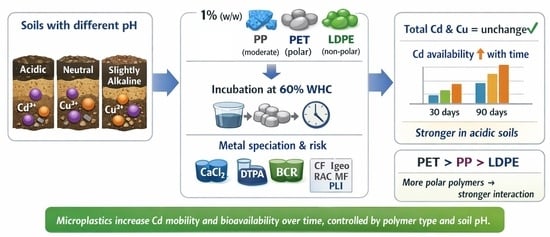
Specifically, the novelty of this research lies in several key aspects. First, it provides a comparative evaluation of the influence of polymer type under controlled experimental conditions, enabling the differentiation of polymer-specific effects. Second, it explicitly incorporates the temporal dimension of MP–soil interactions through incubation experiments conducted over 30 and 90 days, thereby allowing the assessment of both short- and medium-term changes and highlighting the aging effects of MPs under environmental moisture conditions. Third, the study combines multiple complementary extraction techniques—CaCl
2 extraction, DTPA extraction, and sequential extraction according to the BCR protocol—with environmental risk indicators, including the Contamination Factor (CF), Geoaccumulation Index (Igeo), Risk Assessment Code (RAC), and Mobility Factor (MF) [
34]. This integrated methodological framework provides a comprehensive evaluation of metal mobility, bioavailability, fractionation, and associated environmental risks [
35].
The specific objectives of this study are to investigate the effects of polymer type and microplastic residence time on soil chemical properties, to evaluate changes in the availability and fractionation of Cd and Cu in soils with contrasting pH conditions, and to assess potential variations in environmental risk arising from the coexistence of microplastics and heavy metals in agricultural soils. Through this approach, the study aims to provide a comprehensive understanding of the combined impacts of microplastics and heavy metals on the health and functioning of Mediterranean soil ecosystems.
2. Materials and Methods
2.1. Soil Sample Characteristics
Four surface soil samples (0–20 cm), each consisting of six subsamples collected from an area of 2 m in diameter, were obtained from different agricultural sites in the Thessaly region [
36]. The Thessalian Plain is located in central Greece (approximately spanning 39.20° N to 39.80° N latitude and 21.40° E to 22.80° E longitude) and is a region with intensive agricultural activity. The collected soil samples belong to the soil orders Alfisols, Inceptisols, Entisols, and Vertisols. The sites were specifically selected to exhibit similar textures (clay-loam soils) and organic matter content, while differing in pH. The soils were chosen to cover a wide range of reactions, from acidic to alkaline (pH 5.5–8.2), allowing the investigation of the effect of pH on the chemical behavior of metals. After sampling, the soils were transferred into the Soil Science Laboratory of AUTH University, air-dried, sieved (<2 mm), and characterized in terms of their basic physicochemical properties before use in the incubation experiment.
2.2. Incorporation of Microplastics in Soils
The MPs used in this study were obtained from common consumer products to ensure environmental relevance. LDPE (0.91–0.94 g/cm
3) was collected from single-use plastic bags, PP (0.90–0.92 g/cm
3) from disposable food containers, and PET (1.38–1.40 g/cm
3) from commercial plastic water bottles of a local company. All examined polymeric materials were thoroughly washed with deionized water, air-dried, mechanically cut into small fragments, and sieved to obtain particles <5 mm, as described by [
25]. To suppress microbial activity during incubation and isolate physicochemical interactions between soil, metals and MPs, sodium azide (NaN
3) was added at low concentration (<0.1%) to all treatments, following common practice in soil incubation studies [
37]. The prepared MPs were incorporated in the soil samples at rate 1% by weight and the homogenous mixes (soil-microplastics) filled the proper containers used for the experiment. The containers were incubated under controlled conditions, with relative humidity maintained at 60% of water holding capacity, for periods of 30 and 90 days. Control samples (without MP addition) have also developed. Three replicates were conducted for each treatment.
2.3. Physicochemical Analyses of Soils
The classical soil analyses were carried out according to the procedures outlined by [
38], as follow: Soil pH was determined in a soil–deionized water suspension at a ratio of 1:2.5 (
w/
v), using an electronic pH meter (Metrohm, Herisau, Switzerland) after mechanical stirring and stabilization of the suspension. Soil texture was estimated using the Bouyoucos method after clay disaggregation using sodium hexametaphosphate. Organic matter content determination was performed using the Walkley–Black oxidation–reduction method, while total organic carbon was calculated based on a relevant conversion factor. Electrical conductivity was recorded in the saturation extract, providing an indication of soil salinity. Water holding capacity and incubation moisture were calculated using a weighting method to maintain a constant 60% throughout the experiment.
Metal concentrations in several fractions were determined using different methods, as descripted in detail by [
39], as follows: pseudo-total Cd and Cu concentrations were determined after complete acid digestion of soil samples with a mixture of concentrated acids (HNO
3–HCl) in a ratio 1:3, in accordance with international protocols [
40]. The soil used in the extraction was weighted at 1 g and the total dilution after the filtration was 21.5 mL. The 0.01 M CaCl
2 extraction was applied to identify the readily mobile and bioavailable fraction of metals reflecting the metals found in the soil solution and weakly adsorbed fractions. A specific amount of soil was mixed with the extractant solution in a ratio of 1:10 (
w/
v) and stirred for 2 h at room temperature. The DTPA (Diethylenetriaminepentaacetic acid) solution (0.005 M DTPA, 0.1 M TEA (triethanolamine acid), 0.01 M CaCl
2, pH 7.3) was used to estimate the potentially plant-available fraction of metals. DTPA acts as a chelating agent, releasing metals from clay surfaces, Fe–Mn oxides, and organic complexes. The samples were stirred for 2 h, in a soil–DTPA solution in a ratio of 1:2 (
w/
w). Sequential extraction according to the modified BCR protocol was employed to separate the metals into four functional fractions: Exchangeable and carbonate fraction (F1): Extraction with 0.11 M acetic acid, targeting weakly bound metals and those associated with carbonate salts. Reducible fraction (F2): Extraction with hydroxylamine hydrochloride (NH
2OH·HCl), which releases metals bound to Fe and Mn oxides and hydroxides. Oxidizable fraction (F3): Oxidation with H
2O
2 and subsequent extraction with ammonium acetate, targeting metals bound to organic matter and sulfides. Residual fraction (F4): Resulting from complete acid digestion of the residue, representing metals incorporated into the crystal lattice of minerals.
In all the above-mentioned methods, the extracts were analyzed for Cd and Cu, after filtration. Then they were subjected to Atomic Absorption Spectrometry (AAS) analysis, using Flame or Graphite Furnace equipment (Shimadzu Corporation, Kyoto, Japan) according to the metal’s concentration.
For the aforementioned extraction methods, quality control was ensured through the analysis of certified reference materials. The pseudo-oligic concentrations of metals were validated using NIST SRM 2711a (Montana II Soil, NIST, Gaithersburg, MD, USA), while the accuracy of the BCR sequential extraction procedure was evaluated using the certified reference material BCR-701. Recoveries for both Cd and Cu were within acceptable limits (<10%). For single extraction procedures (CaCl2 and DTPA), analytical accuracy was evaluated using replicate analyses and spiked samples.
2.4. Soil Pollution Indices
Internationally recognized indices, as descripted in details by [
41], based on both total concentrations and metal fractionation were applied to quantitatively assess the degree of pollution and environmental risk from Cd and Cu. The following soil pollution indices have been estimated:
Contamination Factor (CF)
The contamination factor (CF) was calculated as the ratio of the total concentration of each metal in the soil to the geochemical background concentration [
34,
42]:
where
is the measured metal concentration in the soil sample and
is the background reference concentration in uncontaminated soils, according to Kabata-Pendias [
43] (Cd
background = 0.30 mg/kg, Cu
background = 25 mg/kg) is the natural reference concentration).
CF values are classified as:
CF < 1: low pollution, 1 ≤
CF < 3: moderate pollution, 3 ≤
CF < 6: significant pollution,
CF ≥ 6: very high pollution.
The
Geo-accumulation Index (Igeo) was calculated as [
34]:
where
is the measured concentration of the metal in the soil,
is the geochemical background concentration of the metal, and the factor 1.5 accounts for potential natural variations in background concentrations due to lithogenic effects. Based on
Igeo values, soils were classified as background concentration. The index classifies soils into seven categories from uncontaminated (
Igeo ≤ 0) to extremely contaminated (
Igeo > 5).
Risk Assessment Code (RAC)
The RAC was based on the percentage of metal belonging to the exchangeable and carbonate fraction (
F1) of the BCR method [
44]:
RAC values reflect the relative mobility and bioavailability of metals, with higher percentages indicating a greater proportion of the metal present in readily exchangeable forms and, therefore, a higher potential environmental risk. The risk categories are: <1%: negligible risk, 1–10%: low, 11–30%: moderate, 31–50%: high, 50%: very high risk.
Mobility Factor (MF)
The mobility factor (MF) was calculated as [
45]:
This reflects the percentage of metal that is in potentially mobile forms (exchangeable and reducible). MF is an index used to evaluate the potential mobility of heavy metals in soils by quantifying the proportion of metals associated with chemically labile fractions. Unlike indices based solely on total metal concentrations, MF provides insight into the dynamic behavior of metals under changing environmental conditions.
Pollution Load Index (PLI)
The PLI was used for the overall assessment of pollution from multiple metals. It used to assess the overall level of heavy metal pollution in soils and sediments by combining the contamination factors (CFs) of multiple metals into a single quantitative value and it is calculated according to the following equation [
42,
43]:
PLI values > 1 suggest pollution, while PLI < 1 suggests the absence of pollution in soil.
2.5. Statistical Analysis
Statistical analyses were performed using SPSS software (v.26). Analysis of variance (ANOVA) was applied to assess the effects of soil pH, microplastic type and incubation time on soil chemical properties and metal behavior. The experimental design included three fixed factors: soil pH (four levels), microplastic treatment (control, LDPE, PP and PET) and incubation time (30 and 90 days), with three replicates per treatment. The reported results represent the mean values ± the standard deviation. Depending on the response variable, one-way or factorial (two-way) ANOVA was conducted to evaluate both main effects and interaction effects among factors. Prior to ANOVA, data were tested for normality using the Shapiro–Wilk test and for homogeneity of variances using Levene’s test. When necessary, data were log-transformed to meet the assumptions of ANOVA. Differences among means were considered statistically significant at p < 0.05, and post hoc comparisons were performed using Tukey’s HSD test. Results are presented as mean values ± standard deviation.
3. Results and Discussion
3.1. Influence of Microplastics Addition on Soil Physicochemical Properties
The experiment involved four samples of agricultural soil with comparable texture and organic matter characteristics; however, they had contrasting chemical properties in order to isolate the effect of soil pH on metal mobility and interactions with MPs. In
Table 1, the values of physicochemical soil properties along with the values of pseudo-total concentrations are presented. Four different soil matrices were examined (Soil A, Soil B, Soil C, and Soil D), following a trend from a more acidic environment to a more alkaline one.
Observing the physicochemical properties of the examined agricultural soils, it is obvious that all soils were classified as Sandy Clay Loam, with clay content ranging from 28.5 to 29.3%, indicating a medium-textured mineral matrix and a similar particle size distribution across all treatments [
46]. Moreover, the organic matter content was relatively uniform (2.61–2.91%), thereby minimizing the effect of organic carbon on metal binding and sorption processes. Electrical conductivity values (555–601 μS cm
−1) revealed non-saline conditions for all soils, representative of typical Greek agricultural environments [
36].
A wide range of pH values was covered by the selected soils, from moderately acidic Soil A (pH 5.50) to strongly alkaline Soil D (pH 8.20), allowing for the evaluation of pH-dependent geochemical processes. Carbonate content increased systematically with pH, from non-calcareous conditions in acidic soil (0% CaCO
3) to moderately and strongly calcareous conditions in neutral to alkaline soils (up to 6.1% CaCO
3). This trend corresponds to common pedogenic differences that affect metal separation, precipitation reactions, and surface complexation [
47].
Pseudo-total cadmium and copper concentrations were comparable among the soils and fell within the ranges often reported for cultivated soils. Cadmium concentrations ranged between 0.88 and 0.99 mg/kg, while copper concentrations ranged from 28.2 to 30.1 mg/kg. These levels suggest moderate background enrichment and provide a suitable reference basis for assessing changes in metal mobility, bioavailability, and geochemical partitioning, despite differences in overall contamination [
48].
In the following subsections, the impact of MP addition on pH value, electrical conductivity, and organic matter in four examined soils is presented, providing comprehensive data on the effects of MPs on soil health in Mediterranean ecosystems.
3.1.1. Impact of Microplastics Addition on Soil pH Values
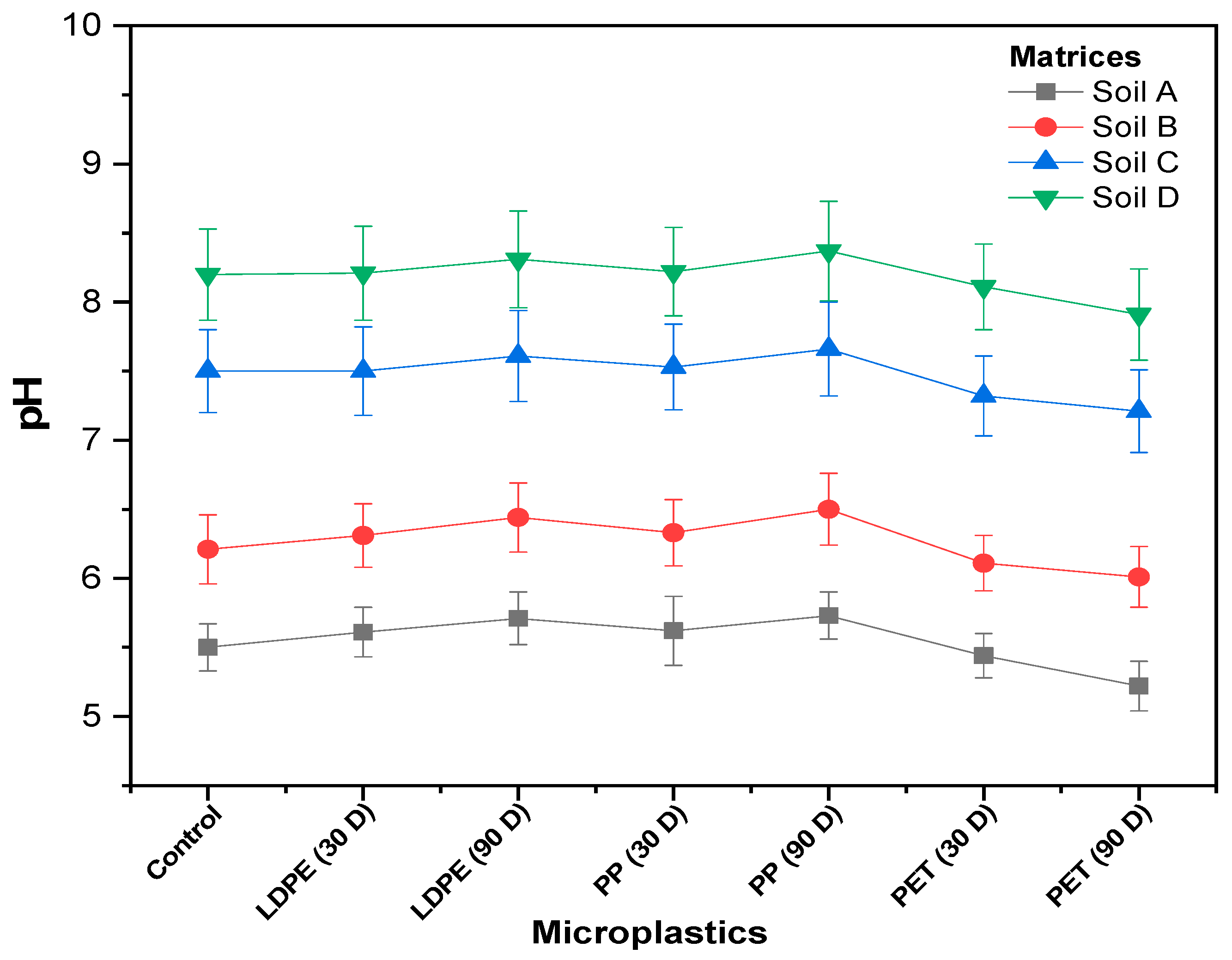
The impact of three different MP types (LDPE, PP, and PET) on the pH values of soil samples was examined by adding them to four soil samples for two selected incubation periods, namely 30 and 90 days.
Figure 1 presents the effect of the various MPs on the pH values of the soil samples, while
Table A1 additionally reports the differences in levels of statistical significance derived from ANOVA, providing further confirmation of the statistical analysis.
Observation of the obtained results reveals that the addition of the three types of MPs (LDPE, PP, and PET) resulted in differentiated changes in soil pH, depending on the type of polymer, the incubation time, and the initial soil pH. Briefly, in acidic and slightly acidic soils (Soils A and B), the presence of LDPE and PP led to a gradual increase in pH, which became more pronounced after 90 days. Specifically, the presence of LDPE increased the pH from 5.50 in the control to 5.71, and from 6.21 to 6.44, respectively, after 90 days of incubation. Meanwhile, PP MPs further increased the pH value under acidic conditions, reaching 5.75 and 6.51 at the same time period. This phenomenon is mainly attributed to the natural deactivation of acidic active sites in the soil and the binding of H
+ to the surface of hydrophobic polymers, especially PP [
49]. Furthermore, Zhao et al. [
50] explain in their study how the chemical type of MPs may affect soil pH alterations.
In contrast, the addition of PET led to a decrease in pH in all soils, with the effect becoming more pronounced after 90 days. More specifically, PET reduced the pH by 0.19 to 0.31 units in all cases compared to the control values, with more pronounced changes observed at the more extreme pH levels (acidic conditions). This behavior is related to the more polar nature of PET and the presence of ester groups, which can undergo hydrolysis or participate in surface reactions, releasing acidic functional products and thereby enhancing the acidity of the soil solution [
51].
In neutral and alkaline soils (Soils C and D), pH changes were generally smaller, which can be attributed to the buffering capacity of carbonates (CaCO
3). Liu et al. [
52] explain in their investigation methods for reducing soil buffering capacity using amendments with high CaCO
3 content. However, a slight increase in pH was also observed with LDPE and PP and a decrease with PET, confirming that the type of polymer affects the chemical balance of the soil even under strong buffering conditions [
53].
3.1.2. Impact of Microplastic Addition on Soil Electrical Conductivity
Another important physicochemical property of soil ecosystems that may be affected by the presence of MPs is electrical conductivity (EC). LDPE, PP, and PET MPs were added to the examined soils for incubation periods of 30 and 90 days.
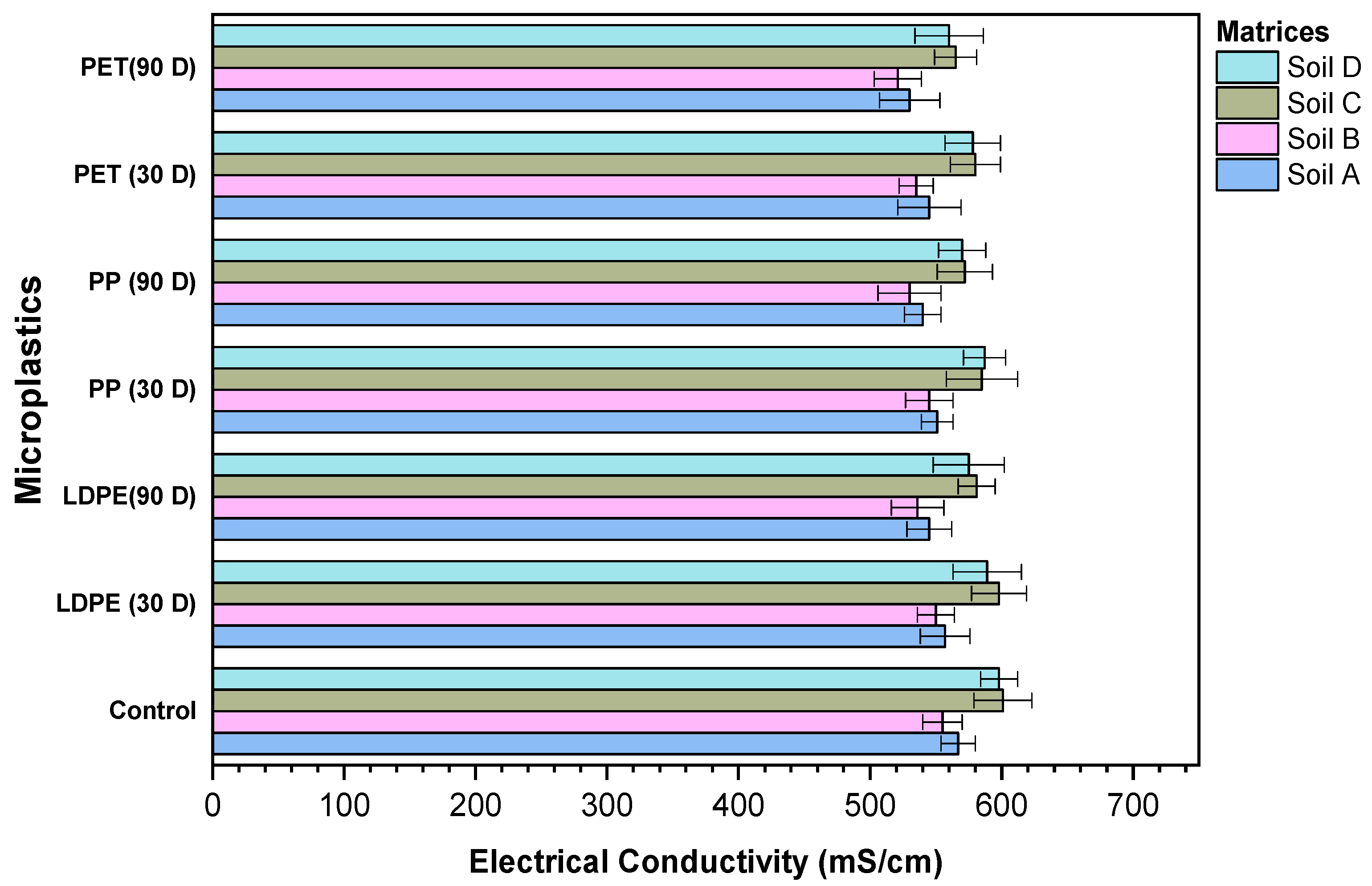
Figure 2 illustrates the variation in EC in the presence of the three different types of MPs. Furthermore, the statistical analysis and the different levels of statistical significance are presented in
Table A2.
The exported results indicate that MP addition caused a gradual decrease in electrical conductivity (EC) in all soils, regardless of initial pH, polymer type, or incubation time. Aminzadeh et al. [
54] explain that the reduction in soil EC following microplastic addition may reflect a combination of physical dilution of the conductive phase, decreased ionic mobility due to altered pore structure, and partial immobilization of soluble ions on microplastic surfaces. The changes were mild but systematic, with a greater reduction observed after 90 days compared to 30 days, indicating time-dependent processes in the soil solution. This phenomenon was more pronounced in acidic and slightly acidic soils (Soils A and B), while neutral and alkaline soils (Soils C and D) showed smaller changes, which can be attributed to their greater buffering capacity. Among the polymers, the order of effect on EC was PET > PP > LDPE, with PET causing the greatest reduction in conductivity. This behavior can be attributed to the greater polarity of PET and the presence of functional groups on its surface, which favor the adsorption of dissolved ions from the soil solution [
55]. In contrast, LDPE, as a more hydrophobic and chemically inert polymer, had the smallest effect on EC [
56].
In summary, the overall reduction in EC suggests a decrease in the concentration of soluble ions in the soil solution, possibly through physical trapping or adsorption on the surfaces of MPs, as well as through indirect changes in pH and ionic equilibrium. These results indicate that MPs can modify the chemistry of the soil solution, even in non-saline agricultural soils.
3.1.3. Effect of Microplastic Presence on Soil Organic Matter Content
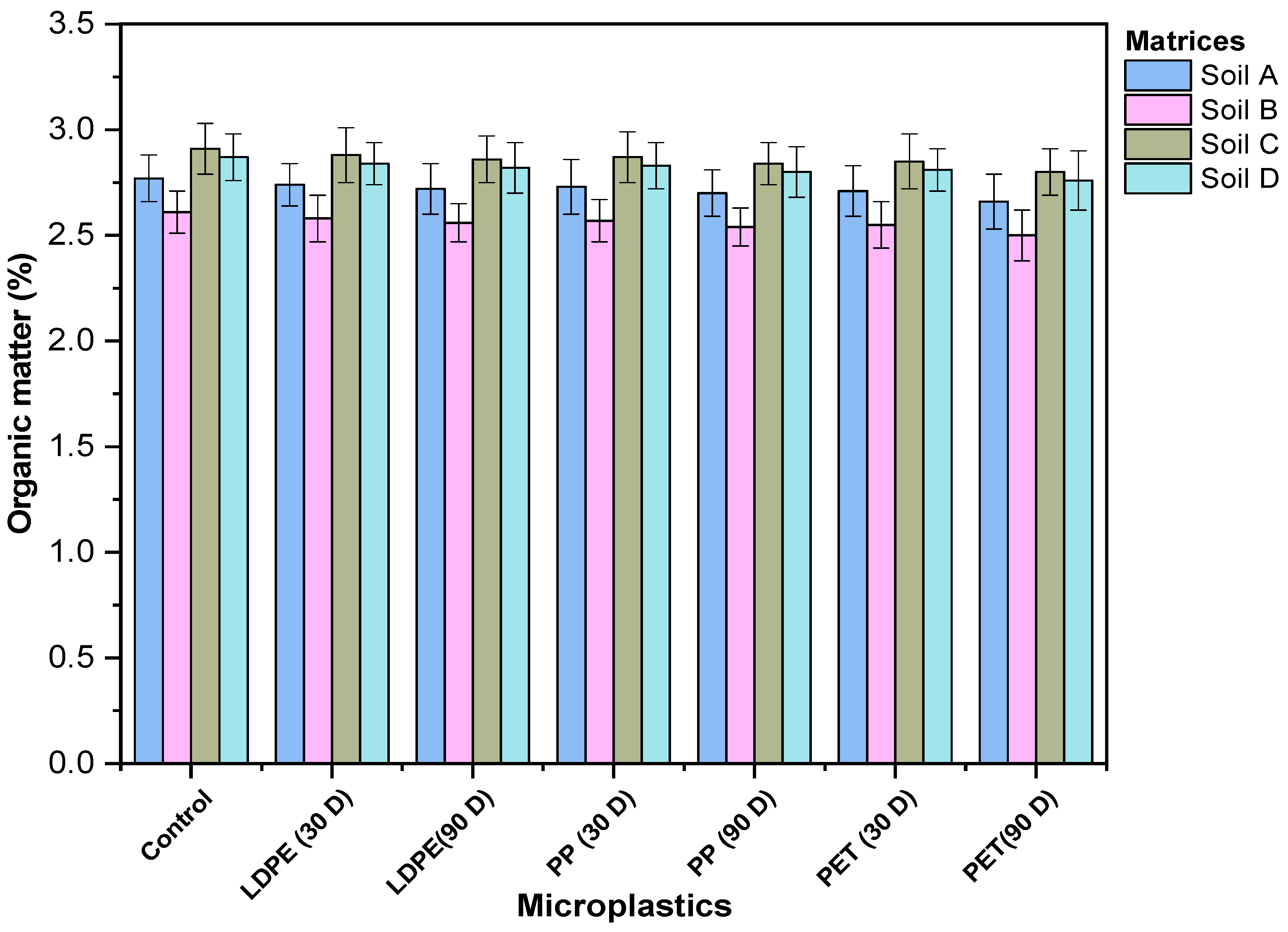
The changes in organic matter content were also studied by adding the three types of MPs at two incubation times, in order to gain a deeper understanding of the effects of MPs on other crucial parameters that indicate soil health in ecosystems, which may be influenced by MPs.
Figure 3 presents the results of the effects of the examined MPs on organic matter content, while
Table A3 provides the statistical analysis of the aforementioned experiments.
Observations of the extracted results indicate that microplastic addition induced minor, yet consistent, changes in soil organic matter (OM) content across all soils, polymer types, and incubation periods. Overall, OM exhibited a slight downward trend relative to baseline values, with reductions becoming more pronounced after 90 days compared to 30 days. Although the magnitude of change was limited (generally ≤ 0.15%), these fluctuations are considered significant in the context of short-term incubation experiments, particularly under conditions of suppressed microbial activity.
Differences among polymer types were evident, with PET causing the most pronounced reduction in OM, followed by PP and LDPE. This pattern likely reflects the distinct physicochemical properties of the polymers, particularly surface polarity and functional group composition. PET contains ester functional groups that increase its affinity for organic molecules, potentially leading to the physical isolation or adsorption of labile organic carbon on microplastic surfaces [
57]. In contrast, LDPE, characterized by an extremely hydrophobic and chemically inert surface, exerted the weakest effect on OM dynamics. Time-dependent effects further highlighted the role of MPs in modifying organic matter stabilization processes [
58]. The greater reduction in OM observed after 90 days suggests progressive physical interactions among soil particles, organic matter, and microplastic surfaces, rather than biological decomposition. The use of sodium azide to inhibit microbial activity supports this interpretation, indicating that the observed changes are primarily due to physical protection, redistribution of organic matter within aggregates, or methodological dilution effects associated with the addition of non-carbonaceous materials.
Soil-specific reactions were also evident. Acidic soils (Soils A and B) exhibited slightly greater reductions in OM compared to neutral and alkaline soils (Soils C and D), possibly due to weaker organic–mineral bonds and lower stabilization through calcium bridging. In calcareous soils, the presence of Ca2+ promotes the formation of stable organic complexes, reducing the sensitivity of OM to microplastic-induced modifications.
Overall, these findings demonstrate that MPs can subtly alter soil organic matter dynamics through non-biological mechanisms, with implications for carbon stabilization and pollutant interactions in agricultural soils [
59]. Additionally, the addition of MPs did not result in measurable changes in carbonate content or clay fraction, as these properties are primarily mineralogical in nature. Any minor fluctuations observed were attributed to mass dilution phenomena or analytical artifacts rather than true pedogenetic processes.
3.2. Levels and Fractionation of Heavy Metals (Cd and Cu) in Soil Matrices
In this section, the levels of Cd and Cu were calculated using the selected fractions in order to assess soil health and the bioavailability of the selected metals in the soil environment. Briefly,
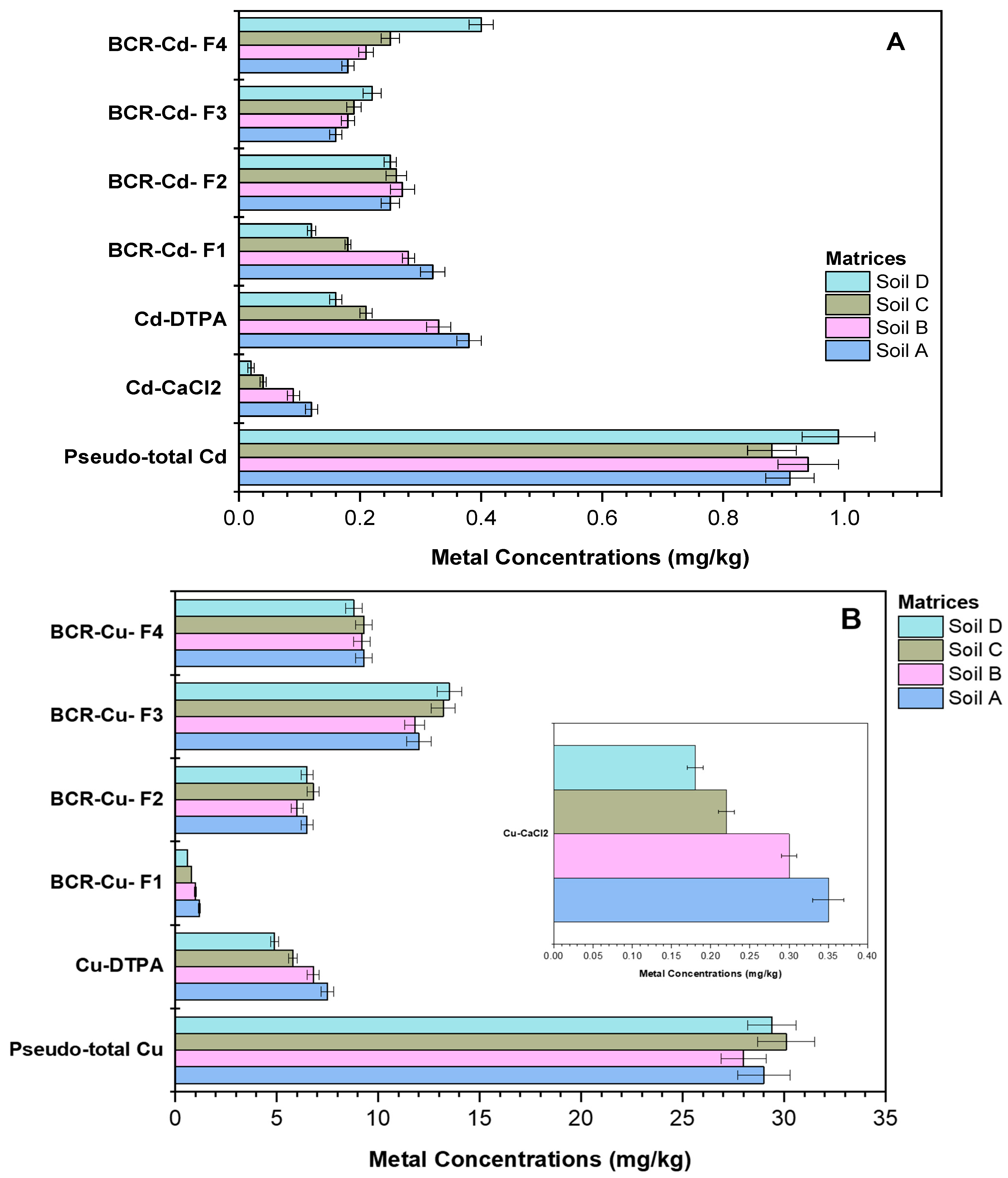
Figure 4 presents the initial metal concentrations in the examined fractions. The pseudo-total metal content, along with the water-soluble and DTPA-extractable metal fractions, is presented. Furthermore, the fractions obtained using the modified BCR method are compared with the aforementioned methods. The statistical analysis of the extracted metal concentrations and their fractionation is provided in
Table A4.
Figure 4 illustrates the distribution of Cd and subsequently that of Cu in the four studied soils, as determined by pseudo-total extraction, mild extractions with CaCl
2 and DTPA, and the BCR sequential extraction procedure. Pseudo-total Cd concentrations are comparable among the soils (0.88–0.99 mg/kg), allowing a direct comparison of Cd mobility and chemical behavior under contrasting soil conditions. In contrast, Cd concentrations extracted with CaCl
2 and DTPA decrease systematically from the acidic Soil A to the alkaline Soil D, from 0.12 to 0.02 mg/kg, indicating strong control of soil pH and carbonate presence on Cd bioavailability.
The modified BCR sequential extraction reveals that in the acidic Soil A, Cd is predominantly associated with the exchangeable fraction (F1), which accounts for approximately one third of the pseudo-total Cd content (0.32 mg/kg), reflecting high mobility and elevated potential ecological risk. Conversely, in the neutral to alkaline soils (Soils C and D), Cd is redistributed toward more stable geochemical fractions, particularly the residual fraction (F4), which represents the dominant pool in Soil D (0.40 mg/kg). The reducible (F2) and oxidizable (F3) fractions show relatively comparable contributions across all soils, suggesting that Cd binding to Fe/Mn oxides and organic matter is less sensitive to pH variations than the exchangeable pool.
Furthermore, the figure above presents the distribution of Cu in the four studied soils as determined by pseudo-total digestion, mild extractions with CaCl2 and DTPA, and the BCR sequential extraction method. Pseudo-total Cu concentrations are comparable among the soils (28.0–30.1 mg/kg), allowing a reliable assessment of Cu geochemical behavior under contrasting soil pH and carbonate conditions. The CaCl2-extractable Cu concentrations are very low in all soils (<0.4 mg/kg), indicating a limited pool of immediately available Cu and reflecting the strong affinity of Cu for soil solid phases. Similarly, DTPA-extractable Cu decreases systematically from the acidic Soil A to the alkaline Soil D, from 7.5 to 4.9 mg/kg, emphasizing the key role of pH and carbonate content in reducing Cu availability.
The BCR sequential extraction shows that the exchangeable fraction (F1) represents only a very small proportion of total Cu in all soils (0.6–1.2 mg/kg), implying low mobility and limited immediate environmental risk. The reducible fraction (F2), associated with Fe/Mn oxides, and particularly the oxidizable fraction (F3), associated with organic matter and sulfides, constitute the major Cu pools, ranging from 6.0 to 6.8 mg/kg and from 11.8 to 13.5 mg/kg, respectively, highlighting the strong binding of Cu to soil organic constituents. The residual fraction (F4) also accounts for a substantial share of total Cu, particularly in the neutral and alkaline soils, suggesting the incorporation of Cu into the crystal lattice of primary and secondary minerals.
Overall, the results demonstrate that although the total Cd load is similar among the soils, its geochemical speciation and mobility differ markedly. Acidic soils exhibit enhanced Cd bioavailability and mobility, whereas neutral to alkaline soils promote stronger Cd stabilization through sorption, precipitation, and incorporation into more stable mineral phases [
60]. In contrast to Cd, Cu exhibits a much higher degree of stabilization in soils and markedly lower mobility, with soil pH primarily influencing Cu chemical availability rather than its total concentration.
3.3. Soil Health Assessment of Matrices Contaminated Solely with Heavy Metals
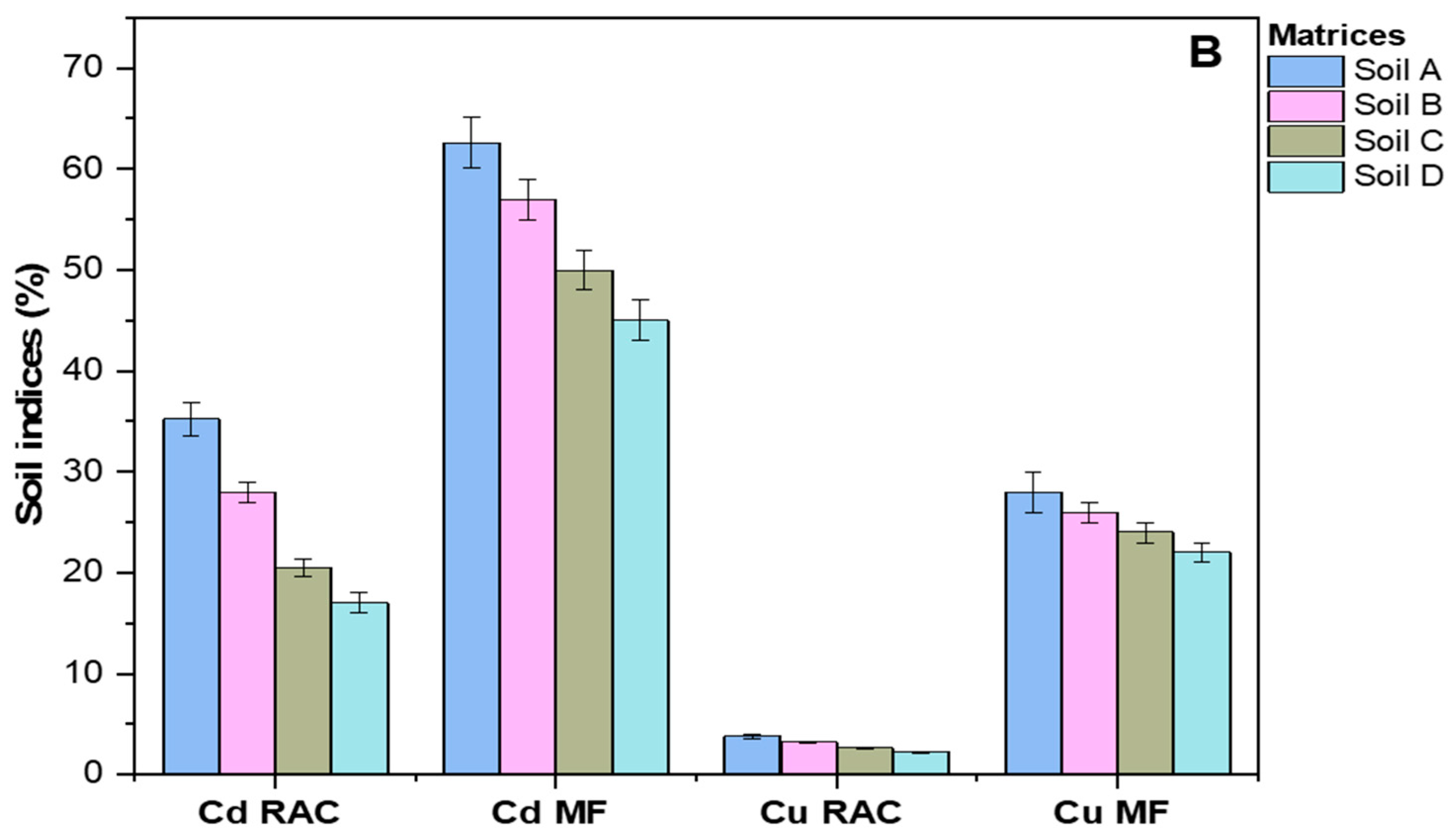
Soil health was evaluated in terms of heavy metal contamination and mobility (Cd and Cu) using five established indices, applied according to the protocol described in
Section 2.4: Contamination Factor (CF), Geo-accumulation Index (
Igeo), Risk Assessment Code (RAC), Mobility Factor (MF), and Pollution Load Index (PLI). The figure below summarizes the results derived from these indices, providing an integrated assessment of the soil health status of the four examined samples under heavy metal influence. Furthermore, the statistical analysis of the soil indices calculated for the four examined samples is provided in
Table A5.
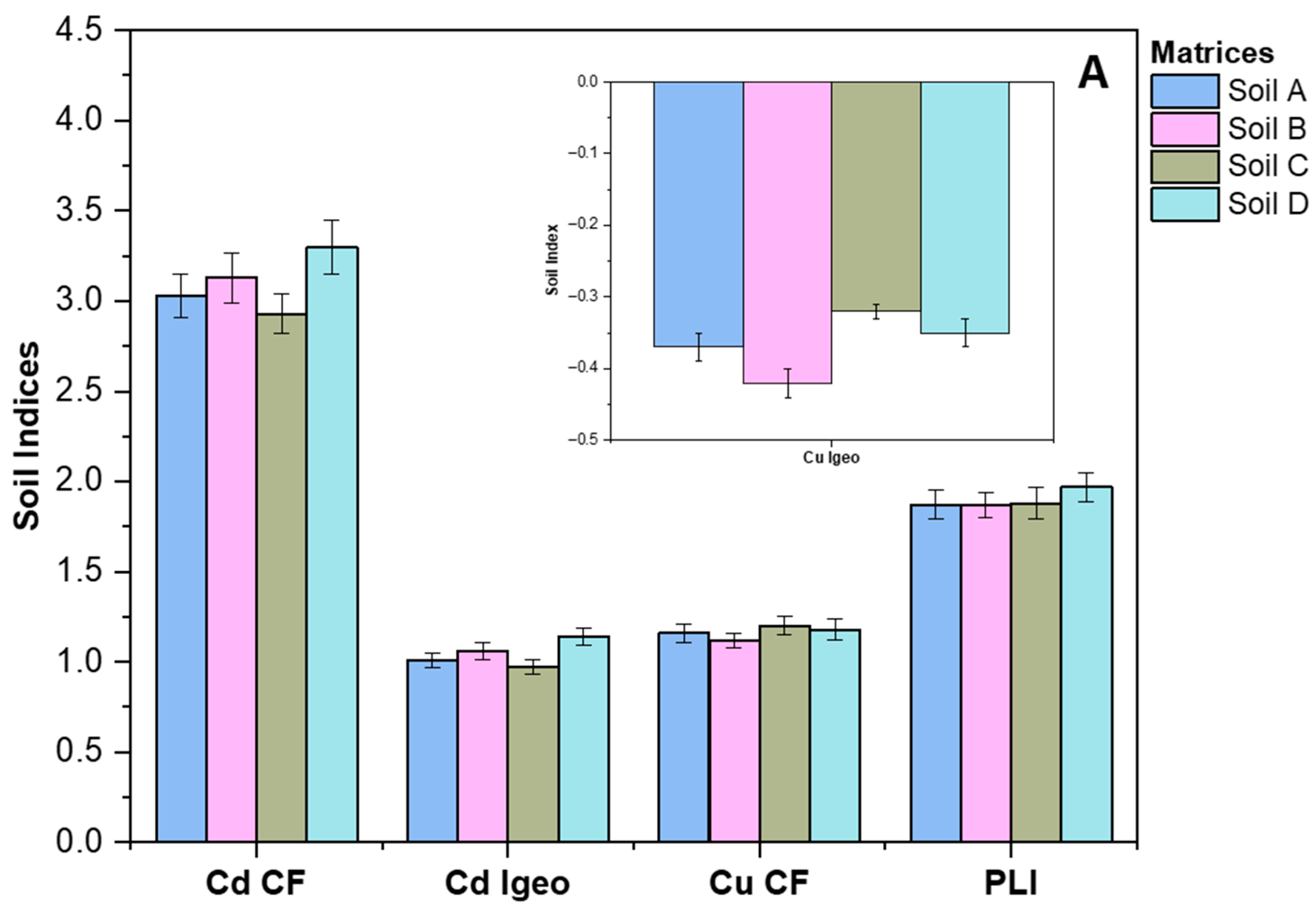
Regarding the results illustrated in
Figure 5,
CF values range from 2.93 to 3.30, indicating moderate to considerable contamination, with Soil D exhibiting the highest degree of enrichment. Consistently,
Igeo values (0.97–1.14) classify all soils as moderately contaminated, clearly identifying Cd as the dominant pollutant in the system. The RAC and MF show a pronounced decrease from the acidic Soil A to the alkaline Soil D, from 35.2 to 17.1 for RAC, and from 62.6 to 45.1 for MF, respectively, reflecting the progressive reduction in Cd mobility and bioavailability with increasing soil pH and CaCO
3 content [
61].
In contrast, Cu is characterized by substantially lower contamination indices. CF-Cu values (1.12–1.20) indicate low to marginal enrichment, while negative Igeo-Cu values confirm that all soils can be classified as uncontaminated with respect to Cu. The very low RAC-Cu values (<4%) indicate negligible immediate ecological risk, whereas MF-Cu values (22–28%) suggest moderate mobility, markedly lower than that of Cd. This behavior is consistent with the strong affinity of Cu for soil organic matter and Fe/Mn oxides, which promotes its retention in relatively stable solid-phase pools.
The Pollution Load Index (PLI) ranges between 1.87 and 1.97, indicating an overall moderate level of pollution across all soils. However, this integrated index is largely driven by Cd rather than Cu, emphasizing the dominant contribution of Cd to the total pollution burden. Overall, the table highlights the pivotal role of soil pH in controlling metal geochemical behavior and demonstrates that, despite comparable total concentrations, the mobility and ecological risk of metals vary substantially among soils [
62].
3.4. Impact of Microplastic Addition on Soil Pollution Indices
To evaluate the crucial role of MPs in the mobility and bioavailability of selected heavy metals in the soil environment—which can significantly affect soil health—soil indices were applied to the four selected samples, where MPs and heavy metals coexisted for 30 and 90 days.
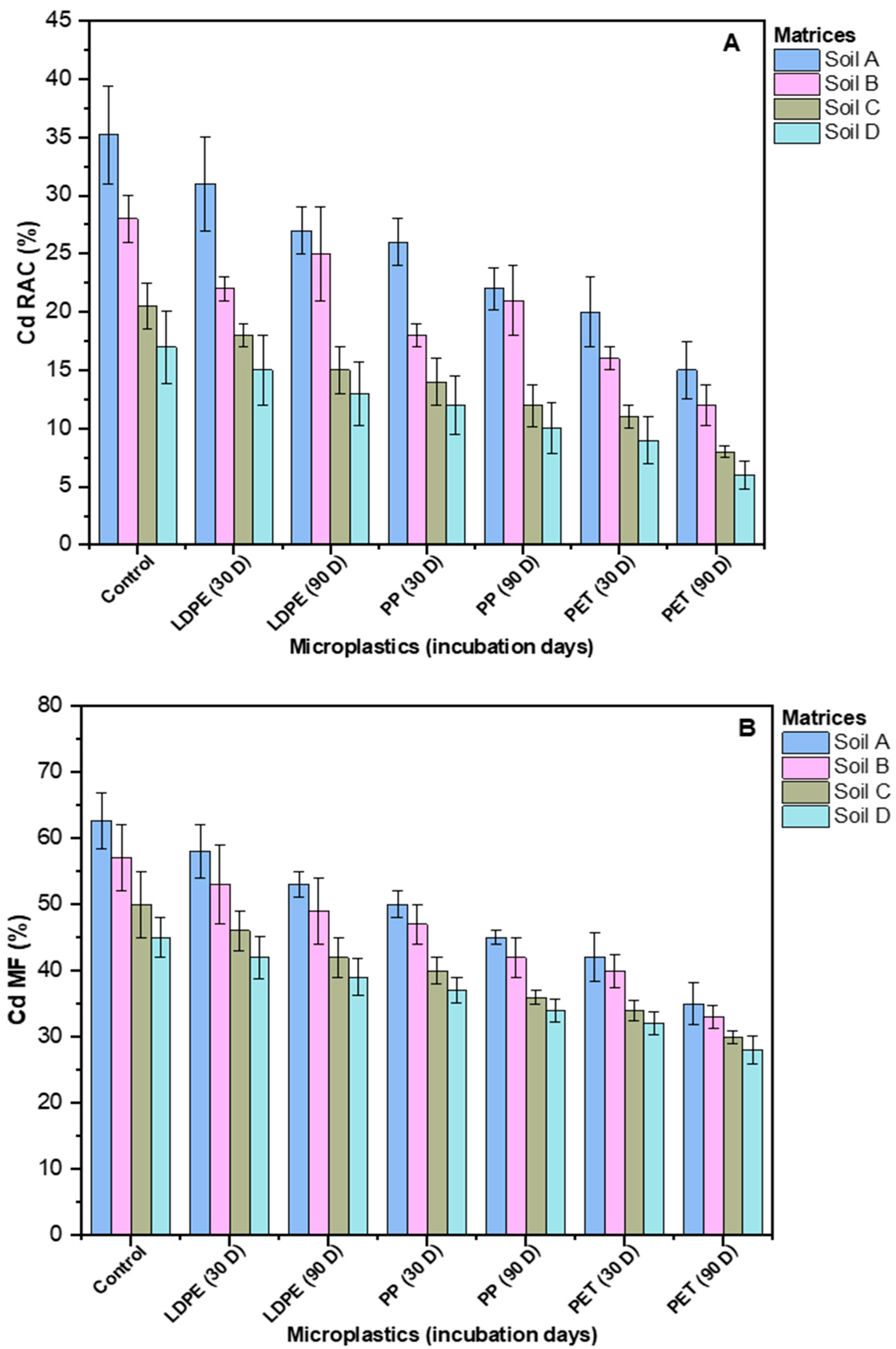
Figure 6 illustrates the impact of MP addition on Cd contamination, mobility, and associated hazards, as assessed by the RAC and MF soil indices, while the statistical analysis of the presented results is provided in
Table A6 and
Table A7.
Concerning the results presented in
Figure 6, it is evident that changes occurred in the RAC and MF soil indices, indicating that MP addition resulted in a pronounced decrease in both Cd-RAC (
Figure 6A) and Cd-MF (
Figure 6B), with the magnitude of the effect depending on polymer type and incubation time and soil properties. Specifically, PET induced the strongest reductions, likely due to its higher surface polarity and the presence of ester functional groups, which enhance metal cation adsorption under acidic conditions [
63]. The adsorption ability of PET MPs can also be increased by π–π stacking between the aromatic rings of PET and the target heavy metals [
64,
65]. In contrast, LDPE, characterized by a more hydrophobic and chemically inert surface and the absence of oxygen-containing functional groups, exerted a weaker effect [
66]. This effect is mainly driven by electrostatic forces or natural adsorption processes, such as the presence of adsorption sites for metal ions on the surfaces of polar MPs, for instance PP and LDPE [
16,
66]. Regarding electrostatic forces, all examined polymers are negatively charged under the studied soil conditions and, as a result, can attract positively charged ions such as Cu
2+ and Cd
2+ [
23,
65,
67].
Among examined matrices, the more substantial reductions observed after 90 days in Soil A. These findings can be explained by the gradual development of physicochemical stabilization processes in Soil A, including Cd adsorption onto microplastic surfaces and redistribution toward less mobile geochemical fractions. Moreover, the aforementioned processes are favored by the physicochemical properties of Soil A, which is characterized by acidic pH (5.5), absence of CaCO3, and moderate organic matter content—conditions that favor increased Cd mobility and bioavailability.
In terms of Soil B, MP addition caused a clear reduction in Cd-RAC and Cd-MF in Soil B, but the effect was markedly lower than in Soil A, with the magnitude of the effect depending on both polymer type and incubation time. As also observed in Soil A, PET induced the strongest decrease, reducing Cd-RAC to 16% after 30 days and to 12% after 90 days, indicating a shift in Cd from exchangeable to more stable geochemical fractions. PP exhibited an intermediate effect, whereas LDPE produced the smallest changes, consistent with its lower surface polarity and reactivity [
68]. Time-dependent effects were also evident, as RAC and MF values were consistently lower after 90 days than after 30 days for all polymers. This suggests that even under mildly acidic conditions, prolonged microplastic presence enhances physicochemical stabilization processes.
Regarding the impact of MPs on Soil C, MP addition led to further reductions in Cd mobility, with PET showing the strongest effect. Cd-RAC decreased to 11% after 30 days and to 8% after 90 days, accompanied by parallel declines in Cd-MF. These trends can be explained by the physicochemical properties of Soil C. Briefly, Soil C is characterized by neutral to slightly alkaline pH (7.5) and the presence of CaCO
3 (≈3.5%), conditions that favor chemical stabilization of heavy metal cations, particularly Cd. Accordingly, lower initial Cd-RAC (20.5%) and Cd-MF (50%) values were observed compared to the more acidic soils, indicating reduced baseline mobility and ecological risk. Thus, under neutral–alkaline conditions, MPs may act synergistically with existing stabilization mechanisms, such as Cd carbonate precipitation and adsorption onto oxide and carbonate surfaces [
69]. PP exhibited an intermediate effect, while LDPE induced the smallest changes, consistent with its lower surface reactivity. Incubation time also played a clear role, as RAC and MF values were consistently lower after 90 days than after 30 days, indicating progressive physicochemical stabilization.
Regarding changes in Cd mobility and risk assessment in Soil D, MP addition further decreased Cd mobility, with PET exerting the strongest effect. Cd-RAC declined to 9% after 30 days and to 6% after 90 days, while Cd-MF decreased from 45% to 28%, suggesting enhanced stabilization of Cd in this alkaline environment. These reductions indicate that MPs act synergistically with existing soil stabilization mechanisms, likely by providing additional sorption surfaces and facilitating the physical immobilization of Cd [
70]. PP showed an intermediate effect, whereas LDPE caused the smallest changes, consistent with its lower surface reactivity. The reported results are supported by similar studies, which have found that PET and PE microplastics can adsorb significant amounts of Cd ions in terrestrial ecosystems [
64,
65,
66]. This adsorption may reduce the mobility of metals in specific geochemical fractions due to the adsorption effect, while simultaneously increasing the bioavailability and transport of Cd ions in other geochemical soil fractions.
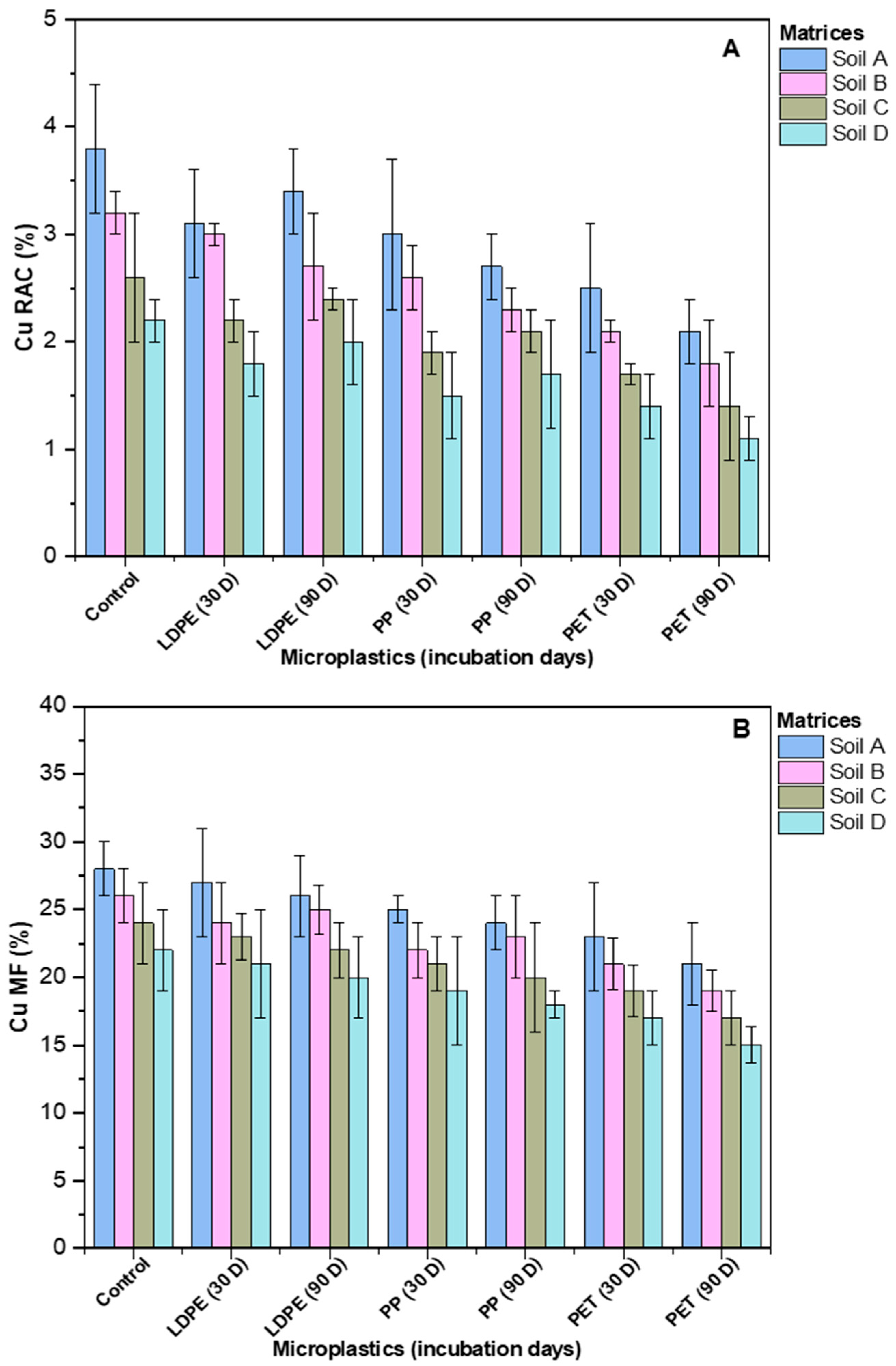
The figure above illustrates changes in the RAC (
Figure 7A) and MF (
Figure 7Β) indices for Cu in the four examined soils in the presence of LDPE, PP, and PET MPs after 30 and 90 days of incubation. Further statistical analysis of the selected Cu indices is provided in
Table A8 and
Table A9. Based on the obtained results, minor decreases were observed in the RAC and MF indices of Cu compared to those of Cd. However, the trend of MP impact according to polymer type remained consistent, with the strongest effect caused by PET MPs, followed by PP and LDPE MPs.
In terms of soil matrices, both acidic and alkaline conditions did not play a crucial role in the reduction in Cu, as its mobility is more strongly influenced by organic matter and oxide phases. Thus, similar behavior was observed across all matrices, with only slight reductions. Nevertheless, Soil A and Soil B exhibited greater reductions in the indices compared to the slightly alkaline and alkaline soils. This can be explained by the limited effect of pH and the presence of CaCO3, emphasizing the dominant role of these factors in governing heavy metal geochemistry.
Across all soils, Cu consistently exhibited low RAC and MF values, with microplastic addition producing only minor changes, slightly more noticeable under acidic conditions and after prolonged incubation. Overall, longer incubation enhanced the stabilizing effects of MPs in all soils, and PET consistently exerted the strongest influence. These findings demonstrate that microplastic–metal interactions are highly soil-specific, with pH and carbonate content governing both baseline mobility and the magnitude of microplastic-induced changes. According to the existing literature, polystyrene (PS) and PE microplastics have shown sufficient adsorption capacity for Cu ions, reducing the available concentration of the target compound at specific sites [
71,
72]. However, they can also increase the transport of Cu ions within soil systems due to their significant desorption ability. These findings support our results regarding the complex interactions between microplastics and heavy metals. The presence of microplastics can significantly alter metal partitioning among geochemical fractions, thereby enhancing the activity and mobility of heavy metals and acting as vectors for these target compounds.
To sum up, between the two examined metals, Cd was more affected than Cu by the presence of MPs, as the reductions in MF and RAC values were more pronounced. These findings can be explained by the synergistic effect of MPs on the stabilization of soil processes related to Cd, as well as by their ability to promote Cd adsorption onto MP surfaces, especially under acidic conditions, leading to a stronger reduction in Cd in the MF and RAC indices.
4. Conclusions
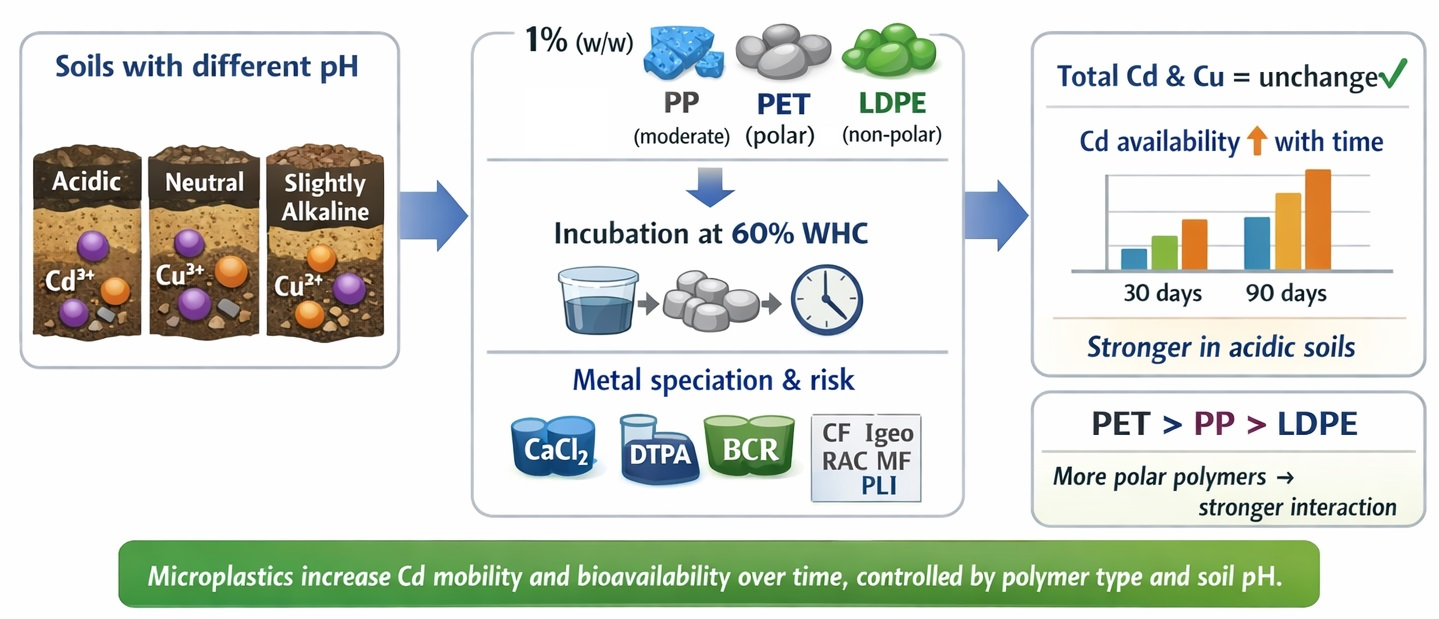
In the present study, a multifactorial experimental design was applied to evaluate the influence of soil pH and microplastic (MP) amendments (LDPE, PP, and PET) on the geochemical behavior, mobility, and environmental risk of Cd and Cu. For this purpose, four sandy clay loam soils moderately contaminated with Cd and Cu were analyzed using appropriate extraction methods and environmental indices, namely CF, Igeo, RAC, MF, and PLI. Although total metal concentrations and contamination-based indices (CF, Igeo, and PLI) remained unchanged, the presence of MPs significantly altered metal partitioning among geochemical fractions, as determined by the BCR method, resulting in notable changes in mobility-related indices. This behavior can be attributed to the strong ability of MPs to adsorb heavy metals, particularly Cd, onto their surfaces, especially under acidic conditions, potentially acting as vectors for heavy metals in soil environments.
Regarding the initial soil conditions (without MP addition), Cd exhibited markedly higher mobility and ecological risk compared to Cu, particularly in acidic soils (pH 5.5). This was reflected in higher Cd RAC (17–35.2%) and Cd MF (45–63%) values compared to those of Cu (2.2–3.8% and 22.1–28%, respectively). Similarly, higher CF values were observed for Cd (≈3) compared to Cu (≈1). The effect was strongest in acidic to neutral soils and gradually decreased under alkaline conditions, highlighting the dominant role of soil pH and carbonate content in regulating Cd behavior. In contrast, Cu exhibited low mobility and posed minimal environmental risk across all soils and treatments.
Following microplastic amendments, slight decreases in RAC and MF values indicated a limited but detectable immobilization effect. The influence of polymer type on Cu followed the same order observed for Cd; however, the effect was more pronounced for Cd. Statistical analysis confirmed significant effects of both polymer type and incubation time on Cd mobility across all soils, whereas Cu responses were weaker and were largely governed by incubation time. The magnitude of the polymer effect followed the order PET > PP > LDPE. These changes became more pronounced after 90 days of incubation, suggesting time-dependent stabilization processes.
Overall, the results showed higher Cd RAC (6–35%) and Cd MF (28–63%) values compared to those of Cu (1.1–3.8% and 15–28%, respectively). This behavior can be attributed to the strong ability of MPs to adsorb Cd onto their surfaces, particularly under acidic conditions, potentially acting as vectors for Cd in soil environments. This observation is supported by the progressive reduction in Cd mobility following MP incorporation, as reflected by decreasing RAC and MF values.
Although this study provides a comprehensive overview of the interactions between common MPs and widely detected heavy metals in terrestrial ecosystems, highlighting the role of MPs in influencing the mobility of target metals among geochemical fractions, further research is required. Future studies should investigate the long-term effects of MPs on metal mobility under field conditions, where natural fluctuations in moisture, temperature, and biological activity may further influence metal–microplastic–soil interactions.