


Social Cognitive Skills in Electric Vehicle Sales: Understanding Empathy, Trust, and Decision-Making in Sustainable Mobility Markets

Abstract
1. Introduction
2. Background
2.1. Adoption of Electric Vehicles
2.2. The Role of the Dealership
2.3. The Marketer’s Role and Competencies
2.4. Social–Cognitive Skills
2.5. Research Gap
3. Methodology
4. Skills or Competencies for Selling Electric Vehicles
4.1. Search Process
- Competencies and skills (Keywords: competen* OR skill* OR abilit* OR trait*).
- Sales or Marketing (Keywords: sale* OR sell*)
- Marketing of Electric Vehicles (Keywords: “elect* vehic*” OR “EVs” OR “BEVs” OR “electric mobility”)
- Incentive Measures and Subsidies for Acquisition.
- Factors influencing purchase intention.
- Electric vehicle technologies and benefits
- Manufacturing engineering processes
- Environmental impact of EV adoption.
4.2. Proposed Model: Dual Approach Analysis
5. Skills and Competencies of Salespeople in Different Industries
5.1. Search Strategy for Salespeople
- Publication indexed in Web of Science or Scopus.
- Search terms and Boolean operators:
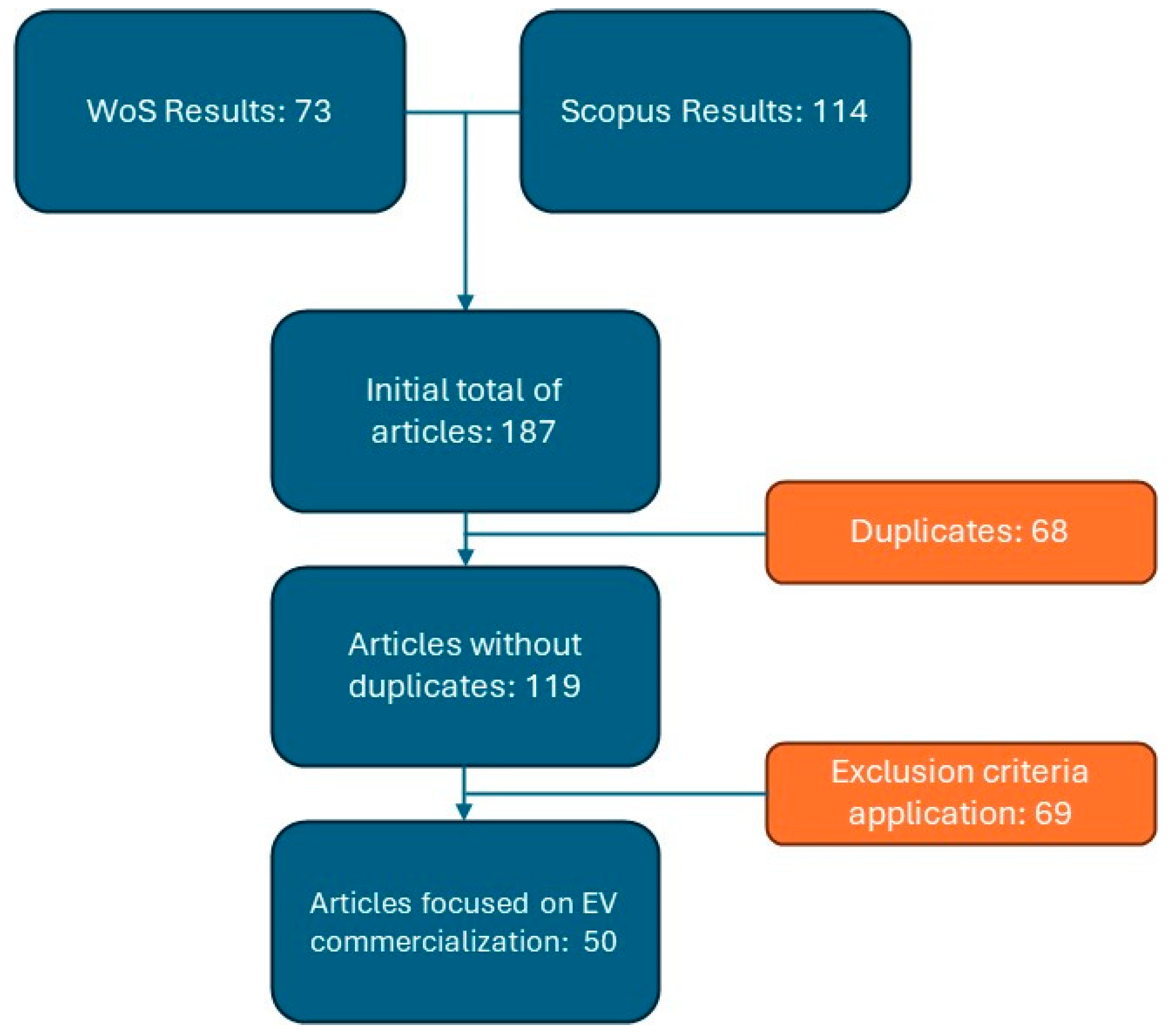
- Web of Science: TI = (sale* OR sell*) AND TI = (competen* OR skill* OR abilit* OR trait*)
- Scopus: (TITLE ( “Sale*” OR “Sell*” ) AND TITLE ( competen* OR skill* OR abilit* OR trait* ) ) AND PUBYEAR > 2009 AND PUBYEAR < 2025 AND ( LIMIT-TO ( LANGUAGE, “English” ) ) AND ( LIMIT-TO ( DOCTYPE, “ar” ) OR LIMIT-TO ( DOCTYPE, “cp” ) OR LIMIT-TO ( DOCTYPE, “ch” ) ) )
- Year of publication greater than 2010
- Language English
- Is it an original article, conference paper, or book chapter
5.2. Inclusion Criteria for Salespeople
- Studies since 2010 in the English language.
- Studies that present results on salesperson skills, competencies, or traits.
- Studies that indicate the industry in which the study was conducted in relation to direct selling, business-to-customer (B2C).
5.3. Exclusion Criteria for Salespeople
- Opinion studies, retractions, conference proceedings with abstract only.
- Studies that do not specify specific skills, competencies, or traits of salespeople.
- Studies that do not specify the industries in which they were conducted.
- Studies on B2B (business-to-business) sales, online sales, or sales through channels other than B2C.
5.4. Flowchart for Salespeople
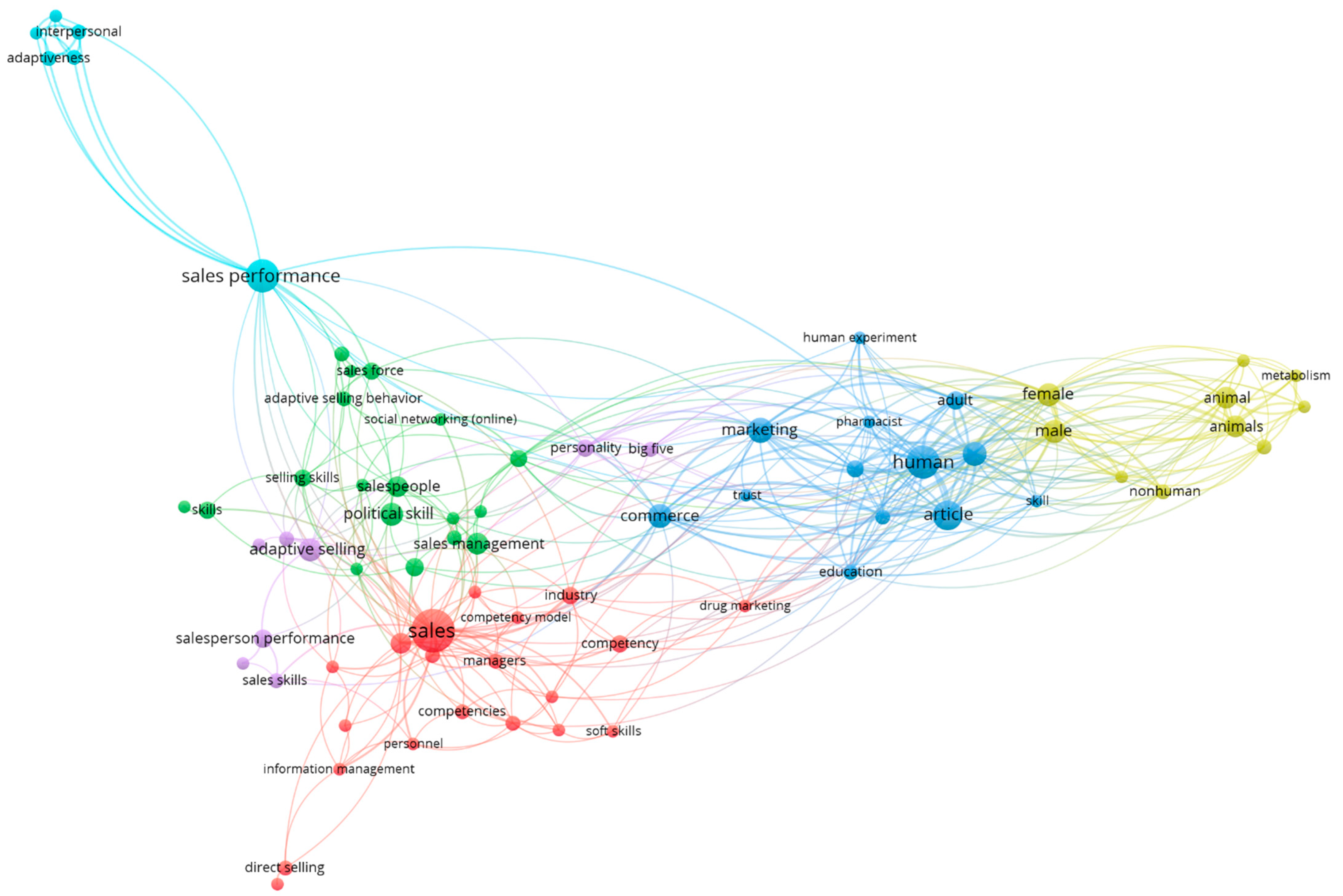
5.5. Co-Occurrence Analysis (Sales Force + Competencies)
5.6. Analysis and Discussion of Sales Force Competencies and Skills
6. Complexity of Electric Vehicle Marketing and Sales
6.1. Search Strategy for EV Marketing and Sales
- Publication indexed in Web of Science or Scopus.
- Search terms and Boolean operators:
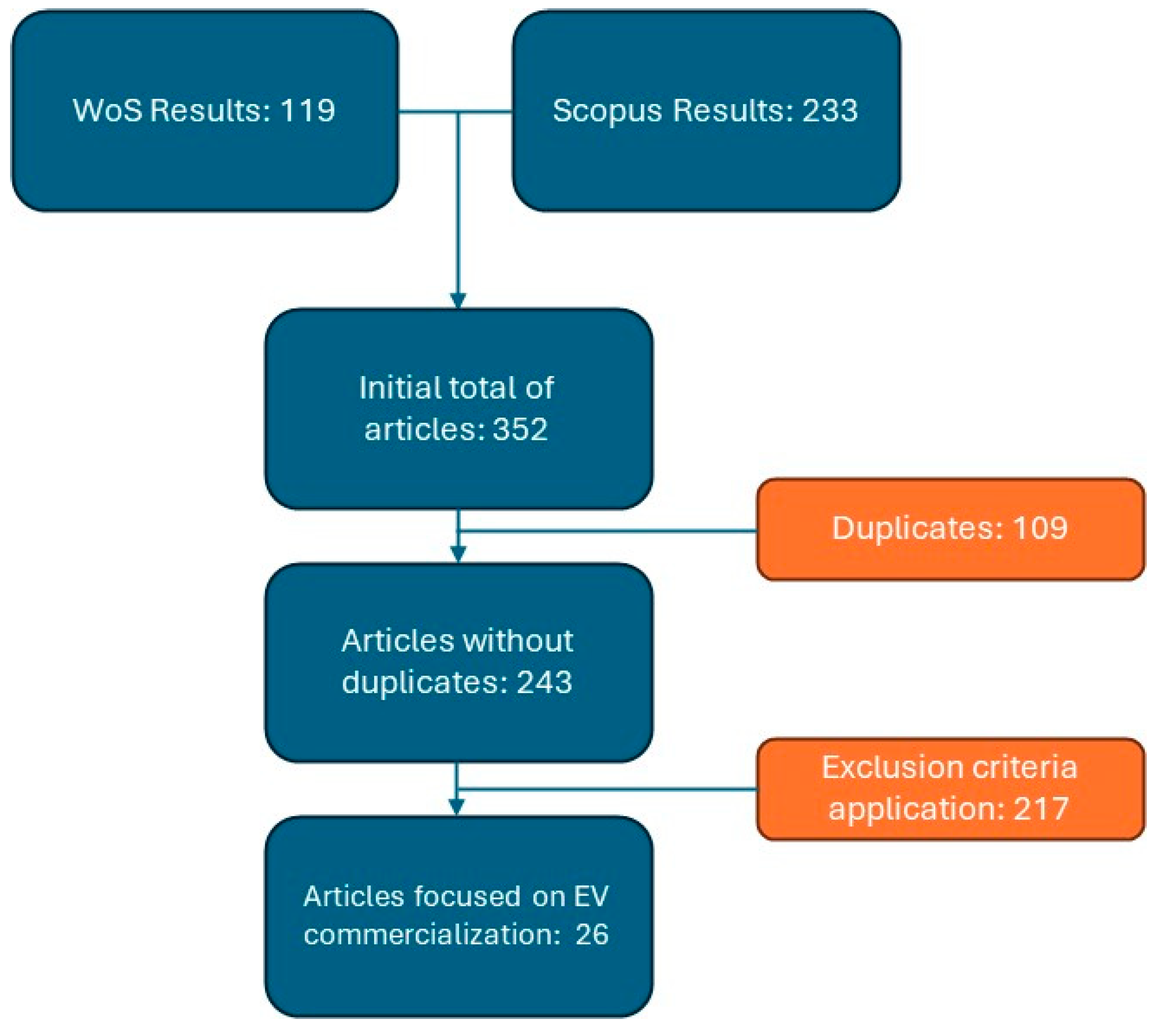
- Web of Science: (TI = (“electric vehicl*” OR “EVs” OR “BEVs” OR “electric mobility”) AND (TI = (adoption)) AND (TS = (“sale*” OR “sell*”)))
- Scopus: (TITLE (“Electric Vehicl*” OR “EVs” OR “BEVs” OR “Electric Mobility”) AND TITLE-ABS-KEY ( “SALE*” OR “SELL*” ) AND TITLE ( adoption ) ) AND PUBYEAR > 2011 AND PUBYEAR < 2025 AND ( LIMIT-TO ( DOCTYPE, “ar” ) OR LIMIT-TO ( DOCTYPE, “cp” ) OR LIMIT-TO ( DOCTYPE, “ch” ) ) AND ( LIMIT-TO ( LANGUAGE (“English”) ) )
- Year of publication greater than 2010
- Language English
- Document is an original article, conference paper, or book chapter.
6.2. Inclusion Criteria for EV Marketing and Sales
- The research focuses on electric car marketing, sales process, and/or key factors in adoption.
6.3. Exclusion Criteria for EV Marketing and Sales
- Deals with government subsidy and incentive policies.
- Technical, industrial, or engineering issues
- Addresses the environmental impact of EV adoption.
6.4. Flowchart for EV Marketing and Sales
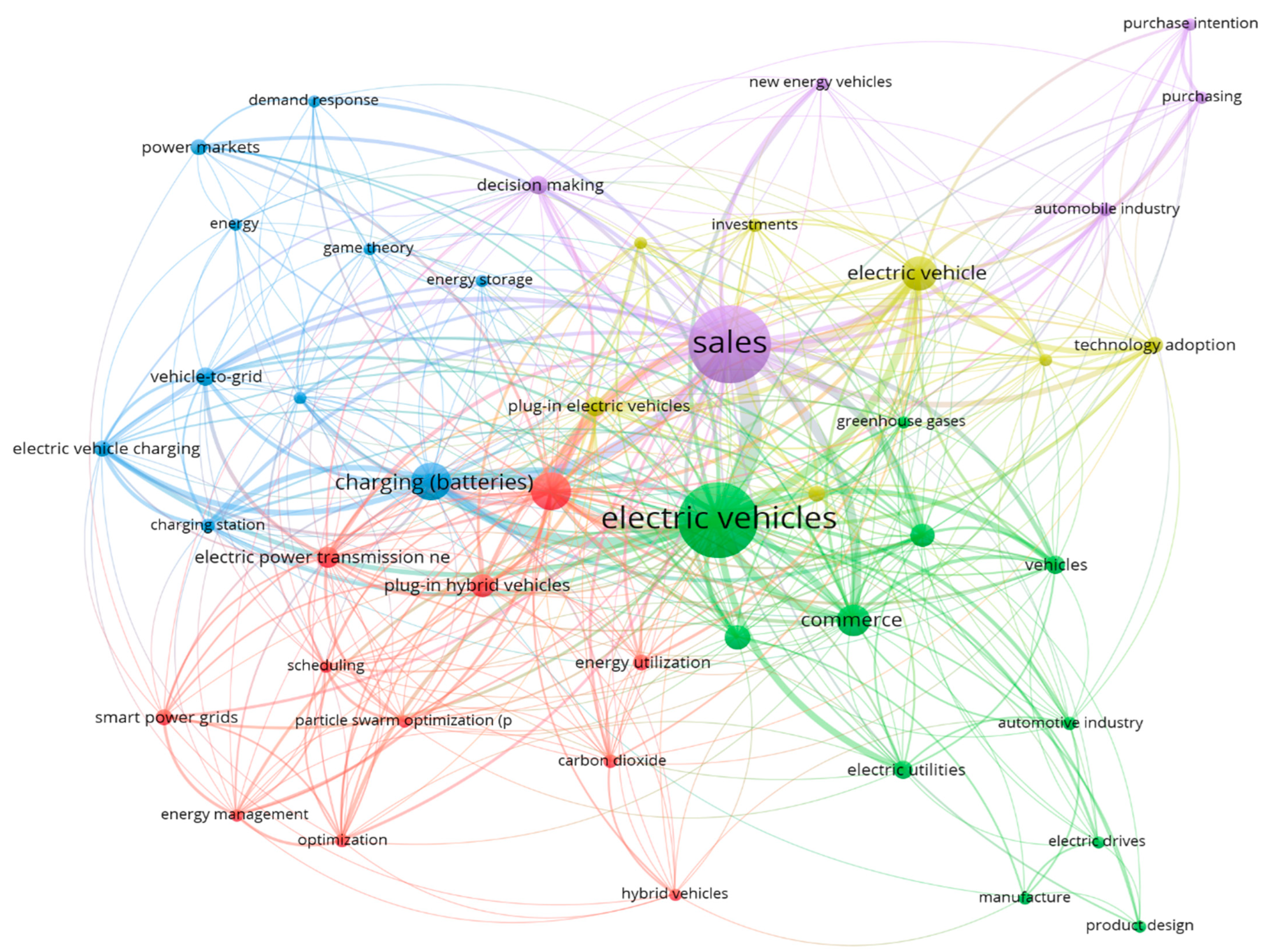
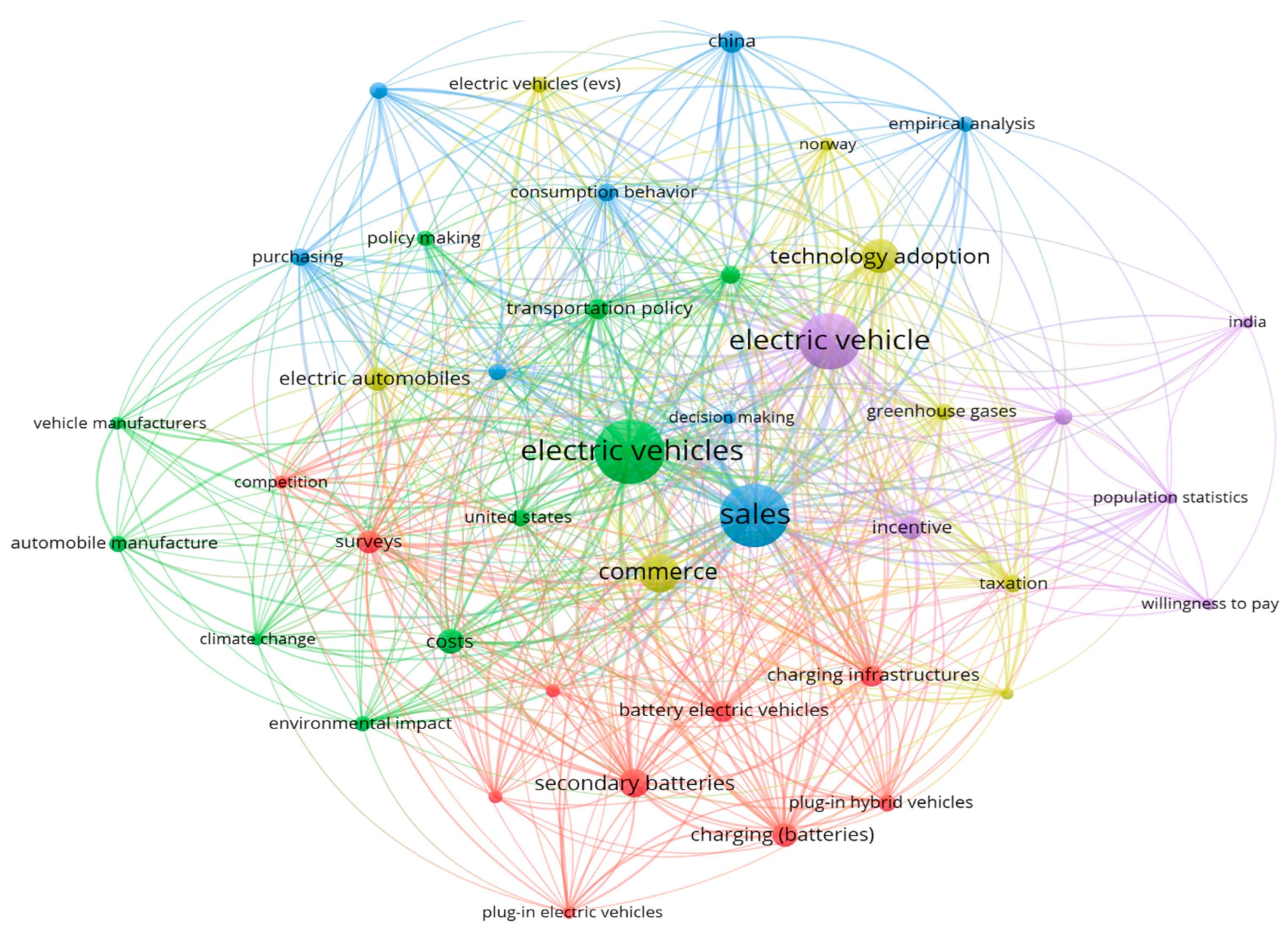
6.5. Co-Occurrence Analysis for EV Marketing and Sales (Sales Staff + Competences)
6.6. Analysis and Discussion on the Dynamics of Purchase and Adoption of Electric Vehicles
7. Skills and Competency Development Strategy for Electric Vehicle Marketers
7.1. Skills to Develop and Their Application in the Marketing of Electric Cars
7.1.1. Analytical Thinking and Scrupulousness for Objections Management
7.1.2. Extroversion and Effective Communication Skills for Proactivity
7.1.3. Empathy and Active Listening Skills for Customer Connection
7.1.4. Adaptability and Continuous Learning for Innovation: Adaptability and Continuous Learning for Expert Advice
7.1.5. Mindfulness and Courtesy for Customer Experience
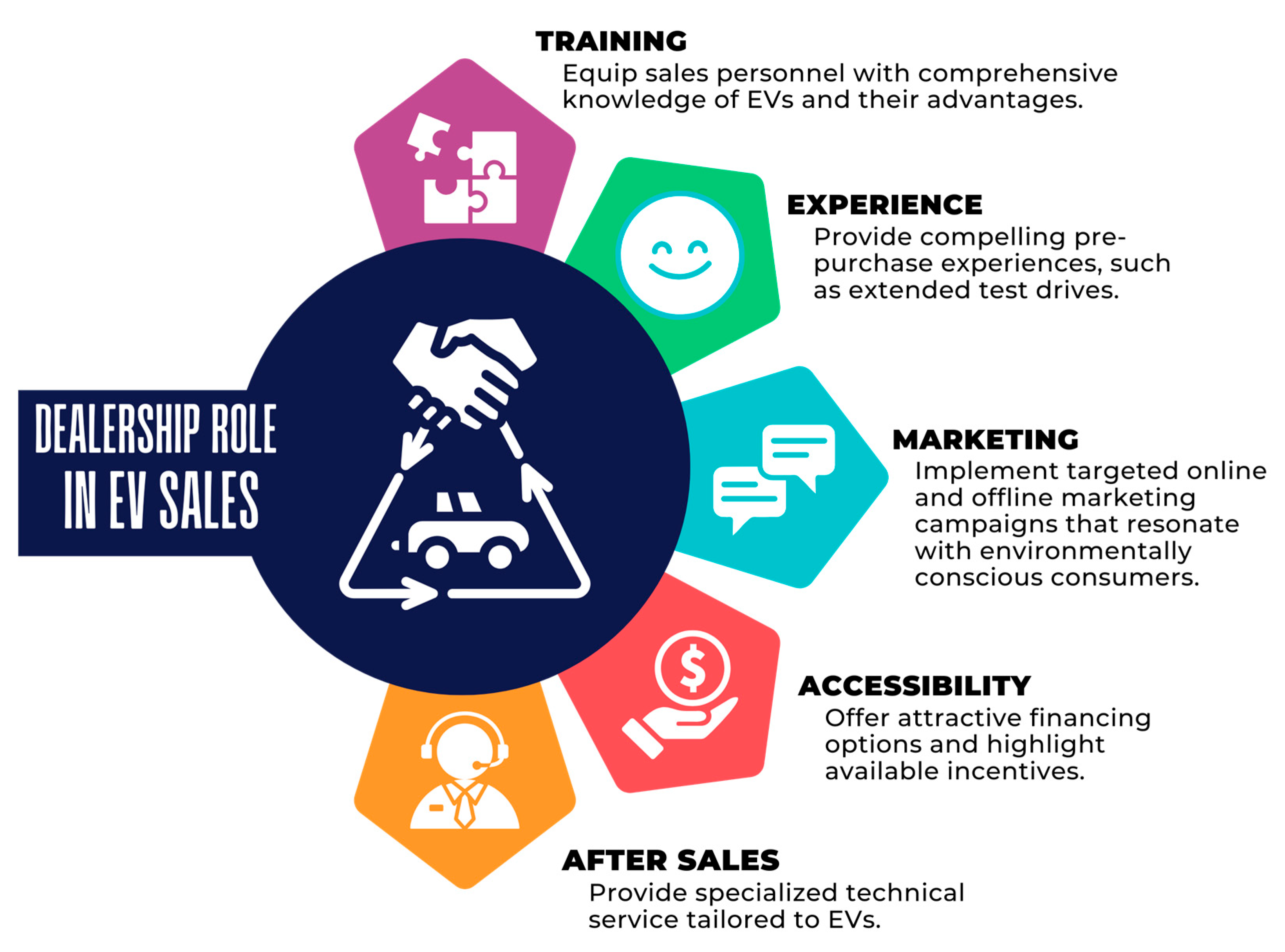
7.2. Discussion on the Dealership Role in EV Sales
7.2.1. Training
7.2.2. Experience (Customer and Salesperson Experience)
7.2.3. Marketing
7.2.4. Accessibility (Charging, Purchasing Channels, & Physical Access)
7.2.5. After Sales (Service, Warranty, Resale Support)
8. Conclusions: Industry Implications
Author Contributions
Funding
Institutional Review Board Statement
Informed Consent Statement
Data Availability Statement
Acknowledgments
Conflicts of Interest
Appendix A
Appendix A.1

| Authors | Year | Author (Year) | Title of Publication | Findings |
|---|---|---|---|---|
| Agnihotri, R., Krush, M., & Singh, R. K | 2012 | Agnihotri et al. (2012) | Understanding the mechanism linking interpersonal traits to pro-social behaviors among salespeople: Lessons from India. | This study in India reveals that empathy and guilt proneness are key emotional traits for sales success. Empathy drives internal collaboration, while guilt proneness drives responsible actions with customers, improving satisfaction and retention. Although empathy did not directly affect customer performance, both traits contribute to overall sales performance, with internal collaboration being a more influential factor. This finding underscores the importance of emotional intelligence in sales, especially in emerging markets. |
| Agnihotri, R., Vieira, V. A., Senra, K. B., & Gabler, C. B. | 2016 | Agnihotri et al. (2016) | Examining the impact of salesperson interpersonal mentalizing skills on performance: the role of attachment anxiety and subjective happiness. | This study in Brazil demonstrates that salesperson interpersonal mentalizing skills, positively influenced by happiness and negatively influenced by attachment anxiety, predict sales performance in sectors such as telecommunications, banking, and retail. Improving emotional well-being and interpersonal skills enhances sales team effectiveness. |
| Ahmad, S. Z., Sah, B. M., & Kitchen, P. J. | 2010 | Ahmad et al. (2010) | The relationship between sales skills and salesperson performance, and the impact of organizational commitment as a moderator: An empirical study in a Malaysian telecommunications company. | In the telecommunications industry, interpersonal skills are central to sales success, unlike other competencies such as technical or marketing skills. Recruitment and training strategies should prioritize the development of these skills to improve overall performance. |
| Al-Assaf, K. T., & al Muala, A. M. | 2023 | Al-Assaf and Al Muala (2023) | The Impact of Salesperson Skills on the Purchasing Decision in Electronics Showroom During the Coronavirus (COVID-19) Pandemic in Zarqa City. | The pandemic accelerated the need for salespeople to enhance their digital skills to interact with customers across various platforms. This adaptability to new technologies improves immediate performance and cultivates long-term customer relationships. |
| Charoensukmongkol, P., & Pandey, A. | 2021 | Charoensukmongkol and Pandey (2021) | Trait mindfulness and cross-cultural sales performance: The role of perceived cultural distance. | In international sales, mindfulness, sales planning, cultural awareness, adaptability, and effective communication are vital. Mindfulness improves planning, allowing strategies to be adapted to the expectations of foreign customers, especially in culturally diverse contexts. |
| D’Ament, G., Nayeem, T., & Saliba, A. J. | 2024 | D’Ament et al. (2024) | Personality, mood, or emotion? Influence of customer trait and state during the cellar door experience on sales and word-of-mouth intention: A Bayesian approach. | Wine sales personnel must possess general knowledge and adapt their communication to the customer’s level of experience, actively listening to the customer’s needs. Ongoing training and creating a welcoming environment are essential investments to encourage spending and positive recommendations. |
| Das, M. R., Pathak, P., & Singh, S. | 2018 | Das et al. (2018) | Competency identification of salespersons through behavioral event interviews: Evidence from the oil industry. | In the Indian oil industry, politeness, honesty, service orientation, and punctuality are key competencies that predict sales performance. These skills build trust, strengthen relationships, and increase customer satisfaction, driving sales growth. |
| Hsiao, J.-M. | 2012 | Hsiao (2012) | Exploring the effects of salesperson competencies on performance: Case study of a Ford car dealer in Taiwan. | Analytical thinking improves salesperson performance, while achievement orientation has a negative impact. Interpersonal skills, leadership, and flexibility are also important. Developing analytical thinking and reassessing achievement orientation are decisive for improving performance. |
| Imran, F., & Kantola, J. | 2018 | Imran and Kantola (2018) | A co-evolute approach to analyze the competencies of sales personnel of banking sector of Pakistan. | This research analyzes the competencies of sales personnel in the Pakistani banking sector, a highly competitive sector. Using the Evolute system and the Astroid 1.0 tool, the competencies and creative tension of employees were assessed. The study developed a practical framework to improve sales staff skills, contributing to better human resource management practices in the Pakistani banking sector. It seeks to develop the competencies necessary for success in a competitive environment. |
| Joya, N., Aline, H., Katia, I., Hala, S., Marwan, A., Rony, Z. M., Chadia, H., & Pascale, S. | 2023 | Namnoum et al. (2023) | Assessing and validating the specialized competency framework for pharmacists in sales and marketing (SCF-PSM): a cross-sectional analysis in Lebanon. | A competency framework for pharmacists in sales and marketing in Lebanon highlights the need to improve skills in pharmaceutical knowledge, professional communication, emergency preparedness, and operational management. Deficiencies are identified in negotiation, data processing, information technology, self-management, and professional ethics. |
| Kakeesh, D. F., Al-Weshah, G. A., & Dababneh, R. B. | 2021 | Kakeesh et al. (2021) | Leveraging market share through selling skills: The mediating role of adaptive selling behavior. | In pharmaceutical sales, nonverbal immediacy, empathy, experience, and subjective knowledge are essential competencies that significantly influence market share and performance. Continuous training in these areas is vital to improve sales effectiveness and customer relationships. |
| Kazén, M., Kuhl, J., Boermans, S., & Koole, S. L. | 2013 | Kazén et al. (2013) | Excelling at selling: The charming personality style predicts occupational activities, sales performance, and persuasive competence. | In a German insurance company, a charming personality predicted branch managers’ sales performance over two years. Explicit power motivation (desire to influence others) partially mediated this relationship, indicating that charming people are motivated to exert influence, thus improving their sales. |
| Kimura, T., Bande, B., & Fernández-Ferrín, P. | 2019 | Kimura et al. (2019) | The roles of political skill and intrinsic motivation in performance prediction of adaptive selling. | Political skill and intrinsic motivation enhance the effectiveness of adaptive selling. Political skill facilitates internal networking, while intrinsic motivation drives adaptation, improving sales performance. |
| Lilford, N., Vigar-Ellis, D., & Nel, D. | 2014 | Lilford et al. (2014) | Big Five personality traits and financial salesperson performance: An application of Chernoff faces | Conscientiousness is a key personality trait that influences sales performance, yet these traits have limited explanatory power in predicting sales success. |
| Mostafa, R. B., & Kasamani, T. | 2022 | Mostafa and Kasamani (2022) | The Effect of Salespeople Skills on Selling Behaviors: The Moderating Role of Social Media. | Selling skills, technical skills, active empathic listening, and emotional intelligence positively influence adaptive and cross-selling. The use of social media enhances the effectiveness of these skills. |
| Omar, N. | 2017 | Omar (2017) | Methods of discovering effective listening skills in direct selling actual conversations. | Communication competence is key in direct selling. Punctuality, a friendly attitude, attention to similarities, active listening, nonverbal communication, a sense of humor, relevant information, and timely completion of sessions, keeping calm, are key elements. |
| Omar, N. | 2018 | Omar (2018) | The relationship components of communication competence in the direct selling process in Malaysia. | Effective listening skills are important for building relationships, improving communication, and achieving sales goals in direct selling. A study combining interviews, observations, and surveys identified key competencies, including concentration, minimizing interruptions, and coordinating nonverbal cues. |
| Phongkhajeerathibha, E., Mohan, K. P., & Tuntivivat, S. | 2023 | Phongkhajeerathibha et al. (2023) | Developing Instrument for Micro-Skills of Selling for Sales Professionals in the Thai Petrochemical Industry. | A scale was developed to measure micro-skills of selling (listening, questioning, and presentation) in the petrochemical industry. Using mixed methods, its high reliability and validity were demonstrated, highlighting the role of these skills in sales performance and customer relationships. |
| Ping, Z. Y., Yun, L., Ying, Y. X., & Ran, T. | 2014 | Ping et al. (2014) | Competences of frontline sales staff: A case study on a medicines sales company. | Nine key competencies were identified for medicine sales staff: perseverance, self-motivation, and internal rectification. Successful salespeople show greater self-reflection and take responsibility for failures, unlike ordinary staff who attribute failures to external factors. |
| Rantala, J., Yllikäinen, M., & Holopainen, T. | 2020 | Rantala et al. (2020) | Competences in Expert Sales | In the financial sector, especially in expert sales, understanding of the customer experience, effective communication, and in-depth product knowledge are emphasized. Personalized value creation, adaptability, collaboration, analytical skills, and networking are critical for success. |
| Retnawati, B. B., & Nuryakin, N. | 2016 | Retnawati and Nuryakin (2016) | Developing salesperson performance: The role of customer encountering competence portfolio, relational capital and service excellent customer heterogeneity. | Relational capital and service excellence significantly improve sales performance in the pharmaceutical industry. Strong relationships based on trust and open communication, coupled with high-quality personalized service, increase customer loyalty and sales performance. |
| Sitser, T., van der Linden, D., & Born, M. P. | 2013 | Sitser et al. (2013) | Predicting Sales Performance Criteria With Personality Measures: The Use of the General Factor of Personality, the Big Five and Narrow Traits. | Conscientiousness and openness are significant personality traits for sales performance. Proactivity and attention to detail enhance specific tasks, while thoughtfulness supports customer relationship management. Social boldness, however, negatively affects performance. |
| Sypniewska, B. A. | 2013 | Sypniewska (2013) | Examination of the individual competencies that differentiate results in direct sales. | In multilevel marketing (MLM), leadership, team management, knowledge, self-motivation, and customer orientation significantly influence sales performance. Leadership and team management are important for experienced salespeople, while self-motivation differentiates the best. |
| Tornillo, J. E., Pascal, G., Moguerza, J. M., & Redchuk, A. | 2019 | Tornillo et al. (2019) | Personality Traits and Business Intelligence: A Model to Improve Direct Selling Systems. | In direct selling, the DISC test highlights long-term reliability, self-motivation, proactivity, and decision-making under pressure, as well as agreeableness and persuasiveness. Profiles with high Influence (I) excel in interpersonal relationships, while CI and DS profiles perform better in sales. |
| Waheed, A., Yang, J., & Webber, J. | 2017 | Waheed et al. (2017) | The effect of personality traits on sales performance: An empirical investigation to test the five-factor model (FFM) in Pakistan. | The Five-Factor Model (FFM) shows that extraversion is the most significant predictor of sales performance, followed by agreeableness. Conscientiousness also contributes positively, while emotional stability and openness to experience have a weaker correlation. |
| Wihler, A., Meurs, J. A., Momm, T. D., John, J., & Blickle, G. | 2017 | Wihler et al. (2017) | Conscientiousness, extraversion, and field sales performance: Combining narrow personality, social skill, emotional stability, and nonlinearity. | Conscientiousness and extraversion enhance sales performance through Disciplined Achievement Motivation (DAM) and Stable Social Potentiality (SSP). A high level of DAM can boost performance initially, but excess can lead to perfectionism. SSP moderates this relationship, allowing adaptation to stress and rejection. High levels of DAM and SSP achieve better results. |
Appendix A.2
| Authors | Year | Author (Year) | Title | Main Findings |
|---|---|---|---|---|
| Abas, P. E., & Tan, B. | 2024 | Abas and Tan (2024) | Modeling the Impact of Different Policies on Electric Vehicle Adoption: An Investigative Study | High upfront costs, limited range, and poor infrastructure slow electric vehicle adoption, requiring supportive policies to incentivize purchase and achieve market targets. |
| Anosike, A., Loomes, H., Udokporo, C. K., & Garza-Reyes, J. A. | 2023 | Anosike et al. (2023) | Exploring the challenges of electric vehicle adoption in final mile parcel delivery. | High initial prices, uncertainty about residual values, and the lack of a second-hand market are barriers to electric vehicle adoption. Fleets must consider the total cost of ownership. |
| Barter, G. E., Tamor, M. A., Manley, D. K., & West, T. H. | 2015 | Barter et al. (2015) | Implications of modeling range and infrastructure barriers to adoption of battery electric vehicles. | Adoption of battery electric vehicles (BEVs) is limited (5% in 2050) due to price, range, charging infrastructure, and charging times, as modeled using GPS travel data. |
| Bjerkan, K. Y., Nørbech, T. E., & Nordtømme, M. E. | 2016 | Bjerkan et al. (2016) | Incentives for promoting Battery Electric Vehicle (BEV) adoption in Norway. | Fiscal incentives for purchase, such as tax exemptions, play a key role. Other incentives, such as access to bus lanes and toll exemptions, are decisive for specific groups. |
| Bjorge, N. M., Hjelkrem, O. A., & Babri, S. | 2022 | Bjørge et al. (2022) | Characterisation of Norwegian Battery Electric Vehicle Owners by Level of Adoption | Early EV adopters prioritized environmental friendliness, while the early majority focused on low operating costs. Economic incentives are central for mass adoption. |
| Canepa, K., Hardman, S., & Tal, G. | 2019 | Canepa et al. (2019) | An early look at plug-in electric vehicle adoption in disadvantaged communities in California. | EV buyers tend to have higher incomes and higher levels of education. Financial incentives, such as rebates and access to VAO lanes, drive sales. Charging infrastructure, especially at home, is a component of adoption. |
| Chinen, K., Matsumoto, M., Liu, C., Tong, P., Han, Y. S., & Endo, H. | 2023 | Chinen et al. (2023) | Expanding electric-vehicle adoption beyond the national border: Insights for developing marketing policies for global electric-vehicle manufacturers. | Environmental awareness influences electric-vehicle purchase through perceptions of quality and value. Animosity toward China and ethnocentrism negatively affect purchase intention. |
| Rubens, G. Z., Noel, L., & Sovacool, B. K. | 2018 | Zarazua de Rubens et al. (2018) | Dismissive and deceptive car dealerships create barriers to electric vehicle adoption at the point of sale. | Car dealers dismiss electric vehicles (EVs), misinform buyers, and steer them towards gasoline- or diesel-powered vehicles. The salesperson’s orientation, knowledge of EVs, and willingness to sell EVs influence the likelihood of purchase. |
| Dimanchev, E., Qorbani, D., & Korpås, M. | 2022 | Dimanchev et al. (2022) | Electric Vehicle Adoption Dynamics on the Road to Deep Decarbonization. | Mass adoption of electric vehicles requires sustained supportive policies that overcome barriers such as range, charging speed, and consumer awareness, as the case of Norway demonstrates. |
| Dua, R., Hardman, S., Bhatt, Y., & Suneja, D. | 2021 | Dua et al. (2021) | Enablers and disablers to plug-in electric vehicle adoption in India: Insights from a survey of experts. | High initial prices, lack of charging infrastructure, and insufficient support policies are the main barriers to electric vehicle adoption in India. Subsidies and mandate/feebates policies can drive demand. |
| Dua, R., White, K., & Lindland, R. | 2019 | Dua et al. (2019) | Understanding potential for battery electric vehicle adoption using large-scale consumer profile data. | BEV buyers are looking for style, increased range, all-wheel drive, and competitive pricing. Success depends on meeting the needs of the most demanding segment that prioritizes these features. |
| Forsythe, C. R., Gillingham, K. T., Michalek Jeremy J., and Whitefoot, K. S. | 2023 | Forsythe et al. (2023) | Technology advancement is driving electric vehicle adoption | Technology improvements, especially in range and price, are driving electric vehicle adoption, with consumer valuation projected to equal or exceed that of gasoline vehicles by 2030. |
| Goswami, R. | 2022 | Goswami (2022) | Factors influencing the adoption of electric vehicles in India: an empirical analysis. | Consumers prioritize price, performance (range and charging time), and charging infrastructure when considering an electric vehicle purchase. Environmental and social awareness also play a role. |
| Graham, J. D., & Brungard, E. | 2021 | Graham and Brungard (2021) | Consumer Adoption of Plug-In Electric Vehicles in Selected Countries | Consumers seek sporty performance, low operating costs, and convenience in EVs, but high initial price, limited range, and slow charging are barriers to mass adoption. Incentive policies and disincentives to conventional vehicles drive commercialization. |
| Hathaway, Z., Polis, H., Loomis, J., Boroski, J., Milano, A., & Ouyang, J. | 2021 | Hathaway et al. (2021) | A utility roadmap for expanding customer adoption of electric vehicles. | Consumers are primarily looking for lower operating and environmental costs in EVs. Price and vehicle range remain significant barriers, especially for low-income and minority communities. Test-drive events increase purchase interest. |
| Higueras-Castillo, E., Guillen, A., & Herrera Luis-Javier and Liebana-Cabanillas, F. | 2021 | Higueras-Castillo et al. (2021) | Adoption of electric vehicles: Which factors are really important? | Autonomy, incentives, and reliability are the main predictors of EV purchase intention. Consumers prioritize these technological and contextual factors. |
| Hemalatha, J., Panboli, S., & Aravindh Kumaran, L. | 2024 | Hemalatha et al. (2025) | Electric vehicle adoption toward sustainable transportation solution: key drivers and implications. | Consumers value environmental, social, technological orientation, and monetary benefits when considering the purchase of an electric vehicle. Positive attitude toward EVs mediates purchase intention. |
| Jang, S., & Choi, J. Y. | 2021 | Jang and Choi (2021) | Which consumer attributes will act crucial roles for the fast market adoption of electric vehicles: Estimation on the asymmetrical and heterogeneous consumer preferences on the EVs. | Consumers prioritize purchase price, fuel efficiency, range, and fast charging when buying an EV. They exhibit loss aversion when comparing prices with those of their previous vehicle. |
| Kennedy, D., & Philbin, S. P. | 2019 | Kennedy and Philbin (2019) | Techno-economic analysis of the adoption of electric vehicles. | Electric vehicles are gaining popularity, but purchase decisions are driven by perceptions of low cost and environmentalism, not always aligned with life-cycle analysis. |
| Khusanboev, I., Yodgorov, I., & Karimov, B. | 2023 | Khusanboev et al. (2023) | Advancing Electric Vehicle Adoption: Insights from Predictive Analytics and Market Trends in Sustainable Transportation | Consumers prioritize predictable range, energy efficiency, and competitive selling price when considering the purchase of an electric vehicle. |
| Li, W., Wang, M., Cheng, X., & Long, R. | 2023 | Li et al. (2023) | The impact of interaction on the adoption of electric vehicles: Mediating role of experience value. | In electric car marketing, customers value informative interactions, hands-on experiences, and knowledgeable and enthusiastic salespeople. Digital platforms and apps play an important role in the modern shopping experience. |
| Lim, M. K., Mak, H.-Y., & Rong, Y. | 2015 | Lim et al. (2015) | Toward mass adoption of electric vehicles: Impact of the range and resale anxieties. | Sales strategies should mitigate range anxiety and resale anxiety by offering battery leasing, guaranteeing charging infrastructure, and highlighting vehicle reliability. |
| Moeletsi, M. E. | 2021 | Moeletsi (2021) | Socio-economic barriers to adoption of electric vehicles in South Africa: Case study of the Gauteng province. | The purchase price and battery costs are the main barriers to the adoption of electric vehicles in South Africa. Consumers value long-term savings and extended warranties. |
| Mpoi, G., Milioti, C., & Mitropoulos, L. | 2023 | Mpoi et al. (2023) | Factors and incentives that affect electric vehicle adoption in Greece. | Government incentives, charging infrastructure, and environmental awareness are key. Buyers prioritize low cost, autonomy, and a charging network. Sellers should emphasize these aspects. |
| Munshi, T., Dhar, S., & Painuly, J. | 2022 | Munshi et al. (2022) | Understanding barriers to electric vehicle adoption for personal mobility: A case study of middle income in-service residents in Hyderabad city, India. | High upfront costs, lack of charging infrastructure, and concerns about operating costs are key barriers. Financial incentives and policies that improve convenience and reduce uncertainty help adoption. |
| Murugan, M., Marisamynathan, S., & Nair, P. | 2023 | Murugan et al. (2023) | Investigating the Barriers for Electric Vehicle Adoption Using Analytical Hierarchy Process Approach. | High initial price, limited range, unreliable battery technology, and limited availability of charging stations are the main barriers to EV adoption in India. Unknown resale value and low availability of local technicians are secondary barriers. |
| Mustafa, S., Shi, Y., Adan, D. E., Luo, W., and al Humdan, E. | 2024 | Mustafa et al. (2024) | Role of environmental awareness & self-identification expressiveness in electric-vehicle adoption. | Perceived value (benefits minus sacrifices) and perceived usefulness are the main drivers of EV purchase. Environmental awareness is a factor, but cost is a significant barrier. |
| Nazari, F., Noruzoliaee, M., & Mohammadian, A. | 2024 | Nazari et al. (2024) | Electric Vehicle Adoption Behavior and Vehicle Transaction Decision: Estimating an Integrated Choice Model with Latent Variables on a Retrospective Vehicle Survey. | Social influence drives EV adoption, especially among those sensitive to trends and advertising. A high purchase price, especially for plug-ins, discourages ownership and favors leasing. The availability of charging infrastructure in suburban areas also plays a role. |
| Nian, V., Hari, M. P., & Yuan, J. | 2019 | Nian et al. (2019) | A new business model for encouraging the adoption of electric vehicles in the absence of policy support. | The new model calls for the dealer to take on financial and energy management functions, requiring skills in financing, electricity trading, charging logistics, and cross-sector collaboration, transforming into an electric mobility service provider. |
| Nimesh, V., Manoj, B. S., Bhaduri, E., Mahendra Reddy, V., & Kishore Goswami, A. | 2024 | Nimesh et al. (2024) | Estimating personal electric vehicle demand and its adoption timeframe: A study on consumer perception in Indian metropolitan cities. | Indian consumers value price, range, and charging time when considering electric vehicles. Poor infrastructure and negative perception hinder purchase. |
| Pajic, N., Jurisevic, N., & Despotovic, M. | 2024 | Pajic et al. (2024) | Adoption of Electric Vehicles in the Republic of Serbia | Studies show that financial incentives drive the adoption of electric vehicles. Consumers prioritize range, price, and charging infrastructure. Salesperson experience and available information influence the purchase decision. |
| Paradies, G. L., Usmani, O. A., Lamboo, S., & van den Brink, R. W. | 2023 | Paradies et al. (2023) | Falling short in 2030: Simulating battery-electric vehicle adoption behavior in the Netherlands. | Consumers seek competitive prices, greater autonomy, and consider social factors such as the influence of others. Routine purchases and the desire to “fit in” are significant barriers to the adoption of electric vehicles. |
| Plananska, J., & Gamma, K. | 2022 | Plananska and Gamma (2022) | Product bundling for accelerating electric vehicle adoption: A mixed-method empirical analysis of Swiss customers. | Electric vehicle (EV) bundling with charging services increases willingness to purchase, especially among customers with little prior knowledge. Three customer segments with distinct package preferences are identified: technology-oriented, convenience-oriented, and low adoption probability. |
| Priessner, A., Sposato, R., & Hampl, N. | 2018 | Priessner et al. (2018) | Predictors of electric vehicle adoption: An analysis of potential electric vehicle drivers in Austria. | Psychological factors (pro-environmental and technological attitudes) better predict electric vehicle adoption than sociodemographic factors. Four segments of potential buyers with different incentive preferences are identified. Marketing should focus on attitudes, not just demographics. |
| Ramadan, M., & Othman, M. | 2023 | Ramadan and Othman (2024) | Psychological antecedents of electric vehicle adoption in the West Bank. | Consumers prioritize incentives, product knowledge (range, charging, etc.), and environmental concerns when considering EV purchase. Perceived behavioral control was not significantly influenced. |
| Roberson, L. A., & Helveston, J. P. | 2020 | Roberson and Helveston (2020) | Electric vehicle adoption: Can short experiences lead to big change? | The study shows that a brief experience of driving an electric vehicle significantly increases purchase consideration, even with low prior knowledge. Consumers value direct experience, rather than technical knowledge. |
| Salari, N. | 2022 | Salari (2022) | Electric vehicles adoption behavior: Synthesising the technology readiness index with environmentalism values and instrumental attributes. | Consumers value charging convenience, driving range, and fuel cost savings. Technology readiness and innovation are key factors, while the desire for unique products is less important. Education about maintenance costs and range is highlighted. |
| Shankar, A., & Kumari, P. | 2019 | Shankar and Kumari (2019) | Exploring the enablers and inhibitors of electric vehicle adoption intention from sellers’ perspective in India: A view of the dual-factor model. | This study investigates why electric vehicle (EV) sales are low despite their benefits. It analyzes what motivates and prevents sellers from promoting EVs. They found that positive attitudes, social norms, and perceived control drive marketers’ intention, while resistance to change, fear of regret, and preference for traditional cars hold them back. |
| Shareeda, A., Al-Hashimi, M., & Hamdan, A. | 2021 | Shareeda et al. (2021) | Smart cities and electric vehicles adoption in Bahrain | Bahraini consumers prioritize electric vehicle awareness and purchasing power. Vehicle range is less important. Charging infrastructure and government support are required. |
| Sinha, N., Jain, V., & Sehrawat, R. | 2024 | Sinha et al. (2024) | Mapping the Factors Influencing the Adoption of Electric Vehicles: A Literature Synthesis | Consumers seek real environmental benefits and perceived value. Government policies, charging infrastructure, and after-sales services are important. The importance of direct experience with electric vehicles is highlighted. |
| Wang, N., & Liu, Y. | 2015 | Wang and Liu (2015) | City Readiness System Assessment of Electric Vehicle Adoption in China. | The study highlights the importance of purchase subsidies and adequate charging infrastructure in driving electric vehicle adoption. “Range anxiety” and lack of consumer awareness are obstacles. |
| Wangchuk, S., Mahajan, P., Abhimanyu, M. A., & Chaudhary, R. | 2024 | Wangchuk et al. (2024) | Assessment of North Delhi People’s Electric Vehicle Purchase Intent through Consumer Behavior and Technology Adoption Theory. | Positive attitude towards electric vehicles influences purchase intent, but there is no direct relationship with their attributes. A better understanding of consumer perceptions is required. |
| Wei, W., Cao, M., Jiang, Q., Ou, S.-J., & Zou, H. | 2020 | Wei et al. (2020) | What influences Chinese consumers’ adoption of battery electric vehicles? A preliminary study based on factor analysis. | Vehicle design, including user experience, performance, and aesthetics, is the most influential factor in the purchase of BEVs in China, followed by national awareness (support for local industry and environment). |
| Williams, B. D. H., & Anderson, J. B. | 2023 | Williams and Anderson (2023) | From Low Initial Interest to Electric Vehicle Adoption: “EV Converts” in New York State’s Rebate Program | Initially uninterested EV buyers (Converts) prioritized the rebate, downplaying social or technological aspects. Being female was associated with this conversion. |
| Williams, B. D. H., & Anderson, J. B. | 2024 | Williams and Anderson (2024) | Expanding Electric Vehicle Adoption in Disadvantaged Communities | EV adopters in disadvantaged communities prioritize adding EVs to the home, non-Tesla EVs, purchases rather than leases, charging, environmental impact, not energy independence. Race/ethnicity, incentives, and knowledge were not differentiating factors. |
| Wolbertus, R., & van den Hoed, R. | 2020 | Wolbertus and van den Hoed (2020) | Plug-in (Hybrid) Electric Vehicle Adoption in the Netherlands: Lessons Learned | Sales policies in the Netherlands drove the early adoption of plug-in hybrid electric vehicles by influencing the demand for public charging stations. The focus was on financial incentives and the creation of a robust charging infrastructure. |
| Zarazua de Rubens, G., Noel, L., Kester, J., & Sovacool, B. K. | 2020 | Zarazua de Rubens et al. (2020) | The market case for electric mobility: Investigating electric vehicle business models for mass adoption. | EV vendors need technical expertise, a consultative approach, adaptability to new sales models, and the ability to customize solutions for specific customers. |
| Zhang, X., & Zhao, C. | 2023 | Zhang and Zhao (2023) | Resale value guaranteed strategy, information sharing, and electric vehicles adoption. | Resale anxiety affects electric vehicle adoption. A resale value guarantee (RVG) can incentivize sales by mitigating this anxiety and increasing supply chain profits. |
| Zhou, Y., & Li, S. | 2018 | Zhou and Li (2018) | Technology Adoption and Critical Mass: The Case of the US Electric Vehicle Market. | The interdependence between electric vehicle adoption and charging stations creates critical mass constraints in many markets, hindering their expansion. A targeted subsidy policy would be more effective than the current one. |
| Zhuge, C., Wei, B., Shao, C., Dong, C., Meng, M., & Zhang, J. | 2020 | Zhuge et al. (2020) | The potential influence of cost-related factors on the adoption of electric vehicle: An integrated micro-simulation approach. | PHEV subsidies drive PHEV sales, but fuel prices have little macro influence on EV adoption. At the micro level, they affect the spatial distribution of emissions, electricity demand, and the location of charging points. Purchase price is more influential than fuel cost. |
References
- Abas, P. E., & Tan, B. (2024). Modeling the impact of different policies on electric vehicle adoption: An investigative study. World Electric Vehicle Journal, 15(2), 52. [Google Scholar] [CrossRef]
- Adnan, N., Nordin, S. M., Rahman, I., Vasant, P. M., & Noor, A. (2017). A comprehensive review on theoretical framework-based electric vehicle consumer adoption research. International Journal of Energy Research, 41(3), 317–335. [Google Scholar] [CrossRef]
- Agnihotri, R., Krush, M., & Singh, R. K. (2012). Understanding the mechanism linking interpersonal traits to pro-social behaviors among salespeople: Lessons from India. Journal of Business & Industrial Marketing, 27(3), 211–227. [Google Scholar] [CrossRef]
- Agnihotri, R., Vieira, V. A., Senra, K. B., & Gabler, C. B. (2016). Examining the impact of salesperson interpersonal mentalizing skills on performance: The role of attachment anxiety and subjective happiness. Journal of Personal Selling & Sales Management, 36(2), 174–189. [Google Scholar] [CrossRef]
- Ahmad, S. Z., Basir, S. M., & Kitchen, P. J. (2010). The relationship between sales skills and salesperson performance, and the impact of organizational commitment as a moderator: An Empirical study in a Malaysian Telecommunications Company. International Journal of Economics and Management, 4(2), 181–211. [Google Scholar]
- Ahmadi, M., Pahlavani, M., Karimi, A., Moradi, M., & Lawrence, J. (2023). The Impact of the fourth industrial revolution on the transitory stage of the automotive industry. In Sustainable Manufacturing in Industry 4.0 (pp. 79–96). Springer Nature Singapore. [Google Scholar] [CrossRef]
- Al-Assaf, K. T., & Al Muala, A. M. (2023). The impact of salesperson skills on the purchasing decision in electronics showroom during the coronavirus (COVID-19) pandemic in Zarqa city. In The implementation of smart technologies for business success and sustainability (pp. 81–87). Springer International Publishing. [Google Scholar] [CrossRef]
- Anderson, E. G., Bhargava, H. K., Boehm, J., & Parker, G. (2022). Electric vehicles are a platform business: What firms need to know. California Management Review, 64(4), 135–154. [Google Scholar] [CrossRef]
- Anosike, A., Loomes, H., Udokporo, C. K., & Garza-Reyes, J. A. (2023). Exploring the challenges of electric vehicle adoption in final mile parcel delivery. International Journal of Logistics Research and Applications, 26(6), 683–707. [Google Scholar] [CrossRef]
- Bacher, N., & Manowicz, A.-A. (2020). Digital auto customer journey-An analysis of the impact of digitalization on the new car sales process and structure. International Journal of Sales, Retailing & Marketing, 9(2), 16–26. [Google Scholar]
- Barter, G. E., Tamor, M. A., Manley, D. K., & West, T. H. (2015). Implications of modeling range and infrastructure barriers to adoption of battery electric vehicles. Transportation Research Record: Journal of the Transportation Research Board, 2502(1), 80–88. [Google Scholar] [CrossRef]
- Bjerkan, K. Y., Nørbech, T. E., & Nordtømme, M. E. (2016). Incentives for promoting Battery Electric Vehicle (BEV) adoption in Norway. Transportation Research Part D: Transport and Environment, 43, 169–180. [Google Scholar] [CrossRef]
- Bjørge, N. M., Hjelkrem, O. A., & Babri, S. (2022). Characterisation of norwegian battery electric vehicle owners by level of adoption. World Electric Vehicle Journal, 13(8), 150. [Google Scholar] [CrossRef]
- Canepa, K., Hardman, S., & Tal, G. (2019). An early look at plug-in electric vehicle adoption in disadvantaged communities in California. Transport Policy, 78, 19–30. [Google Scholar] [CrossRef]
- Charoensukmongkol, P., & Pandey, A. (2021). Trait mindfulness and cross-cultural sales performance: The role of perceived cultural distance. Canadian Journal of Administrative Sciences/Revue Canadienne Des Sciences de l’Administration, 38(4), 339–353. [Google Scholar] [CrossRef]
- Chinen, K., Matsumoto, M., Liu, C., Tong, P., Han, Y. S., & Endo, H. (2023). Expanding electric-vehicle adoption beyond the national border: Insights for developing marketing policies for global electric-vehicle manufacturers. International Journal of Sustainable Transportation, 17(4), 393–405. [Google Scholar] [CrossRef]
- Corsaro, D., & Maggioni, I. (2022). Sales transformation: Conceptual domain and dimensions. Journal of Business & Industrial Marketing, 37(3), 686–703. [Google Scholar] [CrossRef]
- Cruz-Jesus, F., Figueira-Alves, H., Tam, C., Pinto, D. C., Oliveira, T., & Venkatesh, V. (2023). Pragmatic and idealistic reasons: What drives electric vehicle drivers’ satisfaction and continuance intention? Transportation Research Part A: Policy and Practice, 170, 103626. [Google Scholar] [CrossRef]
- Cuff, B. M. P., Brown, S. J., Taylor, L., & Howat, D. J. (2016). Empathy: A review of the concept. Emotion Review, 8(2), 144–153. [Google Scholar] [CrossRef]
- D’Ament, G., Nayeem, T., & Saliba, A. J. (2024). Personality, mood, or emotion? Influence of customer trait and state during the cellar door experience on sales and word-of-mouth intention: A Bayesian approach. Wine Economics and Policy, 13(1), 49–62. [Google Scholar] [CrossRef]
- Das, M. R., Pathak, P., & Singh, S. (2018). Competency identification of salespersons through behavioral event interviews: Evidence from the oil industry. Prabandhan: Indian Journal of Management, 11(5), 15. [Google Scholar] [CrossRef]
- Dimanchev, E., Qorbani, D., & Korpås, M. (2022). Electric Vehicle adoption dynamics on the road to deep decarbonization. In The 4Ds of energy transition (pp. 177–205). Wiley. [Google Scholar] [CrossRef]
- Dua, R., Hardman, S., Bhatt, Y., & Suneja, D. (2021). Enablers and disablers to plug-in electric vehicle adoption in India: Insights from a survey of experts. Energy Reports, 7, 3171–3188. [Google Scholar] [CrossRef]
- Dua, R., White, K., & Lindland, R. (2019). Understanding potential for battery electric vehicle adoption using large-scale consumer profile data. Energy Reports, 5, 515–524. [Google Scholar] [CrossRef]
- Falk, E. B., & Bassett, D. S. (2017). Brain and social networks: Fundamental building blocks of human experience. Trends in Cognitive Sciences, 21(9), 674–690. [Google Scholar] [CrossRef] [PubMed]
- Forsythe, C. R., Gillingham, K. T., Michalek, J. J., & Whitefoot, K. S. (2023). Technology advancement is driving electric vehicle adoption. Proceedings of the National Academy of Sciences, 120(23), e2219396120. [Google Scholar] [CrossRef]
- Garcés, G., Forcael, E., Osorio, C., Castañeda, K., & Sánchez, O. (2025). Systematic review of lean construction: An approach to sustainability and efficiency in construction management. Journal of Infrastructure Preservation and Resilience, 6(1), 1–28. [Google Scholar] [CrossRef]
- Genzlinger, F., Zejnilovic, L., & Bustinza, O. F. (2020). Servitization in the automotive industry: How car manufacturers become mobility service providers. Strategic Change, 29(2), 215–226. [Google Scholar] [CrossRef]
- Goswami, R. (2022). Factors influencing the adoption of electric vehicles in India: An empirical analysis. International Journal of Electric and Hybrid Vehicles, 14(4), 354. [Google Scholar] [CrossRef]
- Graham, J. D., & Brungard, E. (2021). Consumer adoption of plug-in electric vehicles in selected countries. Future Transportation, 1(2), 303–325. [Google Scholar] [CrossRef]
- Hathaway, Z., Polis, H., Loomis, J., Boroski, J., Milano, A., & Ouyang, J. (2021). A utility roadmap for expanding customer adoption of electric vehicles. World Electric Vehicle Journal, 12(2), 81. [Google Scholar] [CrossRef]
- Hemalatha, J., Anjel Raj, Y., Panboli, S., & Aravindh Kumaran, L. (2025). Electric vehicle adoption toward sustainable transportation solution: Key drivers and implications. International Journal of Energy Sector Management, 19(2), 318–341. [Google Scholar] [CrossRef]
- Hernández Sampieri, R., Fernández Collado, C., & Baptista Lucio, M. d. P. (2014). Metodología de la investigación (6th ed.). McGraw-Hill Education. [Google Scholar]
- Higueras-Castillo, E., Guillén, A., Herrera, L.-J., & Liébana-Cabanillas, F. (2021). Adoption of electric vehicles: Which factors are really important? International Journal of Sustainable Transportation, 15(10), 799–813. [Google Scholar] [CrossRef]
- Hsiao, J.-M. (2012). Exploring the effects of salesperson competencies on performance: Case study of a ford car dealer in Taiwan. Pakistan Journal of Statistics, 28(5), 607–616. [Google Scholar]
- Imran, F., & Kantola, J. (2018). A co-evolute approach to analyze the competencies of sales personnel of banking sector of pakistan. In Advances in human factors, business management and leadership (pp. 125–136). Springer International Publishing. [Google Scholar] [CrossRef]
- Irle, R. (2024). Is the global EV market slowing down? EV Volumes. Available online: https://ev-volumes.com/news/ev/is-the-global-ev-market-slowing-down/ (accessed on 1 August 2025).
- Jang, S., & Choi, J. Y. (2021). Which consumer attributes will act crucial roles for the fast market adoption of electric vehicles: Estimation on the asymmetrical & heterogeneous consumer preferences on the EVs. Energy Policy, 156, 112469. [Google Scholar] [CrossRef]
- Kakeesh, D. F., Al Weshah, G. A., & Dababneh, R. B. (2021). Leveraging market share through selling skills: The mediating role of adaptive selling behaviour. International Journal of Business Performance Management, 22(4), 363. [Google Scholar] [CrossRef]
- Kazén, M., Kuhl, J., Boermans, S., & Koole, S. L. (2013). Excelling at selling: The charming personality style predicts occupational activities, sales performance, and persuasive competence. PsyCh Journal, 2(2), 86–100. [Google Scholar] [CrossRef]
- Kennedy, D., & Philbin, S. P. (2019). Techno-economic analysis of the adoption of electric vehicles. Frontiers of Engineering Management, 6(4), 538–550. [Google Scholar] [CrossRef]
- Khusanboev, I., Yodgorov, I., & Karimov, B. (2023, December 21–22). Advancing electric vehicle adoption: Insights from predictive analytics and market trends in sustainable transportation. 7th International Conference on Future Networks and Distributed Systems (pp. 314–320), Dubai, United Arab Emirates. [Google Scholar] [CrossRef]
- Kimura, T., Bande, B., & Fernández-Ferrín, P. (2019). The roles of political skill and intrinsic motivation in performance prediction of adaptive selling. Industrial Marketing Management, 77, 198–208. [Google Scholar] [CrossRef]
- Lam, A., & Mercure, J.-F. (2020). Evidence for a global electric vehicle tipping point. Available online: https://ore.exeter.ac.uk/articles/preprint/Evidence_for_a_global_electric_vehicle_tipping_point/29787560 (accessed on 1 August 2025).
- Li, W., Wang, M., Cheng, X., & Long, R. (2023). The impact of interaction on the adoption of electric vehicles: Mediating role of experience value. Frontiers in Psychology, 14, 1–12. [Google Scholar] [CrossRef] [PubMed]
- Lilford, N., Vigar-Ellis, D., & Nel, D. (2014). Big Five personality traits and financial salesperson performance: An application of Chernoff faces. Journal of Financial Services Marketing, 19(2), 146–154. [Google Scholar] [CrossRef]
- Lim, M. K., Mak, H.-Y., & Rong, Y. (2015). Toward mass adoption of electric vehicles: Impact of the range and resale anxieties. Manufacturing & Service Operations Management, 17(1), 101–119. [Google Scholar] [CrossRef]
- Matthews, L., Lynes, J., Riemer, M., Del Matto, T., & Cloet, N. (2017). Do we have a car for you? Encouraging the uptake of electric vehicles at point of sale. Energy Policy, 100, 79–88. [Google Scholar] [CrossRef]
- McGarry, K. A., West, M., & Hogan, K. F. (2021). Perspective-taking and social competence in adults. Advances in Cognitive Psychology, 17(2), 129–135. [Google Scholar] [CrossRef] [PubMed]
- Mitterer, D. M., & Mitterer, H. E. (2023). The mediating effect of trust on psychological safety and job satisfaction. Journal of Behavioral and Applied Management, 23(1), 29–41. [Google Scholar] [CrossRef]
- Moeletsi, M. E. (2021). Socio-economic barriers to adoption of electric vehicles in south africa: Case study of the gauteng province. World Electric Vehicle Journal, 12(4), 167. [Google Scholar] [CrossRef]
- Mostafa, R. B., & Kasamani, T. (2022). The effect of salespeople skills on selling behaviors: The moderating role of social media. Journal of Promotion Management, 28(7), 961–993. [Google Scholar] [CrossRef]
- Mpoi, G., Milioti, C., & Mitropoulos, L. (2023). Factors and incentives that affect electric vehicle adoption in Greece. International Journal of Transportation Science and Technology, 12(4), 1064–1079. [Google Scholar] [CrossRef]
- Munshi, T., Dhar, S., & Painuly, J. (2022). Understanding barriers to electric vehicle adoption for personal mobility: A case study of middle income in-service residents in Hyderabad city, India. Energy Policy, 167, 112956. [Google Scholar] [CrossRef]
- Muratori, M., Alexander, M., Arent, D., Bazilian, M., Cazzola, P., Dede, E. M., Farrell, J., Gearhart, C., Greene, D., Jenn, A., Keyser, M., Lipman, T., Narumanchi, S., Pesaran, A., Sioshansi, R., Suomalainen, E., Tal, G., Walkowicz, K., & Ward, J. (2021). The rise of electric vehicles—2020 status and future expectations. Progress in Energy, 3(2), 022002. [Google Scholar] [CrossRef]
- Murugan, M., Marisamynathan, S., & Nair, P. (2023). Investigating the barriers for electric vehicle adoption using analytical hierarchy process approach. In Recent advances in transportation systems engineering and management (pp. 837–850). Springer Nature Singapore. [Google Scholar] [CrossRef]
- Mustafa, S., Shi, Y., Adan, D. E., Luo, W., & Al Humdan, E. (2024). Role of environmental awareness & self-identification expressiveness in electric-vehicle adoption. Transportation, 1–25. [Google Scholar] [CrossRef]
- Namnoum, J., Hajj, A., Iskandar, K., Sacre, H., Akel, M., Zeenny, R. M., Haddad, C., & Salameh, P. (2023). Assessing and validating the specialized competency framework for pharmacists in sales and marketing (SCF-PSM): A cross-sectional analysis in Lebanon. Journal of Pharmaceutical Policy and Practice, 16(1), 1–13. [Google Scholar] [CrossRef]
- Nazari, F., Noruzoliaee, M., & Mohammadian, A. (2024). Electric vehicle adoption behavior and vehicle transaction decision: Estimating an integrated choice model with latent variables on a retrospective vehicle survey. Transportation Research Record: Journal of the Transportation Research Board, 2678(4), 378–397. [Google Scholar] [CrossRef]
- Nian, V., Hari, M. P., & Yuan, J. (2019). A new business model for encouraging the adoption of electric vehicles in the absence of policy support. Applied Energy, 235, 1106–1117. [Google Scholar] [CrossRef]
- Nimesh, V., Manoj, B. S., Bhaduri, E., Mahendra Reddy, V., & Kishore Goswami, A. (2024). Estimating personal electric vehicle demand and its adoption timeframe: A study on consumer perception in Indian metropolitan cities. Case Studies on Transport Policy, 17, 101246. [Google Scholar] [CrossRef]
- Omahne, V., Knez, M., & Obrecht, M. (2021). Social aspects of electric vehicles research—Trends and relations to sustainable development goals. World Electric Vehicle Journal, 12(1), 15. [Google Scholar] [CrossRef]
- Omar, N. (2017). Methods of discovering effective listening skills in direct selling actual conversations. Advanced Science Letters, 23(1), 267–271. [Google Scholar] [CrossRef]
- Omar, N. (2018). The relationship components of communication competence in the direct selling process in Malaysia. Jurnal Komunikasi, Malaysian Journal of Communication, 34(1), 37–54. [Google Scholar] [CrossRef]
- Paesbrugghe, B., Rangarajan, D., Hochstein, B., & Sharma, A. (2020). Evaluation of salespeople by the purchasing function: Implications for the evolving role of salespeople. Journal of Personal Selling & Sales Management, 40(4), 289–305. [Google Scholar] [CrossRef]
- Pajic, N., Jurišević, N., & Despotovic, M. (2024). Adoption of electric vehicles in the republic of serbia. Transportation in Developing Economies, 10(2), 33. [Google Scholar] [CrossRef]
- Pamidimukkala, A., Kermanshachi, S., Rosenberger, J. M., & Hladik, G. (2023). Evaluation of barriers to electric vehicle adoption: A study of technological, environmental, financial, and infrastructure factors. Transportation Research Interdisciplinary Perspectives, 22, 100962. [Google Scholar] [CrossRef]
- Pamidimukkala, A., Kermanshachi, S., Rosenberger, J. M., & Hladik, G. (2024). Barriers and motivators to the adoption of electric vehicles: A global review. Green Energy and Intelligent Transportation, 3(2), 100153. [Google Scholar] [CrossRef]
- Paradies, G. L., Usmani, O. A., Lamboo, S., & van den Brink, R. W. (2023). Falling short in 2030: Simulating battery-electric vehicle adoption behaviour in The Netherlands. Energy Research & Social Science, 97, 102968. [Google Scholar] [CrossRef]
- Petrocchi, S., Filipponi, C., Antonietti, C., Levante, A., & Lecciso, F. (2021). Theory of mind as a mediator between emotional trust beliefs and interpersonal communication competence in a group of young adults. Psychological Reports, 124(2), 555–576. [Google Scholar] [CrossRef]
- Phongkhajeerathibha, E., Mohan, K. P., & Tuntivivat, S. (2023). Developing instrument for micro-skills of selling for sales professionals in the thai petrochemical industry. Thailand and The World Economy, 41(3), 159–184. [Google Scholar]
- Ping, Z. Y., Yun, L., Ying, Y. X., & Ran, T. (2014). Competences of frontline sales staff: A case study on a medicines sales company. Journal of Chemical and Pharmaceutical Research, 6(2), 156–161. [Google Scholar]
- Plananska, J., & Gamma, K. (2022). Product bundling for accelerating electric vehicle adoption: A mixed-method empirical analysis of Swiss customers. Renewable and Sustainable Energy Reviews, 154, 111760. [Google Scholar] [CrossRef]
- Priessner, A., Sposato, R., & Hampl, N. (2018). Predictors of electric vehicle adoption: An analysis of potential electric vehicle drivers in Austria. Energy Policy, 122, 701–714. [Google Scholar] [CrossRef]
- Ramadan, M., & Othman, M. (2024). Psychological antecedents of electric vehicle adoption in the West Bank. Transportation Letters, 16(9), 1069–1080. [Google Scholar] [CrossRef]
- Rantala, J., Yllikäinen, M., & Holopainen, T. (2020). Competences in expert sales. In Advances in human factors, business management and leadership (pp. 124–130). Springer. [Google Scholar] [CrossRef]
- Retnawati, B. B., & Nuryakin. (2016). Developing salesperson performance: The role of customerencountering competence portfolio, relational capital andservice excellent customer heterogeneity. International Review of Management and Marketing, 6(4), 891–897. [Google Scholar]
- Roberson, L. A., & Helveston, J. P. (2020). Electric vehicle adoption: Can short experiences lead to big change? Environmental Research Letters, 15(9), 0940c3. [Google Scholar] [CrossRef]
- Salari, N. (2022). Electric vehicles adoption behaviour: Synthesising the technology readiness index with environmentalism values and instrumental attributes. Transportation Research Part A: Policy and Practice, 164, 60–81. [Google Scholar] [CrossRef]
- Shankar, A., & Kumari, P. (2019). Exploring the enablers and inhibitors of electric vehicle adoption intention from sellers’ perspective in India: A view of the dual-factor model. International Journal of Nonprofit and Voluntary Sector Marketing, 24(4). [Google Scholar] [CrossRef]
- Shareeda, A., Al-Hashimi, M., & Hamdan, A. (2021). Smart cities and electric vehicles adoption in Bahrain. Journal of Decision Systems, 30(2–3), 321–343. [Google Scholar] [CrossRef]
- Singh, V. L., Manrai, A. K., & Manrai, L. A. (2015). Sales training: A state of the art and contemporary review. Journal of Economics, Finance and Administrative Science, 20(38), 54–71. [Google Scholar] [CrossRef]
- Sinha, N., Jain, V., & Sehrawat, R. (2024). Mapping the factors influencing the adoption of electric vehicles: A literature synthesis. Pacific Business Review International, 16(10), 1–18. [Google Scholar]
- Sitser, T., van der Linden, D., & Born, M. P. (2013). Predicting sales performance criteria with personality measures: The use of the general factor of personality, the big five and narrow traits. Human Performance, 26(2), 126–149. [Google Scholar] [CrossRef]
- Sterk, F. (2024). Leveraging car connectivity in the automotive aftermarket and beyond. In Automotive aftermarket, global and interdisciplinary perspectives (pp. 357–370). Springer. [Google Scholar] [CrossRef]
- Sypniewska, B. A. (2013). Examination of the individual competencies that differentiate results in direct sales. Contemporary Economics, 7(1), 83–100. [Google Scholar] [CrossRef][Green Version]
- Tawfik, G. M., Dila, K. A. S., Mohamed, M. Y. F., Tam, D. N. H., Kien, N. D., Ahmed, A. M., & Huy, N. T. (2019). A step by step guide for conducting a systematic review and meta-analysis with simulation data. Tropical Medicine and Health, 47(1), 46. [Google Scholar] [CrossRef]
- Tornillo, J. E., Pascal, G., Moguerza, J. M., & Redchuk, A. (2019, March 24–27). Personality traits and business intelligence: A model to improve direct selling systems. 2019 5th International Conference on Information Management (ICIM) (pp. 202–206), Cambridge, UK. [Google Scholar] [CrossRef]
- Totlani, R. (2023). How automotive firms can better adapt to the shift to electric vehicles. Innovative Research Thoughts, 9(5), 42–54. [Google Scholar] [CrossRef]
- Tromaras, A., Aggelakakis, A., & Margaritis, D. (2017). Car dealerships and their role in electric vehicles’ market penetration-A Greek market case study. Transportation Research Procedia, 24, 259–266. [Google Scholar] [CrossRef]
- van Eck, N. J., & Waltman, L. (2010). Software survey: VOSviewer, a computer program for bibliometric mapping. Scientometrics, 84(2), 523–538. [Google Scholar] [CrossRef] [PubMed]
- Waheed, A., Yang, J., & K. Webber, J. (2017). The effect of personality traits on sales performance: An empirical investigation to test the five-factor model (FFM) in Pakistan. Interdisciplinary Journal of Information, Knowledge, and Management, 12, 139–157. [Google Scholar] [CrossRef]
- Wang, N., & Liu, Y. (2015). City readiness system assessment of electric vehicle adoption in china. SAE International Journal of Materials and Manufacturing, 8(3), 2015-01–0469. [Google Scholar] [CrossRef]
- Wangchuk, S., Mahajan, P., M., A., & Chaudhary, R. (2024). Assessment of North Delhi People’s electric vehicle purchase intent through consumer behavior and technology adoption theory. SAE Mobilus, 5067, 1–22. [Google Scholar] [CrossRef]
- Wei, W., Cao, M., Jiang, Q., Ou, S.-J., & Zou, H. (2020). What influences chinese consumers’ adoption of battery electric vehicles? A preliminary study based on factor analysis. Energies, 13(5), 1057. [Google Scholar] [CrossRef]
- Wihler, A., Meurs, J. A., Momm, T. D., John, J., & Blickle, G. (2017). Conscientiousness, extraversion, and field sales performance: Combining narrow personality, social skill, emotional stability, and nonlinearity. Personality and Individual Differences, 104, 291–296. [Google Scholar] [CrossRef]
- Williams, B. D. H., & Anderson, J. B. (2023). From low initial interest to electric vehicle adoption: “EV Converts” in New York State’s rebate program. Transportation Research Record: Journal of the Transportation Research Board, 2677(3), 866–882. [Google Scholar] [CrossRef]
- Williams, B. D. H., & Anderson, J. B. (2024). Expanding electric vehicle adoption in disadvantaged communities. Transportation Research Record: Journal of the Transportation Research Board, 2678(11), 994–1005. [Google Scholar] [CrossRef]
- Wolbertus, R., & van den Hoed, R. (2020). Plug-in (Hybrid) electric vehicle adoption in the netherlands: Lessons learned. In Who’s driving electric cars (pp. 121–143). Springer International Publishing. [Google Scholar] [CrossRef]
- Xie, R., An, L., & Yasir, N. (2022). How innovative characteristics influence consumers’ intention to purchase electric vehicle: A moderating role of lifestyle. Sustainability, 14(8), 4467. [Google Scholar] [CrossRef]
- Zaki, J. (2020). Integrating empathy and interpersonal emotion regulation. Annual Review of Psychology, 71(1), 517–540. [Google Scholar] [CrossRef]
- Zarazua de Rubens, G., Noel, L., Kester, J., & Sovacool, B. K. (2020). The market case for electric mobility: Investigating electric vehicle business models for mass adoption. Energy, 194, 116841. [Google Scholar] [CrossRef]
- Zarazua de Rubens, G., Noel, L., & Sovacool, B. K. (2018). Dismissive and deceptive car dealerships create barriers to electric vehicle adoption at the point of sale. Nature Energy, 3(6), 501–507. [Google Scholar] [CrossRef]
- Zhang, X., & Zhao, C. (2023). Resale value guaranteed strategy, information sharing and electric vehicles adoption. Annals of Operations Research, 329(1–2), 603–617. [Google Scholar] [CrossRef]
- Zhou, Y., & Li, S. (2018). Technology adoption and critical mass: The case of the U.S. electric vehicle market. The Journal of Industrial Economics, 66(2), 423–480. [Google Scholar] [CrossRef]
- Zhuge, C., Wei, B., Shao, C., Dong, C., Meng, M., & Zhang, J. (2020). The potential influence of cost-related factors on the adoption of electric vehicle: An integrated micro-simulation approach. Journal of Cleaner Production, 250, 119479. [Google Scholar] [CrossRef]
Disclaimer/Publisher’s Note: The statements, opinions and data contained in all publications are solely those of the individual author(s) and contributor(s) and not of MDPI and/or the editor(s). MDPI and/or the editor(s) disclaim responsibility for any injury to people or property resulting from any ideas, methods, instructions or products referred to in the content. |
© 2025 by the authors. Licensee MDPI, Basel, Switzerland. This article is an open access article distributed under the terms and conditions of the Creative Commons Attribution (CC BY) license (https://creativecommons.org/licenses/by/4.0/).
Share and Cite
Escobar-Miranda, S.; Ballesteros-Sánchez, L. Social Cognitive Skills in Electric Vehicle Sales: Understanding Empathy, Trust, and Decision-Making in Sustainable Mobility Markets. Behav. Sci. 2025, 15, 1681. https://doi.org/10.3390/bs15121681
Escobar-Miranda S, Ballesteros-Sánchez L. Social Cognitive Skills in Electric Vehicle Sales: Understanding Empathy, Trust, and Decision-Making in Sustainable Mobility Markets. Behavioral Sciences. 2025; 15(12):1681. https://doi.org/10.3390/bs15121681
Chicago/Turabian StyleEscobar-Miranda, Sergio, and Luis Ballesteros-Sánchez. 2025. "Social Cognitive Skills in Electric Vehicle Sales: Understanding Empathy, Trust, and Decision-Making in Sustainable Mobility Markets" Behavioral Sciences 15, no. 12: 1681. https://doi.org/10.3390/bs15121681
APA StyleEscobar-Miranda, S., & Ballesteros-Sánchez, L. (2025). Social Cognitive Skills in Electric Vehicle Sales: Understanding Empathy, Trust, and Decision-Making in Sustainable Mobility Markets. Behavioral Sciences, 15(12), 1681. https://doi.org/10.3390/bs15121681

