1. Introduction
As individuals advance in age, they commonly experience a gradual decline in cognitive, motor, and sensory functions, accompanied by increasingly prominent physical and mental health challenges [
1,
2]. The concept of “healthy aging,” first introduced by the World Health Organization (WHO) in 1990, aims to enhance the health of older adults while mitigating negative perceptions associated with aging populations [
3]. Among various determinants, the living environment plays a particularly important role [
4]. The relationship between residential environments and the health of older adults has received growing international attention [
5]. Residential neighborhoods constitute the primary living environments for most older adults and represent the most immediate setting influencing their daily behaviors and health [
6,
7]. A comprehensive understanding of how residential environments affect health outcomes among older adults, coupled with evidence-based optimization of neighborhood design, is therefore crucial to advancing healthy aging.
In Northeast China, population aging presents formidable challenges, exacerbated by persistently low fertility rates and the prolonged outmigration of younger demographics. Dalian exemplifies this trend: by the end of 2023, the city was home to 1.826 million residents aged 60 and above, accounting for 30.01% of its total population—a figure substantially higher than the national average of 21.1% [
8,
9]. A large proportion of these older adults reside in old residential communities built during the 1980s and 1990s, which lack age-friendly features due to outdated design standards and construction practices. As residents have aged in place, the demand for retrofitting and age-adaptive renovations of these communities has become increasingly pressing [
10].
In 2023, the State Council promulgated policies specifically aimed at enhancing the age-friendliness of existing housing stock, which includes retrofitting dwellings and updating community environments to better accommodate older residents [
11]. This improvement program has enhanced the environmental quality and functionality of these areas. However, despite these efforts, current residential environments often exhibit age-related deficiencies, with low usage rates among older adults being a widespread issue [
12]. Therefore, central to this endeavor is the need to elucidate the mechanisms through which residential environments influence health and to implement targeted environmental improvements that support the health of older adults. This has emerged as a critical issue in contemporary urban renewal and eldercare policy.
2. Literature Review
The design of the living environment further plays a critical role in shaping health outcomes among older adults [
3,
13,
14]. Due to age-related physiological decline, designs that fail to account for the physical limitations of older adults or that lack barrier-free features may restrict mobility, compromise sense of security [
15], and limit indoor spatial usability [
16]. Such inadequacies reduce living convenience and ultimately exert negative effects on both physical and psychological well-being [
17]. Older adults often develop specific requirements regarding acoustic conditions, lighting, and thermal comfort. Inadequate lighting, for example, can hinder spatial orientation and recognition, elevating the risk of falls and exacerbating anxiety [
18]. Similarly, suboptimal thermal comfort increases vulnerability to heat-related illnesses [
19].
Beyond physical environmental factors, socio-environmental aspects—including policy frameworks [
20], cultural context, and overall community atmosphere [
21]—also indirectly influence health by shaping older adults’ sense of community and belonging [
22]. The impact of the environment on health is thus comprehensive, systemic, and often imperceptible [
23,
24]. Appropriately designed community environments can encourage health-promoting behaviors among older adults [
25]. Therefore, optimizing residential areas in alignment with the health needs of older adults represents a practical and viable strategy for facilitating healthy aging.
A growing body of international research has introduced more integrative frameworks for understanding how environments support healthy aging. Pattern language theory offers a systematic vocabulary for identifying recurring spatial configurations that promote autonomy and wayfinding [
26]; neurodesign studies have begun to elucidate how environmental features trigger neurological responses affecting stress and emotion [
27]; resident surveys remain valuable for capturing subjective experiences [
28,
29]; and emerging technologies such as virtual reality (VR) simulations [
30] and AI-driven diagnostics allow researchers to test environmental modifications and analyze large-scale spatial data with greater precision [
31,
32]. While these approaches offer valuable insights, each has inherent limitations—ranging from limited ecological validity to heavy reliance on high-quality datasets. In contrast, the EVOLVE (Evaluation of Older Adults’ Living Environment) tool uses a multi-dimensional checklist to measure age-friendliness across domains such as accessibility, safety, sensory support, social contact and security [
8,
33], enabling researchers to identify specific environmental barriers and strengths without requiring large datasets or laboratory settings, and offers a pragmatic, empirically grounded alternative. This makes EVOLVE particularly well-suited for evaluating existing residential areas in contexts such as old Chinese neighborhoods, where comprehensive spatial data are often unavailable, and field observation remains a primary data collection method. It should be acknowledged that EVOLVE relies on trained observer ratings rather than continuous sensor measurements; while this sacrifices some objective precision, it provides a structured, replicable framework for assessing age-friendliness.
In China, scholarly research in this domain has contributed various practical insights, yet most studies have adopted a macro-level perspective. Several studies have conducted feasibility analyses for reorganizing resources within residential areas from spatial planning perspectives [
34,
35], while others have proposed design principles for converting residential buildings into elderly care facilities [
36,
37] or enhancing community vitality through improved welfare facilities [
38]. Although these studies have advanced the planning and design of elderly care facilities, they predominantly focus on functional zoning and facility siting, with few systematically examining the micro-level environmental barriers—such as poor accessibility within residential units and their immediate surroundings—that directly impact older adults’ daily health behaviors. More recent work has shifted toward refined, inclusive design strategies addressing emotional needs, social interaction, privacy, and vulnerable subgroups [
39,
40], but the effectiveness of actual renovation policies in addressing these barriers remains largely unexamined. Notably, the dimension of accessibility—repeatedly highlighted in international research as fundamental to daily functioning—has not yet been adequately addressed in the specific context of old residential community retrofitting in China.
Despite a growing body of evidence underscoring the critical influence of environmental conditions on the health of older adults, and notwithstanding strong policy support from the Chinese government for renovating existing residential areas, a critical gap remains. Existing research has predominantly focused on the planning and design of elderly care facilities and public spaces, with limited attention to the lived experiences of older adults within their own homes and neighborhoods. In particular, the role of accessibility—a fundamental yet often overlooked dimension—has not been systematically addressed in the context of old residential community retrofitting. Few studies have critically evaluated whether current renovation initiatives effectively respond to the actual needs of the older adult population, nor have they examined the disconnect between policy priorities and the environmental barriers that most directly affect older adults’ health.
4. Materials and Methods
4.1. Research Subjects
This research focuses on residential areas in Dalian, China. Located at the southern tip of the Liaodong Peninsula, Dalian is characterized by its coastal setting—bordered by sea on three sides—and a topography consisting largely of mountains and hills, with limited plains and low-lying areas. The region experiences a temperate monsoon climate. Dalian was selected as an instrumental case study for three reasons. First, its aging rate (30.01% aged 60+) is substantially higher than the national average, making it a salient context for examining age-related environmental challenges. Second, the city’s hilly terrain exacerbates mobility and accessibility issues in ways not encountered in flat inland cities, providing a critical case for identifying worst-case environmental barriers. Third, the prevalence of 1980s–1990s walk-up welfare housing represents a nationwide typology facing urgent retrofitting needs; thus, findings from Dalian may hold transferable insights for other old industrial cities with similar housing histories and topographic conditions.
During the 1980s and the 1990s, numerous residential communities were constructed in Dalian in response to rapid population growth. In recent years, accelerated population aging coupled with the outmigration of younger residents has led to a pronounced concentration of older adults in these older neighborhoods. As the residents have aged in place, inadequacies in housing conditions have become increasingly evident, making it difficult to meet the daily needs of older adults and negatively impacting their health [
41].
This study specifically targets residential areas built in the 1980s and 1990s. These complexes originally comprised affordable housing units allocated by state-owned enterprises to their employees. Although this welfare-oriented housing distribution system faded away following the commercialization of housing, many of these residences remain inhabited. The layout of these neighborhoods is primarily standardized, featuring 5- to 7-story walk-up buildings. Each stairwell typically serves 2 to 8 households, with individual unit sizes ranging between 50 and 70 square meters.
The residential areas included in this study were purposively selected based on the following criteria: (1) constructed between 1980 and 2000 as welfare housing; (2) located in urban Dalian with aging populations exceeding 25%; (3) consisting of walk-up buildings of 5–7 stories without elevators; and (4) having received no major age-friendly renovations.
4.2. Research Methods
This study employs a mixed-methods approach combining quantitative and qualitative analyses. The qualitative component involves semi-structured interviews designed to gather residents’ evaluations of their residential environment. Through direct engagement with participants, the interviews collect information on residents’ basic demographic characteristics, their overall assessment of the residential area, and key inconveniences encountered in daily life. The quantitative component utilizes the EVOLVE (Evaluation of Older Adults’ Living Environment) tool to evaluate the age-friendliness of both the overall residential area and its specific functional zones. This instrument employs a checklist-based questionnaire including 11 dimensions to determine the extent to which the environment supports the lives of older adults by calculating the proportion of criteria that are met [Personal realization and choice (pr), Dignity and privacy (dig), Comfort and control of your environment (com), Personal care (pc), Social support inside building (soc), Social contact outside (ext), Accessibility (acc), Physical support (phy), Sensory support for sight, hearing, touch, smell (sen), Dementia support (dem), Health and safety (saf), Security (sec), Working care, support for carers (wc)] [
33]. During data collection, the research team conducted field surveys and mapping exercises to document the spatial distribution, building conditions, and floor plan layouts of the residential complexes. Photographic documentation was also used to capture environmental details that might be easily overlooked during surveys, such as specific design features of housing units and communal areas.
4.3. Data Collection
This exploratory multi-case study employed a snowball sampling method to collect data. Initial participants helped identify and recruit additional older adults willing to participate in home surveys. Consistent with qualitative case study methodology, sample size was guided by the principle of information saturation rather than statistical power [
42]. Saturation was assessed through ongoing review of interview transcripts; data collection ceased when the final two interviews yielded no new codes or themes related to environmental barriers, confirming that the sample adequately captured the range of issues within this housing typology. A total of eight older adults (designated P1–P8) from four residential areas that met the criteria of existing aged neighborhoods were included. The residences ranged in size from 57 m
2 to 67 m
2. Participants ranged in age from 64 to 91 years and reported varying degrees of physical mobility limitations. The surveyed units were located between the 1st and 5th floors. All participants lived either alone or with a spouse; none co-resided with their children (
Table 1). The housing units were highly uniform in layout and design, reflecting the standardized construction practices of the welfare-housing era.
As shown in
Table 1, the majority of participants reported multiple chronic conditions and mobility or sensory impairments. These pre-existing health vulnerabilities amplify the functional consequences of environmental barriers: for instance, a staircase without handrails poses a substantially greater fall risk for an older adult with impaired vision or balance than for a healthy counterpart. This intersection of individual frailty and environmental deficits underscores the urgency of age-friendly retrofitting in these communities.
The EVOLVE tool was applied to evaluate the age-friendliness of each of the eight cases (
Table 2). The results demonstrated a high degree of homogeneity across cases: total age-friendliness scores ranged from 50% to 51%, with a median of 51% and a range of only 1%. Subcategory scores exhibited similarly minimal variation, reflecting the uniformity of the building typology and resident demographics across the four neighborhoods. Qualitatively, thematic analysis of the eight interviews revealed consistent patterns across all cases. Participants uniformly identified four interrelated environmental barriers: (1) staircases without elevators or handrails that severely restricted mobility; (2) cramped kitchen layouts that impeded safe meal preparation; (3) narrow bathrooms with high thresholds and no grab bars; and (4) outdoor pathways with steep slopes and mixed pedestrian-vehicular traffic that discouraged walking. These recurring themes, together with the narrow EVOLVE score range, confirm the high degree of homogeneity across the sample. Given this consistency in both EVOLVE scores and interview themes, Case 1 is presented as a representative exemplar for in-depth analysis (
Table 3 and
Table 4), an approach consistent with qualitative case study research when a single case typifies the phenomenon under investigation.
EVOLVE evaluation results (
Table 2) revealed a generally low level of age-friendliness across the residential areas, with a median score of 51% and a narrow range (1%), indicating very similar conditions among cases. Among subcategories, Social support inside building (soc) scored the highest (76%), Working care, support for carers (wc) (67%). Dignity and privacy (dig) and Social contact outside (ext) received the lowest scores, at 40% and 41%, respectively. Most subcategory scores fell within the 40–60% range, consistent with the overall trend.
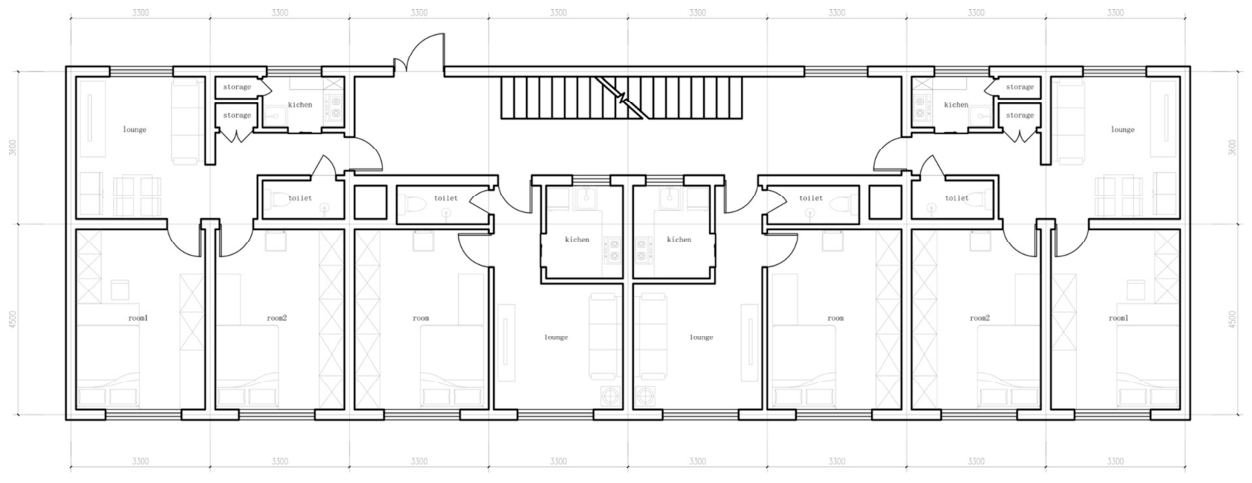
Using Case 1 as an example, the residential complex was constructed in 1990 on a sloped terrain with significant elevation changes, resulting in building layouts adapted to the topography. Each stairwell serves four households. The participant resided in a first-floor western unit (
Figure 1). Evaluation results for Case 1 (
Table 3) showed that Site and Location received the lowest score (35%), followed by Living Unit (36%) and Circulation (40%). Commercial Facilities (60%) and Staff and Services (63%) met basic age-friendly standards. Further evaluation of the residential unit (
Table 4) indicated an overall age-friendliness score of 36%, with all subitems scoring below 60% (median: 32%; range: 45%), reflecting significant environmental barriers to daily living.
During surveys, researchers documented each unit photographically and via video for subsequent evaluation. Semi-structured interviews were conducted concurrently with the EVOLVE assessment, lasting between 20 and 82 min. Portions of these data have been utilized in prior studies [
8].
4.4. Data Analysis
Data analysis followed the six-phase reflexive thematic analysis framework outlined by Braun and Clarke [
43]. The six phases include: (1) familiarization with the data through repeated reading of transcripts and field notes; (2) generating initial codes; (3) searching for themes by collating codes into potential patterns; (4) reviewing themes to ensure they accurately reflected the coded data; (5) defining and naming themes to capture their essence; and (6) producing the final analytic narrative. Consistent with the reflexive approach to thematic analysis, the analysis treated researcher subjectivity as a resource rather than a source of error; therefore, no inter-rater reliability metrics were calculated, as such procedures are not considered a quality criterion within this methodological framework.
All interview transcripts and field notes were managed using NVivo 14. The analysis was guided by a hybrid coding logic: deductive codes corresponded to the three health domains of diet, physical activity, and emotion derived from the World Health Organization [
3], Institute of Medicine frameworks [
44], and related studies by Liu and Su [
45], while inductive codes captured specific environmental features emerging from the data. Themes were developed iteratively until a coherent narrative emerged regarding the environmental barriers associated with older adults’ health.
The mapping of EVOLVE items to the three health domains was guided by the following logic: (a) Diet: kitchen accessibility (acc), kitchen physical support (phy), kitchen health and safety (saf), and communal commercial facilities (com) related to food access; (b) Physical activity: circulation accessibility (acc), site and location accessibility (acc), sensory support (sen) for outdoor navigation, and health and safety (saf) of outdoor routes; (c) Emotion: dignity and privacy (dig), personal realization and choice (pr), social contact outside (ext), and comfort and control (com). This mapping served as an analytical lens for structuring the thematic analysis rather than a mechanical weighted aggregation.
4.5. Ethical Issues
Prior to data collection, all participants were fully informed about the study purposes and provided consent for their interview and observational data to be used for research purposes. Property owners granted permission for spatial mapping and EVOLVE evaluations. To ensure confidentiality, all participant identifiers were anonymized during data usage and reporting.
5. Results
5.1. Impact on the Diet of Older Adults
Adequate nutrition is fundamental to maintaining physiological functions, and a reliable food supply is critical for supporting the health of older adults. Within residential settings, key environmental factors influencing dietary habits include the availability of grocery stores, the functionality of in-home kitchens, and the presence of food service facilities in the community. Interview data indicated that most older adults prefer to purchase ingredients and prepare meals themselves, underscoring the importance of age-friendly food purchasing options and kitchen designs.
In Case 1, the EVOLVE evaluation score for Communal Facilities related to food access was 60%, indicating basic but minimal age-friendly suitability. However, accessing food also depends on the navigability of the external environment. The Circulation category received a notably low score of 40%, with particularly poor performance in elements critical to outdoor mobility, such as Sensory support for sight, hearing, touch, smell (sen, 31%) and Health and safety (saf, 39%). These deficiencies reflect inadequate environmental support for outdoor activities. For instance, the absence of elevators and accessible routes in many buildings impedes egress, while a lack of clear signage, non-slip surfaces, and handrails along pathways elevates fall risks. Such conditions are associated with considerable hindrance to older residents’ ability to shop for groceries.
Within the residential units, the kitchen received an overall age-friendliness rating of just 31%. Subcomponent scores were low across Personal realization and choice (pr, 33%), Dignity and privacy (dig, 25%), accessibility (acc, 14%), and Health and safety (saf, 17%), indicating severe limitations in usability and safety. These kitchens—originally designed with limited space (approximately 2 m2)—are functionally inadequate. After accounting for essential fixtures (sink, stove, counter, and cabinets), room for movement is severely restricted, permitting only one occupant at a time and minimal activity. Some older adults have relocated large appliances such as refrigerators and rice cookers to bedrooms or living areas to free up space, resulting in elongated and obstructed cooking pathways that complicate meal preparation.
Furthermore, Working care, support for carers (wc) within the Living Unit was rated very low (25%), rendering external assistance during meal preparation virtually unfeasible. Consequently, cooking represents one of the most challenging domestic activities for older adults. While some receive occasional help from nearby family members, those without local support are often compelled to reduce cooking frequency and grocery trips or seek assistance from community services.
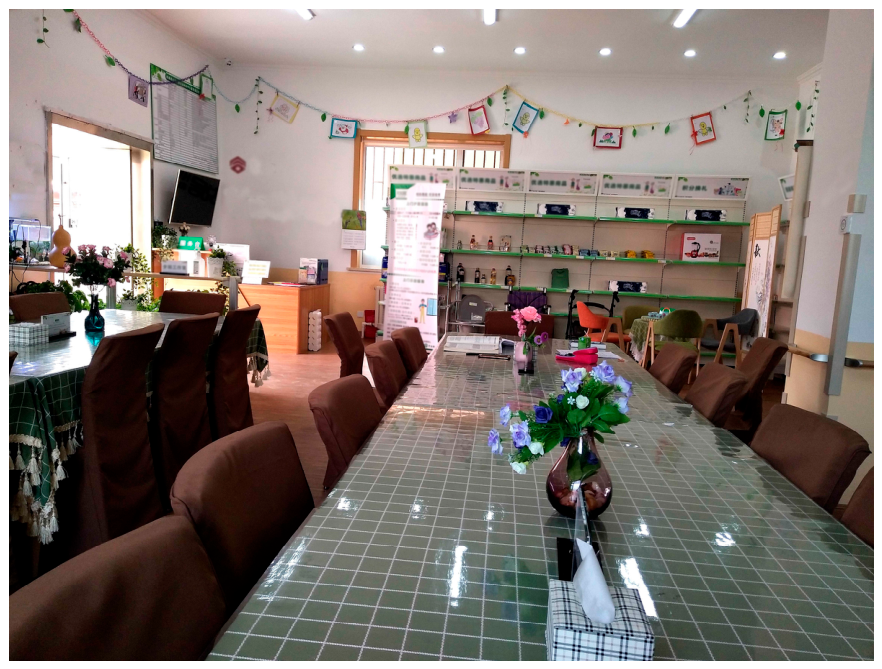
Some communities have recently introduced communal canteens located within elderly care facilities to provide daily meals (
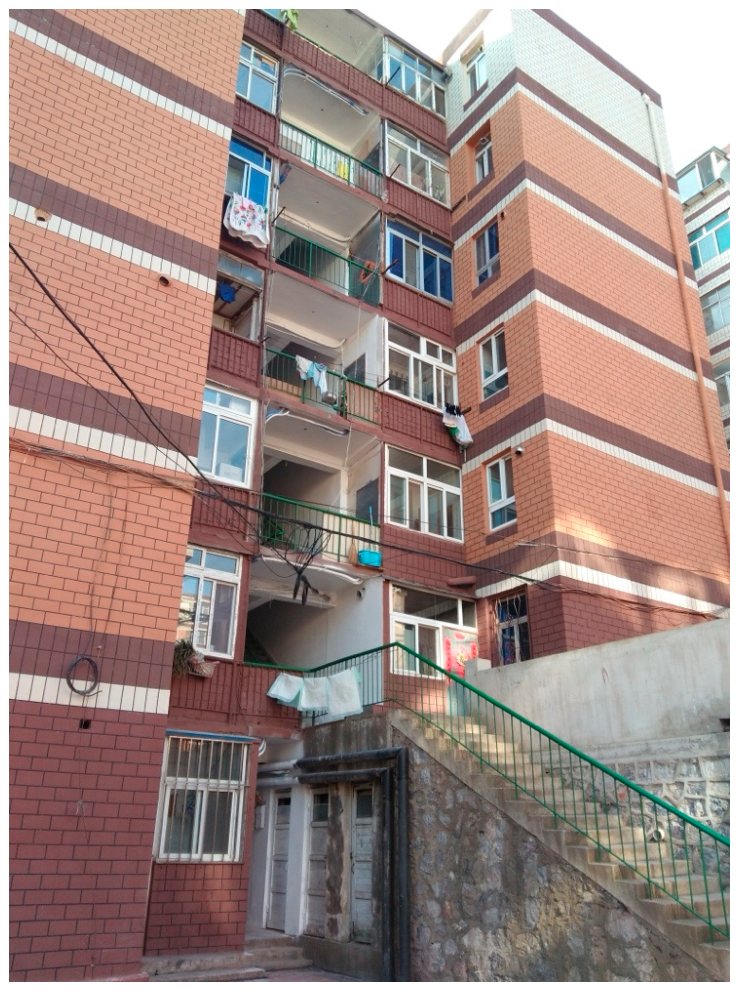
Figure 2). These new facilities received a relatively high age-friendliness score (63%) and meet basic dietary needs. However, for older adults with functional limitations—a situation exacerbated by poorly designed external environments characterized by the absence of elevators in residential buildings, significant outdoor elevation changes, and a lack of barrier-free design (
Figure 3)—leaving home remains particularly challenging. Consequently, relying on community canteens cannot serve as a practical primary dining option for many individuals in this group, ultimately adversely affecting their nutritional status and physical health.
5.2. Impact on Exercise in Older Adults
Research indicates that regular physical activity is crucial for maintaining and enhancing physical function among older adults [
46]. Within residential settings, primary activity spaces include outdoor public areas and dedicated elderly care facilities. EVOLVE results reveal multiple environmental barriers that constrain activity among older residents. Accessibility received particularly low scores for both Living Unit (32%) and Site and Location (38%), indicating considerable difficulty for older adults in moving from their homes to other areas within the community.
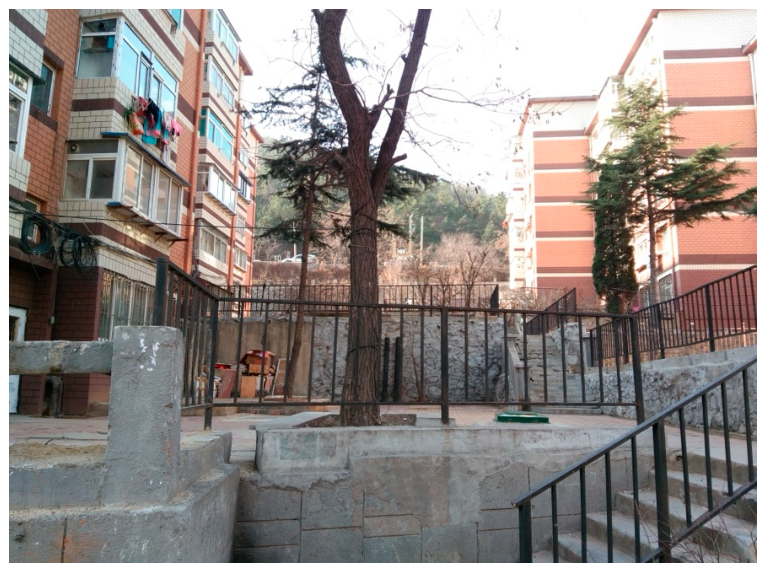
Health and safety ratings were also low across the Living Unit (17%), Circulation (39%), and Site and Location (40%). Poor safety conditions are directly associated with reduced outdoor movement and, ultimately, lower overall physical activity levels. Many of these neighborhoods are built on sloped terrain with significant elevation changes, which are typically addressed using stairways rather than accessible ramps (
Figure 4). This design approach exacerbates mobility challenges and increases fall risk among older adults. Furthermore, most residential roads permit mixed pedestrian and vehicular traffic. A shortage of underground parking results in roadside vehicle parking, further encroaching on limited walking space (
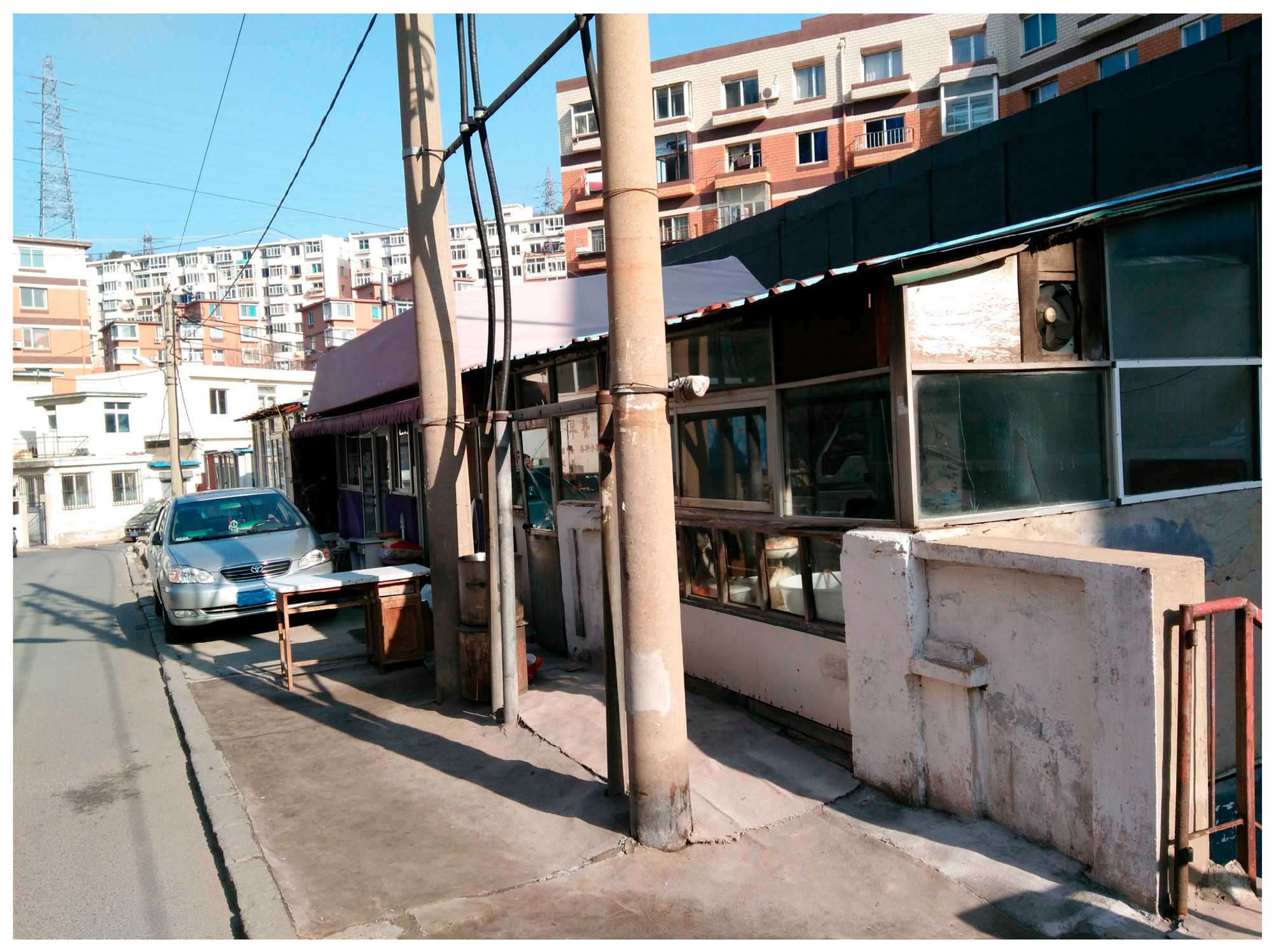
Figure 5). The absence of universally accessible design and rational pathway planning significantly limits outdoor mobility and exercise opportunities.
Additional concerns are evident in sensory support (sen, 47%) and Dementia support (dem), both of which scored below adequate levels. Sensory cues—such as clear signage, tactile paving, and audible signals—help older adults navigate safely and reduce disorientation, serving as critical supports especially for those with cognitive impairment [
47]. In environments lacking these features, individuals with cognitive challenges are more likely to experience anxiety and confusion. With an environmental sensory support score of only 31%, the studied areas fail to provide sufficient visual, auditory, or tactile cues, impairing spatial cognition and further discouraging outdoor activity.
Elderly care facilities within these communities serve as alternative venues for exercise. According to EVOLVE, these facilities meet moderate age-friendly standards (acc: 63%; saf: 83%; sen: 57%; dem: 60%). However, interviews revealed that such facilities primarily serve semi-dependent older adults, require fees for use, and typically offer limited activities—mainly rehabilitation exercises. Slow walking, square dancing, and other common exercises often cannot be performed indoors. Moreover, these facilities do not provide transportation services, so older adults with mobility limitations must rely on family or caregivers for access. Those without nearby support are effectively excluded from using these services.
5.3. Impact on the Emotions of Older Adults
A supportive emotional environment is essential for psychological well-being in later life. Appropriate living conditions can alleviate mental health issues and partly compensate for the emotional consequences of age-related physical decline. Social and emotional support in communities is often facilitated through shared spaces that promote belonging, autonomy, and self-esteem [
48].
EVOLVE results for Case 1 indicate moderate Social support inside the building (soc: 71%) but limited options for social interaction within residential units. Only certain areas—such as communal rooms, facility spaces, and service points—facilitate social behavior. Outdoors, the external environment received high social ratings (ext: 100%), and interviews confirmed that many older adults regularly socialize in outdoor public areas. However, those with limited mobility often participate only passively, for example, by observing activities from a distance [
48]. Additionally, the capacity of residential units to support connection with outdoor social life is weak (ext: 50%). Poor visibility and accessibility from homes to social spaces reduce opportunities for participation and weaken the sense of community.
The environment also influences emotions by affecting older adults’ sense of control and self-worth. Current conditions show deficits in support for autonomy (com: 46%), self-realization (pr: 40%), and privacy (dig: 36%), making it difficult for residents to derive emotional reinforcement from their surroundings.
Inside the home, emotional support is further compromised by low accessibility (32%) and safety (17%)—scores even lower than those outdoors (39%). Older adults face daily obstacles in essential activities such as bathing (bathroom score: 25%), cooking (kitchen: 31%), socializing (living room: 49%), and sleeping (bedroom: 45%). These challenges serve as constant reminders of functional decline and reduced independence. Bathrooms are particularly problematic: they are small (around 2 m2 in Case 1), have high thresholds (around 20 cm), and lack grab bars or non-slip surfaces. With physical support and caregiver assistance, both scoring 17%, older adults face a high fall risk during bathing, and the confined space prevents aid from caregivers. Many reduce bathing frequency or use public bathhouses, which present additional accessibility barriers. Poor hygiene can affect social confidence and self-esteem.
Similarly, cooking and socializing within the home are hindered by limited space and poor design. Small living areas make it difficult to host family or friends, preventing meaningful social interaction at home. These limitations may diminish perceived control over daily life, erode self-confidence, promote negative emotions, and ultimately be associated with poorer mental and physical health.
6. Discussion
This study examined the associations between existing residential environments and the health of older adults through field surveys, EVOLVE-based evaluations, and thematic analysis of interview data. The findings indicate that current living conditions are associated with dietary practices, physical activity, and emotional well-being among older residents. These effects are largely attributable to inadequate universal design, poorly planned architectural layouts, and insufficient functional support within residential settings. For instance, limited accessibility to activity venues, coupled with a lack of safety provisions and sensory aids, curtails opportunities for exercise; poorly accessible and visually disconnected social spaces inhibit community engagement; cramped and unsafe kitchen designs impair meal preparation; and a general shortage of food-service facilities complicates nutritional intake. Collectively, these issues diminish older adults’ capacity for self-care, undermine their autonomy and self-esteem, and adversely affect their overall health.
The findings both align with and extend prior research. Consistent with international evidence, inadequate kitchen and bathroom design elevates fall risk and restricts independent living [
16,
18], while poor sensory support limits outdoor mobility [
49]. However, this study uniquely highlights the compounding role of Dalian’s hilly topography, which transforms minor barriers—such as a short staircase that becomes an impassable obstacle for those with mobility aids—into major obstacles. This topographic dimension is largely absent from current Chinese renovation guidelines. Future comparative research examining old residential communities in flat inland cities would be valuable to determine the extent to which Dalian’s topographic barriers represent a generalizable phenomenon or a regionally specific challenge.
Theoretically, these results can be framed through the Ecological Model of Aging [
50]. The low EVOLVE scores reflect high environmental pressure that exceeds residents’ functional competence, leading to a constriction of life space. Within this framework, accessibility functions as a critical mediator: reducing environmental barriers may expand behavioral opportunities and reinforce older adults’ autonomy.
The most direct response to these challenges is to enhance the age-friendliness of residential environments. Existing research supports this approach, recommending unit-level modifications tailored to the varying physical capabilities of older adults—such as upgrading kitchens to facilitate independent cooking, removing domestic hazards, retrofitting bathrooms, and improving overall living comfort. Other studies emphasize community-scale interventions, arguing that integrating older adult care facilities with enhanced service provision can significantly improve residents’ health. However, these strategies face several practical limitations:
Many older residents lack the financial means to undertake self-funded renovations, constraining large-scale retrofitting of private units.
Familiarity with existing environments may reduce the perceived impact of certain age-unfriendly features, as long-term habituation enables residents to navigate domestic obstacles unconsciously.
Newly built or renovated community facilities often fail to serve those with severe mobility impairments, as travel barriers prevent them from reaching these spaces even when local amenities are improved.
Consequently, the authors argue that, under resource constraints, priority should be given to improving accessibility and universal design in shared and public areas. Interventions such as installing elevators, improving pathway lighting, adding non-slip surfaces and handrails, and ensuring barrier-free routes may significantly enhance mobility and encourage outdoor activity. Such improvements may facilitate exercise, social interaction, and access to food, ultimately expanding the living sphere of older adults and reinforcing their sense of autonomy.
In practical terms, financing such accessibility improvements may require hybrid models combining government subsidies, residents’ collective contributions, and private sector participation. Recent pilot programs in Chinese cities such as Shanghai and Beijing have demonstrated the feasibility of shared financing mechanisms for elevator installation in old residential buildings, offering a potential template for broader accessibility retrofitting.
Following these foundational upgrades, subsequent efforts may focus on renovating activity spaces, expanding care facilities, and introducing short- and long-term support services for older adults with significant physical limitations. A phased renovation strategy—progressing from universal accessibility enhancements to unit-level adaptations—may maximize health outcomes under limited resources and alleviate the broader societal and familial pressures associated with elderly care.
7. Conclusions and Future Research
7.1. Conclusions
Amid China’s vigorous push to renovate existing residential neighborhoods, a critical societal focus lies in enhancing the health of older adults through targeted environmental improvements. While many studies prioritize the optimization of public activity spaces and functional upgrades within residential settings, this study identifies specific age-unfriendly conditions in dwelling units, external environments, site planning, and facility provision that significantly impair older adults’ health. Among these, inadequate physical accessibility stands out as a pervasive and fundamental barrier. However, existing renovation strategies seldom treat accessibility enhancement as a central objective in age-friendly retrofitting.
The findings highlight the gap between existing renovation practices and the lived experiences of older adults, especially the importance of prioritizing accessibility in age-friendly design, and that enhancing the ability of older adults to reach different locations can support healthy behaviors and emotional well-being. Therefore, this study argues that renovation initiatives should prioritize expanding the functional living range of older adults and improving overall neighborhood accessibility. Enabling older adults to move independently and safely out of their homes and access various community destinations should be a primary goal. Enhancing accessibility can alleviate psychological stress associated with aging, bolster self-confidence, and promote a broader range of behaviors—including exercise, dietary engagement, and social participation—thereby improving older adults’ self-rated health and overall well-being. Such strategies can counteract the contraction of life space commonly experienced in later life and contribute meaningfully to achieving healthy aging.
7.2. Limitations and Future Research
Several limitations of this study warrant acknowledgment. First, the sample size (n = 8), while appropriate for an exploratory qualitative design, constrains the transferability of findings to broader populations. Participants were recruited via snowball sampling, which may introduce selection bias as participants likely referred peers with similar characteristics and experiences. Second, health outcomes were assessed solely through self-reported perceptions and observational data; no objective health indicators (e.g., clinical measures of physical function, nutritional biomarkers, or validated mental health scales) were collected. Third, the EVOLVE tool remains a checklist-based audit instrument that depends on observer judgment and does not capture continuous environmental variation or objective physical measurements. Fourth, the study focused exclusively on Dalian, a coastal city with hilly terrain and a specific welfare-housing history; findings may not be fully transferable to flat inland cities or to newer commercial housing estates.
Future research should address these limitations by expanding the geographic scope to include cities with varying topographic and socioeconomic conditions, employing larger and more diverse samples, and incorporating objective health measures to strengthen causal inference. Longitudinal or quasi-experimental designs would be particularly valuable for establishing the causal effects of specific environmental modifications on health outcomes among older adults.