1. Introduction
Türkiye, situated on one of the world’s most active seismic zones, contains numerous active fault lines, making the country highly susceptible to destructive earthquakes throughout its history. The interaction of the Eurasian, Arabian, and African plates is a primary cause of the significant seismic hazard in the region. The major Kahramanmaraş earthquakes of 6 February 2023 have highlighted the critical seismic risk faced by the nation. In addition to the main shocks that occurred on the same day, numerous aftershocks further exacerbated the scale of destruction. These earthquakes, which caused extensive damage across 11 provinces, have underscored the growing importance of seismic hazard studies and earthquake-resistant design principles. Accurately assessing seismic hazard is vital for understanding the impacts of earthquakes on structures and developing effective mitigation strategies.
Data from earthquakes in any region play a crucial role in identifying pre-event precautions, improving earthquake-resistant design principles, and providing more realistic assessments of seismic hazard. Studies focusing on seismic hazard, structural damage evaluation, and the performance of existing building stock under seismic conditions are essential for developing more effective strategies to prepare for future earthquakes. Such research provides valuable support not only for academia but also for policymakers. Moreover, these data contribute to advancements in earthquake and structural engineering, enabling the periodic updating of seismic hazard maps and building codes. In Türkiye, the seismic hazard map and Turkish building earthquake code (TBEC-2018) were last updated in 2019. This study compares the two most recent seismic hazard assessments used in Türkiye for the Adana province. In this context, there are also studies in the literature that examine this change. A growing body of literature focuses on seismic hazard maps and their implications for structural performance, integrating probabilistic approaches and performance-based methodologies to address uncertainties in local seismic hazard, soil properties, site response analyses, and the effects of regional seismic regulations. Işık et al. [
1] compared seismic parameters predicted by the last two hazard maps for settlements along the East Anatolian Fault Zone (EAFZ), and Ozturk [
2] analyzed the updated seismic hazard map and regulations for the Central Anatolia Region. Akansel et al. [
3] focused on spectral intensity in the current seismic hazard map, while Isik et al. [
4] compared seismic parameters and structural analysis results for settlements along the North Anatolian Fault Zone. Other studies include Basaran [
5] for Afyon, Ozsahin [
6,
7] for Edirne and Kırklareli, and Işık and Harirchian [
8] for Bitlis, examining the impacts on structural analysis and displacements. Akyildiz et al. [
9] studied the influence of local soil conditions in the 2018 regulation on sectional forces in concrete buildings, while Doğruyol [
10] analyzed these changes for Siirt. Bayrakci et al. [
11] investigated spectral characteristics under the last two regulations for Eskisehir. Aksoylu and Arslan [
12] evaluated the last two earthquake codes used in Türkiye for reinforced concrete (RC) structures with different numbers of stories in the context of calculating earthquake forces. Peker and Isik [
13] explored the numerical effects of different local soil conditions in the latest earthquake regulation on steel structures, while Alpyurur and Ulutas [
14] examined the impacts of site-specific design spectra on structural performance in Western Anatolia.
Additionally, several studies have provided regional or multi-province analyses that encompass the earthquake-affected areas. Yuzbasi [
15] examined the impacts of the 6 February 2023, earthquakes (M
w = 7.7, M
w = 7.6) and the Hatay earthquake (M
w = 6.4) on various structures, including RC buildings, infrastructure, and lifelines. Özmen et al. [
16] presents a post-earthquake reconnaissance field mission describing the damage sustained in Malatya province following the 6 February 2023, earthquakes. Öser et al. [
17] focus on the determination of free field liquefaction, ejecta, and lateral spreading events, presenting a preliminary site investigation from Adıyaman/Gölbaşı where severe liquefaction was observed. Altunışık et al. [
18] summarize common structural deficiencies observed in RC buildings following the earthquakes, classifying them as errors during the design stage (e.g., strong beam-weak column, soft story, pounding effects) and construction stage (e.g., poor concrete quality, incorrect reinforcement placement). Altunsu et al. [
19] discuss findings and analyze data gathered from RC buildings and steel structures damaged in the Kahramanmaraş earthquakes, focusing on the heavily affected Hatay province. Kazaz [
20] explains that RC frame-wall systems experienced severe damage, including flexure-compression and shear-compression failures, often leading to collapses across Türkiye. Öz and Ömür [
21] evaluates the seismic fragility and code compliance of RC buildings in Türkiye following the 2023 Kahramanmaraş earthquake by modeling structures designed according to the TEC-1975 and TEC-1998 codes. İnce et al. [
22] evaluate the damage in RC buildings following the Kahramanmaraş earthquakes by examining design and construction deficiencies. Cetin et al. [
23] investigated liquefaction during the 2023 Kahramanmaraş earthquakes, highlighting unexpected liquefied ejecta from silty–clayey soils, necessitating caution in liquefaction assessments. To date, the majority of studies have primarily focused on assessing structural damage in provinces such as Kahramanmaraş, Adıyaman, Hatay, and Diyarbakır. For example, researchers have evaluated RC damages in Adıyaman [
24,
25,
26] and analyzed the causes of structural collapse in Diyarbakır [
27]. The seismic impact on Hatay and Kahramanmaraş has also been extensively studied, with numerous investigations addressing damage evaluations and numerical analyses across these regions [
28,
29,
30,
31].
In addition to these studies, research on shear wall ratios and post-earthquake analysis of tall RC buildings (especially using AEM), which is another part of the study, has also found its place in the literature. Terzic and Kolozvari [
32] analyze a nonlinear model of the building in OpenSees using a three-dimensional macro model for RC walls and obtain seismic response for service-level earthquake, design-based earthquake, and maximum considered earthquake. Dabaghi et al. [
33] investigate the effect of varying shear wall dimensions and reinforcement detailing on seismic collapse fragility using incremental dynamic analysis. Sadraddin et al. [
34] investigate four lower high-rise RC buildings (10- to 20-stories high) that were designed with the same plan dimensions and height but different lateral force resisting systems, including variations in shear wall amount and location. Özkul et al. [
35] evaluate the effect of the ductile shear wall area to total floor area (i.e., ductile shear walls ratio) and cross-section configuration on the seismic response of mid-rise and high-rise reinforced masonry buildings. Jünemann et al. [
36] examine the correlation between global structural parameters, including shear wall density, and the observed earthquake damage in 43 reinforced concrete shear wall buildings. Tunç and Al-Ageedi [
37] determine the optimum ratio of shear wall area to floor area in reinforced concrete buildings by conducting a structural analysis on 40 building models with varying building height and wall dimensions. Erkan et al. [
38] determine that the optimum design for reinforced concrete (RC) buildings, under the conditions specified in TSC 2018, is achieved with an RC wall ratio between 0.001 and 0.0016. Alarcon et al. [
39] evaluate the collapse fragility of a typical Chilean residential building structured with shear-resistant RC walls and inverted beams using incremental dynamic analysis. Massone [
40] focuses on the damage sustained by modern RC shear wall buildings after the 2010 M
w 8.8 Chile earthquake, attributing severe damage to axial load and bending in walls, which led to concrete spalling, bar buckling, and concrete crushing. Grunwald et al. [
41] compare the Applied Element Method (AEM) and the Finite Element Method (FEM) simulations against experimental results for blast or earthquake analysis on small-scale, mid-size, and full-scale structures, including the progressive collapse of a real full-scale building. Pellecchia et al. [
42] perform progressive collapse analysis of a reinforced concrete residential building using the AEM to assess different hypothetical collapse scenarios, including those related to structural degradation. Yüksel et al. [
43] examine the effect of the variation in the reinforced concrete shear wall ratio on the seismic performance of reinforced concrete structures, considering the characteristics of the existing building stock. Kaya and Özbay [
44] examine the effect of the placement and dimensions of shear walls in reinforced concrete structures with shear walls and frames on seismic behavior, considering different directions and sizes. Doğan et al. [
45] investigate the necessity of reinforced concrete shear walls in earthquake-resistant design to limit horizontal displacement, prevent shear failure, and ensure the building system evolves from a frame to a coupled shear wall-frame system as the ratio increases.
Despite significant progress in understanding seismic hazards across Türkiye, as highlighted in the aforementioned studies, limited attention has been given to Adana’s seismic vulnerabilities, particularly regarding its high-rise building stock and shear wall ratios. This study is the first to provide a detailed seismic overview focused on the city of Adana, a region that has not been comprehensively addressed in the literature. Furthermore, Adana’s high-rise building stock represents a critical case study for understanding and mitigating earthquake-induced damage. Located in a region with high seismic hazard, Adana has a history of significant losses from earthquakes. The 1998 Adana-Ceyhan earthquake (M
w = 6.3) caused 145 deaths, while the Kahramanmaraş earthquakes on 6 February 2023, resulted in the collapse or heavy damage of nearly 3000 buildings and the loss of 418 lives in Adana alone [
46]. This research not only fills a gap in the literature by addressing Adana’s seismic overview but also contributes insights into optimizing shear wall ratios for enhanced structural performance in seismic-prone regions worldwide.
With these aims, first of all, in
Section 3, the seismic hazard values for selected geographic locations in Adana and its districts were compared using the last two seismic hazard maps of Türkiye. This comparison aimed to assess changes in seismic parameters for 15 different districts of Adana, focusing on ground motion levels with a 10% probability of exceedance in 50 years (return period of 475 years). The study adopts the DD-2 seismic level, as specified in the Türkiye Building Earthquake Code, and considers an average ground classification of ZC, representative of typical local soil conditions. Second of all,
Section 4 provides an overview of the structural damage observed in Adana, making this one of the first studies to evaluate earthquake damage specific to the province. This assessment marks a critical step toward understanding the seismic vulnerability of Adana’s building stock. Lastly, a key focus of this study, discussed in
Section 5 and beyond, is the effect of shear wall ratios in high-rise reinforced concrete buildings. Although few analytical works have investigated the influence of shear wall ratios on the seismic performance of buildings, this research aims to fill this gap by providing insights into the role of shear wall ratios in improving structural resilience. While research on mid-rise buildings has provided valuable insights, tall buildings, especially those analyzed using explicit nonlinear methods such as the Applied Element Method (AEM), have not been extensively studied.
2. Research Significance
RC buildings commonly rely on shear walls as the primary lateral load-resisting elements to achieve adequate stiffness and strength under seismic demands. The proportion of shear wall area to total floor area, often termed the shear wall ratio, plays a decisive role in controlling lateral drift and overall seismic performance. In current design practice and prior research, typical shear wall ratios for RC buildings generally range between 1% and 2%. To capture the representative and practically significant range within this interval, three shear wall ratios, approximately 1.14%, 1.54%, and 2.10%, were selected in this study, corresponding to symmetrically arranged shear walls along the selected plan direction. These values represent the lower, mid, and upper bounds of the range commonly observed in design practice, enabling a systematic investigation of how incremental increases in wall ratio influence seismic response. Previous studies have emphasized the importance of this parameter in governing the seismic performance of mid-rise RC buildings. For instance, Burak and Comlekoglu [
47] explored the impact of shear wall area-to-floor area ratios on the seismic behavior of mid-rise RC structures with shear wall ratios ranging from 0.51% to 2.17%. Their findings recommended a minimum shear wall ratio of 1.0% to control drift, though improvements in seismic performance became less significant beyond 1.5%. While other studies [
48,
49] have suggested similar shear wall ratios, a minimum of 1.5% for mid-rise buildings, this body of literature remains relatively limited and warrants further exploration.
In this study, the three scenarios were designed with different shear wall configurations, but with symmetric layouts in both x and y directions. The comparisons were based on the total cumulative shear wall cross-sectional area relative to the plan area, providing a simplified and practical metric to assess the influence of wall density on global structural response. It is acknowledged that the overall shear wall area-to-plan area ratio alone may not fully capture the effects of wall configuration and geometry on seismic performance. However, despite the existence of many alternative configurations, the adopted approach still provides meaningful insight into the overall influence of higher wall ratios, especially for informing preliminary design strategies and supporting code enhancement efforts. This perspective is further reinforced by the remarkable performance of shear wall systems observed during the 2023 Kahramanmaraş earthquakes, where buildings with robust shear wall configurations demonstrated significantly enhanced seismic resilience and reduced damage levels [
31]. The study distinguishes itself by using solid models for the analysis, unlike other studies that are based on classical FEMs with frame elements. Solid models can offer a more precise representation of structural behavior under seismic loading, providing a more accurate simulation of failure mechanisms and overall dynamic response. Furthermore, this study employs the AEM to capture nonlinear damage progression and collapse behavior with higher fidelity than conventional approaches. Unlike typical FEM-based simulations, where material nonlinearity and energy dissipation must be externally defined, AEM inherently incorporates these mechanisms through its discrete spring-based formulation. This enables the direct simulation of cracking, separation, and material degradation without relying on additional assumptions. The adoption of AEM therefore provides a physically consistent representation of seismic energy dissipation and structural failure, offering deeper insight into the nonlinear behavior of RC systems. The applied element method (AEM) has been predominantly utilized in the literature for the analysis of collapse mechanisms and progressive collapse scenarios in structural systems [
50,
51]. In contrast, the present study extends its application to the seismic performance assessment of a tall reinforced concrete structure. Although AEM has been widely validated in collapse-oriented problems, its use in the context of seismic response evaluation of tall buildings remains relatively limited. In this regard, the present study aims to contribute to the existing body of knowledge.
The selected shear wall ratios (1.14%, 1.54%, and 2.10%) were not defined arbitrarily; instead, they were established to systematically represent the lower and upper bounds of the shear wall ratio range commonly adopted in current design practice (approximately 1–2%). These values are consistent with prior studies in the literature, which indicate that ratios around 1% represent the minimum threshold for drift control, while values exceeding approximately 1.5% lead to noticeable improvements in seismic performance. In addition, the specific ratios of 1.14% and 1.54% were derived from the geometric configuration of the selected prototype building and the practical placement of shear walls within the structural layout, rather than from idealized or purely numerical increments. In this sense, the adopted values correspond to realistic and constructible design scenarios that can be encountered in RC buildings. Although comprehensive statistical data specific to Adana are limited, the selected range reflects typical design tendencies observed in Türkiye’s high-rise building practice, particularly in regions with significant seismic risk. It should be noted that this study does not include a bare frame (shear wall-free) structural model as a baseline case. The primary aim of the research is to investigate the relative influence of varying shear wall ratios within the range commonly adopted in current seismic design practice, rather than to compare frame-only and wall-frame systems. In high-seismic-risk regions such as Türkiye, particularly following the 2023 Kahramanmaraş earthquakes, the incorporation of shear walls in medium- and high-rise RC buildings has become a standard and often indispensable design approach. Therefore, the selected scenarios represent realistic design conditions where shear walls are already present, and the focus is placed on understanding the incremental improvements achieved by increasing shear wall ratios and optimizing their configurations. Nevertheless, it is acknowledged that the inclusion of a bare frame model would provide an additional reference point for quantifying the full extent of improvement from a shear wall-free condition. This aspect is identified as a limitation of the current study and will be considered in future research to enable a more comprehensive evaluation of seismic performance.
3. Seismicity of Adana Province
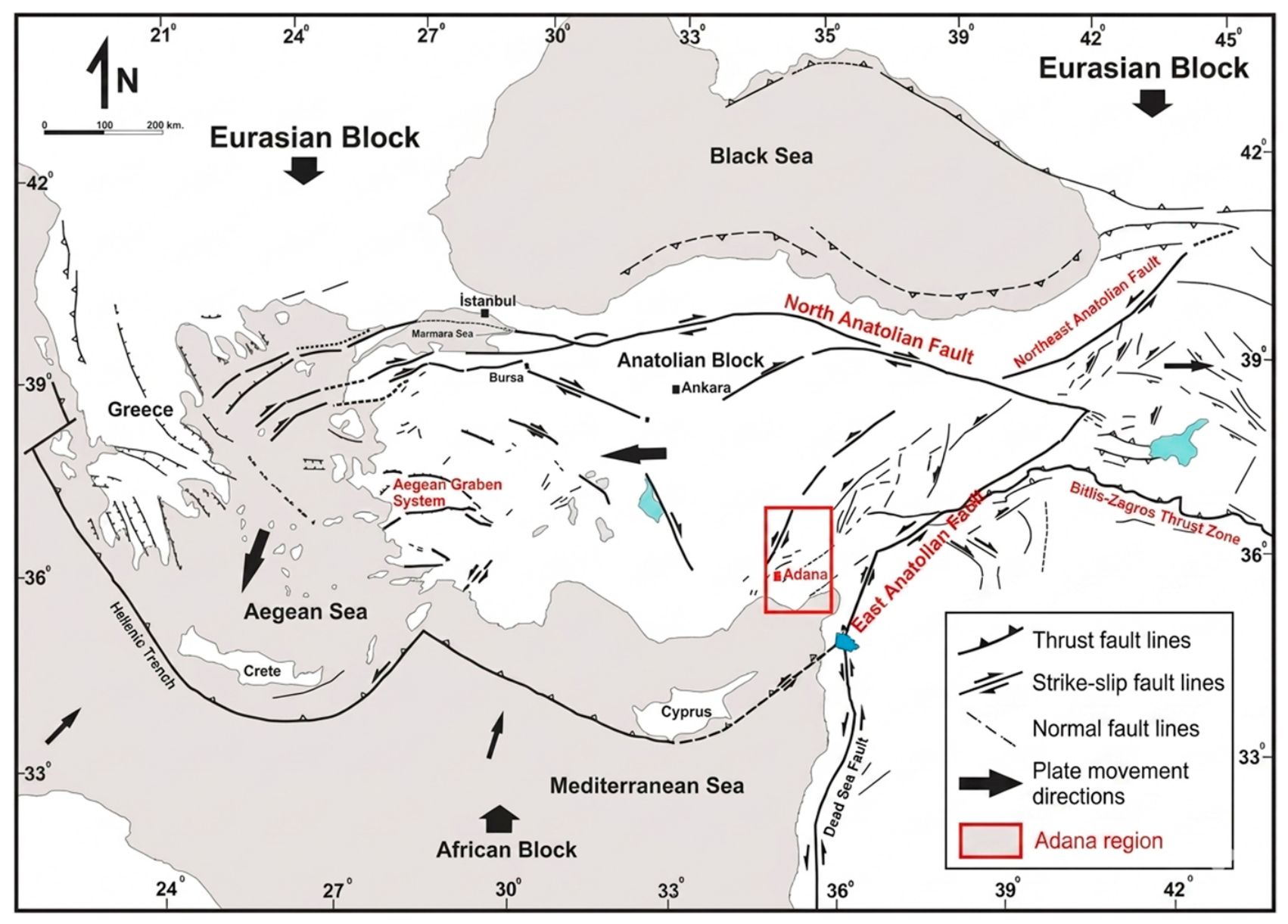
Türkiye is located on the Alpine–Himalayan seismic belt and has a highly active seismicity shaped by the North Anatolian Fault (NAF), the East Anatolian Fault (EAF), and the West Anatolian Extensional Regime. The country’s tectonics are characterized by the westward extrusion (escape) of the Anatolian plate as a result of the interaction of the Eurasian, Arabian, and African plates. These geodynamic processes ensure the continuity of strike-slip and normal fault systems with the potential to produce high-magnitude earthquakes, making Türkiye one of the most seismically risky regions in the world. The 2023 earthquake sequence in Türkiye took place along the EAF system, located near a triple junction where the Anatolian, Arabian, and African plates meet.
Figure 1 illustrates Türkiye’s main tectonic features and the tectonic movements it is subjected to.
Adana Province is situated on the southern edge of the Anatolian Block, shaped by the northward movement of the Arabian and African Plates. This interaction drives the East Anatolian Fault (EAF), a left-lateral strike-slip system that displaces the Anatolian Block westward and the Cyprus Arc, which causes regional compression. These geodynamic forces create a complex tectonic regime, particularly in Adana’s eastern and northeastern zones. Consequently, extensions of these major fault systems reach into Adana, making it one of the most seismically active regions in Türkiye’s history.
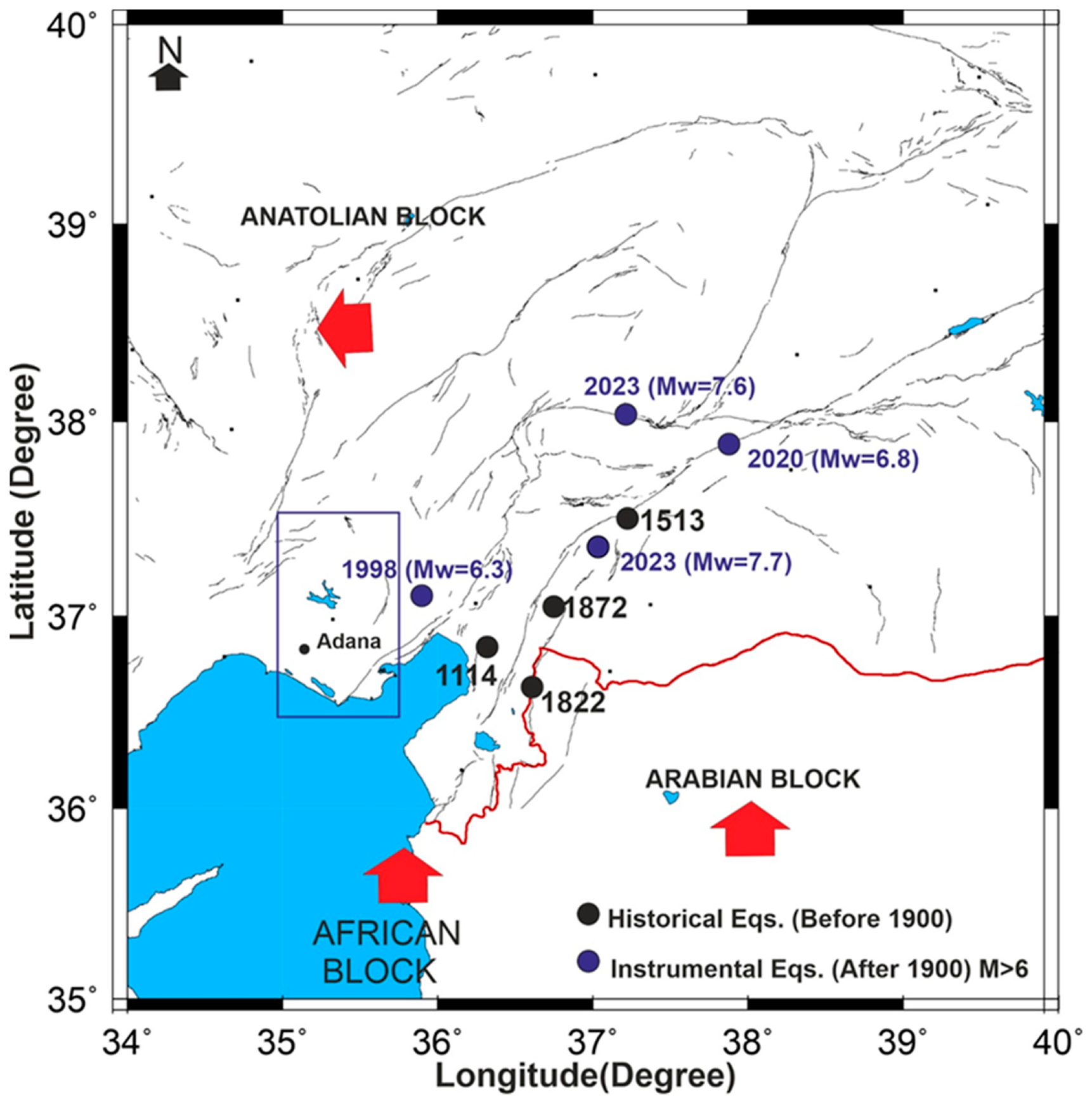
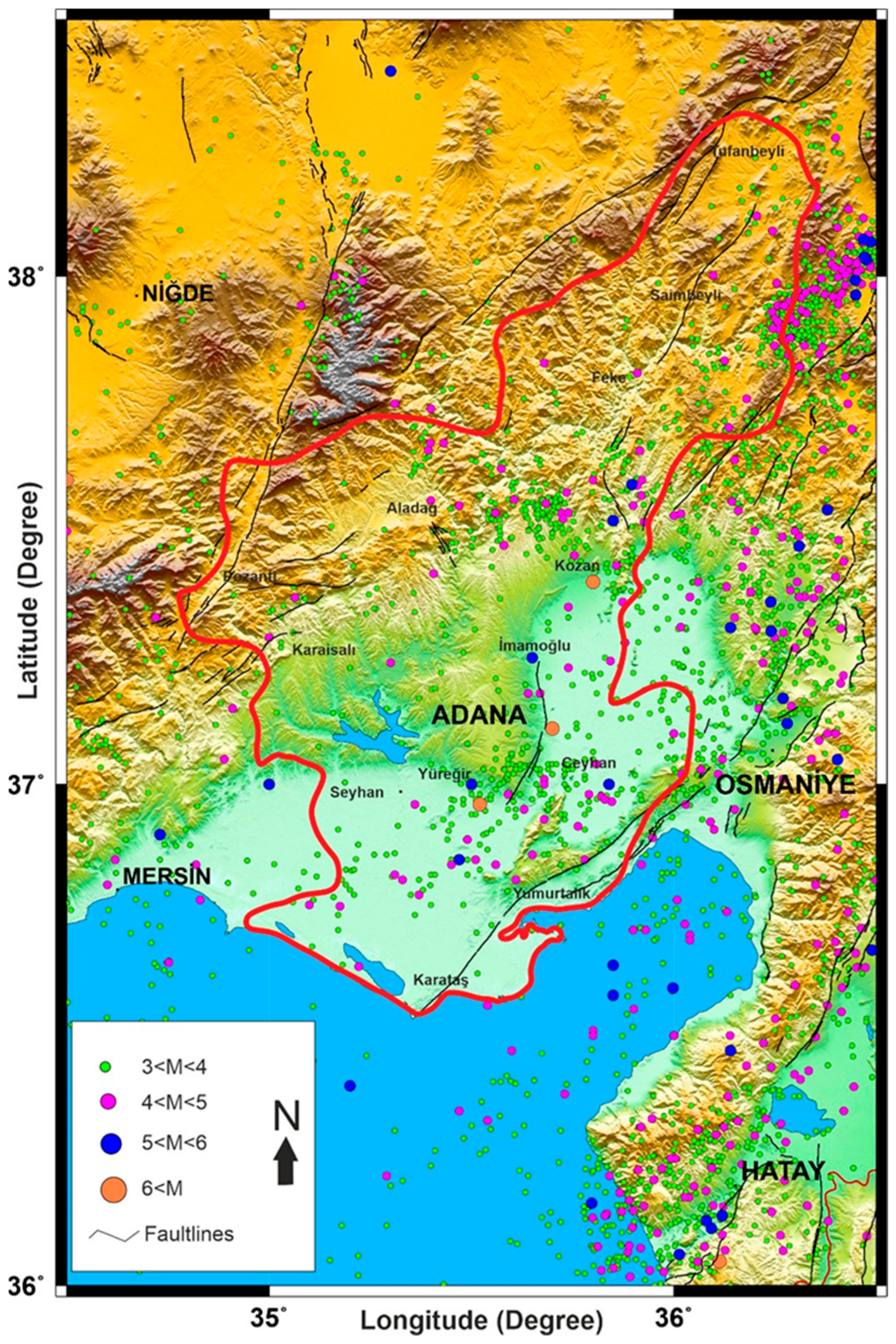
Figure 2 illustrates the significant seismic events that have taken place in and around the Adana region.
Only a limited number of valuable works have focused specifically on Adana’s geological seismicity. Ünlügenç and Akinci [
52] analyzed faults in Adana, emphasizing the region’s geological seismic potential. Ozmen [
53] assessed Adana’s geological seismicity using various hazard maps. Akinci and Ünlügenç [
54] examined the earthquakes’ geological effects on Adana, while Ünlügenç et al. [
55] evaluated the 2023 earthquakes’ geological impacts and fault lines on the region. Şahin-Horoz [
56] conducted seismicity analysis of the Adana-Kahramanmaraş-Antakya area. Adana and its surroundings have been subjected to numerous devastating earthquakes throughout both historical and instrumental periods. In
Figure 2, historical earthquakes (black circles) occurring before 1900 and instrumental earthquakes (blue circles) recorded after 1900 are shown. These earthquakes are primarily concentrated along the East Anatolian Fault and its surrounding fault lines. Among the most significant earthquakes in the Adana province is the M
w = 6.3 earthquake that occurred in 1998, causing substantial damage in Adana and its surrounding settlements. Furthermore, the 2023 Türkiye earthquakes (M
w = 7.6 and M
w = 7.7) once again highlighted the active tectonic movements in the area, demonstrating that Adana is affected not only by local seismicity but also by fault activities in neighboring regions. The distribution of instrumental period earthquakes in Adana and its nearby regions is shown in
Figure 3.
Türkiye has made significant updates in seismic hazard mapping and codes in response to the large-scale devastation and loss of life resulting from earthquakes. The Earthquake Regions Map, used since 1996, was updated in 2019 and replaced with the Türkiye Earthquake Hazard Map. Additionally, the earthquake regulation, which came into effect in 2007, was revised in 2019 and is now referred to as the Türkiye Building Earthquake Code. The concept of seismic zones, previously used to define seismic hazard, has now been replaced by site-specific seismic hazard in the latest code [
58]. In this study, seismic parameters from randomly chosen locations across 15 districts of Adana Province, impacted by the 6 February 2023 earthquakes, are analyzed and compared using the two most recent earthquake hazard maps. However, the updated version enables the determination of site-specific seismic parameters through an Interactive Web Earthquake Application [
59], which incorporates varying soil classifications and probability of exceedance values. Following the latest code, the study evaluates four earthquake ground motion levels with 50-year exceedance probabilities of 2%, 10%, 50%, and 68% (
Table 1).
For comparison purposes, this study uses the standard seismic ground motion level with a 10% exceedance probability over 50 years, which is included in both codes. The ZC soil class, regarded as the average soil category in TBEC-2018, was adopted for the analysis.
Table 2 presents the PGA (Peak Ground Acceleration) and PGV (Peak Ground Velocity) values corresponding to various exceedance probabilities at selected locations across 15 districts of Adana.
The maximum PGA value for Adana province was obtained as 0.665 g for a 2% probability of exceedance at Yumurtalık. For the same probability of exceedance, the lowest PGA value was obtained as 0.339 g for Karaisalı. For the selected locations, the PGA for the standard design ground motion level of Adana province was determined to be between 0.17 g and 0.32 g. For an equivalent level of seismic ground motion, PGV values were observed to vary between 9.857 and 17.700 cm/s.
Table 3 provides a comparison of PGA values estimated for different districts of Adana according to the latest earthquake hazard map and those reported in the previous zoning map. Additionally, the table compares the design spectral acceleration coefficients (S
DS) presented in both of the most recent hazard maps.
According to
Table 3, the greatest change occurred in Saimbeyli district. While PGA values declined in the districts of Aladağ, Karaisalı, Karataş, Pozantı, Sarıçam, Seyhan, Yumurtalık, and Yüreğir, seismic risk increased in the remaining districts. The design spectral acceleration coefficients (S
DS) have been extensively revised across Adana Province, with the most significant change observed in Saimbeyli and the smallest in Karaisalı.
4. Impact of the 6 February 2023, Kahramanmaraş Earthquakes on Adana
On 6 February 2023, two strong earthquakes with magnitudes of M
w = 7.7 and M
w = 7.6, occurring nine hours apart, hit Kahramanmaraş, marking the beginning of a catastrophic earthquake sequence. Shortly after, other significant earthquakes with magnitudes of M
w = 6.6, M
L = 5.7, M
w = 6.0, and M
w = 6.4 occurred. These devastating events claimed the lives of over 50,000 people, injured more than 100,000, and rendered over 500,000 housing units uninhabitable across 11 provinces. Among these affected provinces was Adana, including its districts. Adana is located relatively near the epicenters of the two major seismic events, which occurred in the Kahramanmaraş region (Pazarcık and Elbistan). Geographically, Adana lies to the southeast of Kahramanmaraş. The northern part of Adana, which is nearer to Kahramanmaraş, was more severely impacted by the 6 February earthquakes. The building characteristics in this region, especially in the central Çukurova district, consist mainly of structures with 10 or more stories. A significant portion of these structures was built before 1999, adhering to the old building regulations of Türkiye, with the oldest Turkish earthquake regulation dating back to 1975. A general view of the city is given in
Figure 4.
For the Kahramanmaraş earthquake sequence, considered the disaster of the century for Türkiye, the seismic recordings and distances from the epicenters for Adana during the first earthquake (the Pazarcık M
w = 7.7) are provided in
Table 4.
Approximately nine hours following the Pazarcık earthquake, a second major quake measuring M
w = 7.6 occurred in the Elbistan district of Kahramanmaraş. The PGA values recorded in Adana during these events are summarized in
Table 5.
The comparison of the maximum PGA values recorded by seismic stations in Adana after the Pazarcık and Elbistan earthquakes with the PGA values provided in the last two seismic hazard maps is presented in
Table 6.
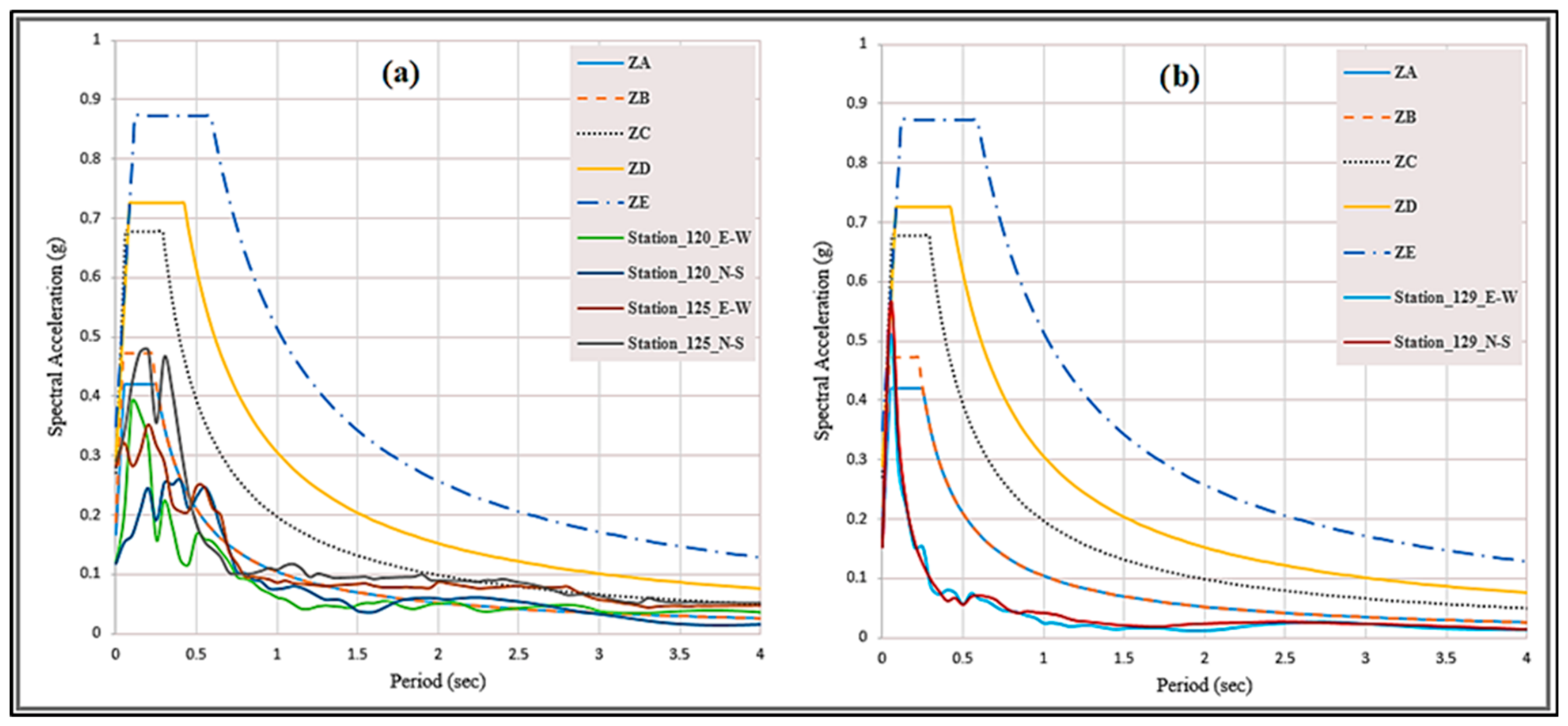
For all districts, the measured acceleration values for both earthquakes were lower than the acceleration values predicted for the standard design ground motion in the current seismic hazard map. This indicates that the acceleration value proposed in the previous hazard map was exceeded in the Tufanbeyli district during the Elbistan earthquake. During the Pazarcık earthquake, the highest intensity values were recorded as VIII for Yumurtalık and Ceyhan, while the lowest intensity values were V for Pozantı and Karaisalı. For the second earthquake, Elbistan, the highest intensity was VIII for Tufanbeyli, while the lowest intensity was V for Pozantı, Karataş, and Karaisalı. The spectral accelerations obtained from the acceleration values recorded at Stations 120 and 125, located in the Yumurtalık and Ceyhan districts during the Pazarcık earthquake, and the design spectra for five different soil types are plotted in
Figure 5a. Additionally, the spectral accelerations from the acceleration values recorded at Station 129, located in the Tufanbeyli district during the Elbistan earthquake, are also shown in
Figure 5b. Based on these graphs, the acceleration values remain below the expected levels for soil types ZA (solid and hard rock), ZB (weathered rock), and ZC (very dense sand, gravel, stiff clay layers, or weathered and highly fractured weak rock). In this study, the earthquake ground motion level defined in TBEC-2018 with a 10% probability of exceedance in 50 years (corresponding to a 475-year return period) has been considered, assuming a damping ratio of 5%.
Additionally, in this study, earthquake intensity values were determined for Adana and its districts. To achieve this, the intensity–acceleration relationship for Türkiye, developed by Bayrak [
62,
63] using regression analysis, was employed. The relationship is presented in Equation (1).
In this context, PGA denotes peak ground acceleration (cm/s
2), and I represents the earthquake intensity. Since seismic stations in 10 districts of Adana collected data, the maximum PGA values from these stations were used to calculate the intensity values for each district separately for both earthquakes. Additionally, the intensity distribution across the earthquake-affected region, including Adana, was compared using the relationship proposed by Büyüksaraç et al. [
64], which links intensity values to PGA values following the Kahramanmaraş earthquakes (Equation (2)).
Moreover, the maximum acceleration values recorded in Adana during both earthquakes were applied in Equations (1) and (2) to compute the corresponding intensity values. A comparison of these calculated intensity values is provided in
Table 7.
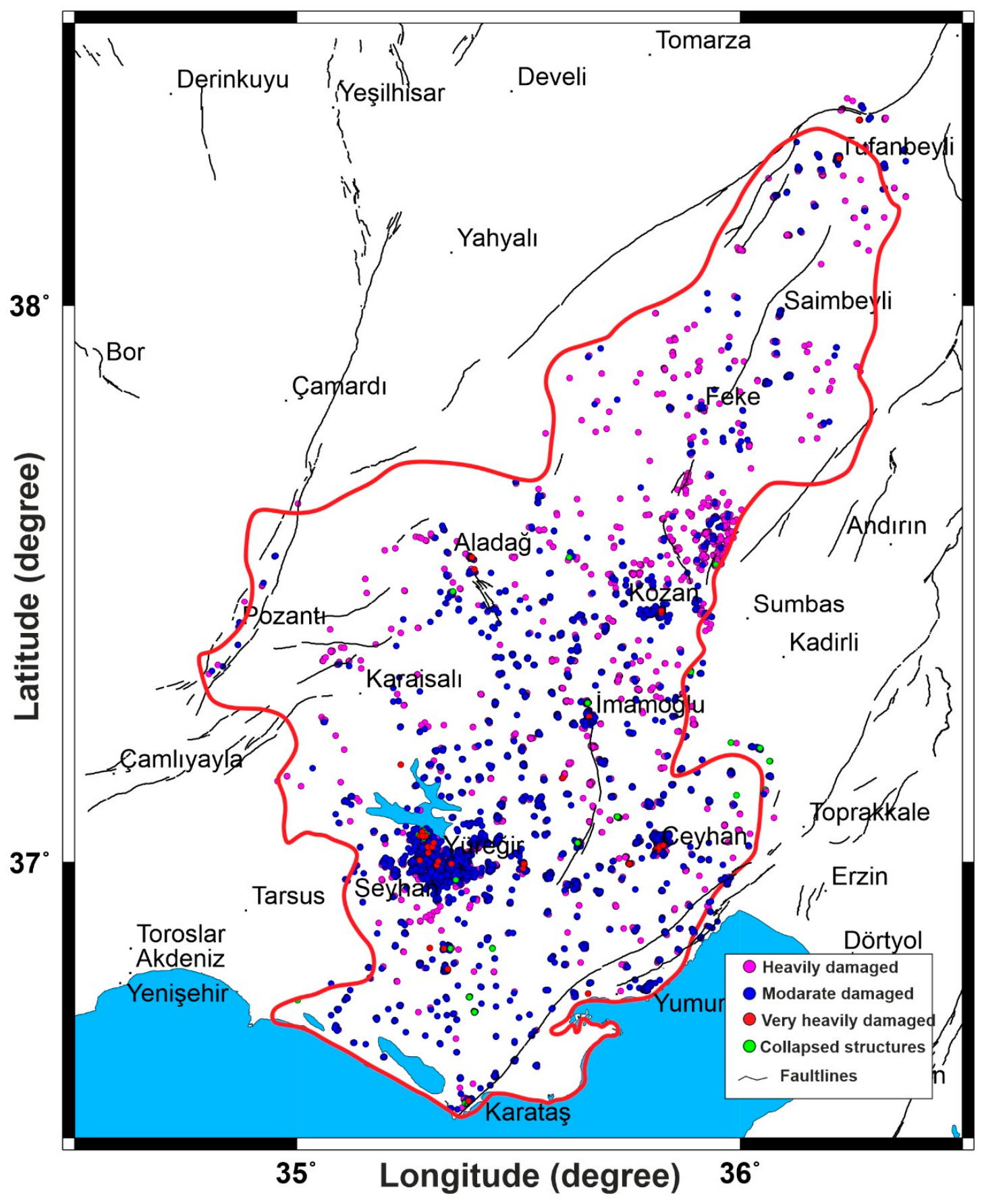
The 6 February 2023 Kahramanmaraş earthquake pair caused varying levels of structural damage and total collapses in buildings with different structural systems in Adana province. The representation of damaged buildings in Adana during these earthquakes is shown in
Figure 6.
The updated damage status of buildings and the number of removed debris for Adana province and the entire earthquake-affected region, as reported by the Ministry of Environment, Urbanization, and Climate Change in January 2024, are presented in
Table 8.
As shown in
Table 8, the total number of buildings categorized as collapsed, requiring immediate demolition, or severely damaged is 7496, which accounts for approximately 2% of the total buildings in the earthquake-affected region. This indicates that while the earthquakes caused extensive destruction in Kahramanmaraş, Hatay, and Adıyaman, their impact in Adana was more limited. However, all completely collapsed buildings in the Adana region after the 6 February earthquakes were high-rise structures.
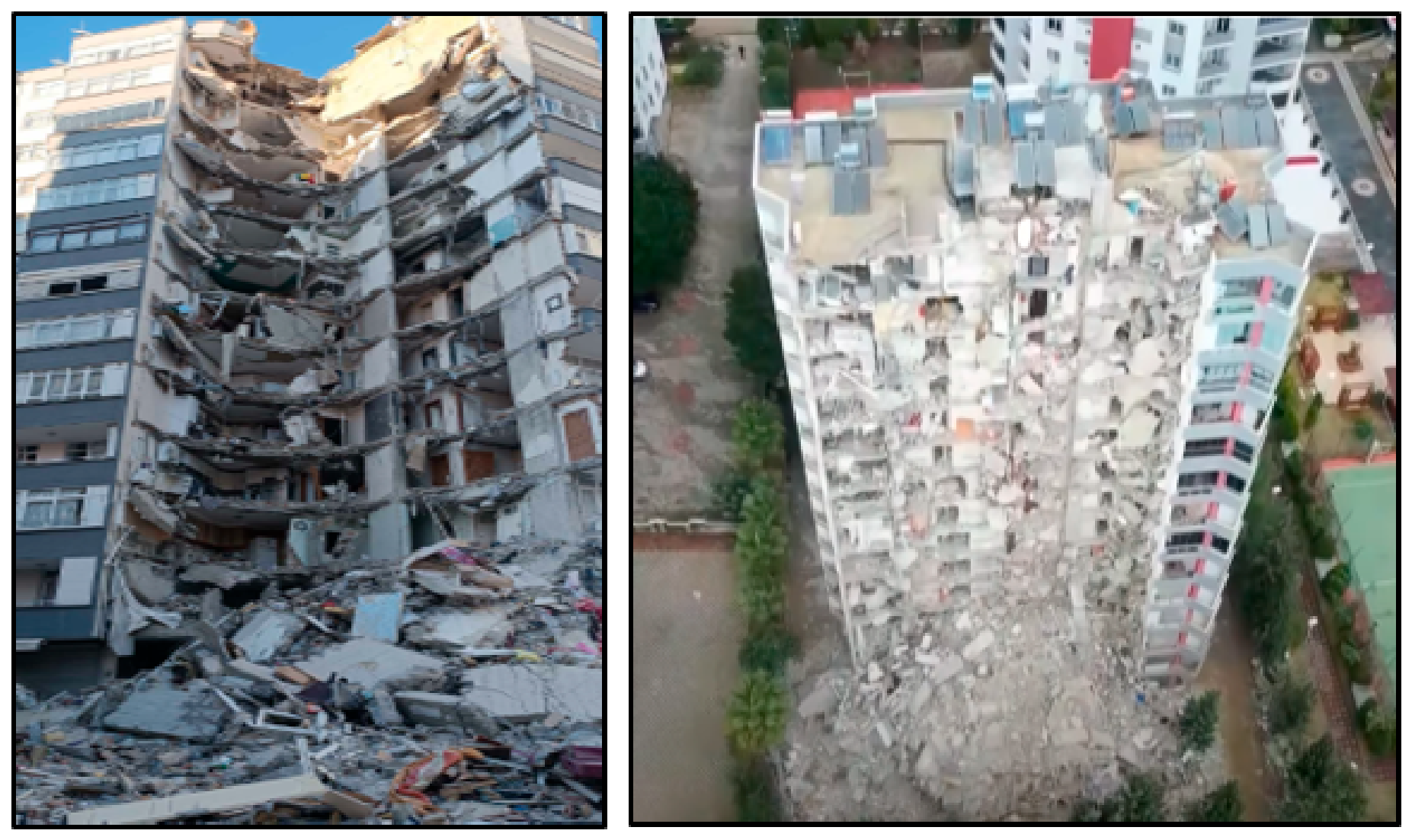
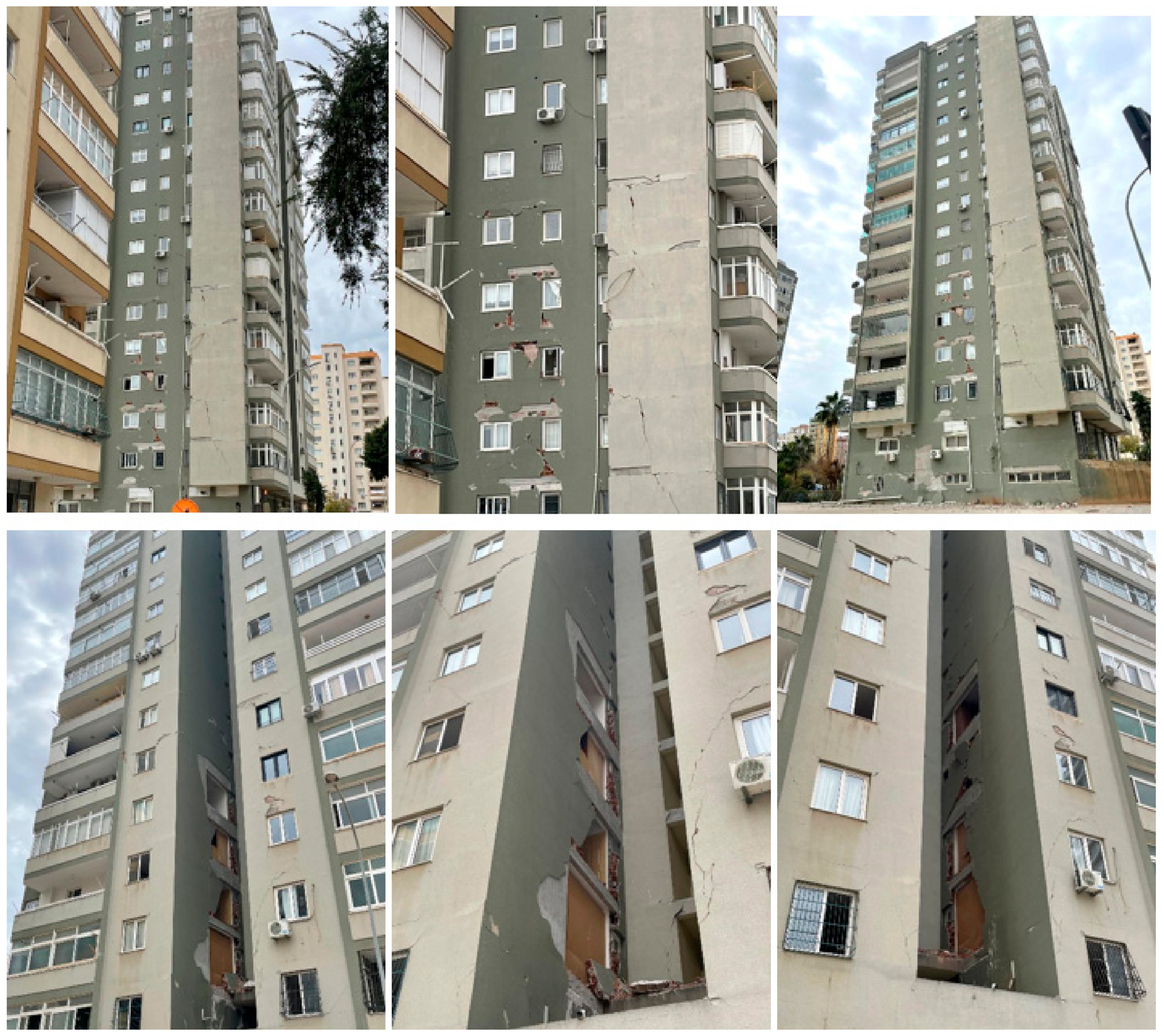
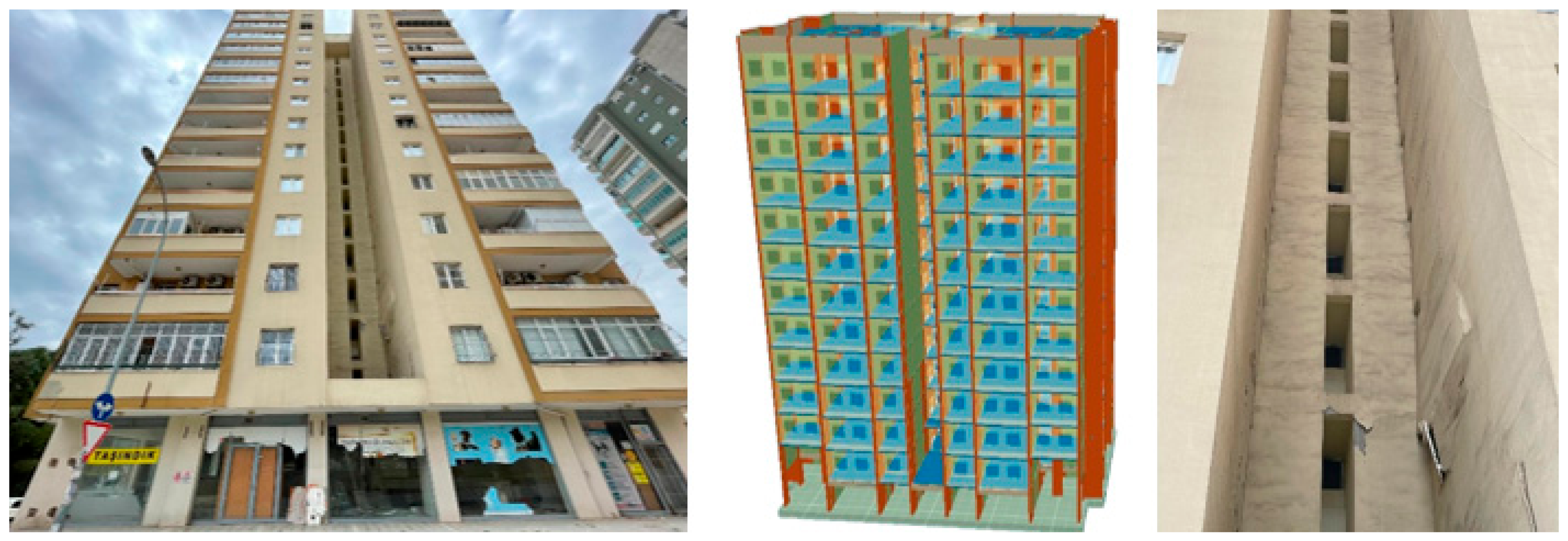
Consequently, the seismic risk for Adana persists. Earthquakes with magnitudes between 4 and 5 in the Saimbeyli district of Adana, located on the Savrun Fault, further highlight this ongoing risk. Northern Adana, which faces the highest seismic hazard, is predominantly composed of high-rise buildings, many of which are 10 stories or taller. A major seismic vulnerability for such structures is progressive collapse. This phenomenon occurs when a damaged structural element causes the failure of adjacent elements, triggering a chain reaction that results in widespread collapse. Examples of progressive collapse in two multi-story RC buildings in Adana are shown in
Figure 7.
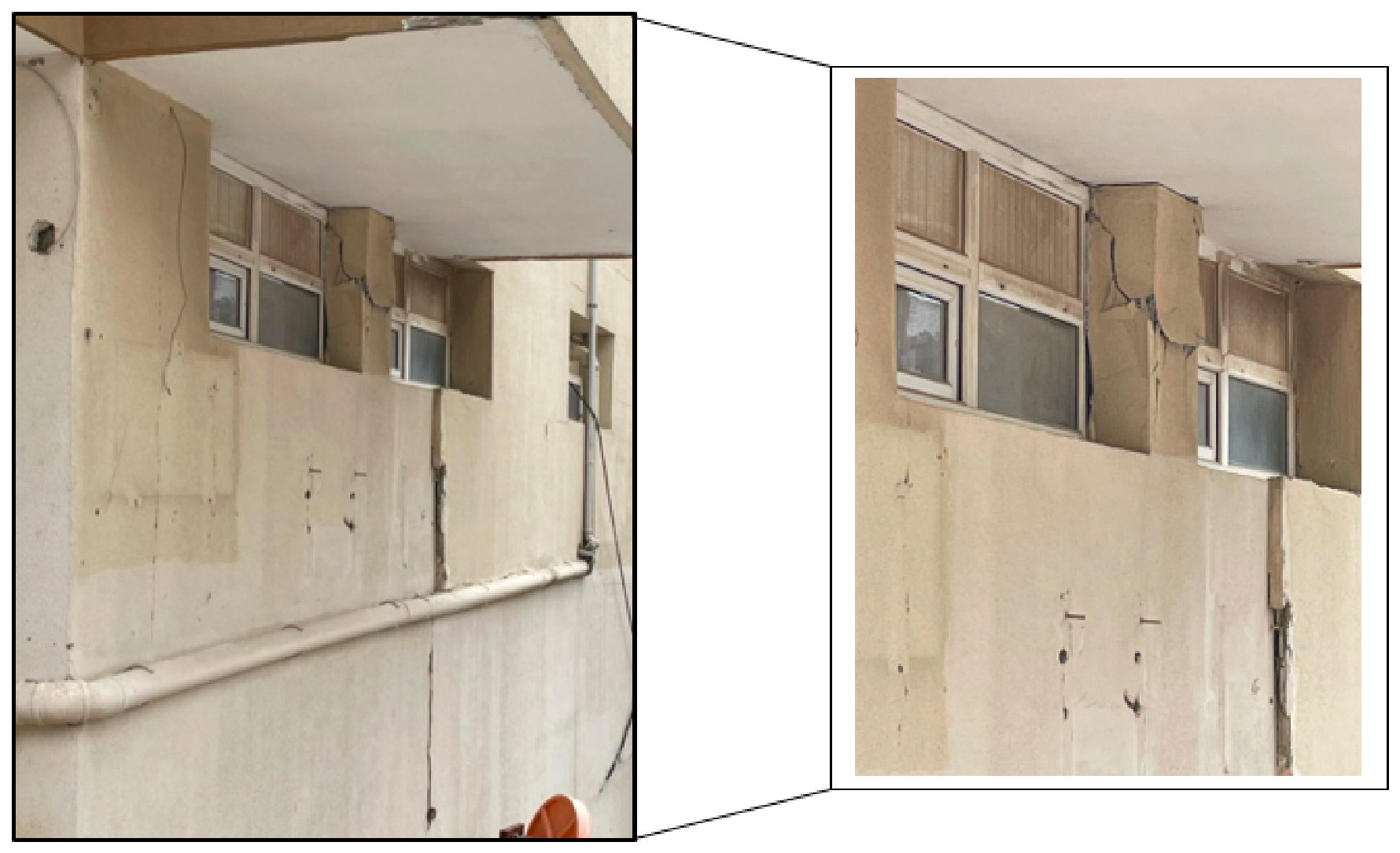
Another prevalent type of damage in multi-story reinforced concrete buildings is the failure of diaphragm discontinuities and out-of-plane extensions. Examples of such damage in the Çukurova district of Adana are depicted in
Figure 8.
The example damages at building diaphragm discontinuity parts in high-rise RC buildings were shown in
Figure 9.
In RC structures, variations in column lengths within the building, resulting from different factors, can lead to the formation of short column damage. An example of such damage is shown in
Figure 10.
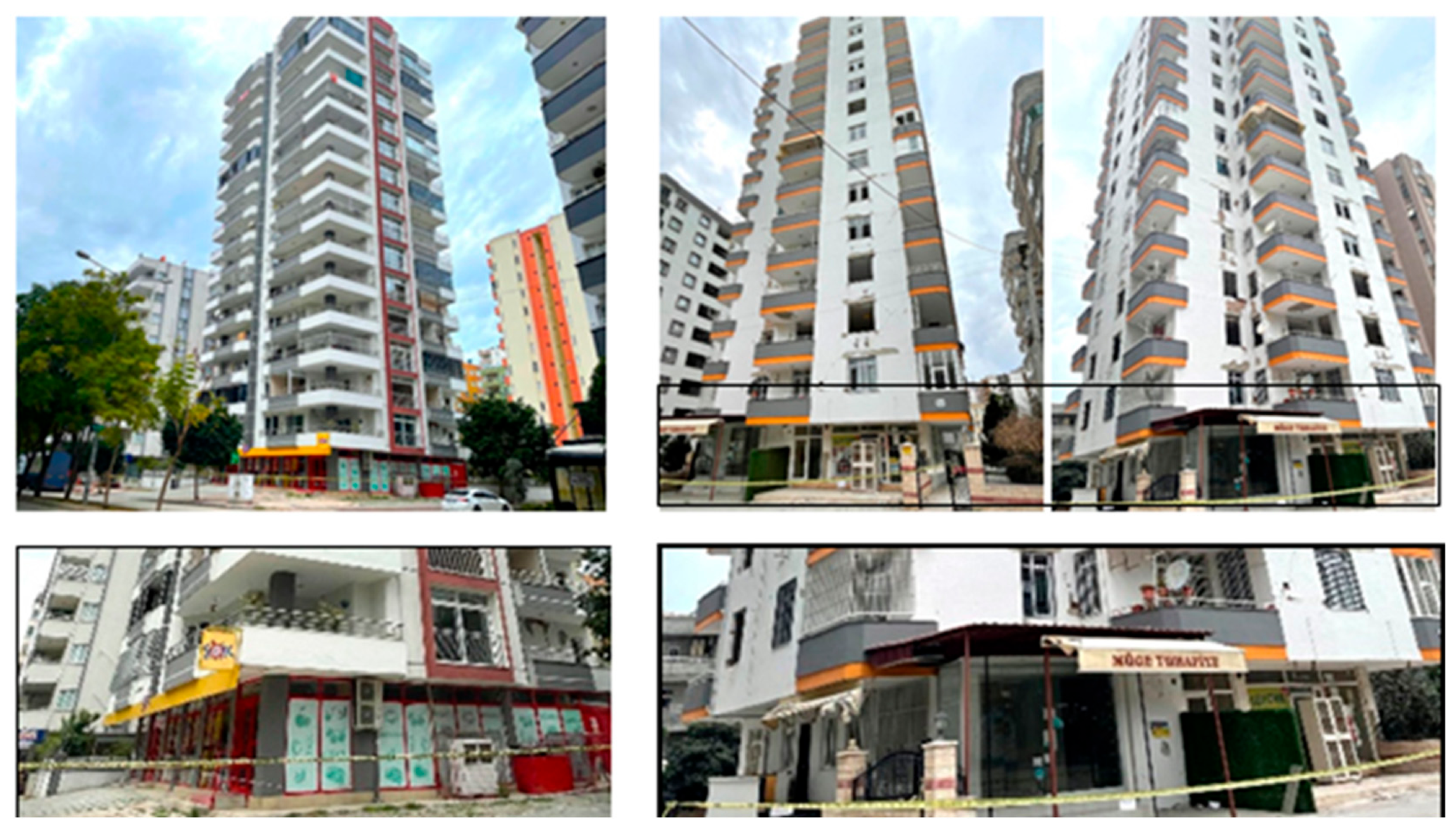
After the visual assessments conducted by teams from the Ministry of Environment and Urbanization following the earthquake, buildings identified as heavily damaged and high-risk were prioritized for evacuation, and their surroundings were cordoned off with yellow tape, indicating restricted access. Notably, many of the cordoned-off buildings were high-rise structures with lower floors featuring glass façades instead of infill walls, as they were used as commercial spaces (
Figure 11).
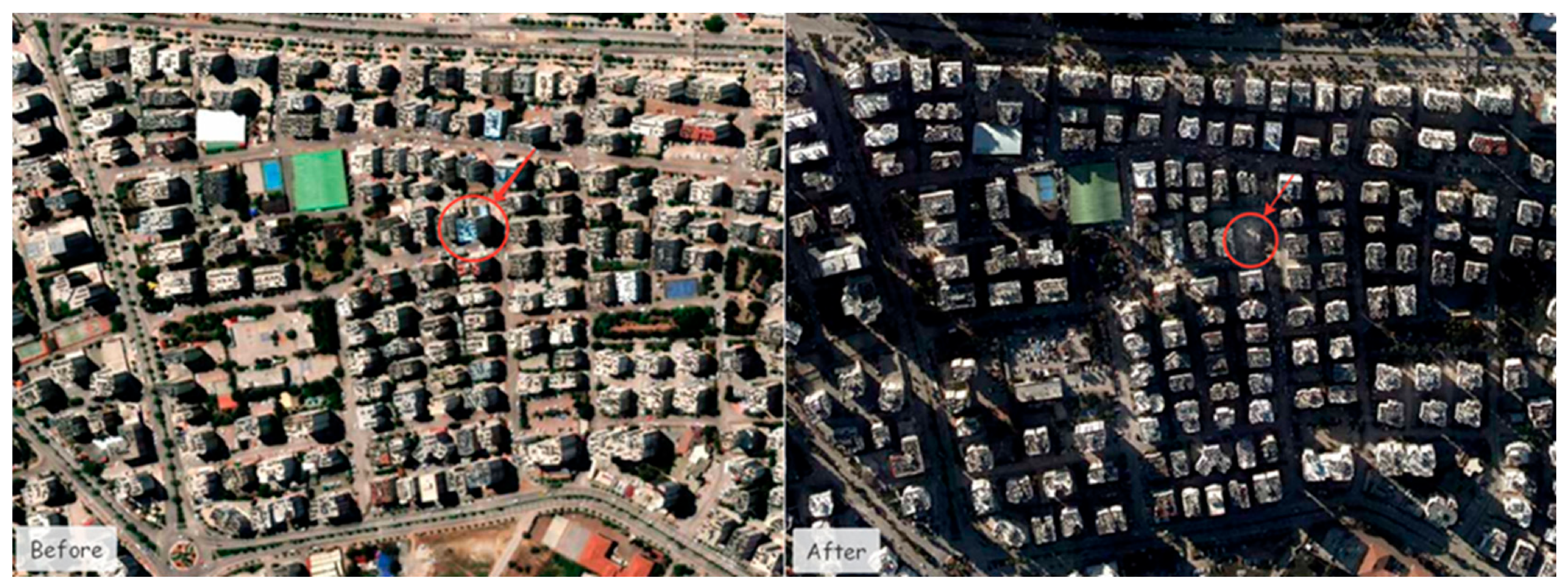
Figure 12 shows the aerial views of Güzelyalı Neighborhood in Çukurova District, Adana, before and after the earthquake, along with the location of the building that experienced total collapse.
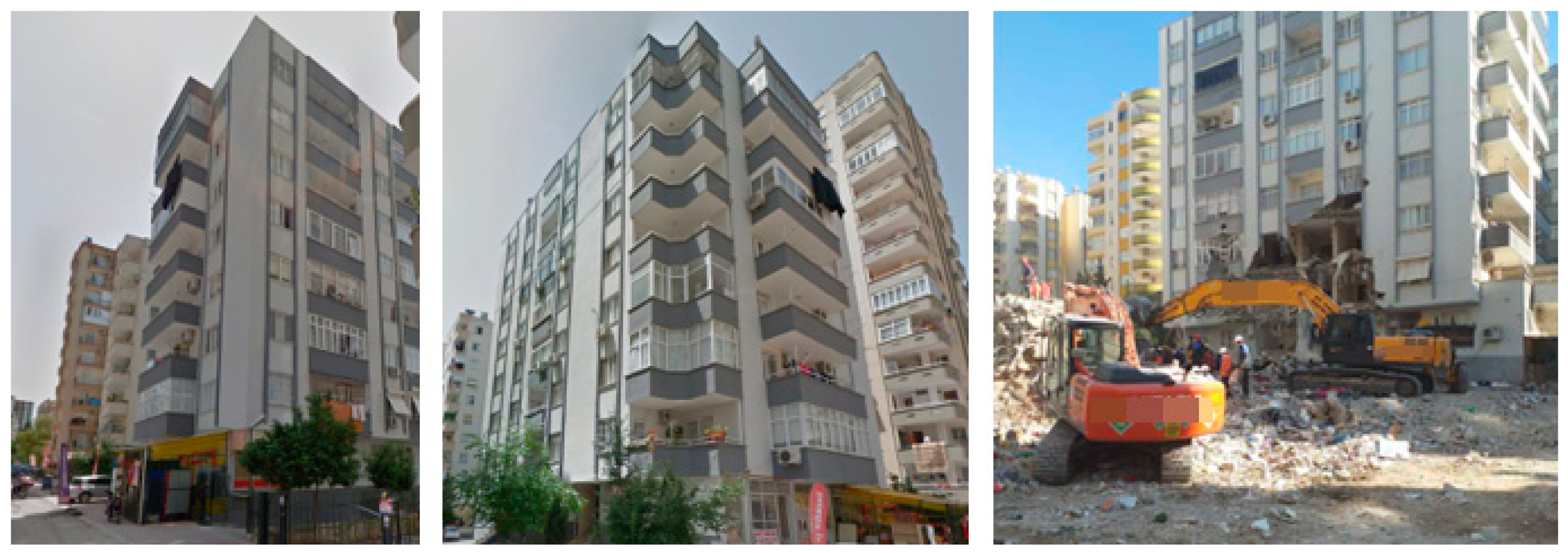
For the same multi-story reinforced concrete building that experienced total collapse, as shown in
Figure 12, the pre-earthquake condition (left) and the state after debris clearance (middle) are presented in
Figure 13. Additionally, an example of a collapse due to low material strength is shown on the right of
Figure 13. Such collapses significantly complicate post-earthquake search and rescue operations.
At the moment of the total collapse of this building (
Figure 12), it struck the adjacent structure, caused significant damage. The structure (
Figure 14) was also demolished after the earthquake. The post-earthquake condition of the building and its pre-earthquake visuals are shown in
Figure 14. For information on controlled demolition studies after earthquakes, one can refer to [
65,
66].
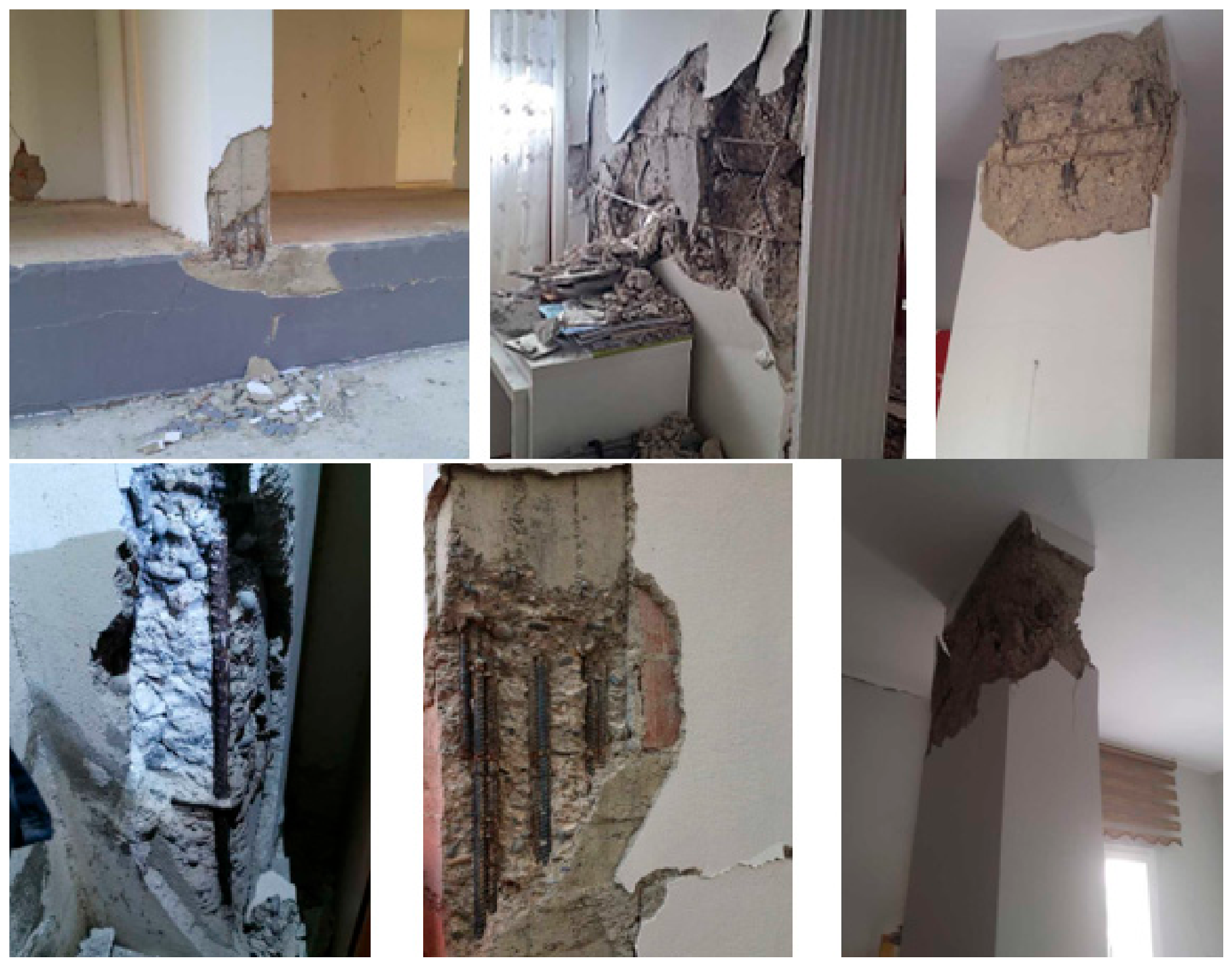
The properties of concrete and reinforcement used in reinforced concrete (RC) elements directly affect the behavior of load-bearing elements during an earthquake. Deficiencies such as inadequate reinforcement, insufficient concrete cover thickness, low-strength concrete, inadequate transverse reinforcement, and poor workmanship, when present together, cause varying levels of damage to RC elements, impacting the structural performance. Examples of damage in RC columns due to these factors are shown in
Figure 15.
Field observations have revealed that RC structures, especially those without shear walls, are more susceptible to total collapse. This finding formed the basis of the numerical analyses conducted in this study, which examine the effects of different shear wall ratios on the dynamic behavior. Additionally, changes in Adana’s seismic risk profile and the high acceleration values recorded in the 2023 earthquakes have made it necessary to re-evaluate the seismic capacity of the existing high-rise building stock and to examine the critical role of shear wall ratios in this performance.
5. Numerical Analysis
The study employs a dynamic time-history analysis procedure to evaluate the seismic performance of high-rise reinforced concrete structures. Real earthquake ground motion data was utilized to simulate the structural response under seismic loading. The Applied Element Method (AEM) solid model was adopted for the analysis, providing a detailed representation of the structural response by accurately modeling failure mechanisms and the redistribution of displacements. In the numerical model, all column bases were assumed to be fully fixed at the foundation level, representing a rigid connection between the structure and the ground. The structural system was discretized within the AEM framework using interconnected elements, where the interaction between adjacent elements was represented by a system of normal and shear springs.
The material behavior was defined using nonlinear constitutive relationships for both concrete and reinforcement steel, as described in detail in the subsequent sections of the manuscript. The adopted modeling approach has been demonstrated to provide stable and consistent results in capturing nonlinear structural response. In addition, the mesh density was selected to ensure an adequate representation of structural behavior while maintaining computational efficiency. The adopted discretization was considered sufficiently refined to capture the governing response mechanisms of the structure, and no significant sensitivity to further mesh refinement was observed in the response parameters considered. Further details regarding the mesh strategy are provided in the following sections of the manuscript.
Table 9 outlines the main steps followed in the AEM-based nonlinear dynamic analysis, ensuring a thorough assessment of the structure’s seismic behavior.
AEM combines the benefits of the continuous FEM formulation with discrete methods and has been extensively documented since 1995 [
67,
68,
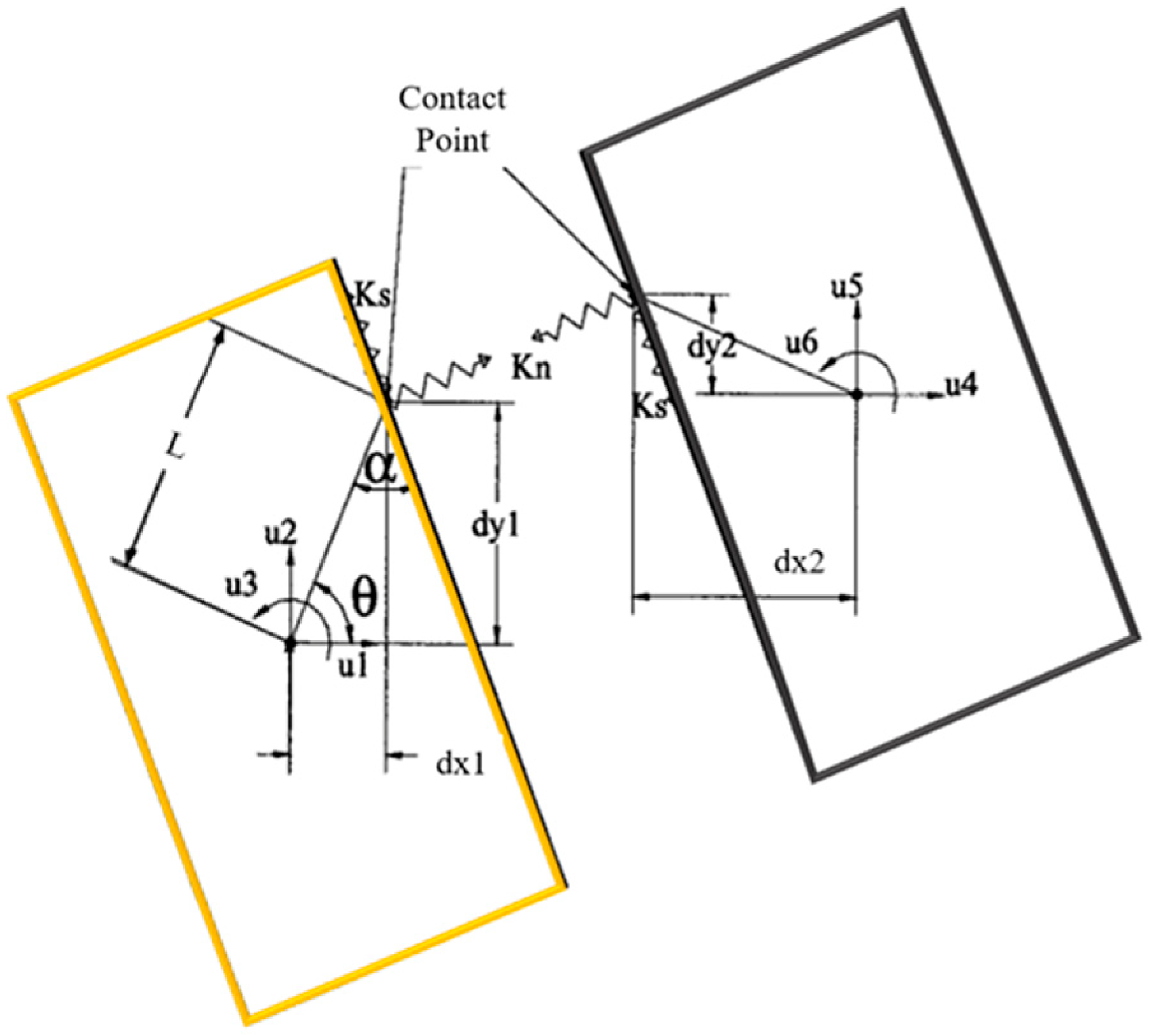
69]. In the context of material constitutive modeling, finite element method (FEM) and applied element method (AEM) adopt fundamentally different approaches. In FEM, structural elements are modeled using material constitutive laws, such as elastic, elastic–plastic, or damage-based models, with deformation computed at nodal points. Nonlinear behavior is typically handled through material or geometric nonlinearities, but element connectivity remains fixed, and large-scale cracking or collapse requires adaptive meshing or special techniques. In contrast, AEM represents structures as discrete rigid blocks connected via deformable springs, where material properties are assigned to these inter-block connections. This allows for a natural simulation of nonlinear phenomena, including cracking, separation, and progressive collapse, without re-meshing, as the blocks can detach and move independently. Consequently, while FEM is well-suited for conventional structural analyses with moderate deformations, AEM provides a more direct and realistic framework for modeling severe damage and collapse scenarios. Stresses and strains are primarily evaluated at these spring connections. In this approach, the structure is represented by small cubic rigid elements that are interconnected through normal and shear springs, as illustrated in
Figure 16.
Normal spring stiffness (k
n) resists axial loads, while shear spring stiffness (k
s) captures lateral deformations, enabling simulation of behaviors under extreme conditions (Equations (3) and (4)). Normal spring stiffness Equation (3):
where E denotes the Young’s modulus, which characterizes the material’s stiffness against axial strain. Parameter A refers to the cross-sectional area of the spring element, governing the load-carrying capacity per unit deformation. The term d corresponds to the spacing between the connected nodes, defining the geometric separation and spatial configuration within the model. Shear spring stiffness Equation (4):
here: G representing the material’s resistance to shear deformation called as shear modulus. “A
s” represents the effective shear area through which the shear forces are transmitted, while “d” denotes the distance between the connected nodes. This parameter is critical for modeling structural behavior under shear forces, such as those in earthquakes and blasts, as it defines deformation caused by transverse forces and sliding between elements. Energy dissipation is inherently accounted for through the material constitutive behavior and the progressive separation of the inter-element springs. As the structural system experiences cracking, crushing, and contact interactions, a considerable portion of the input seismic energy is dissipated via hysteretic response, frictional sliding, and localized plastic deformation. As a result, material hysteresis becomes the predominant source of energy loss, and the introduction of additional global structural damping has only a marginal effect on the overall dynamic response. Conversely, conventional Finite Element Method (FEM) models often employ linear-elastic or simplified nonlinear representations, in which energy dissipation mechanisms are not intrinsically included unless explicitly defined. In such cases, global damping models, such as Rayleigh or modal damping, must be specified to realistically reproduce the energy loss occurring under seismic excitation. Without an appropriate damping formulation, FEM solutions may conserve vibratory energy unrealistically, resulting in exaggerated response amplitudes and non-representative dynamic behavior.
Table 10 summarizes the key differences in energy dissipation and damping between AEM and FEM.
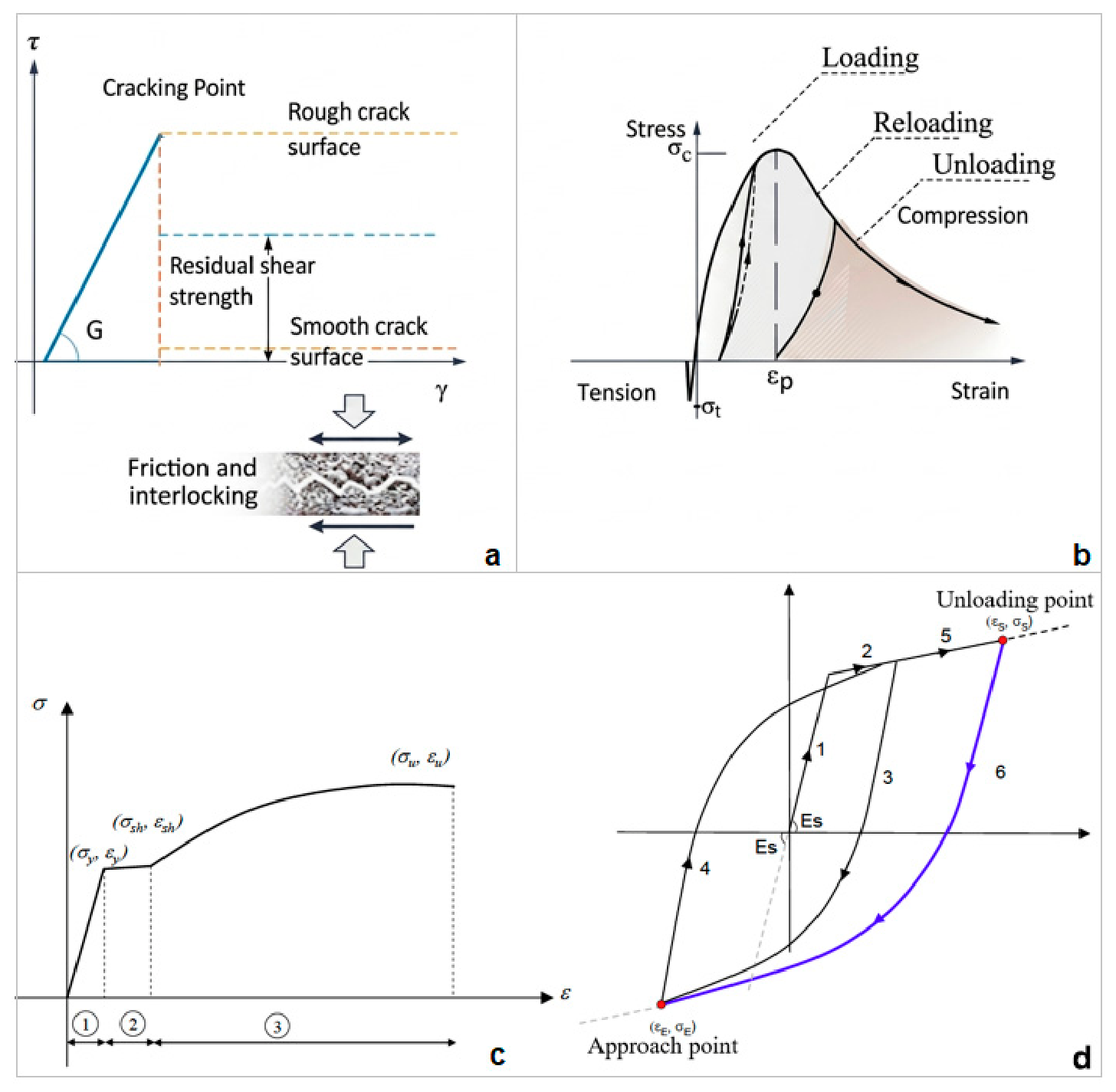
The material behavior of concrete in the AEM framework is represented through nonlinear constitutive relationships that account for both compressive and tensile responses. Under compression, the model captures the full stress–strain evolution, including pre-peak stiffness, peak strength, and post-peak softening associated with material degradation. The formulation incorporates internal damage progression and irreversible deformations, allowing realistic simulation of stiffness reduction and residual strains. Unloading and reloading paths are also considered, enabling the representation of cyclic effects and stiffness recovery. In tension, concrete is assumed to behave linearly up to the cracking point. Once cracking occurs, a significant reduction in stiffness is introduced to simulate loss of tensile capacity and the formation of discrete cracks. The redistribution of stresses following cracking is inherently captured within the numerical framework. Shear behavior of concrete was assumed to remain linear up to cracking, after which shear transfer across cracked surfaces was governed by residual shear capacity, primarily influenced by aggregate interlock and friction mechanisms. This approach enables the simulation of shear degradation and interaction between separated concrete segments under combined stress states. Reinforcing steel is modeled using a nonlinear constitutive relationship that includes elastic, yielding, and strain hardening stages. The initial response is linear elastic up to the yield point, followed by a yield plateau and subsequent strain hardening at higher strain levels. The model also accounts for cyclic behavior through appropriate unloading and reloading rules, enabling the simulation of stiffness degradation and hysteretic response under repeated loading. The tangent stiffness of reinforcement is continuously updated based on the current strain level, loading history, and direction of loading, allowing the representation of path-dependent behavior. In addition, rupture criteria are defined to capture ultimate failure of reinforcing elements under large deformation demands. Within the AEM framework, the interaction between concrete and reinforcement, as well as cracking, separation, and contact behavior, is directly represented through the discrete nature of the modeling approach. The adopted constitutive models for concrete and reinforcing steel are illustrated in
Figure 17 below [
70].
High-rise buildings are becoming increasingly common all over the world. As discussed in previous sections, the building trends and stock in Adana province as well predominantly consist of high-rise structures of 10 stories or more. Observations following the 6 February earthquakes revealed that structures with shear walls demonstrated superior performance [
15,
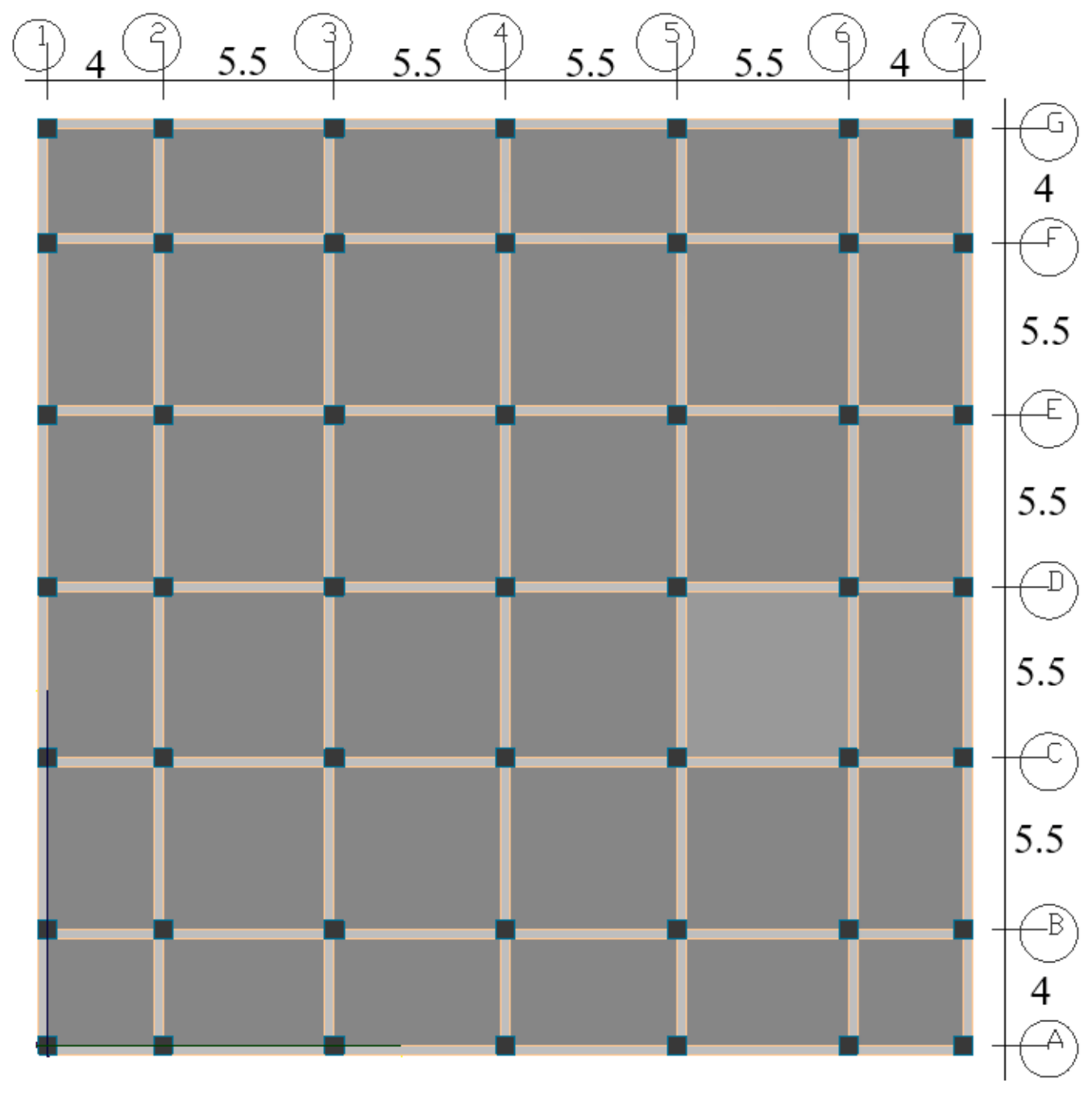
71]. Therefore, in this study, scenarios involving a 10-story building model with varying shear wall ratios and configurations were analyzed. The investigated structure is a geometrically regular RC building characterized by a square plan layout measuring 30 m × 30 m, corresponding to a total floor area of 900 m
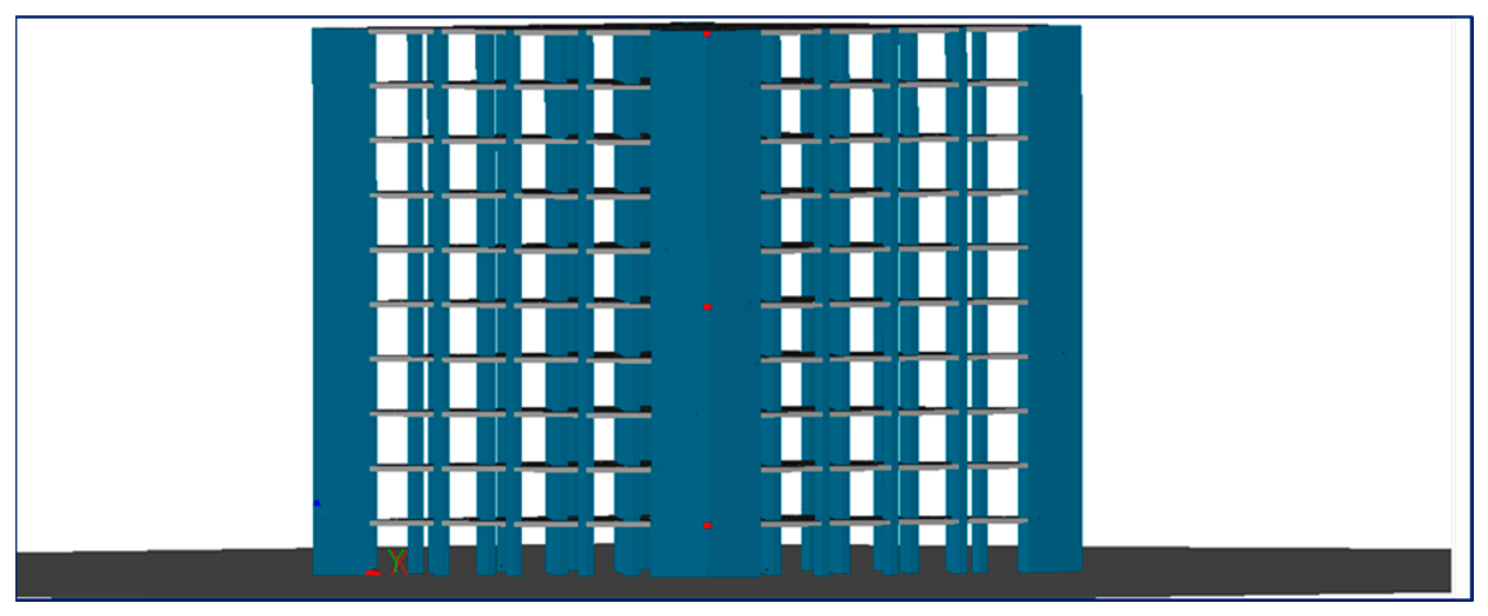
2. The structural system follows an orthogonal grid configuration with six spans in each principal direction, resulting in 36 bays overall. The span lengths are 4 m along the perimeter and 5.5 m in the interior bays. Each story maintains a constant story height of 3 m (
Figure 18). The gravity and lateral load-resisting system comprises square RC columns with cross-sectional dimensions of 60 m × 60 cm and beams of 30 cm × 30 cm. The floor diaphragm is formed by a 20 cm-thick reinforced concrete slab, ensuring adequate in-plane stiffness for lateral load transfer (
Figure 18).
The reinforcement configuration consists of 18 mm diameter longitudinal bars as well as 10 mm diameter stirrups (imperial size #3). The reinforcing steel corresponds to grade S420, with a yield strength of 420 MPa, whereas the concrete employed has a compressive strength of C30, equivalent to 30 MPa (4351 psi), as summarized in
Table 11.
Seismic records from the Kahramanmaraş earthquake were used to generalize the study’s findings, as the event represents a severe near-field seismic scenario, and the selected station is located in close proximity to the epicentral region where the highest ground motion intensities were recorded. The structural system was initially designed in accordance with the TBEC-2018, considering near-field seismic conditions and the corresponding design spectrum. Following the design stage, based on the design outcomes, the structural model was subsequently re-established within the AEM framework using the same geometric, material, and structural parameters for advanced nonlinear analysis. The selected record is representative of near-field ground motion characteristics, including concentrated energy input and pulse-type behavior, which are known to induce more demanding structural responses compared to far-field excitations. In this phase, acceleration data from Station 4614, corresponding to the M
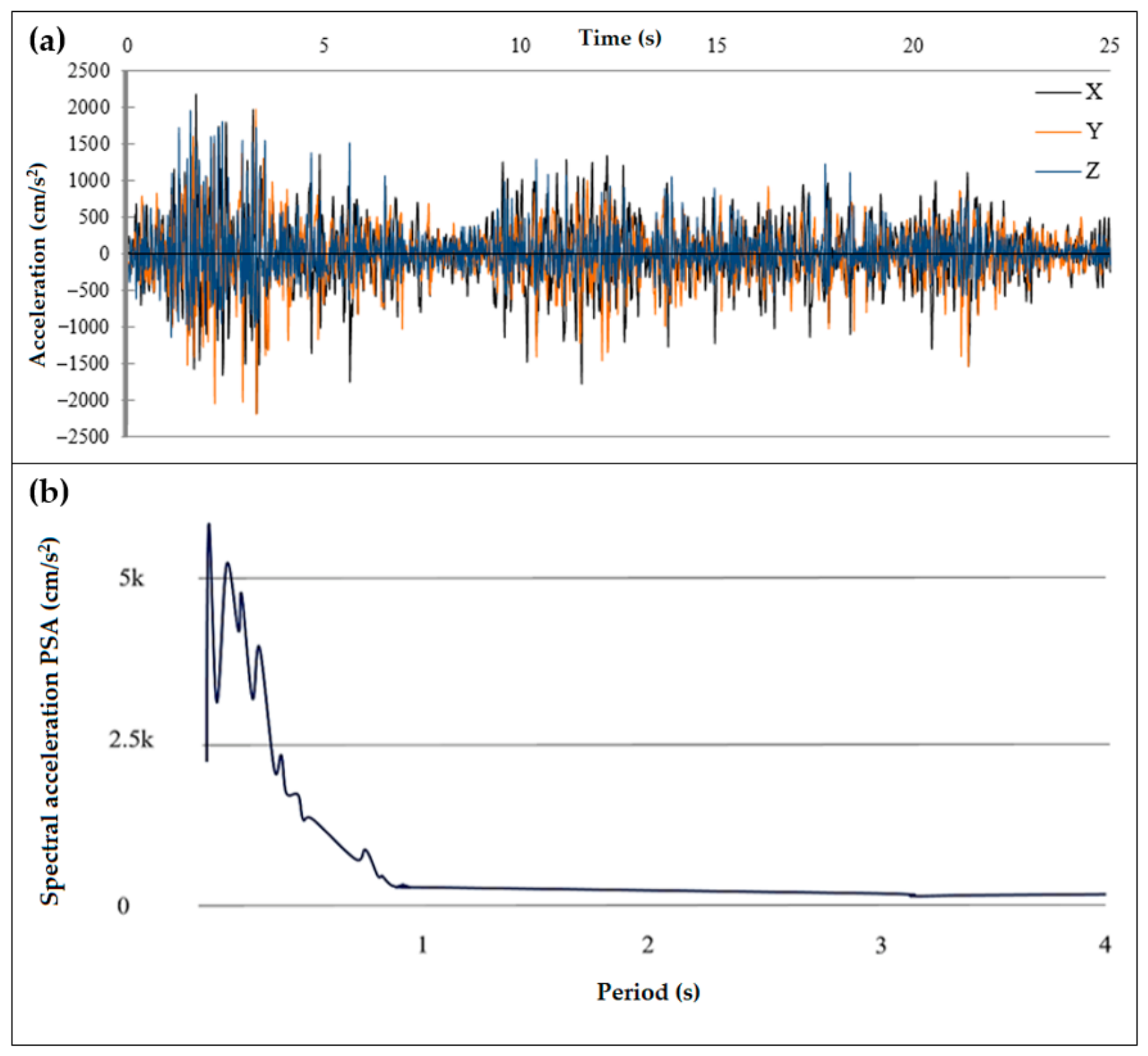
w = 7.7 6 February 2023 earthquake and located in close proximity to the region of highest recorded ground motion intensity, were selected to represent extreme seismic demand conditions. This choice was intentionally made due to the computationally intensive nature of the simulations, as the AEM model involves a highly refined discretization with a large number of interacting elements, combined with a small time step (0.01 s) and the simultaneous application of three-directional acceleration components. Therefore, a representative near-field record capturing the peak intensity portion of the ground motion was selected to ensure an efficient yet physically meaningful assessment of structural response. A 25-s segment corresponding to the peak intensity portion of the ground motion was extracted to capture the most critical phase governing nonlinear structural response while maintaining computational efficiency. As illustrated in
Figure 19a, this segment was obtained by excluding portions of the full record characterized by near-zero acceleration amplitudes, particularly those observed at the beginning and toward the end of the record, which were considered to have negligible influence on the dynamic response of the structure. The analysis was conducted using a time step of 0.01 s, consistent with the resolution of AFAD (Disaster and Emergency Management Authority of Türkiye) records [
61]. The three-directional components of the selected record were applied simultaneously to evaluate the structural response under realistic seismic loading conditions (
Figure 19a,b). It is noted that in this phase the adopted record was used in its original form without spectrum matching, as the primary objective of the rest of the study is to assess structural behavior under actual near-field earthquake input following code-compliant design.
Initially, the structural model was analyzed using a commonly used software program in the country. Reinforcement details for the structure were obtained in accordance with the provisions of the current seismic code [
58]. Subsequently, the building was modeled and reanalyzed using the AEM. Several simulation scenarios were conducted to evaluate the structural response of the building under distinct conditions (
Table 12). The lap splice lengths were increased in accordance with the TBEC-2018 code to ensure proper anchorage. For the 10-story building model in question, shear walls were incorporated in three configurations, with different shear wall-to-plan area percentages: the first scenario was 1.14%, the second one was 1.54%, and the last one was 2.1% (Scenario 3). It is important to emphasize here that this ratio has been individually calculated for each direction (x and y). In other words, the total shear wall ratio of the building actually corresponds to twice the given ratios. These configurations allow for a comprehensive assessment of the impact of structural modifications on the seismic performance of high-rise buildings. To capture potential plastic hinge formation more accurately, the mesh density at the column ends was refined to a spacing of 30 cm. This setup was determined based on half of the column’s cross-sectional dimension, consistent with standard practices [
70,
72,
73].
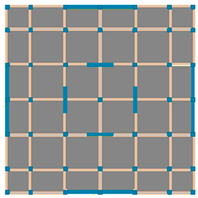
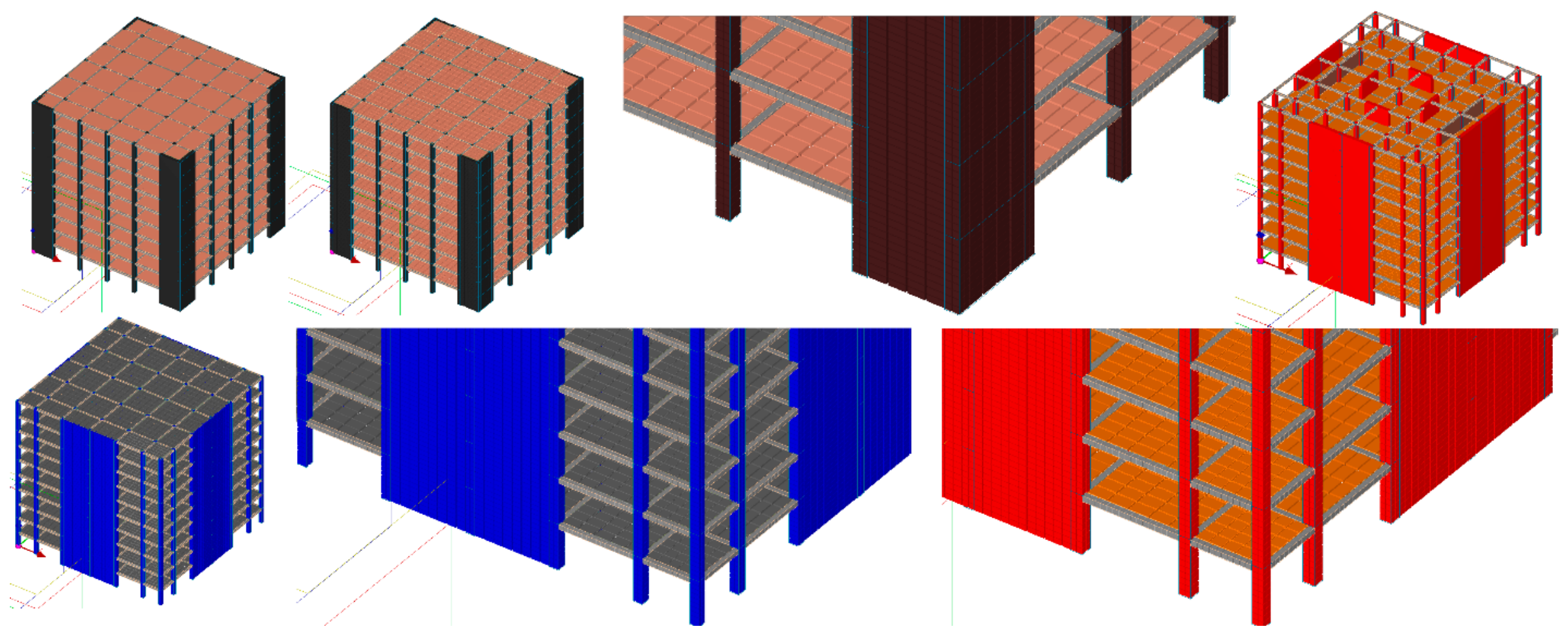
The Scenario 1 model includes shear walls symmetrically placed at the outermost corners of the edge axes in both directions. In this scenario, the ratio of the total shear wall area to the plan area is 1.14%. In Scenario 2, the shear walls are again positioned along the edge axes but located at the midpoints of the edges rather than at the corners. Scenario 3, the final scenario, involves adding additional shear walls to the central regions of the building based on the Scenario 2 model (
Table 12).
After performing the nonlinear seismic analysis, the horizontal displacements at the top ends of the corner columns were examined for all three scenarios. Furthermore, horizontal displacement values were recorded at the upper end of the columns located at three specific story levels in each scenario: the top of the first story (1st floor), the mid-height story (5th floor), and the topmost story (10th floor). In addition to the horizontal displacements, the vertical displacements in the Z-direction were evaluated for the top end of the column located at the geometric center of the plan on the 10th story for each scenario. By analyzing these data, horizontal displacement variations along different story levels and vertical displacements at the topmost point were obtained for varying shear wall ratios. This approach provides a comprehensive understanding of the structural response under different configurations of shear wall distribution.
To discuss the general mesh strategy, the columns were divided into ten elements along their height, corresponding to half of the cross-sectional dimension for a 3 m column. To capture the potential development of plastic hinges, the mesh density was refined to a spacing of approximately 30 cm (11.8 in) both vertically and horizontally, resulting in four subdivisions across the column plan. This refinement was established using half of the column’s cross-sectional dimension, in accordance with standard modeling practices. The beams were meshed with a similar density, as the AEM model tends to yield more accurate results when approaching a cubic element shape. For the slabs, an effort was made to maintain mesh compatibility with the adjoining beams. Additionally, the Thin Structure Correction Factor (TSCF) was applied to prevent unrealistic displacement estimations in slabs caused by aspect ratio discrepancies, with the correction automatically implemented within the software.
Figure 20 illustrates the meshing layouts of the three model types, each represented with different colors.
Notably, infill walls were not included in this study; only the effects of the shear walls were examined. However, future studies will also investigate the combined effects of infill walls and different shear wall configurations. This initial phase focuses solely on shear wall behavior, reflecting our observation that, in the country, infill walls, typically brick or bims block, are often not treated as primary structural elements in design calculations. Nevertheless, post-earthquake observations have repeatedly highlighted that infill walls can significantly influence building response, particularly in cases with pilots (open ground floors), where the absence of lateral resistance at the ground floor markedly affects the fundamental period. Incorporating both infill [
74] and shear walls in subsequent analyses will therefore provide comprehensive understanding of real-world seismic performance [
75,
76].
5.1. Numerical Analysis Results
The applied element method (AEM) has been validated repeatedly in the literature against experimental observations and well-established numerical benchmarks. Examples include collapse and debris simulations of real structures [
77,
78], nonlinear dynamic/tsunami and seismic vulnerability analyses where AEM predictions were shown to be consistent with observed behavior and established procedures [
79], and comparative AEM–FEM studies for progressive collapse assessment [
80]. These studies collectively demonstrate that AEM produces robust, credible results for collapse, debris generation, and seismic performance problems and therefore provide a sound basis for validating the present model.
Comparative studies involving progressive collapse scenarios, including validation against benchmark experiments such as those conducted by the National Institute of Standards and Technology (NIST), have shown that both AEM and FEM can provide acceptable agreement with experimental data, while AEM generally yields lower deviation levels and improved representation of failure propagation [
51]. In the study, a detailed investigation of mesh sensitivity and discretization strategies was also presented, supported by both theoretical considerations and extensive numerical analyses. In particular, recent studies have demonstrated the capability of AEM to accurately simulate collapse progression, element separation, and debris dispersion in reinforced concrete structures. For instance, a high-rise reinforced concrete building demolition was simulated using an AEM-based solid modeling approach, where the predicted collapse mechanism and debris distribution were visually validated against real controlled demolition footage obtained from UAVs and fixed cameras, showing good agreement in both global motion and debris patterns [
81]. In addition, several studies have investigated the performance of AEM in comparison with conventional finite element methods (FEM) [
51,
82]. The fundamental differences between the two approaches and the applicability of AEM in structural analysis have been explored through frame analyses and sensitivity to element size, demonstrating consistent and reliable results. Furthermore, validation studies focusing on reinforced concrete slab behavior under both small and large displacement regimes have confirmed that AEM is capable of accurately reproducing nonlinear structural response [
83]. Additional experimental-based investigations on slab systems subjected to progressive collapse conditions have also demonstrated good agreement between AEM predictions and observed behavior [
84]. Beyond building-scale applications, AEM has also been successfully applied to large infrastructure failures, such as the simulation and validation of the Morandi Bridge collapse in Italy, further highlighting its robustness in capturing complex failure mechanisms at different structural scales [
85].
Collectively, these studies demonstrate that AEM provides a robust and credible framework for analyzing collapse behavior, debris generation, and severe damage mechanisms in reinforced concrete systems, thereby offering a sound and well-validated basis for its adoption as the primary analytical tool in the present study. Based on this validated framework, this section presents the results obtained from the analysis of a ten-story high-rise building with varying shear wall ratios and configurations. The structure, designed with a symmetrical grid layout and reinforced concrete elements, was modeled using advanced simulation techniques to assess its performance under different scenarios. The analysis was conducted using specialized structural evaluation software, with particular focus on the influence of shear wall distribution and ratio on the overall structural response.
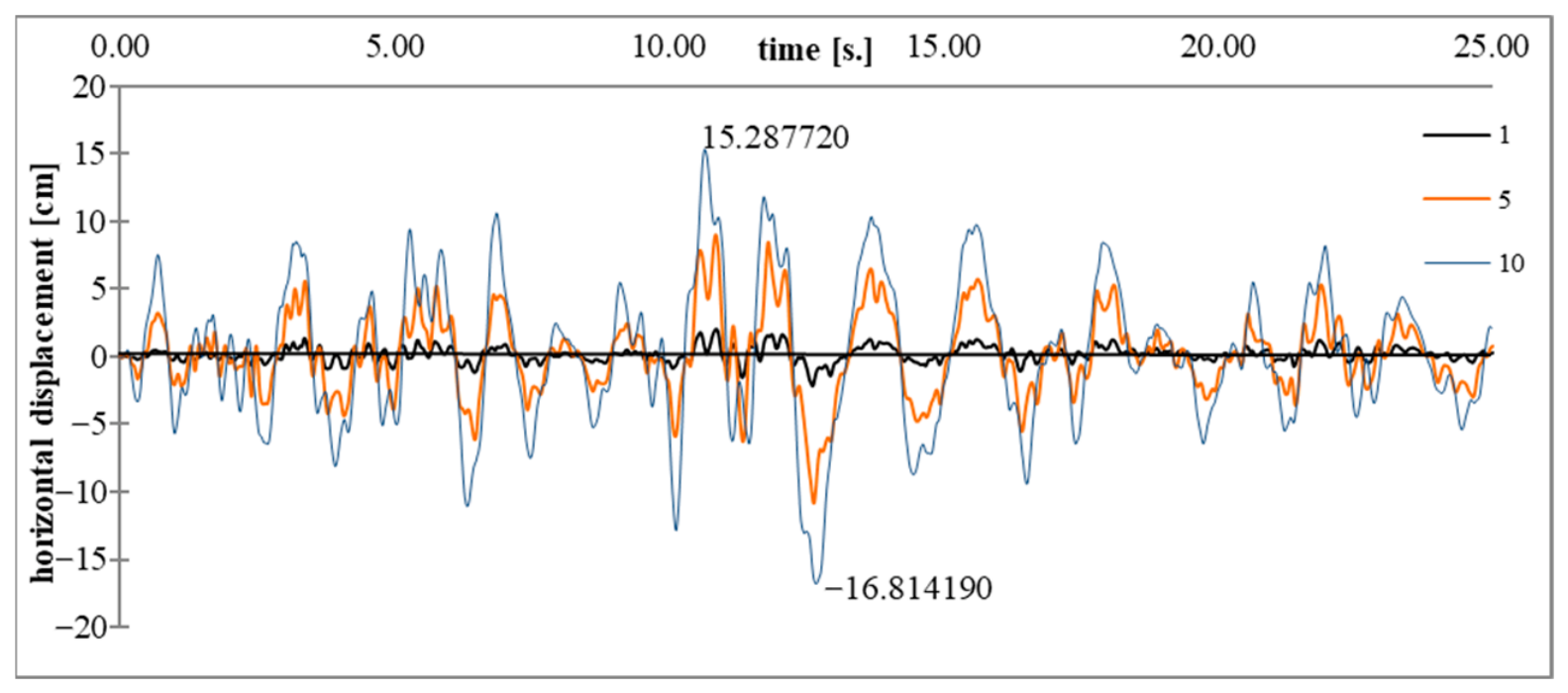
Scenario 1 (shear wall ratio: 1.14%): In this scenario, a ten-story building with a plan shear wall ratio of 1.14% was analyzed for earthquake-induced displacements at the corner column’s top point for the 1st, 5th, and 10th stories. The maximum horizontal displacement was recorded as 15.29 cm at the top of the 10th story, while the displacements at the 5th and 1st stories were significantly lower, reflecting reduced amplitudes at lower elevations (
Figure 21). The limited distribution of shear walls, concentrated at the building corners, resulted in a relatively low shear wall-to-plan ratio, providing insufficient stiffness to effectively control lateral displacements under seismic loading (
Figure 22). This led to higher structural deformations. At the top story, the maximum horizontal displacement ranged from +15.29 cm to −16.81 cm, yielding a total displacement range of approximately 32.10 cm. These findings underscore significant lateral oscillations, highlighting the inadequacy of stiffness in this configuration and the adverse impact of the low shear wall ratio on the building’s seismic performance. Vertical displacements (Z direction), as shown in
Figure 23, will be collectively discussed later.
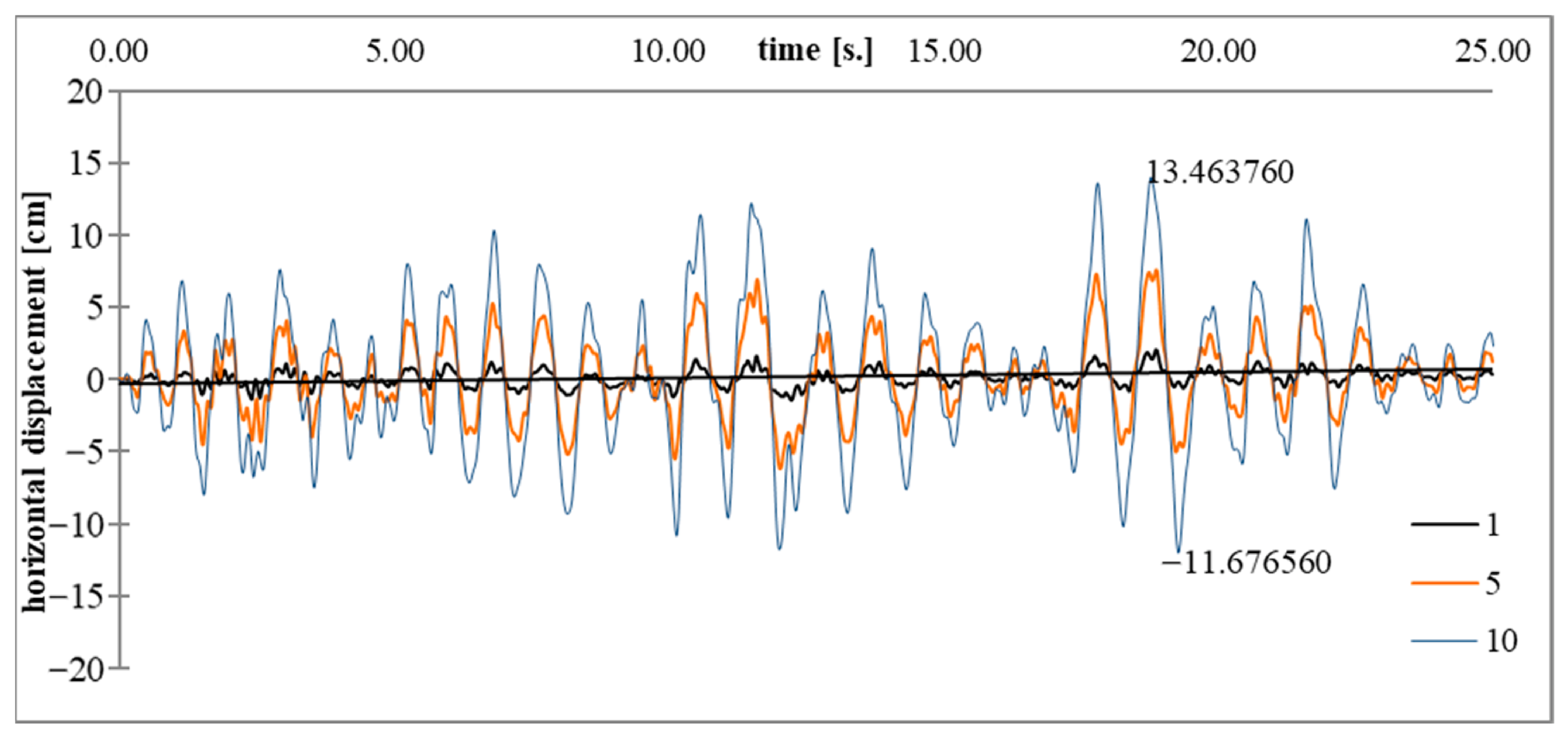
Scenario 2 (shear wall ratio: 1.54%): In Scenario 2, introducing shear walls with a 1.54% shear wall-to-plan ratio along the midpoints of the building edges reduced the maximum horizontal displacement at the 10th story to 13.46 cm, while the 5th and 1st stories also exhibited decreased displacements (
Figure 24). Vertical displacements (Z direction), given in
Figure 25, will be collectively discussed later. The mid-edge positioning of shear walls (
Figure 26) significantly enhanced the lateral stiffness of the structure, allowing for better control of seismic-induced deformations and distributing lateral forces more uniformly compared to Scenario 1. The maximum displacements at the top story were reduced to +13.46 cm and −11.67 cm, resulting in a total displacement range of approximately 25.13 cm. This reduction in overall displacement demonstrates a moderate improvement in structural performance, attributed to the increased shear wall ratio and its favorable placement within the structural plan.
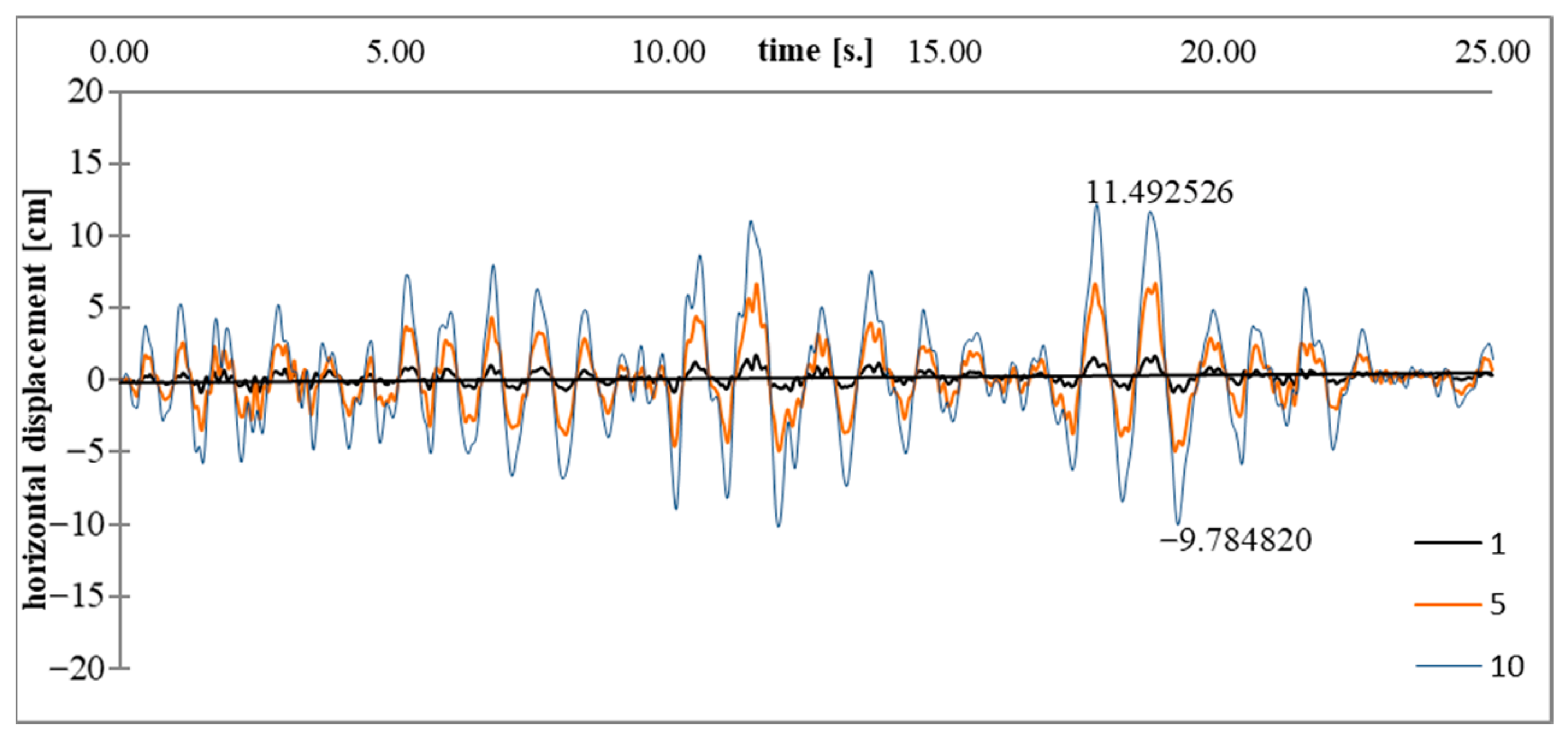
Scenario 3 (shear wall ratio: 2.10%): In the last scenario, with a shear wall ratio of 2.1%, the maximum horizontal displacement decreased further to 11.49 cm at the top of the 10th story, with similar reductions observed at the 5th and 1st stories (
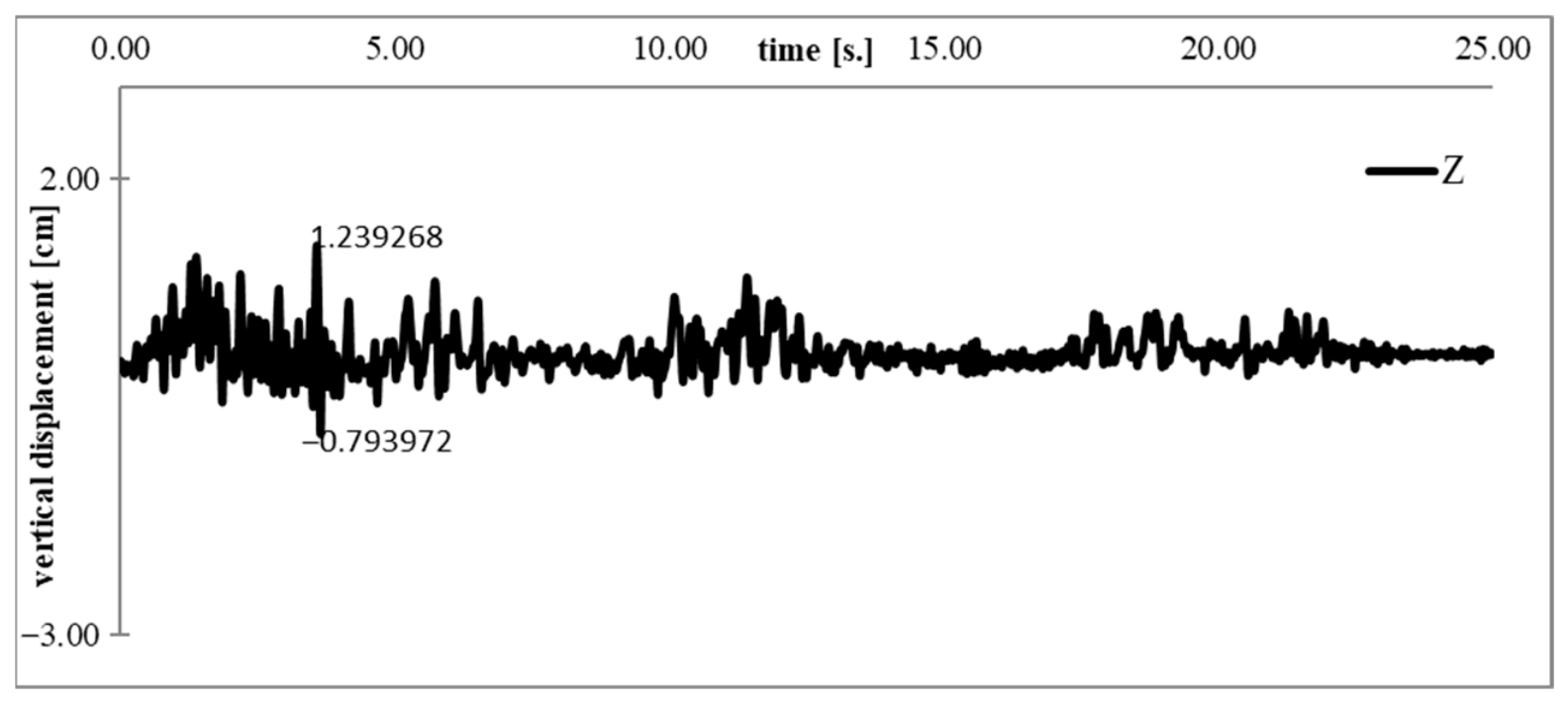
Figure 27). Vertical displacements (Z direction), as shown in
Figure 28, will be collectively discussed later. The addition of shear walls in the building’s central regions significantly improved lateral stiffness, minimizing deformations and demonstrating the most effective configuration among the three scenarios (
Figure 29). The maximum displacements were reduced to +11.49 cm and −9.78 cm, resulting in a total displacement range of approximately 21.27 cm. These results highlight that increasing the shear wall-to-plan ratio and optimizing the distribution of shear walls substantially enhance the seismic performance of high-rise buildings. This scenario achieved the greatest reduction in overall oscillation, underscoring the effectiveness of a 2.1% shear wall ratio in improving seismic resistance.
5.2. Story-Level Horizontal and Vertical Displacement Observations
Horizontal displacements (X and Y direction):
Top story (10th floor): The top story experienced the largest horizontal displacements across all scenarios due to its greater exposure to lateral forces and reduced constraints compared to lower levels. The progressive reduction in displacement values from Scenario 1 to Scenario 3 underscores the critical importance of shear walls placement and density in mitigating top-story deformations.
Middle story (5th floor): At the 5th story, displacement trends followed a similar pattern across all scenarios, with values consistently lower than those at the top story. The reductions in displacement between scenarios indicate improved mid-height stiffness, though the middle stories remained susceptible to moderate lateral forces.
Bottom story (1st floor): Horizontal displacements at the 1st floor was the smallest among all scenarios, primarily due to the significant constraint provided by the foundation and the cumulative stiffness of the upper stories. Nevertheless, Scenario 3 demonstrated further reductions in first-story deformations, suggesting that the enhanced shear wall configuration contributed to a more stable base response.
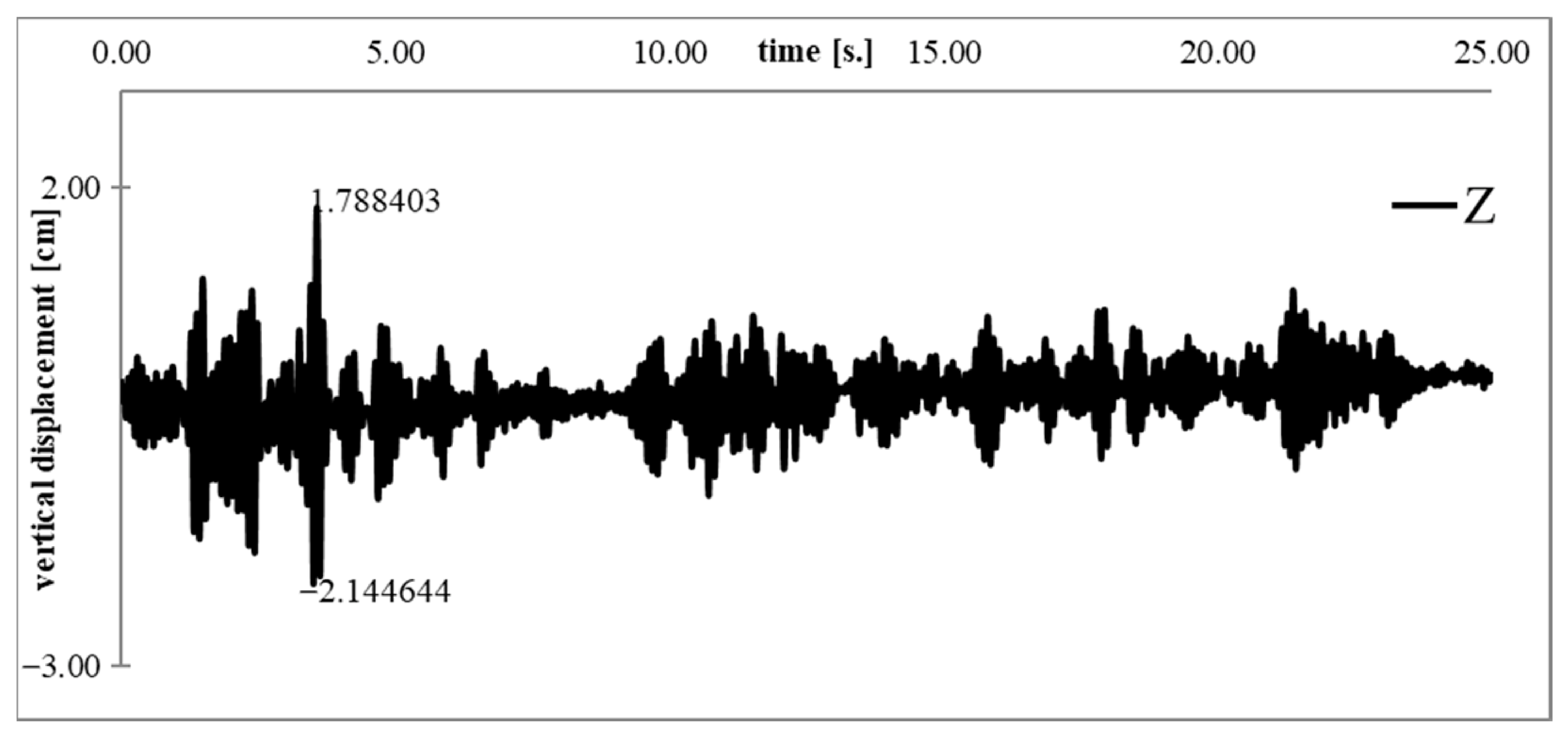
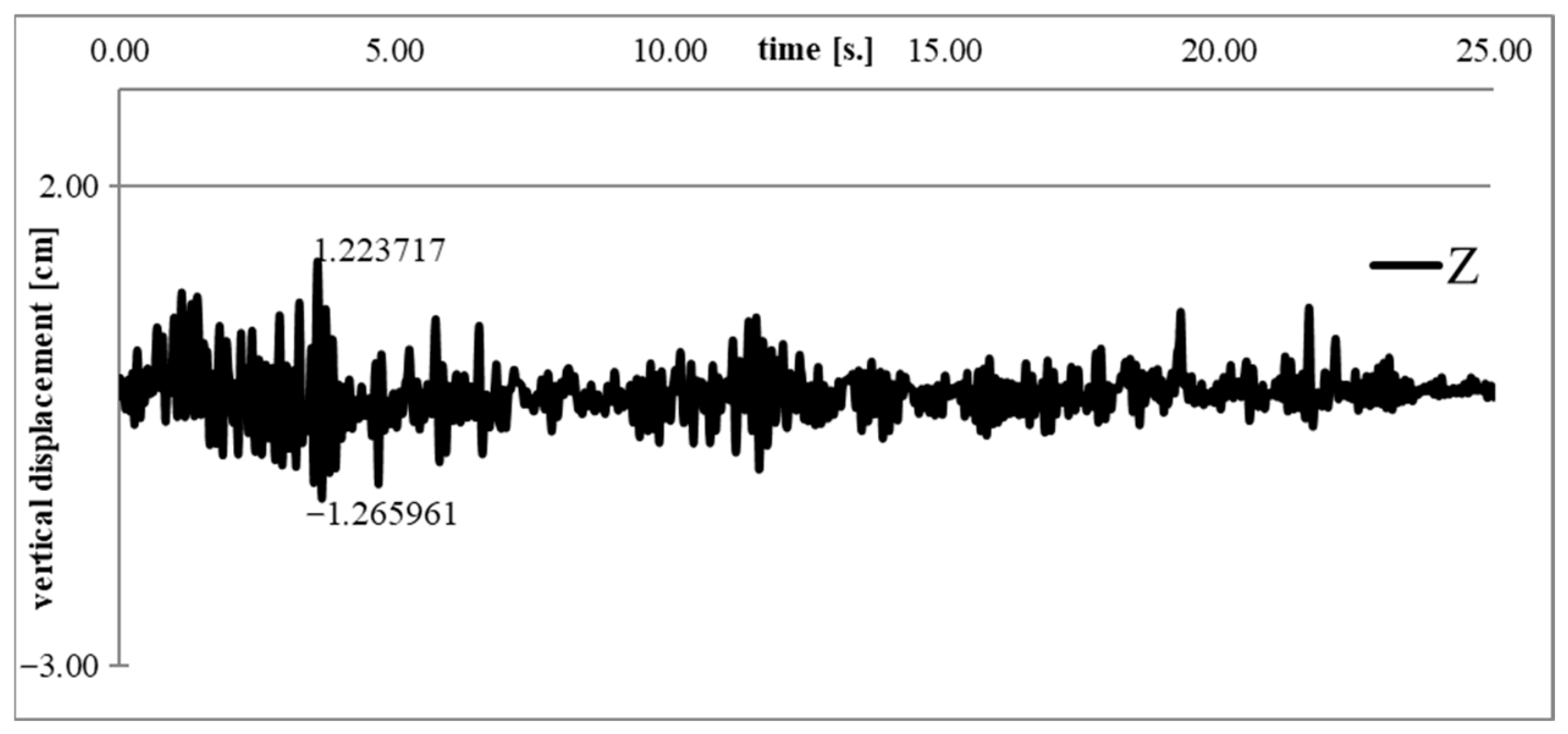
Vertical displacements (Z direction): When examining the maximum and minimum displacement values in the Z vertical direction for the three scenarios, it is observed that a higher shear wall ratio (from 1.14% to 2.10%) significantly reduces the displacement values.
Scenario 1 (1.14% shear wall ratio): The maximum displacement in the Z direction is recorded as 1.788 cm, while the minimum displacement is −2.145 cm. These values indicate the high flexibility of the structure and its sensitivity to vibrations due to the low shear wall ratio.
Scenario 2 (1.54% shear wall ratio): The maximum displacement reduces to 1.224 cm, and the minimum displacement decreases to −1.266 cm. The increase in the shear wall ratio has resulted in an approximately 30% reduction in vertical displacements.
Scenario 3 (2.10% shear wall ratio): The largest displacement measured is 1.239 cm, while the smallest displacement is −0.794 cm. In this scenario, the increase in the shear wall ratio has led to a significant reduction in the minimum displacement values, with the total structural deformation reaching the lowest level.
Improvement in total displacement across scenarios. The transition from Scenario 1 to Scenario 2 resulted in a total displacement reduction of approximately 6.16 cm, reflecting a moderate performance improvement. The subsequent transition from Scenario 2 to Scenario 3 yielded a further reduction of approximately 3.86 cm. Although this second improvement was less pronounced, it significantly enhanced the structure’s overall stability and energy absorption capacity. Implications for structural performance Lower total displacement values reflect reduced lateral oscillations and improved energy dissipation during seismic events. Scenario 3’s displacement reduction suggests that a shear wall ratio exceeding 2% is highly effective in controlling lateral deformations. While the improvement from Scenario 2 to Scenario 3 was less dramatic than that between Scenario 1 and Scenario 2, it nevertheless demonstrates the value of incremental increases in shear wall ratios for achieving superior seismic performance. The results of the study indicate that higher shear wall ratios significantly reduce vertical displacements and improve structural stability.
In order to enable a more direct comparison between scenarios, a summary table has been introduced focusing on the roof-level responses. As shown in
Table 13, the total lateral displacement at the 10th story (roof level), obtained from the corner nodes, decreases from 32.09 cm in Scenario 1 to 25.14 cm in Scenario 2, corresponding to a reduction of approximately 28%. A further reduction to 21.27 cm is observed in Scenario 3, representing an overall decrease of about 51% relative to Scenario 1 and 18% compared to Scenario 2. Similarly, the vertical displacement in the Z-direction at the top of the central column exhibits a consistent reduction across the scenarios. The displacement decreases from 3.93 cm in Scenario 1 to 2.49 cm in Scenario 2, corresponding to a reduction of approximately 57%, and further reduces to 2.03 cm in Scenario 3, indicating a total reduction of approximately 93% relative to Scenario 1 and 27% compared to Scenario 2. These results confirm that the tabulated presentation provides a clearer and more concise comparison of the structural performance, while remaining consistent with the trends previously observed in the graphical results.
A comparison of the three scenarios indicates that the most pronounced improvement in displacement response is achieved in the transition from Scenario 1 to Scenario 2. Although the increase in wall ratio is comparable between the two transitions (from 1.14 to 1.54 and from 1.54 to 2.10), the reduction in both lateral and vertical displacement demands is more significant in the first transition. In contrast, the transition from Scenario 2 to Scenario 3 results in a relatively smaller additional reduction in displacement, despite a similar increase in wall ratio. Nevertheless, the observed reduction remains significant in relative terms, indicating that the structural performance continues to improve in a meaningful manner. This observation suggests that, within the range of configurations considered in this study, the incremental benefit in displacement control between Scenario 2 and Scenario 3 is less pronounced than that observed between Scenario 1 and Scenario 2, which is consistent with trends reported in the literature.
From a design perspective, the wall ratio adopted in Scenario 2 may therefore be considered as a lower-bound threshold for achieving a satisfactory level of displacement control. However, to ensure a more robust structural performance, particularly under extreme loading conditions, the configuration adopted in Scenario 3 may be more advantageous, as the distribution of shear walls in both interior and exterior regions can contribute to a more balanced stiffness distribution and improved global stability. Furthermore, when progressive collapse behavior is taken into account, especially in cases where local failures may trigger chain-type collapse mechanisms, the configuration in Scenario 3 may provide additional redundancy and improved resistance against disproportionate collapse, as the presence of shear walls in both interior and exterior regions can facilitate alternative load paths and enhance the overall structural robustness. For this reason, the wall ratio and distribution adopted in Scenario 3 may be considered a more reliable design alternative within the scope of this study. Also, the seismic response is not controlled only by the shear wall ratio. The wall configuration has a clear effect on the behavior. Different arrangements change the stiffness distribution in the plan. This can lead to different torsional responses even when the total wall area is similar. In some cases, non-uniform placement increases eccentricity between the center of mass and the center of stiffness. This results in higher local drift demands. Therefore, the arrangement of shear walls should be considered together with the total ratio when evaluating seismic performance.
7. Conclusions
By analyzing the seismic response of high-rise RC structures with varying shear wall ratios relative to the plan area, this study highlights the critical role of shear walls in increasing seismic performance. The shear wall ratios were calculated independently for both the x and y directions, with the building’s total shear wall ratio equating to twice the specified value in each direction. Three scenarios, incorporating shear wall ratios of 1.14%, 1.54%, and 2.1% for each direction, were analyzed to evaluate their influence on both horizontal and vertical displacements. The analysis examines how different shear wall densities, as a proportion of the plan area, impact the structure’s ability to resist lateral forces during an earthquake. The results demonstrate a significant reduction in horizontal displacements at all story levels as the shear wall ratio rises, confirming the role of shear walls in enhancing stiffness and mitigating lateral movements. Similarly, vertical displacements at the topmost point of the structure also decreased progressively from shear wall 1.14% to 2.10%. Notably, the transition from a shear wall ratio of 1.14% to 1.54% yielded the most pronounced performance improvement, while the increase to 2.1% offered additional benefits.
Overall, total displacement metrics highlight the effectiveness of higher shear wall ratios in minimizing structural motion, reinforcing the value of shear walls in improving seismic resilience. The use of AEM (Applied Element Method) solid models in this study provides an understanding of seismic behavior in tall buildings and offers a valuable contribution to the field. Future studies could expand on these findings by examining the gathered effects of infill walls and shear walls for a more holistic learning of structural response under seismic loads.
For multi-story buildings in seismic zones, a minimum shear wall ratio of approximately 2% per direction, uniformly distributed (totaling around 4%), is recommended to achieve better seismic performance. This minimum ratio reduces both vertical and horizontal displacements and strengthens the structure’s resilience against progressive collapse risk as well. Future studies could refine this threshold by considering additional factors, such as wall configuration and material properties.
For practical application, the recommended shear wall ratio of approximately 2% per direction should be interpreted based on the gross cross-sectional area of shear walls relative to the total plan area of the building. In this study, the shear wall area is calculated using the full geometric dimensions of the walls (length multiplied by thickness) in each principal direction, without explicitly accounting for openings such as doors and windows. However, in real design practice, openings and discontinuities may reduce the effective stiffness and strength contribution of shear walls. Therefore, for more detailed design stages, it is recommended to consider the effective wall area by accounting for such reductions. In addition, the ratio should be satisfied in both principal directions (x and y) and achieved through a balanced distribution of shear walls across the plan to ensure uniform stiffness and to minimize torsional effects. This clarification aims to facilitate the practical implementation of the proposed recommendation and to provide guidance for engineers during both preliminary and detailed design stages.
Although the AEM inherently accounts for energy dissipation through material nonlinearity, cracking, element separation, and frictional interactions between elements, the present study primarily evaluates structural performance using displacement-based response parameters. In this framework, seismic input energy is redistributed into kinetic energy, elastic strain energy, and dissipated energy through hysteretic mechanisms embedded in the spring-based formulation of AEM. However, it should be noted that a detailed decomposition of energy components such as explicit tracking of input energy, kinetic energy, strain energy, and dissipated (hysteretic) energy was not directly extracted in this study. As a result, a quantitative comparison of energy dissipation levels across different shear wall ratios could not be presented. Nevertheless, increasing shear wall ratios is expected to enhance energy dissipation capacity by promoting more stable hysteretic behavior and reducing excessive deformation demands. Future studies will focus on incorporating detailed energy balance analyses, including the evaluation of dissipated energy as a proportion of total input energy, to provide a more comprehensive understanding of the relationship between shear wall ratio and seismic energy absorption capacity.
A clearer correlation can be established between the numerical findings and the observed damage patterns in Adana following the 6 February 2023 earthquakes. Field observations indicated that many of the heavily damaged or collapsed buildings, particularly high-rise structures, exhibited failure mechanisms such as progressive collapse and diaphragm discontinuities. These damage patterns are closely associated with excessive lateral displacements and insufficient stiffness in the structural system.
The numerical results obtained in this study support these observations. In Scenario 1, characterized by a relatively low shear wall ratio (1.14%), the structure exhibited significantly higher lateral displacements, particularly at upper story levels. Such increased displacement demands can lead to large interstory drifts, which are known to trigger damage in non-structural and structural components, including slab–beam connections and diaphragm regions. This behavior provides a rational explanation for the diaphragm discontinuity damages observed in the field. Moreover, the pronounced lateral deformations observed in the low shear wall ratio scenario may contribute to instability and load redistribution issues, which are key factors in the initiation of progressive collapse mechanisms. In contrast, Scenarios 2 and 3, with higher shear wall ratios (1.54% and 2.10%), demonstrated reduced displacement demands and more stable structural responses. This improvement is consistent with post-earthquake observations in Adana, where buildings incorporating more effective shear wall systems generally exhibited better performance and reduced damage levels. Therefore, the numerical analysis not only quantifies the influence of shear wall ratios on displacement behavior but also provides a mechanistic explanation for the types of damage observed in real structures. This correspondence highlights the practical relevance of the findings and supports the recommendation of increasing and properly distributing shear wall ratios to mitigate similar damage in future seismic events.
In addition to the observed reduction in overall displacement, the superior performance of Scenario 3 can also be explained in terms of torsional behavior and stiffness distribution within the structural system. The spatial arrangement of shear walls plays a critical role in determining the relative positions of the center of stiffness and the center of mass. When these two centers are not aligned, torsional moments occur under seismic excitation, leading to increased displacements in specific regions of the structure. In Scenarios 1 and 2, where the shear walls are primarily placed along the perimeter, the stiffness distribution is less homogeneous along the plane. This configuration may lead to an eccentricity between the center of stiffness and the center of mass, resulting in increased torsional effects. Consequently, although these configurations provide a certain level of lateral stiffness, they may still experience uneven displacement distributions and localized amplification of seismic demand. In contrast, Scenario 3 incorporates shear walls both at the perimeter and within the central regions of the plan, resulting in a more balanced stiffness distribution. This configuration minimizes torsional responses by reducing the eccentricity between the center of rigidity and the center of mass. As a result, the structure exhibits not only reduced overall displacement but also a more uniform deformation pattern under seismic loading. This finding highlights that the effectiveness of shear wall systems is not solely dependent on their total area but also on their spatial distribution within the plan. Proper placement of shear walls to achieve a balanced stiffness configuration is essential for mitigating torsional irregularities and enhancing overall seismic performance.
It is important to note that infill walls were not included in the numerical models considered in this study. While this approach allows for a clearer evaluation of the influence of shear wall ratios and configurations, it represents a simplification of real structural behavior. In practice, infill walls although generally treated as non-structural elements in design codes can significantly contribute to the lateral stiffness and strength of reinforced concrete buildings. The presence of infill walls may lead to a reduction in the fundamental period of the structure and can alter the distribution of seismic forces across structural elements. Consequently, displacement demands obtained from models excluding infill walls may differ from those observed in actual buildings. In some cases, omitting infill walls can lead to conservative displacement estimates due to the absence of stiffness contributions. However, this simplification may also overlook adverse effects, such as the development of stiffness irregularities, short-column behavior, and soft-story mechanisms, particularly in buildings with discontinuous infill distributions. Furthermore, infill walls can significantly influence local damage patterns and energy dissipation characteristics, especially under moderate to strong ground motions. Therefore, while the present study provides valuable insight into the role of shear wall ratios, the results should be interpreted within the context of this modeling assumption. Future studies will incorporate infill wall systems both as uniformly distributed and irregular configurations to better represent real building behavior and to evaluate the combined effects of infill walls and shear walls on seismic performance.
Although the findings of this study suggest that a shear wall ratio of approximately 2% per direction provides a significant improvement in seismic performance for the considered building model, it should be noted that this recommendation is based on a single structural configuration with regular plan geometry, fixed material properties, and number of stories. Structural response under seismic loading is influenced by a wide range of parameters, including plan irregularity, vertical configuration, member stiffness, and the characteristics of the input ground motion. Therefore, the generalization of the proposed shear wall ratio requires further investigation through comprehensive parametric studies. Future research should extend the framework by considering buildings with different plan geometries (such as L-shaped and T-shaped layouts), varying numbers of stories, alternative column and beam dimensions, and different material strength classes. In addition, the use of multiple ground motion records with varying intensity levels and frequency content will enable a more robust evaluation of seismic performance across diverse conditions. Such extended analyses will help to verify the applicability and reliability of the proposed minimum shear wall ratio and may lead to refined design recommendations tailored to different building typologies and seismic scenarios.



 ,
,