


Abstract
This study investigates the structural performance and shear capacity of reinforced concrete (RC) columns characterized by diverse material and detailing deficiencies. Using a numerical modeling approach for an 8-story RC building, the research evaluates the vulnerability of a critical ground-story corner column through a nonlinear static pushover analysis. The investigation systematically examines the impact of isolated variables, including low-strength concrete, insufficient transverse reinforcement spacing, inadequate concrete cover, and the use of plain bars. The analysis demonstrates that each deficiency, when evaluated independently, induces a shear demand that exceeds capacity. Furthermore, under combined deficiency scenarios, the Performance Ratio (PR) escalates to 4.17. Two primary strengthening strategies, Fiber Reinforced Polymer (FRP) wrapping and RC jacketing, were assessed for their effectiveness in restoring structural integrity. The results demonstrate that while FRP wrapping successfully reduces the PR values to safe limits (0.40–0.56) across all models, localized RC jacketing remains insufficient, with PR values exceeding the unity threshold. These findings highlight the superior efficiency of FRP in mitigating brittle shear failures in deficient RC structures and provide critical insights for element-based retrofitting practices.
1. Introduction
The structural integrity of existing RC buildings remains a significant concern in earthquake-prone regions, particularly for structures designed before the implementation of modern seismic codes. A vast majority of these older buildings exhibit critical deficiencies, such as low-strength concrete, insufficient stirrup spacing, and the use of plain reinforcing bars. These inadequacies and irregularities significantly reduce the ductility and shear capacity of structural members, often leading to brittle failure mechanisms under lateral loads. Furthermore, structural deficiencies in RC buildings are not solely the result of outdated design codes; they are often exacerbated by poor workmanship and construction errors. In practice, improper vibration of concrete often leads to segregation and honeycombing, which significantly degrades the bond between concrete and reinforcement. Common onsite errors, such as misplacement of stirrups, insufficient concrete cover due to a lack of spacers, or the use of uncertified smooth bars instead of ribbed ones, create a substantial gap between theoretical design and as-built reality [1,2,3,4,5,6,7,8,9,10,11,12]. These localized member-level defects can compromise the shear resistance of critical zones, making the building highly susceptible to premature failure. Recognizing these execution-related flaws is crucial for a realistic safety assessment and requires robust, error-tolerant retrofitting solutions such as FRP. Among the various structural components, corner columns at the ground story level are often the most vulnerable due to high axial load fluctuations and multi-directional seismic effects. When material weaknesses, such as C8-grade concrete, are combined with detailing errors such as inadequate concrete cover or poor confinement, the risk of sudden shear failure increases dramatically. In such cases, member-level strengthening becomes a necessity to ensure the overall stability of the structure.
The seismic resilience of the existing building stock remains a global concern. Recent seismic events, particularly the 2023 Kahramanmaraş earthquakes, have highlighted that the primary cause of sudden collapses is brittle shear failure of columns with poor material quality and substandard reinforcement detailing, as documented by researchers [13,14,15,16,17,18,19,20,21,22,23,24,25]. These structural inadequacies, often observed in older RC buildings, significantly reduce the energy dissipation capacity and lead to catastrophic failures under lateral loads.
Studies on how weaknesses in RC structures affect their seismic performance exist in the literature. Rizwan et al. [26] examine the seismic performance and economic loss evaluation of RC moment-resisting frame structures built with low-strength concrete compared with code-designed structures. Zhang et al. [27] analyze the seismic performance of corroded RC columns made of low-strength concrete by discussing the impact of reinforcement corrosion on failure modes, hysteretic behavior, skeleton curve, and energy dissipation capacity. Carrillo et al. [28] explain the effect of lightweight and low-strength concrete on the seismic performance of thin, lightly reinforced shear walls through an experimental study involving quasi-static cyclic tests and shake table tests. Rizwan et al. [29] present experimental and numerical studies on the seismic performance of low-rise RC frames constructed with low-strength concrete, common in developing countries. Aminulai et al. [30] investigate the structural responses to axial cyclic loading of low-strength short RC columns with different confinement configurations and varying degrees of corrosion. Işık et al. [31] explain that an insufficient concrete cover thickness reduces the reinforcement’s long-term strength, thereby negatively affecting the building’s earthquake performance. Yalçıner et al. [32] observe that the effect of concrete cover depth on bond strength is more significant in concrete specimens of lower concrete strength levels. Vishal et al. [33] delineate the effect of concrete cover thickness on the performance of RC columns and beams under an elevated fire scenario, where insufficient cover can lead to structural failure due to thermal effects. Bhargava et al. [34] investigate the relationship between bond strength and reinforcement corrosion, which is a key mechanism of structural degradation accelerated by insufficient concrete cover. Alyousef et al. [35] explain that a bond-strength issue in lap splice connections is crucial to the structural behavior of a RC member, and failure often occurs through splitting of the concrete cover. Cui and Alipour [36] analyze analytical and numerical models for the initiation of corrosion-induced concrete cover cracks under both uniform and non-uniform corrosion in RC structures. Hameed et al. [37] explain that corrosion, which is mitigated by concrete cover, causes physical degradation like cracking of the concrete cover, reduced bond strength, and loss of reinforcement cross-sectional area, all of which compromise the load-carrying capacity and safety of structural elements. Ruiz et al. [38] review various potential shear-transfer actions in RC beams without transverse reinforcement and discuss their role, governing parameters, and the influence of size and deformation. Han et al. [39] investigate the effect of the amount of transverse reinforcement on the seismic behavior, including shear strength and deformation capacities, of diagonally RC coupling beams. Aksoylu et al. [40] investigate experimentally and analytically the effect of varying stirrup spacing on the behavior of RC beams with insufficient shear capacity, representing a case of insufficient transverse reinforcement. Işık et al. [41] explain that inadequate transverse reinforcement, along with poor material quality, critically compromises the structural integrity of RC elements by accelerating fracture mechanisms and reducing their overall structural capacity. Sezen and Moehle [42] explain that columns with inadequate transverse reinforcement are vulnerable to damage, including shear and axial load failure, based on earthquake and laboratory experience. Cavagnis et al. [43] explain that shear in concrete members lacking transverse reinforcement can be carried by various potential shear-transfer actions, which depend on the actual cracking pattern and kinematics at failure. Academic research indicates that low-strength concrete significantly reduces the energy-dissipation capacity of RC structures, leading to brittle failure modes under seismic loading. Furthermore, the combination of insufficient transverse reinforcement and inadequate concrete cover exacerbates longitudinal bar buckling and bond degradation, which compromises the structural integrity of plastic hinge regions. The integration of plain reinforcement further impedes effective stress transfer between steel and concrete, leading to excessive crack widths and a marked reduction in the overall seismic resilience of the framework. The failure of vertical structural members, particularly columns, often triggers progressive collapse in multi-story buildings. Unlike interior columns, corner columns are subjected to complex biaxial bending and significant fluctuations in axial forces during seismic events, making their shear capacity even more vital for the overall stability of the structural system. Despite their critical role, corner columns in existing buildings often exhibit poor detailing and substandard materials [44,45,46,47,48].
Retrofitting existing RC structures has become a priority to mitigate future seismic risks. Various techniques, such as RC jacketing and composite materials, are commonly used to enhance the lateral load capacity of deficient elements. While traditional RC jacketing is known for enhancing both stiffness and strength, its contribution to the seismic demand through added mass remains a concern. On the other hand, FRP wrapping offers a high strength-to-weight ratio, providing shear enhancement without significantly altering the building’s dynamic characteristics. These distinct mechanical properties necessitate a detailed comparative study to determine the most effective intervention for localized failures [49,50,51,52,53,54,55,56,57,58,59,60,61,62]. Several matrix solutions and FRP configurations have been evaluated for substandard columns [63,64,65,66,67,68,69,70]. Academic studies demonstrate that externally confining RC columns with FRP significantly enhances their compressive strength and ultimate strain capacity by providing passive lateral pressure. This confinement effectively delays the crushing of the concrete core and prevents the premature buckling of longitudinal reinforcement, thereby transforming brittle failure modes into more ductile responses. Furthermore, the application of FRP wraps has been proven to substantially increase the seismic energy dissipation and shear resistance of deficient columns, making it a highly efficient solution for the structural retrofitting of aging infrastructure [71,72,73,74,75]. While conventional FRP wrapping has been extensively documented, recent advancements have shifted focus toward high-performance materials. Notably, recent studies have investigated the compressive behavior of FRP-confined ultra-high performance concrete (UHPC) columns, highlighting significant improvements in both axial strength and ductility [76,77,78,79,80].
In this context, the specific parameters investigated, low-strength concrete (C8), insufficient transverse reinforcement, inadequate concrete cover, and plain longitudinal bars, represent the most detrimental factors reducing the axial, shear, and bond capacities of RC structures. Individually and collectively, these flaws compromise energy dissipation and ductility, necessitating effective intervention.
Most studies in the literature focus on isolated variables. To fill this gap, this study evaluates how FRP wrapping and RC jacketing perform when multiple structural flaws coexist. We model these conditions on an 8-story RC building. Using nonlinear static pushover analyses, we investigate the seismic performance of a critical corner column under both individual and combined deficiency scenarios. The primary novelty of this work lies in this holistic approach to member-level defects that mirror real-world construction errors. Furthermore, it quantitatively assesses the PR for each failure scenario.
The research is organized as follows: first, the numerical modeling of structural weaknesses within the 8-story reference building is detailed; second, the seismic performance is evaluated to identify shear capacity exceedance; and finally, a comparative performance assessment of FRP and RC strengthening strategies is presented to provide practical rehabilitation guidelines. The flowchart for this study is shown in Figure 1.
Figure 1.
Flowchart of the numerical modeling and analysis procedure.
While recent literature documents the individual impacts of low concrete strength, inadequate confinement, or reinforcement corrosion on RC structures, existing studies predominantly isolate these variables. This isolation fails to capture the non-linear coupled degradation that occurs when these deficiencies coexist. This study distinguishes itself by transitioning to a simultaneous multi-deficiency framework. Furthermore, this work establishes a direct structural comparison between flexible composite systems (FRP wrapping) and rigid traditional interventions (RC jacketing) under identical baseline defects. By quantifying performance variations through global target displacement shifts and local column demands, this research uncovers the trade-offs between strength enhancement and mass-induced inertia.
The fundamental innovation lies in uncovering a critical engineering insight regarding global-local performance interactions. While conventional FRP research treats member-level retrofitting as an isolated enhancement, this investigation models the entire multi-story system to track how localized retrofitting decisions dynamically alter global structural demands. We explicitly show that while flexible FRP wrapping shifts the failure mechanism from brittle shear to a ductile state without altering structural mass, traditional RC jacketing introduces severe inertia effects that amplify seismic demands on the rest of the framework. This comparative framework delivers a system-level decision matrix to optimize the trade-off between cross-sectional capacity and mass-induced seismic risk.
Although this study is conducted exclusively through numerical simulations, the modeling strategy was established using experimentally validated constitutive approaches, bond-slip assumptions, and FRP confinement models implemented in SeismoStruct-2025. The simulated failure mechanisms, including brittle shear cracking and bond degradation, are consistent with experimentally reported behaviors of poorly detailed RC members. Therefore, the numerical framework is representative for evaluating these comparative strategies. Nevertheless, direct laboratory-scale or full-scale experimental validation remains an important objective for future studies to further verify the accuracy of the predicted capacity enhancements.
2. Methodology
This section examines the variables considered in this study, their effects on the performance of RC structures, and real field data in light of the 6 February 2023, Kahramanmaraş earthquakes. This section also provides information about the theoretical approach related to shear force capacity. Furthermore, this section of the study describes the numerical model generated.
2.1. Theoretical Background of Investigated Deficiencies: Insight from the 2023 Kahramanmaraş Earthquakes
In this study, four primary structural deficiencies that are commonly encountered in substandard RC buildings are analyzed. The theoretical impact of these variables on the shear capacity and overall seismic performance is summarized below:
Low-Strength Concrete: The compressive strength of concrete is the fundamental parameter governing the shear resistance provided by the concrete mechanism (Vc). According to most international codes, the shear strength of an RC member is directly proportional to the square root of the concrete compressive strength (fc). Using C8 grade concrete drastically reduces the diagonal tension resistance and the aggregate interlock mechanism, leading to premature brittle failure [81,82,83,84]. Evidence of structural degradation in low-strength concrete elements during the 6 February 2023, Kahramanmaraş earthquakes is illustrated in Figure 2.
Figure 2.
Low-strength concrete damage examples.
Insufficient Transverse Reinforcement: Stirrups play a dual role in RC columns: they resist shear forces (V) and provide lateral confinement to the core concrete. Inadequate spacing or insufficient diameter of transverse reinforcement prevents the development of a truss mechanism. Without proper confinement, the core concrete cannot achieve its ultimate strain capacity, and longitudinal bars become susceptible to premature buckling under seismic loads [85,86,87,88,89,90,91,92,93]. Examples of damage to insufficient transverse reinforcement during the 6 February 2023 Kahramanmaraş earthquakes are shown in Figure 3.
Figure 3.
Damage examples for insufficient transverse reinforcement.
Inadequate Concrete Cover: The concrete cover serves as the primary protection for the reinforcement against corrosion and ensures the effective transfer of bond stresses. A thickness below the required limit significantly reduces the bond-slip resistance. Furthermore, during a seismic event, insufficient cover leads to rapid spalling, which immediately exposes the longitudinal reinforcement and reduces the effective cross-sectional area of the column. Figure 4 depicts the structural vulnerabilities associated with insufficient concrete cover, highlighting the resulting spalling and reinforcement exposure.
Figure 4.
Damages caused by insufficient concrete cover.
Plain Reinforcement: Unlike modern ribbed bars, plain bars rely solely on chemical adhesion and a limited friction mechanism for bond strength. Under cyclic loading, this bond is quickly degraded, leading to extensive slip. This phenomenon results in a significant reduction in the stiffness of the building and prevents the structural members from reaching their theoretical moment capacities, shifting the failure mode toward anchorage and bond loss. Examples of damage caused by plain reinforcement bars are shown in Figure 5.
Figure 5.
Structural damage patterns and bond-slip failures associated with the use of plain reinforcement bars.
The selection of C8/10 grade concrete (fcd = 8 MPa) and S220 smooth steel (fyd = 220 MPa) is heavily justified by statistical evidence, regional field surveys, and post-earthquake damage investigation reports of the existing Mediterranean and Turkish building stock. Extensive structural screening studies and field data collected following major seismic events, most notably the February 2023 Kahramanmaraş earthquakes, demonstrate that a significant portion of the collapsed or severely damaged multi-story RC buildings built before 2000 feature an average compressive strength well below 10 MPa. Furthermore, the utilization of smooth (unribbed) S220 reinforcement bars was a standard practice during the construction eras of these substandard buildings. This specific combination drastically reduces the concrete-to-steel bond strength and exacerbates brittle failure mechanisms under cyclic lateral loading. Therefore, implementing these exact properties in the reference model provides a realistic, statistically verified baseline for evaluating the performance of highly vulnerable building stock under urgent need of rehabilitation [94,95,96,97,98].
The combination of these deficiencies creates a weak link in the structural system. When the lateral demand induced by an earthquake exceeds the degraded shear capacity of the critical corner column, a brittle shear failure occurs. Unlike ductile flexural yielding, shear failure is sudden and catastrophic, often leading to the progressive collapse of the entire story. Figure 6 illustrates the characteristic damage patterns observed in corner columns, resulting from the various structural deficiencies investigated in this study.
Figure 6.
Representative failure patterns of corner columns under the investigated structural deficiencies.
2.2. Mathematical Framework of Shear Capacity
To quantify the impact of the aforementioned deficiencies, the nominal shear capacity (Vn) of the RC columns is evaluated based on the fundamental additive principle of concrete and steel contributions. The total shear resistance is defined by the following equilibrium:
where Vc represents the shear strength provided by the concrete mechanism. The use of C8-grade concrete in this study directly attenuates the fc parameter, resulting in a substantial reduction in the baseline resistance. The second component, Vs, represents the contribution of transverse reinforcement. Furthermore, the theoretical shear demand is influenced by the bond performance of the longitudinal reinforcement. The use of plain bars and inadequate concrete cover reduces the effective depth (d) and the bond-induced tension stiffening, often causing the actual capacity to fall below that predicted by the Vn equation. By applying FRP wrapping, an additional confinement and strength component (Vfrp) is introduced to the system, effectively bridging the gap created by the material and detailing inadequacies.
Vn = Vc + Vs
Vn,strengthened = Vc + Vs + Vfrp
The parameter Vfrp defines the shear capacity increment attributed to FRP wrapping within a concrete member. It is fundamentally derived from the tensile strength of the FRP fibers crossing the critical shear plane before failure.
To accurately capture the passive confinement mechanism of the FRP wrapping, the numerical modeling in SeismoStruct utilizes a non-linear composite constitutive concrete model based on the widely accepted Mander confinement formulation. The lateral confinement pressure exerted by the continuous FRP wrap increases both the peak compressive strength and the ultimate crushing strain of the concrete core, which is modified through an efficiency coefficient to account for stress concentrations at the sharp corners of the rectangular column section. Regarding the interface behavior, a full strain-compatibility (perfect bond) assumption is implemented between the concrete surface and the FRP wrapping. This assumption is justified by standard physical application procedures, which include rounding the sharp column corners to prevent stress concentration and using high-strength structural epoxy resins that prevent premature de-bonding. The ultimate failure criterion within the fiber-based distributed plasticity framework of SeismoStruct is governed by either the concrete core reaching its confined crushing limit or the FRP wrapping reaching its effective rupture strain, which successfully triggers localized member failure under lateral loading.
2.3. Modeling of the 8-Story Reference Building
The reference structure considered in this study is a representative 8-story RC frame building. The building is designed to reflect the typical mid-rise residential housing stock constructed with substandard practices. The building features a symmetrical story plan with a story height of 3.0 m, resulting in a total building height of 24.0 m. The structural system consists of a regular grid of RC beams and columns. The reference structure was designed considering both gravity loads and seismic actions to represent a standard code-compliant baseline framework before introducing the localized deficiencies. The seismic design was performed in accordance with regional seismic provisions, assuming a design peak ground acceleration (PGA) of 0.240 g under standard code spectrum criteria. While the design was initially intended for a higher grade, the analyzed model incorporates the predefined deficiencies. The concrete compressive strength is set to C8, and the reinforcement yields at S220 MPa (representing plain bars) to simulate the poor material quality of the existing stock. The structure’s nonlinear behavior is captured using SeismoStruct-2025 [99]. Elements are modeled using frame elements with nonlinear plastic hinges. Vertical loads (dead and live) are applied in accordance with the relevant building codes. For the seismic assessment, a nonlinear static pushover analysis is conducted. To simulate the concrete behavior, the constitutive model proposed by Mander et al. [100] was employed to capture both confined and unconfined states. Conversely, the Menegotto–Pinto [101] model was adopted for the reinforcing steel to accurately account for its strain-hardening characteristics (Figure 7).
Figure 7.
Material models for concrete and steel employed in the numerical analysis [102].
The lateral load pattern is applied proportionally to the building’s first mode shape until a target displacement or structural collapse is reached. The first mode proportional load pattern is chosen because the reference building is regular and mid-rise, meaning its seismic behavior is dominated by the fundamental vibration mode. If a ‘uniform’ load pattern (proportional only to mass) were used instead, the results would change. A uniform distribution shifts the lateral force center downward, which increases the base shear demand but underestimates the overturning moments and inter-story drifts at the upper floors. Thus, the first mode pattern provides a more realistic and comprehensive assessment of both global displacement and local column demands. While nonlinear static pushover analysis is a widely accepted, computationally efficient tool for evaluating the global capacity and failure mechanisms of standard frameworks, it possesses inherent limitations that should be acknowledged. Because it relies on a monotonically increasing, invariant lateral load pattern, pushover analysis cannot fully capture complex dynamic phenomena such as higher-mode contributions, transient structural damping, and the stiffness/strength degradation that occurs during cyclic earthquake reversals. These limitations are especially relevant for corner columns, which are simultaneously subjected to varying axial force fluctuations, bidirectional bending, and cyclic shear demands during real-world seismic events. Consequently, while the absolute performance parameters (such as the exact target displacements and ultimate plastic hinge rotations) might be conservatively estimated or slightly altered under full non-linear time-history analyses, the relative comparative trends established between the retrofitting techniques (FRP wrapping vs. RC jacketing) remain robust and valid. The monotonic approach utilized herein serves as a sound, computationally reliable framework for benchmarking the performance improvements and local shear demand shifts induced by these structural interventions.
To ensure the reliability, accuracy, and applicability of the numerical findings in the absence of a dedicated physical experiment, the modeling framework relies on widely calibrated and validated numerical templates within the SeismoStruct environment. The inelastic force-based plastic hinge elements, along with the fiber discretization technique used for the cross-sections, have been rigorously benchmarked against independent experimental datasets in the recent literature for both standard and severely deficient RC columns. Specifically, the constitutive material models adopted herein, namely the Mander non-linear concrete model for passive confinement and the Menegotto–Pinto model for reinforcing steel, have been extensively validated against cyclic and monotonic test results of substandard columns featuring low concrete strength, lack of confinement, and smooth bars. These benchmark studies demonstrate that the fiber-based distributed plasticity approach accurately predicts the ultimate lateral load capacity, initial stiffness, and plastic hinge rotation capacity with a high degree of correlation error margin compared to experimental force-displacement envelopes. Consequently, the modeling approach deployed in this investigation provides a highly dependable and scientifically verified environment for the comparative evaluation of global and local structural response shifts under the investigated retrofitting strategies. The numerical framework adopted in this study involves several simplifying assumptions that may influence the predicted seismic response of the structure. In particular, the fixed-base assumption neglects potential SSI effects, which may alter the global stiffness, damping characteristics, and force redistribution mechanisms under seismic loading. Similarly, the nonlinear material behavior and bond-slip response of plain reinforcement were represented using simplified constitutive relationships available within the adopted numerical platform. While these assumptions are consistent with widely accepted modeling practices in nonlinear structural assessment, they may introduce uncertainties in the estimation of local damage evolution and shear demand concentrations. Nevertheless, the primary objective of this study is to comparatively evaluate the relative influence of multiple structural deficiencies and strengthening strategies under a consistent analytical framework. Therefore, the adopted assumptions provide a rational basis for comparative assessment, although further refinement through advanced constitutive modeling and SSI analyses would improve predictive accuracy.
The ground-story corner column was identified as the most critical element due to its high sensitivity to axial load variations and maximum shear demand. To accurately simulate the failures, nonlinear shear hinges are assigned to the column ends to monitor the capacity exceedance (Vn) throughout the pushover stages. The modeling parameters (low fc, reduced Aw, and bond-slip models for plain bars) are integrated into the section properties of this specific column. The FRP retrofitting is modeled as an external jacket that provides passive confinement and additional shear resistance. The properties of the FRP (modulus of elasticity, thickness, and ultimate strain) are defined according to the manufacturer’s specifications to ensure the Vfrp contribution is accurately reflected. The nonlinear behavior of the beam and column elements was captured at the material level using a distributed plasticity approach and the software’s fiber-based modeling capabilities. In this study, RC jacketing was also applied to a corner column under shear force overload, in accordance with the provisions of TBEC-2018 [103]. The structural models are based on a representative 8-story RC frame building that reflects the typical residential construction practices observed in the region. This baseline model serves as a benchmark for evaluating the sensitivity of corner columns to various structural flaws. A regular reference building, devoid of structural irregularities or short columns, was modeled to represent typical mid-rise RC structures. The floor plan of this reference building is illustrated in Figure 8. The building was assumed to be fixed at the base level, neglecting SSI and focusing solely on the structural response of the RC frames. Lateral loads for the pushover analysis were applied in a proportional distribution across the floor masses, consistent with the structure’s fundamental mode shape.
Figure 8.
Representative story plan of the study’s reference building.
Figure 9 depicts the 2D and 3D configurations of the developed numerical building model, highlighting the specific corner column under investigation.
Figure 9.
2D and 3D visualizations of the building model and the location of the corner column.
Key variables and material properties utilized to define the numerical model are summarized in Table 1. These parameters were selected to accurately capture the structural response under the investigated conditions. Ensuring the rigorous calibration of these inputs is paramount to guaranteeing the reliability and validity of the subsequent analysis.
Table 1.
Summary of input parameters for the numerical building model.
To investigate local damage mechanisms, these variables were kept uniform throughout the model, except for the corner column (col 1), where specific values were modified as part of the parametric study. The specific models developed by varying corner column parameters are summarized in Table 2, which illustrates the range of structural scenarios analyzed. To simulate realistic deterioration and substandard construction scenarios, specific material and detailing deficiencies were systematically introduced into the corner column. These parameters were selected based on post-earthquake field observations, which identified low compressive strength and improper reinforcement detailing as the primary failure drivers.
Table 2.
Description of simulation models and corresponding corner column modifications.
The cross-sectional characteristics of the columns before and after strengthening are given in Table 3.
Table 3.
Cross-sectional parameters of columns before and after the strengthening intervention.
The corner column was strengthened using FRP wrapping. In this study, structural analyses were repeated for RC columns wrapped with FRP to assess the effect of FRP wrapping on shear force resistance in the considered structural models. The strengthening application was implemented component-by-component and applied only to columns whose shear force capacity was exceeded. FRP wrapping is widely recognized as an efficient technique for boosting the shear resistance of aging RC components. This retrofitting approach is particularly vital for addressing shear deficiencies in structures where the original reinforcement fails to satisfy modern seismic requirements. In this research, columns on the ground floor of the reference model that exhibited shear demand-to-capacity imbalances were retrofitted with FRP wraps. The specific material properties and design parameters for the FRP composite used are summarized in Table 4. FRP wrapping increases lateral confining pressure, delaying shear cracking and enhancing post-yield deformation capacity.
Table 4.
Characteristic material properties of the FRP.
The material and dimensional properties of the cross-sections before and after RC jacketing are shown in Table 5.
Table 5.
The material and dimensions of the cross-sections before and after RC jacketing.
The architectural and structural details of the model, specifically illustrating the corner column (col 1) after its strengthening with FRP and RC jacketing, are presented in Figure 10.
Figure 10.
Numerical configurations of the reinforced model showing FRP and RC jacketing details.
3. Numerical Analysis Results and Findings
In this section, the data obtained from the numerical simulations are presented and evaluated. The performance of the reference building is analyzed based on the structural parameters previously discussed. The results from the numerical simulations are evaluated in two stages: first, the performance of the deficient models is analyzed to identify the critical failure modes; second, the effectiveness of the proposed strengthening techniques is compared based on their ability to restore shear capacity. Evaluation of shear force capacity is a critical aspect of structural safety, as shear failure is often brittle and can lead to sudden structural collapse without sufficient warning. In this study, the shear force failure states derived from independent static pushover analyses for each structural configuration are detailed in Table 6.
Table 6.
Comparative shear force damage status for investigated structural models.
The results distinguish between columns that maintain their structural integrity and those that reach their limit state; specifically, columns where the shear capacity is exceeded are highlighted in red, whereas those that remain within safe operational limits are indicated in gray. This color-coded representation facilitates a clear assessment of the localized vulnerabilities within the building frame under lateral loading. A non-linear static pushover analysis was employed to capture the inelastic behavior and the sequence of hinge formation within the frame.
The numerical analysis results indicate that the reference building model maintained its structural integrity without any shear capacity exceedance. However, localized shear failures were consistently observed in the corner column (col 1) when individual structural deficiencies, such as low compressive-strength concrete, inadequate transverse reinforcement spacing, the use of plain bars, and insufficient concrete cover, were introduced. Furthermore, the simultaneous presence of these vulnerabilities also resulted in shear capacity exceedance within the same critical element. Regarding the mitigation strategies, the application of FRP wrapping to the corner column alone proved highly effective, successfully preventing shear failure across all investigated scenarios. Conversely, the implementation of RC jacketing on the corner column alone was found to be insufficient, as it failed to preclude the exceedance of shear force capacity under the specified loading conditions.
The fundamental dynamic properties and seismic performance indicators of the reference building model are summarized in Table 7. This dataset includes the natural vibration period, base shear capacity, and both elastic and effective stiffness values. Furthermore, the target displacement demands corresponding to the Damage Limitation (DL), Significant Damage (SD), and Near Collapse (NC) performance levels are provided. These parameters establish the baseline for evaluating the building’s structural response prior to the introduction of local weaknesses and subsequent strengthening interventions. The effective modal mass ratio associated with this first vibration mode shape accounts for 82.00% of the total building mass, confirming that the dynamic performance and lateral demand are heavily dominated by this fundamental mode.
Table 7.
Summary of seismic performance parameters and structural response values for the reference building.
Effective stiffness represents the reduced structural rigidity of a RC component after undergoing concrete cracking, concrete degradation, and reinforcement yielding. In nonlinear structural analysis, this parameterized property is critically utilized to approximate the actual, softened load–displacement behavior of a member using an equivalent linear elastic idealization. The localized nature of the interventions, focused solely on one column (col 1), resulted in negligible variations in the overall structural response parameters. For this reason, these values were omitted from the comparative tables for the modified models, as they maintain a near-identical correlation with the reference building’s baseline data.
To assess the structural integrity of the corner column, three primary metrics are utilized: demand, capacity, and the PR. Demand represents the maximum shear force imposed on the column under the specified loading conditions, whereas Capacity denotes the maximum shear resistance the element can provide based on its material properties and geometric configuration. The PR is defined as the numerical correlation between these two parameters, specifically the ratio of shear demand to shear capacity. This ratio serves as a critical safety index: values below 1.0 indicate that the column remains within safe operational limits, whereas any ratio exceeding unity indicates that the structural demand has surpassed the available capacity, leading to shear failure. The structural performance of the critical corner column (col 1) is evaluated by comparing the shear force demands with the calculated capacities across all investigated models. Table 8 presents these values, along with the PR, a quantitative indicator of structural safety. A PR value exceeding unity signifies that the shear demand surpasses the column’s capacity, leading to potential failure. This comparison highlights the impact of various structural deficiencies and the effectiveness of the applied strengthening techniques on the column’s resistance.
Table 8.
Comparison of shear force demand, capacity, and PR for the corner column (col 1) across all structural models.
The quantitative impact of structural deficiencies and the subsequent efficiency of FRP strengthening are visually synthesized in Figure 11.
Figure 11.
Comparative distribution of PR for the corner column (col 1) across all investigated scenarios: Pre-strengthening deficiencies versus post-FRP intervention outcomes.
The PR serves as a critical indicator of structural safety; any value exceeding the unity threshold (PR > 1.0) indicates shear capacity exceedance. It is observed that all unstrengthened models (Model I to VI) surpass this critical limit, with Model VI reaching a peak PR of 4.17, highlighting a catastrophic mismatch between shear demand and available capacity. In contrast, CFRP wrapping effectively recalibrates the column’s response, bringing all PR values significantly below the safety threshold. Notably, the FRP intervention not only remediates deficiencies but also achieves a more robust safety margin (PR ≈ 0.40–0.56) than the original reference model (PR = 0.59), demonstrating the high performance-restoration capability of composite confinement in corner columns.
The comparative analysis of shear demand, capacity, and PR for the corner column (col 1) provides critical insights into the structural vulnerability and the effectiveness of the proposed strengthening interventions. According to Table 8, the Reference Model maintains a safe PR of 0.59, indicating that the initial design has sufficient shear resistance. However, the introduction of structural deficiencies significantly degrades the column’s integrity. Among the un-strengthened models, Model VI (representing the combined presence of multiple weaknesses) exhibits the most critical condition with a PR of 4.17, followed by Model V at 3.11. In all deficient models (Model I through VI), the PR consistently exceeds the unity threshold (PR > 1.0), confirming that localized shear failure is inevitable under these conditions due to the substantial drop in shear capacity, which reaches as low as 56.76 kN in the most severe case. The intervention phase reveals a striking contrast between the two strengthening methods. The application of FRP wrapping proves exceptionally effective; across all FRP-strengthened scenarios (Model I-FRP to VI-FRP), the shear capacity is significantly enhanced, resulting in PR values dropping well below the safety limit, ranging from 0.40 to 0.56. This indicates that FRP wrapping not only restores lost capacity but also provides a safety margin superior to that of the original reference model. In stark contrast, the results for Model VII-RC Jacketing demonstrate a critical limitation of this specific application. Despite the intervention, the shear demand (216.56 kN) still exceeds the capacity (194.67 kN), resulting in a PR of 1.11. This suggests that while RC jacketing is a traditional method, applying it solely to the corner column in this configuration was insufficient to preclude shear failure, highlighting the superior performance of FRP wrapping in mitigating brittle failure risks for the investigated building. These findings emphasize that professional caution is required when adopting RC jacketing for element-based retrofitting, as its effectiveness is highly sensitive to changes in structural stiffness and mass distribution. Unless carefully optimized, unintended redistribution of forces may prevent the attainment of the desired safety levels, particularly in critical members such as corner columns. The initial phase of the numerical analysis focused on the reference building model, which represents a structure designed in full compliance with modern seismic codes. The modal analysis results, including the fundamental vibration period and target displacement demands for the DL, SD, and NC performance levels, are presented in Table 7. The reference model exhibited a linear elastic behavior in the early stages of loading, and the shear demand on the corner column (col 1) remained well within the capacity limits, with a PR of 0.59. This baseline performance confirms that the structural configuration is inherently stable before the introduction of deliberate deficiencies.
The introduction of structural deficiencies significantly altered the failure mechanism of the corner column. As shown in Table 5 and the subsequent PR calculations, even isolated weaknesses led to capacity exceedance. For instance, reducing the concrete compressive strength to C8 (Model I) and using plain bars (Model III) increased the column’s vulnerability, leading to shear demand exceeding available resistance. The most critical response was observed in Model VI, where multiple deficiencies coincided. In this scenario, the shear capacity dropped to its lowest value (56.76 kN), resulting in a PR of 4.17. These results indicate that the interaction of poor material quality and substandard detailing creates a synergistic effect that drastically compromises structural safety, shifting the failure mode to a brittle state.
The effectiveness of the proposed retrofitting techniques was evaluated by re-analyzing the deficient models after FRP wrapping and RC jacketing. The results, summarized in Table 8, reveal a clear distinction between the two methods. FRP wrapping successfully restored the shear integrity in all cases, with PR values dropping below 0.56, effectively preventing brittle failure. The high tensile strength of the FRP layers provided the necessary confinement to compensate for both low concrete strength and inadequate stirrup spacing. Conversely, the RC jacketing applied to Model VII failed to bring the column into the safe zone (PR = 1.11). This suggests that, for localized corner column strengthening, the added stiffness and mass from RC jacketing may not always counteract the increased seismic demands as effectively as the high strength-to-weight ratio of FRP composites.
The qualitative comparison presented in Table 9 clarifies the fundamental differences between FRP wrapping and RC jacketing from a structural engineering perspective.
Table 9.
Comparative qualitative assessment of FRP wrapping and localized RC jacketing strategies for the seismic retrofitting of corner columns.
While RC jacketing is a traditional and robust method for enhancing both stiffness and axial capacity, its localized application on a single corner column often fails to yield the desired results due to the significant increase in mass, which attracts higher seismic forces (added inertia). This phenomenon explains why Model VII-RC maintained a PR > 1.0 despite the strengthening. In contrast, the high strength-to-weight ratio of FRP allows for substantial shear capacity enhancement without altering the building’s dynamic characteristics or increasing seismic demand. Consequently, FRP wrapping emerges as a more efficient and architecturally less intrusive solution for mitigating localized shear failures in existing deficient RC structures. However, the superiority of FRP strengthening observed in the present study should be interpreted within the specific scope and limitations of the adopted analytical framework. The comparison with RC jacketing was conducted exclusively for a localized corner column retrofitting scenario under the investigated structural deficiencies and loading conditions. Therefore, the findings do not imply that FRP systems are universally superior to RC jacketing for all seismic strengthening applications. In practice, RC jacketing may provide substantial advantages in cases requiring significant enhancement of axial load capacity, global stiffness, or overall frame ductility. The comparatively limited performance observed for localized RC jacketing in this study is primarily associated with the specific configuration analyzed, including the concentration of seismic demand and the stiffness redistribution effects within the corner column region. Consequently, the results should be interpreted as a case-specific comparative assessment rather than a generalized ranking of strengthening techniques. The observed improvement in shear performance after FRP strengthening is also consistent with previously reported experimental studies on FRP-confined deficient RC columns, where significant increases in confinement efficiency, ductility, and shear resistance were experimentally verified under cyclic loading conditions.
4. Conclusions
The primary contribution and novelty of this study lie in providing a realistic, quantitative framework that evaluates structural performance when multiple structural and material deficiencies (such as low concrete strength, insufficient stirrup spacing, and corrosion-induced mass loss) coexist simultaneously. While most existing literature focuses on single-defect configurations, this investigation explicitly fills a critical gap by providing a direct comparative assessment between localized advanced composite applications (FRP wrapping) and traditional cross-sectional modifications (RC jacketing) under identical multi-deficiency baselines. By tracking the performance shift via the PR, this work delivers data-driven guidelines for selecting optimum retrofitting strategies for vulnerable existing building stocks.
This study investigated the structural performance and shear capacity of an 8-story RC building by focusing on the vulnerabilities of a critical corner column (col 1). Through extensive numerical simulations and non-linear static pushover analyses, the effects of various structural deficiencies and the effectiveness of different strengthening strategies were evaluated. The following primary conclusions were drawn from this investigation:
Impact of Structural Deficiencies: The reference building model, designed according to modern engineering standards, demonstrated adequate performance without any shear capacity exceedance. However, the introduction of individual weaknesses such as low-compressive-strength concrete, inadequate transverse reinforcement spacing, insufficient concrete cover, and the use of plain bars consistently resulted in localized shear failures in the corner column. Among these, the combination of multiple deficiencies (Model VI) yielded the highest PR of 4.17, indicating a demand exceeding available capacity by more than 4 times.
Vulnerability of Corner Columns: The study confirms that corner columns are particularly susceptible to shear failure when subjected to material and detailing inadequacies. Even minor deviations from design standards can shift the failure mode from ductile to brittle, compromising the entire structural stability under lateral loads.
Efficiency of FRP Strengthening: The application of FRP wrapping proved to be an exceptionally robust mitigation strategy. In all deficient models, FRP strengthening not only prevented shear failure but also enhanced the shear capacity to levels significantly higher than the original reference state. The resulting PR values (ranging from 0.40 to 0.56) indicate a substantial safety margin, highlighting FRP’s ability to compensate for severe material and detailing defects.
Limitations of RC Jacketing: In contrast to FRP, localized RC jacketing applied only to the corner column was found to be insufficient in this study. For Model VII, the PR remained above the safety threshold (PR = 1.11), suggesting that the increase in capacity provided by RC jacketing could not fully offset the demand. This result emphasizes that RC jacketing must be implemented with great caution in element-based retrofitting, as its effectiveness is highly sensitive to changes in structural stiffness and force distribution.
Practical Implications: The findings of this study indicate that, within the specific context of localized corner column strengthening and the investigated deficiency scenarios, FRP wrapping demonstrated a more effective performance in mitigating shear failure compared to the adopted RC jacketing configuration. However, these conclusions should not be generalized to all retrofitting applications, since the effectiveness of strengthening techniques may vary depending on structural configuration, loading conditions, global system behavior, and retrofit objectives. These results provide critical data for engineers and decision-makers involved in the seismic retrofitting of the existing building stock.
While this study focuses on localized corner column deficiencies, future research should investigate the global seismic collapse mechanisms of buildings in which these deficiencies are distributed across multiple vertical elements. Additionally, the long-term durability of FRP under environmental aging could be integrated into the PR assessments.
While the numerical results demonstrate that FRP strengthening provides a superior structural response by mitigating brittle shear failure without modifying the building’s dynamic mass, a comprehensive engineering decision requires evaluating practical field considerations. From a constructability and socio-economic perspective, FRP wrapping offers distinct advantages due to its minimal structural weight, ease of installation in confined spaces, and rapid execution times, which significantly minimize functional disruption to building occupants. However, advanced composite materials incur higher initial material costs and demand highly skilled labor and strict surface preparation. Furthermore, FRP systems require careful long-term maintenance, such as protective coatings to mitigate vulnerabilities related to high temperatures, fire exposure, and ultraviolet degradation. Conversely, traditional RC jacketing utilizing standard C25/30 concrete and S420 steel is highly durable, exhibits excellent fire resistance, and relies on locally available, cost-effective materials and conventional labor. Yet, RC jacketing introduces heavy structural mass that alters seismic demands, requires extensive labor (including drilling, anchoring, and concrete pouring), and causes major operational downtime. Therefore, selecting the optimal rehabilitation strategy must balance the immediate structural performance enhancements quantified herein against these long-term lifecycle, durability, and practical execution trade-offs.
In the numerical modeling, Soil–Structure Interaction (SSI) was neglected, and the superstructure was assumed to be completely fixed at the foundation level. This simplified assumption is justified to establish a clear, standardized baseline that isolates structural and material deficiencies from complex geotechnical uncertainties, ensuring a controlled environment for the parametric comparison of FRP wrapping and RC jacketing. Nevertheless, incorporating foundation flexibility could notably influence the seismic response. Generally, SSI introduces compliance to the system, which typically elongates the fundamental vibration period of the structure and increases global damping due to radiation and hysteretic energy dissipation in the soil. While a lengthened period often shifts the building to a lower spectral acceleration demand area, thereby potentially reducing the global base shear demand, it simultaneously increases global lateral displacement and inter-story drift demands. For the investigated corner column, these coupled effects could increase P-Δ secondary moments due to larger drifts, while the local shear demand might be slightly lower due to the reduced global acceleration. Therefore, while the fixed-base model provides a conservative approach for strength and shear demand evaluation, the potential for increased deformation demands under flexible foundation conditions should be considered in comprehensive site-specific rehabilitation designs.
It should be noted that the predicted performance levels are partially dependent on the adopted modeling assumptions and numerical idealizations. Parameters such as boundary condition definition, confinement effectiveness, bond-slip representation, and stiffness degradation models may influence the calculated shear demand and capacity values. Although a comprehensive parametric sensitivity analysis was beyond the scope of the present study, the consistent performance trends observed across all investigated deficiency scenarios indicate that the relative effectiveness of FRP strengthening remains robust within the adopted analytical framework. Future studies should incorporate systematic sensitivity analyses to quantify the influence of key modeling assumptions on the seismic response predictions and to further evaluate the reliability of the proposed retrofitting strategy under varying analytical conditions. The present study is also subject to limitations associated with the adopted numerical assumptions, including fixed-base boundary conditions, simplified constitutive material models, and idealized confinement behavior for FRP-strengthened members. Although these assumptions are commonly employed in nonlinear seismic assessment studies and allow for a consistent comparative evaluation, they may influence the absolute magnitude of the predicted response parameters. Therefore, future investigations should include detailed sensitivity analyses and advanced modeling approaches incorporating SSI, cyclic bond deterioration, and nonlinear interface behavior to further validate and refine the proposed analytical framework.
While focusing the detailed parametric analysis on the critical ground-story corner column of a regular 8-story building establishes a clear benchmark for multi-deficiency interactions, the general applicability of the conclusions is inherently bounded by specific structural configuration parameters that warrant discussion. First, regarding the column location, corner columns represent the most critical zones due to complex bidirectional bending and severe dynamic axial force fluctuations, whereas interior columns are subjected to higher, more stable gravity loads with lower primary bending, shifting the relative efficiency of FRP toward pure axial enhancement rather than confinement-driven shear ductility. Second, introducing plan or vertical building irregularities (such as soft stories or torsional asymmetry) would drastically alter the distribution of lateral demands, where torsional effects could amplify the shear and displacement demands on peripheral columns, potentially rendering localized FRP wrapping insufficient unless integrated with global structural stiffening. Third, the effectiveness of passive FRP confinement is highly sensitive to the initial axial load levels; high axial loads limit the lateral dilation of concrete, thereby delaying the activation of the FRP jacket until high drift ratios are reached, whereas low axial load levels or transient net tension alter the primary failure mechanism toward steel yielding or bond slip. Finally, the findings from this mid-rise configuration may vary for low-rise structures, where short-period rigid behavior makes traditional RC jacketing more attractive despite the added mass, or for high-rise frameworks, where higher-mode dynamic effects and severe overturning moments make lightweight interventions like FRP wrapping significantly more advantageous to avoid modifying the building’s fundamental period. Consequently, while the comparative trends established in this work offer powerful qualitative indicators for structural rehabilitation, site-specific designs must carefully evaluate these layout, axial load, and geometry dependencies.
Author Contributions
Conceptualization, F.A., E.I., and F.Ü.P.; methodology, E.I., Z.R.H., and F.A.; validation, M.H.-N. and E.I.; investigation, E.I. and F.A.; resources, F.Ü.P. and Z.R.H.; data curation, E.I. and M.H.-N.; writing—original draft preparation, E.I., Z.R.H., and F.Ü.P.; writing—review and editing, F.A. and M.H.-N.; visualization, E.I.; supervision, E.I. and M.H.-N.; funding acquisition, M.H.-N. All authors have read and agreed to the published version of the manuscript.
Funding
This research received no external funding.
Data Availability Statement
The data presented in this study are available on request from the corresponding author.
Acknowledgments
The results presented in this scientific paper were partially obtained through research activities within the project 2023-1-HR01-KA220HED-000165929 “Intelligent Methods for Structures, Elements, and Materials” (https://im4stem.eu/en/home/, accessed on 4 June 2024) under the Erasmus+ KA220-HED Cooperation Partnerships in Higher Education program of the European Union.
Conflicts of Interest
The authors declare no conflicts of interest.
References
- Kang, D.; Shin, S.; Woo, J.; Lee, K.; Shin, J. Effectiveness of an External Steel Frame Retrofit System for Nonductile Reinforced Concrete School Buildings. Eng. Struct. 2026, 354, 122417. [Google Scholar] [CrossRef] [Scilit]
- Ruggieri, S.; Calò, M.; Cardellicchio, A.; Uva, G. Analytical-mechanical Based Framework for Seismic Overall Fragility Analysis of Existing RC Buildings in Town Compartments. Bull. Earthq. Eng. 2022, 20, 8179–8216. [Google Scholar] [CrossRef] [Scilit]
- Valente, M.; Milani, G. Alternative Retrofitting Strategies to Prevent the Failure of an Under-Designed Reinforced Concrete Frame. Eng. Fail. Anal. 2018, 89, 271–285. [Google Scholar] [CrossRef] [Scilit]
- Onat, O.; Karaşin, İ.B.; Yön, B.; Varolgüneş, S.; Öncü, M.E.; Uslu, A. Failure of a Code-Compliant Reinforced Concrete Building: Damage Patterns and Nonlinear Seismic Response. Buildings 2026, 16, 1012. [Google Scholar] [CrossRef] [Scilit]
- Yadim, Y.; Yılmaz, S.; Kaplan, H.; Corradi, M.; Castori, G. Seismic Vulnerability of Deficient RC Buildings: Insights from the February 6, 2023, Turkey Earthquake. Procedia Struct. Integr. 2026, 78, 1895–1902. [Google Scholar] [CrossRef] [Scilit]
- Valente, M. Seismic Rehabilitation of a Three-storey R/C Flat-slab Prototype Structure Using Different Techniques. Appl. Mech. Mater. 2012, 193, 1346–1351. [Google Scholar] [CrossRef] [Scilit]
- Nath, M.A.; Kotoky, N.; Chirdeep, N.R.; Gaurav, G. Seismic Damage Limit States and Fragility of Low-Ductility RC Frames Considering Non-Uniform Corrosion and Joint Deterioration. J. Build. Eng. 2026, 119, 115191. [Google Scholar] [CrossRef] [Scilit]
- Valente, M. Seismic Strengthening of Non-Ductile R/C Structures Using Infill Wall or Ductile Steel Bracing. Adv. Mater. Res. 2013, 602, 1583–1587. [Google Scholar] [CrossRef] [Scilit]
- Bilgin, H.; Plaku, B. Revisiting Nonlinear Modelling Approaches for Existing RC Structures: Lumped vs. Distributed Plasticity. Struct. Durab. Health Monit. 2026, 20, 1–10. [Google Scholar] [CrossRef] [Scilit]
- Eren, M.E.; Fenerli, C. Seismic Failure Mechanism Shift in RC Buildings Revealed by NDT-Supported, Field-Calibrated BIM-Based Models. Appl. Sci. 2026, 16, 455. [Google Scholar] [CrossRef] [Scilit]
- Amini Pishro, A.; Tsavdaridis, K.D.; Liu, Y.; Zhang, S. Strengthening Structural Dynamics for Upcoming Eurocode 8 Seismic Standards Using Physics-Informed Machine Learning. Buildings 2025, 15, 3960. [Google Scholar] [CrossRef] [Scilit]
- Pishro, A.A. Machine Learning Applications in Reinforced Concrete Structures: A Comprehensive Review of Methods, Challenges, and Future Directions. Structures 2026, 89, 112103. [Google Scholar] [CrossRef] [Scilit]
- Işık, E.; Hadzima-Nyarko, M.; Radu, D.; Bulajić, B. Study on Effectiveness of Regional Risk Prioritisation in Reinforced Concrete Structures after Earthquakes. Appl. Sci. 2024, 14, 6992. [Google Scholar] [CrossRef] [Scilit]
- Doğan, T.P.; Kalkan, H.; Aldemir, Ö.; Ayhan, M.; Böcek, M.; Anıl, Ö. Investigation of RC Structure Damages after February 6, 2023, Kahramanmaraş Earthquake in the Hatay Region. Bull. Earthq. Eng. 2024, 22, 5201–5229. [Google Scholar] [CrossRef] [Scilit]
- Bayraktar, A.; Bayraktar, S.; Núñez, T.R.; Brzev, S.; Ventura, C.E.; Yang, T.Y.; Akköse, M.; Hökelekli, E.; Taş, Y. Correlation of Seismic Demand and Performance for Severely Damaged Low-Rise Buildings During the February 2023 Kahramanmaraş, Türkiye, Earthquake Sequence. Soil Dyn. Earthq. Eng. 2026, 203, 109999. [Google Scholar] [CrossRef] [Scilit]
- Yuzbasi, J. Post-Earthquake Damage Assessment: Field Observations and Recent Developments with Recommendations from the Kahramanmaraş Earthquakes in Türkiye on February 6th, 2023 (Pazarcık M7. 8 and Elbistan M7. 6). J. Earth Eng. 2025, 29, 3367–3392. [Google Scholar] [CrossRef] [Scilit]
- Yuzbasi, J. Controlled Demolition: Novel Monitoring and Experimental Validation of Blast-Induced Full-Scale Existing High-Rise Building Implosion Using Numerical Finite Element Simulations. J. Civ. Struct. Health Monit. 2025, 15, 891–914. [Google Scholar] [CrossRef] [Scilit]
- Yilmaz, M.; Dogan, G.; Arslan, M.H.; Ilki, A. Categorization of Post-Earthquake Damages in RC Structural Elements with Deep Learning Approach. J. Earthq. Eng. 2024, 28, 2620–2651. [Google Scholar] [CrossRef] [Scilit]
- Ozturk, M.; Arslan, M.H.; Korkmaz, H.H. Effect on RC Buildings of 6 February 2023 Turkey Earthquake Doublets and New Doctrines for Seismic Design. Eng. Fail. Anal. 2023, 153, 107521. [Google Scholar] [CrossRef] [Scilit]
- Altunişik, A.C.; Arslan, M.E.; Kahya, V.; Aslan, B.; Sezdirmez, T.; Dok, G.; Kirtel, O.; Öztürk, H.; Sunca, F.; Baltaci, A.; et al. Field observations and damage evaluation in reinforced concrete buildings after the February 6th, 2023, Kahramanmaraş–Türkiye earthquakes. J. Earthq. Tsunami 2023, 17, 2350024. [Google Scholar] [CrossRef] [Scilit]
- Bassurucu, M.; Yildiz, O.; Kina, C. Seismic Performance Assessment of an RC Building due to 2023 Türkiye Earthquakes: A Case Study in Adıyaman, Türkiye. Buildings 2025, 15, 521. [Google Scholar] [CrossRef] [Scilit]
- Demir, A.; Sezen, H. Seismic performance of industrial buildings during the 2023 Kahramanmaras, Turkey Earthquakes. J. Earthq. Eng. 2025, 29, 3460–3474. [Google Scholar] [CrossRef] [Scilit]
- Tan, M.; Atmaca, N.; Atmaca, K. Influence of Subsurface Conditions on the Seismic Behavior of Structurally Identical Buildings: A Case Study from the 2023 Kahramanmaraş Earthquakes. Eng. Fail. Anal. 2026, 188, 110629. [Google Scholar] [CrossRef] [Scilit]
- Tonyali, Z.; Kiral, A.; Ergun, M.; Garcia, R. Seismic Resilience of Existing RC Dual-System Buildings During the 2023 Kahramanmaraş Earthquakes: A Case Study. J. Asian Arch. Build. Eng. 2026, 1–26. [Google Scholar] [CrossRef] [Scilit]
- Silahtar, A.; Senkaya, M.; Karaaslan, H. Multi-criteria Decision-Making (MCDM) Model for Building Damages in the Kahramanmaraş 2023 Earthquakes Sequence Based on Soil, Ground Motion and Earthquake Source-Path Parameters. Bull. Earthq. Eng. 2025, 23, 5137–5159. [Google Scholar] [CrossRef] [Scilit]
- Rizwan, M.; Ahmad, N.; Khan, A.N. Seismic performance assessment of reinforced concrete moment resisting frame with low-strength concrete. Structures 2021, 30, 1140–1160. [Google Scholar] [CrossRef] [Scilit]
- Zhang, W.; Liu, Y.; Hu, F.; Gu, X. Experimental and Numerical Investigation on Seismic Performance of corroded RC Columns of Low-Strength Concrete. Bull. Earthq. Eng. 2023, 21, 2103–2140. [Google Scholar] [CrossRef] [Scilit]
- Carrillo, J.; Lizarazo, J.M.; Bonett, R. Effect of Lightweight and Low-Strength Concrete on Seismic Performance of Thin Lightly-Reinforced Shear Walls. Eng. Struct. 2015, 93, 61–69. [Google Scholar] [CrossRef] [Scilit]
- Rizwan, M.; Ahmad, N.; Khan, A.N. Seismic Performance of RC Frame Having Low Strength Concrete: Experimental and Numerical Studies. Earthq. Struct. 2019, 17, 75–89. [Google Scholar] [CrossRef]
- Aminulai, H.O.; Robinson, A.F.; Ferguson, N.S.; Kashani, M.M. Nonlinear Behaviour of Corrosion Damaged Low-Strength Short Reinforced Concrete Columns Under Compressive Axial Cyclic Loading. Eng. Struct. 2023, 289, 116245. [Google Scholar] [CrossRef] [Scilit]
- Işık, E.; Harirchian, E.; Bilgin, H.; Kaya, B.; Karaşin, İ.B. The Effect of Insufficient Cover Thickness on Structural Performance of Reinforced Concrete Buildings. In International Conference on Organization and Technology of Maintenance; Springer International Publishing: Cham, Switzerland, 2021; pp. 262–277. [Google Scholar] [CrossRef] [Scilit]
- Yalciner, H.; Eren, O.; Sensoy, S. An Experimental Study on the Bond Strength Between Reinforcement Bars and Concrete as a Function of Concrete Cover, Strength and Corrosion Level. Cem. Concr. Res. 2012, 42, 643–655. [Google Scholar] [CrossRef] [Scilit]
- Vishal, M.; Satyanarayanan, K.S. Study on Optimum Concrete Cover Thickness in RC Beam and Columns under High Temperature. J. Struct. Fire Eng. 2023, 14, 461–480. [Google Scholar] [CrossRef] [Scilit]
- Bhargava, K.; Ghosh, A.K.; Mori, Y.; Ramanujam, S. Corrosion-induced Bond Strength Degradation in Reinforced Concrete-Analytical and Empirical Models. Nucl. Eng. Des. 2007, 237, 1140–1157. [Google Scholar] [CrossRef] [Scilit]
- Alyousef, R.; Topper, T.; Al-Mayah, A. Effect of the Thickness of Concrete Cover on the Fatigue Bond Strength of GFRP Wrapped and Non-Wrapped Reinforced Concrete Beams Containing a Lap Splice. Structures 2016, 6, 1–8. [Google Scholar] [CrossRef] [Scilit]
- Cui, Z.; Alipour, A. Concrete Cover Cracking and Service Life Prediction of Reinforced Concrete Structures in Corrosive Environments. Constr. Build. Mater. 2018, 159, 652–671. [Google Scholar] [CrossRef] [Scilit]
- Hameed, A.; Afzal, M.F.U.D.; Javed, A.; Rasool, A.M.; Qureshi, M.U.; Mehrabi, A.B.; Ashraf, I. Behavior and Performance of Reinforced Concrete Columns Subjected to Accelerated Corrosion. Metals 2023, 13, 930. [Google Scholar] [CrossRef] [Scilit]
- Ruiz, M.F.; Muttoni, A.; Sagaseta, J. Shear Strength of Concrete Members Without Transverse Reinforcement: A Mechanical Approach to Consistently Account for Size and Strain Effects. Eng. Struct. 2015, 99, 360–372. [Google Scholar] [CrossRef] [Scilit]
- Han, S.W.; Kim, S.B.; Kim, T. Effect of Transverse Reinforcement on the Seismic Behavior of Diagonally Reinforced Concrete Coupling Beams. Eng. Struct. 2019, 196, 109307. [Google Scholar] [CrossRef] [Scilit]
- Aksoylu, C.; Uysal, Y.; Başaran, B.; Özkılıç, Y.O.; Arslan, M.H. Effect of Stirrup Spacing on Strengthening Beams with Insufficient Shear Capacity Using Innovative Mechanical Steel Stitches. Struct. Concr. 2026, 27, 314–334. [Google Scholar] [CrossRef] [Scilit]
- Işik, E.; Avcil, F.; Büyüksaraç, A.; Arkan, E.; Lozančić, S.; Radu, D.; Hadzima-Nyarko, M. Influence of Transverse Reinforcement on Damage and Fracture Mechanisms in RC Structures during the Kahramanmaraş earthquakes. Procedia Struct. Integr. 2026, 77, 465–474. [Google Scholar] [CrossRef] [Scilit]
- Sezen, H.; Moehle, J.P. Seismic Tests of Concrete Columns with Light Transverse Reinforcement. ACI Struct. J. 2006, 103, 842. [Google Scholar] [CrossRef] [Scilit]
- Cavagnis, F.; Ruiz, M.F.; Muttoni, A. Shear Failures in Reinforced Concrete Members without Transverse Reinforcement: An Analysis of the Critical Shear Crack Development on the Basis of Test Results. Eng. Struct. 2015, 103, 157–173. [Google Scholar] [CrossRef] [Scilit]
- Öğe, B.C.; Karabulut, M.; Öztürk, H.; Tugrul, B. Machine Learning Predictions of the Flexural Response of Low-Strength Reinforced Concrete Beams with Various Longitudinal Reinforcement Configurations. Buildings 2026, 16, 433. [Google Scholar] [CrossRef] [Scilit]
- Aljaafreh, A.; Alzubi, Y.; Al-Kharabsheh, E.; Yasin, B. Seismic Performance of Reinforced Concrete Structures with Concrete Deficiency Caused by In-Situ Quality Management Issues. Civ. Eng. J. 2023, 9, 1957–1970. [Google Scholar] [CrossRef] [Scilit]
- Wang, W.; Su, C.; Fu, D. Automatic Detection of Defects in Concrete Structures Based on Deep Learning. Structures 2022, 43, 192–199. [Google Scholar] [CrossRef] [Scilit]
- Turan, A.I.; Celik, A.; Kumbasaroglu, A.; Yalciner, H. Assessment of Reinforced Concrete Building Damages Following the Kahramanmaraş Earthquakes in Malatya, Turkey (February 6, 2023). Eng. Sci. Technol. 2024, 54, 101718. [Google Scholar] [CrossRef] [Scilit]
- Işık, E. A Comparative Study on the Structural Performance of an RC Building Based on Updated Seismic Design Codes: Case of Turkey. Challenge 2021, 7, 123–134. [Google Scholar] [CrossRef] [Scilit]
- Belbachir, A.; Benanane, A.; Ouazir, A.; Harrat, Z.R.; Hadzima-Nyarko, M.; Radu, D.; Işık, E.; Louhibi, Z.S.M.; Amziane, S. Enhancing the seismic response of residential RC buildings with an innovative base isolation technique. Sustainability 2023, 15, 11624. [Google Scholar] [CrossRef] [Scilit]
- Güneş, N.; Ulucan, Z.Ç. Collapse Probability of Code-Based Design of a Seismically Isolated Reinforced Concrete Building. Structures 2021, 33, 2402–2412. [Google Scholar] [CrossRef] [Scilit]
- Hamoda, A.; Bahrami, A.; Abadel, A.A.; Ahmed, M.; Ghalla, M. Strengthening Reinforced Concrete Walls with Externally Bonded Galvanized Steel Sheets and Near-Surface Mounted Steel Bars. Buildings 2025, 15, 636. [Google Scholar] [CrossRef] [Scilit]
- Ruggieri, S.; Porco, F.; Uva, G. A Practical Approach for Estimating the Floor Deformability in Existing RC Buildings: Evaluation of the Effects in the Structural Response and Seismic Fragility. Bull. Earthq. Eng. 2020, 18, 2083–2113. [Google Scholar] [CrossRef] [Scilit]
- Ruggieri, S.; Porco, F.; Uva, G.; Vamvatsikos, D. Two Frugal Options to Assess Class Fragility and Seismic Safety for Low-Rise Reinforced Concrete School Buildings in Southern Italy. Bull. Earthq. Eng. 2021, 19, 1415–1439. [Google Scholar] [CrossRef] [Scilit]
- Valente, M. Seismic Upgrading Strategies for Non-Ductile Plan-Wise Irregular R/C Structures. Procedia Eng. 2013, 54, 539–553. [Google Scholar] [CrossRef] [Scilit]
- Lu, D.; Wang, X.; Sun, Z.; Ding, L.; Ding, J.; Liu, J.; Chen, Z.; Wu, Z. Seismic Design of FRP Grid and Bar Strengthened RC Columns via Multi-Objective Optimization and Decision Analysis. Constr. Build. Mater. 2026, 519, 145826. [Google Scholar] [CrossRef] [Scilit]
- Pishro, A.A.; Feng, X. RC Beams Behavior Retrofitted by FRP Subjected to Torsion, Shear and Flexure—A Review. Int. J. Comput. Sci. Netw. Sec. (IJCSNS) 2017, 17, 34–49. [Google Scholar]
- Valente, M.; Milani, G. An Under-Designed RC Frame: Seismic Assessment Through Displacement Based Approach and Possible Refurbishment with FRP Strips and RC Jacketing. In AIP Conference Proceedings; AIP Publishing LLC: Melville, NY, USA, 2017; Volume 1863, p. 450018. [Google Scholar] [CrossRef] [Scilit]
- Avcil, F.; Bilgin, H.; Arkan, E.; Işık, E. Numerical Analysis of Structural Behavior and Damage Mechanisms in Shear-Deficient Reinforced Concrete Columns Retrofitted with RC Jacketing. Türk. Doğa Ve Fen Derg. 2025, 14, 150–161. [Google Scholar] [CrossRef] [Scilit]
- Valente, M. Numerical Investigations on the Seismic Performance of a R/C Dual System Repaired Using Carbon-Fiber Composites. Int. J. Earth Sci. Eng. 2011, 4, 805–808. [Google Scholar]
- Cong, L.Y.; Zhang, F.; Qian, Y.J. Investigation into the Shear Performance of Pre-Damaged RC Beams Reinforced with ECC and FRP Grid. Structures 2026, 85, 111130. [Google Scholar] [CrossRef] [Scilit]
- Pishro, A.A.; Feng, X. Experimental Study on Bond Stress Between Ultra High Performance Concrete and Steel Reinforcement. Civ. Eng. J. 2017, 3, 1235–1246. [Google Scholar] [CrossRef] [Scilit]
- Pishro, A.A.; Zhang, S.; Hu, Q.; Zhang, Z.; Pishro, M.A.; Zhang, L.; L’hOstis, A.; Hejazi, F.; Liu, Y.; Zhao, Y. Advancing Ultimate Bond Stress–Slip Model of UHPC Structures Through a Novel Hybrid Machine Learning Approach. Structures 2024, 62, 106162. [Google Scholar] [CrossRef] [Scilit]
- Truong, G.T.; Kim, J.C.; Choi, K.K. Seismic Performance of Reinforced Concrete Columns Retrofitted by Various Methods. Eng. Struct. 2017, 134, 217–235. [Google Scholar] [CrossRef] [Scilit]
- Anil, Ö. Strengthening of RC T-Section Beams with Low Strength Concrete Using CFRP Composites Subjected to Cyclic Load. Constr. Build. Mater. 2008, 22, 2355–2368. [Google Scholar] [CrossRef] [Scilit]
- Ilki, A.; Demir, C.; Bedirhanoglu, I.; Kumbasar, N. Seismic Retrofit of Brittle and Low Strength RC Columns Using Fiber Reinforced Polymer and Cementitious Composites. Adv. Struct. Eng. 2009, 12, 325–347. [Google Scholar] [CrossRef] [Scilit]
- Ozcan, O.; Binici, B.; Ozcebe, G. Improving Seismic Performance of Deficient Reinforced Concrete Columns Using Carbon Fiber-Reinforced Polymers. Eng. Struct. 2008, 30, 1632–1646. [Google Scholar] [CrossRef] [Scilit]
- Seyhan, E.C.; Goksu, C.; Saribas, I.; Ilki, A. Hybrid use of Externally Embedded FRP Reinforcement for Seismic Retrofitting of Substandard RC Columns. J. Compos. Constr. 2023, 27, 04023022. [Google Scholar] [CrossRef] [Scilit]
- Ghatte, H.F. External Steel Ties and CFRP Jacketing Effects on Seismic Performance and Failure Mechanisms of Substandard Rectangular RC Columns. Compos. Struct. 2020, 248, 112542. [Google Scholar] [CrossRef] [Scilit]
- Işık, E.; Radu, D.; Harirchian, E.; Avcil, F.; Arkan, E.; Büyüksaraç, A.; Hadzima-Nyarko, M. Failures in Reinforced-Concrete Columns and Proposals for Reinforcement Solutions: Insights from the 2023 Kahramanmaraş Earthquakes. Buildings 2025, 15, 1535. [Google Scholar] [CrossRef] [Scilit]
- Tan, K.H. Strength Enhancement of Rectangular Reinforced Concrete Columns Using Fiber-Reinforced Polymer. J. Compos. Constr. 2002, 6, 175–183. [Google Scholar] [CrossRef] [Scilit]
- Nasser, M.; Bazarchi, E.; Ferrier, E.; Michel, L.; Roy, N.; Lamarche, C.P. Experimental and Numerical Investigation of FRP-Based Post-Seismic Repair for Damaged RC Columns. Eng. Struct. 2026, 360, 122793. [Google Scholar] [CrossRef] [Scilit]
- Adel, K.; Abdelazeem, M.; Sherif, A.; Saadeldin, M.; Rashed, H.; Omran, M.M.; Tawfik, N.M. Strengthening RC Beams and Columns with CFRP, GFRP and KFRP Laminates. Sci. Rep. 2026, 16, 11004. [Google Scholar] [CrossRef] [Scilit]
- Saingam, P.; Ejaz, A.; Gadagamma, C.K.; Hussain, Q.; Sua-Iam, G.; Chatveera, B.; Maneengamlert, B.; Joyklad, P. Innovative Approaches to RC Deep Beam Strengthening: Evaluating Low-Cost Glass Fiber Wraps Against Traditional CFRP Solutions. Polymers 2025, 17, 807. [Google Scholar] [CrossRef] [Scilit]
- Akbulut, Y.E.; Nayır, S.; Altunışık, A.C.; Kahya, V.; Sünnetci, M.O.; Ersoy, H. Effectiveness of FRP Wrapping of Heat-Damaged Concrete in Compression for Different Cooling Procedures. Mater. Struct. 2025, 58, 156. [Google Scholar] [CrossRef] [Scilit]
- Kabashi, N.; Muhaxheri, M.; Krasniqi, E.; Murati, Y.; Latifi, F. Advancements in Fiber-Reinforced Polymer (FRP) Retrofitting Techniques for Seismic Resilience of Reinforced Concrete Structures. Buildings 2025, 15, 587. [Google Scholar] [CrossRef] [Scilit]
- Liao, J.; Yang, K.Y.; Zeng, J.J.; Quach, W.M.; Ye, Y.Y.; Zhang, L. Compressive Behavior of FRP-confined Ultra-High Performance Concrete (UHPC) in Circular Columns. Eng. Struct. 2021, 249, 113246. [Google Scholar] [CrossRef] [Scilit]
- Zeng, J.J.; Zeng, W.B.; Ye, Y.Y.; Liao, J.; Zhuge, Y.; Fan, T.H. Flexural Behavior of FRP Grid Reinforced Ultra-High-Performance Concrete Composite Plates with Different Types of Fibers. Eng. Struct. 2022, 272, 115020. [Google Scholar] [CrossRef] [Scilit]
- Pan, B.; Liu, F.; Zhuge, Y.; Zeng, J.J.; Liao, J. ECCs/UHPFRCCs with and without FRP Reinforcement for Structural Strengthening/Repairing: A state-of-the-art review. Constr. Build. Mater. 2022, 316, 125824. [Google Scholar] [CrossRef] [Scilit]
- Liao, J.; Zeng, J.J.; Zhuge, Y.; Zheng, Y.; Ma, G.; Zhang, L. FRP-Confined Concrete Columns with a Stress Reduction-Recovery Behavior: A State-of-the-Art Review, Design Recommendations and Model Assessments. Compos. Struct. 2023, 321, 117313. [Google Scholar] [CrossRef] [Scilit]
- Zeng, J.J.; Liang, Q.J.; Cai, W.J.; Liao, J.; Zhou, J.K.; Zhu, J.Y.; Zhang, L. Strengthening RC Square Columns with UHP-ECC Section Curvilinearization and FRP Confinement: Concept and Axial Compression Tests. Eng. Struct. 2023, 280, 115666. [Google Scholar] [CrossRef] [Scilit]
- İnce, E.G. Seismic Performance of RC Buildings with One-Way Joist Slab: Insights from the 2023 Kahramanmaraş Earthquakes. Struct. Concr. 2025, 27, 2147–2157. [Google Scholar] [CrossRef] [Scilit]
- Özmen, A.; İnce, O.; Taş, Ö.F.; Atar, M.; Ozbulut, O.E.; Sayın, E. Seismic Performance Assessment of Structures in Malatya Province after 6 February 2023 Turkey Earthquake Sequences. Nat. Hazards 2025, 121, 5293–5326. [Google Scholar] [CrossRef] [Scilit]
- Işık, E.; Shao, Y.B.; Hadzima-Nyarko, M.; Radu, D.; Bulajic, B.; Lozancic, S. Enhancing the Seismic Safety of Upgraded RC Buildings Using FRP Retrofitting: Analytical and Field Evidence from the 2023 Kahramanmaraş Earthquakes. Bull. Earthq. Eng. 2026, 24, 1467–1501. [Google Scholar] [CrossRef] [Scilit]
- İnce, E.G.; Çakıl, B.; Şimşek, M.; İnce, O. Evaluation of Ground Motions and Seismic Performance of RC Buildings after 2023 Kahramanmaraş Earthquakes: Design and Construction Deficiencies. Bull. Earthq. Eng. 2026, 24, 727–754. [Google Scholar] [CrossRef] [Scilit]
- Erbaş, Y.; Mercimek, Ö.; Anıl, Ö.; Çelik, A.; Akkaya, S.T.; Kocaman, İ.; Gürbüz, M. Design Deficiencies, Failure Modes and Recommendations for Strengthening in Reinforced Concrete Structures Exposed to the February 6, 2023 Kahramanmaraş Earthquakes (Mw 7.7 and Mw 7.6). Nat. Hazards 2025, 121, 3153–3194. [Google Scholar] [CrossRef] [Scilit]
- Yön, B.; Dedeoğlu, İ.Ö.; Yetkin, M.; Erkek, H.; Calayır, Y. Evaluation of the Seismic Response of Reinforced Concrete Buildings in the Light of Lessons Learned from the February 6, 2023, Kahramanmaraş, Türkiye Earthquake Sequences. Nat. Hazards 2025, 121, 873–909. [Google Scholar] [CrossRef] [Scilit]
- Kazaz, İ. Evaluation of seismic performance, design and practice of frame-wall buildings in Türkiye after the 6 February 2023 Kahramanmaraş earthquakes. J. Build. Eng. 2025, 99, 111557. [Google Scholar] [CrossRef] [Scilit]
- Taoufiq, L.; Chourak, M.; Arrakhiz, F. Structural Failure of Reinforced Concrete Buildings: The Case of Al Haouz Earthquake on 8 September 2023, Morocco. Structures 2025, 75, 108747. [Google Scholar] [CrossRef] [Scilit]
- Avğın, S.; Köse, M.M.; Çınar, M. Critical Review of Design Practices and Observed Damages in Precast Industrial Buildings: Evidence from the February 2023 Türkiye Earthquakes. Bull. Earthq. Eng. 2026, 24, 1151–1188. [Google Scholar] [CrossRef] [Scilit]
- Oz, I.; Omur, M. Evaluating the Seismic Fragility and Code Compliance of Turkish Reinforced Concrete Buildings after the 6 February 2023 Kahramanmaraş Earthquake. Appl. Sci. 2025, 15, 5554. [Google Scholar] [CrossRef] [Scilit]
- Eken, M. Post-earthquake Field Assessment and Damage Correlation of Elevated Reinforced Concrete Water Tanks in Kahramanmaras/Elbistan, Türkiye. Struct. Concr. 2026. [Google Scholar] [CrossRef] [Scilit]
- Demir, A.; Celebi, E.; Ozturk, H.; Ozcan, Z.; Ozocak, A.; Bol, E.; Sert, S.; Sahin, F.Z.; Arslan, E.; Yaman, Z.D.; et al. Destructive Impact of Successive High Magnitude Earthquakes Occurred in Türkiye’s Kahramanmaraş on February 6, 2023. Bull. Earthq. Eng. 2025, 23, 893–919. [Google Scholar] [CrossRef] [Scilit]
- Karasin, I.B. Analytic Investigation of Hooked Stirrups on Seismic Behavior of Reinforced Concrete 3D Frame Buildings. Appl. Sci. 2023, 13, 11590. [Google Scholar] [CrossRef] [Scilit]
- Aras, F.; Doğan, T.P.; Öztürk, M.; Tün, M.; Işık, E.; Arslan, M.H. Assessment of the Damage Caused by the 6 February 2023 Earthquakes on Old and New Dated Reinforced Concrete Buildings in Elbistan, Turkey. Adv. Struct. Eng. 2025, 29, 1336–1363. [Google Scholar] [CrossRef] [Scilit]
- Yilmaz, Z.; Can Altunişik, A.; Taciroglu, E.; Günaydin, M.; Okur, F.Y.; Sunca, F.; Şişman, R.; Aslan, B.; Sezdirmez, T. Regional building damage survey data on the 2023 Kahramanmaraş, Türkiye, earthquakes. ASCE OPEN Multidiscip. J. Civ. Eng. 2024, 2, 04024009. [Google Scholar] [CrossRef] [Scilit]
- Işık, E.; Karaçam, R.; Harirchian, E.; Hadzima-Nyarko, M. Comparative Analysis of Post-Earthquake Damage and Structural Irregularities in RC Buildings: Field Evidence from the 2023 Kahramanmaraş (Türkiye) Earthquakes. Buildings 2026, 16, 1140. [Google Scholar] [CrossRef] [Scilit]
- Dedeoglu, I.O.; Yetkin, M.; Tunc, G.; Ozbulut, O.E. Evaluating Earthquake-Induced Damage in Dogansehir, Malatya after 2023 Kahramanmaras Earthquake Sequence: Geotechnical and Structural Perspectives. J. Build. Eng. 2025, 104, 112266. [Google Scholar] [CrossRef] [Scilit]
- Peker, F.Ü.; Yuzbasi, J.; Işık, E.; Avcil, F.; Büyüksaraç, A. Seismic Performance Assessment and Strengthening of a Residential RC Building Damaged in the 2023 Türkiye Earthquakes: A Case Study. Sci. Rep. 2026. [Google Scholar] [CrossRef] [Scilit]
- Seismosoft. SeismoStruct 2025-A Computer Program for Static and Dynamic Nonlinear Analysis of Framed Structures; Seismosoft Ltd.: Pavia, Italy, 2025. [Google Scholar]
- Mander, J.B.; Priestley, M.J.N.; Park, R. Theoretical Stress-Strain Model for Confined Concrete. J. Struct. Eng. 1988, 114, 1804–1826. [Google Scholar] [CrossRef] [Scilit]
- Menegotto, M.; Pinto, P.E. Method of Analysis for Cyclically Loaded R.C. Plane Frames Including Changes in Geometry and Non-Elastic Behaviour of Elements under Combined Normal Force and Bending. In Proceedings of the IABSE Symposium, Lisbon, Portugal, 13–14 September 1973. [Google Scholar]
- Işık, E.; Harirchian, E.; Büyüksaraç, A.; Levent Ekinci, Y. Seismic and Structural Analyses of the Eastern Anatolian Region (Turkey) Using Different Probabilities of Exceedance. Appl. Syst. Innov. 2021, 4, 89. [Google Scholar] [CrossRef] [Scilit]
- Republic of Turkey, Ministry of Interior, Disaster and Emergency Management Presidency (AFAD). TBEC. Turkish Building Earthquake Code; AFAD: Ankara, Turkey, 2018.
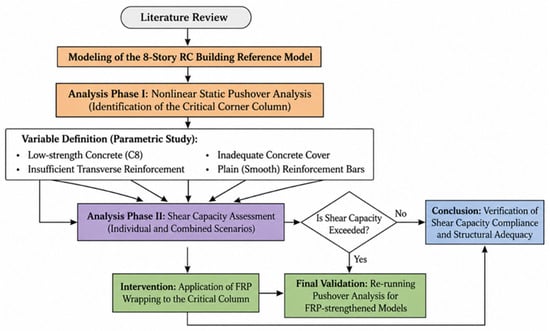
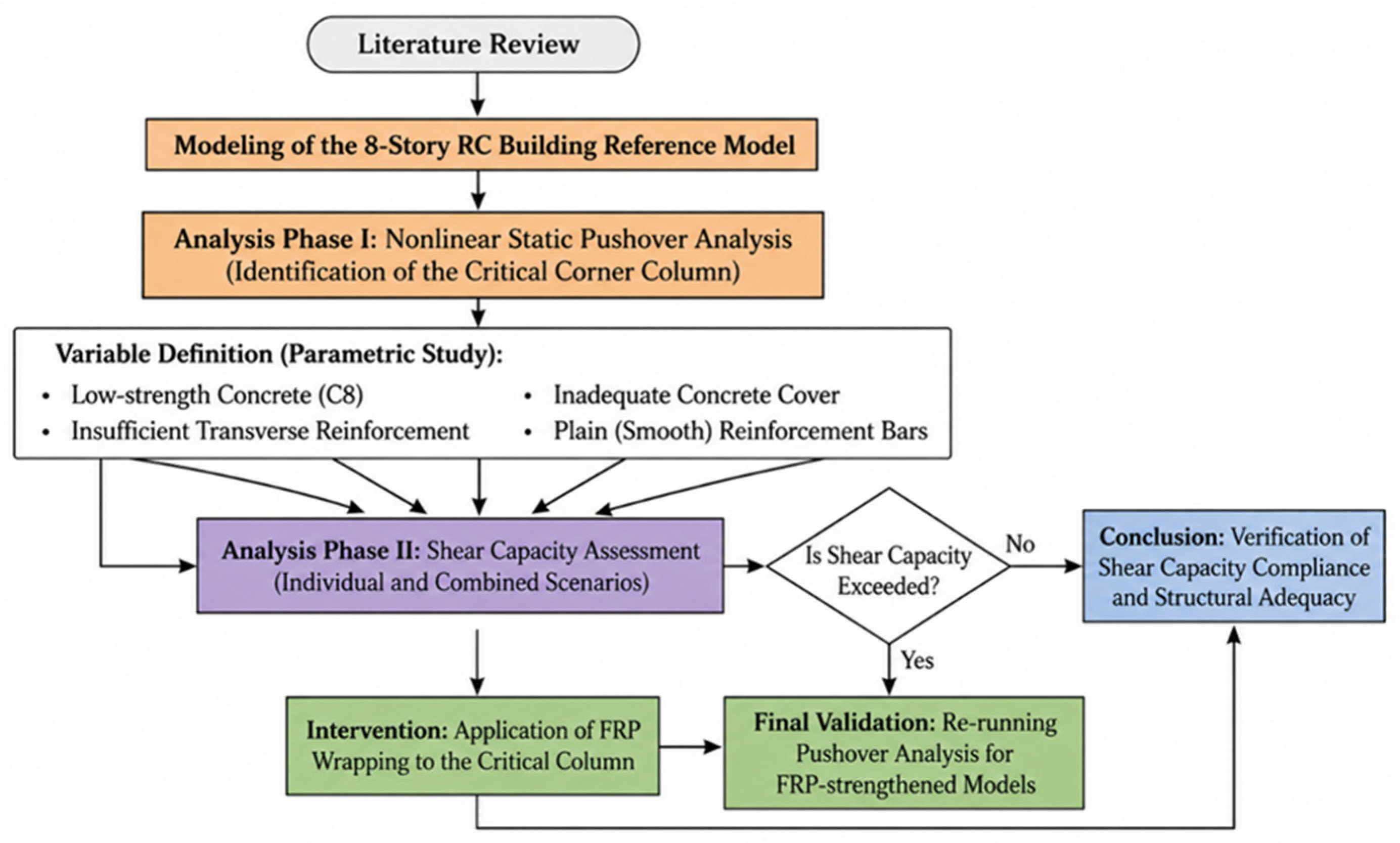
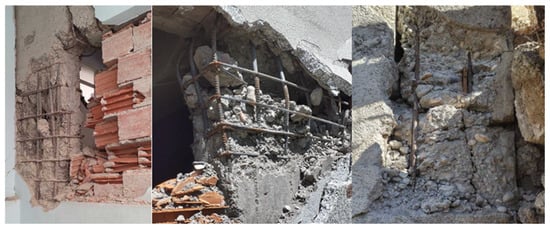
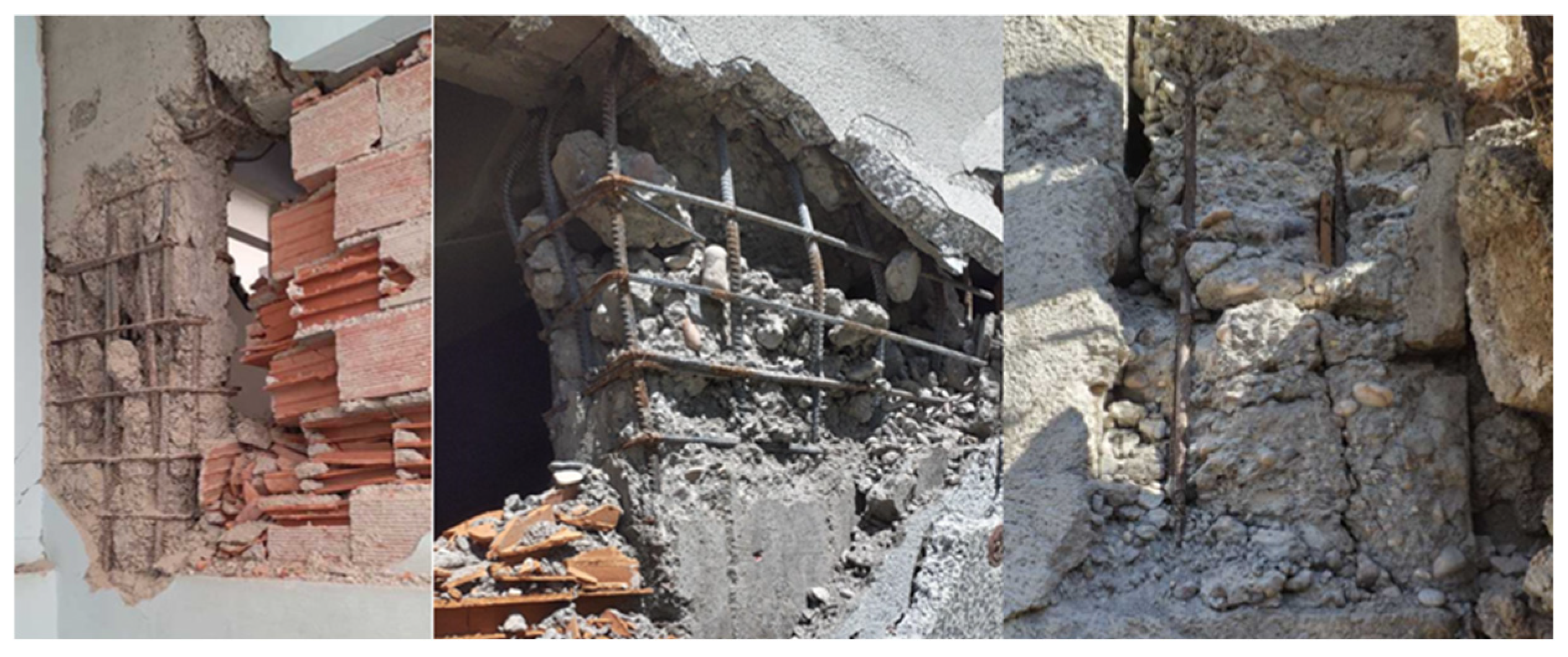
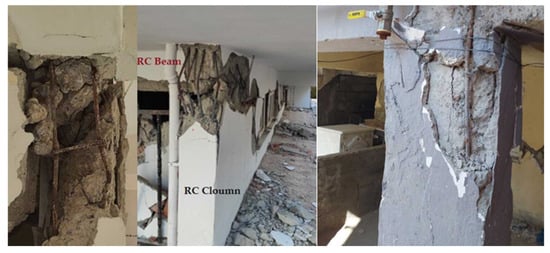
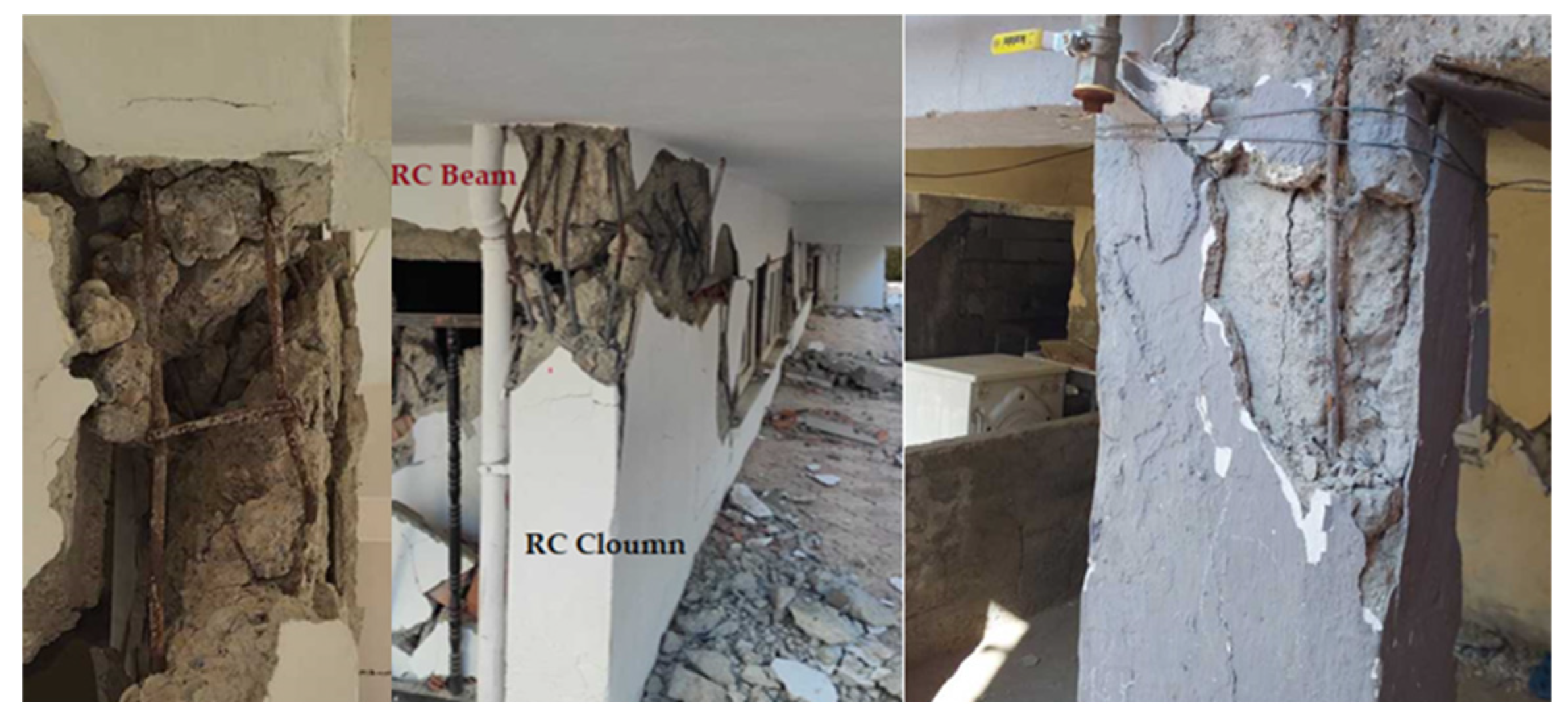
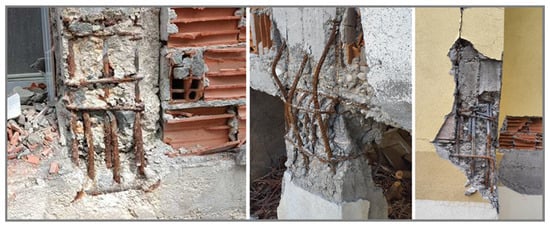
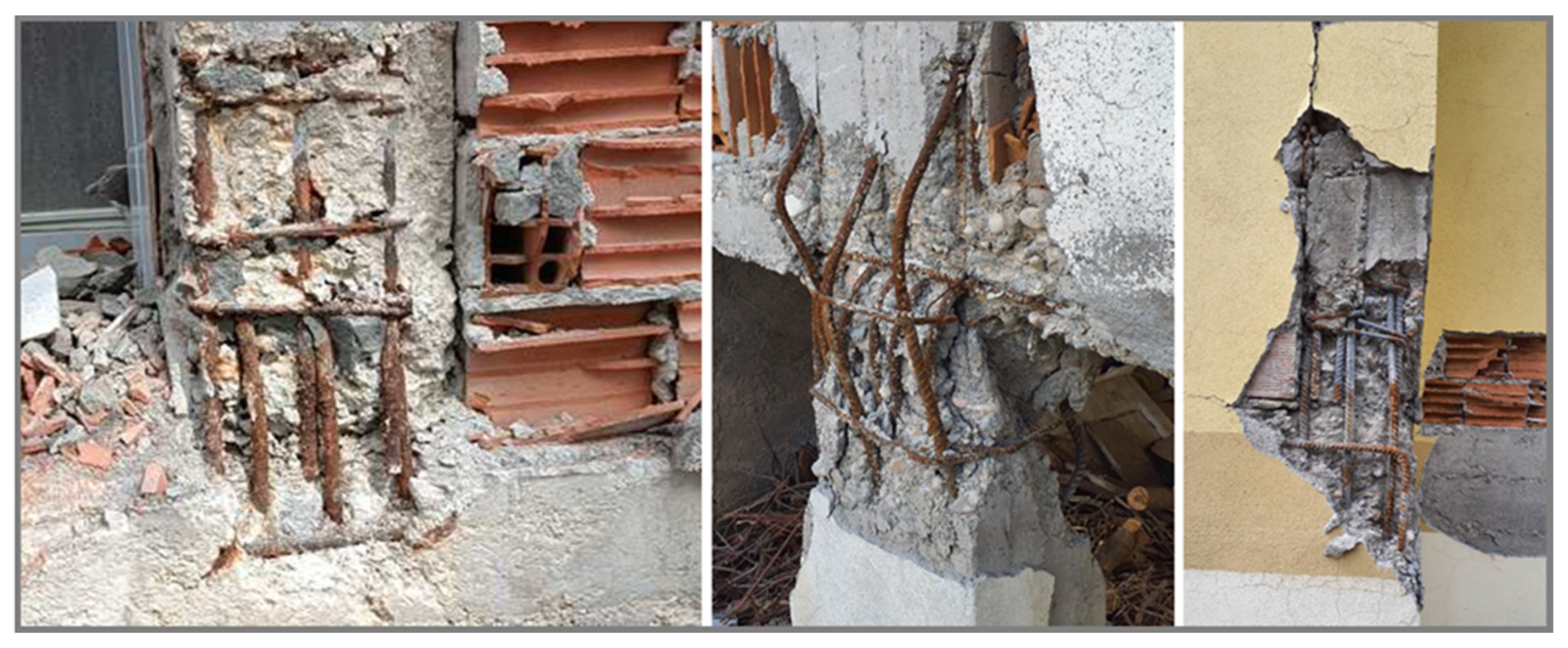
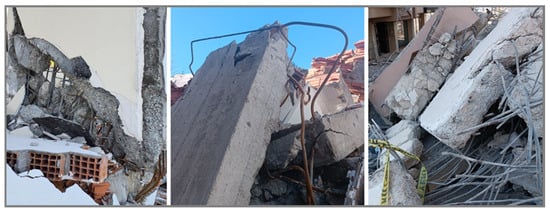
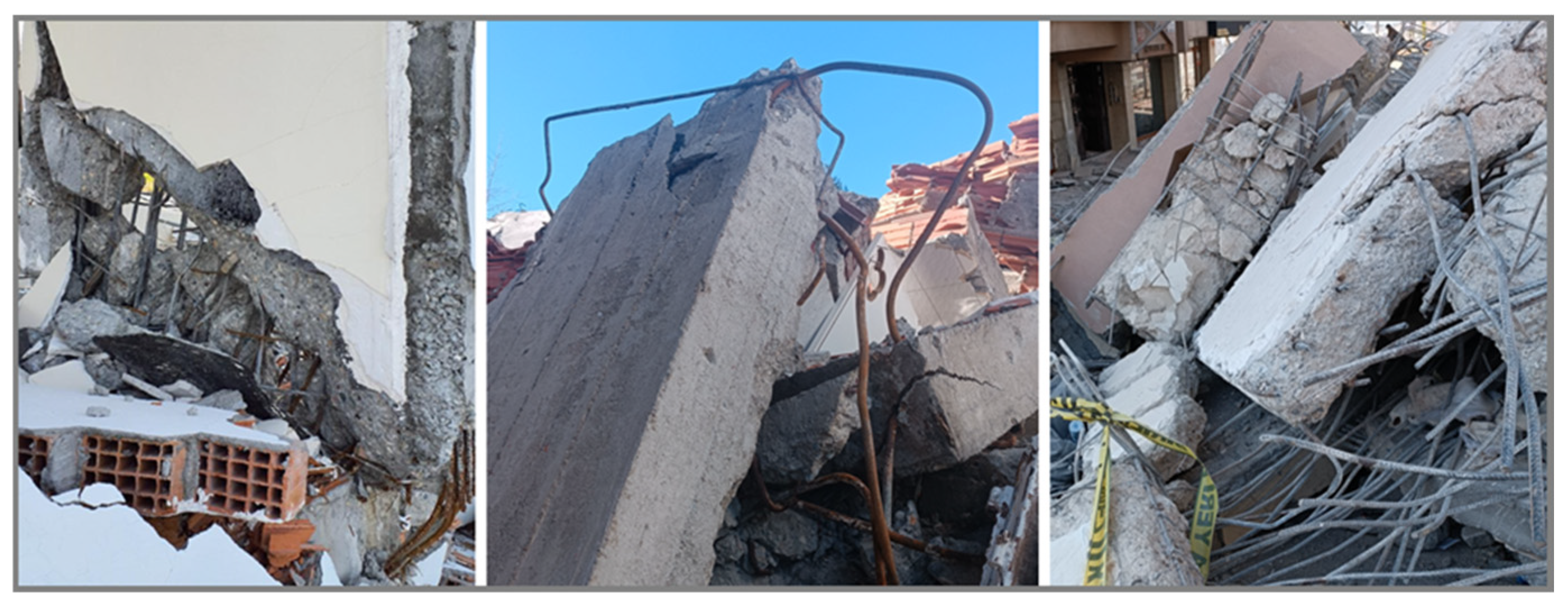
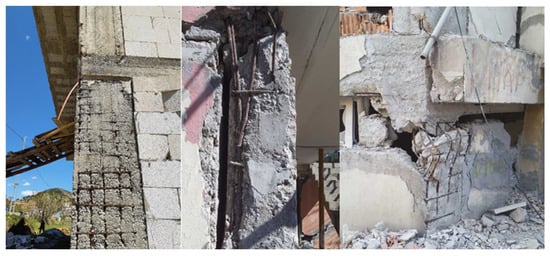
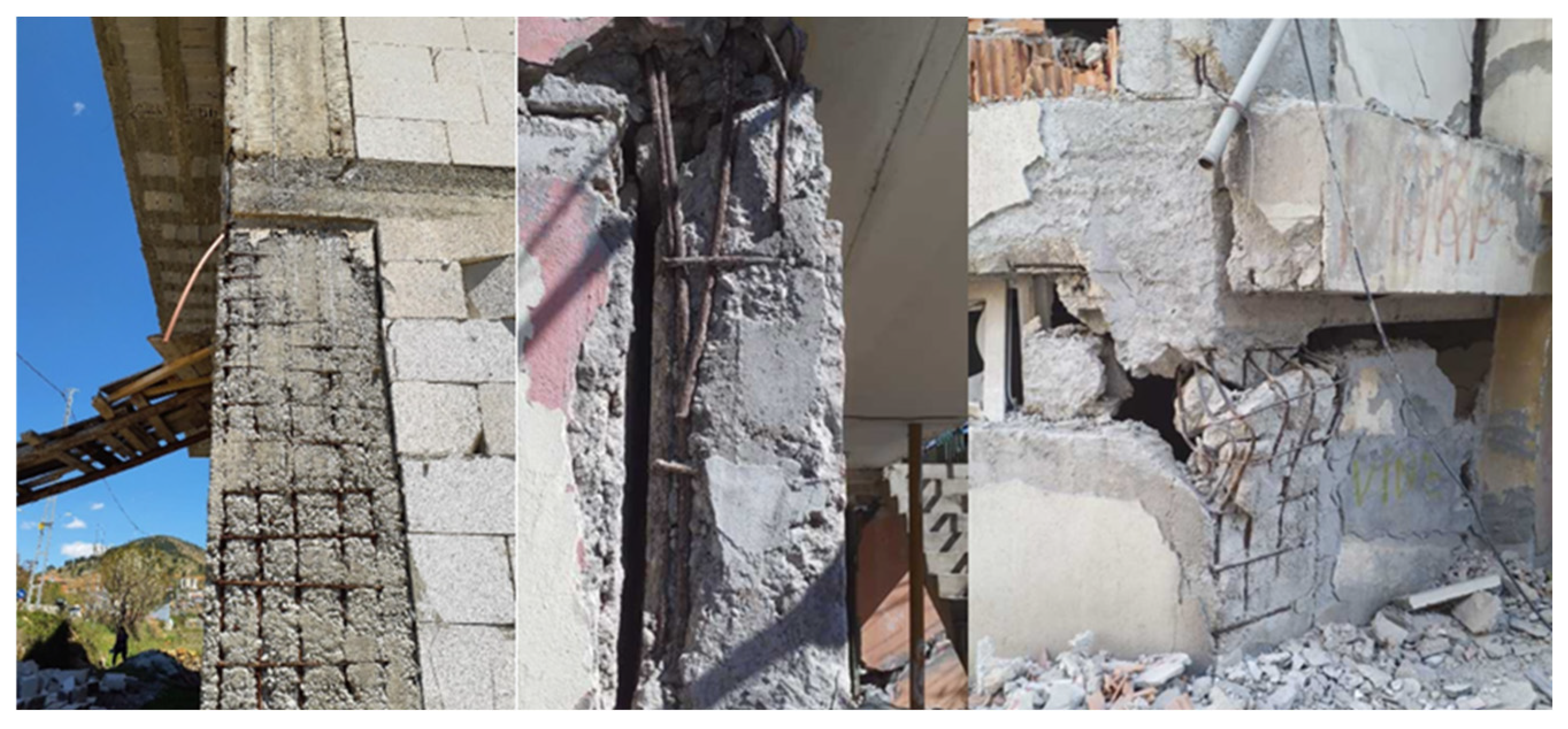
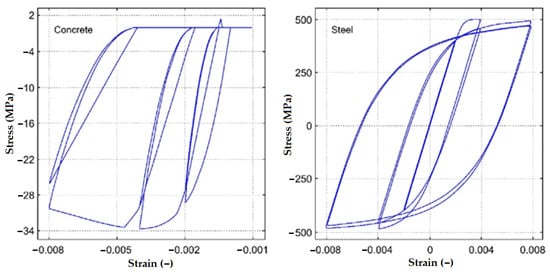
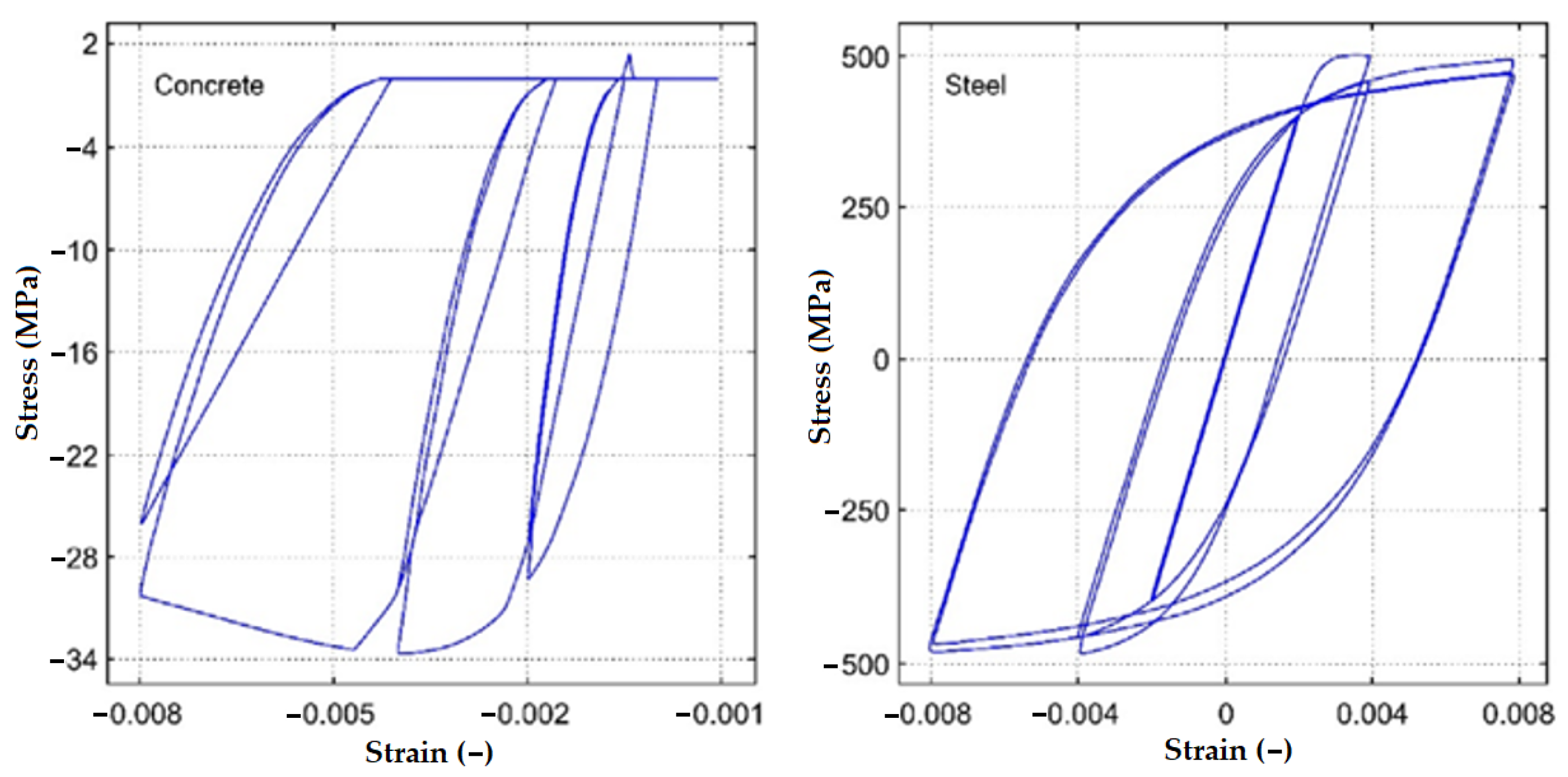
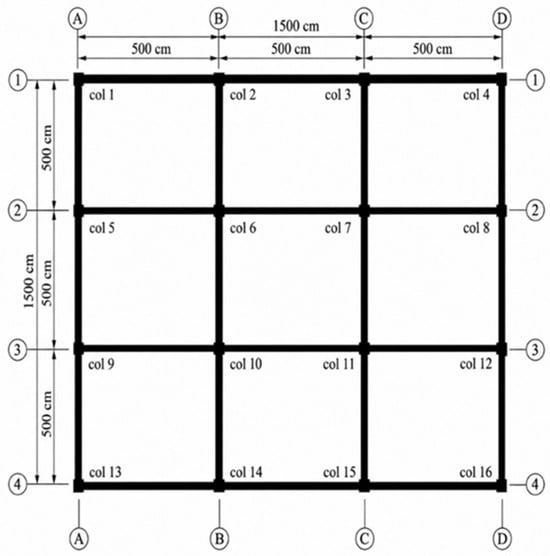
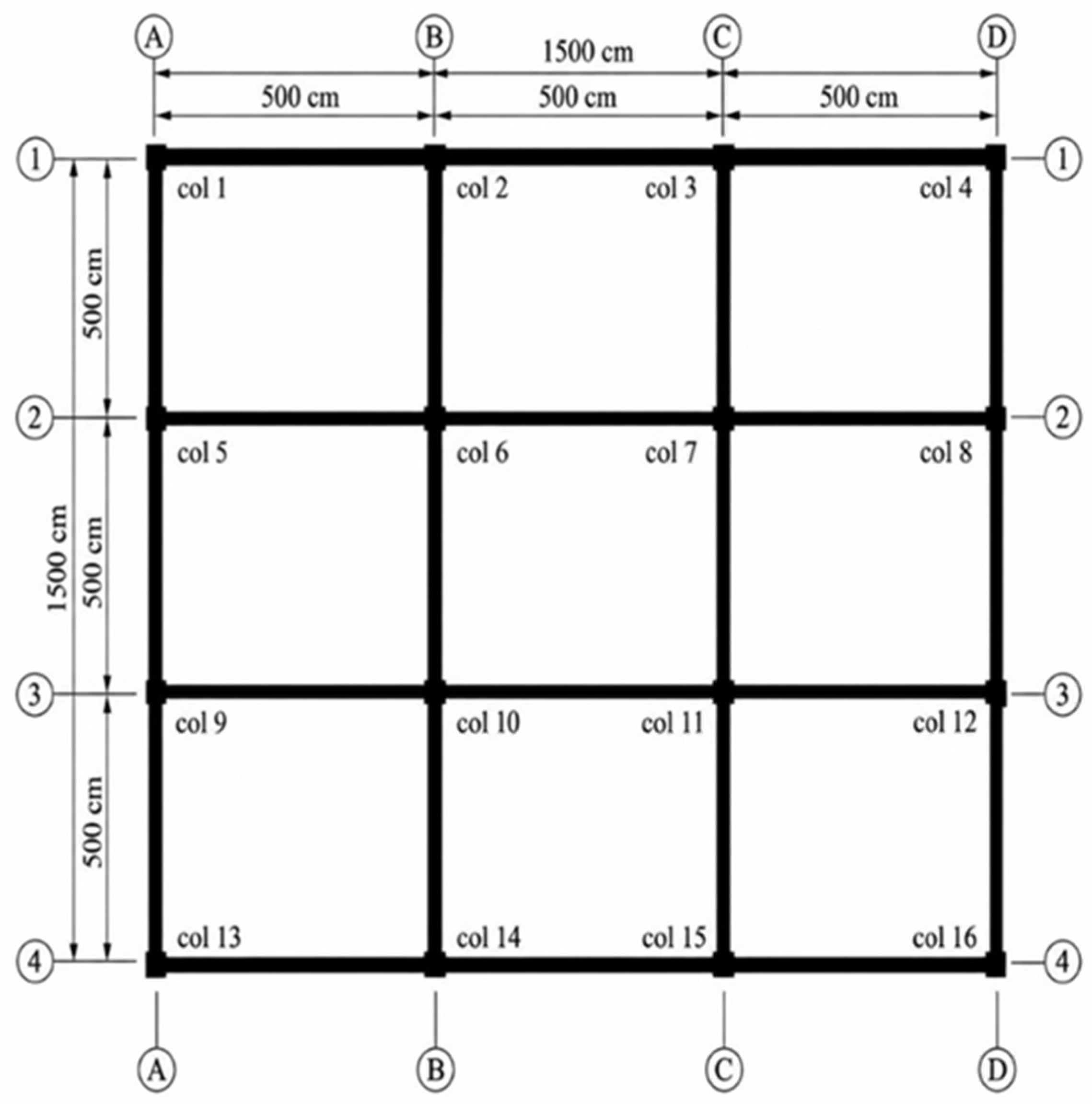
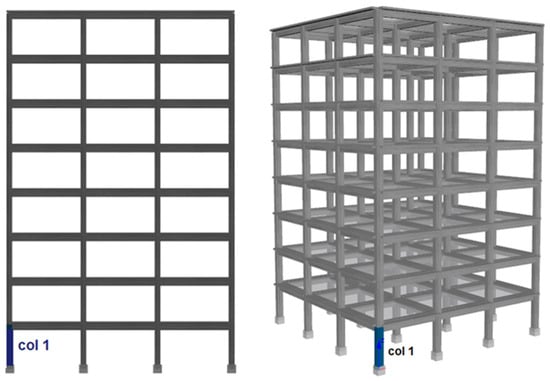
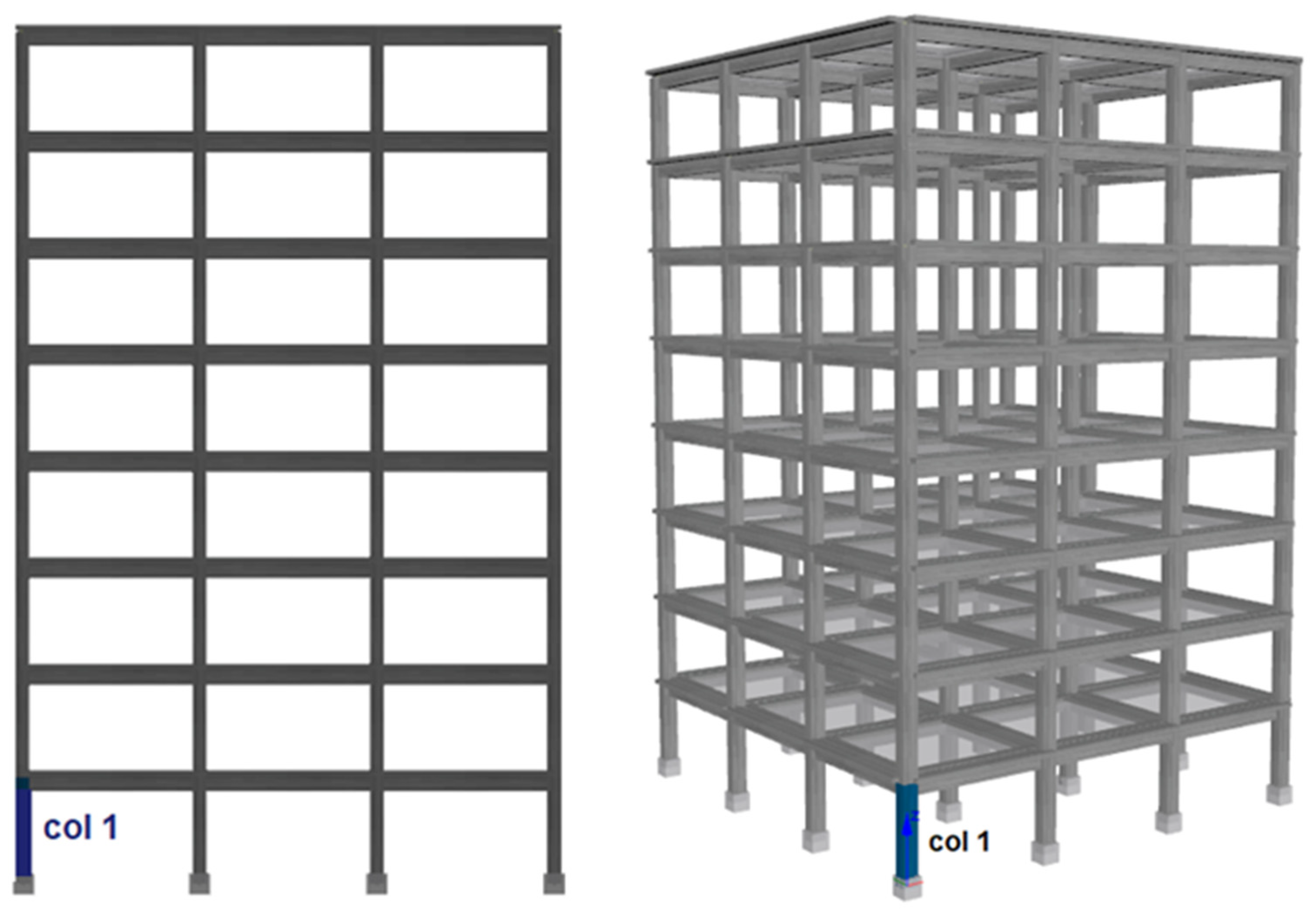
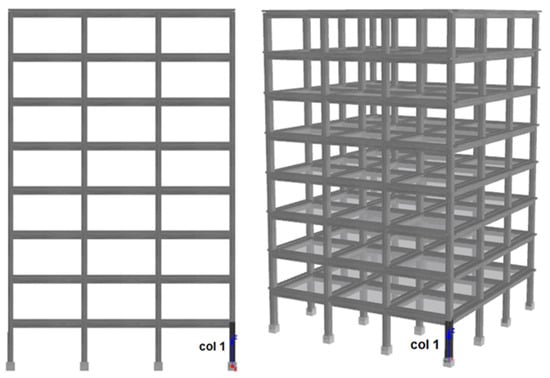
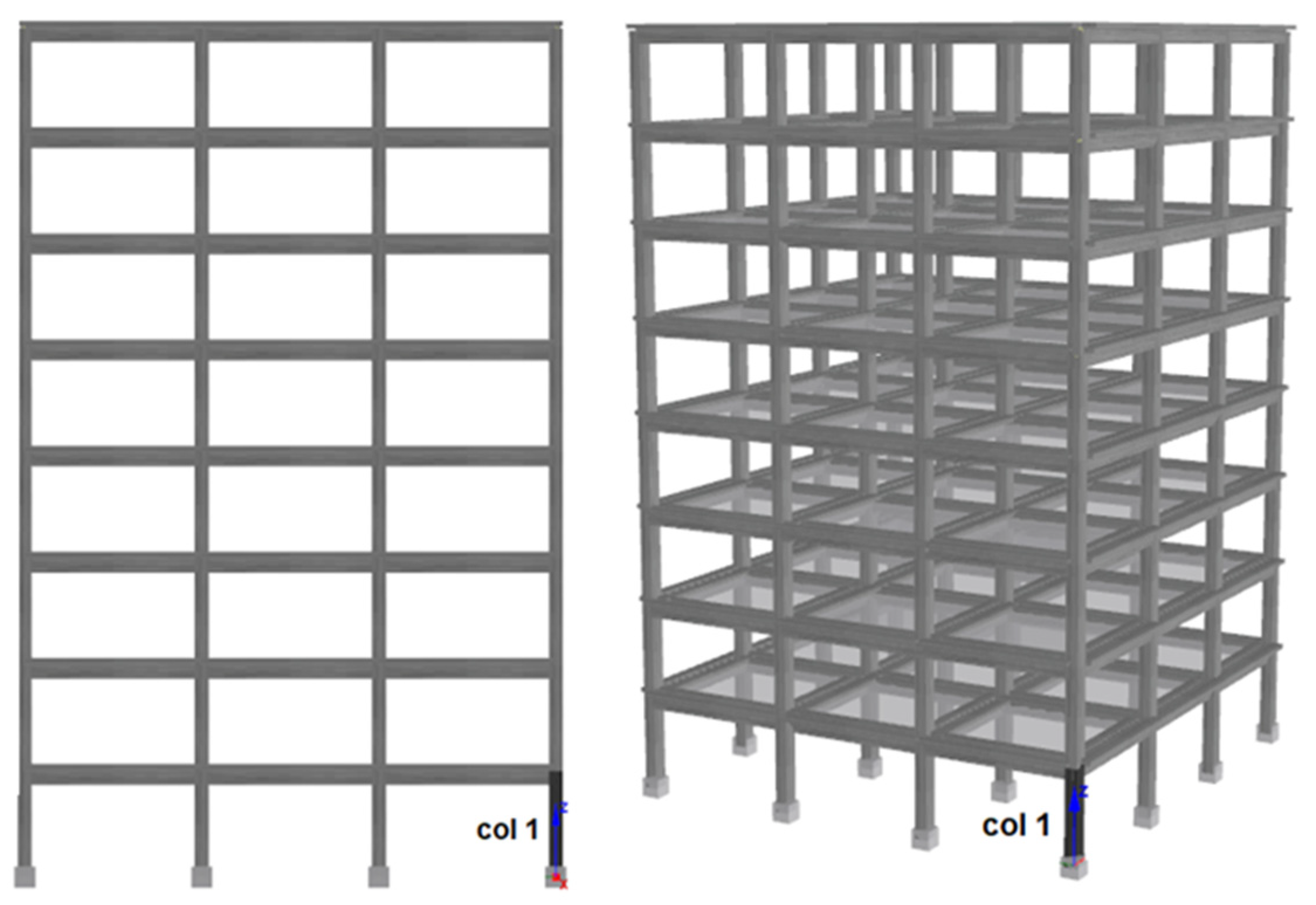
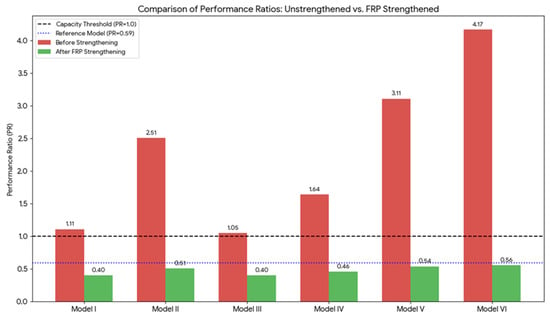
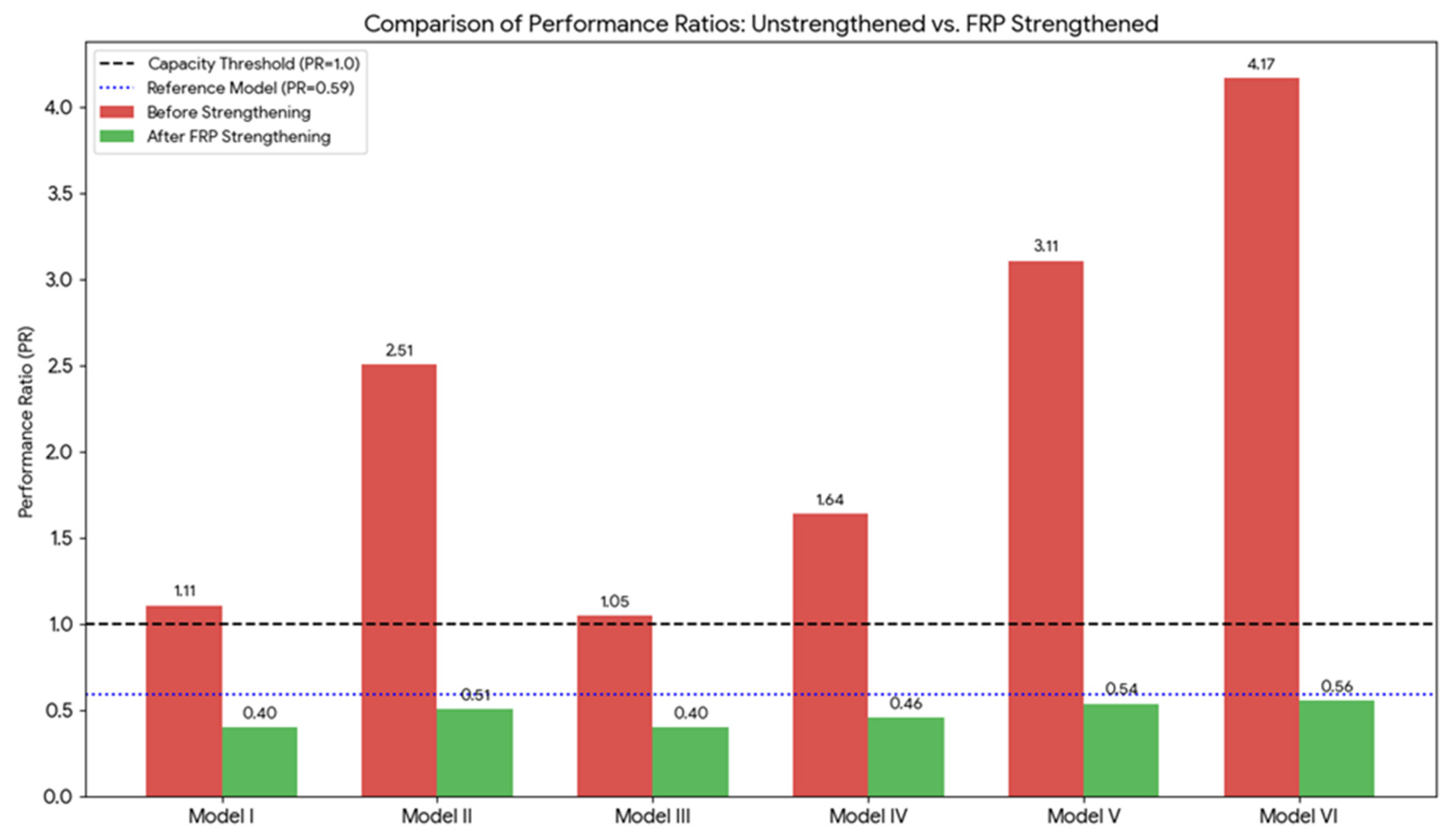

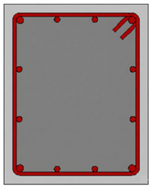
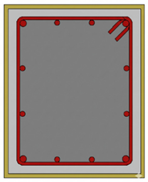
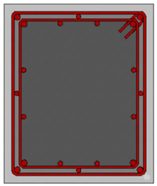
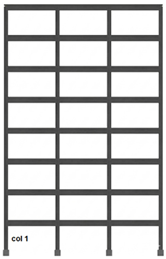
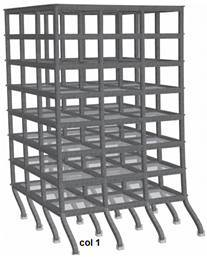
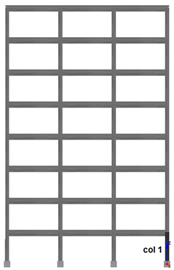
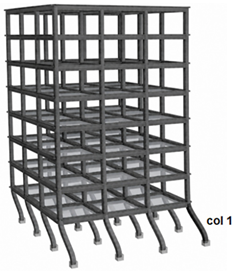
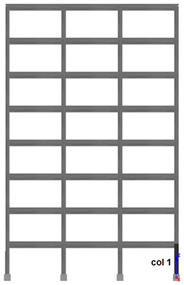
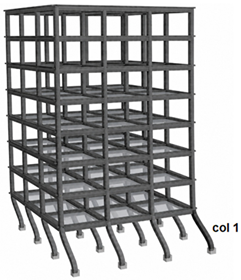
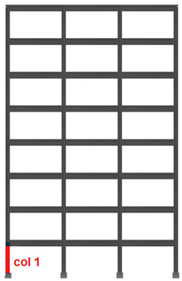
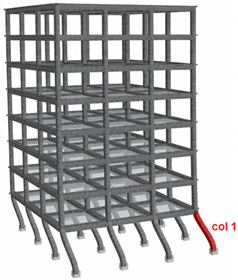
Disclaimer/Publisher’s Note: The statements, opinions and data contained in all publications are solely those of the individual author(s) and contributor(s) and not of MDPI and/or the editor(s). MDPI and/or the editor(s) disclaim responsibility for any injury to people or property resulting from any ideas, methods, instructions or products referred to in the content. |
© 2026 by the authors. Licensee MDPI, Basel, Switzerland. This article is an open access article distributed under the terms and conditions of the Creative Commons Attribution (CC BY) license.