Article

Large-Sample Data-Driven Prediction of VSM Shaft Structural Responses: A Case Study on Guangzhou–Huadu Intercity Railway Shield Shaft


1
Guangzhou Metro Group Co., Ltd., Guangzhou 510330, China
2
Guangzhou Metro Construction Management Co., Ltd., Guangzhou 510330, China
3
China Railway 15th Bureau Group Underground Engineering Co., Ltd., Yangzhou 225101, China
4
China Railway Construction South China Construction Co., Ltd., Guangzhou 511458, China
5
School of Civil Engineering and Transportation, Guangzhou University, Guangzhou 510006, China
*
Author to whom correspondence should be addressed.
Buildings 2026, 16(8), 1605; https://doi.org/10.3390/buildings16081605
Submission received: 24 March 2026 / Revised: 7 April 2026 / Accepted: 15 April 2026 / Published: 18 April 2026

Abstract

With the increasing application of the Vertical Shaft Machine (VSM) method in ultra-deep shafts, accurate prediction of construction-induced structural stresses is vital for engineering safety. Currently, VSM is predominantly used in soft soils, where structural response analysis still relies on finite element (FE) simulations that are computationally intensive and complex to model. To improve analysis efficiency and understand the structural behavior of VSM shafts in granite composite strata, this study takes the first VSM shaft project in South China—the Guangzhou–Huadu Intercity Railway Shield Shaft—as a case study. A “monitoring-driven, large-sample data, machine learning substitution” framework is proposed for predicting structural stresses during construction. The framework calibrates an FE model using monitoring data. Through full factorial design, key design parameters—including main reinforcement diameter, stirrup diameter, concrete strength grade, and steel plate thickness—are systematically varied. Parametric FE simulations are then conducted to construct large-sample response databases (540 sets for ring 0 and 864 sets for the cutting edge ring). Genetic algorithm is introduced to optimize the hyperparameters of Random Forest, XGBoost, and Neural Network models, and their predictive performances are systematically compared. Results show that the proposed framework effectively substitutes traditional FE analysis and enables rapid multi-parameter comparison. Among the models, GA-XGBoost achieves the highest prediction accuracy across all stress indicators (R2 > 0.999, where R2 is the coefficient of determination, with values closer to 1 indicating better predictive performance), demonstrating the superiority of its gradient boosting and regularization mechanisms in handling tabular data with strong physical correlations. Moreover, the method exhibits good extensibility to other engineering response predictions beyond construction stresses.

1. Introduction

In recent years, with the continuous advancement of urban underground space development towards greater depths and larger cross-sections, the Vertical Shaft Machine (VSM) method has been progressively adopted in ultra-deep shaft projects worldwide. This method was first developed by Herrenknecht AG [1] and has since been validated in numerous projects for its applicability and environmental friendliness in soft soil strata, laying the foundation for subsequent technological development [2]. The DTSS T11 project in Singapore marked the first engineering application of this method in Asia [3]. In 2020, the inaugural VSM shaft project in China was officially launched in Nanjing [4], signifying the entry of this technique into the country’s engineering practice stage. Subsequently, research perspectives have correspondingly broadened. Zhai et al. [5] verified the engineering feasibility of the method through a case study of an ultra-deep shaft in Shanghai’s soft soil area. Wang et al. [6] systematically compared the differences between the VSM method and conventional construction methods in soft soil shaft construction from the perspectives of design principles and applicability conditions. Although China started relatively late in this field, the localization process following technology introduction has been rapid, with the VSM method having been successfully applied in numerous large-scale caisson projects in soft soil regions.
Following the validation of process feasibility, research focus has gradually shifted towards construction mechanics and structural response analysis. Scholars have predominantly conducted studies from perspectives such as field measurement validation and numerical simulation. Lu et al. [7] analyzed the strata deformation patterns induced by VSM construction in soft soil areas based on the Shanghai Zhuyuan Bailonggang Sewage Connecting Pipe Project and proposed a soil deformation zoning method. Zhou et al. [8] further elucidated the mechanisms of ground settlement and deep soil deformation induced by construction. Ma et al. [9] utilized three-dimensional finite element methods to analyze the mechanical response of VSM shaft reinforcement structures in soft soil. Liu et al. [10] investigated the influence of different pile foundation parameters on shaft stability. Baoyin et al. [11] studied shaft structural response and strata deformation through full-process three-dimensional simulation and validated model reliability using field monitoring data. Abualghethe et al. [12] employed PLAXIS 3D to analyze the impact of different stiffening ring depths on structural deformation and the surrounding environment. Furthermore, taking the Shanghai Jing’an Smart Garage Project as an example, Long et al. [13] systematically investigated the construction mechanics and structural response of super-large precast shafts in soft soil layers through theoretical analysis, field measurements, and three-dimensional numerical simulation, verifying the applicability and controllability of the VSM technique under complex geological conditions. However, existing research exhibits the following limitations: First, studies are predominantly concentrated in soft soil regions, leaving the structural mechanical response of VSM construction in the granite composite strata of South China unclear [14,15], with a lack of regional engineering experience for support. Second, although numerical simulation methods offer high accuracy, the modeling process is complex and computationally intensive, making it difficult to meet the demand for rapid multi-parameter, multi-scenario analysis and scheme comparison. This constraint limits their application in engineering design optimization and real-time decision-making. Therefore, exploring a rapid prediction method that balances accuracy and efficiency holds significant importance for optimizing design and construction decisions.
In recent years, machine learning has demonstrated broad application potential across various engineering fields [16,17,18,19,20]. In excavation structures, machine learning has also achieved significant progress. In terms of response prediction, Jong and Ong [21] proposed a Bayesian network-based framework for predicting soil–structure interactions induced by excavation. Wang et al. [22] developed a deep learning framework integrating spatiotemporal features for the synchronous prediction of excavation stability. Yong et al. [23] employed meta-heuristic algorithms to optimize intelligent models (MLP-HHO and MLP-WO) for predicting the deformation of retaining structures. Fan et al. [24] utilized LSTM models combined with hyperparameter optimization to achieve lateral displacement prediction and collapse risk assessment. Regarding monitoring optimization, Li et al. [25] proposed a probabilistic learning framework supervised by the value of information for optimizing settlement monitoring point layouts. Yang et al. [26] developed a virtual sensing method based on real-time ensemble graph neural networks, enabling high-precision estimation of settlement at unmonitored locations and generation of real-time cloud maps, effectively extending monitoring coverage and risk assessment capabilities. In the area of risk assessment, Tian et al. [27] constructed a digital twin framework integrating physics-guided Bayesian learning and sparse representation, achieving real-time updates of the support system and spatiotemporal risk quantification. Pan et al. [28] proposed an online learning-based multi-attribute spatiotemporal Transformer network for dynamically predicting excavation-induced risks. For construction decision-making, Xu et al. [29] validated the effectiveness of servo systems in controlling deformation and optimizing support design through field monitoring and numerical simulation. Meng et al. [30] combined an improved multi-objective particle swarm optimization algorithm with BIM technology to achieve comprehensive optimization of deep excavation construction in terms of schedule, cost, safety, and environmental impact. The aforementioned studies indicate that machine learning has exhibited strong modeling capabilities in fields related to excavation engineering, laying a foundation for its application in predicting structural stresses during VSM shaft construction. However, existing research rarely combines machine learning with the VSM method. To date, only Zhao et al. [31] have proposed a physics-guided self-adaptive gradient learning method for predicting suspension forces. More critically, a significant gap remains in how to systematically integrate machine learning with field monitoring and large-scale numerical simulation in a coordinated research effort. To address the above gaps, this study proposes two main novelties: (1) a “monitoring-driven, large-sample data, machine learning substitution” prediction framework, which systematically couples field monitoring, numerical simulation, and machine learning; (2) the first application of this framework to a VSM shaft in the granite composite strata of South China, a geological condition distinctly different from the previously studied soft soil areas.
Therefore, this study relies on the first VSM shaft project in the granite composite strata of South China (the Guanghua Inter-City Railway Shield Shaft) to conduct systematic research on structural stress response during the construction period. A prediction framework of “monitoring-driven, large-sample data, machine learning substitution” is proposed. By calibrating a finite element model with field monitoring data, a large-sample dataset encompassing multiple design parameters is constructed based on a full factorial experimental design. Subsequently, Genetic Algorithm-optimized Random Forest, XGBoost, and Artificial Neural Network models are introduced for training and comparison, establishing an efficient and accurate surrogate model for stress prediction. The research objective is to propose and validate a data-driven framework that can serve as a reference for rapid stress prediction in VSM shaft construction, thereby supporting construction safety and process optimization while offering practical insights for similar projects in the South China region.

2. Project Overview and Monitoring Arrangement

2.1. Project Overview

This project involves the construction of a receiving shaft for a tunnel boring machine (TBM) as part of the Guanghua Inter-City Metro Tunnel, located in Guangzhou City. The shaft is constructed using the Vertical Shaft Machine (VSM) method, representing the first ultra-deep precast shaft project employing this technique in South China. The shaft is designed with a circular cross-section, featuring an inner diameter of 13 m, an outer diameter of 14 m, and a depth of 27 m. It traverses a composite stratum primarily consisting of granite residual soil, completely weathered granite, and moderately weathered granite. The geotechnical parameters of the soil layers within the construction site are summarized in Table 1.
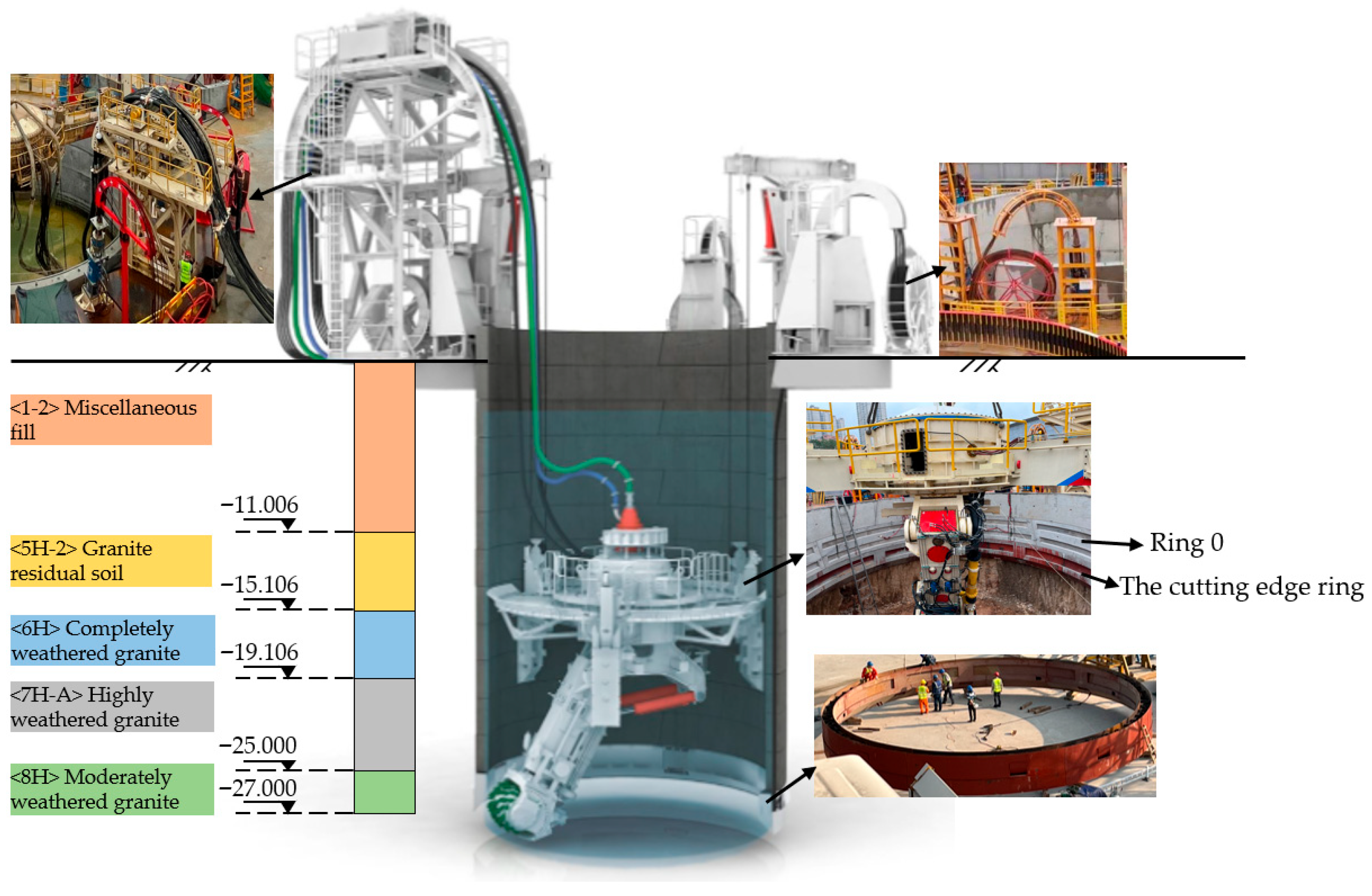
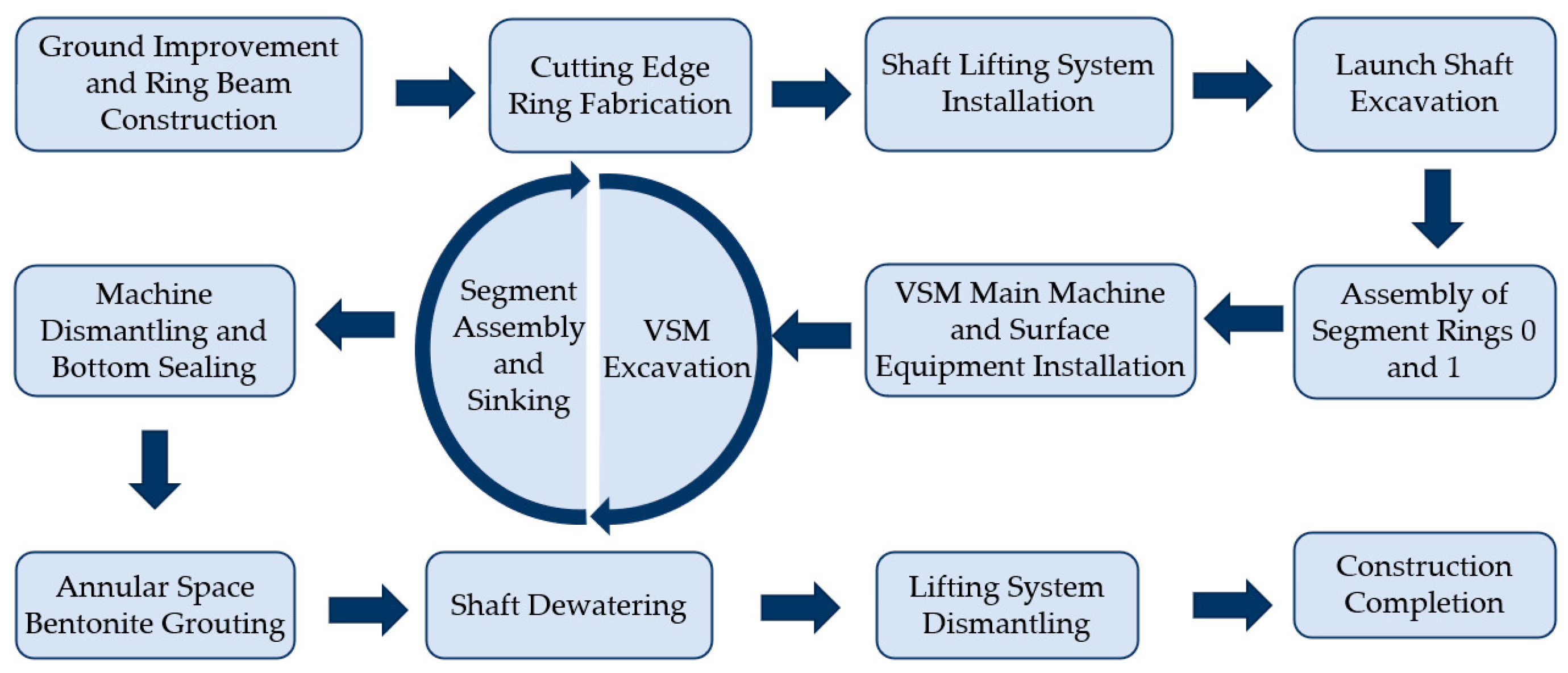
The shaft structure is assembled from precast segments, comprising a total of 17 rings. Rings 0 to 16 each consist of six wedge-shaped C50 concrete segments, with a segment height of 1.5 m, a thickness of 500 mm, and an impermeability grade of P12. The cutting edge ring is a separate single ring, composed of four specially designed steel–concrete composite segments. It also has a height of 1.5 m, utilizing a 12 mm thick steel plate trough and Φ16 mm tie bars, with C50 concrete cast internally. The lower part of the outer wall is reinforced with a 30 mm thick steel plate to enhance resistance against external soil pressure and cutting forces during sinking. Adjacent rings are connected using high-strength bolts, and longitudinally continuous spirals and shear pins are installed to ensure structural integrity, alignment accuracy, and shear resistance. A schematic diagram of the VSM tunneling construction is shown in Figure 1, and the construction flowchart is presented in Figure 2.

2.2. Monitoring Content

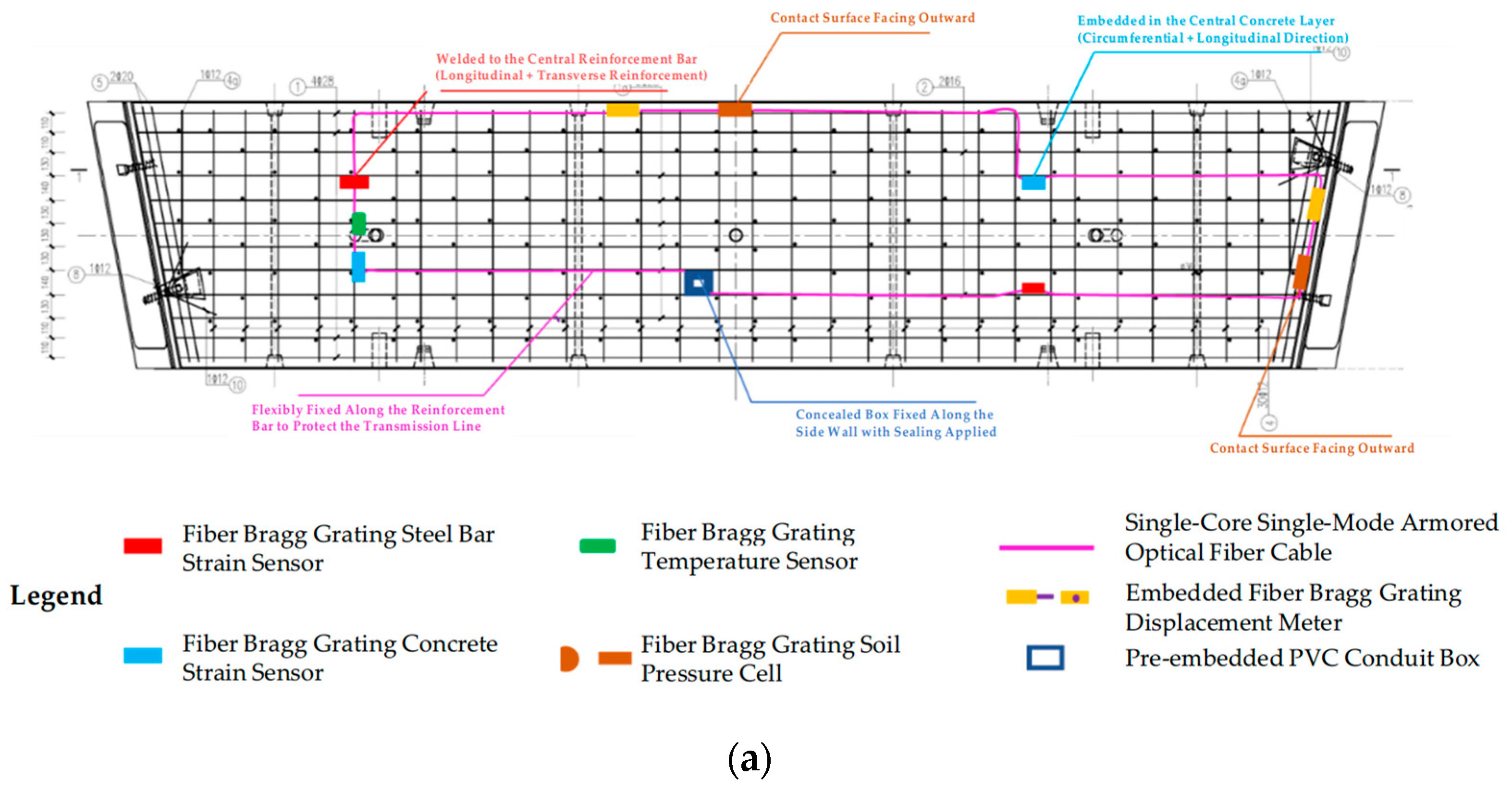
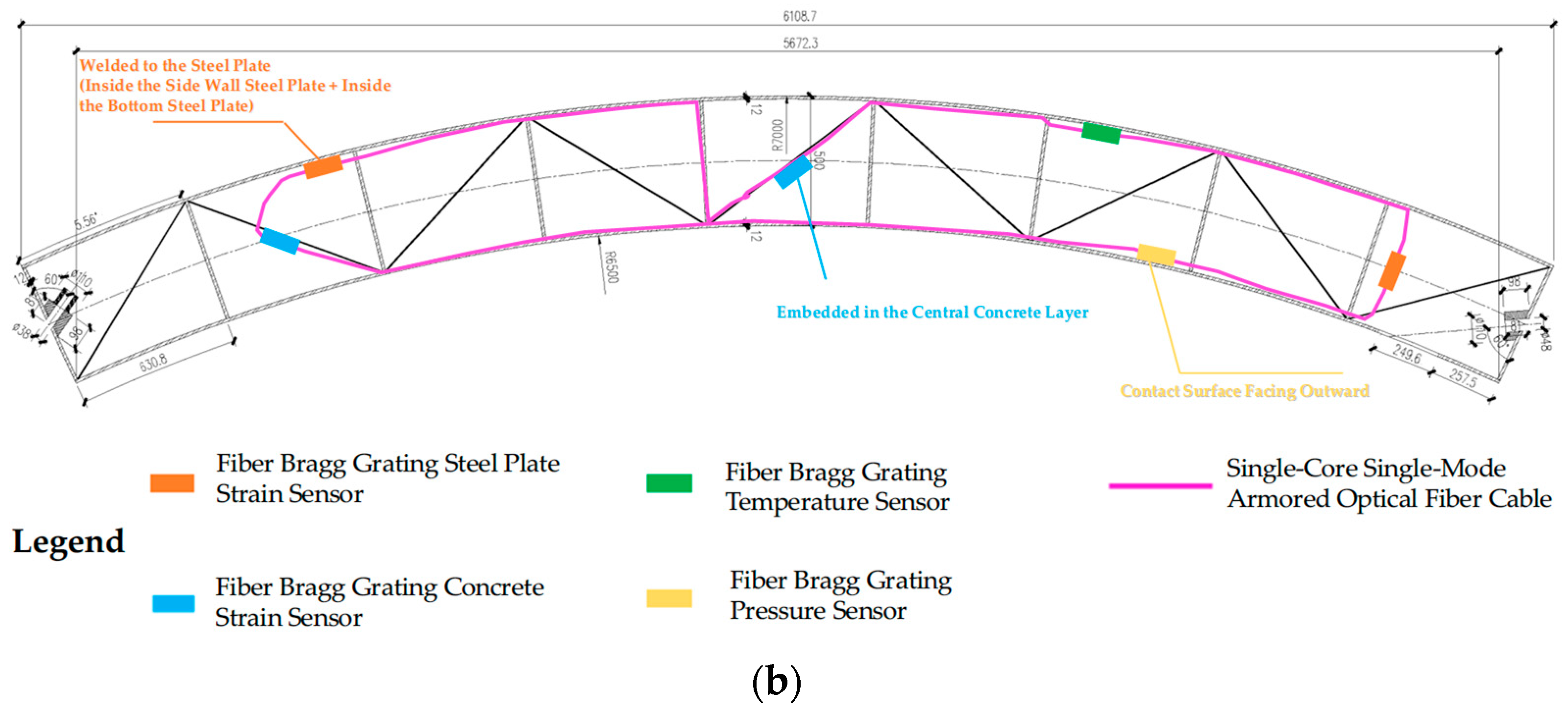
To investigate the structural response during the construction of the VSM shaft, this project employed various instruments for real-time monitoring, including Fiber Bragg Grating (FBG) pressure sensors, FBG concrete strain gauges, and FBG steel plate strain gauges. Key monitoring items encompass concrete stress in segments, steel reinforcement stress, joint pressure between segments, steel plate stress of the cutting edge ring, bottom pressure of the cutting edge ring, and lateral earth pressure on segments. Detailed layouts of the stress monitoring points for Ring 0 and the cutting edge ring are illustrated in Figure 3 (The positions of the Ring 0 and cutting edge ring structures within the shaft are detailed in Figure 1).

3. Construction and Validation of Monitoring Data-Driven Finite Element Model

3.1. Modeling Scheme

This study establishes a finite element model based on field monitoring data to simulate the mechanical response of segments at different depths during construction. The core of the modeling is to be data-driven, simplifying the complex construction loads into static loads related to depth. This establishes a mapping relationship between the inputs (soil parameters, depth, loads) and the outputs (various structural stress responses), providing a reliable computational foundation for subsequent parametric studies and the generation of a large-sample machine learning database.
The model was developed on a finite element software platform (Abaqus 2024), with Ring 0 and the cutting edge ring selected as the analysis objects. In the finite element model, the element types and material parameter settings for each structural component are detailed in Table 2. The effects of bolt connections and shear pins between segments were equivalently simulated using tie constraints and coupled nodes.
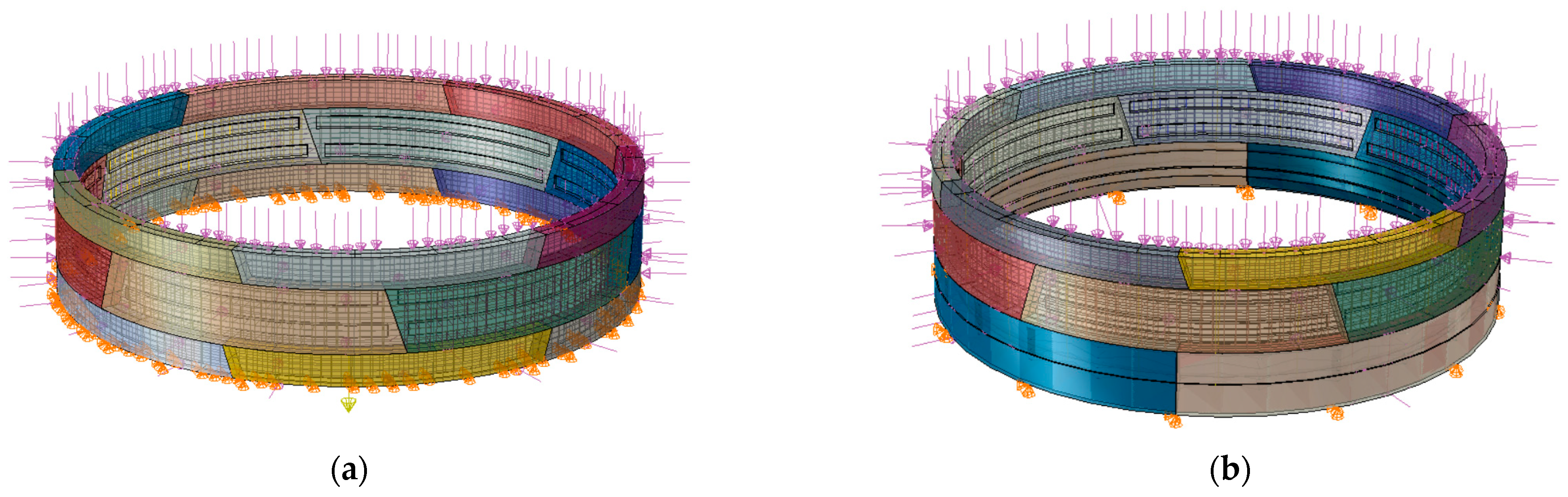
To reasonably simulate the soil–structure interaction, soil springs were employed to model the constraining effect of the soil on the segments. Normal and tangential springs were applied to the nodes on the outer wall of the segments. Their stiffness values were determined based on soil layer parameters and burial depth (refer to Table 1 and Figure 1) to reflect the resistance characteristics of the soil at different depths. Load conditions, including lateral earth pressure, structural self-weight, overlying loads, and bottom pressure of the cutting edge ring, were defined according to field monitoring data. Boundary conditions were set as follows: the model base was fixed, and the top was free, simulating the force development process during the sequential assembly and incremental sinking of the segments. Details of the model are shown in Figure 4.

3.2. Model Reliability Verification

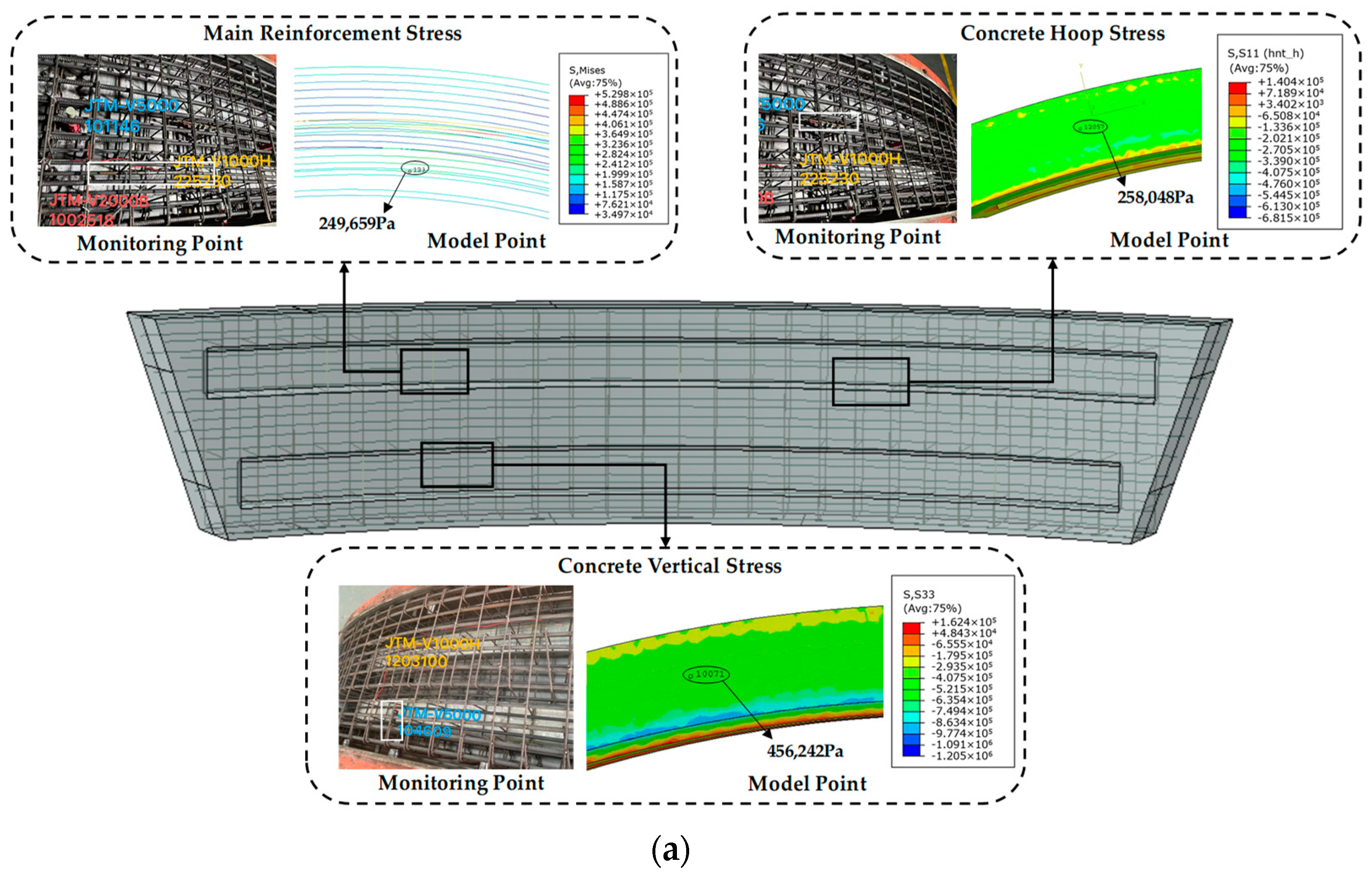
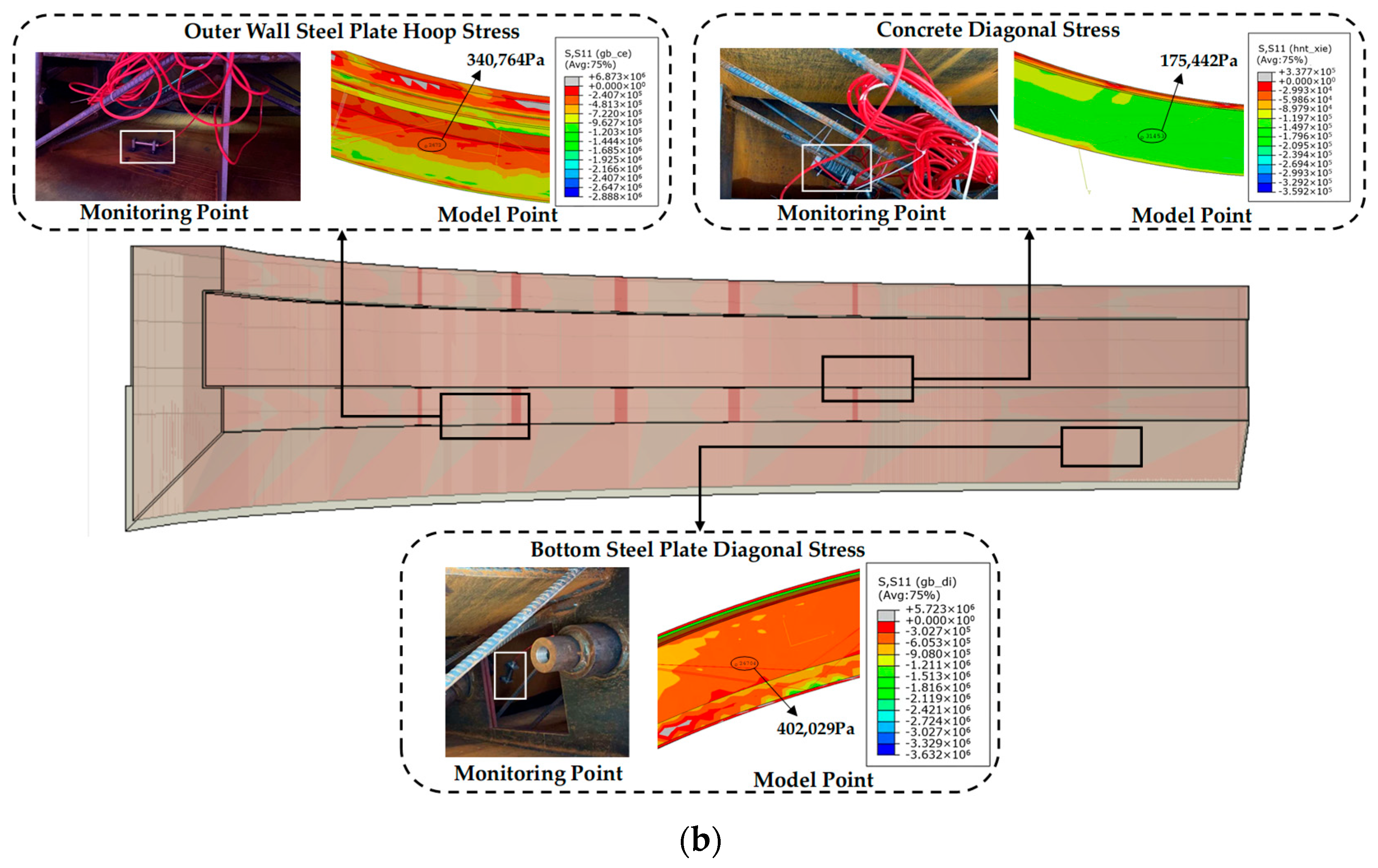
To ensure the reliability of the finite element model, this study conducted a systematic comparative verification between the model calculation results and the field monitoring data. By establishing a mapping relationship between the coordinates of the monitoring points and the nodes of the finite element model, the simulated structural response values at corresponding locations were extracted, enabling a quantitative comparison with the measured data. The correspondence between the model result extraction locations and the field monitoring points is illustrated in Figure 5.
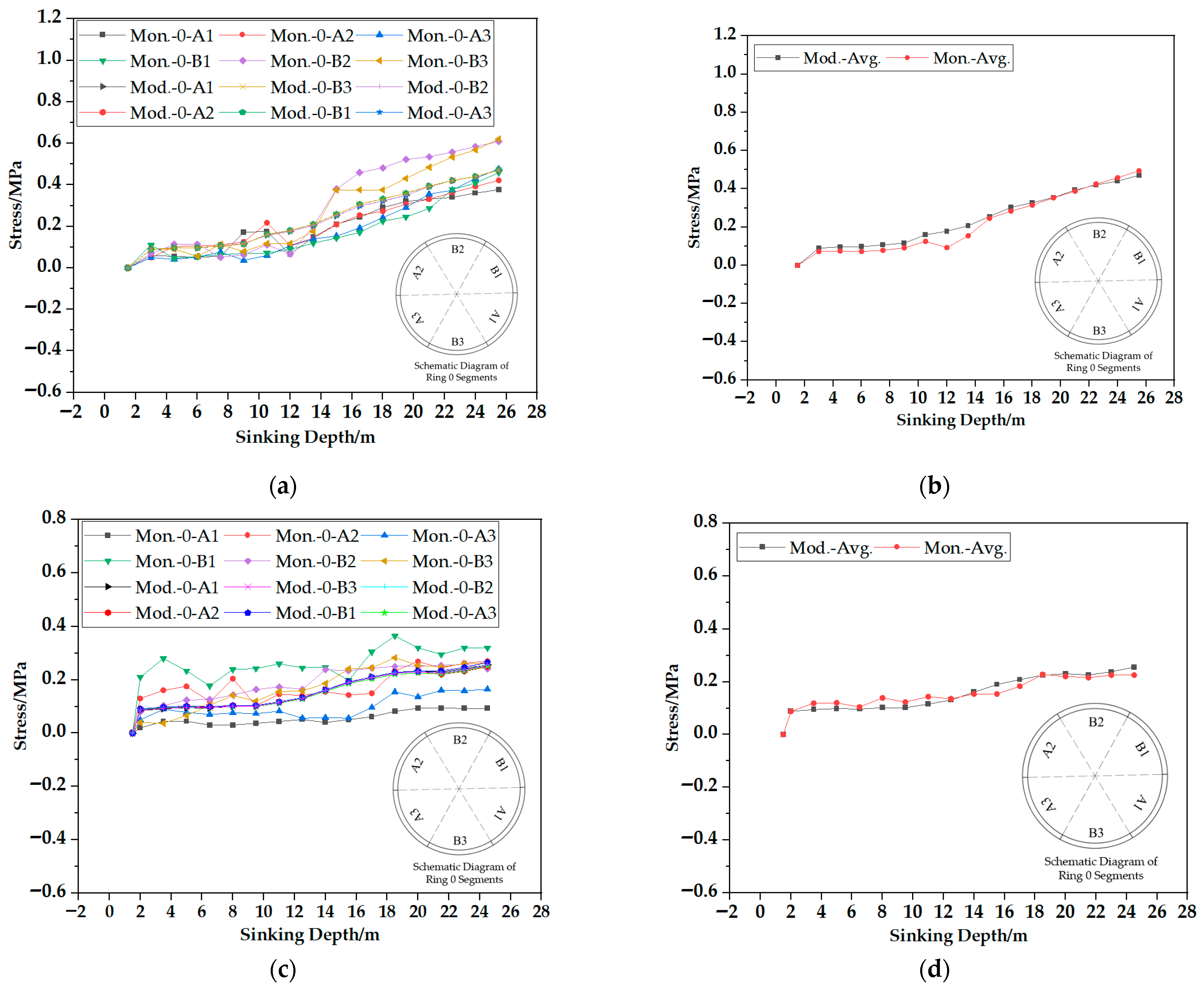
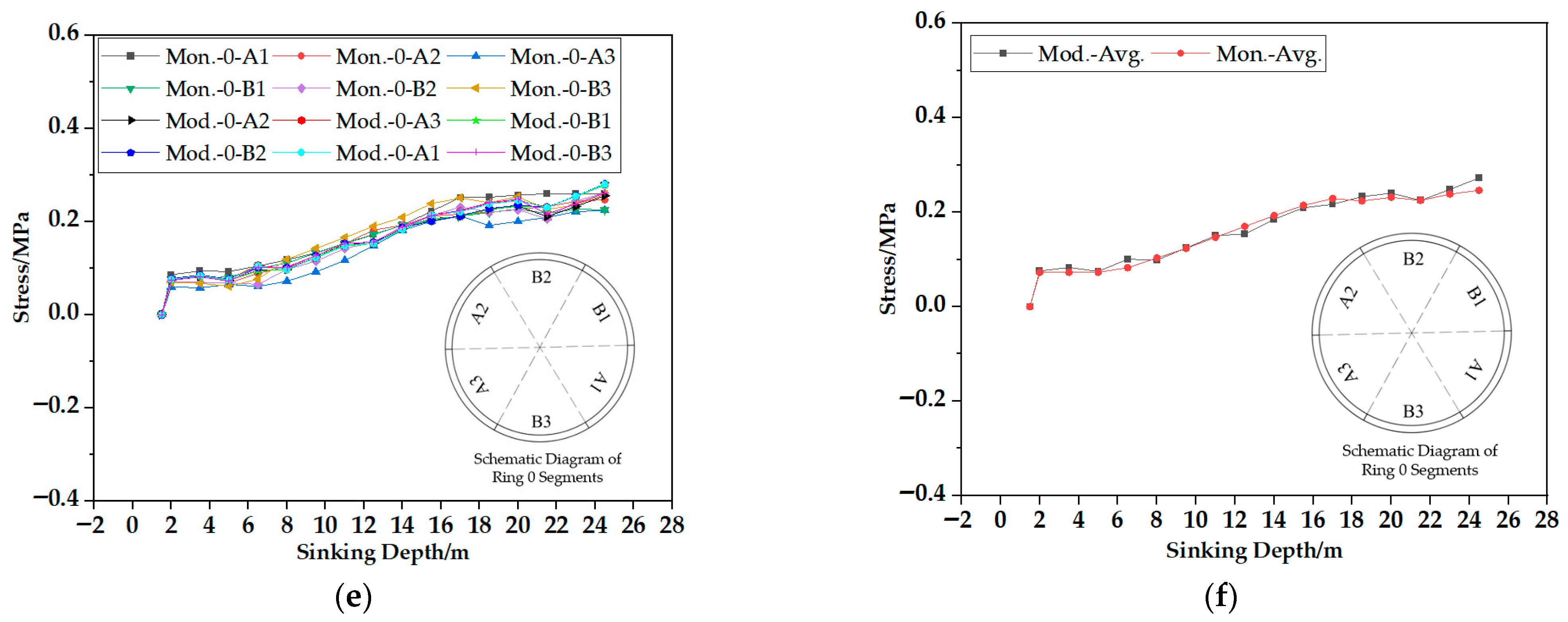
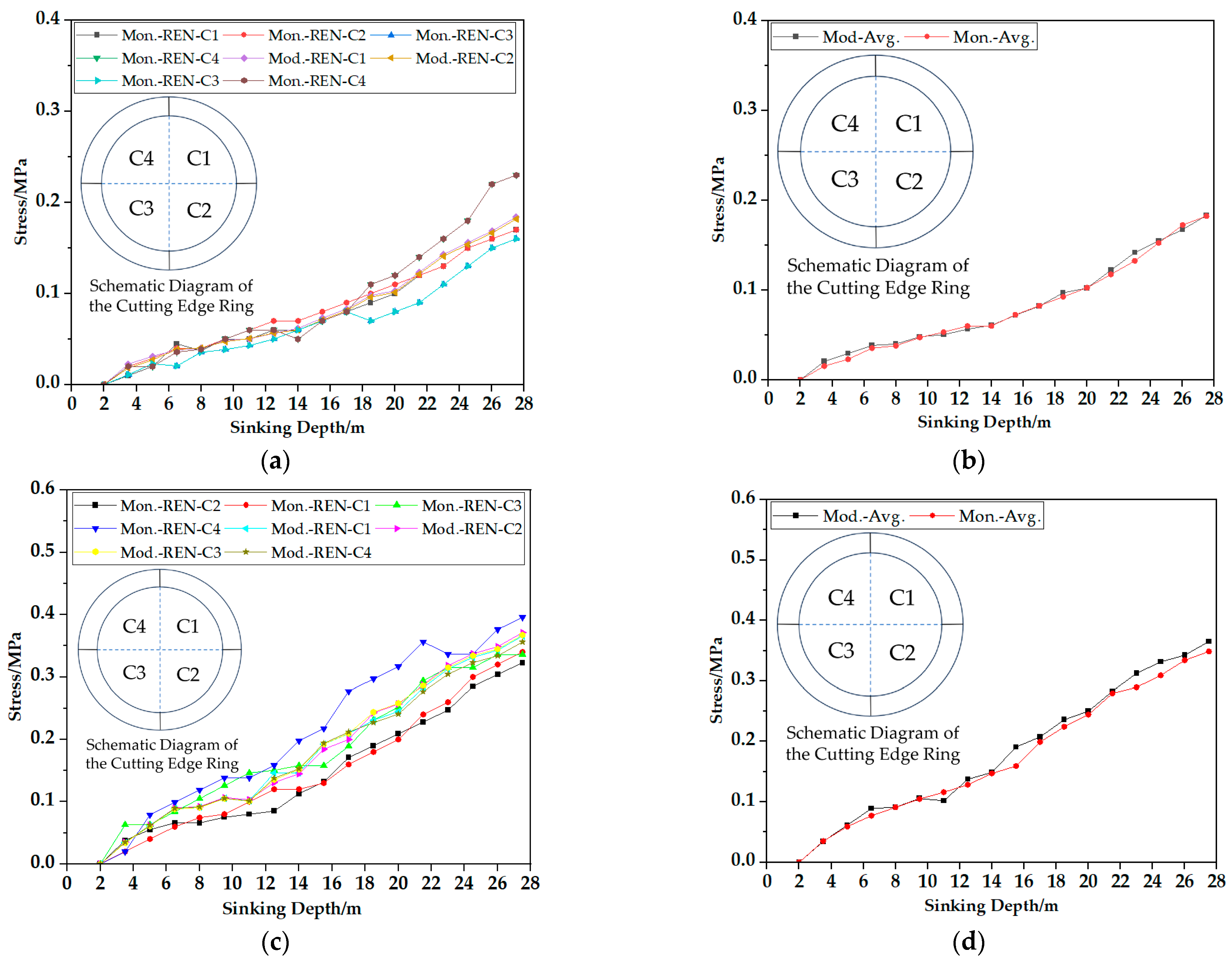
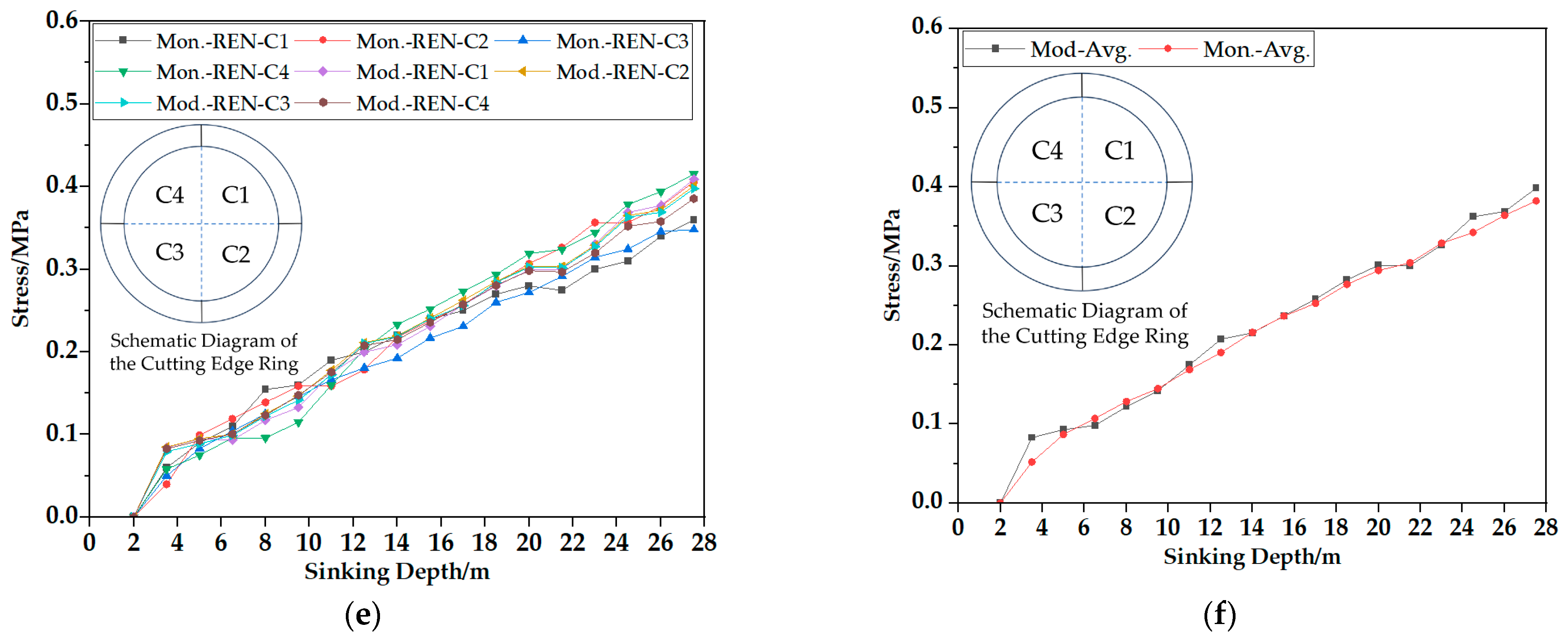
Through calibration of the model based on the monitoring data, the simulation results were brought into closer agreement with the monitoring data in terms of both trend and magnitude. The final model exhibited average relative errors in structural stress of less than 15% for all cases, meeting the accuracy requirements for engineering analysis. Comparative results of stress variation with sinking depth for ring 0 and the cutting edge ring are presented in Figure 6 and Figure 7, respectively.

4. Construction of a (Engineering-Defined) Large-Sample Database Based on Full Factorial Parametric Simulation

4.1. Construction of the Ring 0 Sample Database

To investigate the influence of structural parameters on stress response and to construct a machine learning dataset, this study selected the most critical construction-phase scenario—the descent of ring 0 segments to the designed maximum depth (25.5 m)—for analysis. At this depth, the structure is subjected to the most adverse combination of loads, making its stress response representative and a key scenario for assessing structural safety and conducting parametric analysis. Moreover, given that the research focus is on verifying the feasibility of the methodological framework, fixing the depth allows us to test the surrogate model’s ability to learn the parameter–stress mapping without adding unnecessary complexity.
The study selected three design parameters that most directly affect the bearing capacity of the segment structure as variables for adjustment: main reinforcement diameter, stirrup diameter, and concrete strength grade, for which the number of levels was determined based on common design practice and engineering applicability. A full factorial experimental design method was employed to combine different levels of these parameters. The specific control variables and their level settings are presented in Table 3. To effectively expand the sample size while reflecting the spatial distribution characteristic of ring 0 being assembled from six segments, each segment was treated as an independent data sampling point. This approach leverages the inherent differences in stress response among the segments to characterize the spatial distribution of structural responses and thereby enrich the dataset.
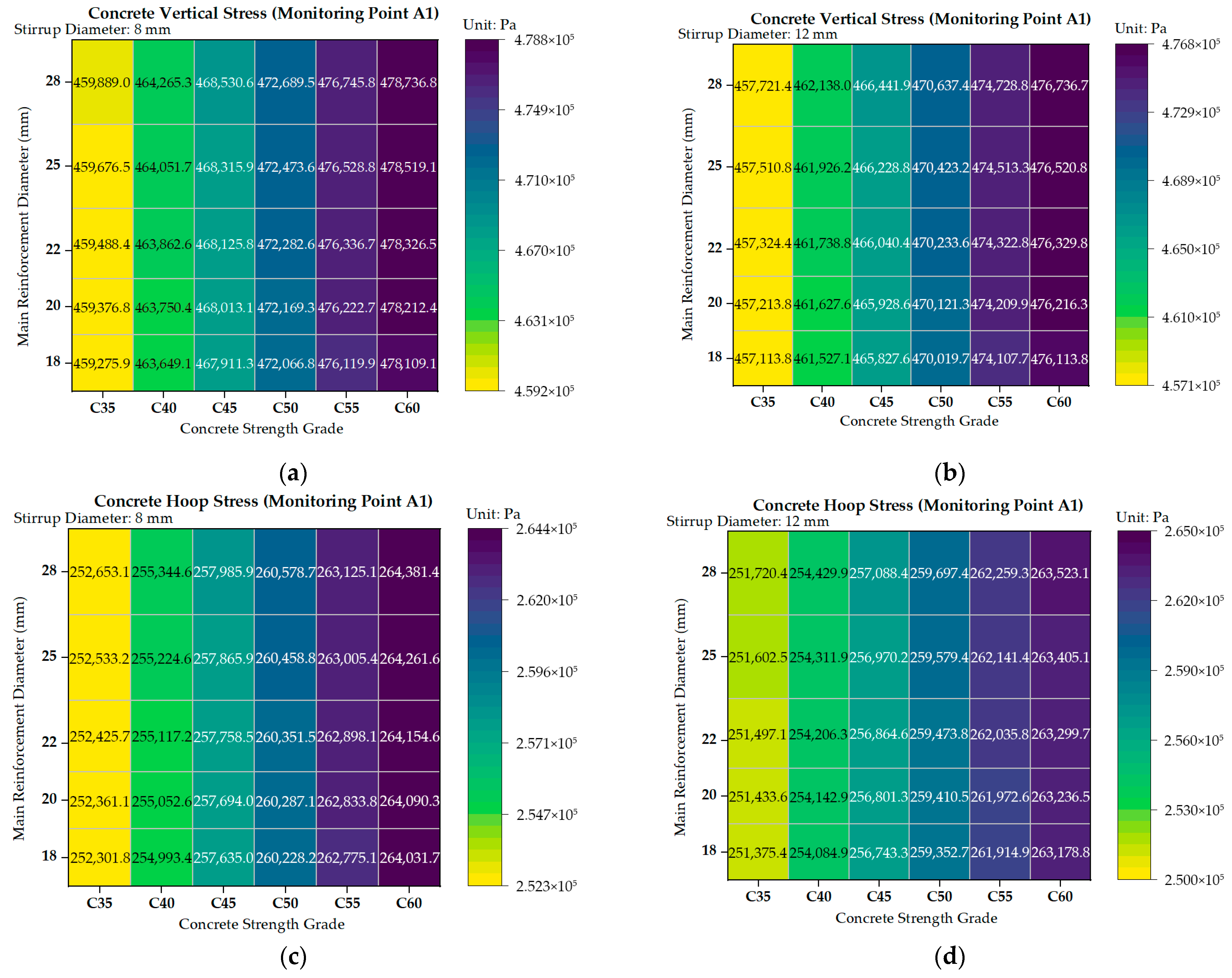
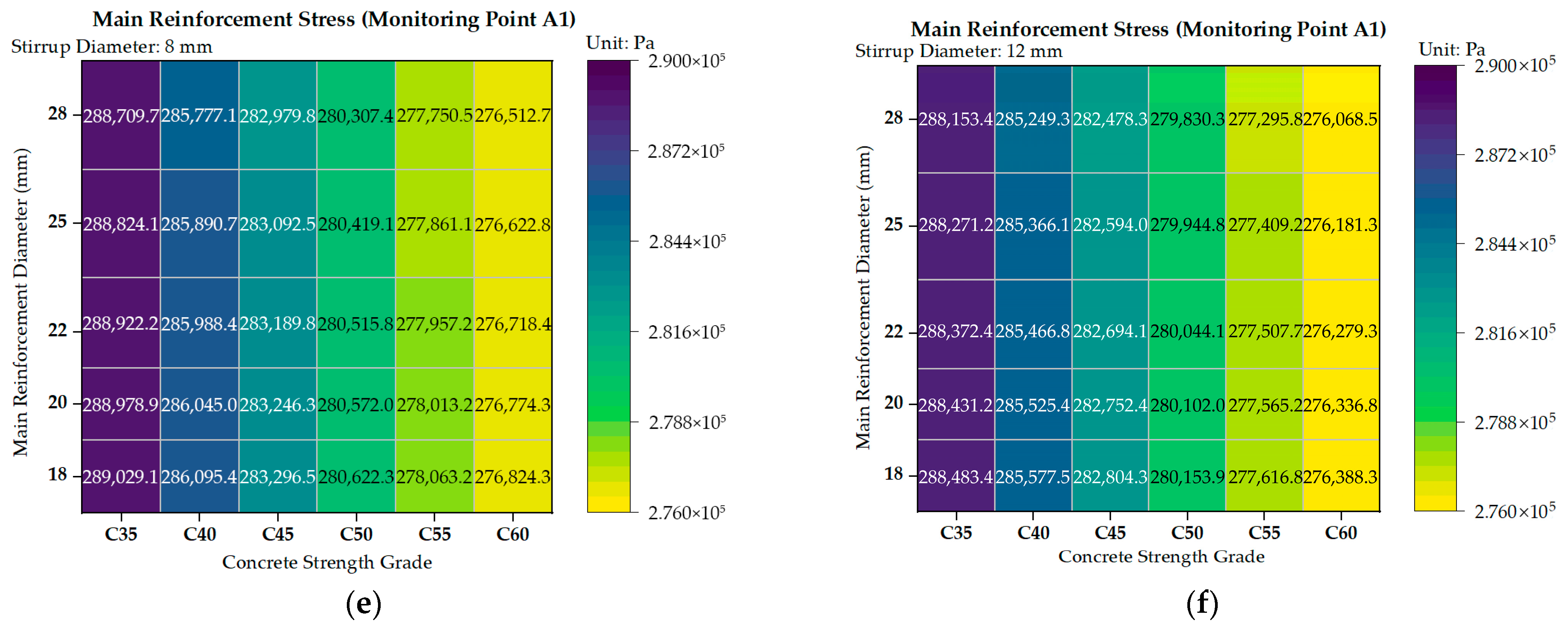
The sample dataset was constructed through the following procedure: First, a parametric script was developed to automatically generate 90 models with different design parameter combinations based on the validated finite element model. Subsequently, the load corresponding to a depth of 25.5 m was applied to each model, and batch static analyses were performed using finite element software. Concrete vertical stress, hoop stress, and main reinforcement stress data were extracted from the six monitoring points on ring 0 for each model. By associating the parameter combinations with the monitoring data, a dataset containing 540 samples was formed for each stress response variable. Each sample includes the design parameters and monitoring point number as inputs, and the corresponding stress response at that point as the output.
To establish a foundation for training and evaluating the machine learning models, the 540 data groups were randomly split into training, validation, and test sets in a ratio of 56%:14%:30%. Thus, a structural response database has been established that reflects the behavior of ring 0 segments under the maximum depth condition, encompassing variations in design parameters and spatial differences among monitoring points. This provides reliable data support for subsequent stress prediction models based on machine learning. Examples of partial parameter combinations and their corresponding stress response results for ring 0 are shown in Figure 8.

4.2. Construction of the Cutting Edge Ring Sample Database

To extend the applicability of the machine learning model, this study concurrently constructed a large-sample response database for the cutting edge ring structure. Given that the research focus is on verifying the feasibility of the methodological framework, the scenario where the cutting edge ring descends to the designed maximum depth (27 m) was selected for analysis. This final depth represents the most adverse design condition, where the structure is subjected to the maximum load, making it a critical state for assessing its mechanical behavior and safety. Fixing the depth allows us to test the surrogate model’s ability to learn the parameter–stress mapping without adding unnecessary complexity.
Based on the structural characteristics and design sensitivity of the cutting edge ring, the study selected four design parameters that most directly influence its bearing performance as variables for adjustment: steel plate thickness, lower sidewall steel plate thickness, tie bar diameter, and concrete strength grade, for which the number of levels was determined based on common design practice and engineering applicability. A full factorial experimental design method was employed to combine different levels of these parameters. The specific control variables and their level settings are presented in Table 4. To effectively expand the sample size while reflecting the spatial distribution characteristic of the cutting edge ring being assembled from four special segments, each segment was treated as an independent data sampling point. This approach leverages the inherent differences in stress response among the segments to characterize the spatial distribution of structural responses and thereby enrich the dataset.
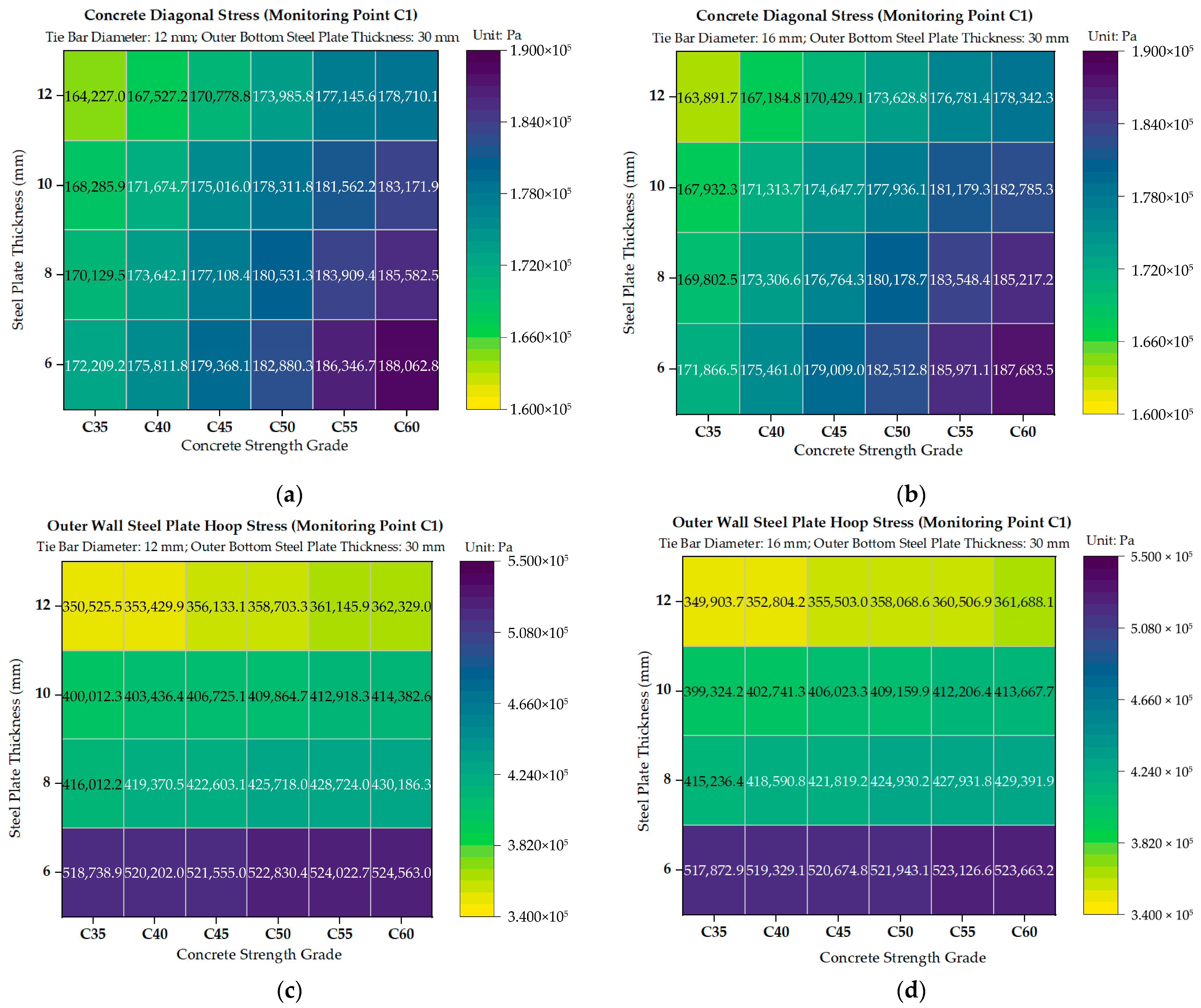
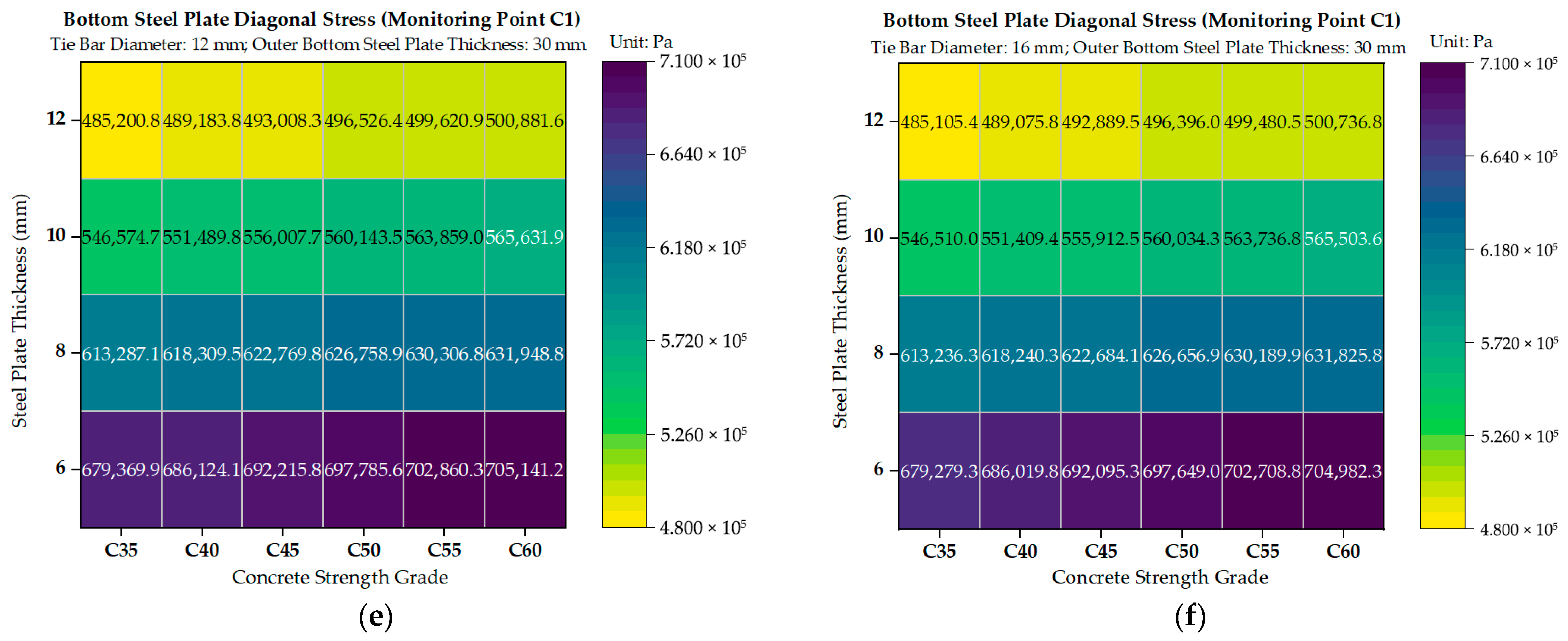
The sample database was constructed through a systematic workflow: Based on the validated finite element model, a parametric script was developed to automatically generate 216 models with different parameter combinations. The load corresponding to a depth of 27 m was applied to each model, and batch static calculations were performed using finite element software. Three response values—concrete diagonal stress, outer wall steel plate hoop stress, and bottom steel plate diagonal stress—were extracted from the four monitoring points of each model. Ultimately, a database containing 864 samples was formed for each stress response. Each data entry takes steel plate thickness, lower sidewall steel plate thickness, tie bar diameter, concrete strength grade, and monitoring point number as inputs, with the corresponding stress response at that point as the output.
To meet the requirements of machine learning modeling, the 864 data groups were randomly split into training, validation, and test sets in a ratio of 56%:14%:30%. Consequently, a structural response database has been successfully established that reflects the behavior of the cutting edge ring under the maximum depth condition, encompassing variations in design parameters and spatial response differences. This database, together with the ring 0 database, forms a complete research dataset, providing comprehensive and reliable data support for subsequently developing machine learning prediction models applicable to different structural components of the VSM shaft. Examples of partial parameter combinations and typical stress response results for the cutting edge ring are shown in Figure 9.

5. Genetic Algorithm-Optimized Machine Learning Prediction Models and Performance Evaluation

5.1. Model Selection

To achieve high-precision prediction of structural stresses during VSM shaft construction, this study selected three machine learning models known for their good performance in structural engineering. These models were subjected to hyperparameter optimization using a Genetic Algorithm (GA) to enhance their predictive capability and generalization performance. The selected models include the Genetic Algorithm-optimized Random Forest (GA-RF), the Genetic Algorithm-optimized eXtreme Gradient Boosting (GA-XGBoost), and the Genetic Algorithm-optimized Artificial Neural Network (GA-ANN). The detailed GA parameter settings and search spaces for each model are summarized in Table 5. The following sections elaborate on each model and its respective optimization process.
(1)
Random Forest Model and its Genetic Algorithm Optimization
Random Forest (RF) is an ensemble learning method based on Bagging, which performs regression prediction by constructing multiple decision trees and combining their outputs. During the training of each decision tree, the RF algorithm selects the optimal splitting feature based on information gain or Gini impurity, thereby building models with lower variance and stronger resistance to overfitting.
The calculation of information gain is based on information entropy. For a dataset X, its information entropy is defined as:
H X = k = 1 n p k l o g 2 p k
where pk represents the proportion of the k-th class sample in the dataset. After partitioning the dataset using feature α, the information gain is:
G a i n D , α = H X i = 1 I X i X H ( X i )
To enhance the predictive performance of the RF model, this study employs a Genetic Algorithm to optimize its key hyperparameters, including the number of decision trees (n_estimators), maximum tree depth (max_depth), and minimum samples required to split a node (min_samples_split). The Genetic Algorithm searches for the optimal solution in the parameter space by simulating the process of natural selection. Its optimization workflow includes: initializing the population, calculating fitness (using the validation set RMSE as the evaluation metric), selection, crossover, and mutation, iterating until convergence.
(2)
XGBoost Model and Its Genetic Algorithm Optimization
XGBoost (eXtreme Gradient Boosting) is an efficient ensemble learning algorithm based on gradient-boosted decision trees. It iteratively adds tree models to fit the residuals, demonstrating strong nonlinear modeling capabilities and generalization performance. Its predictive model can be expressed as:
y i ^ = g = 1 G f g x i ,                   f g F
where F represents the space of regression trees, and fg is the g-th tree. The objective function consists of a loss function and a regularization term:
L = i = 1 n l ( y i , y i ^ ) + g = 1 G Ω ( f g )
The regularization term Ω(fg) is used to control model complexity and prevent overfitting, expressed as:
Ω f g = γ T + 1 2 λ ω 2
where T denotes the number of leaf nodes in tree fg; ω represents the weight vector of the leaf nodes; γ is the penalty coefficient for the number of leaf nodes, used to control tree growth; and λ is the L2 regularization coefficient for the weight vector, used to suppress excessively large weights. By adjusting γ and λ, the model’s fitting ability and generalization performance can be effectively balanced, preventing overfitting on the training set.
This study employs a Genetic Algorithm to optimize key hyperparameters of the XGBoost model, primarily including the learning rate (learning_rate), maximum tree depth (max_depth), number of base learners (n_estimators), and minimum child weight (min_child_weight). The optimization process uses the coefficient of determination (R2) of the validation set as the fitness function. Through selection, crossover, and mutation operations of the Genetic Algorithm, the process iteratively approximates the optimal parameter combination to enhance the model’s predictive performance.
(3)
Artificial Neural Network Model and Its Genetic Algorithm Optimization
An Artificial Neural Network (ANN) is a computational model that simulates the interconnected structure of neurons in the human brain, possessing strong nonlinear mapping capabilities. This study constructs a feedforward neural network comprising an input layer, two hidden layers, and an output layer. The Rectified Linear Unit (ReLU) activation function is used, while the output layer employs a linear activation function.
The weights and biases of the neural network are trained using the backpropagation algorithm, with the Mean Squared Error (MSE) serving as the loss function. To improve the training efficiency and prediction accuracy of the ANN, a Genetic Algorithm is employed to optimize its network architecture (number of hidden layer nodes) and training parameters (learning rate, number of iterations). During the optimization process, each individual represents a set of network parameters, with the fitness function defined as the prediction error on the validation set.

5.2. Model Training and Result Evaluation

After model training was completed, the test set was used to evaluate the models. The coefficient of determination (R2), Mean Absolute Error (MAE), and Root Mean Square Error (RMSE) were selected as evaluation metrics:
  • Coefficient of Determination (R2): Reflects the goodness of fit between the model’s predicted values and the actual values, with a range of [−∞, 1]. A value closer to 1 indicates a stronger statistical explanatory power of the model.
R 2 = 1 i = 1 n ( y i y i ^ ) 2 i = 1 n ( y i y ¯ ) 2
  • Mean Absolute Error (MAE): Measures the average of the absolute errors between predicted values and actual values, and is insensitive to outliers.
M A E = 1 n i = 1 n y i y i ^
  • Root Mean Square Error (RMSE): Reflects the dispersion of prediction errors and is more sensitive to larger errors.
R M S E = 1 n i = 1 n ( y i y i ^ ) 2
Considering that random seeds and data splitting strategies may affect the predictive results, the models were independently trained approximately five times using different random seeds and data splits. The resulting evaluation metrics (e.g., R2, MAE, RMSE) were highly consistent across all runs, indicating that the model predictions are not sensitive to these factors. For clarity, only one representative set of results is presented in the manuscript. A comparison of the predictive performance of each model on the three stress responses for ring 0 and the cutting edge ring is presented in Table 6.
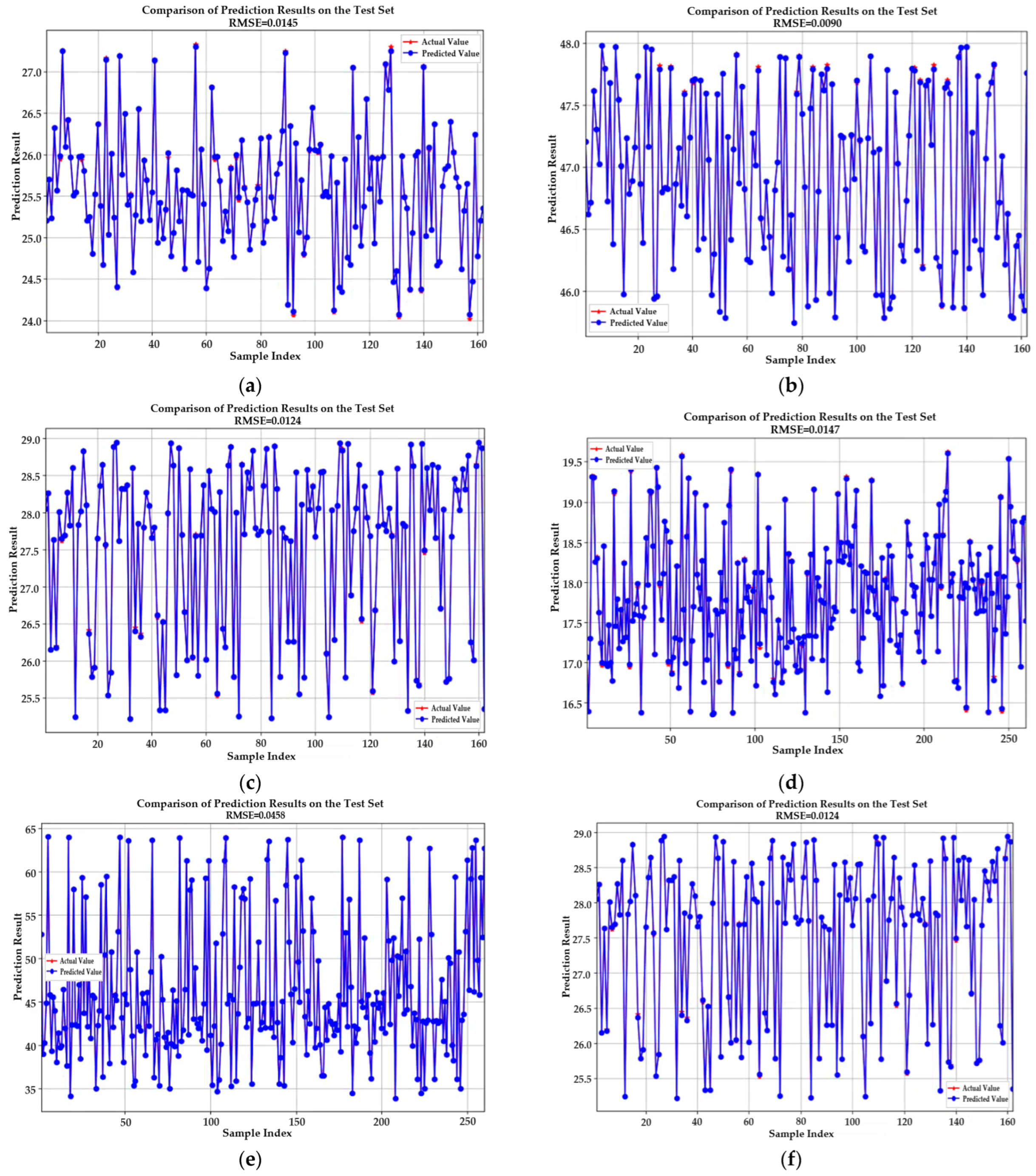
From the above comparison, it can be observed that the GA-optimized XGBoost model performed optimally across all six stress responses. Its R2 values were all close to 1, and its MAE and RMSE values were the smallest, demonstrating strong fitting capability and predictive stability. The Random Forest model ranked second, also exhibiting high prediction accuracy. Although the ANN model possessed certain predictive ability, its accuracy and stability across all responses were slightly inferior to the former two models. The specific hyperparameter values of the GA-optimized XGBoost model are listed in Table 7, and its prediction results on the test set for various stress responses of the ring 0 and Cutting Edge ring structures are shown in Figure 10.
The GA-optimized XGBoost model demonstrated optimal predictive performance in this study, primarily due to the alignment between the model’s characteristics and the data features. The tabular data generated from finite element simulations in this research possess the advantages of strong physical interpretability, low noise, and well-defined features. XGBoost, through its gradient boosting mechanism that iteratively fits residuals, can effectively learn the nonlinear relationships between parameters and stresses. Its built-in regularization terms suppress overfitting given the limited sample size. In contrast, Random Forest is less efficient in precisely approximating numerical relationships, while Neural Networks are prone to getting trapped in local optima and exhibit poorer training stability on small-scale tabular data. Consequently, GA-XGBoost achieves the best balance among accuracy, generalizability, and stability for this structural parameter–stress prediction problem.

6. Conclusions

This study, based on the Guanghua Inter-City Railway Shield Shaft project, first calibrated and validated the finite element models for the VSM shaft’s ring 0 and cutting edge ring using field monitoring data. Subsequently, a full factorial experimental design method was employed to construct a large-sample structural response database (totaling 1404 samples) that encompasses variations in key design parameters and spatial differences among monitoring points. On this foundation, a Genetic Algorithm (GA) was introduced to optimize the hyperparameters of three machine learning models: Random Forest (RF), XGBoost, and Artificial Neural Network (ANN). The performance of these models in predicting structural stresses during the construction period was systematically compared. Ultimately, a comprehensive prediction framework of “monitoring-driven, large-sample data, machine learning substitution” was proposed. The main conclusions are as follows:
(1)
An integrated stress prediction framework of “monitoring-driven, large-sample data, machine learning substitution” was constructed. By calibrating finite element models with monitoring data and employing a full factorial design to generate large-sample databases for ring 0 (540 sets) and the cutting edge ring (864 sets), an efficient alternative to traditional finite element analysis was achieved, providing a feasible path for rapid multi-parameter comparison and selection.
(2)
A comparison was made among three Genetic Algorithm-optimized machine learning models (GA-RF, GA-XGBoost, GA-ANN). The results indicate that the GA-XGBoost model performed optimally across all stress metrics (R2 > 0.999). Its gradient boosting and regularization mechanisms effectively learn the nonlinear mapping between parameters and stresses, making it suitable for such tabular data prediction problems characterized by strong physical relationships and low noise.
(3)
The proposed data-driven method does not rely on complex explicit mechanical formulas; instead, it achieves rapid prediction of structural responses through data-driven techniques. This study only applies this method to stress prediction, but its framework has the potential to be extended to the prediction of other key responses such as displacement and deformation. It offers a new pathway for the intelligent design and construction safety control of precast shaft engineering.

Author Contributions

Conceptualization, X.C.; Methodology, X.C. and X.P.; Software, B.Z.; Validation, X.L.; Formal analysis, X.C. and B.Z.; Investigation, X.P.; Resources, J.Z. and Y.S.; Data curation, J.Z.; Supervision, Y.S.; Project administration, X.C. All authors have read and agreed to the published version of the manuscript.

Funding

This research received no external funding.

Data Availability Statement

The original contributions presented in the study are included in the article, further inquiries can be directed to the corresponding author.

Conflicts of Interest

Author Xuechang Cheng was employed by the company Guangzhou Metro Group Co., Ltd. Author Xin Peng was employed by the company Guangzhou Metro Construction Management Co., Ltd. Author Xinlong Li was employed by the company China Railway 15th Bureau Group Underground Engineering Co., Ltd. Author Bangchao Zhang was employed by the company China Railway Construction South China Construction Co., Ltd. The remaining authors declare that the research was conducted in the absence of any commercial or financial relationships that could be construed as a potential conflict of interest.

References

  1. Schmäh, P. Vertical Shaft Machines. State of the Art and Vision. Acta Montan. Slovaca 2007, 12, 208–216. [Google Scholar]
  2. Khine, H.Y.; Tong, S.Y.M.; Chen, Y.K. The First Circular Shaft in Asia with The Use of Vertical Shaft Sinking Machine. In Proceedings of the ITA-AITES World Tunnel Congress, WTC2022 and 47th General Assembly, Copenhagen, Denmark, 2–8 September 2022. [Google Scholar]
  3. Kicki, J.; Sobczyk, E.J.; Kamiński, P. Future Trends in Shaft Development. In Vertical and Decline Shaft Sinking: Good Practices in Technique and Technology; CRC Press: London, UK, 2015; pp. 13–14. [Google Scholar]
  4. Jiang, H.; Liu, X.; Bao, H.; Bi, J.; Lin, T.; He, T. Intensive Construction Technology for Urban Underground Parking Shaft. Front. Struct. Civ. Eng. 2024, 18, 1649–1662. [Google Scholar] [CrossRef]
  5. Zhai, Z.Y.; Nie, D.Q.; Zhang, Y.; Chen, H.S.; Zhou, Z.Y. Application of Vertical Shaft Sinking Method in Soft Soil Area. J. Ground Improv. 2024, 6, 201–207. [Google Scholar] [CrossRef]
  6. Wang, J.; Abbasi, N.S.; Pan, W.; Alidekyi, S.N.; Li, H.; Ahmed, B.; Asghar, A. A Review of Vertical Shaft Technology and Application in Soft Soil for Urban Underground Space. Appl. Sci. 2025, 15, 3299. [Google Scholar] [CrossRef]
  7. Lu, P.; Chen, F.; Nie, D.; Han, J. Analysis of Strata Deformation Patterns Induced by Vertical Shaft Sinking Machine Based on Soil Deformation Zoning: A Case Study of the Zhuyuan Bailonggang Sewage Connecting Pipe Project in Shanghai, China. Appl. Sci. 2025, 15, 1705. [Google Scholar] [CrossRef]
  8. Zhou, J.; Liu, C.; Xu, J.; Zhang, Z.; Li, Z. Deformation Mechanism and Control of In-Situ Assembling Caisson Technology in Soft Soil Area under Field Measurement and Numerical Simulation. Materials 2023, 16, 1125. [Google Scholar] [CrossRef] [PubMed]
  9. Ma, C.; Hong, H.; Yu, L.; Liu, K.; Huang, J. A Numerical Study of Reinforcement Structure in Shaft Construction Using Vertical Shaft Sinking Machine (VSM). Buildings 2024, 14, 2402. [Google Scholar] [CrossRef]
  10. Liu, T.; Liu, Z.; Ma, C.; Xu, Z.; Yu, L.; Zhang, X.; Liu, K. A Numerical Analysis of the Role of Pile Foundations in Shaft Sinking Using the Vertical Shaft Sinking Machine (VSM). Buildings 2024, 14, 3383. [Google Scholar] [CrossRef]
  11. Baoyin, H.; Xu, Z.; Yu, L.; Zhang, X.; Wang, X.; Liu, Y. Analysis of Structural Internal Forces and Stratum Deformation in Shaft Construction Using Vertical Shaft Sinking Machine. Buildings 2025, 15, 2043. [Google Scholar] [CrossRef]
  12. Abualghethe, D.A.H.; Mu, B.; Dai, G.; Liu, S.; Li, Z.; Liu, S.; Han, L. Optimization of Reinforced Ring Base Depth for Vertical Shaft Sinking in Soft Soil Using VSM Method. Undergr. Space 2025, 22, 280–302. [Google Scholar] [CrossRef]
  13. Long, Y.; Zhibing, X.; Xian, L.; Juntao, N.; Sebastian, R. Application of Super Large and Deep Diameter Assembly Shafts in Soft Soil Layers. IOP Conf. Ser. Earth Environ. Sci. 2024, 1333, 012053. [Google Scholar] [CrossRef]
  14. Jia, R.; Shan, Y.; Yang, K.; Wang, Y.; Hu, Z.; Li, Y.; Cui, J. Effect of Suffosion on Deterioration of Weathered Granite Soil: A Multi-Scale Study from Macroscopic to Microscopic Investigations. Acta Geotech. 2025, 20, 4213–4229. [Google Scholar] [CrossRef]
  15. Shan, Y.; Yang, K.; Jia, R.; Li, Y.; Wang, Y.; Cui, J. Mechanical Behavior and Compositional Variation of Weathered Granite Soil with Different Degrees of Weathering. Bull. Eng. Geol. Environ. 2025, 84, 39. [Google Scholar] [CrossRef]
  16. Xiao, X.; Tang, H.; Zhang, H.; Luo, Y.; Lu, N.; Liu, Y.; Chen, F. Bayesian Optimization CNN-LSTM Neural Network for Fatigue Life Prediction of Rib-to-Deck Welds in Orthotropic Steel Decks. Structures 2026, 84, 111088. [Google Scholar] [CrossRef]
  17. Zhang, H.; Dong, Y.; Liu, H.; Liu, B.; Deng, Y. A Novel Multi-Scale Mechanical Model for Fatigue Expansion of Corroded High-Strength Steel Wires. Constr. Build. Mater. 2026, 514, 145567. [Google Scholar] [CrossRef]
  18. Zhang, H.; Zhao, L.; Chen, F.; Luo, Y.; Xiao, X.; Liu, Y.; Deng, Y. A Machine Learning and Multi-Source Authentic Data-Driven Framework for Accurate Fatigue Life Prediction of Welds in Existing Steel Bridge Decks. Thin-Walled Struct. 2026, 222, 114559. [Google Scholar] [CrossRef]
  19. Bolón-Canedo, V.; Remeseiro, B. Feature Selection in Image Analysis: A Survey. Artif. Intell. Rev. 2020, 53, 2905–2931. [Google Scholar] [CrossRef]
  20. Kabir, H.; Garg, N. Machine Learning Enabled Orthogonal Camera Goniometry for Accurate and Robust Contact Angle Measurements. Sci. Rep. 2023, 13, 1497. [Google Scholar] [CrossRef] [PubMed]
  21. Jong, S.C.; Ong, D.E.L. A Novel Bayesian Network Approach for Predicting Soil-Structure Interactions Induced by Deep Excavations. Tunn. Undergr. Space Technol. 2024, 152, 105865. [Google Scholar] [CrossRef]
  22. Wang, X.; Pan, Y.; Chen, J.; Li, M. A Spatiotemporal Feature Fusion-Based Deep Learning Framework for Synchronous Prediction of Excavation Stability. Tunn. Undergr. Space Technol. 2024, 147, 105733. [Google Scholar] [CrossRef]
  23. Yong, W.; Zhang, W.; Nguyen, H.; Bui, X.-N.; Choi, Y.; Nguyen-Thoi, T.; Zhou, J.; Tran, T.T. Analysis and Prediction of Diaphragm Wall Deflection Induced by Deep Braced Excavations Using Finite Element Method and Artificial Neural Network Optimized by Metaheuristic Algorithms. Reliab. Eng. Syst. Saf. 2022, 221, 108335. [Google Scholar] [CrossRef]
  24. Fan, H.; Li, L.; Zhou, S.; Zhu, M.; Wang, M. Prediction and Risk Assessment of Lateral Collapse in Deep Foundation Pits Using Machine Learning. Autom. Constr. 2025, 171, 106011. [Google Scholar] [CrossRef]
  25. Li, J.; Qi, W.; Li, X.; Liu, G.; Chen, J.; Tong, H. Investigating the Construction Procedure and Safety Oversight of the Mechanical Shaft Technique: Insights Gained from the Guangzhou Intercity Railway Project. Buildings 2025, 15, 129. [Google Scholar] [CrossRef]
  26. Yang, C.; Wang, C.; Zhao, F.; Wu, B.; Fan, J.; Zhang, Y. Smart Virtual Sensing for Deep Excavations Using Real-Time Ensemble Graph Neural Networks. Autom. Constr. 2025, 172, 106040. [Google Scholar] [CrossRef]
  27. Tian, H.M.; Wang, Y.; Huang, Y.J. Uncertainty-Aware Digital Twins for Deep Excavations with Lateral Support. Autom. Constr. 2026, 181, 106658. [Google Scholar] [CrossRef]
  28. Pan, Y.; He, W.; Chen, J.J. Spatiotemporal Deep Learning for Multi-Attribute Prediction of Excavation-Induced Risk. Autom. Constr. 2025, 171, 105964. [Google Scholar] [CrossRef]
  29. Xu, L.; Li, W.; Liu, L.; Wu, F.; Fan, Z.; Chen, R. Deformation Analysis of a Deep Excavation with a Servo Control System Adjacent to an Existing Foundation Pit: A Case Study in Shenzhen. Tunn. Undergr. Space Technol. 2026, 170, 107374. [Google Scholar] [CrossRef]
  30. Meng, F.; Xu, J.; Xia, C.; Chen, W.; Zhu, M.; Fu, C.; Chen, X. Optimization of Deep Excavation Construction Using an Improved Multi-Objective Particle Swarm Algorithm. Autom. Constr. 2024, 166, 105613. [Google Scholar] [CrossRef]
  31. Zhao, S.; Liu, Y.; Li, Z.; Kong, X.; Liao, S.; Yang, Y. Physics-Guided Self-Adaptive Gradient Learning for Dynamic Suspension Force Prediction in Vertical Shaft Machine Operations. SSRN. 2025. Available online: https://papers.ssrn.com/sol3/papers.cfm?abstract_id=5848498.
Figure 1. Schematic diagram of tunneling construction.
Buildings 16 01605 g001
Figure 2. Construction flowchart.
Buildings 16 01605 g002
Figure 3. Schematic diagram of the specific locations of on-site monitoring points: (a) monitoring points for ring 0; (b) monitoring points for cutting edge ring.
Buildings 16 01605 g003aBuildings 16 01605 g003b
Figure 4. Finite element model views: (a) structural model of ring 0; (b) structural model of the cutting edge ring.
Buildings 16 01605 g004
Figure 5. Correspondence between model result extraction locations and field monitoring points (shown in the image is the rebar cage before concrete placement): (a) ring 0; (b) cutting edge ring.
Buildings 16 01605 g005aBuildings 16 01605 g005b
Figure 6. Comparison results of monitored (Mon.) and FE model (Mod.) stresses versus sinking depth for ring 0: (a) concrete vertical stress for each segment; (b) average concrete vertical stress across all segments; (c) concrete hoop stress for each segment; (d) average concrete hoop stress across all segments; (e) main reinforcement stress for each segment; (f) average main reinforcement stress across all segments.
Buildings 16 01605 g006aBuildings 16 01605 g006b
Figure 7. Comparison results of monitored (Mon.) and FE model (Mod.) stresses versus sinking depth for the cutting edge ring: (a) concrete diagonal stress for each segment; (b) average concrete diagonal stress across all segments; (c) outer wall steel plate hoop stress for each segment; (d) average outer wall steel plate hoop stress across all segments; (e) bottom steel plate diagonal stress for each segment; (f) average bottom steel plate diagonal stress across all segments.
Buildings 16 01605 g007aBuildings 16 01605 g007b
Figure 8. Heatmaps of stresses at monitoring point A1 (ring 0) under varying main reinforcement diameter and concrete strength: (a,b) concrete vertical stress; (c,d) concrete hoop stress; (e,f) main reinforcement stress. Left column (a,c,e): stirrup diameter = 8 mm; right column (b,d,f): stirrup diameter = 12 mm.
Buildings 16 01605 g008aBuildings 16 01605 g008b
Figure 9. Heatmaps of stresses at monitoring point C1 (cutting edge ring) under varying steel plate thickness and concrete strength: (a,b) concrete diagonal stress; (c,d) outer wall steel plate hoop stress; (e,f) bottom steel plate diagonal stress. Left column (a,c,e): tie bar diameter = 12 mm; right column (b,d,f): tie bar diameter = 16 mm. Lower sidewall steel plate thickness is fixed at 30 mm for all cases.
Buildings 16 01605 g009aBuildings 16 01605 g009b
Figure 10. Prediction performance of GA-XGBoost on the test set: (a) concrete hoop stress of ring 0; (b) concrete vertical stress of ring 0; (c) main reinforcement stress of ring 0; (d) concrete diagonal stress of the cutting edge ring; (e) outer wall steel plate hoop stress of the cutting edge ring; (f) bottom steel plate diagonal stress of the cutting edge ring.
Buildings 16 01605 g010
Table 1. Summary of Soil Layer Characteristics (Layer numbers are site designations for reference only, not directly relevant to the analysis).
Layer No.Soil Layer NameSubgrade Reaction Coefficient of Rock/Soil Layer
(MPa/m)
Coefficient of Earth Pressure at Rest
K0
Geotechnical Construction Engineering Classification
Horizontal
Kh
Vertical
Kv
<1-2>Miscellaneous fill--0.471I~II
<5H-2>Granite residual soil35400.389II
<6H>Completely weathered granite60620.370III
<7H-A>Highly weathered granite1502000.333III~IV
<8H>Moderately weathered granite 5006000.250V
Table 2. Model material parameters and element types.
Structural ComponentMaterial TypeDimensionsElement TypeElastic Modulus
(GPa)
Poisson’s Ratio
Segment concreteC50 concrete-C3D1034.50.2
Ring 0 reinforcementHPB400 steel barMain bar: Φ25 mm;
Stirrup: Φ12 mm
T3D2200.00.3
Cutting edge ring steel plateQ235B steel plateThickness: 12 mm (trough)C3D10206.00.3
Table 3. Design of control variables for ring 0.
Variable NameParameter LevelsNumber of LevelsTotal Combinations
Main reinforcement diameter18 mm, 20 mm, 22 mm, 25 mm, 28 mm590
Stirrup diameter8 mm, 10 mm, 12 mm3
Concrete strength gradeC35, C40, C45, C50, C55, C606
Table 4. Design of control variables for the cutting edge ring.
Variable NameParameter LevelsNumber of LevelsTotal Combinations
Steel plate thickness6 mm, 8 mm, 10 mm, 12 mm4216
Lower sidewall steel plate thickness20 mm, 25 mm, 30 mm3
Tie bar diameter12 mm, 14 mm, 16 mm3
Concrete strength gradeC35, C40, C45, C50, C55, C606
Table 5. Genetic algorithm parameter configurations for three optimization workflows.
CategoryModel TypeParameterValue
GA parameter settingsGA-RF/GA-XGBoost/GA-ANNPopulation size6
Generations30
Random seed42
Mutation Probability0.1
Stopping Criterion10 generations no improvement
RepetitionRepeated runs5 (yielded consistent results)
GA search spaceGA-RFn_estimators[10, 200]
max_depth[3, 20]
min_samples_leaf[1, 10]
GA-XGBoostn_estimators[10, 200]
max_depth[1, 50]
learning_rate[0.01, 0.3]
min_child_weight[1, 20]
gamma[0, 0.5]
GA-ANNhidden_layer_sizes (layer 1, 2, 3)[16, 128]
alpha[1 × 10⁻⁶, 1 × 10⁻¹] (log scale)
learning_rate_init[1 × 10⁻⁴, 1 × 10⁻¹] (log scale)
Table 6. Comparison of predictive performance of different models on stress responses for ring 0 and the cutting edge ring.
Model TypeStructureStress ResponseTraining SetTest Set
R2MAERMSER2MAERMSE
GA-RFring 0Concrete vertical stress0.99960.01090.01480.99600.03040.0441
Concrete hoop stress0.99990.00630.00880.99880.01840.0249
Main reinforcement stress0.99990.00860.01280.99920.02290.0324
cutting edge ringConcrete diagonal stress0.99990.00600.00780.99950.01330.0162
Outer wall steel plate hoop stress1.00000.02790.03860.99990.06350.0841
Bottom steel plate diagonal stress0.99990.05220.07010.99950.12030.1666
GA-XGBoostring 0Concrete vertical stress1.00000.00260.00360.99980.00600.0090
Concrete hoop stress1.00000.00350.00470.99960.01000.0145
Main reinforcement stress1.00000.00340.00450.99990.00840.0124
cutting edge ringConcrete diagonal stress0.99990.00520.00670.99960.01100.0147
Outer wall steel plate hoop stress1.00000.02080.02791.00000.03530.0458
Bottom steel plate diagonal stress1.00000.03160.04170.99980.07280.1132
GA-ANNring 0Concrete vertical stress0.98940.05510.07160.98540.06400.0835
Concrete hoop stress0.93510.14870.18440.92090.16910.2065
Main reinforcement stress0.99560.05900.07690.99360.07140.0918
cutting edge ringConcrete diagonal stress0.98240.08000.09980.97360.09790.1231
Outer wall steel plate hoop stress0.99720.32320.40470.99660.37060.4625
Bottom steel plate diagonal stress0.99650.35590.45450.99630.37570.4752
Table 7. Hyperparameter values of the GA-XGBoost model.
StructureStress Responsen_estimatorsmax_depthlearning_ratemin_child_weight
Ring 0Concrete vertical stress187310.22515
Concrete hoop stress118100.2639
Main reinforcement stress15140.1602
Cutting edge ringConcrete diagonal stress179100.19714
Outer wall steel plate hoop stress19140.1503
Bottom steel plate diagonal stress174220.26315
Disclaimer/Publisher’s Note: The statements, opinions and data contained in all publications are solely those of the individual author(s) and contributor(s) and not of MDPI and/or the editor(s). MDPI and/or the editor(s) disclaim responsibility for any injury to people or property resulting from any ideas, methods, instructions or products referred to in the content.