1. Introduction
With the rapid advancement of urbanization in China, urban functions are evolving toward high density and mixed use, while developable surface space is becoming increasingly saturated. Consequently, development priorities are gradually shifting to underground space, and the number and scale of underground facilities continue to expand. Engineering projects such as metro stations and running tunnels, underground utility tunnels, and underground commercial and municipal facilities have proliferated, leading to a substantial increase in both the proportion and complexity of deep foundation pit engineering in urban construction systems. In underground construction, foundation pit excavation and dewatering constitute critical procedures. During foundation pit dewatering, the redistribution and dissipation of pore water pressure in the soil, together with the formation of a cone of depression, can readily induce uneven ground settlement around the foundation pit, thereby threatening the safety of adjacent buildings [
1,
2]. Field monitoring and coupled analyses indicate that groundwater drawdown induced by foundation pit dewatering is accompanied by a reduction in pore water pressure and consolidation compression of the soil, which in turn generates large-area ground/building settlement around the foundation pit, with part of the settlement being evidently irreversible [
3,
4]. Meanwhile, under conditions of hydraulic connectivity or imperfect cut-off, pumping within the pit may interact with deformation of the retaining structure and further aggravate settlement outside the pit, potentially triggering damage risks to nearby existing buildings [
4,
5].
Granite residual soil, a regional soil widely distributed in South China, is strongly affected by intense weathering, leaching, and reworking. In its natural state, it generally exhibits certain bearing capacity and constructability and is therefore widely used as a major foundation bearing stratum for buildings and structures, as well as metro tunnels, in the Guangdong–Hong Kong–Macao Greater Bay Area. However, this soil shows pronounced water sensitivity and structural features; once immersed, it is prone to rapid softening and disintegration, which may subsequently lead to a reduction in foundation bearing capacity [
6] and cause engineering accidents such as cracking of the superstructure. Weathered granite soil under dewatering-induced seepage may undergo not only consolidation and evolution of unsaturated behavior but also suffosion triggered by fine-particle migration, which can accelerate pore-structure deterioration and amplify the settlement response [
7,
8]. To meet the needs of safe urban underground construction and environmental protection, it is essential to understand, before and during construction, the deformation evolution and deterioration of mechanical performance of granite residual soil under hydraulic actions, so as to provide reliable support for the optimization of foundation pit dewatering schemes, settlement prediction, and risk prevention and control. Accordingly, extensive studies have been conducted by researchers worldwide.
Li et al. [
9], based on field evidence of additional deformation of an existing shield tunnel induced by deep foundation pit dewatering in soft soil strata with leaky aquifers, indicated that the groundwater drawdown caused by dewatering may result in tunnel settlement and that targeted control measures are required. Li et al. [
10] collected field data from ten pumping tests conducted in Shanghai, performed statistical analyses on dewatering depth and ground settlement, and established a coupled hydro-mechanical model based on Biot’s three-dimensional consolidation theory with an explicit solution scheme, revealing that the compressibility of each soil layer is closely associated with the decline in pore pressure. Wen D. et al. [
11] investigated a large number of foundation pit excavation projects in Singapore and found that, when granite residual soil exhibits high permeability and the underlying rock mass is highly fractured, foundation pit dewatering may cause a substantial decline in the surrounding groundwater level and thus induce settlement. Thomas et al. [
12], based on unsaturated soil theory, proposed a finite-element–finite-difference numerical method for unsaturated clay to simulate the evolution of degree of saturation during thermally induced drying, and validated the numerical results against field measurements, demonstrating that the proposed method can accurately capture the saturation response of unsaturated clay under thermal drying. Chu et al. [
13], taking a foundation pit in the soft-soil area of Zhuhai as an example, investigated a common dewatering system consisting of a “suspended cut-off curtain + pumping wells”. By combining the equivalent-well concept with MODFLOW numerical analysis, they developed a prediction method for in-pit drawdown and quantified the effects of key parameters such as curtain embedment depth and screen length on drawdown control, thereby providing quantitative guidance for dewatering design. Wang et al. [
14] conducted field pumping–recharge tests at a super-large deep foundation pit group site in Shanghai, showing that recharge can raise the groundwater level and reduce settlement; they further recommended identifying aquifer connectivity through pumping–recharge tests prior to construction to guide the dewatering–recharge scheme. Zhu et al. [
15], based on three-dimensional hydro-mechanical coupled analysis, further suggested that controlling the pumping rate and improving the water cut-off performance of TRD cut-off walls can reduce dewatering-induced retaining-structure deformation and environmental settlement. In addition, Pujades et al. [
16] compared the effectiveness of “deepening the enclosure” versus “pumping dewatering” in reducing settlement outside the pit, and pointed out that simply deepening the enclosure has limited capability to weaken the influence of external pumping; therefore, refined control of the pumping process is still required in engineering practice to mitigate settlement risks. Zhang et al. [
17], based on field tests of deep foundation pits in Shanghai, proposed an integrated technique of “in-pit pumping + multi-well recharge near protected targets” to suppress drawdown and control settlement. Sun et al. [
18] further adopted a “finite element–linear programming” simulation–optimization approach to optimize the combination of pumping wells, pumping sequence, and the upper limit of pumping rate for each well, achieving simultaneous reductions in drawdown and ground settlement.
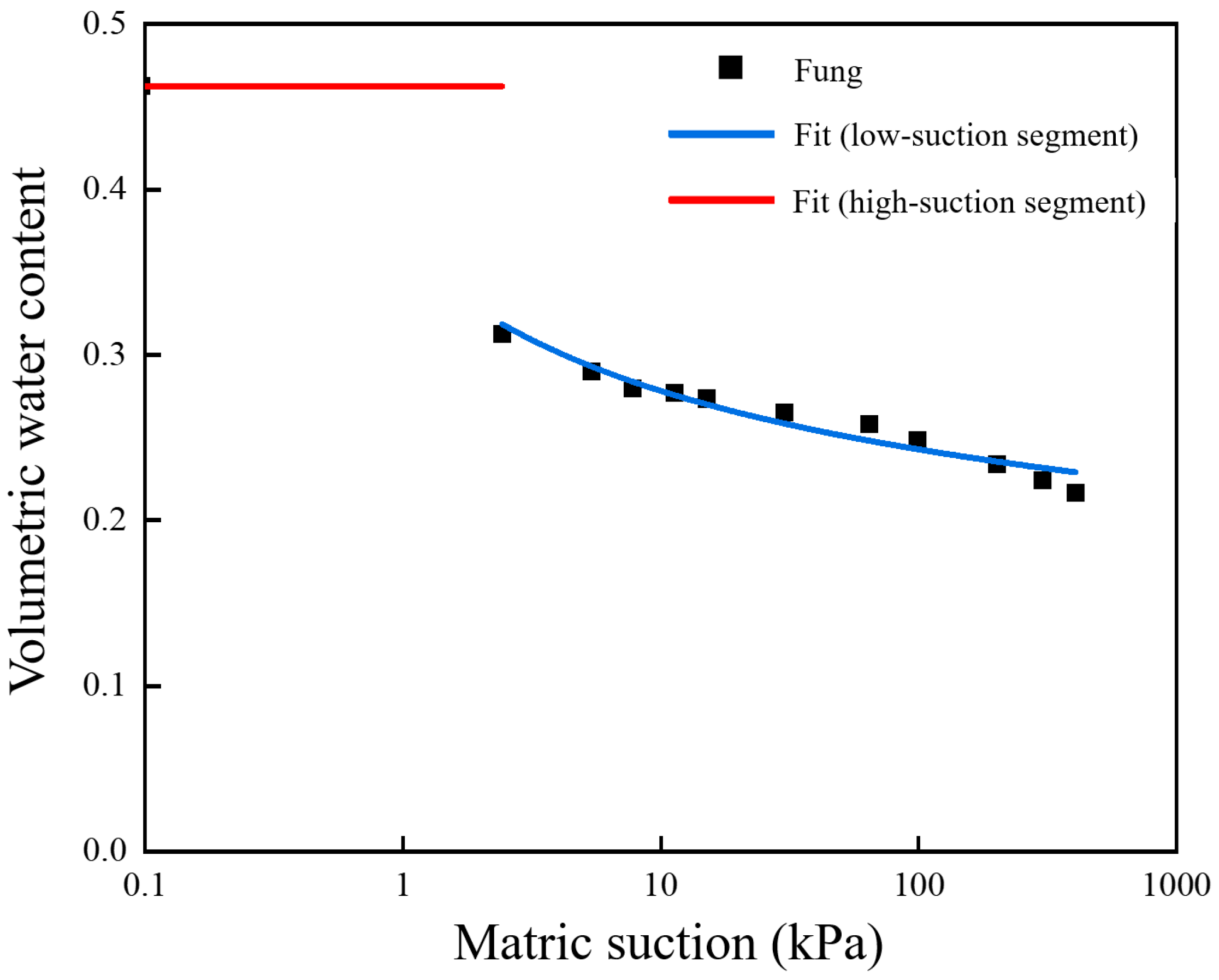
However, during foundation pit dewatering, as the groundwater level declines, granite residual soil may transition from a saturated state to an unsaturated state, and its mechanical properties, hydraulic characteristics, pore water pressure, and permeability will change accordingly. The evolution of saturation and matric suction in the unsaturated zone alters relative permeability and pore-pressure diffusion, thereby modifying the effective-stress path and volumetric strain accumulation. Accordingly, explicitly accounting for unsaturated hydro-mechanical (HM) coupling is essential for analyzing dewatering-induced settlement. Recent numerical studies on unsaturated HM coupling commonly adopt a unified framework combining the soil–water characteristic curve/relationship (SWCC/SWRC; suction–saturation relationship), a relative-permeability function, and a soil-skeleton constitutive model, and update state variables such as suction and saturation via user subroutines to capture the influence of unsaturated evolution on pore-pressure fields and deformation responses [
19,
20]. However, for foundation-pit dewatering and groundwater drawdown, many existing seepage–stress coupling analyses still simplify the region above the groundwater table as either fully saturated or with zero pore pressure, thereby neglecting the saturation-driven evolution of permeability and compressibility in the unsaturated zone and potentially biasing the predicted late-stage drawdown and settlement time histories. Meanwhile, within the Itasca ecosystem, secondary development has been used to enhance FLAC3D’s capability for modeling unsaturated seepage processes and to support response analyses under rapid-drawdown conditions [
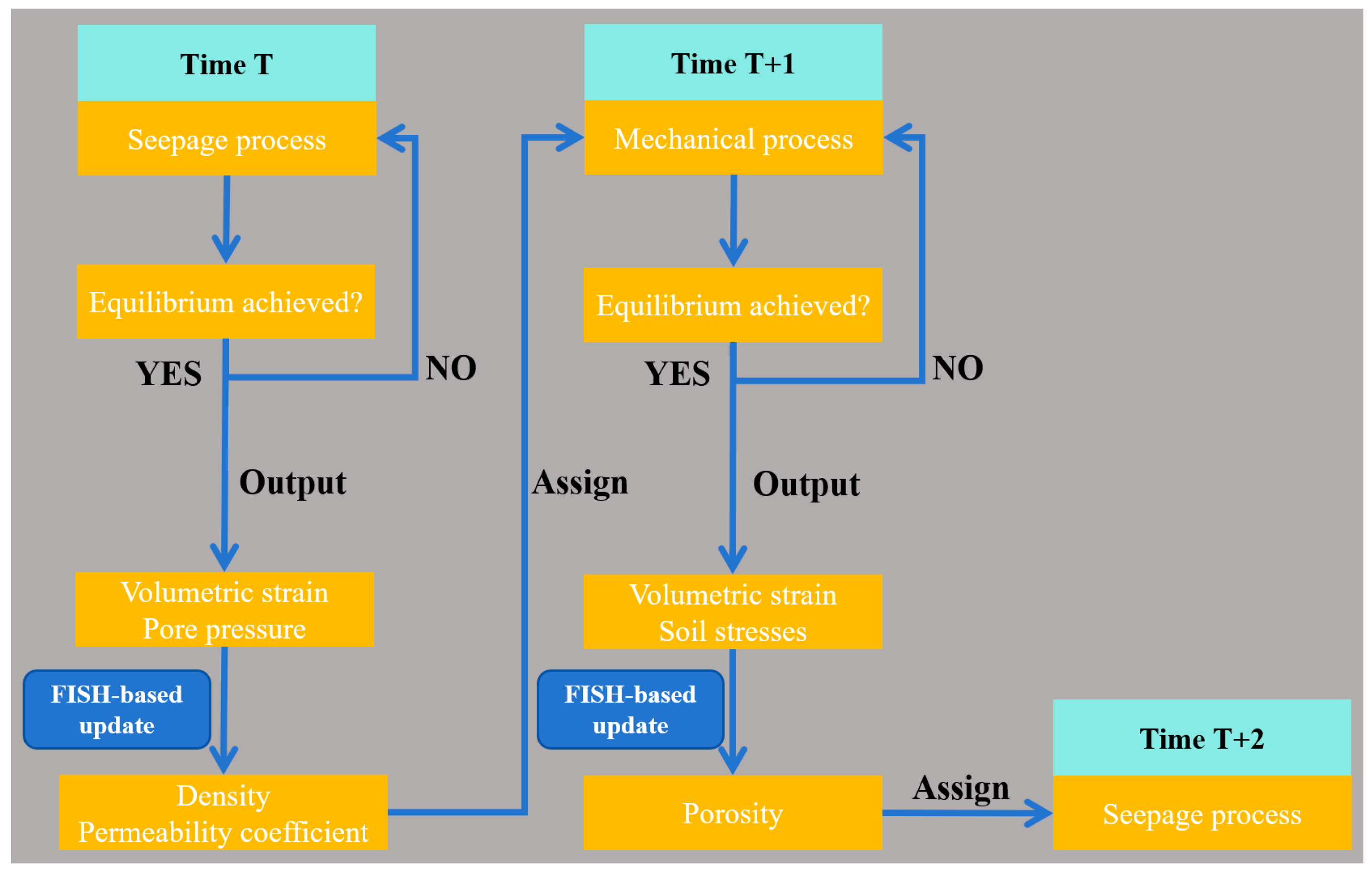
21]. Building on this, this study conducts secondary development within the FLAC3D coupling framework using FISH to enable online updating of key unsaturated state variables and hydro-mechanical coupling parameters; because FISH can be invoked during the solution cycling to control parameters and variables, it provides direct support for establishing a reproducible unsaturated seepage–stress coupling workflow. The proposed method is validated against a field pumping test, and the coupled hydro-mechanical behavior under unsaturated conditions is effectively characterized. On this basis, the method is applied to investigate the settlement and deformation behavior of granite residual soil in the unsaturated state, providing a theoretical reference for engineering design under similar geological conditions.
3. Verification of the Proposed Unsaturated Fluid–Structure Coupling Method
To verify the reliability of the proposed unsaturated fluid–structure coupling method, a field pumping test was conducted and a three-dimensional numerical model was developed. By comparing field measurements with numerical results, the applicability of the proposed method was assessed. The pumping test was carried out at a project site in Huangpu District, Guangzhou, with granite residual soil as the target stratum. Key hydrogeological parameters (e.g., hydraulic conductivity, radius of influence, and discharge of a single well) were determined through the field pumping test. Meanwhile, groundwater-level variation was monitored to support model validation; ground-settlement monitoring was also implemented, but the data were insufficient for a rigorous quantitative validation due to the short test duration and the low permeability of the stratum.
3.1. Field Pumping Test
- (1)
Project Overview
According to the detailed geotechnical investigation report, the conventional soil parameters of each layer are summarized in
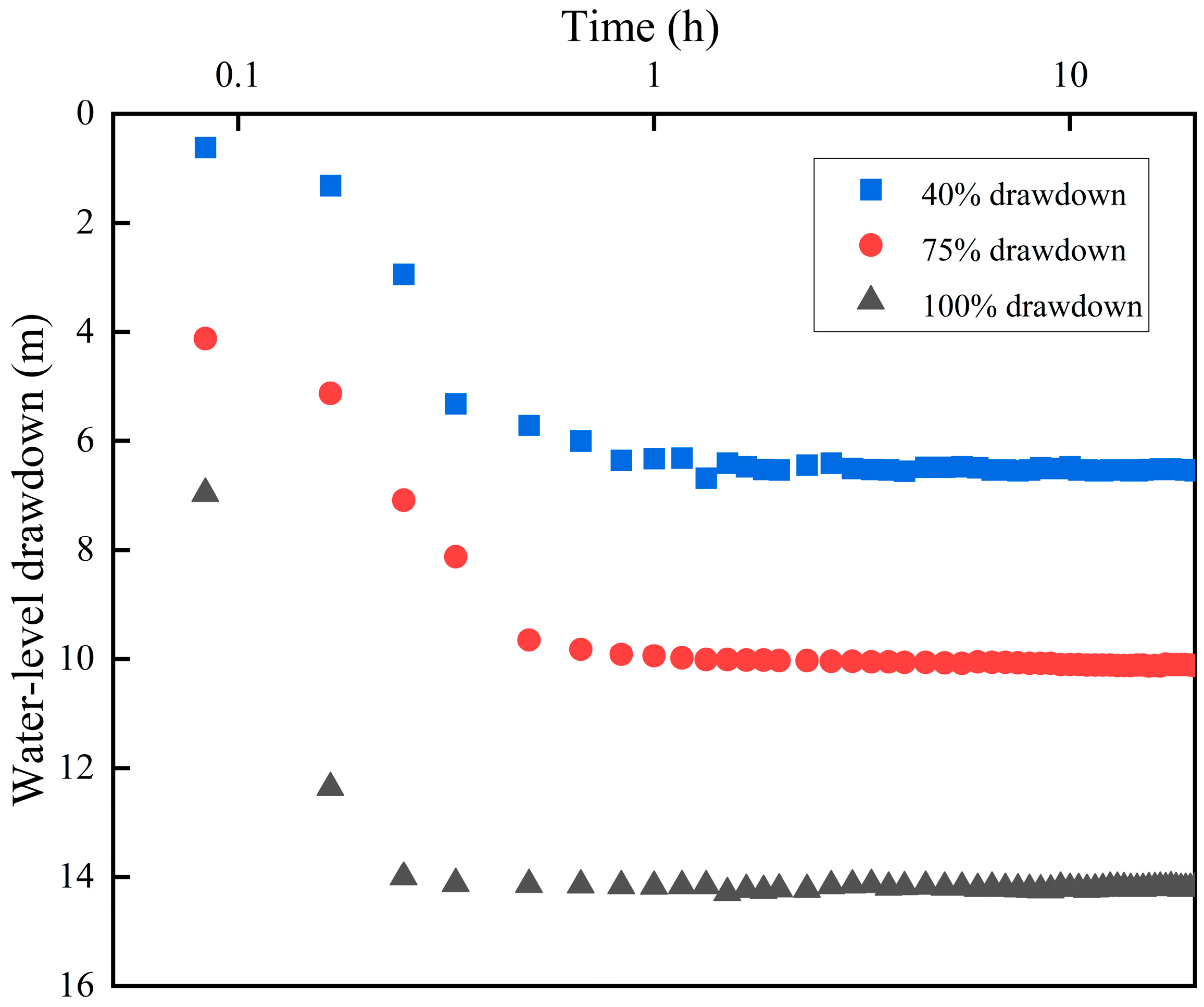
Table 1. The initial groundwater level observed in boreholes was 3.00–3.50 m below ground surface, while the stable groundwater level was 3.20–3.50 m. The aquifer thickness was 16 m. Three pumping scenarios were designed, where the maximum target drawdown of 14 m was defined as 100% drawdown, and the other two scenarios were set as 75% and 40% drawdown relative to this target. The drawdown was controlled by adjusting the pumping discharge, and each subsequent pumping scenario was conducted only after the groundwater level had recovered to a stable condition.
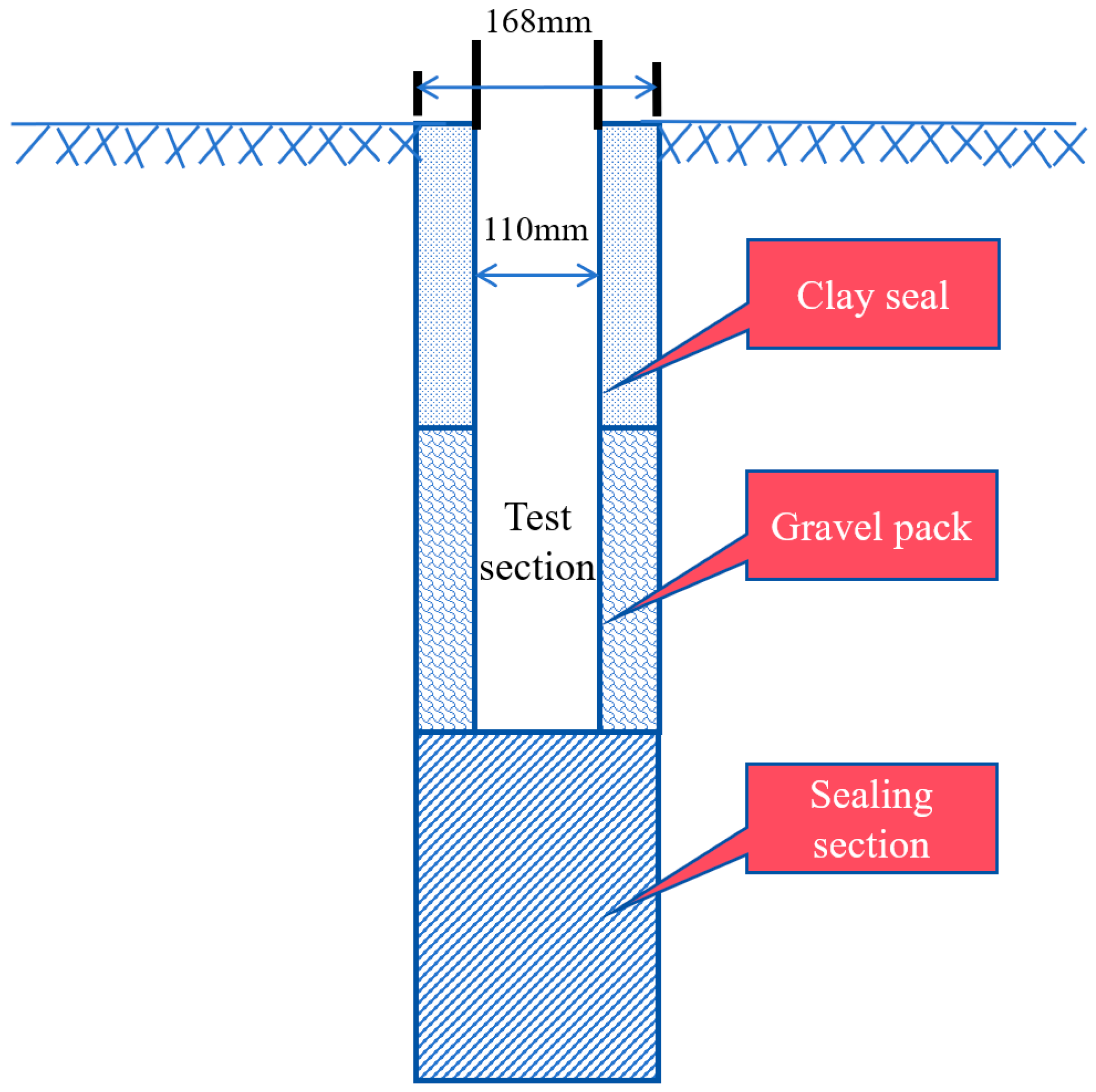
The pumping well was constructed using a drilling rig with a borehole diameter of 168 mm. A φ110 mm stainless-steel casing was installed, and high-quality clay balls were used to seal the annular space outside the casing to ensure adequate sealing. The well configuration is illustrated in
Figure 3.
- (2)
Results and Response Characteristics of the Pumping Test
After completion of the pumping test, the hydraulic conductivity, radius of influence, and other parameters of a confined aquifer fully penetrating well were calculated using the corresponding equations [
23]. The time histories of groundwater drawdown under different scenarios are shown in
Figure 4. During the first 20 min of pumping, the groundwater level in the pumping well dropped rapidly, reaching approximately 90% of the target drawdown at 20 min. After about 1 h, the groundwater level essentially reached the target drawdown and became stable.
As summarized in
Table 2, the maximum measured drawdown was 14.21 m, and the maximum discharge was 10.648 m
3/d. The hydraulic conductivity derived from this pumping test was 0.076 m/d, indicating a low-permeability soil, and the maximum radius of influence was 39.17 m.
3.2. Development of the 3D Numerical Model in FLAC3D
To capture the coupled evolution of the dewatering process in both the plan view and the vertical direction, the computational domain is defined as a three-dimensional spatial domain Ω ⊂ R3. The primary unknowns in Ω include the displacement vector u (x, y, z, t), the pore-water pressure uw (x, y, z, t), and the degree of saturation Sr (x, y, z, t). The pore-pressure variation and the expansion of the unsaturated zone induced by dewatering are described by an unsaturated seepage (flow) equation and are coupled with the mechanical equilibrium of the soil skeleton, thereby enabling the three-dimensional distribution of settlement responses to be obtained. From an engineering idealization perspective, a two-dimensional plane-strain model usually implies that the geometry and loading/dewatering conditions are approximately uniform along the longitudinal direction of the foundation pit, whereas a one-dimensional model further assumes lateral uniformity with vertically layered soil being dominant. Therefore, the choice of model dimensionality essentially depends on whether these idealized assumptions are acceptable for the engineering problem. In this study, a three-dimensional formulation is adopted to maintain consistency between the problem definition and practical conditions when plan-view non-uniformities exist, and to provide a more coherent spatial representation of the unsaturated coupling mechanism.
The purpose of adopting a three-dimensional model is not to pursue additional complexity, but to preserve the spatial variability in the “drawdown cone–deformation response” under well dewatering conditions. In contrast, two-dimensional plane-strain and one-dimensional models typically rely on idealized assumptions of approximate uniformity in geometry and boundary conditions along one direction, and their applicability depends on whether the field conditions satisfy such prerequisites. Previous studies on deep excavations have shown that corner effects, boundary distances, and in-plane non-uniformities may induce pronounced three-dimensional effects; under these circumstances, plane-strain simplification may partially smooth out or underestimate the spatially varying response and should therefore be used with caution within its applicability range [
24,
25,
26]. In addition, practical dewatering problems may exhibit in-plane hydraulic gradients due to factors such as cut-off wall leakage or flow diversion caused by obstacles (e.g., existing pile groups), for which a three-dimensional hydro-mechanical coupling framework provides a more consistent description of the linkage between drawdown and deformation [
27,
28]. The mechanistic interpretation and parameterization of unsaturated effects in this study are built upon well-established theoretical frameworks, including the VG–Mualem relationships and classical extensions of effective stress concepts for unsaturated soils [
29,
30].
The overlying strata above the test layer are dominated by clay and can be regarded as weakly permeable. To simplify the calculation procedure, improve computational efficiency, and optimize seepage interactions among layers, the water body within the test-layer drawdown range was idealized as a confined-aquifer model. The mechanical behavior of the soil was assumed to follow the Mohr–Coulomb criterion, and the seepage behavior was assumed to obey Darcy’s law. Prior to pumping, the soil was assumed to be normally consolidated. After pumping commenced, the unsaturated characteristics of the confined-aquifer soil were considered to investigate its deformation during unsaturated seepage. Given the model idealizations, a sector domain representing the test layer from 16.90 to 32.90 m was selected as the primary simulation domain. The main Mohr–Coulomb parameters used in the numerical model are listed in
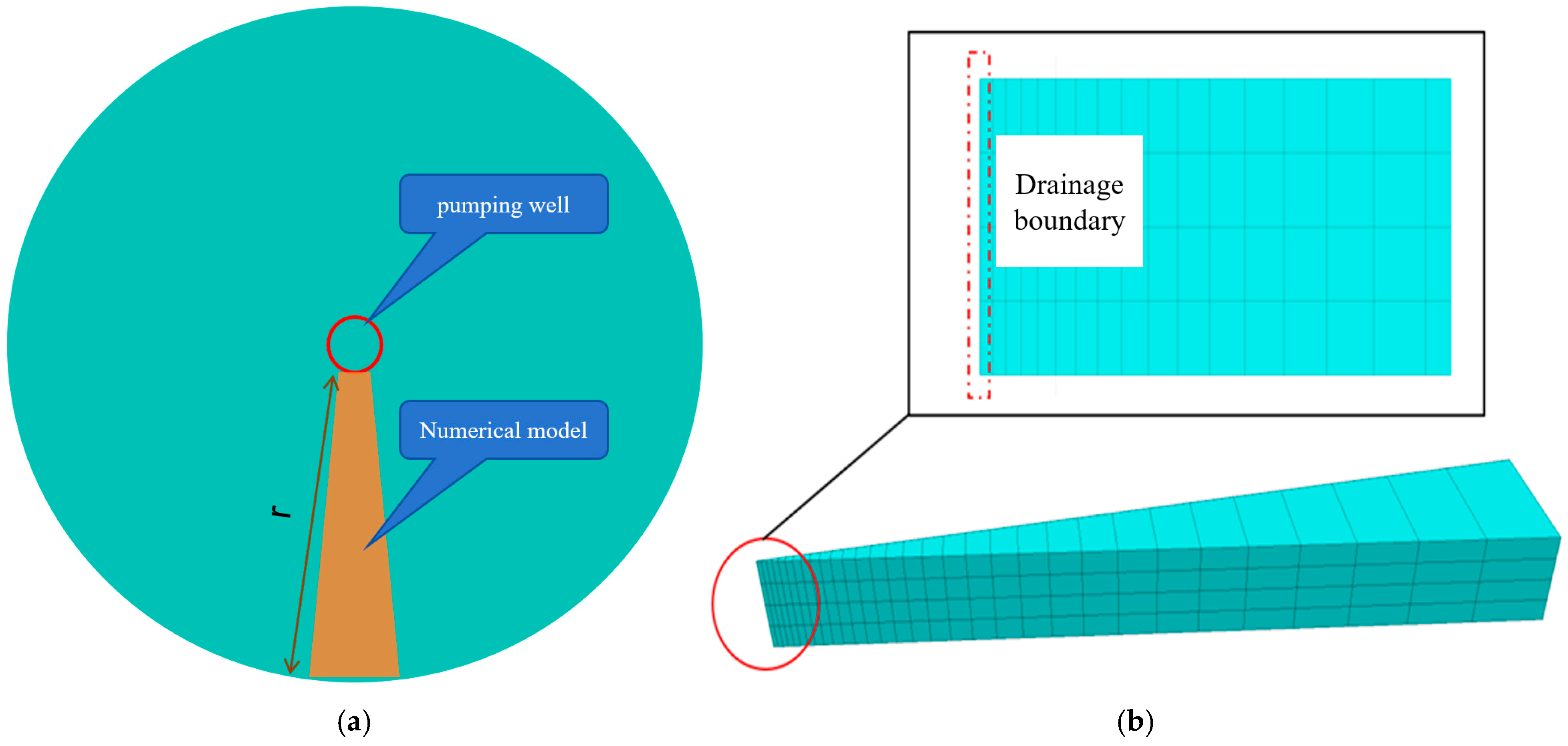
Table 3. The interfaces of all soil layers were assumed to be planar, neglecting local thickness undulations. The overburden from 0 to 16.90 m was represented by applying equivalent stresses according to the modeling assumptions. A graded mesh was adopted. To further simplify the model and reduce computational time, the physical structure of the pumping well was not explicitly modeled. Instead, a drainage boundary condition was imposed along the axis to represent the dewatering effect of the pumping well. The 3D numerical model is shown in
Figure 5.
Based on the pumping-test results, the maximum radius of influence was 39.17 m. To mitigate boundary effects on numerical results, the horizontal model size was set to 100 m [
31]. Moreover, to represent seepage toward a fully penetrating well in a confined aquifer, the drainage boundary was implemented using a nodal/zone flux assignment scheme, i.e., prescribing the inflow/outflow discharge rate at nodes or zones.
The numerical simulation followed these steps:
Step 1 (Geostatic equilibrium): establish the initial stress state based on burial depth, effective unit weight, and the at-rest earth pressure coefficient; initialize the pore water pressure field; and apply boundary conditions.
Step 2 (Equilibrium check and displacement reset): verify the geostatic equilibrium and reset displacements to avoid interference with subsequent calculations.
Step 3 (Pumping simulation): apply the pumping boundary, activate the unsaturated fluid–structure coupling code, simulate the field pumping test, and monitor groundwater drawdown, ground settlement, and degree of saturation; finally, output the results.
3.3. Model Validation and Discussion
Model verification in this study is primarily based on reproducing the time history and stabilized value of groundwater drawdown observed in the field pumping test; therefore, the settlement results are used to compare the numerical differences between the conventional and unsaturated coupling schemes under the same pumping boundary condition, rather than to fit or evaluate errors against field settlement data. To improve clarity,
Section 3.3 is organized around (i) drawdown behavior, (ii) settlement response, and (iii) saturation evolution and its implications.
- (1)
Groundwater Drawdown
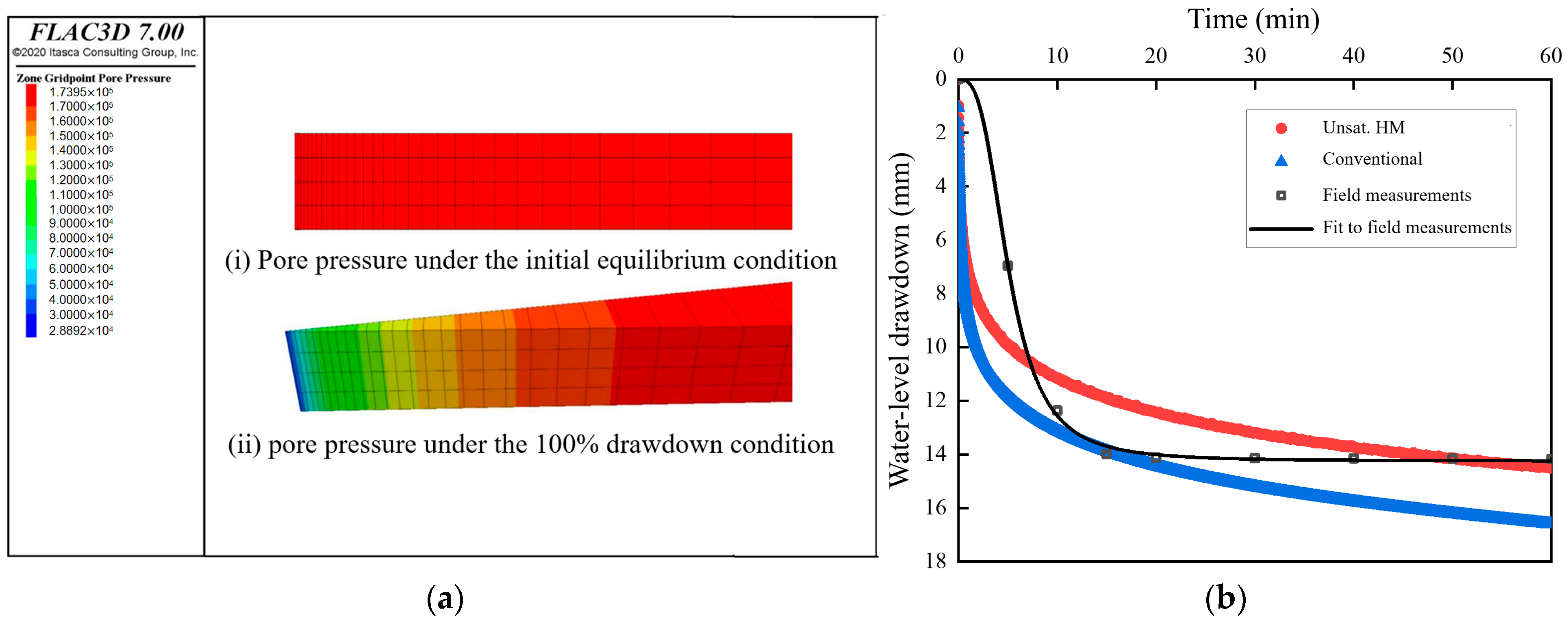
After geostatic equilibrium of the unsaturated fluid–structure coupling model, the initial stress state was checked. The pore water pressure contours for the initial state and the 100% drawdown scenario are shown in
Figure 6a. In the initial state, pore water pressure was uniform over the entire domain with no hydraulic gradient, remaining stable at 174 kPa, corresponding to a groundwater level of approximately 3.2–3.5 m. Under the 100% drawdown scenario, pore water pressure dissipated and effective stress increased, forming a funnel-shaped distribution centered at the pumping well. The pore water pressure in the core region decreased markedly, consistent with the theoretical behavior of seepage toward a fully penetrating well in a confined aquifer. In the 3D model, the drainage boundary was implemented by prescribing a seepage flux/velocity, and thus groundwater drawdown is one of the model outputs. Model accuracy was evaluated by comparing the computed drawdown with field measurements.
The drawdown curves at 60 min are shown in
Figure 6b. Field measurements indicate that in the 0–10 min stage, the drawdown curve is approximately linear, implying an approximately constant pumping rate; by 20 min, the measured drawdown tends to stabilize. In contrast, the computed drawdown shows a higher drawdown rate during 0–5 min, followed by an abrupt reduction in slope during 5–10 min, i.e., the drawdown rate becomes much smaller than the measured one. After 10 min, the computed slope gradually decreases and the drawdown approaches a stable value.
Although identical pumping boundary conditions were adopted in both numerical models, the drawdown curve of the unsaturated fluid–structure coupling model exhibits a smaller slope than that of the conventional fluid–structure coupling model, and the discrepancy increases with pumping duration. Regarding the final stabilized drawdown, the unsaturated fluid–structure coupling result is closer to the field measurement, indicating higher accuracy. This is because in the unsaturated fluid–structure coupling model, drawdown reduces the degree of saturation in the aquifer, which in turn decreases permeability. Consequently, the seepage flux through a given cross-section decreases progressively with time, and the drawdown-rate difference between the two models increases. Therefore, for engineering dewatering simulations in confined aquifers, the unsaturated fluid–structure coupling model provides a more realistic representation and improved accuracy compared with the conventional fluid–structure coupling model.
- (2)
Ground Settlement
Due to project constraints, the duration of the field pumping test was relatively short, and the permeability of the test stratum was low. As a result, the ground-settlement monitoring points did not yield effective field data. Therefore, this section focuses on comparing the computed ground settlement from the two numerical models.
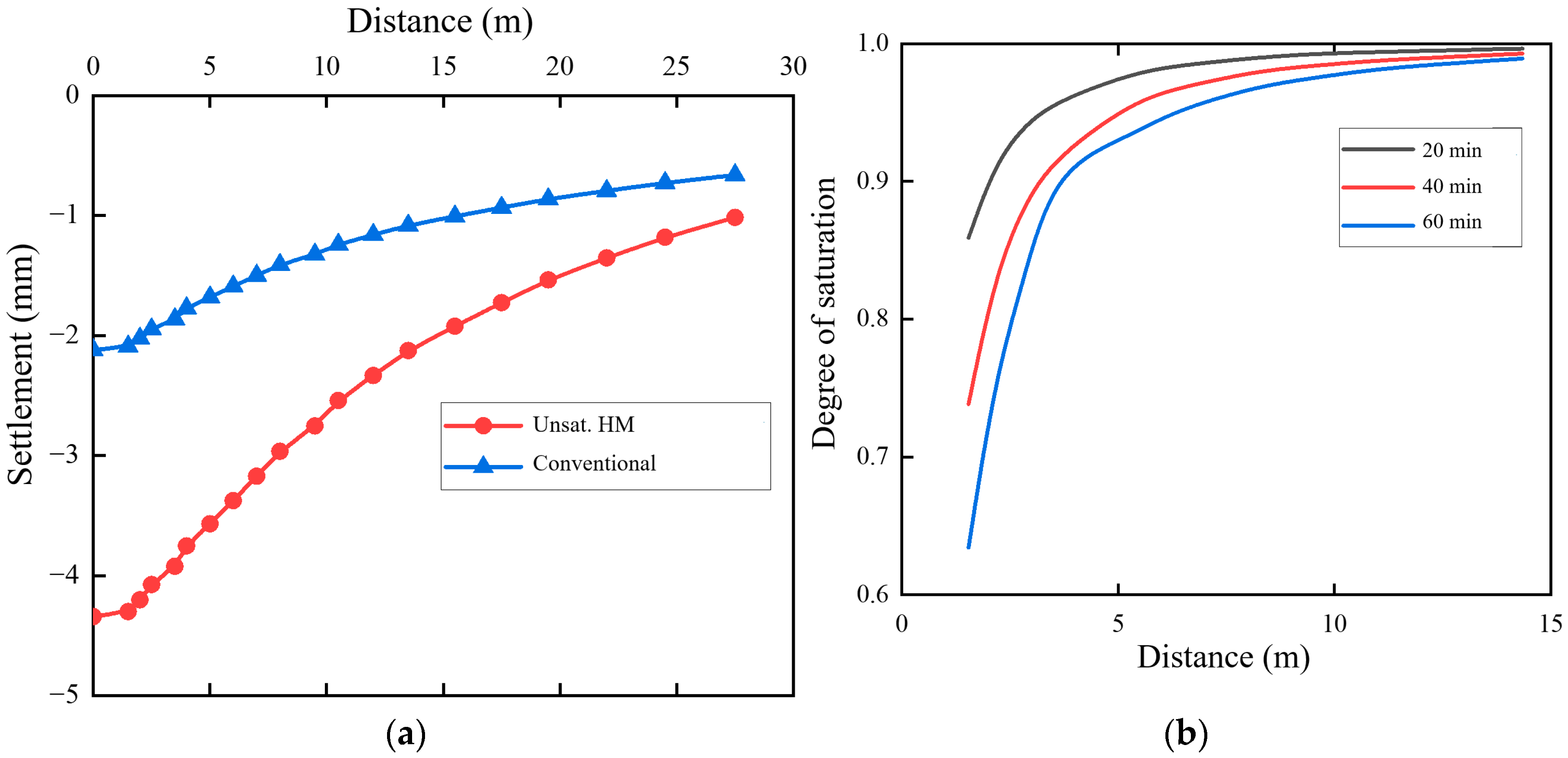
The ground-settlement contours after 60 min of pumping are shown in
Figure 7a. The maximum settlement occurs at the pumping well, with a peak value of 4.33 mm. Based on the maximum radius of influence of 39.17 m obtained from the pumping test, the settlement decreases with increasing distance from the well, and the settlement influence tends to stabilize beyond approximately 30 m, which is close to the pumping-test-derived radius of influence. The conventional fluid–structure coupling model produces lower settlement values, which may cause engineers to underestimate the environmental impact of engineering dewatering and thereby increase the risk of adverse engineering incidents [
32,
33,
34].
- (3)
Evolution of Degree of Saturation
The degree of saturation provides an intuitive indicator of pore-water content within the soil. The distributions of degree of saturation in the aquifer at different pumping times are shown in
Figure 7b. The results indicate that the degree of saturation decreases most rapidly within 0–5 m around the pumping well, and the rate of decrease diminishes with distance. For equal time intervals, the difference between curves becomes smaller, implying that the rate of decrease in degree of saturation gradually reduces with time, i.e., the drawdown rate gradually decreases. This behavior is consistent with the field observation that discharge decreases with pumping duration. The numerical model developed in
Section 3.3 clearly captures the progressive reduction in degree of saturation induced by pumping and enables visualization of saturation changes during engineering dewatering.
This chapter analyzed, across multiple comparison groups and pumping scenarios, the causes of differences in groundwater drawdown, ground settlement, and degree of saturation. From the drawdown perspective, the unsaturated fluid–structure coupling model better captures groundwater drawdown behavior in the later stage of pumping for granite residual soil, providing higher accuracy and closer agreement with field measurements than the conventional fluid–structure coupling model. From the settlement perspective, the unsaturated fluid–structure coupling model predicts more pronounced settlement responses. From the saturation perspective, the unsaturated fluid–structure coupling model enables direct visualization of the evolution of degree of saturation during engineering dewatering.
4. Factors Influencing Ground Settlement
Based on the three-dimensional numerical model for unsaturated fluid–structure coupling established in the previous section, an analysis of the factors influencing ground settlement was conducted. The impact of factors such as pumping rate and groundwater drawdown depth on the time and spatial distribution of soil settlement deformation was explored. This analysis aims to provide reference for engineering design, optimize construction strategies, reduce engineering risks, improve safety, and mitigate the adverse effects of soil settlement on the project and surrounding environment. Due to the unique nature of foundation pit projects, the requirements for different foundation pit constructions vary, which results in diverse dewatering schemes with different pumping rates and groundwater drawdown depths. Therefore, this study sets up several different scenarios to explore the settlement sensitivity of the soil during the engineering dewatering process.
4.1. Impact of Pumping Rate on Ground Settlement
Pumping rate refers to the speed at which water is extracted from the aquifer. The size of the pumping rate directly affects the effectiveness of dewatering and the settlement of surrounding areas. In engineering dewatering, the total drawdown depth is typically fixed, while the pumping rate can be adjusted. Studying the effects of different pumping rates helps to clarify how pumping rate influences soil settlement and deformation.
- (1)
Scenario Setup
The pumping rate in the engineering dewatering process is represented by the discharge Q. To provide a more intuitive reflection of pumping rate, the pumping rate was converted into the rate of decrease in the water level at the dewatering well. With the total drawdown depth kept constant, three scenarios were set up, as shown in
Table 4.
- (2)
Analysis of Calculation Results
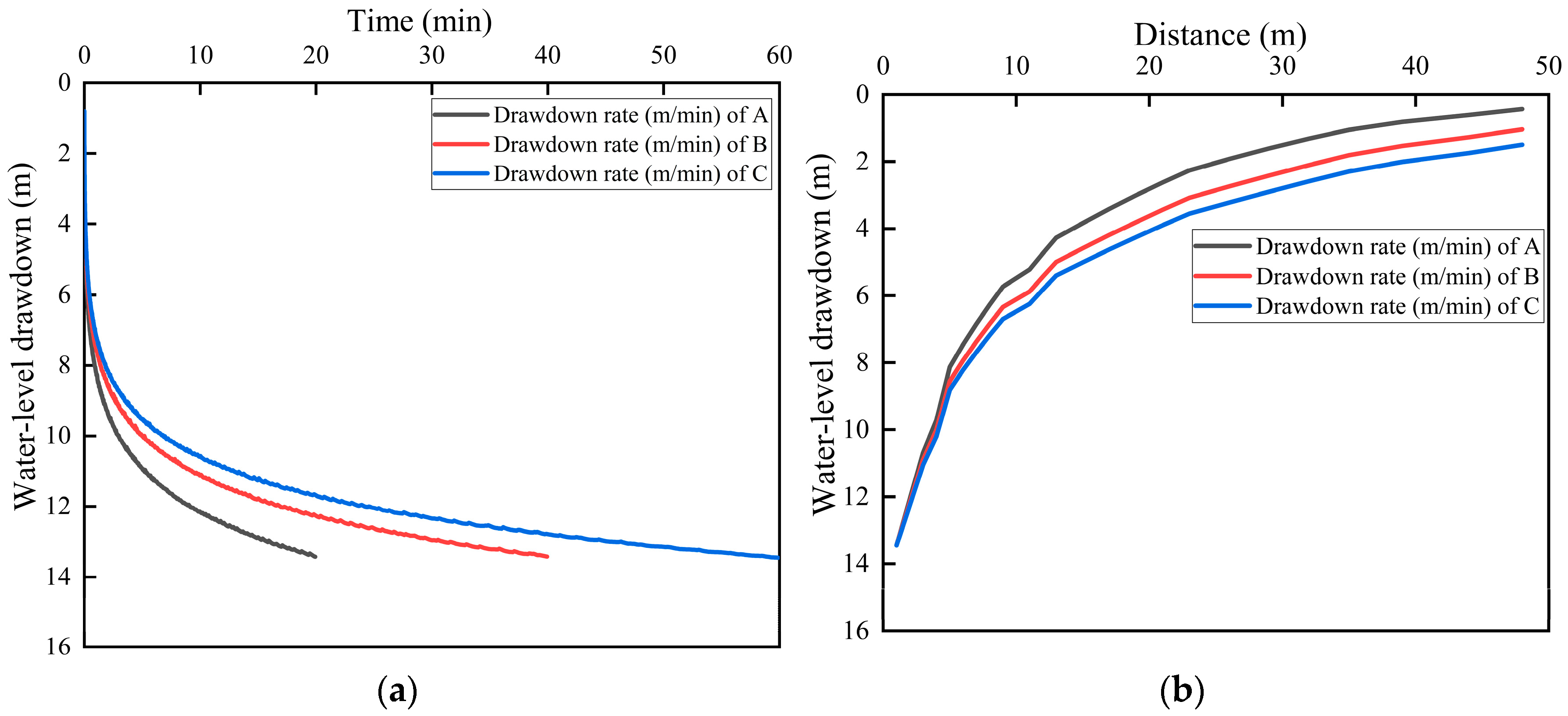
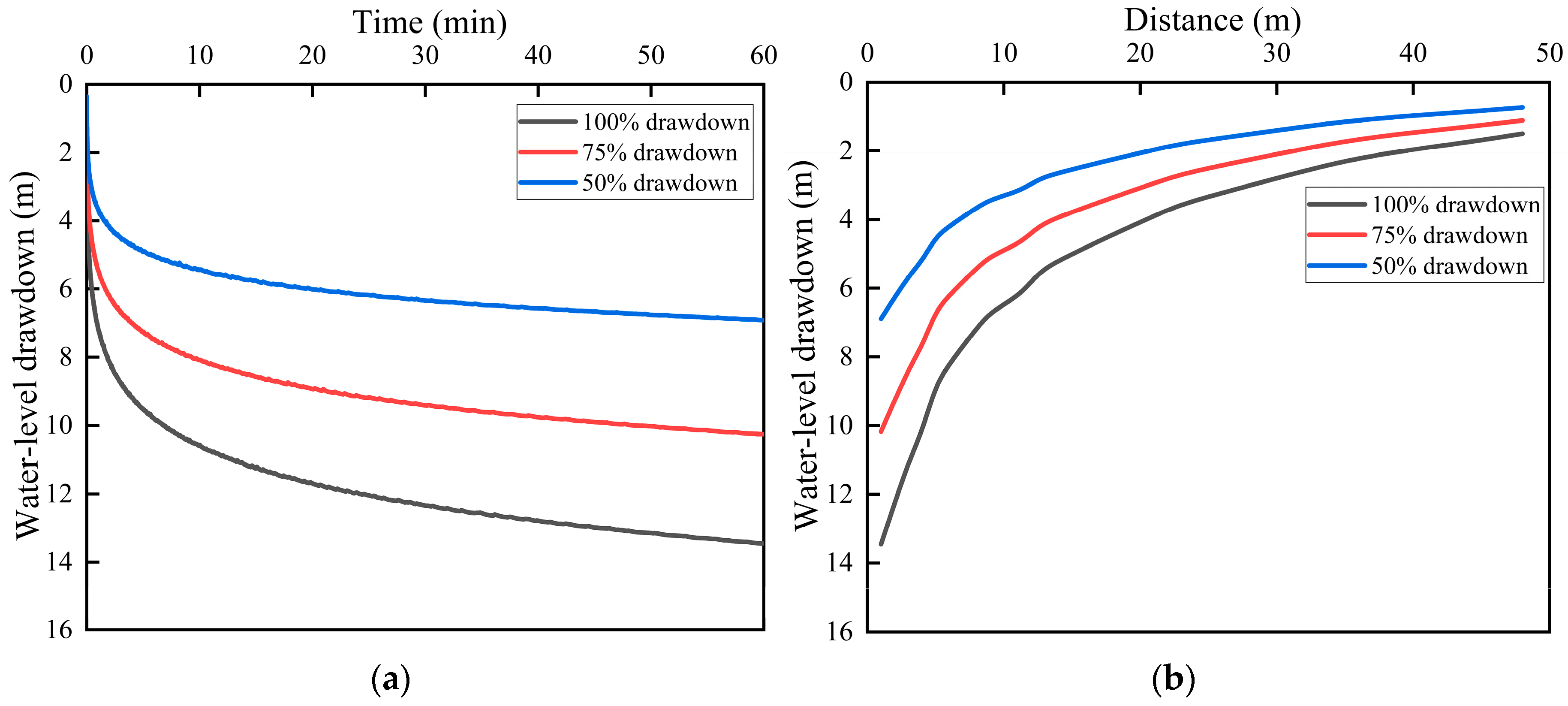
The water level drawdown and distribution charts for each pumping rate scenario are shown in
Figure 8a,b. It can be observed that as the pumping rate increases, the time for the dewatering well to reach the target drawdown decreases. However, when the pumping rate is higher, the drawdown in the soil farther from the well is smaller. This is due to the time required for soil permeability and the drainage process. The high pumping rate scenario leads to shorter dewatering times, resulting in a delay in the drainage process at greater distances, which is consistent with the studies Lewis [
35], who found that soil water levels at distant locations exhibit a lag effect during pumping, where pore water pressure decreases and soil deformation follows the development over time.
The soil settlement deformation distribution charts for each pumping rate scenario are shown in
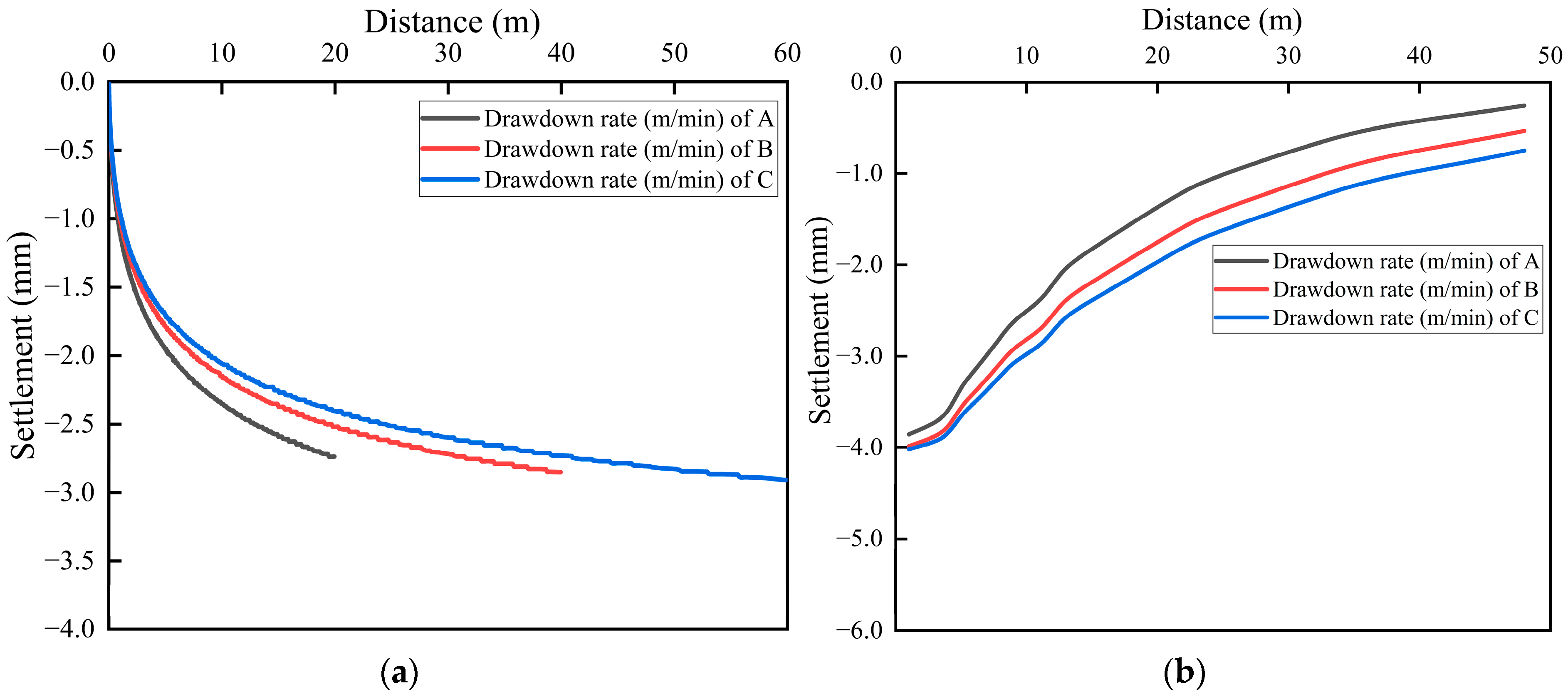
Figure 9a. The results indicate that as the pumping rate increases, the soil settlement deformation increases in the short term. However, when the target drawdown depth is reached, the scenario with the lowest pumping rate results in the largest total settlement deformation. This soil settlement deformation is composed of two parts: one caused by the reduction in pore water pressure, which increases effective stress and leads to immediate settlement, and another due to changes in porosity during drainage consolidation, which accumulates over time. Pumping rate changes the pore-pressure dissipation rate and the recovery path of effective stress. This time effect can be described using a pore-pressure-based “degree of consolidation”. A slower drawdown generally corresponds to more sustained pore-pressure dissipation and effective-stress recovery, promoting greater volumetric strain accumulation, whereas a faster drawdown may cause rapid redistribution of pore pressure with relatively delayed volumetric strain accumulation. This description helps clarify the mechanisms underlying differences in settlement time histories under different pumping rates. In scenarios with lower pumping rates, the longer dewatering time results in more significant settlement caused by drainage consolidation. The distribution of soil settlement deformation for each pumping rate scenario is shown in
Figure 9b. As shown, the settlement near the dewatering well is similar in all scenarios, and the difference in settlement due to drainage consolidation is relatively small. However, the settlement increases as the distance from the well increases, which is related to the lag effect of soil permeability. In scenarios with lower pumping rates, the soil pore water pressure is more fully released, resulting in larger settlement.
This calculation comprehensively explains the components of soil settlement deformation due to dewatering. Under the same target drawdown but different pumping rates, the minor differences in soil settlement near the dewatering well are mainly due to different drainage consolidation times, while the differences further from the dewatering well are primarily due to varying pore water pressure dissipation in the soil.
4.2. Impact of Groundwater Drawdown on Ground Settlement
- (1)
Scenario Setup
To study the effect of groundwater drawdown depth on soil settlement deformation, three scenarios were set up. One scenario was defined as the maximum drawdown depth, set as 100% of the target drawdown, while the other two scenarios were set to 75% and 50% of the target drawdown, respectively. The total pumping time was kept constant, as shown in
Table 5.
- (2)
Analysis of Calculation Results
The water level drawdown charts for each groundwater drawdown depth scenario are shown in
Figure 10a. It can be seen that, over the same time period, the curves for all drawdown depth scenarios follow a similar trend, with approximately 80% of the target drawdown completed within the first ten minutes. The groundwater drawdown distribution for each scenario is shown in
Figure 10b. Near the dewatering well, the drawdown depth matches the set scenario. However, as the distance from the dewatering well increases, the drawdown depth decreases, and the differences in drawdown depth among scenarios become smaller.
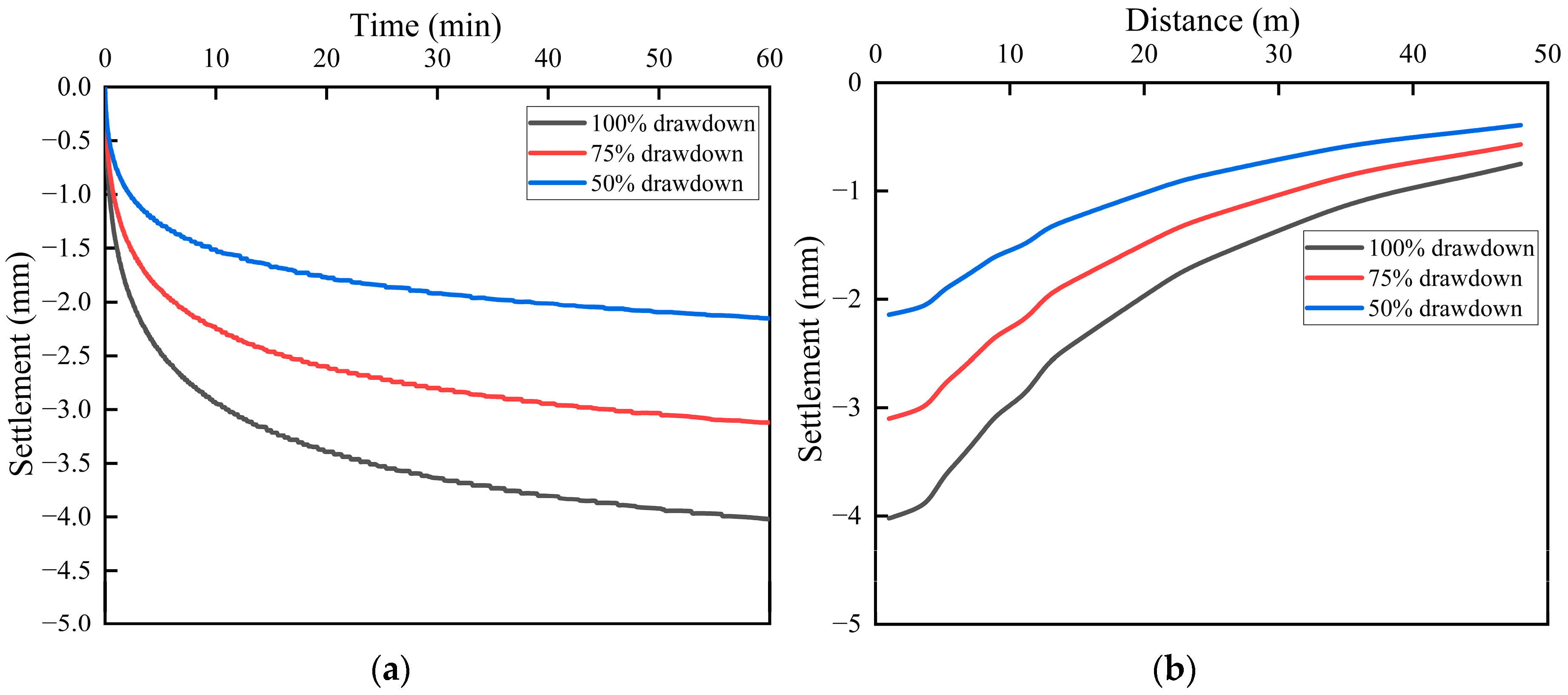
The soil settlement deformation at the dewatering well for each groundwater drawdown depth scenario is shown in
Figure 11a. It can be observed that with increasing dewatering time, the differences in soil settlement deformation among scenarios also increase.
Figure 11b presents the soil settlement deformation distribution for each scenario, showing that the maximum deformation occurs near the dewatering well. The differences in settlement deformation are largest at the well and decrease with increasing distance, which follows the same trend as the groundwater drawdown distribution.
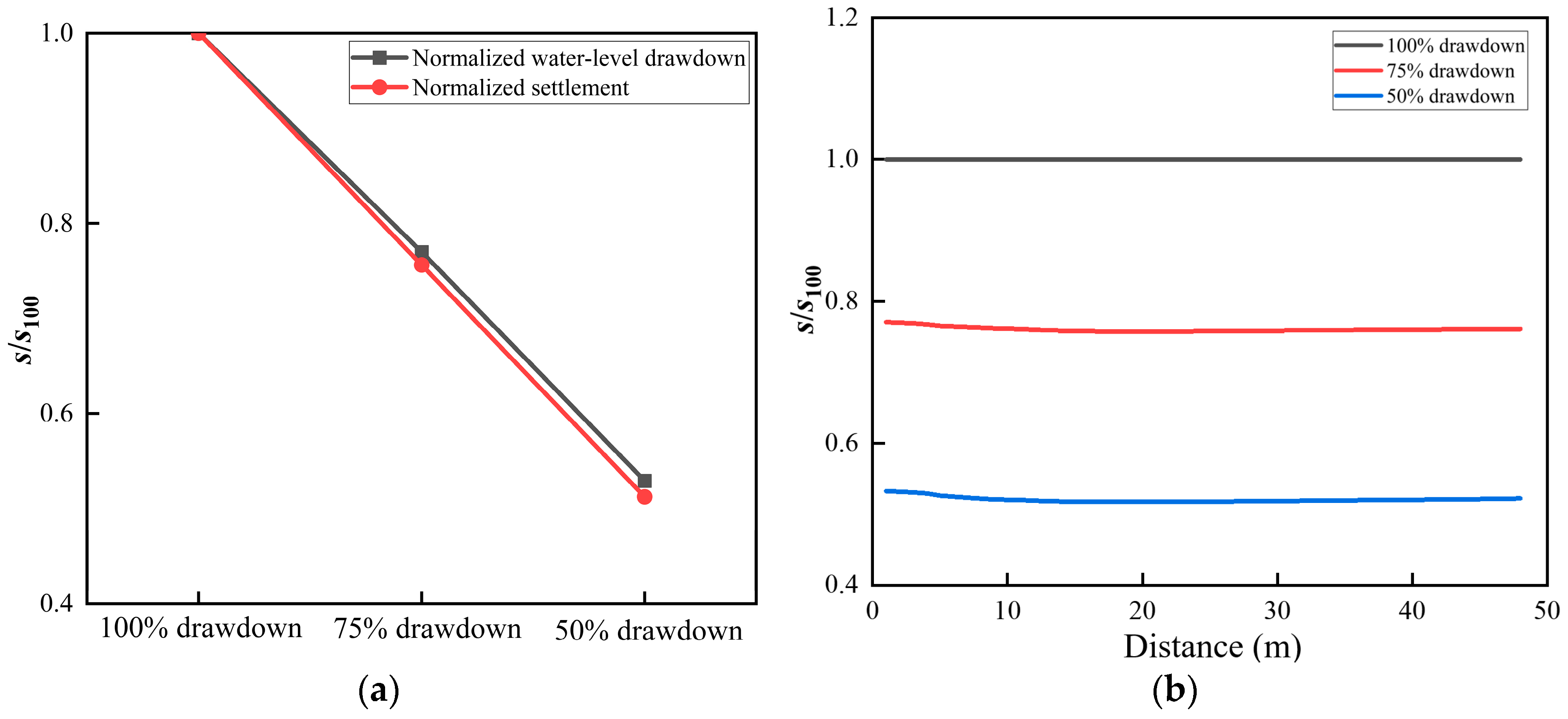
To further investigate the relationship between groundwater drawdown depth and soil settlement deformation over the same time period, a normalized analysis of the final settlement deformation and groundwater drawdown depth was conducted. The normalized relationship between water level drawdown and soil settlement deformation at the dewatering well is shown in
Figure 12a. It can be seen that the soil settlement deformation at the dewatering well is proportional to the groundwater drawdown depth. The normalized analysis of drawdown depth and soil settlement deformation distribution is shown in
Figure 12b. Using the 100% drawdown scenario as a reference, the settlement deformation for the 75% and 50% drawdown scenarios was normalized by dividing by the reference value. The results show that the lateral settlement deformation distribution is approximately proportional to the groundwater drawdown distribution. Therefore, for the same aquifer, the effect of groundwater drawdown depth on soil settlement deformation can be approximated as a linear relationship. The near-linear trend in the normalized drawdown–settlement relationship is an empirical finding within the present ground conditions and dewatering durations. Its use should be limited to similar stratigraphy/parameters and comparable dewatering times; extrapolation to strongly heterogeneous or substantially different-duration cases should be treated with caution.
5. Conclusions
This study uses numerical simulation methods and unsaturated fluid–structure coupling theory to investigate the settlement sensitivity of granite residual soil during foundation pit dewatering. The main conclusions are as follows:
- (1)
For granite residual soil, the unsaturated fluid–structure coupling method provides better representation of settlement behavior compared to the traditional fluid–structure coupling model, especially with respect to groundwater drawdown. It also allows for the visualization of soil saturation during the dewatering process.
- (2)
Under the same target drawdown depth but different pumping rates, the minor differences in soil settlement near the dewatering well are mainly due to variations in drainage consolidation time, whereas the differences in settlement further from the well are mainly attributed to the different pore water pressure dissipation rates.
- (3)
The impact of groundwater drawdown depth on soil settlement deformation can be approximated as a near- linear relationship under the present ground conditions and within the range considered, for the same dewatering duration. Therefore, for large-scale dewatering, small-scale pre-tests with lower drawdown depths can be conducted, and the results can be scaled proportionally to predict the settlement deformation under the larger dewatering conditions, provided that the stratigraphy/parameters, initial saturation, and dewatering duration are comparable; extrapolation to substantially different conditions should be treated with caution.
Limitations: The settlement at this site is on the millimeter scale; its practical risk significance should therefore be judged in conjunction with monitoring accuracy, the sensitivity of adjacent structures, and allowable deformation criteria. The contribution of this study is to elucidate how unsaturated evolution affects late-stage drawdown and settlement time histories; its broader applicability depends on appropriate constraints on key hydraulic parameters (especially the SWCC and permeability functions) and consistency with site conditions. The three-dimensional numerical model in this study simplifies the actual structure of some soil layers, assuming the layer interfaces are planar and ignoring local variations in thickness. The heterogeneity and complexity of the actual strata may have different effects on the dewatering process and settlement deformation. Therefore, future work could consider a more refined stratification and the impact of soil heterogeneity on the model results. Additionally, the unsaturated soil parameters in this study were selected based on laboratory test results and literature data. However, due to the variability in soil properties in different regions, there may be some uncertainty in the model parameters. Future research could further calibrate and optimize the unsaturated soil parameters through multiple field tests to enhance the applicability and accuracy of the model. Although this study has conducted preliminary verification through field pumping tests and numerical simulations, the verification process is still incomplete due to the limited field test data and monitoring scope. Accordingly, the main conclusions regarding the improved representation of unsaturated effects are supported by the validated drawdown response, whereas settlement-related findings should be interpreted as model-based predictions pending further field monitoring. Future work could further validate and optimize the model’s performance by collecting more extensive field data, setting up more operating conditions, and comparing results from different models.