Article

Utilization of Demolition Waste for Concrete Aggregate

Department of Construction Materials and Technologies, Faculty of Civil Engineering, Budapest University of Technology and Economics, Műegyetem rkp. 3, H-1111 Budapest, Hungary
Buildings 2026, 16(3), 526; https://doi.org/10.3390/buildings16030526
Submission received: 24 December 2025 / Revised: 19 January 2026 / Accepted: 23 January 2026 / Published: 28 January 2026
(This article belongs to the Section Building Materials, and Repair & Renovation)

Abstract

The construction industry is a major consumer of natural resources and a significant source of CO2 emissions. Although numerous studies have addressed cement reduction through supplementary materials, the replacement of natural aggregates has received less attention despite its high environmental relevance. Practical application of recycled aggregate concrete remains limited due to complex classification and testing requirements. This study investigates the use of locally crushed construction and demolition waste as aggregate for new structural concrete with minimal on-site preparation. The goal was to maximize recycled material utilization while ensuring adequate performance. Demolition materials from normal- and high-strength concrete, 3D-printed concrete, and fired clay bricks were crushed using jaw and impact crushers, and the entire particle size curve was incorporated into new mixtures. Two compositions were tested: 50% and 75% recycled aggregate combined with natural quartz sand, without increasing cement content. Compressive strength and density were evaluated at 28 and 90 days. High-strength concrete waste provided strengths close to the reference mixture, while normal concrete and brick aggregates resulted in lower but still structural-grade concretes. The strengths achieved ranged between 35 MPa and 73 MPa, which is between 48% and 98% of the reference value, respectively. A linear relationship was found between density and compressive strength, enabling estimation from simple measurements. The results confirm that uncontaminated demolition waste can be efficiently reused on site with limited testing, supporting circular construction and reduced environmental impact.

1. Introduction

The construction industry has one of the greatest impacts on the environment and energy demand. It is worth noting that the construction industry uses 25% of global water resources and 40% of global energy [1]. According to estimates, the construction industry accounts for approximately 50% of global steel production [2]. Everyone considers steel to be valuable, energy-intensive, and highly recyclable, but concrete receives less attention in this regard. In the circular economy approach, buildings are seen as valuable repositories of resources that can be collected and recycled, rather than treated as disposable structures [3]. Concrete is used in almost every building and infrastructure structure, so it is the most widely used artificial material in the world. It is used in all areas of the construction industry, including structural engineering, civil engineering, transport structures, and hydraulic engineering. Until now, research has focused mainly on cement, as it accounts for 8–10% of total CO2 emissions [4,5]. Concrete is considered harmful to the environment, primarily because of its cement content, as cement is one of the most polluting materials and due to its high CO2 emission, many concrete technology studies focus on reducing the amount of cement used. This is mainly carried out by replacing some of the cement with waste or by-products or possibly natural pozzolans (such as volcanic ash). Among the most widely studied by-products are fly ash (FA) [6,7,8], which varies from country to country and from power plant to power plant, the granulated blast furnace slag, the silicon dioxide powder, and the calcined clays (e.g., metakaolin) [9]. Metakaolin can hardly be considered a by-product today. Rather, it is manufactured specifically for the concrete industry, and detailed calculation methods are available for its application [10]. The glass comes from municipal waste [11], and artificial ashes also appear, including rice husk ash [12,13] or other typical local plant waste ashes, e.g., cork, tobacco [14], palm oil fuel ash [15], and agricultural waste.
Less is said about the fact that the largest component of concrete is the aggregate. The mining process required to produce natural aggregates (NA) requires heavy machinery and plays a significant role in energy consumption [16]. Globally, more than 20 billion tons of concrete are produced annually, and the large volume of concrete production leads to overconsumption of natural aggregates. The aggregate content of concrete is approximately 70% by volume, but can reach up to 80%, and this is usually natural rock. Ideally, it is a local material, but sometimes it must be transported from far away if geological conditions are not suitable, e.g., in Germany, the Netherlands, or desert areas. Another problem is that transportation and shipping are the other major global sources of CO2 emissions. Parallel to this problem, natural areas are constantly shrinking, and what remains must be preserved. As a result, greenfield investments are very rare, and new projects are often built on the site of existing buildings or infrastructure. In this case, it is demolition debris. If the structure was not demolished due to durability reasons or fire but only because of obsolescence, change of function, mechanical damage, physical accident (e.g., collision), earthquake, or even explosion or demolition, then the demolition materials can be reused as additives in new concrete. Currently, its use is limited, but new requirements mean that the carbon footprint of buildings must be calculated. Secondary raw materials will play an important role in this. The perception of waste is also changing. Life cycle analyses have also been conducted on concrete materials [17,18], not just on structures and buildings. These are expected to become mandatory between 2030 and 2050. It is unclear which material characteristics should be considered in an LCA analysis, e.g., what is the role of durability [19]. Construction and demolition waste is not considered hazardous or polluting, but it still needs to be disposed of somewhere, which also requires space. Selective collection is already in place, but its use is very complicated.
The biggest obstacle is that quality and contamination must be checked. This is expensive, time-consuming, and requires extra organization. It is a serious deterrent. In the case of being locally rebuilt, these rules are different. In addition, transportation costs can also be saved. It is best to carry out a simple test before demolition, e.g., for strength, then separate the waste by material at the construction site and crush it, finally adding it to the new concrete as an aggregate. This model is still rare in most countries, but there are some examples of it being implemented. The Netherlands used to have landfill problems 30 years ago, which made recycling mandatory (or strongly regulated). The Netherlands has neither sufficient raw materials nor free fields. No publications indicate that the quality of concrete, asphalt, or other products in the Netherlands is of lower quality than anywhere else. In Hungary, selectively collected concrete waste is mainly used only as fill and aggregate in road construction, although most of it would also be suitable as an aggregate. This is not only true in Hungary [20], but it is also common practice in South Korea, for example, where this is the primary use [21], and probably in most places around the world. According to estimates by the European Aggregates Association, 58 million tons of aggregates were produced in Hungary, of which only 3.4% were recycled aggregates. Neighboring countries are similarly weak in reusing. In Europe, England, Belgium, the Netherlands, and Germany are leading the way in this aspect. Turk et al. [16] define five areas where concrete can be made more environmentally friendly. The most significant of these is the replacement of aggregate.
Previously, it was customary to use max. 10–15% unknown CDW or 30% known CDW for the replacement of coarse aggregate, because this minimally reduces compressive strength, so it can be used without hesitation [22,23]. These quantities will not be sufficient in the future. In later experiments, the quantities were increased, achieving good strength of up to 100% [24,25], but this requires working with very high cement contents, which is also environmentally harmful and expensive [20,22,26]. Research is being conducted into the production of concrete with extra properties using waste materials. Several such experiments have already been carried out in the past. The goal at the time was to prove that, with good concrete technology, it is possible to achieve high-strength concrete even with waste materials [27,28]. But this is rarely necessary. In most cases, normal strength is more than sufficient. This is especially true for buildings that are being replaced in crowded urban environments. The most used concrete strengths are C20/25 to C35/45.
In Hungary, local guidelines for using construction and demolition waste as aggregate for concrete were written in 2005 [29], but the application has not increased significantly. Both builders and contractors have expressed an interest in using it, but in many cases the testing and the preparation are so expensive, and the organization is so complicated that contractors often decide not to use it, or only use a small amount (10–15% aggregate replacement) of the material, and primarily only in the case of the coarse fraction [30]. Ceramic waste is also highly compatible. This is discussed in the above-mentioned guideline and supported by international research findings in different situations [31,32,33,34].
This could be greatly increased in practice if there were simple and inexpensive methods. Methods that people would be happy to use. Therefore, the main goal is to simplify three things:
  • Categorization should be minimal
  • One-step crashes should be possible on-site
  • The entire amount of waste should be utilized.
This is what current research was optimized for. The strength and the quality of the concrete were not planned; it was only tested at the end, and then, depending on its strength, the right grade was used in the right place.
Previous studies have typically concluded that recycled aggregate concrete requires more cement to compensate for the lower strength and higher water absorption of recycled aggregates [35,36,37,38]. The results for the different concrete mix designs suggest that increasing the replacement level by 1% reduces compressive strength by 0.1913% for coarse recycled concrete aggregate and 0.2418% for fine recycled concrete aggregate [1].
No more cement or paste was used in the tests. Therefore, a decrease in compressive strength was expected. The extent of this decrease is interesting. In previous results, the highest substitution ratio at which the decrease in strength was not yet drastic was 50% [38]. Therefore, this replacement ratio was the starting point.
Of course, concrete or ceramic products that have been damaged by frost or fire or are known to have been exposed to chemical contamination do not fall into this category. These require chemical testing and have different physical parameters. Therefore, these are discussed in separate studies. For example, by using sulfate-contaminated concrete [39] or treating chloride contamination [40].
Among masonry materials, aerated concrete should not be used in this way, as crushed aerated concrete (cellular concrete) causes problems in saturated concrete [41]. Based on current studies, reconstruction of concrete with heavy or light aggregate according to these principles is also not recommended. However, the concretes and ceramics belonging to the above exception can be identified almost by sight and do not require laboratory testing. Previous research has already proven that crushed concrete can be reused multiple times as an aggregate [42].
The goal of the actual research project is to arrive at the full spectrum (fine and coarse fraction) using in situ demolition of concrete and ceramic clay masonry elements. 100% utilization refers to 100% of the crushed demolition concrete and ceramic clay bricks, not to the replacement % of the aggregate in the new concrete mixture. Only locally crushed, clean (uncontaminated, unburned) material is assumed to be used, and only for a new concrete intended for normal building construction.

2. Materials and Methods

2.1. Goals and Methodology

The goal affects the initial parameters. We assume neither optimization of raw materials nor sorting. The goal was to use as much as possible and to use the entire fraction. This was also the main consideration when designing concrete technology.
The crushed material was classified using quick and simple tests. Only a few clearly distinguishable categories were used. These can be determined visually (e.g., prefabricated element, and color) or may require quick on-site non-destructive testing (e.g., rebound hammer test [43,44,45,46]. If an inspection is necessary before demolition, it is easier to inspect the structure than the aggregate, especially in situ. In the case of concrete, these are as follows for existing structures: normal concrete, which is usually monolithic concrete in good condition and high-strength concrete (usually prefabricated elements). We also supplemented the investigation with 3D-printed concrete. For fired clay bricks, 100–150-year-old samples were used as a basis, because currently demolished buildings are roughly of this age. Red and yellow bricks were separated because they differ in their raw materials. The strength of bricks of this age varies greatly. These tests were supplemented with modern bricks as a reference.
A simple mass measurement was performed. The density of the raw material was neither measured nor considered. It varies too much even within a single building, so it would be impossible to measure accurately and would not be economical. Average values were used.
Such crushing equipment was used that can also be used on site. The two most common types of equipment: jaw crusher and the impact crusher. The concrete received was of normal-strength and installed in a protected location (not exposed to water, frost, or chemical effects). No additional requirements were expected, and only density and compressive strength were tested.
The valid concrete standard MSZ 4798 [47] allows the use of recycled building wastes but makes recommendations for restrictions. The goal of this study is to expand these recommended limits with the results of the present study. Compliance with EN 12620 [48] is recommended for all aggregates. Crushed concrete and crushed brick are recommended, although in the case of brick, the standard specifies the expected strength class as LC25/28. The definition of recycled material as aggregate in EN 206 [49] and MSZ 4798 is a very broad concept, and includes any inorganic material that was used in construction. In this study, we only look at demolition waste from concrete and clay-based masonry materials and want to use it directly at the construction site. These are materials that are not demolished for reasons of quality or contamination. Mechanical damage (if not caused by fire) is not an obstacle, because the material must be crushed before using, so the previous cracks and weak points disappear during the crushing process. According to MSZ 4798, the amount of recycled material does not matter up to 5%, and the amount of coarse aggregate may be 30% according to Annex E, but this is only a recommendation. Coarse fractions (>4 mm) of recycled aggregates of known origin can be used in 50% in X0 and up to 30% in XC1-4, XF1, XA1, and XD1 classes. The goal of this study is to increase this recommendation to a higher quantity. There is no quantity recommendation for fine aggregate (<4 mm). The use of fine aggregate is excluded in frost-resistant concrete and special civil engineering structures, and its chloride ion content is limited. Aggregates generally need to be tested, but in the case of natural aggregates, in addition to particle size distribution, the fine particle content must also be tested in Hungary. The reason for testing the fine particle content is to ensure that the concrete does not contain more expansive clay minerals than permitted. This is not an issue in actual research, as there will be no expansive clay in the demolition waste. In areas with different geological conditions, e.g., Germany, the primary test is the alkali resistance of the natural rock. This is not necessary in the present case. In the case of lightweight aggregates, the density below 2000 kg/m3 must be checked, but this is also the case here, with a higher density for concrete and a lower density for clay masonry elements. A test mix must be carried out for each new on-site mixture, and the relevant tests must be performed (this cannot be treated as a product like ready-mixed concrete). The area of application is limited because, of course, it is true that the demolished material must not be contaminated, must not have been in soil (must not have been contaminated with sulfate, chloride, or nitrate), must not have been exposed to frost or fire damage, and must not originate from a chemical plant, laundry, or other such location. Concrete can be produced in compliance with these requirements because compressive strength must be specified first and foremost. Compressive strength is the result of the right mix and will also affect many other characteristics. In the case of lightweight concrete, this also applies to density, which can be used to calculate other characteristics, such as the modulus of elasticity. If specific characteristics are required, such as frost resistance, watertightness, or chemical resistance, detailed testing must be carried out. If the concrete also contains recycled aggregates, the need for testing drying shrinkage, creep, and modulus of elasticity must be considered. Any other local regulations or current requirements must also be complied with.
Compressive strength tests were performed on three tests according to EN 12390-3 [50], supplemented by density testing according to EN 12390-7 [51].

2.2. Mix Design

2.2.1. Reference Concrete (REF)

Pure Portland cement from the nearest cement factory (CEM I 52.5) was used. Not because this type of cement is necessary for practical applications, but because it is the only type of cement that can be obtained with a stable, constant composition and strength and can be considered constant during the experiment, and the primary goal was to examine the effects of aggregate. The dosage was 360 kg/m3, and the water-cement ratio (w/c) was 0.4 (Table 1), because this complies with any of the environmental classes of European Standard EN 206, where there are no special requirements (e.g., air-entraining or sulfate-resistant cement, etc.). Thus, no durability problems are to be expected, and strength testing is sufficient. The natural aggregate used was river quartz gravel and quartz sand, the most used aggregate in the Hungarian region, with a standard particle size distribution and a maximum particle size of MAS = 32 mm.
Due to the high-quality cement and aggregate available in the Hungarian region, these materials can achieve very good strength. Thus, at 28 days of age, a strength class of C50/60 was achieved. This is the highest normal-strength class (not high-strength concrete). This compressive strength generally satisfies the load-bearing capacity requirements, while the durability and quality requirements depend much more on the cement stone (the cement content and the water-cement ratio, which were determined based on exposure classes).

2.2.2. Concrete with Aggregate from Crushed Concrete or Brick

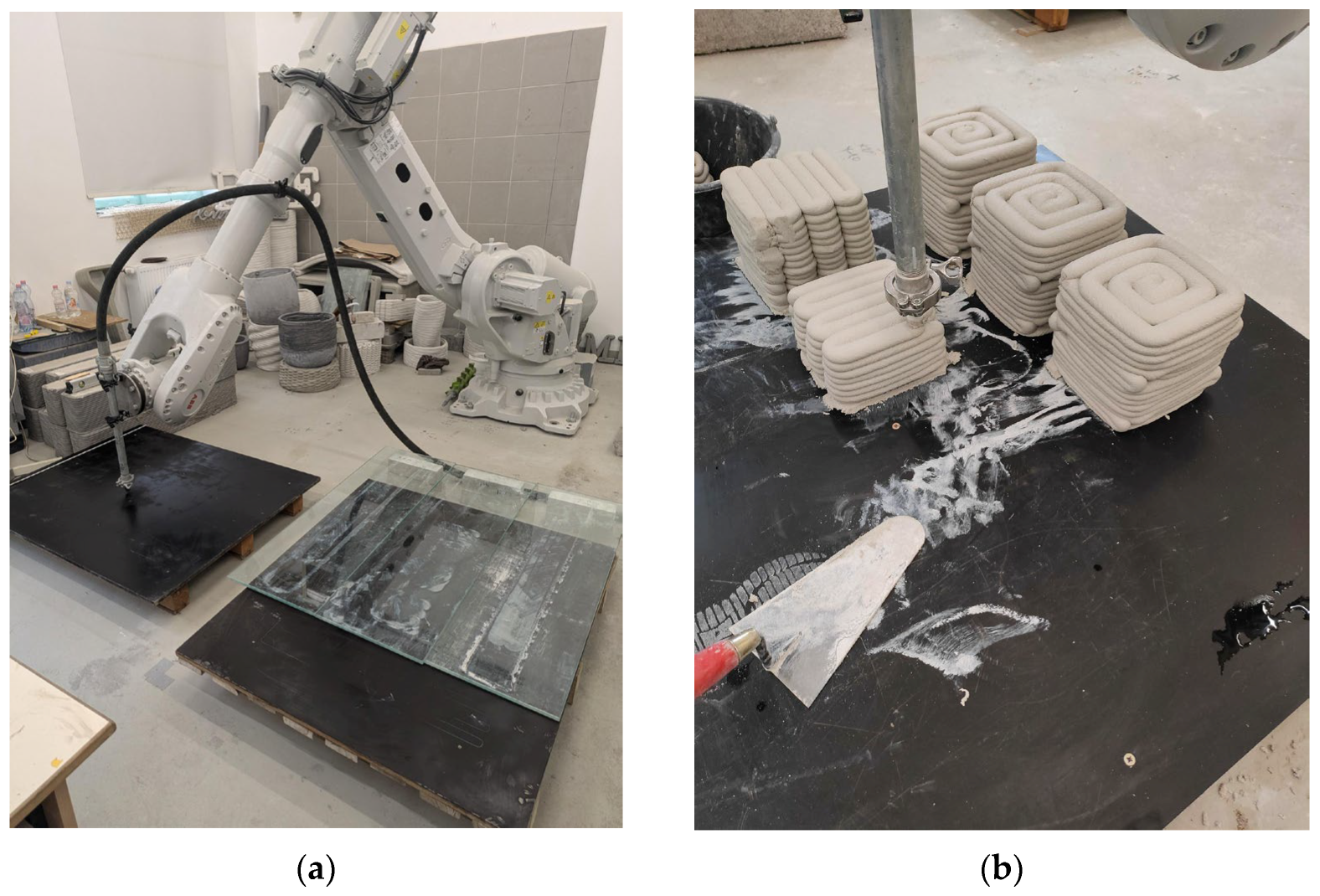
Previous test results were based on percentage dosages, e.g., 30 or 50% replacement of coarse aggregate and/or 10 or 15% of fine aggregate. In this case, the focus was on the maximum usable quantity and the strength of the concrete was not considered. The calculations were based on the particle size distribution curves. The actual goal is to use 100% of the demolished and crushed material, so that there is no need to sift out the fine particles, for example. Basically, a one-step crushing process was performed, even though it is not ideal for jaw crushers, for instance, because it produces flatter particles than the two-step process [52], but there is little chance that the two-step process will be carried out at the construction site. However, if the particle size remains larger than 32 mm, it is removed and crushed again, because a maximum particle size limitation is necessary. For other parts, crushing is carried out in one step. Crushing, especially repeated crushing, also produces fine particles, which are often not used in new concrete, even though fine particles are replaced in other ways due to the reduction in the amount of cement. Storing, transporting, and categorizing fine particles is much more difficult than coarse particles, so it is particularly important to use them locally. Usually, the difficulty lies in the size of sand (0.125–2 mm). Materials were selected that are found in wall or slab structures. Concrete was divided into normal and high-strength (typically precast) concrete because it is assumed that there is a way or a reason to separate monolithic and precast parts (e.g., this was carried out during the demolition of the high-rise building in Pécs) [53]. 3D printed concrete was also added in line with the latest trends. There is no demolition waste from this yet, but manufacturing waste and experimental material are available, and their significance as waste will increase in the future, as it is expected to appear first in temporary structures, which are likely to be demolished sooner than their usual lifespan. As a 3D printed concrete SIKA dry mix (SIKA Sikacrete 751 3D, SIKA AG, Baar, Switzerland) was used for experimental printing (Figure 1a,b), with different water dosages [54].
In the case of fired clay bricks, a lifespan of 100 years was assumed, and the bricks were separated according to their color (red or yellow). This can be easily determined by visual inspection. In this case, the strengths show a very large variation, and it is not expected that they can be separated at a construction site. These demolition products typically contain mortar and, in some places, plaster. Modern bricks were chosen as the third sample. These were not yet demolished, and since they had not yet been built in, samples were taken and tested in the laboratory with mortar surface. As a result, these were also contaminated with mortar. These bricks were stored outdoors for several years to expose them to environmental influences. They were even more exposed to them than the ones that were installed, but they are only seven years old.
Three types of concrete were separated:
  • Normal-strength concrete, with compressive strength ranging from C20/25 to C50/60 classes, samples received from eight different projects—marked with N.
  • High-strength concrete C55/65 or higher compressive strength classes (from three different projects)—marked with H.
  • Concrete from 3D printing (manufacturing waste or test or example specimens were tested from samples collected over six months and then stored for at least six months)—marked with 3D.
Three types of brick were separated:
  • Old (earlier than building year 1925), red marked with BR (from two buildings in Budapest).
  • Old (earlier than building year 1925), yellow marked with BY (from two buildings in Budapest).
  • Modern (produced in 2018) red (stored outdoors for seven years, but never installed, and examined with mortar)—marked with BM.

3. Results

3.1. Sieve Curves

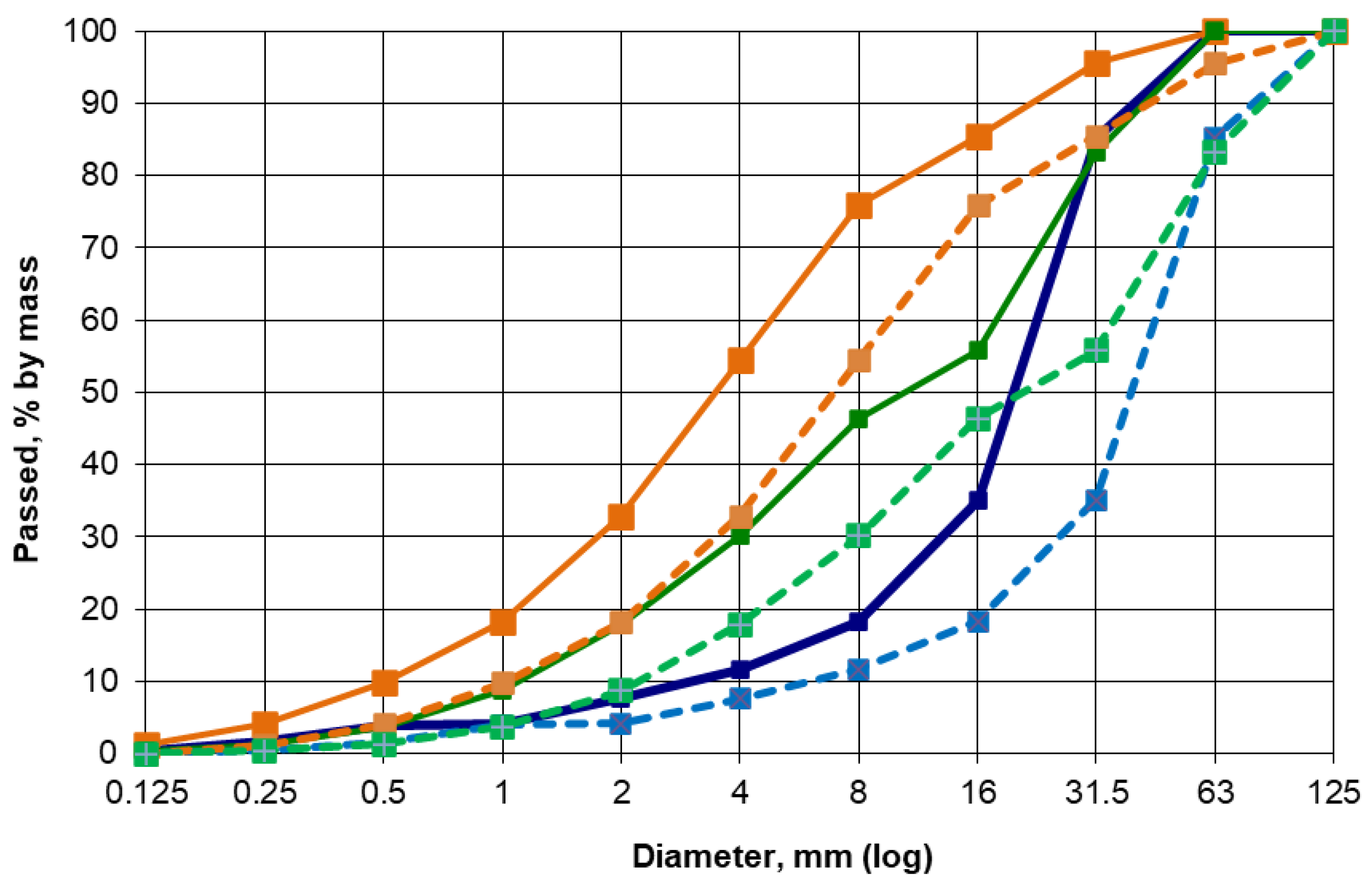
The concrete and bricks were crushed with a jaw crusher and an impact crusher. After applying the two methods, there was a slight but significant difference in the particle distribution curves. Figure 2 shows the particle distribution curves after the crushing of concrete types.
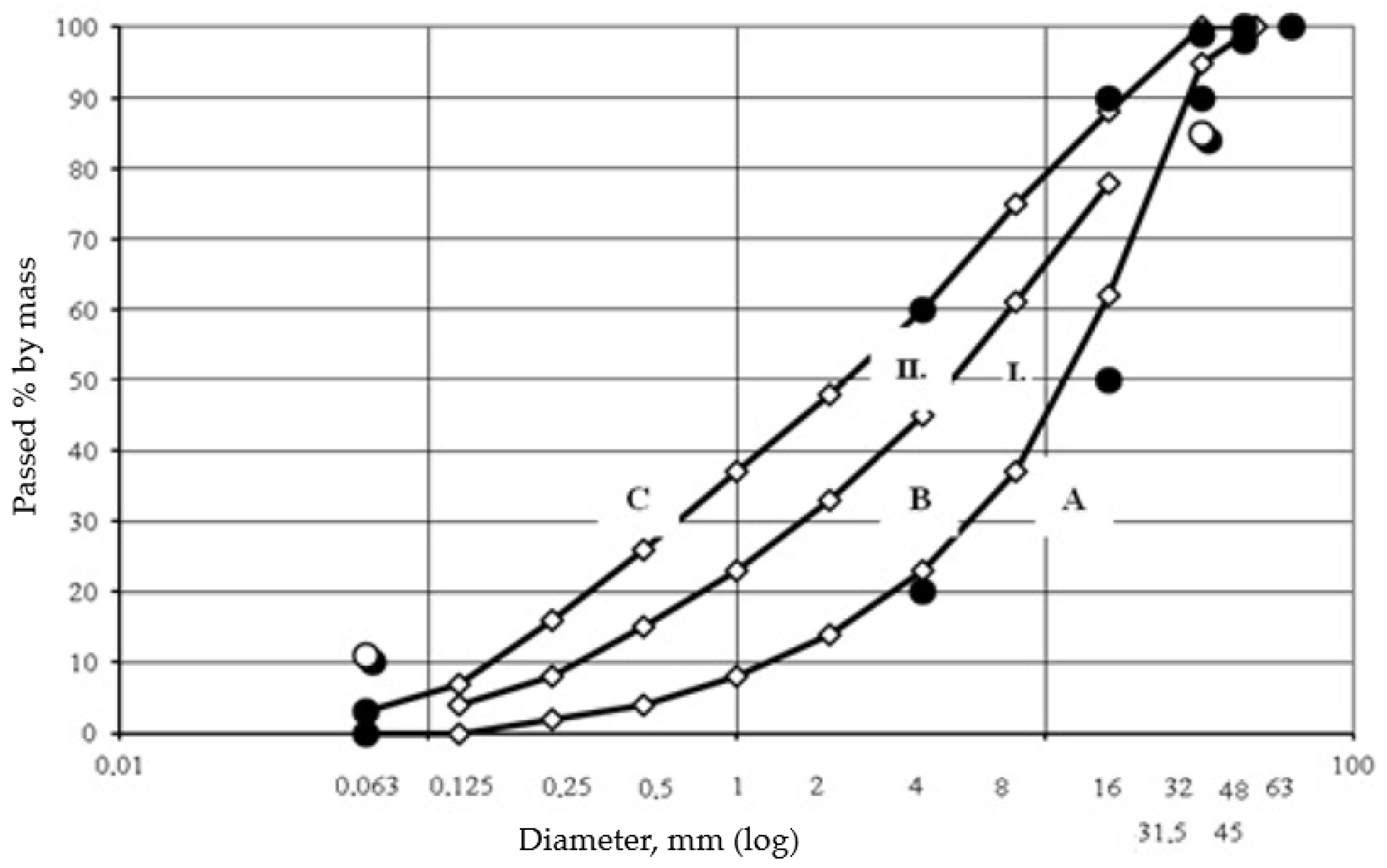
The design, therefore, involved designing the particle size distribution diagrams. The criteria for aggregates used in concrete production are based on MSZ 4798, which is EN 206 + Hungarian NAD. Figure 3 shows the standard curves with more details than the EN specified points. Between the A and B or B and C curves, the particle size distribution is ideal for a concrete mixture. Between A and C, the particle size distribution is usable, and under A or over C, it is not suggested.
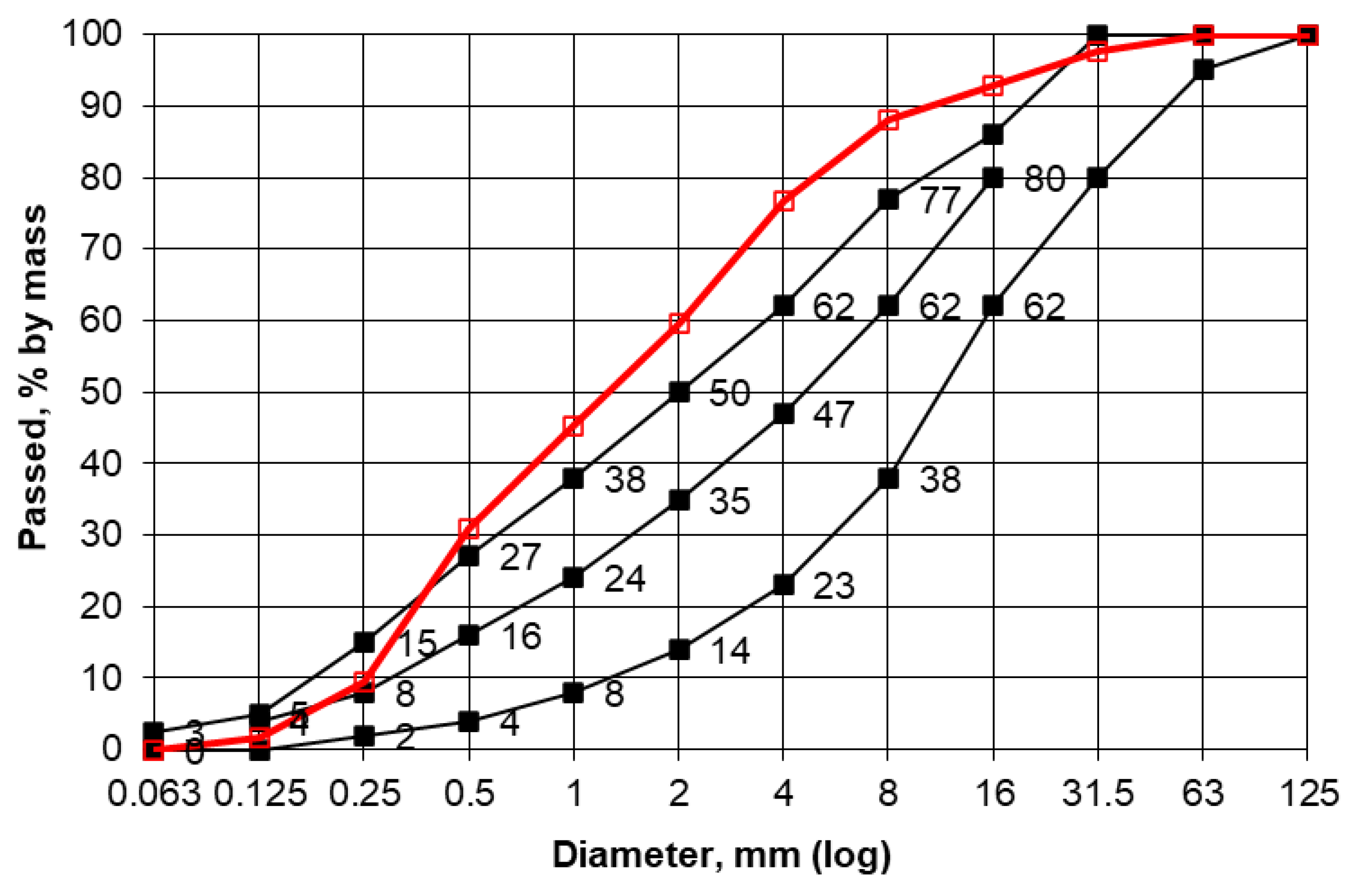
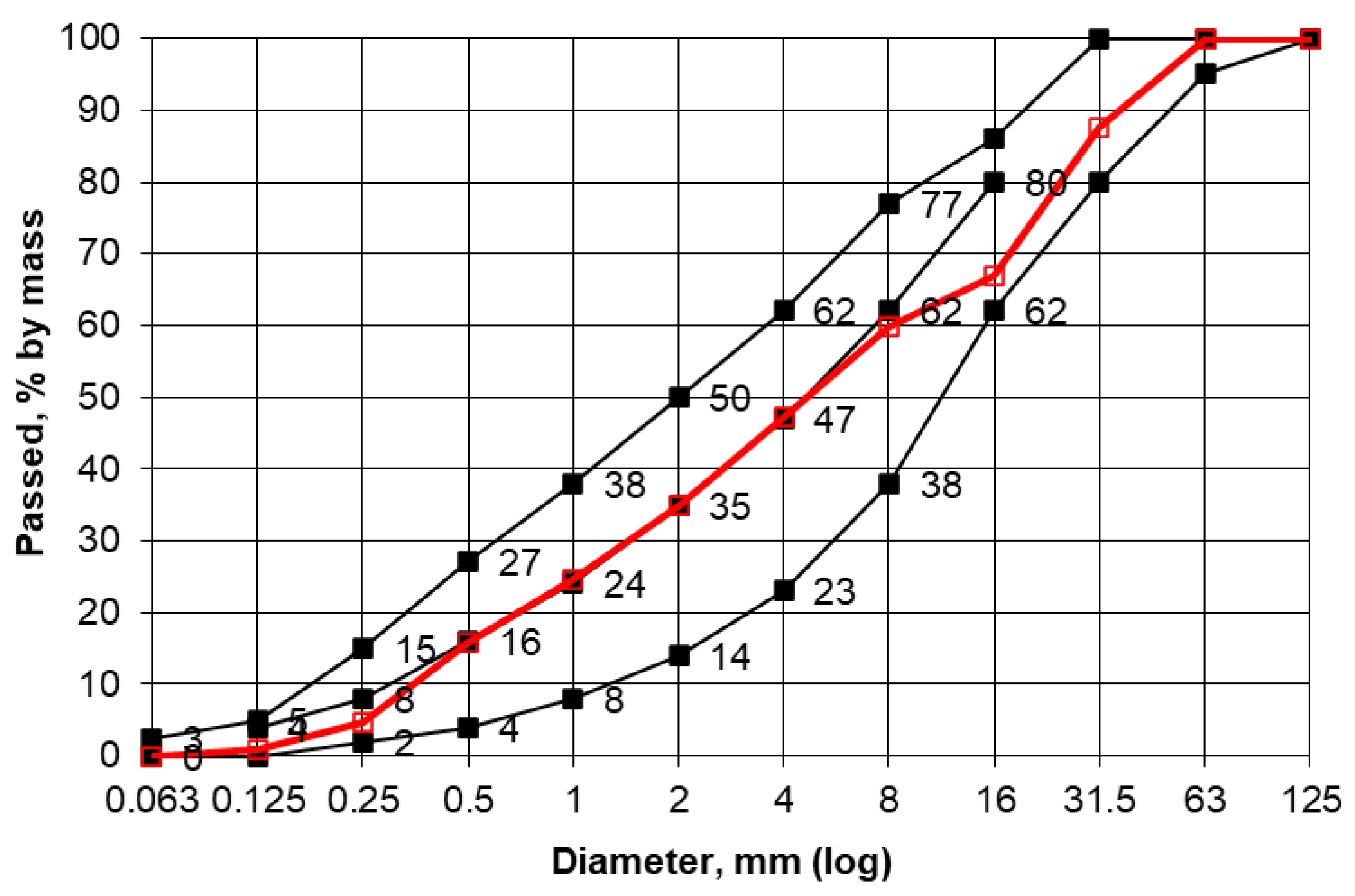
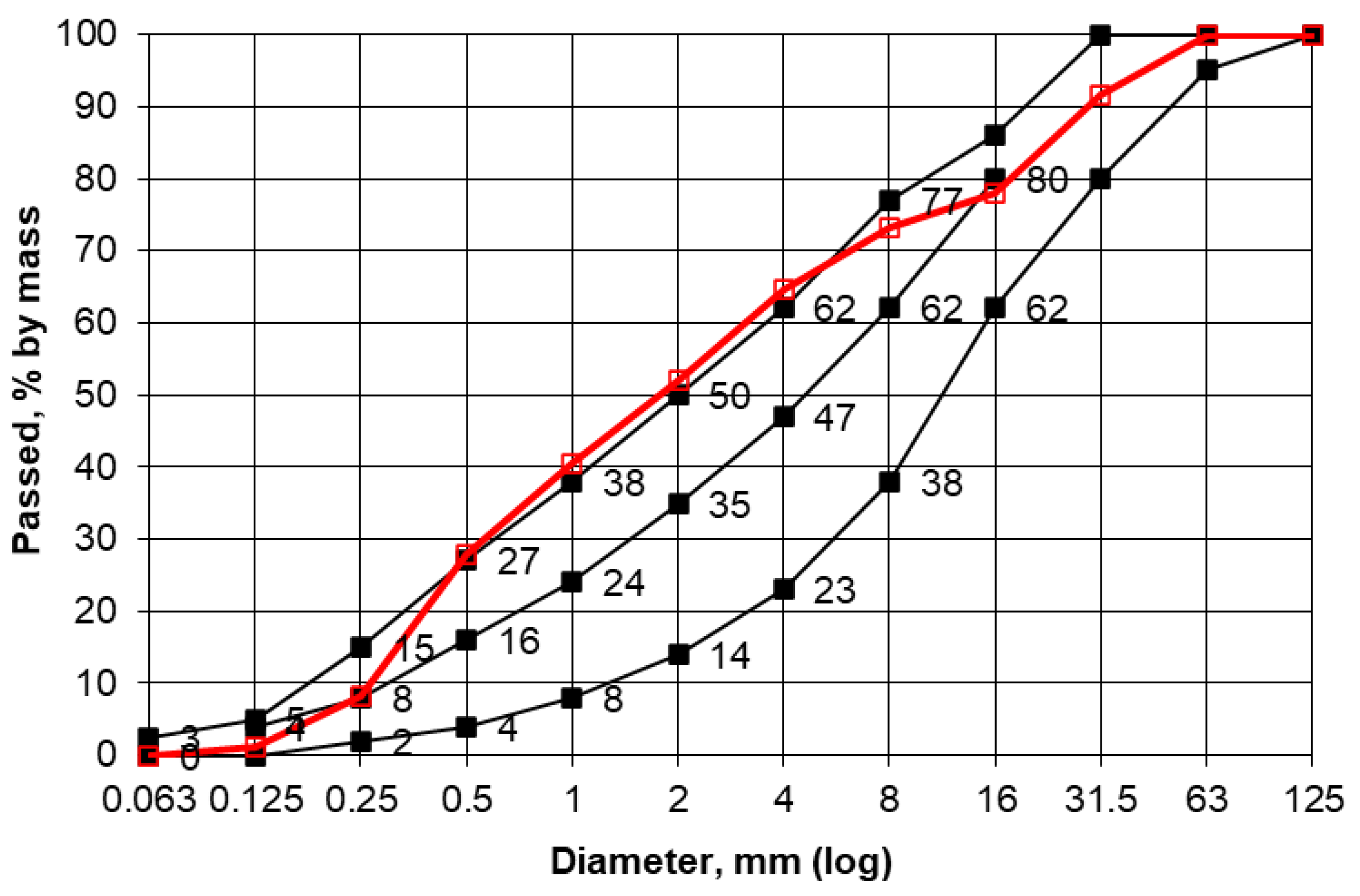
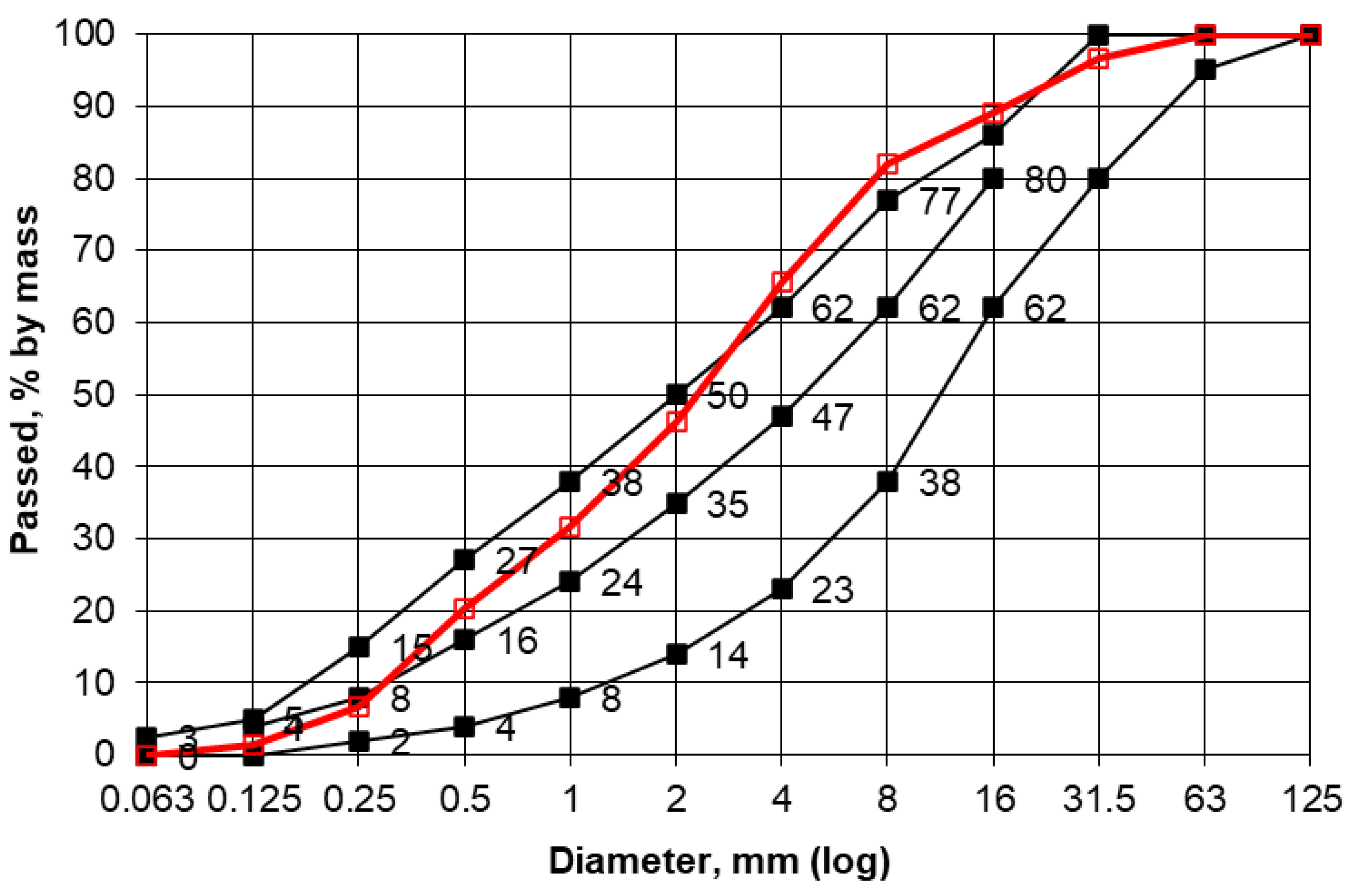
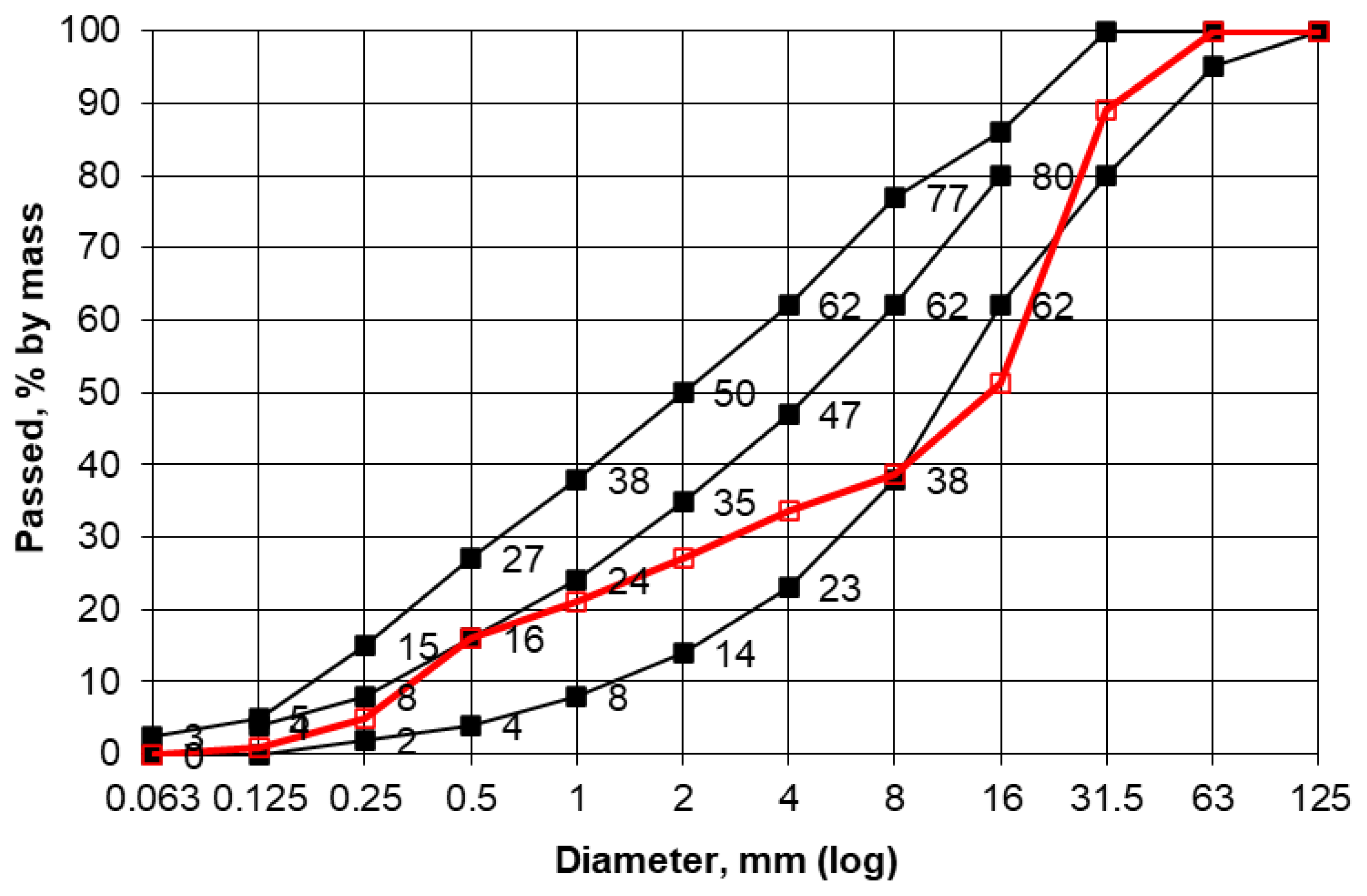
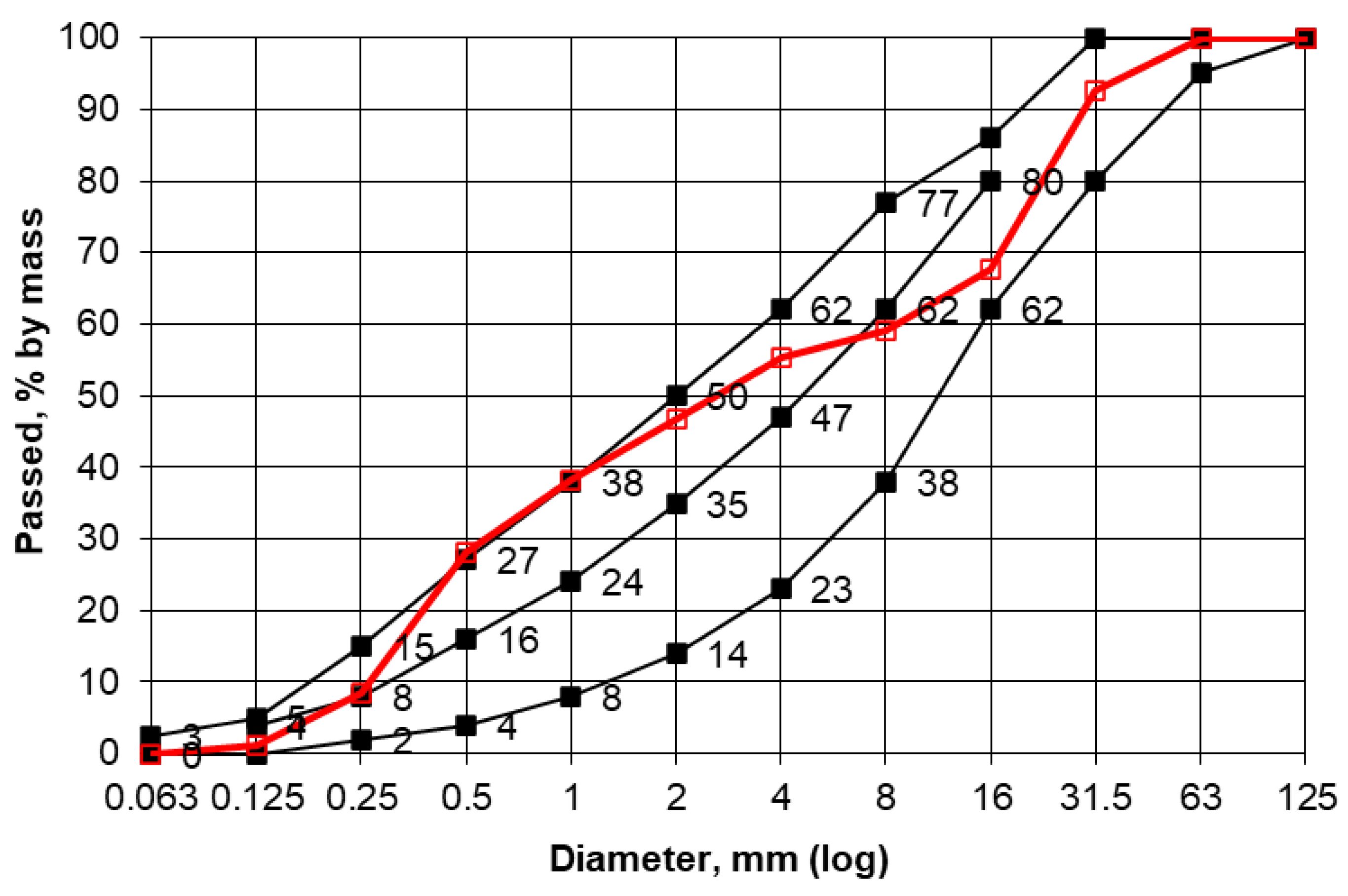
Due to the comparability of the mixtures, two dosages were decided on, even though the curve was not perfect everywhere. All mixtures could be prepared and compacted. The maximum dosage that was specified in the standard grain distribution according to MSZ 4798 in all six cases was 75% crushed waste material (0–32 mm) and 25% natural river quartz sand (0–4 mm). A 50-50% composition was also chosen for comparison. More was not possible, and less was not worth considering. Figure 4 shows that crushed high-strength concrete with a jaw crusher makes an ideal particle size distribution curve when mixed with 75% crushed concrete and 25% river sand. The 50% + 50% mixture (Figure 5) is much less favorable from this aspect. In the case of normal-strength concrete aggregate, both cases are worse, but still within acceptable limits (Figure 6 and Figure 7). Figure 8 and Figure 9 show 3D-printed concrete, where both ratios are within the ideal usable range (between standard limit curves according to the MSZ 4798, Figure 3). This may also explain the subsequent compressive strength results.
In terms of particle size distribution, there is no relevant difference between the two types of machines, jaw, or impact. The material of the aggregate has a higher effect (Figure 2). This was important to clarify because the particle shape is different. This has already been demonstrated in previous studies on natural rocks, such as limestone [55]. These results showed that, in the case of jaw crushers, the particle size distribution and crushing resistance (Los Angeles index) are lower than in the case of impact crushers. However, the optimization of particle size distribution was not examined. This is how the issue is currently approaching.
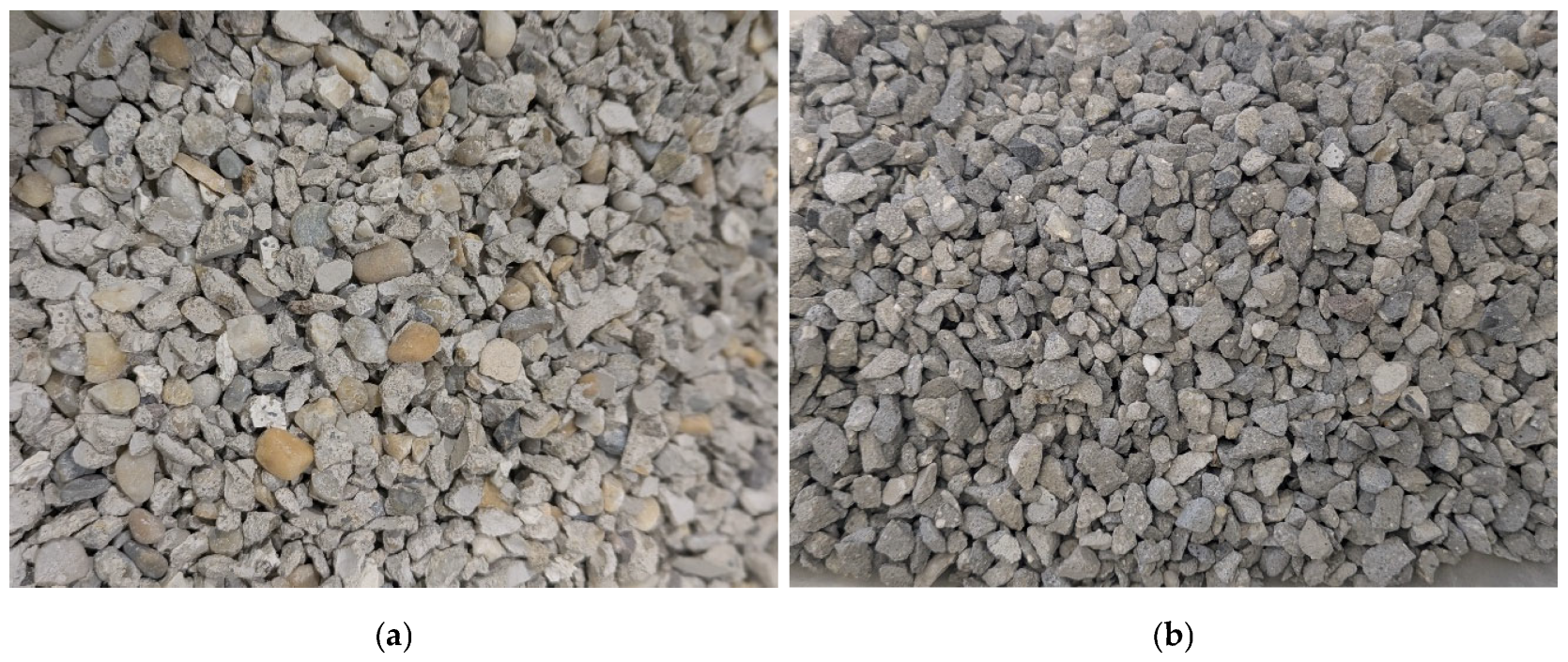
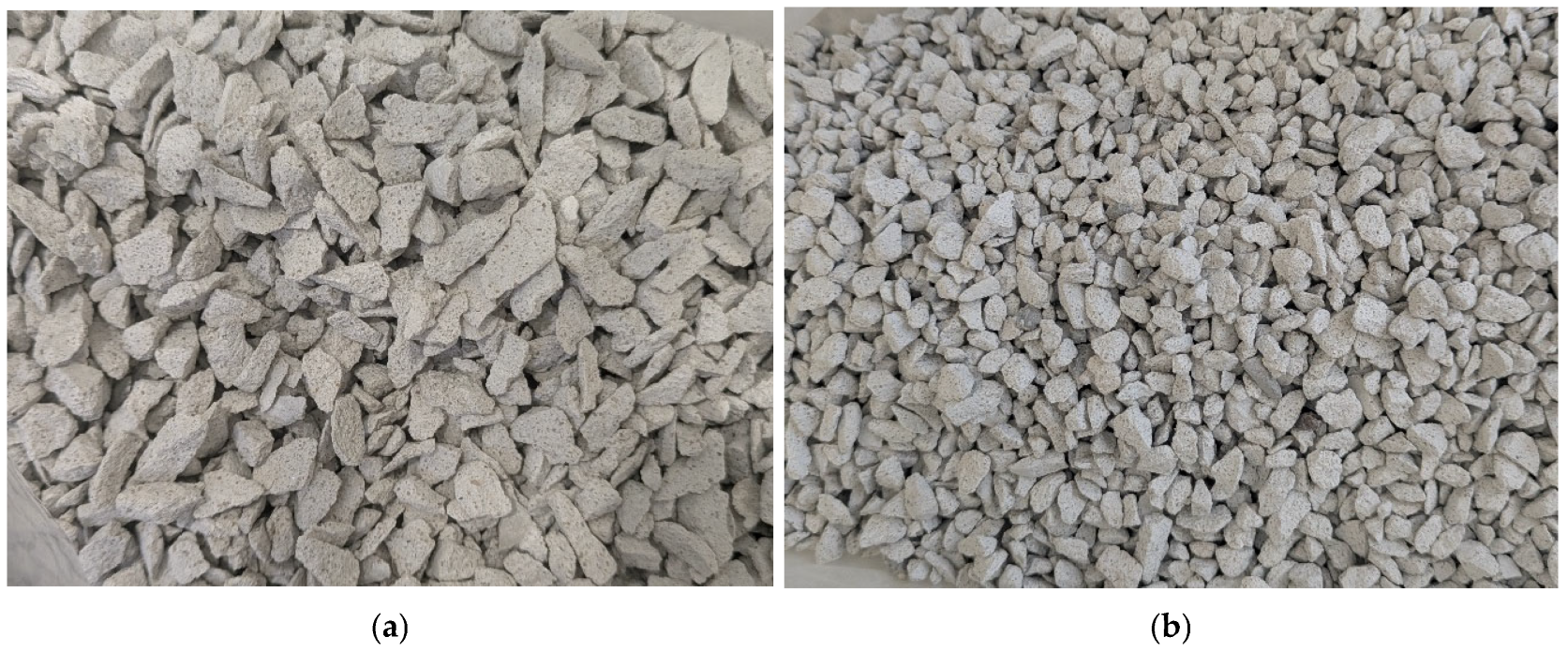
The different grain shapes are not equally significant differences. This is barely noticeable in the case of high-strength concrete (Figure 10a,b), but significant in the case of 3D printing (Figure 11a,b). This was the most visible difference between the two.
The particle size distribution curves were also prepared for brick aggregates. These also developed very similarly to those with concrete aggregate (Figure 1, Figure 2, Figure 3, Figure 4, Figure 5 and Figure 6), but when brick aggregate was used, the curves for all mixtures remained between the A and C boundary curves (Figure 3).
The most accurate solution for determining the distribution would be to calculate the volume percentage, but in this case, further tests would be necessary, which would increase the cost and slow down the process without really improving accuracy, as the quality of the crushed concrete and clay brick materials varies greatly. Therefore, this will not be carried out at this stage. At the end, the concrete was evaluated based on its density.
Cubes were made with an edge length of 100 mm so that as many specimens as possible could be produced from the limited amount of available aggregate. In addition to the standard 28-day tests, tests were also conducted at 90 days of age, because post-hardening (increase in compressive strength between 28 and 90 days) is more significant in the case of porous aggregate than in the case of normal aggregate. This test age is also common for waste-based concrete (although it is mainly used for cement replacements and/or lightweight concrete).
The aggregates absorb water because they are porous. The porosity of recycled aggregates is generally higher than that of normal natural aggregates, but lower than that of artificial lightweight aggregates. In such cases, the water absorption of the aggregate modifies the consistency of the fresh concrete, but this can be adjusted by pre-saturation and/or superplasticizers, and then it does not interfere with workability. The water-porous aggregates even have an internal curing effect [56]. Dry mixing of porous aggregate is not feasible because if the consistency is too stiff, the concrete cannot be worked with. The general recommended method is saturation for 24 h. This causes several problems. In practice, it cannot be implemented properly, as it is space- and time-consuming and expensive. But the technical problem is greater. If the surface water is not removed (there is no sufficiently precise and effective method), the water-cement ratio (w/c) increases. If pre-calculated water is added to the mixture as excess water, the actual water content, which varies, must be examined. Controlled water dosing with a pre-mix test before mixing eliminates this and is simpler and faster than measuring water content. These were not measured in advance, but a pre-mix test was used. This can also be easily carried out on the construction site. A total of 10 L of aggregate mixture were prepared, and water was gradually added to the aggregate while measuring the amount added. This was carried out until the aggregate had absorbed all the water. The last dose was when water appeared at the bottom of the mixer, and this last dose was considered as mixing water (subtracting it from the amount of calculated water amount). The test was repeated twice, and the average value was calculated. This is a simple and quick method that can be used on the construction site and does not affect the actual water content of the crushed aggregate, nor does it require standard measurements over several days. Also, a superplasticizer (SIKA Viscocrete 4025, SIKA AG, Baar, Switzerland) was used to achieve class F2 consistency and workability. The total water absorption is not important, only the amount that would be absorbed from the mixture during the mixing and working process, as this modifies consistency and compactability. The water in the porous aggregate is slowly released during hydration. It does not increase the porosity of the cement matrix, but has an internal curing effect [56,57]. Table 2 shows the actual water absorption values measured on air-dry material for information purposes. The dosage was carried out in 0.5% increments. Air-dry material was used, but the water content of the aggregate is generally not zero and is rarely air-dry due to outdoor storage. This method eliminates this problem, too.
Constant experimental parameters are as follows:
  • Cement type
  • Cement content
  • Water–cement ratio.
Variable experimental parameters are as follows:
  • Type of recycled aggregate (Table 2)
  • Amount of recycled aggregate: 75% and 50%
  • Type of crusher: jaw (J) and impact (I).
Test ages are as follows:
  • 28 days
  • 90 days.
Thus, in addition to the reference concrete 1 was planned (Table 1) + 3 concrete waste + 3 brick waste, ×2 crushing machine × 2 test ages for crushed aggregate. BR-J 50 mixtures and BY-I 50 90-day mixtures could not be prepared because there was not enough waste material (Table 3).

3.2. Compressive Strength

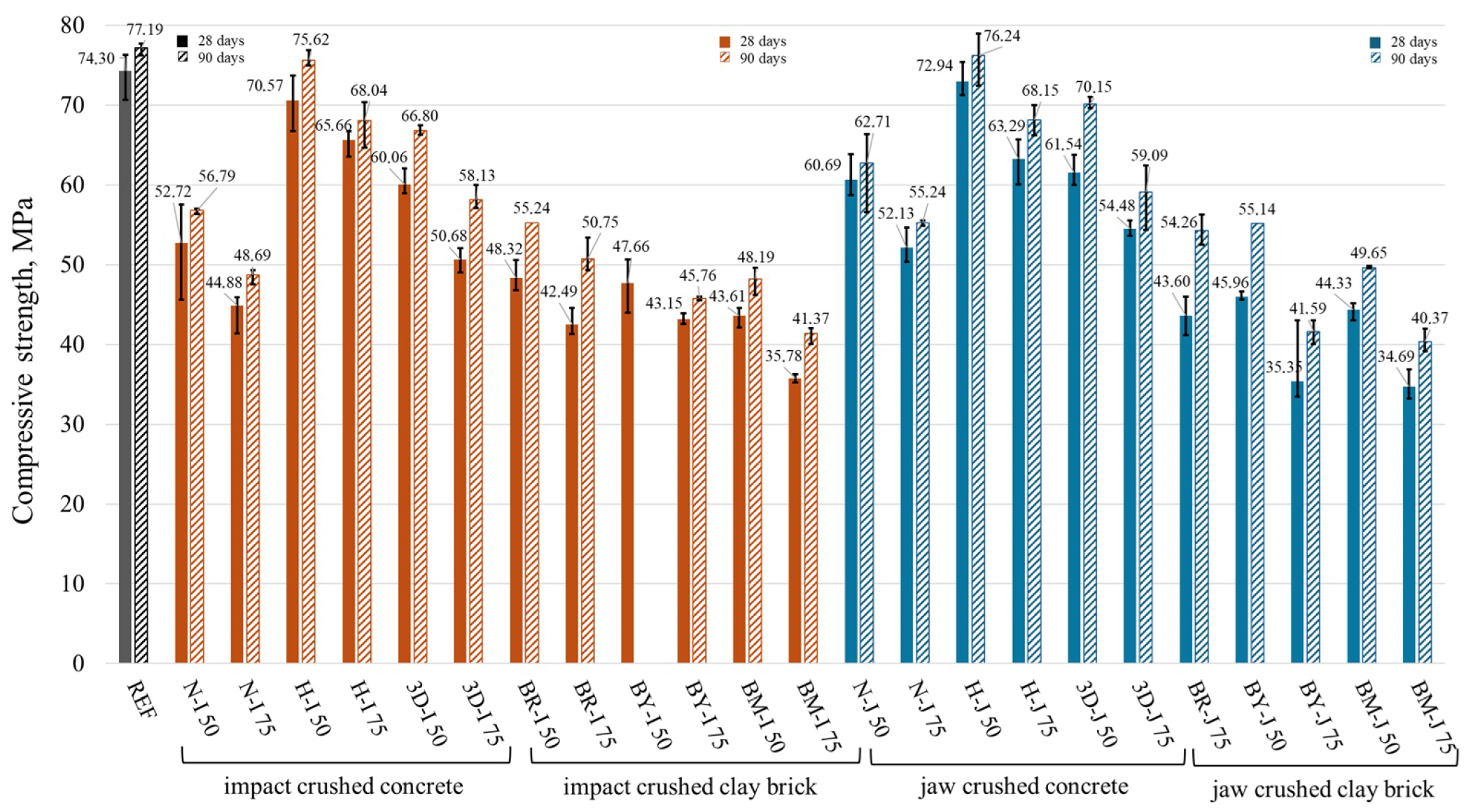
The test results are shown in Figure 12. The compressive strength test results show that the use of high-strength concrete waste aggregate achieves almost the same strength values as the use of natural river quartz gravel and quartz sand. In the case of using 50% replacement with an impact crushed high-strength concrete, with total aggregate use of 50% of the waste aggregate material + 50% 0–4 mm quartz sand (H-I 50 = 70.57 MPa), 95% of the compressive strength of the reference concrete (REF = 74.30 MPa) was achieved in 28 days. At 90 days, this was only 2%. When using a jaw crusher (H-J 50 = 72.94 MPa), the difference was 2% at 28 days and 1.5% at 90 days. Concrete strength class C55/65 was achieved according to the calculation of Eurocode 2 [58] or Model Code2020 [59]. Increasing the amount of waste aggregate used by 50% (from 50% to 75%) caused a 7–15% decrease in compressive strength. Since the strength of the concrete obtained in this way is generally more than sufficient, it is worth increasing the use of waste aggregate to this level.
In the case of concrete with mixed crushed normal-strength concrete waste aggregate, the compressive strength decreased significantly compared to the reference mixture. In the case of impact crusher usage, there was a 29% decrease in compressive strength, and in the case of jaw crusher usage, there was 18% decrease in compressive strength at 28 days of age. The concrete can be classified as strength class C30/40 or C35/45, which are used in the strength classes most for load-bearing elements.
The cement content and water-cement ratio ensure compliance with environmental classes. In this case, too, a 50% increase in waste aggregate causes only a slight 15% decrease in compressive strength, with a strength class of approximately C25/30 achievable. In this case, too, the post-hardening is greater than in the reference concrete, with a more favorable ratio at 90 days of age.
The same mixtures and tests were also carried out on waste from 3D-printed concrete. Here, the parent concrete has a lower maximum aggregate size (MAS = 1 mm) and higher cement content than the original concrete, which was much more homogeneous than the previous two categories. In this case, 17% and 19% reductions were observed in the case of 50% aggregate replacement. This falls between the use of normal and high-strength parent concrete. Increasing the aggregate content to 75% also resulted in a further 12–15% reduction in compressive strength. This was roughly the same for all three types of concrete.
In all three cases, the concrete made with jaw-crushed waste concrete aggregate resulted in higher compressive strength compared to mixes using impact-crushed waste concrete aggregates, regardless of the replacement quantity.
When crushed waste brick was used as concrete aggregate, the resulting compressive strengths were lower than those achieved with crushed waste concrete mixtures. In a real structure, the strengths can vary greatly. In this case, the 100- year to 150-year-old bricks were sorted only by color. There was no relevant difference between yellow and red bricks, but the yellow ones resulted in slightly lower concrete strength. Crushed modern brick granules achieved even lower compressive strength values than old bricks. All brick aggregate mixtures reached strength class C20/25 at 28 days. Here too, the post-hardening was higher than the reference, typically around 15% at 90 days, but higher values also occurred (20–24%). These significant post-curing strengths are beneficial for safety after the certification period. In the future, it may be worth considering different age requirements for certification in such cases.
Based on Figure 12, it can be concluded that the use of a jaw crusher is more ideal in terms of compressive strength. The density of the recycled aggregates varied.
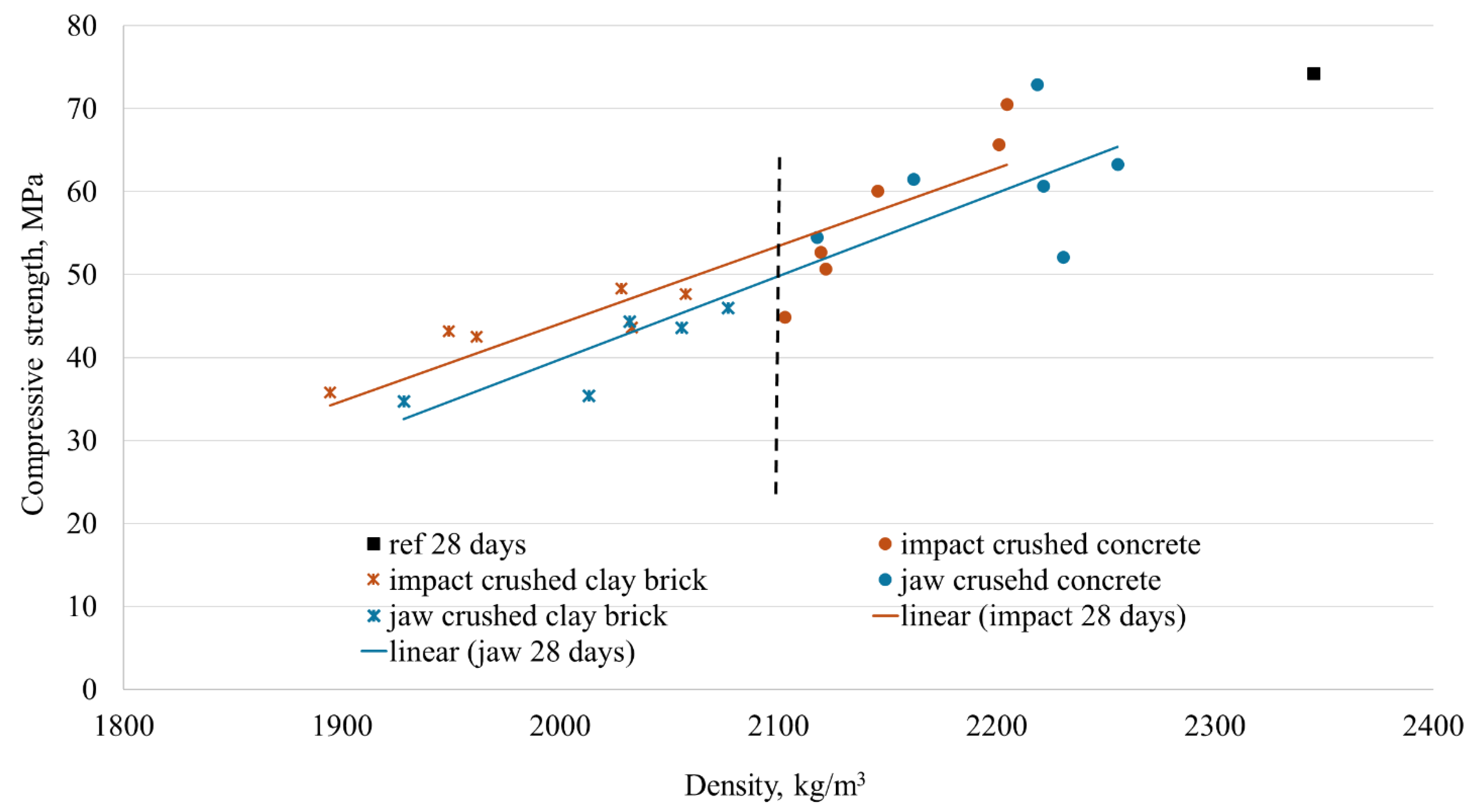
Therefore, it is useful to look at compressive strengths as a function of concrete density and divide them into two groups: jaw (blue) and impact (orange) in Figure 13. This clearly shows that the density of the concretes obtained with crushed waste aggregates is lower than that of the reference concrete. The relationship between concrete density and compressive strength can be well described by a linear function. Several functions were tested for fitting the points, but they yielded very similar R2. There were cases where the difference was greater, e.g., for the impact crusher, 90 days. The R2 values ranged from 0.78 to 0.86, but this is not a relevant difference, and it was not worth deciding based on this. This is particularly noticeable in the case of jaw crushers. The R2 values differed only slightly in the case of linear (0.78), exponential (0.76), logarithmic (0.77), and second-degree polynomial (0.78) functions. The reference value (0% replacement) best fits the linear function. That is why the linear function was chosen. This is very favorable, as it can be inferred from the density of (fresh) concrete. This shows that there is no significant difference in strength when viewed as a function of concrete density. The continuation of this line approximates the reference concrete. The figure also clearly shows that the density of crushed waste brick aggregate concrete is less than 2100 kg/m3, while that of concrete aggregate concrete is always above this value. The impact crusher points (orange) are typically above the jaw (blue) crusher points, so this result is consistent with previous literature data. Only the method used to replace the aggregate was different (Figure 13).
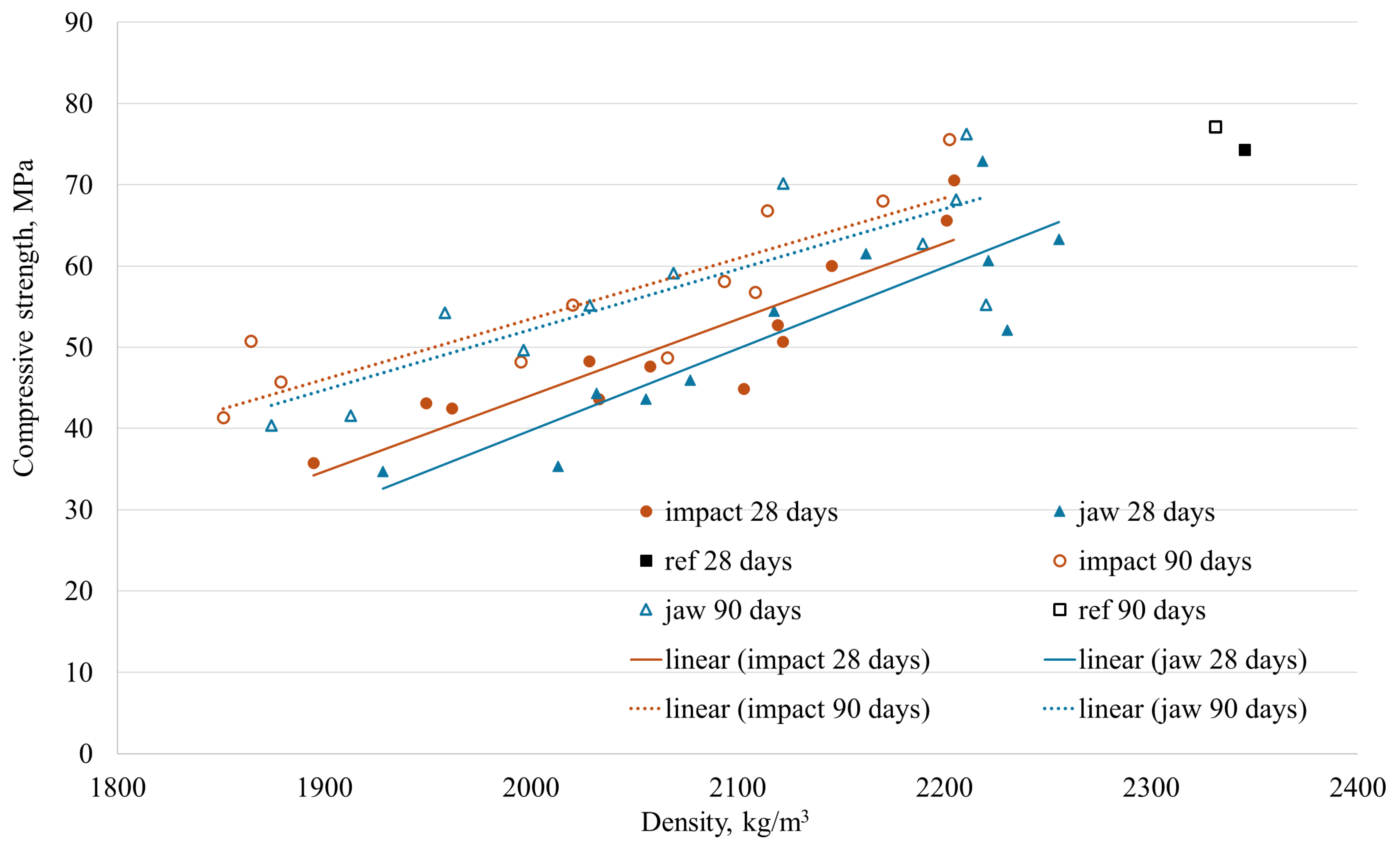
Figure 14 shows the effect of age on strength. It can be seen here that concrete with lower density has greater post-hardening. It can also be concluded that the effect of the crushing machine is significantly reduced. In practice, therefore, the type of equipment used is not particularly important in terms of the compressive strength of concrete. It may therefore be worthwhile to measure the energy required for crashing and then decide based on this. We can see that the reference point (black) also fits on both lines (28 days and 90 days). This is also a very ideal case.

4. Discussion

The goal is to use 100% of construction and demolition waste CDW, not to replacement 100% of the natural aggregate. The water absorption of 100% replacement with porous aggregate would be too high and difficult to handle technologically. The adjustment of fractions below 4 mm is an important part of concrete technology design. Using 50% CDW + 50% river quartz sand in the total quantity without sorting is a sustainable ratio and more favorable than what the standard currently recommends, which is to replace 30% of the coarse fraction. By adhering to these ratios, the compressive strength can be more easily estimated based on the calculated density. Of course, as with any other concrete, it must be verified by trial mixing and cube crushing tests.
In the case of crushed waste concrete and fired clay elements, the entire recycled aggregate quantity was usable, but the recommended particle size distribution curves for concrete technology can be achieved by adding sand fraction (0–4 mm). Both the 50% recycled aggregate + 50% natural river quartz sand ratios and 75% recycled aggregate + 25% natural river quartz sand ratios are suitable for concrete production, and at least the structural concrete strength category (minimum C20/25 strength class) was achievable with each. The best mixture (high-strength concrete with jaw crusher in 50% replacement) was only 5% lower than the reference mixture.
Among the waste concrete aggregates, the lowest strength was achieved with normal concrete, where concrete classes between C20/25 and C30/37 were available. The 3D concrete aggregates clearly provided better results, with C30/37-C45/55 and high-strength concrete aggregates enabling us to produce C45/55-C50/60 strength class concrete.
Concrete containing crushed waste materials as aggregate hardened more slowly than reference concrete made with the same cement paste containing quartz gravel and quartz sand. Normal concrete usually reaches 95% of its final strength at 28 days. In the actual experiment, the 90-day strength of the reference concrete was 3.8% higher than at the age of 28 days. When using crushed waste normal or high-strength concrete aggregate (in 50–75% replacement), this post-hardening effect increased by 3–9%. When using crushed waste 3D-printed concrete aggregate, this post-hardening increased significantly to 10–15%. In the case of crushed waste brick aggregate, it was also higher, and in this case, the dosage (50% or 75% replacement) was also very important, whereas in the case of waste concrete, this was not relevant. With a 50% brick dosage, the post-strengthening was between 6% and 20%, and with a 75% dosage, it was between 12% and 24%.

5. Conclusions

In this experiment, the effect of different concrete and masonry clay brick waste aggregates on compressive strength and the density–strength relationship was examined and compared against the currently recommended standards. The basic assumption was that a building (or part of a building) in a built-up environment would be demolished to build a new one (change of function, increase in load-bearing capacity, or expansion). The reason for demolition was not chemical, frost, or fire damage, or other durability problems. The demolished material is concrete or fired clay masonry, or slab elements. Aerated concrete, lime sand bricks, and natural stone are not included in the area under investigation. A minimum number of tests or product identification was conducted (2–3 destructive tests, 5–10% non-destructive testing, and masonry unit type). Buildings intended for demolition are over 50 years old, often 100–200 years old. There is no consistency in quality in these buildings, but too much testing makes economic use impossible. Therefore, a simple and inexpensive method is needed. Crushing and use took place on site, and waste to be rebuilt was not removed from the construction site. They were demolished specifically for this purpose, taking care not to mix them with anything else. This required minimal preparation. The inspection covered the compressive strength of the concrete. If other properties are also specified, these must also be checked, but it is not recommended to install them in such a place. The goal of the experiments was to use as much CDW as possible. The goal was not to find the best concrete mixture, but concrete with sufficient strength and the most efficient use of waste. To this end, the particle size distribution curve was used. Two machines were tested: a jaw crusher and an impact crusher. Three distinct types of concrete aggregate and two types of brick were used. The results provide approximately usable curves and two limit dosing values (50 + 50% and 75 + 25% CDW + natural quartz sand), where strength can be well controlled, density and strength can be considered linear and can be calculated back from normal concrete values. A maximum of 2–3 test mixes can be planned. This is a higher value than that recommended by the current standard (30%) and can be incorporated as special concrete with the designer’s responsibility. In addition to the properties of solid concrete, the treatment of porous aggregate was also tested. An extra water dosing method (pre-mix method) that can be easily applied on site is presented, which stabilizes the consistency and does not reduce the compressive strength.
When examining the compressive strength of concrete as a function of density, a much simpler relationship can be observed. The compressive strength is linearly dependent on the density of the concrete for all tested aggregates. At 90 days of age, the effect of the difference between the two crushing machines was not significant, especially at 90 days of age.
Based on this, the most important conclusion is that, using a jaw or impact crusher and the entire spectrum of concrete or fire clay bricks crushed on site, ideal concrete mixtures can be produced using 50-50% and 75–25% crushed waste aggregate and natural river quartz sand. In all cases, only visibly intact concrete and bricks must be used in this way. This excludes materials that have been damaged by frost or fire, or that have been permanently exposed to sulfate or chloride water, e.g., in foundations. These materials require further testing before they can be recycled. Special cases may be further investigated.
Another factor to consider is that crushing of concrete or bricks also requires energy (although some of this is necessary anyway due to demolition), so after learning about concrete technology, the next step would be to examine how much energy different crushing machines require. Based on these, perform an environmental evaluation. Another important step is to replace cement and aggregate in parallel to check their effects and limitations in the future for these simplified use cases.

Funding

This research was funded by the Hungarian Scientific Research Fund, grant number OTKA K 146724.

Data Availability Statement

The original contributions presented in this study are included in the article. Further inquiries can be directed to the corresponding author.

Acknowledgments

Thanks to Anna Szijártó for her help in the laboratory work. Thanks to András Biró for his help in reviewing the paper.

Conflicts of Interest

The authors declare no conflicts of interest.

References

  1. Prasittisopin, L.; Tuvayanond, W.; Kang, T.H.-K.; Kaewunruen, S. Concrete Mix Design of Recycled Concrete Aggregate (RCA): Analysis of Review Papers, Characteristics, Research Trends, and Underexplored Topics. Resources 2025, 14, 21. [Google Scholar] [CrossRef] [Scilit]
  2. Kim, J.; Sovacool, B.K.; Bazilian, M.; Griffiths, S.; Lee, J.; Yang, M.; Lee, J. Decarbonizing the iron and steel industry: A systematic review of sociotechnical systems, technological innovations, and policy options. Energy Res. Soc. Sci. 2022, 89, 102565. [Google Scholar] [CrossRef] [Scilit]
  3. Yang, M.; Chen, L.; Wang, J.; Msigwa, G.; Osman, A.I.; Fawzy, S.; Rooney, D.W.; Yap, P.-S. Circular economy strategies for combating climate change and other environmental issues. Environ. Chem. Lett. 2023, 21, 55–80. [Google Scholar] [CrossRef] [Scilit]
  4. Ige, O.E.; Kabeya, M. Decarbonizing the Cement Industry: Technological, Economic, and Policy Barriers to CO2 Mitigation Adoption. Clean Technol. 2025, 7, 85. [Google Scholar] [CrossRef] [Scilit]
  5. Wu, S.; Shao, Z.; Andrew, R.M.; Bing, L.; Wang, J.; Niu, L.; Liu, Z.; Xi, F. Global CO2 uptake by cement materials accounts 1930–2023. Sci. Data 2024, 11, 1409. [Google Scholar] [CrossRef] [Scilit]
  6. Dandautiya, R.; Singh, A.P. Utilization potential of fly ash and copper tailings in concrete as partial replacement of cement along with life cycle assessment. Waste Manag. 2019, 99, 90–101. [Google Scholar] [CrossRef] [Scilit]
  7. Bentz, D.P.; Hansen, A.S.; Guynn, J.M. Optimization of cement and fly ash particle sizes to produce sustainable concretes. Cem. Concr. Compos. 2011, 33, 824–831. [Google Scholar] [CrossRef] [Scilit]
  8. Borosnyoi-Crawley, D.; Szijártó, A. Experimental Studies on the Use of Perlite Powder from Pálháza as a Cement Replacement Additive in Concrete-Observation. Available online: https://papers.ssrn.com/sol3/papers.cfm?abstract_id=5380647 (accessed on 23 December 2025).
  9. Schneider, M.; Romer, M.; Tschudin, M.; Bolio, H. Sustainable cement production—Present and future. Cem. Concr. Res. 2011, 41, 642–650. [Google Scholar] [CrossRef] [Scilit]
  10. Borosnyói, A.; Szijártó, A. Metakaolin vizsgálata cement kiegészítő anyagként a k-érték elve szerint. Építőanya-J. Silic. Based Compos. Mater. 2016, 68, 40–44. [Google Scholar] [CrossRef] [Scilit]
  11. Borosnyói, A.; Kara, P.; Mlinárik, L.; Kase, K. Performance of waste glass powder (WGP) supplementary cementitious material (SCM)—Workability and compressive strength. Építőanyag 2013, 65, 90–94. [Google Scholar] [CrossRef] [Scilit]
  12. Camargo-Pérez, N.R.; Abellán-García, J.; Fuentes, L. Use of rice husk ash as a supplementary cementitious material in concrete mix for road pavements. J. Mater. Res. Technol. 2023, 25, 6167–6182. [Google Scholar] [CrossRef] [Scilit]
  13. Endale, S.A.; Taffese, W.Z.; Vo, D.-H.; Yehualaw, M.D. Rice Husk Ash in Concrete. Sustainability 2023, 15, 137. [Google Scholar] [CrossRef] [Scilit]
  14. Prusty, J.K.; Patro, S.K.; Basarkar, S.S. Concrete using agro-waste as fine aggregate for sustainable built environment—A review. Int. J. Sustain. Built Environ. 2016, 5, 312–333. [Google Scholar] [CrossRef] [Scilit]
  15. He, J.; Kawasaki, S.; Achal, V. The Utilization of Agricultural Waste as Agro-Cement in Concrete: A Review. Sustainability 2020, 12, 6971. [Google Scholar] [CrossRef] [Scilit]
  16. Turk, O.; Yehia, S.; Abdelfatah, A.; Elchalakani, M. Sustainable concrete production: The potential of utilizing recycled waste materials. J. Build. Eng. 2024, 98, 111467. [Google Scholar] [CrossRef] [Scilit]
  17. Xing, W.; Tam, V.W.; Le, K.N.; Hao, J.L.; Wang, J. Life cycle assessment of recycled aggregate concrete on its environmental impacts: A critical review. Constr. Build. Mater. 2022, 317, 125950. [Google Scholar] [CrossRef] [Scilit]
  18. Imtiaz, L.; Kashif-Ur-Rehman, S.; Alaloul, W.S.; Nazir, K.; Javed, M.F.; Aslam, F.; Musarat, M.A. Life Cycle Impact Assessment of Recycled Aggregate Concrete, Geopolymer Concrete, and Recycled Aggregate-Based Geopolymer Concrete. Sustainability 2021, 13, 13515. [Google Scholar] [CrossRef] [Scilit]
  19. Hasheminezhad, A.; King, D.; Ceylan, H.; Kim, S. Comparative life cycle assessment of natural and recycled aggregate concrete: A review. Sci. Total Environ. 2024, 950, 175310. [Google Scholar] [CrossRef] [Scilit]
  20. Banyai, K.; Czoboly, O.; Menyhart, K.; Orban, Z. Influence of Aggregate Composition on the Properties of Recycled Concrete and Improving Performance Using Special Additives. Materials 2025, 18, 1108. [Google Scholar] [CrossRef] [Scilit] [PubMed]
  21. Shin, B.; Kim, S. CO2 emission and construction cost reduction effect in cases of recycled aggregate utilized for nonstructural building materials in South Korea. J. Clean. Prod. 2022, 360, 131962. [Google Scholar] [CrossRef] [Scilit]
  22. Sosa, M.E.; Villagrán Zaccardi, Y.A.; Zega, C.J. Properties of recycled concrete aggregate and their influence in new concrete production. Constr. Build. Mater. 2021, 313, 125536. [Google Scholar] [CrossRef] [Scilit]
  23. Han, T.; Aponte, D.; Valls, S.; Bizinotto, M.B. Impact of Recycled Concrete and Ceramic Fillers on the Performance of Cementitious Systems: Microstructural, Mechanical, and Durability Aspects. Recycling 2025, 10, 108. [Google Scholar] [CrossRef] [Scilit]
  24. Farooq, M.U.; Hameed, R.; Tahir, M.; Sohail, M.G.; Shahzad, S. Mechanical and durability performance of 100% recycled aggregate concrete pavers made by compression casting. J. Build. Eng. 2023, 73, 106729. [Google Scholar] [CrossRef] [Scilit]
  25. Mandal, A.; Shiuly, A. Exploring mechanical characteristics of recycled concrete aggregates from demolition waste: Advancements, challenges, and future directions for sustainable construction: A review. Discov. Civ. Eng. 2025, 2, 33. [Google Scholar] [CrossRef] [Scilit]
  26. Verian, K.P.; Ashraf, W.; Cao, Y. Properties of recycled concrete aggregate and their influence in new concrete production. Resour. Conserv. Recycl. 2018, 133, 30–49. [Google Scholar] [CrossRef] [Scilit]
  27. Borosnyói, A. Long term durability performance and mechanical properties of high performance concretes with combined use of supplementary cementing materials. Constr. Build. Mater. 2016, 112, 307–324. [Google Scholar] [CrossRef] [Scilit]
  28. Abed, M.; Nemes, R. Long-term durability of self-compacting high-performance concrete produced with waste materials. Constr. Build. Mater. 2019, 212, 350–361. [Google Scholar] [CrossRef] [Scilit]
  29. Technical Guideline Committee of the Hungarian Group of fib/fib Magyar Tagozatának Műszaki Irányelv Bizottsága. Concrete Production Through the Recycling of Demolition, Construction and Building Material Waste Technical Guidelines for Concrete and Reinforced Concrete Construction/Betonkészítés Bontási, Építési és Építőanyag-Gyártási Hulladék Újrahasznosításával Beton- és Vasbetonépítési Műszaki Irányelv; Hungarian Group of fib: Budapest, Hungary, 2005; p. 120. Available online: http://www.fib.bme.hu/konyvek/beton_bontasi_hulladekkal.pdf (accessed on 23 December 2025). (In Hungarian)
  30. Yong, P.C.; Teo, D.C. Utilisation of Recycled Aggregate as Coarse Aggregate in Concrete. J. Civ. Eng. Sci. Technol. 2009, 1, 1–6. [Google Scholar] [CrossRef] [Scilit]
  31. Vieira, T.; Alves, A.; de Brito, J.; Correia, J.; Silva, R. Durability-related performance of concrete containing fine recycled aggregates from crushed bricks and sanitary ware. Mater. Des. 2016, 90, 767–776. [Google Scholar] [CrossRef] [Scilit]
  32. Basit, A.; Hameed, R.; Abbas, S.; Karam, M.S.; Shahzad, S.; Kazmi, S.M.S.; Munir, M.J. Impact of Recycled Concrete and Brick Aggregates on the Flexural and Bond Performance of Reinforced Concrete. Appl. Sci. 2024, 14, 2719. [Google Scholar] [CrossRef] [Scilit]
  33. Casapino-Espinoza, C.A.; Gómez-Soberón, J.M.; Gómez-Soberón, M.C. The Effect of Recycled Crushed Brick Aggregate on the Physical–Mechanical Properties of Earth Blocks. Buildings 2025, 15, 145. [Google Scholar] [CrossRef] [Scilit]
  34. Hadzima-Nyarko, M.; Kovačević, M.; Grubeša, I.N.; Lozančić, S. Prediction of the Characteristics of Concrete Containing Crushed Brick Aggregate. Eng. Proc. 2024, 68, 24. [Google Scholar] [CrossRef] [Scilit]
  35. Liu, H.; Shi, N.; Yu, Z.; Liu, B.; Zhu, Y. Influence of Size and Content of Recycled Aggregate on Mechanical Properties of Concrete. Buildings 2025, 15, 3009. [Google Scholar] [CrossRef] [Scilit]
  36. Théréné, F.; Keita, E.; Naël-Redolfi, J.; Boustingorry, P.; Bonafous, L.; Roussel, N. Water absorption of recycled aggregates: Measurements, influence of temperature and practical consequences. Cem. Concr. Res. 2020, 137, 106196. [Google Scholar] [CrossRef] [Scilit]
  37. Ding, Y.; She, A.; Yao, W. Investigation of Water Absorption Behavior of Recycled Aggregates and its Effect on Concrete Strength. Materials 2023, 16, 4505. [Google Scholar] [CrossRef] [Scilit]
  38. Ayob, A.; Razali, M.E.; Alias, S.; Ahmad, A.G.; Ali, D.S.H. Engineering Behavior of Concrete with Recycled Aggregate. MATEC Web Conf. 2017, 87, 01002. [Google Scholar] [CrossRef] [Scilit]
  39. Yan, X.; He, Z.; Chen, W.; Zhu, P.; Xiong, L.; Wang, Q.; Yang, W.; Liu, H. Effect of LDH on the characteristics of the next-generation recycled aggregate derived from sulfate-attacked recycled concrete. J. Build. Eng. 2026, 117, 114776. [Google Scholar] [CrossRef] [Scilit]
  40. Li, C.; Jiang, L. The role of chloride binding mechanism in the interpretation of chloride profiles in concrete containing limestone powder. J. Sustain. Cem.-Based Mater. 2023, 12, 24–35. [Google Scholar] [CrossRef] [Scilit]
  41. Gyurkó, Z.; Jankus, B.; Fenyvesi, O.; Nemes, R. Sustainable applications for utilization the construction waste of aerated concrete. J. Clean. Prod. 2019, 230, 430–444. [Google Scholar] [CrossRef] [Scilit]
  42. Abed, M.; Nemes, R.; Tayeh, B.A. Properties of self-compacting high-strength concrete containing multiple use of recycled aggregate. J. King Saud Univ.-Eng. Sci. 2020, 32, 108–114. [Google Scholar] [CrossRef] [Scilit]
  43. Mengistu, G.M.; Nemes, R. Evaluating the performance of recycled aggregate concrete incorporating 3D-Printed concrete waste as aggregate using the rebound hammer test. Heliyon 2025, 11, e42745. [Google Scholar] [CrossRef] [Scilit]
  44. Mengistu, G.M.; Nemes, R. Predicting the compressive strength of sustainable recycled aggregate concrete using multi-NDT methods. Results Eng. 2025, 26, 105650. [Google Scholar] [CrossRef] [Scilit]
  45. Mengistu, G.M.; Nemes, R. The Influence of Test Location, Face Types, and Moisture Content on the Rebound Hammer Test of Clay Bricks. YBL J. Built Environ. 2024, 9, 10–25. [Google Scholar]
  46. Mengistu, G.M.; Gyurkó, Z.; Nemes, R. The Influence of the Rebound Hammer Test Location on the Estimation of Compressive Strength of a Historical Solid Clay Brick. Solids 2023, 4, 71–86. [Google Scholar] [CrossRef] [Scilit]
  47. MSZ 4798:2016; Concrete, Specification, Performance, Production, Conformity, and Rules of Application of EN 206 in Hungary. Hungarian Standards Institution: Budapest, Hungary, 2016.
  48. EN 12620:2013; Aggregates for Concrete. European Committee for Standardization: Brussels, Belgium, 2013.
  49. EN 206:2013+A2; Concrete Specification, Performance, Production and Conformity. European Committee for Standardization: Brussels, Belgium, 2021.
  50. EN 12390-3:2019; Testing Hardened Concrete—Part 3: Compressive Strength of Test Specimens. European Committee for Standardization: Brussels, Belgium, 2019.
  51. EN 12390-7:2019; Testing Hardened Concrete—Part 7: Density of Hardened Concrete. European Committee for Standardization: Brussels, Belgium, 2019.
  52. Ulsen, C.; Tseng, E.; Angulo, S.C.; Landmann, M.; Contessotto, R.; Balbo, J.T.; Kahn, H. Concrete aggregates properties crushed by jaw and impact secondary crushing. J. Mater. Res. Technol. 2019, 8, 494–502. [Google Scholar] [CrossRef] [Scilit]
  53. Jakab, R. A pécsi magasház bontásából származó hulladékok kezelése, utóhasznosítása (Treatment and recycling of waste from the demolition of a high-rise building in Pécs). Beton Szakmai Lap 2018, 26, 13. Available online: https://epa.oszk.hu/05100/05153/00247/pdf/EPA05153_beton_2018_03.pdf (accessed on 23 December 2025). (In Hungarian)
  54. Thajeel, M.M.; Balázs, G.L. 3D Printed Concrete: Fresh and Hardened Properties. Period. Polytech. Civ. Eng. 2025, 69, 12–27. [Google Scholar] [CrossRef] [Scilit]
  55. Gábor, M.; Lilla, S.; Imre, G.; Barnabás, C. Különböző módon előkészített mészkő minták őrölhetőségi és kőzetfizikai jellemzői. Műszaki Földtudományi Közlemények 2017, 86, 193–205. [Google Scholar]
  56. Marchi, T.; Diaz, E.G.; Salgues, M.; Souche, J.C.; Devillers, P. Internal curing capacity of recycled coarse aggregates incorporated in concretes with low water/cement ratios. Constr. Build. Mater. 2023, 409, 133893. [Google Scholar] [CrossRef] [Scilit]
  57. Whwah, M.S.; Al-Hussainy, H.A.; Dulaimi, A.; Bernardo, L.F.A.; Ribeiro, T.P. Investigation of the Effects of Water-to-Cement Ratios on Concrete with Varying Fine Expanded Perlite Aggregate Content. J. Compos. Sci. 2025, 9, 390. [Google Scholar] [CrossRef] [Scilit]
  58. EN 1992-1-1:2023; Eurocode 2: Design of Concrete Structures. European Committee for Standardization: Brussels, Belgium, 2023.
  59. fib Model Code for Concrete Structures 2020. Available online: https://www.fib-international.org/news/2-uncategorised/507-model-code-2020.html (accessed on 23 December 2025).
Figure 1. (a) 3D concrete printer in the department laboratory and (b) 3D printed specimens.
Buildings 16 00526 g001
Figure 2. Crushed aggregate particle size distribution (normal concrete: orange, high-strength concrete: green, 3D printed concrete: blue, jaw crusher: continuous lines, and impact crusher: dotted lines).
Buildings 16 00526 g002
Figure 3. Limit curves (A, B and C and I (first class aggregate) is between A and B and II (second class aggregate)) for particle size distribution of Dmax = 32 mm according to MSZ 4798 and limit points according to EN 12620 [48].
Buildings 16 00526 g003
Figure 4. Aggregate particle size distribution curve: 25% quartz sand and 75% crushed recycled aggregate from high-strength concrete crushed with a jaw crusher (red: curve of used aggregate and black: standard limit curves according to MSZ 4798).
Buildings 16 00526 g004
Figure 5. Aggregate particle size distribution curve: 50% quartz sand and 50% crushed recycled aggregate from high-strength concrete crushed with a jaw crusher (red: curve of used aggregate and black: standard limit curves according to MSZ 4798).
Buildings 16 00526 g005
Figure 6. Aggregate particle size distribution curve: 25% quartz sand and 75% crushed recycled aggregate from normal-strength concrete crushed with a jaw crusher (red: curve of used aggregate and black: standard limit curves according to MSZ 4798).
Buildings 16 00526 g006
Figure 7. Aggregate particle size distribution curve: 50% quartz sand and 50% crushed recycled aggregate from normal-strength concrete crushed with a jaw crusher (red: curve of used aggregate and black: standard limit curves according to MSZ 4798).
Buildings 16 00526 g007
Figure 8. Aggregate particle size distribution curve: 25% quartz sand and 75% crushed recycled aggregate from 3D printed concrete crushed with a jaw crusher (red: curve of used aggregate and black: standard limit curves according to MSZ 4798).
Buildings 16 00526 g008
Figure 9. Aggregate particle size distribution curve: 50% quartz sand and 50% crushed recycled aggregate from 3D printed concrete crushed with a jaw crusher (red: curve of used aggregate and black: standard limit curves according to MSZ 4798).
Buildings 16 00526 g009
Figure 10. High-strength concrete crushed with (a) a jaw crusher and (b) an impact crusher.
Buildings 16 00526 g010
Figure 11. 3D printed concrete crushed with (a) a jaw crusher and (b) an impact crusher.
Buildings 16 00526 g011
Figure 12. Average compressive strength values of tested mixtures.
Buildings 16 00526 g012
Figure 13. Effect of the crashing machine type.
Buildings 16 00526 g013
Figure 14. Effect of crashing machine type and age.
Buildings 16 00526 g014
Table 1. Recipe of reference mixture (REF).
ComponentDosage in kg/m3
Cement360
Water162
Quartz aggregate 0–4 mm842
Quartz aggregate 4–8 mm374
Quartz aggregate 8–24 mm748
Superplasticizer0.56
Table 2. Water absorption under the premix of different types of tested crushed construction waste.
Type of Recycled AggregateSign of Recycled AggregateWater Absorption in the Premix Time [% by Mass]
Crushed high strength concreteH5
Crushed normal-strength concreteN10
Crushed 3D printed concrete3D10
Crushed old red brickBR20
Crushed old yellow brickBY17.5
Crushed modern brickBM22
Table 3. Sign of the tested mixtures.
Type of Recycled AggregateType of CrusherSign of the Mixture
Crushed high strength concretejawH-J
impactH-I
Crushed normal-strength concretejawN-J
impactN-I
Crushed 3D printed concretejaw3D-J
impact3D-I
Crushed old red brickjawBR-J
impactBR-I
Crushed old yellow brickjawBY-J
impactBY-I
Crushed modern brickjawBM-J
impactBM-I
Disclaimer/Publisher’s Note: The statements, opinions and data contained in all publications are solely those of the individual author(s) and contributor(s) and not of MDPI and/or the editor(s). MDPI and/or the editor(s) disclaim responsibility for any injury to people or property resulting from any ideas, methods, instructions or products referred to in the content.