Article

Research on the Thermal–Stress Coupling Effect and Fire Protection Structures of SHS Group Columns of Steel Structure Modular Units


School of Civil Engineering, Tianjin University, Tianjin 300072, China
*
Author to whom correspondence should be addressed.
Buildings 2026, 16(3), 525; https://doi.org/10.3390/buildings16030525
Submission received: 15 April 2025 / Revised: 16 January 2026 / Accepted: 22 January 2026 / Published: 28 January 2026

Abstract

Modular construction refers to the use of factory prefabricated integrated module units. The modular steel construction unit SHS (Square Hollow Section) group column is a structure composed of four independent steel column units. Due to its compositional characteristics with voids, the fire resistance performance differs from ordinary steel columns, necessitating specific study. This paper employed a sequentially coupled thermal–mechanical analysis to investigate this. The effectiveness of the simulation model was first validated by comparing the simulated time–temperature curves and fire resistance limits with experimental results. A parametric analysis was then conducted to evaluate the influence of various factors, including the load ratio, cavity spacing, insulation type, gypsum board thickness, slenderness ratio, steel yield strength, and inner panel type, on the fire resistance limit. The results show that when the gypsum board thickness increased from 10 mm to 30 mm, the fire resistance limit correspondingly increased by 126%, 120%, 130%, and 130% for load ratios of 0.4, 0.5, 0.6, and 0.7, respectively. When the steel yield strength increased from 235 MPa to 690 MPa, the fire resistance limit increased by 20%, 21%, 24%, and 43% for load ratios ranging from 0.4 to 0.7. For inner panels of Glass Fiber, Rock Wool, Mineral Wool, and Plasterboard, the corresponding fire resistance limit ratios for load ratios of 0.4 to 0.7 were 1:1.13:1.24:1.45, 1:1.14:1.23:1.46, 1:1.11:1.2:1.42, and 1:1.08:1.18:1.41, respectively. It can be found that the best way to increase the fire resistance of the modular column is to increase the thickness of the gypsum board. A simplified calculation formula for the fire resistance limit of SHS group columns was derived through regression analysis, and recommendations for fire protection design were proposed, providing valuable insights for the future design and application of SHS group columns in steel modular construction.

1. Introduction

With the growing call for green low-carbon transformation and sustainable development around the world, compared with traditional construction processes, modular construction provides a faster, safer manufacturing process, better predictability of completion time, better quality, less demand for site workers, less waste of resources and more environmentally friendly solutions, and has become a key development direction of the construction industry, which shows broad prospects for development [1,2]. As an important structural form of modular building, steel construction units are used more and more widely in the market by virtue of their unique advantages, such as light weight, high-strength, and good seismic performance [3].
With the progress of society, the development of the economy, and the continuous progress and maturity of modular building technology, modular buildings gradually developed into multi-high-rise buildings, leading to an increasing importance of fire protection. However, because modular steel construction has the structural characteristics of “multi-column and multi-beam” and “double-beam and double-wall”, as well as its unique structural composition characteristics, the temperature field distribution of its components under fire protection structure and high-temperature is different from that of traditional buildings. The research results of fire protection of ordinary structures cannot be directly applied to steel structure module buildings [4]. And because the mechanical properties of steel will be greatly reduced under high temperature conditions, the study of the fire resistance of modular steel construction units is very necessary. Zha and Zuo studied the mechanical properties of multi-layer containers under high temperature. First, they used an FDS (Fire Dynamics Simulator) to simulate the temperature curves of each measuring point in the vertical direction of the door, the corner, and the middle of the container. Then, mechanical analysis was carried out to obtain the displacement and pressure of the whole container, the side beam, and the corner column [5]. Q.T. Nguyen used CFD to study the fire resistance of GFRP/-nano-clay composites [6]; Zhang and Bai et al. studied the thermal performance of the multi-cavity structure of the GFRP module equipped with fireproof panels and the role of different fireproof panels. Research showed that compared with the GFRP box section, the cavity would have more heat transfer, and compared with the upper plate with the box section as the insulation layer, the temperature of the upper plate with the cavity as the insulation layer was increased by 80 °C [7]. Dilini Perera carried out a numerical simulation and parametric analysis on the fire resistance of the steel frame modular wallboard [8]; Yu tested the fire resistance of the critical column, load-bearing wall, and non-load-bearing wall and simulated the temperature field. In the simulation process, the birth-death method was proposed to simulate the failure of gypsum board, and the conductivity elevation method was used to simulate the failure of mineral wool [9]. Dilini Perera studied the fire resistance performance of load-bearing modular walls with SHS columns, carried out parametric analysis of numerical simulation, and took into account all the structural and insulation fire resistance levels of parametric walls [10]. Dilini Perera carried out a numerical simulation of LSF and steel floor systems, compared with their structural and insulation fire performance, took into account the selection of single and double gypsum boards, the location and proportion of partitions, and carried out parametric analysis in order to select the optimal configuration [11].
However, the research on the fire resistance of modular columns is not enough. At present, there is some research on related aspects of columns of other constructions: Piquer A analyzed the thermal behavior of Partially Encased Composite Column (PEC), unprotected, and protected steel columns at high temperatures, and considered the economic aspects [12]. Some researchers used the sequentially coupled thermal–mechanical analysis to study the fire resistance of columns: Ke Wang studied concrete-filled high-strength steel tubular columns [13]; Hoffstaeter and Chen studied PECs [14,15]; Wu and Fan studied high-strength steel columns with rectangular sections [16], and the parametric analysis was carried out to analyze the impact of the strength of steel [13], load ratio [13,16], concrete strength [13], section size [13,15], slenderness [15,16], and initial imperfection [16].
It can be seen that the existing studies have mainly analyzed the fire resistance of non-load-bearing walls of steel structure module units, including load-bearing walls and floors of SHS columns, while the research on the fire resistance of the modular steel construction unit SHS group column is insufficient. Based on the standard fire of ISO-834 time–temperature curve [17], this paper studied the fire resistance of SHS group columns [9] of steel structure modules using the method of sequentially coupled thermal–mechanical analysis [18], as shown in Figure 1. Firstly, a transient thermal analysis was performed on the group columns to obtain the temperature field of the group columns. Then, the obtained node temperature results at different times were imported into the mechanical model as a predefined field for thermal–mechanical analysis, so as to obtain the time–displacement curve of the component, which judges the fire resistance limit of the modular steel construction unit SHS group column. Based on the existing test data to verify the correctness of the model, the effects and the influence mechanism of load ratio, cavity space, type of insulation, gypsum board thickness [19], slenderness, and steel yield strength on the fire resistance of SHS group columns were analyzed, which was provided for the design and application of SHS group columns.

2. Thermal Analysis of SHS Grouped Columns

2.1. Thermal and Mechanical Properties

2.1.1. Thermal Properties of Material at High Temperature

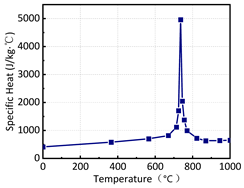
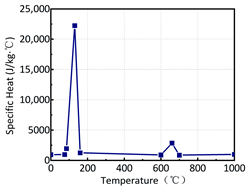
The thermal properties of the steel can be obtained from Eurocode 3 [20]. Mahendran et al. [21] put forth the specific heat of gypsum board; Chen et al. [22] proposed the conductivity of gypsum board, and the density of plasterboard was 800 kg/m3; Mahendran et al. [21] put forth the specific heat of mineral wool; Chen et al. [22] proposed the conductivity of mineral wool, the density of mineral wool was 120 kg/m3; Mahendran et al. [18] proposed the thermal properties of mineral wool and glass fiber. As indicated in Table 1, the temperature of the gypsum board rose rapidly to 900 °C, which was used to simulate the cracking of the gypsum board. The time–temperature curves based on the group column thermal simulation were in good agreement with the experimental results, which confirmed the applicability of the thermal properties.

2.1.2. Mechanical Properties of Steel at High Temperature

Poisson’s ratio of steel at high temperature was ν s = 0.3 (refer to Eurocode 3 [20]), and the coefficient of thermal expansion of steel at high temperature took different values in different temperature ranges, as shown in Equation (1). The values of the strength reduction coefficient and initial elastic modulus reduction coefficient of steel at high temperature are shown in Table 2 and Table 3, respectively.
α s = 0.8 × 10 8 ( T s 20 ) + 1.2 × 10 5   20   ° C     T s   <   750   ° C 0       750   ° C   T s   <   860   ° C 2.0 × 10 5     860   ° C     T s   <   1200   ° C
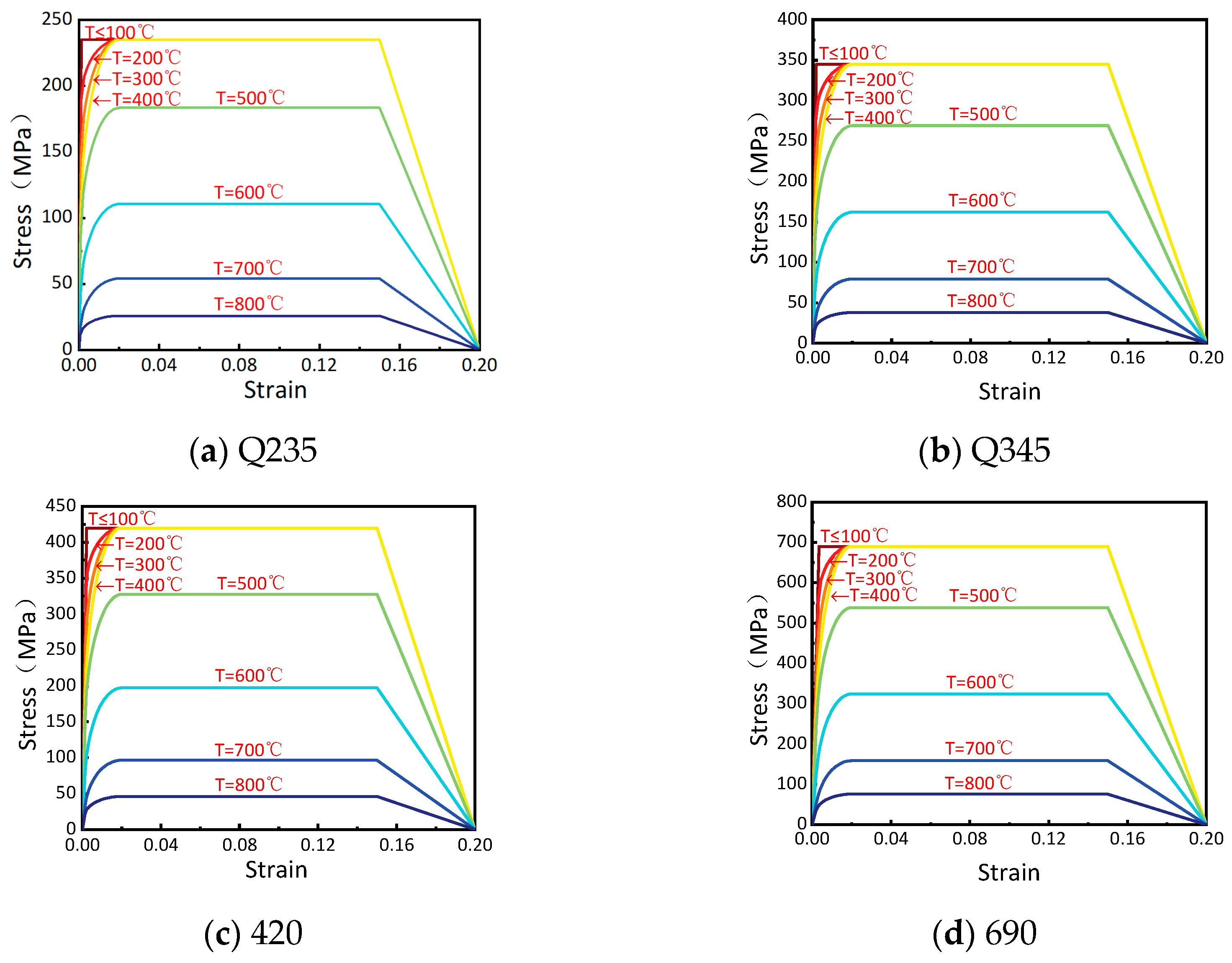
Different from the stress–strain curve of steel at normal temperature, the stress–strain curve of steel at high temperature includes a linear elastic stage, a plastic stage, a yield stage, and a failure stage. According to the formula of the stress–strain relationship of steel at high temperature from Eurocode 3 [20] (Table 4), the stress–strain curves of steel at different temperatures were obtained [24], as shown in Figure 2.

2.2. Thermal Model

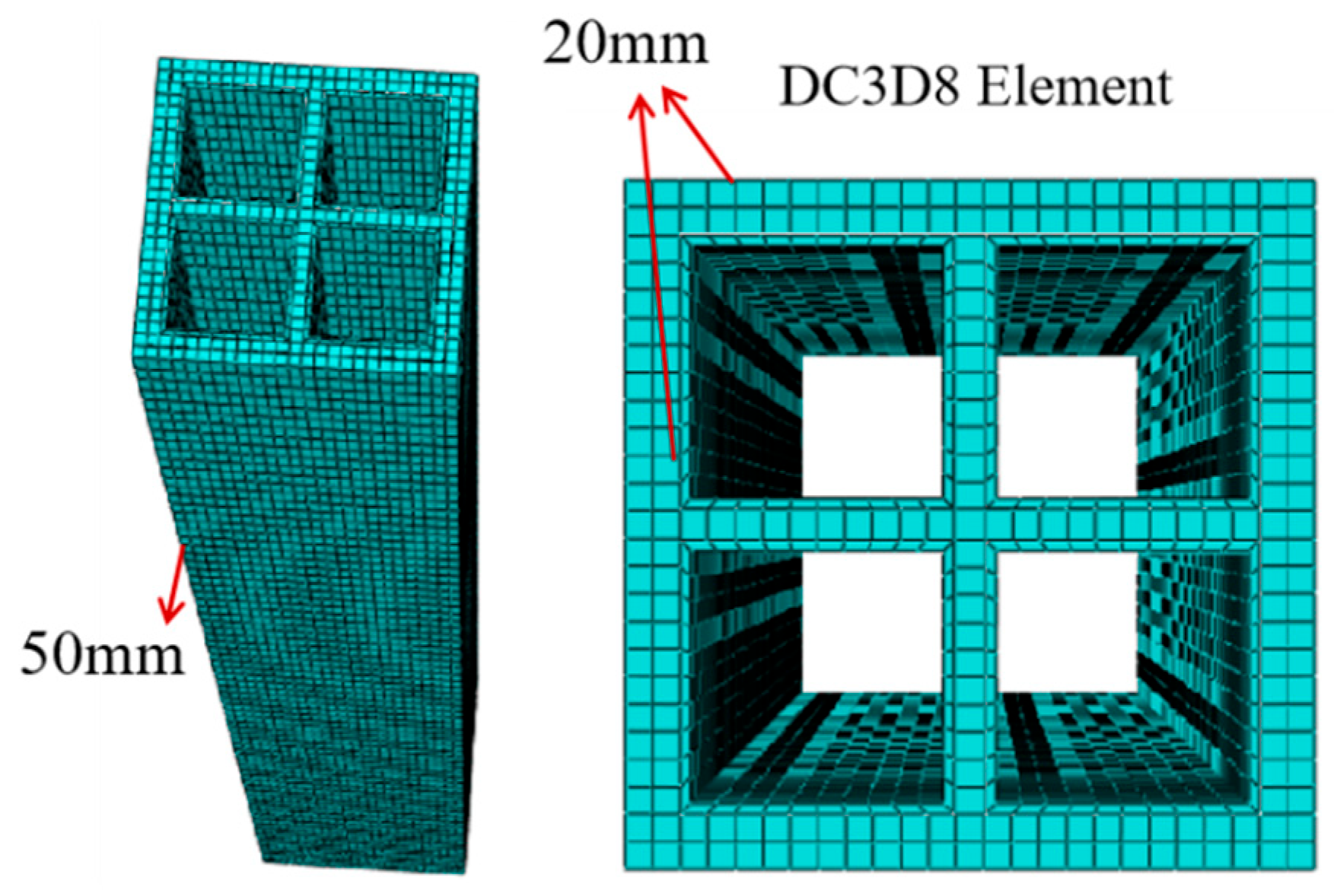
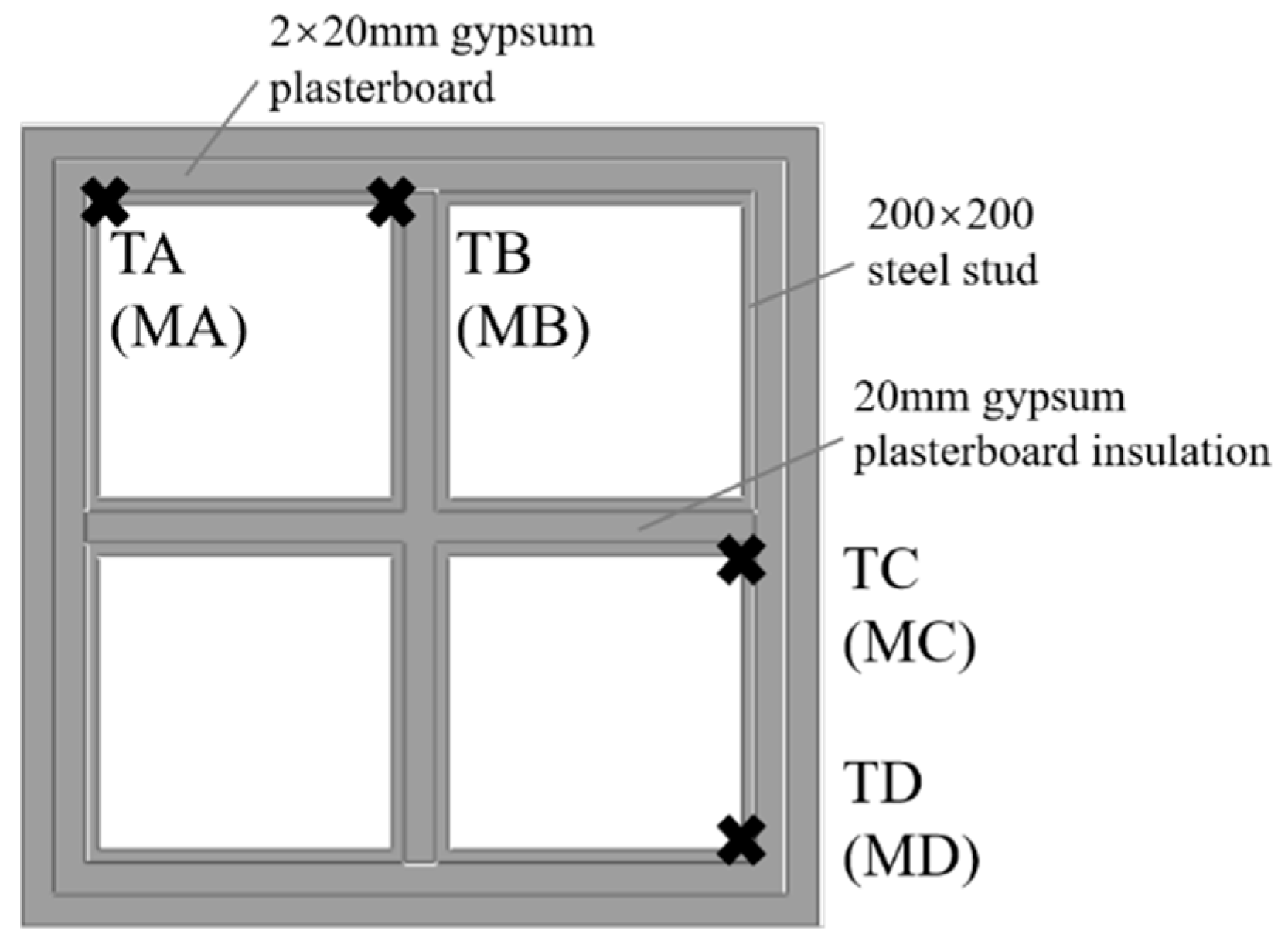
The four steel columns in the SHS group column thermal model were cold-formed square steel pipes with a cross-section size of 200 × 200 × 8 mm, a height of 3.75 m, and a material of Q345. The thickness of the outer gypsum board was 20 mm, and the cavity part is a 20 mm-thick gypsum board partition, as shown in Figure 3. In the thermal model, due to the fire on all sides of the group columns, the temperature changes are symmetrical, and considering that the ablation and fall-off changes in the four outer plasterboards during the heating process are almost the same, and the changes in temperature and mechanical properties were also consistent, as were the inner plasterboards. Therefore, the setting of the plasterboards was simplified during the finite element simulation. Only the inner and outer layers of gypsum board were set up, and the inner layer of gypsum board and the outer layer of gypsum board were regarded as a whole. Both steel and gypsum board used an eight-node linear heat transfer hexahedron unit (DC3D8) with a mesh size of 10–20 mm on the bottom and 50 mm in height. A full integration scheme with 2 × 2 × 2 Gauss points was adopted for these elements to ensure accurate integration of the stiffness matrix. As shown in Figure 4. ABAQUS CAE 2022 was used in the simulation process. ABAQUS is a leading commercial finite element analysis software developed by Dassault Systèmes, renowned for its exceptional capabilities in handling complex nonlinear and multiphysics engineering simulations. It is particularly powerful for solving advanced problems involving material nonlinearity, large deformations, and coupled phenomena such as thermal–stress interactions, which makes it ideal for analyzing structural performance under extreme conditions like fire exposure.
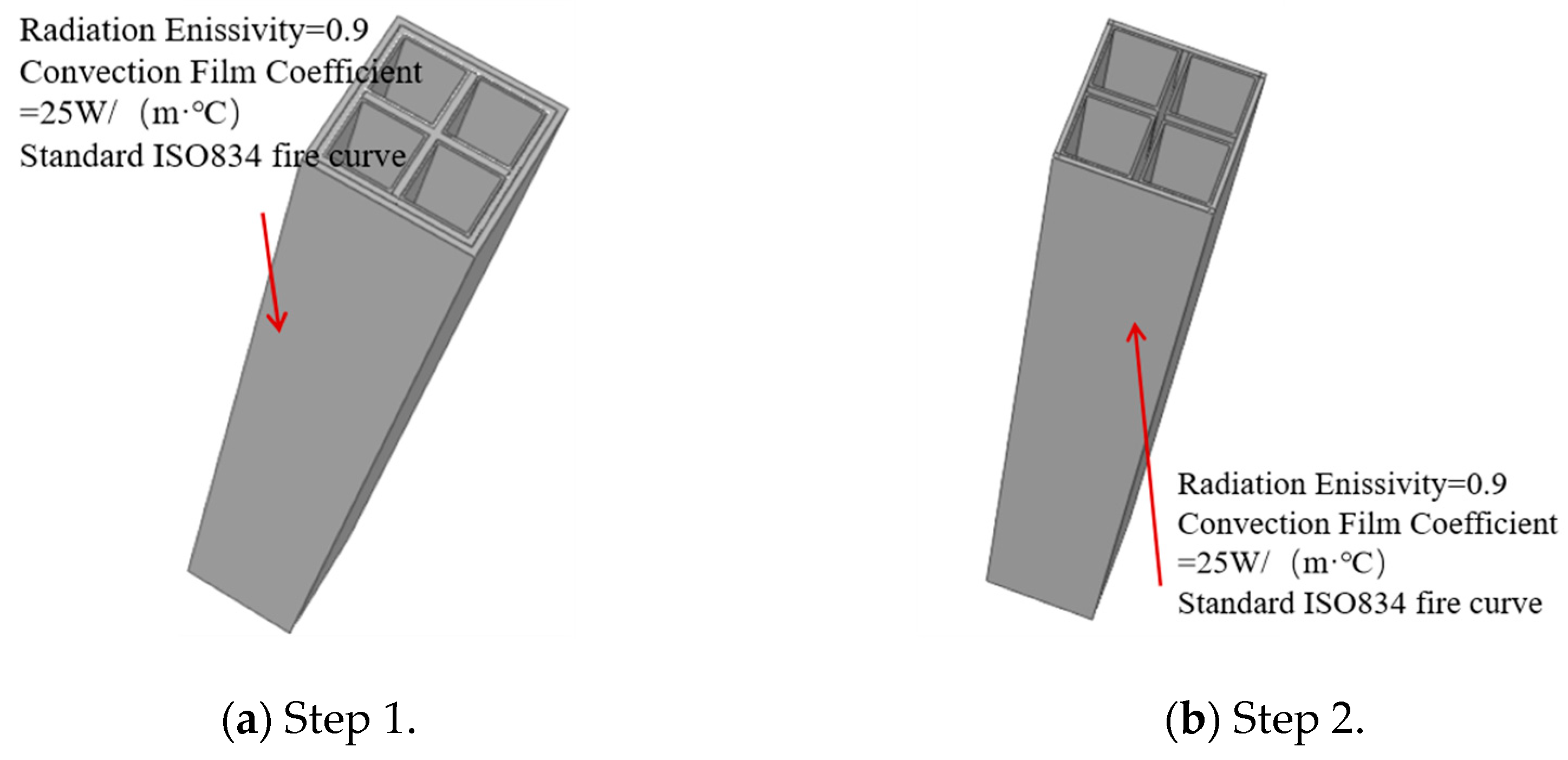
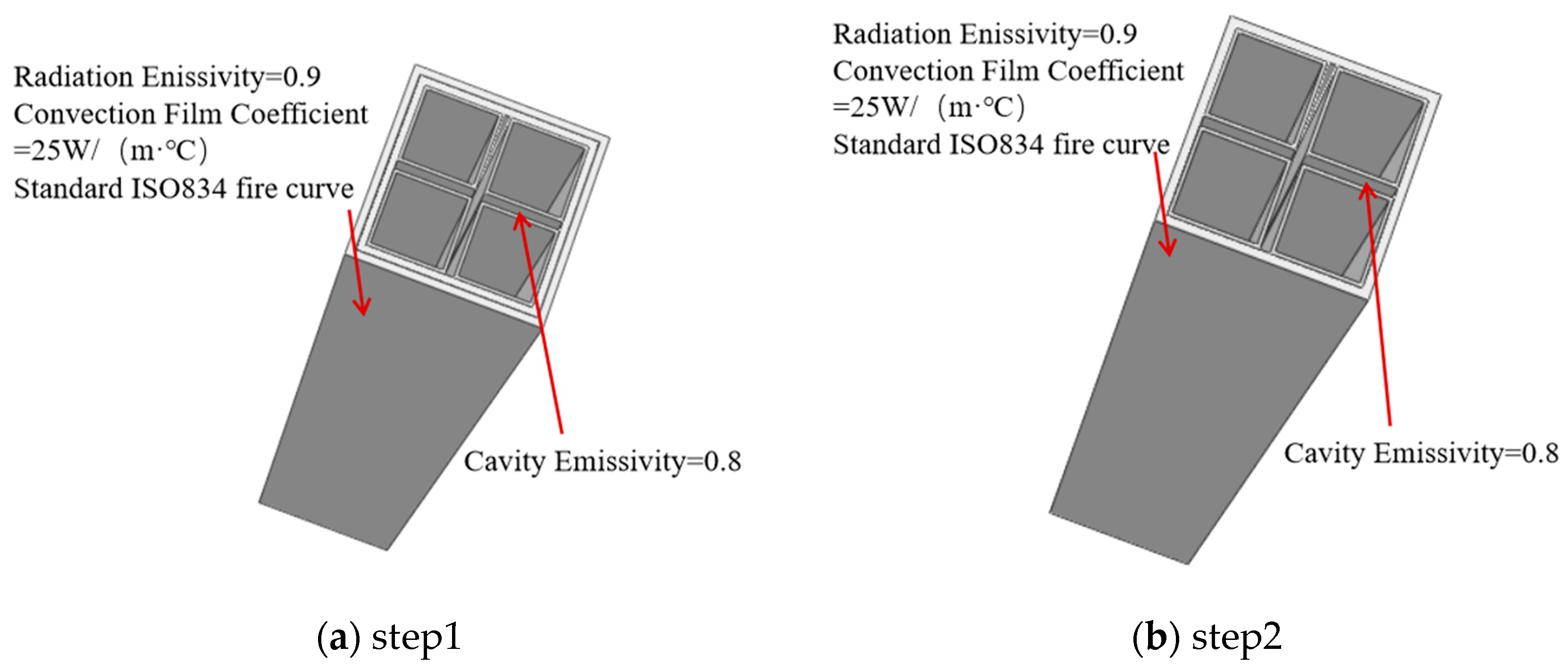
The heat transfer process was based on three basic ways of heat transfer, including heat conduction, heat convection, and heat radiation. Heat conduction is mainly a heat transfer process between solids, while heat convection is mainly a heat transfer process between fluids and solids, and thermal radiation refers to the surface of the object that emits electromagnetic waves to transfer heat. The initial temperature was set to room temperature at 20 °C, and the time–temperature expression of the ISO-834 curve was as follows: T = 20 + 345 log 10 ( 8 t + 1 ) . Taking into account the ablation and fall-off of the gypsum board, the simulation process of the thermal model was divided into two analytical steps: In the first step, the ISO-834 time–temperature curve was applied to the outer surface of the gypsum board as a temperature boundary condition to define the action of the temperature field and the radiation coefficient of the outer surface is set to 25 w/(m2·°C) [9] to define the action of heat convection. Because the air inside the cavity was not flowing, the effects of heat convection were not considered inside the cavity. The radiation coefficient of the outer plasterboard surface was 0.9, and that of the cavity was 0.8 to define the effect of thermal radiation [9]. Absolute zero was set to −273 °C, and the Stefan–Boltzmann constant was set to 5.67 × 10⁻⁸ W/(m2·K4). The heat conduction between different parts was defined by setting the binding constraints between the gypsum board and the gypsum board, and between the gypsum board and the steel column. In the second step, the outer plasterboard was set as a death element, and then a new temperature boundary condition was set on the outer layer of the inner plasterboard to redefine the effect of heat convection and heat radiation, as shown in Figure 5. With the continuous temperature rise, the gypsum board would experience severe ablation and then fall off from the modular steel construction unit SHS group columns. The fall-off of the gypsum board was simulated with the birth–death element technique, and the fall time was determined based on the experimental data. When the average temperature of the back of the gypsum board on the fire side reaches 750 °C [9], it is considered that the gypsum board has fallen off. After the outer plasterboard fell off, the inner plasterboard went through the effects of the temperature field, heat convection, and heat radiation [9]. This simulation strategy can accurately reflect the performance degradation characteristics of building envelope materials under high-temperature conditions, providing an effective analytical approach for studying the overall fire resistance of building components during fire events. The transient thermal analysis utilized an iterative incremental procedure with an initial time step of 60 s. Solution convergence was achieved when the norm of nodal temperature changes between iterations fell below 1 × 10⁻⁶ °C.

2.3. Verification and Analysis of Thermal Model

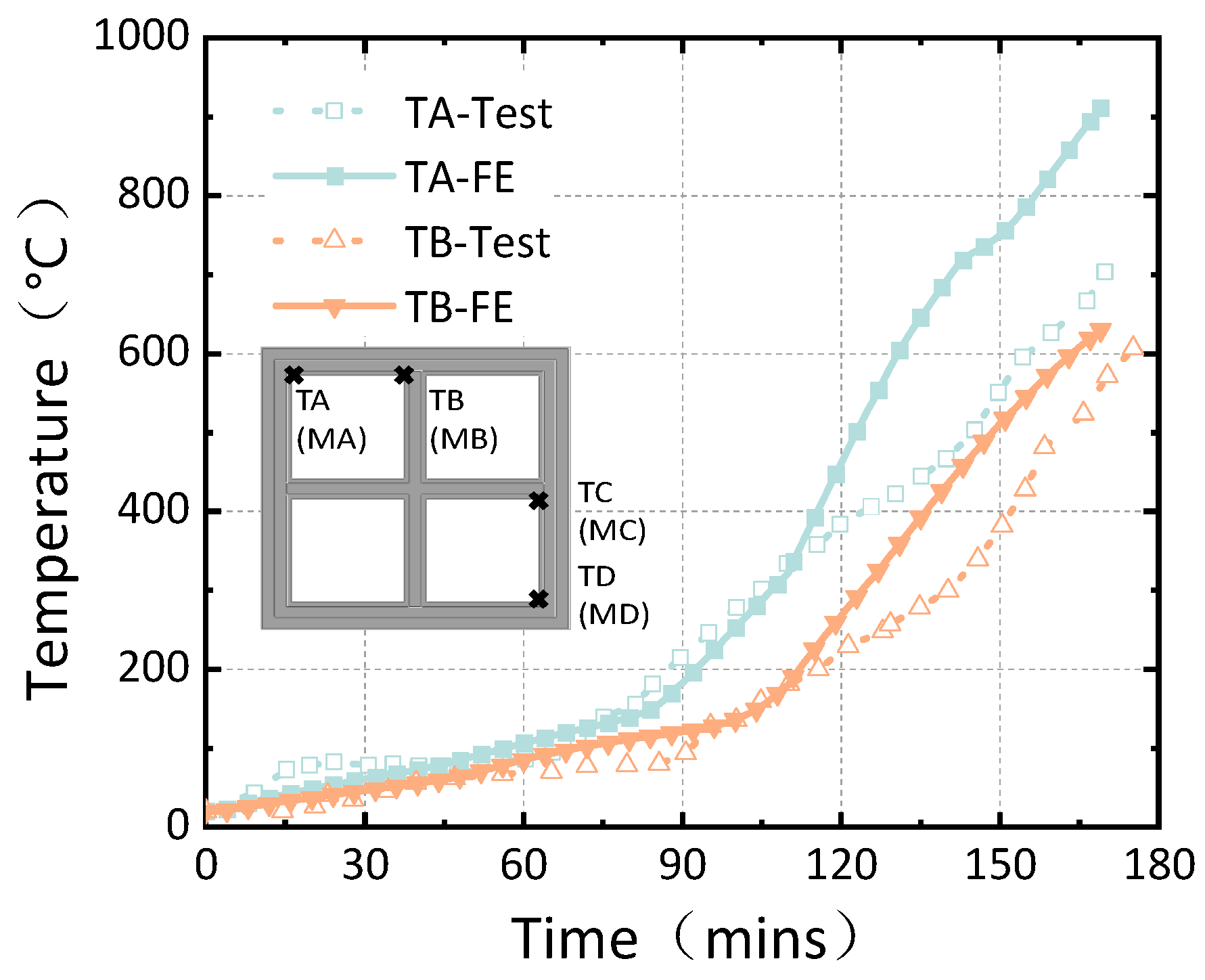
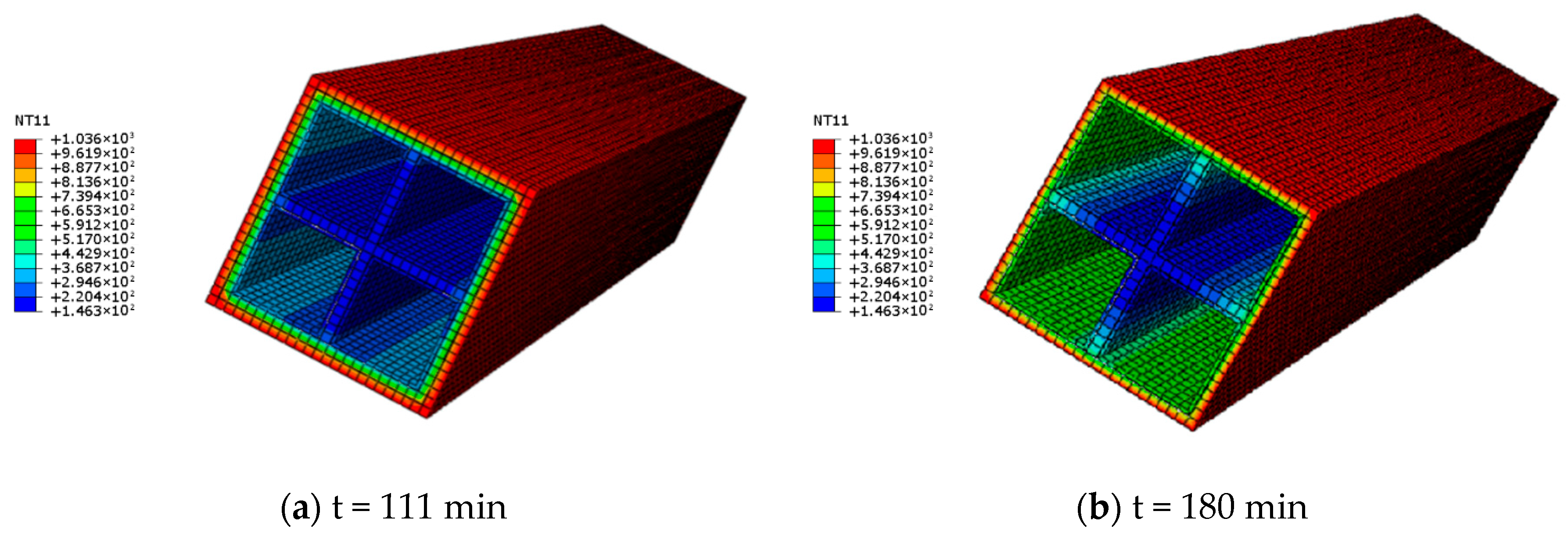
This section presents the thermal simulation results of the group column (Figure 6). The time–temperature curve of the measured point of the group column obtained by the test from Liu [4] was compared with the time–temperature curve of the same measured point of the group column obtained by the simulation (Figure 7). Since the time–temperature change curves of the measuring points, TA, MA, TD, and MD, were approximately the same, the time–temperature change curves of TB, MB, TC, and MC were about the same. Therefore, only the time–temperature curves of TA and TB measurement points were selected for comparison with the test results. It can be observed that the simulated temperature field generally aligns well with the experimental results during the first half of the time period. However, in the second half, the simulated temperature values exceed the experimental values by up to 25%: (1) In the second half of the simulation, the birth-death element technique is used to simulate the fall-off of the outer gypsum board, but in the actual process, the outer gypsum board may continue to adhere to the structure and continue to play the role of fire prevention; (2) The constraints given in the simulation process may be slightly different from the actual constraints in the actual process; (3) The thermal properties of the steel and gypsum board selected in the simulation may not be exactly the same as those of the material in the actual test; (4) A fundamental difference exists in the thermal loading mechanism itself. In the experiment, the component is heated within a gas-fired furnace, where the temperature is subject to spatial inhomogeneities and temporal fluctuations around the target ISO-834 curve. In contrast, the simulation applies the idealized ISO-834 curve directly and uniformly to the component’s surface. This simplification does not account for the complex convection and radiation dynamics inside the furnace, which is a likely primary reason for the observed temperature deviations, particularly in the later phases of the test. However, the temperature variation trend and size of the corresponding measurement points of the simulation and the test are roughly consistent, which verifies the validity of the temperature field model, so as to facilitate the subsequent thermal–mechanical analysis and parametric analysis.

3. Thermal–Mechanical Model Analysis of SHS

3.1. Establishment of Thermal–Mechanical Model

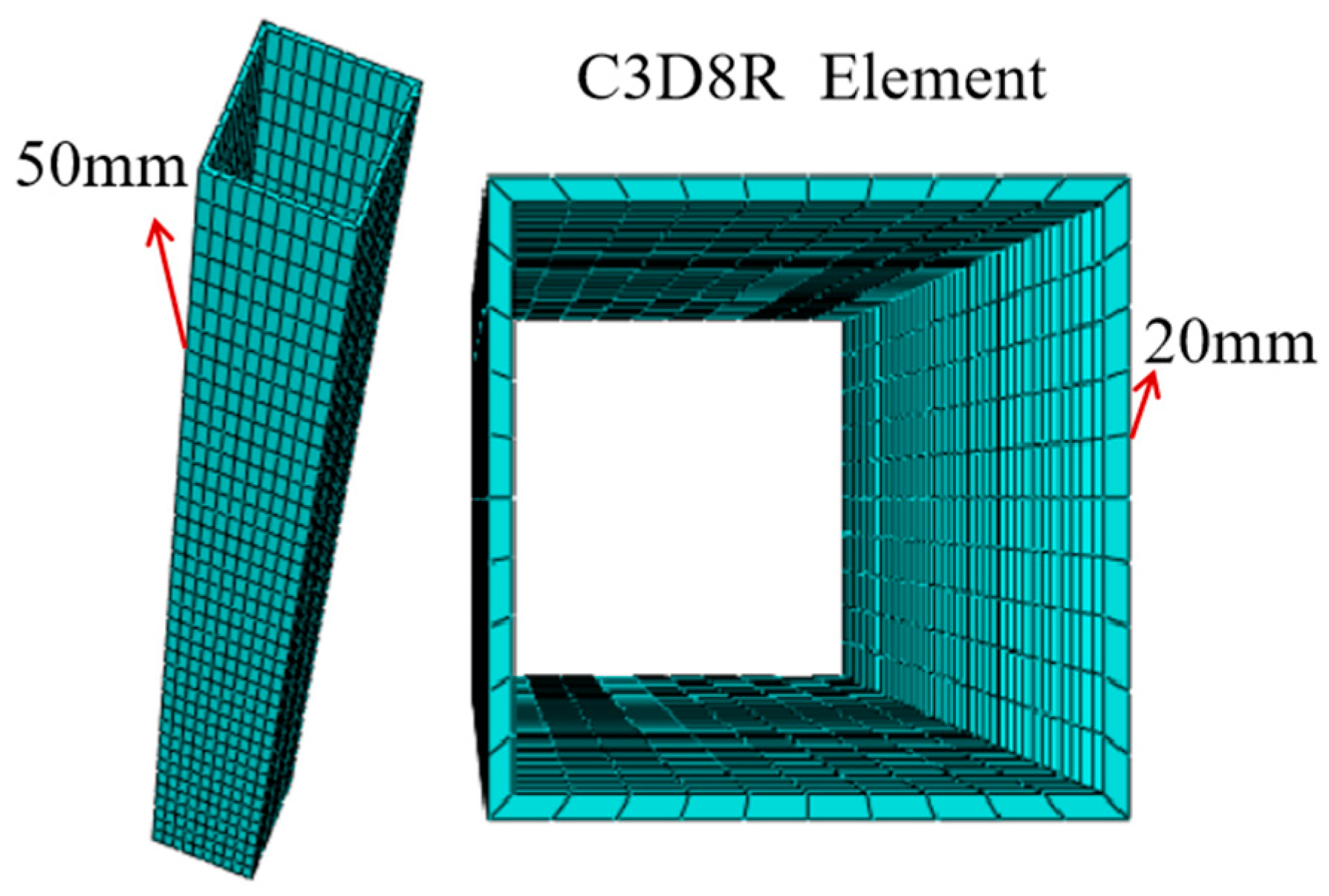
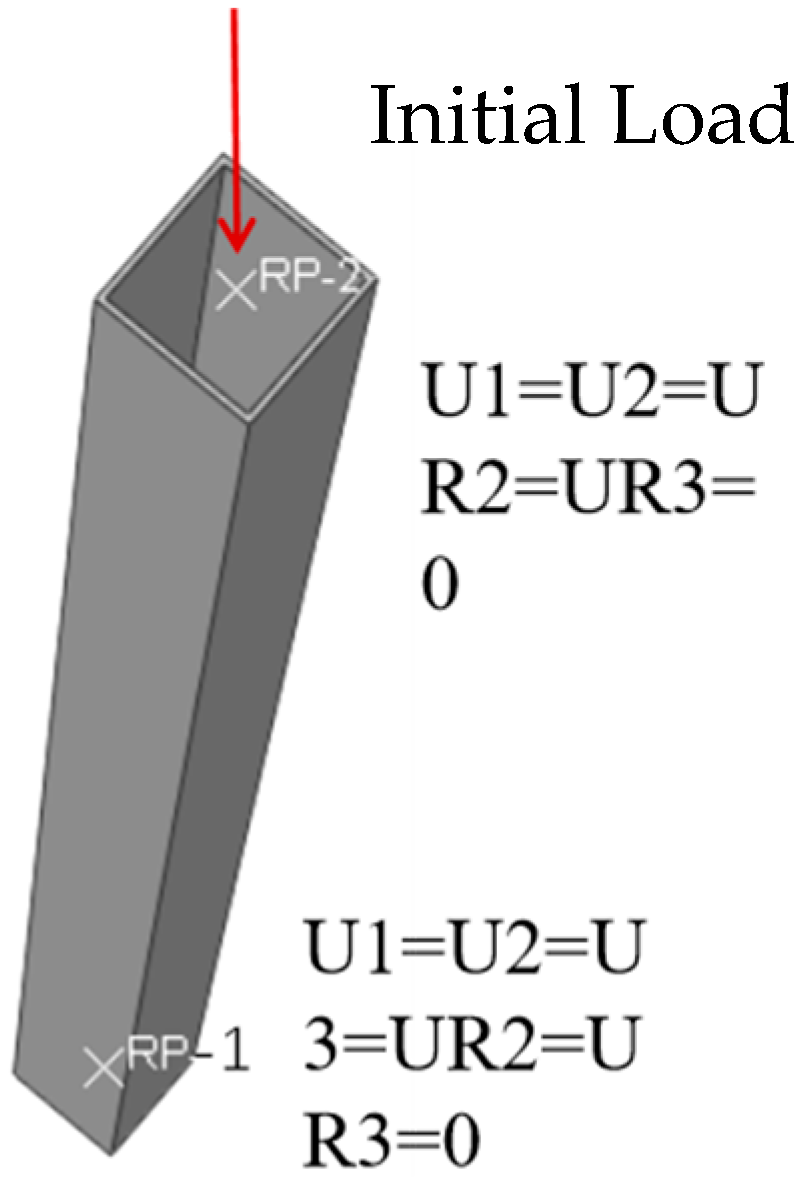
Compared with the yield strength of steel, the yield strength of gypsum board is very low and can be ignored. At the same time, considering the symmetry of group columns and the situation of fire on all sides, this paper only took a 1/4 steel column as the mechanical model when conducting thermal–mechanical analysis, and the steel column adopted an eight-node linear hexahedron element (C3D8R). C3D8R employed in this study utilizes reduced integration with one Gauss point per element. This scheme enhances computational efficiency while mitigating the risk of volumetric locking in thermal deformation analysis. In order to facilitate the application of axial force and boundary conditions, the coupling point RP-1 was set at the bottom, the coupling point RP-2 was set at the top, and the coupling point and the coupling surface were coupled. This allows for the application of concentrated loads and boundary conditions at a single point, which are then distributed to the entire coupling surface, ensuring uniform application and simplifying the simulation of pinned supports. UR1 was released at RP-1, and U3 and UR1 were released at RP-2, constraining the other degrees of freedom. The concentrated force was applied to the coupling point RP-2, with a size of 1060 KN, as shown in Figure 8. The mesh size was consistent with the mesh size of the steel column in the thermal simulation, as shown in Figure 9. The thermal–mechanical model consisted of two analysis steps corresponding to the thermal analysis step. The odb file of thermal simulation acted on the component as a predefined field of thermal–mechanical simulation to simulate the action of fire. It was also necessary to define the initial imperfection of the column. First, the column was subjected to eigenvalue buckling analysis, and the buckling modes in the analysis results would be used in the subsequent simulation. The selected buckling modes were determined by the deformation modes of the specimen in the test. In this paper, the first-order buckling mode was adopted, and the amplitude displacement of the buckling mode was used as the scale factor of the initial imperfection in the mechanical analysis of the specimen [15]. Then, the column with initial imperfection and initial temperature field was subjected to thermal–mechanical analysis, and the initial imperfection value was set to L/1000, where L was the length of the column. To capture the highly nonlinear response of the column under fire conditions, a robust numerical methodology was implemented. The analysis utilized an incremental solution procedure with the Full Newton–Raphson iterative scheme. Convergence was rigorously defined by a force-based criterion, requiring the ratio of the Euclidean norm of the force residuals to the applied load norm to be less than 0.5%. Additionally, the initial geometric imperfection was rationally defined by scaling the first buckling mode from an eigenvalue analysis to a maximum amplitude of L/1000 [25].

3.2. Definition of FRL

The failure time of components is judged by fire resistance limit criteria, including integrity failure criteria, thermal insulation failure criteria, and bearing capacity failure criteria [26]. The FRL (Fire Resistance Level) represents the ability of a structure to withstand loads in a period of time under fire conditions. The fire resistance limit of a column was determined by the fire resistance limit of the structure [24]. After the SHS group column of steel structure module unit was installed in the furnace, the axial load of 4300 KN was applied first, and after stabilizing for 15 min, the ignition and heating were continued until the specimen was damaged [4]. According to GB/T9978.8-2008 [25], when the compression column cannot bear the vertical load, or the axial deformation of the specimen reaches 0.01 h (h is the height of the specimen), or the axial deformation rate is greater than 0.003 h min−1, the test specimen is judged to have reached the fire resistance limit. In the simulation, the deformation rate was directly obtained as a history output variable (V3) from ABAQUS, representing the axial velocity of the column’s top reference point.
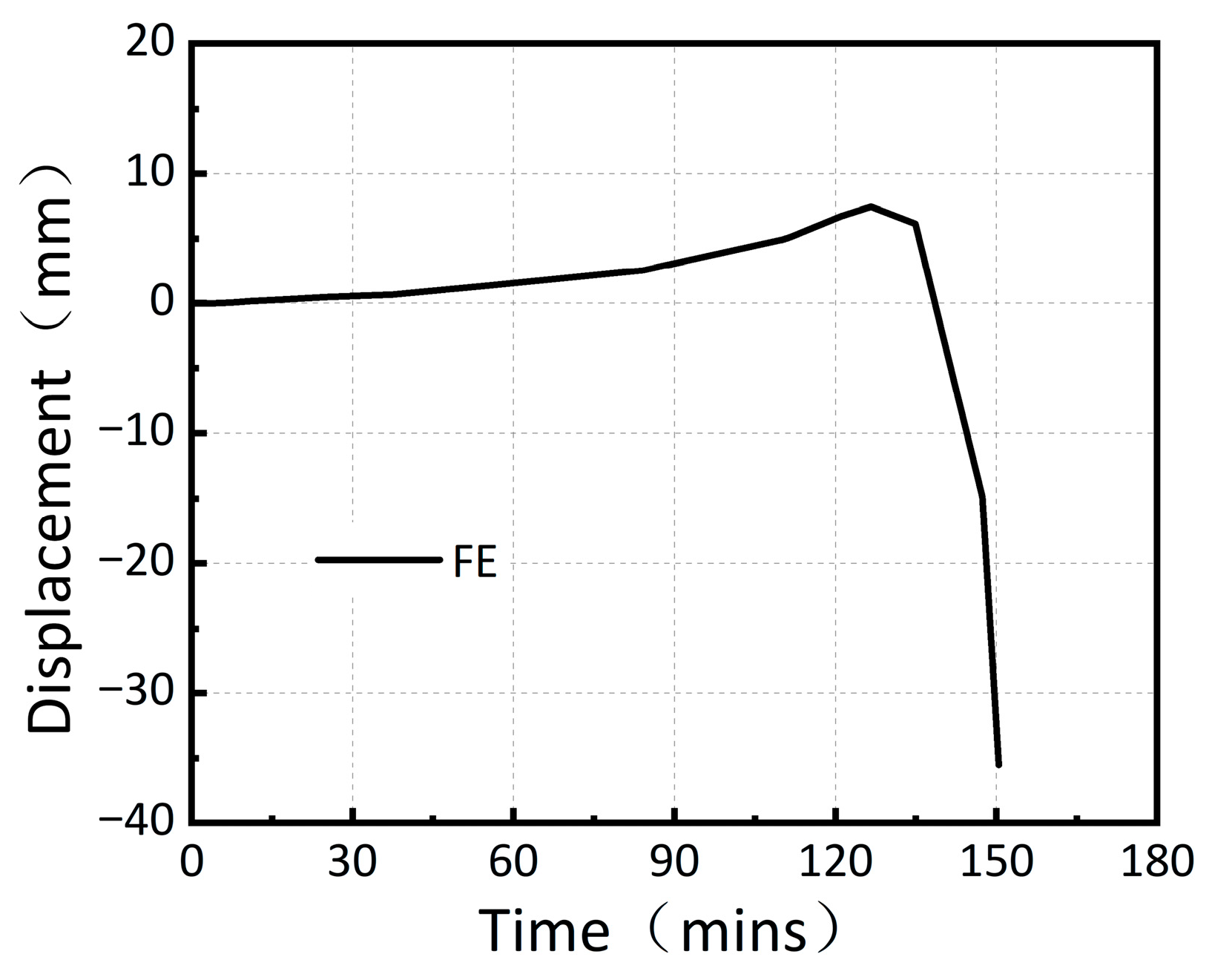
Because the mechanical properties of steel will deteriorate sharply and suddenly with the increase in temperature, it is very important to consider the structural fire resistance of SHS group columns of steel structure modules. In the process of simulation, the thermal expansion [17] caused by the steel temperature rise and the compression deformation caused by pressure action were considered. At the initial stage of heating, the elastic modulus and strength of the steel were not significantly reduced, resulting in the dominant thermal expansion caused by heating, which was manifested as the elongation and deformation of the column. With the continuous heating process, the mechanical properties of steel were rapidly degraded, causing the compression deformation caused by the pressure to dominate. The steel column produced a sharp compression deformation, the failure rate was very fast, and the steel column suddenly lost its carrying capacity [27].

3.3. Verification and Analysis of Thermal–Mechanical Model

The validity of the thermal–mechanical model was verified by the comparison between the finite element simulation results and the experimental results, and the time–displacement curve obtained by the simulation is shown in Figure 10. Based on the test results from Liu [4], the maximum axial displacement or maximum axial deformation velocity of the column at 168 min reached the fire-resistant limit criterion and was judged to be invalid. The simulation results of this paper are shown in the figure. At 151 min, the maximum deformation displacement or maximum deformation velocity reached the fire resistance limit standard, and the results were basically consistent. The 17 min difference (a 6.7% deviation) is considered acceptable in fire resistance simulations, as it falls within the typical 10% margin of error for such numerical models. This conservative result (earlier failure in the simulation) is primarily attributed to the simplified modeling of the protective layer ablation, which intentionally overestimates heating rates to ensure structural safety. Based on the confirmed model, parametric analysis was carried out to analyze the influence of different assemblies on the fire resistance of the column group.

4. Parametric Analysis of Influence of Fire Resistance

In order to obtain an economical and appropriate fire protection for modular columns, based on the tested model, the load ratio ( N / f y t A s ), cavity space, type of insulation, gypsum board thickness, slenderness ( λ = μ l / i , μ l is the calculated length of the long column under pressure, i is the radius of rotation), steel yield strength, the type of the inner cladding panel (gypsum board, mineral wool, rock wool, and glass fiber), and other parameters were established. Through parametric analysis, the influence law of different configurations on the fire resistance of the steel structure module column was obtained, and the reason of different parameters affecting the fire resistance was analyzed. Column lengths and corresponding lengths are shown in Table 5.

4.1. Parameters of Modular Column (Load Ratio, Slenderness, Steel Strength, and Cavity Space)

When conducting parametric analysis, the case that the insulation was a cavity was considered, so the cavity radiation needed to be set during transient thermal analysis, as shown in Figure 11.
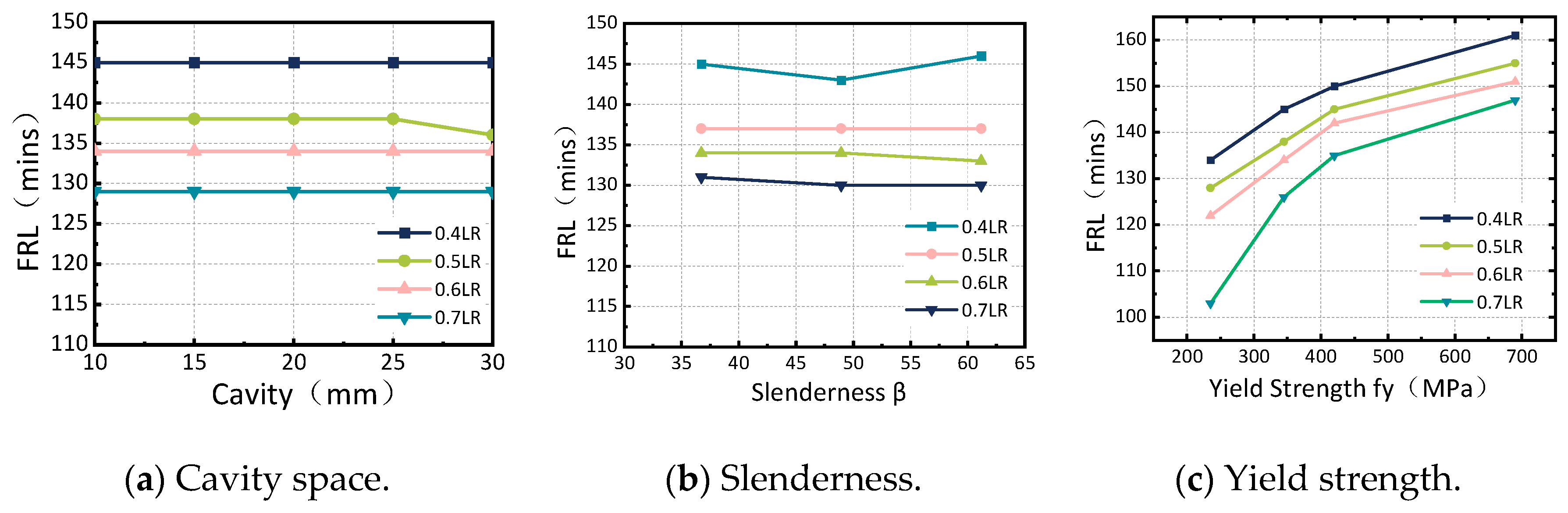
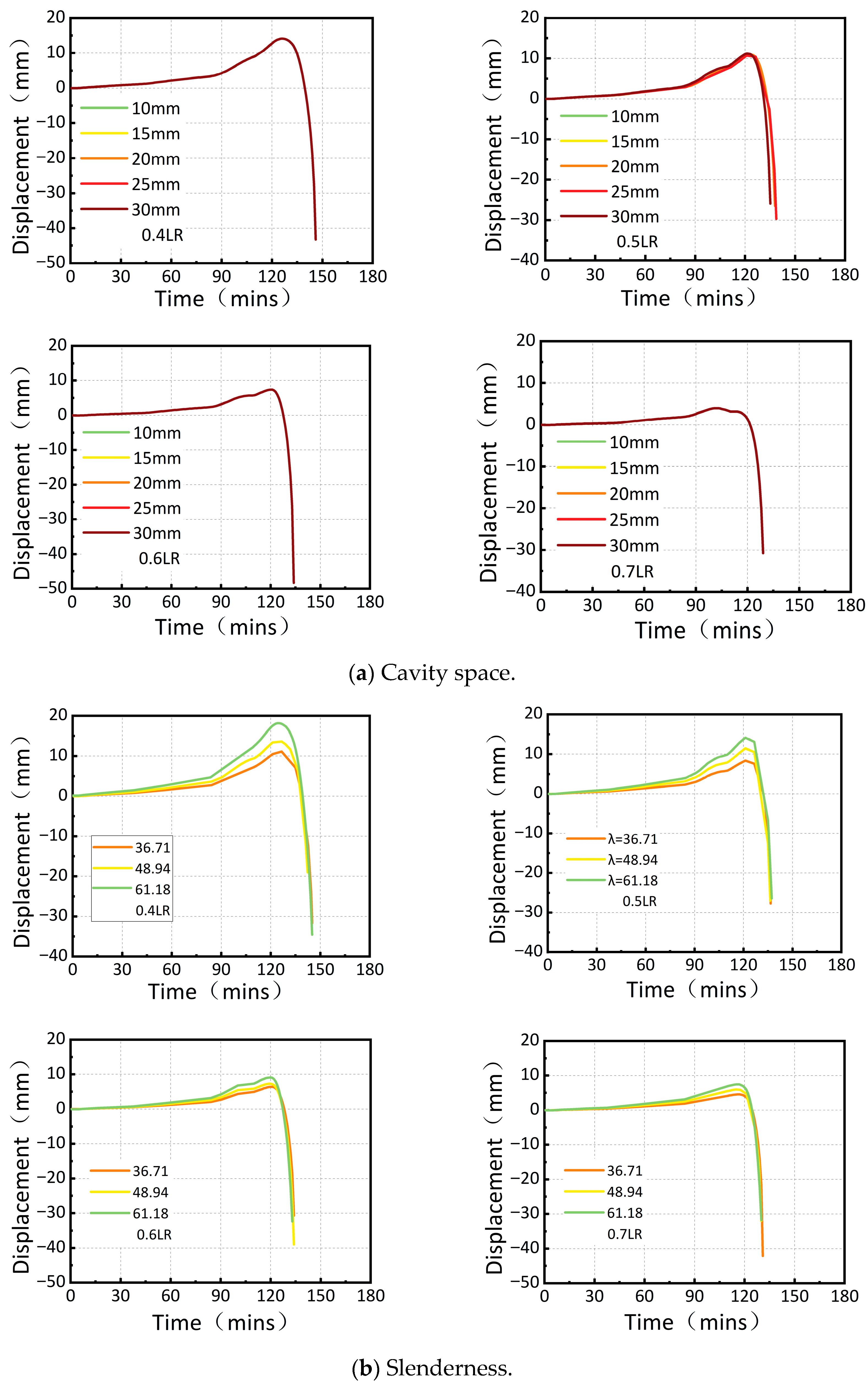
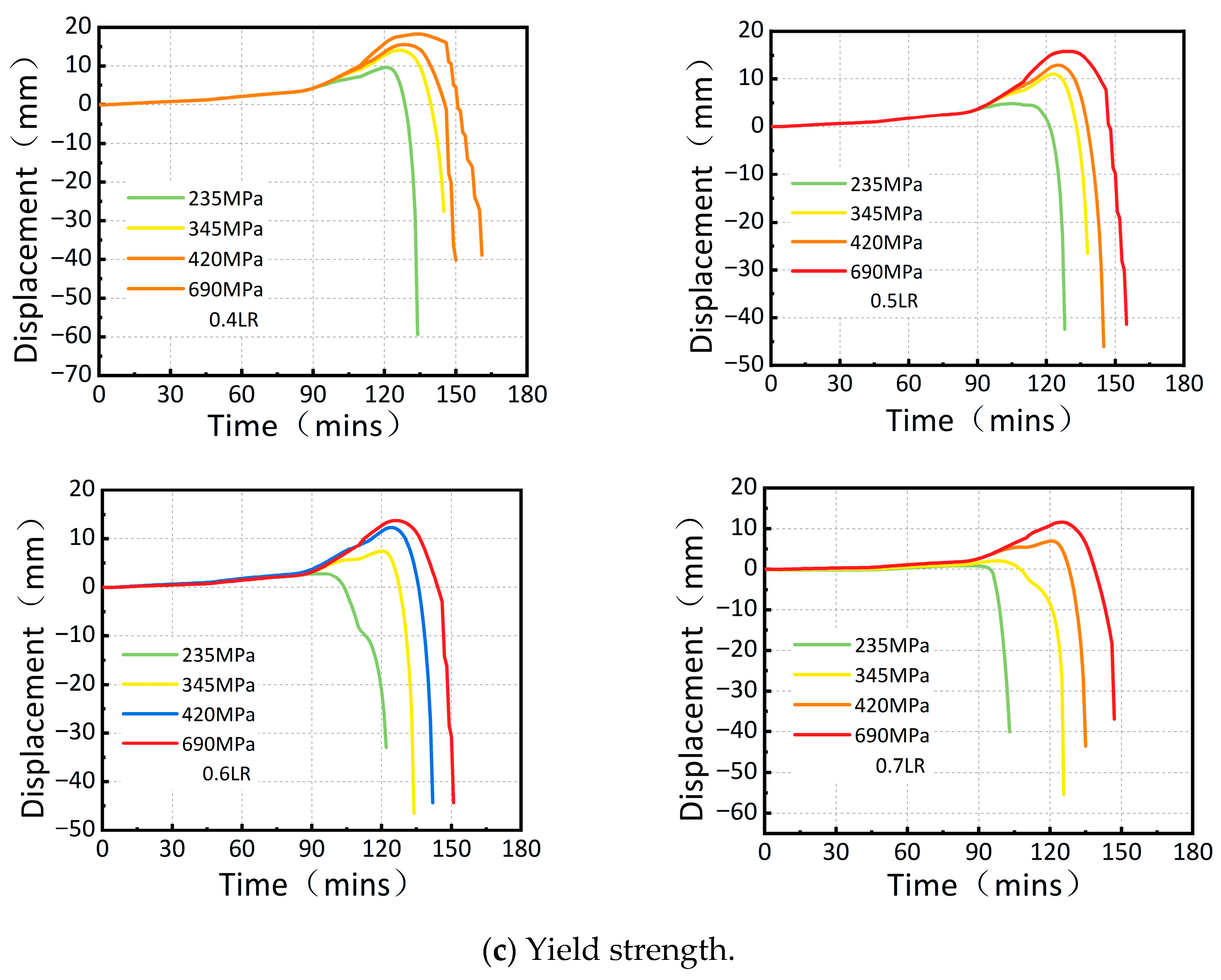
As shown in Figure 12 and Figure 13 and Table 6, under different parametric conditions, the fire resistance level decreased with the increase in load ratio. This was because the compression deformation caused by pressure increased with the increase in load ratio, while the elongation deformation caused by thermal expansion of the steel column was fixed, so the peak value of the time–displacement curve of the steel column decreased. At the same time, with the increase in load, steel was more likely to reach the limit state because of the degradation of material strength and elastic modulus, resulting in reduced fire resistance. The cavity space has little effect on the fire resistance of the modular column. When the cavity space increased from 10 mm to 30 mm, the fire resistance changed by 1.4% when the axial load ratio was 0.5, and the fire resistance did not change when the axial load ratio was 0.4, 0.6, or 0.7. This was because the heat transfer between the cavities was mainly carried out by thermal radiation, which was carried out by emitting electromagnetic waves between the surface of the object, depending on the nature and state of the material on the surface of the object, so the relatively small change in the space between the cavities had no obvious effect on the heat transfer efficiency. When the slenderness increased from 24.47 to 61.18, the difference in the fire resistance limit was about 1%, which was because the steel strength and elastic modulus would decline rapidly with the increase in temperature, and the steel column was prone to buckling or instability damage, so the slenderness had little impact on the fire resistance of the steel column. It can be seen from the time–displacement curve that the length of the column has a greater influence on thermal expansion, and the longer the column, the more thermal expansion. With the increase in steel yield strength, the fire resistance of steel increased, and the change was approximately linear. When the steel yield strength increased from 235 MPa to 690 MPa, when the load ratio was 0.4, 0.5, 0.6, and 0.7, the fire resistance increased by 20%, 21%, 24%, and 43%, respectively. At the same time, with the increase in steel yield strength, the thermal expansion deformation of steel also increased, because when the yield strength of steel increased, under the same load, the compression deformation of the steel column decreased; that is, the effect of compression deformation to offset expansion deformation decreased, so the thermal expansion deformation of steel increased.

4.2. Parameters of Fireproof Board (Type of Insulation, Thickness of Gypsum Board, and Type of Inner Cladding Panel)

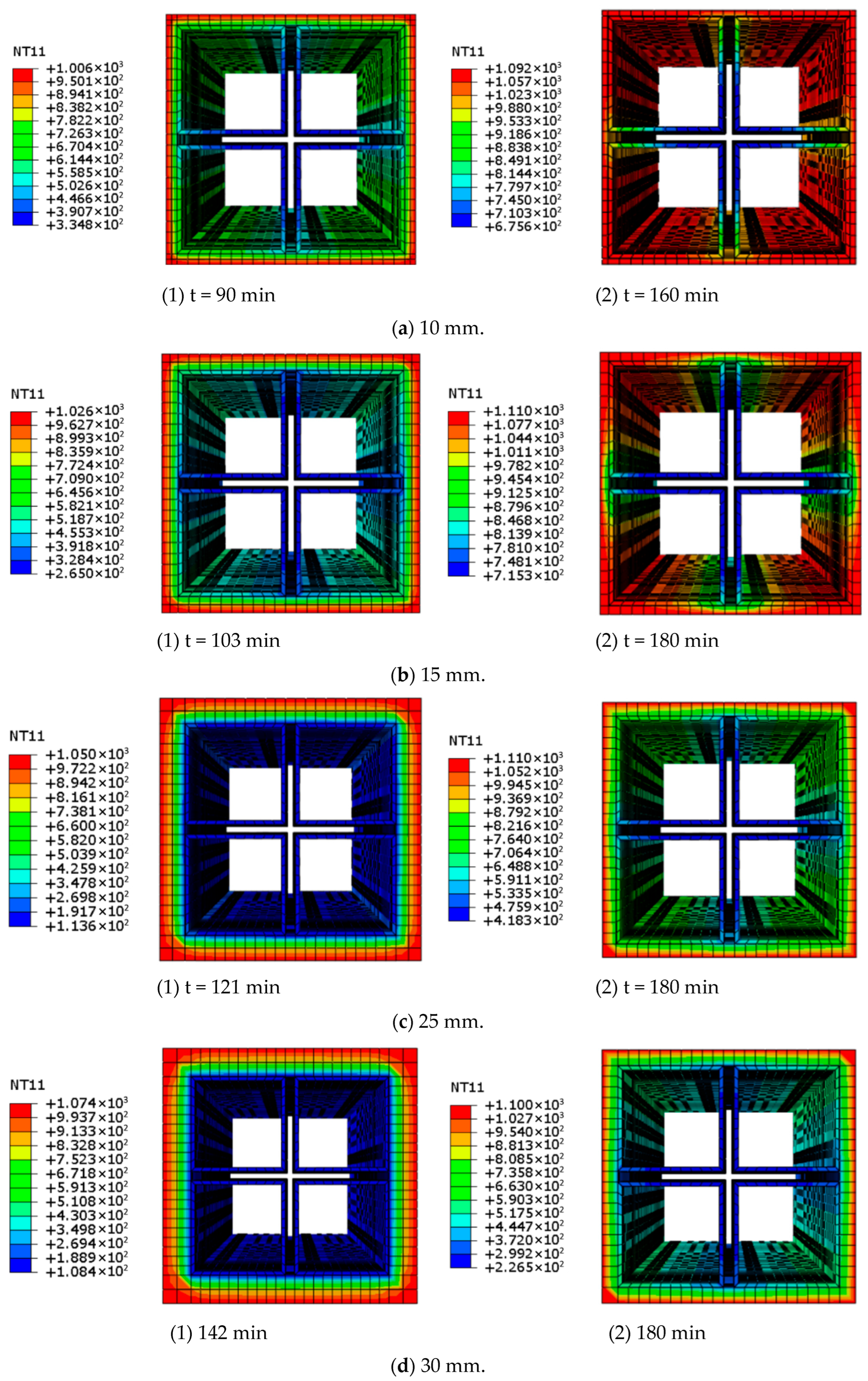
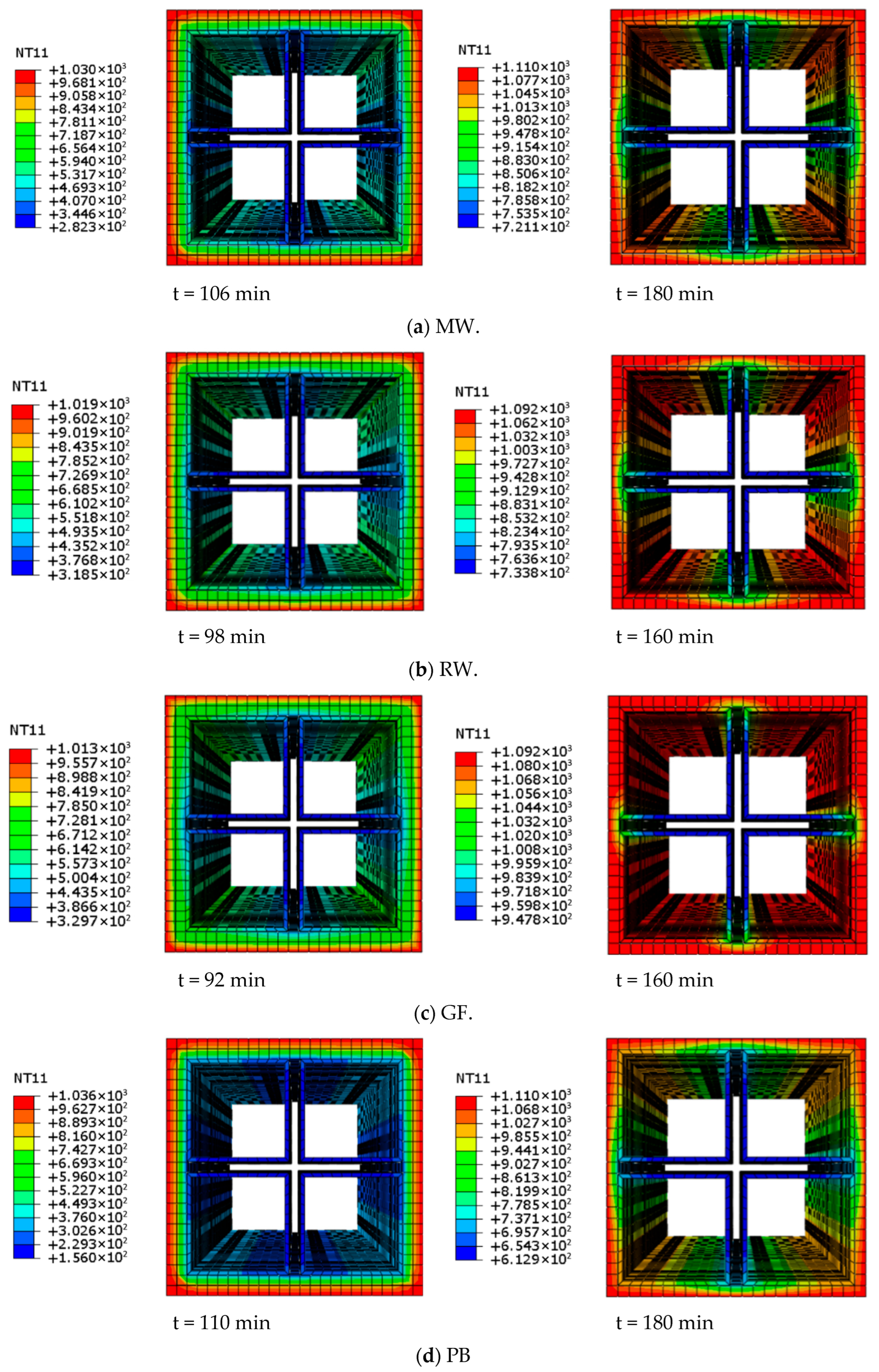
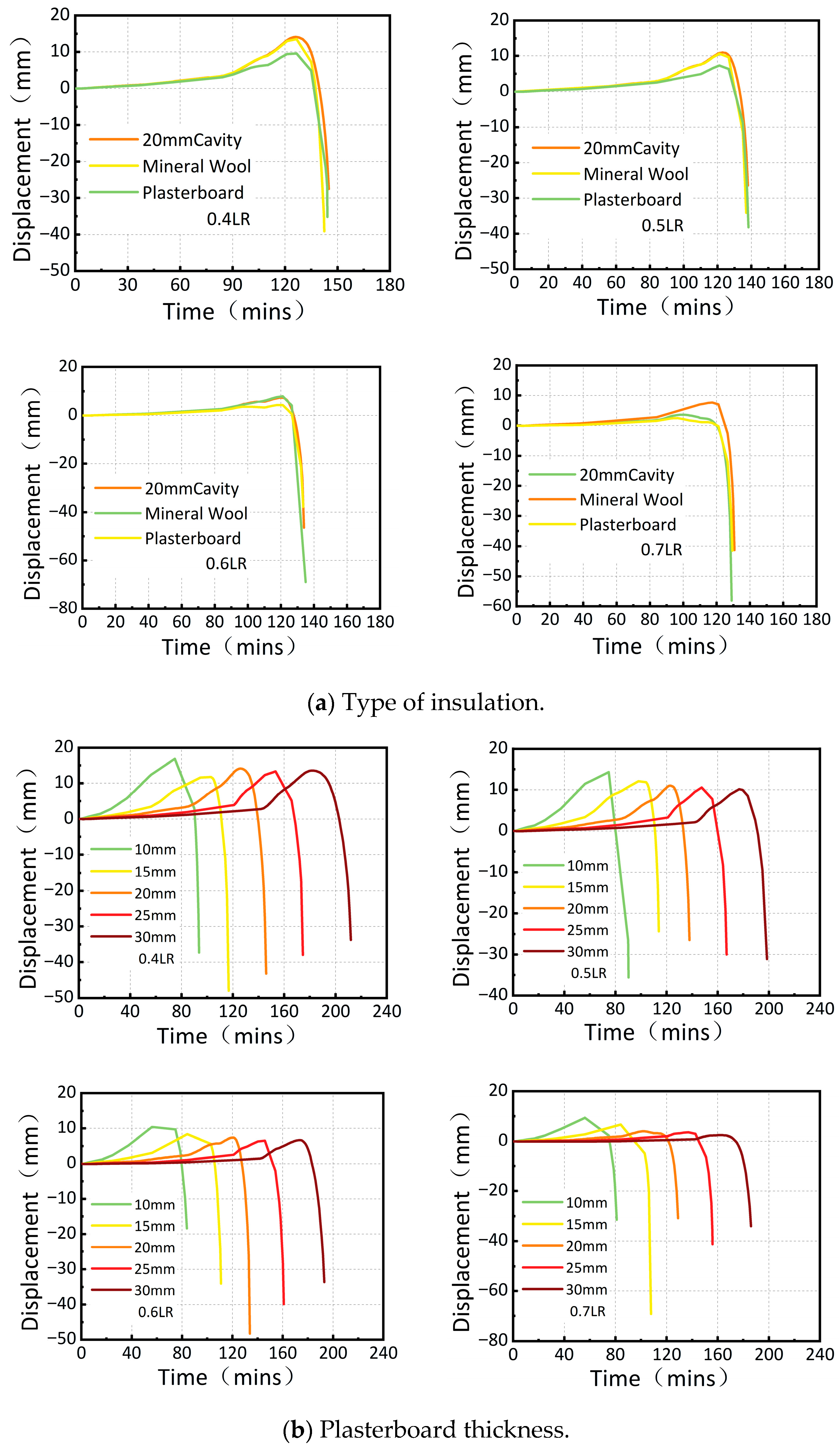
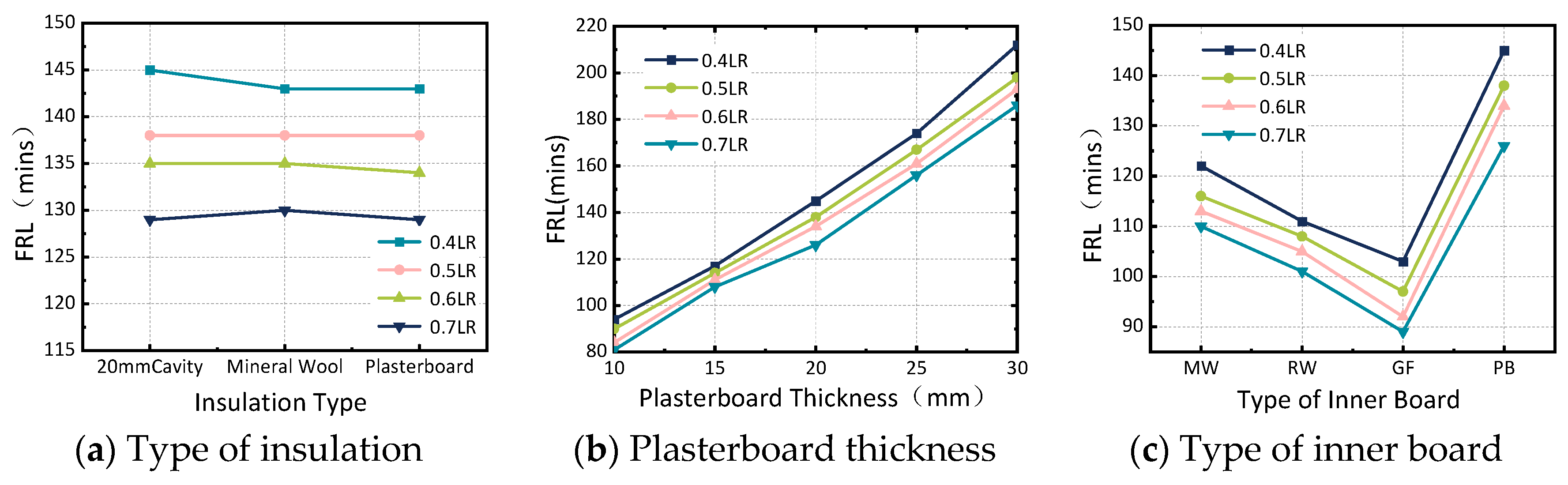
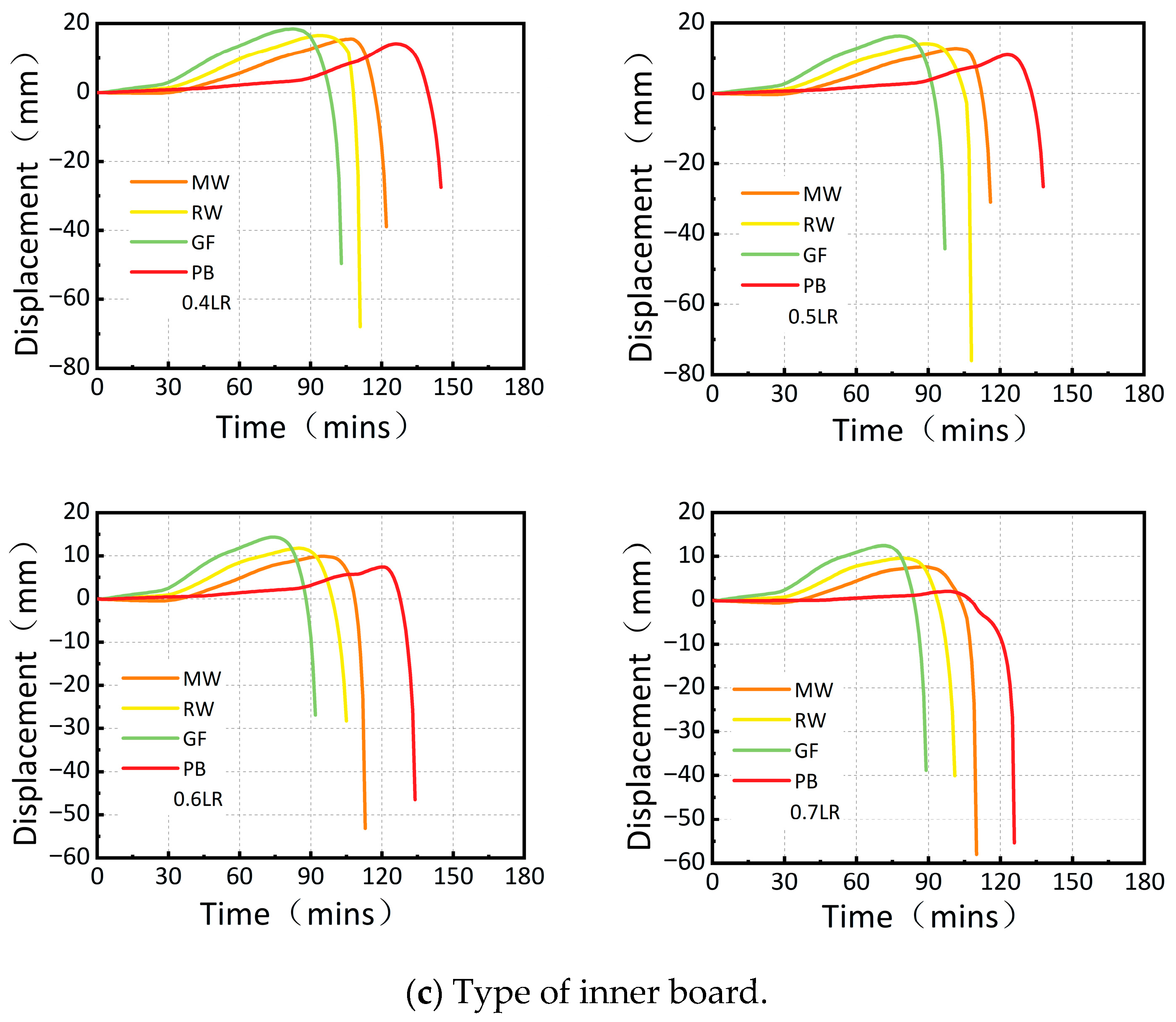
Figure 14 and Figure 15 and Table 7 and Table 8 show the temperature evolution results corresponding to different plasterboard thicknesses and inner board types, which intuitively reflect the temperature change process of group columns under different configurations. The time–displacement curves of components corresponding to different parameters under the action of the ISO-834 curve are shown in Figure 16, and the influences of different parameters on fire resistance are reflected in Figure 17. The difference in fire resistance between cavity, mineral wool insulation, and gypsum board insulation was less than 1%; that is, the setting of mineral wool insulation and gypsum board insulation had almost no positive effect on the increase in fire resistance. Specific heat refers to the ratio of the heat absorbed by a given mass of a substance when the temperature rises to the product of its mass and the temperature raised. The thermal conductivity represents how much heat a material can transfer under stable heat transfer conditions. In theory, because the specific heat of the insulation is higher and the conductivity is lower, compared with the cavity, it can play the role of heat insulation to a certain extent, prevent the heat transfer to the inside, slow down the heating rate, slow down the deterioration rate of the yield strength and elastic modulus of the steel column, and improve the fire resistance of the steel column. However, because the steel column is a four-sided fire structure, the thermal insulation effect of the mineral wool insulation layer and the gypsum board is not obvious. With the increase in gypsum board thickness, the fire resistance increased with an approximately linear change. When the gypsum board thickness increased from 10 mm to 30 mm, and the axial compression ratio was 0.4, 0.5, 0.6, and 0.7, the fire resistance increased by 126%, 120%, 130%, and 130%, respectively. This is because with the increase in the thickness of the gypsum board, the efficiency of heat transfer to the interior slows down. In the same fire time, the heating rate of the steel column wrapped with thicker gypsum board slows down compared with the steel column wrapped with thinner gypsum board, resulting in the slower deterioration of the yield strength and elastic modulus of the steel; that is, the fire resistance of the modular column increases. When the inner plate was GF, RW, MW, and PB, and the load ratio was 0.4, 0.5, 0.6, and 0.7, the corresponding fire resistance limit ratio was 1:1:13:1.24:1.45, 1:1:14:1 23:1.46, 1:1:11:2:1.42, and 1:1:08:1.18:1.41, respectively.

5. Practical Calculation Formula for Fire Resistance Limit

5.1. Multiple Linear Regression Model

The parametric analysis mentioned above indicates that the axial compression ratio, thickness of gypsum board, and yield strength of steel are the main factors affecting the fire resistance limit of the SHS (Square Hollow Section) group columns in steel structure modular units. The influence of slenderness ratio and cavity spacing on the fire resistance limit is relatively minor. From the time–fire resistance limit curve, it can be observed that the fire resistance limit changes approximately linearly with variations in the axial compression ratio, thickness of gypsum board, and yield strength of steel. Therefore, this study adopts a multiple linear regression model [15,27,28,29,30]. The general form of the multiple linear regression model is given by Equation (2):
Y ^ = a 0 + j   =   1 m a j x j
Y ^ is the output variable of the model, corresponding to the fire resistance limit T cr , and x j are the input variables, corresponding to the axial compression ratio β , thickness of gypsum board t, and yield strength of steel f y .

5.2. Multiple Linear Regression Analysis

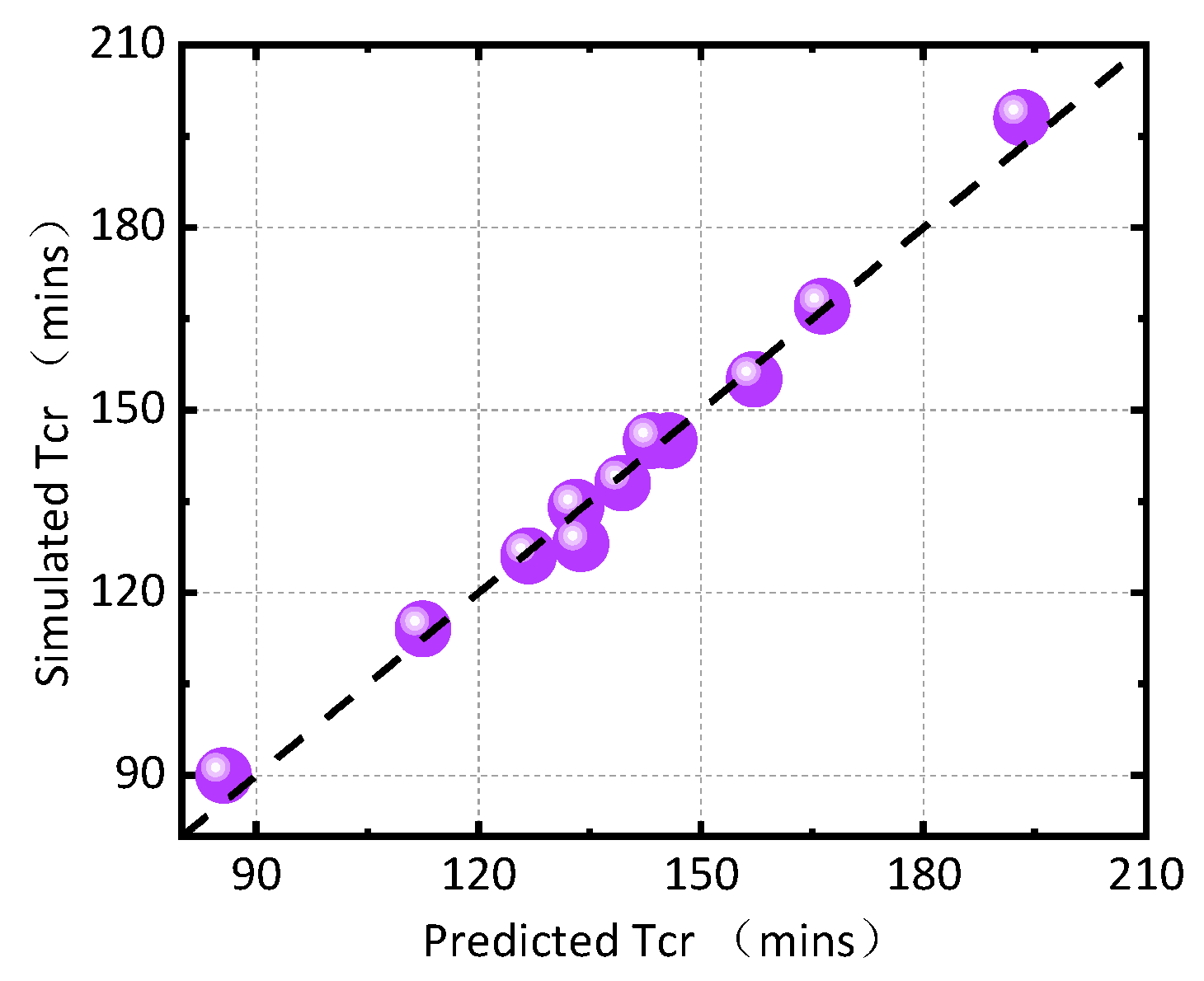
In this study, multiple linear regression analysis was conducted using Matlab R2016a software. Based on the commonly used parameter ranges in engineering, axial compression β = 0.4 0.7, thickness of gypsum board t = 10 mm 30 mm, and yield strength of steel f y = 235 MPa 690 MPa, with a 20 mm cavity spacing and column length L = 3.75 m, a simplified calculation formula for the fire resistance limit of SHS group columns in steel structure modular units under fire exposure was derived: T c r = 45.6188 63.116 β + 5.38 t + 0.0515 f y (Tcr: °C, β: dimensionless, t: mm, f y : MPa). Figure 18 shows a comparison between the calculated and simulated values of the fire resistance limit. It can be observed that the agreement is good, with a calculated R 2 value of 0.9882, indicating a relatively high degree of fit. The p-value is 0.0000, suggesting that the risk probability of accepting the calculation model is 0, meaning there is no risk, and the model is acceptable. The simplified calculation formula for the fire resistance limit provided in this study can be used to evaluate the fire resistance limit of the SHS group columns in steel structure modular units exposed to fire in practical engineering applications, offering a reference for fire protection design. To evaluate the predictive accuracy and generalizability of the formula, a systematic residual analysis and cross-validation were performed. The residual analysis indicated a mean difference of 0.21 min with a standard deviation of 2.4 min between the predicted and simulated values. The random distribution of residuals without apparent trends confirms the absence of significant systematic bias. Furthermore, K-fold cross-validation (K = 5) demonstrated stable prediction errors across all subsets, with an average Root Mean Square Error (RMSE) of 2.8 min, affirming the model’s robustness and reliability for practical applications.

6. Conclusions

In this paper, sequentially coupled thermal–mechanical analysis is used to simulate the fire resistance of the Modular steel construction unit SHS group column under the action of the ISO-834 curve. The simulation results are in good agreement with the test results, and parametric analysis is carried out. Specific conclusions are as follows:
(1)
It can be seen from the thermal–mechanical simulation results that due to the combined action of thermal expansion in the process of temperature rise and compression deformation caused by load when steel strength is reduced, axial deformation occurs in the steel column, which first extends and then compresses, and finally reaches the critical deformation state and fails. The time–temperature curve obtained by thermal simulation and the failure time obtained by thermal–mechanical simulation agree well with results from the test.
(2)
Due to the effect of cavity radiation, and the group column is subject to fire on all sides, the change in cavity space has little effect on the fire resistance of the column. Compared with the cavity, the setting of the mineral wool layer and the gypsum board layer does not increase the fire resistance of the steel column, and the change in slenderness has little influence on the fire resistance. When other conditions are consistent, the fire resistance of grouped columns will be improved with the increase in steel yield strength and gypsum board thickness, and will be worse with the increase in load ratio. When the thickness of the gypsum board is increased from 10 mm to 30 mm, and the load ratio is 0.4, 0.5, 0.6, and 0.7, the fire resistance is increased by 126%, 120%, 130%, and 130%, respectively. When the yield strength of steel is increased from 235 MPa to 690 MPa, and the load ratio is 0.4, 0.5, 0.6, and 0.7, the fire resistance level is correspondingly increased by 20%, 21%, 24%, and 43%. When the inner plate is GF, RW, MW, and PB, and the load ratio is 0.4, 0.5, 0.6, and 0.7, the corresponding fire resistance level ratio is 1:1:13:1.24:1.45, 1:1:14:1 23:1.46, 1:1:11:2:1.42, and 1:1:08:1.18:1.41, respectively. The simulation results show the time–temperature curves of different assembly groups of columns, which can better predict the fire resistance limit and provide a reference for engineering practice. It can be found that the best way to increase the fire resistance of the modular column is to increase the thickness of the gypsum board, because the rise in temperature is the most critical factor affecting the mechanical properties of the steel column, and increasing the thickness of the gypsum board can effectively slow down the heating rate of the steel column. Thus, the fire resistance of the modular steel column is improved.
(3)
Research on real fire curves for modular structures is currently in its nascent stage, presenting a significant knowledge gap. In contrast, substantial progress has been made in developing real fire curves for light steel composite walls. This disparity highlights the critical need and urgency for systematic investigations into real fire curves specific to modular structural systems.

Author Contributions

Conceptualization, J.L. and F.G.; methodology, J.L.; software, F.G.; validation, F.G.; formal analysis, F.G.; investigation, F.G.; resources, J.L.; data curation, J.L.; writing—original draft preparation, F.G.; writing—review and editing, J.L.; visualization, F.G.; supervision, J.L.; project administration, J.L.; funding acquisition, J.L. All authors have read and agreed to the published version of the manuscript.

Funding

This research received no external funding.

Data Availability Statement

The original contributions presented in the study are included in the article, further inquiries can be directed to the corresponding author.

Conflicts of Interest

The authors declare no conflict of interest.

References

  1. Ferdous, W.; Bai, Y.; Ngo, T.D.; Manalo, A.; Mendis, P. New advancements, challenges and opportunities of multi-storey modular buildings—A state-of-the-art review. Eng. Struct. 2019, 183, 883–893. [Google Scholar] [CrossRef]
  2. Lawson, R.M.; Ogden, R.G.; Bergin, R. Application of modular construction in high-rise buildings. J. Archit. Eng. 2012, 18, 148–154. [Google Scholar]
  3. Lacey, A.W.; Chen, W.; Hao, H.; Bi, K. Structural response of modular buildings—An overview. J. Build. Eng. 2018, 16, 45–56. [Google Scholar]
  4. Liu, J. Experimental Research on Joint of Steel Module and Fire Resistance of Components. Master’s Thesis, Tianjin University, Tianjin, China, 2017. [Google Scholar]
  5. Zha, X.; Zuo, Y. Finite element study of container structure under normal and high temperature. Math. Probl. Eng. 2016, 2016, 2652149. [Google Scholar] [CrossRef]
  6. Nguyen, Q.T.; Ngo, T.; Tran, P.; Mendis, P.; Zobec, M.; Aye, L. Fire performance of prefabricated modular units using organoclay/glass fibre reinforced polymer composite. Constr. Build. Mater. 2016, 129, 204–215. [Google Scholar] [CrossRef]
  7. Zhang, L.; Bai, Y.; Chen, W.; Ding, F.X.; Fang, H. Thermal performance of modular GFRP multicellular structures assembled with fire resistant panels. Compos. Struct. 2017, 172, 22–33. [Google Scholar] [CrossRef]
  8. Perera, D. Fire performance of modular wall panels: Numerical analysis. Structures 2021, 34, 1048–1067. [Google Scholar] [CrossRef]
  9. Yu, Y.; Tian, P.; Man, M.; Chen, Z.; Jiang, L.; Wei, B. Experimental and numerical studies on the fire-resistance behaviors of critical walls and columns in modular steel buildings. J. Build. Eng. 2021, 44, 102964. [Google Scholar] [CrossRef]
  10. Perera, D.; Upasiri, I.R.; Poologanathan, K.; Perampalam, G.; O’Grady, K.; Rezazadeh, M.; Rajanayagam, H.; Hewavitharana, T. Fire performance analyses of modular wall panel designs with loadbearing SHS columns. Case Stud. Constr. Mater. 2022, 17, e01179. [Google Scholar] [CrossRef]
  11. Perera, D.; Upasiri, I.; Poologanathan, K.; O’Grady, K.; Nagaratnam, B.; Kanthasamy, E.; Rajanayagam, H. Numerical investigation on fire performance of LSF and steel modular floor panels. Buildings 2022, 12, 1721. [Google Scholar] [CrossRef]
  12. Piquer, A.; Hernández-Figueirido, D. Protected steel columns vs partially encased columns: Fire resistance and economic considerations. J. Constr. Steel Res. 2016, 124, 47–56. [Google Scholar] [CrossRef]
  13. Wang, K.; Young, B. Fire resistance of concrete-filled high strength steel tubular columns. Thin-Walled Struct. 2013, 71, 46–56. [Google Scholar] [CrossRef]
  14. Hoffstaeter, R.A.; Piloto, P.A.G.; Martins, C.H.; Rigobello, R. Numerical investigation on the fire resistance of partially encased steel columns. Int. J. Civ. Eng. 2023, 21, 1315–1342. [Google Scholar] [CrossRef]
  15. Chen, H.; Zhang, H.; Wang, J.; Sun, T.; Li, Y. Study on fire resistance of axially compressed partially-encased composite steel and concrete columns with different strengthening measures. J. Archit. Civ. Eng. 2022, 39, 19–29. [Google Scholar]
  16. Wu, Y.; Fan, S.; He, B.; Li, C.; Zhou, H. Experimental study and numerical simulation analysis of the fire resistance of high-strength steel columns with rectangular sections under axial compression. Fire Saf. J. 2021, 121, 103266. [Google Scholar] [CrossRef]
  17. ISO 834-1; Fire Resistance Tests—Elements of Building Construction—Part 1: General Requirement. International Organization for Standardization (ISO): Vernier, Switzerland, 2018.
  18. Rusthi, M.; Keerthan, P.; Mahendran, M.; Ariyanayagam, A. Investigating the fire performance of LSF wall systems using finite element analyses. J. Struct. Fire Eng. 2017, 8, 354–376. [Google Scholar] [CrossRef]
  19. Keerthan, P.; Mahendran, M. Thermal performance of composite panels under fire conditions using numerical studies: Plasterboards, rockwool, glass fibre and cellulose insulations. Fire Technol. 2013, 49, 329–356. [Google Scholar] [CrossRef]
  20. EN 1993-1-2:2005; Eurocode 3: Design of Steel Structures—Part 1–2: General Rules—Structural Fire Design. CEN: Brussels, Belgium, 2005.
  21. Dodangoda, M.T.; Mahendran, M.; Keerthan, P.; Frost, R.L. Developing a performance factor for fire rated boards used in LSF wall systems. Fire Saf. J. 2019, 109, 102872. [Google Scholar] [CrossRef]
  22. Chen, W.; Ye, J.; Li, X. Thermal behavior of gypsum-sheathed cold-formed steel composite assemblies under fire conditions. J. Constr. Steel Res. 2018, 149, 165–179. [Google Scholar] [CrossRef]
  23. Xiang, Y.; Zhou, X.; Shi, Y.; Xu, L.; Xu, Y. Experimental investigation and finite element analysis of cold-formed steel channel columns with complex edge stiffeners. Thin-Walled Struct. 2020, 152, 106769. [Google Scholar] [CrossRef]
  24. Bénichou, N.; Sultan, M.A. Thermal properties of lightweight-framed construction components at elevated temperatures. Fire Mater. 2005, 29, 165–179. [Google Scholar] [CrossRef]
  25. GB/T 9978.8-2008; Test Methods for Fire Resistance of Building Elements—Part 8: Specific Requirements for Non-Loadbearing Vertical Separating Elements. Standards Press of China: Beijing, China, 2008.
  26. Chen, W.; Ye, J.; Bai, Y.; Zhao, X.L. Thermal and mechanical modeling of load-bearing cold-formed steel wall systems in fire. J. Struct. Eng. 2014, 140, A4013002. [Google Scholar] [CrossRef]
  27. Simões, Y.D.S.; Rocha, F.M.; Munaiar Neto, J. Numerical comparison between the thermo-structural behavior of steel and partially encased steel and concrete composite columns in fire. Rev. IBRACON Estrut. Mater. 2018, 11, 876–901. [Google Scholar] [CrossRef]
  28. Li, N.; Liu, J.; Zhao, J. Research on the seismic damage of steel frame structure under fire. J. Archit. Civ. Eng. 2022, 24, 72–81. [Google Scholar]
  29. Khademi, F.; Akbari, M.; Jamal, S.M.; Nikoo, M. Multiple linear regression, artificial neural network, and fuzzy logic prediction of 28 days compressive strength of concrete. Front. Struct. Civ. Eng. 2017, 11, 90–99. [Google Scholar] [CrossRef]
  30. Alan, O.S. An Introduction to Regression Analysis; Working Paper 20; University of Chicago Law School: Chicago, IL, USA, 1993. [Google Scholar]
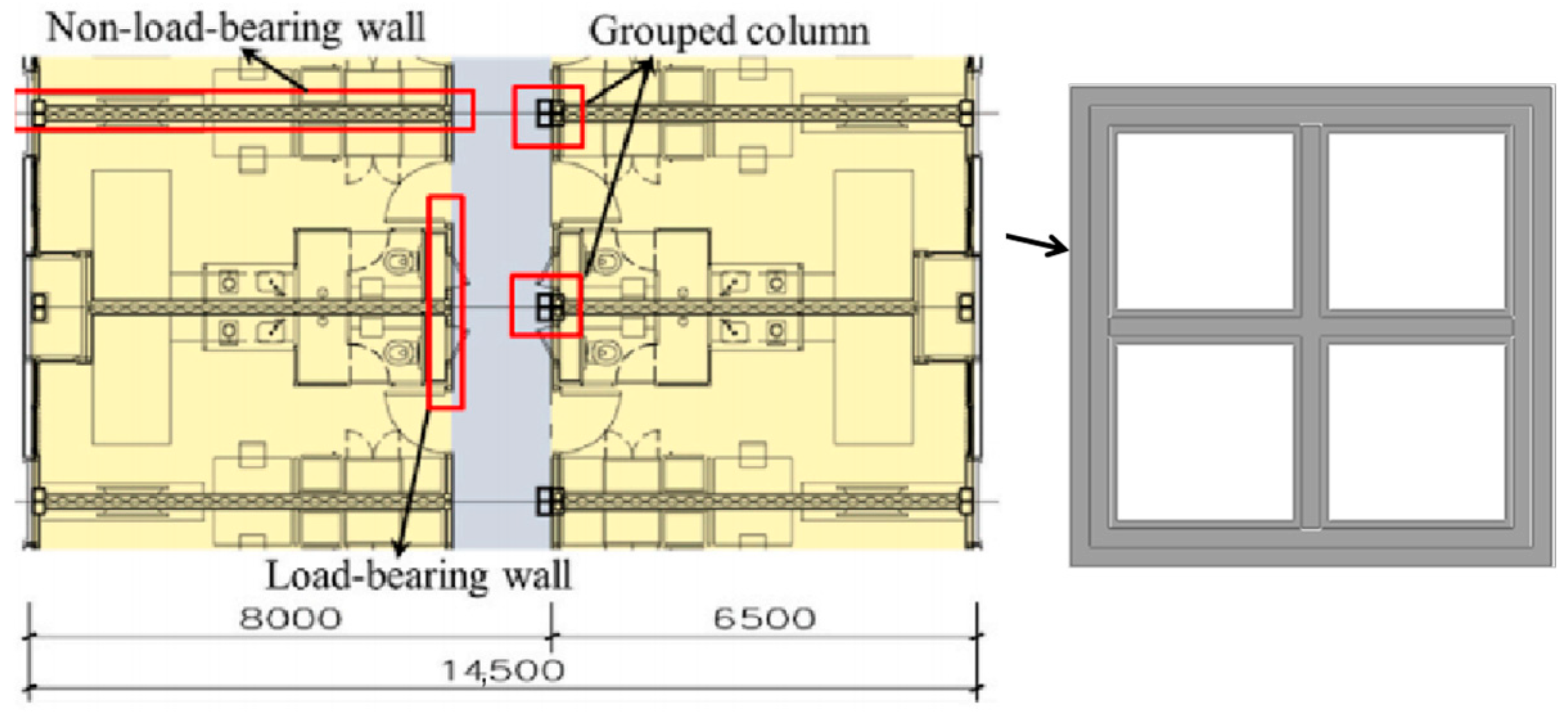
Figure 1. Design prescription of grouped columns.
Buildings 16 00525 g001
Figure 2. Stress-strain curves of steel at different temperatures.
Buildings 16 00525 g002
Figure 3. Size of the grouped column.
Buildings 16 00525 g003
Figure 4. Mesh of thermal model.
Buildings 16 00525 g004
Figure 5. Thermal model and boundary.
Buildings 16 00525 g005
Figure 6. Temperature cloud maps of a grouped column.
Buildings 16 00525 g006
Figure 7. Thermal simulation results of measured points.
Buildings 16 00525 g007
Figure 8. Mechanical model and boundary.
Buildings 16 00525 g008
Figure 9. Mesh of the mechanical model.
Buildings 16 00525 g009
Figure 10. Verification of thermal simulation results.
Buildings 16 00525 g010
Figure 11. Thermal model and boundary.
Buildings 16 00525 g011
Figure 12. Time–displacement curves of different parameters.
Buildings 16 00525 g012aBuildings 16 00525 g012b
Figure 13. Influence of different parameters on fire resistance.
Buildings 16 00525 g013
Figure 14. Temperature cloud maps of different plasterboard thicknesses.
Buildings 16 00525 g014
Figure 15. Temperature cloud maps of different inner board types.
Buildings 16 00525 g015
Figure 16. Time–displacement curves of the different parameters.
Buildings 16 00525 g016aBuildings 16 00525 g016b
Figure 17. Influence of the different parameters on fire resistance.
Buildings 16 00525 g017
Figure 18. Comparison of Tcr calculation values and simulation values.
Buildings 16 00525 g018
Table 1. Thermal properties of the material at high temperatures.
MaterialDensity
(kg/m3)
Thermal Conductivity (W/m °C)Specific Heat
(J/Kg·°C)
Steel
[23]
7850Buildings 16 00525 i001Buildings 16 00525 i002
Gypsum Plaster-
Board
[9,19,20,21,22]
800Buildings 16 00525 i003Buildings 16 00525 i004
Mineral
Wool
[9,21,24]
120Buildings 16 00525 i005840
Rock wool [10]100Buildings 16 00525 i006840
Glass Fiber [10]15.42Buildings 16 00525 i007900
Table 2. Strength reduction coefficient of steel at high temperature.
Temperature (°C)20–400500600700800900100011001200
f y t / f y 1.000.780.470.230.110.060.040.020
Note: f y is the yield strength of steel at normal temperature, and f y t is the yield strength of steel at high temperature. The strength reduction coefficient of intermediate temperature was obtained by the linear interpolation method.
Table 3. Coefficient of initial elastic modulus reduction in steel at high temperature.
Temperature (°C)20100200300400500600
E s t / E s 1.001.000.900.800.700.600.31
Temperature (°C)700800900100011001200
E s t / E s 0.130.090.06750.0450.02250
Note: E S is the elastic modulus of steel at normal temperature, and E s t is the elastic modulus of steel at high temperature. The reduction coefficient of elastic modulus at intermediate temperature is obtained by the linear interpolation method.
Table 4. Stress-strain curves of steel at different temperatures.
Strain RangeStressTangent Modulus
ε ε p t ε E t E t
ε p t   <   ε   <   ε yt f p t c + b a a 2 ε y t ε 2 b ( ε y t ε ) / a a 2 ( ε y t ε ) 2
ε y t   <   ε   <   ε tt f y t 0
ε t t   <   ε   <   ε ut f y t ε ε t t ε u t ε t t f y t -
ε = ε u t 0-
Note: ε p t = f p t / E t ;   ε y t = 0.02 ;   ε t t = 0.15 ;   ε u t = 0.20 ;   a = ( ε y t ε p t ) ( ε y t ε p t + c / E t ) ; b = c ( ε y t ε p t ) E t + c 2 ;   c = ( f y t f p t ) 2 / ( ε y t ε p t ) E t 2 ( f y t f p t ) . ε is the strain; ε p t is the proportional limit strain at temperature T a ; ε y t is the yield strain at temperature T a ; ε t t is the maximum strain corresponding to the yield strength at the temperature T a ; ε u t is the ultimate strain at temperature T a .
Table 5. The slenderness ratio of the length of the column.
Column Length L (m)Slenderness λ
224.47
336.71
3.7545.88
448.94
561.18
Table 6. Parametric analysis results of the modular column.
LRT (mm)Slenderness f y (MPa)InsulationCavity (mm)FRL (min)
0.42045.88235cavity = 20 mm20134
2045.88420cavity = 20 mm20150
2045.88690cavity = 20 mm20161
0.52045.88235cavity = 20 mm20128
2045.88420cavity = 20 mm20145
2045.88690cavity = 20 mm20155
0.62045.88235cavity = 20 mm20122
2045.88420cavity = 20 mm20142
2045.88690cavity = 20 mm20151
0.72045.88235cavity = 20 mm20103
2045.88420cavity = 20 mm20135
2045.88690cavity = 20 mm20147
0.42036.71345cavity = 20 mm20145
2048.94345cavity = 20 mm20143
2061.18345cavity = 20 mm20146
0.52036.71345cavity = 20 mm20137
2048.94345cavity = 20 mm20137
2061.18345cavity = 20 mm20137
0.62036.71345cavity = 20 mm20134
2048.94345cavity = 20 mm20134
2061.18345cavity = 20 mm20133
0.72036.71345cavity = 20 mm20131
2048.94345cavity = 20 mm20130
2061.18345cavity = 20 mm20130
0.42045.88345cavity = 20 mm10145
2045.88345cavity = 20 mm15145
2045.88345cavity = 20 mm25145
2045.88345cavity = 20 mm30145
0.52045.88345cavity = 20 mm10138
2045.88345cavity = 20 mm15138
2045.88345cavity = 20 mm25138
2045.88345cavity = 20 mm30136
0.62045.88345cavity = 20 mm10134
2045.88345cavity = 20 mm15134
2045.88345cavity = 20 mm25134
2045.88345cavity = 20 mm30134
0.72045.88345cavity = 20 mm10129
2045.88345cavity = 20 mm15129
2045.88345cavity = 20 mm25129
2045.88345cavity = 20 mm30129
Table 7. Results of parametric analysis of fireproof board.
LRt (mm)Slenderness f y (MPa)InsulationCavity (mm)FRL (min)
0.42045.88345mineral wool = 20 mm20143
2045.88345plasterboard = 20 mm20143
0.52045.88345mineral wool = 20 mm20138
2045.88345plasterboard = 20 mm20138
0.62045.88345mineral wool = 20 mm20135
2045.88345plasterboard = 20 mm20134
0.72045.88345mineral wool = 20 mm20130
2045.88345plasterboard = 20 mm20129
0.41045.88345cavity = 20 mm2094
1545.88345cavity = 20 mm20117
2045.88345cavity = 20 mm20145
2545.88345cavity = 20 mm20174
3045.88345cavity = 20 mm20212
0.51045.88345cavity = 20 mm2090
1545.88345cavity = 20 mm20114
2045.88345cavity = 20 mm20138
2545.88345cavity = 20 mm20167
3045.88345cavity = 20 mm20198
0.61045.88345cavity = 20 mm2084
1545.88345cavity = 20 mm20111
2045.88345cavity = 20 mm20134
2545.88345cavity = 20 mm20161
3045.88345cavity = 20 mm20193
0.71045.88345cavity = 20 mm2081
1545.88345cavity = 20 mm20108
2045.88345cavity = 20 mm20129
2545.88345cavity = 20 mm20156
3045.88345cavity = 20 mm20186
Table 8. Results of parametric analysis of the fireproof board.
LRIP (mm)Slenderness f y (MPa)InsulationCavity (mm)FRL (min)
0.4MW45.88345cavity = 20 mm20122
RW45.88345cavity = 20 mm20111
GF45.88345cavity = 20 mm20103
PB45.88345cavity = 20 mm20145
0.5MW45.88345cavity = 20 mm20116
RW45.88345cavity = 20 mm20108
GF45.88345cavity = 20 mm2097
PB45.88345cavity = 20 mm20138
0.6MW45.88345cavity = 20 mm20113
RW45.88345cavity = 20 mm20105
GF45.88345cavity = 20 mm2092
PB45.88345cavity = 20 mm20134
0.7MW45.88345cavity = 20 mm20110
RW45.88345cavity = 20 mm20101
GF45.88345cavity = 20 mm2089
PB45.88345cavity = 20 mm20129
Notes: LR-Load Ratio; T-Thickness of Plasterboard; [math]-Yield Strength of Steel; IP-Type of Inner Pannel; MW-Mineral Wool; RW-Rock Wool; GF-Glass Fiber; PB-Gypsum Plasterboard.
Disclaimer/Publisher’s Note: The statements, opinions and data contained in all publications are solely those of the individual author(s) and contributor(s) and not of MDPI and/or the editor(s). MDPI and/or the editor(s) disclaim responsibility for any injury to people or property resulting from any ideas, methods, instructions or products referred to in the content.