Article

Valorization of Waste Tires in Lime-Stabilized Adobe Blocks: Enhanced Thermal, Acoustic, and Hygroscopic Properties for Sustainable Construction in Arid Climates


1
Civil Engineering Research Laboratory, Department of Civil Engineering, Biskra University, Biskra 07000, Algeria
2
Laboratory of Eco-Materials, Chemical Processes and Sustainable, Development Department of Civil Engineering, Biskra University, Biskra 07000, Algeria
3
Laboratory of Materials and Mechanics of Structures (LMMS), Faculty of Technology, University of M’sila, University Pole, Road Bourdj Bou Arreiridj, M’sila 28000, Algeria
4
Mechanical and Materials Development Laboratory, Department of Civil Engineering, Djelfa University, Djelfa 17000, Algeria
5
Engineering Sciences Research Center, Imam Mohammad Ibn Saud Islamic University (IMSIU), Riyadh 11432, Saudi Arabia
6
Deanship of Scientific Research, Imam Mohammad Ibn Saud Islamic University (IMSIU), Riyadh 11432, Saudi Arabia
7
Department of Mechanical Engineering, College of Engineering, Imam Mohammad ibn Saud Islamic University (IMSIU), Riyadh 11432, Saudi Arabia
*
Authors to whom correspondence should be addressed.
Buildings 2026, 16(2), 359; https://doi.org/10.3390/buildings16020359
Submission received: 2 November 2025 / Revised: 26 December 2025 / Accepted: 27 December 2025 / Published: 15 January 2026
(This article belongs to the Section Building Materials, and Repair & Renovation)

Abstract

The construction industry is increasingly oriented toward the development of sustainable materials aimed at reducing environmental impact while ensuring adequate mechanical and hygrothermal performance. This study investigates the effect of two distinct forms of waste tire particles—powder (UTWP) and granulate (UTWG)—separately incorporated into lime-stabilized adobe blocks at respective contents of 5–25% and 10–60%. The physical, thermal, mechanical, and microstructural properties of the blocks were evaluated through density measurements, ultrasonic pulse velocity, water absorption, thermal conductivity, mechanical strength tests, and microstructural characterization using SEM-EDX. The results show that the incorporation of powdered waste tires (UTWP) significantly enhances thermal, hygroscopic, and microstructural performance; thermal conductivity decreases by up to 21.6%, and a 40% reduction in capillary water absorption is achieved with only 5% DPUP, indicating improved insulation and increased resistance to moisture. In contrast, granular waste tires (UTWG) induce a notable increase in ductility and acoustic absorption at the expense of a more pronounced reduction in mechanical strength. The observed improvements in water resistance, microstructural stability, and ductile behavior impart a resilient character to the material, making it particularly suitable for arid environments. Overall, adobe modified with optimized fractions of waste tire particles emerges as a sustainable and multifunctional construction material that promotes waste valorization while enhancing the functional performance of earthen architecture.

1. Introduction

Raw earth, particularly in the form of adobe, is a traditional building material that has regained interest due to its low environmental impact. However, its low mechanical performance, especially in compression and tension, still limits its large-scale application. To overcome these weaknesses, numerous studies have explored stabilization techniques, including the addition of binders such as lime, cement, or gypsum, as well as the incorporation of natural or industrial fibers [1]. These solutions can significantly improve the cohesion, mechanical strength, and durability of adobe while preserving its ecological character.
In this context, many studies have focused on the properties of building materials, particularly raw earth and specifically adobe, with the aim of developing new innovative materials, with or without stabilization [2,3,4,5,6]. Historical adobe structures generally exhibit low mechanical strength, both in compression and in tension [7]. However, these performances can be significantly improved through the use of chemical or physical stabilizers [8]. In general, compressive strength remains relatively variable depending on the compositions and techniques used [4].
Many studies have incorporated plant fibers (date palm, straw, sorghum, fonio, kenaf, etc.) into raw earth bricks, particularly adapted to arid regions due to their low environmental impact during both the extraction of natural resources and at the end of their life cycle [9,10,11,12,13,14,15,16,17,18,19]. Previous studies have shown that certain plant fibers can enhance tensile strength, ductility, and crack-control behavior in earthen materials [20,21], while other works have reported reductions in thermal conductivity and improvements in hygrothermal performance [22,23]. However, these effects may also become negative such as decreased compressive strength or increased porosity when the fiber type, dosage, or experimental conditions are not properly optimized. According to Taallah [9], results show that a moderate addition of date palm fibers (0.05%) combined with 8% cement and a high compaction pressure (10 MPa) slightly improves dry compressive strength. In the case of quicklime, an improvement in dry tensile strength is observed with 0.05% fibers and lime contents ranging from 8% to 12%. Beyond these dosages, the addition of raw or alkali-treated fibers tends to degrade mechanical properties. However, the presence of fibers improves the ductility of the material, reducing its brittle behavior.
In the same context, several researchers have investigated the contribution of agricultural by-products to improve adobe. Serrano et al. [11] showed that by-products such as straw, sorghum fibers, fonio fibers, and date palm waste—typically incorporated at rates between 0.5% and 5%—can strengthen adobe bricks, enhance ductility, and reduce thermal conductivity, while also lowering the environmental impact of the formulations. Ouedraogo et al. [12] highlighted that incorporating fonio straw can improve both the mechanical behavior and the thermal regulation capacity of adobe by increasing ductility and reducing heat transfer. Meybodian et al. [13] demonstrated that natural mesh reinforcements significantly enhance the seismic resistance of adobe walls by improving crack distribution and energy dissipation. Other studies [14,15,17,24,25] reported that date palm and sorghum by-products can increase durability and thermal insulation, although a slight decrease in compressive strength is often observed due to increased porosity. Parisi et al. [16] further emphasized that performance outcomes can vary depending on artisanal fabrication methods, underscoring the sensitivity of earthen materials to local manufacturing practices.
Other researchers have investigated the integration of industrial waste, in fiber or powder form, into raw earth materials in order to valorize these residues while enhancing the mechanical and thermal properties of bricks or building blocks. According to Izemmouren [10], the addition of natural pozzolan and glass powder in combination with lime improves the performance of compressed earth bricks. By testing two soil types, three lime contents (6, 8, and 10%) and various proportions of mineral additives (10 to 40%), she showed that an optimal content of 30% pozzolan or glass powder significantly enhances mechanical strength (compression and tension) as well as durability against water, abrasion, and swelling. Furthermore, steam curing at 75 °C for 24 h proved more effective than conventional curing, accelerating and improving final performance. Similarly, Aalil et al. [26] showed that recycled brick dust exhibits interesting pozzolanic activity, reducing shrinkage, improving mechanical strength and water-related properties of mortars, while being compatible with old substrates for heritage restoration. Valenzuela et al. [27] evaluated the addition of industrial and agro-industrial by-products such as fibers and stabilizers in compressed earth blocks, highlighting improvements in tensile strength, durability, and thermal insulation, with more cohesive and less permeable mixtures. Finally, Mouih et al. [28] demonstrated that phosphate rock waste combined with red clay and cement produces high-performance bricks with low water absorption that are compliant with standards, environmentally safe, and particularly suited to mining areas with limited resources.
Used tires pose a serious environmental problem due to their non-biodegradability and continuous accumulation in landfills. Each year, millions of tons are generated worldwide, contributing to pollution [29]. To address this, their valorization in the construction sector offers a sustainable alternative [30]. Recycled rubber, in powder or granular form, has interesting properties—elasticity, low density, and resistance to degradation—which can improve the performance of building materials, particularly in thermal insulation, shock absorption, and lightness [23,31]. This approach is part of a circular economy dynamic, combining innovation with reduced environmental impact [29].
In the same perspective of waste valorization, several researchers have also recently shown interest in incorporating recycled rubber, mainly derived from end-of-life tires, into construction materials. In their review, Mohajerani et al. [32], examined the incorporation of rubber aggregates derived from end-of-life tires into various construction materials, including concrete, asphaltic mixes, road embankments, and seismic isolation systems. The rubber content investigated generally ranged from 5% to 20%. The authors reported that rubber addition can enhance resilience, freeze–thaw resistance, and chemical durability by approximately 10% to 40%, while reducing density and thermal conductivity by 15% to 30%. However, they also noted a significant decrease in mechanical strength, which may reach 30% to 60% depending on the incorporation rate. Tran et al. [33] reviewed the physical and chemical treatments applied to end-of-life tire rubber to improve its performance in cement-based materials. They analyzed the action mechanisms, microstructural effects, and compared the efficiency of treatments using two indicators, Strength Recovery Index (SRI) and Strength Gain (SG), in order to recommend the most effective methods to enhance the mechanical properties of modified concrete. Mei Zeng et al. [34] investigated the influence of recycled powders derived from construction waste on the mechanical properties and durability of adobe. The results highlight the existence of optimal contents that improve compressive strength as well as resistance to wetting–drying and freeze–thaw cycles. This study emphasizes the potential of valorizing construction waste to enhance the durability of raw earth materials. Parlato, M.C.M. et al. [35] investigated the use of unfired raw earth adobe blocks reinforced with wool fibers derived from livestock waste as an eco-friendly solution for construction. Their study highlights the influence of fiber length on the thermal and mechanical performance of the material. The results show that shorter fibers mainly improve thermal insulation, while longer fibers enhance mechanical strength. Microstructural analyses confirm the role of fiber–soil adhesion in these improvements, allowing the optimization of adobe formulations according to the intended application. The integration of waste tires into raw earth block production has been little explored in current research. However, Hannah Porter et al. [36] studied the improvement of compacted earth performance by applying surface microbial biocementation, which increased mechanical strength by 25%, while reducing water permeability by 24% and erosion by 62%. Furthermore, the addition of shredded rubber improved thermal insulation, with a temperature difference of 30 °C after 6 h, but resulted in a decrease in mechanical strength.
According to previous studies, there is a lack of research on the effect of tire rubber waste particle size, either as granular or powdered form, on lime-stabilized adobe bricks. Moreover, few studies have simultaneously evaluated multiple properties, including thermal, hygroscopic, and mechanical characteristics, which limits the comprehensive understanding of the impact of tire waste incorporation on adobe bricks performance.
This study has a dual objective: first, to systematically determine the influence of waste tire particle size, by directly comparing granular and powdered forms, on the physical, thermal, and mechanical properties of lime-stabilized adobe blocks. Second, it seeks to develop an optimized, sustainable building material that effectively valorizes industrial waste. The central hypothesis posits that, although the incorporation of waste particles generally leads to a more heterogeneous matrix, the finer powdered tire waste is expected to disperse more uniformly within the earthen material than the larger granular particles. This relatively more uniform distribution should produce a composite microstructure with fewer localized discontinuities, thereby promoting more balanced and enhanced overall performance, including improved thermal insulation, moisture resistance, and mechanical ductility compared to blocks incorporating granular tire particles.

2. Materials and Experimental Methods

2.1. Materials

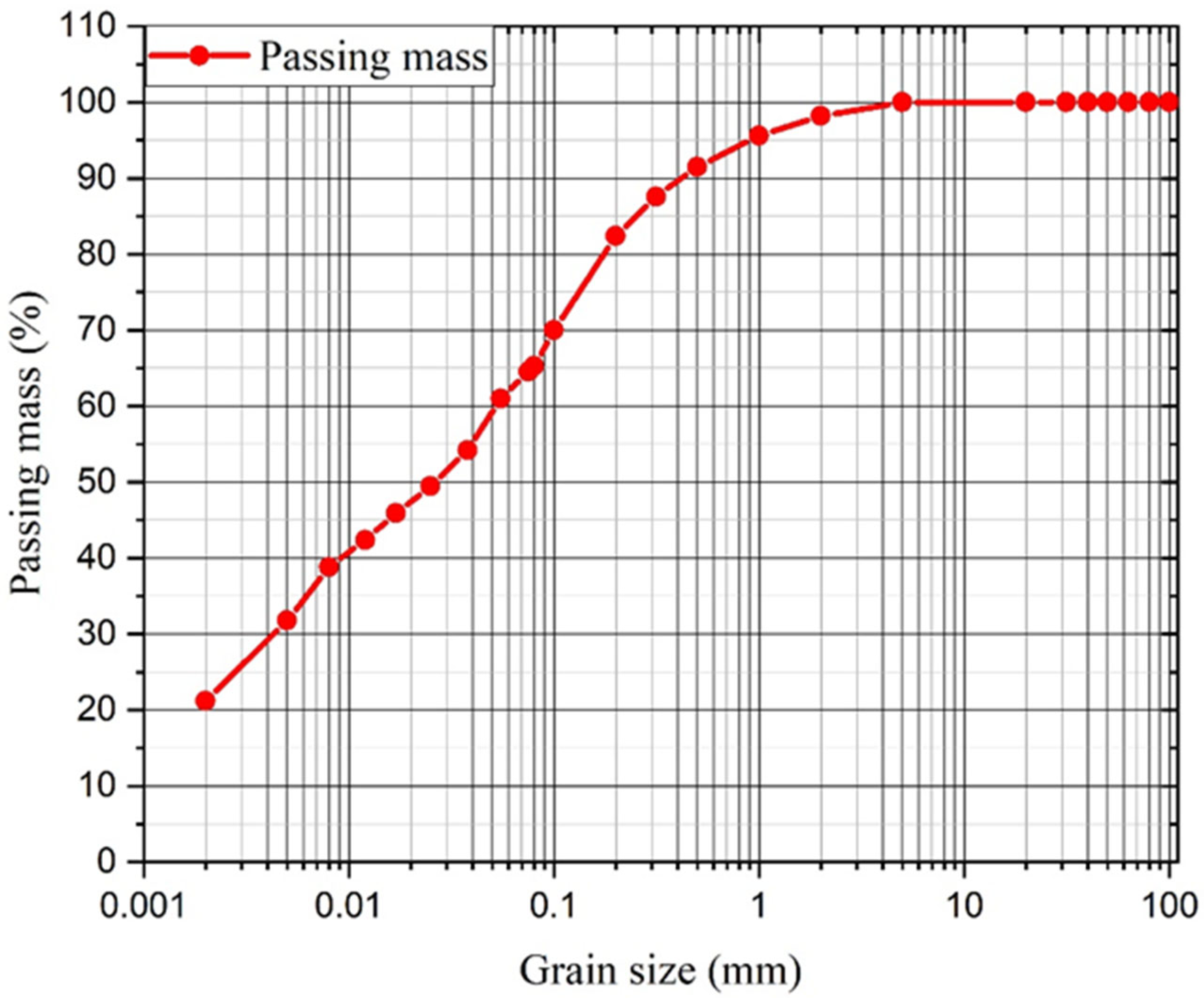
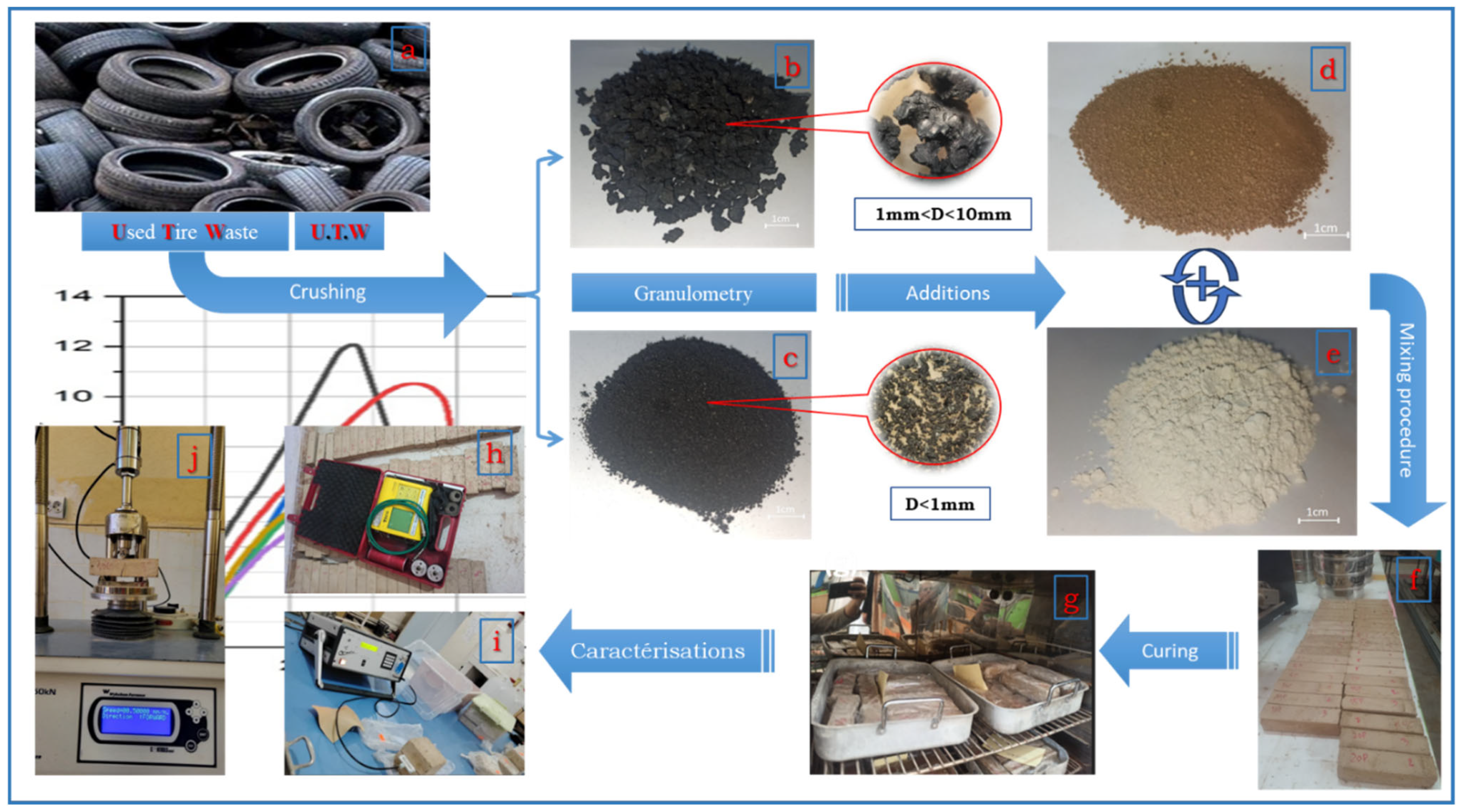
Particular care was devoted to the selection and preparation of the materials used in this study. The base material consists of a natural raw earth, selected due to its local availability and abundance. To guarantee sample homogeneity, the soil was sieved to 2 mm in order to eliminate impurities and agglomerates. In addition, a thorough and systematic characterization of the soil was conducted in accordance with established standards. Particle size distribution according to NF P 94-056 [37] and sedimentation analysis according to NF P 94-057 [38] were performed in Figure 1. The analyzed soil is characterized by a very fine texture, with approximately 21% clay particles smaller than 0.002 mm and more than 65% fine particles smaller than 0.08 mm, indicating a high proportion of fine sands, silts, and clays. Based on the particle size distribution, the soil composition can be estimated at approximately 21% clay, 44% silt and fines, and 35% sand. The grain size distribution curve is continuous and well-graded, indicating a heterometric soil with good gradation. This type of soil presents moderate to low permeability and can have notable plasticity, typical of silty soils with a clayey tendency. Bulk density and specific gravity were determined according to NF P 18-554 [39] and NF P 18-555 [40], while Atterberg limits and plasticity index were determined according to NF P 94-051 [41]. In addition, the soil’s adsorption capacity was evaluated using the methylene blue test (NF P 94-068) [42], and its acidity was measured according to ASTM D6276-99a [43]. The results of these analyses are summarized in Table 1. To deepen the knowledge of the material and reinforce the originality of the approach, two complementary analyses were conducted on the soil material: a chemical analysis by X-ray fluorescence (XRF), presented in Table 2, and a mineralogical analysis by X-ray diffraction (XRD), presented in Table 3. This dual chemical and mineralogical characterization provides a solid foundation for the study of our innovative composite. Quick lime employed in this study is produced by the unit in Hassasna (Saida, Algeria). The essential component of the mixture is used here as a chemical stabilizing agent (Figure 2e). Physical properties include an absolute density of 2230 kg/m3, an apparent density of 1490 kg/m3, and a specific surface area of 300 m2/kg. To better understand the role of lime in the composite, chemical (XRF) and mineralogical (XRD) analyses were also carried out on this material (Table 2 and Table 3), highlighting its composition, purity, and stabilization potential.
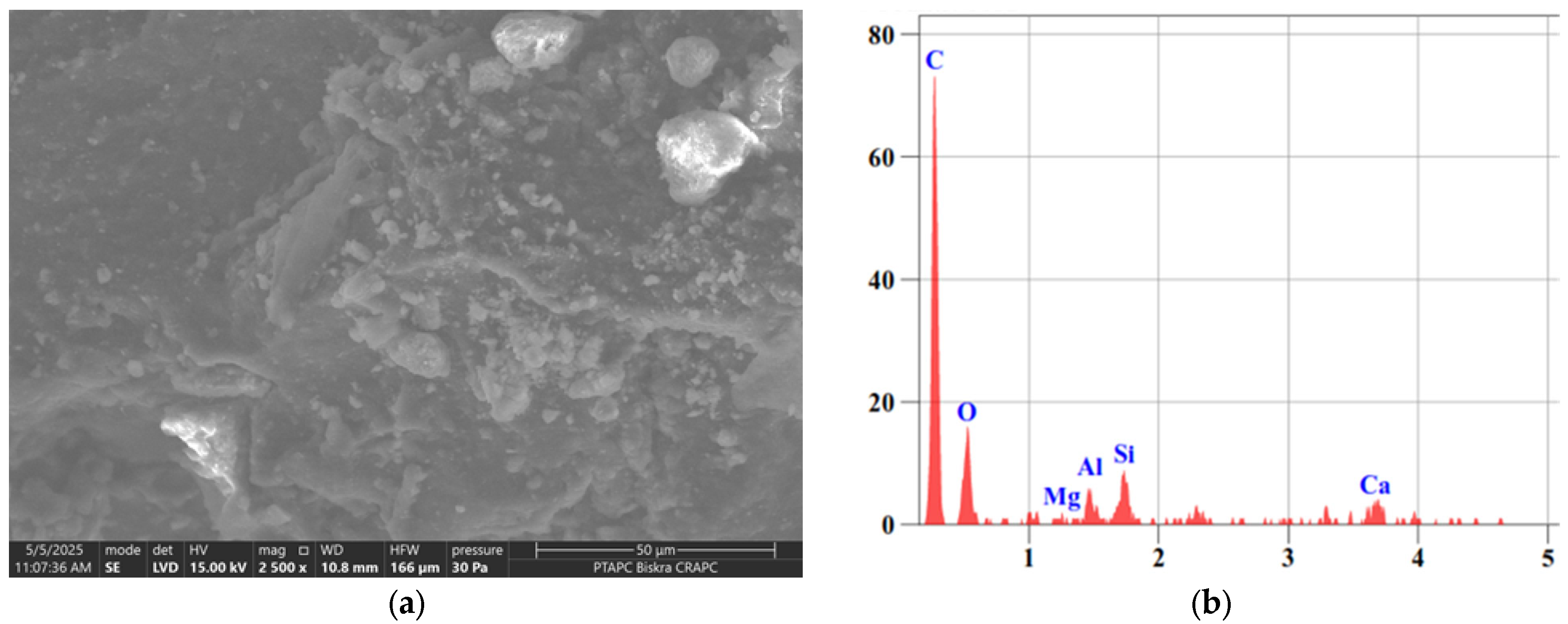
Another innovative aspect of this study is the incorporation of waste tires—composed mainly of rubber, textile fibers, metallic particles, and chemical additives—into the adobe mixture. The waste tires used were supplied by the recycling facility of the company Ecorep (Algeria), which specializes in the mechanical processing of end-of-life tires. Two particle-size fractions were prepared for incorporation: a granular form (UTWG), obtained through primary shredding followed by sieving to retain particles between 1 and 10 mm (Figure 2b), and a fine powdered form (UTWP), produced through secondary grinding and sieved to less than 1 mm (Figure 2c). These fractions consist predominantly of rubber (≈83%), with residual textile fibers (≈10%) and metallic particles (≈7%), the latter being removed by magnetic separation before use. Each fraction was produced and weighed separately to ensure consistent composition and strict homogeneity across all mixtures. The apparent density of the processed tire waste is 0.98 g/cm3, a value adopted for material characterization. Energy-dispersive X-ray spectroscopy (EDX) coupled with scanning electron microscopy (SEM) performed on the waste tire material (Figure 3) revealed a high carbon content, characteristic of rubber, along with mineral elements such as oxygen, silicon, calcium, aluminum, and magnesium. In the SEM micrographs, metallic residues and inorganic fillers appear as bright particles dispersed on the rubber surface, confirming not only the polymeric nature of the material but also the presence of mineral additives incorporated during tire manufacturing. Finally, the water used for the preparation of the mixture is potable water, maintained at a controlled temperature of about 20 °C, with a tolerance of ±2 °C. This parameter is essential, as a stable temperature ensures optimal hydration of the components, promoting mixture cohesion and improving the mechanical performance of the final material. Meeting this condition also reduces unexpected variations that could compromise the durability and strength of the product.

2.2. Experimental Methods

2.2.1. Sample Preparation

The main objective of this first experimental phase is to accurately determine the optimal quicklime content and the curing time in an oven required to effectively stabilize the studied soil. To this end, a rigorous procedure was implemented. The soil was first sieved to 2 mm and then dried at 65 ± 2 °C for 24 h, thus ensuring homogeneous initial conditions [44]. Standard prismatic specimens with dimensions of 4 × 4 × 16 cm3 were manufactured in accordance with the experimental protocol, with three repetitions for each formulation, and then prepared following a structured procedure as in Figure 2f. To identify the most effective stabilization combination, different proportions of quicklime (3%, 5%, 7%, 9%, 11%, 13%, and 15% by dry soil weight) were evaluated. The curing process was carried out in a ventilated oven maintained at 65 °C; to prevent any loss of moisture during this phase, the specimens were carefully wrapped in a plastic film, thereby preserving their internal moisture in the absence of external relative humidity control. Each formulation was subjected to three curing durations (3, 7, and 11 days) in an oven maintained at 65 °C. The originality of this approach lies in the cross-combination of these two parameters (lime content and curing time), enabling fine optimization of the stabilization process. Compressive and flexural strength were selected as the main criteria to evaluate the performance of the different formulations. The results showed that the highest strength was achieved with a lime content of 7% and a curing period of 11 days, representing the optimal combination. The granular fraction was incorporated at dosages of 0%, 10%, 20%, 30%, 40%, 50%, and 60%, while the powdered fraction was used at 0%, 5%, 10%, 15%, 20%, and 25%. Beyond these proportions, the mixtures exhibited a significant loss of workability, making them unsuitable for further processing. The percentages of tire waste (UTWG and UTWP) used in this study correspond to mass-based proportions relative to the total dry mass of the mixture (Table 4, Table 5 and Table 6). To ensure good plasticity and homogeneity of the mixture, the water content (W) was adjusted to 21.35% of the dry soil weight, in accordance with the average of the Atterberg liquid limit (WL) and plastic limit (WP), as given by the empirical formula in Equation (1), and following the approaches adopted in previous similar studies [12,44,45,46].
W ( % ) = w l + w p 2

2.2.2. Tests Performed

As part of this study, the prepared samples were subjected to a series of tests aimed at characterizing their physical, thermal, and mechanical properties. The physical properties were evaluated through the determination of bulk density, ultrasonic testing, and capillary water absorption, while the thermal properties were assessed by measuring thermal conductivity and specific heat capacity. Mechanical performance was determined using dry compressive strength tests and three-point bending tests. In addition, a scanning electron microscopy (SEM) analysis was carried out to examine the material’s microstructure and to evaluate the quality of integration of the rubber particles within the earth–lime matrix.
Apparent Dry Density
The apparent dry density of the soil material was determined in accordance with the EN 1015-10/A1 [47] standard. It is calculated from the ratio between the dry mass of the specimen (M, in kilograms) and its volume (V, in cubic meters), according to the following formula in Equation (2):
ρ = M V
Ultrasonic Test
This test aims to measure the propagation velocity of ultrasonic waves using a portable device. The wave travels through the specimen between a transmitter and a receiver placed at its ends. The device simultaneously displays the travel time and wave velocity. To ensure proper transmission, a thin layer of grease is applied to the contact surfaces. The equipment, compliant with the NFP 18-418 standard [48], is calibrated before each series of measurements.
Capillary Water Absorption
Capillary water absorption was evaluated by drying the specimens at (65 ± 2) °C until their mass stabilized then allowing them to cool to room temperature. In accordance with the AFNOR XP P 13-901 [49] standard, the capillary absorption coefficient (Cb) was calculated using the following formula in Equation (3):
C B = 100 ( P 1 P 0 ) S t
where (P1) and (P0) represent the masses of the block after and before immersion, respectively, (S) is the immersed surface area (cm2), and (t) is the immersion time (min). This coefficient makes it possible to assess a material’s ability to absorb water through capillarity; a brick is considered to have low capillarity if Cb ≤ 20 and be slightly capillary if Cb < 40.
Thermal Properties (Thermal Conductivity and Specific Heat Capacity)
In this study, the thermal properties of the adobe samples were characterized in accordance with the NFE 993-15 standard [50], using a thermal conductivity meter, on the transient hot-wire method, following ISO 8894-1:1987 [51]. This technique, which employs a probe composed of a heating resistor and a temperature sensor, enables precise measurement under transient conditions. The probe is placed between two symmetrical blocks with carefully polished surfaces to minimize thermal exchange with the surrounding air. The advantage of this method lies in its ability to determine thermal conductivity without altering the material’s natural moisture content—an essential factor for hygroscopic materials such as adobe. The tests were carried out at room temperature (22 °C) and under a controlled relative humidity of 55%, ensuring experimental conditions representative of real-world environments. Equations (4) and (5) are as follows:
C = Cp × ρ
e =   λ   C
In these equations, (C) denotes the volumetric heat capacity (J/m3·K), (Cp) the specific heat capacity (J/kg·K), (ρ) the density (kg/m3), (λ) the thermal conductivity (W/m·K), and (e) the thermal effusivity (J·s1/2/m2·K). Together, these parameters characterize the thermal behavior of the material, particularly its ability to store and release thermal energy.
Mechanical Testing
In this research, the study focuses on improving the mechanical performance of adobe blocks through the addition of recycled rubber particles. The tests were carried out using a TRITEK 50 kN bending machine, with a loading rate of 0.5 mm/min. In accordance with NF EN 196-1 [52], the three-point bending test was applied to specimens measuring 4 × 4 × 16 cm3 to determine the flexural strength (σf) and the modulus of elasticity (Ef), according to the following relations in Equations (6) and (7):
σ f = 3 F L 2 b d 2
E f = F L 3 4 b d 3 δ
where (F) is the applied load, (L) the span length, (b) the width, (d) the height of the specimen, and (δ) the measured deflection. For the compressive strength test, the half-specimens obtained from the bending tests were reused. The compressive strength was calculated using the following formula in Equation (8), in accordance with the methodology reported in the works of Khoudja et al. [44]:
σ = F A
where (A) is the initial cross-sectional area. The mechanical tests were carried out using a 50 kN TRITEK press, employed for the three-point bending test and for compression on the half-specimens. This equipment also enabled the recording of stress–strain curves required for the analysis of mechanical parameters.
Sample Preparation for Microscopic Studies
The analysis of images obtained by scanning electron microscopy (SEM) and energy-dispersive spectroscopy (EDX) strongly depends on the quality of the adobe samples, with or without the addition of recycled waste tire particles in granular or powdered form. The samples, measuring between 1.5 and 2 cm, are mounted on a specimen holder and then placed in the observation chamber. This step allows for validating the macroscopic characteristics previously observed, as well as examining the cohesion between the recycled rubber elements and the adobe matrix, while also investigating the presence of voids within the structure.

3. Results and Discussion

3.1. Effect of Recycled Waste Tire Content on Physical Properties

3.1.1. The Apparent Density

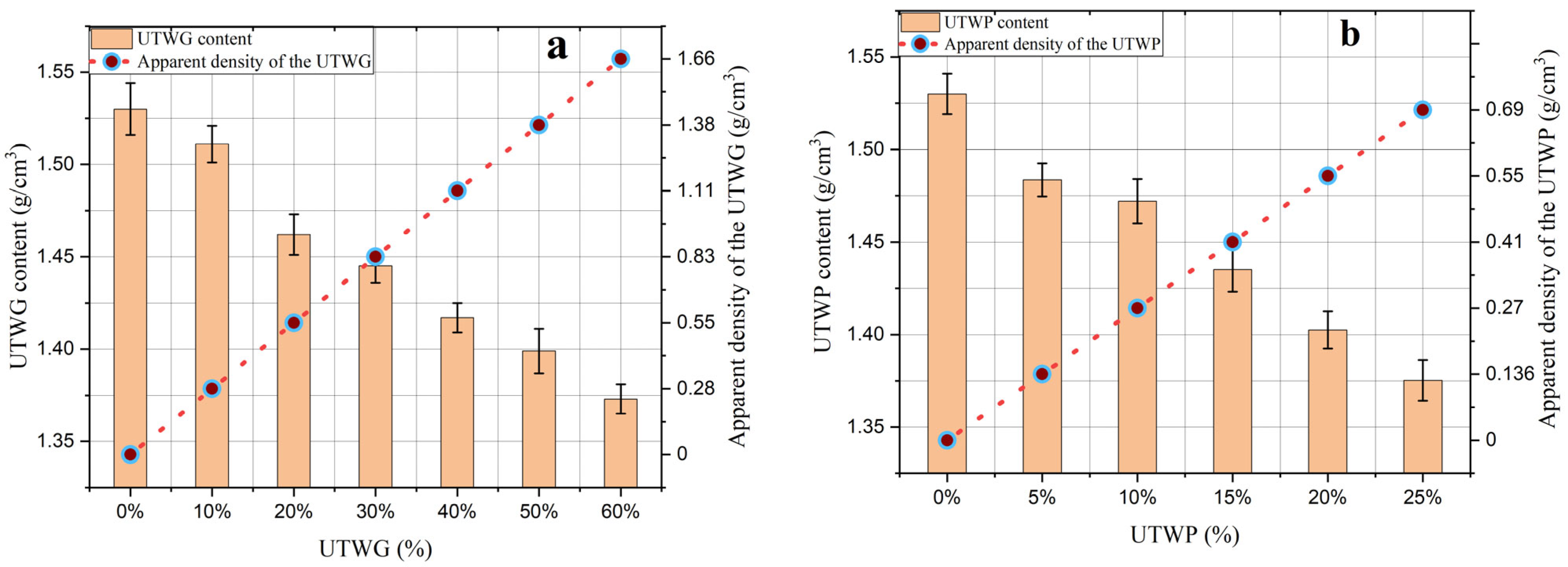
The results obtained highlight a progressive decrease in the apparent density of adobe as a function of the incorporation of recycled waste tires, whether in the form of aggregates (UTWG), Figure 4a, or powder (UTWP), Figure 4b. In the case of UTWG, the apparent density decreases from 1.53 g/cm3 for the control material (0%) to 1.37 g/cm3 for a content of 60%, representing a reduction of about 10.46%. Similarly, with UTWP, a steady decrease is observed, from 1.53 g/cm3 to 1.38 g/cm3 for an incorporation of 25%, corresponding to an overall reduction of 9.8%. In both cases, this trend is explained by the significantly lower density of rubber whether in granular or powdered form compared to the traditional mineral constituents of adobe (clay, silt, and sand). The addition of these lighter particles, as illustrated by the dotted curve representing the amount of UTWG incorporated, has a direct influence on the progressive decrease in the apparent density of the material. These findings confirm the interest in using waste tires as lightweight fillers, particularly in applications where lighter materials are required, without compromising volume or workability. Similar trends have been observed in other studies using natural or industrial wastes as lightweight agents. For example, Omrani et al. [53] reported that incorporating Juncus acutus (sharp rush) plant fibers into earth blocks resulted in a significant reduction in apparent density, from 1847 kg/m3 to 1078 kg/m3 for a fiber volume of 20%.

3.1.2. Propagation Speed of Ultrasound Waves

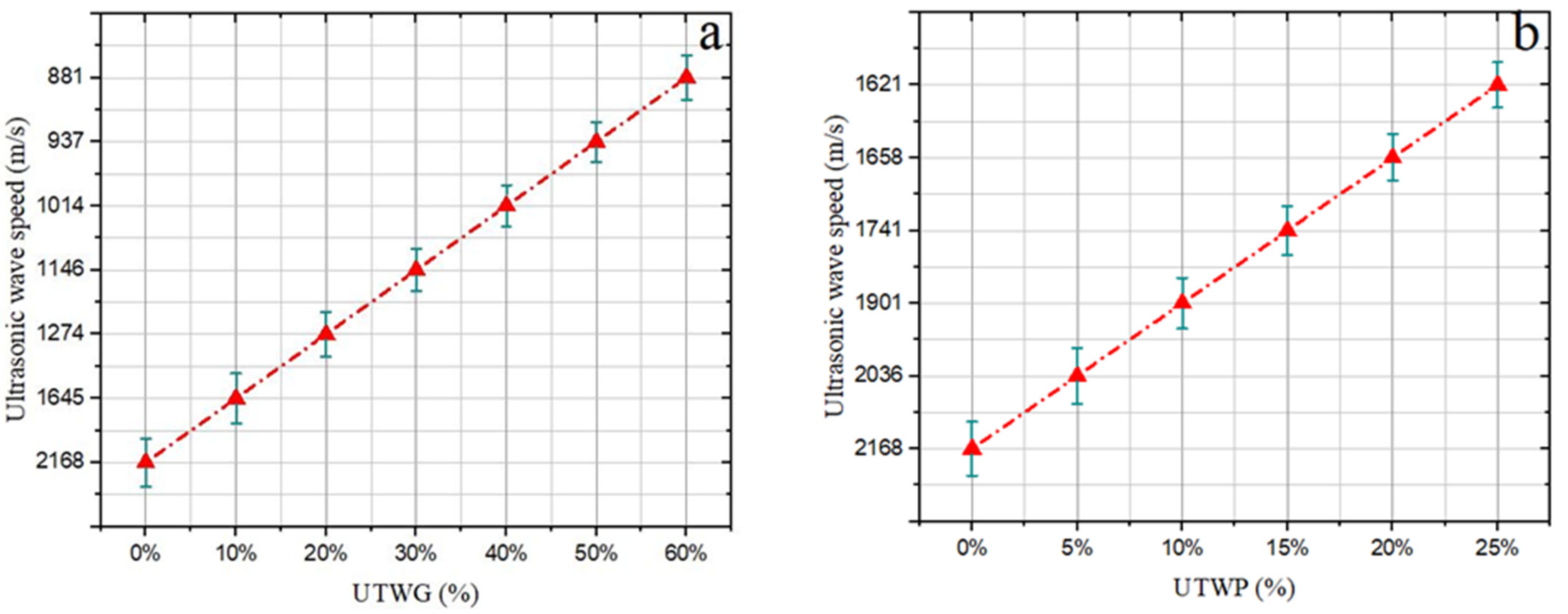
This study highlights a progressive decrease in the propagation velocity of ultrasonic waves in adobe blocks with the increase in recycled waste tire content, whether added in granular form, Figure 5a, or powdered form, Figure 5b. The incorporation of UTWG leads to a marked drop in this velocity, from 2168 m/s to 881 m/s between 0% and 60%, representing a reduction of nearly 59%, indicating a significant degradation in the compactness and internal cohesion of the material. This decrease is attributed to the low density and the presence of voids around the rubber particles, which increase porosity and disrupt wave transmission, a behavior consistently reported in previous studies on waste-tire-modified construction materials. In contrast, the addition of UTWP results in a more moderate decrease; at 25%, the velocity reaches 1621 m/s, corresponding to a reduction of about 25%. The fineness of the particles allows better dispersion within the matrix, limiting void formation and maintaining a certain degree of mechanical continuity. Thus, although both types of additions lighten the material, UTWP offers a more balanced compromise between weight reduction and performance. These observations are consistent with the results of Safa Layachi et al. [54], who reported similar effects with the incorporation of expanded polystyrene beads into earthen materials.

3.1.3. Capillary Absorption

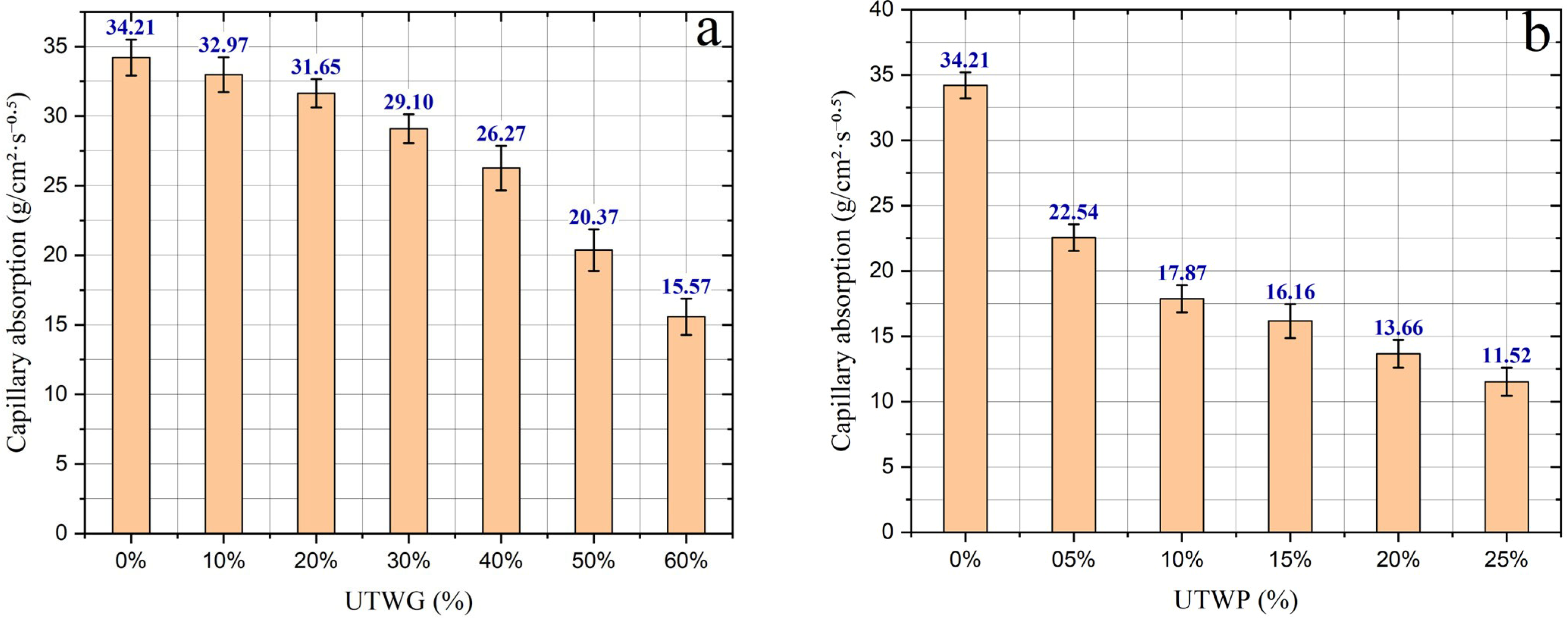
The results obtained show a significant decrease in the capillary absorption coefficient of adobe blocks with the increase in the percentage of recycled waste tires, whether incorporated in granular form or as powder (Figure 6a). This moderate but continuous decrease reflects a progressive improvement in moisture resistance, probably related to the hydrophobic nature of rubber and a reduction in capillary porosity. In comparison, blocks containing UTWP (Figure 6b) show a much faster drop in the absorption coefficient; with only 5% powder, the value falls to 20.54 kg·m−2·s−1/2, representing a reduction of more than 40%, reaching only 11.52 kg·m−2·s−1/2 at 25%. The fineness of the particles allows a more uniform dispersion within the matrix, limiting void formation and maintaining a certain degree of mechanical continuity. Thus, whether used as granules or powder, the recycling of waste tires in adobe blocks significantly improves their resistance to moisture, with a faster and more pronounced effect in the case of UTWP. Adobe with added waste tire powder offers a faster and greater reduction in water absorption, reaching up to 45% at 25% UTWP, thanks to the hydrophobic nature and fineness of the rubber. According to NF XP 13-901 [55], UTWP proves to be much more effective than UTWG in limiting capillarity, reaching the low-capillarity threshold (Cb < 20) at only 10% addition, compared to 60% for UTWG. Values of Cb < 40 correspond to the low-capillarity class. The superior efficiency of UTWP is due to its powder form, which better blocks pores and slows water penetration. In comparison with the work of Porter et al. [36], unstabilized compacted earth disintegrates in water, but its resistance improves with cement, reducing absorption by 24%. Thus, adobe with UTWP is more effective against moisture, while stabilized compacted earth is better suited for applications requiring higher mechanical strength.

3.2. Thermal Properties (Thermal Conductivity and Specific Heat Capacity)

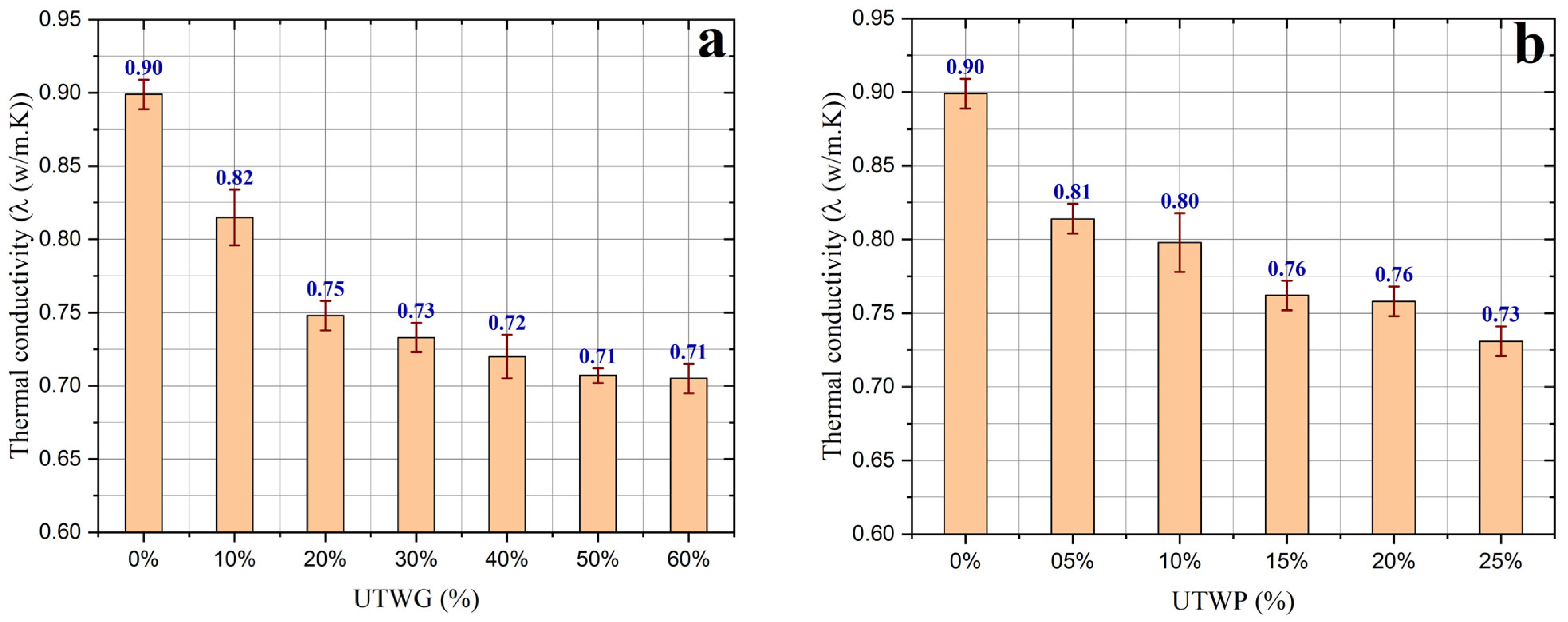
The incorporation of recycled waste tires, whether in granular form or powder form, leads to a progressive improvement in the insulating properties of adobe blocks. In both cases, a continuous decrease in thermal conductivity (λ) is observed with increasing addition rates. For UTWG samples Figure 7a, λ decreases from 0.899 to 0.705 W/m·K between 0% and 60% UTWG (Table 6). Similarly, for UTWP (Figure 7b), λ drops from 0.899 to 0.731 W/m·K between 0% and 25% UTWP (Table 7). This reduction is attributed to the low thermal conductivity of rubber and its lightweight effect on the earthen matrix, which limits the material’s ability to transfer heat. In parallel, the volumetric heat capacity (C) also decreases in both series of samples, reflecting a reduction in the material’s thermal storage capacity. Thermal effusivity (e), which indicates the rate of heat transfer between the material and its surroundings, follows the same trend: it decreases from 42.22 to 31.38 W·s1/2/m2·K for UTWG, Table 8, and from 42.22 to 34.33 W·s1/2/m2·K for UTWP, Table 9. Overall, these changes indicate that the addition of waste tires gives adobe better insulating properties and reduces rapid heat exchange, thereby improving indoor thermal comfort, particularly in hot climates. However, the decrease in volumetric heat capacity could affect thermal inertia, which is essential for passive temperature regulation. A moderate dosage between 30 and 40% for UTWG and 10 and 15% for UTWP appears to be the optimal compromise between insulation, thermal stability, and durability. These findings are consistent with those of Hannah Porter et al. [36], who reported a temperature difference of 30 °C after 6 h, indicating an improvement in thermal insulation.
The analysis of the thermal properties of adobe modified with the addition of recycled waste tires in granular form, Table 6, or powder form, Table 7, reveals a strong correlation between volumetric heat capacity, thermal conductivity, and thermal effusivity. Increasing the proportion of these additions leads to a simultaneous decrease in all three parameters. This trend reflects their interdependence, in accordance with the physical relationship linking effusivity, heat capacity, and conductivity.
The incorporation of recycled materials, which are generally lighter and more porous, alters the internal structure of adobe, thereby reducing its ability to store and conduct heat. As a result, the material becomes more insulating but with diminished thermal inertia. Thus, while the addition of waste tires improves thermal insulation performance particularly desirable in hot climates, it is important to consider the effect of this transformation on the material’s ability to accumulate and release heat indoors.

3.3. Mechanical Behavior of Adobe with UTW Addition

3.3.1. Effect of UTWG on the Compressive Strength of Adobe

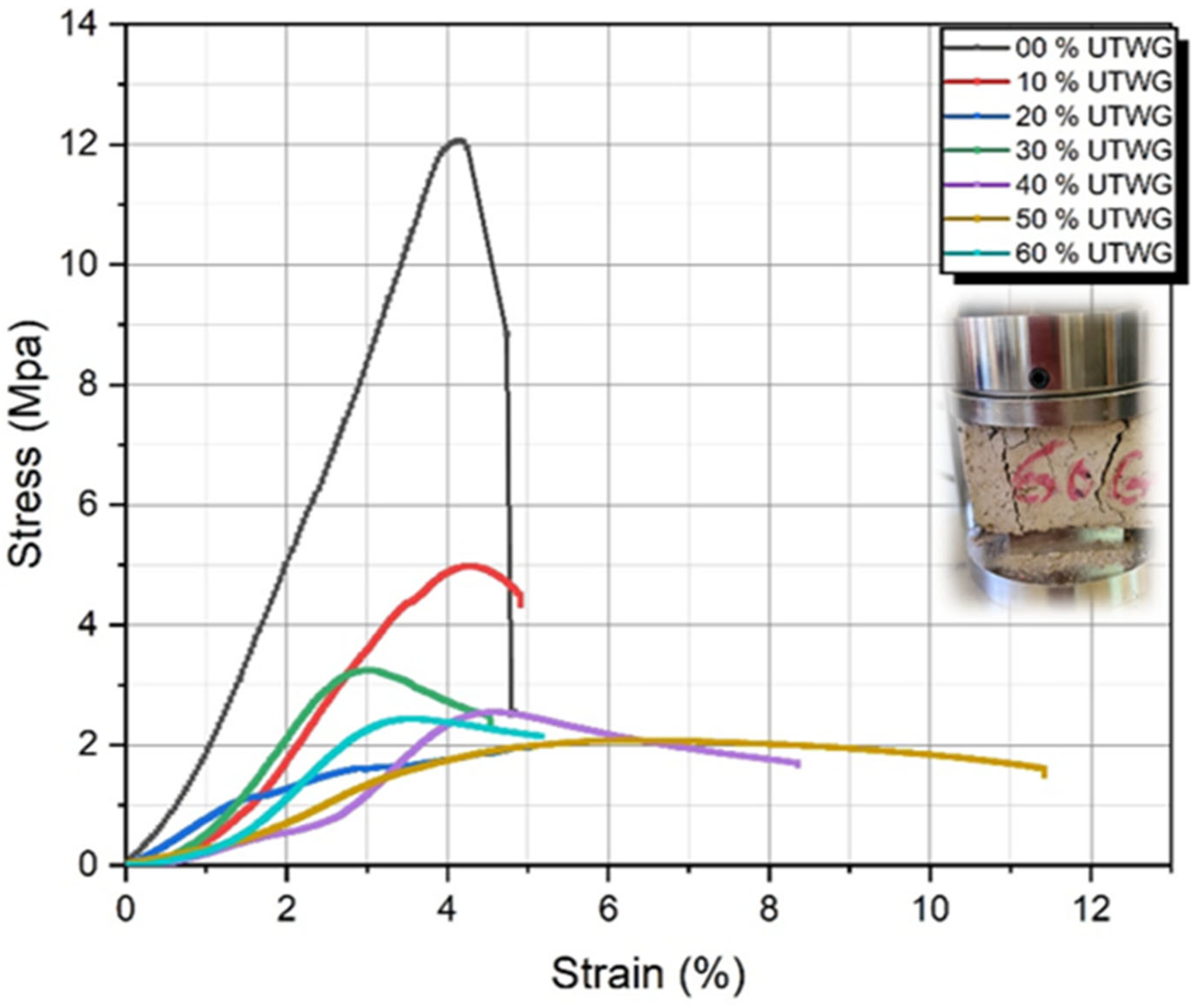
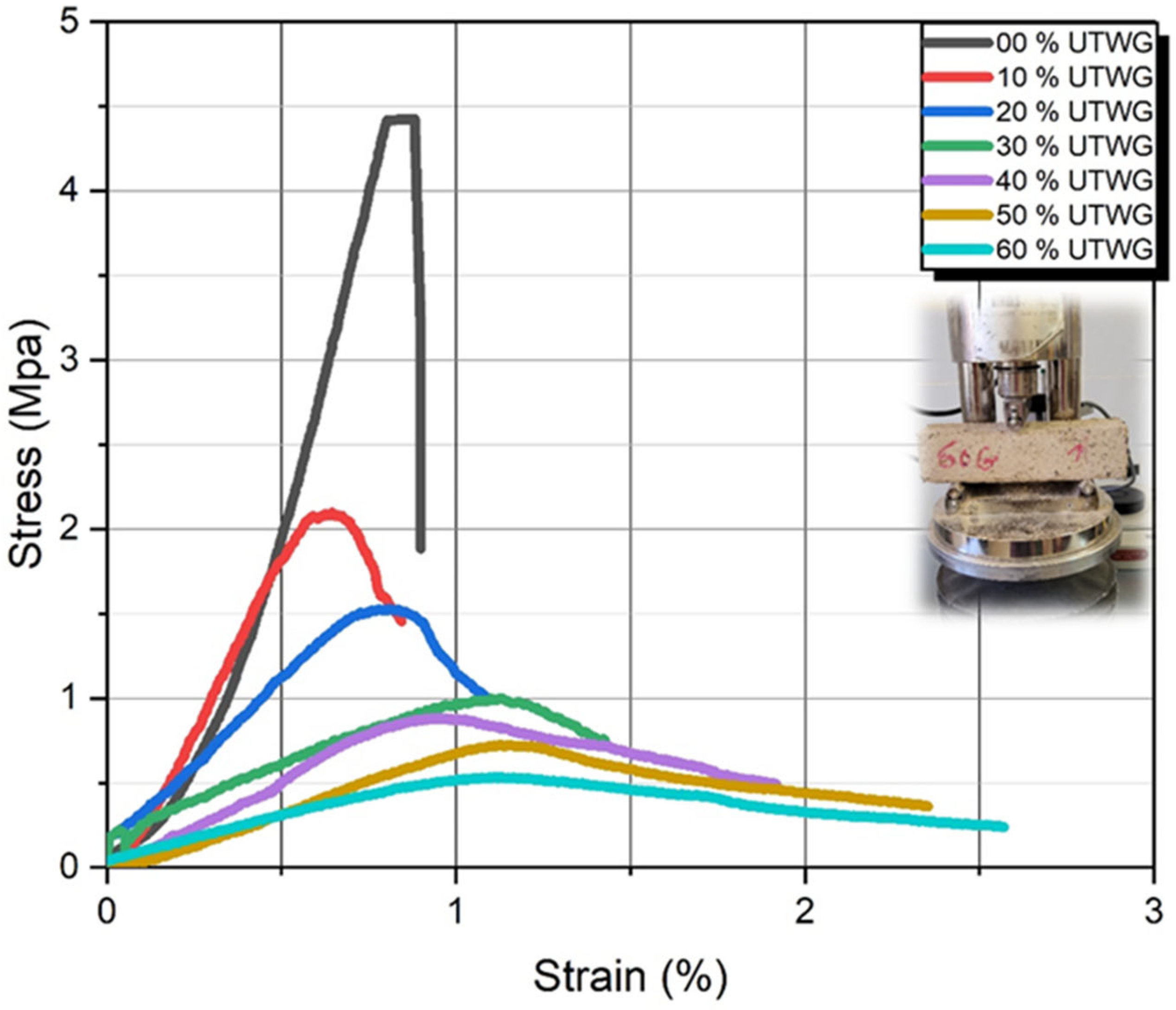
The analysis of the stress–strain curves (Figure 7) highlights the significant effect of incorporating granulated used tire waste (UTWG) on the compressive mechanical behavior of adobe blocks. The initial phase exhibits a quasi-linear elastic behavior, the slope of which gradually decreases with the increase in UTWG content, indicating a reduction in the elastic modulus. Once this phase is surpassed, the material reaches a peak stress, marking the onset of failure. In the absence of UTWG, this failure is abrupt, characteristic of brittle behavior. Conversely, beyond 20% UTWG, the failure becomes more gradual and the stress peak decreases, indicating a more ductile response.
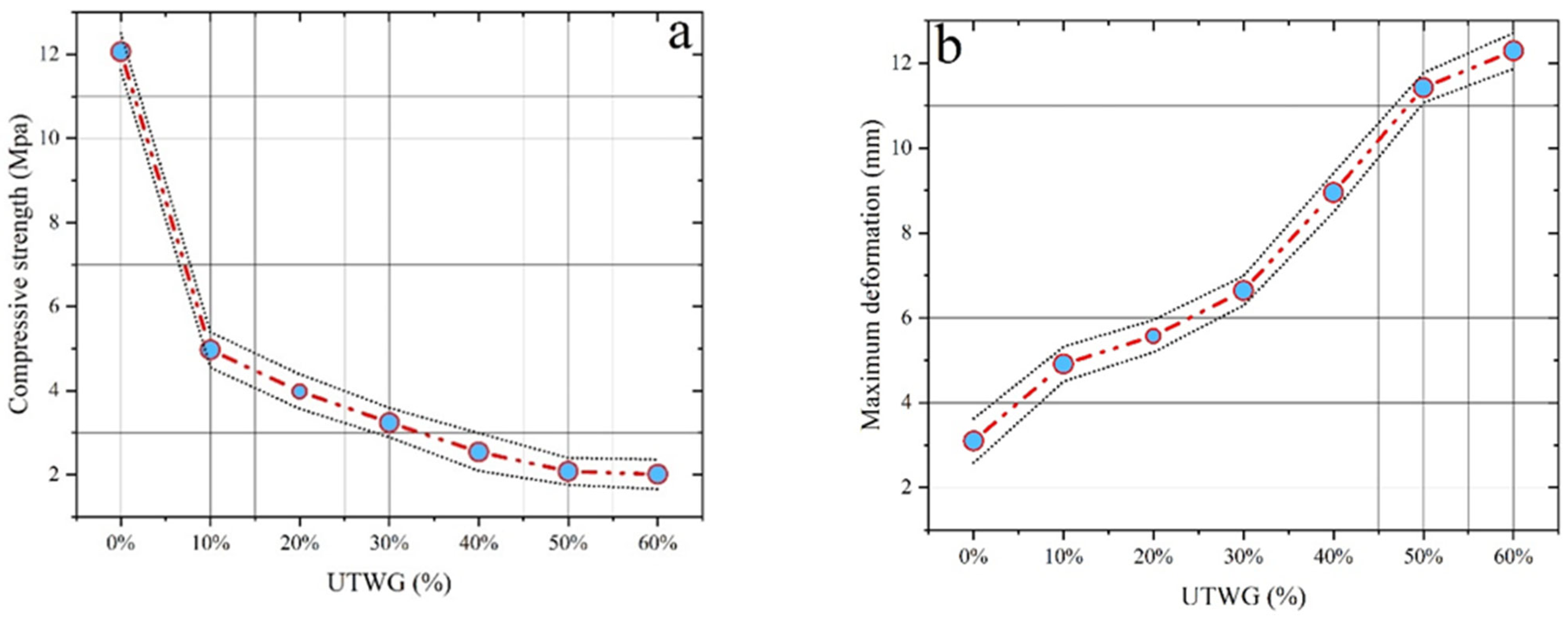
Experimental results clearly show the marked influence of UTWG incorporation (Figure 8) on the mechanical properties of adobe blocks. A progressive decrease in compressive strength (Figure 9a) is observed, from 12.06 MPa without addition to only 2.01 MPa at 60% UTWG, reflecting a substantial loss of the material’s load-bearing capacity. Similarly, the elastic modulus continuously declines (Table 8), dropping from 385.11 MPa to 42.43 MPa, which indicates a pronounced reduction in stiffness. In contrast, the ultimate strain (Figure 9b) increases with UTWG content, reaching 12.29% at 60% compared to 3.10% for the control material. This trend reflects an increasingly ductile and flexible behavior induced by the presence of rubber within the matrix.
Thus, while the addition of UTWG compromises traditional mechanical performance, it enhances the material’s ability to absorb deformations. These results suggest that this type of modified adobe would be more suited for applications compliant with load-bearing requirements according to NF XP 13-901 [49].

3.3.2. Effect of UTWP on the Compressive Strength of Adobe

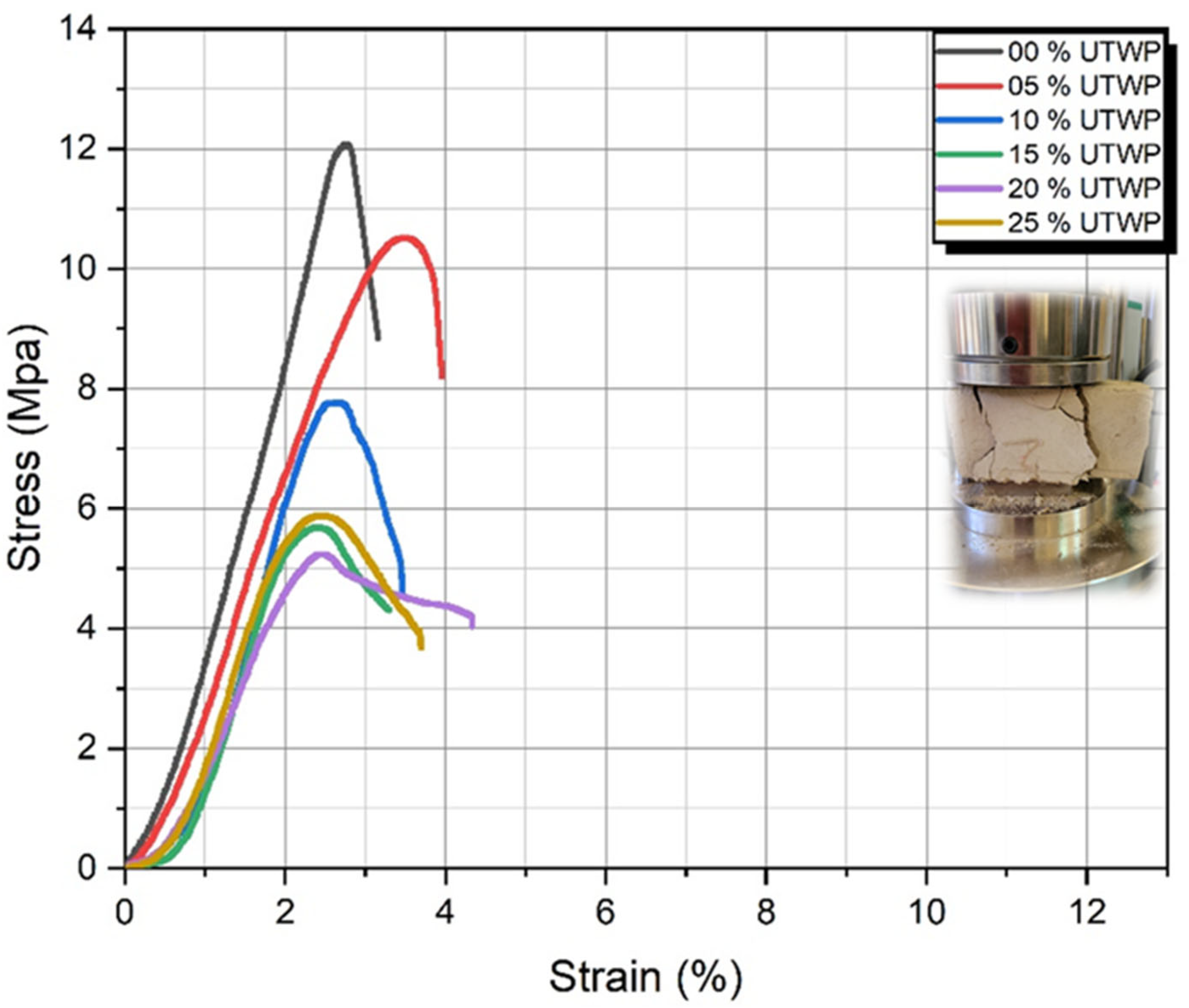
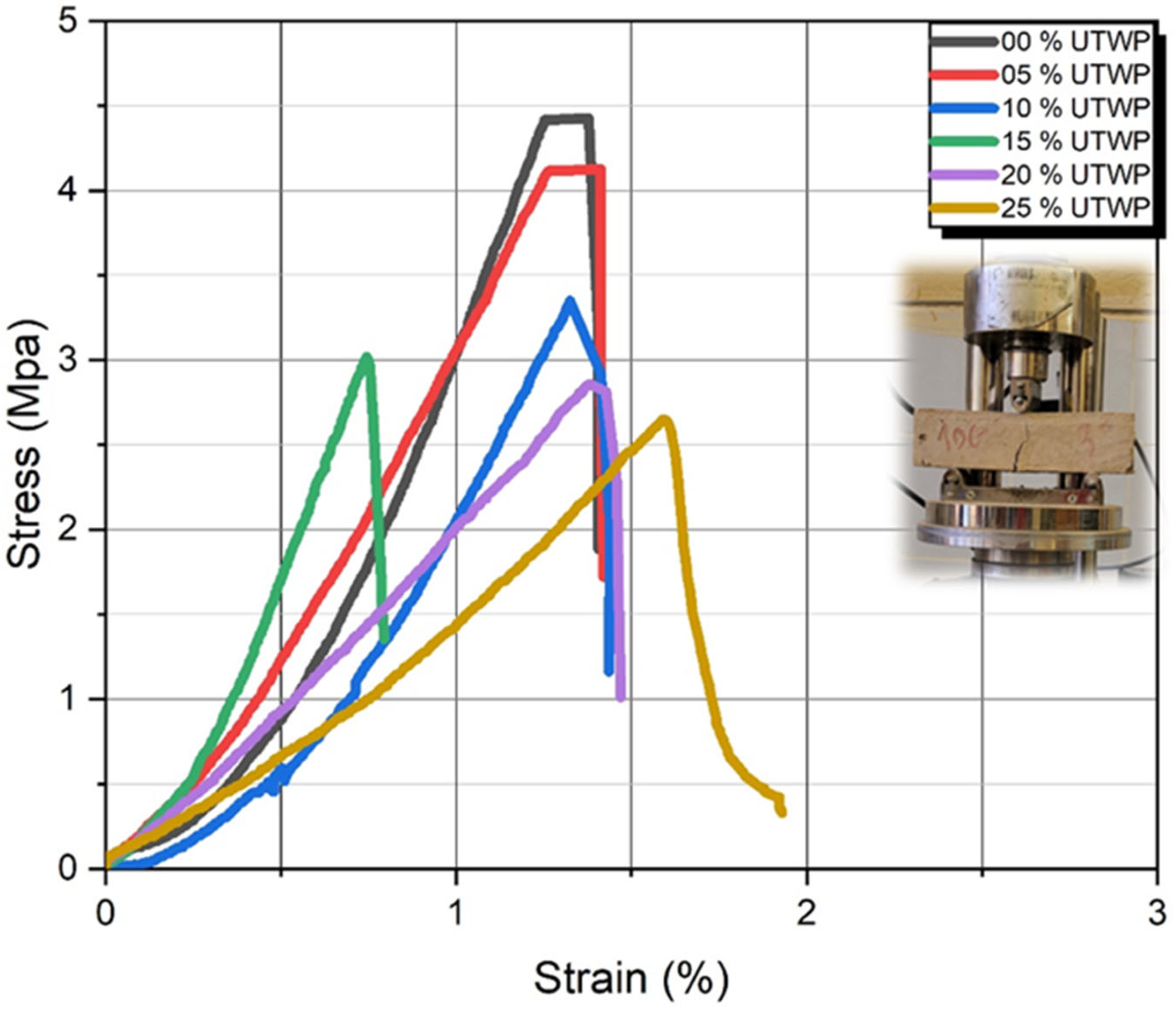
The analysis of the stress–strain curves (Figure 10) highlights the marked influence of incorporating waste tire powder (UTWP) on the compressive mechanical behavior of adobe blocks. The initial phase exhibits an almost linear elastic response, the slope of which gradually decreases with increasing UTWP content, indicating a reduction in the elastic modulus. After this phase, the material reaches a peak stress corresponding to the failure plateau. For samples without UTWP, this plateau is sharp and followed by sudden failure, characteristic of a brittle fracture mode. In contrast, from 10% UTWP onward, the stress peak becomes less pronounced and the fracture more gradual, indicating a more ductile behavior. This change is accompanied by a noticeable extension of the post-failure strain, reflecting the material’s improved ability to absorb stresses before failure.
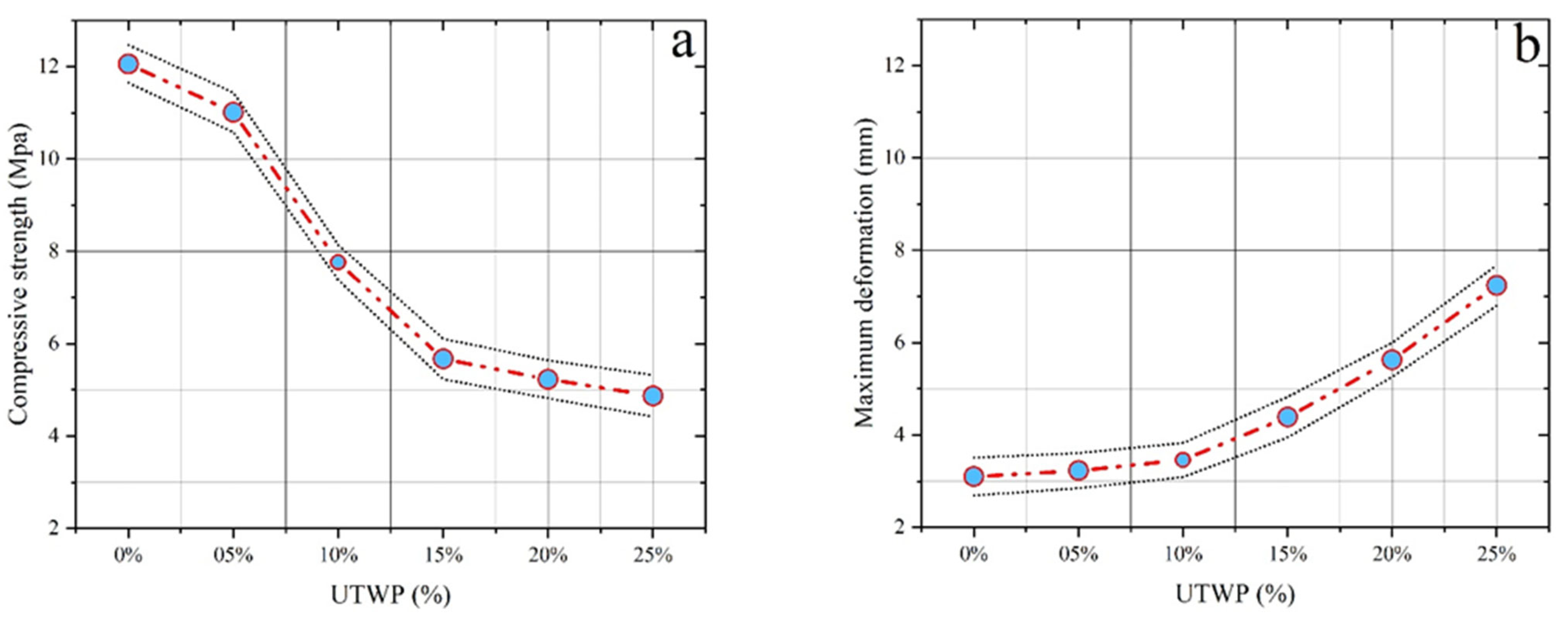
The results in Figure 10 show that compressive strength decreases gradually with increasing powder content (Figure 11a), dropping from 12.06 MPa at 0% to 4.87 MPa at 25%, representing a reduction of about 60%. However, this decrease is less severe than that observed with granular waste, suggesting better integration of UTWP into the earthen matrix. The elastic modulus follows a similar trend (Table 9), falling from 385.11 MPa to 146.92 MPa, with a progressive loss of stiffness, particularly noticeable from 15% addition onward. Despite this reduction, some values remain relatively high (for example, 333.64 MPa at 10%), indicating that the material’s stiffness can be partially maintained at low content. Meanwhile, ultimate strain increases from 3.10% at 0% to 7.24% at 25% (Figure 11b), revealing an improvement in the ductility of the material. Thus, UTWP allows adobe blocks to become more flexible while maintaining acceptable levels of strength and stiffness up to a certain threshold.
These results show that the powder form of waste tires offers better compatibility with earth, making the material more suitable for load-bearing applications or for moderately stressed elements. Although the loss of strength limits the use of these blocks as load-bearing elements, the increase in ductility remains advantageous in certain applications. A more deformable and less brittle material can indeed provide better energy dissipation and a more progressive failure, which is desirable in non-load-bearing systems subjected to dynamic or seismic actions. Therefore, adobe blocks modified with UTWP are particularly suitable for internal partitions, wall linings, insulation components, or infill in framed structures, where mechanical strength plays a secondary role while ductility and hygro-thermal performance offer significant added value.

3.3.3. Effect of UTWG on the Flexural Strength of Adobe Bricks

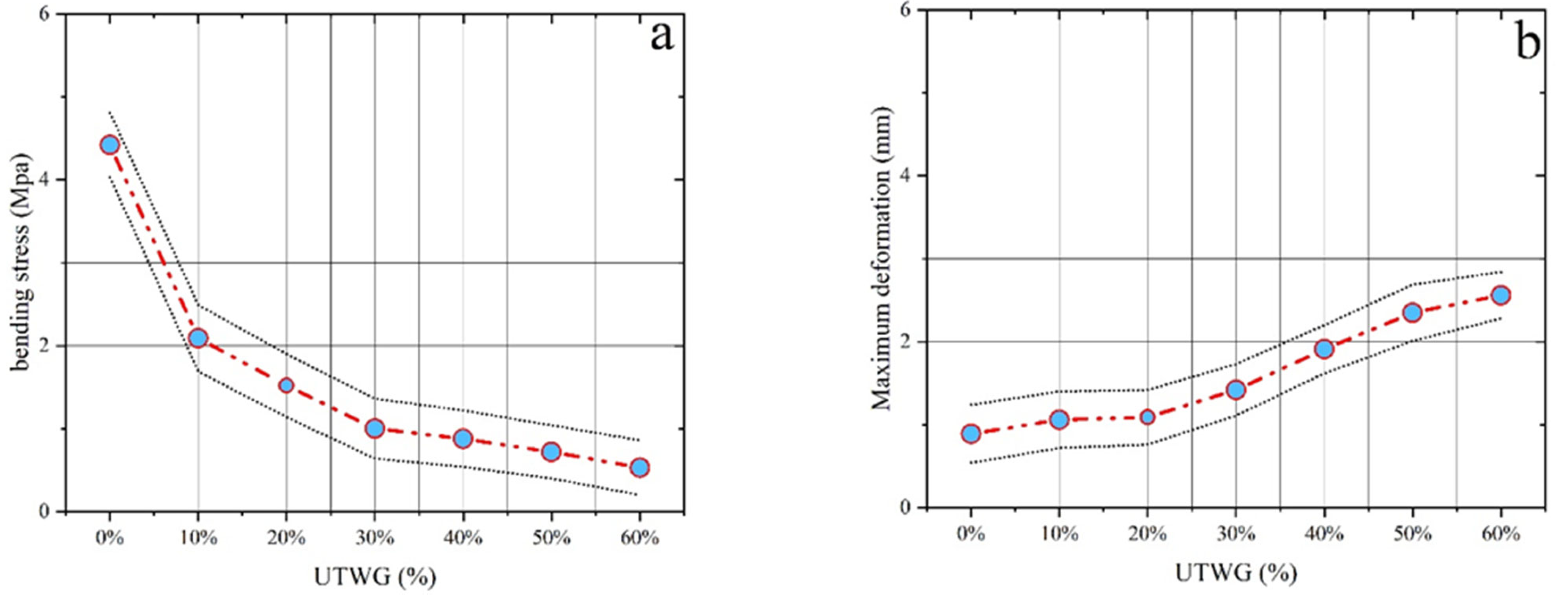
The incorporation of waste tire granules (UTWG) into adobe bricks progressively alters their flexural behavior (Figure 12). The graphical analysis of the flexural stress–strain curves shows a gradual decrease in the slope of the elastic region with increasing UTWG content, indicating a loss of stiffness. The failure plateau, sharp and abrupt for the sample without UTWG, becomes more extended beyond 30%, indicating a more ductile behavior. The failure mode thus shifts from a brittle, rapid, and localized fracture to a more gradual and energy-dissipating failure, characteristic of a more deformable and resilient material. A continuous decrease in flexural strength (Figure 13a) and elastic modulus (Table 10) is observed, reaching 0.53 MPa and 252.18 MPa at 60%, respectively. This decline reflects a significant loss of stiffness and load-bearing capacity in flexure. Conversely, the ultimate strain increases progressively (Figure 13b), from 0.89% to 2.56%, indicating an improvement in ductility. Thus, while the addition of UTWG compromises the structural performance of the material, it provides greater deformation capacity. This behavior can be exploited in non-load-bearing applications or contexts where flexibility and energy absorption capacity are prioritized. These results are consistent with those of Hannah Porter et al. [35], who observed a reduction in compressive strength due to the addition of rubber.

3.3.4. Effect of UTWP on the Flexural Strength of Adobe Bricks

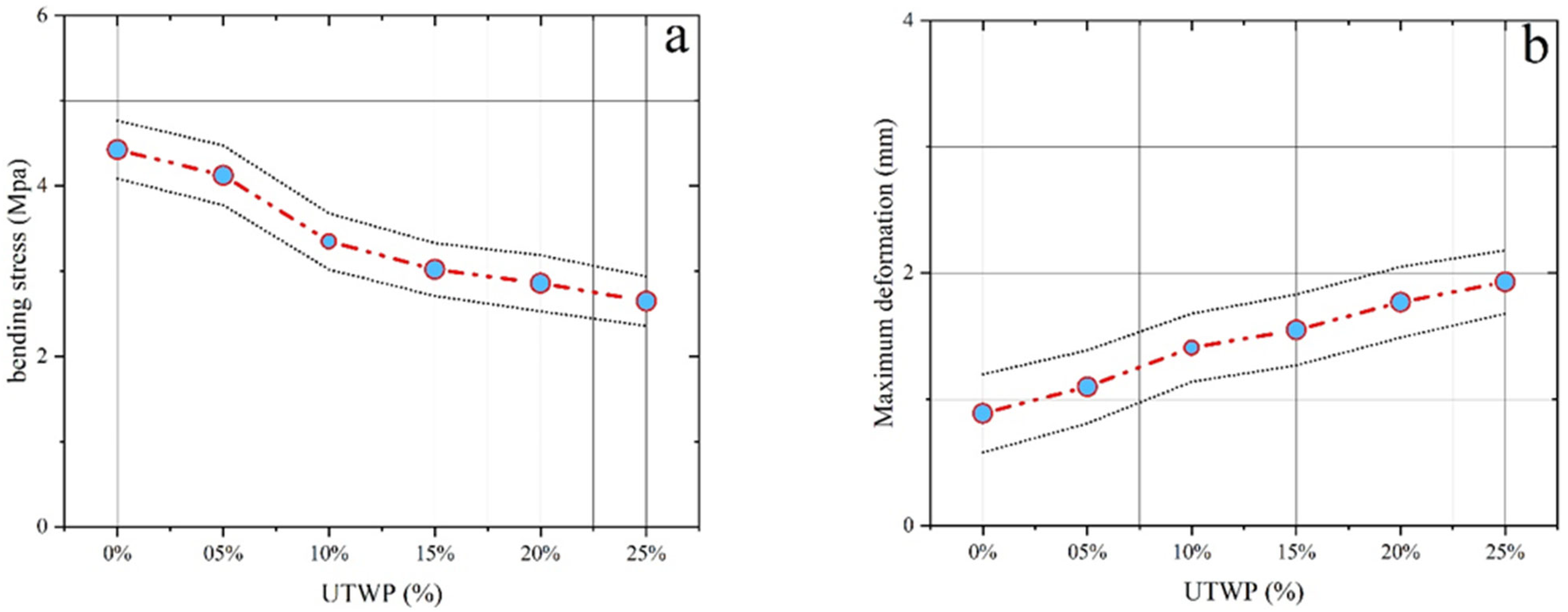
The analysis of the flexural stress–strain curves (Figure 14) reveals that increasing the UTWP content leads to a decrease in the slope within the elastic zone, indicating a gradual loss of stiffness. The fracture plateau, initially sharp and abrupt, becomes slightly extended from 10% UTWP onwards, suggesting a slightly more ductile behavior. Thus, the fracture mode shifts from a brittle nature to a more progressive rupture, reflecting an improved ability of the material to deform before failure.
The gradual addition of waste tire powder (UTWP) into adobe bricks moderately but consistently modifies their flexural behavior (Figure 14). In the absence of UTWP (0%), the material exhibits good mechanical performance (Figure 15a), with a flexural strength of 4.43 MPa, a high elastic modulus (Table 11) of 1141.77 MPa, and an ultimate strain of 0.89% (Figure 15b), indicating a stiff and low-ductility behavior. As the UTWP content increases, both strength and stiffness gradually decrease, while the deformation capacity improves.
At 25% UTWP, the flexural strength reaches 2.65 MPa, the elastic modulus decreases to 637.41 MPa, and the maximum strain rises to 1.93%, more than double that of the control material. These results show that UTWP imparts greater ductility to adobe bricks while maintaining acceptable levels of strength and stiffness. This gradual evolution suggests good compatibility between tire powder and the earthen matrix, making these formulations suitable for non-load-bearing applications or cases of moderate mechanical stress, where a certain degree of flexibility is desired.

3.4. Microscopic Studies

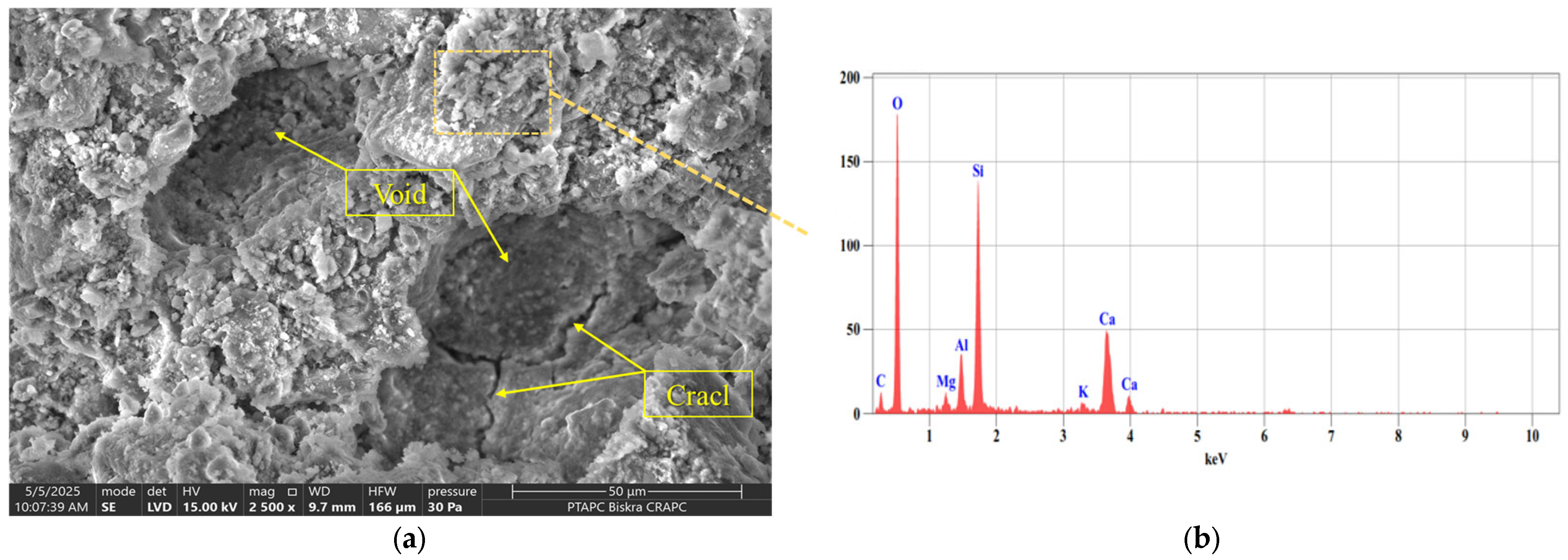
A scanning electron microscopy (SEM) analysis was conducted on selected samples to evaluate the effect of recycled waste tires on the microstructure of adobe. The selection includes a control material without any addition (0%) (Figure 16a), a formulation containing 60% granular waste (UTWG), and 25% powdered waste (UTWP), allowing for comparison of the influence of both the form and the content of the additives. The EDX analysis of the reference sample (0%) (Figure 16b) reveals a chemical composition characteristic of natural raw earth, dominated by oxygen (O), silicon (Si), and aluminum (Al), with the presence of carbon (C), magnesium (Mg), potassium (K), and calcium (Ca), associated with various clay minerals. Observation of the control image shows an overall homogeneous distribution of the earthen matrix. However, the presence of voids and localized cracks is noticeable, which can be explained by the fact that the adobe block samples were not subjected to any mechanical compression force during their preparation.
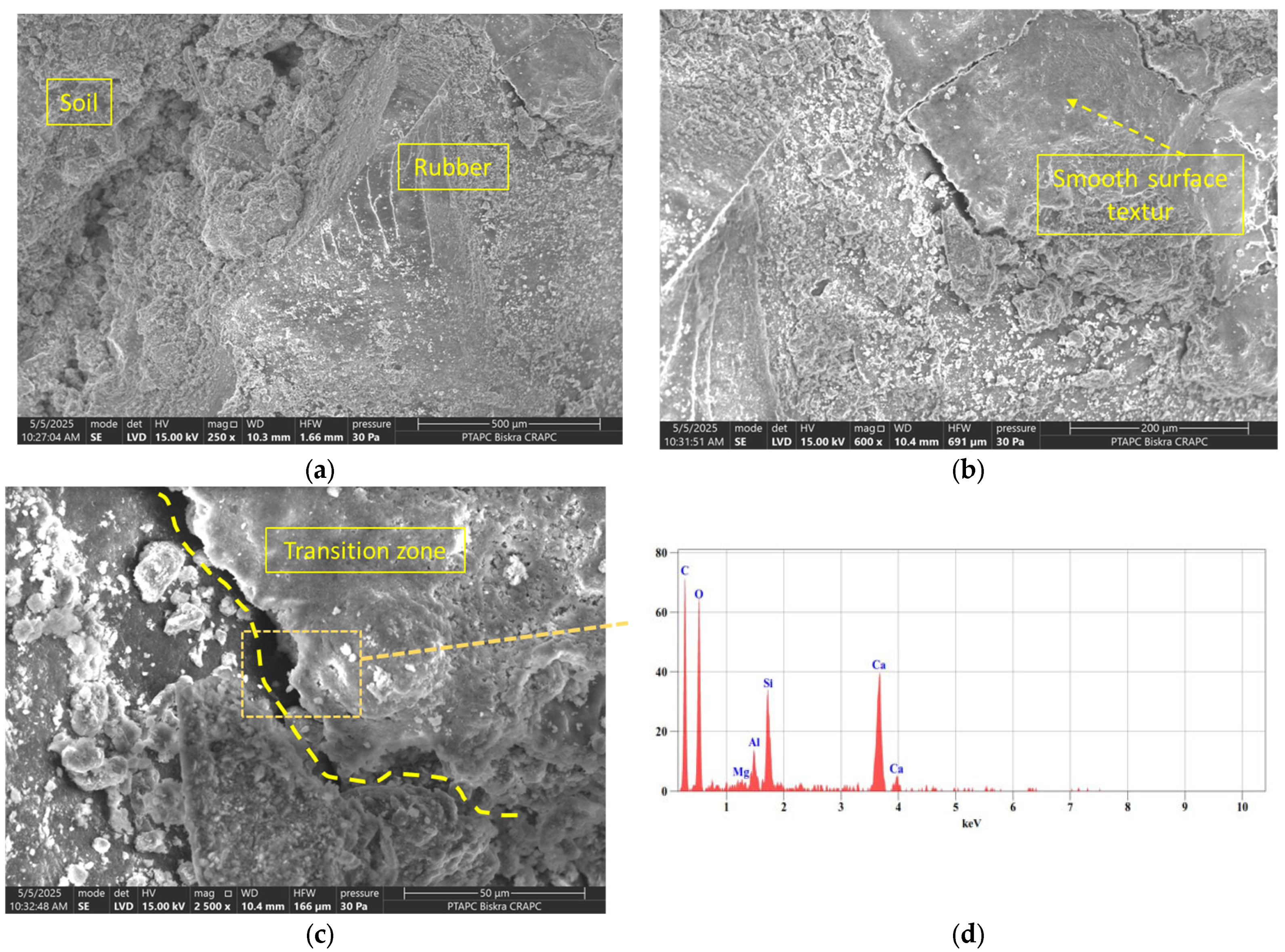
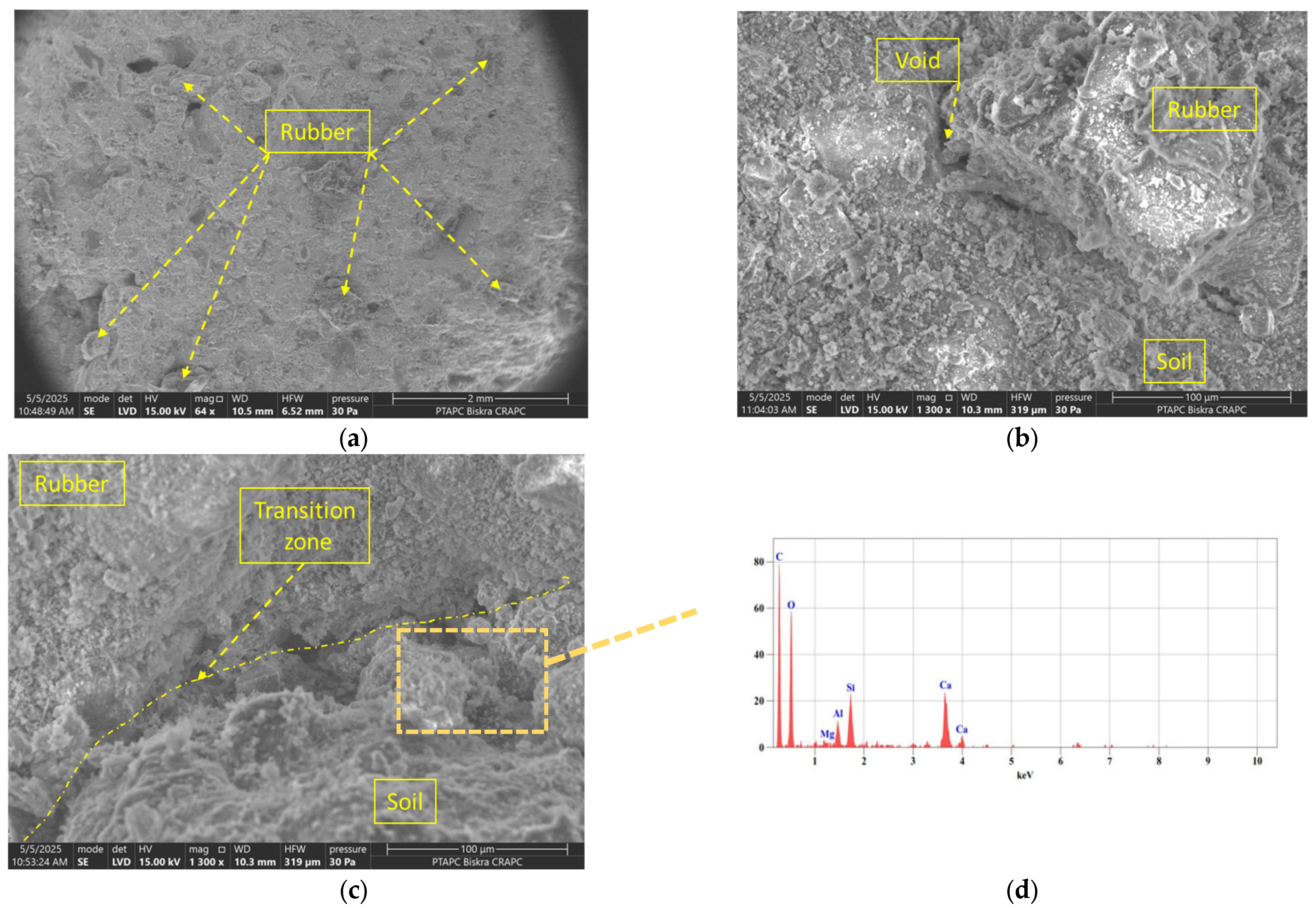
The SEM image of the adobe sample incorporating 25% of powdered waste tires (UTWP) (Figure 17a) highlights a homogeneous distribution of rubber particles within the earthen matrix. The powder grains exhibit good adhesion to the material, with no visible discontinuity, indicating effective integration. The structure retains porosity typical of earthen materials. The EDX analysis (Figure 16b) reveals a high presence of carbon (C) and oxygen (O), associated with the organic matter of the rubber and the mineral matrix. Elements such as silicon (Si), aluminum (Al), magnesium (Mg), and calcium (Ca), characteristic of clays and silicates, are also observed. The observation also highlights a pore condition and overall homogeneity comparable to those of the control specimen, indicating that the presence of UTWP generally adapts well within the matrix.
The SEM image of the sample containing 60% UTWG reveals a structure strongly modified by the massive addition of granular rubber particles (Figure 18a). The tire grains, clearly visible, appear widely dispersed within the matrix, but their larger size and irregular contours create discontinuity zones and less homogeneous interfaces. Increased porosity is observed, with microcavities and localized voids around the particles, which can weaken the overall cohesion of the material. The adhesion between the rubber grains and the earthen matrix appears less effective than with powdered particles, which may explain the marked decrease in mechanical strength observed at this content. This microstructure suggests a softer but weakened material, mainly suited for non-structural applications.

4. Conclusions

This study successfully demonstrates the valorization of waste tires in lime-stabilized adobe blocks, yielding a composite material with enhanced functional properties for sustainable construction. The key findings confirm that the addition of both granular (UTWG) and powdered (UTWP) tire waste significantly improves thermal insulation and acoustic absorption, reduces bulk density, and, most notably, greatly enhances hygroscopic resistance—a critical advancement for the durability of earthen materials. The reduction in capillary absorption by up to 40% with minimal UTWP addition (5%) is a particularly promising result for applications in regions with high humidity exposure.
While a decrease in mechanical strength is observed with higher waste content, this is accompanied by increased ductility and energy absorption, which can be beneficial for specific non-structural applications. Microstructural evidence indicates that the powdered form (UTWP) integrates more effectively with the clay–lime matrix, leading to better cohesion and reduced detrimental porosity compared to the granular form (UTWG).
Formulations containing 10–20% powdered tire waste represent an optimal compromise, delivering a lightweight material with significantly improved thermal, acoustic, and hygroscopic performance without critically compromising structural utility. This research provides a sustainable pathway for repurposing a challenging non-biodegradable waste stream into a high-value, low-carbon building product, aligning with circular economy principles and addressing construction needs in arid and semi-arid climates.
The findings of this study also have concrete implications for sustainable construction, particularly in arid regions. Incorporating waste tire powder (UTWP) at levels of 10–20% significantly improves thermal insulation and reduces capillary absorption, thereby enhancing the durability of adobe blocks under real-use conditions. These improved performances enable practitioners to employ such formulations for non-load-bearing walls or infill elements, while also benefiting from easier handling due to the reduced bulk density of the material.
For policymakers, the valorization of waste tires represents an effective waste management strategy that aligns with circular economy principles and contributes to reducing the carbon footprint of the construction sector. The optimal contents identified in this study thus provide a solid basis for developing technical recommendations and supporting the integration of these innovative materials into local building practices.

Limitations and Future Perspectives

Despite the promising results, this study has certain limitations. The mechanical performance, especially compressive strength at higher waste content, may limit the use of these blocks to non-structural or lightly loaded applications, such as infill walls or insulating panels. Furthermore, the long-term durability under repeated wet–dry and freeze–thaw cycles, as well as a full life-cycle assessment (LCA) to quantify the environmental benefits, remain to be investigated.
Future research should focus on optimizing the mix design, potentially using chemical activators or different stabilizers to mitigate the strength reduction. Investigating the composite’s behavior in full-scale wall assemblies for real-world thermal and acoustic performance is a crucial next step. Additionally, exploring the potential for functionalizing the tire powder to improve its bond with the matrix could further enhance the mechanical properties. Finally, a detailed economic analysis would be vital to assess the commercial viability and scalability of this waste valorization strategy.

Author Contributions

Methodology, M.H. and M.S.; Software, L.Z.; Validation, O.I.; Formal analysis, F.B.; Investigation, M.H., M.S., B.L. and S.A. (Sabbah Ataya); Resources, O.I., L.Z. and N.A.; Writing—review and editing, M.H., N.A. and S.A. (Sabbah Ataya); Visualization, S.A. (Salah Amroune); Supervision, O.I.; Project administration, L.Z.; Funding acquisition, S.A. (Salah Amroune). All authors have read and agreed to the published version of the manuscript.

Funding

This work was supported and funded by the Deanship of Scientific Research at Imam Mohammad Ibn Saud Islamic University (IMSIU) (grant number IMSIU-DDRSP2603).

Data Availability Statement

The original contributions presented in the study are included in the article, further inquiries can be directed to the corresponding author.

Conflicts of Interest

The authors declare that they have no known competing financial interests or personal relationships that could have appeared to influence the work reported in this paper.

References

  1. Mistri, A.; Bhattacharyya, S.K.; Dhami, N.; Mukherjee, A.; Barai, S.V. A review on different treatment methods for enhancing the properties of recycled aggregates for sustainable construction materials. Constr. Build. Mater. 2020, 233, 117894. [Google Scholar] [CrossRef]
  2. Alhakim, G.; Jaber, L. Mechanical behaviour of polypropylene–sand composites reinforced with natural fibres. Proc. Inst. Civ. Eng.-Ground Improv. 2025, 178, 342–355. [Google Scholar] [CrossRef]
  3. Bouhicha, M.; Aouissi, F.; Kenai, S. Performance of composite soil reinforced with barley straw. Cem. Concr. Compos. 2005, 27, 617–621. [Google Scholar] [CrossRef]
  4. Illampas, R.; Ioannou, I.; Charmpis, D.C. Adobe bricks under compression: Experimental investigation and derivation of stress–strain equation. Constr. Build. Mater. 2014, 53, 83–90. [Google Scholar] [CrossRef]
  5. Sharma, V.; Marwaha, B.M.; Vinayak, H.K. Enhancing durability of adobe by natural reinforcement for propagating sustainable mud housing. Int. J. Sustain. Built Environ. 2016, 5, 141–155. [Google Scholar] [CrossRef]
  6. Dao, K.; Ouedraogo, M.; Millogo, Y.; Aubert, J.-E.; Gomina, M. Thermal, hydric and mechanical behaviours of adobes stabilized with cement. Constr. Build. Mater. 2018, 158, 84–96. [Google Scholar] [CrossRef]
  7. Silveira, D.; Varum, H.; Costa, A.; Martins, T.; Pereira, H.; Almeida, J. Mechanical properties of adobe bricks in ancient constructions. Constr. Build. Mater. 2012, 28, 36–44. [Google Scholar] [CrossRef]
  8. Degirmenci, N. The using of waste phosphogypsum and natural gypsum in adobe stabilization. Constr. Build. Mater. 2008, 22, 1220–1224. [Google Scholar] [CrossRef]
  9. Taallah, B. Etude du Comportement Physico-Mécanique du Bloc de Terre Comprimée avec Fibres. Ph.D. Thesis, Université Mohamed Khider Biskra, Biskra, Algeria, 2014. [Google Scholar]
  10. Izemmouren, O. Effet des Ajouts Minéraux Sur la Durabilité des Briques de Terre Comprimée. Master’s Thesis, Université Mohamed Khider-Biskra, Biskra, Algeria, 2016. [Google Scholar]
  11. Serrano, S.; Barreneche, C.; Cabeza, L.F. Use of by-products as additives in adobe bricks: Mechanical properties characterisation. Constr. Build. Mater. 2016, 108, 105–111. [Google Scholar] [CrossRef]
  12. Ouedraogo, M.; Dao, K.; Millogo, Y.; Aubert, J.-E.; Messan, A.; Seynou, M.; Zerbo, L.; Gomina, M. Physical, thermal and mechanical properties of adobes stabilized with fonio (Digitaria exilis) straw. J. Build. Eng. 2019, 23, 250–258. [Google Scholar] [CrossRef]
  13. Meybodian, H.; Eslami, A.; Morshed, R. Sustainable lateral strengthening of traditional adobe walls using natural reinforcements. Constr. Build. Mater. 2020, 260, 119892. [Google Scholar] [CrossRef]
  14. Zaidi, A.; Izemmouren, O.; Taallah, B.; Guettala, A. Mechanical and durability properties of adobe blocks filled with date palm wastes. World J. Eng. 2022, 19, 532–545. [Google Scholar] [CrossRef]
  15. Babé, C.; Kidmo, D.K.; Tom, A.; Mvondo, R.R.N.; Boum, R.B.E.; Djongyang, N. Thermomechanical characterization and durability of adobes reinforced with millet waste fibers (sorghum bicolor). Case Stud. Constr. Mater. 2020, 13, e00422. [Google Scholar] [CrossRef]
  16. Parisi, F.; Asprone, D.; Fenu, L.; Prota, A. Experimental characterization of Italian composite adobe bricks reinforced with straw fibers. Compos. Struct. 2015, 122, 300–307. [Google Scholar] [CrossRef]
  17. Mellaikhafi, A.; Ouakarrouch, M.; Benallel, A.; Tilioua, A.; Ettakni, M.; Babaoui, A.; Garoum, M.; Alaoui Hamdi, M.A. Characterization and thermal performance assessment of earthen adobes and walls additive with different date palm fibers. Case Stud. Constr. Mater. 2021, 15, e00693. [Google Scholar] [CrossRef]
  18. Millogo, Y.; Aubert, J.-E.; Hamard, E.; Morel, J.-C. How properties of kenaf fibers from Burkina Faso contribute to the reinforcement of earth blocks. Materials 2015, 8, 2332–2345. [Google Scholar] [CrossRef]
  19. Vatani Oskouei, A.; Afzali, M.; Madadipour, M. Experimental investigation on mud bricks reinforced with natural additives under compressive and tensile tests. Constr. Build. Mater. 2017, 142, 137–147. [Google Scholar] [CrossRef]
  20. Quagliarini, E.; Lenci, S. The influence of natural stabilizers and natural fibres on the mechanical properties of ancient Roman adobe bricks. J. Cult. Herit. 2010, 11, 309–314. [Google Scholar] [CrossRef]
  21. Bouasker, M.; Belayachi, N.; Hoxha, D.; Al-Mukhtar, M. Physical characterization of natural straw fibers as aggregates for construction materials applications. Materials 2014, 7, 3034–3048. [Google Scholar] [CrossRef]
  22. Laborel-Préneron, A.; Aubert, J.-E.; Magniont, C.; Tribout, C.; Bertron, A. Plant aggregates and fibers in earth construction materials: A review. Constr. Build. Mater. 2016, 111, 719–734. [Google Scholar] [CrossRef]
  23. Taallah, B.; Guettala, A. The mechanical and physical properties of compressed earth block stabilized with lime and filled with untreated and alkali-treated date palm fibers. Constr. Build. Mater. 2016, 104, 52–62. [Google Scholar] [CrossRef]
  24. Izemmouren, O.; Ferdous, B.; Karima, G. Influence of Date Palm Waste Aggregates on the Mechanical Strengths and Hygroscopicity Behavior of Earth-Based Composites. Rev. Compos. Matériaux Avancés 2024, 34, 33–41. [Google Scholar] [CrossRef]
  25. Atiki, E.; Taallah, B.; Feia, S.; Almeasar, K.S.; Guettala, A. Effects of incorporating date palm waste as a thermal insulating material on the physical properties and mechanical behavior of compressed earth block. J. Nat. Fibers 2022, 19, 8778–8795. [Google Scholar] [CrossRef]
  26. Aalil, I.; Badreddine, D.; Beck, K.; Brunetaud, X.; Cherkaoui, K.; Chaaba, A.; Al-Mukhtar, M. Valorization of crushed bricks in lime-based mortars. Constr. Build. Mater. 2019, 226, 555–563. [Google Scholar] [CrossRef]
  27. Valenzuela, M.; Ciudad, G.; Cardenas, J.P.; Medina, C.; Salas, A.; Oñate, A.; Pincheira, G.; Attia, S.; Tuninetti, V. Towards the development of performance-efficient compressed earth blocks from industrial and agro-industrial by-products. Renew. Sustain. Energy Rev. 2024, 194, 114323. [Google Scholar] [CrossRef]
  28. Mouih, K.; Taha, Y.; Benzaazoua, M.; Hakkou, R. Valorization of phosphate waste rocks for the production of compressed stabilized earth bricks using cement stabilizer. Mater. Today Proc. 2023; in press. [Google Scholar]
  29. Trouzine, H.; Asroun, A.; Asroun, N.; Belabdelouhab, F.; Thanh Long, N. Problématique des pneumatiques usagés en Algérie. Rev. Nat. Technol. 2011, 3, 28–35. [Google Scholar]
  30. Ramdani, S. Etude de L’Influence de L’Incorporation Dans le Béton des Déchets Recyclés Issus du Broyage des Pneus Usagés et Verre Broyé Sur Leurs Caractéristiques et Comportement (Performance Behavior of Concrete Made with Waste Rubber Aggregates from Grinding Used Tires and Glass Waste). Ph.D. Thesis, Université Mohamed Khider-Biskra, Biskra, Algeria, 2019. [Google Scholar]
  31. Izemmouren, O.; Guettala, A.; Guettala, S. Mechanical properties and durability of lime and natural pozzolana stabilized steam-cured compressed earth block bricks. Geotech. Geol. Eng. 2015, 33, 1321–1333. [Google Scholar] [CrossRef]
  32. Mohajerani, A.; Burnett, L.; Smith, J.V.; Markovski, S.; Rodwell, G.; Rahman, M.T.; Kurmus, H.; Mirzababaei, M.; Arulrajah, A.; Horpibulsuk, S.; et al. Recycling waste rubber tyres in construction materials and associated environmental considerations: A review. Resour. Conserv. Recycl. 2020, 155, 104679. [Google Scholar] [CrossRef]
  33. Tran, T.Q.; Skariah Thomas, B.; Zhang, W.; Ji, B.; Li, S.; Brand, A.S. A comprehensive review on treatment methods for end-of-life tire rubber used for rubberized cementitious materials. Constr. Build. Mater. 2022, 359, 129365. [Google Scholar] [CrossRef]
  34. Zeng, M.; Huang, H.; Zhang, X. Experiment on the performance of recycled powder of construction waste on adobe materials. Buildings 2023, 13, 1358. [Google Scholar] [CrossRef]
  35. Parlato, M.C.; Porto, S.M.; Galán-Marín, C.; Rivera-Gómez, C.A.; Cuomo, M.; Nocera, F. Thermal performance, microstructure analysis and strength characterisation of agro-waste reinforced soil materials. Sustainability 2023, 15, 11543. [Google Scholar] [CrossRef]
  36. Porter, H.; Blake, J.; Dhami, N.K.; Mukherjee, A. Rammed earth blocks with improved multifunctional performance. Cem. Concr. Compos. 2018, 92, 36–46. [Google Scholar] [CrossRef]
  37. NFP 94-056; Sols: Reconnaissance et Essais-Analyse Granulométrique-Méthode par Tamisage à Sec Après Lavage. Normes Françaises AFNOR: Paris, France, 1996.
  38. NFP 94-057; Sols: Reconnaissance et Essais. Analyse Granulométrique-Méthode par Tamisage á Sec Après Lavage. Normes Françaises AFNOR: Paris, France, 1992.
  39. NFP 18-554; Granulats, Mesure des Masses Volumiques, de la Porosité, du Coefficient D’Absorption et de la Teneur en eau des Gravillons et Cailloux. Normes Françaises AFNOR: Paris, France, 1990.
  40. NFP 18-555; Décembre 1990 Granulats-Mesure des Masses Volumiques, Coefficient D’Absorption et de la Teneur en eau de Sables. Normes Françaises AFNOR: Paris, France, 1990.
  41. NFP 94-051; Sols: Reconnaissance et Essais de Détermination des Limites D’Atterberg. Normes Françaises AFNOR: Paris, France, 1996.
  42. NFP 94-068; Sols: Reconnaissance et Essais–Mesure de la Capacité D’Adsorption de Bleu de Méthylène d’un Sol ou d’un Matériau Rocheux. Détermination de la Valeur de Bleu de Méthylène d’un Sol ou d’un Matériau Rocheux par L’Essai à la Tache. Normes Françaises AFNOR: Paris, France, 1998.
  43. ASTM D6276-99a; Standard Test Method for Using pH to Estimate the Soil-Lime Proportion Requirement for Soil Stabilization. American Society for Testing Material: West Conshohocken, PA, USA, 1999.
  44. Khoudja, D.; Taallah, B.; Izemmouren, O.; Aggoun, S.; Herihiri, O.; Guettala, A. Mechanical and thermophysical properties of raw earth bricks incorporating date palm waste. Constr. Build. Mater. 2021, 270, 121824. [Google Scholar] [CrossRef]
  45. Sofi, A. Effect of waste tyre rubber on mechanical and durability properties of concrete—A review. Ain Shams Eng. J. 2018, 9, 2691–2700. [Google Scholar] [CrossRef]
  46. Charai, M.; Salhi, M.; Horma, O.; Mezrhab, A.; Karkri, M.; Amraqui, S. Thermal and mechanical characterization of adobes bio-sourced with Pennisetum setaceum fibers and an application for modern buildings. Constr. Build. Mater. 2022, 326, 126809. [Google Scholar] [CrossRef]
  47. EN 1015-10/A1; Méthodes d’essai des Mortiers pour Maçonnerie—Partie 10: Détermination de la Masse Volumique Apparente Seche du Mortier Durci. AFNOR Éditions: La Plaine Saint-Denis, France, 2007.
  48. NFP P18-418; Béton-Auscultation Sonique. Mesure du Temps de Propagation d’ondes Soniques Dans le béton, Normalisation française. AFNOR Éditions: La Plaine Saint-Denis, France, 1989; pp. 1–12.
  49. AFNOR XP P 13-901; Blocs de terre Comprimée pour murs et Cloisons: Définitions-Spécifications-Méthodes d’essais-Conditions de Réception. AFNOR Éditions: La Plaine Saint-Denis, France, 2001.
  50. NFE 993-15; Test Methods for Dense Shaped Refractories—Part 15. AFNOR Éditions: La Plaine Saint-Denis, France, 2005.
  51. ISO 8894-1:1987; Matériaux Réfractaires—Détermination de la Conductivité Thermique. International Organization for Standardization (ISO): Geneva, Switzerland, 1987.
  52. NF EN 196-1; Methods of Testing Cement-Part 1: Determination of Strength. CEN (European Committee for Standardization): Brussels, Belgium, 2005.
  53. Omrani, H.; Hassini, L.; Benazzouk, A.; Beji, H.; ELCafsi, A. Elaboration and characterization of clay-sand composite based on Juncus acutus fibers. Construct. Build. Mater. 2020, 238, 117712. [Google Scholar] [CrossRef]
  54. Layachi, S.; Izemmouren, O.; Dakhia, A.; Taallah, B.; Atiki, E.; Saleh Almeasar, K.; Layachi, M.; Guettala, A. Effect of incorporating Expanded polystyrene beads on Thermophysical, mechanical properties and life cycle analysis of lightweight earth blocks. Constr. Build. Mater. 2023, 375, 130948. [Google Scholar] [CrossRef]
  55. Norme XP P13-901; Blocs de Terre Comprimée Pour Murs et Cloisons. Normes Françaises AFNOR: Paris, France, 2001.
Figure 1. Soil particle size distribution.
Buildings 16 00359 g001
Figure 2. Preparation procedure. (a) Used tires; (b) UTWG; (c) UTWP; (d) Soil; (e) Lime; (f) Specimens (4 × 4 × 4 cm3); (g) Oven; (h) Ultrasonic device; (i) Thermal conductivity measurement apparatus; (j) Mechanical testing apparatus.
Buildings 16 00359 g002
Figure 3. SEM-EDX image of tire components: (a) tire granules; (b) EDX spectrum.
Buildings 16 00359 g003
Figure 4. Apparent density: (a) as a function of UTWG; (b) as function of UTWP.
Buildings 16 00359 g004
Figure 5. Ultrasonic pulse velocity (a) as a function of UTWG and (b) as a function of UTWP.
Buildings 16 00359 g005
Figure 6. Capillary absorption variation (a) with UTWG content and (b) with UTWP content.
Buildings 16 00359 g006
Figure 7. Thermal conductivity: (a) with UTWG content; (b) with UTWP content.
Buildings 16 00359 g007
Figure 8. Effect of UTWG content on mechanical behavior.
Buildings 16 00359 g008
Figure 9. (a) Compressive strength with UTWG; (b) maximum strain with UTWG.
Buildings 16 00359 g009
Figure 10. Effect of UTWP content on mechanical behavior.
Buildings 16 00359 g010
Figure 11. (a) Compressive strength with UTWP; (b) maximum strain with UTWP.
Buildings 16 00359 g011
Figure 12. Effect of UTWG content on mechanical behavior in bending.
Buildings 16 00359 g012
Figure 13. (a) Flexural strength with UTWG; (b) maximum flexural strain with UTWG.
Buildings 16 00359 g013
Figure 14. Effect of UTWP content on the flexural mechanical behavior.
Buildings 16 00359 g014
Figure 15. (a) Flexural strength with UTWP; (b) maximum flexural strain with UTWP.
Buildings 16 00359 g015
Figure 16. SEM-EDX image of 0% UTWG–UTWP: (a) SEM image (scale = 50 µm), (b) EDX spectrum.
Buildings 16 00359 g016
Figure 17. (a) Homogeneous distribution of rubber particles; (b) SEM-EDX image of 25% UTWP; (c) SEM image; (d) EDX spectrum.
Buildings 16 00359 g017
Figure 18. (a) Homogeneous distribution of rubber particles; (b) SEM-EDX image of 60% UTWG; (c) SEM image; (d) EDX spectrum.
Buildings 16 00359 g018
Table 1. Soil parameters.
Atterberg LimitsPlasticity IndexConsistency IndexWater ContentBulk DensityParticle DensityMethylene BluePotential of Hydrogen
WL (%)WP (%)IPICWn (%)(Kg/m3)(Kg/m3)(VBS)(PH)
25.8316.878.961.829.48122024405.226.0
Table 2. Chemical analysis by X-ray fluorescence of soil and lime.
SiO2Al2O3Fe2O3CaOMgOSO3K2ONa2OP2O5TiO2Cr2O3Mn2O3ZnOSrOLOI
Soil %42.6475.3693.24821.9231.9870.2310.7830.1290.2230.3210.0090.040.0050.04722.69
Lime %0.4320.2040.13991.870.390.110.025--0.020.0020.0220.0030.02107.15
Table 3. Mineralogical analysis by X-ray diffraction (XRD) of soil and lime.
CalciteDolomiteSideriteAnkeriteMagnesiteQuartzPyriteLliteKaoliniteAlbiteAnorthiteK-Feldspar
Soil %39.512.740.010.560.3736.620.1512.055.041.10.251.61
Lime %62.680.0118.560.978.620.81.526.850000
Table 4. Mixture with the addition of used tire waste in granular form (UTWG).
Percentage of UTWG10%20%30%40%50%60%
Mass of UTWG (g) 70.65141.3212282.6353.2424
Mass of Soil (g)111611161116111611161116
Mass of lime (g)848484848484
Mass of water (g)340340340340340340
Table 5. Mixture with the addition of used tire waste in powder form (UTWP).
Percentage of UTWP5%10%15%20%25%
Mass of UTWP (g) 35.370.65106141.3176.6
Mass of Soil (g)11161116111611161116
Mass of lime (g)8484848484
Mass of water (g)340340340340340
Table 6. Thermal properties results with UTWG.
UTWG
(%)
Volumetric Heat Capacity (C)Thermal Conductivity (λ)Thermal Effusivity (e)
0%19830.899 ± 0.01042.222
10%16890.815 ± 0.019 37.102
20%16500.748 ± 0.01035.131
30%16500.733 ± 0.01034.777
40%16170.720 ± 0.01534.121
50%15880.707 ± 0.00533.507
60%13970.705 ± 0.01031.383
Table 7. Thermal properties results with UTWP.
UTWP
(%)
Volumetric Heat Capacity (C)Thermal Conductivity (λ)Thermal Effusivity (e)
0%19830.899 ± 0.010 42.222
5%18570.814 ± 0.01038.879
10%17600.798 ± 0.02037.476
15%17490.762 ± 0.01036.507
20%16340.758 ± 0.01035.193
25%16120.731 ± 0.01034.327
Table 8. Mechanical parameters as a function of UTWG.
UTWG
(%)
Stress
(MPa)
Elastic Module
(MPa)
Ultimate Strain
(%)
0%12.06 ± 0.44385.113.10 ± 0.52
10%4.97 ± 0.42 197.154.91 ± 0.41
20%3.98 ± 0.41117.755.57 ± 0.38
30%3.24 ± 0.3569.866.64 ± 0.35
40%2.54 ± 0.4562.538.95 ± 0.46
50%2.08 ± 0.3260.4311.42 ± 0.35
60%2.01 ± 0.3542.4312.29 ± 0.42
Table 9. Mechanical parameters as a function of UTWP.
UTWP (%)Stress
(MPa)
Elastic Module
(MPa)
Ultimate Strain
(%)
0%12.06 ± 0.41385.113.10 ± 0.41
5%11.01 ± 0.43382.813.23 ± 0.38
10%7.76 ± 0.38333.643.46 ± 0.37
15%5.67 ± 0.44202.444.39 ± 0.44
20%5.23 ± 0.41158.565.63 ± 0.37
25%4.87 ± 0.45146.927.24 ± 0.44
Table 10. Mechanical behavior with varying UTWG content.
UTWG
(%)
Stress
(MPa)
Elastic Module
(MPa)
Ultimate Strain
(%)
0%4.42 ± 0.391141.770.89 ± 0.34
10%2.09 ± 0.40715.161.06 ± 0.35
20%1.52 ± 0.38558.721.09 ± 0.33
30%1.00 ± 0.36501.931.42 ± 0.31
40%0.88 ± 0.34422.881.91 ± 0.33
50%0.72 ± 0.32397.342.35 ± 0.29
60%0.53 ± 0.33252.182.56 ± 0.34
Table 11. Mechanical parameters as a function of UTWP.
UTWP
(%)
Stress
(MPa)
Elastic Module
(MPa)
Ultimate Strain
(%)
0%4.43 ± 0.341141.770.89 ± 0.31
5%4.13 ± 0.351006.291.10 ± 0.29
10%3.35 ± 0.33850.521.41 ± 0.27
15%3.02 ± 0.31786.101.55 ± 0.28
20%2.86 ± 0.33746.241.77 ± 0.28
25%2.65 ± 0.29637.411.93 ± 0.25
Disclaimer/Publisher’s Note: The statements, opinions and data contained in all publications are solely those of the individual author(s) and contributor(s) and not of MDPI and/or the editor(s). MDPI and/or the editor(s) disclaim responsibility for any injury to people or property resulting from any ideas, methods, instructions or products referred to in the content.