Article

A Performance-Weighted Environmental Assessment of Ultra-High-Volume Fly Ash Substitution in Portland Cement Concrete


1
Department of Civil and Environmental Engineering, Kennesaw State University, Marietta Campus, 655 Arntson Drive, Marietta, GA 30060, USA
2
Department of Civil Engineering and Construction Management, University of West Florida, 11000 University Parkway, Pensacola, FL 32514, USA
*
Author to whom correspondence should be addressed.
Buildings 2026, 16(12), 2454; https://doi.org/10.3390/buildings16122454 (registering DOI)
Submission received: 23 May 2026 / Revised: 17 June 2026 / Accepted: 19 June 2026 / Published: 21 June 2026
(This article belongs to the Section Building Materials, and Repair & Renovation)

Abstract

Fly ash substitution for cement in Portland cement concrete (PCC) has been regarded as a sustainable solution, but its widespread application remains constrained by concerns over mechanical performance and durability of PCC, especially at higher replacement rates. This study evaluates PCC mixes incorporating fly ash Type C (FA-C) or Type F (FA-F) across cement replacement rates from 10% to 90%, tracking fresh-state workability, compressive strength, and surface electrical resistivity at 7, 14, and 28 curing days. A process-based life cycle assessment (LCA) with the TRACI 2.1 method quantified global warming potential (GWP, kg CO2/m3) under a raw-material-plus-batching-electricity boundary for each mix. A Performance Index (PI) normalizes GWP against both compressive strength and electrical resistivity, producing a performance-weighted environmental efficiency metric (GWP/PI). A sensitivity analysis across five weighting scenarios tested the robustness of mix rankings under varying priorities for structural versus ironic transport resistance performance, and a structural threshold analysis identified mixes meeting strength requirements. FA-C at 50% cement replacement exceeded the OPC control in 28-day compressive strength (42.9 vs. 36.2 MPa) and electrical resistivity (9.88 vs. 8.50 kΩ·cm), while reducing GWP by 48.3% relative to the OPC control (40.24 kg CO2/m3). FA-F at 30–50% replacement exhibited a distinct strength–resistivity decoupling, demonstrating that strength only evaluation underrepresents the environmental efficiency of durability-critical applications. The GWP/PI metric revealed that raw GWP reduction alone misrepresents environmental efficiency. FA-C at 50% achieved a GWP/PI of 17.73, which is a 56% improvement over the OPC control. These findings question the conventional <30% substitution ceiling at 28 days under standard moisture curing and demonstrate that performance-weighted LCA metrics provide a more informed basis for sustainable concrete mix design.

1. Introduction

The International Energy Agency (IEA) Technology Roadmap on Low-Carbon Transition in the Cement Industry identifies rising global population and urbanization patterns, coupled with infrastructure development needs, as the primary drivers of cement demand growth, projecting a 12% increase in cement production by 2050 despite efficiency improvements [1]. Cement production collectively accounts for approximately 8% of global CO2 emissions primarily due to the energy-intensive calcination process involved in clinker manufacturing [2,3]. Reducing the environmental footprint of Portland cement concrete (PCC) without compromising its structural integrity has become one of the central challenges of sustainable construction. One of the most widely studied mitigation strategies is the partial substitution of Ordinary Portland Cement (OPC) with supplementary cementitious materials (SCMs) derived from industrial by-products, which simultaneously reduces cement demand, diverts waste from landfills, and can enhance concrete properties through pozzolanic or self-cementing reactions [4,5,6].
Fly ash, a by-product of coal combustion, is among the most extensively studied and widely adopted SCMs in PCC production. According to the American Coal Ash Association (ACAA), approximately 63.6 million tons of coal combustion products were generated in the US in 2024, of which 72% were beneficially reused, with fly ash added in concrete mix production alone reaching 14.6 million tons and reducing greenhouse gas emissions by approximately 14 million tons in that year [7]. Two chemically distinct classes are commonly recognized: (1) Class C fly ash, which is self-cementing due to its higher calcium oxide content, and (2) Class F fly ash, which is predominantly pozzolanic and reacts with calcium hydroxide to form additional calcium silicate hydrate (C-S-H) gel over time [8,9]. Both fly ash types are known to improve workability, reduce heat of hydration, and enhance long-term strength and durability when incorporated at appropriate levels [10,11]. Previous work has reported that fly ash replacement up to 30% of cement produces concrete with superior workability, reduced bleeding, and enhanced resistance to chloride penetration and sulfate attack, with optimal strength typically observed between 10% and 20% replacement [11,12]. In the presence of high-calcium FA, an optimal range of 20–40% replacement is recommended for enhanced performance, with significant strength gain observed after 90 days and ultimate strength gain at 365 days [13].
Despite this body of evidence, the practical adoption of fly ash substitution in PCC remains largely confined to moderate replacement rates below 30%, owing to concerns over early-age strength reduction and uncertainty about performance at higher substitution levels [4,14]. Most studies have tested fly ash at rates up to 30–40% and evaluated performance in terms of compressive strength at 28 days, without systematically examining durability indicators such as electrical resistivity or integrating environmental impact into the assessment framework. A recent study characterized fly ash performance at replacement rates up to 40% for both cement and fine aggregate, suggesting optimal substitution rates of 10–20% for cement replacement and 10% for fine aggregate replacement on the basis of compressive strength and electrical resistivity [12]. However, the behavior of PCC mixes at ultra-high FA substitution rates (50% and above) remains poorly characterized, and few studies to date have coupled such performance data with a life cycle environmental assessment that accounts for both structural adequacy and ionic transport resistance in its environmental efficiency metric.
This research addresses these gaps by pursuing three objectives: (1) to evaluate the fresh-state, strength, and resistivity of PCC mixes incorporating fly ash Type C or F across cement replacement rates varying from 10% to 90% [12]; (2) to quantify the global warming potential (GWP) of each mix using a process-based life cycle assessment; and (3) to develop and apply a Performance Index (PI) that normalizes GWP against both compressive strength and electrical resistivity, with sensitivity analysis across a range of weighting scenarios, enabling a performance-weighted evaluation of environmental efficiency across mix designs. Unlike existing performance-normalized environmental metrics that incorporate structural indicators alone, the PI developed here simultaneously weights compressive strength and electrical resistivity against GWP, enabling mix rankings that are sensitive to both structural performance and ionic transport-resistance across a range of application priorities. By demonstrating that certain high-volume FA mixes can maintain or exceed OPC performance while significantly reducing embodied emissions, and by exposing where raw GWP metrics misrepresent the true environmental trade-off, this study provides practitioners and policymakers with a more complete basis for advancing sustainable concrete mix design toward higher fly ash substitution rates than conventional practice currently permits.

2. Methodology

2.1. Research Workflow

This study integrates two complementary components: laboratory performance testing and process-based life cycle assessment (LCA) applied to the same set of fly ash concrete mixes, as illustrated in Figure 1.
The experimental workflow proceeds in four phases: Phase 1—mix batching and fresh-state testing; Phase 2—specimen curing and hardened-state testing; Phase 3—LCA modeling and GWP quantification; and Phase 4—PI computation and environmental efficiency analysis. The results of Phases 1 and 2 directly inform Phase 4, since the PI framework normalizes GWP against the compressive strength and electrical resistivity measured during Phases 1 and 2. This connection ensures that the environmental assessment is grounded in the actual strength and resistivity output of each mix rather than in assumed or reference performance values that have been employed in conventional LCA investigations. Further, a sensitivity analysis across various weight factor scenarios in PI evaluates whether mix rankings are reliable under varying priorities for strength versus resistivity, and a structural threshold analysis identifies which mixes satisfy minimum strength requirements before GWP/PI comparisons are applied.

2.2. Mix Design and Sample Preparation

Table 1 presents a mix design for all PCC samples. The control (or OPC control) samples were formulated with a water-to-cement ratio (w/c) of 0.45 and were intended to exceed a minimum 28-day compressive strength. For FA-incorporated mixes, cement was replaced by weight at seven levels—10, 20, 30, 40, 50, 70, and 90%—for both Class C fly ash (FA-C) and Class F fly ash (FA-F), independently. These replacement levels were selected to span the full range from conventional practice to ultra-high substitution: the lower bound of 10% reflects the minimum dosage commonly studied in the literature, 20–40% encompasses the range evaluated in the authors’ prior work [12] where optimal performance was identified at 10–20%, and 50–90% extends systematically beyond that optimum in response to the recognized gap in characterizing FA performance at replacement rates above the conventional 30% ceiling [4,5]. This full-range design enables a continuous evaluation of performance and environmental efficiency from moderate to ultra-high substitution, supporting the identification of both the performance ceiling and the substitution rate at which structural viability weakens. No other cementitious materials or admixtures were included in any batch, to better isolate the effects of fly ash substitution on concrete performance.
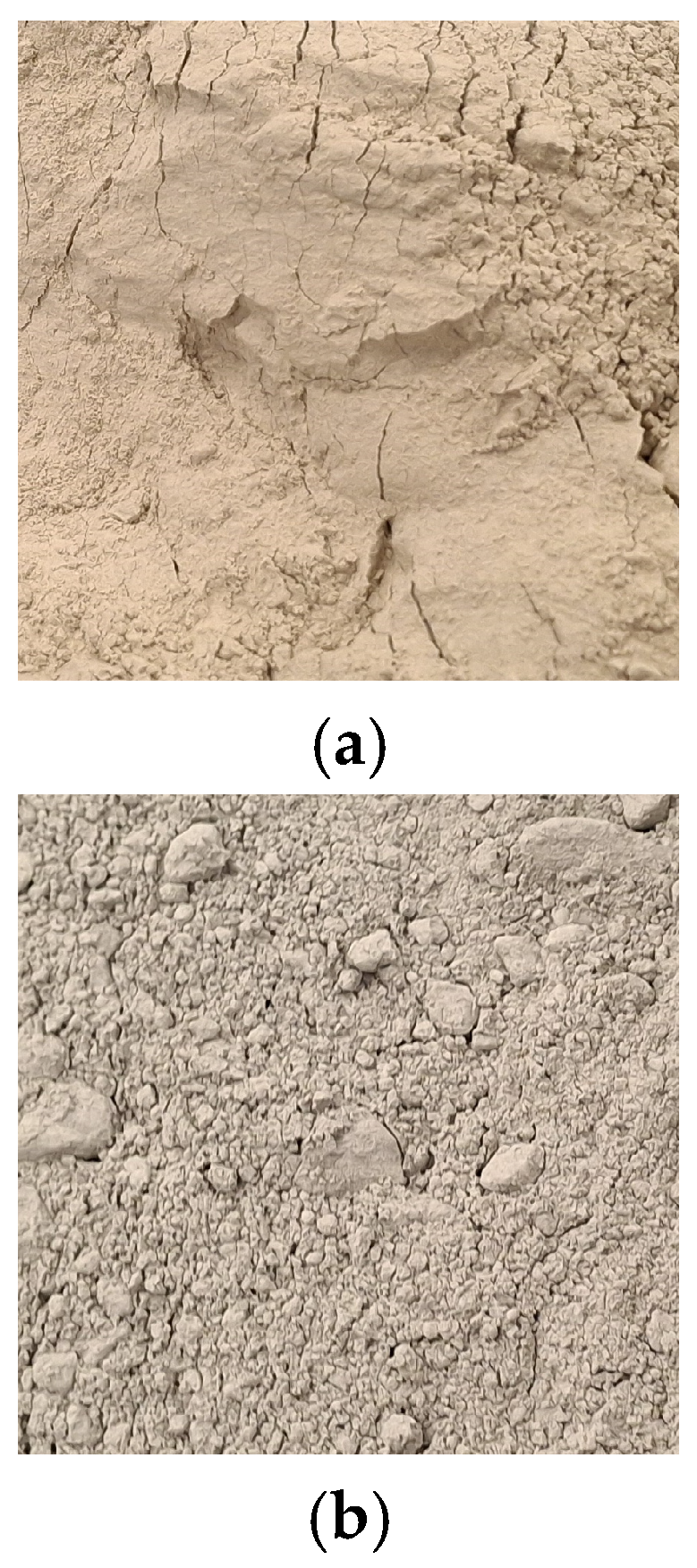
Type I/II Portland cement purchased from Lehigh Hanson Company (Doraville, GA) served as the primarily binder in all PCC mixes. Fly ash was collected from Plant Bowen, a Georgia Power coal combustion facility located in Euharlee, GA, and included both types of fly ash (FA-C and FA-F) as classified per ASTM C618 [8]. Table 2 shows the chemical compositions of Portland cement and fly ash analyzed by X-ray fluorescence (Bruker, M4 Tornado, MA). Physical properties including loss on ignition (LOI), particle size distribution, Blaine fineness, glass phase content, and particle morphology were not measured in this study. The mechanistic interpretations of workability and performance differences between FA-C and FA-F draw on these chemical compositions and the well-established relationships between CaO content and self-cementing reactivity, between siliceous glass phase content and pozzolanic activity rate, and between particle morphology and fresh-state workability [6,10,14]. Type I/II cement contains high calcium oxide (CaO) content, contributing to hydration and strength development, while lower silicon dioxide (SiO2), aluminum oxide (Al2O3), and ferric oxide (Fe2O3) compared to both fly ash types. FA-C contains elevated calcium oxide (CaO) content relative to FA-F, promoting self-cementing behavior at early stage, while FA-F exhibits high combined silica, alumina, and iron oxide content (SiO2 + Al2O3 + Fe2O3 > 70%) indicative of predominantly pozzolanic reactivity. Figure 2 shows photo images of fly ash samples used in the study.
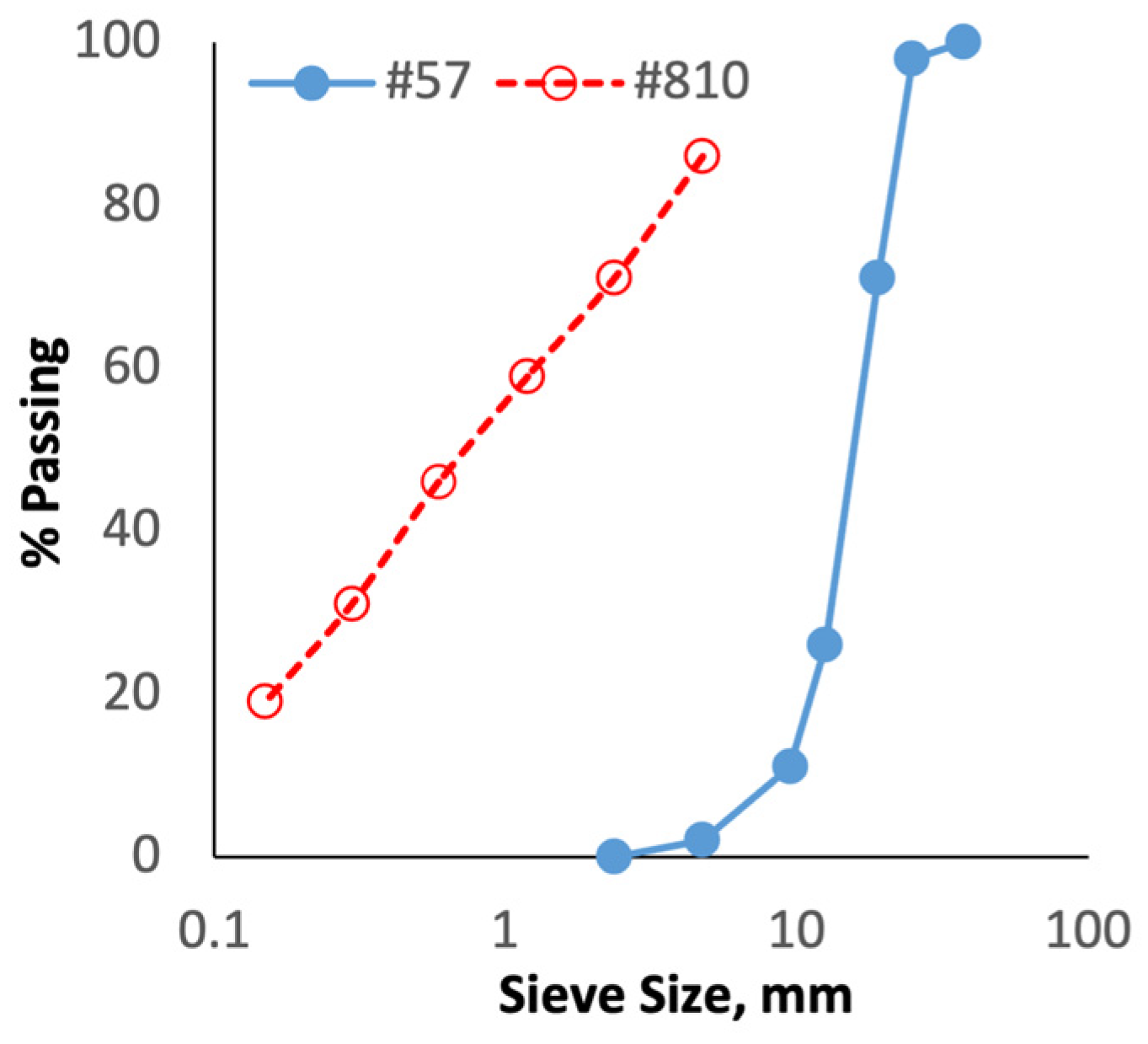
Coarse aggregate (#57) and fine aggregate (#810) were obtained from a quarry in Augusta, GA. Figure 3 shows their gradation charts. The fineness modulus of #810 was 3.0, and the maximum size of #57 was 37.5 mm.
In accordance with the American Concrete Institute (ACI) procedures, all concrete samples were batched, mixed and cast into 100 mm diameter by 200 mm height cylinders, with nine replicates per mix, so that three replicates could be tested at each of the three designated curing ages: 7, 14, and 28 days. As a result, a total of 135 cylinders were prepared across the full experimental program. All cylinders were moisture-cured in temperature-controlled curing boxes. No accelerated curing processes, such as high-temperature and/or high-pressure steam curing, were employed, allowing pozzolanic reactions to develop under standard moisture-curing conditions.

2.3. Laboratory Tests

Fresh-state workability was assessed using the slump test per ASTM C143 immediately before casting for PCC cylinders. For hardened concrete, surface electrical resistivity was measured at each curing age using the Wenner probe (Proceq, Resipod, Switzerland) in accordance with AASHTO T358 [15], The Wenner probe features a probe spacing of 38.1 mm with a supplied current from 10 to 50 μA, as well as a wide range of resistance measurement (1 to 1000 kΩ-cm). Each contact point in the probe array carries a small water reservoir to ensure reliable electrical contact with the specimen surface. The resistivity served as a non-destructive indicator of durability potential that is sensitive to pore structure and ionic conductivity. Compressive strength was then determined per ASTM C39 using a servo-hydraulic loading machine [16]. This sequencing ensured that both measurements were obtained from the same specimens at each curing age.

2.4. Life Cycle Assessment and Performance Index

A process-based life cycle assessment (LCA) was conducted using OpenLCA software (Version 2.6.0) with the TRACI 2.1 impact assessment method [17] to quantify the global warming potential (GWP, kg CO2/m3) of each mix design. The cradle-to-gate system boundary encompasses raw material production and concrete batching electricity, excluding transportation to site, placement, construction, and end-of-life stages. The U.S. Life Cycle Inventory (USLCI) database was used as the primary data source for raw materials. GWP was selected as the primary environmental indicator given its established primacy in concrete sustainability assessment [18].
Cement CO2 emissions were manually assigned at 868 kg CO2/ton based on industry average data for OPC clinker manufacturing [3], which is consistent with the USLCI database framework. This value yields an OPC control mix raw-material GWP of 38.95 kg CO2/m3, based on the control cement content of 448.52 kg/m3. No dedicated process data for both fly ash types were available in the databases used for this study. Therefore, fly ash was assigned a zero upstream burden, reflecting its classification as an industrial by-product of coal combustion, which agrees well with the most common allocation approach in the LCA literature. Concrete batching electricity was accounted for as a post hoc addition of 1.28 kg CO2/m3, derived from an industry-average batching energy of 3.5 kWh/m3 [19] and the U.S. national average grid carbon intensity of 0.367 kg CO2/kWh for 2023 [20]. Since batching energy is identical across all mixes regardless of fly ash content, this addition is a constant offset that does not affect GWP/PI rankings but corrects the absolute GWP values. The resulting OPC control total GWP is 40.24 kg CO2/m3.
To move beyond raw GWP as the sole basis for environmental comparison, a Performance Index (PI) was developed as in Equation (1) to normalize GWP against the concrete’s actual strength and resistivity performance at each curing age:
PI = α · (fc/fc,ref) + β · (ρ/ρref)
where fc is the compressive strength of the mix at the curing age of interest, ρ is the electrical resistivity at the same age, fc,ref and ρref are the corresponding 28-day OPC control values, and α and β are weight factors satisfying α + β = 1. The OPC control was selected as the reference because it represents the current industry baseline against which FA substitution is evaluated. This normalization ensures that PI = 1.0 for the baseline mix, making GWP/PI directly interpretable as the environmental cost relative to conventional practice. The linear weighted sum form was adopted because it is the natural extension of the Ci index (Ci = GWP/fc) to two performance dimensions [21]. Also, it produces a single interpretable ratio directly computable from standard laboratory data without additional modeling. The GWP/PI ratio expresses the environmental cost per unit of combined strength and resistivity performance. GWP/PI represents the environmental cost in kg CO2 per m3 of concrete required to deliver the key performance, providing a single, directly interpretable metric that enables comparison of environmental efficiency across mixes with different strength and resistivity profiles. To assess the sensitivity of mix rankings to the relative weighting of strength versus resistivity, five weight factor scenarios were evaluated: α = 0.1 (strongly resistivity-weighted), 0.3, 0.5 (equal weighting), 0.7, and 0.9 (strongly strength-weighted). Rankings that are stable across all five scenarios should indicate robust, application-independent conclusions. In parallel, a structural threshold analysis was performed to identify which replacement rates meet compressive strength requirements of 20.7 MPa (3000 psi) and 34.5 Mpa (5000 psi), corresponding to the design threshold of the control mix and a higher-performance structural target, respectively, before GWP/PI comparisons are applied, preventing misinterpretation of favorable GWP/PI values for non-structural mixes.
The selection of compressive strength and electrical resistivity as the two performance indicators stems from three complementary considerations. First, compressive strength is the governing structural design parameter adopted in all major concrete specifications, making it an irreplaceable baseline for any load-bearing application. In fact, no durability indicator can substitute for it because structural integrity is a prerequisite for environmental efficiency comparisons. Second, surface electrical resistivity measured per AASHTO T358 [15] serves as a well-established, non-destructive proxy for chloride-induced deterioration in hardened PCC, since pore connectivity captured by resistivity governs the longevity of reinforced concrete in the most common aggressive exposure environments. Third, both indicators are measurable on the same specimens at each curing age using standard equipment available in concrete laboratories, making the PI concept directly reproducible from the data generated in this study. However, it is acknowledged that other durability-related parameters, such as freeze–thaw resistance, drying shrinkage, sorptivity, carbonation depth, and long-term chloride diffusion coefficients, are not captured by the present formulation. For applications where these mechanisms govern design, the PI should be extended to incorporate the relevant indicator, and GWP/PI values reported here should be interpreted in that context.
The GWP per unit strength reported in this paper is equivalent to Ci and serves as a practitioner-oriented reference point aligned with this established benchmark. The PI developed in this study extends Ci in two ways: first, by incorporating electrical resistivity as a second performance dimension reflecting chloride penetration resistance; and second, by parameterizing the relative weighting of strength and resistivity through α, enabling explicit sensitivity analysis across application contexts. The I-SEE coefficient [22] inverts the Ci ratio to express strength per unit GWP but retains strength as the sole performance dimension. The CEI framework [23] incorporates freeze–thaw damage alongside GWP but is designed for cold-region infrastructure and has a limited weighting function for application-specific sensitivity analysis. Multi-criteria TOPSIS methods [9] rank mixes across multiple performance attributes but produce ordinal rankings rather than a single interpretable efficiency ratio. Hence, they cannot track environmental efficiency temporally across curing ages. The developed PI method combines both strength and resistivity in a single ratio metric, simulating their relative weighting through α, and enabling temporal tracking of GWP/PI from 7 to 28 days.

3. Results

3.1. Workability

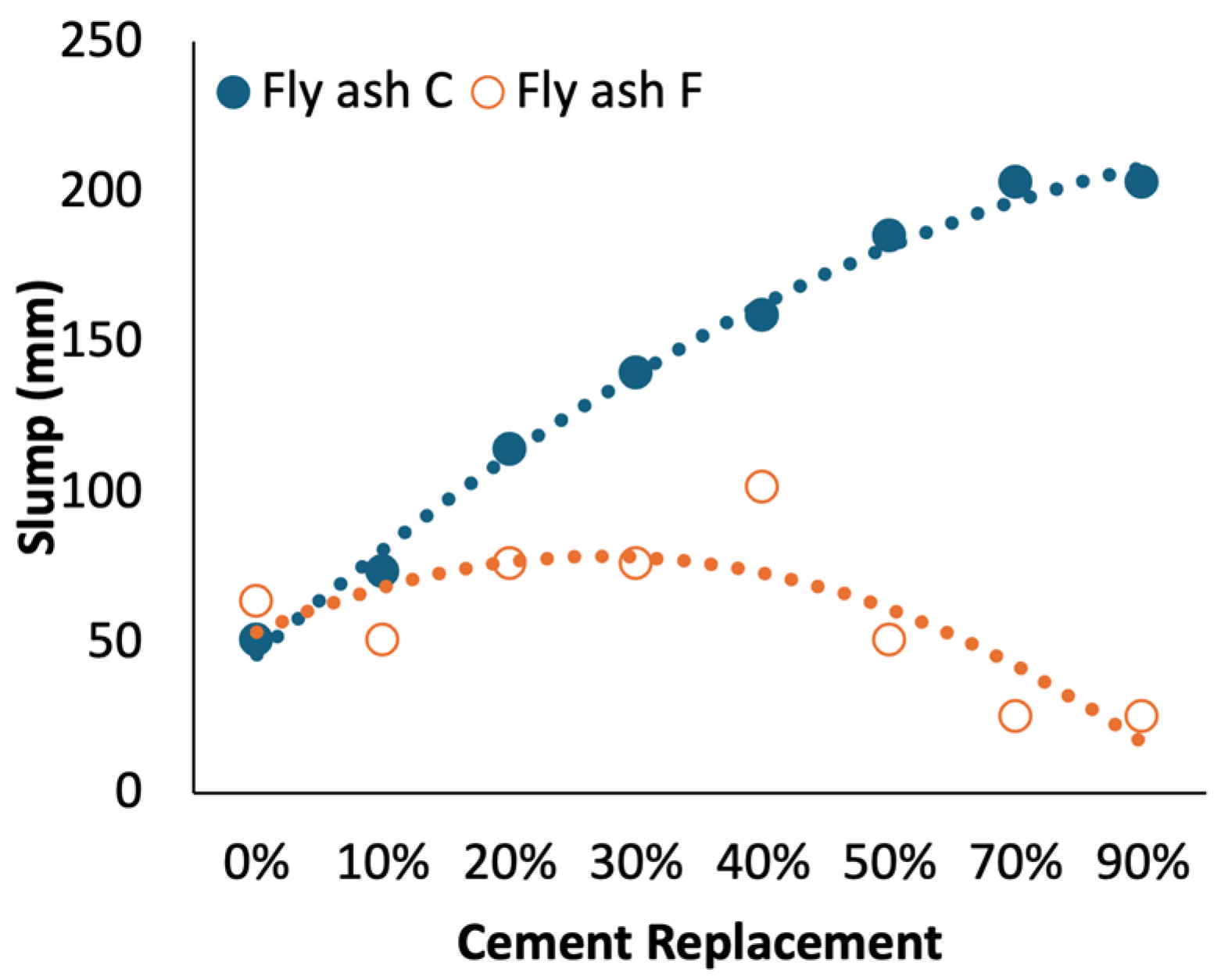
Fresh-state workability, measured as slump right before casting, responded differently to FA-C and FA-F substitution across the tested replacement range. As Figure 4 shows, slump increased monotonically with replacement rate in concrete mixes with FA-C, from 50 mm in the OPC control to 185.4 mm at 50% and 203.2 mm at both 70% and 90%, reflecting the spherical particle morphology of FA-C and its role in reducing inter-particle friction within the fresh paste [10]. As cement is gradually replaced, high CaO content in FA-C (about 23%) leaves the PCC mix with fewer rapidly hydrating C3A and more slowly reacting calcium alumina-silicate glass that substantially reduces early water consumption, increasing free water available for lubrication at the time of casting [6]. This progressive improvement in flowability indicates that FA-C mixes at ultra-high replacement rates would require no additional admixtures, such as water reducer and superplasticizer, to achieve acceptable placement characteristics, though slump values at 70% and 90% indicate a potential risk of segregation in field applications.
On the other hand, slump in the FA-F mixes increased from approximately 63.5 mm at the control to 100 mm at 40% replacement, though batch-to-batch variability (5 mm) was observed at intermediate rates. Beyond 40%, slump declined sharply to 50 mm at 50% and 25.4 mm at both 70% and 90%. This reduction is consistent with the particle characteristics of FA-F at high substitution rates, where the reduction in total cementitious paste volume and the less spherical morphology of some FA-F particles at high dosages reduce flowability [10]. Another possible mechanism is that low CaO content (2.7%) in FA-F results in negligible self-cementing or hydraulic activity, especially at ultra-high replacement rates. Consequently, the total active binder phase becomes insufficient to sustain a cohesive, workable paste, and the mix transitions toward a lean, under-bound state prone to bleeding rather than flow [6]. According to an FHWA report, FA-F typically carries a higher loss-on-ignition (LOI) than FA-C, reflecting a greater proportion of unburned carbon particles whose irregular, porous surface absorbs mixing water and reduces free water availability [24]. The divergence in workability behavior between the tested fly ash types at high replacement rates has a practical implication: FA-C mixes remain highly workable at 50–90% substitution, while FA-F mixes at the same rates would likely require admixtures to achieve adequate workability for most construction applications [6].

3.2. Compressive Strength

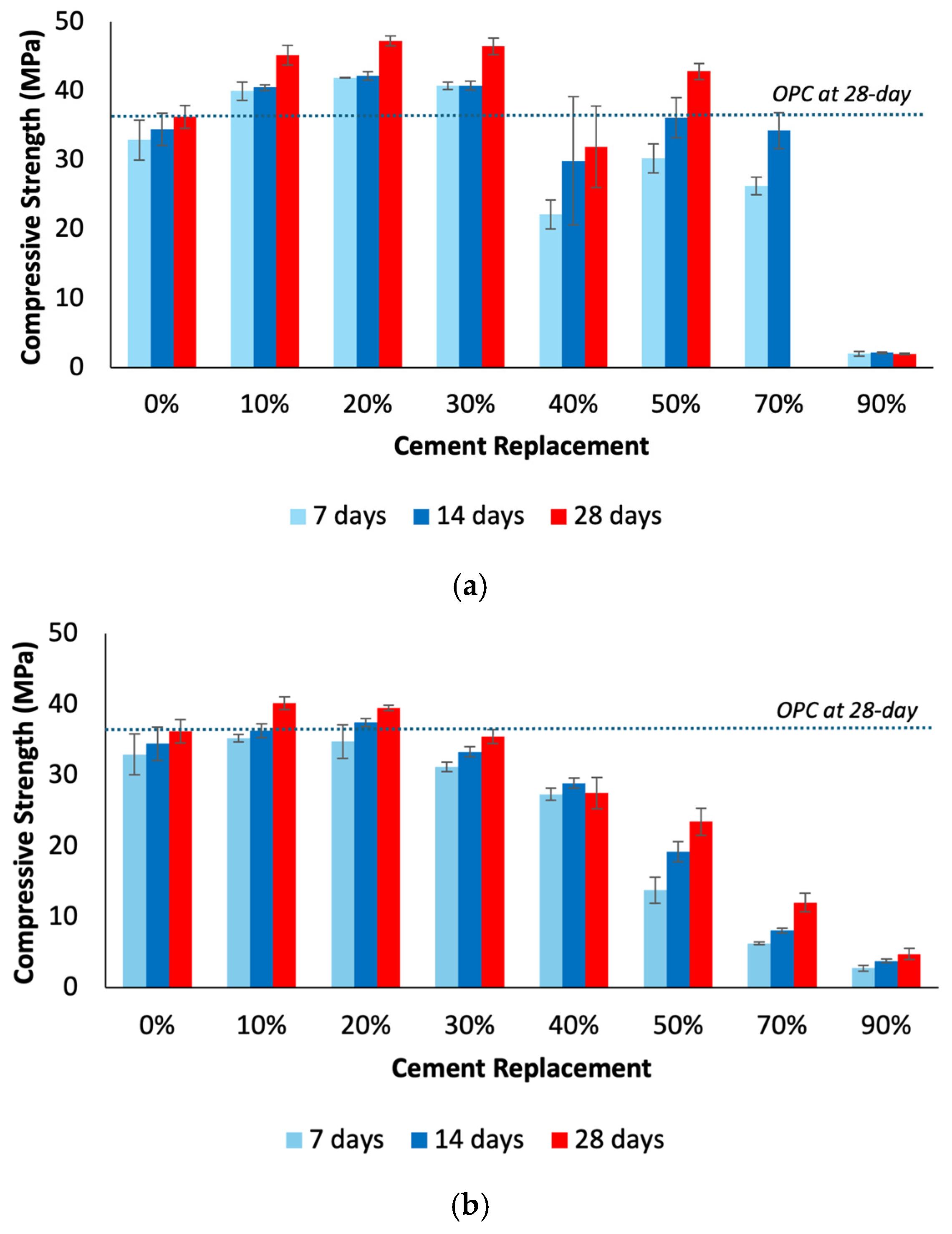
Figure 5 shows the average compressive strength of FA-C and FA-F cement replacement mixes at 7, 14, and 28 days. Error bars represent the standard deviation of three replicate specimens at each age. The two fly ash types exhibit fundamentally different strength-substitution relationships that become increasingly pronounced at ultra-high replacement rates.
For FA-C, strength increased above the OPC control (36.2 MPa at 28 days) from 10% replacement onward, peaking at 20% (47.3 MPa) and remaining above the control through 50% replacement (42.9 MPa). This sustained strength performance at 50% FA-C is notable. This is the highest substitution rate at which FA-C consistently exceeds the OPC control across all three curing ages, and it is 2.5 times the commonly cited optimum range of 20–30%. Coefficients of Variation (CV) across FA-C mixes were generally low (1.5–4.5%), indicating acceptable replicate consistency. A notable exception is the FA-C 40% mix, which exhibited a CV of 18.5% at 28 days and 31.0% at 14 days caused by one specimen fracturing at substantially lower load than its two counterparts in each batch. If the anomalous specimen is excluded, the two remaining replicates yield a mean strength of 34.9 MPa, compared to the reported mean of 32.0 MPa across all three specimens. This distinction is consequential in that under the reported three-specimen mean, FA-C at 40% falls below the 34.5 MPa threshold, but the two-specimen mean would place it close to at or above that threshold. Therefore, the contribution of FA-C at 40% to GWP/PI should be interpreted with the caveat that these values reflect a batch of uncertain reliability. At 90%, strength collapsed to 2 MPa, indicating that the lack of cementitious matrix necessary for structural performance. The 28-day data for FA-C at 70% were properly collected but unfortunately lost during the upkeep of lab facilities and are excluded from 28-day comparisons. The strength advantage of FA-C at moderate-to-high rates may be attributed to its higher CaO content, which enables self-cementing reactions in addition to pozzolanic activity, accelerating C-S-H gel formation at earlier curing ages [6,25].
FA-F followed a monotonically declining strength trend across the full replacement range. At 10% and 20% replacement, 28-day strength exceeded the OPC control at 40.2 MPa and 39.5 MPa, respectively, 10.9% and 9.0% above the control, reflecting the positive contribution of pozzolanic C-S-H formation at moderate dosages. Beyond 20%, strength declined progressively, falling to 35.4 MPa at 30%, 27.5 MPa at 40%, 23.4 MPa at 50%, 12.0 MPa at 70%, and 4.8 MPa at 90%. This continuous strength decline indicates the slower pozzolanic reaction kinetics of Class F fly ash, notably at high replacement rates, due to insufficient calcium hydroxide available from the reduced cement fraction to sustain secondary C-S-H formation [14,25]. FA-F cement replacement at 70% and above results in 28-day strengths below the 20.7 MPa design threshold of the control mix, limiting its application to non-structural or low-load contexts at such rates. FA-F remains structurally viable through 50% replacement (23.4 MPa), though with increasing replicate variability at higher rates (CV = 8.1% at 40–50%, rising to 17.2% at 90%), consistent with the reduced cementitious matrix at ultra-high substitution. The early-age strength data reinforce these trends: FA-C at 50% achieved 30.3 MPa at 7 days and 36.1 MPa at 14 days, both approaching the control, while FA-F at 50% reached only 13.8 MPa at 7 days and 19.2 MPa at 14 days, with direct implications for construction scheduling and formwork removal.
It should be noted that the 28-day curing milestone captures only the early phase of pozzolanic reactivity in FA-F concrete. As illustrated in the literature, FA-F concrete continuously gains strength due to secondary C-S-H formation so that its strength matches or even exceeds that of the OPC control by 56–90 days [9,13]. Therefore, the absolute strength values reported especially for FA-F should be understood as conservative lower bounds on the achievable structural performance of these mixes.
To assess whether observed differences in compressive strength between mixes are statistically meaningful, a one-way analysis of variance (ANOVA) was conducted separately for FA-C and FA-F replacement groups at 28 days, with the OPC control included in each analysis. Both ANOVAs yielded highly significant results (FA-C: F = 124.92, p < 0.001; FA-F: F = 266.47, p < 0.001), confirming that replacement rate and FA type have a statistically significant overall effect on compressive strength. Also, the selected pairwise two-sample t-tests revealed that FA-C at 50% was found to be significantly stronger than the OPC control (p = 0.005) and significantly stronger than FA-C at 20% (p < 0.001), though the difference between FA-C at 50% and FA-C at 10% did not reach significance (p = 0.095), reflecting the relatively small magnitude of that difference relative to within-group variability. For FA-F, OPC was significantly stronger than FA-F at 50% (p < 0.001), and FA-F at 30% was significantly stronger than FA-F at 40% (p = 0.005). The OPC vs. FA-C 40% comparison was not statistically significant (p = 0.293), consistent with the high replicate variability of that mix (CV = 18.5%) discussed above. It should be noted that with n = 3 replicates per group, the statistical power of these tests is limited, and the normality assumption cannot be formally verified at this sample size. Therefore, the ANOVA and t-test results should be interpreted as supporting evidence for the observed trends.

3.3. Electrical Resistivity

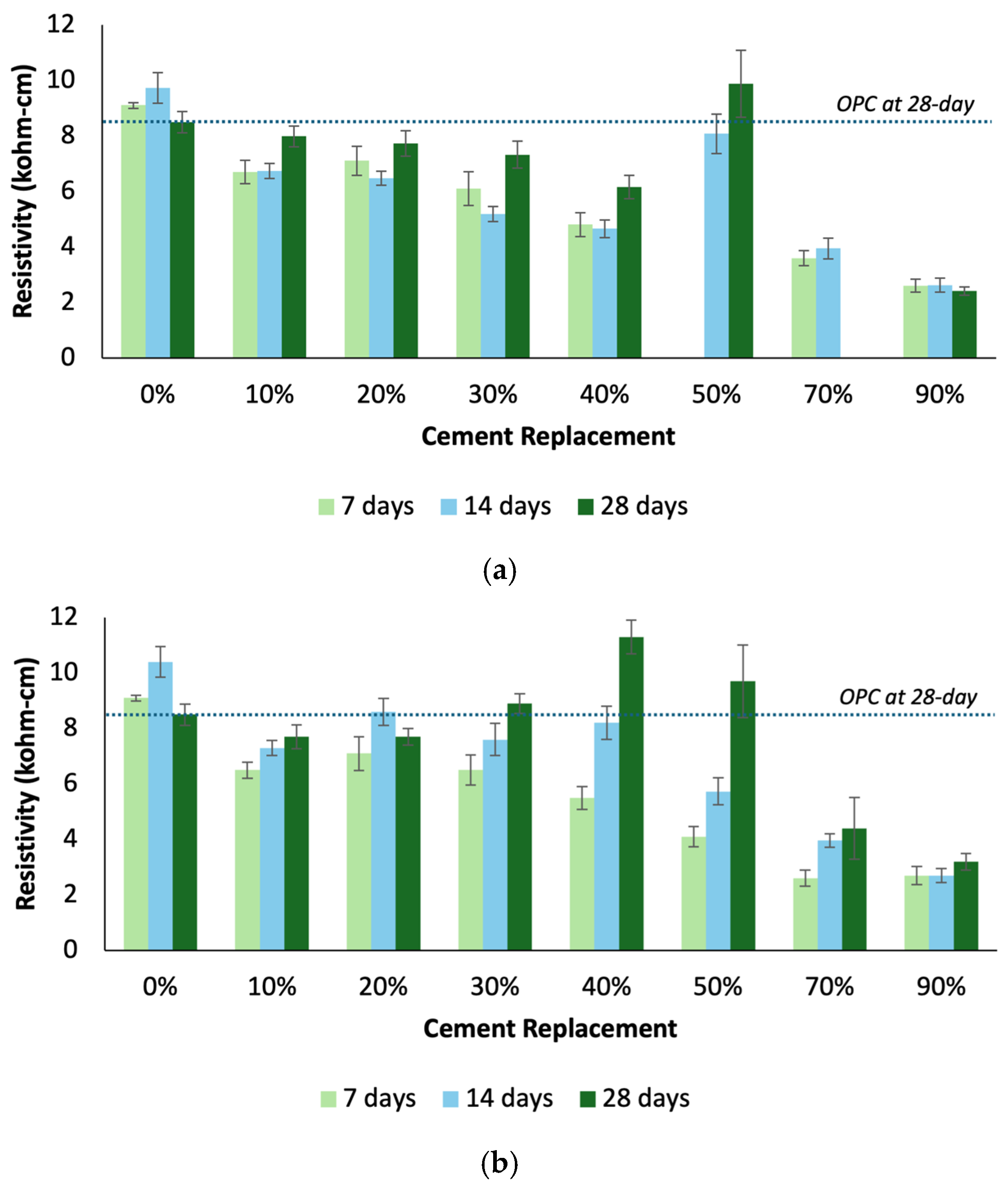
Resistivity, measured as a surface electrical resistivity proxy for chloride ion penetration resistance and pore structure refinement, reveals a more nuanced picture than compressive strength alone. Figure 6 shows resistivity at 7, 14 and 28 days for both fly ash types across the cement replacement range.
For FA-C, 28-day resistivity declined from the control value (8.50 kΩ·cm) through 10–40% replacement (7.98 to 6.16 kΩ·cm), and then recovered sharply to 9.88 kΩ·cm at 50% replacement, exceeding the control and indicating superior chloride penetration resistance at this rate. The temporal data adds important context to this non-monotonic 28-day pattern. At 7 days, resistivity across all FA-C replacement rates from 10% to 40% falls below the OPC control, reflecting the disruption of the early hydration network before pozzolanic reactions have had sufficient time to refine the pore structure. This is one of characteristics of early-age fly ash concrete microstructure [9,25,26]. For FA-C at 50%, the recovery is already underway by 14 days (8.08 kΩ·cm, approaching the control), before reaching 9.88 kΩ·cm at 28 days, indicating that pozzolanic pore refinement accelerates notably between the first and second weeks of curing at this replacement level. The mechanism behind the full recovery above the control at 50% warrants further investigation through microstructural analysis in future work. At 90%, resistivity remained consistently low across all curing ages (2.60 → 2.62 → 2.41 kΩ·cm), confirming the near-complete loss of cementitious matrix already observed in the strength data.
Overall, FA-F exhibited a steadily growing resistivity trend at 28 days: resistivity rose from 8.50 kΩ·cm in the control to 8.90 kΩ·cm at 30%, 11.30 kΩ·cm at 40%, and 9.70 kΩ·cm at 50%, occurring even as compressive strength declined at these rates. The temporal data reveals that this 28-day resistivity advantage develops through a distinctly non-linear trajectory at high replacement rates, consistent with the delayed and progressive nature of FA-F’s pozzolanic reactions. FA-F at 40% showed the most dramatic microstructural evolution in the entire dataset, where resistivity rose from 5.50 kΩ·cm at 7 days to 8.20 kΩ·cm at 14 days and 11.30 kΩ·cm at 28 days. FA-F at 50% followed a similar but more gradual arc (4.10 → 5.73 → 9.70 kΩ·cm). Early-age pore connectivity that is initially elevated and then gradually filled by slow pozzolanic product formation reflects the microstructural development of high-volume FA-F concrete, in which the initial coarsening of the pore network is ultimately overcome by the refinement effect of C-S-H and C-A-H gel formation [9,26,27]. In contrast, FA-F at 10% and 20% showed relatively stable resistivity across curing ages (rising modestly from 6.50 to 7.70 kΩ·cm and from 7.10 to 7.70 kΩ·cm, respectively), suggesting that at low FA-F dosages, the immediate particle-packing benefit of fine FA particles provides early pore-filling without the delayed-then-accelerating refinement characteristic of higher dosages. At 70% and 90% FA-F replacement, resistivity remained consistently low across all three curing ages, confirming that beyond 50%, pozzolanic product formation is insufficient to compensate for the reduced cement fraction within the tested curing time.
The divergence between strength and resistivity trends, particularly for FA-F at the 30–50% replacement range, demonstrates that evaluating concrete sustainability solely on compressive strength may be insufficient, and underscores the value of the PI that explicitly incorporates both dimensions.
The resistivity results reported should be interpreted as the potential for ionic transport resistance and pore structure refinement, rather than as a complete assessment of long-term durability. While surface electrical resistivity is strongly correlated with chloride ion penetration resistance and provides a reliable proxy for ionic transport-driven deterioration, it does not capture other durability-relevant phenomena including carbonation resistance, sulfate attack, freeze–thaw damage, alkali-silica reactivity, shrinkage, or the time to corrosion initiation in reinforced PCC.

3.4. Correlation Between Compressive Strength and Resistivity

The relationship between compressive strength and electrical resistivity across the tested mixes is moderate at 28 days (Pearson r = 0.675, p = 0.008, R2 = 0.456), confirming that the two indicators carry substantially independent information. This suggests that 54% of resistivity variance is not explained by strength. Eight of the fourteen mixes show divergence in direction relative to the OPC control, where one indicator ranks the mix above the OPC baseline while the other ranks it below. The most striking case is FA-F at 40% replacement, which falls below the OPC control in strength (27.5 vs. 36.2 MPa) yet achieves the highest resistivity of all mixes (11.30 kΩ·cm, 33% above the OPC reference). A strength-only metric would entirely miss this divergence. The temporal evolution of the relationship further supports this. At 7 days, when cement hydration governs both properties simultaneously, the correlation is much stronger (r = 0.904, R2 = 0.818). By 28 days, it weakens substantially as pozzolanic reactions contribute selectively to pore refinement, improving resistivity through reduced pore connectivity without proportionally increasing strength. This hydration-driven decoupling is quantified in the rising resistivity-to-strength ratio of FA-F at 40% replacement (0.36 at 7 days to 0.41 at 28 days), suggesting that both parameters contribute distinct and complementary information to the PI framework.

3.5. Global Warming Potential

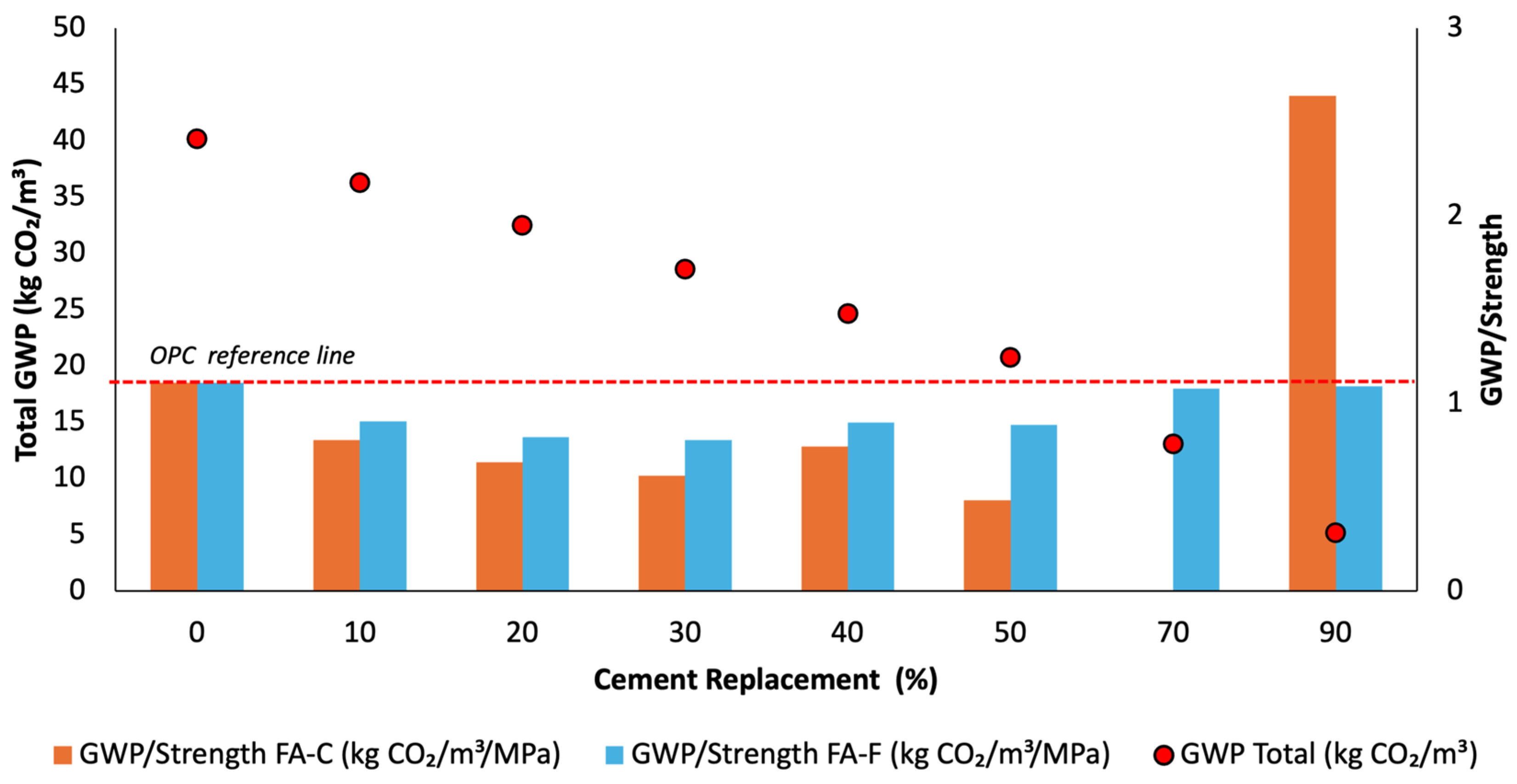
Under the adopted cradle-to-gate boundary, total GWP decreases in proportion to cement replacement rate, since OPC clinker production dominates the embodied carbon of conventional PCC. The identical GWP values for FA-C and FA-F at each replacement rate reflect that GWP is determined solely by the cement fraction displaced, not by the type of fly ash used. This follows directly from the zero-upstream-burden treatment of fly ash as an industrial by-product: since neither FA-C nor FA-F carries any allocated production emissions in the OpenLCA model, the GWP difference between mixes with different fly ash types at the same replacement rate is identically zero. The aggregate, water, and electricity contributions are held constant across all mixes, leaving cement content as the sole variable affecting GWP.
Figure 7 shows the total GWP, including raw material production and concrete batching electricity (1.28 kg CO2/m3), for all tested mixes relative to the OPC control (40.24 kg CO2/m3). While these GWP reductions are environmentally significant, raw GWP values alone could provide a misleading basis for ranking PCC mixes. The GWP per unit compressive strength (kg CO2/m3/MPa) framework has provided a simpler practitioner-oriented perspective [21]. Both fly ash types shared similar levels in GWP/Strength from 10% to 40%. The GWP/PI metric reveals that FA-C at 50% achieves the best environmental efficiency (0.49 kg CO2/m3/MPa), which is about 57% decrease compared to the OPC (1.11 kg CO2/m3/MPa). However, FA-C substitution led to the worst environmental efficiency in PCC (2.64 kg CO2/m3/MPa) at 90% replacement, due to the poor strength performance. FA-F yields 1.09 kg CO2/m3/MPa at 90%, which is equivalent to the OPC control despite achieving an 87.0% reduction in raw GWP. This demonstrates how severe strength loss can entirely offset the environmental benefit of ultra-high cement replacement.

3.6. Performance Index and GWP/PI Analysis

Table 3 shows the comparison between GWP/Strength and GWP/PI at the equal-weighting scenario (α = 0.5). For FA-C mixes, GWP/Strength consistently overstates the improvement over the OPC control. At 10–30% replacement, FA-C seems 10–11% more efficient in GWP/Strength than in GWP/PI, mainly due to the resistivity levels of those mixes (7.32–7.98 kΩ·cm) falling below the OPC reference (8.50 kΩ·cm). FA-C at 50% is the one exception, where both metrics agree to within 0.4 percentage points (GWP/Strength improvement: 56.3%; GWP/PI improvement: 55.9%). This is attributed to the fact that FA-C 50% simultaneously exceeds the OPC reference in both strength and resistivity, making the PI insensitive to which performance dimension is included. For FA-F, the pattern reverses at 30–50% replacement, where GWP/Strength substantially understates environmental efficiency: FA-F at 40% appears to offer only a 19.2% improvement over OPC on GWP/Strength but achieves a 41.3% improvement on GWP/PI. This difference of 22% is driven by its exceptional 28-day resistivity of 11.30 kΩ·cm, the highest of all tested mixes.
Based on 7-day and 14-day strength data and the strength gain ratios of comparable FA-C mixes, the 28-day strength of FA-C at 70% replacement is estimated at approximately 35–38 MPa, with resistivity estimated at 4.5–5.5 kΩ·cm. At these estimated values, FA-C 70% GWP/PI would fall in the range of 15.3–17.7, either equal to or lower than FA-C 50% (17.73), because FA-C 70%’s substantially lower GWP (13.01 kg CO2/m3 vs. 20.79 kg CO2/m3) partially compensates for its lower PI. Therefore, the primary recommendation that FA-C at 50% is the optimal structural mix under the five-scenario sensitivity analysis carries a caveat that FA-C at 70% replacement, if its 28-day performance is confirmed at the estimated range, could achieve comparable or superior GWP/PI, and its inclusion as an equally viable candidate at 70% replacement would further strengthen that high-volume FA-C substitution is environmentally advantageous beyond conventional limits. Confirming the 28-day data for FA-C at 70% replacement is identified as the highest priority for future experimental work.
When a structural threshold analysis identifies which mixes are appropriate for structural applications, both fly ash types are viable through 50% replacement to meet the minimum strength of 20.7 MPa. This lower threshold corresponds to the design strength of the control mix and the ACI 318 minimum for reinforced structural concrete in normal exposure conditions [27]. The higher threshold of 34.5 MPa represents a commonly specified strength for more advanced structural applications, including bridge decks and precast elements, consistent with AASHTO LRFD specifications [28], providing a more demanding benchmark for assessing the viability of high-volume FA mixes. At this higher threshold, FA-F and FA-C are viable through 30% and 50% replacement, respectively, with FA-C 40% excluded due to its anomalous batch variability. Mixes below the applicable structural threshold should not be compared on GWP/PI for structural applications regardless of their numerical ranking.
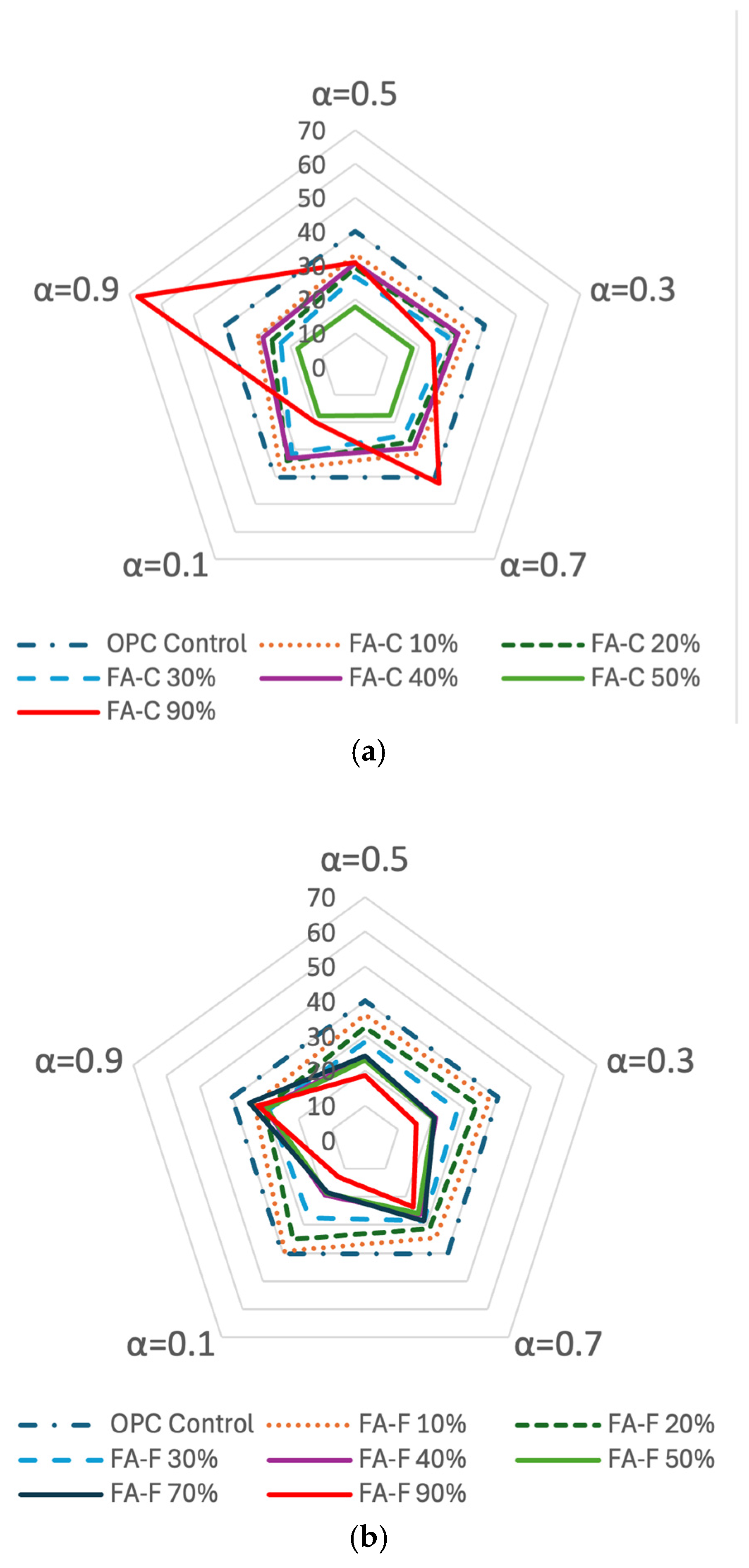
Figure 8 shows GWP/PI values for all mixes at 28 days under five weighting scenarios (α = 0.1, 0.3, 0.5, 0.7, and 0.9). Each axis represents one of the five α weighting scenarios from α = 0.1 (resistivity-dominant) to α = 0.9 (strength-dominant). Lower GWP/PI (smaller polygon size) indicates superior performance-weighted environmental efficiency. A smaller, tighter polygon indicates a PCC mix that yields lower GWP/PI and therefore superior performance-weighted environmental efficiency across all weighting scenarios. The OPC control serves as the reference baseline and its GWP/PI remains constant at 40.2 across all α scenarios. FA-C at 90% is only an exception at strength-dominant α scenarios (GWP/PI = 67.4, at α = 0.9), At α = 0.5, its GWP/PI = 30.9, which is actually below the OPC control.
Among structurally viable mixes, FA-C at 50% cement replacement achieved the most favorable GWP/PI across all five weighting scenarios, ranging from 17.9 (α = 0.1) to 17.6 (α = 0.9), with a variation of only 0.24 GWP/PI units across the entire sensitivity spectrum. This exceptional stability reflects that FA-C at 50% simultaneously exceeds the OPC control in both compressive strength and electrical resistivity, making its PI greater than 1.0 regardless of how the two dimensions are weighted. Compared to the OPC control (GWP/PI = 40.2 at α = 0.5), FA-C at 50% represents a 56% improvement in performance-weighted environmental efficiency. This offers much more compelling evidence than the fact that FA-C at 50% cement replacement can lead to a 48.3% reduction in GWP.
FA-C at 10% shows the second-best GWP/PI among high-strength mixes (33.3 at α = 0.5), reflecting its very high PI due to a strength that substantially exceeds its reference, but its GWP reduction is only 9.7%, limiting its absolute environmental benefit. FA-F at 90% produces a GWP/PI of 18.69 at α = 0.5, lower than FA-C at 50%, but its 28-day compressive strength of 4.8 MPa places it well below any structural threshold, and this result is therefore not applicable to load-bearing applications. The sensitivity of FA-F at 90%’s GWP/PI to α is substantial (13.14 at α = 0.1 vs. 32.35 at α = 0.9), confirming that its apparent advantage is fragile and dependent on heavily resistivity-weighted scenarios.

3.7. Time Evolution of GWP/PI

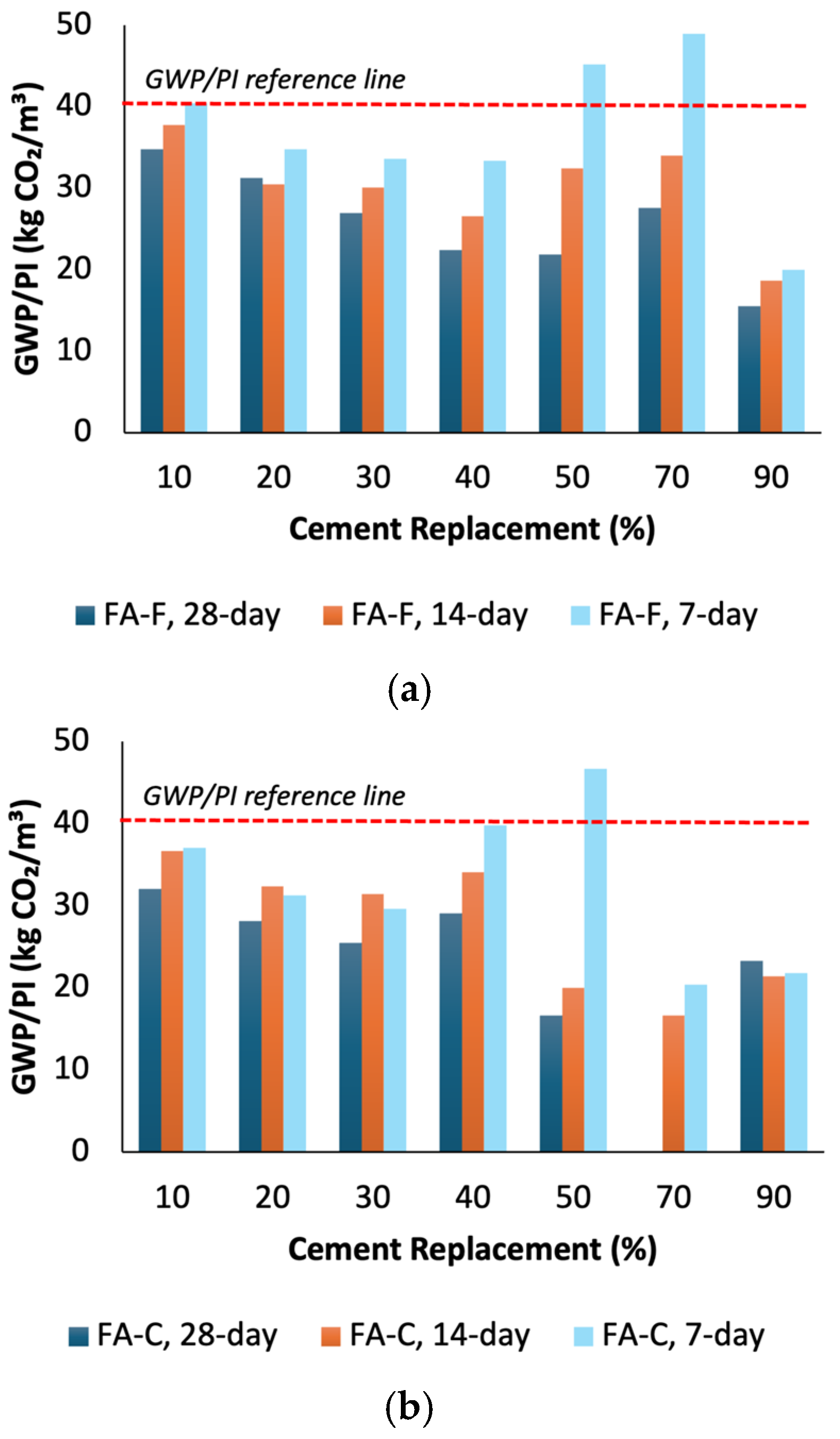
Figure 9 tracks GWP/PI at α = 0.5 across 7, 14, and 28 days for all FA mixes. The reference line represents the GWP/PI of the OPC control specimens at 28 days. Since GWP is a production-stage indicator unchanged by curing time, the temporal evolution of GWP/PI reflects exclusively the development of compressive strength and electrical resistivity through continued hydration and pozzolanic reaction.
At 7 days, FA-F at 70% exhibits the highest GWP/PI (54.3) followed closely by the OPC control (50.9), reflecting incomplete early hydration relative to the 28-day reference values used in the PI denominators. FA-F at 50% (48.2) also shows pronounced early-age inflation. FA-F at 90% (26.5) and FA-C at 90% (28.9) are comparatively lower, not because of strong early performance but because their drastically reduced GWP offsets their low PI. By 14 days, substantial improvement is observed across all mixes as hydration and pozzolanic reactions accelerate: FA-C at 50% reaches 21.3, FA-F at 50% improves to 34.5, and FA-F at 70% falls to 37.7. By 28 days, clear differentiation is established: FA-C at 50% achieves the lowest GWP/PI of all structural mixes at 17.7, while FA-F at 50% (23.3) and FA-F at 70% (25.3) continue to improve. The OPC control (40.2 at 28 days) remains the least efficient mix throughout all curing ages.
The temporal pattern reveals a practically important finding: early-age GWP/PI inflation in high-volume FA-F mixes does not reflect poor long-term environmental efficiency. Instead, it reflects the well-established delayed pozzolanic reactivity of Class F fly ash [26]. Specifying adequate curing time is therefore not merely a structural consideration but an environmental efficiency consideration: curtailing curing to accelerate construction schedules in high-volume FA-F mixes undermines the environmental benefit that justified the substitution in the first place.

4. Discussion

4.1. Key Findings

The results of this study converge on a finding that provides new evidence against both the performance assumptions and the environmental accounting conventions that have historically constrained fly ash adoption in PCC. When performance and environmental impact are evaluated jointly through the GWP/PI framework, the case for high-volume FA-C substitution is substantially stronger than either (strength or resistivity) dimension alone would suggest.
The most important performance finding is that FA-C maintains compressive strength and electrical resistivity above the OPC control through 50% cement replacement, 18.2% above the control in strength and 16.2% above in resistivity at 28 days, sustained across all three curing ages. This extends the findings of the authors’ previous work [12], where a range of 10–20% was identified as the optimal cement replacement range for FA-C, demonstrating that performance above the OPC baseline is achievable at rates 2.5 times higher than previously recommended.
The self-cementing reactions enabled by FA-C’s elevated CaO content, supplementing pozzolanic C-S-H gel formation, sustain cementitious product development even as the Portland cement fraction is substantially reduced [6]. The present study provides empirical confirmation that this mechanism remains effective at 50% replacement under standard moisture-curing conditions, without admixtures or accelerated curing.
FA-F presents a contrasting but equally instructive picture. Its monotonically declining strength beyond 20% replacement reflects the slower pozzolanic kinetics of Class F fly ash and insufficient calcium hydroxide availability at high cement replacement rates [14]. Yet its progressive improvement in electrical resistivity through 50% replacement reveals a resistivity trajectory that decouples from its strength trajectory [29]. For applications where chloride penetration resistance governs design, such as marine structures, below-grade concrete, or infrastructure in aggressive chemical environments, FA-F at 30–50% replacement may represent a viable and environmentally beneficial choice that a strength-only evaluation would overlook, based on the resistivity-inferred transport resistance.
The GWP/PI analysis reveals that the conventional approach of evaluating sustainable concrete mixes primarily on raw GWP reduction misrepresents environmental efficiency in both directions. It overstates the benefit of ultra-high replacement mixes whose GWP reductions are offset by disproportionate performance losses, and it understates the benefit of mixes like FA-C at 50% whose performance actually exceeds the OPC baseline. The expanded sensitivity analysis across α = 0.1 to 0.9 confirms that FA-C at 50% achieves the lowest GWP/PI among all structurally viable mixes across every weighting scenario, with a range of only 0.24 GWP/PI units from most resistivity-weighted to most strength-weighted. This stability is a practically important property: it demonstrates that FA-C at 50% is the optimal structural choice regardless of the specific performance priorities of the application. The GWP/PI of the OPC control confirms that conventional PCC is outperformed on environmental efficiency by all FA-C mixes and by FA-F at 10% through 30% at 28 days. This finding strengthens the case for FA substitution across the range tested.
The case of FA-F at 90% warrants specific attention because its GWP/PI of 18.69 (α = 0.5) could be misinterpreted as competitive with FA-C at 50%. Its 28-day compressive strength of 4.8 MPa makes it entirely unsuitable for any load-bearing application. The favorable GWP/PI arises solely from the dramatic GWP reduction at 90% replacement, which mathematically offsets the severe performance penalty. The structural threshold analysis introduced in this study is specifically designed to prevent this misapplication: practitioners should apply a minimum absolute strength threshold appropriate to the intended application before using GWP/PI to compare mixes, treating the metric as a decision tool within viable candidates rather than a universal ranking across all mixes.
The temporal evolution of GWP/PI adds a dimension that static 28-day comparisons obscure. High-volume FA-F mixes exhibit substantially inflated GWP/PI at early curing ages due to delayed pozzolanic reactivity, but this early-age inflation does not reflect poor long-term environmental efficiency. The practical implication is that curing specification is an environmental design variable, not merely a structural one: curtailing curing to accelerate construction schedules in high-volume FA-F concrete undermines the environmental efficiency that motivated the substitution [30]. This finding provides a quantitative basis for extended curing specifications in high-volume FA concrete that goes beyond strength gain considerations alone.
The findings of this study establish the performance ceiling of binary fly ash–cement systems, providing a necessary baseline for the growing literature on ternary and quaternary SCM combinations. Recent work has demonstrated that incorporating fly ash alongside complementary materials, such as silica fume, nanosilica, and iron tailings, yields synergistic effects that exceed the performance of any single SCM acting alone. Zhang et al. [31] showed that a ternary system of iron tailings, fly ash, and ceramic powder achieved an activity index of 91.5% at 30% total SCM substitution, while Golewski [32] demonstrated that quaternary blended cements combining fly ash, silica fume, and nanosilica reduced interfacial transition zone microcrack widths by up to 48% relative to OPC, simultaneously improving fracture toughness and compressive strength. These multi-component systems effectively address the two limitations most evident in high-volume binary FA-F mixes identified in the present study by providing supplementary reactive phases that accelerate hydration kinetics and densify the paste microstructure from early curing ages. A natural extension of the GWP/PI framework developed here would be to evaluate whether ternary or quaternary systems incorporating FA-C or FA-F at similarly high replacement rates can achieve further improvements in performance-weighted environmental efficiency, particularly for applications where both target strength threshold and superior resistivity are simultaneously required.

4.2. Limitations

Several limitations of this study should be acknowledged. The fly ash characterization is limited to chemical composition by XRF analysis. Other physical and microstructural properties, such as LOI, particle size distribution, Blaine fineness, glass phase content by XRD, and particle morphology by SEM, were not measured although they could influence key aspects of fresh and hardened concrete behavior. Therefore, the mechanistic characterization of fly ash concrete inferred from chemical composition and the published data for comparable FA types should be understood as semi-qualitative interpretations. Future investigations should include XRD, laser diffraction PSD, and SEM imaging to directly verify the physical property differences between FA-C and FA-F from the source (Plant Bowen, GA). The LCA system boundary encompasses raw material production and concrete batching electricity only, excluding transportation, placement, maintenance, and end-of-life stages. The adopted cradle-to-gate system boundary excludes transportation, maintenance, and end-of-life stages. However, the directional implications of expanding the boundary to a full cradle-to-grave assessment can be reasoned qualitatively from the resistivity data without additional modeling. Mixes with superior transport resistance, particularly FA-C at 50% (ρ = 9.88 kΩ·cm) and FA-F at 40% (ρ = 11.30 kΩ·cm), may experience reduced chloride ingress rates, translating to longer time-to-corrosion initiation, fewer maintenance interventions, and lower cumulative life cycle GWP relative to mixes with lower resistivity [33]. Because these benefits act in the same direction as the production-stage GWP reductions demonstrated in this study, a full cradle-to-grave assessment would be expected to further support the observed rankings. Since the magnitude of this additional benefit depends on the assumed environment, design, and maintenance, it should be considered as future quantitative assessment. Fly ash was assigned a zero upstream burden, which understates the embodied carbon of high-volume FA mixes under mass-based or economic allocation approaches. A sensitivity check confirms that this assumption influences absolute GWP values but does not affect the ordinal ranking of mixes: FA-C at 50% remains the most environmentally efficient structural mix relative to the OPC control across the full range of realistic allocation values, with a GWP/PI improvement of 17–56% depending on the allocation factor applied. For applications where the precise absolute GWP of high-volume FA mixes is decision-critical, analysts should apply allocation factors appropriate to their regional context and coal combustion conditions.
The 28-day compressive strength and resistivity data for FA-C at 70% cement replacement are unavailable due to the inadvertent loss of experimental records, representing a gap in the dataset that cannot be reconstructed from the available information. Based on these early-age measurements and the strength development trajectory of comparable FA-C mixes, the 28-day performance of FA-C at 70% is estimated to fall within a range that could yield GWP/PI values comparable to or even better than FA-C at 50%. This means that the optimal replacement rate for FA-C may be 70% rather than 50% if the missing data were confirmed. This uncertainty does not undermine the paper’s core finding that high-volume FA-C substitution achieves superior environmental efficiency relative to the OPC control. Instead, it suggests the specific recommendation of 50% as the uniquely optimal rate should be understood as provisional, pending confirmation of the FA-C 70% 28-day data. For FA-C 40%, the anomalous batch variability (CV = 18.5% at 28 days and 31.0% at 14 days) does not affect the primary recommendation since this mix is not identified as optimal under any analysis scenario. However, it introduces ambiguity into the structural threshold assessment at the 34.5 MPa level, as the corrected mean strength would be about 34.9 MPa, compared to a mean of 32.0 MPa with all three specimens. The absence of chemical admixtures, while appropriate for isolating the effects of FA substitution, means that the workability challenges of FA-F at 70–90% replacement remain unaddressed; admixture optimization could potentially extend the viable range. The 28-day curing milestone is a recognized limitation of this study, particularly for FA-F whose pozzolanic reactions are slower and more extended than FA-C. At high replacement rates, FA-F mixes are still in active pozzolanic development at this age. This phenomenon is visible in the continuing rise of resistivity between 14 and 28 days for FA-F at 40–50% replacement. Previous studies also demonstrated high-volume FA-F concrete continued strength gain and pore structure refinement well beyond 28 days [9,13], suggesting that the structural and environmental efficiency rankings reported here for FA-F mixes are conservative and would improve at extended curing ages. Testing at 56 and 90 days is identified as the highest-priority future experimental work arising from this study, particularly for FA-F at 30–50% replacement where the 28-day data places these mixes at or near structural thresholds that longer curing may allow them to exceed with confidence.

5. Conclusions

This study investigated the fresh-state performance, compressive strength, electrical resistivity, and life cycle environmental impact of PCC mixes incorporating fly ash Type C or Type F at cement replacement rates of 10–90%. The following conclusions are drawn in correspondence with the study objectives.
FA-C exceeded the OPC control in both 28-day compressive strength and electrical resistivity through 50% cement replacement, achieving 42.9 MPa and 9.9 kΩ·cm, respectively, compared to 36.2 MPa and 8.5 kΩ·cm for the OPC control. Peak strength was observed at 20% replacement (47.3 MPa), but performance above the OPC baseline was sustained through 50%, representing a viable structural substitution rate 2.5 times higher than the common optimum range between 20% to 30%. At 90% replacement, both FA types exhibited near-complete loss of compressive strength at all ages, confirming that an upper bound exists beyond which FA substitution is appropriate only for non-structural applications. FA-F followed a monotonically declining strength trajectory beyond 20% replacement while exhibiting progressive resistivity improvement through 50% replacement, demonstrating that ionic transport resistance and mechanical performance are not always coupled. This is a distinction critical for applications in aggressive environments where chloride resistance governs design.
Raw GWP reduction can provide a misleading basis for sustainable concrete mix selection. Total GWP (including batching electricity) for the OPC control is 40.2 kg CO2/m3. GWP reductions scaled with cement replacement rate, reaching 48.3% at 50% FA substitution and 87.0% at 90% substitution. However, these reductions accompanied compressive strength losses ranging from negligible with FA-C at 50% to near-complete at 90% for both fly ash types. A mix that achieves 87% GWP reduction while retaining only 13% of control strength does not represent a net environmental gain in any structural context. The GWP per unit strength metric provides a simpler illustration of this trade-off. Specifically, FA-C at 50% achieves 0.49 kg CO2/m3/MPa versus 1.11 kg CO2/m3/MPa for the OPC control, while FA-C at 90% yields 2.64 kg CO2/m3/MPa.
The Performance Index-normalized GWP (GWP/PI) provides a more defensible and application-sensitive basis for mix evaluation and identifies FA-C at 50% cement replacement as the most environmentally efficient structurally viable mix. FA-C at 50% achieved a GWP/PI of 17.73 (α = 0.5), representing a 56% improvement in performance-weighted environmental efficiency over the OPC control. This ranking was stable across all five sensitivity scenarios (α = 0.1 to 0.9), with a variation of only 0.24 GWP/PI units, confirming that the recommended method is robust regardless of how strength and resistivity are weighted. The structural threshold analysis demonstrated that GWP/PI comparisons should be applied only within structurally viable cases, so mixes below the applicable strength threshold should not be ranked against structural mixes on the basis of GWP/PI alone. The temporal GWP/PI analysis demonstrated that early-age inflation in high-volume FA-F mixes reflects delayed pozzolanic reactivity rather than poor environmental efficiency, underscoring the importance of adequate curing as an environmental design variable.
These findings support high-volume FA-C substitution as a technically sound and environmentally advantageous strategy for sustainable PCC production, capable of simultaneously reducing embodied carbon, diverting industrial by-products from landfill, and maintaining or exceeding the desirable characteristics of conventional PCC mixes. From a practical perspective, the results provide engineers, concrete producers, and transportation agencies with a performance-based framework for selecting fly ash replacement levels that balance mechanical, operational, and environmental objectives. In particular, the results indicate that FA-C replacement rates up to 50% may be considered for load-bearing applications, provided that project-specific needs are properly met. In this regard, the GWP/PI analysis can be used as a decision-support tool during mix design to identify environmentally efficient alternatives while avoiding selections based solely on carbon reduction metrics that may compromise key performance features.
Future research should address the following: (1) long-term monitoring beyond 28 days to capture the full pozzolanic contribution of high-volume FA mixes; (2) admixture optimization for FA-F mixes at replacement rates above 40%, where workability constraints currently limit practical application; (3) expansion of the LCA boundary to include maintenance and end-of-life stages; (4) life cycle cost analysis to complement the environmental efficiency metric; (5) multi-source FA characterization to assess the sensitivity of these findings to FA chemical composition variability across production facilities; and (6) field-scale validation of ultra-high substitution mixes for load bearing applications under realistic construction and curing conditions.

Author Contributions

Conceptualization, Y.S. and M.A.K.; methodology, Y.S.; formal analysis, Y.S. and T.T.; investigation, Y.S., T.T. and J.H.; data curation, T.T. and J.H.; writing—original draft preparation, Y.S.; writing—review and editing, Y.S.; visualization, Y.S.; supervision, Y.S. and M.A.K.; funding acquisition, Y.S. All authors have read and agreed to the published version of the manuscript.

Funding

The KSU Office of Undergraduate Research (OUR) supported this research through a 2025-2026 Undergraduate Research Scholar Program and a 2025-2026 Research, Scholarship, and Creative Activity Grant.

Data Availability Statement

Data will be available upon request.

Conflicts of Interest

The authors declare no conflicts of interest.

Abbreviations

The following abbreviations are used in this manuscript:
GWPGlobal Warming Potential
PIPerformance Index
LCALife Cycle Assessment
FAFly Ash
OPCOrdinary Portland Cement

References

  1. International Energy Agency (IEA). Technology Roadmap—Low-Carbon Transition in the Cement Industry; IEA: Paris, France, 2018. [Google Scholar] [CrossRef]
  2. Liu, Z.; Ciais, P.; Guo, R.; Tao, S.; Deng, Z.; Ke, P.; Sun, T.; Lu, C.; Zheng, B.; Wang, R.; et al. Global and National CO2 Uptake by Cement Carbonation from 1928 to 2024. Earth Syst. Sci. Data 2025, 17, 2231–2256. [Google Scholar] [CrossRef]
  3. Prakasan, S.; Palaniappan, S.; Gettu, R. Study of Energy Use and CO2 Emissions in the Manufacturing of Clinker and Cement. J. Inst. Eng. India Ser. A 2020, 101, 221–232. [Google Scholar] [CrossRef]
  4. Snellings, R. Assessing, Understanding and Unlocking Supplementary Cementitious Materials. RILEM Tech. Lett. 2016, 1, 50–55. [Google Scholar] [CrossRef]
  5. Hemalatha, T.; Ramaswamy, A. A Review on Fly Ash Characteristics—Towards Promoting High Volume Utilization in Developing Sustainable Concrete. J. Clean. Prod. 2017, 147, 546–559. [Google Scholar] [CrossRef]
  6. Amin, M.; Zeyad, A.M.; Tayeh, B.A.; Agwa, I.S. Enhancing Concrete Performance through Sustainable Utilization of Class-C and Class-F Fly Ash: A Comprehensive Review. Sustainability 2024, 16, 4905. [Google Scholar] [CrossRef]
  7. American Coal Ash Association (ACAA). 2024 Coal Combustion Products Production and Use Survey Results; ACAA: Washington, DC, USA, 2025; Available online: https://acaa-usa.org/publications/production-use-reports/ (accessed on 17 May 2026).
  8. ASTM C618-22; Standard Specification for Coal Fly Ash and Raw or Calcined Natural Pozzolan for Use in Concrete. ASTM International: West Conshohocken, PA, USA, 2022. [CrossRef]
  9. Siddique, R. Performance Characteristics of High-Volume Class F Fly Ash Concrete. Cem. Concr. Res. 2004, 34, 487–493. [Google Scholar] [CrossRef]
  10. Golewski, G.L. Fly Ash for Sustainable Construction: A Review of Fly Ash Concrete and Its Beneficial Use Case Studies. Clean. Mater. 2023, 10, 100212. [Google Scholar] [CrossRef]
  11. Kumar, R.; Kaur, H.; Bansal, P. Effect of Fly Ash on Concrete Properties. Int. J. Civ. Eng. 2018, 8, 125–132. [Google Scholar] [CrossRef]
  12. Karim, M.A.; Seo, Y.; Alamayreh, I.; Suttle, S. Optimizing the Use of Fly Ash as Partial Replacement of Fine Aggregate and Cement in Portland Cement Concrete Mixes. CivilEng 2025, 6, 33. [Google Scholar] [CrossRef]
  13. Hakeem, I.Y.; Amin, M.; Abdelsalam, B.A.; Agwa, I.S.; Ibrahim, M.; Badr, M.M. Influence of Fly Ash on the Compressive Strength of Ultrahigh-Performance Concrete: A State-of-the-Art Review Towards Sustainability. Int. J. Concr. Struct. Mater. 2025, 19, 18. [Google Scholar] [CrossRef]
  14. Rashad, A.M. A Brief on High-Volume Class F Fly Ash as Cement Replacement—A Guide for Civil Engineer. Int. J. Sustain. Built Environ. 2015, 4, 278–306. [Google Scholar] [CrossRef]
  15. AASHTO T358-19; Standard Method of Test for Surface Resistivity Indication of Concrete’s Ability to Resist Chloride Ion Penetration. American Association of State Highway and Transportation Officials: Washington, DC, USA, 2019.
  16. ASTM C39/C39M-21; Standard Test Method for Compressive Strength of Cylindrical Concrete Specimens. ASTM International: West Conshohocken, PA, USA, 2021. [CrossRef]
  17. Bare, J. TRACI 2.0: The Tool for the Reduction and Assessment of Chemical and Other Environmental Impacts 2.0. Clean Technol. Environ. Policy 2011, 13, 687–696. [Google Scholar] [CrossRef]
  18. Eidgahee, D.R.; Rafiean, A.H.; Haddad, A. Global Warming Potential-Based Life Cycle Assessment and Optimization of the Compressive Strength of Fly Ash–Silica Fume Concrete. Front. Built Environ. 2022, 8, 992552. [Google Scholar] [CrossRef]
  19. Arularasi, V.; Saravana Ponkumar, S.L.; Awoyera, P.O.; Gobinath, R.; Krishnaraja, A.R.; Ajay, M. Energy Consumption of Self-Compacting Concrete during Mixing and Its Impact on the Yield Stress Measured in the Ready-Mix Concrete Plant. Adv. Civ. Eng. 2021, 2021, 6664577. [Google Scholar] [CrossRef]
  20. U.S. Energy Information Administration (EIA). How Much Carbon Dioxide Is Produced per Kilowatthour of U.S. Electricity Generation? EIA: Washington, DC, USA, 2024. Available online: https://www.eia.gov/tools/faqs/faq.php?id=74&t=11 (accessed on 19 May 2026).
  21. Damineli, B.L.; Kemeid, F.M.; Aguiar, P.S.; John, V.M. Measuring the eco-efficiency of cement use. Cem. Concr. Compos. 2010, 32, 555–562. [Google Scholar] [CrossRef]
  22. Witte, A.; Garg, N. Quantifying the global warming potential of low carbon concrete mixes: Comparison of existing life cycle analysis tools. Case Stud. Constr. Mater. 2024, 20, e02832. [Google Scholar] [CrossRef]
  23. Fan, H.; Yu, H.; Ma, H.; Ma, H.; Chen, X.; Xu, Y.; Zhang, M.; Du, Q. Development of New Method for Concrete Carbon Emission Evaluation: The Anti-freezing Durability-Oriented Carbon Emission Indicator (CEI) System and Its Application in Design of Low Carbon HPC with High Durability. J. Clean. Prod. 2024, 478, 143903. [Google Scholar] [CrossRef]
  24. Federal Highway Administration (FHWA). Fly Ash Facts for Highway Engineers; Report No. FHWA-IF-03-019; FHWA: Washington, DC, USA, 2003. Available online: https://www.fhwa.dot.gov/pavement/recycling/fafacts.pdf (accessed on 31 May 2026).
  25. Li, C.; Geng, H.; Zhou, S.; Dai, M.; Sun, B.; Li, F. Experimental Study on Preparation and Performance of Concrete With Large Content of Fly Ash. Front. Mater. 2022, 8, 764820. [Google Scholar] [CrossRef]
  26. Seo, Y.; Kim, J.H. Synergistic Impact of Entrained Air and Fly Ash on Chloride Ingress in Concrete Pavement: An Electrical Resistivity Model Approach. Buildings 2025, 15, 1215. [Google Scholar] [CrossRef]
  27. ACI Committee 318; Building Code Requirements for Structural Concrete (ACI 318-19) and Commentary. American Concrete Institute: Farmington Hills, MI, USA, 2019.
  28. American Association of State Highway and Transportation Officials (AASHTO). AASHTO LRFD Bridge Design Specifications, 9th ed.; AASHTO: Washington, DC, USA, 2020. [Google Scholar]
  29. Bentz, D.P.; Ferraris, C.F.; Snyder, K.A. Best Practices Guide for High-Volume Fly Ash Concretes: Assuring Properties and Performance; NIST Technical Note 1812; National Institute of Standards and Technology: Gaithersburg, MD, USA, 2013. [CrossRef]
  30. Dang, V.Q.; Chau, V.N.; Sang, N.T.; Thuc, P.H.; Ho, L.S. Mechanical Properties and Durability of Concrete Containing Fly Ash and GGBS for Marine Environment: A Comprehensive Study from Laboratory Perspective. J. Mater. Des. Appl. 2026, 240, 174–192. [Google Scholar] [CrossRef]
  31. Zhang, Y.; Zhang, X.; Gu, X.; Wang, T.; Liu, B. Study on Properties and Optimization of Ternary Auxiliary Cementing Materials for IOTs. Materials 2022, 15, 3851. [Google Scholar] [CrossRef] [PubMed]
  32. Golewski, G.L. Concrete Composites Based on Quaternary Blended Cements with a Reduced Width of Initial Microcracks. Appl. Sci. 2023, 13, 7338. [Google Scholar] [CrossRef]
  33. Gericke, O.; Hillemann, L.; Tietze, M.; Kahnt, A.; Schreiber, S. Environmental Assessment of a Disruptive Innovation: Comparative Cradle-to-Gate Life Cycle Assessments of Carbon-Reinforced Concrete Building Component. Int. J. Life Cycle Assess. 2023, 28, 169–190. [Google Scholar] [CrossRef]
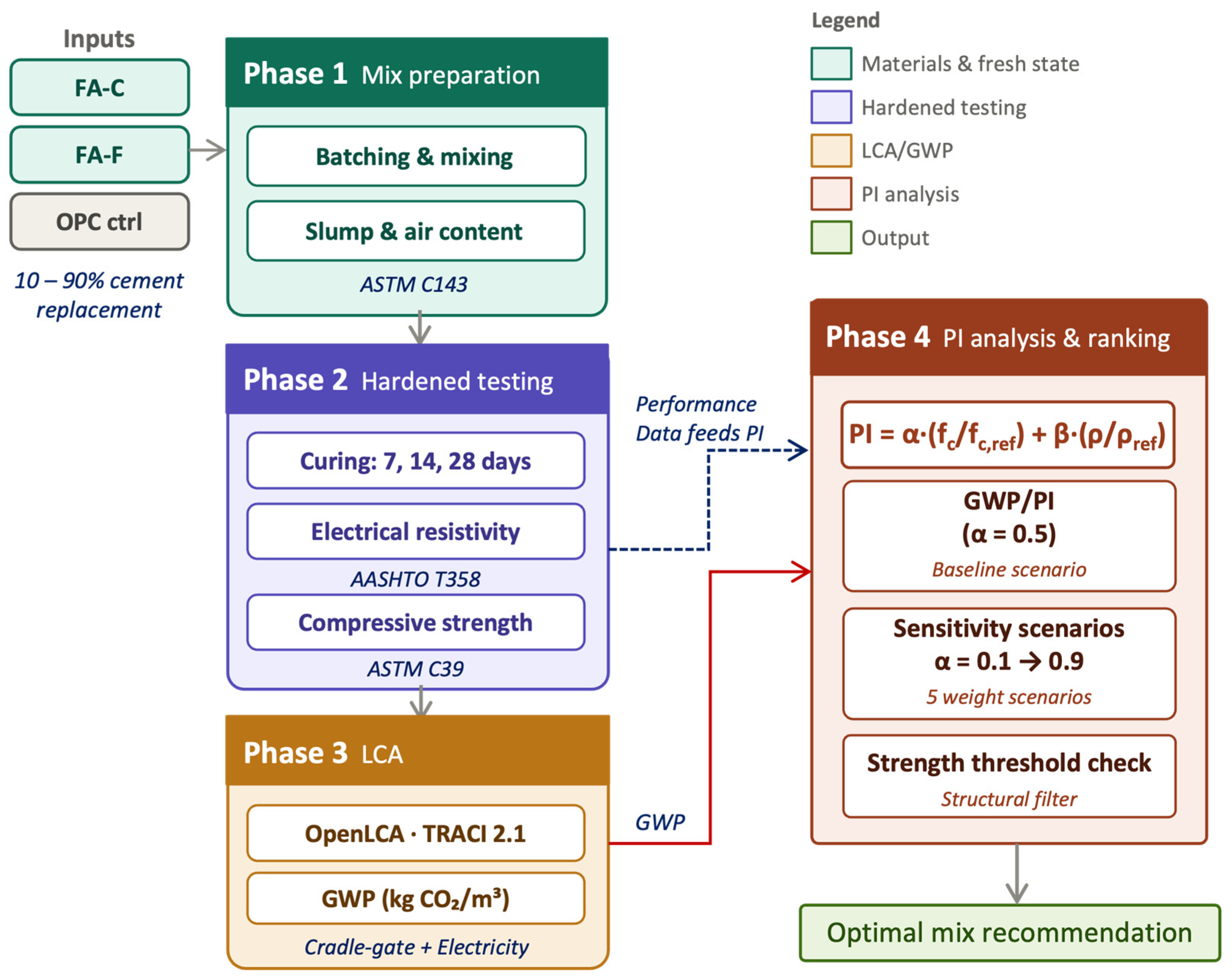
Figure 1. Research workflow in phases.
Buildings 16 02454 g001
Figure 2. Photo images of fly ash samples: (a) FA-C and (b) FA-F.
Buildings 16 02454 g002
Figure 3. Gradation curves of #810 (specific gravity: 2.750, absorption: 0.7%, and unit weight: 1842.1 kg/m3) and #57 (specific gravity: 2.764, absorption: 0.7%, and unit weight:1633.9 kg/m3) aggregates.
Buildings 16 02454 g003
Figure 4. Slump change over fly ash substitution rates with 2nd order polynomial trend lines.
Buildings 16 02454 g004
Figure 5. Development of average compressive strength at 7, 14, and 28 days in PCC samples mixed with: (a) FA-C and (b) FA-F (error bars are standard deviations).
Buildings 16 02454 g005
Figure 6. Surface electrical resistivity at 7, 14, and 28 days in PCC samples mixed with (a) FA-C and (b) FA-F (error bars = standard deviations). The 7-day and 28-day resistivity not plotted for FA-C 50% and FA-C 70% (data unavailable).
Buildings 16 02454 g006
Figure 7. Total GWP (left axis) and GWP per unit compressive strength (right axis) by cement replacement rate. FA-C 70% GWP/Strength not plotted (28-day strength data unavailable). OPC reference line = 1.11 kg CO2/m3/MPa.
Buildings 16 02454 g007
Figure 8. Effect of relative weights between strength and resistivity on environmental efficiency in: (a) FA-C and (b) FA-F.
Buildings 16 02454 g008
Figure 9. GWP/PI variation with cement replacement rates at three curing ages (7, 14, and 28 days) in: (a) FA-C and (b) FA-F specimens. GWP/PI reference line = 40.2 kg CO2/m3 from control specimens at 28 days.
Buildings 16 02454 g009
Table 1. PCC mix design for laboratory samples *.
MixCementFine CoarseWaterFly Ash
Control 448.5736.9983.5201.8 -
FA-C-10 ** 403.7 736.9983.5201.8 44.9
FA-C-20358.8 736.9983.5201.8 89.7
FA-C-30313.9 736.9983.5201.8 134.6
FA-C-40269.1736.9983.5201.8 179.4
FA-C-50 224.3736.9983.5201.8 224.3
FA-C-70134.6736.9983.5201.8 313.9
FA-C-9044.9 736.9983.5201.8 403.7
FA-F-10 403.7 736.9983.5201.8 44.9
FA-F-20358.8 736.9983.5201.8 89.7
FA-F-30313.9 736.9983.5201.8 134.6
FA-F-40269.1736.9983.5201.8 179.4
FA-F-50 224.3736.9983.5201.8 224.3
FA-F-70134.6736.9983.5201.8 313.9
FA-F-9044.9 736.9983.5201.8 403.7
* All ingredient amounts are in kg/m3. ** FA-C-10 represents PCC mixed with FA Typc C at 10% replacement.
Table 2. Chemical composition of Portland cement and fly ash (% by mass).
ItemSiO2Al2O3Fe2O3Na2OK2OMgOP2O5SO3CaOTiO2
Cement *18–244–82–6<1<1<6<1<360–67<1
FA-C30.212.95.62.050.53.60.62.522.61.5
FA-F38.117.48.60.422.40.60.20.72.71.1
* Portland cement Type I/II.
Table 3. Comparison between two environmental efficiency metrics (GWP/Strength in kg CO2/m3/MPa and GWP/PI in kg CO2/m3).
Replacement RateGWP/Strength
FA-C
GWP/Strength FA-FGWP/PI
FA-C
GWP/PI
FA-F
Control (0%)1.111.1140.240.2
10%0.800.9033.236.1
20%0.690.8229.332.5
30%0.610.8126.628.2
40%0.770.9030.723.6
50%0.490.8917.722.9
70%N/A1.08N/A24.2
90%2.641.0930.918.7
Disclaimer/Publisher’s Note: The statements, opinions and data contained in all publications are solely those of the individual author(s) and contributor(s) and not of MDPI and/or the editor(s). MDPI and/or the editor(s) disclaim responsibility for any injury to people or property resulting from any ideas, methods, instructions or products referred to in the content.