Article

Possibilities for the Utilization of Recycled Aggregate from Railway Ballast

1
Department of Environmental Engineering, Faculty of Mining and Geology, VSB-Technical University of Ostrava, 708 00 Ostrava, Czech Republic
2
Department of Mining Engineering and Safety, Faculty of Mining and Geology, VSB-Technical University of Ostrava, 708 00 Ostrava, Czech Republic
3
Faculty of Civil Engineering, Institute of Environmental Engineering, Technical University of Kosice, 040 01 Košice, Slovakia
4
Department of Environmental Engineering, Faculty of Civil Engineering and Resource Management, AGH University of Krakow, 30-059 Kraków, Poland
*
Author to whom correspondence should be addressed.
Buildings 2025, 15(23), 4361; https://doi.org/10.3390/buildings15234361 (registering DOI)
Submission received: 16 October 2025 / Revised: 23 November 2025 / Accepted: 25 November 2025 / Published: 2 December 2025

Abstract

This article deals with the possibility of using a recycled aggregate from railway ballast and platforms for the production of cement composites with a full or partial replacement of natural aggregates. This study evaluates the physical and mechanical properties of fresh and hardened concrete, as well as its resistance to water pressure, microstructure, and environmental safety. Four concrete recipes using an aggregate at the end of its life cycle from railway ballast (0/25 mm) and from the layers under the asphalt covering of the platforms (0/32 mm) were designed, with a 100% replacement for 0/25, 55% replacement (coarse fraction) for 0/32, and 45% sand for 0/4. The results have shown a significant influence of the type of aggregate on the strength, bulk density, and watertightness of the concrete. At 28 days, the compressive strengths of mixes R250, R400, R250N, and R400N were approximately 8, 20, 30, and 35 MPa, respectively, while after 90 days they increased to 10, 22, 37, and 45 MPa. The corresponding fresh concrete bulk densities ranged from about 1.95 to 2.27 g/cm3, and the water penetration depths ranged between 16 mm (best) and 27 mm (worst) among the mixes. Analyses of aqueous leachates have confirmed that the cement matrix effectively stabilizes the contaminants contained in the recycled aggregate and that the resulting products comply with the legislative limits. This study shows that an aggregate at the end of its life cycle from railway ballast and platforms can be effectively used to produce sustainable cement composites (concrete) with suitable mechanical properties and minimal environmental risks.

1. Introduction

Railway lines generate a considerable amount of waste in the form of worn railway ballast (gravel) during their reconstruction. This railway aggregate (ballast) consists of a high-quality crushed aggregate, most often basalt or granite [1], which degrades over time due to traffic. The particles are abraded and crushed, the space among them becomes clogged with fine particles (known as fouling), and the ballast loses its original functional properties. Traditionally, when a track is renewed, the contaminated ballast is removed and replaced with new ballast, and the waste gravel often ends up in landfills. However, with the growing emphasis on the circular economy and sustainable construction, there is an increasing interest in recycling and reusing railway aggregate [2,3,4]. Recycling this material promises to reduce the volume of natural aggregate extraction, which still accounts for approximately 91% of the total aggregate consumption in Europe [5], as well as to reduce the environmental impact of railway construction. For example, in India, around 8 million m3 of aggregate is consumed annually for the construction of track superstructures [6,7], and its partial replacement with recycled material would mean huge savings in natural resources. At the same time, the reuse of ballast contributes to the circular economy and eliminates the need for landfilling, which can pose an environmental burden due to the possible presence of contaminants. The practical use of recycled railway ballast in the construction industry has been the subject of intensive research in recent years [8,9,10,11]. The main obstacle to the wider use of recycled ballast is the presence of contaminants that can accumulate in railway ballast over the years. These include, in particular, oils and lubricants (leaking from vehicles), polyaromatic hydrocarbons (PAHs) from combustion engines or, historically, from steam locomotives, potentially hazardous metals (Cu, Zn, and Pb from trolley, wheel, and brake block abrasion), and possible residues of herbicides or other substances applied to the railways [12]. One possible strategy to minimize the environmental risks is to clean and treat the recycled aggregate [13,14]. Modern ballast cleaning machines separate fine fractions (which carry the most contaminants) and wash coarse gravel with water. This removes a significant part of the impurities. There are also special procedures, such as chemical washing with an EDTA solution, which can extract heavy metals from ballast [15]. In practice, this is usually limited to rinsing with water and removing the fine fraction, which is the most economically feasible option.
In the Czech Republic, it is stipulated by law that railway ballast is a high-quality aggregate, and it must be a crushed aggregate from solid silicate rocks, in which limestone, for example, is excluded [16]. This is why recycled ballast from Czech railways is a valuable material with potential for further use. The state organization Railway Administration, which manages state-owned railways and administers approximately 9400 km of railway lines, currently allows the reuse of railway ballast mainly in less demanding applications, such as in the lower layers of the railway ballast on lower-class lines or as an additive to bonded layers of the railway substructure. Overall, it can be said that, in the Czech Republic, the recycling of railway aggregate is still in its infancy stage.
Our experimental research was focused on waste from the recycling of track superstructures and platforms, where coarser aggregate fractions are further used for less demanding applications in the reconstruction of railway tracks, leaving waste in aggregate fractions of 0/25 mm for ballast aggregate from railway yards and of 0/32 mm for recycling layers under the asphalt carpet of the platform. The research was focused on determining the contamination of the input aggregate in the form of aqueous leachates. The research was also focused on the design of concrete recipes with a 100% replacement of natural fr. 0/32 mm aggregates with waste (aggregate) from sorting and fr. 0/25 mm ballast aggregate containing contaminants and waste taken from layers under the fr. 0/32 mm asphalt carpet of the platform. When designing the experiment, we used our own research experience, and we wanted to use both materials as a 100% replacement for natural aggregates.
Unlike previous studies [1,9,11], which focused mainly on the mechanical properties of recycled aggregates or only on their environmental impact, this study takes a comprehensive approach, evaluating both the technological properties of fresh and hardened cement composites with recycled material and the environmental safety of these composites through the analysis of water leachates.

2. Materials and Methods

2.1. Aggregate from Railway Ballast

The input material used was waste from the recycling of railway superstructure aggregate, particularly the finest part of the 0/25 mm fraction, which was sorted during the recycling (see Figure 1a). Excavated waste from the platform of the 0/32 mm fraction (see Figure 1b,c) was also used; the photo shows the material in situ. The aggregate was produced at various locations where the railway superstructure and platforms were being reconstructed, see in Table 1.

2.2. Cement, Additives, Water

Portland cement CEM I 42.5 R was used as a binder to produce concrete based on aggregate from railway ballast due to its properties. It is manufactured in accordance with ČSN EN 197-1 ed. 2:2012 [17]. These components are specified in Article 5 of this standard. Packaged Portland cement CEM I 42.5 R is marketed under the trade name of SUPERCEMENT (Cement Hranice, a.s., Hranice, Czech Republic). Table 2 shows the chemical composition of the cement used, and Table 3 shows its physical and mechanical properties.
A superplasticizer based on modified polycarboxylates, designated Sika ViscoCrete-4035, was used as an additive to produce a concrete mixture based on recycled railway ballast. This plasticizer combines the steric and electrostatic effect, rapidly adsorbing onto cement grains and ensuring a strong liquefaction even at low water consumption. The basic properties of the plasticizer are listed in Table 4.
Water from the water supply system, which complies with the ČSN EN 1008:2008 standard [18], was used as the mixing water.
A natural aggregate of fraction 0/4 mm (Heidelberg materials CZ, Tovačov, Czech Republic) with declared properties [19] was used as an additional filler for the preparation of cement composites with recycled aggregate of fraction 0/32 mm, which complies with the ČSN EN 12620+A1:2009 standard [20].

2.3. Determination of Grain Size and Shape Index

Recycled aggregate from the railway ballast, with sizes 0/25 and 0/32 mm, was subjected to a grain size analysis to determine its grain size composition. The test was performed in accordance with the requirements of the ČSN EN 933-1:2012 [21] standard using a HAVER EML 300 vibrating sieve (Haver & Boecker, Oelde, Germany). A set of standard laboratory sieves with mesh sizes of 0.063, 0.125, 0.25, 0.5, 1, 1.6, 2, 2.5, 3, 4, 8, 16, 32, and 63 mm in accordance with the ČSN EN 933-2:2012 [22] standard was used for the purposes of the analysis. Furthermore, the shape index SI was determined according to the ČSN EN 933-4:2008 [23] standard. The shape index SI was determined using a two-jaw sliding gauge and subsequently calculated in accordance with the standard for the shape index of railway ballast.

2.4. Determination of Harmful Substances

The aggregate from the railway ballast was analyzed for harmful substances, based on which the further processing of waste from the railway ballast was determined. The basis for determining the monitored substances (harmful substances) was Decree No. 273/21 Coll. [24], which specifies the details for waste management.

2.4.1. Solid Phase

The samples were adjusted to a particle size of less than 200 µm, and their moisture content was determined gravimetrically. In addition to the parameters specified in the decree, matrix elements were also determined to monitor the interrelationship between the matrix and the presence of the toxic components, both inorganic and organic in nature. Subsequent analyses were performed in the accredited chemical laboratory of the Nanotechnology Center, VŠB–Technical University of Ostrava.

2.4.2. Water Extract–Cement Matrix

Waste from the railway superstructure was solidified into a cement matrix. The samples were stored for 28 days in a water bath, and then test specimens from samples with a diameter of 40 mm and a height of 40 mm were prepared using an Opti Drill D33 Pro drill press (Optimum Maschinen Germany GmbH, Hallstadt, Germany) with a core drill bit. A water extract was prepared from these samples in a solid phase-to-water ratio of 1:10 using a Heidolph REAX 20 rotary shaker (Heidolph Instruments GmbH & Co. KG, Schwabach, Germany). After 24 h, the filtrate was obtained after filtration through a filter with a pore size of 0.045 µm. Subsequent analyses were performed in the accredited chemical laboratory of the Nanotechnology Center, VŠB–Technical University of Ostrava. Before preparing the extract, the moisture content was determined according to the OAA-02-01 Determination of moisture content by gravimetry. The individual parameters monitored were determined using the following instruments:
  • OAA-06-01A, based on EPA method No. 6010, using an inductively coupled plasma atomic emission spectrometer, ICP-AES SPECTRO ARCOS (determination of Ba, Be, Cd, Cr, Cu, Mo, Ni, Pb, and Zn);
  • OAA-05-01A, based on US EPA methods and using an atomic absorption spectrometer with flame atomization, FL-AAS, UNICAM 969 (for control analysis of selected concentrations of aqueous extracts);
  • OAA-05-02A, based on US EPA methods and using an atomic absorption spectrometer with electrothermal atomization, contrAA 800D (determination of As, Sb, and Se);
  • OAA-05-04, based on the procedures described in the operating instructions for the atomic absorption spectrometer for the determination of Hg, ALTEC, type AMA 254 (determination of Hg);
  • OOA-80-15, based on US EPA method No. 1011B using a WATERS ion chromatograph, conductivity detectors, and UV/VIS (determination of anions—chlorides, fluorides, and sulfates).

2.5. Methodology for Testing Concrete Properties

2.5.1. Determination of Fresh Concrete Mixture Properties

Fresh concrete was subjected to tests of the basic technological properties that affect its workability and quality. The consistency of the concrete was determined using the cone slump method in accordance with ČSN EN 12350-2:2019 [25], and the air content of the fresh concrete was determined in accordance with ČSN EN 12350-7:2019 [26]. This is particularly important from the point of view of frost resistance and the durability of concrete. The last parameter tested for fresh concrete was its bulk density, which was determined in accordance with the ČSN EN 12350-6:2019 [27] standard.

2.5.2. Bulk Density of Hardened Concrete

In order to determine the bulk density of concrete prepared according to the proposed recipes, test specimens measuring 150 × 150 × 150 mm were prepared in accordance with the ČSN EN 12390–2:2019 standard [28]. After demolding, the specimens were stored in a water environment for 28 days to ensure suitable conditions for hydration. The specimens were then dried to a constant weight. The bulk density of hardened concrete was determined on the basis of these samples according to the methodology specified in the ČSN EN 12390-7:2019 standard [29].

2.5.3. Determination of Resistance to Water Pressure

To determine the resistance of non-traditional concrete prepared according to recipes resistant to water pressure, test specimens measuring 150 × 150 × 150 mm were prepared in accordance with ČSN EN 12390–2:2019 standards [28]. The specimens were then subjected to a water pressure test in accordance with ČSN EN 12390-8:2019 standards [30]. The test specimens were then subjected to a water pressure leakage test in accordance with ČSN EN 12390-8:2019. Water at a pressure of 0.5 MPa was applied to the bottom surface of the cubes for 72 ± 2 h. The samples were then broken, and the depth of leakage was measured as the distance from the applied surface to the deepest penetration point (dark moisture mark). The resulting depth of penetration was determined from the average of three samples; the differences between the parallel values did not exceed 3 mm, which corresponds to the repeatability requirement according to the standard.

2.5.4. Determination of Strength Characteristics

The strength characteristics of the designed concretes were tested in accordance with ČSN EN 12390-3:2019 standards [31]. The test specimens were subjected to cube strength testing after 7, 14, 28, and 90 days and cylinder strength testing after 28 and 90 days using a Form+Test Mega 300 testing press (FORM+TEST Seidner & Co. GmbH, Riedlingen, Germany).

2.5.5. Image Analysis

To perform the image analysis of the designed concretes, examining the individual mineral grains in their newly created environment, i.e., in the newly created cement matrix, it was necessary to prepare specially modified preparations. These were polished sections and thin sections. The difference between the individual preparations is in the method of observation and evaluation. A thin section is a material with a thickness of approximately 0.03 mm glued between two pieces of glass so that it can be observed in transmitted light. In the case of a polished section, we observe its surface.
The polished section of a sample with a polished surface was prepared by cutting four plates with areas ranging from 17.55 to 20.25 cm2 using a diamond blade saw from samples of cubes with an edge length of 150 mm. The thickness of the plate does not matter in the case of a polished section, as reflected light is used to study the polished section using image analysis. The plates prepared in this way were sanded on sandpaper from P220 and P400 grit to P800 grit. The smoothly sanded surface was then polished on a billiard cloth with a polish to a high gloss.
The thin section was also prepared by cutting plates from 150 mm cube samples using a diamond blade saw. The size of the cut plates corresponded to the size of the microscope slide (29 × 47 mm), and these plates were then ground in the same way as the polished sections. The ground surface was rinsed, dried, and glued to the microscope slide using ARALDITE 2020 two-component epoxy adhesive. Excess material was cut off, then ground to the required thickness of 0.03 mm, and finally covered with a 24 × 32 mm cover glass. The image analysis of the concrete samples based on waste ballast aggregate was performed using Digital Microscope AM4113ZT with software DinoCapture 2.0 (AnMo Electronics Corporation, New Taipei City, Taiwan). The size of the field of view at 200× magnification was 4 mm2. Each concrete variant was evaluated at least at five different locations of the cross-section. For the qualitative evaluation of the microstructure, we focused mainly on the character of the grain–aggregate/matrix (ITZ) and the occurrence of any microcracks.

2.6. Designing the Recipes

To verify the possibility of using aggregate from railway ballast at the end of its life cycle and aggregate from the platform as 100% and 55% replacements for natural aggregate fr. 0/32 mm, four concrete mixture recipes were designed, the composition of which, converted to one cubic meter of concrete, is presented in Table 5.
  • R250—This is a recipe based on waste from recycled railway ballast, represented by fr. 0/25 mm (100%). CEM I 42.5 R (250 kg per m3), water (311 kg per m3), and a plasticizing additive in the amount of 0.9% of the cement weight are used as binders.
  • R400—This is a recipe based on recycled railway ballast waste, represented by fr. 0/25 mm (100%). CEM I 42.5 R (400 kg per m3), water (358 kg per m3), and a plasticizing additive in an amount of 0.8% of the cement weight are used as binders.
  • R250N—This is a recipe based on waste from excavated platforms, represented by fr. 0/32 mm (55%), and natural aggregate 0/4 mm (45%). CEM I 42.5 R (250 kg per m3), water (174 kg per m3), and a plasticizing additive in an amount of 0.9% of the cement weight are used as a binder.
  • R400N—This is a recipe based on waste from excavated platforms, represented by fr. 0/32 mm (55%) and 0/4 mm (45%). CEM I 42.5 R (400 kg per m3), water (257 kg per m3), and a plasticizing additive in an amount of 0.8% of the cement weight are used as binders.

2.7. Production of Test Specimens

The production of the test specimens according to the recipes took place in two stages, and three mixtures of 38 dm3 were mixed from each recipe. During the two stages of the production of the test specimens from concrete based on aggregates from the railway ballast, 32 cubes measuring 150 × 150 × 150 mm and 6 cylinders with a diameter of 150 mm and a length of 300 mm were prepared from each recipe. A total of 456 dm3 of fresh concrete based on aggregates from railway ballast was produced (128 cubes and 24 cylinders). A forced circulation mixer (cyclone mixer) M80 (FILAMOS, s.r.o., Příbram, Czech Republic) was used to produce the fresh concrete.

3. Results and Discussion

3.1. Determination of Grain Size and Shape Index

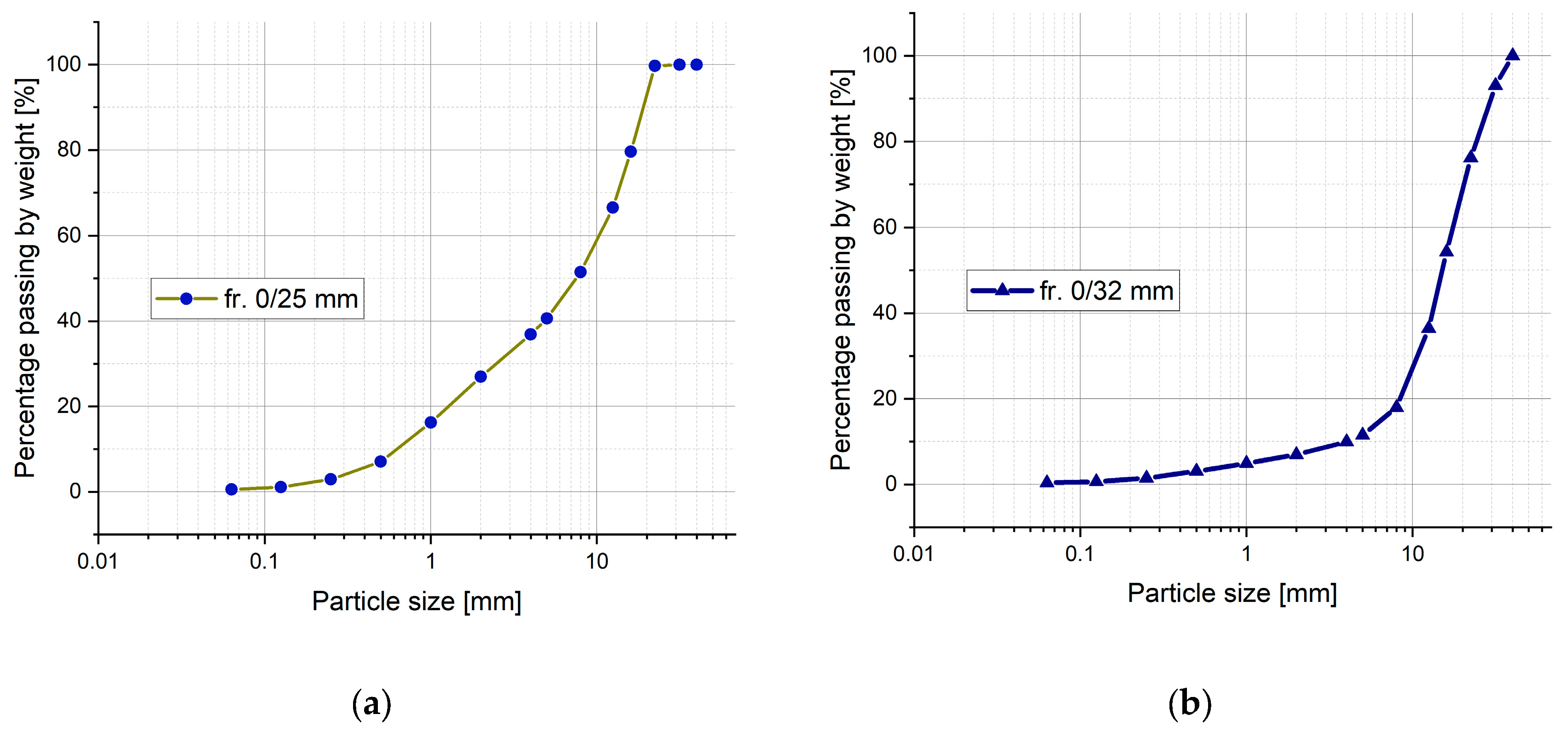
The analysis of the grain size composition of the input waste material was performed in accordance with the requirements of the ČSN EN 933-1:2012 standard [21]; the results of the grain size analysis are presented in Figure 2.
The results of the grain size analysis of the tested samples can be used to determine the median grain size, d50. For the recycled aggregate fr. 0/25 mm, the median grain size d50 = 7.8 mm. For the recycled aggregate fr. 0/32 mm, the median grain size d50 = 15 mm.
The recycled railway superstructure aggregate contains a relatively high proportion of dust particles smaller than 0.25 mm, which act as a filler, but in an excess quantity increase the water demand and can create a more porous transition zone between the aggregate and the cement matrix.
In contrast, the fr. 0/32 aggregate lacked fine particles, so adding fr. 0/4 mm sand created a balanced curve.
In accordance with the ČSN EN 933-4 [23] standard, the grain shape index was determined for both monitored aggregate fractions. The resulting values are shown in Table 6. For the 0/25 mm and 0/32 mm fractions, the shape index was calculated according to the criterion D ≤ 2d, where D represents the upper size and d the lower size of the relevant sieve. Non-cubic grains were separated using a two-jaw sliding gauge; their weight was recorded, and the shape index (SI) was then determined in accordance with the requirements of the above-mentioned standard.
The determination showed significant differences between the monitored aggregate fractions. The 0/25 mm fraction achieved an SI value of 19, which corresponds to a predominance of compact, cubic grains with a favorable effect on the workability and compactability of fresh concrete. In contrast, the course 0/32 mm fraction showed a higher SI value of 31, indicating a higher proportion of flat and elongated grains, which can increase the specific surface area of the aggregate and thus impair the internal arrangement of the mixture and the mechanical properties of the resulting composite. These findings are consistent with the available literature, which states that a higher proportion of non-cubic grains leads to a poorer compactability, increased water demand, and potentially lower concrete strength [32,33].

3.2. Determination of Harmful Substances—Solid Phase

The samples for the analysis of harmful substances in the recycled aggregate were labeled as follows:
  • 01/24 Gravel from railway superstructure waste after recycling fr. 0/25 mm (used for recipes R250 and R400).
  • 02/24 Gravel from railway superstructure from platform layers fr. 0/32 mm (used for recipes R250N and R400N).
The results of the analysis of the harmful substance content in the recycled aggregate are presented in Table 7.
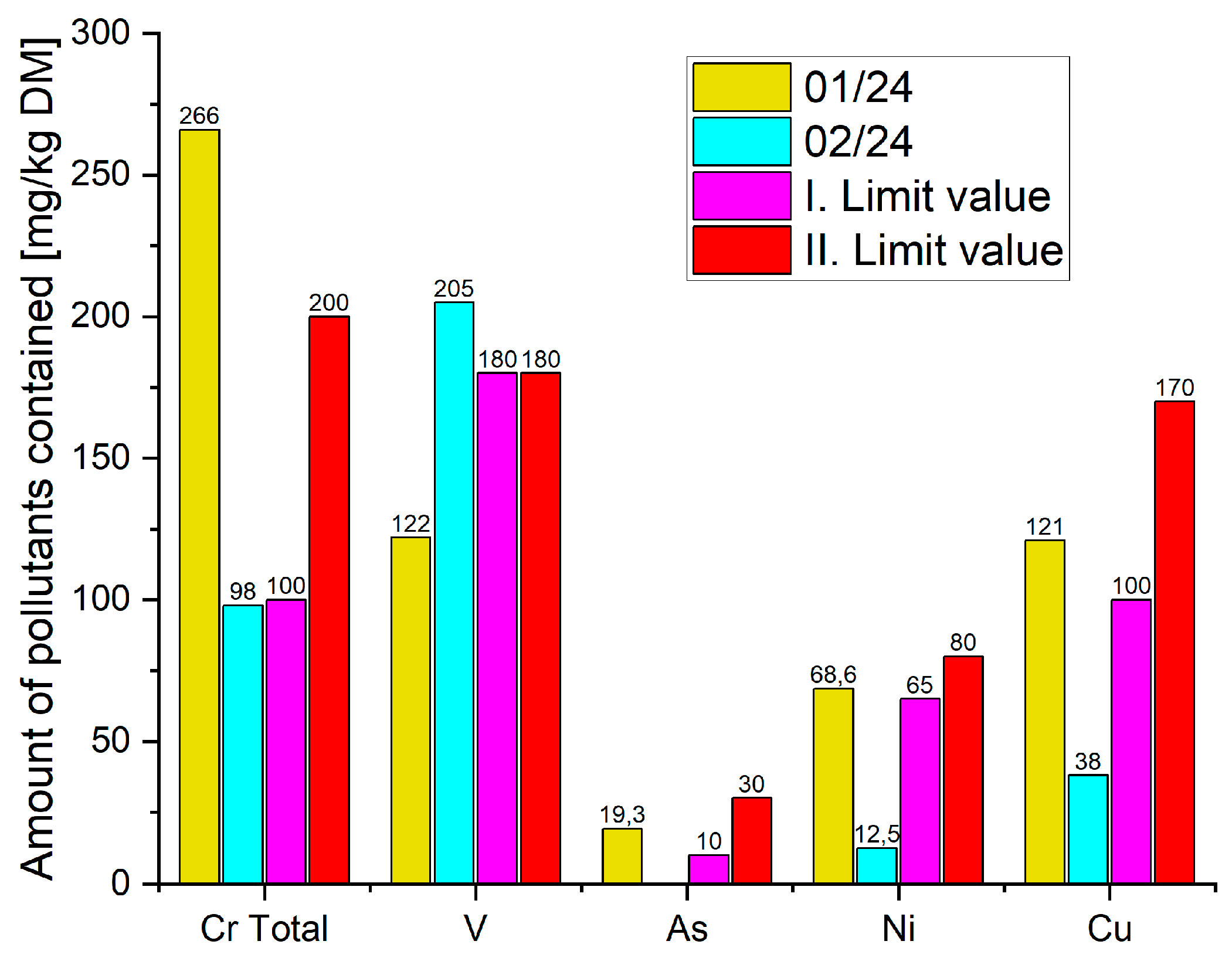
Table 5 shows that none of the samples met the criteria of Decree No. 273/2021 Coll. for depositing material on the ground surface. Sample 01/24 exceeded several limit values set by Decree No. 273/2021 Coll. In particular, the first limit value was exceeded for arsenic (19.3 mg/kg), nickel (68.6 mg/kg), and copper (121 mg/kg). Significant exceedances were then recorded for total chromium (266 mg/kg) and barium (1030 mg/kg), which exceed both the I. and II. limit values, as can be seen in Figure 3. Given that the II. limits were exceeded, it is reasonable to consider the presence of hazardous properties in the waste, particularly in relation to property HP 14—ecotoxicity. In its current state, the material does not meet the conditions for direct use on the ground surface without further measures or professional risk assessment.
Sample 02/24 exceeds both limit values set by Decree No. 273/2021 Coll. for vanadium (205 mg/kg) and for barium, whose concentration reached 7460 mg/kg, which significantly exceeds both the I. and II. limit values. Such high concentrations indicate the possibility of hazardous properties of waste, in particular ecotoxicity (HP 14). For this reason, the material must be handled with caution and cannot be considered suitable for storage on the ground surface.
The above presented assessments show that the material (recycled aggregate) does not meet the requirements for direct use on the ground surface and should be further evaluated in terms of possible classification as hazardous waste. One option for the further treatment of the material for subsequent use is its solidification, e.g., into a cement matrix (concrete). This treatment would result in the immobilization of contaminants and would allow for the further use of this material.

3.3. Fresh Concrete Properties

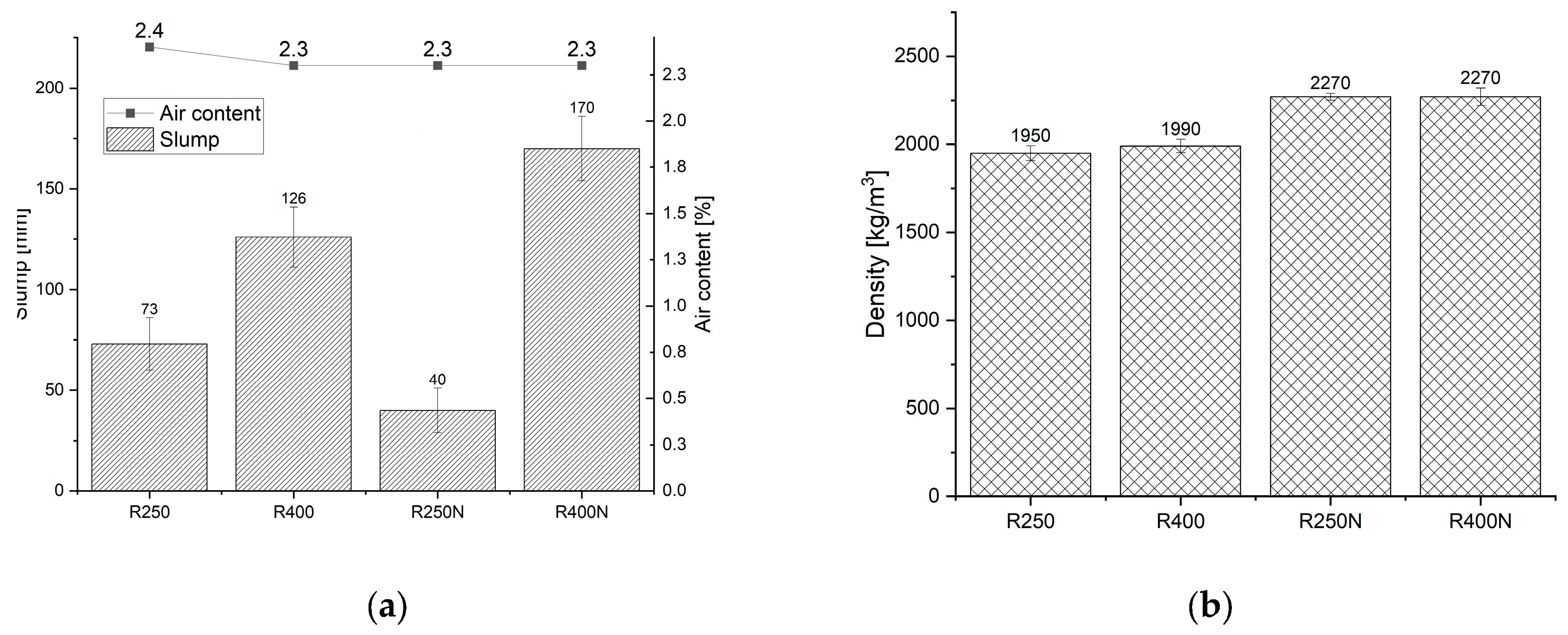
The properties of fresh concrete (consistency–cone slump, air content, and bulk density) were determined during both stages of test specimen production. Three mixtures were prepared from two recipes in each stage, for a total of twelve mixtures, i.e., the average value of the properties of the fresh concrete mixture for each recipe was calculated from three values. The results are presented in tabular form (see Table 8) and graphically (see Figure 4).
The results shown in Figure 4a indicate that the slump values of fresh concrete correspond to slump class S1 10–40 mm for the R250N mixture; for the R400 and R250 recipe, they correspond to slump class S3 100–150 mm; and, for the R400N recipe, they correspond to slump class S4 = 160–2000 mm. The average values of the cone slump classified into slump classes, together with the w/c ratio and plasticizer content, are given in Table 9 and Table 10.
The R250N recipe was considered at the design stage with a lower consistency between classes S1 and S2 due to the possible use of this mixture in prefabrication, where a stiffer mixture is needed to increase the initial strength of the concrete for the faster subsequent formwork removal of prefabricated elements. In contrast, the R400N recipe was prepared for use as pumpable concrete, and therefore its consistency was directed towards class S4.
The air content in fresh concrete with recycled aggregates fr. 0/25 and 0/32 mm did not differ significantly, and even a change in the amount of binder used had no significant effect on the air content in the fresh concrete mixture. The statistical evaluation is presented in Table 11.
The measured results showed significant differences in the bulk density of fresh concrete depending on the type of recycled material used. Fresh concrete prepared with fr. 0/25 mm aggregate achieved values of 1950 kg/m3 (R250) and 1990 kg/m3 (R400), which are significantly lower than usual for standard structural concrete. The lower bulk density is related to the increased content of fine particles, higher water absorption, and poorer compactability of the mixture, which was also reflected in the overall porosity [34,35,36]. The statistical evaluation is presented in Table 12.
In contrast, concrete prepared with recycled aggregate fr. 0/32 mm supplemented with sand fr. 0/4 mm showed values of 2270 kg/m3 (R250N and R400N), which are already close to the standard values of conventional dense concrete. The higher bulk density of this concrete confirms the better granulometric composition of the aggregate, lower share of fine fractions, and overall more compact structure. These results clearly show that the quality and fractional composition of the recycled material have a significant impact on the bulk density of fresh concrete and that a suitable combination of recycled material with fine natural sand allows for parameters comparable to those of conventional concrete to be achieved [34,36].

3.4. Determination of the Bulk Density of Hardened Concrete

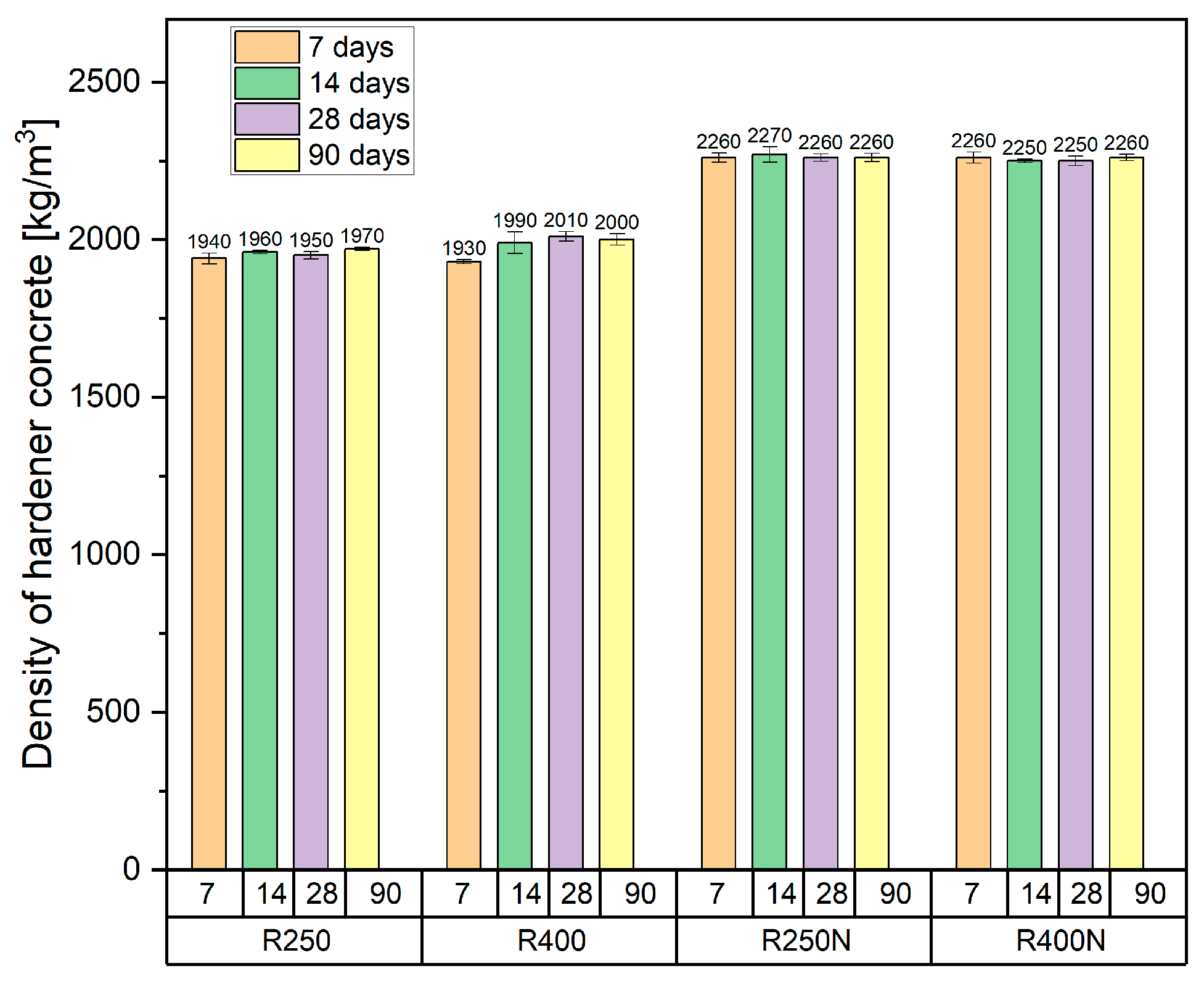
The bulk density of hardened concrete is a basic indicator of the density and porosity of concrete, which directly affect its mechanical properties and durability. The determination was carried out in accordance with the ČSN EN 12390-7:2019 standard [28], which ensures the comparability of the results with commonly used materials. By comparing individual recipes, it is possible to assess the influence of the type of recycled aggregate and cement dosage on the resulting density and quality of the concrete matrix. The average bulk densities of the prepared composites are presented in Figure 5.
Figure 5 clearly shows the unambiguous influence of the type of aggregate, where R250 and R400 mixtures containing a recycled aggregate with a fraction of 0/25 have significantly lower bulk densities of 1950 kg/m3 for R250 and 2010 kg/m3 for R400, while concrete containing a recycled aggregate from platforms with a fraction of 0/32 with natural sand, R250N and R400N, has a bulk density of 2260 kg/m3 for the R250N mix and 2250 kg/m3 for the R400N mixture. The difference is related to the lower specific weight and high proportion of fine particles in recycled aggregate fr. 0/25 compared to recycled aggregate fr. 0/32, which is coarser and contains sand. Mixtures containing recycled aggregate fr. 0/32 and sand have a denser matrix and higher weight per unit volume. This trend is subsequently reflected in the hardened composites. Recycled aggregates from platforms with a 0/32 fraction have a higher proportion of coarse fractions and thus a higher volume weight. When supplemented with sand, it leads to higher volume densities of mixtures approaching normal concrete, while, in the case of the mixtures containing a recycled aggregate from railway ballast with the fraction of 0/25 mm, it does not [9]. This is also confirmed by other studies dealing with the replacement of natural aggregates with secondary raw materials [9,37,38,39].

3.5. Determination of Resistance to Water Pressure

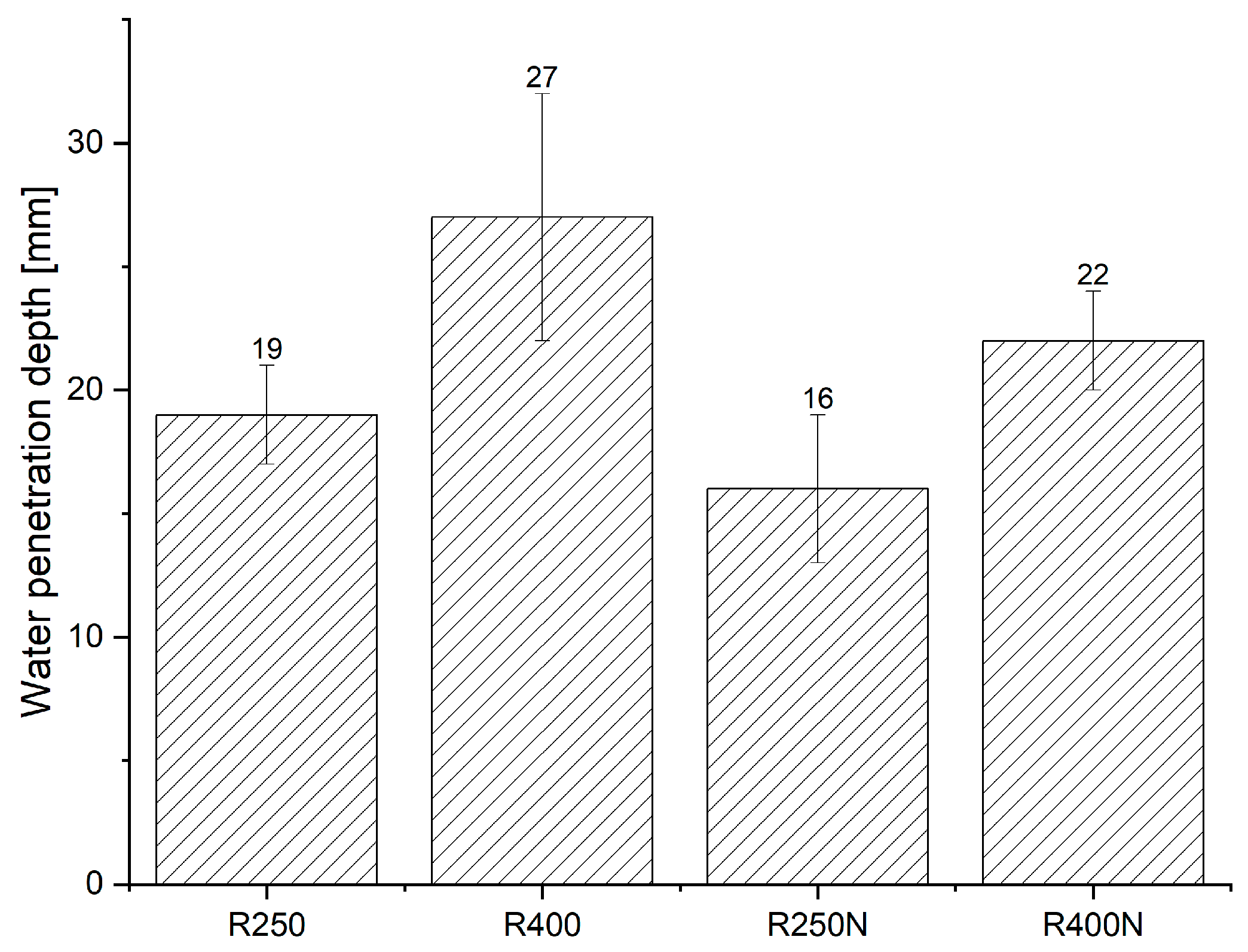
The water pressure resistance test was another important test which provides direct information about watertightness and indirect information about the porosity and compactness of the concrete structure. The determination was performed in accordance with the ČSN EN 12390-8:2019 standard [30], which is the standard procedure for evaluating the depth of water penetration under pressure, where water at a pressure of 0.5 MPa is applied to the bottom surface of the cubes for 72 ± 2 h. The results allow us to compare the influence of the type of recycled aggregate used and the cement content on the concrete’s ability to resist water penetration, which is a key parameter, especially in terms of its durability under operating conditions. The results of the average penetration depths of the tested concretes are presented in Figure 6; the statistical evaluation of water penetration under pressure is further presented in Table 13.
Figure 6 shows significant differences among the tested concretes. Concrete with recycled aggregate fr. 0/25 (mixtures R250 and R400) showed average penetration depths of 19 mm and 27 mm, while concrete with recycled material from platform fr. 0/32 (R250N and R400N) achieved lower values of around 16 mm and 22 mm. The observed difference corresponds to the different content of fine particles in the recycled material: mixtures with 0/25 mm recycled material had a higher porosity and poorer watertightness due to the excess of the finest fraction in the aggregate and higher w/c, while mixtures with 0/32 mm recycled material had a more compact matrix resistant to seepage thanks to their coarser structure and the addition of sand, as confirmed by further research [1,40,41]. The reference sources state that there is an optimal cement content in terms of permeability—too high a binder dose can, on the other hand, impair the watertightness of concrete [42]. It is confirmed by our observations that the R400 mixture showed the deepest penetration, precisely due to the combination of high w/c and an excess of fine particles in the system, which led to a highly porous microstructure. However, despite the above-stated facts, it should be noted that the concrete prepared according to the recipes (see Table 4) can be considered waterproof, as they meet the requirements of the ČSN P 732404:2021 standard [43], which supplements ČSN EN 206+A2:2021 [44]. The ČSN P 732404:2021 standard states that concrete can be considered waterproof for various degrees of environmental impact if the maximum value of water pressure penetration is below 50 mm.

3.6. Strength Characteristics of Concrete

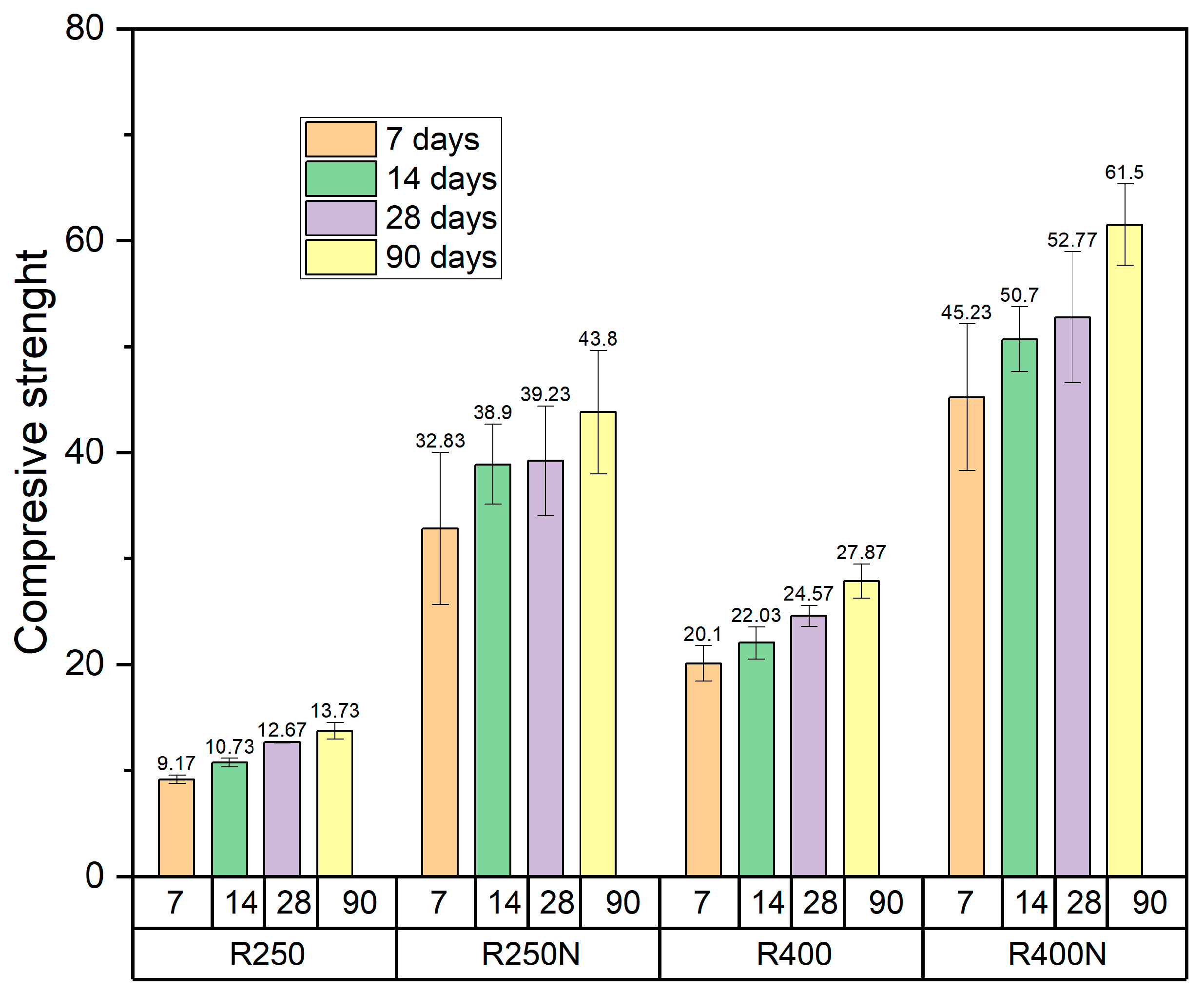
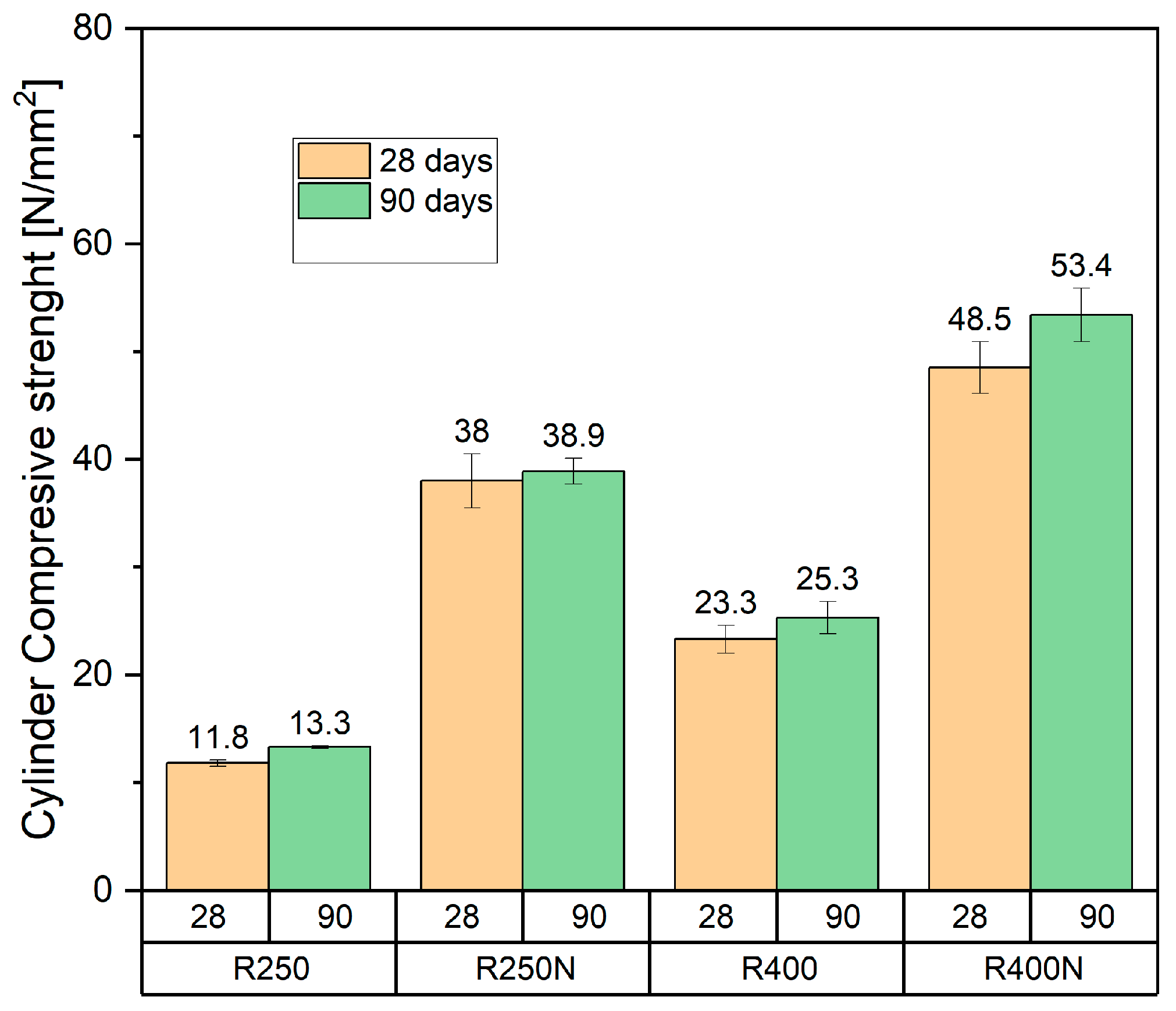
The strength characteristics are among the most important parameters for evaluating concrete, as they directly determine its suitability for use in load-bearing and non-load-bearing structures. The evaluation of these parameters makes it possible to assess the influence of the type of recycled aggregate and different cement dosages on the mechanical properties of composites and provides a basis for their possible practical application. The test specimens were tested for cube and cylinder compressive strength using a Form+Test Mega 300 testing press (FORM+TEST Seidner & Co. GmbH, Riedlingen, Germany). The results of the average strengths are presented in Figure 7 and Figure 8. The statistical evaluation are presented in Table 14 and Table 15.
Figure 7 shows how the age of the sample affects its increasing strength. The assumption that the amount of cement will affect the strength was confirmed. When the amount of 400 kg of cement per m3 of fresh concrete was used, the initial values after seven days were higher than those of 250 kg of cement per m3 of fresh concrete after ninety days. Samples R250 and R400, prepared using recycled aggregate fr. 0/25, did not reach the strength achieved by sample R250N after only seven days when using only 250 kg of cement per cubic meter of mixture, and even after ninety days when using 400 kg of cement per cubic meter. The lower strength of concrete with recycled material fr. 0/25 mm is related to its higher porosity and weaker transition zone, due to the poorer granulometry of this recycled material (high proportion of fine particles—see Figure 2a). In contrast, R400N concrete exhibited the best strength, which we attribute to the optimal grain size of the recycled material from the platform (higher d50, minimum fine particles) in combination with a high cement paste content.
The situation with cylinder strength is identical to that of cube strength. The results of our research correspond with other studies in this field; for example, Yücel et al. [1] examined concrete in which a coarse aggregate was replaced with recycled basalt ballast in quantities of 50%, 75%, and 100%. They found out that both the compressive and flexural strength improved with the use of old ballast compared to the reference concrete. This finding corresponds with the results of the R400N mixture, where the use of recycled material from the platform with fr. 0/32 led to strengths comparable to or better than would be expected for conventional concrete with the corresponding cement content. In addition to the use of a recycled aggregate from the railway ballast and platform, we can mention the use of slag, where concrete with a coarse slag aggregate achieves higher compressive strength values than concrete with a conventional natural aggregate [37,45]. The use of slag even made it possible to reduce the cement content in order to achieve the same concrete class, which is an interesting parallel effect to our R250N mixture, where a lower cement dose was still sufficient for a strength class usable in practice thanks to the coarser and higher-quality aggregate. In our research, R400N concrete achieved a strength of approximately 60 MPa, which is an excellent value for concrete containing a recycled aggregate, and even the worst variant of R250 concrete using a recycled aggregate achieved a strength comparable to or better than concrete made from 100% mixed construction recycled material without modification [46].
Based on the strength characteristics, individual mixture recipes can be classified into appropriate strength classes according to ČSN EN 206+A2 [44]. After 28 days, the R250 mixture achieved only low strengths below the classification limit, but, after 90 days, it already corresponded to concrete class C8/10, which is mainly used for non-structural purposes, such as base layers, backfills, or temporary structures. The R250N mixture achieved a strength class of C25/30 after 28 days, while, after 90 days, there was an increase to C30/37. These concrete strength classes are commonly used for reinforced concrete structures in buildings, such as ceilings, columns, or load-bearing walls. Throughout the curing period, the R400 mixture showed strength corresponding to the strength class of C16/20, which is mainly used in common monolithic structures, foundations of family houses, or less stressed structural elements. The highest values were achieved by the R400N mixture, which corresponded to strength class of C35/45 after 28 days and even C45/55 after 90 days. These concretes are used in stressed structures, engineering structures, bridges, and load-bearing elements with increased requirements for load-bearing capacity and durability. The classification of recipes into concrete strength classes after 28 days and 90 days of sample age is clearly shown in Table 16.
For a quantitative assessment of the influence of aggregate type and cement dosage on 28-day strength, a two-factor analysis of variance (ANOVA) was performed with two factors, aggregate type (0/25 vs. 0/32 + sand) and cement dosage (250 vs. 400 kg/m3), as shown in Table 17.
The results of the analysis showed that both main factors had a statistically significant effect on concrete strength (F(1, 20) > 750, p < 0.01). The interaction between the aggregate type and cement dosage was also statistically significant (F(1, 20) = 17.3, p < 0.001).
Partial eta squares confirmed the magnitude of the effect of individual factors; η2 = 0.99 for aggregate type and η2 = 0.97 for cement dosage, meaning that the type of aggregate had a slightly more significant effect on the resulting strength than the amount of cement. The interaction effect had η2 = 0.46, which indicates a moderate effect and suggests that the effect of one factor depended on the level of the other.
Simple effects further showed the following:
  • At the same cement dosage, the mixture with the 0/32 mm recycled aggregate had a statistically significantly higher strength than the mixture with the 0/25 mm aggregate (p < 0.001).
  • Increasing the cement dosage from 250 to 400 kg/m3 led to a significant increase in strength for both types of aggregate (p < 0.01).
  • The effect of increasing the cement was more pronounced in the mixture with the 0/32 mm recycled aggregate than in the mixture with the 0/25 mm aggregate.
  • This supplementary statistical analysis thus quantitatively supports the main conclusions of the study on the importance of suitable aggregate composition and cement dosage optimization to achieve a higher strength in recycled concrete.

3.7. Image Analysis of Concrete

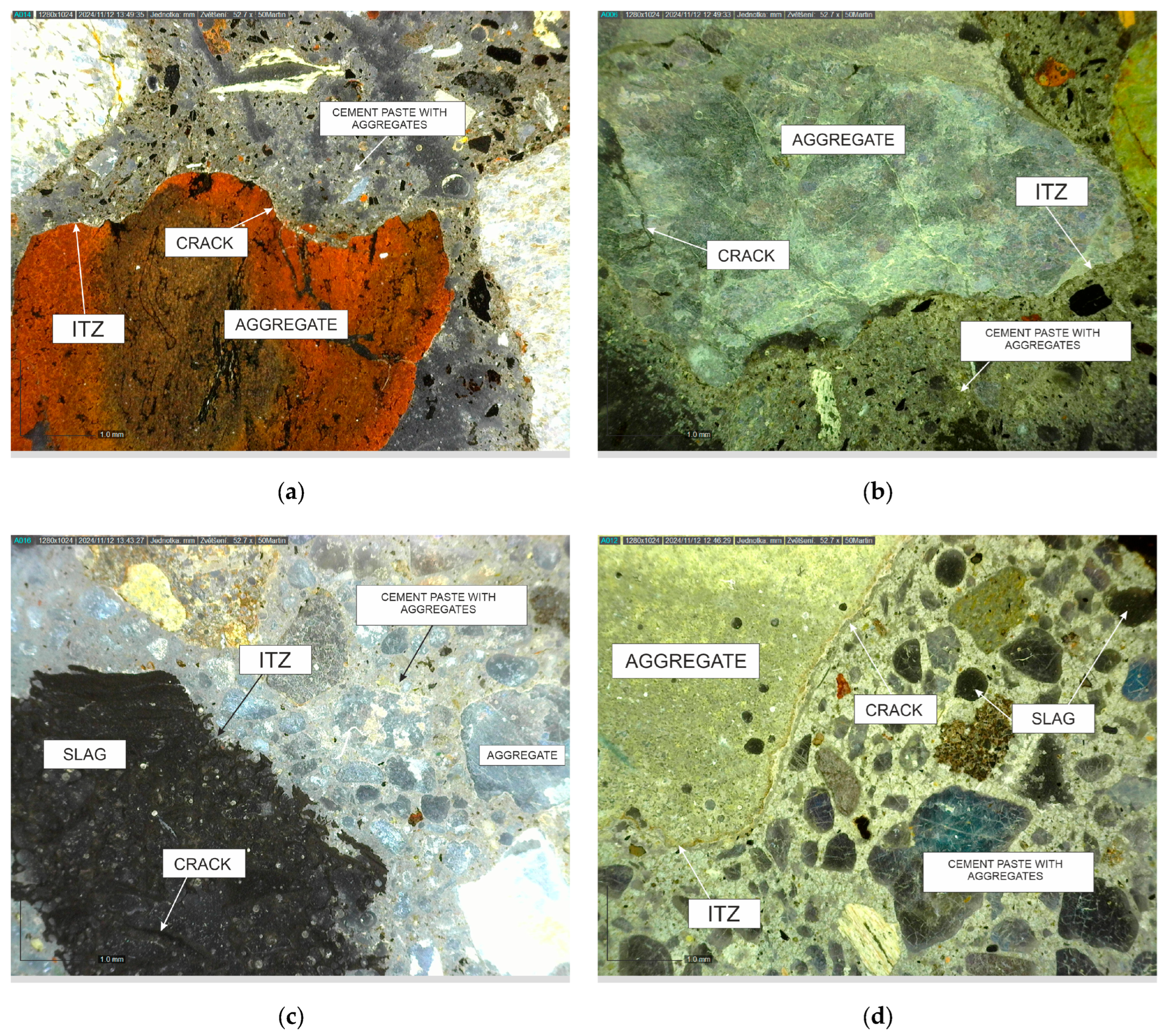
An image analysis was performed on the test specimens marked R250, R400, R250N, and R400N, which were prepared according to the recipes described in Section 2.7. The test specimens for the image analysis were 90 days old and were stored in a water environment. The image analysis was performed on both polished sections and thin sections of the test specimens. The aim of the image analysis was to define the grains of aggregates from the recycled ballast aggregate and the aggregate from platform reconstruction in the concrete structure and to study the contact zone between the grains of waste used and the cement paste. The disruption of the contact zone (ITZ) between the aggregate grain and the cement paste significantly reduces the durability of the concrete.
The results of the image analysis (see Figure 9) confirm that the grains of the aggregates used can be reliably identified in the structure of the composites; in the case of mixtures R250 and R400, it was recycled aggregate, while, in the case of R250N and R400N, fragments of slag incorporated into the cement matrix were also visible. This image is consistent with the description of the interfacial transition zone (ITZ), where the porosity and microchemistry of the paste change locally due to the granulometry and surface of the grains, which is used in SEM/nanoindentation studies to distinguish individual components and interfaces [47]. Furthermore, it was observed that the cement paste also contains very fine aggregate particles; the increased share of fine fractions is known to affect the local microstructure of the ITZ (larger specific surface area, higher water demand, local increase in porosity) [48].
All samples showed a certain degree of ITZ disruption between the aggregate grains and the cement paste, as well as the presence of microcracks in the matrix, which corresponds to a widely described phenomenon in concretes with recycled fillers. ITZ tends to be more porous and mechanically weaker than compact paste, which is confirmed by other studies [49]. The findings of our concrete samples are thus consistent with the reference sources, which repeatedly document deteriorated ITZ parameters in RAC and their connection with the initiation of microcracks and a reduction in macroscopic properties. Both the nature of the recycled material and the mixing procedures affect the formation and quality of ITZ [50,51].

3.8. Content of Harmful Substances in Concrete Water Leachate

The evaluation of the content of harmful substances in concrete water leachates is crucial for assessing their environmental acceptability and safe use. In their original state, the input recycled materials from the railway ballast and platforms showed significant exceedances of the legislative limits according to Decree No. 273/2021 Coll. [22], especially for elements such as As, Cr, Ni, Cu, V, and Ba. These values would have prevented their direct use on the terrain surface, and the material would have had to be classified as hazardous waste. That is why treatment in the form of solidification in a cement matrix was chosen, which is capable of immobilizing potentially hazardous components. Five cylinders with a diameter of 4 cm and a weight of 100 g ± 10 g were prepared from each formula, and they were leached without crushing. The results of the analysis are presented in Table 18.
The results of the leaching tests performed on the prepared cement composites confirmed that, after incorporating recycled material into concrete, none of the limit indicators were exceeded. The cement matrix thus effectively acted as a stabilizing environment, limiting the leachability of heavy metals and organic pollutants to value compliance with the legislation. This result clearly demonstrates that the solidification process is a suitable method for utilizing recycled materials that exceed the limits—not only does it enable their material recovery, but it also eliminates the risk of a negative environmental impact.

4. Conclusions

The aim of the study was to verify the possibilities of using a recycled aggregate from railway ballast, more precisely, undersize waste after recycling fr. 0/25 mm and fr. 0/32 mm excavated gravel from platform layers in cement composites. The physical and mechanical properties of fresh and hardened mixtures, resistance to water pressure, microstructure, and environmental safety based on leaching tests were evaluated. Based on the results obtained, the following conclusions can be drawn:
  • Mixtures with a fr. 0/25 mm aggregate from railway ballast recycling achieved lower bulk densities (R250 = 1950 kg/m3, R400 = 2100 kg/m3), which reflect the presence of fine particles that impair the compaction of the mixture. On the contrary, mixtures with recycled material from platforms (0/32 mm) achieved values close to those of conventional structural concrete (R250N = 2260 kg/m3, R400N = 2250 kg/m3), which indicate a more compact structure and a more suitable grain size distribution.
  • The 28-day strengths clearly showed the significant influence of the type of recycled material used. Concrete with the recycled aggregate fr. 0/25 mm (R250 and R400) achieved significantly lower strength values, even with a higher cement dosage (400 kg/m3), while R250N concrete with a lower cement content (250 kg/m3) showed a comparable or higher strength. The best results were achieved with concrete containing recycled material from the platform, 0/32, with the addition of 0/4 natural sand, where the R400N formula exceeded 50 MPa, proving that optimized recycled material granulometry in combination with a cement matrix can achieve parameters close to those of conventional structural concrete. The testing of railway ballast concrete with a fraction of 0/32 without the addition of a natural sand fraction of 0/4 was not performed.
  • The R250 mixture achieves only low strengths, corresponding to the strength class of C8/10, and is more suitable for non-structural applications. The R250N mixture shows strengths of classes C25/30 to C30/37, which are commonly used for reinforced concrete elements in building construction. The R400 mixture consistently corresponds to strength class C16/20, which is applicable for foundations and less stressed structures. The highest strengths were achieved with the R400N mixture, which achieves strength classes of C35/45 to C45/55 and is intended for highly stressed structures and civil engineering works.
  • The average penetration depth after 28 days was 19–27 mm for concrete with an undersized aggregate and 16–22 mm for concrete with the recycled platform aggregate. The results confirm that the fine undersized aggregate increases the porosity and thus the permeability of concrete, while the coarser recycled aggregate supplemented with sand creates a more compact base with better watertightness.
  • All concrete mixtures showed a weakened transition zone (ITZ) between the grain and the cement matrix, as well as the presence of microcracks in the paste. These phenomena are typical for concretes with recycled fillers, but the overall structure of the composites remained stable and without major defects.
  • The cement matrix reliably retained hazardous substances, and leaching tests demonstrated their complete stabilization, as none of the monitored indicators exceeded the specified legislative limits.

Author Contributions

Conceptualization, V.V., T.D., W.K. and A.E.; methodology, V.V. and A.E.; investigation, M.H., V.V., T.D., M.J. and T.Š.; writing—original draft preparation, T.D., M.H. and V.H.; writing—review and editing, T.D., M.H., V.V. and V.H.; supervision, V.V. and A.E.; funding acquisition, V.V., M.H. and A.E. All authors have read and agreed to the published version of the manuscript.

Funding

The European Just Transition Fund supported this work within the Operational Programme Just Transition under the aegis of the Ministry of the Environment of the Czech Republic, project CirkArena, number CZ.10.03.01/00/22_003/0000045.

Data Availability Statement

Data are contained within the article.

Conflicts of Interest

The authors declare no conflicts of interest.

References

  1. Yücel, H.E.; Dutkiewicz, M.; Yıldızhan, F. The Effect of Waste Ballast Aggregates on Mechanical and Durability Properties of Standard Concrete. Materials 2023, 16, 2665. [Google Scholar] [CrossRef]
  2. Tam, V.W.Y.; Soomro, M.; Evangelista, A.C.J. A Review of Recycled Aggregate in Concrete Applications (2000–2017). Constr. Build. Mater. 2018, 172, 272–292. [Google Scholar] [CrossRef]
  3. Indraratna, B.; Qi, Y.; Malisetty, R.S.; Navaratnarajah, S.K.; Mehmood, F.; Tawk, M. Recycled Materials in Railroad Substructure: An Energy Perspective. Railw. Eng. Sci. 2022, 30, 304–322. [Google Scholar] [CrossRef]
  4. Guo, Y.; Xie, J.; Fan, Z.; Markine, V.; Connolly, D.P.; Jing, G. Railway Ballast Material Selection and Evaluation: A Review. Constr. Build. Mater. 2022, 344, 128218. [Google Scholar] [CrossRef]
  5. Kozioł: Kruszywa w Budownictwie. Cz. 1. Kruszywa Naturalne. Available online: https://bibliotekanauki.pl/articles/364015.pdf (accessed on 16 July 2025).
  6. Hussain, A.; Hussaini, S.K.K. Use of Steel Slag as Railway Ballast: A Review. Transp. Geotech. 2022, 35, 100779. [Google Scholar] [CrossRef]
  7. Singh, R.P.; Nimbalkar, S.; Singh, S.; Choudhury, D. Field Assessment of Railway Ballast Degradation and Mitigation Using Geotextile. Geotext. Geomembr. 2020, 48, 275–283. [Google Scholar] [CrossRef]
  8. Rak, A.; Klosok-Bazan, I.; Zimoch, I.; Machnik-Slomka, J. Analysis of Railway Ballast Contamination in Terms of Its Potential Reuse. J. Clean. Prod. 2022, 378, 134440. [Google Scholar] [CrossRef]
  9. Sainz-Aja, J.; Carrascal, I.; Polanco, J.A.; Thomas, C.; Sosa, I.; Casado, J.; Diego, S. Self-Compacting Recycled Aggregate Concrete Using out-of-Service Railway Superstructure Wastes. J. Clean. Prod. 2019, 230, 945–955. [Google Scholar] [CrossRef]
  10. Sañudo, R.; Goswami, R.R.; Ricci, S.; Miranda, M. Efficient Reuse of Railway Track Waste Materials. Sustainability 2022, 14, 11721. [Google Scholar] [CrossRef]
  11. Yagüe García, S.; González Gaya, C. Reusing Discarded Ballast Waste in Ecological Cements. Materials 2019, 12, 3887. [Google Scholar] [CrossRef]
  12. Han, I.; Wee, G.N.; No, J.H.; Lee, T.K. Pollution Level and Reusability of the Waste Soil Generated from Demolition of a Rural Railway. Environ. Pollut. Barking Essex 1987 2018, 240, 867–874. [Google Scholar] [CrossRef] [PubMed]
  13. Katz, A. Treatments for the Improvement of Recycled Aggregate. J. Mater. Civ. Eng. 2004, 16, 597–603. [Google Scholar] [CrossRef]
  14. Zheng, Y.; Zhang, Y.; Zhang, P. Methods for Improving the Durability of Recycled Aggregate Concrete: A Review. J. Mater. Res. Technol. 2021, 15, 6367–6386. [Google Scholar] [CrossRef]
  15. Di Palma, L.; Petrucci, E. Treatment and Recovery of Contaminated Railway Ballast. Turk. J. Eng. Environ. Sci. 2014, 38, 248–255. [Google Scholar] [CrossRef]
  16. Czech Geological Survey. Mineral Commodity Resources of the Czech Republic—Non-Metallic Minerals, Edition 2024 (Status 2023); Czech Geological Survey: Prague, Czech Republic, 2024. [Google Scholar]
  17. ČSN EN 197-1 Ed. 2; Cement—Part 1: Composition, Specifications and Conformity Criteria for Common Cements. ÚNMZ: Prague, Czech Republic, 2012.
  18. ČSN EN 1008; Mixing Water for Concrete—Specification for Sampling, Testing and Assessing the Suitability of Water, Including Water Recovered from Processes in the Concrete Industry. ÚNMZ: Prague, Czech Republic, 2003.
  19. Heidelberg Materials CZ, a.s. Aggregate Test Report—Grain-Size Distribution of Aggregate Fraction 0/4 Mm, Tovačov Quarry. Betotech Ltd., Accredited Testing Laboratory No. 1195.3, Mokrá–Horákov, Czech Republic, 2025. Available online: https://www.heidelbergmaterials.cz/system/files/2025-07/Tovacov_0-4_2025_TT.pdf (accessed on 23 November 2025).
  20. ČSN EN 12620+A1; Aggregates for Concrete. ÚNMZ: Prague, Czech Republic, 2009.
  21. ČSN EN 933-1; Tests for Geometrical Properties of Aggregates—Part 1: Determination of Particle Size Distribution—Sieving Method. ÚNMZ: Prague, Czech Republic, 2012.
  22. ČSN EN 933-2; Tests for Geometrical Properties of Aggregates—Part 2: Determination of Particle Shape—Flakiness Index. ÚNMZ: Prague, Czech Republic, 2012.
  23. ČSN EN 933-4; Tests for Geometrical Properties of Aggregates—Part 4: Determination of Shape Index. Czech Technical Standard: Prague, Czech Republic, 2008.
  24. Decree No. 273/2021 Coll.; On the Details of Waste Management. Ministry of the Environment: Prague, Czech Republic, 2021.
  25. ČSN EN 12350-2; Testing Fresh Concrete—Part 2: Slump Test. ÚNMZ: Prague, Czech Republic, 2019.
  26. ČSN EN 12350-7; Testing Fresh Concrete—Part 7: Air Content—Pressure Methods. ÚNMZ: Prague, Czech Republic, 2019.
  27. ČSN EN 12350-6; Testing Fresh Concrete—Part 6: Density. ÚNMZ: Prague, Czech Republic, 2019.
  28. ČSN EN 12390-2; Testing Hardened Concrete—Part 2: Making and Curing Specimens for Strength Tests. ÚNMZ: Prague, Czech Republic, 2019.
  29. ČSN EN 12390-7; Testing Hardened Concrete—Part 7: Density of Hardened Concrete. ÚNMZ: Prague, Czech Republic, 2019.
  30. ČSN EN 12390-8; Testing Hardened Concrete—Part 8: Depth of Penetration of Water under Pressure. ÚNMZ: Prague, Czech Republic, 2019.
  31. ČSN EN 12390-3; Testing Hardened Concrete—Part 3: Compressive Strength of Test Specimens. ÚNMZ: Prague, Czech Republic, 2019.
  32. Knaack, A.M.; Kurama, Y.C. Behavior of Reinforced Concrete Beams with Recycled Concrete Coarse Aggregates. J. Struct. Eng. 2015, 141, B4014009. [Google Scholar] [CrossRef]
  33. Thomas, C.; Setién, J.; Polanco, J.A.; Alaejos, P.; Sánchez de Juan, M. Durability of Recycled Aggregate Concrete. Constr. Build. Mater. 2013, 40, 1054–1065. [Google Scholar] [CrossRef]
  34. Hafez, H.; Kurda, R.; Kurda, R.; Al-Hadad, B.; Mustafa, R.; Ali, B. A Critical Review on the Influence of Fine Recycled Aggregates on Technical Performance, Environmental Impact and Cost of Concrete. Appl. Sci. 2020, 10, 1018. [Google Scholar] [CrossRef]
  35. Amadi, I.G.; Beushausen, H.; Alexander, M.G. Multi-Technique Approach to Enhance the Properties of Fine Recycled Aggregate Concrete. Front. Mater. 2022, 9, 893852. [Google Scholar] [CrossRef]
  36. González-Taboada, I.; González-Fonteboa, B.; Martínez-Abella, F.; Carro-López, D. Study of Recycled Concrete Aggregate Quality and Its Relationship with Recycled Concrete Compressive Strength Using Database Analysis. Mater. Constr. 2016, 66, e089. [Google Scholar] [CrossRef]
  37. Pellegrino, C.; Gaddo, V. Mechanical and Durability Characteristics of Concrete Containing EAF Slag as Aggregate. Cem. Concr. Compos. 2009, 31, 663–671. [Google Scholar] [CrossRef]
  38. Pellegrino, C.; Cavagnis, P.; Faleschini, F.; Brunelli, K. Properties of Concretes with Black/Oxidizing Electric Arc Furnace Slag Aggregate. Cem. Concr. Compos. 2013, 37, 232–240. [Google Scholar] [CrossRef]
  39. Muhammad, F.; Harun, M.; Ahmed, A.; Kabir, N.; Khalid, H.R.; Hanif, A. Influence of Bonded Mortar on Recycled Aggregate Concrete Properties: A Review. Constr. Build. Mater. 2024, 432, 136564. [Google Scholar] [CrossRef]
  40. Bu, C.; Liu, L.; Lu, X.; Zhu, D.; Sun, Y.; Yu, L.; OuYang, Y.; Cao, X.; Wei, Q. The Durability of Recycled Fine Aggregate Concrete: A Review. Materials 2022, 15, 1110. [Google Scholar] [CrossRef] [PubMed]
  41. Sosa, M.E.; Zega, C.J.; Di Maio, A.A. Understanding the Influence of Properties of Fine Recycled Aggregates on Recycled Concrete. Proc. Inst. Civ. Eng. Constr. Mater. 2020, 176, 150–160. [Google Scholar] [CrossRef]
  42. Zhang, M.-H.; Gjorv, O.E. Permeability of High-Strength Lightweight Concrete. Mater. J. 1991, 88, 463–469. [Google Scholar] [CrossRef]
  43. ČSN P 73 2404:2024; Concrete—Specification, Performance, Production and Conformity—Additional Information. Czech Technical Standard: Prague, Czech Republic, 2024.
  44. ČSN EN 206+A2; Concrete—Specification, Performance, Production and Conformity. Czech Technical Standard: Prague, Czech Republic, 2021.
  45. Faleschini, F.; Brunelli, K.; Zanini, M.A.; Dabalà, M.; Pellegrino, C. Electric Arc Furnace Slag as Coarse Recycled Aggregate for Concrete Production. J. Sustain. Metall. 2016, 2, 44–50. [Google Scholar] [CrossRef]
  46. Meng, T.; Wei, H.; Yang, X.; Zhang, B.; Zhang, Y.; Zhang, C. Effect of Mixed Recycled Aggregate on the Mechanical Strength and Microstructure of Concrete under Different Water Cement Ratios. Materials 2021, 14, 2631. [Google Scholar] [CrossRef]
  47. Del Bosque, I.S.; Zhu, W.; Howind, T.; Matías, A.; De Rojas, M.S.; Medina, C. Properties of Interfacial Transition Zones (ITZs) in Concrete Containing Recycled Mixed Aggregate. Cem. Concr. Compos. 2017, 81, 25–34. [Google Scholar] [CrossRef]
  48. Poon, C.S.; Shui, Z.H.; Lam, L. Effect of Microstructure of ITZ on Compressive Strength of Concrete Prepared with Recycled Aggregates. Constr. Build. Mater. 2004, 18, 461–468. [Google Scholar] [CrossRef]
  49. Xiao, J.; Li, W.; Sun, Z.; Lange, D.A.; Shah, S.P. Properties of Interfacial Transition Zones in Recycled Aggregate Concrete Tested by Nanoindentation. Cem. Concr. Compos. 2013, 37, 276–292. [Google Scholar] [CrossRef]
  50. Li, W.; Xiao, J.; Sun, Z.; Kawashima, S.; Shah, S.P. Interfacial Transition Zones in Recycled Aggregate Concrete with Different Mixing Approaches. Constr. Build. Mater. 2012, 35, 1045–1055. [Google Scholar] [CrossRef]
  51. Chen, Q.; Zhang, J.; Wang, Z.; Zhao, T.; Wang, Z. A Review of the Interfacial Transition Zones in Concrete: Identification, Physical Characteristics, and Mechanical Properties. Eng. Fract. Mech. 2024, 300, 109979. [Google Scholar] [CrossRef]
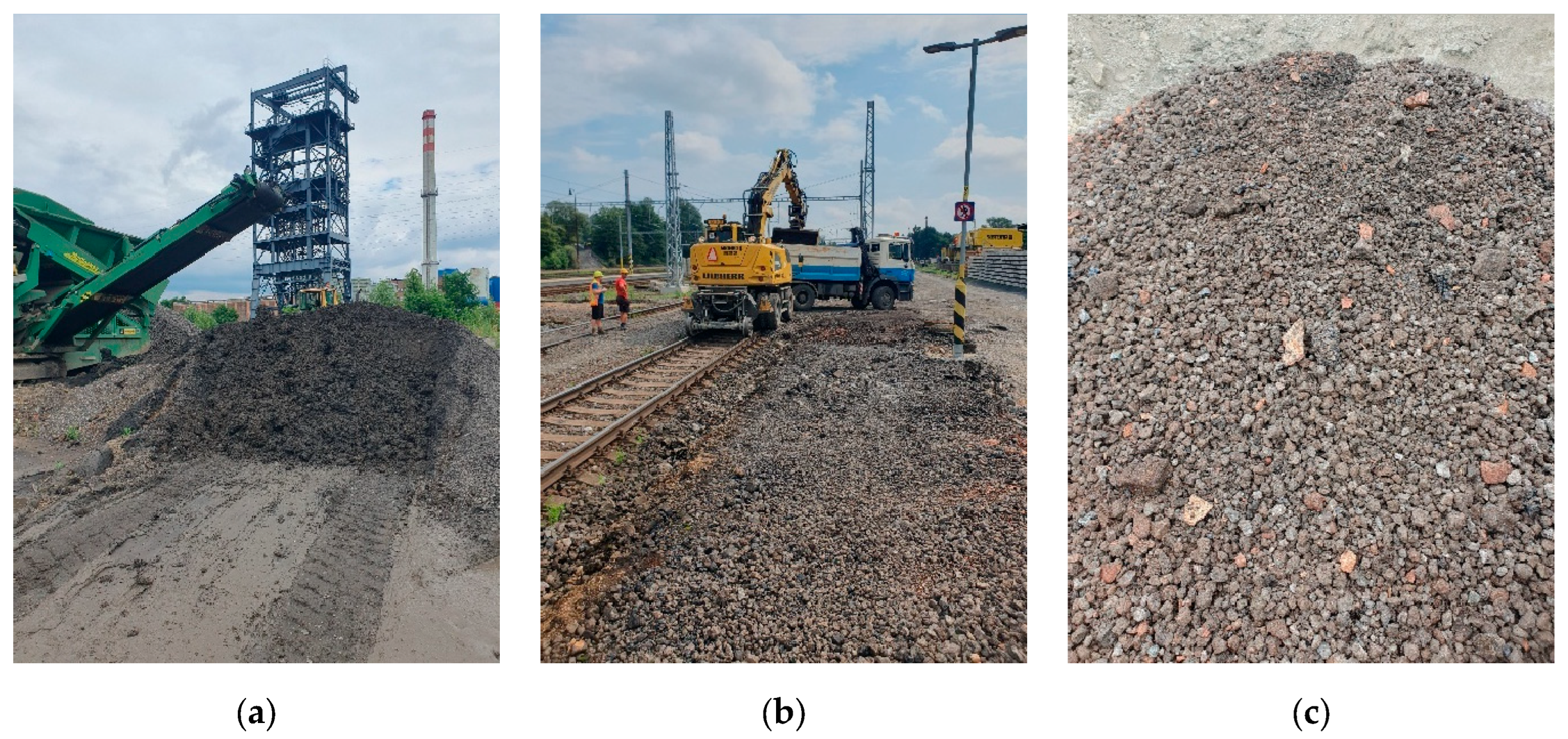
Figure 1. Aggregate used in the research: (a) fraction 0/25 from recycled railway ballast aggregate; (b) extraction of waste aggregate from the layers under the platform, fraction 0/32; (c) extracted waste aggregate, fraction 0/32.
Buildings 15 04361 g001
Figure 2. Graphical representation of the grain size distribution curve: (a) recycled aggregate fr. 0/25 mm; (b) recycled aggregate fr. 0/32 mm.
Buildings 15 04361 g002
Figure 3. Number of harmful substances contained in the input material.
Buildings 15 04361 g003
Figure 4. (a) The slump of the cone when determining consistency, together with the air content in the mixture; (b) the bulk density of fresh concrete mixture.
Buildings 15 04361 g004
Figure 5. Average bulk density of hardened concrete.
Buildings 15 04361 g005
Figure 6. Overview of average penetration values of the tested specimens.
Buildings 15 04361 g006
Figure 7. Average cube strength of the tested specimens.
Buildings 15 04361 g007
Figure 8. Average cylinder strength of the tested specimens.
Buildings 15 04361 g008
Figure 9. Image analysis of concretes based on waste materials from railway reconstruction—magnified 52.7×: (a) Recipe R250 (polished section), (b) Recipe R400 (polished section), (c) Recipe R250N (thin section), (d) Recipe R400N (thin section).
Buildings 15 04361 g009
Table 1. Source of recycled materials, sampling locations, and description of sampling.
Recycled Aggregate SourceCollection Location (Date)Sample Collection and Preparation ProcedureUse in Mixes
Railway ballast (0/25 mm)Reconstruction of the Havířov railway junction (3 July 2024)The gravel was extracted from the switch using an excavator and sorted into 0/25 mm and 25/65 mm fractions on a Mc Closkey R155 sorting machine (Mc Closkey, Keene, Canada). The fine fraction was then transported to the laboratory for analysis.Used in R250, R400
Platform waste (0/32 mm)Various station platforms, Havířov (11 July 2024)Samples of the subbase layers under the platform were taken using an excavator, with samples taken from various locations and loaded onto a truck. The sample was then taken to the laboratory for subsequent analysis.Used in R250N, R400N
Table 2. Chemical composition of cement.
Na2OMgOAl2O3SiO2SO3ClK2OCaOFe2O3
CEM I 42.5R SUPERCEMENT2.523.824.2919.313.180.070.5356.623.30
Table 3. Physical and mechanical properties of cement.
Type of CementWater Demand
[wt.%]
Initial Setting Time [min.]Final Setting Time [min.]Specific Surface [cm2·g−1]Bulk Density
[g·cm−3]
Compressive Strength
[MPa]
2 Days28 Days
CEM I 42.5R SUPERCEMENT26.619227136703.1329.759.5
Table 4. Key properties of the superplasticizer (Sika ViscoCrete-4035).
Bulk Density [kg/m3]pHDry Matter Content [w.%]Chloride Content [w.%]Equivalent of Na2O [hm.%]
Sika ViscoCrete-403510604.5 ± 0.533≤0.1≤1.0
Table 5. Concrete recipes per 1 m3.
ComponentsRecipe R250Recipe R400Recipe R250NRecipe R400N
[kg per m3][kg per m3][kg per m3][kg per m3]
Cement CEM I 42.5 R SUPERCEMENT, Cement Hranice, a.s.250.00400.00250.00400.00
Natural aggregate 0/4 mm Tovačov0.000.00831.00677.00
Railway ballast aggregate 0/25—waste after recycling12971082.000.000.00
Railway ballast aggregate 0/32—platform waste0.000.00896.00730.00
Additives—plasticizer2.253.202.253.21
Water311358.00174.00257.00
Table 6. The result of SI.
Aggregate fraction0/25 mm10/32 mm
SI value1931
Table 7. Concentration of harmful substances contained in recycled aggregate.
Indicator01/24
[mg/kg Dry Matter]
02/24
[mg/kg Dry Matter]
I. Limit Value *
[mg/kg Dry Matter]
II. Limit Value *
[mg/kg Dry Matter]
As19.3<11030
Cd1<112.5
Cr total26698100200
Hg0.0630.0140.81
Ni68.612.56580
Pb43.525.9100200
V122205180180
Cu12138100170
Zn14229.5300600
Ba10307460600600
Be3.772.2655
Hydrocarbons C10–C40130<50200300
Benzene0.040.020.40.7
Total PAH<0.05<0.0536
PCB<0.001<0.0010.050.2
EOX<1<112
* These are the limit values for storage on the ground surface (according to Table 5.1 of Annex No. 5 to Decree No. 273/2021 Coll. [24]). For individual samples, the exceedances of the I. limit value are evaluated and marked in bold and the exceedances of the II. limit values are marked in red.
Table 8. Average values of individual indicators for fresh concrete mixture.
ResultR250R400R250NR400N
Slump test [mm]10012640170
Bulk density [kg/m3]1950199022702270
Air content [%]2.42.32.32.3
Table 9. Average values of cone slump classified into slump classes.
MixtureSlump [mm]Slump Classw/cPlasticizer [% of Weight of Cement]
R250100S21.2440.9%
R400126S30.8950.8%
R250N40S10.6960.9%
R400N170S40.6430.8%
Table 10. Statistical evaluation of slump in mixtures R250, R400, R250N, and R400N.
MixtureSlump [mm]nMean [mm]SD (%)VC (%)
R25091···105···10231001313.0
R400118···122···13831261511.9
R250N37···43···413401127.5
R400N171···167···1733170169.4
Table 11. Statistical evaluation of air content in mixtures R250, R400, R250N, and R400N.
MixtureAir Content (%)nMeanSD (%)VC (%)
R2502.2···2.4···2.632.40.28.3
R4002.1···2.3···2.532.30.28.7
R250N2.0···2.4···2.532.30.26511.5
R400N2.1···2.4···2.432.30.1737.5
Table 12. Statistical evaluation of bulk density of fresh concrete for mixtures R250, R400, R250N, and R400N.
MixtureBulk Density of Fresh Concrete [kg/m3]nMeanSD (%)VC (%)
R2501890···1961···199731950422.2
R4001995···1961···201031990381.9
R250N2290···2242···228032270200.9
R400N2275···2251···229032270502.2
Table 13. Statistical evaluation of water penetration under pressure—mixtures R250, R400, R250N, and R400N.
MixtureWater Penetration [mm]Max [mm]Median [mm]Mean [mm]CV [%]
R25022, 17, 1822181913.90
R40030, 25, 263026279.80
R250N19, 16, 1219161622.40
R400N28, 19, 2028202221.20
Table 14. Statistical evaluation of cube strength of mixtures R250, R400, R250N, and R400N.
MixtureAge [Days]nMean [MPa]SDCV [%]
R250739.170.44.4
14310.730.423.9
28312.670.060.5
90313.730.85.8
R250N7332.837.1621.8
14338.93.769.7
28339.235.1713.2
90343.85.8413.3
R4007320.11.668.3
14322.031.526.9
28324.570.994.0
90327.871.65.7
R400N7345.236.9215.3
14350.73.056.0
28352.776.211.7
90361.53.866.3
Table 15. Statistical evaluation of cylinder strength of mixtures R250, R400, R250N, and R400N.
MixtureAge [Days]nMean [MPa]SDCV [%]
R25028311.80.32.5
90313.30.10.8
R250N283382.56.6
90338.91.23.1
R40028323.31.35.6
90325.31.55.9
R400N28348.52.44.9
90353.42.54.7
Table 16. The classification of recipes into concrete strength classes.
MixtureStrength Class After 28 DaysStrength Class After 90 Days
R250C8/10C8/10
R400C16/20C20/25
R250NC25/30C30/37
R400NC35/45C45/55
Table 17. Result of two-factor analysis of variance.
EffectsF(1, 20)pPartial η2
Aggregate type (0/25 vs. 0/32 + sand)2328<0.0010.99
Cement quantity (250 vs. 400 kg/m3)752<0.0010.97
Interaction (Typ × Cement)17.3<0.0010.46
Simple effects
– Cement: 250 vs. 400 (with 0/25 aggregate)<0.001
– Cement: 250 vs. 400 (with 0/32 aggregate + sand)<0.001
– Aggregate: 0/25 vs. 0/32 + sand (with 250 kg of cement)<0.001
– Aggregate: 0/25 vs. 0/32 + sand (with 400 kg of cement)<0.001
Table 18. Average values of individual contaminants in solidified products.
IndicatorR250R400R250NR400NIIIaIIbIII
Sample no.mg/Lmg/Lmg/Lmg/Lmg/Lmg/Lmg/Lmg/L
DOCunsp.unsp.unsp.unsp.50.00080.00080.000100.000
Monohydric phenolsunsp.unsp.unsp.unsp.0.100
Chlorides1.8581.8940.7620.66580.0001500.0001500.0005000.000
Fluorides0.0400.0130.028<0.021.00030.00015.00050.000
Sulfates13.8868.5245.5163.730100.0003000.0002000.005000.000
As<0.05<0.05<0.05<0.050.0502.5000.2002.500
Ba0.0190.0380.1550.1452.00030.00010.00030.000
Cd<0.004<0.004<0.004<0.0040.0040.5000.1000.500
Cr total<0.030<0.030<0.030<0.0300.0507.0001.0007.000
Cu0.029<0.030<0.030<0.0300.20010.0005.00010.000
Hg<0.001<0.001<0.001<0.0010.0010.2000.0200.200
Ni<0.030<0.030<0.030<0.0300.0404.0001.0004.000
Pb<0.030<0.030<0.030<0.0300.0505.0001.0005.000
Sb<0.006<0.006<0.006<0.0060.0060.5000.0700.500
Se<0.01<0.01<0.01<0.010.0100.7000.0500.700
Zn<0.030<0.030<0.030<0.0300.40020.0005.00020.000
Mo<0.05<0.05<0.05<0.050.0503.0001.0003.000
SS (sol. substances)232.600310.400106.000128.800400.0008000.0006000.00010,000.000
pH11.24411.48811.04411.198≥6.000 ≥6.000
Disclaimer/Publisher’s Note: The statements, opinions and data contained in all publications are solely those of the individual author(s) and contributor(s) and not of MDPI and/or the editor(s). MDPI and/or the editor(s) disclaim responsibility for any injury to people or property resulting from any ideas, methods, instructions or products referred to in the content.