Article

Digital Twin for Xiegong’s Architectural Archaeological Research: A Case Study of Xuanluo Hall, Sichuan, China
1
College of Architecture and Urban Planning, Chongqing University, No. 174 Shazhengjie, Chongqing 400044, China
2
College of Architecture, Hubei Engineer University, No. 272 Traffic Avenue, Xiaogan 432000, China
3
Academy of Architecture and Arts, Guangxi Arts Institute, No. 7 Jiaoyu Road, Nanning 530022, China
*
Author to whom correspondence should be addressed.
Buildings 2022, 12(7), 1053; https://doi.org/10.3390/buildings12071053

Submission received: 30 May 2022 / Revised: 6 July 2022 / Accepted: 13 July 2022 / Published: 20 July 2022

Abstract

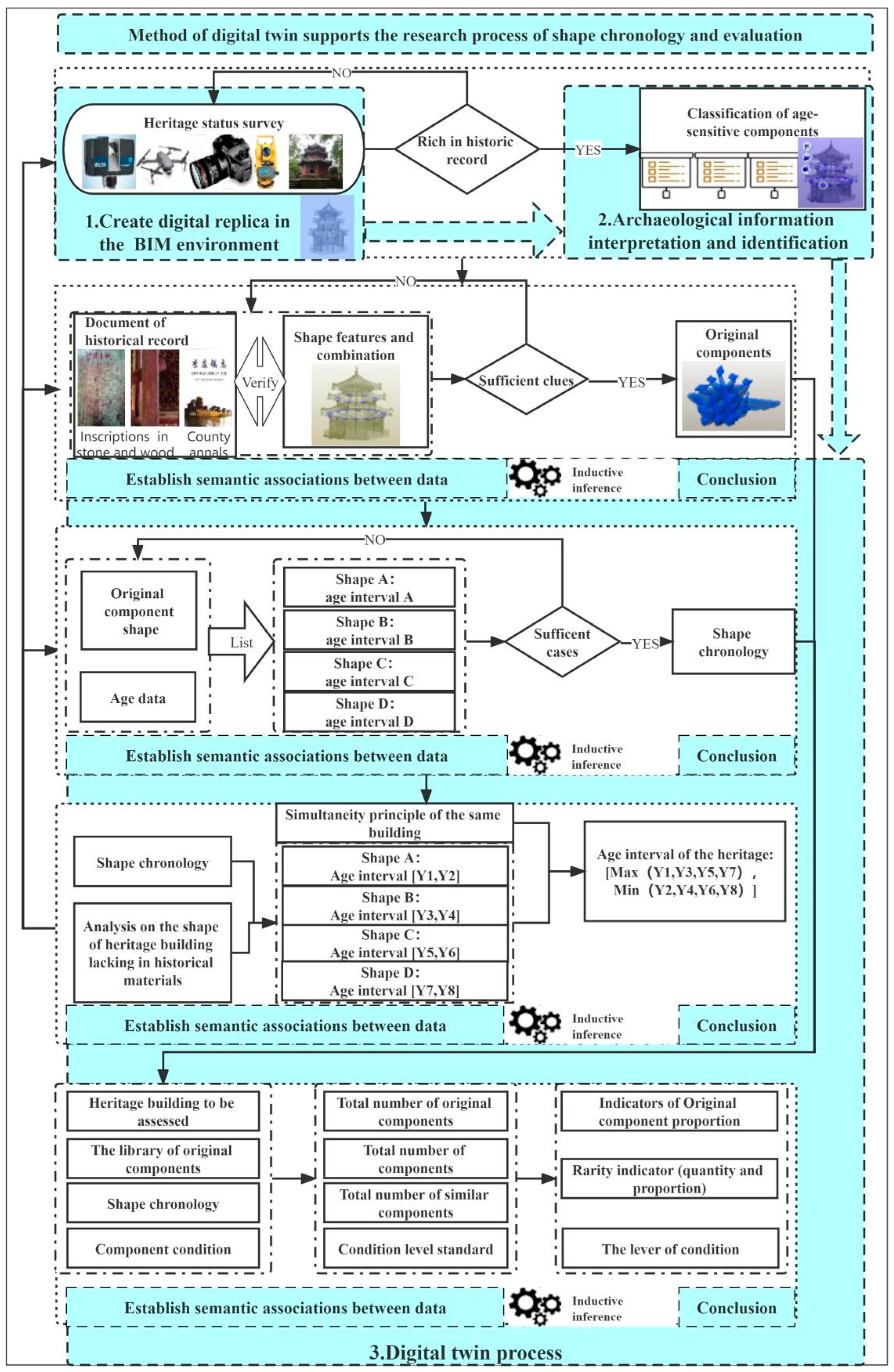
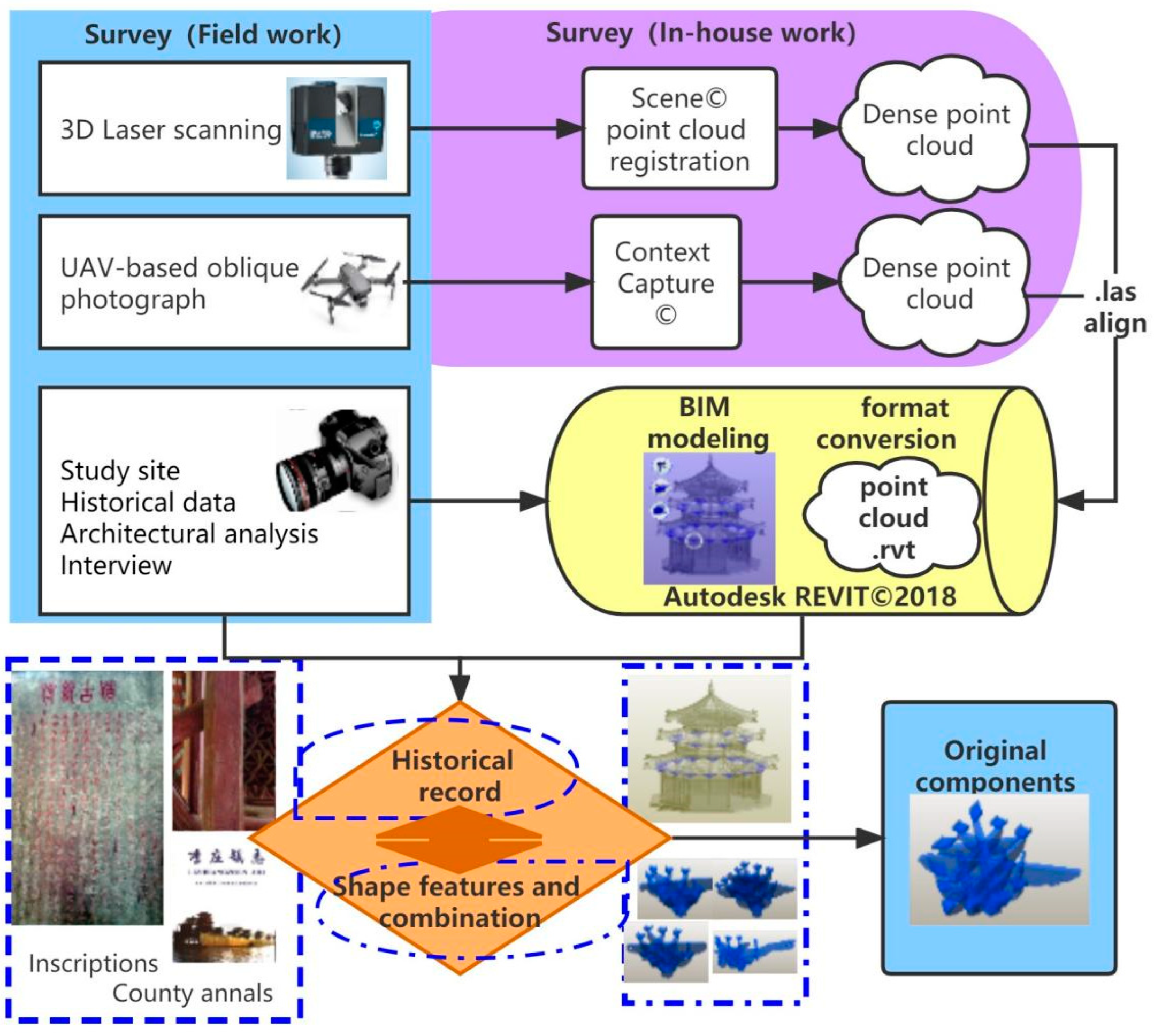
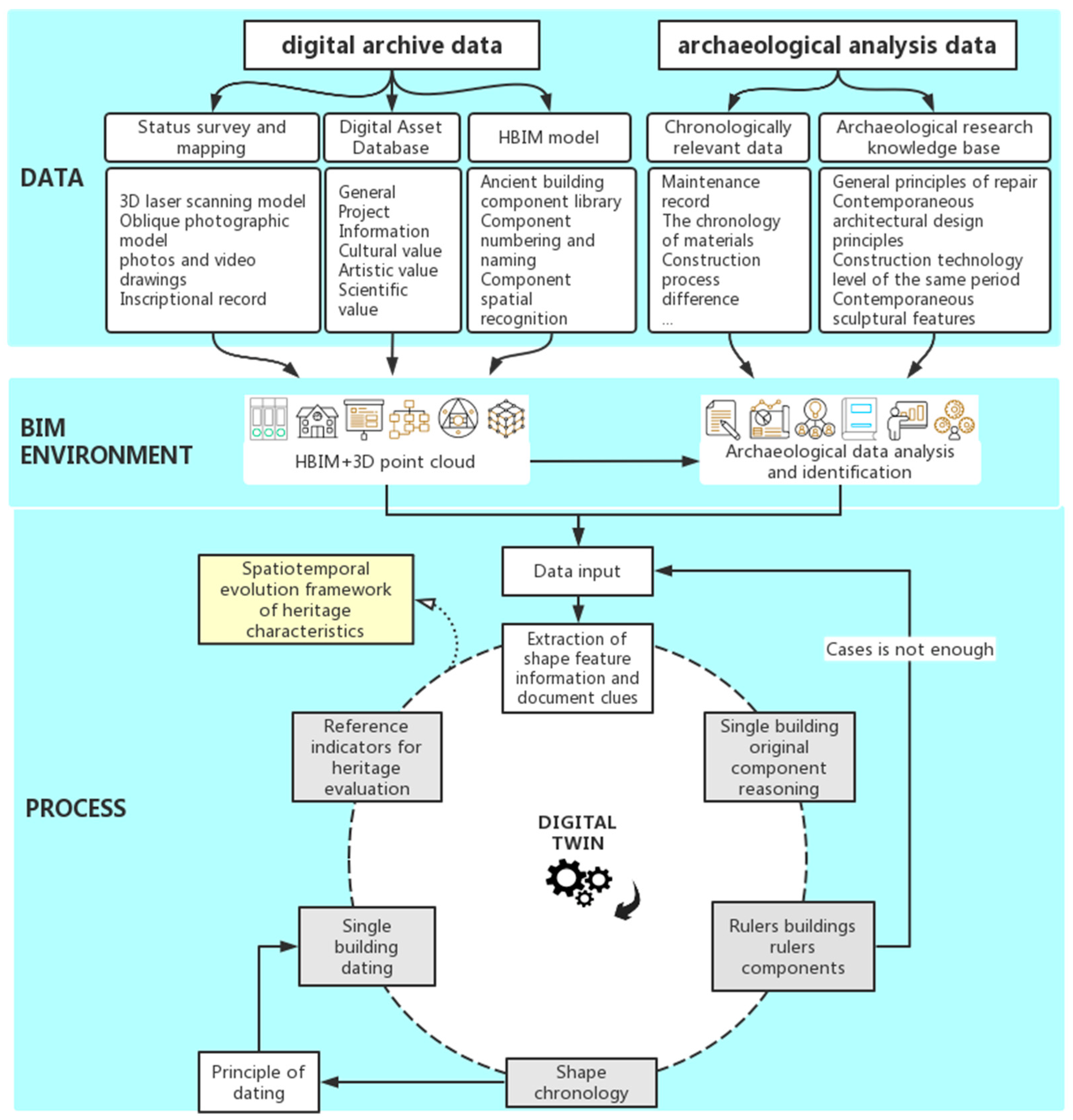
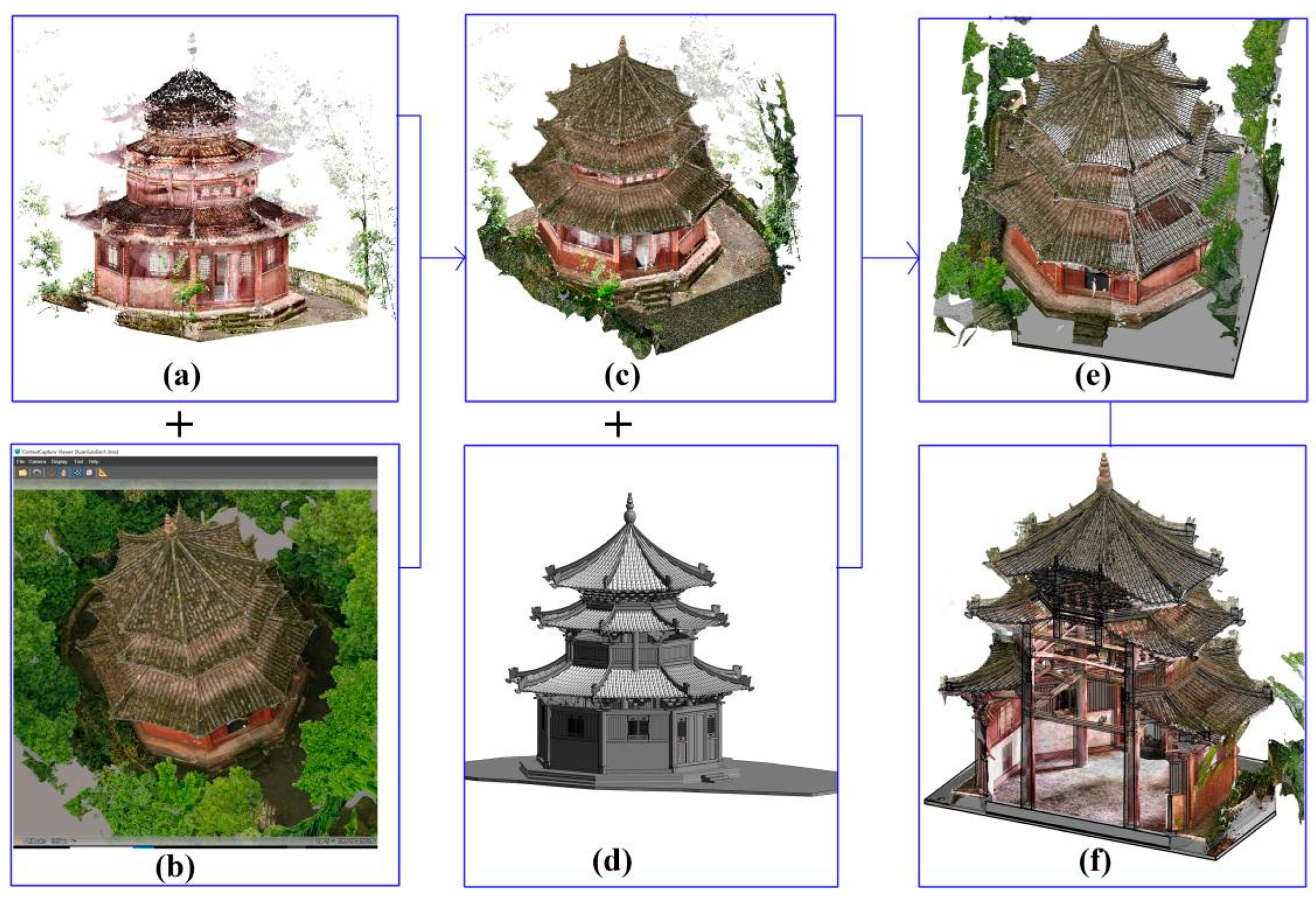
Xiegong is a unique element of Chinese historic buildings that could date the heritage dynasty. It is more complicated than the Dougong and represents a high level of artistic and structural achievement. Archaeological research on Xiegong is urgent due to the fast rate of erosion rate and the official record of only Dougong without Xiegong. With 3D survey technology, researchers can use 3D digital replicas to record and survey heritage buildings. However, the methodology of applying digital reproductions to facilitate archaeological research is unclear. A comprehensive approach to merging the digital twin into the chronology of forms was proposed based on a literature review of archaeological theory. This multi-methodological approach, including laser scanning, oblique photogrammetry, and BIM, was adopted to develop Xiegong’s architectural archaeology dating research. Using Xuanluo Hall, Sichuan, China, as an example, the site study verified the approach to ensure consistency between 2D and 3D expressions with geometry and semantics. The results indicate that, on the one hand, the digital twin process can help archaeologists recognize historical information. On the other hand, the results of their discrimination can be effectively recorded and easily queried, avoiding the shortcomings of traditional methods of information loss and dispersion.
Keywords: BIM; historic building; digital twin; architectural archaeology; Xiegong; Dougong; photogrammetry; laser scanning BIM; historic building; digital twin; architectural archaeology; Xiegong; Dougong; photogrammetry; laser scanning