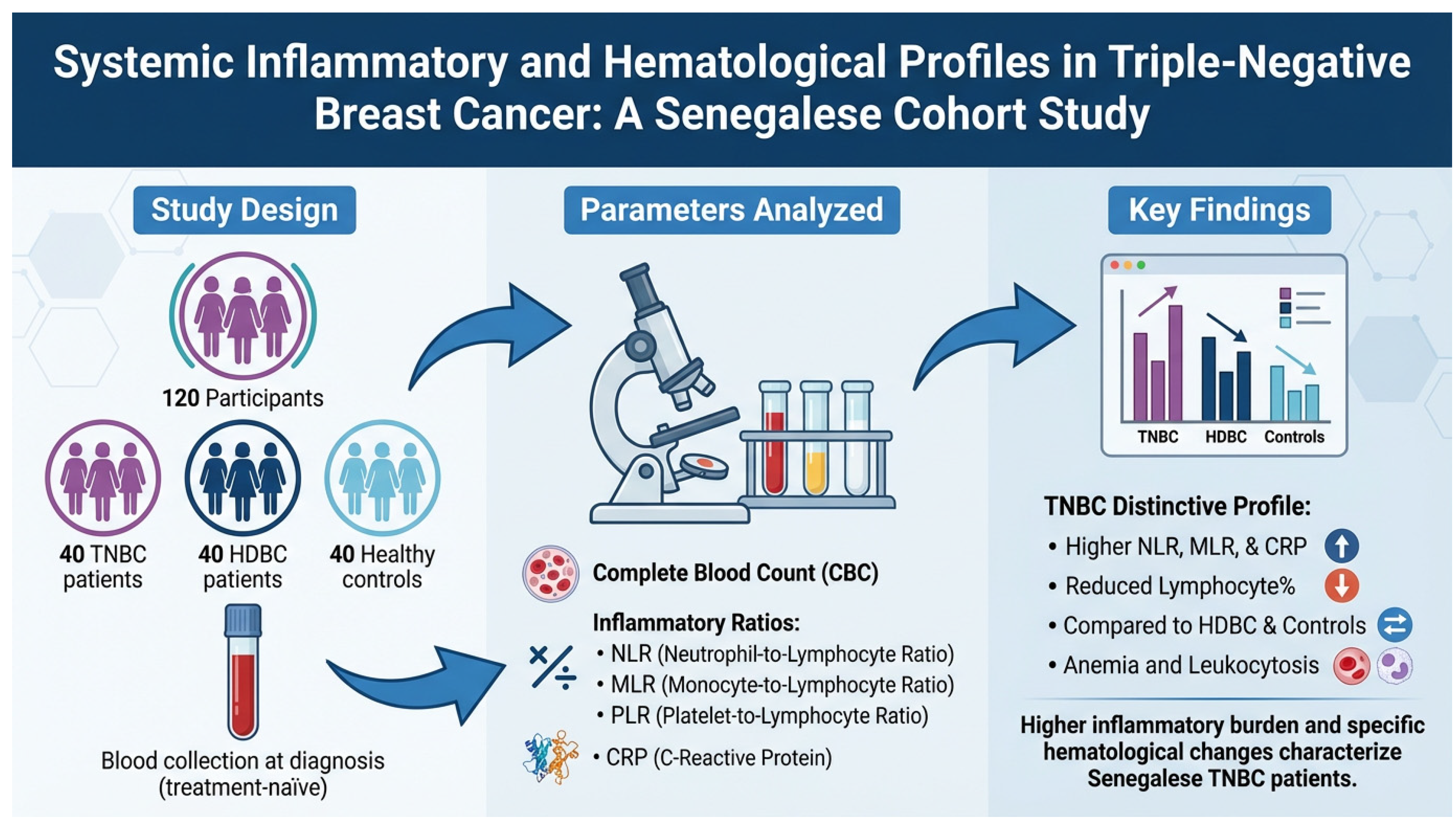
Systemic Inflammatory and Hematological Profiles in Triple-Negative Breast Cancer: A Study from a Senegalese Cohort

 , , , and
Abstract
1. Introduction
2. Materials and Methods
2.1. Ethical Approval
2.2. Study Design and Participants
2.3. Recruitment of Breast Cancer Patients
- -
- TNBC Group: ER-negative, PR-negative, and HER2-negative (IHC 0 or 1+).
- -
- HDBC Group: ER-positive and/or PR-positive, and HER2-negative (IHC 0 or 1+).
2.4. Recruitment of Healthy Controls
2.5. Blood Collection and Laboratory Analysis
2.6. Histological and Immunohistochemical Analysis
2.7. Definition of Hematological Abnormalities
2.8. Statistical Analysis
3. Results
3.1. General Characteristics of the Study Population
3.2. Hematological Profiles Among TNBC, HDBC, and Healthy Controls
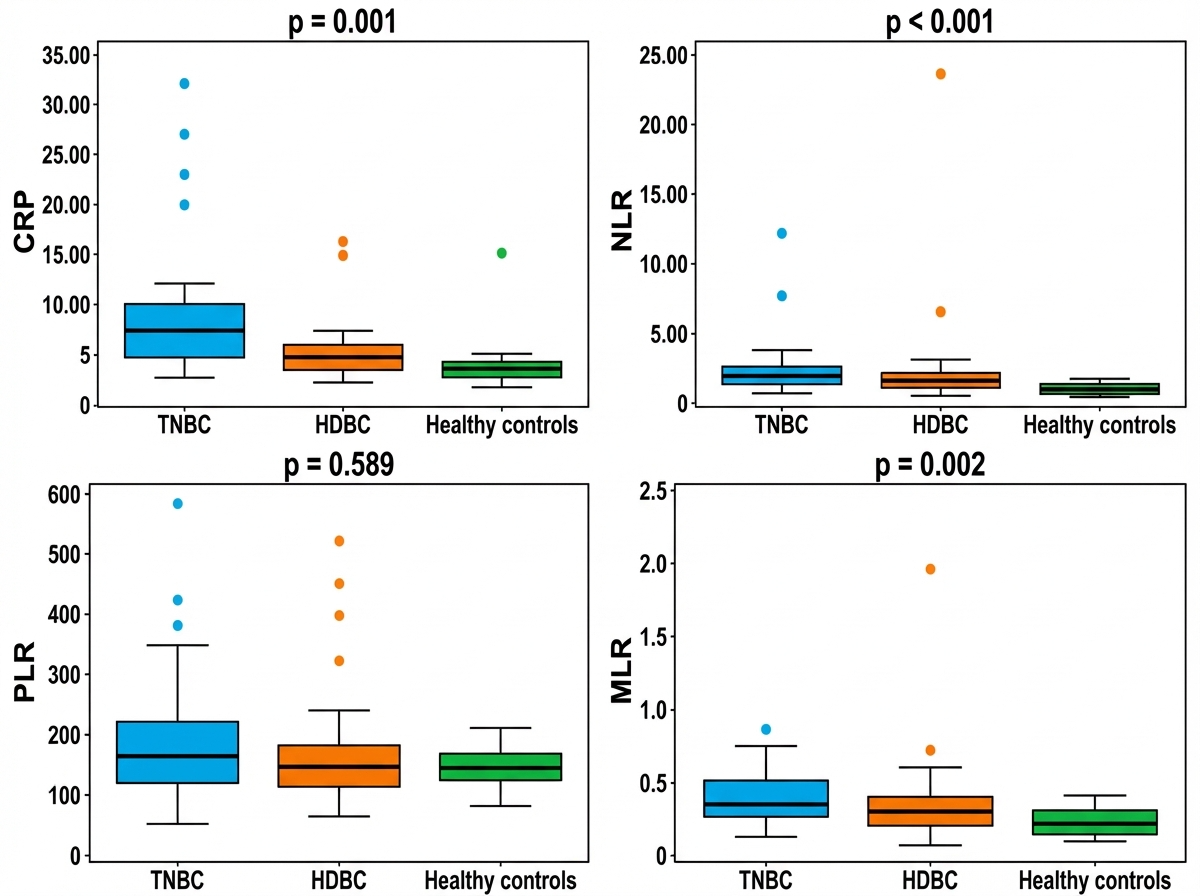
3.3. Systemic Inflammatory Profile: NLR, PLR, MLR, and CRP
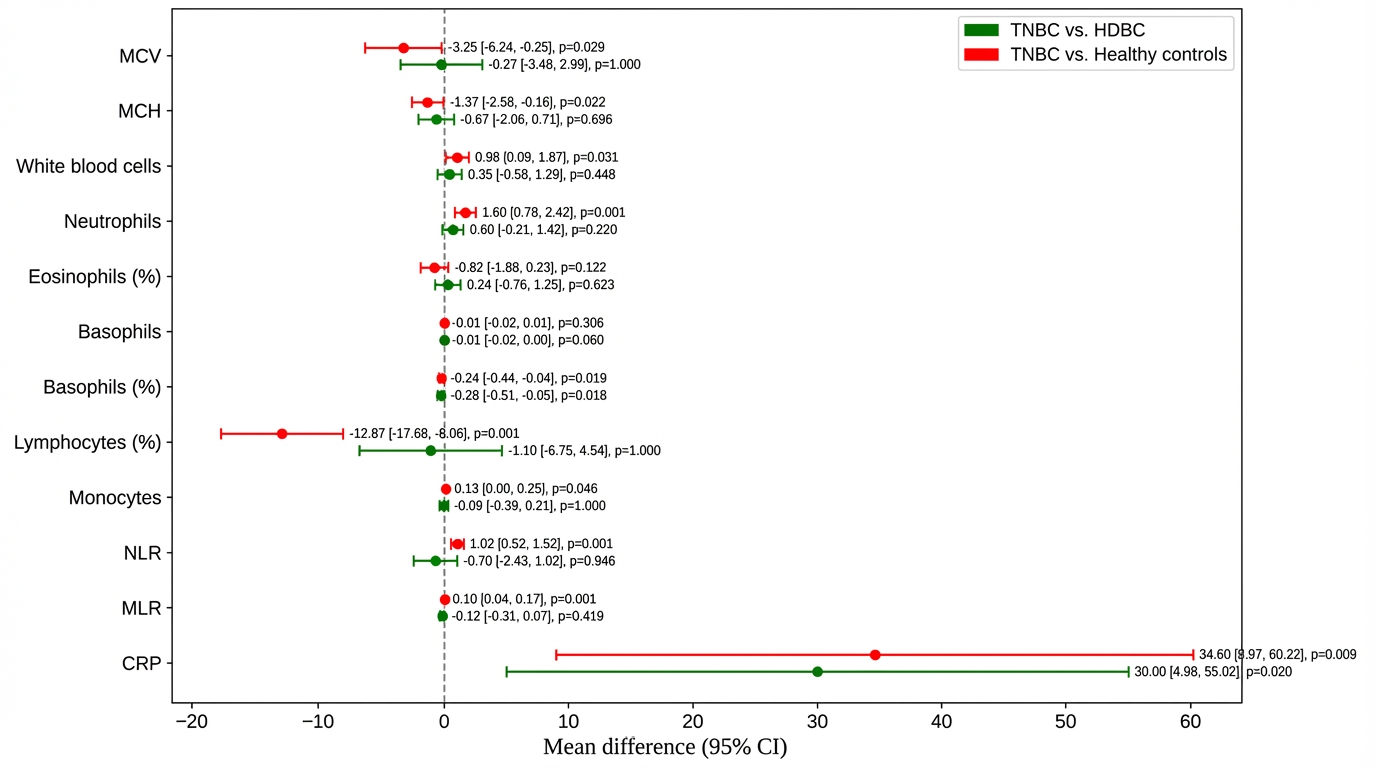
3.4. Pairwise Comparisons: TNBC vs. HDBC and Healthy Controls
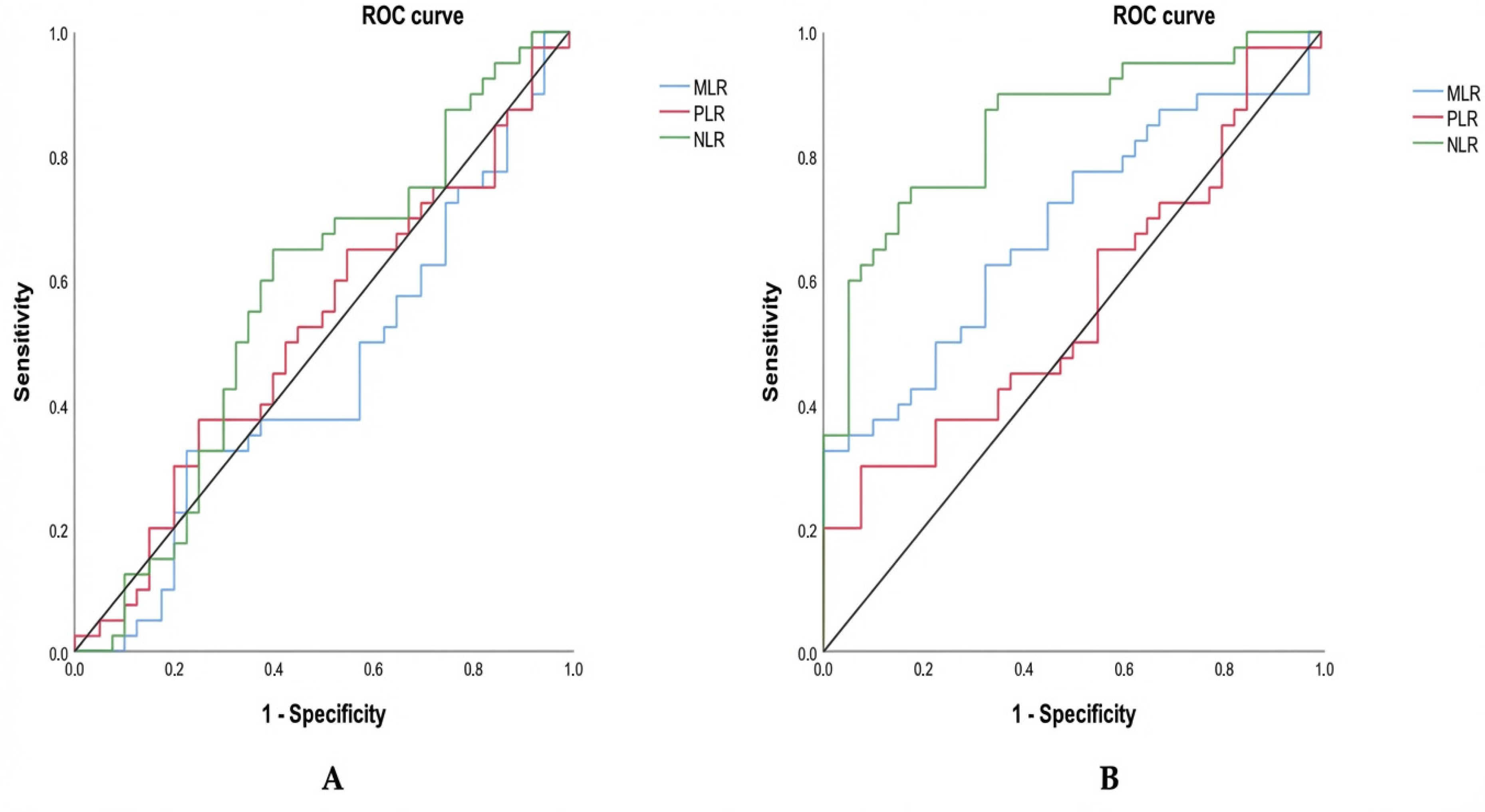
3.5. ROC-Based Evaluation of Inflammatory Ratios Between Groups
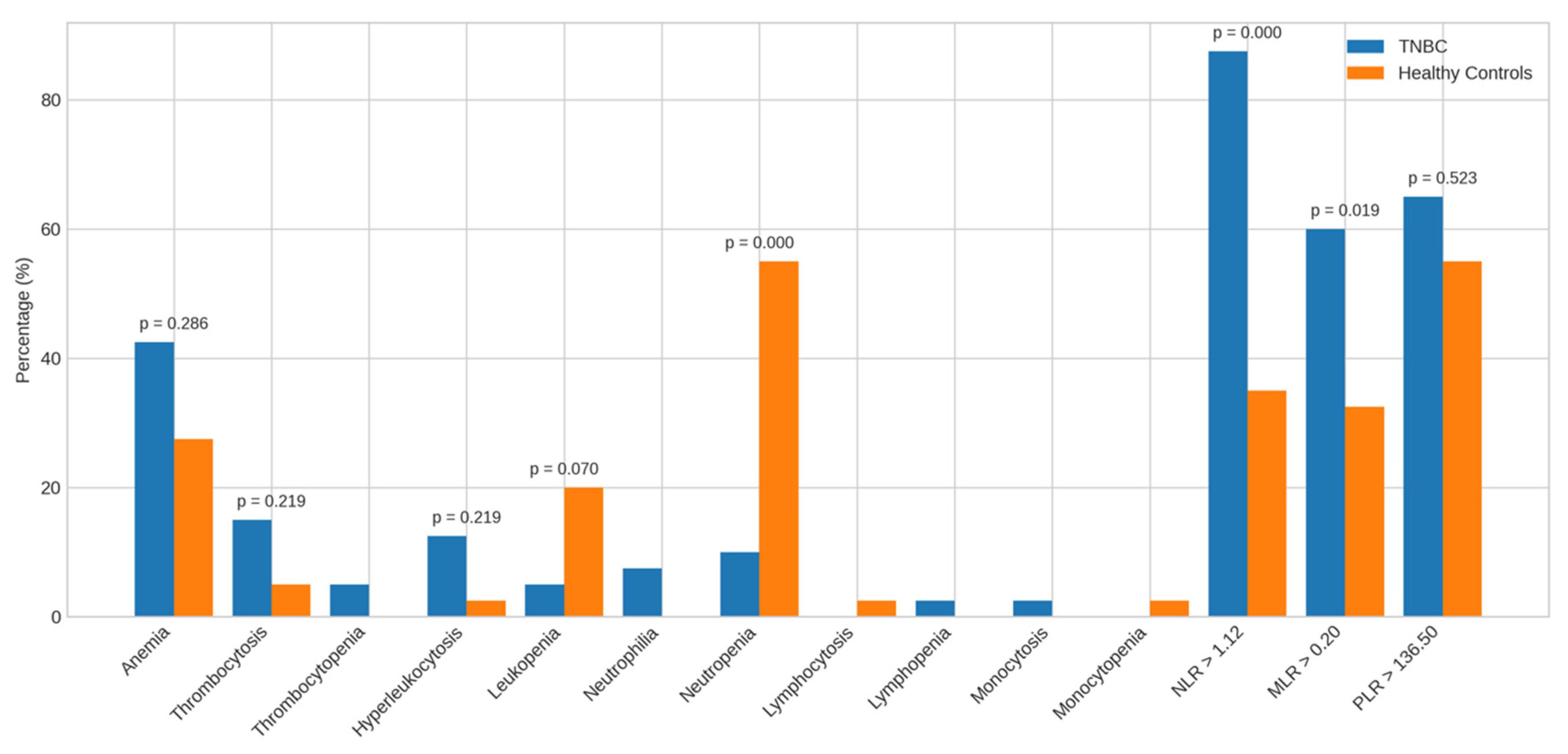
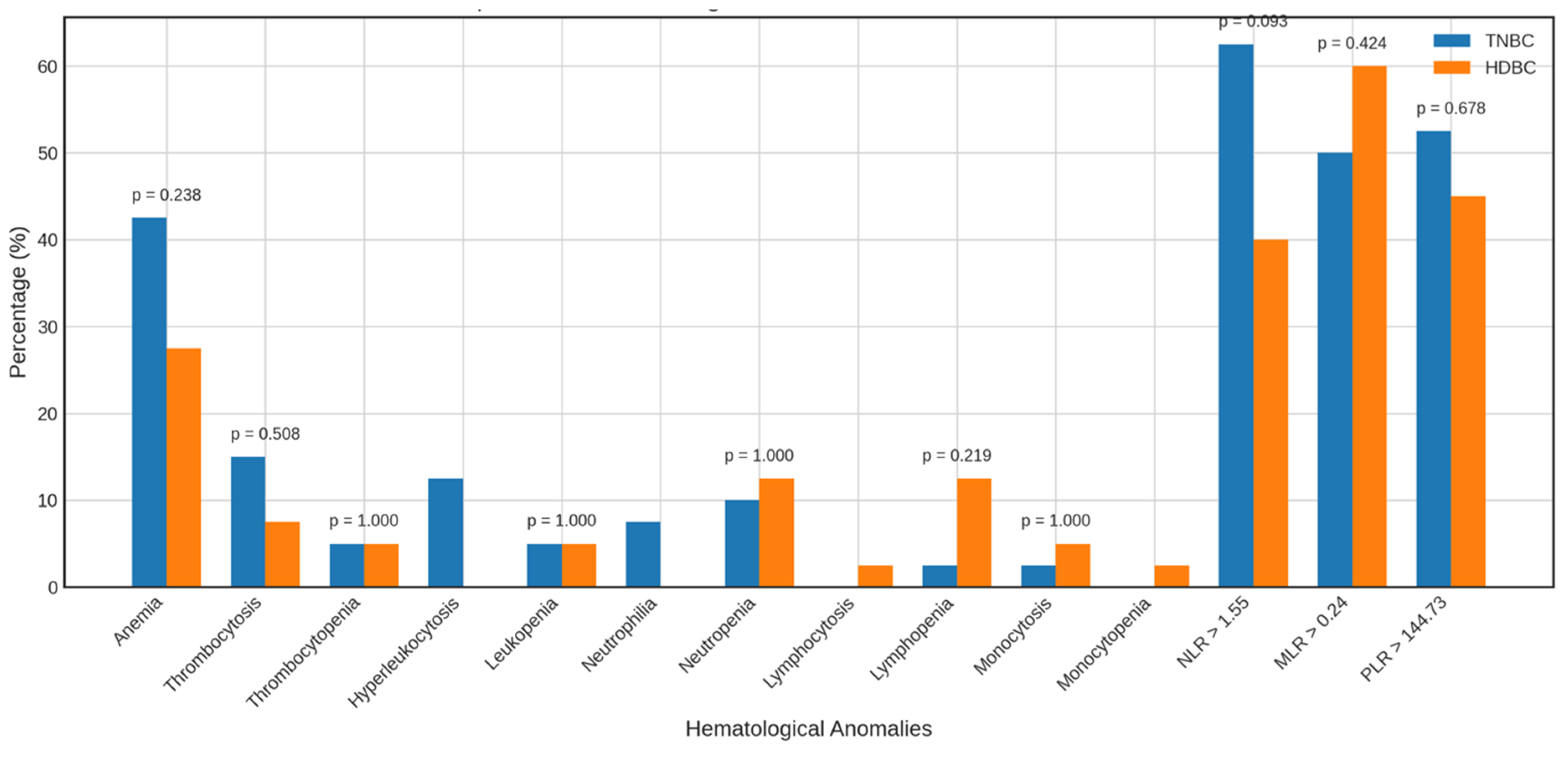
3.6. Frequency of Hematological Alterations and Elevated Inflammatory Markers
3.7. Multivariate Associations of Hematological and Inflammatory Markers in TNBC Versus HDBC and Healthy Controls
4. Discussion
5. Conclusions
Supplementary Materials
Author Contributions
Funding
Institutional Review Board Statement
Informed Consent Statement
Data Availability Statement
Acknowledgments
Conflicts of Interest
Abbreviations
| TNBC | Triple-Negative Breast Cancer |
| HDBC | Hormone-Dependent Breast Cancer |
| NLR | Neutrophil-to-Lymphocyte Ratio |
| MLR | Monocyte-to-Lymphocyte Ratio |
| PLR | Platelet-to-Lymphocyte Ratio |
| CRP | C-Reactive Protein |
| CBC | Complete Blood Count |
| IHC | Immunohistochemistry |
| ER | Estrogen Receptor |
| PR | Progesterone Receptor |
| HER2 | Human Epidermal Growth Factor Receptor 2 |
| Ki-67 | Proliferation Marker Ki-67 |
| ROC | Receiver Operating Characteristic |
| AUC | Area Under the Curve |
| OR | Odds Ratio |
| HTA | Hypertension |
| WBC | White Blood Cell |
| MCV | Mean Corpuscular Volume |
| MCH | Mean Corpuscular Hemoglobin |
| MCHC | Mean Corpuscular Hemoglobin Concentration |
| BI-RADS | Breast Imaging Reporting and Data System |
| TAM | Tumor-Associated Macrophage |
| ISH | In Situ Hybridization |
| ASCO/CAP | American Society of Clinical Oncology/College of American Pathologists |
References
- Vista do Impacto do Fenótipo Triplo-Negativo no Prognóstico de Pacientes com Câncer de Mama de uma Unidade de Referência no Brasil Central. Available online: https://revistamastology.emnuvens.com.br/rbm/article/view/57/45 (accessed on 11 November 2025).
- Wahba, H.A.; El-Hadaad, H.A. Current approaches in treatment of triple-negative breast cancer. Cancer Biol. Med. 2015, 12, 106–116. [Google Scholar] [CrossRef] [Scilit]
- Koh, C.H.; Bhoo-Pathy, N.; Ng, K.L.; Jabir, R.S.; Tan, G.H.; See, M.H.; Jamaris, S.; Taib, N.A. Utility of pre-treatment neutrophil-lymphocyte ratio and platelet-lymphocyte ratio as prognostic factors in breast cancer. Br. J. Cancer 2015, 113, 150–158. [Google Scholar] [CrossRef] [Scilit]
- Pistelli, M.; De Lisa, M.; Ballatore, Z.; Caramanti, M.; Pagliacci, A.; Battelli, N.; Ridolfi, F.; Santoni, M.; Maccaroni, E.; Bracci, R.; et al. Pre-treatment neutrophil to lymphocyte ratio may be a useful tool in predicting survival in early triple negative breast cancer patients. BMC Cancer 2015, 15, 195. [Google Scholar] [CrossRef] [Scilit]
- Huszno, J.; Kolosza, Z. Prognostic value of the neutrophil-lymphocyte, platelet-lymphocyte and monocyte-lymphocyte ratio in breast cancer patients. Oncol. Lett. 2019, 18, 6275–6283. [Google Scholar] [CrossRef] [Scilit]
- Bakker, N.A.M.; Garner, H.; van Dyk, E.; Champanhet, E.; Klaver, C.; Duijst, M.; Voorwerk, L.; Nederlof, I.; Voorthuis, R.; Liefaard, M.C.; et al. Triple-negative breast cancer modifies the systemic immune landscape and alters neutrophil functionality. npj Breast Cancer 2025, 11, 5. [Google Scholar] [CrossRef] [Scilit] [PubMed]
- Alizamir, A.; Azad, S.D.; Pirdehghan, A.; Moradi, A. Preoperative Neutrophil: Lymphocyte Ratio, Platelet: Lymphocyte Ratio, and C-Reactive Protein Levels Predictive Value in Determining the Severity of Breast Mass. Iran. J. Pathol. 2022, 17, 413–418. [Google Scholar] [CrossRef] [Scilit]
- Corbeau, I.; Jacot, W.; Guiu, S. Neutrophil to Lymphocyte Ratio as Prognostic and Predictive Factor in Breast Cancer Patients: A Systematic Review. Cancers 2020, 12, 958. [Google Scholar] [CrossRef] [Scilit]
- Oshi, M.; Newman, S.; Tokumaru, Y.; Yan, L.; Matsuyama, R.; Endo, I.; Takabe, K. Inflammation Is Associated with Worse Outcome in the Whole Cohort but with Better Outcome in Triple-Negative Subtype of Breast Cancer Patients. J. Immunol. Res. 2020, 2020, 5618786. [Google Scholar] [CrossRef] [Scilit]
- Liu, C.; Huang, Z.; Wang, Q.S.; Sun, B.; Ding, L.J.; Meng, X.Y.; Wu, S. Usefulness of neutrophil-to-lymphocyte ratio and platelet-to-lymphocyte ratio in hormone-receptor-negative breast cancer. Onco Targets Ther. 2016, 9, 4653–4660. [Google Scholar] [CrossRef] [Scilit] [PubMed]
- Boaro, C.M.; Diefenthäeler, L.M.; Costa GKda Tiscoski, K.A.; Alves, R.J.V.; Berto, M.D.; Bica, C.G. Hematological ratios as prognostic indicators in patients with triple-negative breast cancer in southern Brazil. Mastology 2022, 32, e20210059. [Google Scholar] [CrossRef] [Scilit]
- Jia, W.; Wu, J.; Jia, H.; Yang, Y.; Zhang, X.; Chen, K.; Su, F. The Peripheral Blood Neutrophil-To-Lymphocyte Ratio Is Superior to the Lymphocyte-To-Monocyte Ratio for Predicting the Long-Term Survival of Triple-Negative Breast Cancer Patients. PLoS ONE 2015, 10, e0143061. [Google Scholar] [CrossRef] [Scilit]
- Azab, B.; Amundson, J.R.; Cioci, A.; Stuart, H.; Yakoub, D.; Avisar, E.; Moffat, F.; Livingstone, A.S.; Franceschi, D. The Usefulness of the Pretreatment Neutrophil/Lymphocyte Ratio as a Predictor of the 5-Year Survival in Stage 1-3 Triple Negative Breast Cancer Patients. Breast Care 2021, 16, 43–49. [Google Scholar] [CrossRef] [Scilit] [PubMed]
- Guo, W.; Lu, X.; Liu, Q.; Zhang, T.; Li, P.; Qiao, W.; Deng, M. Prognostic value of neutrophil-to-lymphocyte ratio and platelet-to-lymphocyte ratio for breast cancer patients: An updated meta-analysis of 17079 individuals. Cancer Med. 2019, 8, 4135–4148. [Google Scholar] [CrossRef] [Scilit]
- Wang, C.; Shi, Q.; Zhang, G.; Wu, X.; Yan, W.; Wan, A.; Xiong, S.; Yuan, L.; Tian, H.; Ma, D.; et al. Two Hematological Markers Predicting the Efficacy and Prognosis of Neoadjuvant Chemotherapy Using Lobaplatin Against Triple-Negative Breast Cancer. Oncologist 2024, 29, e635–e642. [Google Scholar] [CrossRef] [Scilit] [PubMed]
- Chae, S.; Kang, K.M.; Kim, H.J.; Kang, E.; Park, S.Y.; Kim, J.H.; Kim, S.H.; Kim, S.W.; Kim, E.K. Neutrophil-lymphocyte ratio predicts response to chemotherapy in triple-negative breast cancer. Curr. Oncol. 2018, 25, 113–119. [Google Scholar] [CrossRef] [Scilit] [PubMed]
- Pathology Outlines—Hormone Receptors. Available online: https://www.pathologyoutlines.com/topic/breastmalignanthormonereceptors.html (accessed on 18 November 2025).
- Gaye, P.M.; Diouf, M.; Ba, M.B.; Diouf, D.; Sarr, F.N.; Mané, M.; Sarr, M.; Dieng, M.M.; Ka, S.; Dem, A. Epidemiological, Diagnosis, Therapeutic and Evolving Profile of Triple Negative Breast Cancer in Senegal. Adv. Breast Cancer Res. 2021, 10, 100–109. [Google Scholar] [CrossRef]
- Ndiaye, M.; Dieng, S.; Thiam, J.; Diallo, A.C.; Diouf, D.; Ka, S.; Dem, A. Evaluation des facteurs pronostiques dans le cancer du sein chez la femme au Sénégal: à propos de 288 cas. Afr. J. Oncol. 2021, 1, 4–9. [Google Scholar] [CrossRef] [Scilit]
- Jiagge, E.; Jibril, A.S.; Davis, M.; Murga-Zamalloa, C.; Kleer, C.G.; Gyan, K.; Divine, G.; Hoenerhoff, M.; Bensenhave, J.; Awuah, B.; et al. Androgen Receptor and ALDH1 Expression Among Internationally Diverse Patient Populations. J. Glob. Oncol. 2018, 4, 1–8. [Google Scholar] [CrossRef] [Scilit]
- Prakash, O.; Hossain, F.; Danos, D.; Lassak, A.; Scribner, R.; Miele, L. Racial Disparities in Triple Negative Breast Cancer: A Review of the Role of Biologic and Non-biologic Factors. Front. Public Health 2020, 8, 576964. [Google Scholar] [CrossRef] [Scilit]
- Martini, R.; Delpe, P.; Chu, T.R.; Arora, K.; Lord, B.; Verma, A.; Bedi, D.; Karanam, B.; Elhussin, I.; Chen, Y.; et al. African Ancestry-Associated Gene Expression Profiles in Triple-Negative Breast Cancer Underlie Altered Tumor Biology and Clinical Outcome in Women of African Descent. Cancer Discov. 2022, 12, 2530–2551. [Google Scholar] [CrossRef] [Scilit]
- Nwagu, G.C.; Bhattarai, S.; Swahn, M.; Ahmed, S.; Aneja, R. Prevalence and Mortality of Triple-Negative Breast Cancer in West Africa: Biologic and Sociocultural Factors. JCO Glob. Oncol. 2021, 7, 1129–1140. [Google Scholar] [CrossRef] [Scilit]
- Zheng, C.; Xu, X.; Wu, M.; Xue, L.; Zhu, J.; Xia, H.; Ding, S.; Fu, S.; Wang, X.; Wang, Y.; et al. Neutrophils in triple-negative breast cancer: An underestimated player with increasingly recognized importance. Breast Cancer Res. 2023, 25, 88. [Google Scholar] [CrossRef] [Scilit]
- Madhu, Y.; Jain, S.; Jain, P.; Kashyap, N.; Mangalhara, K.C.; Prakash Jain, B. Hematological and Biochemical Serum Markers in Breast Cancer: Diagnostic, Therapeutic, and Prognostic Significance. Explor. Res. Hypothesis Med. 2025, 10, e00022. [Google Scholar] [CrossRef] [Scilit]
- Allin, K.H.; Nordestgaard, B.G.; Flyger, H.; Bojesen, S.E. Elevated pre-treatment levels of plasma C-reactive protein are associated with poor prognosis after breast cancer: A cohort study. Breast Cancer Res. 2011, 13, R55. [Google Scholar] [CrossRef] [Scilit] [PubMed]
- Wei, B.; Yao, M.; Xing, C.; Wang, W.; Yao, J.; Hong, Y.; Liu, Y.; Fu, P. The neutrophil lymphocyte ratio is associated with breast cancer prognosis: An updated systematic review and meta-analysis. Onco Targets Ther. 2016, 9, 5567–5575. [Google Scholar] [CrossRef] [Scilit]
- Inoue, Y.; Fujishima, M.; Ono, M.; Masuda, J.; Ozaki, Y.; Maeda, T.; Uehiro, N.; Takahashi, Y.; Kobayashi, T.; Sakai, T.; et al. Clinical significance of the neutrophil-to-lymphocyte ratio in oligometastatic breast cancer. Breast Cancer Res. Treat. 2022, 196, 341. [Google Scholar] [CrossRef] [Scilit]
- Eo, W.K.; Jeong, D.W.; Chang, H.J.; Won, K.Y.; Choi, S.I.; Kim, S.H.; Chun, S.W.; Oh, Y.L.; Lee, T.H.; Kim, Y.O.; et al. Absolute monocyte and lymphocyte count prognostic score for patients with gastric cancer. World J. Gastroenterol. 2015, 21, 2668–2676. [Google Scholar] [CrossRef] [Scilit]
- Zhou, X.; Du, Y.; Huang, Z.; Xu, J.; Qiu, T.; Wang, J.; Wang, T.; Zhu, W.; Liu, P. Prognostic value of PLR in various cancers: A meta-analysis. PLoS ONE 2014, 9, e101119. [Google Scholar] [CrossRef] [Scilit]
- Krenn-Pilko, S.; Langsenlehner, U.; Thurner, E.M.; Stojakovic, T.; Pichler, M.; Gerger, A.; Kapp, K.S.; Langsenlehner, T. The elevated preoperative platelet-to-lymphocyte ratio predicts poor prognosis in breast cancer patients. Br. J. Cancer 2014, 110, 2524–2530. [Google Scholar] [CrossRef] [Scilit]
- Zhang, M.; Huang, X.Z.; Song, Y.X.; Gao, P.; Sun, J.X.; Wang, Z.N. High Platelet-to-Lymphocyte Ratio Predicts Poor Prognosis and Clinicopathological Characteristics in Patients with Breast Cancer: A Meta-Analysis. BioMed Res. Int. 2017, 2017, 1–11. [Google Scholar] [CrossRef] [Scilit] [PubMed]
- Hu, Y.; Wang, S.; Ding, N.; Li, N.; Huang, J.; Xiao, Z. Platelet/Lymphocyte Ratio Is Superior to Neutrophil/Lymphocyte Ratio as a Predictor of Chemotherapy Response and Disease-free Survival in Luminal B-like (HER2−) Breast Cancer. Clin. Breast Cancer 2020, 20, e403–e409. [Google Scholar] [CrossRef] [Scilit] [PubMed]
- Chen, F.; Chen, D.; Jin, L.; Xu, C.; Zhao, W.; Hu, W. Prognostic Significance of Neutrophil-to-Lymphocyte Ratio and C-Reactive Protein/Albumin Ratio in Luminal Breast Cancers With HER2-Negativity. Front. Oncol. 2022, 12, 845935. [Google Scholar] [CrossRef] [Scilit]
- Zhu, J.; Cheng, J.; Ma, Y.; Wang, Y.; Zou, Z.; Wang, W.; Shi, H.; Meng, Y. The value of inflammation-related indicators in chemotherapy efficacy and disease-free survival of triple-negative breast cancer. Eur. J. Med. Res. 2025, 30, 77. [Google Scholar] [CrossRef] [Scilit] [PubMed]
- von Au, A.; Shencoru, S.; Uhlmann, L.; Mayer, L.; Michel, L.; Wallwiener, M.; Hennigs, A.; Deutsch, T.; Riedel, F.; Heil, J.; et al. Predictive value of neutrophil-to-lymphocyte-ratio in neoadjuvant-treated patients with breast cancer. Arch. Gynecol. Obstet. 2023, 307, 1105–1113. [Google Scholar] [CrossRef] [Scilit]
- Shi, K.; Westhuyzen, J.; Gortman, A.; Shakespeare, T.P.; Aherne, N.J. Prognostic Value of the Neutrophil-Lymphocyte Ratio in Triple Negative Breast Cancer Patients. Ann. Clin. Lab. Sci. 2022, 52, 33–39. [Google Scholar] [PubMed]
- Bae, S.J.; Cha, Y.J.; Yoon, C.; Kim, D.; Lee, J.; Park, S.; Cha, C.; Kim, J.Y.; Ahn, S.G.; Park, H.S.; et al. Prognostic value of neutrophil-to-lymphocyte ratio in human epidermal growth factor receptor 2-negative breast cancer patients who received neoadjuvant chemotherapy. Sci. Rep. 2020, 10, 13078. [Google Scholar] [CrossRef] [Scilit]
- Yang, Z.; Zhang, Y.; Song, M.; Huang, X.; Lin, Y.; Yang, H. The interaction between systemic inflammatory markers and polygenic risk score in breast cancer risk: A cohort study in the UK Biobank. Cancer Epidemiol. 2023, 87, 102490. [Google Scholar] [CrossRef] [Scilit]
- Zhao, Z.; Xu, H.; Ma, B.; Dong, C. Prognostic value of platelet to lymphocyte ratio (PLR) in breast cancer patients receiving neoadjuvant therapy: A systematic review and meta-analysis. Front. Immunol. 2025, 16, 1658571. [Google Scholar] [CrossRef] [Scilit]
- Barry, N.O.K. Systemic Hematological and Inflammatory Profiles in Triple-Negative Breast Cancer in a Senegalese Cohort, Mendeley Data, V1. 2025. Available online: https://data.mendeley.com/datasets/ck5gfhvbgz/1 (accessed on 15 January 2026).



| Variable | TNBC (n = 40) | HDBC (n = 40) | Healthy Controls (n = 40) | p (TNBC vs. HDBC) | p (TNBC vs. Healthy Controls) |
|---|---|---|---|---|---|
| SOCIODEMOGRAPHIC CHARACTERISTICS | |||||
| Age (years) | |||||
| Mean ± SD: 46.03 ± 13.52 Median [IQR]: 45.5 [39–54.75] | Mean ± SD: 48.78 ± 12.93 Median [IQR]: 47.5 [40.25–56.75] | Mean ± SD: 49.65 ± 8.27 Median [IQR]: 48.0 [44.25–55.75] | - | - | |
| ANTHROPOMETRIC CHARACTERISTICS | |||||
| BMI (kg/m2) | |||||
| Mean ± SD: 24.00 ± 6.31 Median [IQR]: 23.6 [19.48–26.71] | Mean ± SD: 24.46 ± 5.31 Median [IQR]: 23.56 [21.21–26.69] | Mean ± SD: 27.82 ± 8.25 Median [IQR]: 27.09 [24.08–29.41] | 0.568 | 0.003 * | |
| BMI Categories | Underweight: 8 (20.0%) Normal: 19 (47.5%) Overweight: 9 (22.5%) Obese: 4 (10.0%) | Underweight: 3 (7.5%) Normal: 25 (62.5%) Overweight: 6 (15.0%) Obese: 6 (15.0%) | Underweight: 1 (2.5%) Normal: 12 (30.0%) Overweight: 21 (52.5%) Obese: 6 (15.0%) | 0.150 | 0.047 * |
| GYNECO-OBSTETRIC CHARACTERISTICS | |||||
| Age at Menarche (years) | |||||
| Mean ± SD: 14.15 ± 1.88 Median [IQR]: 14.0 [13–15] | Mean ± SD: 14.45 ± 1.78 Median [IQR]: 14.0 [14–15] | Mean ± SD: 14.15 ± 1.85 Median [IQR]: 14.0 [13–15] | 0.277 | 0.828 | |
| Gravidity | |||||
| Mean ± SD: 5.13 ± 3.01 Median [IQR]: 5.0 [3–5] | Mean ± SD: 4.00 ± 2.93 Median [IQR]: 4.0 [1–5] | Mean ± SD: 4.30 ± 3.42 Median [IQR]: 4.0 [1–5] | 0.040 * | 0.227 | |
| Gravidity Categories | Multigravida: 35 (87.5%) Primigravida: 4 (10.0%) Nulligravida: 1 (2.5%) | Multigravida: 31 (77.5%) Primigravida: 4 (10.0%) Nulligravida: 5 (12.5%) | Multigravida: 31 (77.5%) Primigravida: 2 (5.0%) Nulligravida: 7 (17.5%) | 0.300 | 0.102 |
| Parity | |||||
| Mean ± SD: 4.18 ± 2.28 Median [IQR]: 4.0 [3–6.75] | Mean ± SD: 3.08 ± 2.73 Median [IQR]: 3.0 [2–5] | Mean ± SD: 3.10 ± 2.41 Median [IQR]: 3.0 [2–6] | 0.014 * | 0.026 * | |
| Parity Categories | Multiparity: 34 (85.0%) Primiparity: 3 (7.5%) Nulliparity: 3 (7.5%) | Multiparity: 27 (67.5%) Primiparity: 5 (12.5%) Nulliparity: 8 (20.0%) | Multiparity: 29 (72.5%) Primiparity: 3 (7.5%) Nulliparity: 8 (20.0%) | 0.141 | 0.362 |
| Contraceptive Use | |||||
| 15 (37.5%) | 13 (32.5%) | 23 (57.5%) | 0.791 | 0.057 | |
| Menopausal Status | |||||
| 19 (47.5%) | 22 (55.0%) | 26 (65.0%) | 0.453 | 0.118 | |
| Abortion History | |||||
| 21 (52.5%) | 25 (62.5%) | 20 (50.0%) | 0.523 | 1.000 | |
| LIFESTYLE FACTORS | |||||
| Sedentary Lifestyle | 33 (82.5%) | 37 (92.5%) | 38 (95.0%) | 0.289 | 0.180 |
| Smoking | 0 (0%) | 0 (0%) | 0 (0%) | - | - |
| Alcohol Consumption | 0 (0%) | 0 (0%) | 1 (2.5%) | - | - |
| FAMILY HISTORY OF CANCER | |||||
| Family History of Cancer | 12 (30.0%) | 9 (22.5%) | 15 (37.5%) | 0.607 | 0.664 |
| COMORBIDITIES | |||||
| Diabetes | 2 (5.0%) | 5 (12.5%) | 0 (0%) | 0.453 | - |
| Hypertension (HTA) | 10 (25.0%) | 8 (20.0%) | 0 (0%) | 0.804 | - |
| TUMOR CHARACTERISTICS | |||||
| T Stage | T4: 30 (75.0%) T3: 7 (17.5%) T2: 2 (5.0%) T1: 1 (2.5%) | T4: 24 (60.0%) T3: 8 (20.0%) T2: 7 (17.5%) T1: 1 (2.5%) | - | 0.311 | - |
| N Stage | N0: 2 (5.0%) N1: 25 (62.5%) N2: 9 (22.5%) N3: 4 (10.0%) | N0: 7 (17.5%) N1: 22 (55.0%) N2: 8 (20.0%) N3: 3 (7.5%) | - | 0.597 | - |
| Clinical Stage | III: 25 (62.5%) IV: 13 (32.5%) II: 2 (5.0%) | III: 21 (52.5%) IV: 12 (30.0%) II: 6 (15.0%) I: 1 (2.5%) | - | 0.975 | - |
| SBR Grade | III: 18 (45.0%) II: 21 (52.5%) I: 1 (2.5%) | III: 9 (22.5%) II: 25 (62.5%) I: 6 (15.0%) | - | 0.112 | - |
| Ki67 Expression | ≥10%: 35 (87.5%) <10%: 5 (12.5%) | ≥10%: 40 (100%) | - | - | - |
| Hematological Parameters | TNBC Median (IQR) | HDBC Median (IQR) | Healthy Controls Median (IQR) | p |
|---|---|---|---|---|
| Red blood cells (×106/µL) | 4.47 (3.96–4.84) | 4.65 (4.25–4.83) | 4.49 (4.13–4.76) | 0.397 |
| Hemoglobin (g/dL) | 12.20 (11.20–13.27) | 13.02 (11.67–13.77) | 12.75 (11.90–13.20) | 0.339 |
| Hematocrit (%) | 38.00 (35.85–39.22) | 39.80 (35.12–41.67) | 38.95 (37.15–40.50) | 0.738 |
| MCV (fL) | 83.80 (79.00–89.00) | 85.09 (81.27–88.27) | 87.70 (83.50–90.92) | 0.025 |
| MCH (pg) | 27.15 (24.65–28.57) | 27.97 (26.87–29.00) | 28.45 (27.70–29.47) | 0.046 |
| MCHC (g/dL) | 32.00 (31.10–33.00) | 32.82 (31.90–33.77) | 32.35 (31.60–32.85) | 0.286 |
| Platelets (×103/µL) | 299.50 (268.00–376.00) | 272.00 (240.50–315.00) | 298.50 (267.00–351.75) | 0.098 |
| White blood cells (×103/µL) | 5.34 (4.14–6.09) | 5.49 (4.65–6.69) | 4.54 (4.11–5.55) | 0.018 |
| Neutrophils (×103/µL) | 3.52 (2.91–3.98) | 2.85 (2.34–3.60) | 1.88 (1.60–2.50) | <0.001 |
| Neutrophils (%) | 56.90 (53.72–60.52) | 50.70 (45.62–62.22) | 43.05 (37.15–51.10) | <0.001 |
| Eosinophils (×103/µL) | 0.11 (0.04–0.14) | 0.11 (0.03–0.16) | 0.14 (0.07–0.20) | 0.789 |
| Eosinophils (%) | 2.00 (0.90–2.80) | 1.60 (0.90–3.10) | 3.00 (1.50–3.70) | 0.019 |
| Basophils (×103/µL) | 0.02 (0.02–0.04) | 0.04 (0.03–0.06) | 0.03 (0.02–0.05) | 0.019 |
| Basophils (%) | 0.50 (0.40–0.60) | 0.70 (0.40–1.10) | 0.70 (0.50–0.90) | 0.017 |
| Lymphocytes (×103/µL) | 1.77 (1.45–2.57) | 1.82 (1.51–2.19) | 2.09 (1.68–2.69) | 0.301 |
| Lymphocytes (%) | 32.50 (25.90–34.10) | 34.75 (26.07–38.80) | 45.25 (37.40–50.87) | <0.001 * |
| Monocytes (×103/µL) | 0.42 (0.36–0.67) | 0.48 (0.39–0.64) | 0.35 (0.31–0.51) | 0.017 |
| Monocytes (%) | 7.95 (6.50–9.20) | 8.45 (7.02–11.30) | 7.70 (6.70–9.15) | 0.373 |
| Cut-Off | Se | Sp | AUC | 95% CI | p | |
|---|---|---|---|---|---|---|
| TNBC vs. HDBC | ||||||
| NLR | 1.55 | 65% | 60% | 0.572 | 0.444–0.700 | 0.268 |
| MLR | 0.24 | 50% | 42.5% | 0.444 | 0.317–0.572 | 0.392 |
| PLR | 144.73 | 52.5% | 55% | 0.518 | 0.390–0.646 | 0.780 |
| TNBC vs. Healthy controls | ||||||
| NLR | 1.12 | 90% | 65% | 0.847 | 0.762–0.933 | 0.000 * |
| MLR | 0.20 | 62.5% | 67.5% | 0.684 | 0.566–0.801 | 0.005 * |
| PLR | 136.50 | 65% | 45% | 0.563 | 0.436–0.691 | 0.331 |
| Group | Parameter | Adjusted OR | 95% CI | p |
|---|---|---|---|---|
| TNBC vs. HDBC | ||||
| Neutrophils (×103/µL) | 1.61 | [1.04–2.50] | 0.034 | |
| Inflammation * | 5.00 | [1.45–17.27] | 0.011 | |
| MCH | 0.62 | [0.40–0.97] | 0.036 | |
| Basophils (%) | 0.30 | [0.09–0.92] | 0.035 | |
| MLR > 0.24 | 0.21 | [0.047–0.91] | 0.038 | |
| NLR > 1.55 | 5.08 | [1.41–18.28] | 0.013 | |
| TNBC vs. Healthy controls | ||||
| Neutrophils (×103/µL) | 12.21 | [2.00–74.48] | 0.007 | |
| MCH | 0.74 | [0.58–0.95] | 0.015 | |
| Lymphocytes (%) | 0.85 | [0.78–0.93] | 0.001 | |
| White Blood Cells | 0.19 | [0.05–0.77] | 0.020 | |
| Neutropenia | 0.14 | [0.04–0.48] | 0.002 | |
| Inflammation | 4.92 | [1.46–16.59] | 0.010 | |
| NLR | 26.43 | [3.33–209.66] | 0.002 | |
| NLR > 1.12 | 11.5 | [2.71–48.77] | 0.001 | |
| PLR | 0.98 | [0.95–1.00] | 0.053 | |
| CRP | 1.02 | [1.002–1.04] | 0.026 |
Disclaimer/Publisher’s Note: The statements, opinions and data contained in all publications are solely those of the individual author(s) and contributor(s) and not of MDPI and/or the editor(s). MDPI and/or the editor(s) disclaim responsibility for any injury to people or property resulting from any ideas, methods, instructions or products referred to in the content. |
© 2026 by the authors. Licensee MDPI, Basel, Switzerland. This article is an open access article distributed under the terms and conditions of the Creative Commons Attribution (CC BY) license.
Share and Cite
Barry, N.O.K.; Sow, M.; Kandji, P.M.; Ngom, N.K.; Djité, M.; Sy, M.; Baldé, S.; Kengne, U.I.M.; Fall, A.; Ndiaye, S.; et al. Systemic Inflammatory and Hematological Profiles in Triple-Negative Breast Cancer: A Study from a Senegalese Cohort. Diagnostics 2026, 16, 494. https://doi.org/10.3390/diagnostics16030494
Barry NOK, Sow M, Kandji PM, Ngom NK, Djité M, Sy M, Baldé S, Kengne UIM, Fall A, Ndiaye S, et al. Systemic Inflammatory and Hematological Profiles in Triple-Negative Breast Cancer: A Study from a Senegalese Cohort. Diagnostics. 2026; 16(3):494. https://doi.org/10.3390/diagnostics16030494
Chicago/Turabian StyleBarry, Nènè Oumou Kesso, Mamadou Sow, Pape Matar Kandji, Ndeye Khady Ngom, Moustapha Djité, Mouhamad Sy, Salif Baldé, Ulrich Igor Mbessoh Kengne, Amacoumba Fall, Siny Ndiaye, and et al. 2026. "Systemic Inflammatory and Hematological Profiles in Triple-Negative Breast Cancer: A Study from a Senegalese Cohort" Diagnostics 16, no. 3: 494. https://doi.org/10.3390/diagnostics16030494
APA StyleBarry, N. O. K., Sow, M., Kandji, P. M., Ngom, N. K., Djité, M., Sy, M., Baldé, S., Kengne, U. I. M., Fall, A., Ndiaye, S., Thioune, N. M., Thiam, J., Sow, A. A., Kiema, F., Gassama, C. T., Kitungwga, S. C., Mbacke, Y., Guetti, M., Lusasi, M. M., ... Gueye, P. M. (2026). Systemic Inflammatory and Hematological Profiles in Triple-Negative Breast Cancer: A Study from a Senegalese Cohort. Diagnostics, 16(3), 494. https://doi.org/10.3390/diagnostics16030494