


Diagnostic Limitations, Patient Characteristics, and Confounding Factors Impacting Neurotologic Lesion Imaging: A Systematic Review

 ,
,  , , , ,
  ,
, 
Abstract
1. Introduction
2. Materials and Methods
2.1. Search Strategy
2.2. Inclusion and Exclusion Criteria
3. Results
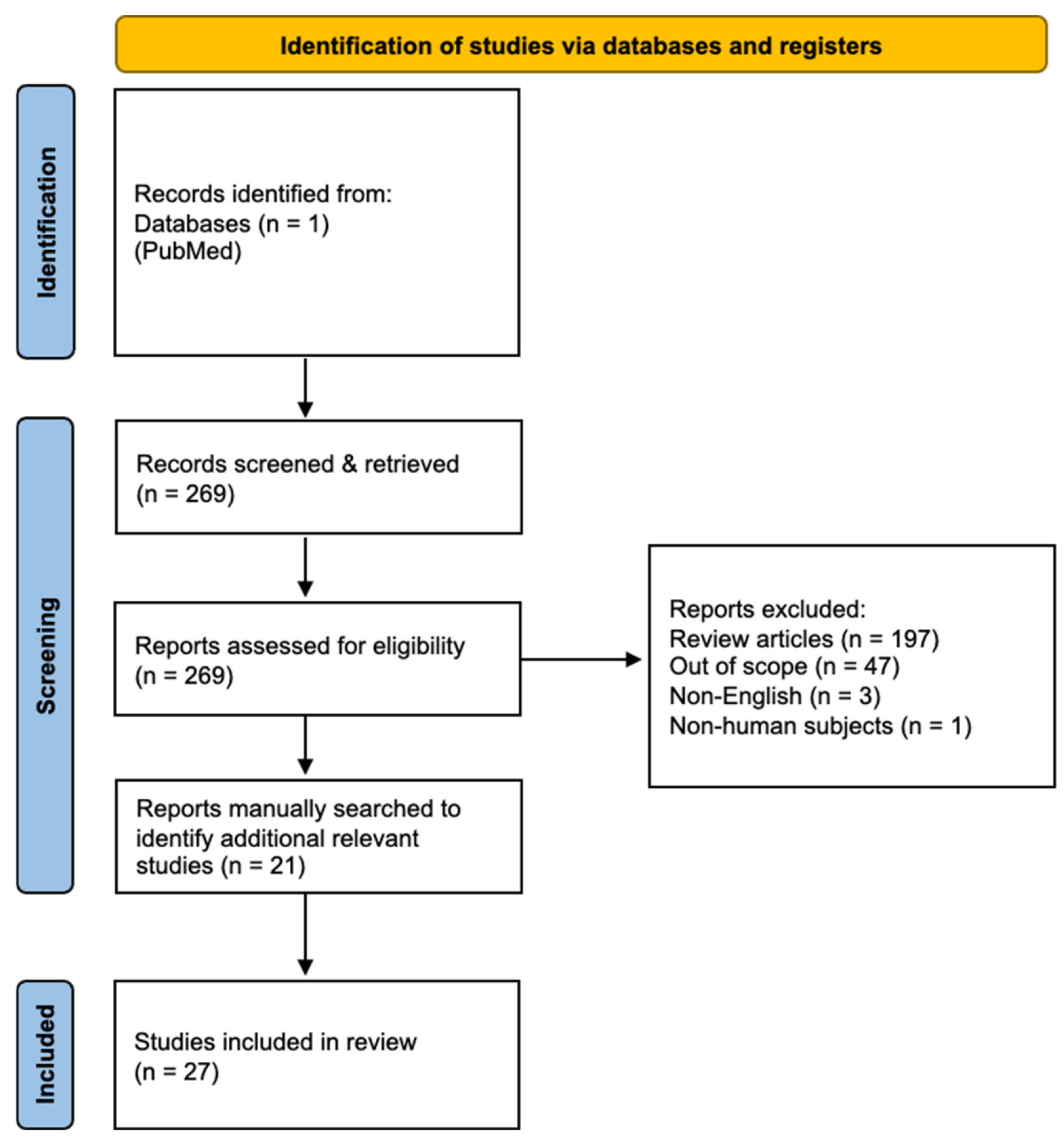
3.1. Study Screening and Selection

| Article Reference | First Author (Year) | Country | Study Design | Population (n) | Inclusion Criteria | Exclusion Criteria | Intervention/Exposure | Comparator | Primary Outcome(s) | Key Results |
|---|---|---|---|---|---|---|---|---|---|---|
| [15] | Yigiter et al. (2015) | Turkey | Prospective cohort study | 54 | Patients with suspected middle ear cholesteatoma on clinical examination | EP-DWI | High resolution computed tomography (HRCT) | Diagnostic values | EP-DWI is a reliable technique for the imaging of cholesteatoma | |
| [16] | Pietraszek et al. (2025) | Poland | Retrospective cohort study | 156 | Patients who were diagnosed with cholesteatoma and underwent surgical treatment | DWI non-EPI | Intraoperative findings | Concordance of clinical and radiological findings | MRI DWI non-EPI is an effective imaging technique for detection of cholesteatoma recurrence | |
| [10] | Piekarek et al. (2022) | Poland | Retrospective cohort study | 32 | Patients with suspected cholesteatoma who underwent MRI of the temporal bone | DWI non-EPI | EPI-DWI | Sensitivity, specificity, and intraobserver agreement | Non-EPI DWI is a reliable technique for the detection of cholesteatoma | |
| [11] | Benson et al. (2021) | USA | Retrospective cohort study | 23 | Patients who had preoperative MRI including Half-Fourier Acquisition Single-shot Turbo Spin Echo (HASTE) and RESOLVE sequences for evaluation of cholesteatoma and subsequent operation in which diagnosis was confirmed | Images degraded by artifacts | HASTE imaging protocol | RESOLVE imaging protocol | Detection of primary and recidivistic cholesteatoma | HASTE outperformed RESOLVE in detection of cholesteatoma |
| [17] | Locketz et al. (2016) | USA | Case series | 12 | Adults with preoperative temporal bone CT and PROPELLER DW-MRI scans who underwent cholesteatoma surgery | PROPELLER DW-MRI | CT, DW-MRI | Diagnostic and localization accuracy | CT and PROPELLER DW-MRI fusion can improve identification and localization of disease | |
| [18] | Pizzini et al. (2020) | Italy | Retrospective cohort study | 66 | Patients with a histological diagnosis of vestibular schwannoma and MRI studies with both sequences (enhanced T1-WI and HRT2-WI) | HRT2-WI | Gd T1-WI | Diagnostic accuracy in measuring the size of vestibular schwannoma | Gadolinium can be safely omitted only in surveillance studies of vestibular schwannoma. | |
| [19] | Coelho et al. (2018) | United States | Retrospective cohort study | 50 | Patients with previous diagnosis of vestibular schwannoma, available T1-weighted contrast-enhanced MRI studies and HRT2-weighted imaging, post-diagnostic imaging follow-up, and treated in the VCU health system between January 1998 and May 2011. | Neurofibromatosis type 2. History of previous surgery or radiotherapy. MRI studies without availability of both sequences (T1C and HRT2). | High-resolution T2-weighted (HRT2) MRI | Contrast-enhanced T1-weighted (T1C) MRI | Consistency and accuracy in measuring vestibular schwannoma size. Determining whether both techniques are clinically equivalent for surveillance. | High-resolution T2-weighted MRI without contrast is a reliable and less cost-effective alternative for monitoring patients with known vestibular schwannoma. Routine use of gadolinium is not required in follow-up studies. |
| [20] | Tolisano et al. (2019) | United States | Case series | 23 | Patients with diagnosis of vestibular schwannoma under surveillance or treated with radiotherapy. At least two MRI studies with simultaneous acquisition of T1 with contrast (T1C) and high-resolution T2 (HRT2). | Neurofibromatosis type 2. MRI studies without availability of both sequences (T1C and HRT2). | High-resolution T2-weighted (HRT2) MRI | Contrast-enhanced T1-weighted (T1C) MRI | Correlation between linear and volumetric measurements of vestibular schwannoma in T1C vs. HRT2. Consistency in the interpretation of tumor growth between sequences and between observers. | Although T1C and HRT2 show high consistency and reproducibility, volumetric measurements on contrast-enhanced T1-weighted images may be more reliable for assessing vestibular schwannoma growth. Linear measurements are highly reproducible in both sequences. |
| [21] | Forgues et al. (2018) | United States | Retrospective cohort study | 26 | Adult patients with diagnosis of vestibular acoustic neuroma/schwannoma and at least three MRI studies of the internal auditory canal. Studies obtained between 1 January 2008 and 11 October 2016. | Bilateral vestibular schwannomas. Other intracranial tumors. Neurofibromatosis type 2. Post-surgical studies in surgical patients. Patients with <3 eligible MRI studies. | High-resolution T2-weighted (HRT2) MRI | T1-weighted post-contrast MRI | Accuracy of non-contrast T2 MRI for tumor size measurement and identification of acoustic neuroma growth. | Non-contrast T2-weighted MRI is reasonably accurate for measuring size and detecting growth of vestibular schwannomas. Gadolinium is not essential for all follow-up examinations, but it remains useful in selected cases. |
| [22] | de Bresser et al. (2024) | The Netherlands | Single-center pilot study | 25 | Patients evaluated between 2016 and 2023 with clinical or genetic suspicion of head and neck paragangliomas carrying HNPGL-associated genetic variants with a head and neck MRI and [68Ga]Ga-DOTATOC PET/CT performed within an interval of ≤12 months. | [68Ga]Ga-DOTATOC PET/CT | Head and neck MRI | Location of head and neck paragangliomas | The authors recommend changing the gold standard for baseline MRI/CT imaging to [68Ga]Ga-DOTATOC PET/CT (when available). MRI/CT would then be used as a follow-up tool, not for initial staging, especially in carriers of genetic variants. | |
| [23] | Ueda et al. (2025) | Japan | Case report | 3 | Patients with suspected or confirmed jugulotympanic paragangliomas who underwent CT, MRI, and 68Ga-DOTATOC PET imaging for diagnostic evaluation and treatment planning. | Patients not undergoing multimodal imaging, those with non-paraganglioma temporal bone lesions, or cases lacking sufficient clinical or imaging data for diagnostic assessment | CT/MRI + 68Ga-DOTATOC PET | CT/MRI without PET | Impact of 68Ga-DOTATOC PET on diagnostic confirmation and treatment decision-making in patients with jugulotympanic paragangliomas when added to CT and MRI | 68Ga-DOTATOC PET serves as a valuable adjunct diagnostic imaging to CT and MRI for evaluating jugulotympanic paragangliomas, confirming diagnosis, and guide treatment planning |
| [24] | Maurice et al. (2012) | Germany | Retrospective cohort study | 15 | Patients with known phaeochromocytoma or paraganglioma (PCC/PGL) who underwent both 68Ga-DOTATATE PET/CT and 123I-MIBG SPECT imaging within 6 months without interval treatment changes | Patients without paired imaging | 68Ga-DOTATATE PET/CT used for detection and follow-up of PCC/PGL lesions | 123I-MIBG SPECT scintigraphy (with CT/MRI as supportive anatomical imaging) | Lesion detection sensitivity of 68Ga-DOTATATE PET/CT vs. 123I-MIBG SPECT on both a per-patient and per-lesion basis | 68Ga-DOTATATE PET/CT detected more lesions than 123I-MIBG across all anatomical sites, especially bone and head/neck lesions, and omission of DOTATATE would have adversely affected management supporting its preferential use in high-risk or metastatic PCC/PGL |
| [25] | Kim et al. (2023) | Brazil | Systematic review/Meta-analysis | 37 | Studies with more than 10 patients diagnosed with necrotizing otitis externa that reported diagnostic sensitivity data for radiologic imaging modalities | Case reports, review articles, non-English studies, and studies lacking diagnostic imaging accuracy data | CT, MRI, technetium-99m, and gallium-67 | Other imaging modalities or diagnostic criteria within the same patient population | Diagnostic sensitivity of each imaging modality for detecting necrotizing otitis externa | Technetium scans, gallium scans, and MRI are sensitive for diagnosing NOE, and CT works better when both bone and soft-tissue changes are considered, but imaging alone is not specific and clear diagnostic criteria are still needed |
| [26] | Haleem et al. (2025) | USA | Retrospective cohort study | 33 | Adults admitted with suspected necrotizing otitis media defined by persistent otalgia/otorrhoea plus ≥2 risk factors | Patients with insufficient clinical suspicion or an alternative diagnosis | Initial CT followed by technetium bone scintigraphy or MRI when CT was negative | CT-based evaluation without nuclear medicine imaging | The effectiveness of the departmental NOE diagnostic and treatment algorithm and assess adherence to established protocols | The study concluded that a standardized necrotizing otitis media management algorithm, using technetium bone scans when CT is inconclusive alongside clinical assessment, improves diagnostic accuracy and treatment success |
| [27] | Daqqaq et al. (2021) | Saudi Arabia | Retrospective cohort study | 51 | Patients with bilateral profound sensory neural hearing loss (SNHL) | Not specified | MDCT and MRI | Preoperative evaluation of cochlear implant candidates | Comparison of imaging findings with patient health history and other data | MDCT was superior in the demonstration of middle ear disease while MRI was more useful in the delineation of the cochlear nerve and cochlear patency |
| [28] | Bassiouni et al. (2023) | Germany | Retrospective chart review | 40 | Patients undergoing high-resolution CT of the temporal bone for suspected otosclerosis | Not specified | HRCT | HRCT images reviewed retrospectively by an experienced neuroradiologist who was blinded to the initial report. | Initial radiological diagnosis vs. re-evaluation | A substantial proportion of otosclerosis cases were missed on initial CT interpretation, highlighting diagnostic pitfalls and reporting limitations. |
| [29] | Berrettini et al. (2010) | Italy | Diagnostic Accuracy Study | 45 | Patients with clinical suspicion of otosclerosis | Not specified | SPECT and CT imaging | SPECT vs. CT | Diagnostic performance of imaging modalities in otosclerosis | Combined SPECT and CT improved detection and assessment of otosclerotic foci compared with CT alone. |
| [30] | Vagal et al. (2017) | USA | Retrospective cohort study | Not specified | Patients presenting with acute stroke | Not specified | Use of neuroimaging (CT, MRI) | Age, sex, and racial subgroups | Differences in neuroimaging utilization | Significant disparities in neuroimaging use were observed by age, sex, and race in acute stroke care. |
| [31] | Wang et al. (2024) | USA | Retrospective cohort study | Not specified | Patients presenting with acute stroke | Not specified | Acute stroke imaging utilization | Gender (male vs. female) | Imaging use, treatment rates, and clinical outcomes | Gender-based disparities in imaging utilization were identified, with downstream effects on treatment and outcomes. |
| [32] | Wang et al. (2022) | USA | Retrospective cohort study | 85,547 stroke episodes | Patients presenting with ischemic stroke | Patients with TIA or intracranial hemorrhage | Use of neuroimaging | Race, sex, age, income, stroke severity | Trends in neuroimaging use, image to treatment associations, mortality outcomes | CTA/CTP use increased, MRI slight rise, MRA declined. Black, female older patients from rural areas received less advanced imaging. CTA/CTP use correlated with higher IVT/EVT rates. CTA, MRI and MRA associated with lower mortality. |
| [33] | Khalid et al. (2022) | Pakistan | Cross-sectional study | 148 | Patients presenting with schwannoma | Not specified | Surgical management of schwannoma | Socioeconomic class subgroups, Hospital type and volume, Age groups, Extent of surgery | Surgical incidence and prevalence of schwannoma, demographic distribution, treatment characteristics | Schwannomas consisted of a small percentage of national brain tumor cases. Short term mortality was higher compared to higher income country benchmarks, follow up completion was limited. |
| [34] | Brinjikji et al. (2014) | USA | Retrospective cohort study | 210,212 | Hospital admission with primary ICD-9 codes for acute ischemic stroke (433.x1, 434.x1), Admission classified as urgent/emergent, Imaging and billing data available during index hospitalization | Transfer patients (to avoid missing outside imaging), Non-primary stroke diagnoses and non-urgent/elective admissions | Insurance status (uninsured, Medicaid, Medicare, private insurance) | Private-insurance patients vs. all other insurance categories | Utilization of imaging during hospitalization like Head CT, perfusion CT, Head MRI, Noninvasive head/neck angiography (CTA/MRA), Carotid Ultrasound, Echocardiography | Significant disparities persisted after adjustment for age, sex, race, and hospital factors. Compared with privately insured patients, odds of receiving advanced imaging were lower: Uninsured: head MRI OR 0.77; head angiography OR 0.78; neck angiography OR 0.79; Medicaid: head MRI OR 0.64; head angiography OR 0.67; neck angiography OR 0.67; Medicare: head MRI OR 0.41; head angiography OR 0.76; neck angiography OR 0.82. Echocardiography and carotid ultrasound were also less frequently used in Medicaid/Medicare groups. No major disparities were seen for perfusion CT (likely triage-driven). The authors concluded that insurance-based disparities in stroke imaging may influence treatment opportunities and outcomes, and call for system-level investigation. |
| [35] | Wang et al. (2022) | USA | Retrospective cohort study | 24,487 | Laboratory-confirmed COVID-19 infection and hospital admission with available clinical and imaging variables needed for model evaluation | Missing key outcome variables, Incomplete predictor data required for model testing, Pediatric patients | Deep-learning mortality prediction models using clinical and imaging features | Performance of the same models when transported across independent U.S. health systems (external validation) vs. original development performance | In hospital mortality and model performance metrics (AUC, calibration, sensitivity/specificity) across sites. | Models that performed well in original institutions lost accuracy and calibration when applied to new hospitals. Variability in demographics, comorbidities, treatment patterns, and imaging practices significantly reduced generalizability. Site-specific retraining or recalibration improved performance but did not fully eliminate bias. The authors warned against deploying “off-the-shelf” AI models in clinical care without rigorous local validation. |
| [36] | Zeitouni et al. (2024) | USA | Retrospective cohort study | 482 | Patients attending otolaryngology clinical visits | Not specified | Demographic and socioeconomic factors | Different demographic and socioeconomic groups | Rates of missing laboratory tests and imaging | Missing labs and imaging were associated with demographic and socioeconomic determinants, indicating inequities in access and follow-through. |
| [37] | Carlson et al. (2016) | USA | Retrospective cohort study | 9782 | Patients diagnosed with vestibular schwannoma in Surveillance, Epidemiology, and End Results (SEER) (2004–2012) | Bilateral VS, cases with neurofibromatosis, NOS | exposure is race/ethnic categories | Between race comparisons of vs. presentation, management, and survival | annual incidence of vestibular schwannoma across racial groups; tumor size at diagnosis; treatment modality distribution (observation, radiation, microsurgery); overall survival across race groups; adjusted odds of receiving surgery after controlling for tumor size, age, and treatment center. | white patients had the highest annual incidence rates, whereas black and Hispanic groups had the lowest. black, Hispanic, and Asian patients presented with larger tumors at initial diagnosis. after adjustment, Hispanic patients were more likely than white patients to undergo microsurgical treatment. overall survival did not differ significantly across all races collectively, but in the postoperative subgroup, black and Hispanic patients demonstrated worse survival compared with white patients. findings indicate meaningful racial differences in presentation, management selection, and outcomes. |
| [38] | Pandrangi et al. (2020) | USA | Retrospective cohort study | 14,507 | Patients with SEER recorded cases coded as vs. using ICD-O-3 histology code 9560/0 | Not specified | Patient demographic and tumor factors | demographic and tumor groups | Age-adjusted incidence, tumor size distribution, treatment modality patterns, demographic predictors of tumor size and treatment, overall survival | Incidence stable at 1.4/100k; highest in older adults; younger age and Asian/Pacific Islander race associated with larger tumors; older age predicted observation/radiation; younger age and larger tumors predicted surgery; Black and American Indian/Alaskan Native patients more likely to undergo observation and less likely to receive surgery; tumor size strongly correlated with operative management |
| [39] | Mullins et al. (2002) | USA | Retrospective cohort study | 733 | Patients admitted with suspected early stroke who had unenhanced CT or diffusion-weighted MRI at admission, and a definitive discharge diagnosis confirming stroke vs. no stroke. | Missing records; Diagnosis of transient ischemic attack; Imaging performed after intra-arterial thrombolysis; Lack of definitive discharge diagnosis | Availability vs. absence of clinical history indicating suspected early stroke when interpreting imaging. | Same imaging interpreted without explicit clinical suspicion of stroke. | Sensitivity, specificity, predictive values, and accuracy of unenhanced CT, diffusion-weighted MRI for detecting early stroke | Unenhanced CT: Sensitivity improved when clinical history indicated stroke (52% vs. 38%, p = 0.008) and Specificity remained high (96% vs. 89%) Diffusion-weighted MRI: Sensitivity remained high regardless of clinical history (95% vs. 94%) and Specificity similarly high (95–98%) |
| [40] | Oray et al. (2015) | Turkey | Retrospective cohort study | 50 | Patients who were submitted to DW-MRI for a suspected acute ischemic stroke | Not specified | Different physician observers | Emergency Physicians | Inter-observer agreement between reviewers | Diffused-weighted MRI is an effective tool for detecting ischemic stroke, across multiple physician interpreters |
| [41] | Treviño et al. (2021) | USA | Commentary | Not specified | Not specified | Not specified | N/Not specifiA | NNot specified/A | NNot specified/A | Information overload, fatigue and many other factors medical image perception. |
| [42] | Kim et al. (2014) | USA | Retrospective cohort study | 656 | Radiologic examinations with delayed diagnoses | Not specified | Radiologic examinations | Effected of errors on delayed diagnosis | Diagnostic errors | In one third of cases, delayed diagnoses were not recognized on subsequent radiologic examinations |
3.2. Diagnostic Limitations by Neurotologic Lesion
| Article Reference | First Author (Year) | Lesion Type | Imaging Modality | Reported Sensitivity (%) | Reported Specificity (%) | Major Limitation | Clinical Implications |
|---|---|---|---|---|---|---|---|
| [10,16] | Piekarek et al. (2022); Pietraszek et al. (2025) | Cholesteatoma | Non-EPI DWI | 87–100 | 83.3 | Requires clinical correlation and follow-up imaging | Preferred technique for detection of primary and recurrent cholesteatoma |
| [21] | Forgues et al. (2018) | Vestibular Schwannoma | HRT2-WI | 77.8 | 88.2 | Less structural detail than contrast-enhanced MRI | Useful for initial diagnosis; complementary to Gd T1C-MRI |
| [22] | de Bresser et al. (2024) | Paraganglioma | 68Ga PET/CT | 93 | 85 | Limited availability and higher cost | Preferred modality for lesion detection, exclusion of mimics, and assessment of multifocal or metastatic disease |
| [25] | Kim et al. (2023) | NOE | Tc-99; Ga-67 | 97 93.8 | NR NR | Limited anatomic resolution; Poor spatial resolution | Highly sensitive for early diagnosis and monitoring of disease progression |
| [29] | Berrettini et al. (2010) | Otosclerosis | SPECT | 95.2 | 96.7 | Limited anatomic detail | Superior differentiation of active otosclerotic bone; useful when HRCT findings are equivocal |
3.2.1. Cholesteatomas
3.2.2. Vestibular Schwannoma (Acoustic Neuroma)
3.2.3. Glomus Tumors (Paragangliomas)
3.2.4. Malignant (Necrotizing) Otitis Externa
3.2.5. Otosclerosis
3.3. Socioeconomic and Geographic Barriers
3.4. Interpretation Bias and Expertise Variability
4. Discussion
5. Conclusions
Supplementary Materials
Author Contributions
Funding
Institutional Review Board Statement
Informed Consent Statement
Data Availability Statement
Acknowledgments
Conflicts of Interest
Abbreviations
| CT | Computed Tomography |
| CTA | Computed Tomography Angiography |
| CTP | Computed Tomography Perfusion |
| DWI | Diffusion-Weighted Imaging |
| EP-DWI | Echo-Planar Diffusion-Weighted Imaging |
| FLAIR | Fluid-Attenuated Inversion Recovery |
| Gd T1C-MRI | Gadolinium-Enhanced T1-Weighted Magnetic Resonance Imaging |
| HRCT | High-Resolution Computed Tomography |
| HRT2-WI | High-Resolution T2-Weighted Imaging |
| MRI | Magnetic Resonance Imaging |
| MRA | Magnetic Resonance Angiography |
| NOE | Necrotizing Otitis Externa |
| Non-EPI DWI PET | Non-echoplanar diffusion-weighted imaging Positron Emission Tomography |
| PRISMA | Preferred Reporting Items for Systematic Reviews and Meta-Analyses |
| PROPELLER | Periodically Rotated Overlapping Parallel Lines with Enhanced Reconstruction |
| SPECT | Single Photon Emission Computed Tomography |
| US | United States |
| VS | Versus |
References
- Vangrinsven, G.; Bernaerts, A.; Deckers, F.; van Dinther, J.; Zarowski, A.; De Foer, B. Beyond the otoscope: An imaging review of congenital cholesteatoma. Insights Into Imaging 2024, 15, 194. [Google Scholar] [CrossRef] [Scilit] [PubMed]
- Musat, G.C.; Sarafoleanu, C.; Preda, M.A.; Tataru, C.P.; Mitroi, G.G.; Musat, A.A.M.; Radu, M.; Musat, O. Utility and challenges of imaging in peripheral vestibular disorder diagnosis: A narrative review. Diagnostics 2025, 15, 1272. [Google Scholar] [CrossRef] [Scilit]
- Krane, N.A.; McKinnon, B.; White, M.; Ashak, D.; Chang, E.L.; Park, D.; Segar, S.; Jayakumaran, J.; Grayhack, C.; Sataloff, R.T. The clinical value of a thorough diagnostic evaluation for neurotologic complaints. Am. J. Otolaryngol. 2019, 40, 16–21. [Google Scholar] [CrossRef] [Scilit]
- Magnan, J.; Özgirgin, O.N.; Trabalzini, F.; Lacour, M.; Escamez, A.L.; Magnusson, M.; Güneri, E.A.; Guyot, J.P.; Nuti, D.; Mandalà, M. European position statement on diagnosis and treatment of Meniere’s disease. J. Int. Adv. Otol. 2018, 14, 317–321. [Google Scholar] [CrossRef] [Scilit]
- Dunlap, P.M.; Khoja, S.S.; Whitney, S.L.; Freburger, J.K. Assessment of health care utilization for dizziness in ambulatory care settings in the United States. Otol. Neurotol. 2019, 40, e918–e924. [Google Scholar] [CrossRef] [Scilit] [PubMed]
- Mulkens, T.H.; Parizel, P.M.; Martin, J.J.; Degryse, H.R.; Van de Heyning, P.H.; E Forton, G.; De Schepper, A.M. Acoustic schwannoma: MR findings in 84 tumors. AJR Am. J. Roentgenol. 1993, 160, 395–398. [Google Scholar] [CrossRef] [Scilit] [PubMed]
- Hakky, M.; Pandey, S.; Kwak, E.; Jara, H.; Erbay, S.H. Application of basic physics principles to clinical neuroradiology: Differentiating artifacts from true pathology on MRI. AJR Am. J. Roentgenol. 2013, 201, 369–377. [Google Scholar] [CrossRef] [Scilit]
- Gulati, M.; Gupta, S.; Prakash, A.; Garg, A.; Dixit, R. HRCT imaging of acquired cholesteatoma: A pictorial review. Insights Into Imaging 2019, 10, 92. [Google Scholar] [CrossRef] [Scilit]
- Renowden, S. The parasellar region and central skull base. Pract. Neurol. 2015, 15, 26–41. [Google Scholar] [CrossRef] [Scilit]
- Piekarek, A.; Zatoński, T.; Kolator, M.; Bladowska, J.; Sąsiadek, M.; Zimny, A. The value of different diffusion-weighted magnetic resonance techniques in the diagnosis of middle ear cholesteatoma. Pol. J. Radiol. 2022, 87, e51–e57. [Google Scholar] [CrossRef] [Scilit]
- Benson, J.C.; Carlson, M.L.; Lane, J.I. Non-EPI versus multishot EPI DWI in cholesteatoma detection: Correlation with operative findings. AJNR Am. J. Neuroradiol. 2021, 42, 573–577. [Google Scholar] [CrossRef] [Scilit]
- Kurata, N.; Kawashima, Y.; Ito, T.; Ooka, T.; Tsutsumi, T. Four-hour delayed gadolinium-enhanced 3D-FLAIR MR imaging highlights intralabyrinthine micro-schwannomas. Otol. Neurotol. 2021, 42, e1444–e1448. [Google Scholar] [CrossRef] [Scilit]
- Watanabe, K.; Cobb, M.I.-P.H.; Zomorodi, A.R.; Cunningham, C.D.; Nonaka, Y.; Satoh, S.; Friedman, A.H.; Fukushima, T. Rare lesions of the internal auditory canal. World Neurosurg. 2017, 99, 200–209. [Google Scholar] [CrossRef] [Scilit]
- Burdorf, B.T. Comparing magnetic resonance imaging and computed tomography machine accessibility among urban and rural county hospitals. J. Public Health Res. 2021, 11, 2527. [Google Scholar] [CrossRef] [Scilit] [PubMed]
- Yigiter, A.C.; Pinar, E.; Imre, A.; Erdogan, N. Value of echo-planar diffusion-weighted magnetic resonance imaging for detecting tympanomastoid cholesteatoma. J. Int. Adv. Otol. 2015, 11, 53–57. [Google Scholar] [CrossRef] [Scilit]
- Pietraszek, M.; Stański, M.; Marszał, J.; Karmelita-Katulska, K.; Bartochowska, A.; Balcerowiak, A.; Gawęcki, W. Detection of cholesteatoma recurrence by magnetic resonance imaging (DWI non-EPI sequence): How can we minimise false results? Pol. J. Radiol. 2025, 90, e318–e323. [Google Scholar] [CrossRef] [Scilit] [PubMed]
- Locketz, G.D.; Li, P.M.; Fischbein, N.J.; Holdsworth, S.J.; Blevins, N.H. Fusion of computed tomography and PROPELLER diffusion-weighted magnetic resonance imaging for the detection and localization of middle ear cholesteatoma. JAMA Otolaryngol. Head Neck Surg. 2016, 142, 947–953. [Google Scholar] [CrossRef] [Scilit]
- Pizzini, F.B.; Sarno, A.; Galazzo, I.B.; Fiorino, F.; Aragno, A.M.R.; Ciceri, E.; Ghimenton, C.; Mansueto, G. Usefulness of high resolution T2-weighted images in the evaluation and surveillance of vestibular schwannomas: Is gadolinium needed? Otol. Neurotol. 2020, 41, e103–e110. [Google Scholar] [CrossRef] [Scilit]
- Coelho, D.H.; Tang, Y.; Suddarth, B.; Mamdani, M. MRI surveillance of vestibular schwannomas without contrast enhancement: Clinical and economic evaluation. Laryngoscope 2018, 128, 202–209. [Google Scholar] [CrossRef] [Scilit] [PubMed]
- Tolisano, A.M.; Wick, C.C.; Hunter, J.B. Comparing linear and volumetric vestibular schwannoma measurements between T1 and T2 magnetic resonance imaging sequences. Otol. Neurotol. 2019, 40, S67–S71. [Google Scholar] [CrossRef] [Scilit]
- Forgues, M.; Mehta, R.; Anderson, D.; Morel, C.; Miller, L.; Sevy, A.; Son, L.; Arriaga, M. Non-contrast magnetic resonance imaging for monitoring patients with acoustic neuroma. J. Laryngol. Otol. 2018, 132, 780–785. [Google Scholar] [CrossRef] [Scilit]
- de Bresser, C.J.M.; Petri, B.-J.; Braat, A.J.A.T.; de Keizer, B.; van Treijen, M.J.C.; Dankbaar, J.W.; Pameijer, F.A.; Kok, M.G.J.; de Ridder, M.; van Nesselrooij, B.P.M.; et al. The Additional Value of Somatostatin Receptor Positron Emission Computed Tomography ([68Ga]Ga-DOTATOC PET/CT) Compared with Magnetic Resonance Imaging of the Head and Neck Region in Paraganglioma Patients: A Pilot Study. Cancers 2024, 16, 986. [Google Scholar] [CrossRef] [Scilit]
- Ueda, K.; Nishimura, K.; Koyasu, S.; Otsuki, S.; Takeuchi, Y.; Hiraoka, S.; Nakashima, R.; Honda, K.; Kishimoto, Y.; Takahashi, D.; et al. Clinical impact of (68)Ga-DOTATOC PET on treatment decisions in jugulotympanic paragangliomas: A case series. Auris Nasus Larynx 2025, 52, 557–562. [Google Scholar] [CrossRef] [Scilit] [PubMed]
- Maurice, J.B.; Sandler, G.; Hahn, D.; Chung, D.K. Comparison of (68)Ga-DOTATATE PET/CT and (123)I-MIBG SPECT in phaeochromocytoma and paraganglioma. Eur. J. Nucl. Med. Mol. Imaging 2012, 39, 1266–1270. [Google Scholar] [CrossRef] [Scilit]
- Kim, D.H.; Kim, S.W.; Hwang, S.H. Predictive value of radiologic studies for malignant otitis externa: A systematic review and meta-analysis. Braz. J. Otorhinolaryngol. 2023, 89, 66–72. [Google Scholar] [CrossRef] [Scilit] [PubMed]
- Haleem, A.H.; Shahidi, S.; Hilton, J.M.; Pringle, M.; Biggs, T.C.; Buckland, J. Refining necrotising otitis externa management: Role of nuclear medicine imaging. Am. J. Otolaryngol. 2025, 46, 104659. [Google Scholar] [CrossRef] [Scilit]
- Daqqaq, T.S.; Almoghthwey, T.H.; Radwan, M.E.; Hkeem, F.I.; Alahmadi, H.S.; El Kady, R.M. Preoperative imaging assessment of cochlear implant candidates: The integrative role of MDCT and MRI. Int. J. Clin. Exp. Med. 2021, 14, 2164–2172. [Google Scholar]
- Bassiouni, M.; Bauknecht, H.C.; Muench, G.; Olze, H.; Pohlan, J. Missed radiological diagnosis of otosclerosis on HRCT of the temporal bone. J. Clin. Med. 2023, 12, 630. [Google Scholar] [CrossRef] [Scilit] [PubMed]
- Berrettini, S.; Ravecca, F.; Volterrani, D.; Neri, E.; Forli, F. Imaging evaluation in otosclerosis: SPECT and CT. Ann. Otol. Rhinol. Laryngol. 2010, 119, 215–224. [Google Scholar] [CrossRef] [Scilit]
- Vagal, A.; Sanelli, P.; Sucharew, H.; Alwell, K.; Khoury, J.; Khatri, P.; Woo, D.; Flaherty, M.; Kissela, B.; Adeoye, O.; et al. Age, sex, and racial differences in neuroimaging use in acute stroke. AJNR Am. J. Neuroradiol. 2017, 38, 1905–1910. [Google Scholar] [CrossRef] [Scilit]
- Wang, J.J.; Katz, J.M.; Sanmartin, M.; Naidich, J.J.; Rula, E.; Sanelli, P.C. Gender-based disparity in acute stroke imaging utilization. J. Am. Coll. Radiol. 2024, 21, 128–140. [Google Scholar] [CrossRef] [Scilit] [PubMed]
- Wang, J.J.; Boltyenkov, A.; Katz, J.M.; O’hAra, J.; Gribko, M.; Sanelli, P.C. Socioeconomic equity in ischemic stroke care. J. Am. Coll. Radiol. 2022, 19, 348–358. [Google Scholar] [CrossRef] [Scilit] [PubMed]
- Khalid, M.U.; Shah, M.M.; Bajwa, M.H.; Nathani, K.R.; Laghari, A.A.; Raghib, M.F.; bin Anis, S.; Akhunzada, N.Z.; Siddiqi, S.; Enam, S.A. Schwannoma: A surgical epidemiology. J. Pak. Med. Assoc. 2022, 72, S40–S45. [Google Scholar] [CrossRef] [Scilit]
- Brinjikji, W.; El-Sayed, A.M.; Rabinstein, A.A.; McDonald, J.S.; Cloft, H.J. Disparities in imaging utilization for acute ischemic stroke. AJR Am. J. Roentgenol. 2014, 203, 372–376. [Google Scholar] [CrossRef] [Scilit]
- Wang, J.J.; Pelzl, C.E.; Boltyenkov, A.; Katz, J.M.; Hemingway, J.; Christensen, E.W.; Rula, E.; Sanelli, P.C. Updated trends and disparities in neuroimaging utilization in ischemic stroke. J. Am. Coll. Radiol. 2022, 19, 854–865. [Google Scholar] [CrossRef] [Scilit]
- Zeitouni, J.; Millsap, J.; Jang, W.; Schwartz, C.; Chaudhury, H.; Chaudhury, T.; Dundar, Y. Demographic and socioeconomic determinants of missing labs and imaging for otolaryngologic visits. Laryngoscope Investig. Otolaryngol. 2024, 9, e70013. [Google Scholar] [CrossRef] [Scilit]
- Carlson, M.L.; Marston, A.P.; Glasgow, A.E.; Habermann, E.B.; Sweeney, A.D.; Link, M.J.; Wanna, G.B. Racial differences in vestibular schwannoma. Laryngoscope 2016, 126, 2128–2133. [Google Scholar] [CrossRef] [Scilit]
- Pandrangi, V.C.; Han, A.Y.; Alonso, J.E.; Peng, K.A.; St John, M.A. Epidemiology and management trends of vestibular schwannomas. Otol. Neurotol. 2020, 41, 411–417. [Google Scholar] [CrossRef] [Scilit]
- Mullins, M.E.; Lev, M.H.; Schellingerhout, D.; Koroshetz, W.J.; Gonzalez, R.G. Influence of clinical history on early stroke detection. AJR Am. J. Roentgenol. 2002, 179, 223–228. [Google Scholar] [CrossRef] [Scilit]
- Oray, D.; Limon, O.; Ertan, C.; Aydinoglu Ugurhan, A.; Sahin, E. Inter-observer agreement on DWI interpretation for acute ischemic stroke. Turk. J. Emerg. Med. 2015, 15, 64–68. [Google Scholar] [CrossRef] [Scilit] [PubMed]
- Trevino, M.; Birdsong, G.; Carrigan, A.; Choyke, P.; Drew, T.; Eckstein, M.; Fernandez, A.; Gallas, B.D.; Giger, M.; Hewitt, S.M.; et al. Advancing research on medical image perception. JNCI Cancer Spectr. 2022, 6, pkab099. [Google Scholar] [CrossRef] [Scilit]
- Kim, Y.W.; Mansfield, L.T. Fool me twice: Delayed diagnoses in radiology with emphasis on perpetuated errors. AJR Am. J. Roentgenol. 2014, 202, 465–470. [Google Scholar] [CrossRef] [Scilit]
- Karia, A.; Zamani, R.; Akrami, M. Socio-economic disparities in access to diagnostic neuroimaging in the UK. Int. J. Environ. Res. Public Health 2021, 18, 10633. [Google Scholar] [CrossRef] [Scilit] [PubMed]
- Rao, V.M.; Levin, D.C. The overuse of diagnostic imaging and the Choosing Wisely initiative. Ann. Intern. Med. 2012, 157, 574–576. [Google Scholar] [CrossRef] [Scilit] [PubMed]
- Vrudhula, A.; Kwan, A.C.; Ouyang, D.; Cheng, S. Machine learning and bias in medical imaging. Circ. Cardiovasc. Imaging 2024, 17, e015495. [Google Scholar] [CrossRef] [Scilit] [PubMed]
- Page, M.J.; McKenzie, J.E.; Bossuyt, P.M.; Boutron, I.; Hoffmann, T.C.; Mulrow, C.D.; Shamseer, L.; Tetzlaff, J.M.; Akl, E.A.; Brennan, S.E.; et al. The PRISMA 2020 statement: An updated guideline for reporting systematic reviews. BMJ 2021, 372, n71. [Google Scholar] [CrossRef] [Scilit]
Disclaimer/Publisher’s Note: The statements, opinions and data contained in all publications are solely those of the individual author(s) and contributor(s) and not of MDPI and/or the editor(s). MDPI and/or the editor(s) disclaim responsibility for any injury to people or property resulting from any ideas, methods, instructions or products referred to in the content. |
© 2026 by the authors. Licensee MDPI, Basel, Switzerland. This article is an open access article distributed under the terms and conditions of the Creative Commons Attribution (CC BY) license.
Share and Cite
Hamdan, D.; Imokhai, P.O.; Konvalina, A.; Nguyen, B.; Alhoda, M.; Da Silva Acosta, V.A.; Syed, W.; Brooks, A. Diagnostic Limitations, Patient Characteristics, and Confounding Factors Impacting Neurotologic Lesion Imaging: A Systematic Review. Diagnostics 2026, 16, 446. https://doi.org/10.3390/diagnostics16030446
Hamdan D, Imokhai PO, Konvalina A, Nguyen B, Alhoda M, Da Silva Acosta VA, Syed W, Brooks A. Diagnostic Limitations, Patient Characteristics, and Confounding Factors Impacting Neurotologic Lesion Imaging: A Systematic Review. Diagnostics. 2026; 16(3):446. https://doi.org/10.3390/diagnostics16030446
Chicago/Turabian StyleHamdan, Diana, Precious Ochuwa Imokhai, Alexandra Konvalina, BaoKhanh Nguyen, Maha Alhoda, Valentina Alejandra Da Silva Acosta, Waseem Syed, and Amanda Brooks. 2026. "Diagnostic Limitations, Patient Characteristics, and Confounding Factors Impacting Neurotologic Lesion Imaging: A Systematic Review" Diagnostics 16, no. 3: 446. https://doi.org/10.3390/diagnostics16030446
APA StyleHamdan, D., Imokhai, P. O., Konvalina, A., Nguyen, B., Alhoda, M., Da Silva Acosta, V. A., Syed, W., & Brooks, A. (2026). Diagnostic Limitations, Patient Characteristics, and Confounding Factors Impacting Neurotologic Lesion Imaging: A Systematic Review. Diagnostics, 16(3), 446. https://doi.org/10.3390/diagnostics16030446

