1. Introduction
Turning operations continue to be one of the most prevalent manufacturing processes for the fabrication of cylindrical components, offering high levels of productivity and precision. In such tasks, the efficiency of the cutting tool represents a critical determinant of key manufacturing outcomes like surface quality, dimensional accuracy and product life [
1]. In general, a workpiece’s surface integrity is defined by the condition of its surface layer, including roughness, residual stresses (RS), work hardening and microstructural changes, all of which play a decisive role in fatigue life and the overall performance of machined parts [
2]. To that end, advancements in coated cutting tools like Physical Vapor Deposition (PVD) and Chemical Vapor Deposition (CVD) coatings have enabled enhanced tool life, higher cutting speeds and improved wear resistance [
3]. At the same time, the interaction between coating systems and the manufacturing parameters remains complex and often nonlinear, as it governs not only surface roughness but also subsurface microstructure and residual stress states [
4]. This complexity frequently necessitates combined experimental and modeling approaches in order to identify parameter windows that yield both high productivity and acceptable surface quality. Such considerations are particularly important for engineered equipment and high-value parts, where achieving optimal surface integrity constitutes a critical aspect in guaranteeing long-term reliability and safe operation [
5].
In CNC turning, the surface integrity of machined components is governed primarily by three factors: (i) geometric and kinematic parameters, such as geometry and cutting conditions, which strongly influence the uncut-chip geometry and the resulting contact pressures; (ii) tribological conditions at the tool–chip and tool–workpiece interfaces, which regulate the real area of contact and interfacial shear strength; and (iii) thermo-mechanical mechanisms that determine near-surface plastic deformation and thermal exposure [
6,
7]. From an energy-dissipation perspective, cutting power is mainly expended through plastic work in the primary shear zone and frictional dissipation at the tool–chip and flank/workpiece contacts, with most of this work ultimately converted into heat and distributed according to heat partition. This resulting temperature field may shift the balance between mechanically driven flank-contact effects, which typically induce compressive residual stresses and thermally driven mechanisms that tend to promote tensile stresses [
8]. Regarding the roughness generation during turning, it is not determined solely by kinematic-geometric effects like feed, nose radius and the associated cusp height. In particular, tribological phenomena like built-up edge could change the effective cutting-edge geometry, producing that way irregular material tearing and adhesive smearing on the surface. Likewise, tool wear modifies the tool–workpiece contact conditions, amplifying frictional heat generation and the tendency for vibrations, which in turn alter the resulting surface topography [
9].
In this context, surface roughness influences contact behavior, sealing, fatigue performance, mechanics and lubrication [
10,
11]. A rougher surface typically contains higher concentrations of micro-notches, cracks and plastically deformed layers, which act as stress raisers and initiation sites for fatigue failure, corrosion and wear. These phenomena accelerate degradation mechanisms, shorten the functional lifespan and amplify performance inconsistency [
12]. At the same time, residual stresses induced during machining can be either beneficial or detrimental, depending on process dynamics, tool–workpiece interaction and thermo-mechanical loading [
13]. This behavior is corroborated by the work presented in [
14], where the authors exhibited how process parameters including cutting speed, feed rate, depth of cut and tool coating determine the developed residual stress profiles in hardened steel turning. It is worth mentioning that the relationships between surface finish, surface integrity, residual stresses and reliability have been widely documented in the literature; however, most industrial applications still rely on empirical relations or classical regression methods. At the same time, the move toward Industry 4.0 and smart manufacturing has prompted the use of sensor systems (e.g., force, acoustic emission, vibration, temperature), as well as data-rich methods towards the optimization of machining procedures [
15]. Furthermore, it should also be noted that manufacturing environments are becoming increasingly complex, characterized by multiphase coatings, variable tool wear, multimodal sensors and multiple quality target; thereby, there is a pronounced need for data-driven frameworks that are both predictive and interpretable [
16]. To address this need, data-centric approaches that link cutting parameters, tool/coating state, sensor-measured signals and surface integrity outcomes are of high relevance.
A key development in this regard involves the utilization of Machine Learning (ML) techniques, which are increasingly integrated into machining operations in order to model, predict and control surface roughness. Recent studies have demonstrated that data-driven models can estimate surface roughness in turning with very high precision, directly supporting the control of the machined surface finish. In particular, Jacob et al. [
17] developed an ensemble of ML models to forecast roughness in finishing turning of 16MnCr5, showing that combining multiple learners increases robustness and predictive reliability compared with single models. In the same direction, Mane et al. [
18] utilized RSM and neural networks to model roughness and cutting temperature under minimal cutting fluid application. Another approach was introduced in [
19], where the researchers employed ML to estimate the mean roughness depth during the dry turning of super duplex stainless steel with textured tools. These models successfully captured the complex interactions between cutting variables and tool condition, enabling the identification of optimal cutting parameters that maintain surface roughness within acceptable limits for difficult-to-machine alloys. Beyond pure predictions, Artificial Intelligence (AI) techniques are also being utilized with optimization and digital-twin (DT) concepts to actively minimize roughness and stabilize surface quality during turning. Specifically, Ramesh [
20] constructed a digital-twin framework for dry turning of Ti-6Al-4V, where the workflow was designed by combining experimental data, an ANFIS intelligent model and genetic-algorithm optimization. Its main objective was to predict and reduce roughness while simultaneously monitoring cutting forces, chip thickness and flank wear. In parallel, Khan et al. [
16] proposed a data-driven DT for CNC turning that uses several ML algorithms to estimate surface quality and power consumption, highlighting the capacity of these models to be embedded in smart-manufacturing systems for real-time decision support. These studies demonstrate that AI-enabled prediction, optimization and DT methodologies could improve the accuracy of surface-roughness forecasts in turning. More significantly, they provide a foundation for systematic parameter selection and adaptive control, leading to superior and more uniform surface integrity in production.
Another major application of ML within turning procedures composes the critical challenge of modeling and controlling machining-induced residual stresses, which are fundamental to surface integrity. Specifically, Farias et al. [
21] developed a hybrid ML model that combines Principal Component Analysis (PCA) with a Radial Basis Function Network (RBFN) to predict the generated residual stresses when turning hard materials. The work emphasized that high cutting temperatures and plastic deformation could create residual stress states that strongly influence surface integrity, as well as the lifespan of the manufactured component. Furthermore, the paper stressed the need to guarantee compressive residual stresses and avoid tensile states that could potentially degrade the product’s performance. In a related direction, Fu et al. [
22] reports a DT-driven multi-scale characterization approach, where residual stresses and surface material properties are visualized during processing using DT technology, underlining that residual stresses should be treated as a real-time controllable quantity rather than an after-the-fact measurement. Additionally, when combined with data-driven residual-stress predictors developed, these DT models could potentially provide a pathway toward closed-loop turning systems. In this framework, cutting parameters are continuously adjusted to maintain residual stresses within a specified compressive window, thereby improving fatigue resistance and dimensional stability of the machined part. A further contribution to this area is provided in [
23], in which the authors developed an AI–based prognostic model and fine-tuned using the Pigeon Optimizer metaheuristic in order to estimate residual stresses generation during the turning of Inconel 718. Specifically, the work models the relationship between key machining parameters and the resulting residual stress state in the machined surface and near-surface region. The main goal was to provide an accurate, data-driven tool to support process optimization and enhance the integrity of the machined components. Another relevant study addressing this topic was exhibited in [
24], where the authors investigated the application of AI-based methods to forecast residual stresses induced during the turning of pure iron. The research established data-driven models that relate machining parameters to the resulting surface and subsurface residual stress distributions in order to improve the prediction accuracy, as well as to reduce the experimental effort in assessing machining-induced residual stresses.
Despite the progress outlined above, several important gaps remain to be addressed within the existing literature. Specifically, the majority of the available studies examine surface roughness and residual stresses independently, rather than addressing both within a unified and comprehensive framework. Moreover, most predictive models rely primarily on static input cutting parameters or on relatively simple sensor signals. So, there is comparatively limited work that combines time-series sensor data coupled with static process parameters in an integrated model capable of estimating multiple surface integrity outcomes. In addition, many existing ML models function as “black boxes” that provide accurate projections but lack interpretability and consequently deliver limited actionable insights for end users in industrial settings. Finally, a significant research gap exists in the development of multi-objective optimization approaches that leverage fused sensor–process ML models to control surface roughness and residual stresses. Motivated by these gaps, the present paper proposes a comprehensive scheme for modeling, interpreting and optimizing the turning process using coated cutting inserts. In particular, the introduced workflow: (i) considers an experimental multimodal sensor dataset in turning operations; (ii) constructs a Deep Learning (DL) model that fuses time-series sensor data with static machining parameters; (iii) estimates surface roughness and residual stresses; (iv) provides interpretability of the learned relationships, thereby connecting data-driven models with established domain knowledge; and (v) performs multi-objective optimization to deliver optimal trade-offs in turning performance. By addressing these aspects, the suggested methodology moves beyond single-output predictions and purely modelling, delivering thus a ML-empowered, industry-relevant solution that encompasses sensor data for predictive modelling, interpretability and optimization.
2. Materials and Methods
In this study, an experimental publicly available dataset [
25] was utilized to ensure transparency, reproducibility and comparability of the results. The selection of this dataset was based on its comprehensive documentation, which details an extensive multimodal experimental study on turning 42CrMo4 + QT using coated cutting inserts. The documented experiments involve multiple cutting-parameter combinations, the corresponding sensor and the resulting surface integrity. Specifically, each experiment is associated with measured surface roughness and residual stress outcomes (longitudinal residual stress and radial residual stress), thereby enabling a multi-task predictive modelling environment. Accordingly, the dataset led to the development of an ML model that fuses a convolutional encoder designed to capture dynamic process behavior from time-series sensor signals along with a static encoder for the applied machining parameters. The resulting fused representation facilitates the accurate forecast of surface roughness and residual stresses by establishing complex nonlinear relationships among sensory, process and cutting tool variables. Additionally, in order to ensure model interpretability and manufacturing relevance, a surrogate meta-model was constructed based on the deep model’s projections and analyzed via Shapley Additive Explanations (SHAP). This interpretability layer quantifies the relative influence of individual cutting parameters and fused-representation components on the predicted outputs, providing a physically consistent interpretation of the learned relationships. Finally, a multi-objective optimization pipeline was also implemented that simultaneously minimizes surface roughness and residual stresses of the manufactured component by generating Pareto-optimal trade-offs in the machining-parameter space.
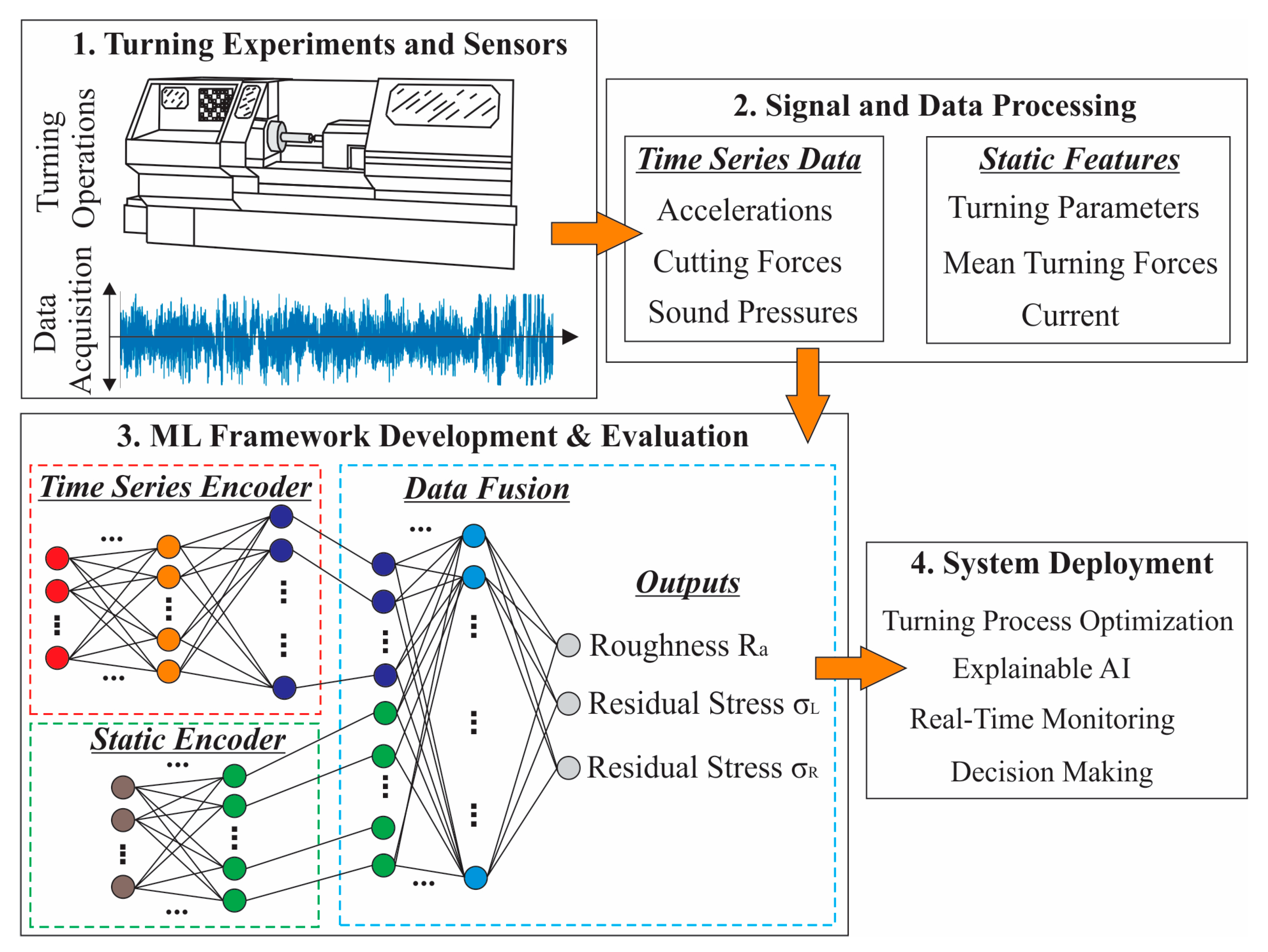
Figure 1 exhibits the overview of the applied approach that integrates DL, interpretable modeling and optimization into a unified workflow, introducing that way a coherent and transparent data-driven operational framework in turning procedures.
2.1. Experimental Procedure and Data Pre-Processing
The turning experiments and the corresponding dataset were generated through a systematic procedure adopted in the study [
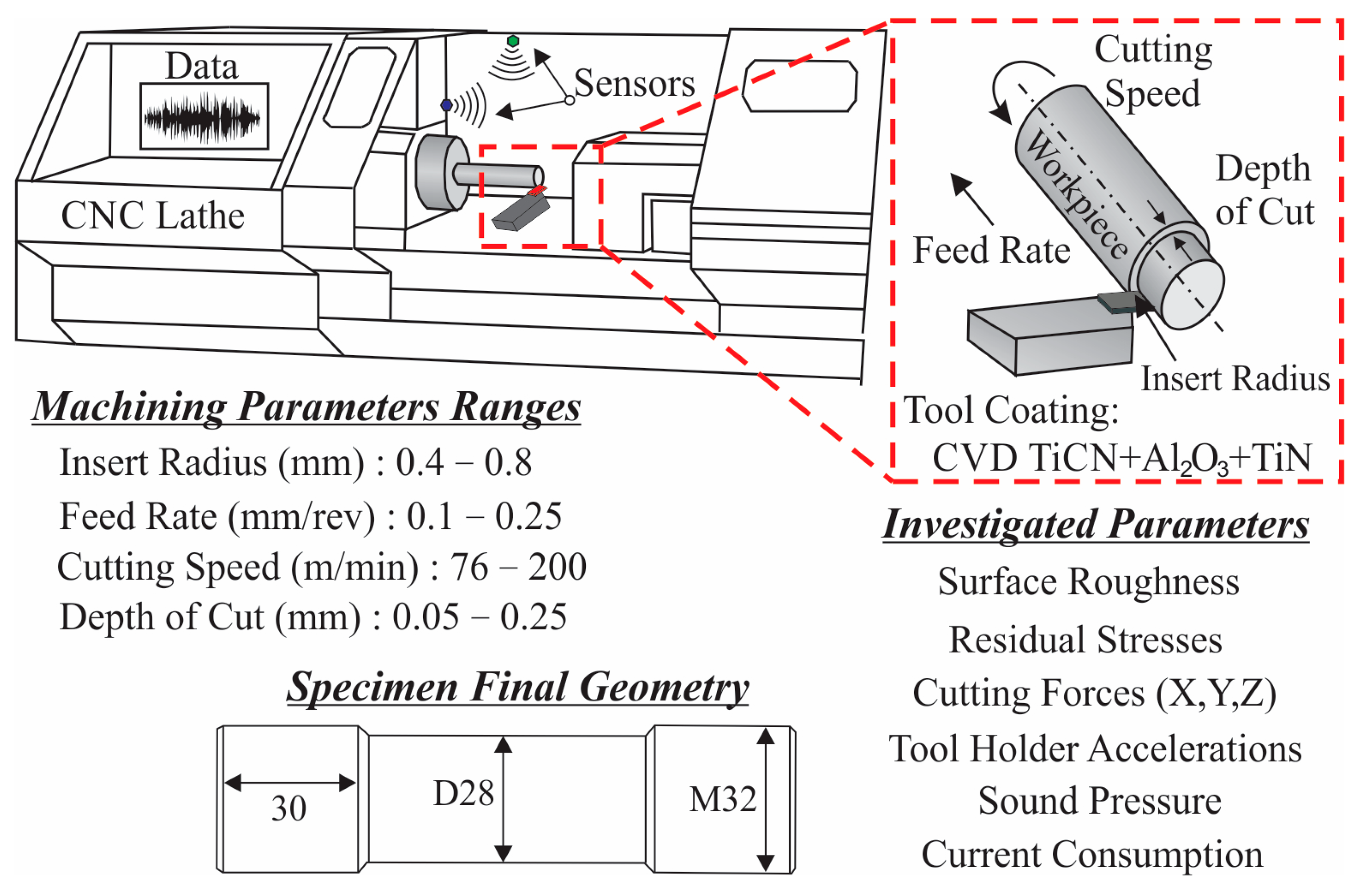
26] in order to investigate the influence of feed rate (f), cutting speed (v), depth of cut (DoC) and insert radius (r) on the surface integrity of 42CrMo4 + QT steel, as schematically illustrated in
Figure 2. A total of sixty-eight machining experiments of a cylindrical specimen were performed, each defined by a combination of the examined cutting conditions within the operational ranges of insert radius (0.4 and 0.8 mm), depth of cut (0.05–0.25 mm), cutting speed (76–200 m/min) and feed rate (0.10–0.25 mm/rev). These ranges were chosen based on the capabilities of the applied JATOR TAJ-42 CNC lathe and the specifications of the Sandvik Coromant coated inserts (DCMX 11 T3 04-WF 4325 and DCMX 11 T3 08-WF 4425) that feature a multilayer Chemical Vapor Deposition (CVD) coating composed of TiCN, Al
2O
3 and TiN.
During each turning operation, the process was monitored using a multimodal sensing configuration that captured tri-axial cutting forces, bi-axial accelerations, spindle motor current and acoustic emissions, all recorded as synchronized time-series signals. Moreover, scalar indicators such as mean cutting forces and mean current consumption were also derived from the recorded experimental data. Following the machining procedure, each specimen underwent surface integrity characterization, which included residual stress analysis and surface roughness measurements. Hence, the resulting dataset consolidates the complete set of machining parameters, time series sensor signals, machining indicators, as well as post-process surface integrity metrics, thereby supporting the development of predictive ML models that could relate cutting conditions and process dynamics to material response and surface quality.
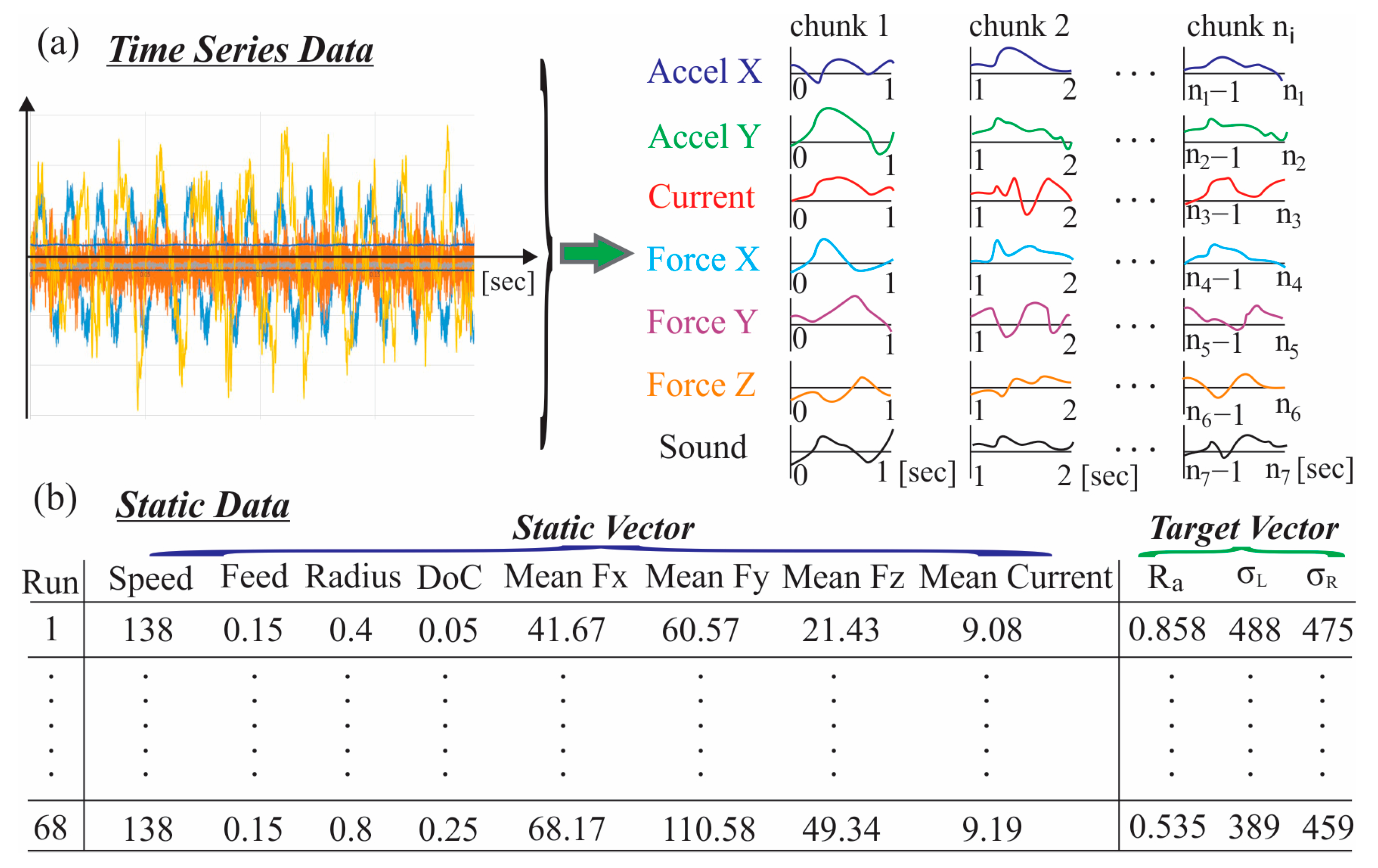
In order to systematically organize the multimodal sensor dataset, a hierarchical scheme was implemented in the present study. This structure assigned a dedicated container to each experiment and, within it, to each sensing modality. Within each container, the time-series signals were preprocessed and segmented into consecutive, fixed-duration recordings of one second, hereafter referred to as “chunks.” These chunks were obtained by processing the original recordings and partitioning them into uniform temporal segments. Notably, the recorded signals were partitioned into non-overlapping one-second chunks prior to feature computation. In general, a one-second window provided ample samples per segment, supported robust and repeatable feature estimation, aligned with a quasi-stationary assumption for the cutting dynamics under constant parameters and yielded a tractable dataset size for subsequent model training. Thus, each chunk represents an independent one-second temporal window of the turning process, as illustrated in
Figure 3a. This segmentation established a standardized temporal framework that enabled every second of the machining operation to be treated as a distinct observation containing synchronized measurements across all seven sensing modalities. Particularly, for each chunk, seven univariate time-series signals (acceleration X, acceleration Y, current, force X, force Y, force Z and sound pressure) were concatenated to construct a multivariate matrix characterizing the process dynamics during the corresponding one-second interval.
Additionally, a consolidated metadata record was established to aggregate the static input parameters and outcome variables across all the experimental procedures. Each entry represented a distinct experimental condition, including the cutting parameters along with the computed mean forces and mean currents, as well as the investigated outputs like surface roughness (R
a), longitudinal residual stress (σ
L) and radial residual stress (σ
R). On the basis of this data, a static feature vector consisting of eight numerical descriptors (the applied turning parameters, the mean cutting forces and the current) was defined for each experiment, as displayed in
Figure 3b. Moreover, the associated target vector comprising the three measured output quantities, which served as ground-truth values for model supervision. Hereupon, each one-second chunk originating from a given turning experiment was associated with its corresponding static input vector and target vector, establishing that way a direct linkage between the dynamic process signals, the underlying physical conditions and the resulting machining outcomes.
It is also important to note that a systematic standardization procedure was applied to all input features and output variables. This preprocessing step was essential to achieve numerical stability, balanced feature scaling and reliable model training. Therefore, in order to prevent dominance of variables with large numerical magnitudes, as well as to facilitate stable gradient-based optimization, all input and output features were standardized. Particularly, the normalization statistics, namely the mean and standard deviation, were computed on the training data to avoid data leakage into the validation process. For each of the seven time-series channels, channel-wise mean and standard deviation values were calculated, yielding channel-specific normalization parameters. Accordingly, each time-series chunk was standardized by subtracting the corresponding mean and dividing by its standard deviation. An analogous procedure was also applied to the eight static features, for which feature-wise statistics were calculated across all training chunks. Moreover, the three output variables were standardized to unit variance, establishing that the multi-task loss function assigned comparable influence to each output. Therefore, the trained ML model operated in a normalized space and its predictions were subsequently rescaled to physical units for interpretation.
2.2. Machine Learning Models Formulation
The dataset structure described in the previous paragraph was specifically designed in order to enable the developed multimodal ML model to capture local temporal patterns within the process data, as well as to evaluate their impact on the global surface integrity outcomes. Notably, each data sample consisted of three main components: (i) a time-series matrix of size T × 7 (where T denotes the number of sampled time points within the one-second chunk and 7 corresponds to the number of synchronized channels) representing the sensor response, (ii) a static vector of size eight containing the experimental conditions and mean process statistics, and (iii) a three-dimensional output vector representing the target values of surface roughness and residual stresses. Hence, this data structure combined high-frequency process dynamics with low-frequency contextual information, facilitating the capturing of both transient and steady-state phenomena. It is noteworthy that the employed data arrangement produced thousands of samples (one per second of machining for each experiment), providing sufficient data for DL model training.
This study introduces a multimodal architecture for the joint modeling of surface integrity. Particularly, the architecture uniquely integrates time-series and static inputs to simultaneously estimate surface roughness and residual stresses.
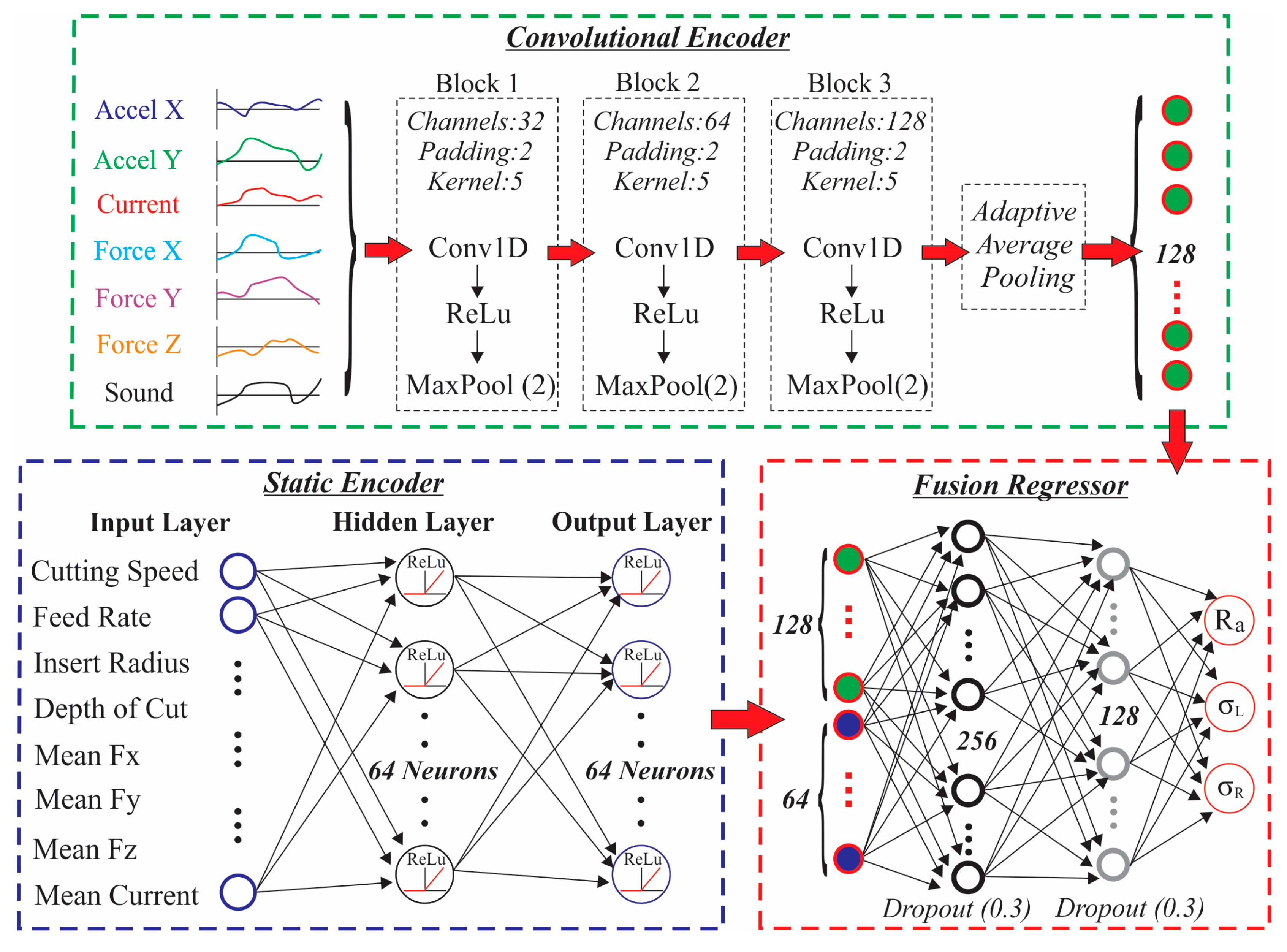
Figure 4 displays the applied multimodal ML framework consisting of three functional components: a convolutional encoder for time-series data, a feed-forward encoder for static variables and a fusion regressor that combined both latent representations into a joint prediction layer. The time-series encoder employed one-dimensional convolutional layers to extract temporal and frequency-related features from the seven-channel signals. More specifically, three convolutional blocks were used, each comprising a convolutional layer with Rectified Linear Unit (ReLU) activation followed by max-pooling to progressively reduce the temporal dimension, while capturing hierarchical representations of the sensor signals. Furthermore, a global average pooling operation was applied to collapse the temporal axis, resulting in a fixed-size embedding of 128 dimensions that summarized the dynamic characteristics of the turning process. Concerning the static encoder, it was implemented as a multilayer perceptron operating on the eight static input variables. It consisted of two fully connected layers with ReLU activations, producing a 64-dimensional feature vector representing the static machining context. In addition, the fusion regressor concatenated the 128-dimensional time-series embedding with the 64-dimensional static representation, forming a 192-dimensional joint feature vector. This vector was passed through two fully connected layers with 256 and 128 neurons, respectively, each followed by ReLU activation and dropout regularization with rate equal to 0.3 in order to mitigate overfitting. Finally, the output layer was configured with three linear neurons to predict the standardized values of the surface integrity parameters under examination, namely surface roughness, longitudinal and radial residual stress. As a result, the utilized architecture allowed simultaneous multi-task learning, empowering the network to exploit shared information among the correlated target variables.
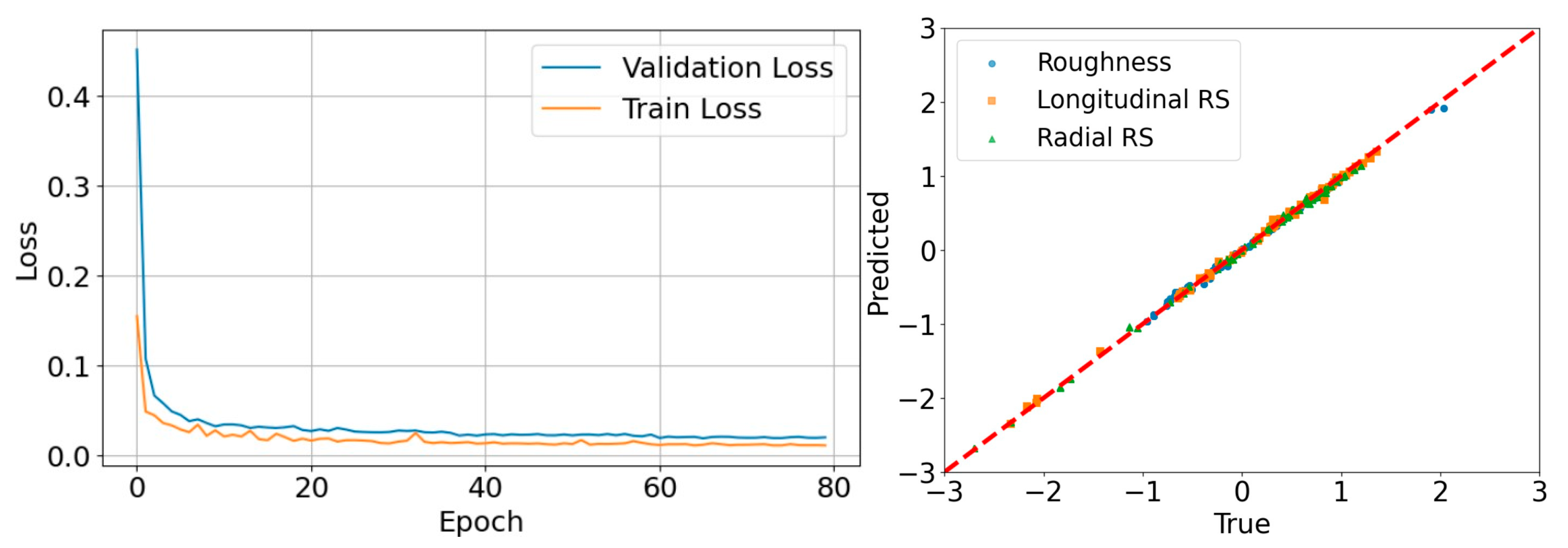
Regarding the training, the dataset was randomly shuffled and split into training (80%) and validation (20%) subsets to ensure reproducible results. This approach allowed the network to generalize patterns that occur repeatedly across different experiments rather than memorizing specific conditions. Consequently, each training and validation sample corresponded to a single one-second window of the process; containing both the dynamic sensor information, as well as the associated static features. The training was performed in a supervised manner using mini-batch gradient descent with the Adam optimizer, the initial learning rate was set to 10−3 and weight decay regularization (10−4) was applied to prevent overfitting. Moreover, a weighted mean squared error (MSE) loss function was applied to the standardized output variables. All weights were initially set to one, thereby assigning equal importance to the three outputs, though the formulation allowed for reweighting if necessary. The learning rate was dynamically adjusted using a “Reduce on Plateau” scheduler, which halved the learning rate when the validation loss stopped improving for several epochs. It should also be noted that model training incorporated an early stopping criterion, whereby validation loss was continuously monitored and the training was terminated after a predefined patience period without improvement. Therefore, the combination of adaptive learning rate scheduling coupled with early termination ensured stable convergence and prevented overfitting on the training phase. Notably, all the experiments were implemented in Python (v 3.10.19) using PyTorch (v 2.5.1) and trained on an NVIDIA GeForce RTX 3060 GPU with 12 GB of dedicated memory, where the total end-to-end preprocessing and training time was approximately one hour.
2.3. Interpretability and Multi-Objective Optimization Workflow
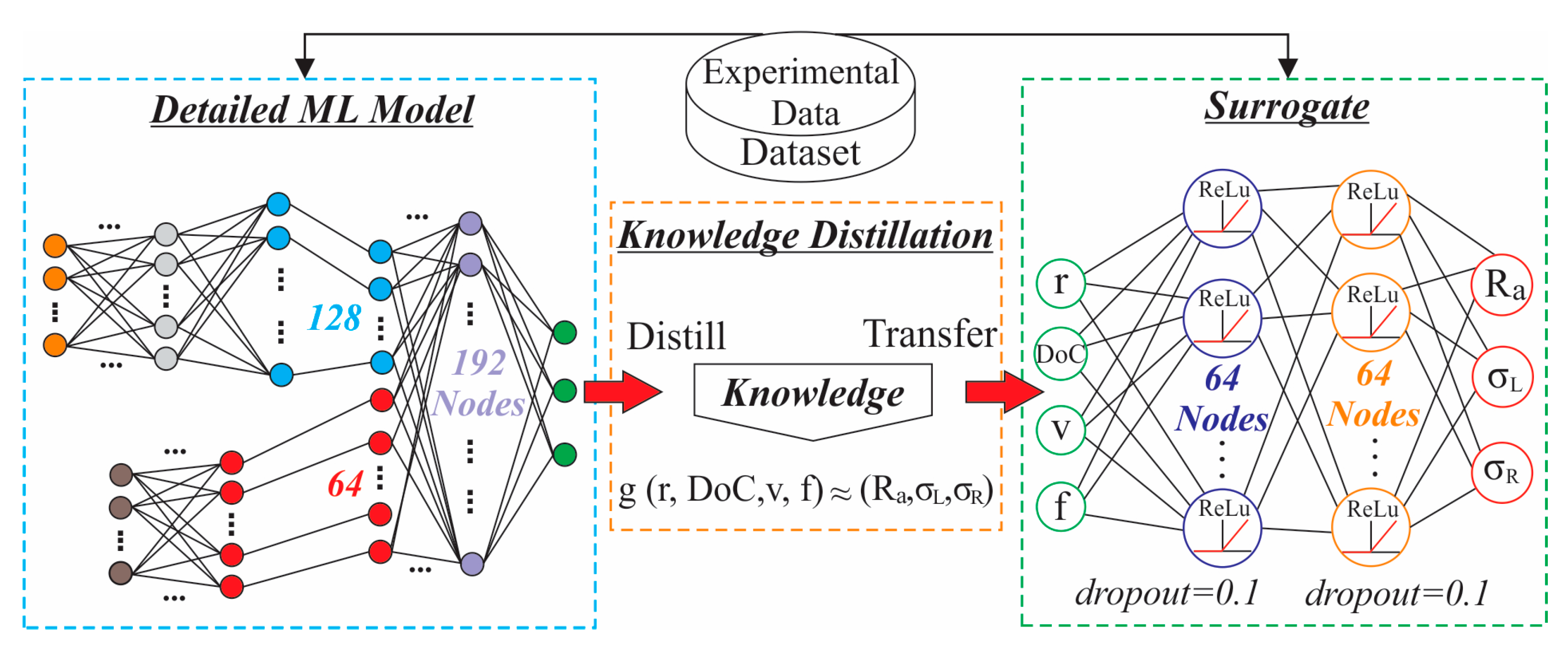
Even though the proposed architecture could effectively capture complex nonlinear dependencies between multimodal process signals and machining outcomes, it cannot provide explicit insight into the individual contributions of specific cutting parameters. Specifically, the direct use for performance enchantment or explainability is not feasible, since the predictive model requires time-series sensor streams as inputs, which are not available for hypothetical parameter combinations that were not physically examined. Accordingly, in order to facilitate both interpretability and optimization, a surrogate modeling strategy based on model distillation was adopted, as presented in
Figure 5. This approach captures the prognostic behavior of the full multimodal ML model, while relying solely on input variables that are available for optimization and interpretation. In particular, the trained network was evaluated for each experiment across all time-series windows, and its projections were aggregated to obtain a single experiment-level forecast (
Ra,
σL,
σR) that could reflect the behavior of the full-detailed model under that specific set of cutting parameters. These distilled predictions were then paired with the corresponding cutting parameters (r, DoC, v, f); forming that way a dataset in which each input vector consists solely of the controllable machining parameters and each target vector represents the aggregated response predicted by the ML model. However, it must be noted that while segmenting the time-series data yields a large number of learning instances for the deep multimodal model, it does not increase the number of distinct controllable parameter configurations. Hereupon, the surrogate (trained on experiment-level distilled outputs) learns from a modest number of unique parameter combinations, which is sufficient for trend-level interpretability but may limit fine-scale characterization of interactions and nonlinearities. Nevertheless, despite not requiring sensor data at inference time, the surrogate model still preserves the learned relationships between cutting parameters and the corresponding surface integrity responses. This behavior makes the distilled model suitable for parameter optimization, sensitivity analysis and multi-objective search. Consequently, a parametric surrogate model was employed in order to approximate the mapping established by the detailed multimodal network.
Based on the surrogate model, a Shapley Additive Explanations (SHAP) analysis was conducted to quantify the contribution of each controllable cutting parameter to the predictions of surface roughness and residual stresses. In general, the SHAP methodology is founded in cooperative game theory and assigns each feature a contribution value (the Shapley value) representing its average marginal effect on the model output over all possible subsets of features [
27]. So, the method computes for each feature a marginal contribution value, reflecting how much a feature changes the model’s output across all possible feature combinations. Specifically, for the developed surrogate model ‘
g(
x)’ with the input vector
x = [feed rate, radius, depth of cut, speed], the Shapley value ‘
φj(
x)’ of the input feature ‘
xj’ can be defined as
where ‘
d’ represents the full set of input features and ‘
xs’ denotes a version of the input vector ‘
x’ such as only the features in subset ‘
S’ are retained, and the remaining features are replaced. These SHAP values provide a model-consistent interpretation of the predictions, rather than a direct statistical analysis of the experimental data.
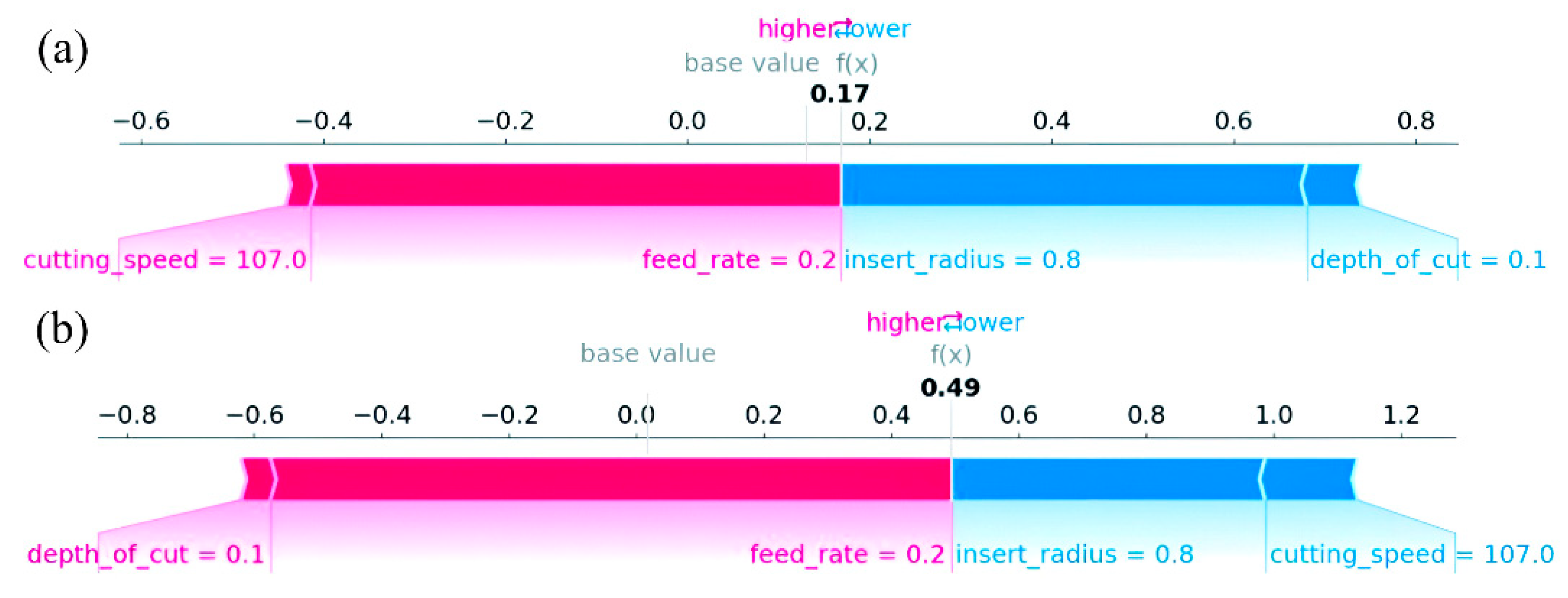
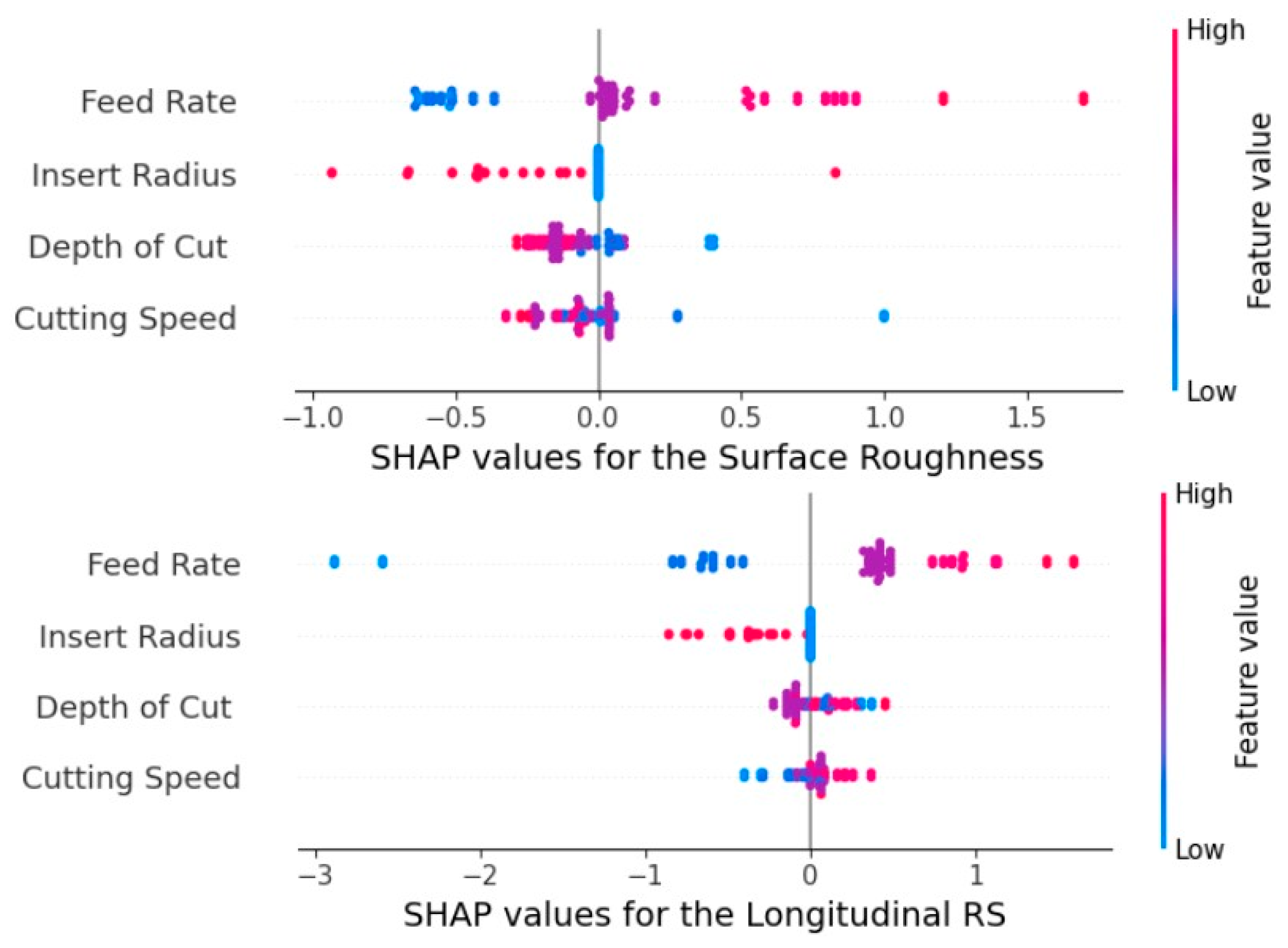
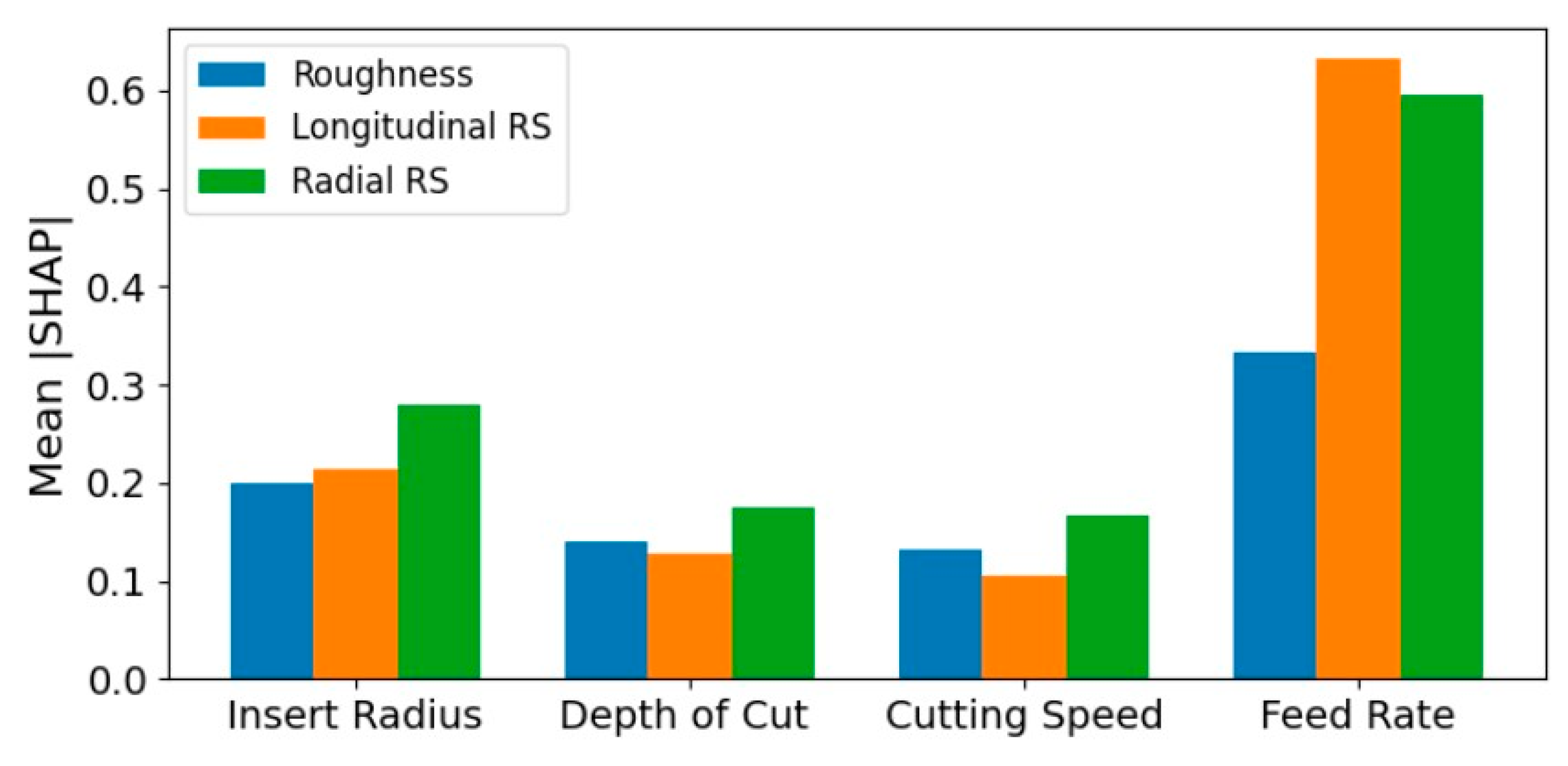
Since the surrogate model produces three outputs (Ra, σL, σR), three separate SHAP analyses were conducted, one for each scalar output. Moreover, a SHAP KernelExplainer was applied for each output function in order to approximate the corresponding Shapley values via a weighted local linear regression around the point of interest, using weights derived from the Shapley kernel. These calculated SHAP values reveal how variations in each cutting parameter contribute to changes in the estimated surface quality and residual stress state. For instance, a positive SHAP value for the feed rate signifies that higher feed tends to increase the estimated surface roughness, while a negative SHAP value for the cutting speed indicates that higher speeds generally reduce roughness. Aggregating SHAP values across all samples provides a global importance ranking that directly reflects the sensitivity of the model’s forecasts in each parameter. Hereupon, SHAP acts as a bridge connecting the complex data-driven model with human-interpretable process knowledge, transforming the surrogate model from a black box into a transparent, physically consistent decision-support tool for the turning process.
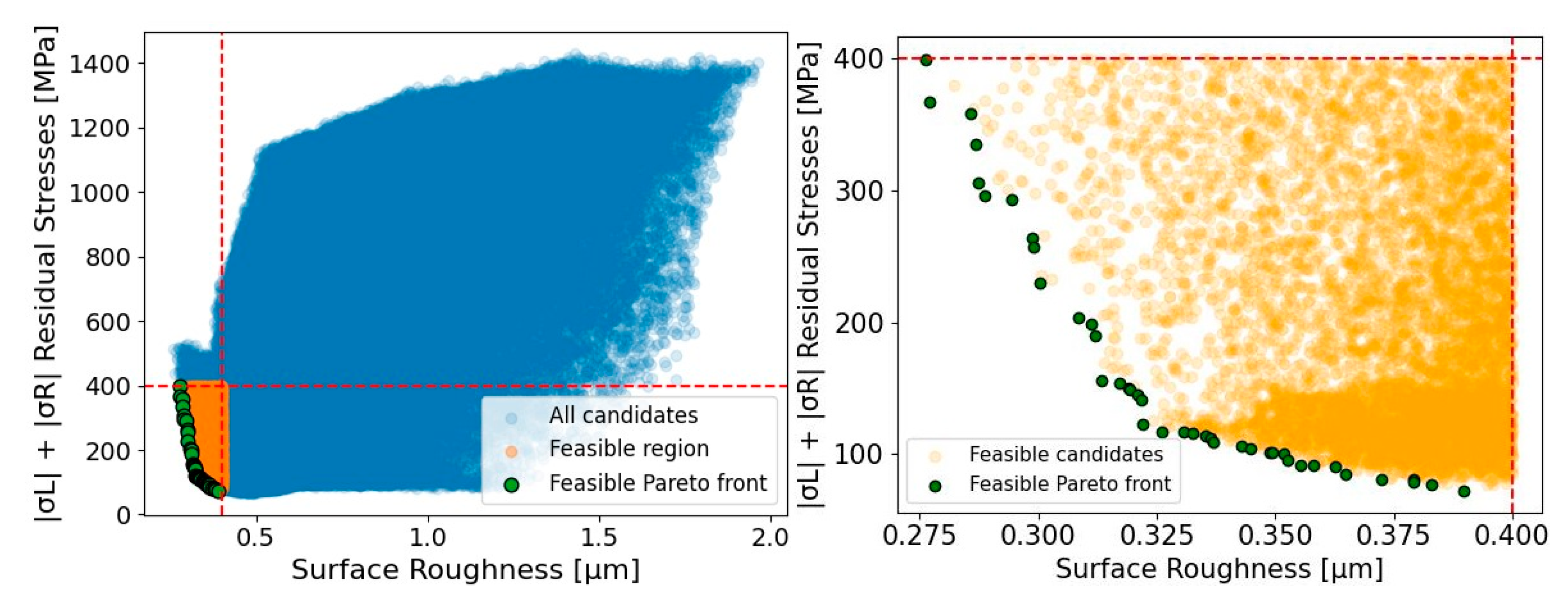
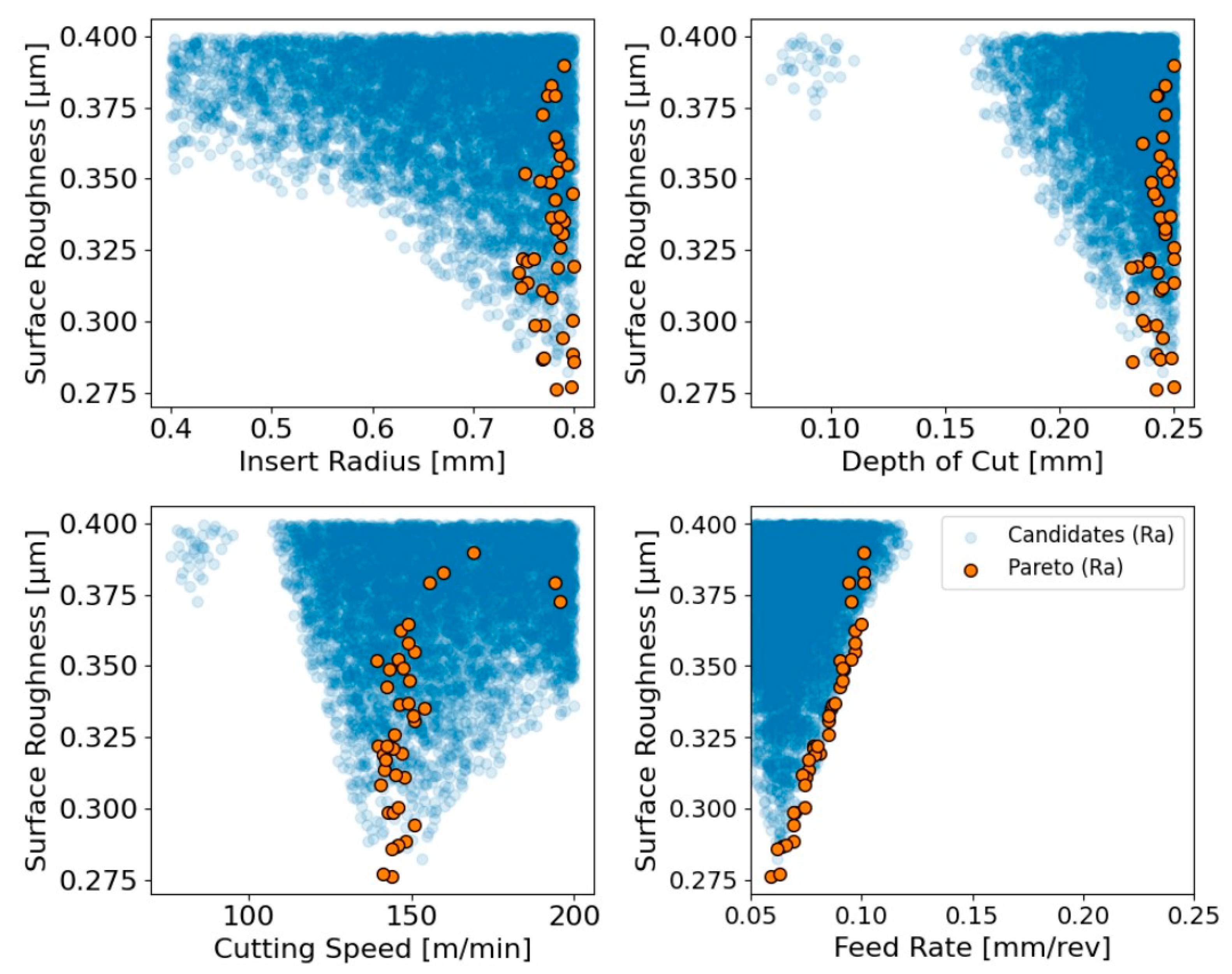
Additionally, in order to achieve a balanced trade-off between surface quality and residual stresses, a Pareto-based multi-objective optimization scheme was established to identify optimal cutting parameter configurations. More specifically, two conflicting objectives were defined, where the first one composed the predicted surface roughness,
which was minimized to promote improved surface quality. The second objective quantified the total magnitude of the residual stress state and was formulated as
which penalizes both high tensile and compressive stresses. The objective of minimizing the absolute sum of the residual stresses was formulated to penalize high-magnitude longitudinal and radial residual stresses, irrespective of sign. This provides a conservative objective that suppresses extreme residual-stress states, avoiding highly stressed states even when the sign-dependent influence on performance is not fully known. High tensile residual stresses could increase crack-opening driving forces and are generally most critical for stress-corrosion cracking, while compressive stresses are typically preferred for fatigue resistance. Nevertheless, a sign-agnostic formulation provides a generalized objective to limit extreme residual-stress magnitudes when the dominant failure mechanism is uncertain. Thus, the optimization problem can be defined as
Since the surrogate model provides rapid evaluation and is defined over a continuous parameter space, a large set of candidates cutting parameter configurations could be generated by uniformly sampling the vector
x = [
r,
DoC,
v,
f]. These values should be within the hyper-rectangular domain bounded by the minimum and maximum observed values of each cutting parameter. Therefore, for each sampled configuration, the surrogate produced predictions of surface roughness and residual stresses, which were subsequently mapped to the corresponding objective functions. Next, Pareto dominance relations were assessed in order to identify the set of solutions representing optimal trade-offs among the competing objectives, where each candidate solution represents a unique vector of cutting parameters. The method proceeds through iterative generations that evolve the population toward the Pareto-optimal front [
28]. In this multi-objective setting, a solution ‘
xa’ is superior to another one if and only if the following two conditions hold, such as the ‘
xa’ is no worse than ‘
xb’ in all objectives and strictly better in at least one:
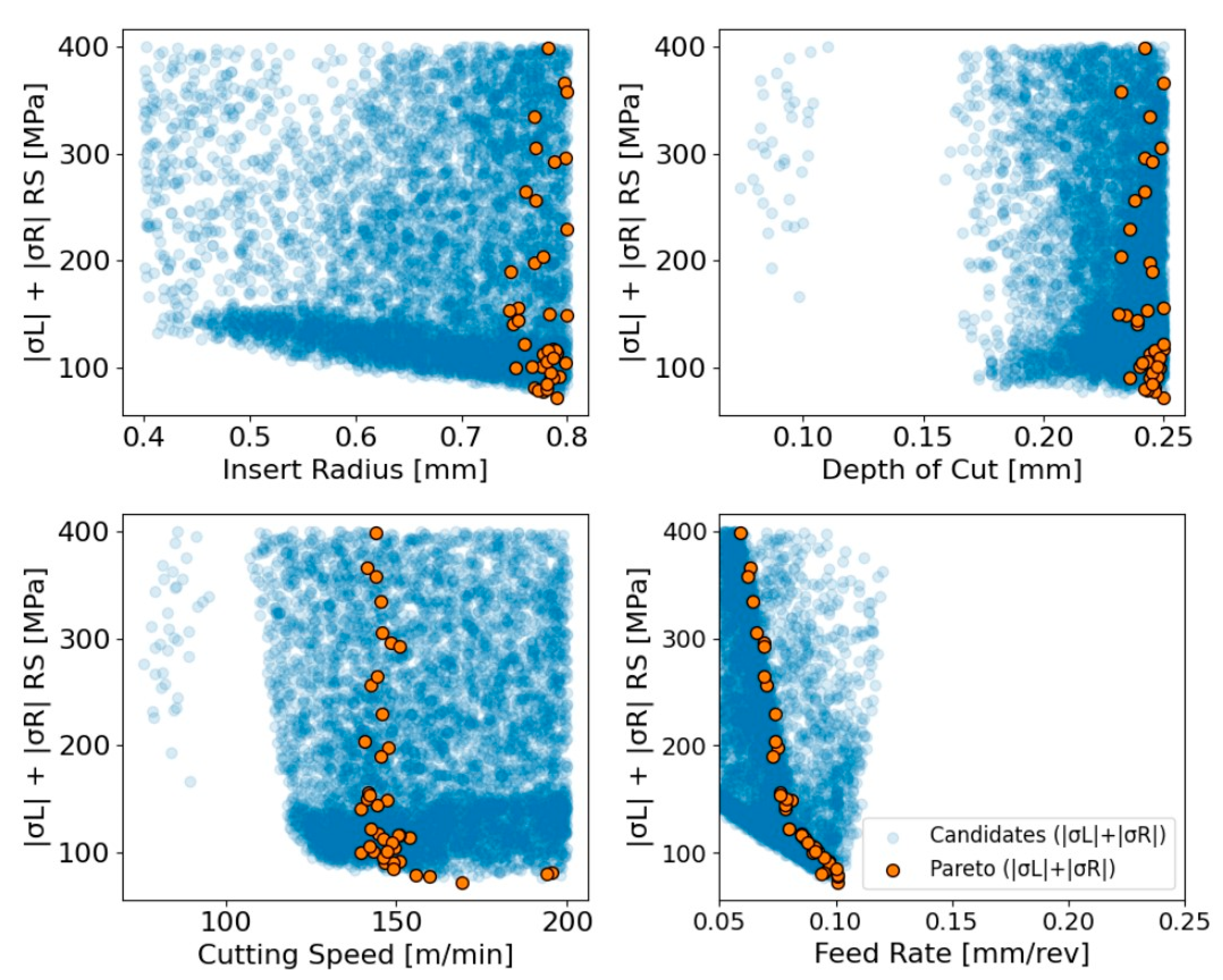
This Pareto front characterizes the set of machining conditions for which a reduction in surface roughness cannot be obtained without increasing the residual stress magnitude and vice versa. The resulting Pareto-optimal set expresses the inherent trade-offs predicted by the distilled multimodal ML model and provides a principled basis for selecting machining configurations that balance surface quality and mechanical performance.
4. Conclusions
The introduced multimodal framework presented in this study demonstrates how fused multisensory experiments, deep learning architectures and explainability tools can be combined to support data-driven optimization in CNC turning operations for a specific workpiece-tool system. By structuring the generated accelerations, cutting forces, current and acoustic measurements during the machining process into synchronized time-series windows, the developed ML model successfully captured the dynamic signatures associated with the examined cutting conditions, enabling the accurate estimation of surface roughness and residual stresses. Moreover, the distillation of the ML model into a low-dimensional surrogate one provided a computationally efficient mapping from cutting conditions to predicted outcomes, allowing that way the rapid exploration of the design space. In addition, the SHAP analysis delivered a transparent interpretation of both global and local feature effects, revealing the impact of each machining parameter. Finally, the surrogate facilitated also in the Pareto-based multi-objective optimization, yielding parameter combinations that balance surface quality and residual stress levels.
It is worth noting that cutting mechanics and parameter sensitivities can vary with the workpiece material, tool geometry, applied coating and machine–tool dynamics. Accordingly, the results drawn in the present work are restricted to the utilized material–tool–machine configuration and the parameter ranges represented in the dataset. It is also crucial to acknowledge the limitations of the present approach. In particular, although the experimental dataset was rich in dynamic signals, the machining-parameter configurations were limited and covered a subset of the feasible parameter space. Consequently, the predictive model is specific to this parameter space and the defined input–output variables, and its outcomes regarding parameter influence are therefore valid primarily within these bounds. This condition influences the surrogate model’s performance, thereby affecting both the fidelity of the learned relationships, as well as the resulting SHAP explanations. Moreover, the Pareto optimization identifies promising operating windows, but its recommendations remain confined to the parameter bounds represented in the utilized dataset. However, the modular nature of the introduced workflow provides numerous pathways for extension. Notably, increasing the diversity of cutting conditions, tool geometries and sensor modalities would broaden the model’s generalizability. Furthermore, incorporating tool-wear evolution, stability limits or thermal behavior could potentially enrich both prediction and optimization capabilities. Embedding the surrogate within an adaptive control loop or extending the optimization to include also cost and productivity metrics would move the proposed pipeline towards real-time industrial applicability. Overall, the present study establishes a rigorous and extensible methodology that integrates data-driven modeling with actionable interpretability. The findings, supported by the specific evidence presented in
Section 3, provide a validated basis for more informed decisions in the advanced manufacturing environments.
The outcomes of this research confirm the initial expectation that feed rate and insert radius are the dominant control parameters for surface integrity, as robustly quantified by the SHAP analysis. Additionally, the multi-objective Pareto front successfully mapped the anticipated trade-off between surface roughness and residual stresses. In order to transition the introduced methodology from a research framework to an industrially applicable tool, several critical steps are required. First, coupling the data-driven model with FEM/CFD simulations would ground the predictions in physical laws, enabling that way extrapolation and deeper mechanistic insight. Second, the experimental validation of the Pareto-optimal operating points composes an essential next step to confirm their practical efficacy and robustness. Finally, for integration into process design, the suggested framework must be embedded within a decision-support system that incorporates additional practical constraints, like cost and tool life in order to allow for interactive exploration of the trade-off space by process engineers.