Article

Influence of Geological Origin on the Physicochemical Characteristics of Sepiolites

by
Leticia Lescano
1,
Silvina A. Marfil
1,
Luciana A. Castillo
2,3,* and
Silvia E. Barbosa
2,3
1
Departamento de Geología, Universidad Nacional del Sur. CGAMA (CIC-UNS), Bahía Blanca 8000, Argentina
2
Planta Piloto de Ingeniería Química, PLAPIQUI (UNS-CONICET), Bahía Blanca 8000, Argentina
3
Departamento de Ingeniería Química, Universidad Nacional del Sur, Bahía Blanca 8000, Argentina
*
Author to whom correspondence should be addressed.
Minerals 2025, 15(9), 950; https://doi.org/10.3390/min15090950
Submission received: 11 July 2025 / Revised: 28 August 2025 / Accepted: 2 September 2025 / Published: 5 September 2025

Abstract

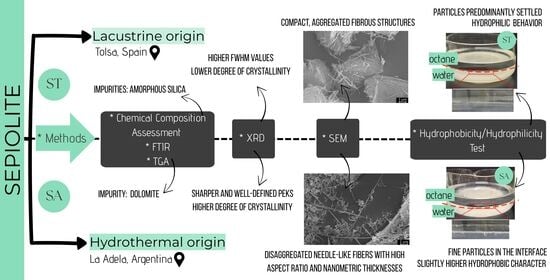
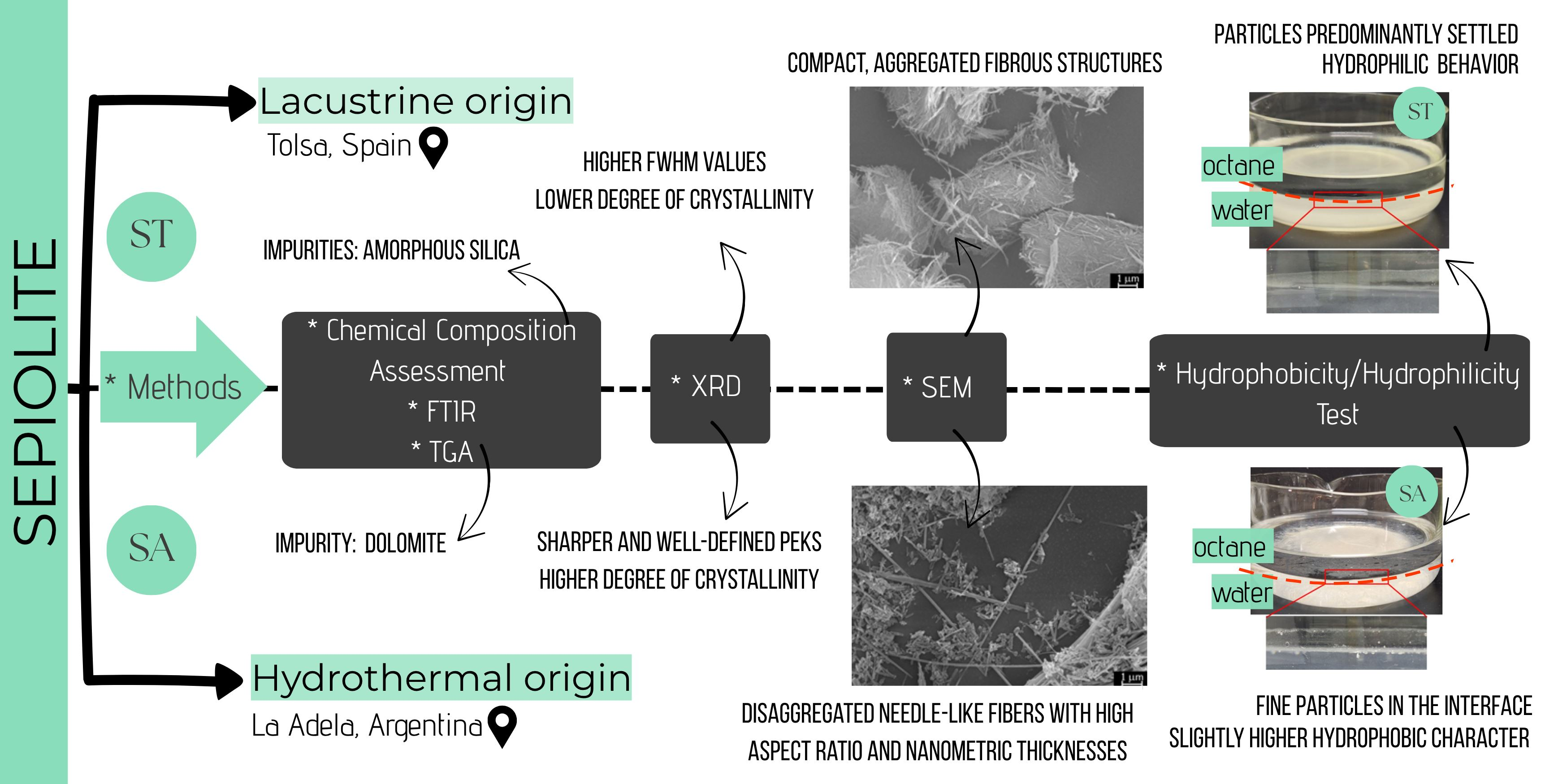
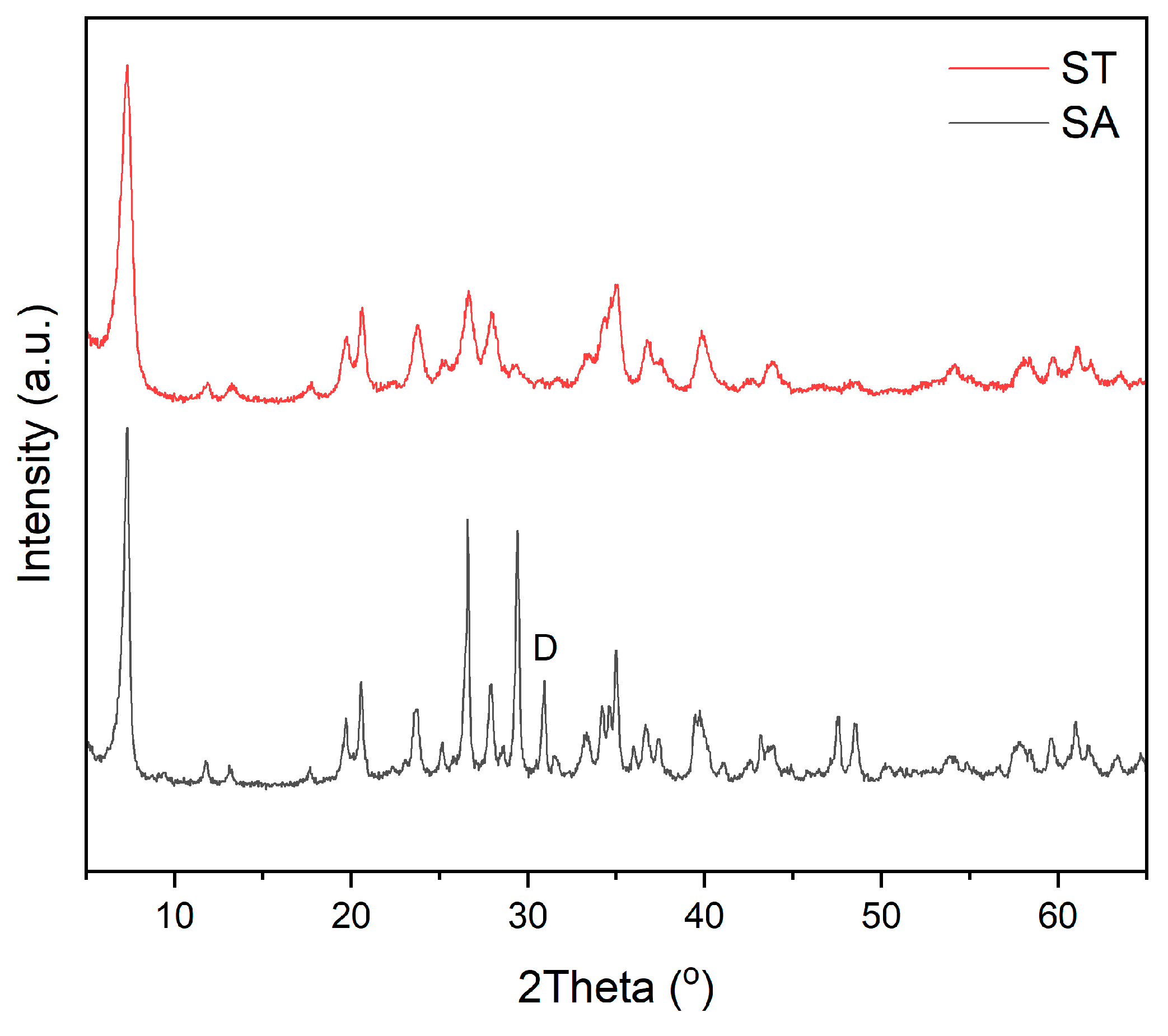
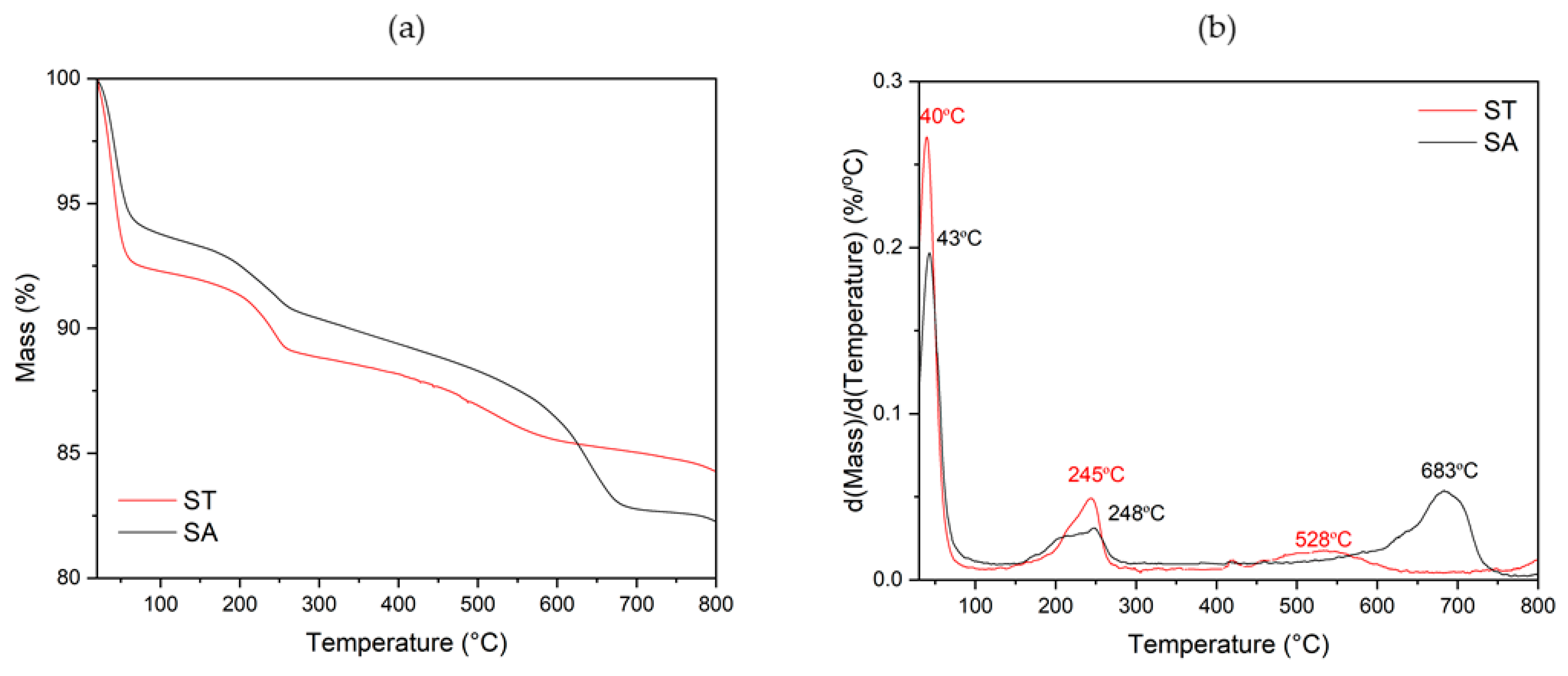
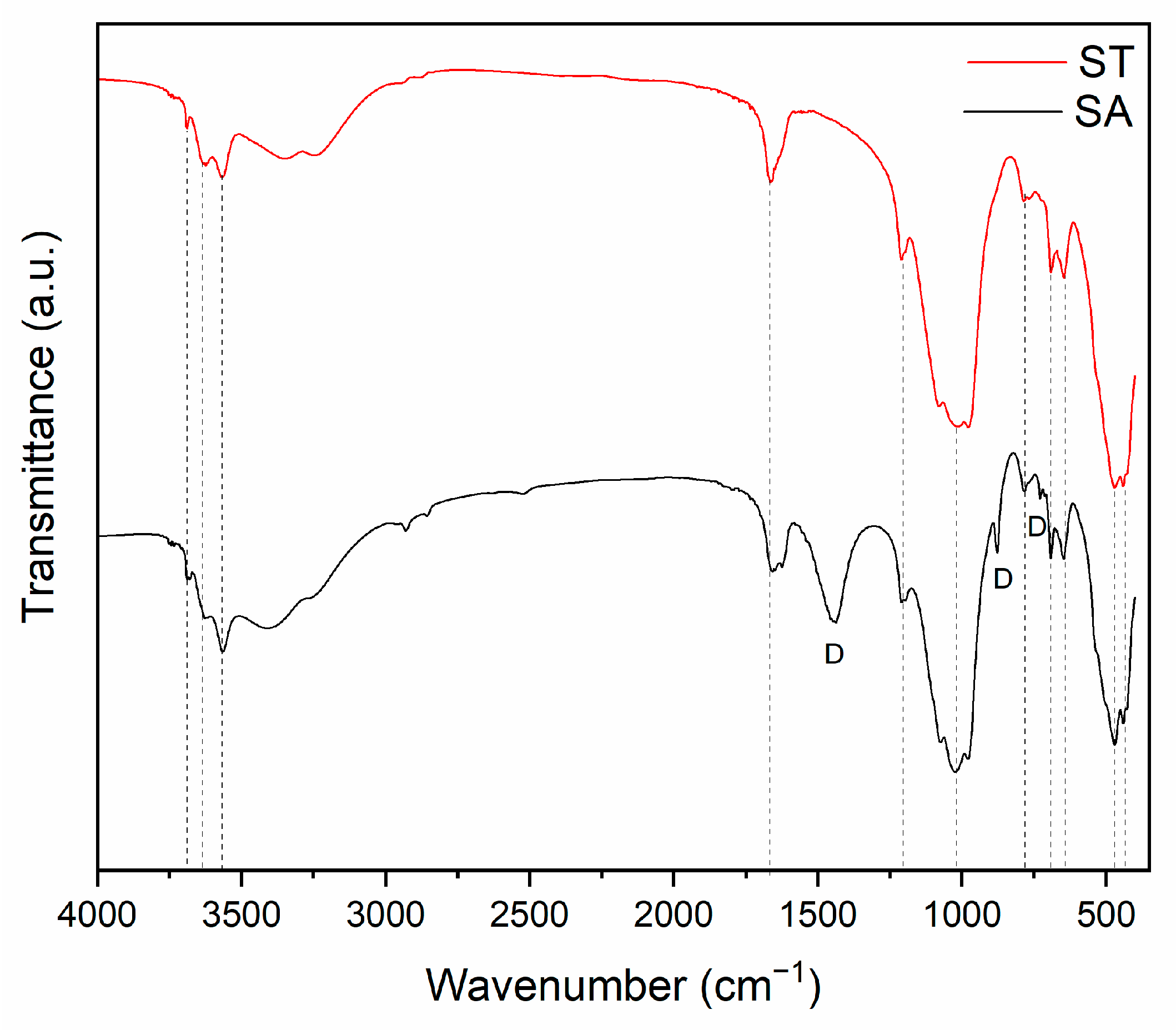
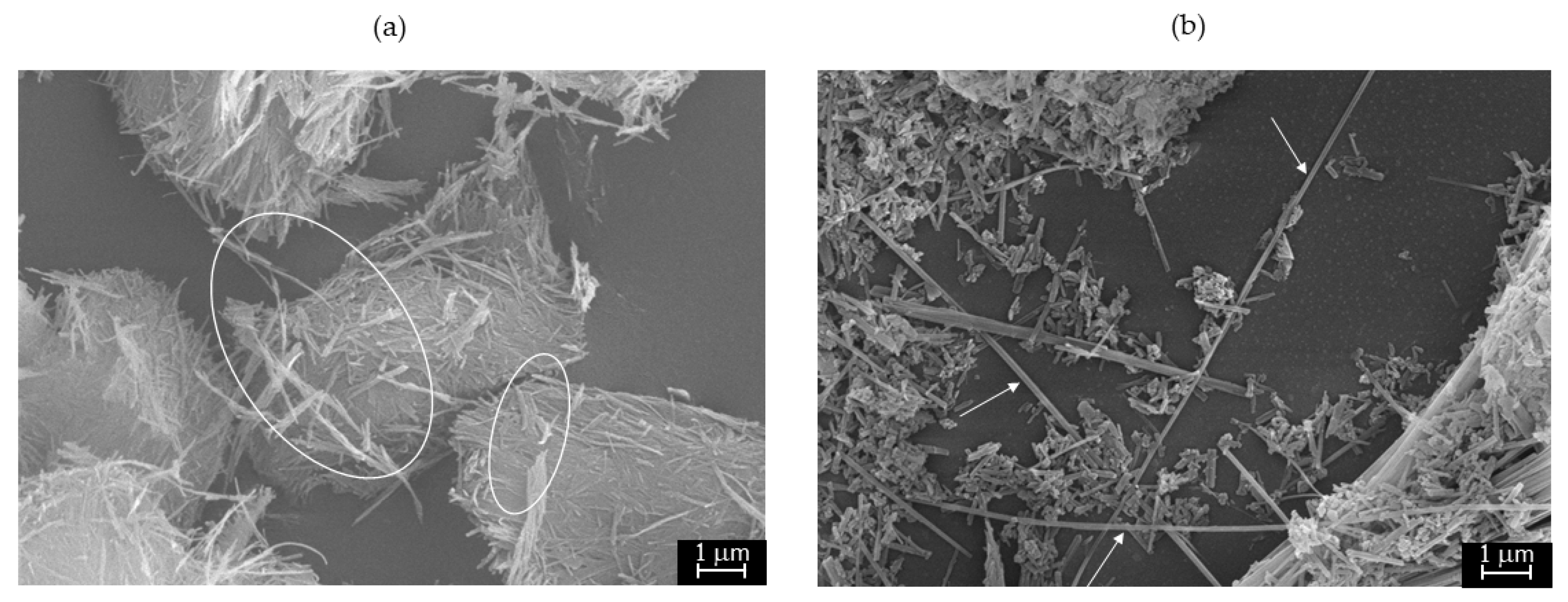
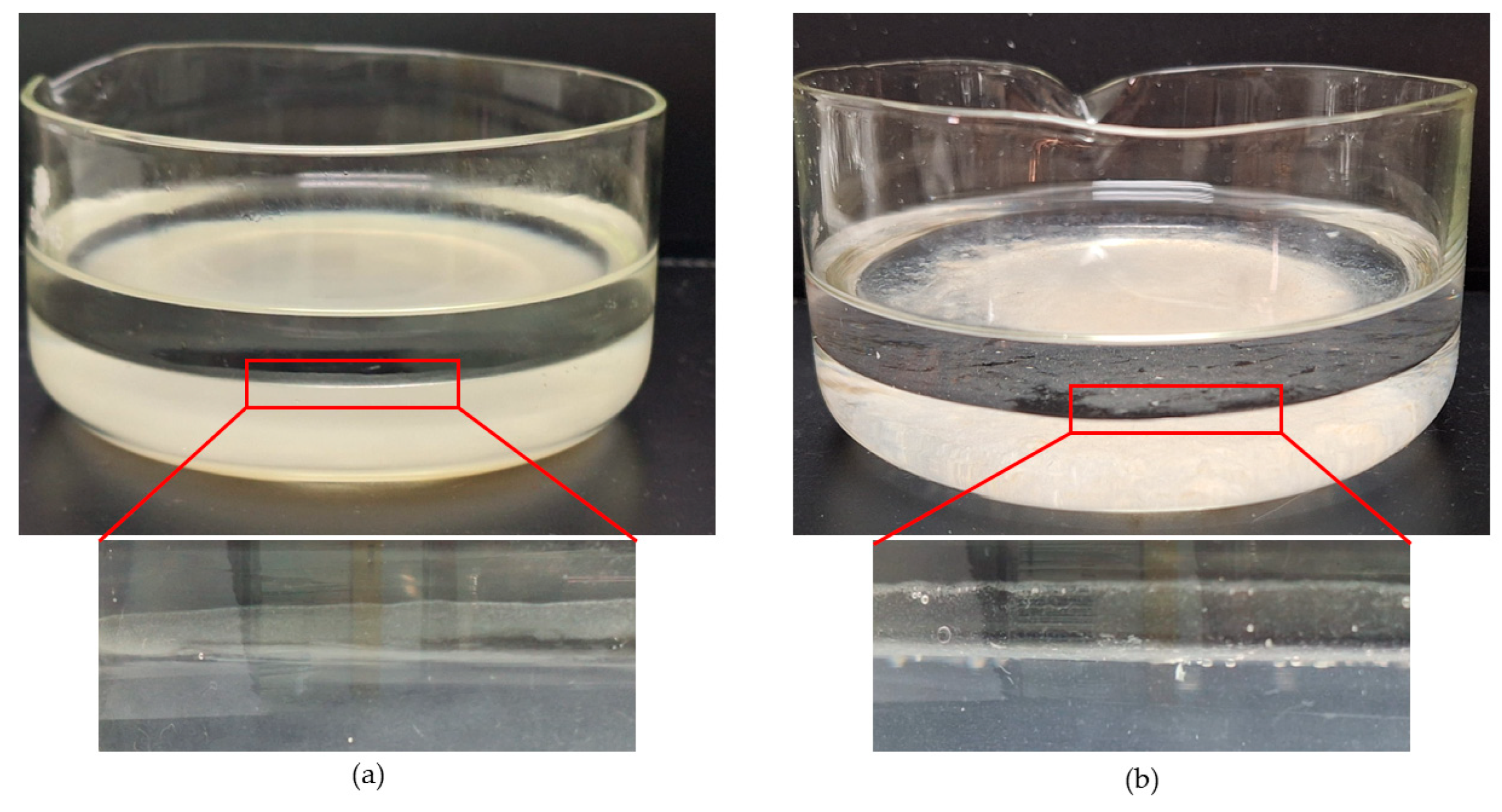
In this study the influence of the geological formation environment on the physicochemical properties of two natural sepiolites, as collected, was investigated. The samples analyzed were a lacustrine-derived sample from Tolsa, Spain (ST), and a hydrothermal-derived sample from La Adela, Argentine (SA). Comprehensive characterization was carried out using chemical analysis (XRF), X-ray diffraction (XRD), thermogravimetric analysis (TGA), Fourier-transform infrared spectroscopy (FTIR), scanning electron microscopy (SEM), and evaluations of hydrophobicity/hydrophilicity behavior. The results indicate that the ST sample exhibits a higher SiO2/MgO ratio and contains amorphous silica impurities, while the SA sample shows a composition more closely aligned with the theoretical stoichiometry of sepiolite. Furthermore, the SA sample demonstrates greater crystallinity compared to the ST sample. Morphological analysis revealed that ST consists of compact, aggregated fibrous structures, while SA is composed of disaggregated, needle-like fibers with high aspect ratios and nanometric diameters. Both samples display predominantly hydrophilic behavior; however, only the SA sample exhibits suspended particles at the interface, suggesting a slightly higher hydrophobic character than ST sample. These findings highlight the significant impact of the geological formation environment on the structural and surface characteristics of sepiolite, which, in turn, influence its performance in applications involving dispersion, adsorption, and interfacial interactions.
Keywords: sepiolite; origin; crystallinity; hydrophobicity/hydrophilicity behavior; chemistry; morphology sepiolite; origin; crystallinity; hydrophobicity/hydrophilicity behavior; chemistry; morphology
Graphical Abstract