Abstract
Electronic waste grows globally at a rate of 5% annually, which makes electronic waste recycling (WEEE recycling) an urgent task aimed at achieving (i) environmental protection and (ii) the preservation of mineral resources through the re-introduction of strategic metals into the market. As it turns out, WEEE recycling produces further waste, called WEEE secondary waste, which still contains valuable metals such as gold, silver, and copper. This study assessed the economic viability of recovering these metals and identified the most promising targets and approaches. WEEE secondary waste produced at a plant in southern Europe was sampled and examined for this purpose. The study methods included an ANOVA (analysis of variance) and an OCCP (orthogonal central composition plan). Over 90% gold, silver, and copper extraction was achieved with hydrochloric acid leaching in sodium hypochlorite with sodium chlorite as an oxidizing agent at 60 °C. The significance of the variation in the response for each factor, calculated using the Yates algorithm, demonstrates that by excluding sodium chloride and optimizing the doses of hydrochloric acid and sodium hypochlorite, gold can be selectively recovered through the leaching process. The scenario of HCl (2.5M)/NaClO (5%) leaching results in the maximum extraction effect of Au (91.6%) at the lowest concentrations of Ag and Cu (37–44%).
1. Introduction
The recycling of waste electrical and electronic equipment is becoming a rapidly growing sub-sector with an annual growth rate of e-waste generation of 3–5% [1]. Only about 17% of the total waste is collected and recycled, with the rest ending up in landfills [2]. According to various data, the generation of e-waste globally ranges from 40 million megatons (Mt) to 53.6 Mt [3,4].
Increasing the collection and recycling of WEEE (waste of electrical and electronic equipment) has strategic importance from an environmental point of view. Still, it can also bring about significant economic benefits and reduce the demand for raw materials. There are about 49 chemical elements in WEEE, 18 of which are classified as critical raw materials, whose supply chain is exposed to strategic risks and has recently been the focus of a specific action plan of the European Commission [5].
Directive (EU) 2024/884 amending Directive 2012/19/EU on Waste Electrical and Electronic Equipment (also known as WEEE II) represents the EU’s latest effort to increase the recycling of and reduce waste from electrical and electronic equipment. The WEEE Directive is currently under revision to ensure it is fit for purpose. The final study report will be available to the public by September 2024 [6].
The extraction of metals from WEEE has many advantages over the traditional extraction of primary metals from ore: it requires less energy and less CO2 emissions. One ton of smartphones contains about 100 times more gold than one ton of gold ore [7]. In addition, electronic devices, solar panels, etc., may contain other valuable metals such as copper, nickel, indium, or palladium.
Waste electrical and electronic equipment contains some so-called “clean” materials, non-harmful substances (Cu, Al, transparent glass, plastic, rubber, and ferrous metals), and hazardous substances (As, Cr, Hg, Ni, Be, Se, and Cd). Finally, they contain precious (Au, Ag, Pt, and Pd) and rare metals (Y and Eu).
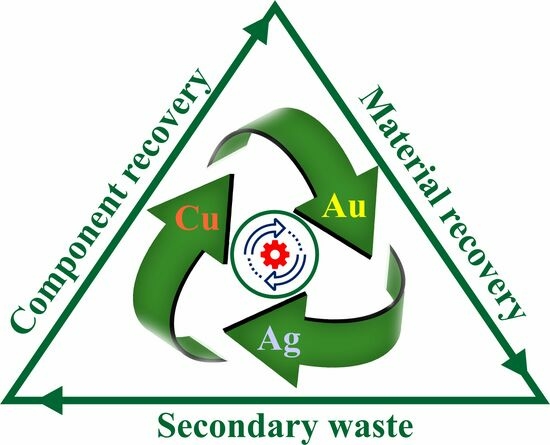
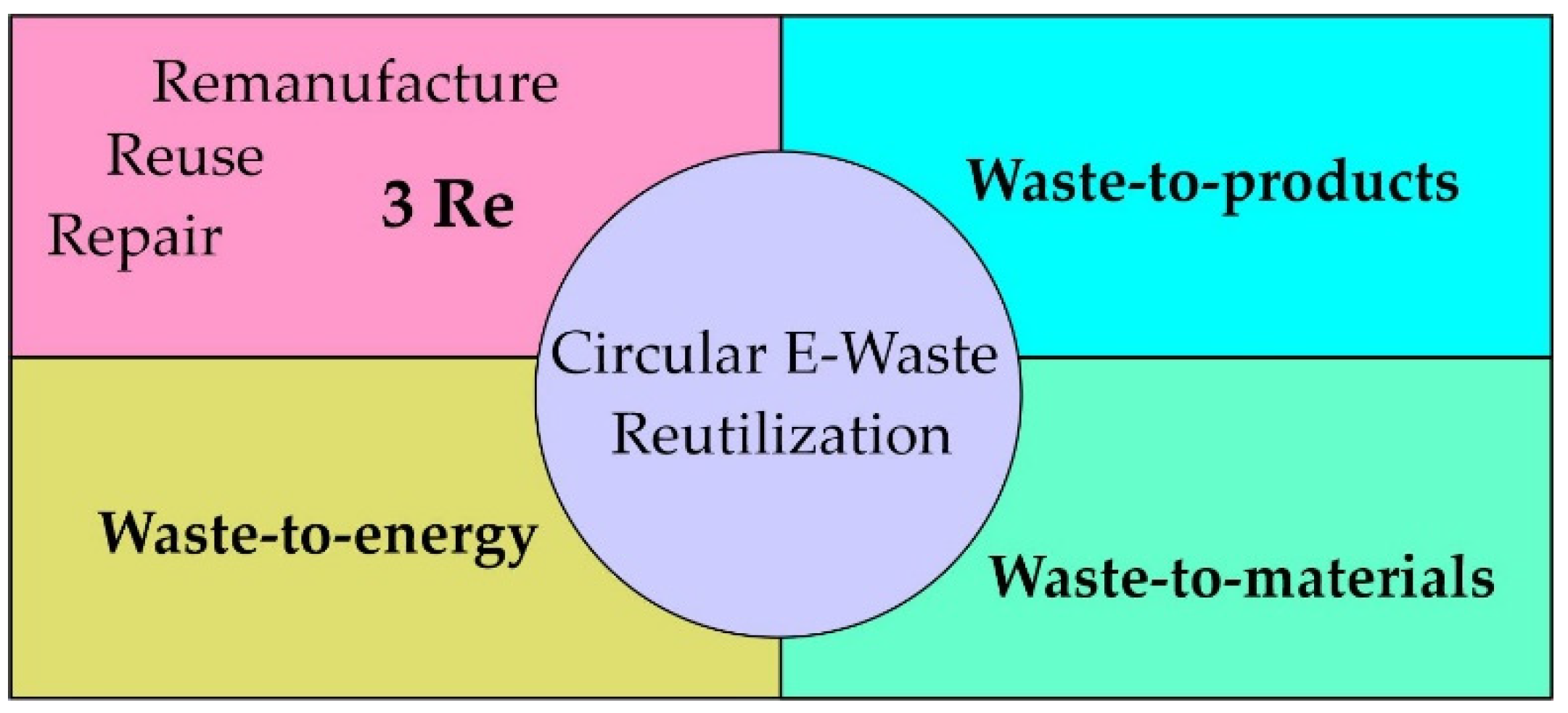
Properly managing, recycling, and recovering valuable metals with the right techniques not only generates income but also serves to achieve important environmental goals, solve energy efficiency problems, conserve natural resources, and create jobs. At the end of 2021, the European Commission identified WEEE as one of the “key chains” in the Action Plan for the New Circular Economy [8]. Circular e-waste reutilization can be divided into four levels (Figure 1).
Figure 1.
Four levels of circular E -waste reutilization.
To varying degrees, repair, reuse, and remanufacturing involve the recovery of used electronic parts to make new products. Material transformation is the process of converting residual solid waste, such as WEEE, into different materials or products using physical, chemical, microbiological, or other methods once 3Re and high-value resources have been extracted. The process of energy recovery involves burning combustible materials to produce heat energy [9].
There are significant health risks and environmental contamination due to the improper disposal of used electrical equipment. An effective method for recycling e-waste components is seen as a resource-efficient way to lessen pollution’s consequences and encourage the equitable allocation of resources [10].
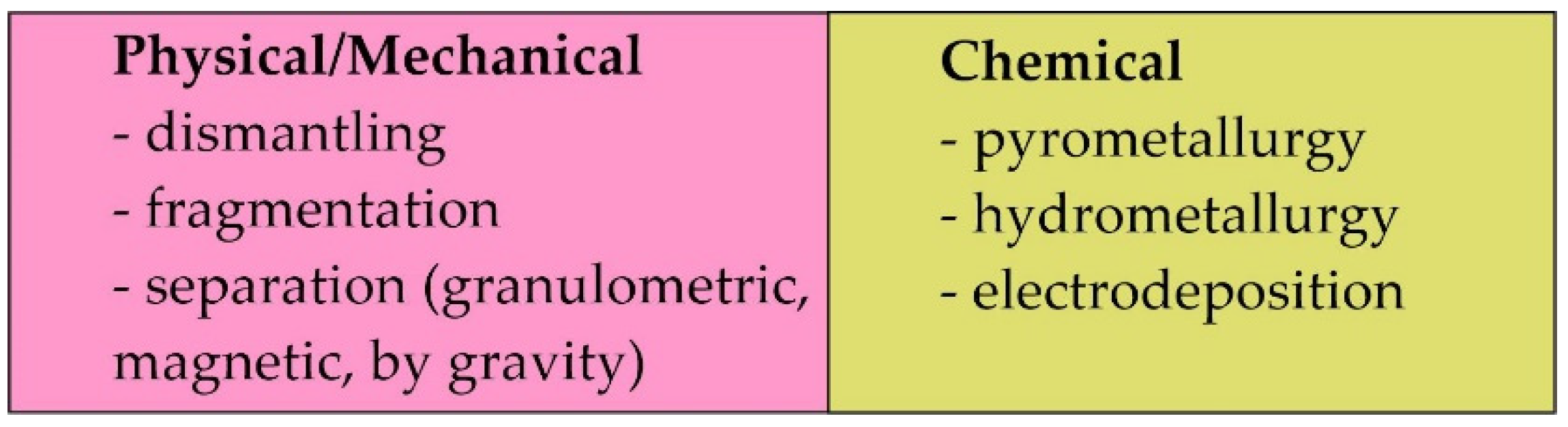
The first step in recycling electronic waste is its dismantling to remove minor and non-recyclable fractions (Figure 2). The next step is separating them into metallic and non-metallic fractions by means of magnetic, current-based, or density-based separation techniques. After that, metals from the processed e-waste are recovered using pyrometallurgical, electrodeposition, or hydrometallurgical methods [11,12,13,14,15].
Figure 2.
The methods applied to recover metals from WEEE.
Thermochemical decomposition methods are traditionally used to extract gold from e-waste, for example, pyrolysis, during which the organic material contained in electronic waste is broken down into molecular products that can be used, including fuel. However, these processes require large amounts of energy and lead to waste formation and the release of halogenated compounds such as dioxins. Pyrometallurgical plants require particular infrastructure to prevent the release of dioxins and brominated flame retardants into the environment, which also increases the cost of the process [16,17,18].
In cases where the construction and operation of pyrometallurgical plants are problematic for various reasons, such as high energy consumption, environmental concerns, and regulatory issues, hydrometallurgy becomes a good alternative. Hydrometallurgical technologies require low working temperatures, high efficiency, availability, and minimal gas emissions, in contrast to thermochemical processes [19,20]. Recently, the hydrometallurgical process for extracting precious metals has been used more often than the pyrometallurgical process. It is more accurate, predictable, and easy to control [21].
The leaching stage is crucial in hydrometallurgical processing, which entails removing valuable metals from e-waste and delivering them in appropriate dissolved forms for additional separation/purification procedures. Cyanidation has been the most widely used technique for extracting gold for more than a century due to its reduced investment requirements and superior chemical stability. Nevertheless, cyanide is known for being hazardous, and its use raises several public health, safety, and environmental concerns, which have restricted its use [22].
Possible cyanide alternatives include thiosulfate, thiourea, and chloride–hypochlorite leaching. Every one of them has benefits and drawbacks. Because of its quick reaction kinetics and less hazardous makeup, thiourea has drawn interest as a potential substitute reagent for gold leaching. The main limitations are, in fact, the necessity for more costly oxidants (ferric ions) and greater reagent use when compared to cyanide [23].
It is known that hypochlorite solution is a potent oxidizing reagent that may both oxidize metal sulfides and leach gold at the same time [24]. According to some writers, gold and silver can be dissolved using a solution of hydrochloric acid (HCl) and sodium hypochlorite (NaClO), either by themselves or in conjunction with sodium chloride [25,26], resulting in the formation of gaseous Cl2, which dissolves silver chloride complexes to yield AgCl, AgCl3, and AgCl4. Instead, the reaction between HCl and NaClO in the presence of NaCl results in HAuCl4 formation. The following reactions can explain the effectiveness of gold extraction in the last case:
4Au + 16NaClO + 10H2O → 4HAuCl4 + 16NaOH + 5O2↑
HAuCl4 + NaCl → NaAuCl4 + HCl
NaOH + HCl → NaCl + H2O
The reaction between sodium hypochlorite and NaCl generates Cl2, which leads to the formation of an Au chloride complex:
2HCl + NaClO → Cl2↑ + H2O + NaCl
2Au + Cl2 + 2HCl → 2HAuCl4
Both hydrochloric acid and sodium chloride affect the dissolution of gold in a hypochlorite solution.
However, the low gold content of e-waste compared to other non-ferrous metals makes it difficult to extract pure gold efficiently. It is necessary to find optimal conditions for leaching gold compared to other metals. Therefore, many studies focus on the optimization of gold-leaching processes [20]. The objective of this study was to optimize the experimental conditions for the maximum recovery of gold not from e-waste themselves but from secondary waste generated during e-waste recycling.
WEEE recycling has proven to be a stable source of recycled metals for the so-called “urban mining” industry and contributes significantly to the idea of developing “zero waste cities” [27]. Despite a wide range of studies on the extraction of precious metals from e-waste, not so many authors have paid attention to the problem of the generation of secondary waste during its recycling. This study aims to establish a connection between various parameters of the process of extracting valuable metals from a waste fraction of an industrial plant operating for recycling WEEE through physical and mechanical methods. Such a relationship in the form of an adequate functional dependence will make it possible to evaluate the effectiveness of the process and find optimal parameters for its management without resorting to additional laboratory measurements.
2. Experimental
2.1. Materials and Methods
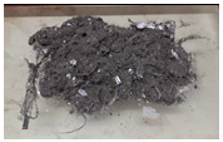
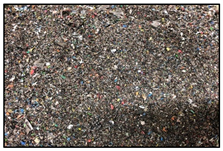
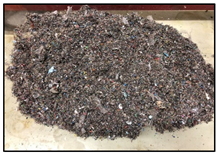
The waste samples used in the present study come from one lot of industrial plant recycling waste from electrical and electronic equipment, as well as electric cables. Experiments were carried out with secondary waste generated in air purification during the processing of WEEE (Table 1).
Table 1.
Samples of secondary e-waste studied.
All chemicals were used as received and without any further purification: HCl, 37% w/w (VWR Chemicals, Atlanta, GA, USA); HNO3, 65% w/w (VWR Chemicals); H2SO4, 96% w/w (Merck, Rahway, NJ, USA); NaClO (Merck); NaCl; and distilled water.
A quantitative analysis was carried out with an Agilent Technologies 5100 ICP-OES (Santa Clara, CA, USA) atomic absorption after acid attack to evaluate the percentages of metals.
2.2. Experimental Procedures
2.2.1. Acid Attack
The acid attack to determine the samples’ compositions was performed in a 250 mL closed flask as follows: The initial material was submerged in a 50 mL solution with a 1:3 ratio of nitric acid (65% w/w) to hydrochloric acid (37% w/w) at 150 °C for 3 h. After digestion, the suspension was filtered by using a vacuum pump system and nitrocellulose filter with a 0.45 µm pore size. The filtered solution was brought to a known volume by adding distilled water and then subjected to indium and tin quantitative analyses.
2.2.2. Leaching Test
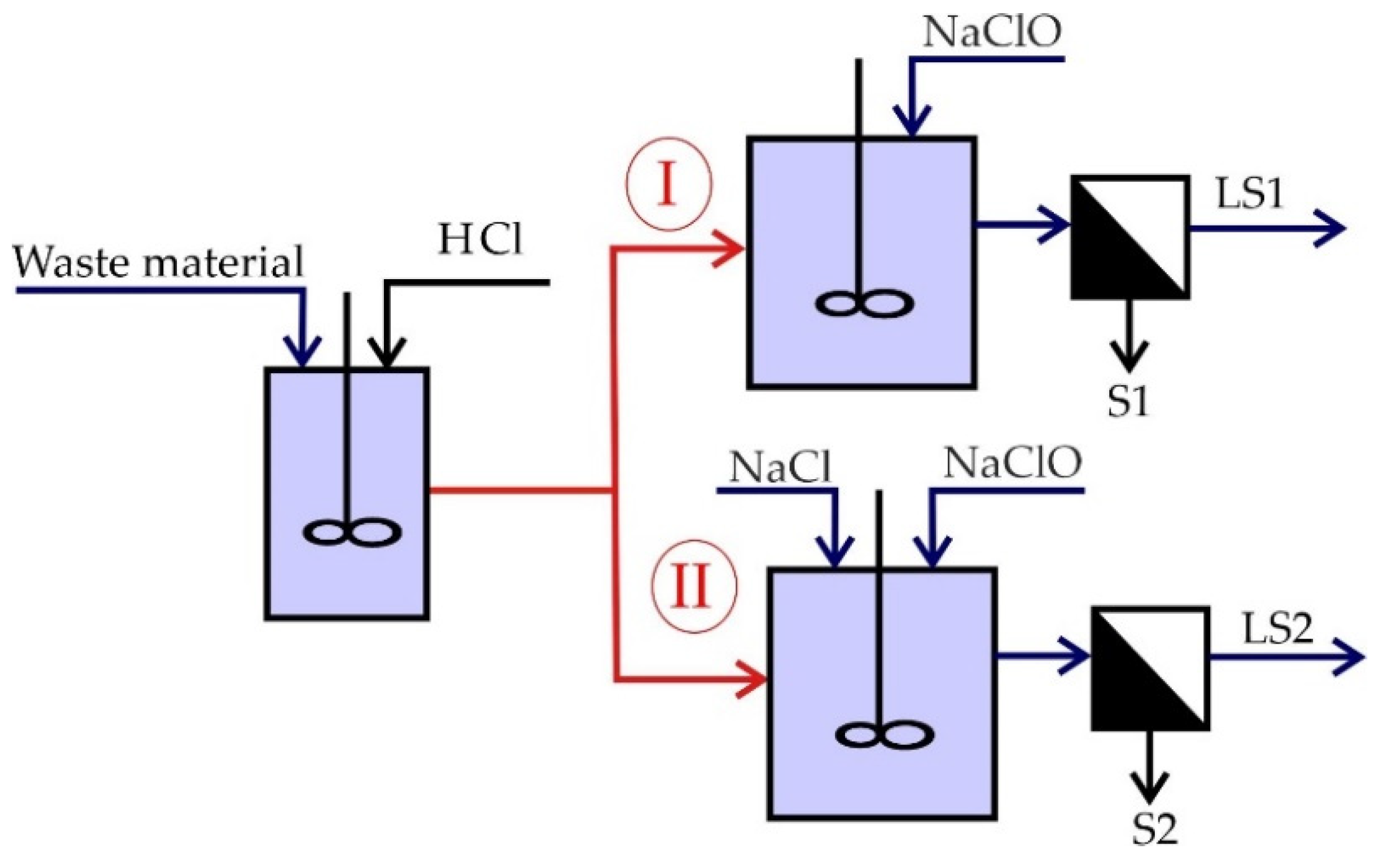
The chemical leaching tests of the waste samples were carried out on a lab scale in an open glass vessel system. Hydrochloric acid was used as a complexing agent and sodium hypochlorite with sodium chlorite as an oxidizing agent under different conditions. For all experiments, the L/S ratio was kept constant at 10/1.
The study consisted of two sets of experiments (Figure 3).
Figure 3.
The procedure of secondary e-waste leaching.
Metal leaching efficiency (E%) was calculated according to Equation (6):
where M is the amount of metal dissolved (g) and Mr is the amount of metal in the sample after leaching and acid attack (g).
E = [M/(M + Mr)]100%
The contents of metals in the solid residue after leaching and the subsequent acid attack were measured to eliminate the effect of sample variability on the results of the leaching experiments.
2.3. Experimental Design and Data Analysis
A factorial design was set up for the leaching tests to investigate and optimize the effects of the reagent concentration, oxidant concentration, and solid/liquid ratio on metal extraction. An analysis of variance (ANOVA) was used to define the interaction between the process variables [28]. A 24 factorial design with replicated central-point tests was chosen to conduct the leaching tests (Table 2).
Table 2.
Factors and levels investigated for the leaching tests.
An orthogonal central composition plan (OCCP) [29] was applied to optimize two variable factors, the HCl concentration (X1) and the NaClO dosage (X2). Metal recovery yield and weight loss were chosen as output variables (Yi) (Table 3).
Table 3.
The matrix of the orthogonal central composition plan (OCCP) for two variable factors.
The objective was to establish functional dependence, which allows for predicting the main output characteristic in the following form:
where b0 is the initial coefficient of the regression equation and b1, b2, b11, b22, and b12 are the linear and nonlinear coefficients of the regression equation.
3. Results and Discussion
3.1. Sample Characterization
To study their chemical compositions, the samples were sieved. The experiments were carried out with the waste fraction passed through a sieve (< 2 mm) rich in metals. The fraction with a particle size > 2 mm, consisting mainly of aluminum, plastic, and rubber sheets, was of no economic value.
The characterization study was repeated over time (four replicates for each sampling group) to evaluate the variability in the samples. Based on the results obtained from the chemical characterization of the studied samples (Table 4) and the metal quotation on the market, the intrinsic economic values [30] of each of them were as follows:
Table 4.
Chemical compositions of the samples investigated.
- F1 (filter): 4494 EUR/t;
- C1 (cyclone): 3517 EUR/t;
- F2 (filter output cables): 2243 EUR/t;
- C2 (cyclone output cables): 2429 EUR/t.
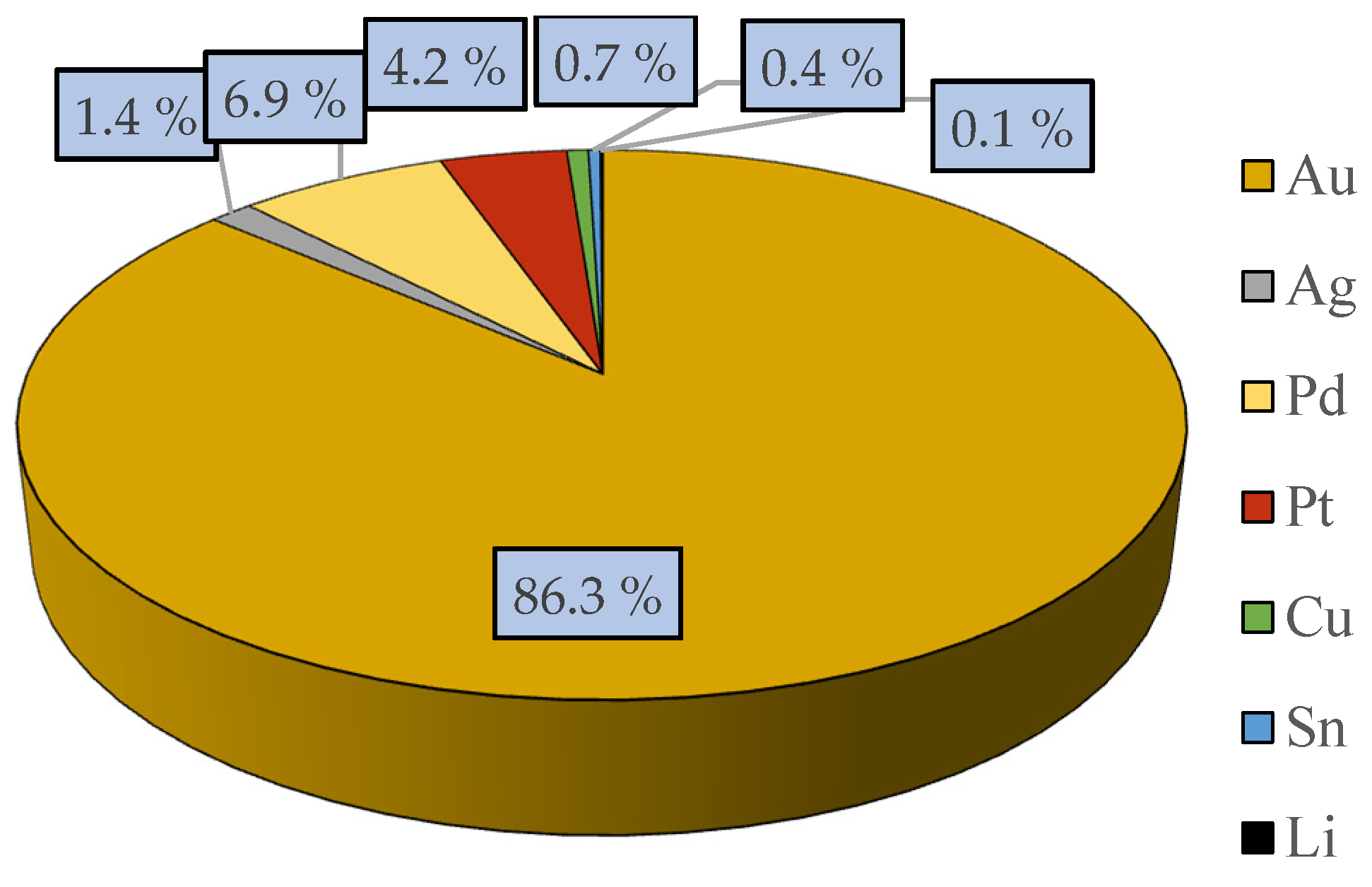
Sample F1 was found to be the most promising in terms of gold recovery due to its high content of gold (Figure 4). A series of tests were carried out to evaluate the recovery of economic values present in the F1 (<2 mm) filter fraction, with particular attention being paid to gold recovery since its contribution to the total intrinsic economic value exceeded 86%.
Figure 4.
Distribution of intrinsic economic value of the waste fraction filter (F1) based on the content of different metals (London Metal Exchange).
3.2. Optimizing the Leaching of Gold Recovery
The low gold content of e-waste compared to other non-ferrous metals makes it difficult to obtain pure gold as a final product. This problem can be solved by mathematical planning experiments to optimize processes. The study aimed to find the optimal technological conditions with a maximum effect of gold extraction and a minimum effect of silver and copper that would facilitate the subsequent extraction process.
Table 5 shows the 24 full factorial design of the experimental conditions using the Yates algorithm for gold, silver, and copper extraction carried out after leaching. In the significance tests, interval values with >95% confidence levels were considered. The reliability of the regression model was investigated by an analysis of variance (ANOVA) with the help of JMP 16 Statistical Software [31].
Table 5.
Data obtained according to the ANOVA for leaching tests.
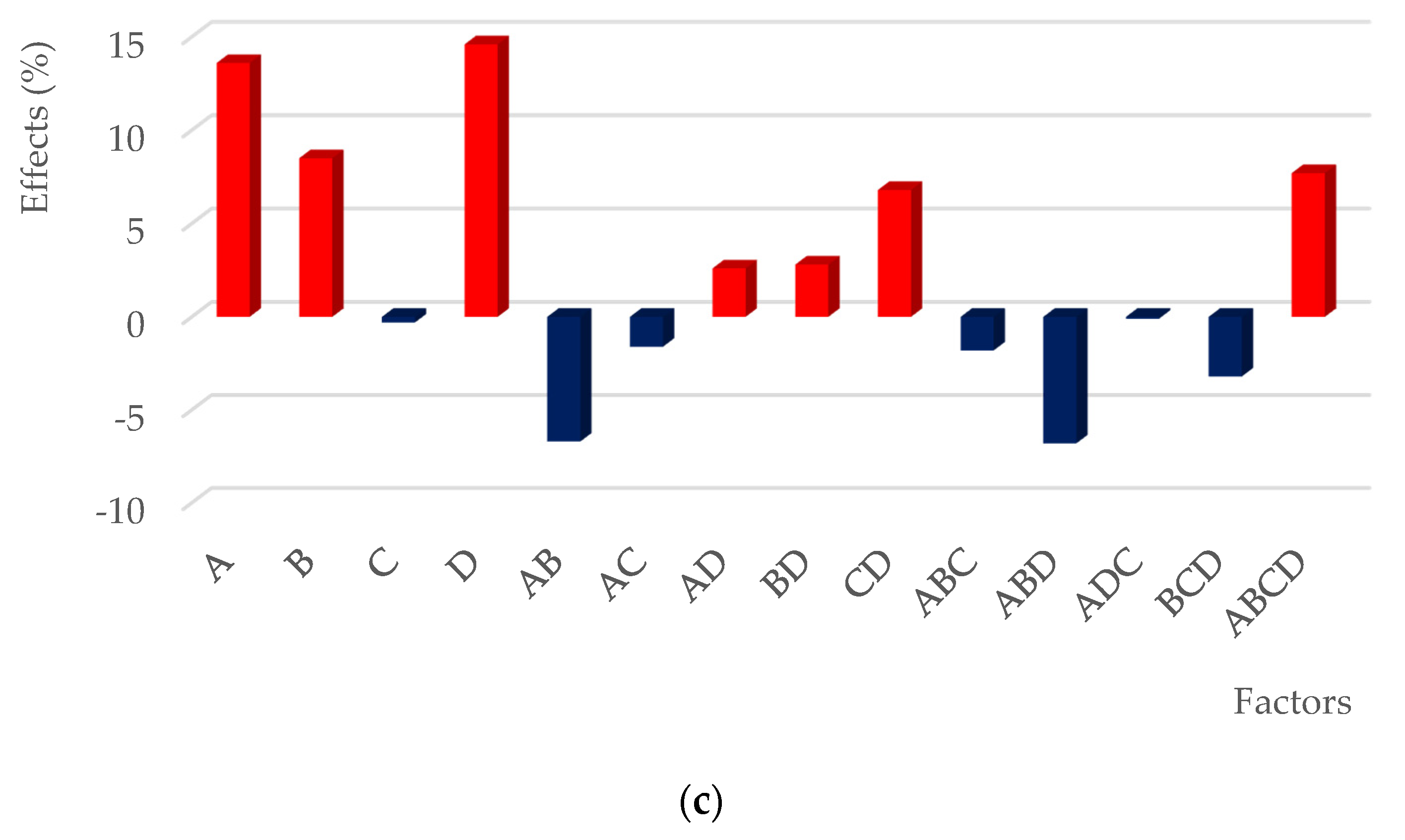
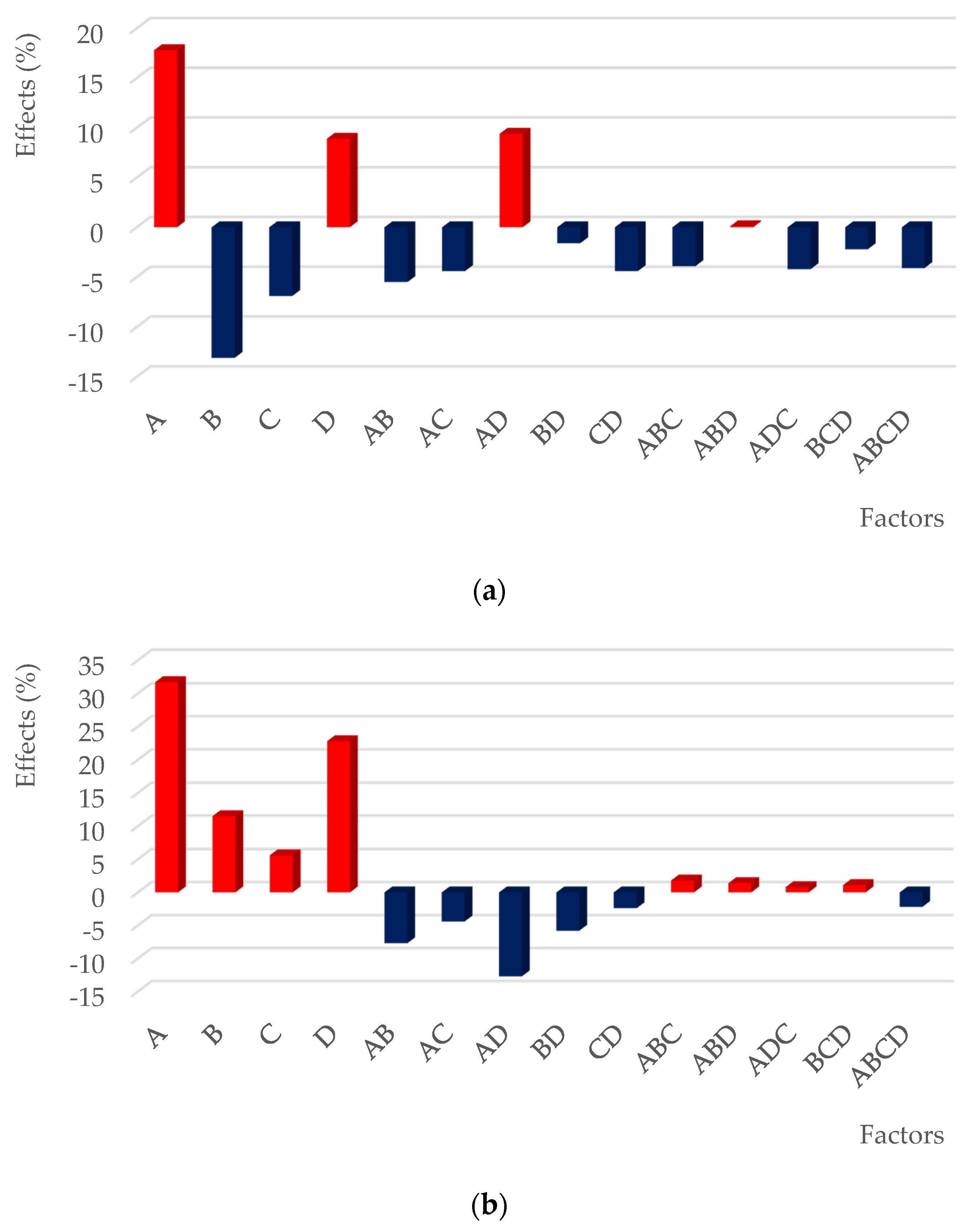
The significance of the variation in the response for each factor and each interaction was calculated using the Yates algorithm. The main effects and interactions affecting the metals’ extraction yields are shown in Figure 5. HCl (A) and temperature (D) were found to be effective in the case of gold extraction, whereas NaClO (B) and NaCl (C) had a negative effect (Figure 5a).

Figure 5.
Main factors and their interaction effects on Au (a), Ag (b), and Cu (c) extraction in the leaching process.
A completely different picture was observed in the case of silver extraction (Figure 5b). All studied factors were found to be effective, and they positively affected silver extraction. Instead, their interactions did not demonstrate much influence on Ag extraction. In the case of copper extraction, the main factors, such as the HCl (A) and NaClO (B) concentrations and t (D), had a positive effect, while NaCl (C) caused a negative impact.
The data presented in Table 5 demonstrate that the maximum extractions (94.3, 95.3, and 87.9%, respectively) were obtained under experimental conditions n.10 (highlighted in red). As can be seen, NaCl negatively affects the extraction of gold and, vice versa, increases the degree of extraction of silver and copper.
An analysis of variance (ANOVA) was applied to define the interaction between the process variables to optimize and determine the main effects and their interactions in the metal leaching process. The significance tests considered interval values that had a more than 95% confidence level (Table 6).
Table 6.
The Yates algorithm for the 24 full factorial plan, with a confidence level of 95%.
Based on the results obtained by the plan, the following gold extraction model was determined:
where X1, X2, and X4 are the coded factors, respectively, for the HCl, NaClO, and NaCl dosage. The model’s goodness was confirmed by the strong correlation between the experimental and theoretical data (R2 = 0.97).
Au dissolution (%) = 63.59 + 8.25 X1 − 7.22 X2 + 5.15 X4
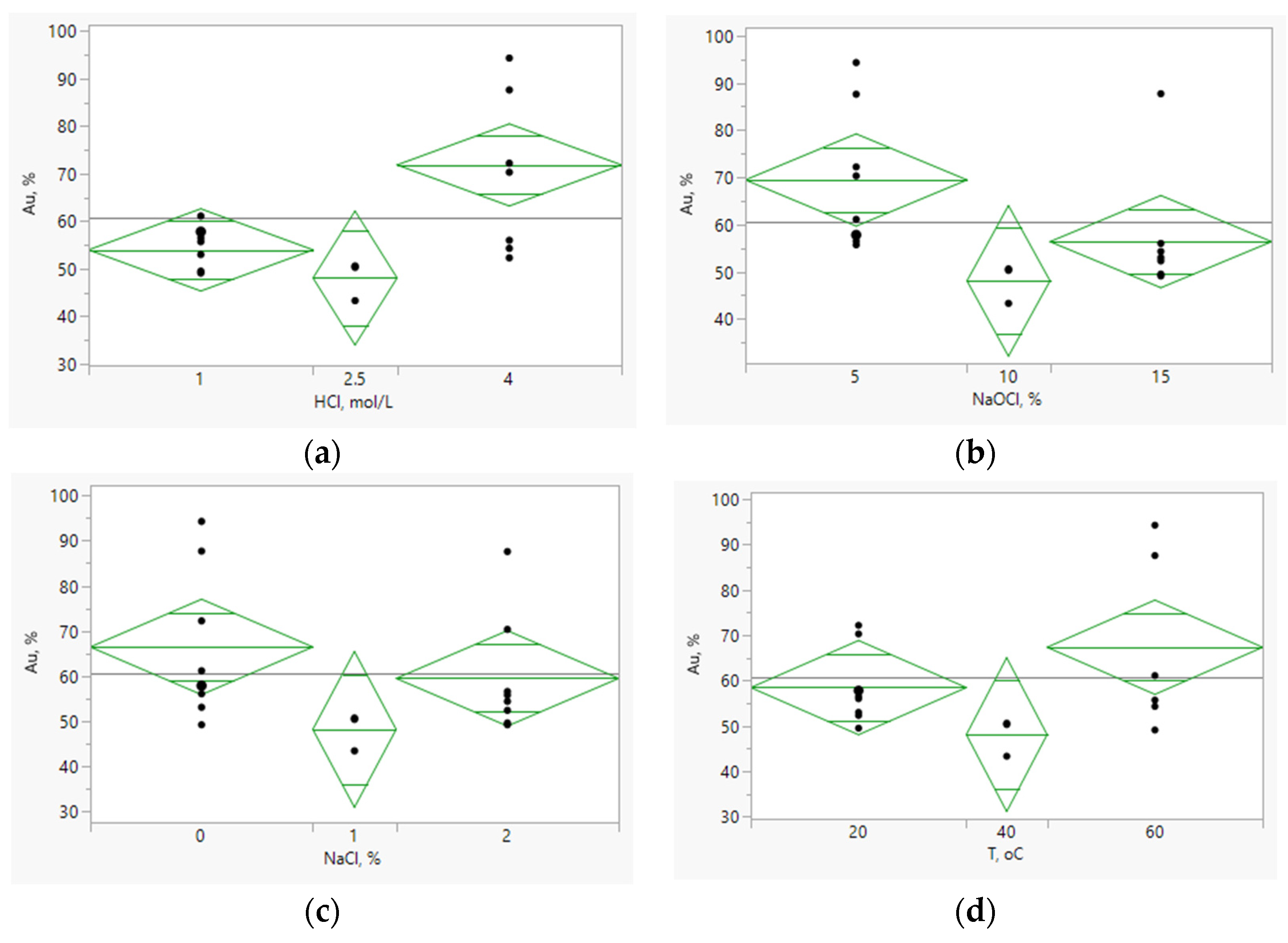
A one-way analysis of variance (ANOVA) (Figure 6) was carried out comparing pooled gold dissolution and including all experimental points (represented by closed squares). A statistically significant difference in the average gold dissolution yield according to reagent type and temperature was found. The individual value plots (Figure 6) illustrate the mean with a 95% confidence interval. Furthermore, the horizontal line extending from the y-axis to the right margin of the graph is the mean response across the parameters.
Figure 6.
One-way ANOVA for gold dissolution depends on HCl (a), NaClO (b), NaCl (c), and temperature (d) values in the leaching process.
An analysis of the pattern allows for narrowing the dosing intervals for the reagents. Several statements can be made: the concentration of hydrochloric acid at 4 mol/L is optimal, as shown in Figure 6a; increasing the dosage of sodium hypochlorite by over 5% harms gold dissolution (Figure 6b); adding NaCl negatively affects the process (Figure 6c); and a temperature of 60 °C is optimal for all three metals studied (Figure 6d).
Further experiments were carried out to guarantee the maximum dissolution of gold and, at the same time, optimize the operating conditions to reduce energy and reagent consumption. Table 7 shows the matrix of the orthogonal central composition plan (OCCP) for two variable factors (the HCl concentration and the NaClO dosage) and the results of the experiments with the corresponding sets of values for these factors. Numerical optimization was performed using JMP 16 Statistical Software [31].
Table 7.
The OCCP matrix and the extraction yields of Au, Ag, and Cu.
As can be seen from the results presented in Table 7, the maximum effect of gold recovery (more than 90%) with minimal degrees of silver and copper recovery (about 27–44%) is achieved in two cases: when leaching with 4M hydrochloric acid and when leaching with 2.5M hydrochloric acid in the presence of 5% sodium hypochlorite. Considering the consumption of reagents and their costs, the most preferable from an economic point of view is the process of gold extraction, using 2.5M HCl as a leaching solution in the presence of 5% sodium hypochlorite, which made it possible to achieve 91.6% gold recovery, 37.8% silver recovery, and 44% copper recovery.
The effect summary table (Figure 7) allows us to evaluate the significance of the factors, showing them in ascending order of p-value. As can be seen, the response (Au extraction efficiency) is most influenced by hydrochloric acid. Instead, the interaction between HCl and NaOCl has a negligible impact on Au leaching.
Figure 7.
An effect summary table for gold leaching.
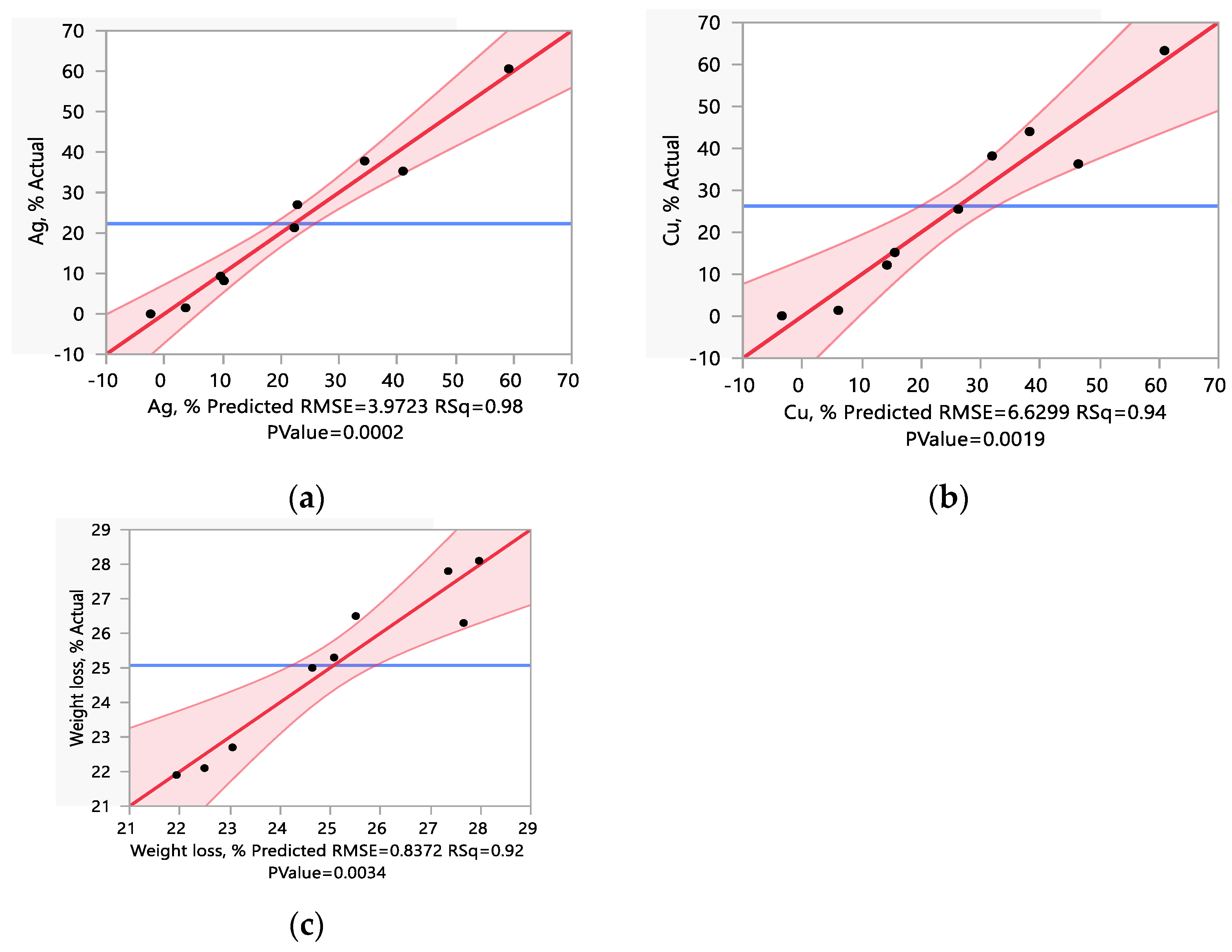
The same procedure was applied to evaluate the Cu and Ag extraction and weight loss effect summary table. Figure 8 plots the actual response against the predicted response for these parameters.
Figure 8.
Actual response vs. predicted response plot for Ag (a), Cu (b), and weight loss (c), %.
The predicted vs. practical plot for the leaching efficiencies is shown in Figure 8. As can be seen, there is a good linear relationship between the predicted values and the actual values. This result shows that the regression model is consistent with the experimental results and can be used to optimize the experimental parameters.
The scatter diagram presented in Figure 8 highlights the comparison between the experimental Au, Ag, and Cu yields and the estimated yields. This figure shows a good agreement between the predicted and experimental yields, which confirms that empirical equations are suitable for predicting leaching behavior in a range of experimental conditions for process optimization. The results show that the regression model is consistent with the experimental results and can be used to optimize the experimental parameters.
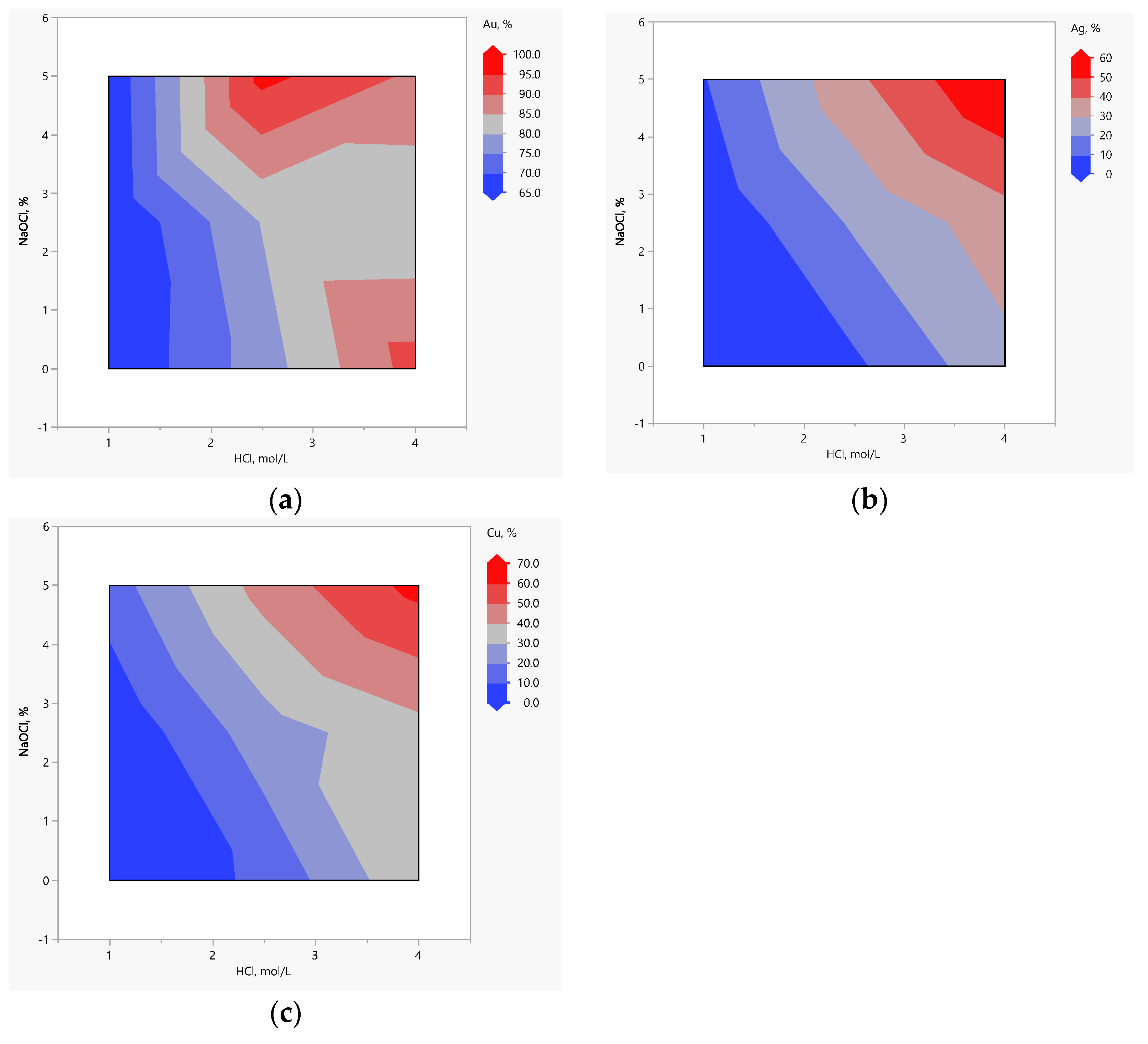
The contour plot in Figure 9a demonstrates two optimal conditions for gold extraction. On the one hand, the first maximum of gold dissolution was 92.1%, obtained in the absence of sodium hypochlorite with 4 mol/L of hydrochloric acid. On the other hand, adding 5% of sodium hypochlorite can reduce hydrochloric acid consumption by up to 2.5 mol/L, resulting in 91.6% gold dissolution.
Figure 9.
The contour plot of the extraction of Au (a), Ag (b), and Cu (c) as a function of HCl and NaClO concentration.
In the case of silver and copper dissolution (Figure 9b,c), the need for an oxidizing agent is evident to increase their dissolution yields, with a maximum extraction value at higher dosages of both HCl and NaClO.
4. Conclusions
Factorial experiments were conducted to identify the factors that allow maximizing the recovery of the metals that have the greatest impact on the intrinsic economic value of the materials. It was established that HCl concentration and temperature are the most significant factors influencing Au extraction, and both factors had a positive effect on the leaching process. However, all four studied factors were significant and had a positive effect on Ag recovery.
For the treatment of the studied samples, a process was developed that involves acid leaching, which allows reaching over 90% of the gold dissolution. Based on the statistical model, two gold recovery optima were obtained. The first (92.1%) was obtained in the absence of sodium hypochlorite at a concentration of 4 mol/L hydrochloric acid, and the second (91.6%) was obtained with the addition of 5% sodium hypochlorite and 2.5 mol/L hydrochloric acid.
The resulting mathematical models can be used in the form of recommendations that allow for assessing the relationship between the desired effects of metal extraction and the optimal conditions for the process.
Author Contributions
Conceptualization, S.Z. and N.M.I.; methodology, N.M.I. and F.V.; software, S.Z.; validation, N.M.I.; formal analysis, S.Z. and F.F.; investigation, M.P.; resources, F.V.; data curation, S.Z., P.R. and F.F.; writing—original draft preparation, S.Z.; writing—review and editing, S.Z. and N.M.I.; visualization, P.R. and F.V.; supervision, N.M.I. and F.V.; project administration, F.V.; funding acquisition, F.V. All authors have read and agreed to the published version of the manuscript.
Funding
This research received no external funding.
Institutional Review Board Statement
Not applicable.
Informed Consent Statement
Not applicable.
Data Availability Statement
Data are contained within the article.
Conflicts of Interest
The authors declare no conflicts of interest.
References
- Tuncuk, A.; Stazi, V.; Akcil, A. Aqueous metal recovery techniques from e-scrap: Hydrometallurgy in recycling. Miner. Eng. 2012, 25, 28–37. [Google Scholar] [CrossRef]
- Forti, V.; Balde, C.P.; Kuehr, R.; Bel, G. The Global E-Waste Monitor 2020: Quantities, Flows and the Circular Economy Potential; UNU/UNITAR SCYCLE, ITU, ISWA: Geneva, Switzerland, 2020; 120p. [Google Scholar]
- Hazra, A.; Das, S.; Ganguly, A. Plasma arc technology: A potential solution toward waste to energy conversion and of GHGs mitigation. In Waste Valorisation and Recycling, Proceedings of the 7th IconSWM—ISWMAW 2017; Springer: Singapore, 2019; pp. 203–217. [Google Scholar]
- Zulkernain, N.H.; Basant, N.; Ng, C.C. Recovery of precious metals from e-wastes through conventional and phytoremediation treatment methods: A review and prediction. J. Mater. Cycles Waste Manag. 2023, 25, 2726–2752. [Google Scholar] [CrossRef]
- Critical Raw Materials. Available online: https://ec.europa.eu/growth/sectors/raw-materials/areas-specific-interest/critical-raw-materials/ (accessed on 20 February 2024).
- Directive (EU) 2024/884 Amending Directive 2012/19/EU on Waste Electrical and Electronic Equipment (WEEE). Available online: https://www.europeansources.info/record/directive-eu-2024-884-amending-directive-2012-19-eu-on-waste-electrical-and-electronic-equipment-weee/ (accessed on 14 May 2024).
- WEEE: Illegal Trade of Electronic Waste Must be Stopped to Achieve EU Goals. Available online: https://www.renewablematter.eu/articles/article/weee-illegal-trade-of-electronic-waste-must-be-stopped-to-achieve-eu-goals/ (accessed on 13 April 2024).
- European Commission to fight shell entities. Available online: https://www.dpc.bg/insights/european-commission-to-fight-shell-entities/ (accessed on 13 April 2024).
- Tuncuk, A. Lab scale optimization and two-step sequential bench scale reactor leaching tests for the chemical dissolution of Cu, Au & Ag from waste electrical and electronic equipment (WEEE). Waste Manag. 2019, 95, 636–643. [Google Scholar]
- Rene, E.R.; Sethurajan, M.; Ponnusamy, V.K.; Kumar, G.; Dung, T.N.B.; Brindhadevi, K.; Pugazhendhi, A. Electronic waste generation, recycling and resource recovery: Technological perspectives and trends. J. Hazard. Mater. 2021, 416, 125664. [Google Scholar] [CrossRef]
- Neto, I.F.F.; Soares, H.M.V.M. Simple and near-zero-waste processing for recycling gold at a high purity level from waste printed circuit boards. Waste Manag. 2021, 135, 90–97. [Google Scholar] [CrossRef]
- Mori de Oliveira, C.; Bellopede, R.; Tori, A.; Marini, P. Study of Metal Recovery from Printed Circuit Boards by Physical-Mechanical Treatment Processes. Mater. Proc. 2021, 5, 121. [Google Scholar]
- Ahirwar, R.; Tripathi, A.K. E-waste management: A review of recycling process, environmental and occupational health hazards, and potential solutions. Environmental Nanotechnology. Monit. Manag. 2021, 15, 100409. [Google Scholar] [CrossRef]
- Anuar, W.; Ardani, M.; Baharun, N.; Ismail, S.; Rahman, S. Optimization Process of the Refractory Gold Ore Extraction by Hypochlorite Oxidative Leaching. Min. Metall. Explor. 2021, 38, 1191–1201. [Google Scholar] [CrossRef]
- Veit, H.M.; de Pereira, C.C.; Bernardes, A.M. Using mechanical processing in recycling printed wiring boards. JOM 2002, 54, 45–47. [Google Scholar] [CrossRef]
- Gurgul, A.; Szczepaniak, W.; Zabłocka-Malicka, M. Incineration and pyrolysis vs. steam gasification of electronic waste. Sci. Total Environ. 2018, 624, 1119–1124. [Google Scholar] [CrossRef]
- Andooz, A.; Eqbalpour, M.; Kowsari, E.; Ramakrishna, S.; Cheshmeh, Z.A. A comprehensive review on pyrolysis from the circular economy point of view and its environmental and social effects. J. Clean. Prod. 2023, 388, 136021. [Google Scholar] [CrossRef]
- Udayakumar, S.; Razak, M.I.B.A.; Ismail, S. Recovering valuable metals from Waste Printed Circuit Boards (WPCB): A short review Mater. Today Proc. 2022, 66, 3062–3070. [Google Scholar] [CrossRef]
- Ippolito, N.M.; Passadoro, M.; Ferella, F.; Pellei, G.; Veglio, F. Recovery of Metals from Printed Circuit Boards by Gold-REC 1 Hydrometallurgical. Sustainability 2023, 15, 7348. [Google Scholar] [CrossRef]
- Do, M.H.; Nguyen, G.T.; Thach, U.D.; Lee, Y.; Bui, T.H. Advances in hydrometallurgical approaches for gold recovery from E-waste: A comprehensive review and perspectives. Miner. Eng. 2023, 191, 107977. [Google Scholar] [CrossRef]
- Syed, S. Recovery of gold from secondary sources. A review. Hydrometallurgy 2012, 115–116, 30–51. [Google Scholar] [CrossRef]
- Sousa, R.; Regufe, M.J.; Fiúza, A.; Leite, M.M.; Futuro, A. A systematic review of sustainable gold extraction from raw ores using alternative leaching reagents. Extr. Ind. Soc. 2022, 9, 101018. [Google Scholar] [CrossRef]
- Ray, D.A.; Baniasadi, M.; Graves, J.E.; Greenwood, A.; Farnaud, S. Thiourea Leaching: An Update on a Sustainable Approach for Gold Recovery from E-waste. J. Sustain. Metall. 2022, 8, 597–612. [Google Scholar] [CrossRef]
- Xu, B.; Kong, W.; Li, Q.; Yang, Y.; Jiang, T.; Liu, X. A Review of Thiosulfate Leaching of Gold: Focus on Thiosulfate Consumption and Gold Recovery from Pregnant Solution. Metals 2017, 7, 222. [Google Scholar] [CrossRef]
- Tiburcio-Munive, G.; Salazar-Campoy, M.M.; Valenzuela-García, J.L. Dissolution of Silver and Gold with Sodium Hypochlorite and Hydrochloric Acid in Refractory Minerals (Mangano-Argentiferous). Min. Metall. Explor. 2020, 37, 1213–1220. [Google Scholar] [CrossRef]
- De Carvalho, F.A.; Resende, A.; Leão, V.A. Gold Leaching by Sodium Chloride and Calcium Hypochlorite Solutions Extraction. In Extraction 2018, Proceedings of the First Global Conference on Extractive Metallurgy; The Minerals, Metals & Materials Series; Springer: Cham, Switzerland, 2018. [Google Scholar]
- Wang, R.; Deng, Y.; Li, S.; Yu, K.; Liu, Y.; Shang, M.; Wang, J.; Shu, J.; Sun, Z.; Chen, M. Waste Electrical and Electronic Equipment Reutilization in China. Sustainability 2021, 13, 11433. [Google Scholar] [CrossRef]
- Montgomery, D.C. Design and Analysis of Experiments, 5th ed.; Springer: New York, NY, USA, 1997; ISBN 0-471-31649-0. [Google Scholar]
- Kremer, N. Teoriya Veroyatnostei i Matematicheskaya Statistika (Probability Theory and Mathematical Statistics); YuNITI DANA: Moscow, Russia, 2009. [Google Scholar]
- Romano, P.; Ippolito, N.M.; Veglio, F. Chemical Characterization of an ARDUINO® Board and Its Surface Mount Devices for the Evaluation of Their Intrinsic Economic Value. Processes 2023, 11, 1911. [Google Scholar] [CrossRef]
- New in JMP® 16 and JMP Pro® 16. Available online: https://www.jmp.com/en_is/events/mastering/topics/new-in-jmp16-and-jmp-pro16.html (accessed on 13 April 2024).
Disclaimer/Publisher’s Note: The statements, opinions and data contained in all publications are solely those of the individual author(s) and contributor(s) and not of MDPI and/or the editor(s). MDPI and/or the editor(s) disclaim responsibility for any injury to people or property resulting from any ideas, methods, instructions or products referred to in the content. |
© 2024 by the authors. Licensee MDPI, Basel, Switzerland. This article is an open access article distributed under the terms and conditions of the Creative Commons Attribution (CC BY) license (https://creativecommons.org/licenses/by/4.0/).