1. Introduction
The symmetry between packaging forms and users’ affective semantics is a key channel for designers to receive positive and negative market feedback. Biomimetic forms can better reflect the uniqueness and differentiation of packaging forms. Integrating users’ affective semantics with bionic elements narrows the gap between designers’ intentions and users’ perceptions [
1]. ZhaoXian Ren and his team [
2] proposed an emotion-driven product form design methodology by combining user emotions with neural networks and applying it to air purifiers. Jixiao Chang and his team [
3] converted user affective semantics into design criteria through the Fuzzy KANO model and integrated regional cultural symbols into public seating design. Xuerui Li [
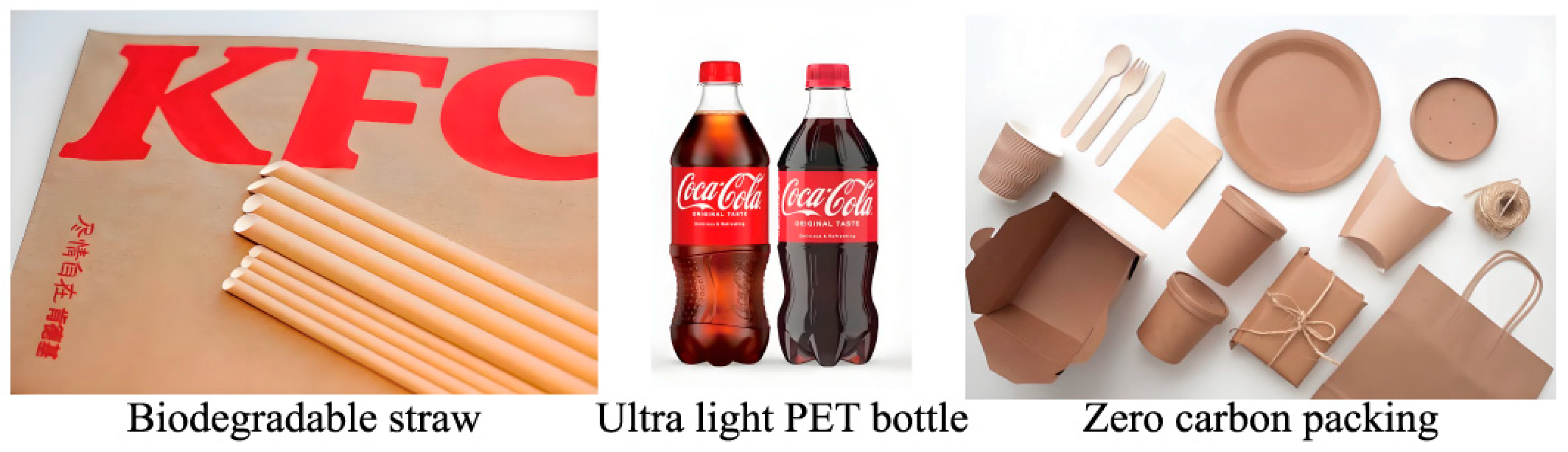
4] and others developed a new design pathway for electric garden tools by capturing workers’ affective needs and leveraging AI-generated images for inspiration. Natural forms themselves carry emotional associations familiar to users; through the mapping of “natural forms to affective semantics,” abstract affective semantics can be transformed into tangible packaging forms. This enables consumers to intuitively perceive designers’ intentions and addresses the disconnect in emotional connection. With the growing prominence of green and sustainable principles, more designers are reconsidering the ecological impacts of modern human activities and design practices, proposing and applying sustainable design theories. Meanwhile, the international community emphasizes that green design should adhere to the “3R1D” principle: Reduce, Reuse, Recycle, and Degrade [
5]. Numerous green and sustainable packaging solutions have been developed and applied in commercial products. For example, Coca-Cola uses lightweight PET bottles to reduce packaging material consumption and processing energy consumption; KFC’s biodegradable straws ensure no environmental burden after disposal; and zero-carbon packaging minimizes material usage while prioritizing the recyclability of materials (
Figure 1). Sining Huan [
6] and others designed a fruit preservation packaging material using beeswax, leveraging its natural environmental friendliness and strong hydrophobicity. Andreja Pogacar and Diana Gregor Svetec [
7] combined green sustainability principles with digital interaction methods to optimize a sustainable gift packaging model, reducing material use and printing while enhancing consumer-packaging interaction without environmental harm. However, most design solutions overly focus on material environmental friendliness and space utilization while neglecting the impact of form on user experience, resulting in packaging that lacks visual appeal; such designs are mostly concentrated in commercial product packaging and fail to cover the high-frequency demand scenario of daily agricultural and sideline products, leaving a long-standing gap in their green and sustainable design. Furthermore, they do not integrate consumers’ affective semantics into packaging design, creating a disconnect between designers’ intentions and users’ perceptions that hinders emotional resonance, and no corresponding relationship between form and affective semantics has been established, making it difficult to convey sustainable values through morphological design. Overall, existing packaging designs tend to be rigid and lack user engagement, with attention primarily focused on commercial applications rather than extending to daily agricultural and sideline product packaging, which also lacks green and sustainable design concepts.
To address the deficiencies of existing packaging research in form and user affective semantics, this study aims to: (i) systematically collect natural forms suitable for biomimetic packaging design, integrate affective semantics and sustainability evaluation indicators for packaging, and establish a “natural form-affective semantics” mapping matrix; (ii) conduct conceptual practice based on this mapping to develop three biomimetic-form tea packaging conceptual designs; (iii) construct a sustainable multi-criteria evaluation framework to determine indicator weights and conduct comprehensive evaluations of design schemes, identify the optimal solution, and refine design strategies.
The research process consists of three phases: natural form collection and screening, affective semantics prioritization and sustainability indicator system construction, and concept generation and comprehensive evaluation. First, ten candidate natural forms were collected from plants, animals, and other natural prototypes. The Affinity Diagram method (AD) is used to screen and obtain the initial nine affective semantic terms and nine sustainability evaluation indicators based on user evaluations. Ten domain experts rated the importance of the affective semantics to determine their priority ranking using the Precedence Chart (PC) method, and a “natural form-affective semantics” matrix was constructed. Based on this, three optimal natural forms were selected for conceptual design, leading to three biomimetic tea packaging schemes. Combined with sustainability indicators, objective weighting and comprehensive evaluation were conducted via the Criteria Importance Through Intercriteria Correlation (CRITIC) method and Grey Relational Analysis (GRA) method. Finally, thirty target consumers (18–60 years old, regular tea buyers) were invited to assess the acceptance of the three design schemes.
The remainder of this paper is structured as follows:
Section 2 reviews relevant literature on biomimetic design and packaging sustainability, summarizing theoretical and practical advancements in the synergy between packaging form and environmental performance;
Section 3 details the research methodology and implementation process;
Section 4 presents the results of natural form screening, conceptual design generation, and comprehensive evaluation of the tea packaging prototypes;
Section 5 discusses user acceptance results of the optimal scheme, design trade-offs, and strategy optimization;
Section 6 presents conclusions and highlights research contributions.
2. Research Background
2.1. Application of User Affective Semantics
User affective semantics are a core and indispensable factor in the design field, reflecting the “user-centered” design philosophy. Affective semantics are typically implicit in users’ subjective evaluations and emotional feedback regarding product functions, appearance, and usage details. By systematically collecting and analyzing such feedback, users’ psychological demands can be transformed into explicit, objective references for design practice, guiding designers in precise product optimization and iteration. Liem’s team [
8] conducted qualitative and quantitative research focusing on milk packaging to explore the impact of visual cues on consumers’ perception of sustainability. They found that packaging with a cardboard brown color and rough texture is more likely to be judged as sustainable by consumers. Doi Toshihisa and Nagata Aoi [
9] used the Evaluation Grid Method to analyze the sequence of product use and predict expected user experiences, optimizing packaging designs for candies and sunscreen. Mengqi Qin [
10] and others collected affective vocabulary and integrated traditional patterns to optimize furniture and textile product designs, providing practical guidance for the modernization and innovative transformation of Home Textile Design (HTD) cultural elements. Lei Fu [
11] and others enhanced the versatility of user research and the balance of design decisions, applying the approach to furniture design to address the common cognitive asymmetry between designers and users.
From the aforementioned literature, it can be concluded that the impact of users’ affective semantics on packaging form design is not an abstract correlation but is realized through direct “demand-form attribute” correspondence. In the field of packaging design, affective semantics directly define the core form attributes of packaging through the chain of “user feedback-demand extraction-form transformation”, enabling packaging to evolve from a mere “container carrier” into a visual expression of users’ emotions. However, most existing practices merely integrate products with affective semantics to enhance market acceptance and user satisfaction; while improvements and designs have been made to the visual presentation of packaging forms, an overabundance of similar designs has led to monotony.
This study will establish the core mechanism of affective semantics supporting packaging development, construct a symmetrical relationship between “affective semantics and formal attributes”, and transform abstract emotions into quantifiable and operable design indicators. Each lexical term is further decomposed into corresponding dimensions of packaging formal attributes. Design elements of the scheme, such as packaging form, texture, structure, and color, are prioritized according to the weights of affective semantics, providing a clear decision-making basis for packaging development.
2.2. Biomimetic Design Applications
Biomimetic Design, as an emerging interdisciplinary research field, is defined as “an interdisciplinary practice that consciously imitates biological models to address technological and ecological challenges.” It emphasizes studying the systematic characteristics of natural organisms, integrating design thinking to transform them into sustainable technical solutions. By exploring the functional and ecological advantages of organisms and leveraging human innovative cognition to convert them into design schemes, it ultimately achieves technological resilience and sustainability [
12]. Dhatt Puneet [
13] and others drew inspiration from plant leaf structures, simulating the “cellulose skeleton + outer protective layer” synergistic structure using the support of cell walls and hydrophobic cuticles to develop a Layered, Ecological, Advanced, and Multi-Functional Film, which effectively extends food shelf life, reduces packaging costs, and replaces traditional disposable plastic packaging. Chao Liu [
14] and others designed flapping-wing micro robots (FWMRs) by mimicking the flapping motion, wing structural parameters, and unsteady aerodynamics of flying insects, enhancing their flexibility and maneuverability. Dongbao Sui [
15] and others studied the anatomical characteristics of elephant trunks and designed a continuum manipulator consisting of internally pneumatically driven bellows and externally tendon-driven spiral springs, mimicking the trunk’s conical profile to improve variable stiffness and ductility. Zhihong Wang [
16] and others designed a biomimetic annular groove sealing structure inspired by the multi-level groove structure and adaptive sealing mechanism of octopus suckers, effectively enhancing adsorption capacity and load-bearing performance.
Currently, most researchers focus on analyzing biological functional attributes and ecological characteristics for product function improvement, leading to widespread application in functional design. However, these studies are limited to enhancing product functionality, neglecting material sustainability and visual design. The natural imagery embodied by biological forms can directly arouse users’ emotional resonance, forging a relational chain of “-affective semantics-biomimetic form-user perception” that enables the design to convey warmth and experiential value. In this context, designers should prioritize sustainable materials and biomimetic design based on biological morphological characteristics to improve packaging’s visual presentation. This study focuses on tea packaging. We screen biological forms highly aligned with the core emotions of tea consumption and integrate green sustainable materials to construct a new pathway for biomimetic tea packaging characterized by “emotion conveyance through form and environmental friendliness through materials.” This approach not only addresses the insufficiency of existing biomimetic designs in emotional communication but also meets users’ multiple demands for packaging-encompassing visual appeal, emotional resonance, and sustainability.
2.3. Sustainable Design Applications
In contemporary packaging design, designers are increasingly emphasizing and applying sustainable principles. Amid severe global resource depletion and environmental degradation, numerous packaging designs have adopted material substitution and structural innovation to address environmental challenges. The maturity of “sustainable design” also encourages industries to expand their scope of achievements, including services, product-service systems, and social innovation [
17]. Quoc Tai Nguyen, Phuc Nhan Nghiem, and Duong Ngoc Hong [
18] influenced consumers’ purchasing intentions through eco-labels and promoted environmentally friendly production processes to demonstrate commitment to sustainability. Traditional packaging, a major environmental pollutant and the first point of consumer contact during transportation, must balance product protection, aesthetic needs, and environmental impact. Team of Kossalbayev [
19] focused on developing biodegradable packaging from agricultural waste to reduce pollution and carbon emissions associated with traditional plastic packaging. To enhance key properties of such packaging—including tensile strength and thermal stability—to meet transportation requirements, they incorporated nanocellulose additives or adopted composite processes such as extrusion molding. The team of Gholizadeh Sara [
20] developed a green packaging preservation technology for fresh beef using zein and inulin electrospun nanofibers incorporated with copper oxide nanoparticles and fennel essential oil. Gungoren Alper [
21] and others enhanced the antibacterial and antioxidant properties of chitosan films with borage extract (Borago officinalis extract) for fresh rainbow trout fillet packaging. Qureshi Waseem Akhtar [
22] and others coated paper substrates with cellulose nanofibers to fill surface pores and form a barrier film, replacing traditional paper packaging films.
Collectively, these studies indicate that integrating green design into packaging can alleviate environmental pollution and resource waste caused by traditional packaging, a trend that is also reflected in commercial products. However, an overemphasis on green sustainability has led designers to overlook the visual symbolic significance of packaging, equating the green concept with a homogeneous expression of “decorless design, monotonous natural colors, and simplified printing”. This not only triggers a trade-off conflict between sustainability and usability—where minimalist designs impair the information transmission function of some packaging, making it difficult for consumers to quickly identify product information—but also results in a loss of distinctive visual recognition and artistic appeal, failing to incorporate consumers’ core demands of “natural affinity”, “exquisite texture” and “emotional resonance”. Without a profound emotional connection between packaging and users, even eco-friendly packaging struggles to stimulate sustained purchase intention and usage loyalty, ultimately limiting the market penetration of green packaging.
Therefore, designers should abandon the inherent misconception that “environmental protection and user experience are opposing forces”. While adhering to the concept of green sustainable development, the focus should shift toward the synergistic optimization of “sustainability-usability-consumer appeal”. It is essential to thoroughly explore the visual value and structural advantages of natural forms, integrate the core semantics of user emotions, and enhance product appeal through the fusion of visual forms and emotional expression, while ensuring the environmental friendliness of packaging. This approach not only resolves the two key trade-off conflicts but also enriches the design dimensions of green packaging, providing an innovative framework for similar packaging designs that integrates ecological, practical, and emotional values.
2.4. Multi-Criteria Evaluation Methods
Multi-criteria evaluation methods are widely used in packaging design as essential tools for complex decision-making. These methods offer a systematic and structured evaluation framework through multi-dimensional indicators, converting fragmented traditional indicators into comprehensive, objective, and holistic evaluations [
10]. Huafeng Quan, Yiting Li, and Qin Li [
23] used natural language processing and latent Dirichlet allocation models to analyze users’ sensory evaluations of Guizhou red sour soup packaging. They established relationships between sensory vocabulary sets and design elements through Kansei Engineering, evaluated suitable packaging schemes using standard deviation, and completed pattern design using semiotic methods. Harahap [
19] and others applied QFD to establish relationships between customer needs and engineering indicators. They then employed the Theory of Inventive Problem Solving (TRIZ) to identify solutions. Engineering indicators from QFD were converted into 39 TRIZ parameter improvement types, leading to green color matching packaging design solutions through TRIZ contradiction matrices. Dollaya Buakum [
24] and others combined subjective and objective methods (AHP and QFD) to gather sensory needs and technical plans from diverse customer groups, constructing an evaluation system for temperature-controlled medical packaging design. Byanca Porto de Lima [
25] and others addressed uncertainty and expert opinion divergence in decision-making using AHP, QFD, and Preference Ranking Organization Method for Enrichment Evaluations, applying these methods to packaging design selection for automotive companies. Min Qu [
26] and others enhanced user satisfaction and product competitiveness by integrating user feedback into air purifier innovation via the FKANO-Decision-Making Trial and Evaluation Laboratory (DEMATEL)-ViseKriterijumska Optimizacija I Kompromisno Resenje (VIKOR) multi-criteria model.
Current multi-criteria evaluation methods in packaging design primarily focus on capturing consumers’ sensory vocabulary, constructing matrices, and applying them to design. These methods significantly improve design accuracy and enhance user favorability and attractiveness. However, many existing designs rely excessively on experts’ subjective judgments, which compromises data objectivity, and the complex decision-making processes limit the ability to provide actionable insights for other packaging applications.
To overcome these limitations, this study uses the AD method and the CRITIC method to reduce over-reliance on experts’ subjective judgments and enhance data objectivity. QFD, PC method, and GRA are integrated to streamline the entire decision-making process. Through these quantitative methods, sensory user needs are translated into biomimetic tea packaging schemes that meet both user demands and sustainable design principles.
3. Methods
3.1. Proposed Framework
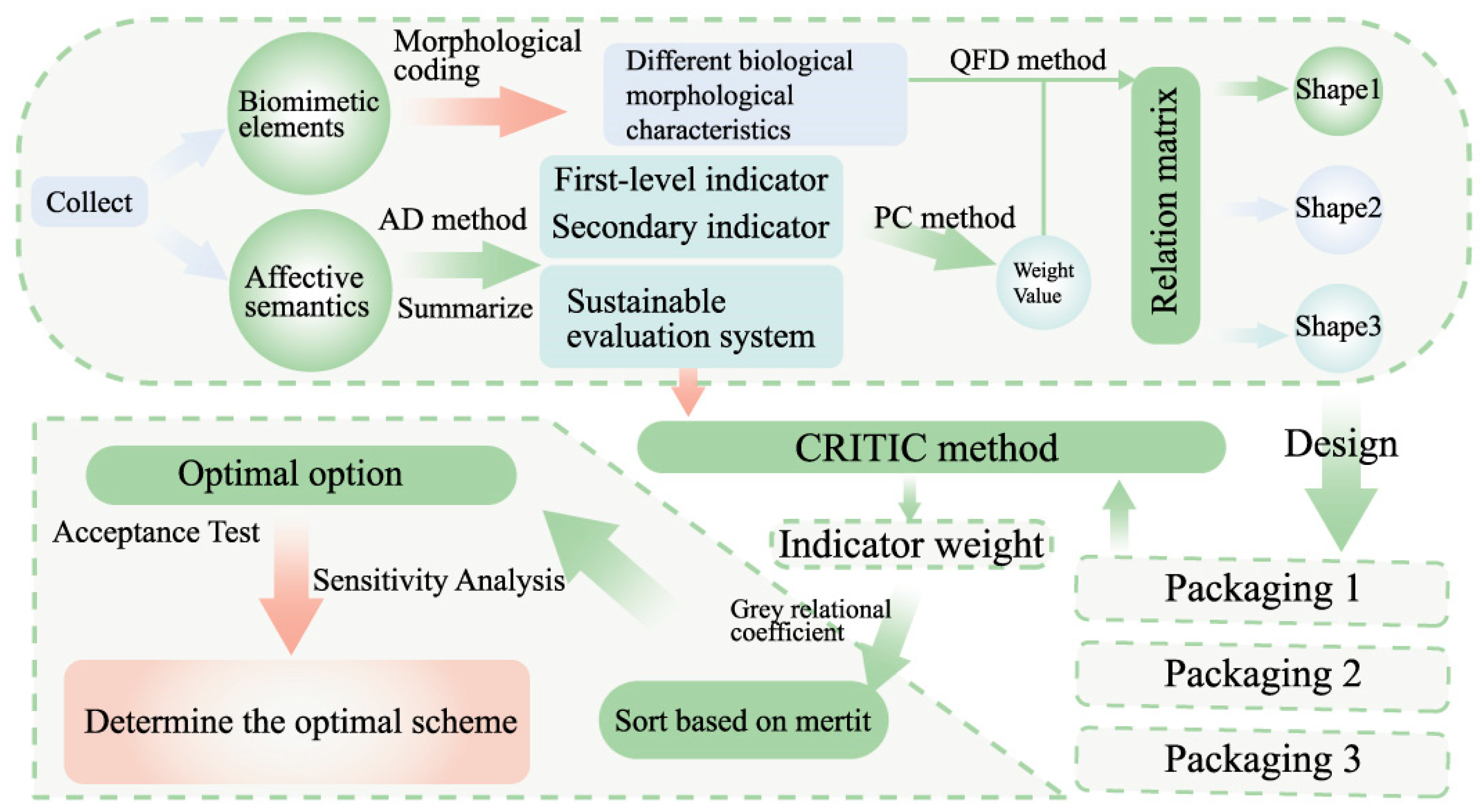
This study takes consumers’ affective needs as the carrier, synergizes biomimetic design with sustainable concepts as the design entry point, achieves visual symmetry between user affective semantics and packaging form design, and designs a sustainable tea packaging scheme and evaluation system integrating user affective needs and form bionics. The overall research process mainly includes four phases: extraction of biomimetic elements and affective vocabulary, acquisition of three ideal biomimetic forms, biomimetic tea packaging design, and determining the optimal option (
Figure 2).
(1) Typical ecological characteristics, morphological features, and sustainable values of 10 distinct biological species were analyzed through data collection and observation, from which applicable biomimetic elements were extracted. These 10 elements cover both plants and animals and encompass diverse morphological characteristics, ensuring the “natural form-affective semantics” matrix can capture rich correlation relationships and avoid biased selection of similar forms. Subsequently, affective semantics for packaging design and a sustainability evaluation index system were summarized using the Affinity Diagram method.
(2) The weights of sensory vocabulary were calculated via the PC method. QFD was applied to construct a correlation matrix between biomimetic forms and sensory vocabulary, and 3 ideal biomimetic forms were selected based on ranking.
(3) Three functional and emotional tea packaging schemes were developed corresponding to the 3 selected biomimetic elements.
(4) The CRITIC method was used to calculate the weights of sustainability evaluation indicators. GRA was applied to determine the correlation degree between each scheme and the ideal optimal solution based on these weights, identifying the optimal biomimetic tea packaging design. Finally, through user acceptance testing to assess the market acceptance of the packaging and sensitivity analysis, it was confirmed that the optimal packaging scheme derived from GRA remains the best biomimetic tea packaging option under different weight settings
3.2. Affinity Diagram (AD) Method
The AD method is a qualitative analysis method proposed by Professor Jiro Kawakita to summarize the overall meaning of multiple issues, and it enables the systematic integration of diverse pieces of information to uncover underlying patterns and core meanings within complex issues [
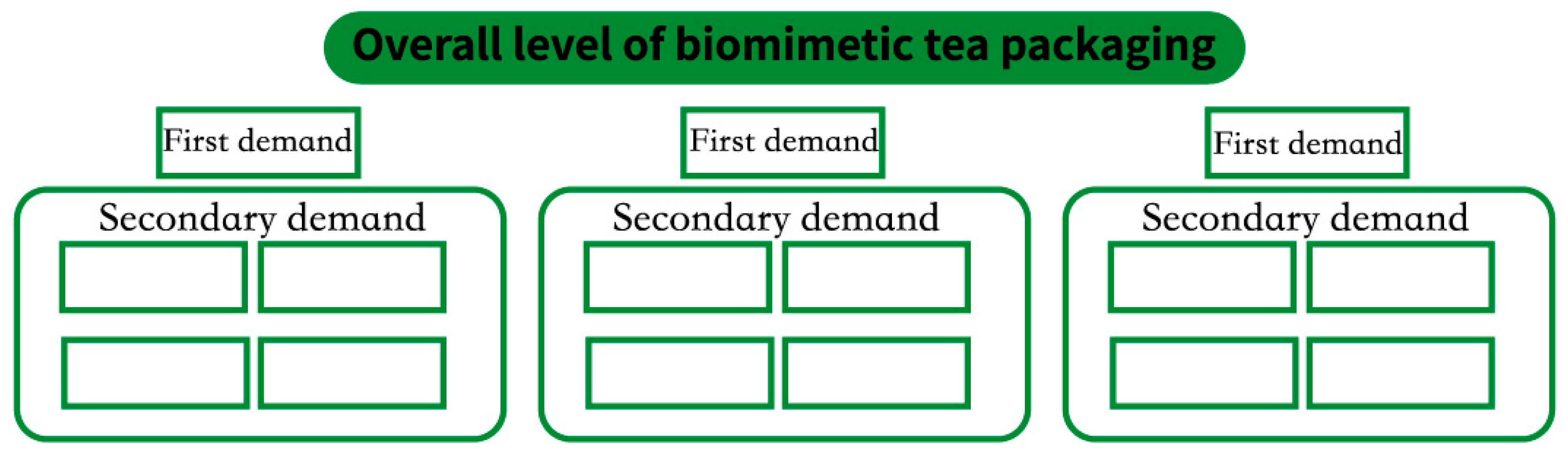
27]. From a user-centric perspective, it consolidates existing product functional needs and generates new ones, making it highly suitable for capturing user evaluations of biomimetic tea packaging. The basic process of the AD method includes: selecting interviewees, collecting opinions, and summarizing a hierarchical table of user needs (
Figure 3).
(1) To ensure perspective diversity and data representativeness, respondents should include tea packaging design professionals, frequent tea consumers, and tea distributors, with a balanced proportion of users from different backgrounds, laying a reliable sample foundation for subsequent analysis.
(2) Systematically gather affective semantics descriptions and keywords regarding the functionality, emotion, and design of 9 biomimetic tea packaging schemes through open-ended questionnaires, in-depth interviews, or focus groups. To enhance data credibility, this study will adopt triangulation and observation notes to ensure the comprehensiveness and consistency of the collected opinions.
(3) At least two researchers will independently decompose, merge, and cluster demand descriptions, eliminate duplicate information, and form a preliminary demand hierarchy, followed by discussions on discrepancies until consensus is reached. After the initial system is established, participant validation will be conducted. Some users will be invited to provide feedback and revisions on the summarized results, ensuring the final demand evaluation system truly and reliably reflects user intentions.
3.3. Precedence Chart (PC) Method
The PC method is a subjective weighting method for multi-objective decision-making that involves pairwise comparisons of all schemes to determine their priority ranking. It handles both quantitative and qualitative issues [
28]. The method consists of four steps:
(1) Determine evaluation factors and calculate the average score for each factor: List all influencing factors or alternative schemes, and compute the average of the scores assigned by the experts (
: where represents the score given by the
-th expert to the
-th evaluation factor). The average score synthesizes the opinions of all experts to form a more representative and objective group consensus value, providing benchmark data for subsequent pairwise comparisons. The formula for calculating the average score (
) is:
(2) Experts (including three environmental research scholars, three packaging design professors, and four corporate packaging specialists) systematically compared the relative importance of factors in pairs via an online questionnaire. To ensure consistency in experts’ understanding of evaluation factors and judgment criteria, an online orientation meeting will be conducted prior to the comparison, providing clear terminological definitions, comparison rules, and scoring standards for each factor. A chessboard format was adopted, containing a total of N blank cells (
Table 1). Rows represent comparison objects, and columns represent compared objects. Assign values for pairwise comparisons: 1 for the “better” factor, 0 for the “worse” factor, and 0.5 for equally important factors. Items in the first column represent the comparison subjects, while those in the first row represent the compared objects. For each pairwise comparison, scores were assigned as follows: 1 for the relatively “superior” factor, 0 for the relatively “inferior” one, and 0.5 when the two factors are equally important.
(3) Sum the assigned values horizontally to obtain the final score for each indicator. Rank indicators by score to determine their relative importance.
represents the assigned value when the
-th affective vocabulary is compared pairwise with the
-th affective vocabulary, and
denotes the total score of the
-th affective vocabulary. The weight (
) formulas are:
(4) The score of the
-th design scheme under the dimension of the
-th affective vocabulary (
). Calculate the final subjective weight (
):
3.4. Quality Function Deployment (QFD)
QFD is a multi-layered deductive method that converts user needs into design requirements, aiming to provide high-quality product services and maximize consumer satisfaction [
29]. By mapping designers’ needs to functional specifications, it derives optimization strategies for biomimetic tea packaging design [
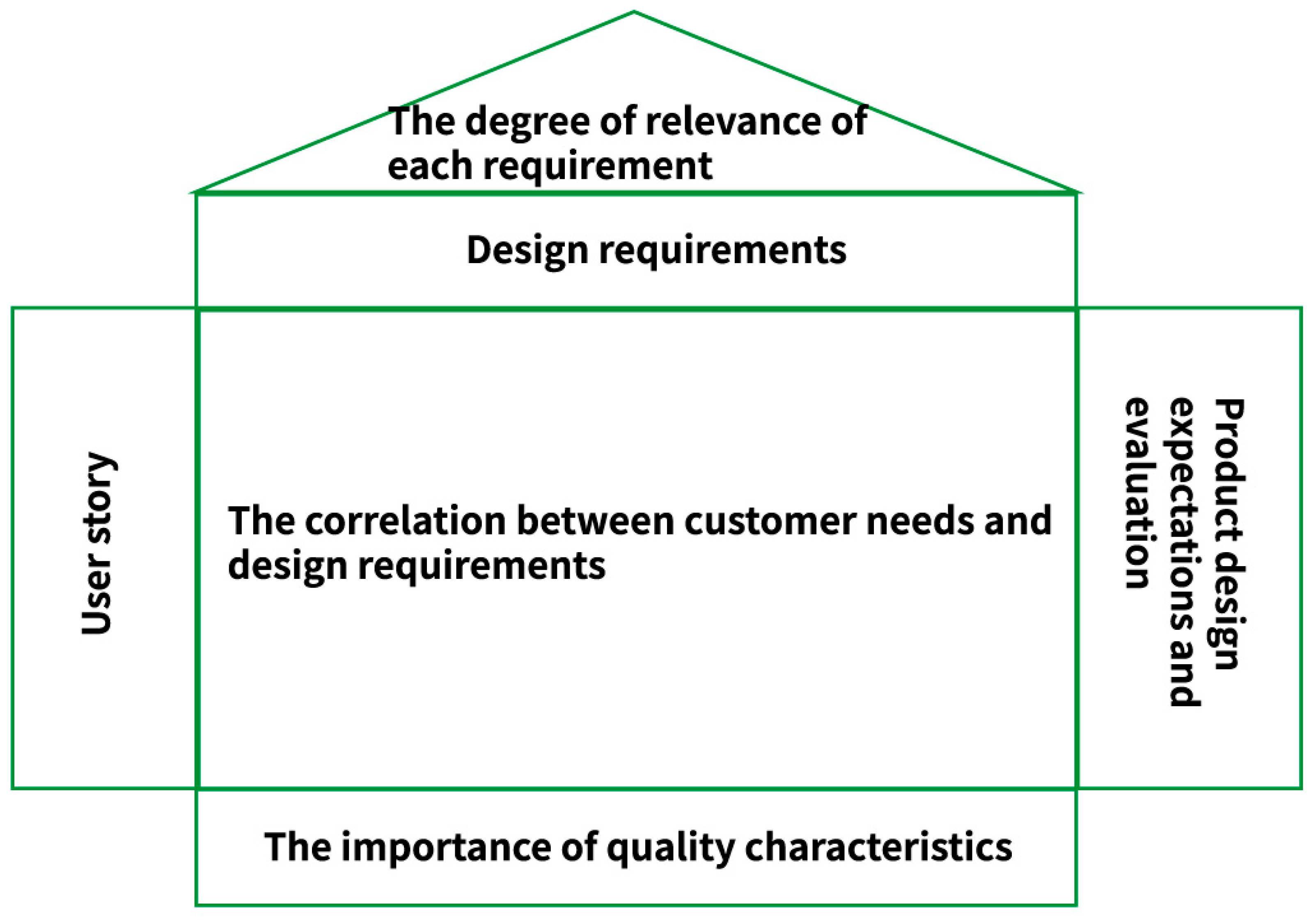
30]. The core of QFD is the House of Quality (HOQ), a matrix framework that intuitively transforms needs during product design. Its structure includes: Left Wall (user needs), Ceiling (design requirements), Roof (correlation between requirements), House (correlation between customer needs and design requirements), Floor (importance of quality characteristics), and Right Wall (product design expectations and evaluations) (
Figure 4).
Based on packaging sensory vocabulary and biomimetic design elements obtained via the AD method, QFD was used to convert user needs into achievable design indicators and establish an HOQ matrix. The specific steps are as follows:
(1) Import user needs into the Left Wall of the HOQ.
(2) Quantify the correlation between user needs and biomimetic elements to form the House of the HOQ.
(3) Use “+” and “−” in the Roof to indicate the correlation between product requirements.
(4)
represents the weight of the
-th user demand, and
denotes the correlation degree between the
-th user demand and the
-th design feature. Calculate the absolute weight (
) and relative weight (
) of packaging performance indicators to form the Floor of the HOQ. The formulas are:
3.5. Criteria Importance Through Intercriteria Correlation (CRITIC)
The CRITIC method is an objective weighting method based on contrast intensity and conflict indicators. It determines importance based on the objective attributes of data rather than numerical values, effectively complementing the subjective weighting of the PC method [
31]. The method involves five steps:
(1) Standardize user evaluation data to eliminate dimensional effects. Common standardization formulas are:
Positive indicator formula:
Negative indicator formula:
where
is the value in the original decision matrix,
is the standardized value,
and
are the maximum and minimum values of the
j-th indicator, respectively.
(2) Standard deviation reflects the degree of dispersion of each indicator; a larger standard deviation indicates stronger discriminative power. The formula for calculating the standard deviation (
) is:
where
is the mean of the
j-th indicator, and
is the sample size.
(3) Calculate the correlation coefficient (
) between each indicator. The formula is:
(4) Calculate the information amount (
). The formula is:
(5) Calculate the objective weight (
). The formula is:
3.6. Grey Relational Analysis (GRA)
GRA determines the correlation between data based on the geometric similarity of reference and comparison sequence curves. Higher similarity indicates a stronger correlation [
32]. The method includes three steps:
(1) Standardization processing formula (
):
where
is the original data,
and
represent the maximum and minimum values, respectively.
(2) Calculate the grey relational matrix formula (
):
where
is the reference sequence,
is other comparison sequences,
is the distinguishing coefficient (set to 0.5), and
is the absolute difference.
(3) Calculate the grey relational degree (
):
4. Case Study
4.1. Construction of a Biomimetic Element Library
Ten biological species with bionic potential were collected from nature, and their morphological characteristics were analyzed and summarized. In this study, we first observed the morphological features of these 10 different organisms, then manually drew their forms based on these features. Among them, special focus was placed on depicting the unique hexagonal structure of honeycombs; for sponges, we referred to their porous morphological features; for pod, we adopted their symmetrical multi-seed form; for gourd, we used the figure-eight shape; for bamboo joints, we extracted their segmented and square characteristics; for mushrooms, penguins, owls, tea seedlings and bergamot, we depicted their external morphological appearances. The forms drawn above constitute the bionic element library presented in the table below (
Table 2).
4.2. Acquisition of Affective Semantics and Sustainability Evaluation System
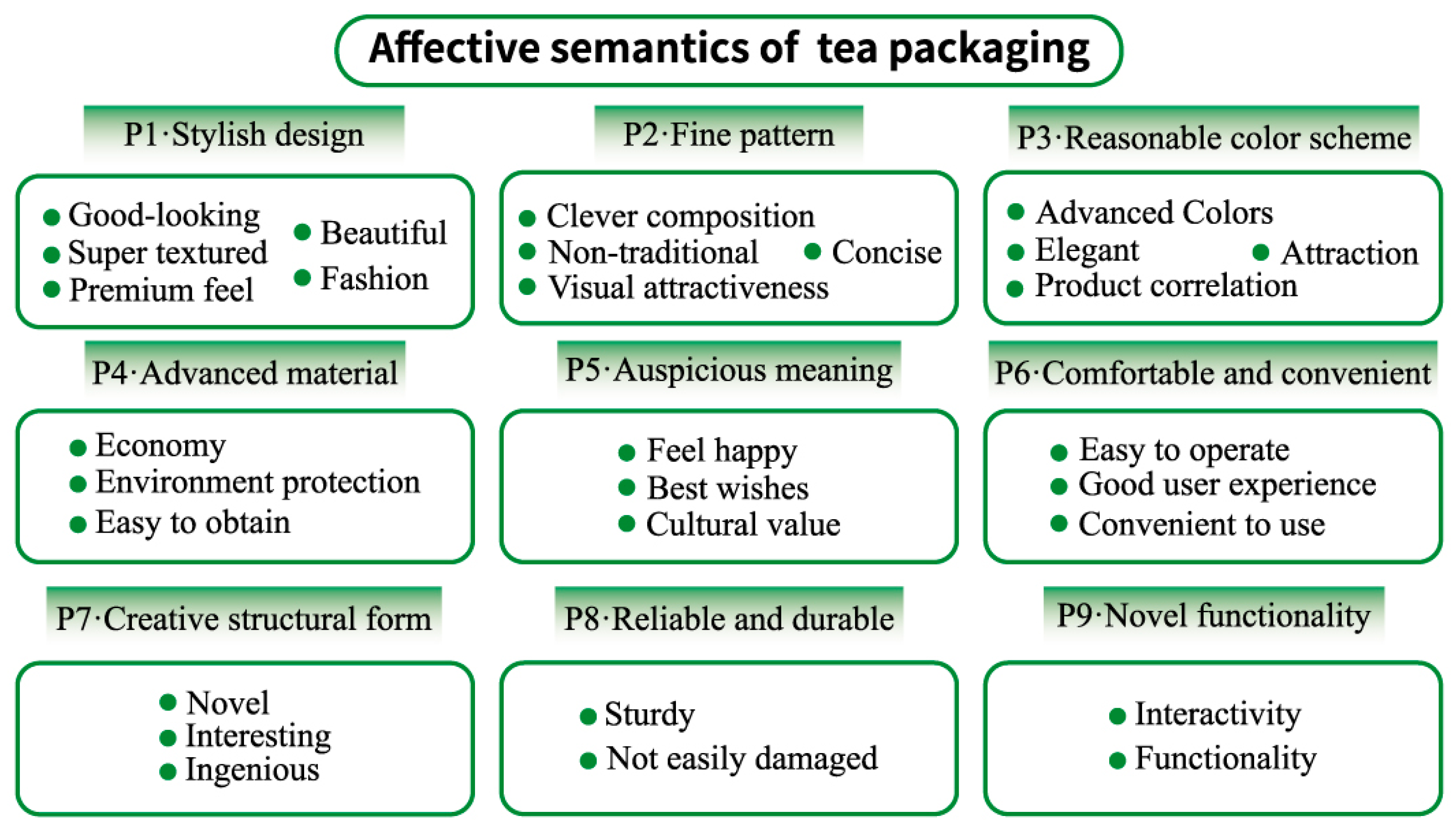
Accurately and effectively obtaining consumer demand information is the premise for forming biomimetic packaging design. Guided by consumers’ affective semantics and applied in the form of biomimetic design, the synergistic alignment between packaging form and affective semantics is realized. Using the AD method, 15 tea packaging consumers and 5 tea merchants were interviewed online and offline to collect affective semantics and sustainability evaluation indicators. After deduplication and ambiguity elimination, 29 valid sensory vocabulary terms were obtained, and 9 core affective semantics terms for biomimetic tea packaging were summarized: Stylish Design (P1), Fine Pattern (P2), Reasonable Color Scheme (P3), Advanced Material (P4), Auspicious Meaning (P5), Comfortable and Convenient (P6), Creative Structural Form (P7), Reliable and Durable (P8), and Novel Functionality (P9). These terms cover the core demand scenarios for tea packaging, from visual appeal and usage experience to cultural identity and functional innovation (
Figure 5).
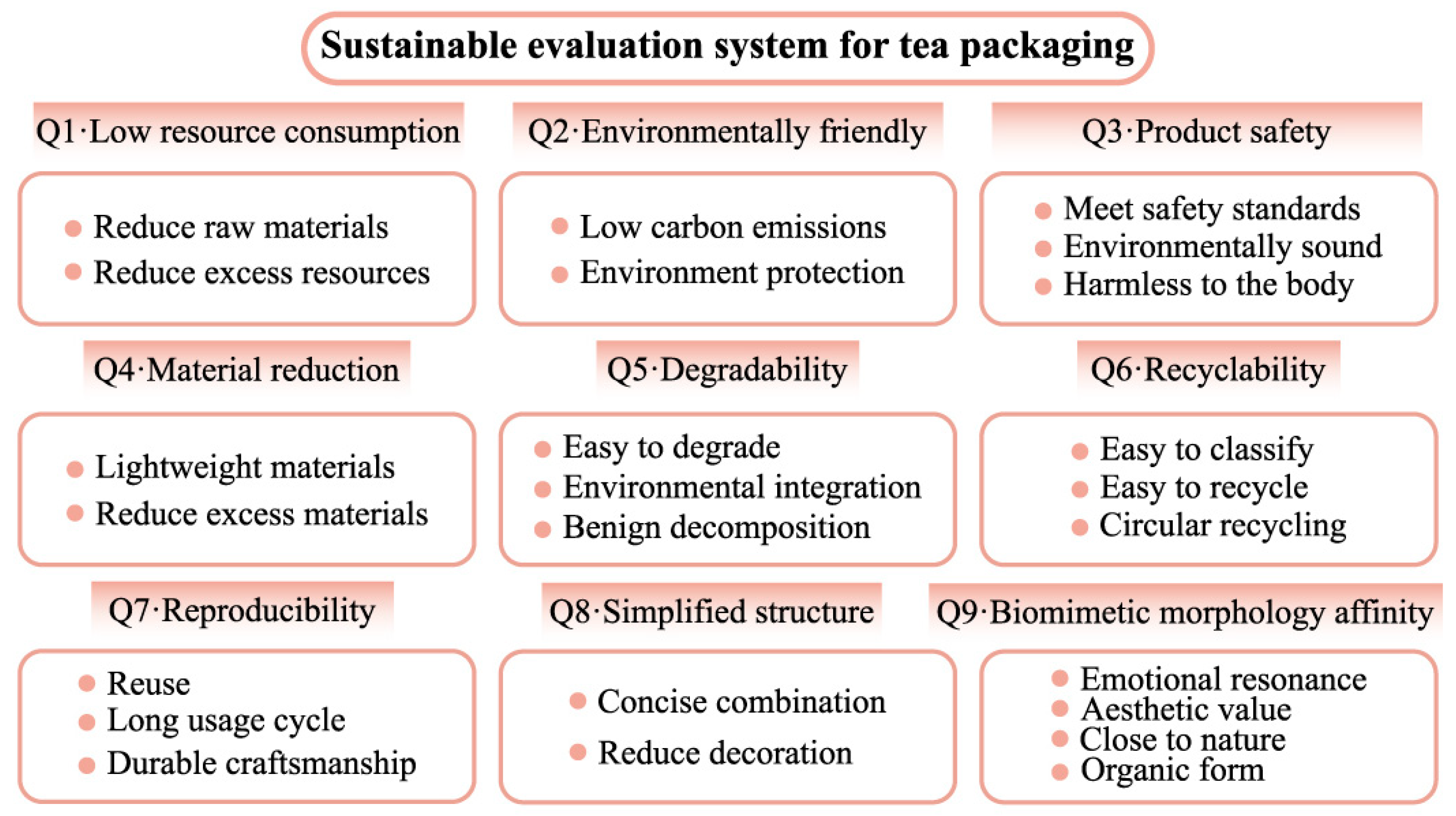
Simultaneously, 24 sustainability evaluation indicators were collected from interviews, and 9 core sustainability evaluation indicators for biomimetic tea packaging were generated: Low Resource Consumption (Q1), Environmentally Friendly (Q2), Product Safety (Q3), Material Reduction (Q4), Degradability (Q5), Recyclability (Q6), Reproducibility (Q7), Simplified Structure (Q8), and Biomimetic Morphology Affinity (Q9). They are consistent with the mainstream evaluation framework for green packaging design, with no redundancy among indicators, and can effectively reflect the core dimensions of packaging sustainability (
Figure 6).
4.3. Sensory Weight Calculation and Biomimetic Element Screening
In total, 10 experts rated the nine core sensory indicators on a 1–10 scale following the PC method. The average score for each indicator was calculated using Formula (1) (
Table 3). Pairwise comparisons were conducted based on these averages, and TTL (total score) and weights for each indicator were computed using Formulas (2)–(4) (
Table 4).
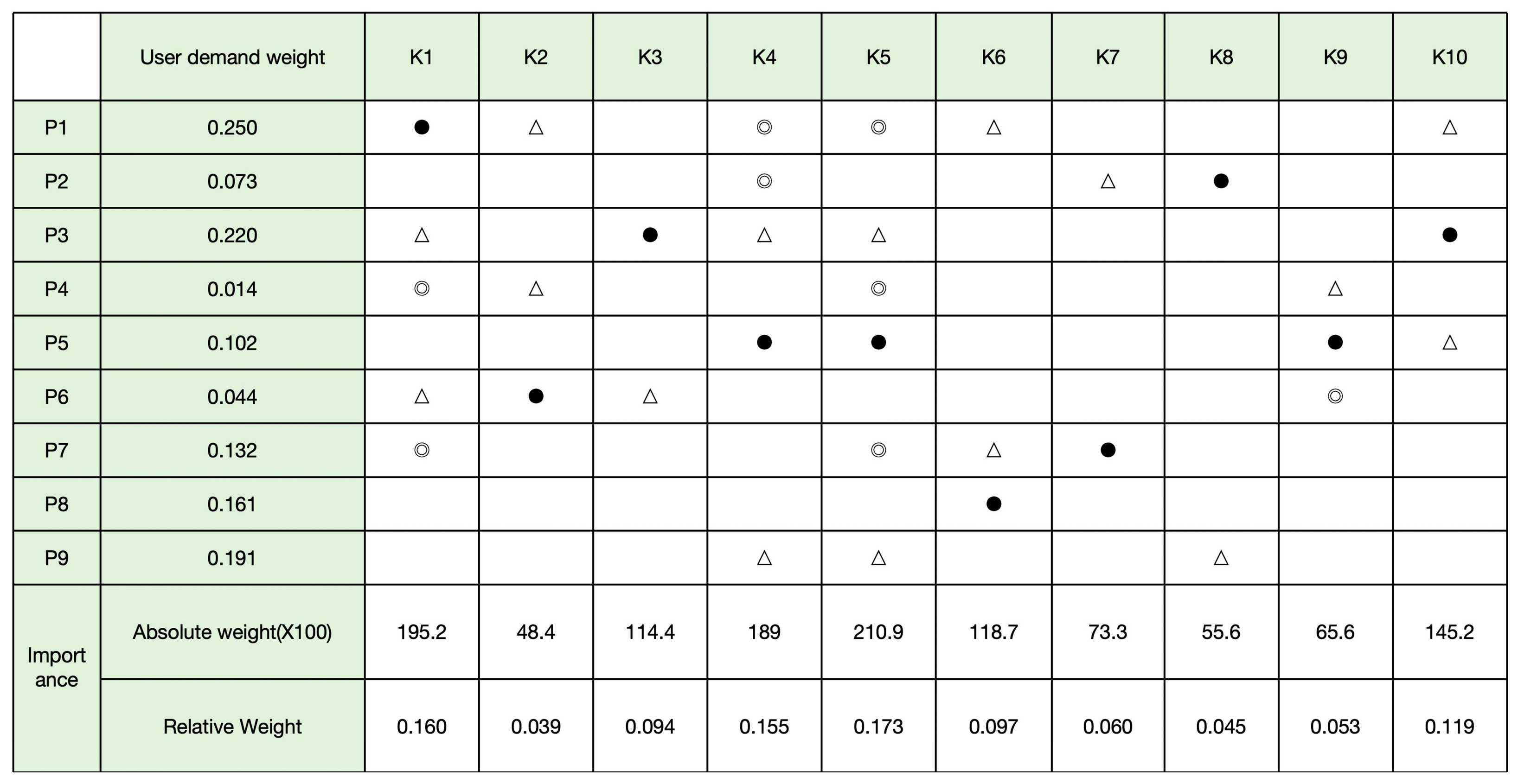
The biomimetic element library, affective semantics, and need weights were imported into the corresponding positions of the HOQ. The correlation intensity between affective semantics and biomimetic elements was evaluated, and the correlation intensity was quantified using the scoring system in
Table 5. The absolute and relative weights of biomimetic packaging indicators were calculated using Formulas (5) and (6). Three optimal biomimetic elements for packaging design were identified by analyzing the Floor of the HOQ (
Figure 7).
The weight ranking via QFD was K5 > K1 > K4 > K10 > K6 > K3 > K7 > K9 > K8 > K2. The top three design elements were K1 (honeycomb), K4 (gourd), and K5 (bamboo joint).
4.4. Tea Packaging Design
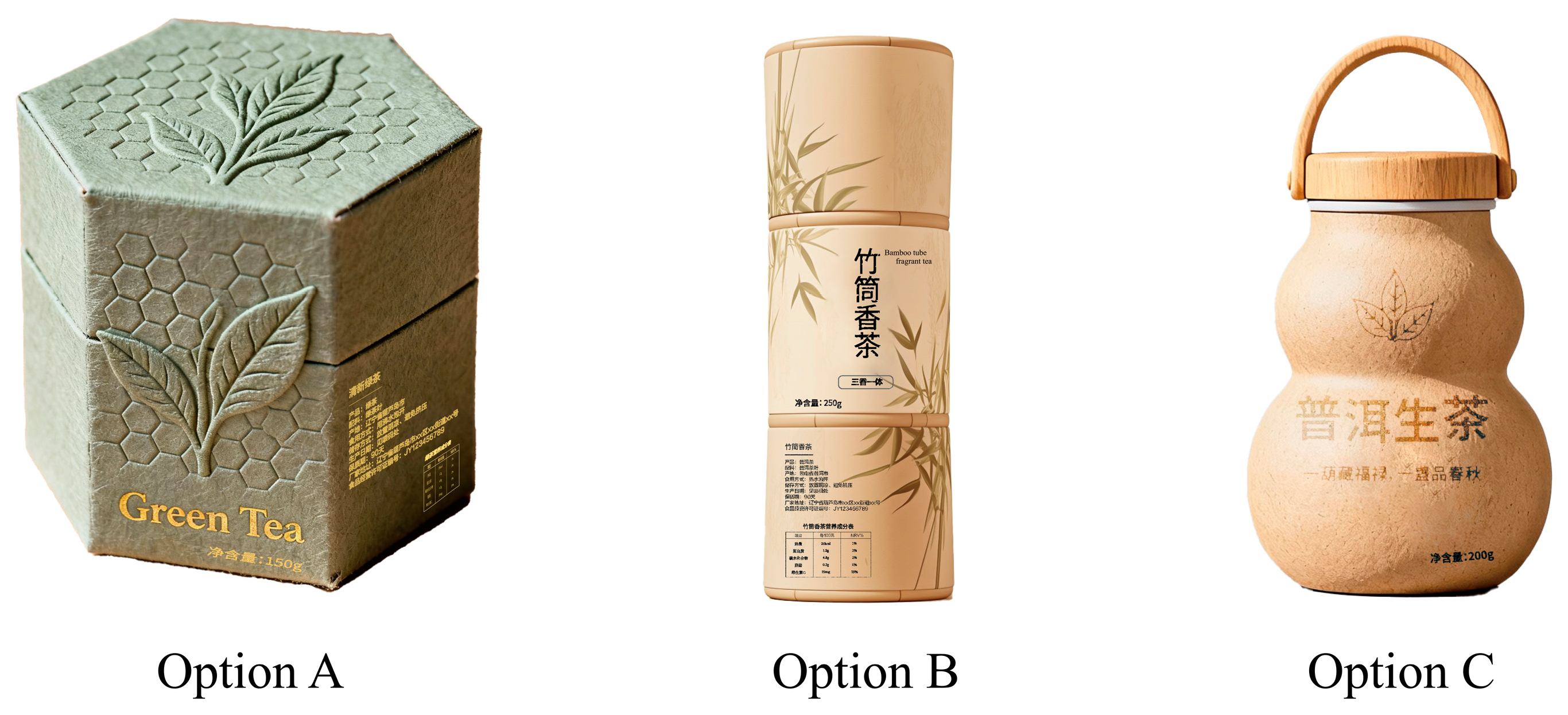
Based on the three biomimetic elements derived from the QFD method as the morphological semantic basis of this biomimetic tea packaging, combined with the user affective semantics dimensions and sustainability evaluation system compiled via the AD method, the structural symmetry between biomimetic forms and user affective experience was achieved through the mapping relationship between form bionics and user affective semantics. Finally, the following three schemes were obtained (
Figure 8).
(1) Option A: Honeycomb-inspired design-adopting the hexagonal structure of honeycombs as the biomimetic design prototype. The overall packaging uses a hexagonal box shape, with hexagonal texture details on the surface and rounded corners at the edge transitions. This design not only effectively cushions collisions during transportation and enhances structural durability but also conveys the emotional connotations of “stability”, “orderliness”, and “natural rhythm”-thereby achieving symmetrical resonance with users’ affective semantics for “a sense of security” and “a sense of harmony”. Tea images are decorated on the top and front of the box, further strengthening the natural context and product recognizability. In terms of material selection, this scheme uses linen paper as the primary packaging material. Composed primarily of flax fibers, this material possesses physical properties including wear resistance, high-temperature resistance, and anti-static performance. Meanwhile, its raw material is easy to cultivate, with a short growth cycle, controllable cost, and complete biodegradability, making it recognized as a sustainable alternative to traditional wood pulp paper [
33]. The natural texture and simple visual style of linen paper also elicit a natural affinity at the sensory level, resonating with users’ deep-seated affective pursuit of “returning to simplicity” and “eco-friendliness”. In this way, a bidirectional symmetric alignment is established between material semantics and users’ affective cognition.
(2) Option B: Bamboo joint-inspired design, taking the segmented structure of bamboo joints as the core biomimetic design element. Each independent bamboo joint unit stores a different type of tea bag, achieving functional partitioning and endowing the packaging with modular usability. Freehand bamboo leaf patterns embellish the packaging surface, enhancing the natural artistic conception and overall visual rhythm, which aligns with users’ affective semantics for “poetic living” and “natural experience”. Bamboo is used as the exclusive material for this packaging scheme. As a typical sustainable material, it not only possesses resource characteristics such as rapid growth, early maturity, and sustained usability after a single planting but also delivers ecological advantages of carbon reduction and sequestration, helping enterprises reduce environmental costs across the entire product lifecycle [
34]. Its intrinsic high toughness and structural rigidity can effectively withstand extrusion and impacts during logistics and transportation, ensuring the integrity of tea leaves. Beyond functionality, this design embodies auspicious implications of “steady progress” and “perseverance” through the bamboo joint form and modular functions. Furthermore, it fosters users’ value recognition of “sustainable living” and “natural authenticity” through material perception and usage experience, establishing a cohesive link between biomimetic aesthetics, ecological responsibility, and emotional resonance.
(3) Option C: Gourd-inspired design, taking the gourd form as the biomimetic design prototype. A two-piece packaging structure is designed: the upper part acts as a lid, and the lower part serves as a tea storage compartment. The gourd form itself embodies profound affective semantics and auspicious implications. Via morphological translation, this design integrates the auspicious connotations of the gourd into the packaging semantics, thereby achieving emotional symmetry with users’ affective semantics for “blessings” and “cultural belonging”. In terms of material selection, this scheme adopts bagasse paper as the primary substrate, replacing traditional wood pulp paper. Derived from the recycling of sugarcane fiber by-products, this material features complete biodegradability, along with properties including water resistance, oil resistance, low carbon emissions, and high food safety [
35].
4.5. Calculation of Sustainability Indicator Weights
Ten experts (specializing in environmental research, packaging research, and corporate packaging design) scored the 9 sustainability indicators. The data were standardized using Formula (7), and the final weights of sustainability indicators were calculated sequentially using Formulas (9)–(12) to support the selection of the optimal packaging scheme (
Table 6 and
Table 7).
4.6. Identification of the Optimal Packaging Scheme
A team of experts scored the three biomimetic tea packaging schemes across the 9 evaluation dimensions (1–10 points: 1 = very poor, 10 = very good). Combining the sustainability indicator weights (from CRITIC) with GRA, the correlation degree between each scheme and sustainability indicators was calculated using Formulas (13)–(15), and schemes were ranked based on correlation degrees (
Table 8 and
Table 9).
The GRA results show Option B (0.82) > Option A (0.66) > Option C (0.65), indicating Option B is the optimal biomimetic packaging design.
5. Discussion
5.1. Acceptance Test
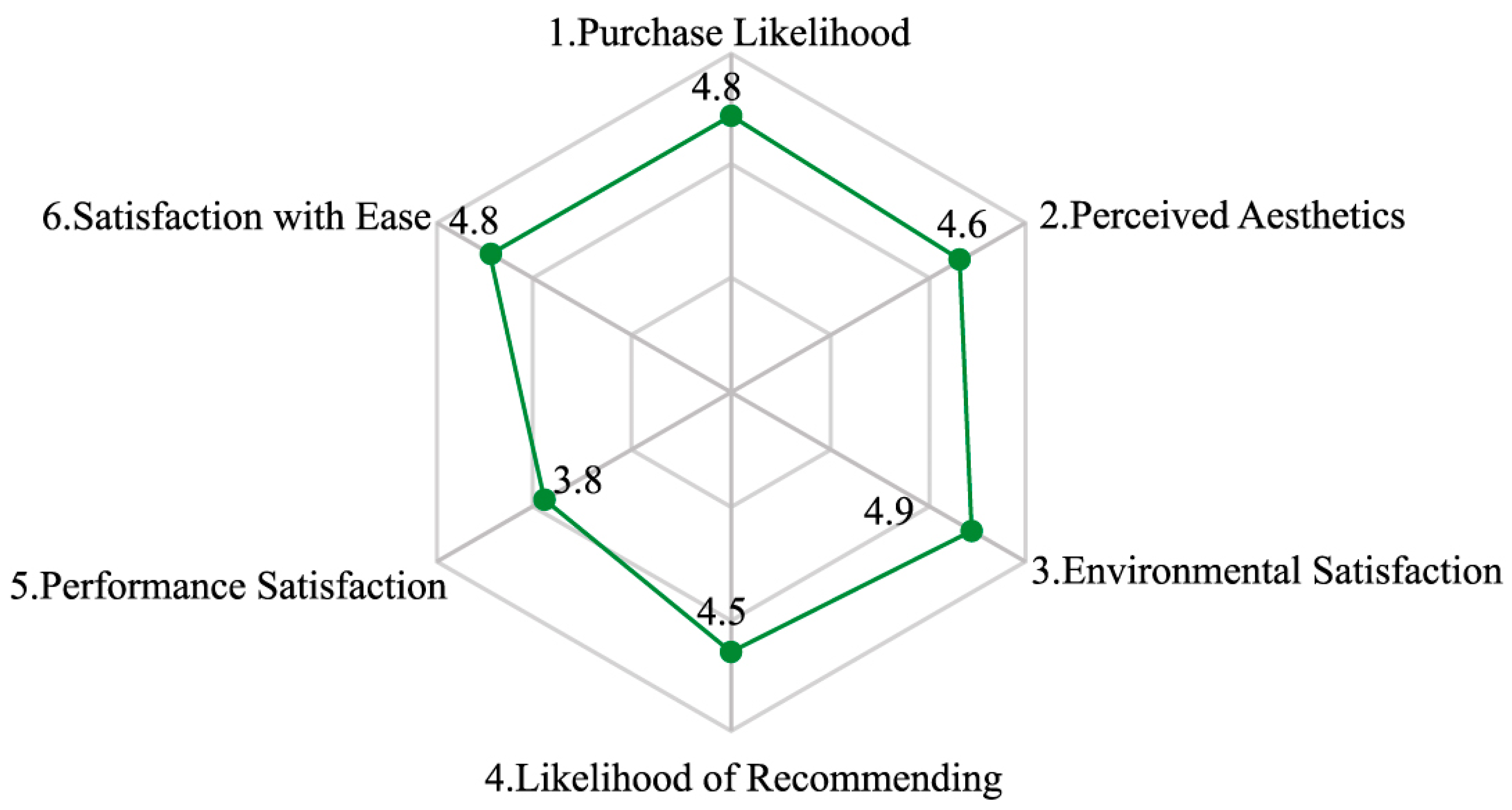
To verify the acceptance of the optimal biomimetic packaging scheme among consumers, six evaluation dimensions were established (purchase likehood, perceived aesthetics, environmental satisfaction, likehood of recommending, performance satisfaction, and satisfaction with ease), and an online survey was conducted to invite 30 target consumers to rate the packaging on a 1–5 scale; the demographic distribution of the 30 respondents is as follows: 15 males (50%) and 15 females (50%) in terms of gender, 10 young adults (33.3%), 12 middle-aged adults (40%), 8 middle-aged and elderly adults (26.7%) by age group, and 4 with high school education or below (13.3%), 20 with bachelor’s degrees (66.7%), and 6 with master’s degrees or above (20%) regarding educational background (
Table 10). This balanced configuration of demographic characteristics aims to cover the differentiated perceptions of sustainability and aesthetics among consumers across genders, age groups, and educational backgrounds, ensuring that the evaluation results reflect the attitudes of diverse sub-groups and enhancing the representativeness of the data and the reliability of the conclusions (
Figure 9).
Descriptive statistical analysis shows that most consumers approve of this design scheme and are willing to recommend it. As this design focuses primarily on packaging form, its bamboo joint-inspired biomimetic structure adopts a flip-top design, which tends to cause poor sealing performance. Thus, the environmental attribute received the highest score, while performance satisfaction was slightly lower than that of other dimensions.
In future market applications, the packaging will retain core morphological features such as the bamboo joint design while integrating modern manufacturing processes. To enhance sealing and moisture resistance, food-grade silicone gaskets will be adopted, along with a recyclable material combination and easy-to-separate structure. This design ensures functional reliability while enabling efficient recycling and controlling material complexity at the source. Visual cues will be added to the packaging surface to clearly guide consumers to separate components after use, as well as to store and dispose of the packaging correctly, thereby indirectly improving product usability, convenience, and user satisfaction. Finally, a new product life cycle assessment method will be continuously integrated into each design iteration, with a focus on evaluating the recycling compatibility of multi-material structures. This will ensure that the packaging is environmentally friendly, can be efficiently processed in existing recycling systems, and maintains a competitive edge in terms of sustainability performance.
5.2. Sensitivity Analysis
To assess the sensitivity of sustainability indicators in the multi-criteria decision-making process and their influence on the final selection decision, a series of sensitivity analysis experiments was designed and implemented. Indicator weights were systematically adjusted to examine their influence on decision outcomes, helping identify the robust optimal biomimetic tea packaging scheme under weight uncertainty.
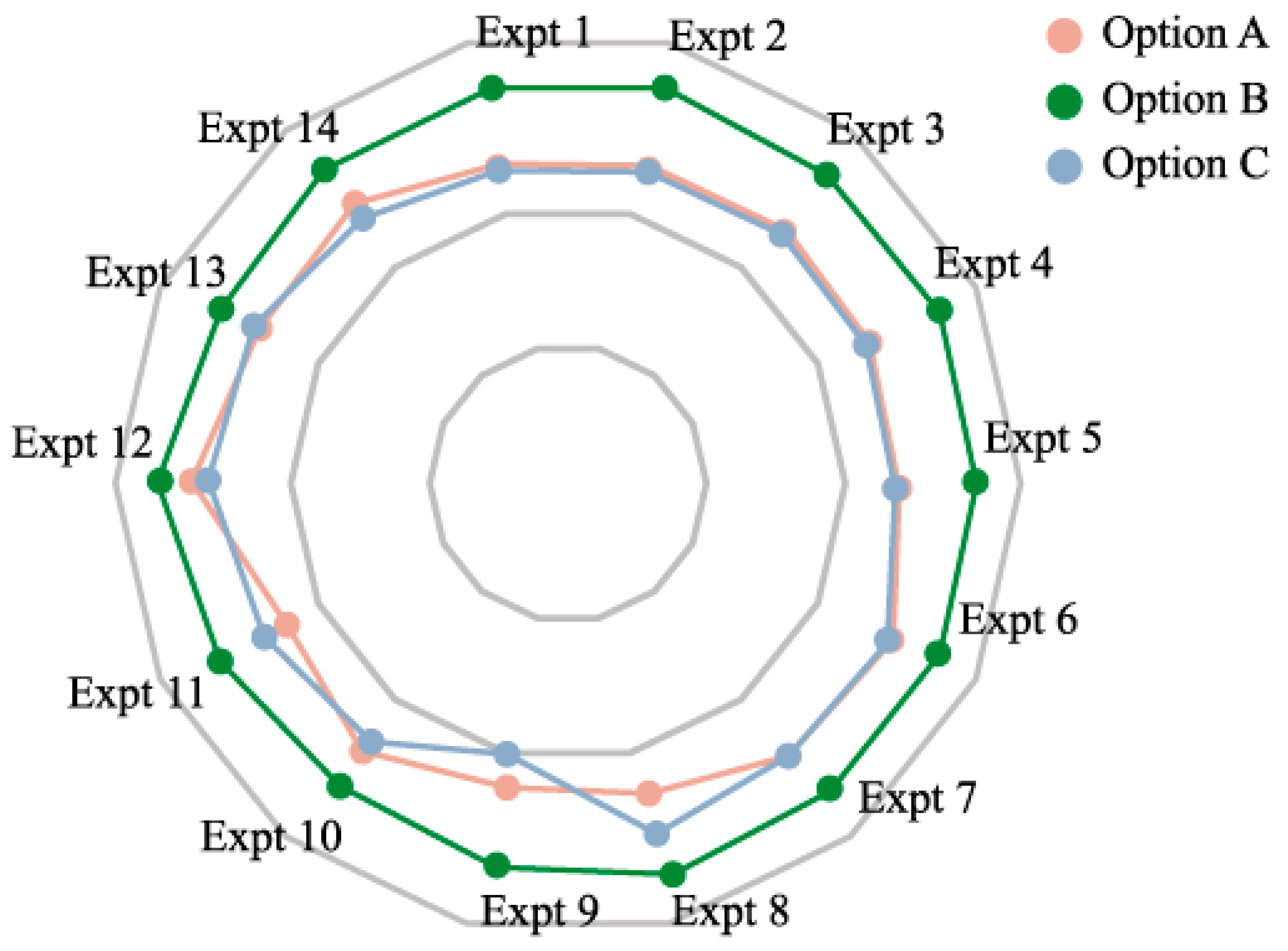
A total of 14 sensitivity experiments were performed. In the first five experiments, all indicators were assigned the same weight: 1, 3, 5, 7, and 9, respectively. By constructing weight distribution scenarios ranging from uniform to gradient-based, this study covered multiple benchmark scenarios—from equal weights (simulating the absence of prior preferences) to gradually increasing overall weight levels—thereby observing the response trend of decision results to the absolute weight levels. Subsequent experiments (Experiments 6 to 14) involved setting the weight of one indicator to the maximum value of 9 while gradually adjusting the weights of other indicators to the minimum value of 1, aiming to reflect the potential impact of subtle changes in each indicator (
Table 11).
The above sensitivity experiments not only reveal which indicator weight changes significantly alter the decision ranking but also evaluate the stability of the decision scheme under different weight assumptions. In practical applications, this helps decision-makers identify indicators for which weight determination requires greater caution and supports judgments on resource allocation and design optimization directions.
Based on the results of the 14 experiments, Packaging option B consistently achieved the highest grey relational degree under different weight configurations, confirming that option B is the robust optimal choice across diverse weight scenarios (
Figure 10).
6. Conclusions
Based on the results of multi-criteria decision analysis, a tea packaging scheme integrating affective semantics, biomimetic elements, and sustainable materials was developed. Calculation results show that stylish design (P1) has the highest weight in affective semantics, and low resource consumption (Q1) ranks first in sustainability evaluation indicators. For affective semantics, consumers tend to pay more attention to visual presentation when purchasing products, so packaging design should be consistent with the product itself and consumer preferences. In terms of sustainability indicators, consumers attach greater importance to low material consumption, so designers should prioritize low material consumption when selecting packaging materials. Bamboo joints were selected as the biomimetic form; this not only achieves the visual translation of the form, but also matches the form with affective semantics, thereby strengthening the emotional connection between the product and consumers. This study screened the ideal biomimetic form based on users’ preferences for affective semantics, avoiding the asymmetry between the two types of semantics. This symmetry emphasizes the integration of “affective semantics and morphological characteristics” to ensure the consistency between design intentions and users’ emotions. Sustainable materials were adopted for material selection, in line with the concept of environmental protection. This study provides a morphological carrier for affective semantics, offers design insights for biomimicry, and further broadens the design directions for sustainable design. It breaks the traditional one-way interpretation framework of “symbolic meaning”, takes “symmetry” as the core evaluation criterion for the semantic transmission effect, and provides new insights for accurately conveying affective semantics through forms. Finally, the feasibility of the scheme was verified via user acceptance testing and sensitivity statistical analysis. By integrating users’ affective semantics, biomimetic design, and sustainable materials, the study promotes the upgrading of agricultural and sideline product packaging and provides a clear approach for similar packaging designs on how to accurately transform affective semantics into form design, rather than a vague “integration of affective semantics”. This integration of affective semantics serves as a key supplement to existing research on the “emotion-form” relationship in the design field.
This study only selected 10 biomimetic elements without covering a broader range of biological categories, which affects the diversity and comparative depth of morphological bionics. Meanwhile, as the research focused on integrating users’ affective semantics with biomimetic design, it lacked sufficient design research on packaging structure and functional attributes. Finally, only 30 consumers were invited to evaluate the optimal scheme for verifying user acceptance. The small sample size results in insufficient detection sensitivity for key variables such as “the correlation intensity between users’ affective semantics and biomimetic forms” and “preference differences for packaging among different groups.” It is difficult to exclude the interference of random errors on the results, which may reduce the significance level of relevant statistical tests and prevent accurate verification of the core hypothesis of “symmetrical alignment between morphological semantics and emotional needs.” Consequently, the research conclusions are difficult to generalize to broader market scenarios and cannot fully reflect the real needs and acceptance attitudes of different sub-groups towards the packaging, requiring further expansion in statistical representativeness and generalizability.
In subsequent design research, biological categories such as marine organisms, microorganisms, and desert plants will be incorporated to expand the biomimetic element library, enhancing the diversity of morphological semantics and scenario adaptability. Additionally, the mapping mechanism of biomimetic forms in terms of packaging functionality and structure will be explored in depth to achieve multi-dimensional symmetry of “form-emotion-function.” Meanwhile, larger-scale user experience tests will be conducted, and attempts will be made to introduce biomimetic packaging into actual market environments. Through continuous tracking of sales data and consumer feedback, a more ecologically valid decision-making basis will be provided for design optimization.