


Abstract
Symmetry between mathematical constructions is a very desired phenomena in mathematics in general, and in algebraic geometry in particular. For line arrangements, symmetry between topological characterizations and the combinatorics of the arrangement has often been studied, and the first counterexample where symmetry breaks is in dimension 13. In the first part of this paper, we shall prove that two arrangements of smooth compact manifolds of any dimension that are connected through smooth functions are homeomorphic. In the second part, we prove this in the affine case in dimension 4.
1. Introduction
An arrangement is a finite collection of affine subspaces (of possibly varying dimensions) in or , or a collection of linear subspaces of a projective space or . The topology of the complement of the union of the planes is of considerable interest. In 1989, Randell [1] proved a deep theorem, which shows that two arrangements have the same topology if they can be transferred from one to the other using a smooth one parameter family of arrangements. This resulted in the invention of a new invariant–the moduli space. Randell’s study was very fruitful and resulted in many important theorems concerning symmetry rope. For instance, in [2] it was implemented for lines which in this case are a linear subspace of , for example, the solution in to the equation . In [3,4], it was proven that the combinatorial structure determines the fundamental group of the complement for a six line arrangement. Using Van Kampen theorems [5] and the Moishezon-Teicher algorithm [6], it was extended to seven and eight lines [7,8]. Later, it was generalized to nine lines in [9], ten lines in [10] and eleven lines in [11].
In this paper, we are going to improve Randell’s theorem and we move to diffeomorphisms of smooth manifolds in general, a contemporary topic (see, e.g., [12,13]). Whereas Randell talks about changing hyperplane arrangements through smooth families of hyperplanes, we are going to show that we can also transfer from one arrangement of smooth manifolds to another using smooth families of hyperplane arrangements. As a consequence, we show that we can transform arrangements of lines to other arrangements of lines through symmetry of arrangements to polynomials, families of polynomials of any degree. Since lines in the complex planes are homeomorphic to two dimensional sets in , our theorems will use that idea for another improvement of the theorem.
2. Definitions and Notations
The following theorems and definitions are well known.
Theorem 1
(Topological invariance of dimension [14]). A non-empty n-dimensional topological manifold cannot be homeomorphic to an m-dimensional manifold unless .
Definition 1
([14]). For any smooth manifold M, we define an open submanifold of M to be any open subset with the subspace topology and with the smooth charts obtained by restricting those of
Theorem 2
(Open sub-manifold [14]). Suppose M is a smooth manifold. The embedded submanifolds of codimension 0 in M are exactly the open submanifolds.
Proposition 1
([14]). Suppose M and N are smooth manifolds with or without boundary, and is an injective smooth immersion. If any of the following holds, then F is a smooth embedding:
- (a)
- F is an open or closed map;
- (b)
- F is a proper map;
- (c)
- M is compact;
- (d)
- M has empty boundary and .
Theorem 3
(Proper continuous maps are closed [14]). Suppose X is a topological space and Y is a locally compact Hausdorff space. Then every proper continuous map is closed.
Definition 2.
A stratification of a manifold is a partitioning of the manifold into a finite collection of submanifolds (called the strata) so that the following frontier condition is satisfied: Whenever U and V are strata with , then .
Definition 3
([14]). A stratification is called a Whitney stratification if it satisfies Whitney’s condition (b): For all strata U, V, with , and for all , whenever and are sequences in V and U, respectively, with so that converges to x and converges to x, so that the secants converge to and so that converges to τ in the Grassmannian of dimension U planes in , then .
Theorem 4
([1]). Any stratification in which the closure of every stratum is a smooth submanifold is a Whitney stratification.
Theorem 5
(Thom’s first isotopy theorem [15]). Let be a proper, smooth map which is a submersion on each stratum of a Whitney stratification of M. Then there is a stratum-preserving homeomorphism which is smooth on each stratum and commutes with the projection to In particular, the fibers of f are homeomorphic by a stratum-preserving homeomorphism.
Stereographic Projection
The following definitions and claims are well known: the function
defined by
is a homeomorphism and so is from
to defined by
The inverse functions are:
The composition defined from minus the origin to itself is:
In this paper we denote , ,
3. Topological and Geometric Aspects of Manifolds
With the previous theorems in mind we prove the following.
Lemma 1.
Let and be manifolds such that B is a closed submanifold of A and are closed submanifolds of B. Assume that for all , . Then is nowhere dense in the subspace topology of B and in addition
Proof.
First we prove that for any , is nowhere dense. Indeed, since is closed it is sufficient to show that it has an empty interior. Assume to the contrary that S is an open set of B contained in , then from the definition of subspace topology it is an open set also in by Theorem 2. We get that S is a manifold of dimension equal to the dimension of B and also a manifold with a dimension equal to . The contradiction to Theorem 1 proves the statement. Since a finite union is nowhere dense so is and since is closed then . □
Proposition 2.
Let be Hausdorff spaces where A is compact. Let be a continuous function and be continuous and proper. Let be defined by sending to then h is continuous and proper.
Proof.
Let p be the projection of to D and let S be some set. Then, an element is in if there exist such that . By definition, and if and only if . This implies that and so . First we prove that h is indeed continuous. Let be an open set since p is an open function and are continuous. Then is an intersection of the two open sets and, therefore, open. Next we will prove that h is proper: let S be a compact set. In particular it is closed so is closed. On the other hand, since p is continuous, ) is compact and since h is proper is also compact. Since A and are compact so is . To conclude, we get that is closed and a subset of compact subset and, therefore, compact. □
Proposition 3.
Let Q and M be smooth manifolds and a smooth function. For any , let be the function sending q to . Let be the function that sends to . Then
- 1.
- if any is injective then F is injective;
- 2.
- if f is smooth then F is smooth;
- 3.
- if f is smooth and for any is an immersion then F is an immersion;
- 4.
- if f is smooth and then F is an immersion;
- 5.
- if Q is compact, f is smooth, for any is injective and if it is also an immersion then F is an embedding with a closed image;
- 6.
- if F is an embedding and π is the projection of to the second factor then is a submersion.
Proof.
- Let such that . Then by the definition of F we get that . Therefore, and we denote it as t, so we get that . By the definition of this implies that and since is injective, then .
- Since f is a smooth function from to M, there exist for every smooth charts containing p and containing such that and is a smooth function from U to V. Since the domain is then . Since is a chart of M then is a chart for . If we take the point it is equal to where and . We look at the charts and . Thenwhich is equal toLet us assume that M is of order k. Then have k component functions which are all smooth. So we can write F as components where p is the projection from to . We can see that all the components are smooth and, therefore, F is smooth.
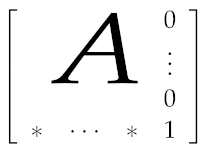
- Let p be a point as in the previous paragraph and that has k + 1 components . Since then the coordinates of the domain of are when we assume that the order of Q is m. Let and , then the partial derivative of in the coordinate is equal towhich is equal towhere is the i-th component of . We can see that the partial derivative of in the coordinate is equal to the partial derivative of in the coordinate . The partial derivative of t is 0 and the t-th derivative of t is 1. To conclude, the Jacobian of F in the point p iswhere A is the Jacobian of . Since is an immersion so is F.
- Since , it is a union of points with the discrete topology and every point has a homeomorphism to which is precisely one point by a function that sends one point to the other. So if we take one point and the homeomorphism to as the natural one, then we have that one function where z is the variable of in which is obviously an immersion.
- By paragraphs (1)–(4) F is injective immersion. Since the identity is obviously proper, then by Lemma 3 F is proper. So by Proposition 1 it is a smooth embedding. By Theorem 3 it is closed; in particular, it has a closed image.
- It is sufficient to prove that is a submersion but is a projection of the second factor of which is known to be a submersion.
□
4. Main Theorem
In order to prove the main Theorem 4, we need the following lemma.
Lemma 2.
Let be smooth manifolds. H is a finite set of closed smooth submanifolds of M. is a submersion such that:
- 1.
- for every , ;
- 2.
- for every such that , ;
- 3.
- for every , there exist such that . For all , is a submersion.
Let us denote
- 1.
- for ;
- 2.
- ;
- 3.
- ;
- 4.
- .
Then is Whitney’s stratification, and for all , is a submersion.
Proof.
Since every element in is a submanifold minus a finite union of closed sets, it is an open submanifold of h and by Theorem 2 every is a submanifold. It is also closed in M and, therefore, is also an open submanifold. It is obvious that . Next we will prove that every two different sets in W are disjoint. It is sufficient to show for elements in . Let where . Assume to the contrary that . From the definition of there exist such that and . We can see that and and, therefore, . By our assumption there exist such that . Therefore, which implies that there exist such that and . If were equal to then would be equal to . Therefore, there exist such that , hence and, therefore, . This contradiction proves our statement.
Until now we proved that is a partitioning of the manifold M into a finite collection of submanifolds. Let . Then it is equal to since by our assumption every h that is strictly contained in has a smaller dimension by Lemma 1. Similarly, since for every and . Then by Lemma 1 . Assume now that we have two elements such that . Then, by our last statement, for some and for . If , , and, therefore, . Since we get that and, therefore, . This contradiction forces us to say that which implies that and, therefore, . Since , it is obvious that every element in W is a subset of . To conclude, we get that is a stratification. Since for every there is such that and every is a smooth submanifold and the closure of , which is also a smooth manifold, by Theorem 4 is also a Whitney stratification. Since submersion is a local property and and are submersions, this is also true for their open subspaces, namely the elements in . □
Proposition 4.
Let M be a compact smooth manifold, J a finite set. For every , is a compact smooth manifold and is a smooth function. For every and , let be the function that sends q to . is a function such that:
- 1.
- for any and for all ;
- 2.
- for all and is injective;
- 3.
- for all and if is an immersion;
- 4.
- for all ;
- 5.
- for all if there exist such that then .
Then is homeomorphic to .
Proof.
We define for any , by . Since is smooth, is compact. For all , is injective and if then it is also an immersion. Then, by Proposition 3 is an embedding with a closed image, and for equal to the projection of to the second factor is a submersion.
Now we are going to show that for any ,
Indeed, if and only if . Therefore, if and only if which by (1) this happens if and only if and happens if and only if . Let . If . We would like to show that . We know that is in if and only if and the same is true for j. So if , then and for this specific t if then which implies that and, therefore, . Combining these two facts, we get that which implies by our condition that which imply that which means that , as needed. Let . Then H is a finite subset of closed smooth manifolds. For all there exist such that , for all such that and for all .
We denote , and . Then by Lemma 2 is a Whitney stratification and for all , is a submersion, and since M is compact. is proper on . Therefore, by Theorem 5, there is a homeomorphism from to which is a stratum-preserving homeomorphism, so we can see that . If then there exist such that where l is some element in In particular, for , if , , so which means that . In the same way, and, therefore, they are homeomorphic. □
5. Adaptation of the Main Theorem to Curves
This section is a corollary of the main theorem in the case of curves. We are going to use the following definition for simplification.
Definition 4.
Let be a function. We define for every , by . Then we say that F satisfies condition 1 if it satisfies the following conditions:
- 1.
- F is smooth;
- 2.
- for every is injective;
- 3.
- if then for every is injective.
Theorem 6.
Let be a function such that F on is where , such that are polynomials of the variables over the smooth function with one variable, and sends to . Then F satisfies condition 1.
Proof.
Let
such that for all and , is a smooth function. First, we prove that F is a smooth function. Let then we choose for the domain the chart and for the image , so we need to prove that
is smooth. Indeed we get that
It is easy to see that “g” is smooth. For the points , we take the domain chart to be and the image chart to be . So we need to prove that is smooth. Indeed for a point where
Thus, is injective and . So if and we denote , we get that . If we apply g on the result we get:
Now , so we get
This is equal to
If we denote and , we note that since k is always larger than in every summand, then when approaches then A and B approach So we get . If we apply , we get
This is equal to .
We can see that when converges to the expression converges to . If we apply on , we get because applying will give us Then, applying F will give us and, finally, applying will give us . So the function is continuous and a smooth function divided by a smooth function other than 0 in a small neighborhood is smooth. Let . We will show that is injective and is an immersion for all . First we show it is injective for an element in . Let then . Since are injective, is injective on . Since the is not in the image of then is not going to since is going to , then is injective. Now we will show that the function is an immersion. For a point , we choose for the domain the chart sending X to and for the image we get . This function sends to . If we look at the minor of the Jacobian, we get
so these points have rank 2. For the point “p” we choose for the domain the chart sending X to . For the image for similar reasons as before, the image is which is also of rank 2. Therefore, on these points the function has rank 2, hence it is an immersion. □
The next theorem is an adaptation to lines in which are topologically equivalent to sets in .
Theorem 7.
Let be functions defined by such that are polynomials of the variables over the smooth function with one variable. Let (for i = 1 … m) be a smooth function and let be a function such that the following conditions hold:
- 1.
- for all and , ;
- 2.
- for all and ;
- 3.
- if there exist and such that then there exists j such that .
Then
is homeomorphic to
Proof.
Let be the homeomorphism sending to where . Let , , and . To we attach the manifold and the function which we defined piecewise on . It will be defined as and will be sent to . By Theorem 6 they satisfy condition (1). For we attach the manifold and the functions are defined as follows: and . It is easy to see that these functions satisfy condition (1). For c and we attach a manifold with a single point which we denote by . We define the following function: for c we define the constant function P which sends every element to and for we define the function which is defined as . Next we define as follows:
- ;
- ;
- ;
- ;
- ;
- ;
- ;
- .
To complete the definition, we add that and if is defined then . Now we would like to prove that for any and for any if we denote the function attached to k as we get that
- For every k and the image of is equal to , the image of is and the image of is equal to . Since is surjective on , this is equal to . So the intersection of the images of and is equal to a union withwhich is equalSince and are injective, this is equal to . From our assumption, we find that . So applying will give us as needed.
- As in paragraph (1) . Since is also in and the image of is , the intersection is precisely .
- As in paragraph (1) . So the intersection with is .
- First, if there exists j we already proved that and contain only one point, then . Next if j do not exist then as in paragraph (1) and . Since and are injective and do not contain in their image the intersection is equal to so we calculate . By our assumption, this is equal to the empty set. Applying will give us the desired conclusion.
- Trivial.
- Trivial.
- Since is a subset of the image of which is , we get what is needed.
- Same proof as paragraph (7).
- Since , thenand are injective. This is equal to . Since then is also empty.
It is easy to see that for every the dimension of the manifold we attach to it is smaller than the dimension of . Now we will prove that for all if there exist such that , then such that is the function attached to k and is the manifold attached to k. We note that if then . Since we know that for any and for any , if we denote the function attached to k as we get that . If we have that contradicts our statement there must be k where where . It is easy to verify that this is not the case.
So by Theorem 4, is homeomorphic to . We know that . Then it turns out that
is homeomorphic to
We can see that . We know from (1) that , so if we subtract we get . We can see that the image is inside and, therefore,
Additionally, since the image of is inside
and since is a homeomorphism on , if we apply it we get that is homeomorphic to . Applying the homeomorphism will give us that is homeomorphic to , as needed. □
Author Contributions
Both authors contributed equally to this paper. Both authors have read and agreed to the published version of the manuscript.
Funding
This research was supported by the ISF-NSFC joint research program (grant No. 3210/19).
Institutional Review Board Statement
Not applicable.
Informed Consent Statement
Not applicable.
Data Availability Statement
Not applicable.
Conflicts of Interest
The authors declare no conflict of interest.
References
- Randell, R. Lattice-isotopic arrangements are topologically isomorphic. Proc. Am. Math. Soc. 1989, 107, 555–559. [Google Scholar] [CrossRef]
- Nazir, S.; Yoshinaga, M. On the connectivity of the realization spaces of line arrangements. Ann. Della Sc. Norm. Super. Pisa-Classe Sci. 2012, 11, 921–937. [Google Scholar]
- Fan, K.M. Position of singularities and fundamental group of the complement of a union of lines. Proc. Am. Math. Soc. 1996, 124, 3299–3303. [Google Scholar] [CrossRef][Green Version]
- Fan, K.M. Direct product of free groups as the fundamental group of the complement of a union of lines. Mich. Math. J. 1997, 44, 283–291. [Google Scholar] [CrossRef]
- Van Kampen, E.R. On the fundamental group of an algebraic curve. Am. J. Math. 1933, 55, 255–260. [Google Scholar] [CrossRef]
- Moishezon, B.G.; Teicher, M. Braid Group Technique in Complex Geometry I, Line Arrangements in . Contemp. Math. 1988, 78, 425–555. [Google Scholar]
- Garber, D.; Teicher, M.; Vishne, U. Classes of wiring diagrams and their invariants. Topology 2003, 42, 265–289. [Google Scholar] [CrossRef][Green Version]
- Garber, D.; Teicher, M.; Vishne, U. π1-classification of arrangements up to 8 lines. Topology 2003, 42, 265–289. [Google Scholar] [CrossRef][Green Version]
- Ye, F. Classification of moduli spaces of arrangements of 9 projective lines. Pac. J. Math. 2013, 265, 243–256. [Google Scholar] [CrossRef][Green Version]
- Amram, M.; Teicher, M.; Ye, F. Moduli spaces of arrangements of 10 projective lines with quadruple points. Adv. Appl. Math. 2013, 3, 392–418. [Google Scholar] [CrossRef]
- Amram, M.; Gong, C.; Teicher, M.; Xu, W. Moduli spaces of arrangements of 11 projective lines with a quintuple point. Turk. J. Math. 2015, 39, 618–644. [Google Scholar] [CrossRef]
- Jiang, T.; Yau, S.S.T. Diffeomorphic types of the complements of arrangements of hyperplanes. Compos. Math. 1994, 92, 133–155. [Google Scholar]
- Wang, S.; Yau, S.S.T. Rigidity of differentiable structure for new class of line arrangements. Commun. Anal. Geom. 2005, 13, 1057–1075. [Google Scholar] [CrossRef]
- Lee, J.M. Introduction to Smooth Manifolds, 2nd ed.; Springer: Berlin, Germany, 2012. [Google Scholar]
- Mather, J. Notes on Topological Stability; Harvard University: Cambridge, MA, USA, 1970; Mimeographed Notes; Available online: https://www.maths.ed.ac.uk/~v1ranick/surgery/mather.pdf (accessed on 1 January 2021).
Publisher’s Note: MDPI stays neutral with regard to jurisdictional claims in published maps and institutional affiliations. |
© 2021 by the authors. Licensee MDPI, Basel, Switzerland. This article is an open access article distributed under the terms and conditions of the Creative Commons Attribution (CC BY) license (https://creativecommons.org/licenses/by/4.0/).