


Abstract
In developing countries where sustainable housing design receives insufficient theoretical and practical efforts, decisions about appropriate sustainable design strategies are often made in ignorance of situational and contextual issues and isolation from local practices. The study attempts to provide a design framework that comprises various design models for sustainable housing, enabling architects worldwide to broaden their sustainability practices in the architectural field. The study employs the grounded theory method to transform theory into viable housing design models for architects in various regions, particularly the Middle East, who will be able to trace the regional models and select design approaches and strategies in response to local situations. The research is divided into three stages. Guy and Farmer’s six logics are linked with methodical sustainable design approaches through comparative analysis to develop design models that will be chased in sustainable housing practices. The models are introduced in the next phase within a design framework and, finally, verified through Middle Eastern practices. The framework, which has been verified by tracking sustainable housing models in the design practices of Middle Eastern countries, can be used by applying the design models individually or by combining more than one model to create more responsive sustainable design practices in the housing field. The novelty of the study is that the developed framework transforms theoretical models into viable options for designers and scholars around the world, as well as enabling architects and developers in Middle Eastern cities to easily and practically trace regional design models and to select appropriate design approaches and strategies in an integrative manner.
1. Introduction
Sustainable development is a path to sustainability based on globalization [1], and is concerned with cultural links between nations [2,3] as well as increasing flexibility of technology that can connect people all over the world [4]. This can pave the way for cultural homogenization, resulting in forming a single global society [5].
Cities and regions face particular challenges in achieving the Sustainable Development Goals (SDGs) that are specific to their own situations [6,7]. Western ideas and methods are not always universally applicable or correspond to vastly different conditions in developing countries. Thus, Western discourses and practices should be adapted and revised to address the specific environmental, social, political, economic, and cultural contexts [8].
Housing development is one of the most important ways to achieve sustainability goals due to the direct and indirect impact of housing on human life and the environmental issues associated with this sector [9]. Except for a few countries that have made significant progress in this field, including the Gulf states [10], sustainable housing design does not receive adequate theoretical and practical attention in developing countries, and decisions about appropriate sustainable design strategies are often made in ignorance of situational and contextual issues and isolation from local practices [11].
Cities in the early stages of addressing the issue of sustainability can learn from regional countries that share commonalities and are proactive in this field, taking lessons and gaining experience in selecting technologies and designs that take regional contexts and physical capabilities into account [12].
In the Middle East region, despite the many challenges, the countries tried over the years to shift toward more sustainable practices in architecture [13]. The steady increase in the population in a region characterized by a dry and hot climate with a heavy dependence on fossil fuels, especially in the domestic sector with the availability of vast reserves of petroleum, has made this area a significant contributor to climate change and, at the time, makes sustainability a complicated issue [14]. Furthermore, challenges confronting this region include water scarcity, particularly in the Gulf area, along with a lack of local experience in terms of sustainable design and the use of foreign companies, as well as the application of Western sustainable architecture technologies [15] that were very expensive and failed to take advantage of the resources available in the local environment, in addition to introducing a specific value system that is quite different from the Islamic value system [16]. Thus, the sustainability issue in Middle Eastern countries is as much about resource efficiency as maintaining the local identity.
According to Elgendy, various governments in this region have begun to build a varied economy based on sustainable ideas, and they are promoting sustainable development in a growing number of large-scale projects revolving around three design models: revivalist, progressive, and hybrid [14,17]. The revivalist trend pursuit of exploiting renewable natural resources is accompanied by a great desire to restore the local heritage that was neglected during the colonial era, in which the discourse and practice revolve around strategies, techniques, and elements adopted from traditional architecture that featured environmentally responsive cooling strategies. Hassan Fathy is a pioneer of the revivalist trend in the housing field, and his work is often considered a pioneering indictment of modernity [18]. For Fathy, modern technology is something that exhausts human artistic efforts and is simply about using science for commercial purposes [19]. Thus, he broke with modern architecture and found a new approach based on the concept of interpreting forms and masses from the past [20] and relies on the use of local, low-impact materials and traditional, environmentally responsive design strategies such as shading, natural ventilation, evaporative cooling, thermal mass, and microclimatic elements (such as courtyards) [14].
The growing desire of Middle Eastern countries to reassert their local identity in recent decades has been reflected in their architecture [21]. Many attempts have been made to follow in Fathy’s footsteps to achieve environmental goals along with emphasizing the local identity. Muttawar Sustainable Residential Community in Muscat is a traditional model designed in a way that strikes a balance between respecting history and tradition and achieving a contemporary neighborhood.
The progressive or innovative model completely contradicts the revivalist model as it focuses on adopting resource-efficient technologies. In housing, significant features of the innovative model are integrated photovoltaic roofs, wind turbines, roof greenery, bio-walls, and thermal glass panels [22]. The Etihad Eco-Residence in Abu Dhabi is Platinum-certified according to the Leadership in Energy and Environmental Design (LEED) building rating system. Envelope design and high-performance materials combined with the use of active solar energy systems result in a numerical reduction in energy and water consumption, waste production, and resource use during the construction phase.
The hybrid approach is a concept that combines the revivalist and progressive approaches. This “coexistence” model combines traditional architectural principles with technologies derived from modern sustainable architecture practices. It considers the forces of modernization and change (globalization) while also responding to the preservation of the local legacy. The four-story residential buildings that house Masdar Institute’s staff and students in Abu Dhabi were designed to withstand the harsh desert climate by incorporating environmental solutions inspired by Islamic architecture and advanced technology introduced by Western practices.
According to the literature discussed above, Middle Eastern countries’ practices in sustainable housing present limited design models concerned with resource efficiency and local identity that can only satisfy immediate desires such as what Norton [23] referred to as “perceived preference”, which can be temporarily satisfied with some specific experiences (see Figure 1).
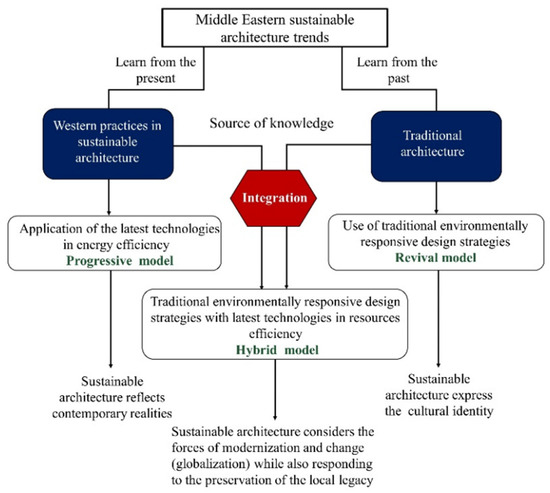
Figure 1.
The sustainable housing trends and models in the Middle Eastern region (authors).
The study is an attempt to integrate several distinct experiences at different levels, mega, macro, meso, and micro, with their interactions into viable design options in the sustainable housing field (see Figure 2).
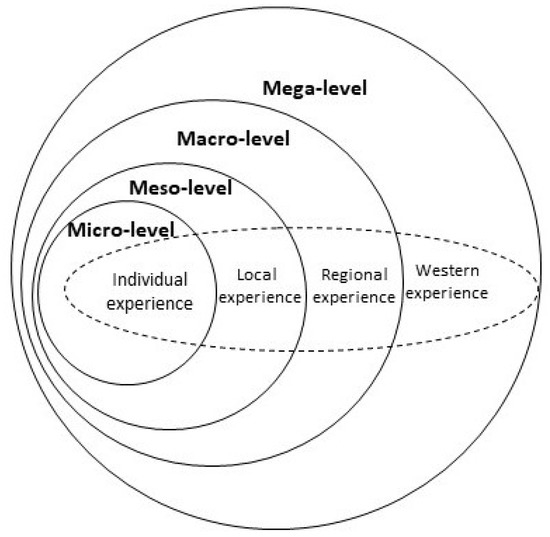
Figure 2.
The four nested levels: Micro, Meso, Macro, and Mega.
Engaging Western discourses and practices with regional experiences has the potential to bridge the gap and take the regional practices beyond the efficiency paradigm. It may help to support cities’ endeavors towards sustainable development as well as offer a theoretical and practical adaptation for use by designers and scholars.
The six competing logics introduced by Simon Guy and Graham Farmer are linked to methodical sustainable design approaches to develop viable design models for sustainable housing that may help improve developing countries’ experiences in this field, as well as broaden current Middle Eastern practices to accommodate future scenarios.
2. Methodology
Qualitative research that employs grounded theory methodology is adopted to build design models from a systematic literature review using comparative analysis (Figure 3).
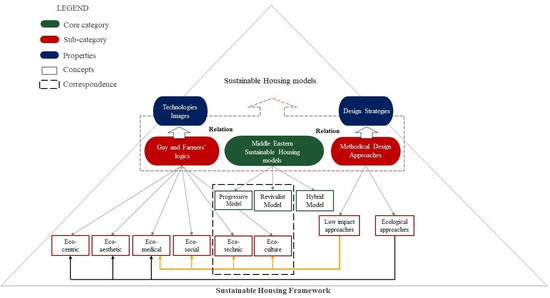
Figure 3.
Grounded theory methodology used in the study.
The study is an attempt to transform sustainable architecture discourses into sequential design paths practicable in housing projects and different regions. It is expected that the transformation of theory into viable design options will enable architects and developers (in the case of the Middle East, as an example) to trace their existing regional models and allow them to select appropriate design approaches and strategies in an integrative manner.
The study includes three phases to achieve the study’s goal (see Figure 4). Initially, Guy and Farmer’s logics, which introduce various concepts for sustainable architecture, are linked with methodical sustainable design approaches. Later, the sustainable housing models and the building typologies are chased in practical experiences.
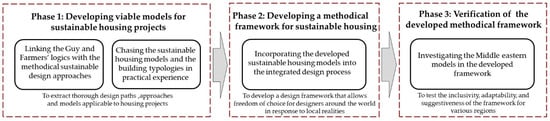
Figure 4.
Phases and steps of research implemented in this study.
Hanson [24] asserted that what is considered to be experientially true is already theoretically defined and is an important theoretical point of departure. Nothing is theoretically more stimulating than a well-functioning practice [25]. Therefore, there is a need for theoretical contemplation on successful practices in the field of sustainable housing.
In the second phase, a methodical framework for sustainable housing models is proposed by incorporating the developed sustainable housing models into the integrated design process, as introduced by Knudstrup [26]. The models are intended to be design paths and part of a framework that considers the stages of the design process.
Finally, the inclusivity, adaptability, and suggestiveness of the developed methodical framework is verified through the case of the Middle East region.
3. Phase 1: Developing Viable Design Models for Sustainable Housing Projects
3.1. Step 1: Linking Guy and Farmer’s Logics with the Methodical Sustainable Design Approaches
Guy and Farmer developed an interpretative framework of six competing logics defined as “a specific ensemble of ideas, concepts, and categorizations that are produced, reproduced and transformed in a particular set of practices through which meaning is given to social and physical realities” [27]. Each logic (see Table 1) highlights how the green building discussion is framed differently depending on competing formulations of the environmental problem and alternative notions of what might constitute a sustainable place. Each environmental logic tends to be dominated by specific slogans: the issues that dominate the perception of the environmental dilemma.

Table 1.
The sustainable architecture concepts introduced by Guy and Farmer [28].
In addition, various approaches and strategies for sustainable architecture have been developed, with a focus on efficiency and/or integration with nature. The categorization of the generated strategies under the aforementioned concepts results in two distinct paths. The first is a low-impact path with approaches that are engineering-based, resource-efficient, and have an anthropocentric view; the latter path is suggestive of ecological design approaches that aim to improve the environmental quality and minimize environmentally destructive impacts by integrating themselves with living processes [29,30,31,32]. Whether the purpose of the integration is anthropocentric or non-anthropocentric, ecological approaches help strengthen the relationship between humans and nature.
Low-impact approaches are consistent with mechanistic thinking, which holds that environmental problems are caused by inefficient resource use, and which can be avoided through resource and energy efficiency, safe waste generation and disposal, sustainable materials and products, indoor environmental quality, pollution abatement, and biodiversity protection [33]. This results in quantitative improvements in building performance, more accurate scientific analyses and predictions, and more enlightened oversight mandated by new, globally enforced standards, policies, and regulations [34]. Green design, sustainable design, and bioclimatic design approaches are part of this path. Whereas sustainable and green designs are recognized as technological approaches which tend to solve complex and integrated technical and environmental problems, bioclimatic design is a low-impact design approach based on the local climate [32].
“High-Performance Design”, “Green Design”, and “Sustainable Design” are terms that are often used interchangeably. These approaches focus on a building’s ecological, environmental, social, and economic issues, as well as show concern about the effects of the built environment on the natural environment, economy, health, and productivity, and are encouraged by green building assessments and ratings (e.g., LEED, BREEAM). HPD has been defined as a design method based on the use of high-performance elements to reduce negative environmental impacts while also providing health and comfort to occupants.
Likewise, eco-technic logic focuses on innovation where efficiency is the emblematic issue and energy efficiency is prioritized. With its globalizing viewpoint, eco-technic logic addresses the environmental crisis by going further into modernization and technological innovation in fabric and servicing systems to achieve numerical reductions in energy consumption and material-embodied energy, waste, and resource use. The logic situates sustainability with a distant context regarding space and time.
Darko et al. [35] identified different types of green technologies for sustainable housing development that can be used as design strategies for the first design model (innovative model) of sustainable housing. These technologies differ in terms of the level of technology they adopt, or the sustainability goals that these strategies are used to achieve; energy efficiency technologies, water efficiency technologies, indoor environmental quality enhancement technologies, materials and resources efficiency technologies, and control systems.
The bioclimatic design approach, on the other hand, is based on using passive strategies for thermal comfort strategies (heating and cooling strategies) and natural lighting strategies, as well as strategies to improve air quality. Using the vernacular buildings as a source of already developed solutions to design contemporary energy-efficient buildings is one of two approaches for bioclimatic design [36]. It aims to maximize the benefits of traditional experience while also responding to the needs of contemporary life. The traditional bioclimatic design offers low-impact, low-tech, and low-cost strategies for buildings that are adapted to the local context and emphasize the local identity as its features are linked to eco-cultural logic, which is the concept of the second model of sustainable housing design (traditional model).
A participatory design approach has been recognized as a democratic paradigm in which future users can be involved in decision-making, bridging the gap between two extremes: a high-tech, sustainable approach controlled by bureaucratic elites, which is self-complicit in our environmental problems, and a low-tech approach inspired by traditional, local heritage experience. Technology control is achieved by selecting appropriate (intermediate) technologies for future users. In other words, unlike high technology, they can be owned, understood, maintained, and used by individuals and groups with little financial or political investment. It is an anthropocentric model (democratic model) since the residents’ interests are prioritized over nature.
The ecological approach is based on the thinking paradigm in which nature works as a dynamic, organic web of interdependent units that in turn exchange energy and information while maintaining and organizing themselves in harmony with the surrounding local environment. Der Ryn and Cowan [29] defined it as, “any form of design that minimizes environmentally destructive impacts by integrating itself with living processes”. Ecological design approaches are either anthropocentric, adopting a passive relationship with nature, or non-anthropocentric, implying an active engagement between humans and nature. Biomimicry and biophilic design are examples of passive connections [31,32]. Biomimicry design is an ecological design approach that seeks solutions to functional challenges faced by the designer by tracing the behavior of the local organism or ecosystem in dealing with such challenges [37]. It brings self-sufficiency or net-zero impact when buildings are designed to obtain energy and water from the site and are free of pollution and waste, unless the waste is useful in other processes [38]. The biophilic design approach, on the other hand, draws nature into the built environment directly, indirectly, or symbolically, bringing with it the health and well-being of its occupants and the ecological benefits arising from this passive engagement [33]. This design is based on the insertion of nature into the built environment, which has a positive effect on human health both physically and mentally [39]. Biophilic design, in this case, is interrelated to the characteristics of the bioclimatic principle, primarily because of the integration of natural ventilation and daylight [40]. Both bioclimatic and biophilic design are driven to go beyond sustainability to enhance the quality of life, health, and well-being [41].
The bioclimatic and biophilic design movement was suggested by Almusaed as a passive approach to connect users with nature, which leads to a positive response in terms of human performance, health, and even emotional state [42] that can be linked to the eco-medical logic. This logic that emerges from a discourse that connects individual health to a healthy environment focuses on the interiors of buildings and the physical and psychological issues caused by poor design and management of the urban built environment that is isolated from nature and relies heavily on technology to provide comfort for its occupants. Following this logic, bioclimatic and biophilic design patterns can provide low-impact, healthy buildings by bringing nature into the indoor environments while reducing the technological intensity of buildings, which is the concept of the fourth design model (wellness model).
Biophilic design strategies or patterns, which have been classified into three categories (nature in the space, natural analogues, and nature of the space) [39], allow humans to interact with nature while also improving human life. These patterns have a wide range of applications in both indoor and outdoor settings. At the macro scale, biomorphy is used to create architectural forms that resemble natural life forms and that are considered organic [33]. The purpose of such architectural design is to emphasize the necessity of harmony between man-made structures and the natural world. The design derived its inspiration from macro/microscale plants, macroscale animals, and molecular-scale life in general [43]. This approach is linked to eco-aesthetic logic, which is concerned with creating a building form that evokes sensual values by inspiring natural forms, and thus, increasing individual ecological awareness. This type of building creates sustainable architecture by making a long-lasting impact and impression and enhancing community identity [44]. Kellert [33] stated that the benefits and attachment to buildings that resulted from contact with nature motivate people to renew and restore these structures, resulting in their longevity and, thus, sustainability. Contact with nature through the architectural form is the concept of the nature-inspired model.
According to the literature, the living systems model is proposed as buildings that meet all of their needs on-site while also contributing to the environment’s health, increasing biodiversity, and maintaining a living relationship with the environment. The International Living Future Institute certification system, the “Living Building Challenge standard,” is an assessment system that aims to shift the paradigm from doing less harm to seeing ourselves as stewards and co-creators of a true living future. The system can be used as a framework for design, construction, and the symbiotic relationship between people, our community, and nature. Whether the project is restorative, regenerative, or living (net-zero impact), it fits into this [45].
Nugent et al. distinguished the three concepts. Although living buildings integrate with and mimic natural processes (i.e., biomimicry design), they are self-sufficient in the sense that they are not reliant on city infrastructure networks (water, energy, and sewer needs), and they are designed, operated, and managed in such a way that they do not have negative health effects on occupants [46]. Regenerative and restorative buildings, on the other hand, are designed to improve damaged surrounding environments in addition to being self-sufficient. Whereas restorative design has a limited and temporary positive impact on nature by repairing the damage done to a specific site by nature or humans, regeneration has a multi-scale positive impact. In addition to restoring, it tries to create better conditions to support the qualities of life-enhancing ecosystems. These design concepts most closely resemble the eco-centric logic, in which building design tends to draw directly on analogies with ecological systems as living, efficient, self-sufficient, closed, and cyclical processes and work to thrive on local and global biodiversity.
After linking the six logics with methodical design approaches, a schematic design diagram was developed depicting the two main paths to sustainable architecture, branching out into different design concepts and resulting in different design models (see Figure 5).
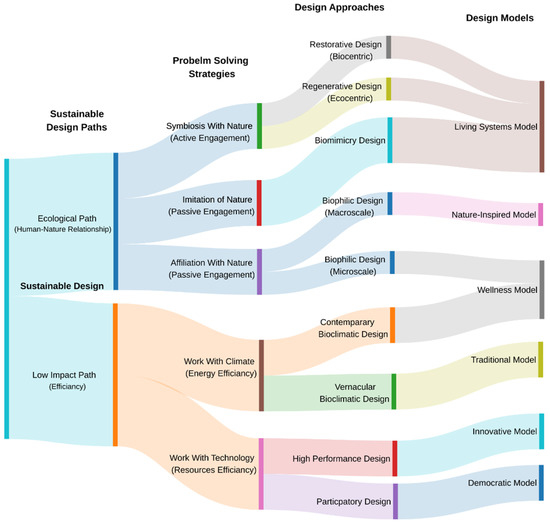
Figure 5.
The developed schema for viable sustainable design models based on the findings of the first phase/step 1 of the study.
3.2. Step 2: Chasing the Theoretical Sustainable Housing Models in Practical Experience
To transform successful design attempts of architects in sustainable housing projects into pertinent lessons applicable to regional realities (unique conditions, needs, etc.), the experiences should pass through the theory channel. Any other way than this can cause concerns related to loss of unique realities, hasty imitation, or superficial and discrete practices in developing cities and regions.
In this phase of the study, theoretical findings and associated design strategies are chased in real practices to emphasize their viability and ensure their applicability in housing projects. Seven distinctive projects from different regions were chosen for being either internationally award-winning or designed by well-known architects, such as the Kanchanjunga Apartments project designed by Aga Khan Award winner Charles Correa.
In line with what Guy and Farmer [28] pointed out about the possibility of merging the logics during the design process, the design models can be used individually or by combining more than one to create a more responsive, sustainable model. Accordingly, two types of design models are targets: mono and hybrid, the latter which results from adopting more than one model.
3.2.1. Nature-Inspired Model
The Choux de Créteil housing project has shaped the contemporary city’s identity [47] (see Table 2). Although decades have passed since its inauguration, the project still retains its value and is considered an icon of French architecture in the 1970s. Furthermore, the project was listed by the French Ministry of Culture as a heritage of the 20th century.
Table 2.
Sustainable housing models in real practices (mono and hybrid model examples).
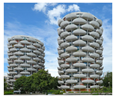
The complex consists of a group of round towers (see Figure 6), bringing in mind the plant’s morphology. The apartment’s living spaces are closer to the windows, and the 2 m-tall petal-shaped balconies provide outdoor access and privacy simultaneously.
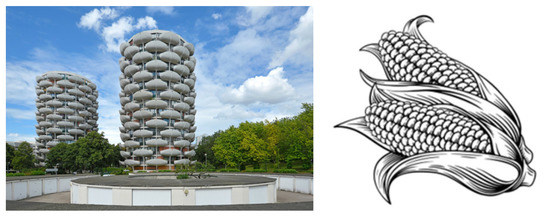
Figure 6.
Choux de Créteil housing project [48] evokes botanical images.
3.2.2. Traditional Model
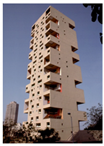
Kanchanjunga Apartments are a direct response to climatic conditions of the area while also taking into account the local culture. (see Table 2). The hot climate in Mumbai causes residents to direct their homes toward the sea to the west to cool down the temperature. Unfortunately, this direction is a source of the hot summer sun and the heavy monsoon rains, a problem that has been bypassed in the indigenous architecture by various solutions that have been reused innovatively by Charles Correa [49]. The traditional residences are built on a raised plinth and are surrounded by a protective layer of verandas that serve as a semi-private area while providing sunshade and shelter from severe rains.
Table 3 shows the bioclimatic design strategies and techniques used in the Kanchanjunga Apartments to improve thermal comfort and improve air quality, drawn from the local experience of the Mumbai community to adapt to the conditions of the region.
Table 3.
The traditional bioclimatic design strategies and techniques used in Kanchanjunga Apartments.
3.2.3. Innovative Model
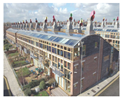
BedZED is a small neighborhood of 100 homes involved with the newest technology for improving energy efficiency (see Table 2). By integrating several innovative technologies, the project achieved a quantitative improvement in building performance (see Table 4).
Table 4.
The innovative applications employed in the BedZED project [50].
3.2.4. Wellness Model
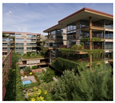
Optima Camelview Village is a 700-unit mixed-use development (see Table 2). Comprised of eleven terraced, bridge-linked residential buildings that respond to the desert climate of urban Scottsdale, Arizona, the project provides naturally conditioned buildings with high contact with nature elements, bringing wellness to their users [51]. Different biophilic design patterns and bioclimatic design strategies can be identified in this project (see Table 5).
Table 5.
The bioclimatic and biophilic design strategies and patterns of Optima Camelview Housing Projects.
3.2.5. Living Systems Model
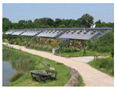
The Hockerton Housing Project is a self-sufficient (energy, water, food, waste management) ecovillage that produces its own food and energy and helps the natural systems on the site flourish. The housing compound, which Prof. Brenda and Dr. Robert Vale designed, is a small community of five earth-sheltered homes on the outskirts of Hockerton, Nottinghamshire, UK [52] (see Table 2). Under three principles (self-sufficiency, contact with nature, and positive impact), the Living Building Challenge 4.0 version introduced an assessment tool. The case study was analyzed by using this tool:
- Ecology of the place: Earth-sheltered buildings allow much of the “green footprint” of the area taken up by the residences to be returned, with plants and animals quickly re-colonizing the region. The lake was created to attract wildlife;
- Urban agriculture: an organic vegetable growing area based on permaculture principles;
- Human-scaled living: the Hockerton Housing Project is a small, walkable neighborhood with five residential units that are not accessible by cars;
- Net-zero energy: passive means and green technologies were used to achieve self-sufficiency with energy;
- Net-zero water: to achieve self-sufficiency with water, the project employed stormwater recycling systems in addition to an on-site natural blackwater recycling system;
- Health+ happiness: high levels of positive interaction between individuals, their “mental capital”, and their circumstances;
- Healthy interior environment: natural ventilation, passively or by a mechanical ventilation system with heat recovery;
- Access to nature: the project links people and nature through the inclusion of the residential units within the ecology of the place and being part of the surrounding landscape;
- Materials: interior finishes were selected from sustainable sources with low embodied energy, and are recycled where possible, as well as being low in toxicity;
- Equity: the families share energy and water systems and grow and purchase much of the food as a group to save time and money and exchange expertise;
- Beauty + biophilia: the residential units interact with their unique environment and provide residents with a sense of the presence of the living world around them that elevates the spirit;
- Education inspiration: for further development and education, the project includes an education center, in addition to an educational website about the project [52].
3.2.6. Democratic Model
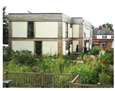
LILAC Co-Housing is a collective housing consisting of 20 units created by a group of ordinary people who believe they can play a role in tackling some of society’s most serious problems [53] (Table 2).
3.2.7. The Design Strategies
- 1.
- Participatory design: The project is self-planned and managed, provides residents with control over their daily lives and ensures their needs and expectations are met in a nature-friendly environment. The decision to include users in the design, construction, and management of the neighborhood had three goals:
- -
- Affordability: low operating costs plus common amenities make life easy in this neighborhood;
- -
- Social cohesion: the building type prevents social isolation through shared communal facilities (green spaces, a pond, a common garden, children’s games, etc.);
- -
- Ecological community: addressing climate change through behavioral changes.
- 2.
- Low-impact design:
- -
- Low energy consumption (66%), less than an average household, by using passive means and active systems;
- -
- Low water consumption (48%) due to recycling of the gray and black water;
- -
- Low waste production (50%), less than the average household, and 91% for waste production (non-recycled).
- -
- Low embodied energy material.
- 3.
- Selecting appropriate technologies: the selected technologies are easy to use and maintain; appropriate to needs; affordable; understandable and demonstrable; designed to minimize external/additional resources; locally sourced and serviceable (solar panels, triple-glazed windows, mechanical ventilation with heat recovery (MVHR) units and high-efficiency gas boilers, solar thermal water heating, water butts, a pond for sustainable drainage, and Modcell panels).
3.2.8. Hybrid Model
Bosco Verticale
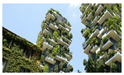
Milan’s Bosco Verticale, or vertical forest building, is a hybrid model for sustainable housing that resulted from combining two models: the wellness model and the innovative model. The Gold LEED-certified residential towers boost users’ well-being by using a screen of vegetation that helps to adapt the buildings to the harsh Mediterranean climate while also offering a calming interior ambiance by linking the users with nature [54].
Wellness Strategies
Different biophilic design attributes and strategies were used in this project (see Table 6 and Table 7).
Table 6.
The biophilic design strategies and patterns of Bosco Verticale towers.
Table 7.
Innovative applications of Bosco Verticale [54].
Innovative Strategies
Bosco Verticale towers were made to decrease energy consumption by 20 percent, compared with a typical ASHRAE baseline building.
4. Phase 2: Developing a Methodical Design Framework
Theoretically, although there is no episodic action in the design process, it is possible to improve the design process by introducing methods, strategies, and techniques to encourage and facilitate decision-making that is more appropriate to local particularities.
Therefore, the five phases theoretically suggested for the design process by Knudstrup are, namely: 1. problem formulation phase; 2. analysis phase; 3. planning phase; 4. synthesis phase; and 5. presentation phase [26]. These phases serve as a basis for housing project development in different junctures of the design process and are suitable for the peculiarities of each case.
During the problem formulation phase, also known as the project idea phase, the brief is developed and future users are involved as information sources (informative involvement) and possibly as decision-making partners (participative involvement), giving users more control over idea generation, knowledge development, and project development [55].
The analysis phase is completed by architects, which includes climate analysis, function analysis, user profile analysis, comfort analyses, and so on. During the sketching phase, architects’ and engineers’ professional knowledge is combined to find technical solutions that are in harmony with the architectural expression [26]. The framework developed in this study offers the designers two distinct paths that introduce various problem-solving strategies for environmental issues and, as a result, adaptable design concepts, environmental technologies, and design strategies compatible with the local situations. During the synthesis phase, different sustainable residential building types and relevant images that result from integrating environmental technologies with architectural solutions are provided to stakeholders and are presented to various parties in the last stage of the design process (see Figure 7).
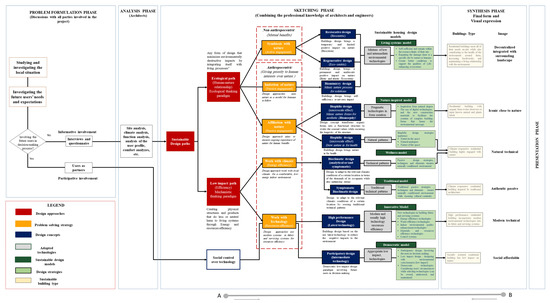
Figure 7.
The developed methodical framework.
5. Phase 3: Verification of the Developed Methodical Framework
Based on Kellert [33] and Dias [56] going beyond the dominant sustainability paradigm, which focuses on the efficiency concept, there is room for the inclusion of unique localities. Therefore, it is expected that the framework developed in this study can address appropriate design models, building types, and images for different regions, countries, and cities.
In order to guard against falsification and test the claim, the conformance verification phase is employed as a mean to test for the Middle East region and a housing project in the same area. This phase examines the practicability of a developed framework for both scales.
In the first part of the study, it was found that sustainable design practices in the Middle East are limited within the concept of efficiency by two main models, one based on inspiration from the past and the other on innovative technologies offered by Western experiences. Therefore, the operation of the framework should lead to the same findings.
The developed framework that is intended to serve as a guideline for designing sustainable homes can be used as an analysis tool. The double-sided paths can be used in a reverse way to attain the verification.
- (a)
- Verification for the case of the Middle East:
The two main design models of the Middle East (see Figure 1) correspond to two of the developed models. Whereas the revivalist model is an environmentally responsive design that uses passive means in creating naturally conditioned environments, the traditional model emphasizes environmental and cultural concerns through echoes of local community practices in creating natural conditioned environments (see Figure 7).
On the other hand, the innovative model of sustainable housing and the progressive sustainable housing model of the Middle East are compatible in terms of their reliance on modern technologies to improve resource efficiency.
The third model for the Middle East (the hybrid model), which is based on the idea of merging the revivalist and progressive models, allows the use of the models in an integrative way (see Figure 8).
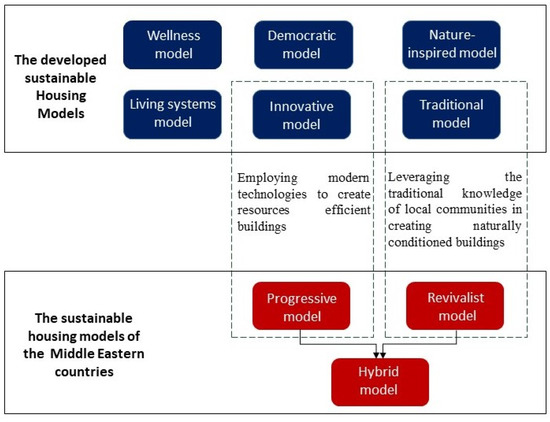
Figure 8.
Linking the sustainable housing trends in Arab countries with the developed sustainable housing models (Authors).
Thus, matching the progressive and the revivalist models with the two developed models (traditional and innovative) confirms the inclusiveness of the framework.
- (b)
- Verification for a housing project:
A multifamily housing project called “Muttawar” (2012) in Muscat was chosen as a case of verification. The project was introduced as a cost-efficient building inspired by the Arabic courtyard house that is inherently low energy through passive methods (see Figure 9) [57].
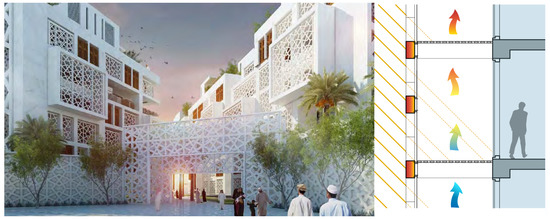
Figure 9.
The modern use of Mashrabiya in the Muttawar multifamily housing project in Muscat [57].
The design of the buildings is based on reusing traditional solutions in a contemporary way while still serving the same function as a means of cooling.
Based on the above (Table 8), Muttawar’s project is a climate-responsive residential building inspired by traditional architecture, resulting from the transformation and reuse of passive cooling elements found in the vernacular architecture that is consistent with what was mentioned in the traditional design path. Furthermore, the framework can be used to produce sustainable housing projects in the Middle East region, =helping to improve energy efficiency in such projects while evoking a sense of locality through the authentic image they present.
Table 8.
Design strategies, techniques, and elements applied in the case of the Muttawar Sustainable Residential Housing Project (Authors).
6. Conclusions
This study contributes to the methodical design approaches field, implying that the amalgamation of the theoretical studies and the concealed theory in sustainable design practices can be utilized in the formation of a methodical framework for sustainable housing projects. The study carefully removes the focal attention from the efficiency concept of sustainability to deal with all values in the same way.
The main contribution of the study is that each region can find and trace its current design path, approaches, and strategies, as well as realize the visual expression of the resulted buildings, from the first stage of design. With these findings, architects and scholars in different regions are free to open up their choices among inclusive options and strategize their action plans according to local situations.
It is believed that the developed framework can help in expanding the capacities of designers and scholars through investment in localities and local realities within their design strategies for the regions/countries which are under development.
For future work, the study suggests that the framework is capable of being performed on a city-scale and is suggestive for policymakers and local architects to redefine their expectations and action plan.
Author Contributions
The authors (N.Y. and B.H.) contributed equally to the development of the research methods, literature review, analyses and evaluation of data, as well as the writing of this article. All authors have read and agreed to the published version of the manuscript.
Funding
This research received no external funding.
Conflicts of Interest
The authors declare no conflict of interest.
References
- Portes, A.; Walton, J. Labor, Class, and the International System, 1st ed.; Aberdeen: New York, NY, USA, 1992. [Google Scholar]
- Kaplan, B. Social Change in the Capitalist World; SAGE: Beverly Hills, CA, USA, 1993. [Google Scholar]
- Moore, M. Globalization and Social Change; Elsevier: New York, NY, USA, 1993. [Google Scholar]
- Reyes, G.E. Four main theories of development: Modernization, dependency, world-systems, and globalization. Sincronía 2001, 4, 109–124. [Google Scholar]
- Waks, L. Globalization, state transformation, and educational re-structuring: Why postmodern diversity will prevail over standardization. Stud. Philos. Educ. 2006, 25, 403–424. [Google Scholar] [CrossRef]
- In Focus SDG11: Make Cities Inclusive, Safe, Resilient and Sustainable. UNECE: Geneva, Switzerland. Available online: https://www.unece.org/fileadmin/DAM/hlm/sessions/docs2019/SDG_11_Day_2019/In_focus_SDG11_report_final.pdf (accessed on 1 April 2022).
- López Chao, A.; Casares Gallego, A.; Lopez-Chao, V.; Alvarellos, A. Indicators Framework for Sustainable Urban Design. Atmosphere 2020, 11, 1143. [Google Scholar] [CrossRef]
- National Sustainable Development Strategies (NSDS), United Nation. Available online: https://sustainabledevelopment.un.org/topics/nationalsustainabledevelopmentstrategies (accessed on 24 March 2022).
- Fujihira, K. An Approach to Sustainable Homes by Applying Control Science. In Advanced Materials Research; Trans Tech Publications Ltd.: Stafa-Zurich, Switzerland, 2011; Volume 403, pp. 2087–2092. [Google Scholar]
- Ibrahim, I. Sustainable housing development: Role and significance of satisfaction aspect. City Territ. Archit. 2020, 7, 21. [Google Scholar] [CrossRef]
- UN-Habitat. The Centre of the New Urban Agenda. 2015. Available online: https://unhabitat.org/about-us/new-urban-agenda (accessed on 1 April 2022).
- Lorch, R. Sustainable development and regionalism. Build. Res. Inf. 2005, 33, 393–396. [Google Scholar] [CrossRef]
- Issa, N.; Al Abbar, S. Sustainability in the Middle East: Achievements and challenges. Int. J. Sustain. Build. Technol. Urban Dev. 2015, 6, 34–38. [Google Scholar] [CrossRef]
- Elgendy, K. A Review of Sustainable Design in the Middle East. Carboun: Advocating Sustainable Cities in the Middle East. 2018. Available online: http://www.carboun.com/sustainable-design/sustainability-in-the-desert/ (accessed on 6 May 2020).
- Hawkins, N. Sustainability in the Middle East: Complications and Opportunities. Available online: https://rb.gy/yk77ui (accessed on 2 April 2022).
- Abdelmonem, M. Contemporary Islamic Architecture in the Arab World. In Proceedings of the 18th Middle East History and Theory Conference, Chicago, IL, USA, 9–10 May 2003. [Google Scholar]
- Zavodni, S. Architecture in the Middle East: Cultural Identity, Sustainability, Methodologies. 2020. Available online: https://www.researchgate.net/publication/344340673_Architecture_in_the_Middle_East_Cultural_identity_sustainability_methodologies (accessed on 1 April 2022).
- Pyla, P. Hassan Fathy Revisited. J. Archit. Educ. 2007, 60, 28–39. [Google Scholar] [CrossRef]
- Hamid, A. Hassan Fathy and Continuity in Islamic Arts and Architecture: The Birth of a New Modern, 1st ed.; The American University in Cairo Press: Cairo, Egypt, 2010. [Google Scholar]
- El-Shorbagy, A. Hassan Fathy: The Unacknowledged Conscience of Twentieth Century Architecture. Int. J. Basic Appl. Sci. 2010, 10, 29–35. [Google Scholar]
- Mahgoub, Y. Architecture and the expression of cultural identity in Kuwait. J. Archit. 2007, 12, 165–182. [Google Scholar] [CrossRef]
- Abdelsalam, T.; Rihan, G.M. The impact of sustainability trends on housing design identity of Arab cities. HBRC J. 2013, 9, 159–172. [Google Scholar] [CrossRef] [Green Version]
- Norton, B.G. Environmental Ethics and Weak Anthropocentrism. Environ. Ethics 1984, 6, 131–148. [Google Scholar] [CrossRef]
- Hanson, N.R. Patterns of Discovery: An Inquiry into the Conceptual Foundations of Science; Cambridge University Press: Cambridge, UK, 1958; pp. 2–28. [Google Scholar]
- Eskola, A. Jaahyvisluentoja; Tammi: Helsinki, Finland, 1997. [Google Scholar]
- Knudstrup, M. Integrated Design Process in Problem-Based Learning: Integrated Design Process in PBL. In The Aalborg PBL Model: Progress, Diversity and Challenges; Kolmos, A., Fink, Flemming, K., Krogh, L., Eds.; Aalborg Universitetsforlag: Aalborg, Denmark, 2004; pp. 221–234. [Google Scholar]
- Hajer, M. The Politics of Environmental Discourse; Oxford University Press: Oxford, UK, 1995; p. 144. [Google Scholar] [CrossRef]
- Guy, S.; Farmer, G. Reinterpreting Sustainable Architecture: The Place of Technology. J. Archit. Educ. 2001, 54, 140–148. [Google Scholar] [CrossRef]
- Der Ryn, V.; Cowan, S. Ecological Design, Tenth Anniversary Edition; Island Press: Washington, DC, USA, 2007. [Google Scholar]
- Hansen, H. Sensitivity Analysis as a Methodical Approach to the Development of Design Strategies for Environmentally Sustainable Buildings. Ph.D. Thesis, Aalborg University, Aalborg, Denmark, 2007. [Google Scholar]
- Mang, P.; Reed, B. Regenerative Development and Design; Encyclopedia Sustainability Science & Technology; Springer: Berlin/Heidelberg, Germany, 2020. [Google Scholar]
- Istiadji, A.; Hardiman, G.; Satwiko, P. What is the sustainable method enough for our built environment? In Proceedings of the 2nd International Conference on Sustainability in Architectural Design and Urbanism, Semarang, Indonesia, 29 August 2018. [Google Scholar]
- Kellert, S. Dimensions, elements, and attributes of biophilic design. In Biophilic Design: The Theory, Science and Practice of Bringing Buildings to Life; Wiley: Hoboken, NJ, USA, 2008; pp. 3–20. [Google Scholar]
- Regenesis Group. Regenerative Development and Design: A Framework for Evolving Sustainability, 1st ed.; Wiley: Hoboken, NJ, USA, 2016. [Google Scholar]
- Darko, A.; Chan, A.; Owusu, E. What are the green technologies for sustainable housing development? An empirical study in Ghana Bus. Strategy Dev. 2018, 1, 140–153. [Google Scholar]
- Košir, M. Climate Adaptability of Buildings: Bioclimatic Design in the Light of Climate Change, 1st ed.; Springer: Berlin/Heidelberg, Germany, 2019. [Google Scholar]
- Benyus, J. A Good Place to Settle: Biomimicry, Biophilia, and the Return of Nature’s Inspiration to Architecture. In Biophilic Design: The Theory, Science and Practice of Bringing Buildings to Life; Wiley: Hoboken, NJ, USA, 2008; pp. 27–42. [Google Scholar]
- Vavan, M.; Milošević, P.; Minić, V. Principles Of Biomimicry in Architectural Design to Enhance The Sustainability. In Proceedings of the 17th International Eco-Conference “Environmental Protection of Urban and Suburban Settlements”, Novi Sad, Serbia, 25–27 September 2019; pp. 437–445. [Google Scholar]
- Browning, W.; Ryan, C.; Clancy, J. 14 Patterns of Biophilic, Design Improving Health & Well-Being in the Built Environment. ArchNet-IJAR Int. J. Archit. Res. 2014, 8, 62. [Google Scholar]
- Poscablo, M. Improving the Quality of Life for Older Adults in High-Rise Residential Buildings in Urban Honolulu Through Responsive and Adaptive Design. Ph.D. Thesis, University of Hawaii, Honolulu, HI, USA, 2017. [Google Scholar]
- Loftness, V.; Snyder, M. Where Windows Become Doors. In Biophilic Design: The Theory, Science and Practice of Bringing Buildings to Life; Kellert, S.F., Heerwagen, J.H., Mador, M.L., Eds.; Wiley: Hoboken, NJ, USA, 2008. [Google Scholar]
- Almusaed, A. Biophilic and Bioclimatic Architecture, Analytical Therapy for the Next Generation of Passive Sustainable Architecture; Springer: New York, NY, USA, 2010. [Google Scholar]
- Ripley, R.; Bhushan, B. Bioarchitecture: Bioinspired art and architecture—a perspective. Philos. Trans. R. Soc. A Math. Phys. Eng. Sci. 2016, 374, 20160192. [Google Scholar] [CrossRef] [PubMed] [Green Version]
- Vinnitskaya, I. The Wave/Henning Larsen Architects. Available online: https://rb.gy/nbw0cu (accessed on 4 January 2022).
- International Living Future Institute. Living Building Challenge Standard 4.0. 2019. Available online: https://are320k.files.wordpress.com/2019/05/living-building-challenge-4.0.pdf (accessed on 7 March 2022).
- Nugent, S.; Packard, A.; Brabon, E.; Vierra, S. Living, Regenerative, and Adaptive Buildings. WBDG—Whole Building Design Guide. Available online: https://rb.gy/yka7x9 (accessed on 1 April 2022).
- Regnier, I. Gérard Grandval, L’architecte des Immeubles-Choux de Créteil, Est Mort. 2021. Available online: https://rb.gy/adp9ab (accessed on 26 March 2022).
- Archiweb—Residential complex Choux de Créteil. Available online: https://www.archiweb.cz/en/b/obytny-soubor-ruzickova-kapusta-residence-les-choux-de-creteil (accessed on 7 March 2022).
- Charles Correa—Kanchanjunga Apartments, Cumballa Hill, Mumbai, 1970–1983. Available online: https://rb.gy/gm8bt1 (accessed on 10 October 2021).
- Bioregional. BedZED—The UK’s First Large-Scale Eco-Village. 2018. Available online: https://rb.gy/yv8ijm (accessed on 7 March 2022).
- Scottsdale, A. Optima Camelview Village—Optima. Optima. 2022. Available online: https://rb.gy/6mheyy (accessed on 18 May 2022).
- Hockerton Housing Project. Available online: https://www.hockertonhousingproject.org.uk/ (accessed on 19 March 2022).
- Anon. LILAC—Low Impact Living Affordable Community. Available online: https://www.lilac.coop/ (accessed on 22 May 2021).
- World Green Building Council It’s Not That Easy Being Green. 2022. Available online: https://www.worldgbc.org/news-media/bosco-verticale-not-easy-being-green (accessed on 19 May 2022).
- Caixeta, M.; Bross, J.; Tzortzopoulos, P.; Fabricio, M. Value generation through user involvement in healthcare design. In Proceedings of the 21st Annual Conference of the International Group for Lean Construction IGLC 21, Fortaleza, Brazil, 29 July–2 August 2013. [Google Scholar]
- Dias, B. Beyond Sustainability—Biophilic And Regenerative Design in Architecture. Eur. Sci. J. 2015, 11, 147–158. [Google Scholar]
- Muttawar Residential Community. Documents Community Sharing. Available online: https://zdocs.mx/doc/muttawar-residential-community-0pz253g74wpo (accessed on 21 June 2022).
Publisher’s Note: MDPI stays neutral with regard to jurisdictional claims in published maps and institutional affiliations. |
© 2022 by the authors. Licensee MDPI, Basel, Switzerland. This article is an open access article distributed under the terms and conditions of the Creative Commons Attribution (CC BY) license (https://creativecommons.org/licenses/by/4.0/).