Abstract
Irrigation districts play a crucial role in guaranteeing agricultural production, and their ecological health and sustainable development are of great importance for regional economic and environmental security. Taking the Zhaokou irrigation district in Henan Province as the research object, this paper firstly constructs a health evaluation system consisting of 26 indicators from the perspective of a “nature–economy–society–ecology” composite system. Then, the fuzzy hierarchical comprehensive evaluation method and the ArcGIS spatial analysis technique are combined to systematically evaluate the ecological health status of the irrigation district and the spatial differentiation characteristics of its functional zoning. According to the findings of this paper, the overall health level of the Zhaokou irrigation district has a membership score of 0.495, which is at a “good” grade. However, some regions are inadequate in terms of environmental quality and water resources utilization. Zonal health evaluation shows that Shangqiu and Xuchang areas have the highest comprehensive health level (grade I), that the health level of Zhengzhou area is grade II, and that Kaifeng and Zhoukou areas, due to insufficient water-saving benefits and significant ecological constraints, have relatively low health levels (grades III–IV). Under the framework of functional zoning, the irrigation district is divided into three types, namely, ecological–water-saving–social composite areas, ecological–water-saving composite areas, and water-saving–social composite areas. Among them, the ecological–water-saving–social composite areas only account for 3.7%, so optimized transformation is pressing. The findings can provide references for the sustainable development and management of Yellow River irrigation districts in Henan Province, boosting the high-quality development of irrigation districts.
1. Introduction
As a basic guarantee for agricultural production and an important base for the development of modern agriculture, irrigation districts are of great importance for promoting regional economic development and protecting the ecological environment [1,2,3]. In the past, the construction and management of irrigation districts often blindly pursued grain yield and social development, focusing solely on the transformation of water-saving systems, the improvement of service systems, and the production of economic benefits, whereas they failed to address the impact of eco-environmental factors and the healthy sustainable development. As a result, irrigation districts are now faced with a series of problems, such as a fragile ecological environment, soil salinization, excessive discharge of non-point source pollutants, groundwater pollution, and soil degradation [4,5,6]. At present, ecological irrigation districts have become the main orientation of irrigation district development [7]. To deal with existing problems, such as ecological degradation and environmental damage, it will be of great significance to construct an indicator system for the health evaluation of ecological irrigation districts based on the core concepts of ecological irrigation districts [8,9].
Performing comprehensive evaluations will help to identify key problems and provide a basis for purposefully building modern ecological irrigation districts, thereby achieving their long-term development. Scholars at home and abroad have extensively studied relevant indicator systems. Ren et al. [10] created an evaluation indicator system for sustainable ecological irrigation districts through the preliminary selection and optimized screening of evaluation indicators, and evaluated the health status of the Jiaokou Weihe River irrigation district in Shaanxi Province using the fuzzy analytic hierarchy process (AHP). Taking the Lailong irrigation district in Jiangsu Province as a case study, Zhang et al. [11] established an indicator system for the health evaluation of backbone projects there, and adopted the analytic hierarchy process–fuzzy comprehensive evaluation (AHP-FCE) model to calculate the weight of each indicator. Fan et al. [12] investigated four typical large-scale irrigation districts in North China. By deconstructing the concept of modern irrigation districts, they proposed an evaluation indicator system consisting of 4 secondary indicators, 12 tertiary indicators, and 30 quaternary indicators, and adopted an obstacle factor diagnosis model to search for the key obstacle factor affecting the modernization and improvement of irrigation districts. Sun et al. [13] constructed an evaluation indicator system composed of technical, engineering, management, environmental, and economic indicators for evaluating the agricultural water management of irrigation districts. The evaluation indicator system, consisting of 5 secondary indicators, 14 tertiary indicators, and 35 quaternary indicators, provides a comprehensive method for the health evaluation of irrigation districts, laying a theoretical foundation for improving the agricultural water management level and water-use benefits. In the past, the health evaluation of irrigation districts focused on the overall health status while ignoring the spatial heterogeneity of health levels and the direction of functional development, and it lacked zonal health evaluation. The indicator systems for the health evaluation of irrigation districts also concentrated on water-saving irrigation systems, operation service management systems, and socioeconomic benefits, without due consideration to the impacts of eco-environmental factors on their sustainable development and health levels [14].
Among the common comprehensive evaluation methods, grey correlation analysis applies to evaluation indicator systems with fewer indicators and focuses on the changing trends of indicators. The fuzzy hierarchical comprehensive evaluation method adopted in this paper can consider multiple factors and quantitatively process the data, thereby minimizing the impact of subjective factors, overcoming the uncertainty and fuzziness of data, and yielding intuitive and accessible results. With the aid of information platforms, the natural breakpoint method in ArcGIS is employed to perform the spatial visualization and automatic optimized classification of data, so as to avoid uneven data classification and improve the accuracy and interpretability of the results. By constructing an evaluation indicator system from the perspective of a “nature–economy–society–ecology” composite system, this paper takes the Zhaokou Yellow River irrigation district as a case study. Based on the overall health evaluation, a zonal health evaluation is also conducted. Using the natural breakpoint method and raster spatial analysis techniques in ArcGIS (10.8), the health levels of the study area are classified, resulting in the health levels of each zone and the patterns of spatial differentiation. The functional zoning of irrigation district development is carried out based on the results of zonal health evaluation to provide a scientific basis for the comprehensive health evaluation and functional development of the study area.
2. Materials and Methods
2.1. Overview of the Study Area
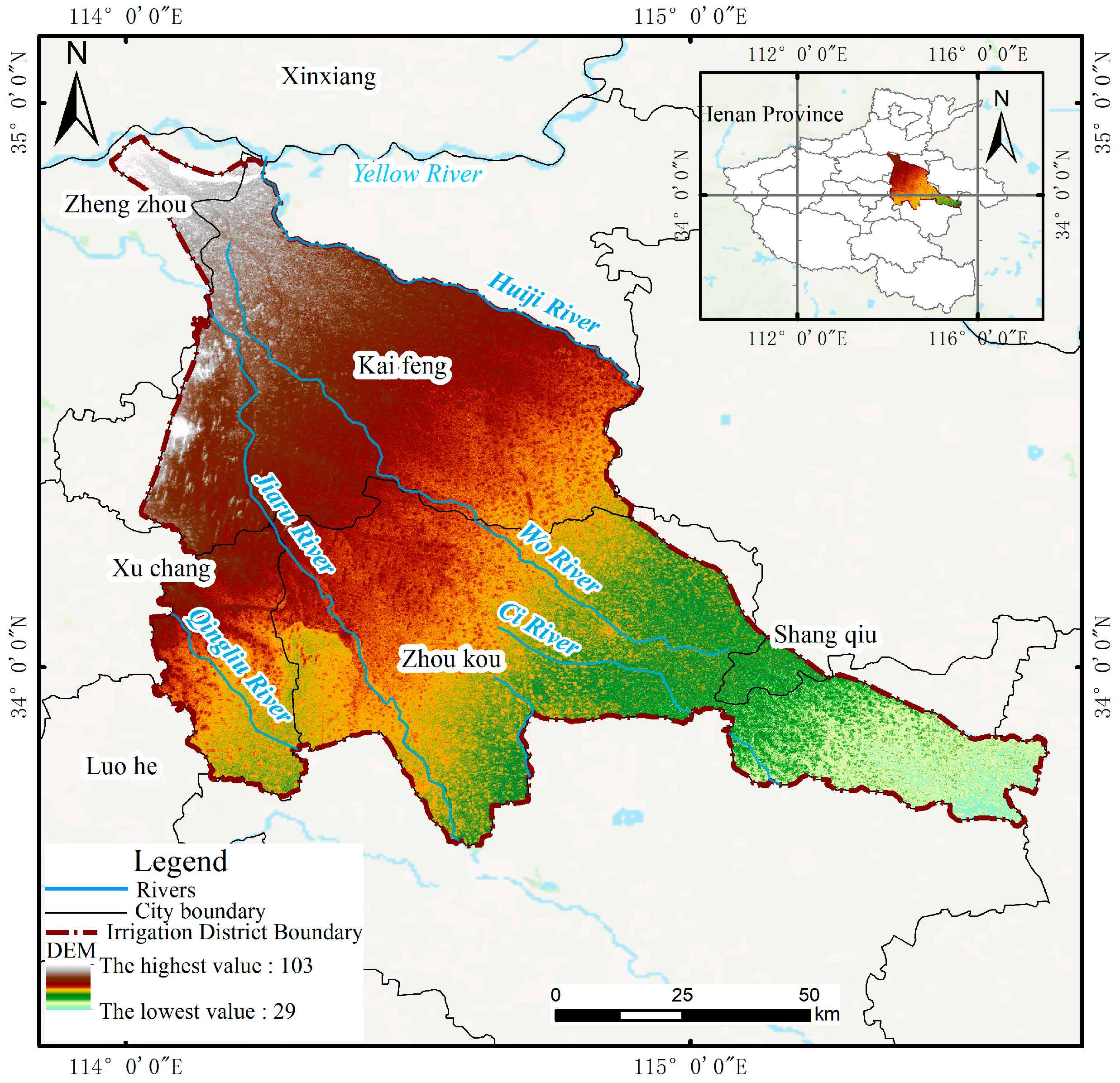
Located within the scope of 33°40′–34°54′ N and 113°58′–115°30′ E, the Zhaokou irrigation district is a major Yellow River irrigation district with the largest irrigation area in eastern Henan, covering five cities (Zhengzhou, Kaifeng, Zhoukou, Xuchang, and Shangqiu), ten counties (Zhongmu County, Weishi County, Tongxu County, Qixian County, Taikang County, Fugou County, Xihua County, Luyi County, Yanling County, and Zhecheng County), and three districts (Kaifeng Urban–Rural Integration Demonstration Zone, Xiangfu District, and Gulou District). It has a total land area of 6331 km2, a cultivated land area of about 393,000 hm2, a total designed irrigation area of 391,000 hm2, and a designed flow rate of 210 m/s (Figure 1). On 23 December 2019, its second phase was officially commenced, with a total construction period of 32 months. The main canal was completed before October 2020, and the main project before the end of 2021. After completion, its irrigation area had reached 391,000 hm2, an increase of 150,000 hm2, which raised its grain yield by more than 400 million kg. At this point, the Zhaokou irrigation district became the largest irrigation district in Henan Province and the fourth largest in China, playing an important role in improving Henan Province’s comprehensive grain production capacity and building a national core grain-producing area.
Figure 1.
Map of the Zhaokou irrigation district.
2.2. Data Sources
The data in this paper were mainly derived from the China County Statistical Yearbook 2023, Henan Statistical Yearbook 2023, and Henan Province Water Resources Bulletin 2023, as well as the 2023 statistical yearbooks, statistical databases, and government work reports of Zhengzhou, Kaifeng, Zhoukou, Xuchang, and Shangqiu.
2.3. Establishment of an Evaluation Indicator System for Yellow River Irrigation Districts in Henan Province
Composition and Analysis of the Evaluation Indicator System
According to the connotations and requirements of ecological irrigation districts and the findings of related studies at home and abroad, quantifiable, qualitative, and independent indicators were selected to compose the indicator system for the health evaluation of Yellow River irrigation districts in Henan Province, with a view to their actual construction and operation [10,15,16]. An evaluation system was constructed based on the concept of building ecological irrigation districts. To be precise, the construction of water-saving, sustainable, and healthy ecological irrigation districts was taken as the target layer. The criterion layer was composed of six aspects, namely, environmental quality, water resources utilization and protection, water-use benefits, water conservancy projects, water resources development conditions, and service management systems. The indicator layer consisted of 26 indicators, such as groundwater quality grade. The indicator system and its indicator attributes are shown in Table 1.
Table 1.
Establishment of the indicator system and its indicator attributes.
The evaluation criteria of Yellow River irrigation districts in Henan Province are based on their current indicator values and references [17]. They are divided into five grades, namely, “excellent”, “good”, “medium”, “pass”, and “fail”. The specific grading criteria are given in Table 2.
Table 2.
Evaluation criteria of Yellow River irrigation districts in Henan Province.
2.4. Modeling of the Health Evaluation of Yellow River Irrigation Districts in Henan Province
In this paper, the fuzzy hierarchical comprehensive evaluation method was used for evaluation, and a fuzzy evaluation matrix was constructed for the fuzzy processing of each indicator, so as to adapt to the uncertainty and fuzziness of evaluation indicators [18]. AHP was employed to determine the weight of each indicator, thereby ensuring the objectivity and scientificity of evaluation. Finally, fuzzy hierarchical comprehensive evaluation was performed to evaluate the health status of the irrigation district. The main steps were as follows: (1) determination of the evaluation factor set, (2) creation of the evaluation level set, (3) construction of the membership evaluation matrix, (4) defining of the indicator weight set, and (5) performance of fuzzy hierarchical comprehensive evaluation.
2.4.1. Determination of the Evaluation Factor Set
The evaluation factor set is a set of the final evaluation indicators determined through screening and optimization. In this paper, 26 indicators, such as surface water quality grade, were finally selected to constitute the evaluation factor set, i.e., Y = (y1, y2, …, y26). Y denotes the set of evaluation indicators in the criterion layer, namely, environmental quality, water resources utilization and protection, water-use benefits, water conservancy projects, water resources development conditions, and service management systems, and yi denotes the ith evaluation indicator.
2.4.2. Creation of the Evaluation Level Set
Different health evaluation levels are set according to the health status of ecological irrigation districts. This paper introduced five evaluation levels, which constitute the evaluation level set V = (v1, v2, …, v5). The corresponding health evaluation levels were “excellent”, “good”, “medium”, “pass”, and “fail” (V), which reflect the change in the overall health status of the irrigation district from best to worst.
2.4.3. Construction of the Fuzzy Evaluation Matrix
The key to constructing the fuzzy evaluation matrix is to evaluate each indicator separately, so as to determine their membership. To eliminate the “leaping” phenomenon that evaluation levels may differ by one level while there is little difference in numerical values between different levels, this paper performed fuzzy processing with reference to [19] when calculating the membership function of each quantitative indicator and determining the membership of each qualitative indicator. The membership parameters were classified according to the number of evaluation levels. Specifically, y2, y3, y4, y5, and y6 were defined as the intermediate values of evaluation level intervals, while y1 and y7 were taken as the boundary values between evaluation level intervals. For y2, y3, y4, y5, and y6, it was assumed that the interval had the maximum intermediate membership, and that membership decreased linearly from the middle to both sides. For y1 and y7, it was assumed that the larger the distance from the threshold, the greater the membership belonging to the intervals on both sides will be. The membership functions are expressed by Formula (1)–(5). According to the indicator attributes of ecological irrigation districts, for positive quantitative indicators (such as weather conditions), the membership of each indicator was directly calculated with the following formulae, while for negative quantitative indicators (such as chemical fertilizer application intensity), the order of “>” and “<”, as well as “≥” and “≤”, in the following formulae should be exchanged when calculating the membership:
where y1 denotes the threshold between the “excellent” interval and the “good” interval, y3 denotes the threshold between the “good” interval and the “medium” interval, y5 denotes the threshold between the “medium” interval and the “pass” interval, y7 denotes the threshold between the “pass” interval and the “fail” interval, y2 is the average of y1 and y3, y4 is the average of y3 and y5, and y6 is the average of y5 and y7.
For qualitative indicators (such as groundwater quality grade), the membership of each evaluation is shown in Table 3.
Table 3.
Qualitative index membership evaluation matrix.
According to the characteristics of each indicator, the membership function and the membership evaluation matrix were employed to calculate the membership matrices of various criterion layers (R1, R2, R3, R4, R5, and R6), which constitute the overall membership matrix R. The health levels of the six criterion layers were judged according to the principle of maximum membership:
where rmn denotes the membership of the criterion layer m belonging to the nth health level.
2.4.4. Determination of Indicator Weights
AHP was employed to calculate the weight of each indicator, and the 1–9 scaling method was used to compare the indicators of the same level pairwise with those of the previous level, so as to determine their relative importance. Judgment matrix A = (aij)n × n was then constructed according to the comparison results, where element aij denotes the importance ratio of factor i to factor j. The specific meaning of the scale is shown in Table 4. To obtain the weights of indicators, we need to calculate the maximum eigenvalue λmax of judgment matrix A and its corresponding eigenvector W. That is, they must satisfy equation AW = λmaxW, where (Aw)i denotes the ith component of the product (AW) of vectors A and W. The sum-product method was used to process the judgment matrix to solve the weight vector. Eigenvector W was then subjected to normalization to obtain the weight of each indicator. The specific practice is as follows:
Table 4.
Numerical meaning of each scale.
The column A of the matrix is homogenized, that is:
The next step is the summation of the normalized matrix by rows, i.e.,
The sum of the elements, is then divided by n to solve the weight vector through normalization, that is:
Its corresponding vector is the weight vector of each indicator. Judgment matrix A and vector W are then multiplied, and the product is divided by the corresponding wi. The cumulative sum is divided by n to calculate the maximum characteristic root, that is:
To avoid contradictions in the matrix judgment and ensure the logic and consistency of judgment, we adopted the consistency indicator, CI, and the average random consistency indicator, RI, to perform a consistency check on the judgment matrix, that is:
where CR denotes the consistency ratio, CI = (maximum characteristic root-n)/(n − 1), and RI denotes the average random consistency indicator, n denotes the dimensionality of the judgment matrix. When CR < 0.1, the judgment matrix is considered to have satisfactory consistency. Otherwise, it means unsatisfactory consistency, in which case it is necessary to reexamine the judgment process and readjust the judgment matrix. The calculation process and results are detailed in Appendix A.
2.4.5. Fuzzy Hierarchical Comprehensive Evaluation
The membership matrix at five health levels was obtained according to the indicator weight set and the fuzzy evaluation matrix, and the health status of the irrigation district was judged in the principle of maximum membership:
3. Results
3.1. Comprehensive Health Evaluation of the Zhaokou Irrigation District
The sum-product method was used to normalize the six indicators in the criterion layer, namely, environmental quality, water resources utilization and protection, water-use benefits, water conservancy projects, water resources development conditions, and service management systems. The weight of each indicator was calculated in turn, followed by a consistency check. In this way, the weights of the 26 indicators relative to the criterion layer and the final weight could be calculated. The final weight was equal to the product of the weight of the indicator layer relative to the criterion layer and the weight of the criterion layer relative to the target layer. The weight distribution of the evaluation indicator system is shown in Table 5.
Table 5.
Weight distribution of the evaluation indicator system for the Zhaokou irrigation district.
From the results in Table 5, it can be seen that the water consumption per 10,000 yuan of GDP (C16) had the maximum weight of 13.2%. As a key sensitivity indicator, fluctuations in this indicator can lead to significant changes in the evaluation results regarding the economic attributes of the irrigation area. Additionally, other sensitivity indicators included the construction rate of high-standard farmland (C13) and the proportion of water-saving irrigation area (C11), both of which had weight proportions exceeding 6.5%. In contrast, low-sensitivity indicators in the service management system, such as agricultural machinery power (C25) and public satisfaction (C27), had a minimal disturbance effect on the comprehensive evaluation of irrigation area health, with weight proportions of less than 3%.
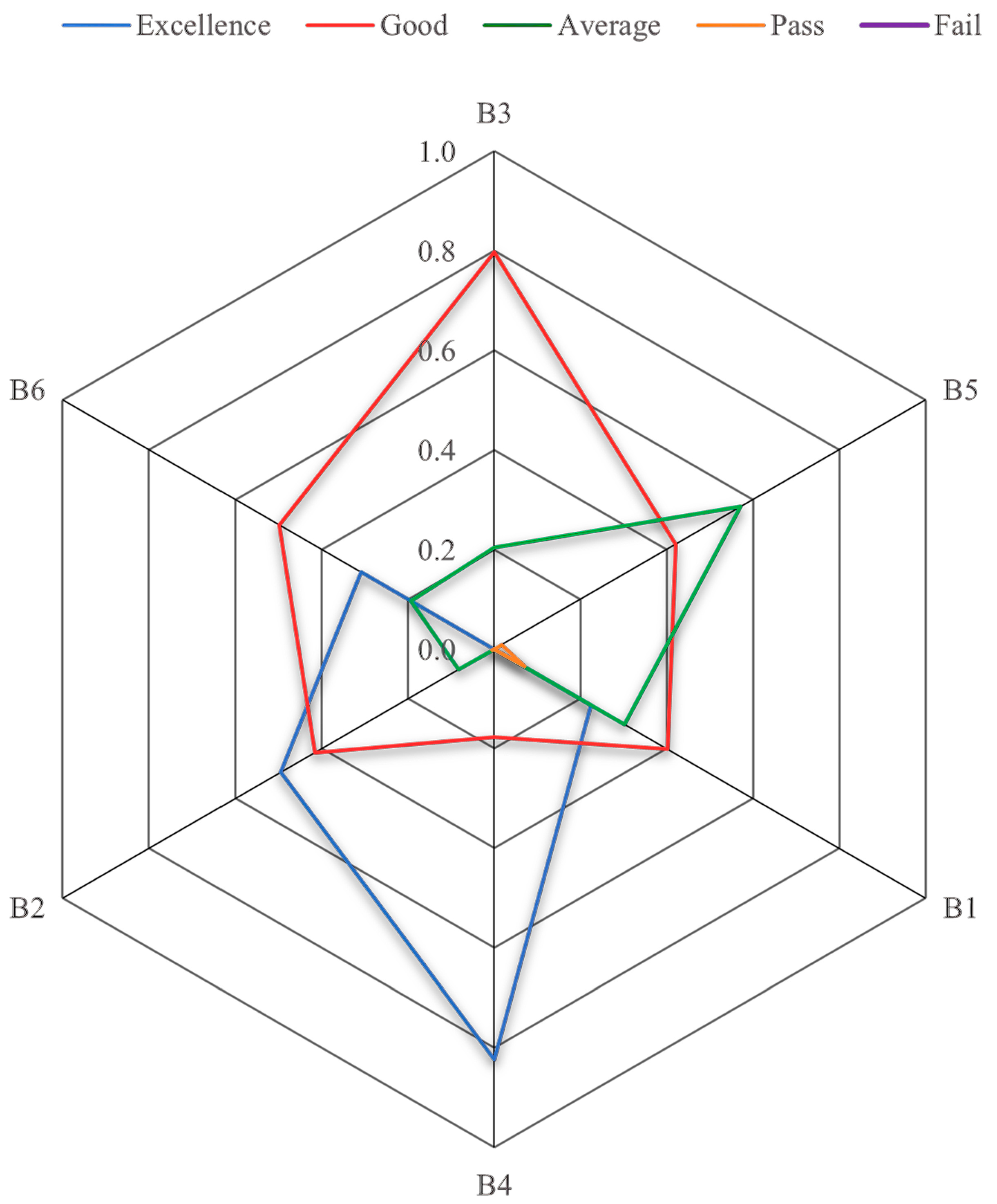
By calculating the membership and weight of each indicator, we obtained the comprehensive health membership evaluation results of the six aspects of the Zhaokou irrigation district at each level, namely, environmental quality (B1), water resources utilization and protection (B2), water-use benefits (B3), water conservancy projects (B4), water resources development conditions (B5), and service management systems (B6), as shown in Figure 2.
Figure 2.
Comprehensive health membership evaluation results of the Zhaokou irrigation district.
Since B1, B2, B3, B4, B5, and B6 constitute the membership matrix R and W1, W2, W3, W4, W5, and W6 constitute the indicator weight matrix W for the comprehensive evaluation of the Zhaokou irrigation district, the comprehensive health evaluation results were 0.278, 0.495, 0.209, 0.018, and 0. According to the health grading of ecological irrigation districts and the principle of maximum membership, the health status of the Zhaokou irrigation district was at a “good” grade, with a membership score of 0.495. According to data analysis, the dominant factors of environmental quality were mainly weather conditions and rural sewage treatment rate, and their membership scores at the “excellent” grade both exceeded 0.5. The main constraint factor was surface water quality grade. The dominant factor of water resources utilization and protection was the proportion of water-saving irrigation area, and its membership score at the “excellent” grade was 0.92. The main constraint factors were the ecological water demand satisfaction rate and the proportion of high-standard farmland. The dominant factor of water-use benefits was water consumption per 10,000 yuan GDP, and its membership score at the “good” grade was 0.86. The main constraint factors were the grain yield per hectare and the water yield coefficient. The dominant factors of water conservancy projects were mainly the completion rate of supporting water conservancy projects and the intact rate of backbone canal systems, and their membership scores at the “excellent” grade both exceeded 0.8. The dominant factor of water resources development conditions was the water yield coefficient, and its membership score at the “good” grade exceeded 0.62. The main constraint factor was population density. The dominant factor of service management systems was public satisfaction, and its membership score at the “excellent” grade was 0.8. The main constraint factors were the total power of agricultural machinery and the proportion of people with a bachelor’s degree or above. To sum up, the dominant factors of environmental quality and water resources development conditions were not prominent, which indicated that the Zhaokou irrigation district had neglected eco-environmental protection and water resources development conditions in previous management and construction.
3.2. Fuzzy Comprehensive Evaluation and Functional Zoning of the Zhaokou Irrigation District
3.2.1. Zonal Health Evaluation
According to the administrative division of the region where it is located, the Zhaokou irrigation district is divided into five areas, namely, Zhengzhou, Kaifeng, Zhoukou, Shangqiu, and Xuchang areas.
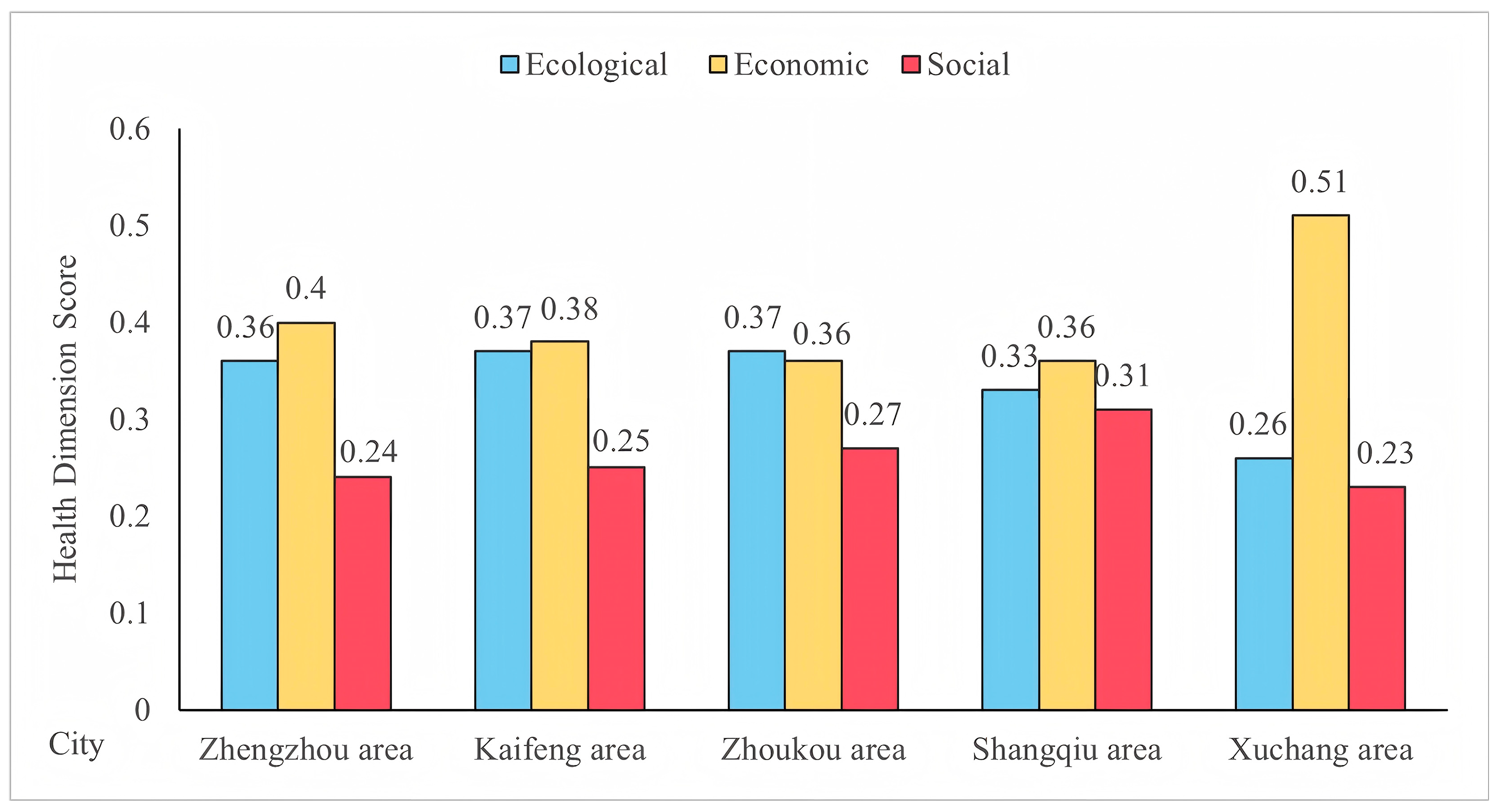
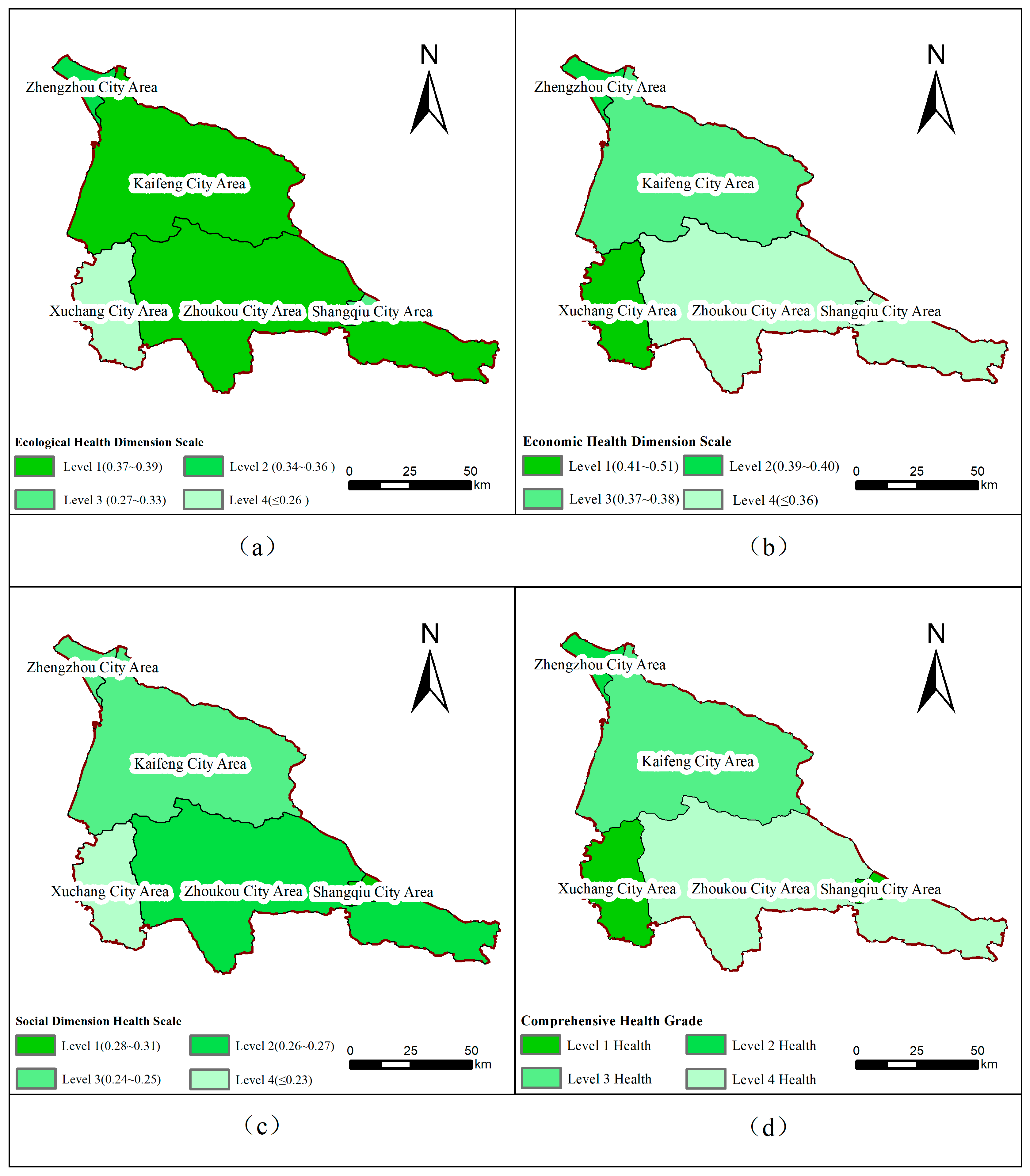
Under the theoretical framework of the “natural–artificial–social” composite ecosystem proposed for irrigation districts, this paper performed zonal health evaluation from three dimensions (ecological health, economic health, and social health) based on the three core goals of engineering construction in irrigation districts (ecological health, efficient water saving, and high-quality development) and the comprehensive evaluation system for Yellow River irrigation districts in Henan Province [9]. At the methodological level, the B1 indicator group was defined as the basis of ecological health evaluation through attribute classification, the B2–B3 indicator group constitutes the economic health evaluation system, and the B4–B6 indicator group forms the benchmark of social health evaluation. Relying on the natural breakpoint method and grid-based spatial analysis technique in ArcGIS, the health level of each attribute of the Zhaokou irrigation district at the county scale was quantitatively graded to finally obtain the distribution map of the multi-dimensional and comprehensive health evaluation levels of the Zhaokou irrigation district, as shown in Figure 3 and Figure 4.
Figure 3.
Health scores of different attributes in various zones of the Zhaokou irrigation district.
Figure 4.
(a) Ecological health dimension distribution, (b) economic health dimension distribution, (c) social dimension health distribution, and (d) comprehensive health grade distribution of the Zhaokou irrigation district.
In combination with the analysis of Figure 3, the ecological health score for the Kaifeng and Zhoukou areas was 0.37. Its advantage lies in the key indicators, such as the rural sewage treatment rate (41.8% and 47.8%) and weather conditions (64.33% and 69%). Comparatively speaking, Zhengzhou area in the north, limited by poor surface water quality, had relatively high proportions of grade IV water, and the ecological health score dropped to 0.36. The score for the Shangqiu area in the southeast was 0.33, mainly constrained by the low index value of residential green space, which was far below the average value of 13.24 m3 for the irrigation area. Although the Xuchang area in the southwest had a 0.26 ecological health score, the maximum difference in ecological health scores between different areas in the whole region was only 0.11. The economic health dimension showed a significant decreasing trend from north to south. The economic health scores for the Zhengzhou and Xuchang areas were 0.40 and 0.51, respectively, mainly attributable to their significant advantages in the proportion of water-saving irrigation areas and their regional leading positions in farmers’ disposable income. Kaifeng area was 0.38, mainly because its low grain yield per unit area was lower than the regional average of 6000 kg/ha, combined with the negative effects of a high water consumption index per 10,000 yuan of GDP. The two areas of Zhoukou and Shangqiu were constrained by water-use efficiency indicators, with an economic health score of 0.36. The social health dimension presented a decreasing trend from south to north. To be specific, Zhoukou and Shangqiu areas in the south relied on their advantages in surface water yield coefficient, with social health scores of 0.27 and 0.31, respectively. The scores for the Kaifeng area in the middle and the Zhengzhou area in the north were 0.25 and 0.24, respectively. The lowest social health score, in Xuchang, was 0.23. They showed convergent traits in social health indicators, such as the completion rate of supporting water conservancy projects and the proportion of people with a bachelor’s degree or above exceeding 90%. Their differences in health levels were mainly due to the gradual attenuation of social service indicators, such as the surface water yield coefficient, which were 0.30, 0.23, and 0.22.
According to the analysis of Figure 4, the multi-dimensional health evaluation model revealed that the health levels of various areas showed significant spatial heterogeneity, that is, the distribution of health status was characterized by “high at the peripheries and low in the middle”. Shangqiu and Xuchang areas had a grade I health level, while Zhengzhou area, Zhoukou area, and Kaifeng area were grade II, grade III, and grade IV, respectively. These results are basically consistent with the actual situation.
Shangqiu and Xuchang areas showed systematic health advantages, with pesticide application intensities of 550 tons and 612 tons and fertilizer application intensities of 46,893 tons and 36,135 tons, all of which were lower than the average values in the study area. When these factors were combined with their advantages in the proportion of high-standard farmland and the surface water yield coefficient, an ecological–water-saving–social synergistic gain effect was produced, so they were established as grade I health areas. Zhengzhou area had outstanding performance in ecological health and economic health, with the rate of excellent or good weather conditions being 65% and a high farmers’ disposable income, with the latter exceeding the regional average by 42%. However, limited by factors such as the threshold of surface water resources development and population density, Zhengzhou area had a low social health indicator, and was accordingly assigned grade II. Kaifeng area faced the typical challenges of structural imbalance. To name a few, its proportion of water-saving irrigation area (35.6%) was 17% lower than the average value, and it was also subject to the dual constraints of low total power of agricultural machinery and low availability of surface water resources (82 million tons). These challenges caused economic–social health bottlenecks, for which Kaifeng area was rated as grade III. The multi-dimensional health development of Zhoukou area was relatively slow. The current values of ecological health indicators, such as pesticide and fertilizer application intensity, were quite high, at 2137 tons and 90,294 tons, respectively. Its key indicators in the economic health dimension, i.e., farmers’ disposable income and water consumption per 10,000 yuan GDP, were at the medium level. Its social indicators, such as average annual precipitation and public satisfaction, were also at the medium level. With a low multi-dimensional health indicator, it was ultimately classified as grade IV. On the whole, the differences in comprehensive health between areas in the Zhaokou irrigation district were within a controllable range.
3.2.2. Functional Zoning of Irrigation District Development
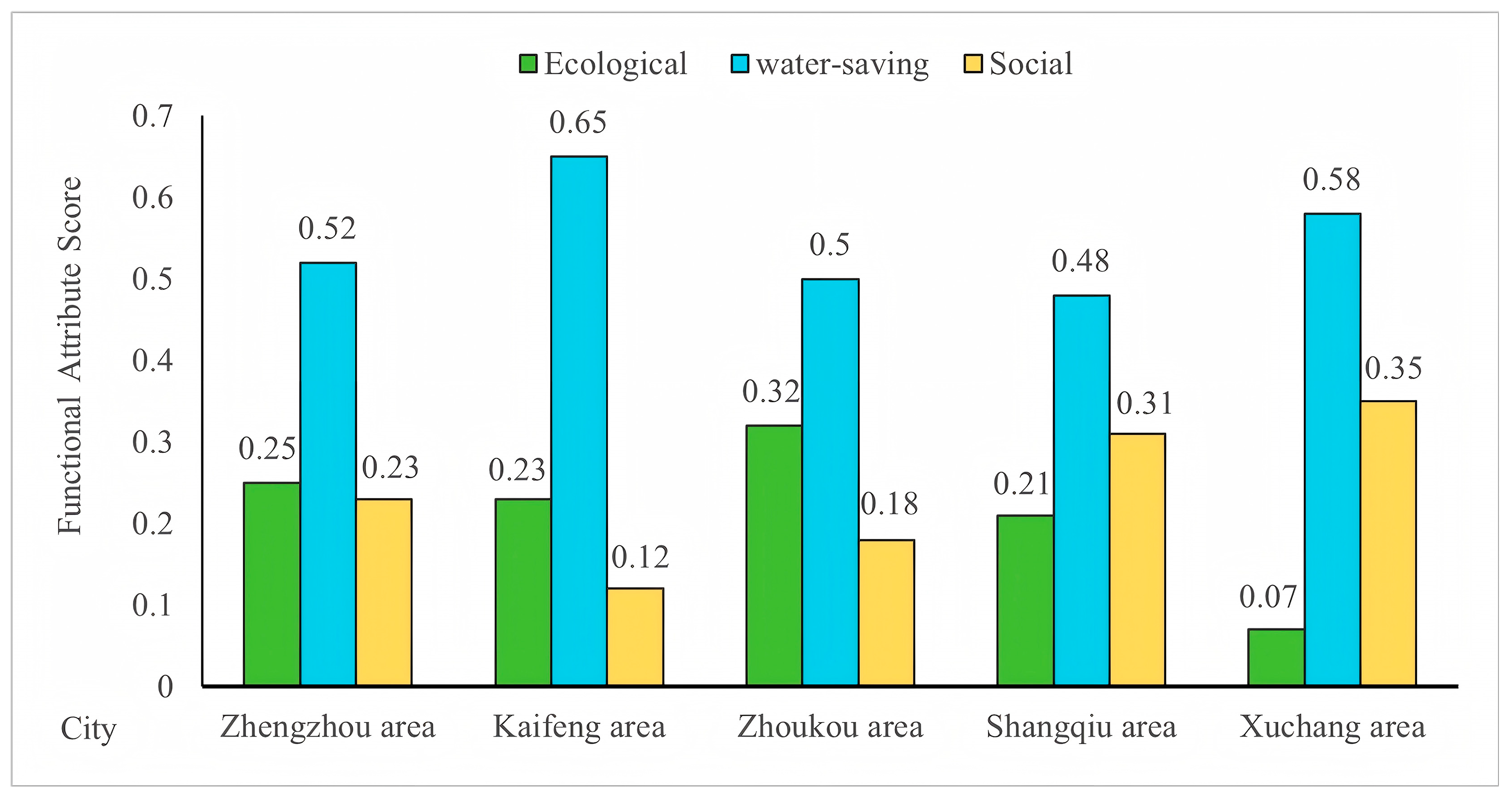
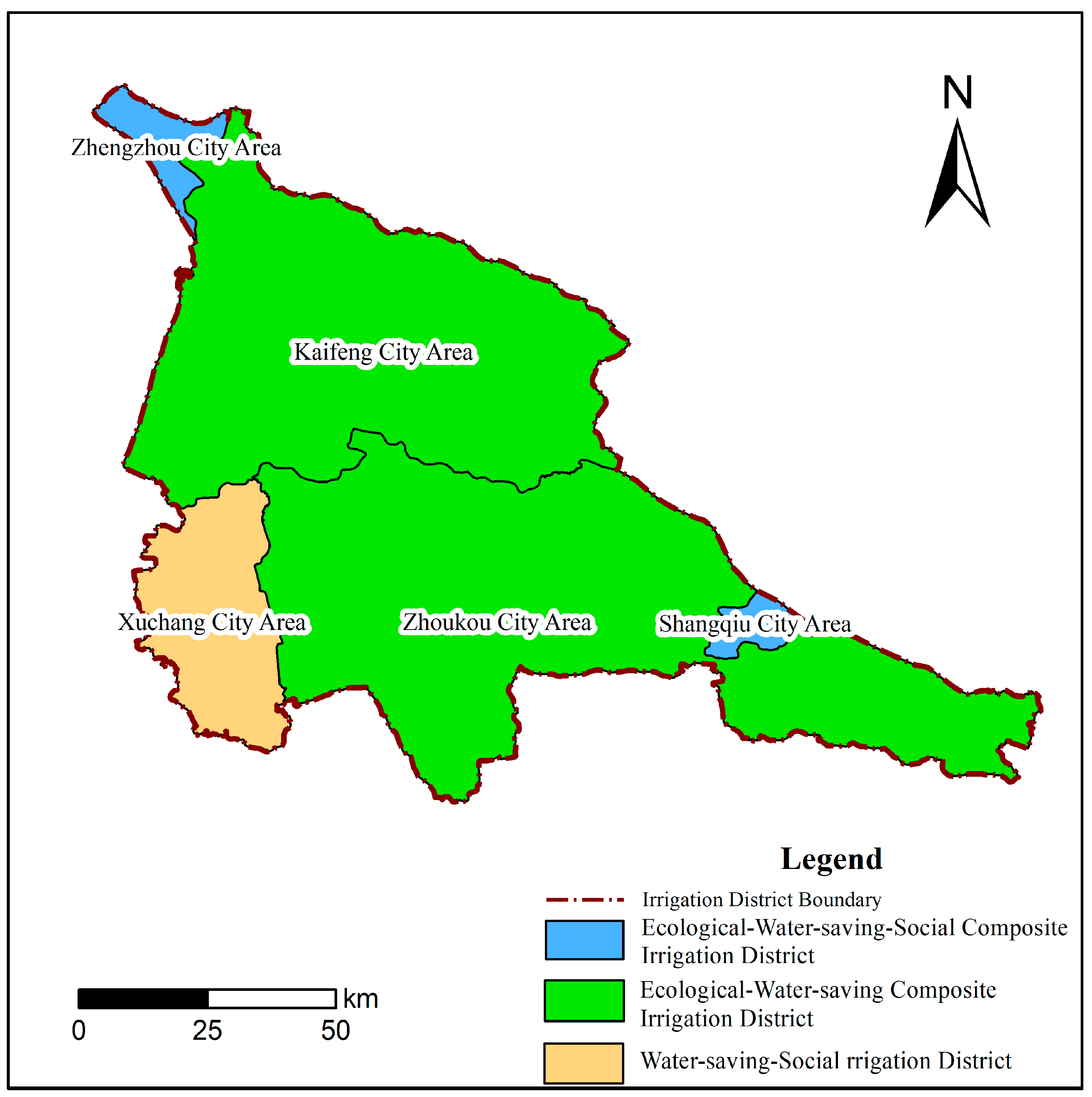
A functional zoning classification system was constructed for the irrigation district under the theoretical framework of the composite ecosystem [20]. After the establishment of three functional attributes of development (ecology, water saving, and society), a functional evaluation framework for irrigation district development was constructed based on the evaluation indicator system for Yellow River irrigation districts in Henan Province. The functional attribute of ecology was characterized by the B1 indicator system at the core (with a weight of 0.5), the functional attribute of water saving integrated indicators in the two dimensions of B2 and B4 (with a weight of 0.3), and the functional attribute of society coupled indicators in the three dimensions of B3, B5, and B6 (with a weight of 0.2). The calculation results of the functional attribute scores for different areas and their spatial distribution are shown in Figure 5 and Figure 6.
Figure 5.
Scores of functional attributes for each zone in the Zhaokou irrigation district.
Figure 6.
Distribution map of development functions in the Zhaokou irrigation district.
From Figure 5, it can be seen that in the Zhaokou irrigation area, the score proportion of water-saving functional attributes was the highest, accounting for about 50% or more. In the Zhengzhou, Kaifeng, and Zhoukou areas, the score proportion of ecological functional attributes was higher than that of social attributes, while in the Shangqiu and Xuchang areas, the score proportion of social functional attributes was higher than that of ecological attributes.
The functional attribute ratio method (that is, the contribution rate of the functional attributes of development ≥ 20%) was adopted to analyze the spatial heterogeneity of the Zhaokou irrigation district with the aid of ArcGIS mapping. The results showed that the irrigation district could be divided into three composite functional types, namely, ecological–water-saving–social composite areas, ecological–water-saving composite areas, and water-saving–social composite areas, as shown in Figure 6. Ecological–water-saving–social composite areas were mainly distributed in Zhengzhou and Shangqiu areas. The per capita green area of Zhengzhou area reached 16.5 m2, 20% higher than the average level of the irrigation district. There were also natural ecological landscapes in this area, including Yanming Lake, and the ecological environment was favorable. Water conservancy projects and water-saving facilities and measures were also relatively complete, and the completion rate of supporting water conservancy projects exceeded 90%. This area also boasted sound social attributes and balanced ecological–water-saving–social attributes. In comparison, Shangqiu area had grade II groundwater quality, with the best groundwater quality in the study area. In terms of water-saving attributes, its proportion of high-standard farmland reached 85%; in terms of social attributes, its surface water yield coefficient reached 36%, higher than the overall level of the irrigation district. It also had many rivers (such as the Huiji River and the Guohe River), was rich in surface water resources, and conformed to the concept of constructing ecological–water-saving–social composite areas.
Ecological–water-saving composite areas were concentrated in Kaifeng and Zhoukou. The Jialu River and Qingshui River water system networks have been constructed, and coordinated air pollution control has been carried out (the number of days with excellent or good weather conditions per year > 220), so they both had favorable ecological attributes. They served as core areas in the grain security strategy of Henan Province, with their coefficients of effective utilization of farmland irrigation water being 0.84 and 0.71, respectively. With the continuous increase in the proportion of high-standard farmland, their water-saving benefits were also increasing, and the ecological–water-saving attributes were in line with the characteristics of the two areas.
Xuchang area was a representative of water-saving–social composite areas. Relying on the dual regulation of the proportion of water-saving irrigation area (>75%) and water consumption per 10,000 yuan of GDP (<40 m3), it has built an efficient water-saving agricultural system, which highlights the strong coupling relationship between water-saving measures and socioeconomic development. However, it is facing the potential threat posed by a low rural sewage treatment rate to water quality. Generally speaking, the water-saving–social attribute was its main attribute.
To sum up, compared with traditional irrigation districts where the excessive pursuit of water-saving technical indicators has led to ecological degradation, the Zhaokou irrigation district has strengthened ecological protection and given due consideration to social attributes while maintaining water-saving benefits. It is worth noting that, ecological–water-saving–social composite areas, as the functional units with the highest degree of synergy among the three attributes, correspond to the practical value of the theoretical framework of “ecological protection as foundation, empowerment by water saving, and quality improvement from social dimension” [21]. However, as revealed by spatial statistical analysis, this optimal type only accounted for 3.72% of the total area. This highlights the spatial heterogeneity of the construction of a functional irrigation district and the need to promote the functional radiation of core areas (such as Zhengzhou and Shangqiu) to surrounding areas.

4. Discussion
The evaluation results of this article showed that the comprehensive score of health affiliation for the Zhao Kou irrigation area was 0.495, which falls into the good health category. This is similar to the health evaluation results of Ren et al. [10] which had a maximum affiliation value of 0.409, indicating a moderate health level, and the research results were reliable. Nevertheless, the Zhaokou irrigation district still lags behind the construction standards of modern ecological irrigation districts in terms of environmental quality, water-use benefits, and water resources development conditions. It is worth noting that insufficient funding for operation and maintenance within the irrigation area is a bottleneck that restricts the irrigation district’s sustainable development. After a field survey and literature review [22], the annual availability rate of maintenance and repair funding for the study area was only 55.05%, resulting in a water conservancy facility integrity rate of less than 73%, affecting the study area’s health evaluation rating. It should be noted that the fuzzy comprehensive health evaluation method used in this article is suitable for the short-term operational assessment of medium and large irrigation districts, addressing the current conditions of these irrigation areas. However, developing medium and large irrigation districts is a dynamic process and represents a relatively complex composite ecosystem, as the indicator values show variability with changes in spatial and temporal dimensions [23]. Moreover, with the continuous development of society, the requirements for the health evaluation of irrigation districts will be increasingly higher, and the indicator values of evaluation criteria will be raised as well. This will affect the comprehensive health evaluation results of irrigation districts. For example, Li et al. [24] analyzed China’s current situation and future trend of high-standard farmland construction. They made the scientific prediction that the area of high-standard farmland in China would reach 1.03 × 10⁸ hm2, and the proportion of high-standard farmland to arable land would increase from 43.59% in 2020 to 85.89% in 2050. Therefore, the grading standard values in the indicator system of this article would also increase with the increase in indicator values, thereby affecting the health evaluation level. In terms of functional zoning, limited by data availability and innovative zoning methods, the current research only implemented a preliminary division based on the “ecological–water-saving–social” three-dimensional framework. In the future, optimizing zoning methods through multi-data fusion is necessary to establish a more systematic functional zoning system.
5. Conclusions
Fuzzy comprehensive hierarchy analysis was performed for zonal health evaluation. The evaluation results showed that the overall health status of the study area was at a “good” grade, which aligns with the concept of constructing ecological irrigation districts.
The evaluation results of the Zhaokou irrigation district showed significant spatial heterogeneity. According to the classification of development functions, the study area could be divided into three composite functional types: ecological–water-saving composite areas, ecological–water-saving–social composite areas, and water-saving–social composite areas. The ecological–water-saving–social composite irrigation areas had the highest comprehensive benefits but the lowest area proportions. The irrigation areas must adopt a zoned management strategy to accelerate the transformation toward other ecological–water-saving–social composite irrigation areas.
A partition governance strategy is recommended based on the evaluation of partition health and functional partition results. In the ecological–water-saving composite area, the focus should be on implementing projects to enhance grain production capacity, increasing grain yield per acre and the level of agricultural mechanization, and accelerating the formation of social attributes in the area. For the water-saving–social area, it is advisable to promote unique ecological protection plans, reduce pesticide application intensity, and improve rural sewage treatment rates, thereby facilitating the establishment of ecological attributes in the area.
Author Contributions
Conceptualization, Y.W. and Y.J.; methodology, Y.W.; software, Y.J.; validation, L.L., Y.W. and Y.J.; formal analysis, C.S.; investigation, C.S.; resources, L.L.; data curation, J.L. (Jiwei Li); writing—original draft preparation, Y.W.; writing—review and editing, J.L. (Jie Lu); visualization, J.L. (Jiwei Li); supervision, J.L. (Jie Lu); project administration, L.L.; funding acquisition, L.L. All authors have read and agreed to the published version of the manuscript.
Funding
This research was funded by the National Key R&D Program, grant number 2021YFD1700900; the Henan Province Science and Technology Research Projects, grant number 242102320138; the Henan Province Soft Science Research Program, grant number 252400411285; the Science and Technology Innovation Funds of Henan Agricultural University, grant number KJCX2020C05; the High-Level Talent Research Project Funds of Zhengzhou University of Technology, grant number zzgk202111; the Henan Agricultural University 2024 Innovation Training Program for College Students, and the Natural Science Foundation of Henan Province, grant number 252300420285.
Data Availability Statement
The original contributions presented in this study are included in the article. Further inquiries can be directed to the corresponding author.
Conflicts of Interest
The authors declare no conflicts of interest.
Appendix A
Table A1.
Current value and membership calculation results of each indicator.
Table A1.
Current value and membership calculation results of each indicator.
| Indicator Layer | Current Value | Membership Calculation Results | ||||
|---|---|---|---|---|---|---|
| Excellent | Good | Medium | Pass | Fail | ||
| Groundwater quality grade C1 | III | 0.25 | 0.5 | 0.25 | 0 | 0 |
| Surface water quality grade C2 | IV | 0 | 0.25 | 0.5 | 0.25 | 0 |
| Pesticide application intensity (t) C3 | 1088 | 0 | 0.33 | 0.67 | 0 | 0 |
| Chemical fertilizer application intensity (10,000 t) C4 | 55,306 | 0 | 0.23 | 0.77 | 0 | 0 |
| Mass concentration of ammonia nitrogen (mg·L−1) C5 | 0.35 | 0 | 0.84 | 0.16 | 0 | 0 |
| Weather conditions (%) C6 | 66 | 0.65 | 0.35 | 0 | 0 | 0 |
| Per capita green area (m3) C7 | 13.24 | 0 | 0.62 | 0.38 | 0 | 0 |
| Rural sewage treatment rate (%) C8 | 43.65 | 0.71 | 0.29 | 0 | 0 | 0 |
| Ecological water demand satisfaction rate (%) C9 | 17.33 | 0 | 0 | 0.93 | 0.07 | 0 |
| Effective irrigation area ratio of farmland (%) C10 | 83.08 | 0.69 | 0.31 | 0 | 0 | 0 |
| Proportion of water-saving irrigation area (%) C11 | 52.32 | 0.92 | 0.08 | 0 | 0 | 0 |
| Coefficient of effective utilization of farmland irrigation water C12 | 0.72 | 0.87 | 0.13 | 0 | 0 | 0 |
| Proportion of high-standard farmland (%) C13 | 74.69 | 0 | 0.97 | 0.03 | 0 | 0 |
| Grain yield per hectare (kg/ha) C14 | 6476.75 | 0 | 0.6 | 0.4 | 0 | 0 |
| Farmers’ disposable income (10,000 yuan) C15 | 1.701 | 0 | 0.78 | 0.22 | 0 | 0 |
| Water consumption per 10,000 yuan of GDP (m3) C16 | 56.44 | 0 | 0.86 | 0.14 | 0 | 0 |
| Completion rate of supporting water conservancy projects (%) C17 | 99.68 | 0.83 | 0.17 | 0 | 0 | 0 |
| Intact rate of backbone canal systems (%) C18 | 99.79 | 0.82 | 0.18 | 0 | 0 | 0 |
| Average annual precipitation (mm) C19 | 690.73 | 0 | 0.31 | 0.69 | 0 | 0 |
| Exploitable yield of groundwater resources (100 million m3) C20 | 1.46 | 0 | 0.42 | 0.58 | 0 | 0 |
| Availability of surface water resources (100 million m3) C21 | 1.13 | 0 | 0.29 | 0.71 | 0 | 0 |
| Population density (person/km2) C22 | 802 | 0 | 0 | 0.76 | 0.24 | 0 |
| Water yield coefficient (%) C23 | 25.62 | 0 | 0.62 | 0.38 | 0 | 0 |
| Total power of agricultural machinery C24 | 107.5 | 0 | 0.08 | 0.92 | 0 | 0 |
| Proportion of people with a bachelor’s degree or above (%) C25 | 92 | 0.21 | 0.79 | 0 | 0 | 0 |
| Public satisfaction (%) C26 | 97.8 | 0.8 | 0.2 | 0 | 0 | 0 |
Table A2.
Weight of criterion layer B vs. target layer A.
Table A2.
Weight of criterion layer B vs. target layer A.
| Eigenvector | Weight Value | Maximum Eigenvalue | CI Value | |
|---|---|---|---|---|
| Environmental quality B1 | 1.293 | 21.554% | 6.374 | 0.075 |
| Water resources utilization and protection B2 | 1.789 | 29.818% | ||
| Water-use benefits B3 | 1.520 | 25.337% | ||
| Water conservancy projects B4 | 0.481 | 8.021% | ||
| Water resources development conditions B5 | 0.607 | 10.116% | ||
| Service management systems B6 | 0.309 | 5.154% |
Table A3.
Consistency check results of criterion layer B vs. target layer A.
Table A3.
Consistency check results of criterion layer B vs. target layer A.
| Summary of Consistency Check Results | ||||
|---|---|---|---|---|
| Maximum characteristic root | CI value | RI value | CR value | Consistency check results |
| 6.374 | 0.075 | 1.260 | 0.059 | Pass |
References
- Ahmad, A.; Khan, S. Water and Energy Scarcity for Agriculture: Is Irrigation Modernization the Answer? Irrig. Drain. 2017, 66, 34–44. [Google Scholar] [CrossRef]
- Chen, M.; Gao, Z.; Wang, Y. Overall introduction to irrigation and drainage development and modernization in China. Irrig. Drain. 2020, 69, 8–18. [Google Scholar] [CrossRef]
- Playán, E.; Gimeno, Y.; Lorenzo-González, M.A.; Jiménez, A.; López-Pardo, J.R.; Oliván, I.; Castillo, R.; Carbonell, X.; Fábregas, M.; Vicente, L.M.; et al. Irrigation modernization in the Ebro—Aragón region of Spain: Past and future trends. Agric. Water Manag. 2024, 302, 108975. [Google Scholar] [CrossRef]
- Pan, H.; Xu, Q. Quantitative Analysis on the Influence Factors of the Sustainable Water Resource Management Performance in Irrigation Areas: An Empirical Research from China. Sustainability 2018, 10, 264. [Google Scholar] [CrossRef]
- Wang, W.J.; Song, X.F.; Ma, Y. Identification of nitrate source using isotopic and geochemical data in the lower reaches of the Yellow River irrigation district (China). Environ. Earth Sci. 2016, 75, 936. [Google Scholar] [CrossRef]
- Wang, H.; Yang, Q.; Ma, H.; Liang, J. Chemical compositions evolution of groundwater and its pollution characterization due to agricultural activities in Yinchuan Plain, northwest China. Environ. Res. 2021, 200, 111449. [Google Scholar] [CrossRef] [PubMed]
- Wu, Z.; Zhang, S.; Shan, B.; Zhang, F.; Chen, X. Optimizing Crop Spatial Structure to Improve Water Use Efficiency and Ecological Sustainability in Inland River Basin. Agronomy 2024, 14, 1645. [Google Scholar] [CrossRef]
- Zhang, Q.; Diao, Y.; Yang, G.; Peng, Z.; Wang, G.; Zhang, P.; Pan, J. Study on Health Evaluation of an Ecological Irrigation District in Helan County, China. Water 2021, 13, 3325. [Google Scholar] [CrossRef]
- Zhang, X.; Du, X.; Li, Y. Comprehensive evaluation of water resources carrying capacity in ecological irrigation districts based on fuzzy set pair analysis. Desalination Water Treat. 2020, 187, 63–69. [Google Scholar] [CrossRef]
- Ren, P.; Fei, L.; Feng, C.; Tong, H.; Jiang, R.; Jie, F.; Gao, X.; Chen, S. Fuzzy Analytic Hierarchy Process for Evaluating Ecological Health of Water-saving Irrigation Districts. J. Irrig. Drain. Eng. 2022, 41, 129–139. (In Chinese) [Google Scholar]
- Zhang, Y.; Yao, H.; Fang, K.; Ding, J.; Zhou, J.; Yu, S.; Sun, X. Study on Health Evaluation Model of Modern Irrigation District Based on the AHP-FCE Model. J. Irrig. Drain. Eng. 2021, 40, 11–16. (In Chinese) [Google Scholar] [CrossRef]
- Fan, X.; Qin, J.; Lv, M.; Jiang, M. An Evaluation System of the Modernization Level of Irrigation Districts with an Analysis of Obstacle Factors: A Case Study for North China. Agronomy 2024, 14, 538. [Google Scholar] [CrossRef]
- Sun, H.; Wang, S.; Hao, X. An Improved Analytic Hierarchy Process Method for the evaluation of agricultural water management in irrigation districts of north China. Agric. Water Manag. 2017, 179, 324–337. [Google Scholar] [CrossRef]
- Jiang, M.; Zhang, C. The index system for the implementation effect evaluation of water-saving renovation of key medium-sized irrigation districts: A case study. PLoS ONE 2024, 19, e0296953. [Google Scholar] [CrossRef] [PubMed]
- Guo, Y. Study on the Post-Evaluation of Continued and Matching Construction and Water Saving Improvement Project in Large-Scale Irrigation Districts. Master’s Thesis, Wuhan University, Wuhan, China, 2010. (In Chinese). [Google Scholar]
- Zhang, Z.; Qi, J.; Wang, Q.; Wang, S.; Hu, F. Analysis and forecast of the coupled development level of socioeconomy ecological environment and tourism in China’s Yellow River Basin. Sci. Rep. 2025, 15, 5446. [Google Scholar] [CrossRef]
- Liu, S.; Wu, F.; Zai, S.; Hao, S.; Leghari, S.J.; Li, L. An Optimized Cloud Model Algorithm Adapted to Comprehensive Benefit Evaluation of Water-Saving Irrigation. Pol. J. Environ. Stud. 2021, 30, 3713–3726. [Google Scholar] [CrossRef]
- Lv, Y.; Wang, Y.; Zhang, X.; Zhang, D. A Study on the Carrying Capacity of Water Resources Utilizing the Fuzzy Comprehensive Evaluation Model—Illustrated by a Case from Guantao County. Water 2023, 15, 4277. [Google Scholar] [CrossRef]
- Xu, Z.; Xiao, S.; Du, C.; Deng, Q.; Yan, B.; Zeng, Z.; Liu, X. Temporal Variation of Water Environment Carrying Capacity in a Highly Urbanized Region of China. Water 2020, 12, 3362. [Google Scholar] [CrossRef]
- Grizzetti, B.; Lanzanova, D.; Liquete, C.; Reynaud, A.; Cardoso, A.C. Assessing water ecosystem services for water resource management. Environ. Sci. Policy 2016, 61, 194–203. [Google Scholar] [CrossRef]
- Jiang, G.; Wang, Z. Scale Effects of Ecological Safety of Water-Saving Irrigation: A Case Study in the Arid Inland River Basin of Northwest China. Water 2019, 11, 1886. [Google Scholar] [CrossRef]
- Li, C. Evaluation and Optimization of the Operation Status of the Water Resources Transmission and Distribution System in Zhaokou Irrigation District. Master’s Thesis, North China University of Water Resources and Electric Power, Zhengzhou, China, 2023. (In Chinese). [Google Scholar]
- Cui, H. Construction Concept and Path of Ecological Irrigation Area in Zhaokou Irrigation District. Henan Water Resour. South-North Water Transf. 2023, 52, 10–12. (In Chinese) [Google Scholar]
- Li, J.; Shi, X.; Shi, W.; Wang, S. The Patterns of Cultivated Land Well-facilitated Farmland in China at th Provincial Level in the Next 30 Years. J. Ecol. Rural Environ. 2024, 40, 461–468. (In Chinese) [Google Scholar]
Disclaimer/Publisher’s Note: The statements, opinions and data contained in all publications are solely those of the individual author(s) and contributor(s) and not of MDPI and/or the editor(s). MDPI and/or the editor(s) disclaim responsibility for any injury to people or property resulting from any ideas, methods, instructions or products referred to in the content. |
© 2025 by the authors. Licensee MDPI, Basel, Switzerland. This article is an open access article distributed under the terms and conditions of the Creative Commons Attribution (CC BY) license (https://creativecommons.org/licenses/by/4.0/).