The RTF-Compass: Navigating the Trade-Off Between Thermogenic Potential and Ferroptotic Stress in Adipocytes

 , , , ,
  , ,
, ,
Abstract
1. Introduction
2. The Redox Axis: NRF2 and the Threshold of Reductive Blunting
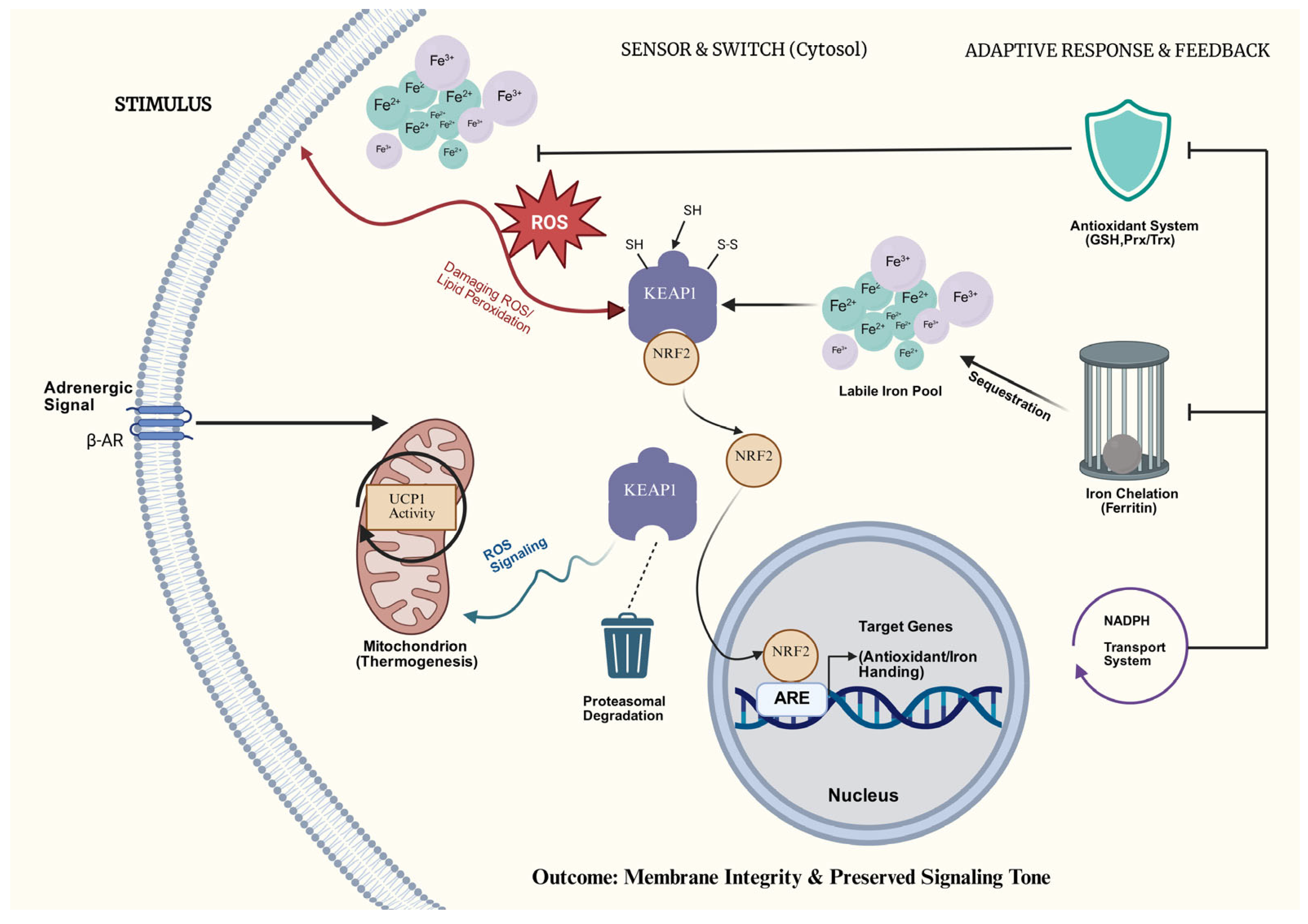
2.1. The Molecular Rheostat: KEAP1–NRF2 Sensing
Integrated Antioxidant Defense and Iron Homeostasis
2.2. Context-Dependent Metabolic Outcomes
2.2.1. Adaptive Activation in High-Stress Depots
2.2.2. The Phenomenon of “Reductive Blunting”
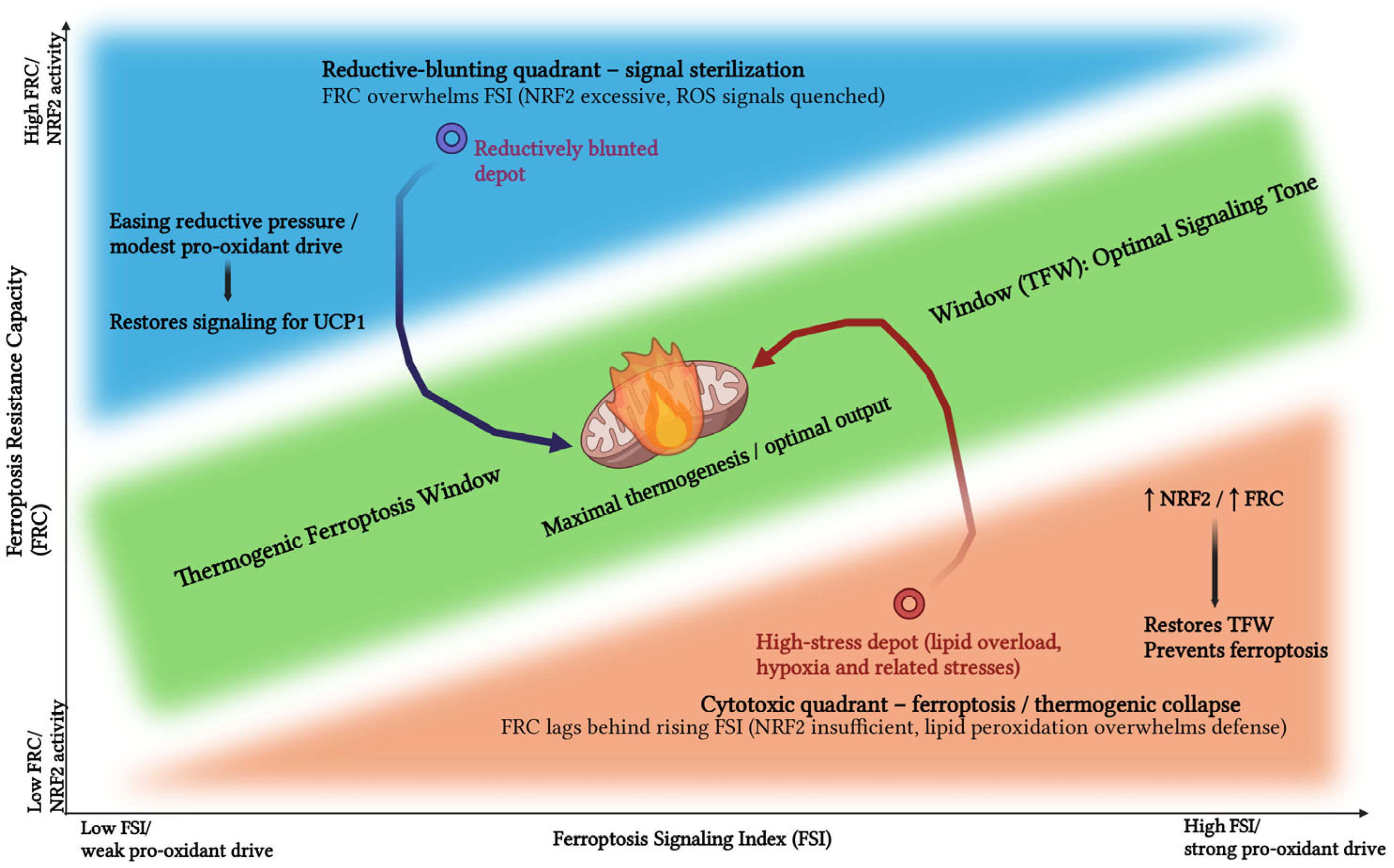
2.3. The Thermogenic Ferroptosis Window (TFW) and the RTF-Compass
2.3.1. Ferroptosis Resistance Capacity (FRC)
2.3.2. Ferroptosis Signaling Index (FSI)
2.3.3. The Reductive Blunted State (High FRC, Low FSI)
2.3.4. The Cytotoxic State (Low FRC, High FSI)
2.3.5. The Quiescent State (Baseline FRC, Low FSI)
3. HIF-1α as an Oxygen-Sensing Rheostat in Thermogenic Adipose Tissue
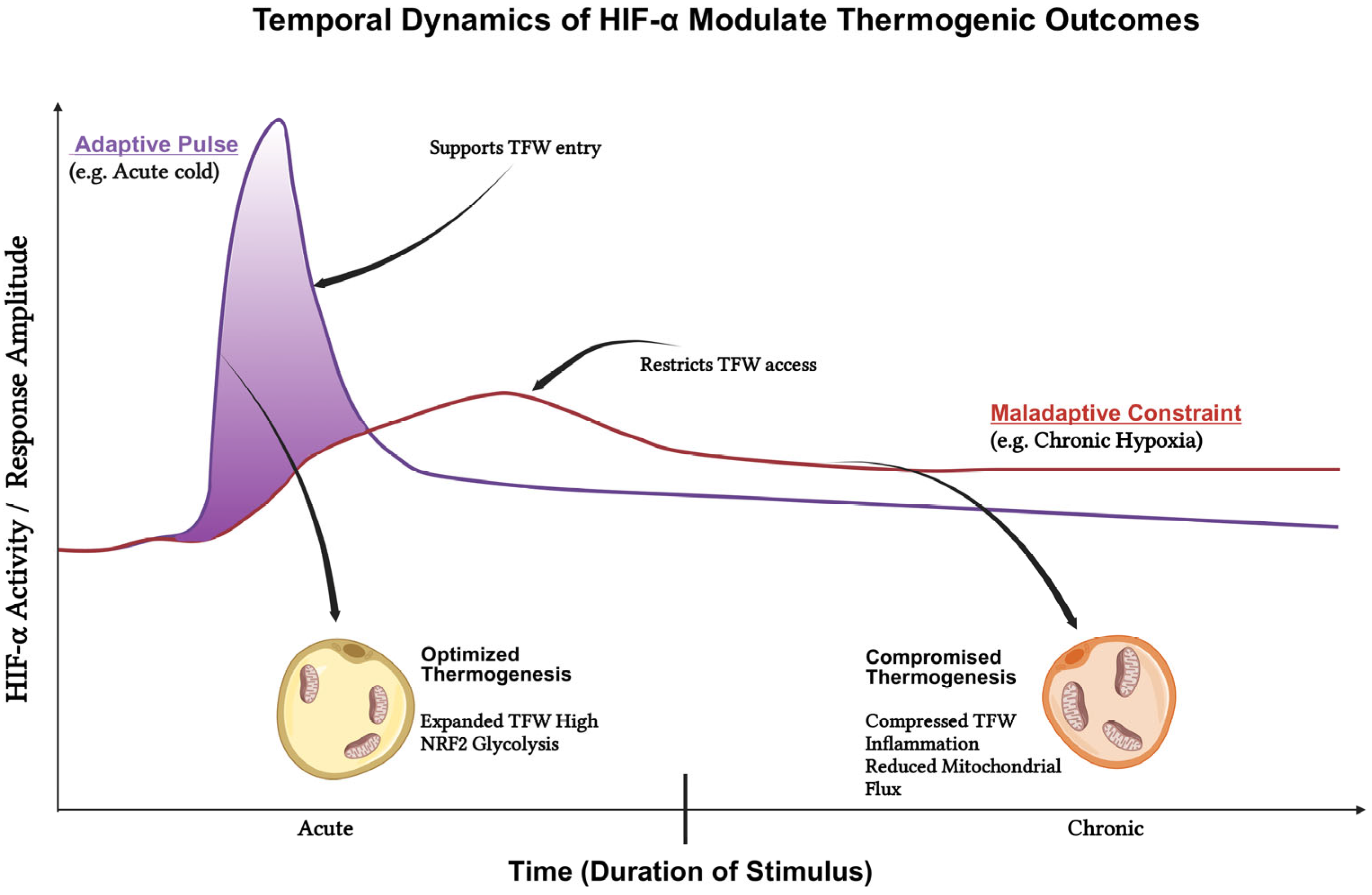
3.1. Adaptive Hypoxia
3.2. Maladaptive Hypoxia
3.3. Integrating HIF-1α into the RTF-Compass
4. Ferroptotic Lipid Signaling as a Metabolic Checkpoint for Adipose Thermogenesis
4.1. The Precipice of Metabolic Stress
4.2. Hormesis: The Instructional Value of Oxidative Tension
4.3. NRF2: The Arbiter of the Ferroptosis Window
4.4. The Thermogenic Ferroptosis Window (TFW)
4.5. Therapeutic Implications
5. Integrating the Hypoxic Axis: HIF-1α as a Dynamic Modulator of the TFW
5.1. Hypoxia-Dependent Modulation of Operational States
5.2. Dynamic Trajectories on the RTF-Compass
6. Implications for Intervention Strategies: The RTF-Compass
6.1. Context-Dependent Therapy
6.2. Specific Intervention Vectors
6.3. Rescuing the Cytotoxic Depot
7. Future Directions and Outstanding Questions
7.1. Decoding the Lipid Basis of Ferroptotic Signaling
7.2. Spatial Heterogeneity and “Micro-Compass” States
7.3. Redox Hysteresis and Metabolic Memory
7.4. Concluding Remarks
Author Contributions
Funding
Institutional Review Board Statement
Informed Consent Statement
Data Availability Statement
Conflicts of Interest
Abbreviations
| AATBC | Long noncoding RNA AATBC |
| ACSL4 | Acyl-CoA synthetase long-chain family member 4 |
| AREs | Antioxidant response elements |
| ATT | Adipose tissue thermogenesis |
| ATP2A2 | ATPase sarcoplasmic/endoplasmic reticulum Ca2+ transporting 2 (SERCA2) |
| BAT | Brown adipose tissue |
| CPX | Ciclopirox |
| DFO | Deferoxamine |
| DiHETE | Dihydroxyeicosatetraenoic acid (e.g., 5,15-DiHETE) |
| FRC | Ferroptosis resistance capacity |
| FSI | Ferroptosis signaling index |
| FSP1 | Ferroptosis suppressor protein 1 |
| FTH | Ferritin heavy chain |
| GLUTs | Glucose transporters |
| GPX4 | Glutathione peroxidase 4 |
| GSH | Glutathione (reduced glutathione) |
| HIF-1α | Hypoxia-inducible factor 1 alpha |
| HIF-1β | Hypoxia-inducible factor 1 beta (ARNT) |
| IL-6 | Interleukin 6 |
| INT131 | INT131 (selective PPARγ modulator; SPPARM) |
| KEAP1 | Kelch-like ECH-associated protein 1 |
| Lexis | Long noncoding RNA Lexis |
| LINC00473 | Long intergenic non-protein coding RNA 473 |
| LPCAT(s) | Lysophosphatidylcholine acyltransferase(s) |
| MCP-1 | Monocyte chemoattractant protein 1 |
| MDA | Malondialdehyde |
| NADPH | Nicotinamide adenine dinucleotide phosphate (reduced form) |
| Nfe2L1 | Nuclear factor, erythroid 2 like 1 |
| NRF2 | Nuclear factor erythroid 2–related factor 2 (NFE2L2) |
| PDH | Pyruvate dehydrogenase |
| PDK | Pyruvate dehydrogenase kinase |
| PGC-1α | PPARγ coactivator 1 alpha |
| PGC-1β | PPARγ coactivator 1 beta |
| PHD | Prolyl hydroxylase domain enzyme |
| PHD2 | Prolyl hydroxylase domain-containing protein 2 |
| PPARγ | Peroxisome proliferator-activated receptor gamma |
| ROS | Reactive oxygen species |
| RTF-Compass | Redox–Thermogenesis–Ferroptosis Compass |
| TCA | Tricarboxylic acid |
| TfR1 | Transferrin receptor 1 |
| TFW | Thermogenic Ferroptosis Window |
| TNF-α | Tumor necrosis factor alpha |
| TZDs | Thiazolidinediones |
| UCP1 | Uncoupling protein 1 |
| VEGF | Vascular endothelial growth factor |
| WAT | White adipose tissue |
| β-AR | Beta-adrenergic receptor |
| β3-AR | Beta-3 adrenergic receptor |
References
- Betz, M.J.; Enerbäck, S. Targeting thermogenesis in brown fat and muscle to treat obesity and metabolic disease. Nat. Rev. Endocrinol. 2018, 14, 77–87. [Google Scholar] [CrossRef]
- Chouchani, E.T.; Kazak, L.; Spiegelman, B.M. New Advances in Adaptive Thermogenesis: UCP1 and Beyond. Cell Metab. 2019, 29, 27–37. [Google Scholar] [CrossRef]
- Kajimura, S.; Spiegelman, B.M.; Seale, P. Brown and Beige Fat: Physiological Roles beyond Heat Generation. Cell Metab. 2015, 22, 546–559. [Google Scholar] [CrossRef]
- Bartelt, A.; Widenmaier, S.B.; Schlein, C.; Johann, K.; Goncalves, R.L.S.; Eguchi, K.; Fischer, A.W.; Parlakgül, G.; Snyder, N.A.; Nguyen, T.B.; et al. Brown adipose tissue thermogenic adaptation requires Nrf1-mediated proteasomal activity. Nat. Med. 2018, 24, 292–303. [Google Scholar] [CrossRef] [PubMed]
- Cypess, A.M.; Weiner, L.S.; Roberts-Toler, C.; Elía, E.F.; Kessler, S.H.; Kahn, P.A.; English, J.; Chatman, K.; Trauger, S.A.; Doria, A.; et al. Activation of Human Brown Adipose Tissue by a β3-Adrenergic Receptor Agonist. Cell Metab. 2015, 21, 33–38. [Google Scholar] [CrossRef] [PubMed]
- Jun, J.C.; Devera, R.; Unnikrishnan, D.; Shin, M.-K.; Bevans-Fonti, S.; Yao, Q.; Rathore, A.; Younas, H.; Halberg, N.; Scherer, P.E.; et al. Adipose HIF-1α causes obesity by suppressing brown adipose tissue thermogenesis. J. Mol. Med. 2017, 95, 287–297. [Google Scholar] [CrossRef]
- Loboda, A.; Damulewicz, M.; Pyza, E.; Jozkowicz, A.; Dulak, J. Role of Nrf2/HO-1 system in development, oxidative stress response and diseases: An evolutionarily conserved mechanism. Cell. Mol. Life Sci. 2016, 73, 3221–3247. [Google Scholar] [CrossRef]
- Stockwell, B.R.; Friedmann Angeli, J.P.; Bayir, H.; Bush, A.I.; Conrad, M.; Dixon, S.J.; Fulda, S.; Gascón, S.; Hatzios, S.K.; Kagan, V.E.; et al. Ferroptosis: A Regulated Cell Death Nexus Linking Metabolism, Redox Biology, and Disease. Cell 2017, 171, 273–285. [Google Scholar] [CrossRef]
- Mills, E.L.; Pierce, K.A.; Jedrychowski, M.P.; Garrity, R.; Winther, S.; Vidoni, S.; Yoneshiro, T.; Spinelli, J.B.; Lu, G.Z.; Kazak, L.; et al. Accumulation of succinate controls activation of adipose tissue thermogenesis. Nature 2018, 560, 102–106. [Google Scholar] [CrossRef]
- Held, N.M.; Kuipers, E.N.; van Weeghel, M.; van Klinken, J.B.; Denis, S.W.; Lombès, M.; Wanders, R.J.; Vaz, F.M.; Rensen, P.C.N.; Verhoeven, A.J.; et al. Pyruvate dehydrogenase complex plays a central role in brown adipocyte energy expenditure and fuel utilization during short-term beta-adrenergic activation. Sci. Rep. 2018, 8, 9562. [Google Scholar] [CrossRef] [PubMed]
- Shadel, G.S.; Horvath, T.L. Mitochondrial ROS Signaling in Organismal Homeostasis. Cell 2015, 163, 560–569. [Google Scholar] [CrossRef] [PubMed]
- Sies, H.; Jones, D.P. Reactive oxygen species (ROS) as pleiotropic physiological signalling agents. Nat. Rev. Mol. Cell Biol. 2020, 21, 363–383. [Google Scholar] [CrossRef]
- Trayhurn, P. Hypoxia and Adipose Tissue Function and Dysfunction in Obesity. Physiol. Rev. 2013, 93, 1–21. [Google Scholar] [CrossRef] [PubMed]
- Chouchani, E.T.; Kazak, L.; Jedrychowski, M.P.; Lu, G.Z.; Erickson, B.K.; Szpyt, J.; Pierce, K.A.; Laznik-Bogoslavski, D.; Vetrivelan, R.; Clish, C.B.; et al. Mitochondrial ROS regulate thermogenic energy expenditure and sulfenylation of UCP1. Nature 2016, 532, 112–116. [Google Scholar] [CrossRef] [PubMed]
- Virág, L.; Jaén, R.I.; Regdon, Z.; Boscá, L.; Prieto, P. Self-defense of macrophages against oxidative injury: Fighting for their own survival. Redox Biol. 2019, 26, 101261. [Google Scholar] [CrossRef]
- Divakaruni, A.S.; Brand, M.D. The Regulation and Physiology of Mitochondrial Proton Leak. Physiology 2011, 26, 192–205. [Google Scholar] [CrossRef]
- Nedergaard, J.; Cannon, B. Chapter 9—Brown adipose tissue as a heat-producing thermoeffector. In Handbook of Clinical Neurology; Romanovsky, A.A., Ed.; Elsevier: Amsterdam, The Netherlands, 2018; Volume 156, pp. 137–152. [Google Scholar]
- Hayes, J.D.; Dinkova-Kostova, A.T. The Nrf2 regulatory network provides an interface between redox and intermediary metabolism. Trends Biochem. Sci. 2014, 39, 199–218. [Google Scholar] [CrossRef]
- Robledinos-Antón, N.; Fernández-Ginés, R.; Manda, G.; Cuadrado, A. Activators and Inhibitors of NRF2: A Review of Their Potential for Clinical Development. Oxidative Med. Cell. Longev. 2019, 2019, 9372182. [Google Scholar] [CrossRef]
- Canning, P.; Sorrell, F.J.; Bullock, A.N. Structural basis of Keap1 interactions with Nrf2. Free Radic. Biol. Med. 2015, 88, 101–107. [Google Scholar] [CrossRef]
- Cuadrado, A.; Rojo, A.I.; Wells, G.; Hayes, J.D.; Cousin, S.P.; Rumsey, W.L.; Attucks, O.C.; Franklin, S.; Levonen, A.-L.; Kensler, T.W.; et al. Therapeutic targeting of the NRF2 and KEAP1 partnership in chronic diseases. Nat. Rev. Drug Discov. 2019, 18, 295–317. [Google Scholar] [CrossRef]
- Suzuki, T.; Yamamoto, M. Molecular basis of the Keap1–Nrf2 system. Free Radic. Biol. Med. 2015, 88, 93–100. [Google Scholar] [CrossRef] [PubMed]
- Dayalan Naidu, S.; Dinkova-Kostova, A.T. KEAP1, a cysteine-based sensor and a drug target for the prevention and treatment of chronic disease. Open Biol. 2020, 10, 200105. [Google Scholar] [CrossRef]
- Song, Y.; Qu, Y.; Mao, C.; Zhang, R.; Jiang, D.; Sun, X. Post-translational modifications of Keap1: The state of the art. Front. Cell Dev. Biol. 2024, 11, 1332049. [Google Scholar] [CrossRef]
- Li, B.; Ming, H.; Qin, S.; Nice, E.C.; Dong, J.; Du, Z.; Huang, C. Redox regulation: Mechanisms, biology and therapeutic targets in diseases. Signal Transduct. Target. Ther. 2025, 10, 72. [Google Scholar] [CrossRef]
- Suzuki, T.; Motohashi, H.; Yamamoto, M. Toward clinical application of the Keap1–Nrf2 pathway. Trends Pharmacol. Sci. 2013, 34, 340–346. [Google Scholar] [CrossRef]
- Dodson, M.; Castro-Portuguez, R.; Zhang, D.D. NRF2 plays a critical role in mitigating lipid peroxidation and ferroptosis. Redox Biol. 2019, 23, 101107. [Google Scholar] [CrossRef]
- Kerins, M.J.; Ooi, A. The Roles of NRF2 in Modulating Cellular Iron Homeostasis. Antioxid. Redox Signal. 2018, 29, 1756–1773. [Google Scholar] [CrossRef]
- Bauzá-Thorbrügge, M.; Peris, E.; Zamani, S.; Micallef, P.; Paul, A.; Bartesaghi, S.; Benrick, A.; Asterholm, I.W. NRF2 is essential for adaptative browning of white adipocytes. Redox Biol. 2023, 68, 102951. [Google Scholar] [CrossRef] [PubMed]
- Wang, X.; Wu, Q.; Zhong, M.; Chen, Y.; Wang, Y.; Li, X.; Zhao, W.; Ge, C.; Wang, X.; Yu, Y.; et al. Adipocyte-derived ferroptotic signaling mitigates obesity. Cell Metab. 2025, 37, 673–691.e677. [Google Scholar] [CrossRef] [PubMed]
- Xia, Y.; Zhai, X.; Qiu, Y.; Lu, X.; Jiao, Y. The Nrf2 in Obesity: A Friend or Foe? Antioxidants 2022, 11, 2067. [Google Scholar] [CrossRef]
- Meher, A.K.; Sharma, P.R.; Lira, V.A.; Yamamoto, M.; Kensler, T.W.; Yan, Z.; Leitinger, N. Nrf2 deficiency in myeloid cells is not sufficient to protect mice from high-fat diet-induced adipose tissue inflammation and insulin resistance. Free Radic. Biol. Med. 2012, 52, 1708–1715. [Google Scholar] [CrossRef]
- Uruno, A.; Furusawa, Y.; Yagishita, Y.; Fukutomi, T.; Muramatsu, H.; Negishi, T.; Sugawara, A.; Kensler, T.W.; Yamamoto, M. The Keap1-Nrf2 System Prevents Onset of Diabetes Mellitus. Mol. Cell. Biol. 2013, 33, 2996–3010. [Google Scholar] [CrossRef]
- Corvera, S.; Solivan-Rivera, J.; Yang Loureiro, Z. Angiogenesis in adipose tissue and obesity. Angiogenesis 2022, 25, 439–453. [Google Scholar] [CrossRef] [PubMed]
- Crewe, C.; An, Y.A.; Scherer, P.E. The ominous triad of adipose tissue dysfunction: Inflammation, fibrosis, and impaired angiogenesis. J. Clin. Investig. 2017, 127, 74–82. [Google Scholar] [CrossRef]
- Dinkova-Kostova, A.T.; Copple, I.M. Advances and challenges in therapeutic targeting of NRF2. Trends Pharmacol. Sci. 2023, 44, 137–149. [Google Scholar] [CrossRef]
- Uruno, A.; Saigusa, D.; Suzuki, T.; Yumoto, A.; Nakamura, T.; Matsukawa, N.; Yamazaki, T.; Saito, R.; Taguchi, K.; Suzuki, M.; et al. Nrf2 plays a critical role in the metabolic response during and after spaceflight. Commun. Biol. 2021, 4, 1381. [Google Scholar] [CrossRef] [PubMed]
- Putman, A.K.; Contreras, G.A.; Mottillo, E.P. Thermogenic Adipose Redox Mechanisms: Potential Targets for Metabolic Disease Therapies. Antioxidants 2023, 12, 196. [Google Scholar] [CrossRef] [PubMed]
- Rojo de la Vega, M.; Chapman, E.; Zhang, D.D. NRF2 and the Hallmarks of Cancer. Cancer Cell 2018, 34, 21–43. [Google Scholar] [CrossRef]
- Lettieri-Barbato, D. Redox control of non-shivering thermogenesis. Mol. Metab. 2019, 25, 11–19. [Google Scholar] [CrossRef]
- Chen, X.; Yu, C.; Kang, R.; Tang, D. Iron Metabolism in Ferroptosis. Front. Cell Dev. Biol. 2020, 8, 590226. [Google Scholar] [CrossRef]
- Jiang, X.; Stockwell, B.R.; Conrad, M. Ferroptosis: Mechanisms, biology and role in disease. Nat. Rev. Mol. Cell Biol. 2021, 22, 266–282. [Google Scholar] [CrossRef] [PubMed]
- Gaschler, M.M.; Stockwell, B.R. Lipid peroxidation in cell death. Biochem. Biophys. Res. Commun. 2017, 482, 419–425. [Google Scholar] [CrossRef]
- Stockwell, B.R. Ferroptosis turns 10: Emerging mechanisms, physiological functions, and therapeutic applications. Cell 2022, 185, 2401–2421. [Google Scholar] [CrossRef]
- Kagan, V.E.; Mao, G.; Qu, F.; Angeli, J.P.F.; Doll, S.; Croix, C.S.; Dar, H.H.; Liu, B.; Tyurin, V.A.; Ritov, V.B.; et al. Oxidized arachidonic and adrenic PEs navigate cells to ferroptosis. Nat. Chem. Biol. 2017, 13, 81–90. [Google Scholar] [CrossRef]
- Huang, C.-D.; Luo, T.; Zhang, H.; Cheng, L.-H.; Peng, S.-H.; Zhou, X.-W.; Cao, L.; Chen, F.-Y.; He, J.-W.; Chen, C.; et al. Ferroptosis as a potential therapeutic target for obesity-related metabolic diseases. Front. Pharmacol. 2025, 16, 1581632. [Google Scholar] [CrossRef]
- Zhang, X.; Wang, Z.; Li, J.; Gu, D.; Li, S.; Shen, C.; Song, Z. Increased 4-Hydroxynonenal Formation Contributes to Obesity-Related Lipolytic Activation in Adipocytes. PLoS ONE 2013, 8, e70663. [Google Scholar] [CrossRef]
- Lei, Y.-P.; Wang, J.; Yin, P.-L.; Jia, H.; Ma, W.-Z. Melatonin ameliorates heat stress-induced oxidative apoptosis in mouse spermatocytes via autophagy and ferroptosis pathways. Cell Stress Chaperones 2025, 30, 100078. [Google Scholar] [CrossRef]
- Tang, Y.; Zhao, M.; Wang, N.; Nie, H.; Song, J.; Zhou, Z.; Tang, W.; Zhang, J.; Li, C.; Fang, L. Guanosine enhances thermogenesis and impairs KEAP1-mediated NRF2 degradation to resist ferroptosis in brown adipose tissue. Free Radic. Biol. Med. 2025, 238, 360–369. [Google Scholar] [CrossRef] [PubMed]
- Hartwick Bjorkman, S.; Oliveira Pereira, R. The Interplay Between Mitochondrial Reactive Oxygen Species, Endoplasmic Reticulum Stress, and Nrf2 Signaling in Cardiometabolic Health. Antioxid. Redox Signal. 2021, 35, 252–269. [Google Scholar] [CrossRef]
- Khan, M.Z.; Khan, A.; Huang, B.; Wei, R.; Kou, X.; Wang, X.; Chen, W.; Li, L.; Zahoor, M.; Wang, C. Bioactive Compounds Protect Mammalian Reproductive Cells from Xenobiotics and Heat Stress-Induced Oxidative Distress via Nrf2 Signaling Activation: A Narrative Review. Antioxidants 2024, 13, 597. [Google Scholar] [CrossRef] [PubMed]
- Bevere, M.; Di Cola, G.; Santangelo, C.; Grazioli, E.; Marramiero, L.; Pignatelli, P.; Bondi, D.; Mrakic-Sposta, S. Redox-based Disruption of Cellular Hormesis and Promotion of Degenerative Pathways: Perspectives on Aging Processes. J. Gerontol. Ser. A 2022, 77, 2195–2206. [Google Scholar] [CrossRef]
- Chang, C.-F.; Gunawan, A.L.; Liparulo, I.; Zushin, P.-J.H.; Vitangcol, K.; Timblin, G.A.; Saijo, K.; Wang, B.; Parlakgül, G.; Arruda, A.P.; et al. Brown adipose tissue CoQ deficiency activates the integrated stress response and FGF21-dependent mitohormesis. EMBO J. 2024, 43, 168–195. [Google Scholar] [CrossRef]
- Igual Gil, C.; Löser, A.; Lossow, K.; Schwarz, M.; Weber, D.; Grune, T.; Kipp, A.P.; Klaus, S.; Ost, M. Temporal dynamics of muscle mitochondrial uncoupling-induced integrated stress response and ferroptosis defense. Front. Endocrinol. 2023, 14, 1277866. [Google Scholar] [CrossRef] [PubMed]
- Turchi, R.; Tortolici, F.; Guidobaldi, G.; Iacovelli, F.; Falconi, M.; Rufini, S.; Faraonio, R.; Casagrande, V.; Federici, M.; De Angelis, L.; et al. Frataxin deficiency induces lipid accumulation and affects thermogenesis in brown adipose tissue. Cell Death Dis. 2020, 11, 51. [Google Scholar] [CrossRef] [PubMed]
- Dai, X.; Huang, Z.; Lyu, R. Free Radicals in Health and Disease. MedComm 2025, 6, e70396. [Google Scholar] [CrossRef] [PubMed]
- Chang, S.-H.; Lee, J.-S.; Yun, U.J.; Park, K.W. A Role of Stress Sensor Nrf2 in Stimulating Thermogenesis and Energy Expenditure. Biomedicines 2021, 9, 1196. [Google Scholar] [CrossRef]
- Liu, X.; Luo, Q.; Zhao, Y.; Ren, P.; Jin, Y.; Zhou, J. The Ferroptosis–Mitochondrial Axis in Depression: Unraveling the Feedforward Loop of Oxidative Stress, Metabolic Homeostasis Dysregulation, and Neuroinflammation. Antioxidants 2025, 14, 613. [Google Scholar] [CrossRef]
- Wang, B.; Wang, Y.; Zhang, J.; Hu, C.; Jiang, J.; Li, Y.; Peng, Z. ROS-induced lipid peroxidation modulates cell death outcome: Mechanisms behind apoptosis, autophagy, and ferroptosis. Arch. Toxicol. 2023, 97, 1439–1451. [Google Scholar] [CrossRef]
- Roh, H.C.; Tsai, L.T.Y.; Shao, M.; Tenen, D.; Shen, Y.; Kumari, M.; Lyubetskaya, A.; Jacobs, C.; Dawes, B.; Gupta, R.K.; et al. Warming Induces Significant Reprogramming of Beige, but Not Brown, Adipocyte Cellular Identity. Cell Metab. 2018, 27, 1121–1137.e1125. [Google Scholar] [CrossRef]
- Caca, J.; Bartelt, A.; Egea, V. Hypoxia Regulates Brown Adipocyte Differentiation and Stimulates miR-210 by HIF-1α. Int. J. Mol. Sci. 2025, 26, 117. [Google Scholar] [CrossRef]
- Cheng, H.; Sebaa, R.; Malholtra, N.; Lacoste, B.; El Hankouri, Z.; Kirby, A.; Bennett, N.C.; van Jaarsveld, B.; Hart, D.W.; Tattersall, G.J.; et al. Naked mole-rat brown fat thermogenesis is diminished during hypoxia through a rapid decrease in UCP1. Nat. Commun. 2021, 12, 6801. [Google Scholar] [CrossRef]
- Kang, G.-S.; Jo, H.-J.; Lee, Y.-R.; Oh, T.; Park, H.-J.; Ahn, G.O. Sensing the oxygen and temperature in the adipose tissues—Who’s sensing what? Exp. Mol. Med. 2023, 55, 2300–2307. [Google Scholar] [CrossRef]
- Engin, A. Adipose Tissue Hypoxia in Obesity: Clinical Reappraisal of Hypoxia Hypothesis. In Obesity and Lipotoxicity; Engin, A.B., Engin, A., Eds.; Springer International Publishing: Cham, Switzerland, 2024; pp. 329–356. [Google Scholar] [CrossRef]
- Nijhawans, P.; Behl, T.; Bhardwaj, S. Angiogenesis in obesity. Biomed. Pharmacother. 2020, 126, 110103. [Google Scholar] [CrossRef]
- Bakleh, M.Z.; Al Haj Zen, A. The Distinct Role of HIF-1α and HIF-2α in Hypoxia and Angiogenesis. Cells 2025, 14, 673. [Google Scholar] [CrossRef] [PubMed]
- Hirota, K. HIF-α Prolyl Hydroxylase Inhibitors and Their Implications for Biomedicine: A Comprehensive Review. Biomedicines 2021, 9, 468. [Google Scholar] [CrossRef]
- Huynh, P.M.; Wang, F.; An, Y.A. Hypoxia signaling in the adipose tissue. J. Mol. Cell Biol. 2024, 16, mjae039. [Google Scholar] [CrossRef]
- Vucetic, M.; Otasevic, V.; Korac, A.; Stancic, A.; Jankovic, A.; Markelic, M.; Golic, I.; Velickovic, K.; Buzadzic, B.; Korac, B. Interscapular brown adipose tissue metabolic reprogramming during cold acclimation: Interplay of HIF-1α and AMPKα. Biochim. Biophys. Acta (BBA)-Gen. Subj. 2011, 1810, 1252–1261. [Google Scholar] [CrossRef] [PubMed]
- Basse, A.L.; Isidor, M.S.; Winther, S.; Skjoldborg, N.B.; Murholm, M.; Andersen, E.S.; Pedersen, S.B.; Wolfrum, C.; Quistorff, B.; Hansen, J.B. Regulation of glycolysis in brown adipocytes by HIF-1α. Sci. Rep. 2017, 7, 4052. [Google Scholar] [CrossRef] [PubMed]
- Chen, P.-S.; Chiu, W.-T.; Hsu, P.-L.; Lin, S.-C.; Peng, I.C.; Wang, C.-Y.; Tsai, S.-J. Pathophysiological implications of hypoxia in human diseases. J. Biomed. Sci. 2020, 27, 63. [Google Scholar] [CrossRef] [PubMed]
- Trayhurn, P.; Alomar, S.Y. Oxygen Deprivation and the Cellular Response to Hypoxia in Adipocytes—Perspectives on White and Brown Adipose Tissues in Obesity. Front. Endocrinol. 2015, 6, 19. [Google Scholar] [CrossRef] [PubMed]
- Michailidou, Z. Fundamental roles for hypoxia signalling in adipose tissue metabolism and inflammation in obesity. Curr. Opin. Physiol. 2019, 12, 39–43. [Google Scholar] [CrossRef]
- Mirabelli, M.; Misiti, R.; Sicilia, L.; Brunetti, F.S.; Chiefari, E.; Brunetti, A.; Foti, D.P. Hypoxia in Human Obesity: New Insights from Inflammation towards Insulin Resistance—A Narrative Review. Int. J. Mol. Sci. 2024, 25, 9802. [Google Scholar] [CrossRef]
- Takikawa, A.; Mahmood, A.; Nawaz, A.; Kado, T.; Okabe, K.; Yamamoto, S.; Aminuddin, A.; Senda, S.; Tsuneyama, K.; Ikutani, M.; et al. HIF-1α in Myeloid Cells Promotes Adipose Tissue Remodeling Toward Insulin Resistance. Diabetes 2016, 65, 3649–3659. [Google Scholar] [CrossRef]
- Cao, Y. Angiogenesis and Vascular Functions in Modulation of Obesity, Adipose Metabolism, and Insulin Sensitivity. Cell Metab. 2013, 18, 478–489. [Google Scholar] [CrossRef]
- Chen, W.; Xu, Z.; You, W.; Zhou, Y.; Wang, L.; Huang, Y.; Shan, T. Cold exposure alters lipid metabolism of skeletal muscle through HIF-1α-induced mitophagy. BMC Biol. 2023, 21, 27. [Google Scholar] [CrossRef]
- Sharma, M.; Boytard, L.; Hadi, T.; Koelwyn, G.; Simon, R.; Ouimet, M.; Seifert, L.; Spiro, W.; Yan, B.; Hutchison, S.; et al. Enhanced glycolysis and HIF-1α activation in adipose tissue macrophages sustains local and systemic interleukin-1β production in obesity. Sci. Rep. 2020, 10, 5555. [Google Scholar] [CrossRef]
- El-Hajj Fuleihan, G.; Clines, G.A.; Hu, M.I.; Marcocci, C.; Murad, M.H.; Piggott, T.; Van Poznak, C.; Wu, J.Y.; Drake, M.T. Treatment of Hypercalcemia of Malignancy in Adults: An Endocrine Society Clinical Practice Guideline. J. Clin. Endocrinol. Metab. 2022, 108, 507–528. [Google Scholar] [CrossRef]
- Luo, X.; Jia, R.; Luo, X.-q.; Wang, G.; Zhang, Q.-l.; Qiao, H.; Wang, N.; Yan, J.-q. Cold Exposure Differentially Stimulates Angiogenesis in BAT and WAT of Mice: Implication in Adrenergic Activation. Cell. Physiol. Biochem. 2017, 42, 974–986. [Google Scholar] [CrossRef]
- Krishnan, J.; Suter, M.; Windak, R.; Krebs, T.; Felley, A.; Montessuit, C.; Tokarska-Schlattner, M.; Aasum, E.; Bogdanova, A.; Perriard, E.; et al. Activation of a HIF1α-PPARγ Axis Underlies the Integration of Glycolytic and Lipid Anabolic Pathways in Pathologic Cardiac Hypertrophy. Cell Metab. 2009, 9, 512–524. [Google Scholar] [CrossRef]
- Gonzalez, F.J.; Xie, C.; Jiang, C. The role of hypoxia-inducible factors in metabolic diseases. Nat. Rev. Endocrinol. 2019, 15, 21–32. [Google Scholar] [CrossRef]
- Halberg, N.; Khan, T.; Trujillo, M.E.; Wernstedt-Asterholm, I.; Attie, A.D.; Sherwani, S.; Wang, Z.V.; Landskroner-Eiger, S.; Dineen, S.; Magalang, U.J.; et al. Hypoxia-Inducible Factor 1α Induces Fibrosis and Insulin Resistance in White Adipose Tissue. Mol. Cell. Biol. 2009, 29, 4467–4483. [Google Scholar] [CrossRef]
- Teotia, S.S.; Henn, D.; Lakatta, A.; Steppe, C.; Haddock, N.T. Breast Reconstruction With Simultaneous Bilateral Lumbar Artery Perforator Flaps Improves Waistline Definition and Buttock Projection. Aesthetic Surg. J. 2023, 44, 165–171. [Google Scholar] [CrossRef]
- Zhang, X.; Lam, K.S.L.; Ye, H.; Chung, S.K.; Zhou, M.; Wang, Y.; Xu, A. Adipose Tissue-specific Inhibition of Hypoxia-inducible Factor 1α Induces Obesity and Glucose Intolerance by Impeding Energy Expenditure in Mice. J. Biol. Chem. 2010, 285, 32869–32877. [Google Scholar] [CrossRef]
- Seki, T.; Yang, Y.; Sun, X.; Lim, S.; Xie, S.; Guo, Z.; Xiong, W.; Kuroda, M.; Sakaue, H.; Hosaka, K.; et al. Brown-fat-mediated tumour suppression by cold-altered global metabolism. Nature 2022, 608, 421–428. [Google Scholar] [CrossRef]
- Petruzzelli, M.; Schweiger, M.; Schreiber, R.; Campos-Olivas, R.; Tsoli, M.; Allen, J.; Swarbrick, M.; Rose-John, S.; Rincon, M.; Robertson, G.; et al. A Switch from White to Brown Fat Increases Energy Expenditure in Cancer-Associated Cachexia. Cell Metab. 2014, 20, 433–447. [Google Scholar] [CrossRef]
- Kir, S.; White, J.P.; Kleiner, S.; Kazak, L.; Cohen, P.; Baracos, V.E.; Spiegelman, B.M. Tumour-derived PTH-related protein triggers adipose tissue browning and cancer cachexia. Nature 2014, 513, 100–104. [Google Scholar] [CrossRef]
- Dirat, B.; Bochet, L.; Dabek, M.; Daviaud, D.; Dauvillier, S.; Majed, B.; Wang, Y.Y.; Meulle, A.; Salles, B.; Le Gonidec, S.; et al. Cancer-Associated Adipocytes Exhibit an Activated Phenotype and Contribute to Breast Cancer Invasion. Cancer Res. 2011, 71, 2455–2465. [Google Scholar] [CrossRef]
- Ježek, P.; Holendová, B.; Plecitá-Hlavatá, L. Redox Signaling from Mitochondria: Signal Propagation and Its Targets. Biomolecules 2020, 10, 93. [Google Scholar] [CrossRef]
- Martínez-Reyes, I.; Chandel, N.S. Mitochondrial TCA cycle metabolites control physiology and disease. Nat. Commun. 2020, 11, 102. [Google Scholar] [CrossRef]
- Murphy, M.P.; Chouchani, E.T. Why succinate? Physiological regulation by a mitochondrial coenzyme Q sentinel. Nat. Chem. Biol. 2022, 18, 461–469. [Google Scholar] [CrossRef]
- Solanki, S.; Shah, Y.M. Hypoxia-Induced Signaling in Gut and Liver Pathobiology. Annu. Rev. Pathol. Mech. Dis. 2024, 19, 291–317. [Google Scholar] [CrossRef]
- Wei, X.; Hou, Y.; Long, M.; Jiang, L.; Du, Y. Molecular mechanisms underlying the role of hypoxia-inducible factor-1 α in metabolic reprogramming in renal fibrosis. Front. Endocrinol. 2022, 13, 927329. [Google Scholar] [CrossRef]
- Zhao, Y.; Xiong, W.; Li, C.; Zhao, R.; Lu, H.; Song, S.; Zhou, Y.; Hu, Y.; Shi, B.; Ge, J. Hypoxia-induced signaling in the cardiovascular system: Pathogenesis and therapeutic targets. Signal Transduct. Target. Ther. 2023, 8, 431. [Google Scholar] [CrossRef]
- Semba, H.; Takeda, N.; Isagawa, T.; Sugiura, Y.; Honda, K.; Wake, M.; Miyazawa, H.; Yamaguchi, Y.; Miura, M.; Jenkins, D.M.R.; et al. HIF-1α-PDK1 axis-induced active glycolysis plays an essential role in macrophage migratory capacity. Nat. Commun. 2016, 7, 11635. [Google Scholar] [CrossRef]
- Chen, J.; Huang, Z.; Chen, Y.; Tian, H.; Chai, P.; Shen, Y.; Yao, Y.; Xu, S.; Ge, S.; Jia, R. Lactate and lactylation in cancer. Signal Transduct. Target. Ther. 2025, 10, 38. [Google Scholar] [CrossRef]
- Ferrando, M.; Bruna, F.A.; Romeo, L.R.; Contador, D.; Moya-Morales, D.L.; Santiano, F.; Zyla, L.; Gomez, S.; Lopez-Fontana, C.M.; Calvo, J.C.; et al. Renal peritumoral adipose tissue undergoes a browning process and stimulates the expression of epithelial-mesenchymal transition markers in human renal cells. Sci. Rep. 2022, 12, 8687. [Google Scholar] [CrossRef]
- Singh, R.; Parveen, M.; Basgen, J.M.; Fazel, S.; Meshesha, M.F.; Thames, E.C.; Moore, B.; Martinez, L.; Howard, C.B.; Vergnes, L.; et al. Increased Expression of Beige/Brown Adipose Markers from Host and Breast Cancer Cells Influence Xenograft Formation in Mice. Mol. Cancer Res. 2016, 14, 78–92. [Google Scholar] [CrossRef]
- Choi, Y.K.; Kim, Y.-M. Beneficial and Detrimental Roles of Heme Oxygenase-1 in the Neurovascular System. Int. J. Mol. Sci. 2022, 23, 7041. [Google Scholar] [CrossRef]
- González-Hernández, M.; Gallardo-Andalucía, L.; Hernansanz-Agustín, P. Modes of Mitochondrial Reactive Oxygen Species Production in Inflammation. Antioxid. Redox Signal. 2025, 42, 868–884. [Google Scholar] [CrossRef]
- Wade, A.; Hernandez, J.; Ambrocio, R.; Eury, E.; Rodriguez, S.; Villena, J.A.; Kralli, A. Mcrip2 Regulates the Expression of Mitochondrial Pathways at the Post-transcriptional Level and is Required for Brown Adipose Tissue Function. Physiology 2025, 40, 1548. [Google Scholar] [CrossRef]
- SharathBabu, B.N.; Shivangi, S.; Valiyaveettil, A.; Annaraj, B.; Mugesh, G. Small molecule selenium-based glutathione peroxidase 4 mimetic inhibits lipid peroxidation and protects cultured neurons from ferroptosis. Free Radic. Biol. Med. 2025, 238, 275–292. [Google Scholar] [CrossRef]
- Oo, S.M.; Oo, H.K.; Takayama, H.; Ishii, K.-a.; Takeshita, Y.; Goto, H.; Nakano, Y.; Kohno, S.; Takahashi, C.; Nakamura, H.; et al. Selenoprotein P-mediated reductive stress impairs cold-induced thermogenesis in brown fat. Cell Rep. 2022, 38, 110566. [Google Scholar] [CrossRef]
- Pan, R.; Chen, Y. Management of Oxidative Stress: Crosstalk Between Brown/Beige Adipose Tissues and Skeletal Muscles. Front. Physiol. 2021, 12, 712372. [Google Scholar] [CrossRef]
- Zhang, L.; Hou, N.; Wang, X.; Quan, L.; Yu, Z.; Du, X.; Wu, S. KCNK3 coordinates adipocyte lipid storage and thermogenic shifts via AMPK, modulating a ferroptosis-permissive state. Cell. Signal. 2026, 138, 112214. [Google Scholar] [CrossRef]
- Gunawan, A.L.; Liparulo, I.; Stahl, A. Mammalian mitohormesis: From mitochondrial stressors to organismal benefits. EMBO J. 2025, 44, 5640–5661. [Google Scholar] [CrossRef]
- Hauck, A.K.; Huang, Y.; Hertzel, A.V.; Bernlohr, D.A. Adipose oxidative stress and protein carbonylation. J. Biol. Chem. 2019, 294, 1083–1088. [Google Scholar] [CrossRef]
- Malingriaux, E.A.; Rupprecht, A.; Gille, L.; Jovanovic, O.; Jezek, P.; Jaburek, M.; Pohl, E.E. Fatty Acids are Key in 4-Hydroxy-2-Nonenal-Mediated Activation of Uncoupling Proteins 1 and 2. PLoS ONE 2013, 8, e77786. [Google Scholar] [CrossRef]
- Kagan, V.E.; Tyurina, Y.Y.; Vlasova, I.I.; Kapralov, A.A.; Amoscato, A.A.; Anthonymuthu, T.S.; Tyurin, V.A.; Shrivastava, I.H.; Cinemre, F.B.; Lamade, A.; et al. Redox Epiphospholipidome in Programmed Cell Death Signaling: Catalytic Mechanisms and Regulation. Front. Endocrinol. 2021, 11, 628079. [Google Scholar] [CrossRef]
- Kim, J.W.; Lee, J.-Y.; Oh, M.; Lee, E.-W. An integrated view of lipid metabolism in ferroptosis revisited via lipidomic analysis. Exp. Mol. Med. 2023, 55, 1620–1631. [Google Scholar] [CrossRef]
- Tyurina, Y.Y.; St. Croix, C.M.; Watkins, S.C.; Watson, A.M.; Epperly, M.W.; Anthonymuthu, T.S.; Kisin, E.R.; Vlasova, I.I.; Krysko, O.; Krysko, D.V.; et al. Redox (phospho)lipidomics of signaling in inflammation and programmed cell death. J. Leukoc. Biol. 2019, 106, 57–81. [Google Scholar] [CrossRef]
- Jurado-Fasoli, L.; Sanchez-Delgado, G.; Di, X.; Yang, W.; Kohler, I.; Villarroya, F.; Aguilera, C.M.; Hankemeier, T.; Ruiz, J.R.; Martinez-Tellez, B. Cold-induced changes in plasma signaling lipids are associated with a healthier cardiometabolic profile independently of brown adipose tissue. Cell Rep. Med. 2024, 5, 101387. [Google Scholar] [CrossRef]
- Leiria, L.O.; Tseng, Y.-H. Lipidomics of brown and white adipose tissue: Implications for energy metabolism. Biochim. Biophys. Acta (BBA)-Mol. Cell Biol. Lipids 2020, 1865, 158788. [Google Scholar] [CrossRef]
- Von Bank, H.; Hurtado-Thiele, M.; Oshimura, N.; Simcox, J. Mitochondrial Lipid Signaling and Adaptive Thermogenesis. Metabolites 2021, 11, 124. [Google Scholar] [CrossRef]
- Cai, J.; Pires, K.M.; Ferhat, M.; Chaurasia, B.; Buffolo, M.A.; Smalling, R.; Sargsyan, A.; Atkinson, D.L.; Summers, S.A.; Graham, T.E.; et al. Autophagy Ablation in Adipocytes Induces Insulin Resistance and Reveals Roles for Lipid Peroxide and Nrf2 Signaling in Adipose-Liver Crosstalk. Cell Rep. 2018, 25, 1708–1717.e1705. [Google Scholar] [CrossRef]
- Rochette, L.; Dogon, G.; Rigal, E.; Zeller, M.; Cottin, Y.; Vergely, C. Lipid Peroxidation and Iron Metabolism: Two Corner Stones in the Homeostasis Control of Ferroptosis. Int. J. Mol. Sci. 2023, 24, 449. [Google Scholar] [CrossRef]
- Chen, G.-H.; Song, C.-C.; Pantopoulos, K.; Wei, X.-L.; Zheng, H.; Luo, Z. Mitochondrial oxidative stress mediated Fe-induced ferroptosis via the NRF2-ARE pathway. Free Radic. Biol. Med. 2022, 180, 95–107. [Google Scholar] [CrossRef] [PubMed]
- Ofoghi, A.; Kotschi, S.; Lemmer, I.L.; Haas, D.T.; Willemsen, N.; Bayer, B.; Jung, A.S.; Möller, S.; Haberecht-Müller, S.; Krüger, E.; et al. Activating the NFE2L1-ubiquitin-proteasome system by DDI2 protects from ferroptosis. Cell Death Differ. 2025, 32, 480–487. [Google Scholar] [CrossRef] [PubMed]
- Wei, C.; Xiao, Z.; Zhang, Y.; Luo, Z.; Liu, D.; Hu, L.; Shen, D.; Liu, M.; Shi, L.; Wang, X.; et al. Itaconate protects ferroptotic neurons by alkylating GPx4 post stroke. Cell Death Differ. 2024, 31, 983–998. [Google Scholar] [CrossRef] [PubMed]
- Zhao, Z.-X.; Yuan, Y.-M.; Zhao, Z.-H.; Yao, Q.-H.; Ye, X.-Q.; Wang, Y.-Y.; Liu, H.-M.; Jha, R.; Balasubramanian, B.; Liu, W.-C. Phlorotannin Alleviates Liver Injury by Regulating Redox Balance, Apoptosis, and Ferroptosis of Broilers under Heat Stress. Antioxidants 2024, 13, 1048. [Google Scholar] [CrossRef]
- Castelli, S.; Tramutola, A.; Perluigi, M.; Bacalini, M.G.; Ciriolo, M.R.; Ciccarone, F. Oxidative stress characterizes the dysfunction of thermogenic adipose tissue in a mouse model of down syndrome. Free Radic. Biol. Med. 2025, 237, 101–109. [Google Scholar] [CrossRef]
- He, W.; Liu, X.; Feng, Y.; Ding, H.; Sun, H.; Li, Z.; Shi, B. Dietary fat supplementation relieves cold temperature-induced energy stress through AMPK-mediated mitochondrial homeostasis in pigs. J. Anim. Sci. Biotechnol. 2024, 15, 56. [Google Scholar] [CrossRef]
- Bakkar, N.-M.Z.; AlZaim, I.; El-Yazbi, A.F. Depot-specific adipose tissue modulation by SGLT2 inhibitors and GLP1 agonists mediates their cardioprotective effects in metabolic disease. Clin. Sci. 2022, 136, 1631–1651. [Google Scholar] [CrossRef]
- Sakers, A.; De Siqueira, M.K.; Seale, P.; Villanueva, C.J. Adipose-tissue plasticity in health and disease. Cell 2022, 185, 419–446. [Google Scholar] [CrossRef] [PubMed]
- Fan, Y.; Ma, L.; Fang, X.; Du, S.; Mauck, J.; Loor, J.J.; Sun, X.; Jia, H.; Xu, C.; Xu, Q. Role of hypoxia-inducible-factor-1α (HIF-1α) in ferroptosis of adipose tissue during ketosis. J. Dairy Sci. 2024, 107, 10611–10627. [Google Scholar] [CrossRef] [PubMed]
- Lee, P.; Chandel, N.S.; Simon, M.C. Cellular adaptation to hypoxia through hypoxia inducible factors and beyond. Nat. Rev. Mol. Cell Biol. 2020, 21, 268–283. [Google Scholar] [CrossRef]
- Li, H.; Xiao, F.; Zhou, C.; Zhu, T.; Wang, S. Metabolic Adaptations and Therapies in Cardiac Hypoxia: Mechanisms and Clinical Implications/Potential Strategies. JACC Basic Transl. Sci. 2025, 10, 862–878. [Google Scholar] [CrossRef]
- Ortega, S.P.; Chouchani, E.T.; Boudina, S. Stress turns on the heat: Regulation of mitochondrial biogenesis and UCP1 by ROS in adipocytes. Adipocyte 2017, 6, 56–61. [Google Scholar] [CrossRef] [PubMed]
- Brandão, B.B.; Poojari, A.; Rabiee, A. Thermogenic Fat: Development, Physiological Function, and Therapeutic Potential. Int. J. Mol. Sci. 2021, 22, 5906. [Google Scholar] [CrossRef]
- Perluigi, M.; Coccia, R.; Butterfield, D.A. 4-Hydroxy-2-Nonenal, a Reactive Product of Lipid Peroxidation, and Neurodegenerative Diseases: A Toxic Combination Illuminated by Redox Proteomics Studies. Antioxid. Redox Signal. 2012, 17, 1590–1609. [Google Scholar] [CrossRef]
- Aguree, S. Iron–Inflammasome Crosstalk in Adipose Tissue: Unresolved Roles of NLRP3 and IL-1β in Metabolic Inflammation. Int. J. Mol. Sci. 2025, 26, 8304. [Google Scholar] [CrossRef]
- Yang, X.; Wang, X.; Yang, Z.; Lu, H. Iron-Mediated Regulation in Adipose Tissue: A Comprehensive Review of Metabolism and Physiological Effects. Curr. Obes. Rep. 2025, 14, 4. [Google Scholar] [CrossRef]
- Chen, J.; Chen, J.; Fu, H.; Li, Y.; Wang, L.; Luo, S.; Lu, H. Hypoxia exacerbates nonalcoholic fatty liver disease via the HIF-2α/PPARα pathway. Am. J. Physiol.-Endocrinol. Metab. 2019, 317, E710–E722. [Google Scholar] [CrossRef]
- Liang, Y.; Kaushal, D.; Wilson, R.B. Cellular Senescence and Extracellular Vesicles in the Pathogenesis and Treatment of Obesity—A Narrative Review. Int. J. Mol. Sci. 2024, 25, 7943. [Google Scholar] [CrossRef]
- Michailidou, Z.; Gomez-Salazar, M.; Alexaki, V.I. Innate Immune Cells in the Adipose Tissue in Health and Metabolic Disease. J. Innate Immun. 2021, 14, 4–30. [Google Scholar] [CrossRef] [PubMed]
- Emont, M.P.; Jacobs, C.; Essene, A.L.; Pant, D.; Tenen, D.; Colleluori, G.; Di Vincenzo, A.; Jørgensen, A.M.; Dashti, H.; Stefek, A.; et al. A single-cell atlas of human and mouse white adipose tissue. Nature 2022, 603, 926–933. [Google Scholar] [CrossRef]
- Mo, Y.-Y.; Han, Y.-X.; Xu, S.-N.; Jiang, H.-L.; Wu, H.-X.; Cai, J.-M.; Li, L.; Bu, Y.-H.; Xiao, F.; Liang, H.-D.; et al. Adipose Tissue Plasticity: A Comprehensive Definition and Multidimensional Insight. Biomolecules 2024, 14, 1223. [Google Scholar] [CrossRef] [PubMed]
- Schröder, S.K.; Schüler, H.M.; Petersen, K.V.; Tesauro, C.; Knudsen, B.R.; Pedersen, F.S.; Krus, F.; Buhl, E.M.; Roeb, E.; Roderfeld, M.; et al. Genetic and Molecular Characterization of the Immortalized Murine Hepatic Stellate Cell Line GRX. Cells 2022, 11, 1504. [Google Scholar] [CrossRef] [PubMed]
- Yang, J.; Vamvini, M.; Nigro, P.; Ho, L.-L.; Galani, K.; Alvarez, M.; Tanigawa, Y.; Renfro, A.; Carbone, N.P.; Laakso, M.; et al. Single-cell dissection of the obesity-exercise axis in adipose-muscle tissues implies a critical role for mesenchymal stem cells. Cell Metab. 2022, 34, 1578–1593.e1576. [Google Scholar] [CrossRef]
- Elsukova, E.; Zamay, T.; Kichkailo, A.; Yakunenkov, A.; Veprintsev, D.V.; Minic, Z.; Berezovski, M.V.; Glazyrin, Y. Intermittent Cold Exposure Induces Distinct Proteomic Signatures in White Adipose Tissue of Mice. Int. J. Mol. Sci. 2025, 26, 7898. [Google Scholar] [CrossRef]
- Gaspar, J.M.; Velloso, L.A. Hypoxia Inducible Factor as a Central Regulator of Metabolism—Implications for the Development of Obesity. Front. Neurosci. 2018, 12, 813. [Google Scholar] [CrossRef]
- Hawley, J.A.; Lundby, C.; Cotter, J.D.; Burke, L.M. Maximizing Cellular Adaptation to Endurance Exercise in Skeletal Muscle. Cell Metab. 2018, 27, 962–976. [Google Scholar] [CrossRef]
- Chouchani, E.T.; Kazak, L.; Spiegelman, B.M. Mitochondrial reactive oxygen species and adipose tissue thermogenesis: Bridging physiology and mechanisms. J. Biol. Chem. 2017, 292, 16810–16816. [Google Scholar] [CrossRef] [PubMed]
- Man, A.W.C.; Zhou, Y.; Xia, N.; Li, H. Perivascular Adipose Tissue Oxidative Stress in Obesity. Antioxidants 2023, 12, 1595. [Google Scholar] [CrossRef]
- Zhou, Y.; Li, H.; Xia, N. The Interplay Between Adipose Tissue and Vasculature: Role of Oxidative Stress in Obesity. Front. Cardiovasc. Med. 2021, 8, 650214. [Google Scholar] [CrossRef]
- Sheng, X.; Xia, Z.; Yang, H.; Hu, R. The ubiquitin codes in cellular stress responses. Protein Cell 2023, 15, 157–190. [Google Scholar] [CrossRef] [PubMed]
- Longo, M.; Zatterale, F.; Naderi, J.; Parrillo, L.; Formisano, P.; Raciti, G.A.; Beguinot, F.; Miele, C. Adipose Tissue Dysfunction as Determinant of Obesity-Associated Metabolic Complications. Int. J. Mol. Sci. 2019, 20, 2358. [Google Scholar] [CrossRef] [PubMed]
- Martins, F.O.; Sacramento, J.F.; Olea, E.; Melo, B.F.; Prieto-Lloret, J.; Obeso, A.; Rocher, A.; Matafome, P.; Monteiro, E.C.; Conde, S.V. Chronic Intermittent Hypoxia Induces Early-Stage Metabolic Dysfunction Independently of Adipose Tissue Deregulation. Antioxidants 2021, 10, 1233. [Google Scholar] [CrossRef]
- Shimizu, I.; Aprahamian, T.; Kikuchi, R.; Shimizu, A.; Papanicolaou, K.N.; MacLauchlan, S.; Maruyama, S.; Walsh, K. Vascular rarefaction mediates whitening of brown fat in obesity. J. Clin. Investig. 2014, 124, 2099–2112. [Google Scholar] [CrossRef]
- Yang, Z.; Su, W.; Wei, X.; Pan, Y.; Xing, M.; Niu, L.; Feng, B.; Kong, W.; Ren, X.; Huang, F.; et al. Hypoxia inducible factor-1α drives cancer resistance to cuproptosis. Cancer Cell 2025, 43, 937–954.e939. [Google Scholar] [CrossRef]
- Gu, X.; Zhu, Y.; Su, J.; Wang, S.; Su, X.; Ding, X.; Jiang, L.; Fei, X.; Zhang, W. Lactate-induced activation of tumor-associated fibroblasts and IL-8-mediated macrophage recruitment promote lung cancer progression. Redox Biol. 2024, 74, 103209. [Google Scholar] [CrossRef]
- Li, J.; Wang, L.; Wu, S.; Yang, G.; Zhang, L.J. Imaging Brown Adipose Tissue: Current State and Future Perspective. Theranostics 2025, 15, 9001–9018. [Google Scholar] [CrossRef]
- Maremonti, F.; Tonnus, W.; Gavali, S.; Bornstein, S.; Shah, A.; Giacca, M.; Linkermann, A. Ferroptosis-based advanced therapies as treatment approaches for metabolic and cardiovascular diseases. Cell Death Differ. 2024, 31, 1104–1112. [Google Scholar] [CrossRef] [PubMed]
- Žarković, N.; Gęgotek, A.; Łuczaj, W.; Jaganjac, M.; Šunjić, S.B.; Žarković, K.; Skrzydlewska, E. Overview of the Lipid Peroxidation Measurements in Patients by the Enzyme-Linked Immunosorbent Assay Specific for the 4-Hydroxynonenal-Protein Adducts (4-HNE-ELISA). Front. Biosci. (Landmark Ed.) 2024, 29, 153. [Google Scholar] [CrossRef]
- Zhao, Y.; Zhao, J.; Ma, H.; Han, Y.; Xu, W.; Wang, J.; Cai, Y.; Jia, X.; Jia, Q.; Yang, Q. High Hepcidin Levels Promote Abnormal Iron Metabolism and Ferroptosis in Chronic Atrophic Gastritis. Biomedicines 2023, 11, 2338. [Google Scholar] [CrossRef] [PubMed]
- Huang, L.; Gao, L.; Chen, C. Role of Medium-Chain Fatty Acids in Healthy Metabolism: A Clinical Perspective. Trends Endocrinol. Metab. 2021, 32, 351–366. [Google Scholar] [CrossRef] [PubMed]
- Magro, B.S.; Dias, D.P.M. Brown and beige adipose tissue: New therapeutic targets for metabolic disorders. Health Sci. Rev. 2024, 10, 100148. [Google Scholar] [CrossRef]
- Maliszewska, K.; Adamska-Patruno, E.; Miniewska, K.; Bauer, W.; Mojsak, M.; Kretowski, A. PET/MRI-evaluated brown adipose tissue activity may be related to dietary MUFA and omega-6 fatty acids intake. Sci. Rep. 2022, 12, 4112. [Google Scholar] [CrossRef]
- Dwaib, H.S.; AlZaim, I.; Eid, A.H.; Obeid, O.; El-Yazbi, A.F. Modulatory Effect of Intermittent Fasting on Adipose Tissue Inflammation: Amelioration of Cardiovascular Dysfunction in Early Metabolic Impairment. Front. Pharmacol. 2021, 12, 626313. [Google Scholar] [CrossRef]
- Hua, L.; Li, J.; Feng, B.; Jiang, D.; Jiang, X.; Luo, T.; Che, L.; Xu, S.; Lin, Y.; Fang, Z.; et al. Dietary Intake Regulates White Adipose Tissues Angiogenesis via Liver Fibroblast Growth Factor 21 in Male Mice. Endocrinology 2020, 162, bqaa244. [Google Scholar] [CrossRef]
- Kim, K.-H.; Kim, Y.H.; Son, J.E.; Lee, J.H.; Kim, S.; Choe, M.S.; Moon, J.H.; Zhong, J.; Fu, K.; Lenglin, F.; et al. Intermittent fasting promotes adipose thermogenesis and metabolic homeostasis via VEGF-mediated alternative activation of macrophage. Cell Res. 2017, 27, 1309–1326. [Google Scholar] [CrossRef]
- Zhao, J.Y.; Zhou, L.J.; Ma, K.L.; Hao, R.; Li, M. MHO or MUO? White adipose tissue remodeling. Obes. Rev. 2024, 25, e13691. [Google Scholar] [CrossRef] [PubMed]
- Hu, D.; Mao, Y.; Xu, G.; Liao, W.; Ren, J.; Yang, H.; Yang, J.; Sun, L.; Chen, H.; Wang, W.; et al. Time-restricted feeding causes irreversible metabolic disorders and gut microbiota shift in pediatric mice. Pediatr. Res. 2019, 85, 518–526. [Google Scholar] [CrossRef] [PubMed]
- Zhang, Y.; Chen, H.; Chen, Q.; Zaitoun, M.; Cheng, Y.; Ge, J.; Feng, Q. Acrolein-Triggered Ferroptosis and Protection by Intermittent Fasting via the AMPK/NRF2-CLOCK/BMAL1 Pathway. Toxics 2025, 13, 369. [Google Scholar] [CrossRef]
- Fan, X.; Wang, Y.; Li, P.; Wang, R.; Tang, T.; Qi, K. Adipose-specific HuR deletion protects against high-fat diet-induced obesity in mice through upregulating Ucp1 expression. Lipids Health Dis. 2025, 24, 264. [Google Scholar] [CrossRef] [PubMed]
- Zayed, M.; Jeong, B.-H. Ferroptosis in Adipose Tissue: A Double-Edged Sword Between Obesity Therapy and Stem Cell Risk. MedComm 2025, 6, e70512. [Google Scholar] [CrossRef]
- Araújo, A.C.; Wheelock, C.E.; Haeggström, J.Z. The Eicosanoids, Redox-Regulated Lipid Mediators in Immunometabolic Disorders. Antioxid. Redox Signal. 2018, 29, 275–296. [Google Scholar] [CrossRef]
- Burtscher, J.; Hohenauer, E.; Burtscher, M.; Millet, G.P.; Egg, M. Environmental and behavioral regulation of HIF-mitochondria crosstalk. Free Radic. Biol. Med. 2023, 206, 63–73. [Google Scholar] [CrossRef]
- Rah, B.; Rafiq, R.; Sharafain, J.; Muhammad, J.S.; Taneera, J.; Hamad, M. Modulation of hepcidin synthesis: The core link in the bi-directional relationship between iron and obesity. Rev. Endocr. Metab. Disord. 2025. [Google Scholar] [CrossRef]
- Creangă, E.-C.; Stan, R.; Nicolae, A.-C.; Drăgoi, C.M.; Dumitrescu, I.-B. Personalized Therapeutic Advances in Erythropoietin Signaling: From Anemia Management to Extensive Clinical Applications. Pharmaceutics 2025, 17, 1190. [Google Scholar] [CrossRef]
- Khalili-Tanha, G.; Shoari, A.; Nazari, E. The role of Irisin in modulating hypoxia-related disorders: New insights and implications for cancer therapy. Asp. Mol. Med. 2025, 5, 100068. [Google Scholar] [CrossRef]
- Scuto, M.; Rampulla, F.; Reali, G.M.; Spanò, S.M.; Trovato Salinaro, A.; Calabrese, V. Hormetic Nutrition and Redox Regulation in Gut–Brain Axis Disorders. Antioxidants 2024, 13, 484. [Google Scholar] [CrossRef]
- Yang, T.-H.; Kang, E.Y.-C.; Lin, P.-H.; Yu, B.B.-C.; Wang, J.H.-H.; Chen, V.; Wang, N.-K. Mitochondria in Retinal Ganglion Cells: Unraveling the Metabolic Nexus and Oxidative Stress. Int. J. Mol. Sci. 2024, 25, 8626. [Google Scholar] [CrossRef]
- Zayed, M.; Massoud, A.; Hassan, F.; Elwakeel, E.; Mahmoud, Y.; Jeong, B.-H. Harnessing Adipose Ferroptosis: A Promising Novel Pathway for Obesity Treatment. Curr. Obes. Rep. 2025, 14, 74. [Google Scholar] [CrossRef]
- Bougarne, N.; Weyers, B.; Desmet, S.J.; Deckers, J.; Ray, D.W.; Staels, B.; De Bosscher, K. Molecular Actions of PPARα in Lipid Metabolism and Inflammation. Endocr. Rev. 2018, 39, 760–802. [Google Scholar] [CrossRef] [PubMed]
- Giralt, A.; Hondares, E.; Villena, J.A.; Ribas, F.; Díaz-Delfín, J.; Giralt, M.; Iglesias, R.; Villarroya, F. Peroxisome Proliferator-activated Receptor-γ Coactivator-1α Controls Transcription of the Sirt3 Gene, an Essential Component of the Thermogenic Brown Adipocyte Phenotype. J. Biol. Chem. 2011, 286, 16958–16966. [Google Scholar] [CrossRef]
- Lefterova, M.I.; Haakonsson, A.K.; Lazar, M.A.; Mandrup, S. PPARγ and the global map of adipogenesis and beyond. Trends Endocrinol. Metab. 2014, 25, 293–302. [Google Scholar] [CrossRef] [PubMed]
- Hong, C.; Li, X.; Zhang, K.; Huang, Q.; Li, B.; Xin, H.; Hu, B.; Meng, F.; Zhu, X.; Tang, D.; et al. Novel perspectives on autophagy-oxidative stress-inflammation axis in the orchestration of adipogenesis. Front. Endocrinol. 2024, 15, 1404697. [Google Scholar] [CrossRef] [PubMed]
- Mai, X.; Liu, Y.; Fan, J.; Xiao, L.; Liao, M.; Huang, Z.; Chen, Z.; Huang, S.; Sun, R.; Jiang, X.; et al. Iron supplementation and iron accumulation promote adipocyte thermogenesis through PGC1α-ATGL–mediated lipolysis. J. Biol. Chem. 2024, 300, 107690. [Google Scholar] [CrossRef]
- Rius-Pérez, S.; Torres-Cuevas, I.; Millán, I.; Ortega, Á.L.; Pérez, S. PGC-1α, Inflammation, and Oxidative Stress: An Integrative View in Metabolism. Oxidative Med. Cell. Longev. 2020, 2020, 1452696. [Google Scholar] [CrossRef]
- Walczak, R.; Tontonoz, P. PPARadigms and PPARadoxes: Expanding roles for PPARγ in the control of lipid metabolism. J. Lipid Res. 2002, 43, 177–186. [Google Scholar] [CrossRef]
- Cranford, T.L.; Enos, R.T.; Velázquez, K.T.; McClellan, J.L.; Davis, J.M.; Singh, U.P.; Nagarkatti, M.; Nagarkatti, P.S.; Robinson, C.M.; Murphy, E.A. Role of MCP-1 on inflammatory processes and metabolic dysfunction following high-fat feedings in the FVB/N strain. Int. J. Obes. 2016, 40, 844–851. [Google Scholar] [CrossRef] [PubMed]
- Xu, S.; Lu, F.; Gao, J.; Yuan, Y. Inflammation-mediated metabolic regulation in adipose tissue. Obes. Rev. 2024, 25, e13724. [Google Scholar] [CrossRef]
- Gómez-Hernández, A.; de las Heras, N.; Gálvez, B.G.; Fernández-Marcelo, T.; Fernández-Millán, E.; Escribano, Ó. New Mediators in the Crosstalk between Different Adipose Tissues. Int. J. Mol. Sci. 2024, 25, 4659. [Google Scholar] [CrossRef] [PubMed]
- Lin, J.; Zhu, S.; Liao, Y.; Liang, Z.; Quan, Y.; He, Y.; Cai, J.; Lu, F. Spontaneous Browning of White Adipose Tissue Improves Angiogenesis and Reduces Macrophage Infiltration After Fat Grafting in Mice. Front. Cell Dev. Biol. 2022, 10, 845158, Corrigendum in Front. Cell Dev. Biol. 2023, 11, 1177893. [Google Scholar] [CrossRef] [PubMed]
- Zhao, J.; Li, X.; Liang, C.; Yan, Y. Can Exercise-Mediated Adipose Browning Provide an Alternative Explanation for the Obesity Paradox? Int. J. Mol. Sci. 2025, 26, 1790. [Google Scholar] [CrossRef]
- Alva, R.; Moradi, F.; Liang, P.; Stuart, J.A. Culture of Cancer Cells at Physiological Oxygen Levels Affects Gene Expression in a Cell-Type Specific Manner. Biomolecules 2022, 12, 1684. [Google Scholar] [CrossRef]
- Ghareghomi, S.; Habibi-Rezaei, M.; Arese, M.; Saso, L.; Moosavi-Movahedi, A.A. Nrf2 Modulation in Breast Cancer. Biomedicines 2022, 10, 2668. [Google Scholar] [CrossRef]
- Muri, J.; Kopf, M. Redox regulation of immunometabolism. Nat. Rev. Immunol. 2021, 21, 363–381. [Google Scholar] [CrossRef]
- Fernández-Acosta, R.; Vintea, I.; Koeken, I.; Hassannia, B.; Vanden Berghe, T. Harnessing ferroptosis for precision oncology: Challenges and prospects. BMC Biol. 2025, 23, 57. [Google Scholar] [CrossRef]
- Kang, N.; Son, S.; Min, S.; Hong, H.; Kim, C.; An, J.; Kim, J.S.; Kang, H. Stimuli-responsive ferroptosis for cancer therapy. Chem. Soc. Rev. 2023, 52, 3955–3972. [Google Scholar] [CrossRef]
- Liu, S.; Liu, J.; Wang, Y.; Deng, F.; Deng, Z. Oxidative Stress: Signaling Pathways, Biological Functions, and Disease. MedComm 2025, 6, e70268. [Google Scholar] [CrossRef]
- Piccolo, M.; Ferraro, M.G.; Iazzetti, F.; Santamaria, R.; Irace, C. Insight into Iron, Oxidative Stress and Ferroptosis: Therapy Targets for Approaching Anticancer Strategies. Cancers 2024, 16, 1220. [Google Scholar] [CrossRef] [PubMed]
- Finlin, B.S.; Memetimin, H.; Zhu, B.; Confides, A.L.; Vekaria, H.J.; El Khouli, R.H.; Johnson, Z.R.; Westgate, P.M.; Chen, J.; Morris, A.J.; et al. The β3-adrenergic receptor agonist mirabegron improves glucose homeostasis in obese humans. J. Clin. Investig. 2020, 130, 2319–2331. [Google Scholar] [CrossRef]
- Ma, G.; Cai, H.; Li, Z.; Lu, R.; Yu, B.; Fang, S. Advancements in understanding inflammatory responses and the development of cardiovascular diseases under cold stimulation. Frigid Zone Med. 2023, 3, 209–215. [Google Scholar] [CrossRef]
- Salyer, L.G.; Wang, Y.; Ma, X.; Foryst-Ludwig, A.; Kintscher, U.; Chennappan, S.; Kontaridis, M.I.; McKinsey, T.A. Modulating the Secretome of Fat to Treat Heart Failure. Circ. Res. 2025, 136, 1363–1381. [Google Scholar] [CrossRef]
- Su, Y. Three-dimensional network of creatine metabolism: From intracellular energy shuttle to systemic metabolic regulatory switch. Mol. Metab. 2025, 100, 102228. [Google Scholar] [CrossRef]
- Kłopotowska, M.; Baranowska, I.; Hajduk, S.; Jurga, A.; Leśniowska, N.; Łaźniewski, M.; Granica, M.; Krawczyk, M.; Dziewicka, M.; Graczyk, A.; et al. GPX4 is a key ferroptosis regulator orchestrating T cells and CAR-T-cells sensitivity to ferroptosis. Cancer Immunol. Immunother. 2025, 74, 280. [Google Scholar] [CrossRef] [PubMed]
- Kotschi, S.; Jung, A.; Willemsen, N.; Ofoghi, A.; Proneth, B.; Conrad, M.; Bartelt, A. NFE2L1-mediated proteasome function protects from ferroptosis. Mol. Metab. 2022, 57, 101436. [Google Scholar] [CrossRef]
- Zhang, Y.; Fang, J.; Dong, Y.; Ding, H.; Cheng, Q.; Liu, H.; Xu, G.; Zhang, W. High-Altitude Hypoxia Exposure Induces Iron Overload and Ferroptosis in Adipose Tissue. Antioxidants 2022, 11, 2367. [Google Scholar] [CrossRef]
- Lv, D.; Shi, Y.; Kou, L.; Zhang, D.; Guo, Y.; Zhao, S. Precision targeting of androgen receptor–ferroptosis crosstalk in prostate cancer: From mechanisms to therapeutic strategies. Pharmacol. Res. 2025, 219, 107915. [Google Scholar] [CrossRef] [PubMed]
- Tran, K.-V.; Brown, E.L.; DeSouza, T.; Jespersen, N.Z.; Nandrup-Bus, C.; Yang, Q.; Yang, Z.; Desai, A.; Min, S.Y.; Rojas-Rodriguez, R.; et al. Human thermogenic adipocyte regulation by the long noncoding RNA LINC00473. Nat. Metab. 2020, 2, 397–412. [Google Scholar] [CrossRef] [PubMed]
- Giroud, M.; Kotschi, S.; Kwon, Y.; Le Thuc, O.; Hoffmann, A.; Gil-Lozano, M.; Karbiener, M.; Higareda-Almaraz, J.C.; Khani, S.; Tews, D.; et al. The obesity-linked human lncRNA AATBC stimulates mitochondrial function in adipocytes. EMBO Rep. 2023, 24, EMBR202357600. [Google Scholar] [CrossRef]
- Yang, S.; Liu, Y.; Wu, X.; Zhu, R.; Sun, Y.; Zou, S.; Zhang, D.; Yang, X. Molecular Regulation of Thermogenic Mechanisms in Beige Adipocytes. Int. J. Mol. Sci. 2024, 25, 6303. [Google Scholar] [CrossRef] [PubMed]
- Guarnieri, A.R.; Benson, T.W.; Tranter, M. Calcium Cycling as a Mediator of Thermogenic Metabolism in Adipose Tissue. Mol. Pharmacol. 2022, 102, 51–59. [Google Scholar] [CrossRef] [PubMed]
- Liu, G.; Li, J.; Pang, B.; Li, Y.; Xu, F.; Liao, N.; Shao, D.; Jiang, C.; Shi, J. Potential role of selenium in alleviating obesity-related iron dyshomeostasis. Crit. Rev. Food Sci. Nutr. 2023, 63, 10032–10046. [Google Scholar] [CrossRef]
- Xiang, X.; Xu, M.; Liu, L.; Meng, N.; Lei, Y.; Feng, Y.; Tang, G. Liproxstatin-1 attenuates acute hypertriglyceridemic pancreatitis through inhibiting ferroptosis in rats. Sci. Rep. 2024, 14, 9548. [Google Scholar] [CrossRef]
- Tong, J.; Lan, X.-T.; Zhang, Z.; Liu, Y.; Sun, D.-Y.; Wang, X.-J.; Ou-Yang, S.-X.; Zhuang, C.-L.; Shen, F.-M.; Wang, P.; et al. Ferroptosis inhibitor liproxstatin-1 alleviates metabolic dysfunction-associated fatty liver disease in mice: Potential involvement of PANoptosis. Acta Pharmacol. Sin. 2023, 44, 1014–1028. [Google Scholar] [CrossRef]
- Mishima, E.; Conrad, M. Nutritional and Metabolic Control of Ferroptosis. Annu. Rev. Nutr. 2022, 42, 275–309. [Google Scholar] [CrossRef]
- Shi, X.; Xia, X.; Xiao, Y.; Shu, H.; Xu, Z.; Liu, M.; Shi, C.; Zhang, Y.; Wei, Y.; Gong, Y.; et al. Ferroptosis-Resistant Adipocytes Drive Keloid Pathogenesis via GPX4-Mediated Adipocyte-Mesenchymal Transition and Iron-Cystine Metabolic Communication. Int. J. Biol. Sci. 2025, 21, 5097–5115. [Google Scholar] [CrossRef]
- Dumont, L.; Caron, A.; Richard, G.; Croteau, E.; Fortin, M.; Frisch, F.; Phoenix, S.; Dubreuil, S.; Guérin, B.; Turcotte, É.E.; et al. The effects of the β1-adrenergic receptor antagonist bisoprolol administration on mirabegron-stimulated human brown adipose tissue thermogenesis. Acta Physiol. 2024, 240, e14127. [Google Scholar] [CrossRef]
- Ma, L.; Xiong, L.; Huang, G. Effects of mirabegron on brown adipose tissue and metabolism in humans: A systematic review and meta-analysis. Eur. J. Clin. Pharmacol. 2024, 80, 317–333. [Google Scholar] [CrossRef]
- Huan, Y.; Pan, X.; Peng, J.; Jia, C.; Sun, S.; Bai, G.; Wang, X.; Zhou, T.; Li, R.; Liu, S.; et al. A novel specific peroxisome proliferator-activated receptor γ (PPARγ) modulator YR4-42 ameliorates hyperglycaemia and dyslipidaemia and hepatic steatosis in diet-induced obese mice. Diabetes Obes. Metab. 2019, 21, 2553–2563. [Google Scholar] [CrossRef]
- Kounatidis, D.; Vallianou, N.G.; Rebelos, E.; Kouveletsou, M.; Kontrafouri, P.; Eleftheriadou, I.; Diakoumopoulou, E.; Karampela, I.; Tentolouris, N.; Dalamaga, M. The Many Facets of PPAR-γ Agonism in Obesity and Associated Comorbidities: Benefits, Risks, Challenges, and Future Directions. Curr. Obes. Rep. 2025, 14, 19. [Google Scholar] [CrossRef]
- Xie, X.; Chen, W.; Zhang, N.; Yuan, M.; Xu, C.; Zheng, Z.; Li, H.; Wang, L. Selective Tissue Distribution Mediates Tissue-Dependent PPARγ Activation and Insulin Sensitization by INT131, a Selective PPARγ Modulator. Front. Pharmacol. 2017, 8, 317. [Google Scholar] [CrossRef]
- Aboouf, M.A.; Gorr, T.A.; Hamdy, N.M.; Gassmann, M.; Thiersch, M. Myoglobin in Brown Adipose Tissue: A Multifaceted Player in Thermogenesis. Cells 2023, 12, 2240. [Google Scholar] [CrossRef]
- Zhang, Y.; Luo, K.; Peters, B.A.; Mossavar-Rahmani, Y.; Moon, J.-Y.; Wang, Y.; Daviglus, M.L.; Van Horn, L.; McClain, A.C.; Cordero, C.; et al. Sugar-sweetened beverage intake, gut microbiota, circulating metabolites, and diabetes risk in Hispanic Community Health Study/Study of Latinos. Cell Metab. 2025, 37, 578–591.e574. [Google Scholar] [CrossRef]
- Li, J.; Pan, X.; Pan, G.; Song, Z.; He, Y.; Zhang, S.; Ye, X.; Yang, X.; Xie, E.; Wang, X.; et al. Transferrin Receptor 1 Regulates Thermogenic Capacity and Cell Fate in Brown/Beige Adipocytes. Adv. Sci. 2020, 7, 1903366. [Google Scholar] [CrossRef]
- Li, J.; Jiang, E.; Zhang, M.; Pan, C.; Lei, C.; Han, L.; Lan, X. Phloretin inhibits ferroptosis by restoring the antioxidant capacity of bovine adipose and muscle cells via the AMPK-PPAR signaling pathway. Stress Biol. 2025, 5, 74. [Google Scholar] [CrossRef] [PubMed]
- Xue, M.; Tian, Y.; Zhang, H.; Dai, S.; Wu, Y.; Jin, J.; Chen, J. Curcumin nanocrystals ameliorate ferroptosis of diabetic nephropathy through glutathione peroxidase 4. Front. Pharmacol. 2025, 15, 1508312. [Google Scholar] [CrossRef] [PubMed]
- Liu, W.; Zou, H.; You, D.; Zhang, H.; Xu, L. Sodium Houttuybonate Promotes the Browning of White Adipose Tissue by Inhibiting Ferroptosis via the AMPK-NRF2-HO1 Pathway. Antioxidants 2024, 13, 1057. [Google Scholar] [CrossRef] [PubMed]
- Schwärzler, J.; Mayr, L.; Radlinger, B.; Grabherr, F.; Philipp, M.; Texler, B.; Grander, C.; Ritsch, A.; Hunjadi, M.; Enrich, B.; et al. Adipocyte GPX4 protects against inflammation, hepatic insulin resistance and metabolic dysregulation. Int. J. Obes. 2022, 46, 951–959. [Google Scholar] [CrossRef] [PubMed]
- Lefere, S.; Van Steenkiste, C.; Verhelst, X.; Van Vlierberghe, H.; Devisscher, L.; Geerts, A. Hypoxia-regulated mechanisms in the pathogenesis of obesity and non-alcoholic fatty liver disease. Cell. Mol. Life Sci. 2016, 73, 3419–3431. [Google Scholar] [CrossRef]
- Wu, N.; Wei, X.; Yu, S.; Yang, L.; Zhang, X. Lactate in ferroptosis regulation: A new perspective on tumor progression and therapy. Pharmacol. Res. 2025, 218, 107841. [Google Scholar] [CrossRef]
- Li, X.; Zhu, D.; Wang, Y.; Zhao, C.; Lu, Y. Formononetin enhances angiogenesis in diabetic wounds by inhibiting ferroptosis through suppression of mtROS-mediated xCT/GPX4 upregulation. Tissue Cell 2026, 98, 103141. [Google Scholar] [CrossRef] [PubMed]
- Michel, L.Y.M. Extracellular Vesicles in Adipose Tissue Communication with the Healthy and Pathological Heart. Int. J. Mol. Sci. 2023, 24, 7745. [Google Scholar] [CrossRef] [PubMed]
- Turchi, R.; Sciarretta, F.; Ceci, V.; Tiberi, M.; Audano, M.; Pedretti, S.; Panebianco, C.; Nesci, V.; Pazienza, V.; Ferri, A.; et al. Butyrate prevents visceral adipose tissue inflammation and metabolic alterations in a Friedreich’s ataxia mouse model. iScience 2023, 26, 107713. [Google Scholar] [CrossRef]



| Feature | Adaptive HIF-1α Response | Maladaptive HIF-1α Response | References |
|---|---|---|---|
| Trigger | Acute cold exposure; Transient β-adrenergic stimulation | Chronic Obesity & Hypoxia | [64,79,80] |
| Duration | Transient “Pulse” | Sustained, chronic stabilization | [68,70] |
| Metabolic Effect | Boosts glycolysis to fuel heat production | Blocks mitochondrial respiration; forces inefficient glycolysis (Warburg-like effect) | [64,68,70] |
| Mitochondrial Impact | Supports mitochondrial health and function | Suppresses mitochondrial biogenesis and fat burning | [6,81] |
| Physiological Outcome | Promotes healthy ‘browning’ of fat for thermogenesis | Drives adipose tissue dysfunction: fibrosis, inflammation, insulin resistance | [68,82] |
| Angiogenic Response | VEGF induction; improves perfusion | Impaired vascularization; ECM deposition | [83,84] |
| Systemic Consequence | Supports cold tolerance, increases EE | Promotes insulin resistance, obesity | [83,85] |
| Tumor–adipose crosstalk (peritumoral niche) | Not a canonical thermogenic program; context-dependent (host/systemic BAT activation may alter nutrient competition) | Tumor-driven chronic hypoxic/glycolytic pressure in adjacent adipose; ↑GLUTs and lactate axis; VEGF-linked angiogenic remodeling; “browning” markers may appear but can support tumor progression rather than net thermogenic benefit | [86,87,88,89] |
| Target State/Mechanism | Pharmacological Agent (Compass Vector) | Molecular Mechanism | Therapeutic Outcome | Reference |
|---|---|---|---|---|
| Iron Overload & Fenton Stress | Deferoxamine (DFO) or Ciclopirox (CPX) | Iron chelators; inhibitors of iron metabolism | Suppress ferroptosis by limiting Fenton chemistry and dampening BAT thermogenic activity through reduced iron-dependent redox signaling | [133,207] |
| Lipid Peroxidation | Ferrostatin-1, Liproxstatin-1 | Lipid peroxidation inhibitors; radical-trapping antioxidants | Prevent ferroptotic membrane damage and mitigate accumulation of lipid hydroperoxides | [208,209,210] |
| GSH Depletion | Erastin | Inhibition of System xc− (cystine/glutamate antiporter) | Deplete glutathione (GSH) and inactivate GPX4 to enhance lipid peroxidation and promote ferroptosis | [30,175,211] |
| β3-Adrenergic Signaling | Mirabegron | β3-adrenergic receptor agonist | Improve BAT thermogenesis through β-AR stimulation and enhanced thermogenesis | [5,195,212,213] |
| PPARγ Signaling | Thiazolidinediones (TZDs) and INT131 | PPARγ agonist/selective PPARγ modulator (SPPARM; partial agonist) | Improve insulin sensitivity and adipose function; may promote adipogenesis/weight gain; predicted benefit is context-dependent | [214,215,216] |
Disclaimer/Publisher’s Note: The statements, opinions and data contained in all publications are solely those of the individual author(s) and contributor(s) and not of MDPI and/or the editor(s). MDPI and/or the editor(s) disclaim responsibility for any injury to people or property resulting from any ideas, methods, instructions or products referred to in the content. |
© 2026 by the authors. Licensee MDPI, Basel, Switzerland. This article is an open access article distributed under the terms and conditions of the Creative Commons Attribution (CC BY) license.
Share and Cite
Fu, M.; Singh, M.K.; Ranbhise, J.S.; Yoon, K.-S.; Kim, S.S.; Ha, J.; Kang, I.; Chon, S.; Choe, W. The RTF-Compass: Navigating the Trade-Off Between Thermogenic Potential and Ferroptotic Stress in Adipocytes. Cells 2026, 15, 170. https://doi.org/10.3390/cells15020170
Fu M, Singh MK, Ranbhise JS, Yoon K-S, Kim SS, Ha J, Kang I, Chon S, Choe W. The RTF-Compass: Navigating the Trade-Off Between Thermogenic Potential and Ferroptotic Stress in Adipocytes. Cells. 2026; 15(2):170. https://doi.org/10.3390/cells15020170
Chicago/Turabian StyleFu, Minghao, Manish Kumar Singh, Jyotsna Suresh Ranbhise, Kyung-Sik Yoon, Sung Soo Kim, Joohun Ha, Insug Kang, Suk Chon, and Wonchae Choe. 2026. "The RTF-Compass: Navigating the Trade-Off Between Thermogenic Potential and Ferroptotic Stress in Adipocytes" Cells 15, no. 2: 170. https://doi.org/10.3390/cells15020170
APA StyleFu, M., Singh, M. K., Ranbhise, J. S., Yoon, K.-S., Kim, S. S., Ha, J., Kang, I., Chon, S., & Choe, W. (2026). The RTF-Compass: Navigating the Trade-Off Between Thermogenic Potential and Ferroptotic Stress in Adipocytes. Cells, 15(2), 170. https://doi.org/10.3390/cells15020170